 Connexion





Saviez-vous que Lara Croft aurait pu porter un tout autre nom dans Tomb Raider ? D'ailleurs, la célèbre héroïne ne devait pas être une femme, à l'origine.


Conçu pour étudier la matière noire et l'énergie sombre, le télescope spatial Euclid de l'ESA a fait une découverte totalement inattendue et a identifié une comète inconnue.


Cet article a été réalisé en collaboration avec LDLC et Nvidia

Avec sa troisième édition, l’Artefact AI Film Festival continue d’interroger les liens entre cinéma et intelligence artificielle. Une exploration sur le fond comme sur la forme : l’IA devient un outil pour les cinéastes, tandis que les relations entre l’humain et la machine nourrissent leurs récits.
Cet article a été réalisé en collaboration avec LDLC et Nvidia
Il s’agit d’un contenu créé par des rédacteurs indépendants au sein de l’entité Humanoid xp. L’équipe éditoriale de Numerama n’a pas participé à sa création. Nous nous engageons auprès de nos lecteurs pour que ces contenus soient intéressants, qualitatifs et correspondent à leurs intérêts.

Des clés secrètes d'une faiblesse confondante, des vulnérabilités très graves dans PHP et une célèbre application de paiement qui a connu une semaine difficile. C'est le résumé de la semaine, du côté cyber.


During a lengthy news conference on Friday, NASA provided a detailed overview of how it plans to return astronauts to the lunar surface as soon as 2028 as part of its Artemis Program.
Although much of the information behind these plans has been previously reported at Ars Technica and elsewhere, this marked the first time NASA has laid them out in detail and acknowledged some substantial changes in the architecture.
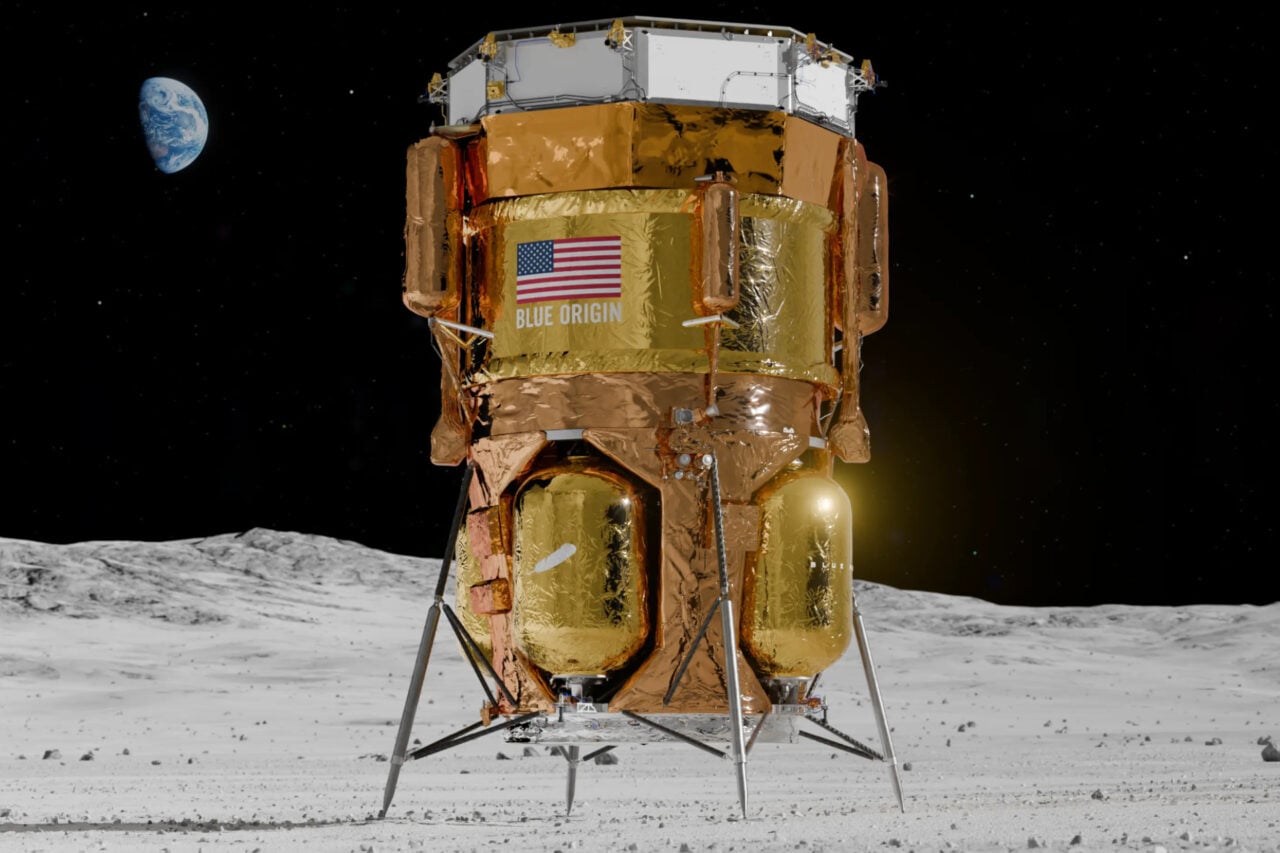
Most notably, for SpaceX's Starship vehicle, the revised plan calls for the Orion spacecraft to dock with the Starship lunar lander in high-Earth orbit before transiting to the Moon. And for Blue Origin, the mission architecture includes four launches of the New Glenn rocket, but no spacecraft-to-spacecraft refuelings. Additionally, the Blue Origin plans allows for the possibility of its Blue Moon lander rendezvousing with Orion in low-Lunar orbit.


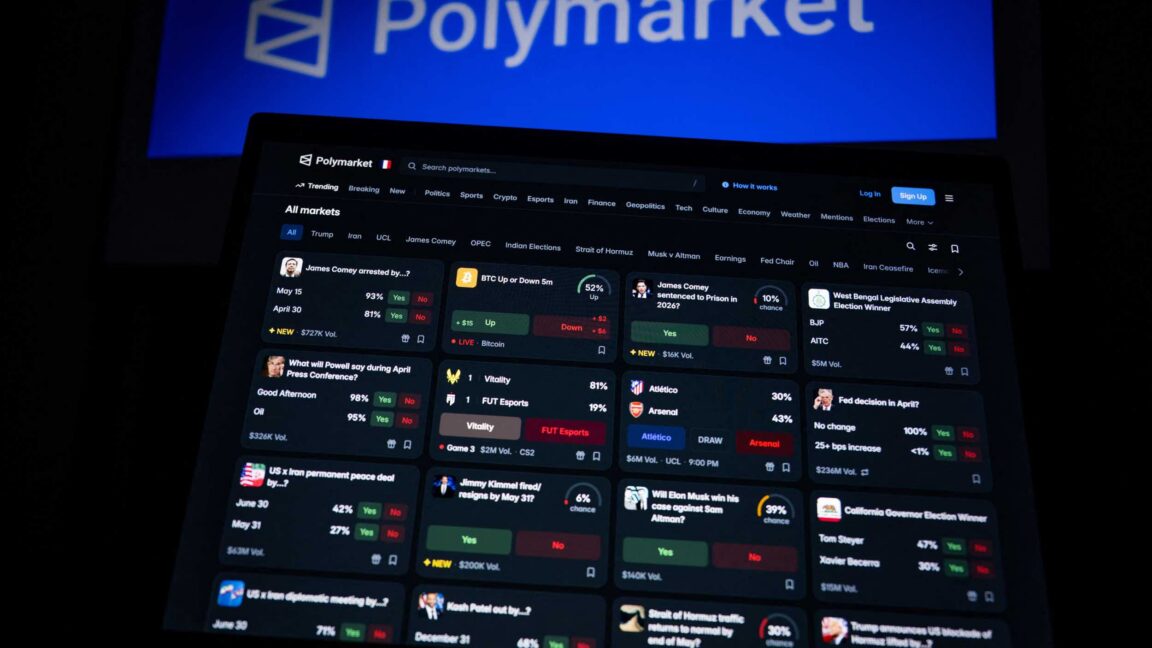
Defense Secretary Pete Hegseth issued a memo warning military personnel against using nonpublic information to make bets on prediction markets, saying the wagers could give important clues to enemy countries.
"Do Not Compromise Military Operations for Personal Financial Gain," said the subject line of an October 20 memo published yesterday by CBS News. Hegseth's memo was sent to senior Pentagon leadership, Combatant Command leaders, and Defense Department field activity directors.
Hegseth wrote:


Using Google's products and services has always been fundamentally precarious—doing so gives the world's largest advertising company a lot of juicy personal data. Google has long said it won't use the sensitive data from products like Gmail, Drive, and Photos for ad personalization, but a change to the company's privacy policy appears to dismantle that firewall.
On October 16, Google issued an update to its privacy policy, spotted by Android Authority. The ad personalization section used to include a clear limit on data from certain apps. "We don’t show you personalized ads based on your content from Drive, Gmail, or Photos," the document said. Now, Google has updated it with the following language.
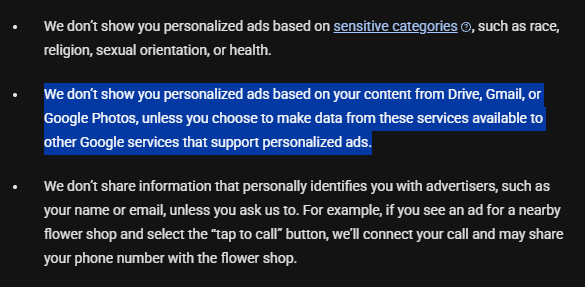 Updated language on when your sensitive data might inform ads.
Credit:
Google
This equivocation opens the door to using data from apps like Gmail and Photos in ads when it's shared with other Google services, and it just so happens Google has a mechanism for doing that, with Personal Intelligence. The company released Personal Intelligence in early 2026, allowing users to hand data from multiple apps to Google AI products. The idea is that the added context from your existing data will lead to better AI answers, but it's also proving to be a privacy minefield.



Leaders in the US Space Force would like to have a new spaceport up and running in four years, adding a third heavy-lift launch site to relieve pressure from bases in Florida and California that have shot rockets into orbit for nearly 70 years.
The obvious problem with that ambition is 2030 is four years away, and Pentagon officials have not determined where the new spaceport should go or how to acquire land for it.
Air Force Secretary Troy Meink first mentioned the service's search for a third launch base in May. A congressionally mandated study of the Space Force's launch infrastructure identified the need for "another site that's capable of heavy and super heavy launch capability," Meink said in a House Armed Services Committee hearing.


As reported by Music Business Worldwide, Spotify appears to be stepping up enforcement of existing policies regarding Family and Duo subscription plans by requiring users to scan a QR code in person on the plan manager's device in order to maintain access to it. Those who fail to scan the address verification QR code within seven days will see their account demoted to the free tier and be barred from joining any other Duo or Family plan for 12 months.
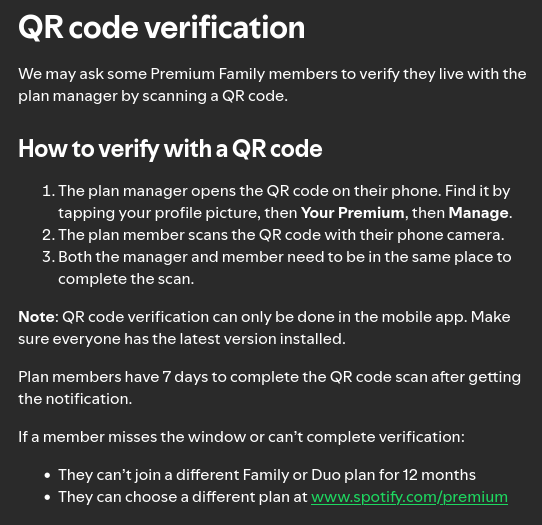 Spotify's QR code plan enforcement.
Credit:
Spotify
Spotify's support documentation verifies the policy after users on Reddit began posting reports of receiving the QR prompt. The enforcement stems from Spotify's requirement that family plan members reside at the same address—a seemingly reasonable policy in concept. But what if you have a child away in college, a spouse who works on the road, or any number of other circumstances that might see families separated by physical distance? The policy could extend beyond friend groups looking to save a buck, affecting actual families who thought they were using the program as intended.
Goldman Sachs analysts, in their October 15 Music in the Air: 10 Years On report, made available by HITS Daily Double, estimate that "a meaningful share of family plan users are not actual household members, but rather friends sharing a plan to reduce costs." The report goes on to add, "We see additional monetization upside from tightening household verification on multi-user plans. Most family plans require members to reside at the same address, but enforcement has been minimal in practice."




Microsoft envisage sérieusement de fermer le studio lyonnais Arkane, créateur de succès comme Dishonored. Les syndicats alertent sur une décision jugée incohérente, d'autant que le jeu Marvel’s Blade est proche de sa finalisation. La date butoir du 13 novembre approche à grands pas, et l'inquiétude monte face à une restructuration globale de la division Xbox qui pourrait coûter cher à la France.


Tenter de lancer GTA 6 en avance le 18 novembre 2026 via l'astuce du fuseau horaire néo-zélandais expose les joueurs PS5 à un bannissement définitif. Si la manipulation reste simple et tolérée sur Xbox Series, l'architecture verrouillée du réseau de Sony détecte cette fraude géographique et sanctionne lourdement les contrevenants par une suspension de compte ou le blocage matériel de la console.

La plateforme Etsy renforce ses règles concernant l'IA en interdisant la vente de guides fonctionnels comme les patrons ou recettes générés par algorithme. La plateforme exige désormais au moins une photo non retouchée pour chaque article et bannit les annonces créées par des bots, cherchant à préserver son identité de marché artisanal et à rassurer acheteurs et vendeurs.


A priori soutenus par la Chine, des acteurs malveillants ont instrumentalisé un outil d'IA pour mener une campagne d'attaque de grande ampleur. Ils ont tenté de s'introduire dans plusieurs milliers d'environnements Microsoft 365.
Much of what we know about how a brain makes decisions comes from studying monkeys watching dots. In a task known as a random-dot-motion task, a cloud of flickering specks drifts weakly in one direction while the subject tries to determine whether—and in which direction— it’s moving. The task has shown that in the primate neocortex, neurons gather visual evidence over time, with their firing rates climbing until they cross a threshold, when the animal commits to a decision.
But avian brains don’t have a neocortex, so it wasn’t obvious how they made similar decisions.
“This was the big question,” said Andreas Nieder, a neurobiologist at the University of Tübingen. “How [would] a differently organized avian brain encode decisions?”



L'application sportive Strava déploie une refonte significative de ses outils de cartographie. Au programme : une recherche plus intelligente, des fiches d'itinéraires enrichies, et surtout, des cartes hors ligne améliorées. Des instructions audio arriveront bientôt pour les abonnés, renforçant l'attrait de la plateforme pour les amateurs d'activités en extérieur.
US chip champion Intel was so confused by the US government ban on foreign-made robots that it requested and received a waiver “out of an abundance of caution.” The tech company wanted to make sure that it could continue using certain robotic vehicles in its US chip fabs.
The uncertainty surrounding the Federal Communications Commission ban on certain foreign-made robots was revealed in the agency’s decision to grant Intel’s waiver request. On October 22, the FCC published its order allowing Intel to continue using the foreign-made robots in US semiconductor manufacturing facilities for a period of one year.
The robots in question are automated guided vehicles operating on “tracks or predefined paths” while often requiring operator oversight, according to Intel’s website. They help to move materials and items around within warehouses and factory floors.



Un employé de Valve a accidentellement prononcé le nom de code HLX lors de la conférence GameSoundCon 2026. Ce projet secret, que la communauté associe directement au très attendu Half-Life 3, bénéficie ainsi de sa toute première reconnaissance officielle en public, confirmant que son développement est toujours actif en interne.
At a recent meeting of the board that oversees the National Institutes of Health's Clinical Center Research Hospital, chair Jack Leslie opened with cheerful introductions and gregarious chatter—then diverted from the agenda of the regularly scheduled meeting. He spent the next six minutes delivering a pointed rebuke of Health Secretary Robert F. Kennedy, warning that his anti-vaccine activities could tarnish the venerable hospital, often called the "house of hope" for patients with rare conditions or those who have exhausted all other options.
Leslie took issue with a recent stunt Kennedy had pulled at the hospital, which involved making a surprise appearance for a ribbon-cutting ceremony to open his signature vaccine injury clinic. The ceremony included a panel with people claiming to have been injured by vaccines. They sat behind placards reading "vaccine injured" and spoke with Kennedy and other high-ranking Trump administration officials.
Leslie prefaced his comments by noting that some might prefer he not speak out against Kennedy's efforts. "But I think that that would be a failing as an advisory board if we were silent," he said. Leslie also noted that he has no concerns about studying potential injuries from vaccines. "Serious reactions are rare, but real," he said, and people who believe they've been injured should "be taken seriously."


The New York Knicks organization sent employees a phishing email promising free championship rings in a test of its staff's ability to detect scams, The New York Times reported yesterday. “Congratulations, your Employee Championship Ring is here,” the email sent in late September said, instructing employees to click a link to make a selection from two ring designs.
Madison Square Garden employees who clicked that link "were forced to attend a mandatory cybersecurity class to help satisfy some of [owner James] Dolan’s growing cybersecurity concerns," the report said, citing team sources. Dolan is the owner of the Knicks, the New York Rangers, and Madison Square Garden.
It's common for corporations to send phishing emails to find out which employees don't pay attention to clues that an email is a scam. A cybersecurity-test email often appears to be from the company itself but includes telltale signs of phishing. For example, Ars Technica owner Condé Nast sends phishing-test messages from email addresses with a misspelled domain, "condenest.com."




Gamers still hoping against hope for a true follow-up to Half-Life 2 (after so, so many years) may remember last year's flurry of speculation that Half-Life 3 was finally nearing completion. Amid all those rumors, though, we never got any official sign from anyone inside Valve that a Half-Life project was currently in development.
That changed this week thanks to an apparent slip-up during a panel at GameSoundCon, an industry conference devoted to "the art, technology, and business of game audio." In a panel devoted to Valve's use of open audio engines (captured in this Vimeo clip), Valve composer and audio artist Mike Morasky let an interesting string of three letters slip while talking about the way the company implements high dynamic range (HDR) audio:
Our HDR system is basically that's one of the three pieces that come together to make an HDR that you can easily optimize. And in fact, I think Deadlock has their own version of HDR. HLX has its own version, so on and so forth [emphasis added].
"HLX," of course, has been widely reported as the internal code name for Valve's next Half-Life project. The codename has shown up in Valve engine code since at least 2024, but it has never been referenced in public by a Valve employee until now (though Morasky was responsible for a close call in an interview last year).





Le grand jeu du chat et de la souris technologique entre Washington et Pékin vient de connaître un nouvel épisode. Des puces Nvidia dernier cri, sous embargo strict, ont été repérées en plein cœur d'une infrastructure d'État chinoise.

Caméras de surveillance, humidificateur d'air ou encore téléviseurs : c'est l'heure de retrouver notre sélection des meilleures offres de ce vendredi.

 Lateo.net - Flux RSS en pagaille (pour en ajouter : @ moi)
