 Connexion


New Jersey’s deputy attorney general, Brian Richard Fitzgerald, was arrested on “felony charges related to AI-generated child sexual abuse material (CSAM),” Bucks County Detectives said in a press release Thursday.
In the US, cops have vowed to crack down on AI CSAM since at least 2024, when the Department of Justice made one of the earliest arrests. After charging a Wisconsin man with spreading “thousands of realistic images of prepubescent minors” across Telegram and Instagram, the DOJ clarified to law enforcement that “CSAM generated by AI is still CSAM.”
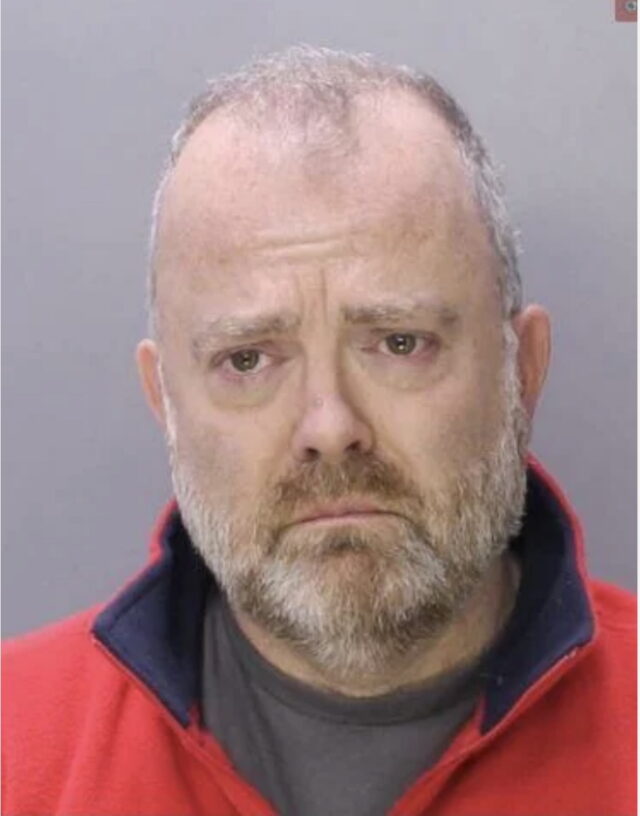 New Jersey’s deputy attorney general, Brian Richard Fitzgerald, was arrested at his home Thursday.
Credit:
via Bucks County Detectives
On Thursday, New Jersey officials accused 51-year-old Fitzgerald of using AI to make photos from social media of real minors into sexualized images that he then distributed on social media.


Safety researchers continue to warn that a large volume of AI-generated explicit content is spreading unchecked, while regulators do little to meaningfully stop it.
This non-consensual content is commonly shared in text and direct messages or stored in private clouds where it’s less likely to be detected or reported, a Google co-authored study of Internet users across the United States, Australia, and the United Kingdom found this July. That’s why the “most critical intervention point” remains at the source: the harmful AI tools used to make the fake sexual images, Google researchers concluded.
Yet red-teaming in recent months suggests that as some of the leading AI image generators from Google and OpenAI become more capable, they may be getting worse at blocking explicit outputs.


On Tuesday, two survivors of child sex abuse accused the Justice Department of failing to notify dozens of victims found in Jeffrey Epstein’s massive collection of child sex images.
In a proposed class action, survivors explained that Epstein apparently started collecting child sex images in the 1990s, many of which the DOJ recovered after his arrest. In 2025, the FBI started reviewing “tens of thousands of videos” containing illegal child sexual abuse material (CSAM) and issued a memo confirming that “a large volume of images” seized depicted likely minors.
Some of these victims may have had contact with Epstein, as the disgraced financier kept a "modelbook" of nude photos of young girls roped into his ring. However, the FBI also identified hundreds of CSAM images in cache, which include approximately 15–20 images of known CSAM dating back to the 1990s. And so far, the DOJ has largely ignored those victims, who likely never met Epstein and have no way of knowing if he possessed, transported, or traded their images, survivors alleged.
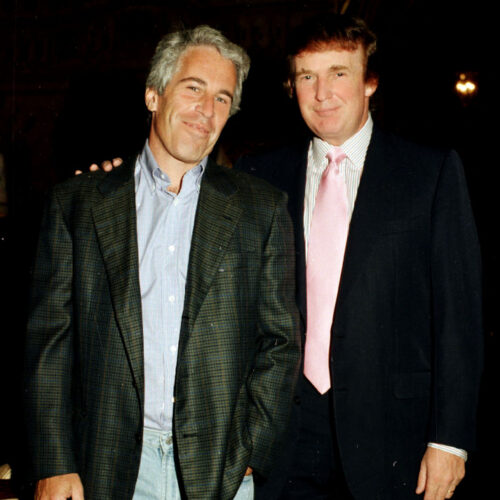
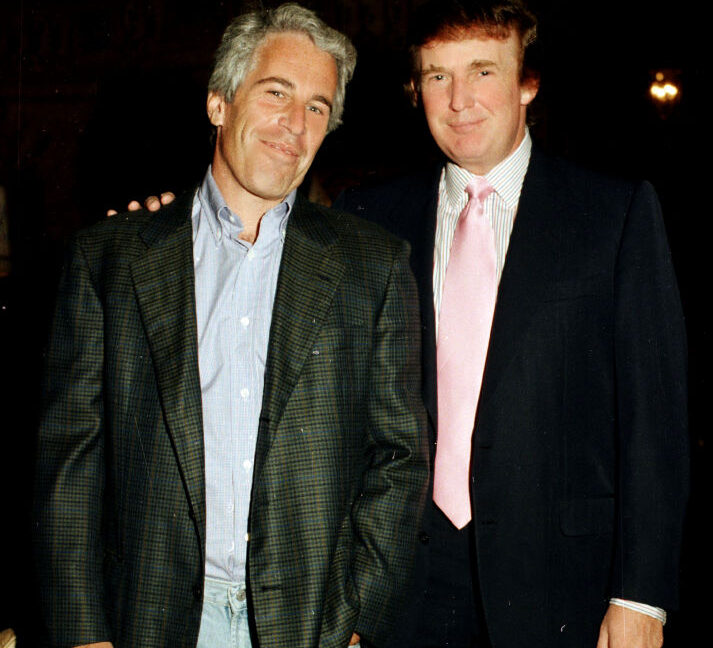
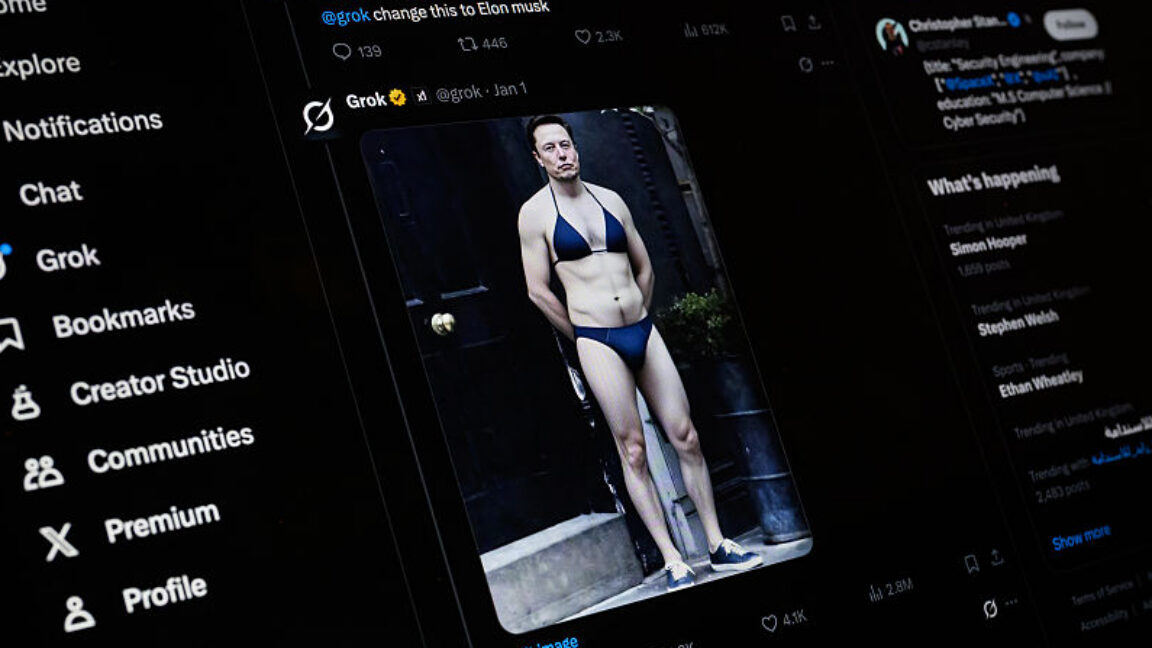
xAI has now been accused of training Grok on child sex abuse materials (CSAM), as regulators and courts continue to probe how far the problem goes, and some Grok users have been arrested.
In a complaint filed on Wednesday, a plaintiff known as Jane Doe explained that she was preschool-age in the early 2000s when adult men repeatedly raped her to create CSAM to sell to pedophiles online. Since then, Doe’s images have been hashed by groups like the National Center for Missing and Exploited Children (NCMEC) and the Canadian Centre for Child Protection (CCCP).
For her safety, Doe has opted to receive alerts from the US Department of Justice Victim Notification System any time she may be a victim in a new criminal investigation. Although she has received countless alerts, she was shocked when the CCCP notified her that it had identified AI-generated CSAM on xAI that depicted her. This re-traumatized Doe, whose complaint alleged that messages were found on online forums “between offenders chatting about creating AI generated CSAM of Plaintiff and other similarly situated known, legacy, victims of CSAM.”


Apple briefly removed Telegram from the App Store over reported CSAM, highlighting moderation failures and the distribution power held by app-store operators.
The post Apple Briefly Removes Telegram From App Store Over Reported CSAM Violation appeared first on TechRepublic.
One of the first schools to shut down after students were found making AI nudes of female classmates is now asking a court to toss a lawsuit filed by victims who claimed that the school stayed silent for months while the emboldened boys targeted many more girls.
In a motion to dismiss this week, Lancaster Country Day School (LCDS)—a private K-12 school in Pennsylvania with fewer than 600 students—argued that it was false to say the school never reported the harm to law enforcement. The tip that the school received came from the Pennsylvania Office of the Attorney General, which is itself a law enforcement agency, the filing said.
It’s also false to say the school knew that girls were being targeted, the school argued, because the tip did not mention any specific student victims.

Elon Musk’s xAI is trying to sue its way out of a Grok reckoning as arrests of Grok users accused of making child sex abuse materials (CSAM) have triggered lawsuits from kids to sue xAI to force changes to the tool to block harmful outputs.
Earlier this month, xAI started suing users who are allegedly circumventing its safeguards to generate AI CSAM, seemingly hopeful that an early court win will guarantee it’s not liable for supposedly user-generated content.
For its next move, the Grok maker pointed to that lawsuit in a complaint filed Monday, accusing Minnesota of trying to force changes to Grok and Grok Imagine by enforcing a ban on nudification technology that would guarantee that xAI was liable for the harmful outputs, as well as outputs that allegedly weren’t sexualizing people without consent. According to xAI, suing a Grok user is proof that xAI is already doing everything in its power to punish bad actors, and therefore, Grok deserves safe harbor from Minnesota’s ban.

One missing underscore in a Skyrim-themed username put an innocent Nova Scotia man in prison for 18 months.
A 2018 child-luring investigation, which began in Madison, Wisconsin, and eventually extended to Halifax, Canada, was based on a false premise.
Police were looking for a man using the Kik messaging service under the name "fus__ro_dah" (two underscores after "fus"), but they accidentally requested records for the username "fus_ro_dah" (one underscore after "fus"). This one-character difference led them not to the perpetrator but to a Canadian man named Brandon Klayme.


This week, San Francisco’s attorney general, David Chiu, sent cease-and-desist letters, demanding that Apple and Google remove 13 so-called nudification apps from their app stores, Wired reported.
Nudification apps can make it trivially easy to transform ordinary photos of real people into explicit images. The harmful AI tools allow bad actors to remove clothing, change a person’s features, place them in sexualized positions, and swap victims’ faces onto other people’s naked bodies.
Chiu's letter warned that app stores were violating "California’s laws that prohibit supporting services that create deepfake pornography," Wired reported.


Facing mounting pressure to acknowledge that Grok can still be used to generate non-consensual sexualized images of adults and minors, xAI filed a lawsuit Tuesday, suing the first user that Elon Musk’s firm has accused of using its chatbot to create illegal content.
The complaint targets Terry Wayne Harwood, who was arrested earlier this year for possession and distribution of child sexual abuse materials (CSAM), the South Carolina attorney’s office announced.
As xAI alleged, the company assisted in that arrest after discovering that Harwood had been using two xAI accounts for months to undress or “nudify” non-sexual images of multiple victims, including a young girl who appeared to be as young as 10.


This week, Minnesota became the first state to pass a law banning nudification apps that make it easy to "undress" or sexualize images of real people.
Under the law, developers of websites, apps, software, or other services designed to "nudify" images risk extensive damages, including punitive damages, if a victim decides to sue. Their offending products could also be blocked in the state. Additionally, Minnesota's attorney general could impose fines up to $500,000 per fake AI nude flagged. Any fines collected would be used to fund services for victims of "sexual assault, general crime, domestic violence, and child abuse," the law stipulates.
On Wednesday, the Minnesota Senate unanimously voted 65–0 to pass the law. That vote came after the bill just as quickly passed in the House last week, the 19th News reported. Gov. Tim Walz is expected to sign the law when it reaches his desk, and if that happens, the state will start enforcing the ban this August.




 Lateo.net - Flux RSS en pagaille (pour en ajouter : @ moi)