 Connexion


L’Atari VCS vous vous souvenez ? La console a fini par sortir après des aventures et des délais abracadabrants. Avec elle, un service en ligne qui permettait de télécharger des jeux et des logiciels pour la console. Une majorité de titres très très rétros mais tout un univers dédié à l’objet.

Atari annonce qu’il fermera son serveur le 31 janvier 2027, date à laquelle la console n’aura plus la possibilité de profiter de ce service. Tous les titres achetés avant la date fatidique seront jouables après la fin du service. Cette date s’explique sans doute par la fin de garantie de la console puisque ses dernières ventes en direct se sont arrêtées en 2025.
La marque insiste sur un détail important, d’ici la fin de service, une mise à jour du système devrait ouvrir celui-ci à d’autres solutions d’importation logicielles. En offrant cette possibilité d’ajouter manuellement des titres à ses clients, Atari rend la disparition du service moins douloureuse. Même si cela implique de mettre les mains dans le cambouis logiciel pour y parvenir. Les développeurs tiers seront également invités à proposer des titres directement pour la console. Un Kit de développement permettra de piloter la console plus facilement.

La console Atari VCS
Il va sans dire qu’un particulier lambda qui aurait un problème logiciel et qui réinstallerait la console de A à Z dès le premier février prochain serait sans doute un peu perdu. Il ne pourrait pas retrouver ses applications et ses jeux en ligne et devrait donc réinstaller la console à la main. Il pourrait également réinstaller un système Linux indépendant. Ce qui serait sans doute la meilleure solution. La VCS propose en effet un processeur AMD Ryzen R1606G, de 4 à 8 Go de mémoire vive et, au minimum, 32 Go de stockage eMMC extensibles avec un port M.2 2280 SATA.
L’OS de la console est protégé, il s’agit d’une distribution Linux spécifique. Il est également possible de forcer la console en mode PC pour installer le système de son choix du moment qu’il propose une compatibilité Secure boot. Beaucoup d’utilisateurs ont donc basculé d’office la VCS vers un Windows ou une solution comme un Ubuntu classique.

En 2018 je sortais ma boule de cristal pour prévoir l’avenir de la VCS et je me suis trompé. J’envisageais l’avenir de la console comme ceci.
D’abord une fin de financement participatif qui permettrait de proposer la console avec des moyens un peu moins vagues. Ça, j’ai eu bon même s’il a fallu des trimestres supplémentaires pour que la marque se rende compte que ce qu’elle voulait intégrer comme matériel dans son boîtier était totalement dépassé. Un développement d’un OS basé sur Debian débuterait en même temps pour proposer une interface adaptée à l’usage à la manette. Une série de titres rétro sera testée et implantée et les consoles seront distribuées.
Fort peu de jeux tiers seront proposés parce que chat échaudé craint l’eau froide et le système apparaitra donc pour ce qu’il est, un engin dépassé dès sa sortie. Parfait pour les nostalgiques mais difficilement justifiable face à un MiniPC standard de l’époque moins cher et plus rapide. Pour tout cela, j’ai eu bon.

Mais je pensais à un scénario de fin à la manière de la console Ouya. La revente du concept à une entreprise tierce pour une exploitation à long terme de l’objet pour porter des jeux en ligne bourrés de pub ou invitant à dépenser son argent comme il en existe beaucoup en Chine. Là-dessus, je me suis trompé. La différence entre la console Ouya qui a terminé sa carrière de cette manière, et la console Atari VCS dont on débranche simplement le serveur, c’est que la première s’est bien vendue.
On estime les ventes de la Ouya à 200 000 unités au total. La console Atari VCS n’a pas donné de chiffres de ventes exacts, mais la production tournerait plutôt autour des 10 000 unités selon les analystes.
On comprend alors que personne ne soit réellement intéressé par la population que cela représente. Et que les ventes générées par la boutique en ligne d’applications sont trop faibles pour que le serveur soit rentable. Quand on a déjà les 100 grands classiques de la console par défaut, les achats de jeux supplémentaires ne sont pas forcément une priorité. Les performances financières du projet se sont donc rapidement étouffées. La console a généré 2.44 millions de dolalrs en tout en 2021 avant de s’écrouler à 212 000 dollars dès 2022.
Sans mise à jour matérielle et un simple ajout de jeux Atari 7800 vendus à 3$ pièce en 2022, on imagine que le chiffre d’affaires de la console n’est plus très glorieux en 2026. Depuis la sortie de la console, la direction du groupe a changé. Ce n’est plus le bébé des équipes. Atari tire donc la prise du serveur et pousse sa VCS au placard.
Atari VCS : fin de partie pour la boutique logicielle © MiniMachines.net. 2026

Jonas Eschenburg se tape un petit délire cet été, en portant Command & Conquer sur Atari ST, et il vient de s'occuper des cinématiques du jeu, le tout sur une machine équipée d'un Motorola 68000 cadencé à 8 MHz. Le même garçon avait déjà fait tourner Doom dessus.
Le décalage vaut le détour. Command & Conquer sort en 1995 sur PC, en VGA 256 couleurs, soit dix ans après l'Atari ST, qui affiche lui 16 couleurs en 320 par 200 points.
Envoyer les pixels bruts à l'écran est hors de question sur ce genre de matériel. La machine n'a ni le débit de lecture ni la puissance de calcul pour ça.
Eschenburg a donc écrit son propre codec, baptisé STV, adapté du format VQA que Westwood utilisait à l'époque pour ses vidéos. Le principe repose sur un codebook, autrement dit un dictionnaire de petits carrés de pixels : au lieu de transmettre chaque image entière, le fichier envoie surtout des numéros qui pointent vers des motifs déjà connus du lecteur.
L'astuce est en réalité ailleurs. Les blocs sont découpés pour tomber pile sur l'organisation mémoire de l'Atari, qui range ses couleurs en plans séparés plutôt qu'en pixels contigus, ce qui permet au processeur de recopier les motifs sans passer son temps à réorganiser les bits.
La palette et le dictionnaire se mettent à jour en continu pendant la lecture, et pas une fois pour toutes au début du fichier. Ça évite le gros pâté de blocs baveux qu'on attendrait d'une compression aussi agressive.
Le tout fonctionne sur un 8 MHz d'origine. Sans accélérateur. A priori, aucun jeu Atari ST n'avait affiché de vidéo plein écran avant celui-là.
Le jeu, lui, reste beaucoup plus poussif pour le moment : quelques images par seconde en 16 couleurs, correct seulement à partir d'un Falcon, et il réclame 4 Mo de mémoire. Autour du codec, Eschenburg a publié une dizaine d'utilitaires, dont un encodeur pour fabriquer les fichiers STV et un lecteur natif pour les regarder sur la machine.
Tout est sous licence GPL sur GitHub, le portage se récupère sur itch.io, et il faut fournir ses propres fichiers du jeu d'origine puisque le projet n'a rien à voir avec EA.
Détail amusant, le son ne sort que sur STe et Falcon. Sur un ST de base, les cinématiques défilent en silence complet. La question étant maintenant de savoir si tout ça ne m'a pas donné envie de rejouer à Command and Conquer, pour ressortir mon premier pseudo de game : Moissonneuse killer (vraiment).
Source : Hackaday

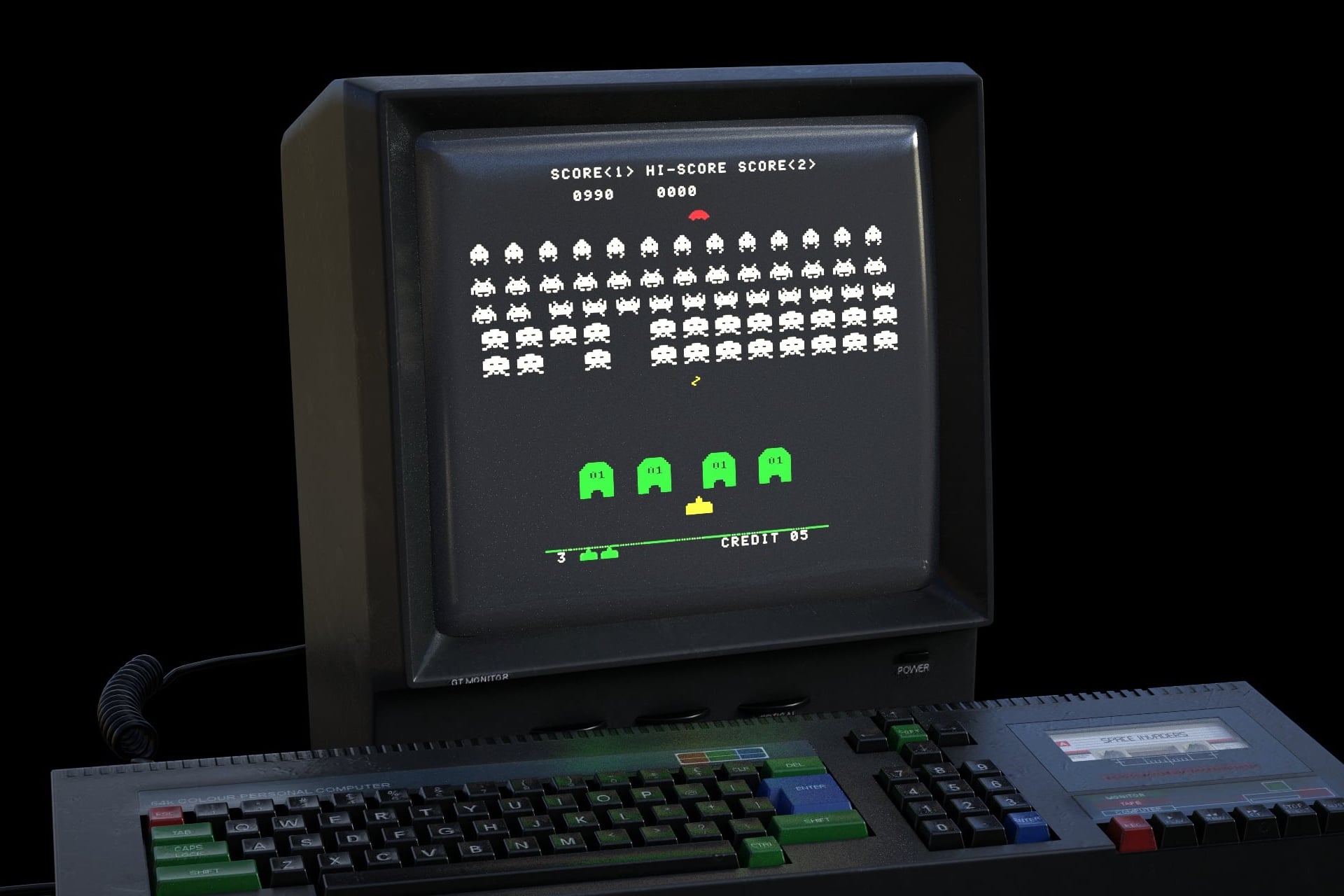


Une Atari Jaguar, la console de 1993 qu'Atari vendait comme la première machine 64 bits et que le marché a snobée, vient de booter sous Linux pour la première fois ! Derrière ce hack, un développeur connu sous le pseudo de Cakehonolulu , qui a collé un vrai noyau sur le Motorola 68000 de la bécane.
Le 68000 n'a pas de MMU , ce circuit qui gère la mémoire virtuelle et dont dépend le Linux que vous faites tourner sur votre PC. Sauf que le noyau embarque depuis toujours une branche pour les puces qui en sont privées, l'antique μClinux , et c'est elle qui fait tout le taf ici.

La Jaguar offre seulement 2 Mo de RAM et jusqu'à 6 Mo de ROM sur la cartouche, du coup Cakehonolulu a coupé le noyau en deux : le code qui ne bouge pas, le .text et le .rodata, reste dans la ROM et s'exécute directement depuis là en XIP, pendant que les données qui changent atterrissent dans les 2 Mo de RAM. Bref, chaque octet compte.
Après, ce n'était pas simple non plus parce que le 68000 ne sait pas lire une donnée qui serait mal alignée en mémoire. Alors que les processeurs modernes savent le faire sans broncher. Et comme le cross-compilateur d'Ubuntu générait quand même ce type de données mal alignées, alors qu'on lui précise bien que la cible c'était un 68000, ça faisait des plantages en cascade.
L'astuce a donc été de recompiler tout le toolchain à la main, puis de bâtir un user space minimal avec BusyBox et uClibc, tout ça en binaire FLAT au lieu du classique format ELF.
Et voilà, la Jaguar affiche maintenant fièrement ses 1,04 BogoMIPS. Soit une puissance de feu qui ferait chialer une calculatrice. Mais bon, elle boote et c'est le principal. Si vous avez encore une Jaguar dans un placard, vous pouvez parfaitement installer ça dessus, puisque le code est disponible sur GitHub .
Voilà, c'est assez génial parce qu'en fait, ça montre bien que Linux est vachement résilient. On est en 2026 et pourtant, le support des 68000 est encore présent dans le noyau, et bien vivant même !
Voilà, tant que ce bon vieux noyau gardera tous ses vieux pilotes, eh bien n'importe quelle console oubliée pourra toujours renaître avec un petit terminal dessus. Et ça, je trouve que ça clôt tous les débats sur la conservation et le poids du code legacy dans le kernel.

Il aura fallu trente-sept ans à Colin Porch pour voir son jeu enfin sortir, et cette seule durée suffit à résumer l'histoire un peu folle de ce développeur britannique de 81 ans, ancien d'Ocean, l'un des studios de jeux vidéo les plus réputés de l'époque des micro-ordinateurs 8 et 16 bits.
Tout commence en 1989, quand Porch se lance dans une suite à Head Over Heels, un jeu de plateforme et de réflexion en vue isométrique devenu culte sur le ZX Spectrum, ce petit ordinateur familial qui a initié toute une génération de joueurs au jeu vidéo.
Sa suite, elle, est pensée pour l'Atari ST et l'Amiga, les deux ordinateurs personnels qui dominaient le jeu à la toute fin des années 80, à une époque où chaque machine avait encore sa propre logithèque bien à elle.
Et puis le projet capote, comme tant d'autres, lorsque les consoles de salon débarquent au début des années 90 et redistribuent complètement les cartes du marché.

Le jeu inachevé reste alors rangé dans un tiroir pendant des décennies, jusqu'à ce que Gary Bracey, l'ancien patron de Porch chez Ocean, le convainque de reprendre le chantier, persuadé que l'appétit du public pour le rétro était bel et bien reparti.
Il a aussi fallu négocier avec Atari, qui détient aujourd'hui les droits sur les personnages d'origine, avant de pouvoir espérer commercialiser quoi que ce soit.
Le résultat porte le nom de Return to Blacktooth: A Head Over Heels Adventure, et il est sorti le 4 mai 2026 chez l'éditeur Thalamus Digital, au prix de 12,99 dollars.
Le plus beau, c'est qu'il tourne réellement sur de vraies machines Atari ST et Amiga, pas sur un émulateur déguisé en jeu moderne comme on en voit tant aujourd'hui.
Porch, lui, résume ces décennies d'acharnement par une formule toute simple : un travail mené par pure passion, terminé coûte que coûte.
Bref, un jeu Amiga qui débarque en 2026, codé par un développeur de 81 ans. Le retrogaming n'a pas toujours besoin d'émulateur, juste d'un peu de patience.
Source : Time Extension

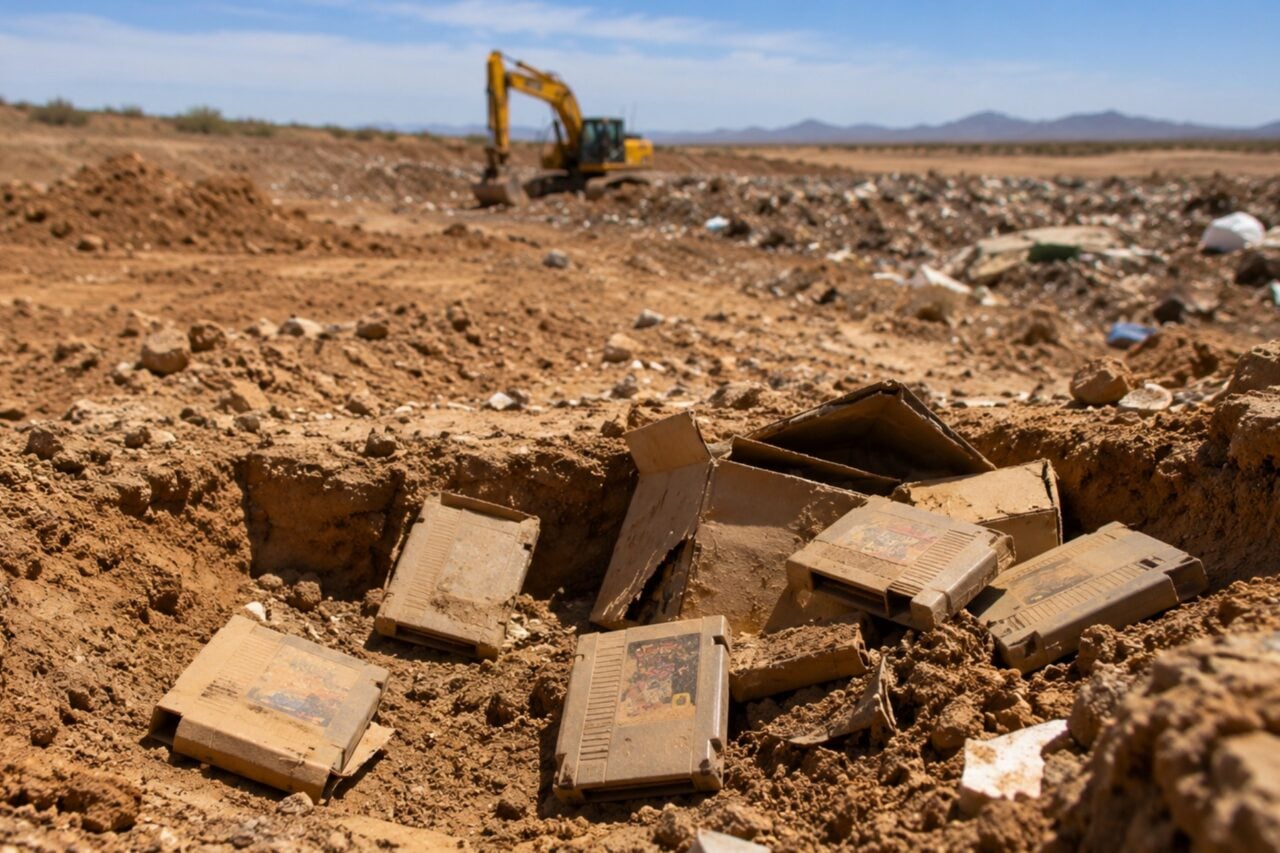
Il y a une époque dans le jeu vidéo où l’on ne se posait pas la question de la taille du monde ouvert, de la présence du ray tracing, ni du nombre de DLC prévus. Il y a une époque où tout ce qui comptait, c’était : est-ce que je peux copier ce jeu sur une disquette pour le faire tourner sur mon Amstrad CPC 6128 Plus ?
In the latest issue of Wireframe magazine, video game pioneer Howard Scott Warshaw reflects on the calamitous E.T. for the Atari 2600. Could it serve as a useful metaphor for real life?
When Julius Caesar ran into Brutus on the Ides of March so many years ago, it changed his life dramatically. I would say the same thing about my life when I ran into the E.T. project, though in my case, the change wasn’t quite so abrupt… or pointed. People say that my E.T. game was ahead of its time, so much so that it didn’t work for many players in its time. Fair enough. But E.T. is more than that. On many levels, that game has served as a metaphor for life, at least for my life. Let me explain, and perhaps it will sound familiar in yours as well.
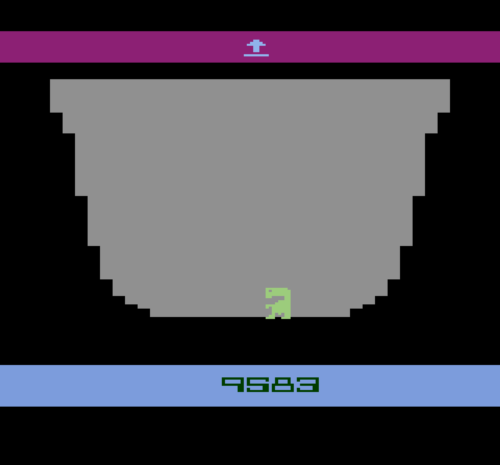
There was an aura of promise and anticipation on the advent of the E.T. project – much like the prospect of graduating from college and entering the working world as a computer programming professional. This was super-exciting to me. Once I began the challenge of delivering this game, however, the bloom left the rose (no matter how many times I healed it). Similarly, on my entry into the working world, my excitement was quashed by the unsatisfying nature and demands of typical corporate computing tasks. This is analogous to the experience of E.T. players, having just unwrapped the game. They pop the cartridge in, fire it up, and venture forward with innocent exuberance… only to be crushed by a confusing and unforgiving game world. Perhaps the E.T. game was some sort of unconscious impulse on my part. Was I recreating the disappointment of my first foray into corporate life? Highly unlikely, but the therapist in me just had to ask.
In the E.T. game, I spend a lot of time wandering around and falling into pits. Sometimes I find treasure in those pits. Sometimes I’m just stuck in a pit and I need to dig my way out. That costs energy I could have used on more productive endeavours. There’s also a power-up in the game you can use to find out if there is something worth diving in for. Sadly, there’s no such power-up in life. Figuring out the difference between the treasure and the waste has always been one of my biggest questions, and it’s rarely obvious to me.
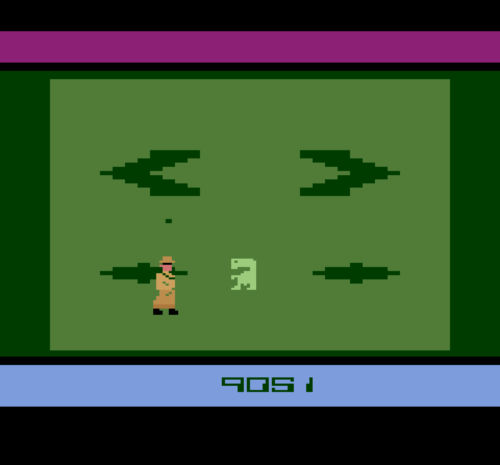
One of the treasures you find in the game is the flower. The act of healing it brings benefits and occasional delightful surprises. I was at the bottom of a ‘pit’ in my life when I found the path to becoming a psychotherapist (another act of healing). It helped me climb out and take some big steps toward winning the bigger game.
E.T. is all about the pits, at least it seems so for many who talk about it. And they do so with such derision. Many times I’ve heard the phrase, “E.T. isn’t about the pits. It is the pits!” But are pits really so bad? After all, there are situations in which being stuck in a pit can be an advantage – OK, perhaps not so much in the game. But in life, I find it’s unwise to judge where I am until I see where it takes me. There have been times where major disappointments ended up saving me from a far worse fate had I been granted my original desire. And in more concrete terms, during a hurricane or tornado, there are far worse outcomes than stumbling into a pit. Sometimes when I trip and fall, I wind up dodging a bullet.
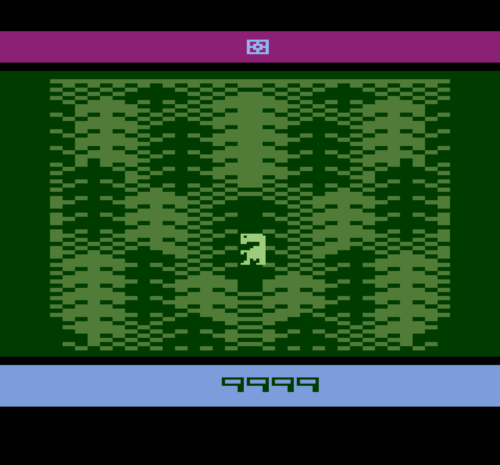
Yes, in the game you can wind up wandering aimlessly around, feeling hopeless and without direction (somehow, they didn’t put that on the box). But ultimately, if you persevere (and read the directions), you can create a reasonably satisfying win. After finishing development of the game, there was a long period of waiting before any feedback arrived. Then it came with a vengeance. Of course, that only lasted for decades. My life after Atari seemed a bit of a wasteland for a long time too. Rays of sunlight broke through on occasion, but mostly cloudy skies persisted. Things didn’t improve until I broke free from the world in which I was stuck in order to launch the improbable life I truly wanted.
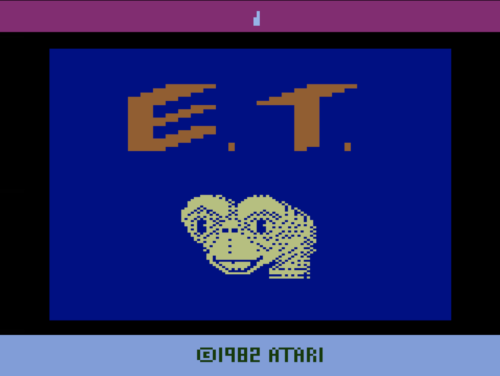
But it’s not like there were no lingering issues from my E.T. experience. It turns out that ever since the E.T. project, I have a much greater propensity to procrastinate, regularly shorting myself of dev time. I didn’t used to do that before E.T., but I’ve done it quite a bit since. I delay launching a genuine effort, then rush into things and try to do them too quickly. This results in a flurry of motion that doesn’t quite realise the potential of the original concept. More flailing and more failing. It doesn’t mean my idea was poor; it means it was unrefined and didn’t receive sufficient nourishment. On reflection, I see there are both challenges and opportunities at every turn. Pits and treasures. Which of those I emphasise as I move forward is how I construct the life I’m going to have, and I’m doing that all the time.
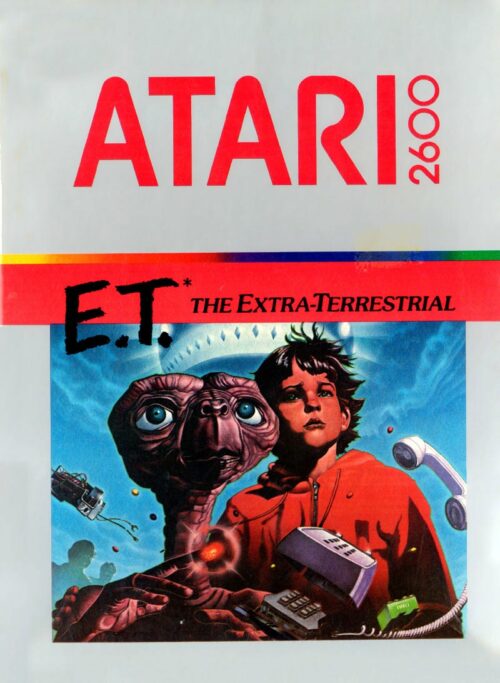
Pits and treasures, this is much of life. My E.T. game has mostly pits. Truth be known, people like to call them ‘pits’, but I’ve always thought of them as wells: a place to hide, to take repose and to weather out life’s storms. For me, that has been the value of having so many wells. I hope it works for you as well. Try it on. It just might fit like Caesar’s toga. And if it doesn’t, you can say what Brutus said on that fateful day: “At least I took a stab at it.”
You can read more features like this one in Wireframe issue 54, available directly from Raspberry Pi Press — we deliver worldwide.

And if you’d like a handy digital version of the magazine, you can also download issue 54 for free in PDF format.
The post Who remembers E.T. for the Atari 2600? appeared first on Raspberry Pi.
We love Wireframe magazine’s regular feature ‘The principles of game design’. They’re written by video game pioneer Howard Scott Warshaw, who authored several of Atari’s most famous and infamous titles. In the latest issue of Wireframe, he provides a snapshot of the hell-raising that went on behind the scenes at Atari…
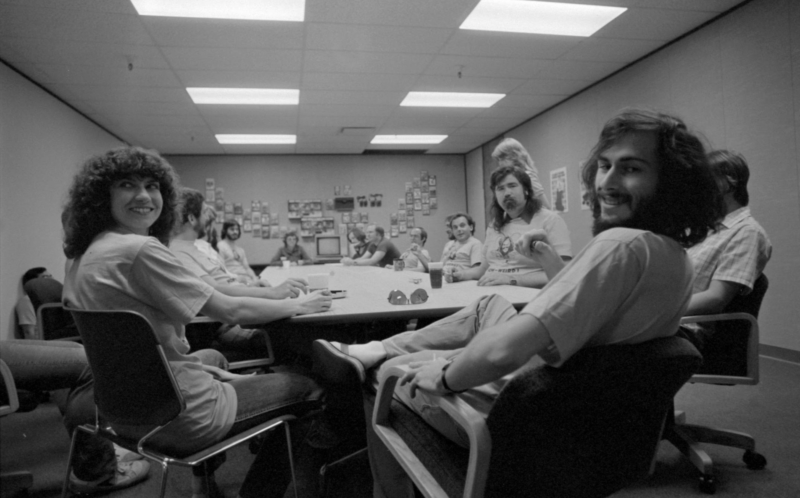
Video game creation is unusual in that developers need to be focused intently on achieving design goals while simultaneously battling tunnel vision and re-evaluating those goals. It’s a demanding and frustrating predicament. Therefore, a solid video game creator needs two things: a way to let ideas simmer (since rumination is how games grow from mediocre to fabulous) and a way to blow off steam (since frustration abounds while trying to achieve fabulous). At Atari, there was one place where things both simmered and got steamy… the hot tub. The only thing we couldn’t do was keep a lid on the antics cooked up inside.
The hot tub was situated in the two-storey engineering building. This was ironic, because the hot tub generated way more than two stories in that building. The VCS/2600 and Home Computer development groups were upstairs. The first floor held coin-op development, a kitchen/cafeteria, and an extremely well-appointed gym. The gym featured two appendages: a locker area and the hot tub room. Many shenanigans were hatched and/or executed in the hot tub. One from the more epic end of the spectrum comes to mind: the executive birthday surprise.
It was during the birthday celebration of a VP who shall remain nameless, but it might have been the one who used to keep a canister of nitrous oxide and another of pure oxygen in his office. The nitrous oxide was for getting high and laughing some time away, while the oxygen was used for rapid sobering up in the event a spontaneous meeting was called (which happened regularly at Atari). As the party raged on, a small crew of revellers migrated to the small but accommodating hot tub room. Various intoxicants (well beyond the scope of nitrous) were being consumed in celebration of the special event (although by this standard, nearly every day was a special event at Atari).
As the party rolled on, inhibitions were shed along with numerous articles of clothing. At one point, the birthday boy was adjudged to be in dire need of a proper tubbing as he hadn’t lost sufficient layers to keep pace with the party at large. The birthday boy disagreed, and the ensuing negotiation took the form of a lively chase around the area. The VP ran out of the hot tub room and headed for the workout area with a wet posse in hot pursuit, all in varying stages of undress.

It’s important to note here that although refreshments and revelry were widely available at Atari, one item in short supply was conference rooms. Consequently, meetings could pop up in odd locales. Any place an aggregation could be achieved was a potential meeting spot. The sensitivity of the subject matter would determine the level of privacy required on a case-by-case basis. Since people weren’t always working out, the gym had enough places to sit that it could serve as a decent host for gatherings. And as for sensitivity, the hot tub room was well sound-proofed, so intruding ears weren’t a concern.
As the crew of rowdy revellers followed the VP into the workout area, they were confronted by just such a collection of executives who happened to be meeting at the time. I don’t think the birthday party was on the agenda. However, they may have been pleased that the absentee VP had ultimately decided to join their number. It was embarrassing for some, entertaining for others, and nearly career-ending for a couple. The moral of this story being that Atari executives should never go anywhere without their oxygen tanks in tow.

But morals aside, there was work to be done at Atari. In a place where work can lead to antics and antics can lead to work breakthroughs, it’s difficult at times to suss out the precise boundary between work and antics. It takes passion and commitment to pursue side quests productively and yet remain on task when necessary.
The main reason this was a challenge comes down to the fact there are so many distractions constantly going on. Creative people tend to be creative frequently and spontaneously. Also, their creativity is much more motivated by fascination and interest than it is by task lists or project plans. Fun can break out at any moment, and answering the call isn’t always the right choice, no matter how compelling the siren.

Rob Fulop, creator of Missile Command and Demon Attack for the Atari 2600 (among many other hits) isn’t only a great game maker, he’s also a keen observer of human nature. We used to chat about just where the edge is between work and play at Atari. Those who misjudge it can easily fall off the cliff.
Likewise, we explored the concept of what makes a good game designer. Rob said it’s just the right combination of silly and anal. He believed that the people who did well at Atari (and as game makers in general) were the people who could be silly enough to recognise fun, and anal enough to get all the minutia and details aligned correctly in order to deliver the fun. Of course, Rob (being the poet he is) created a wonderful phrasing to describe those with the right stuff. He put it like this: the people who did well at Atari were the people who could goof around as much as possible but still go to heaven.
You can read more features like this one in Wireframe issue 53, available directly from Raspberry Pi Press — we deliver worldwide.

And if you’d like a handy digital version of the magazine, you can also download issue 53 for free in PDF format.
The post Behind the scenes at Atari appeared first on Raspberry Pi.

 Lateo.net - Flux RSS en pagaille (pour en ajouter : @ moi)