 Connexion


Thousands of Internet-connected servers sold by the world’s biggest manufacturers can be remotely backdoored by exploiting critical vulnerabilities—some more than a decade old—that lurk deep inside system motherboards, according to research presented Wednesday.
Baseboard management controllers are miniature computers that are embedded into the motherboards of virtually every enterprise server. The microcontrollers, typically abbreviated as BMCs, run with their own operating system firmware, network stack, and IP address. Administrators rely on them to monitor the physical status of large fleets of servers and to perform a variety of tasks, including rebooting machines, installing updates, and even reinstalling operating systems. BMCs provide what’s known as “lights out” and “out-of-band” management because they work even when servers they’re attached to are turned off or are unresponsive.
Researchers have warned since at least 2013 that BMCs present a golden opportunity for hackers looking for ways to gain deep and persistent access to datacenters. The chief culprit was IPMI, the protocol that allows BMCs to operate independently of servers and to perform administrative tasks. Vulnerabilities in this firmware made it possible for attackers to remotely execute malicious code on the controllers and, from there, infect the servers they manage.




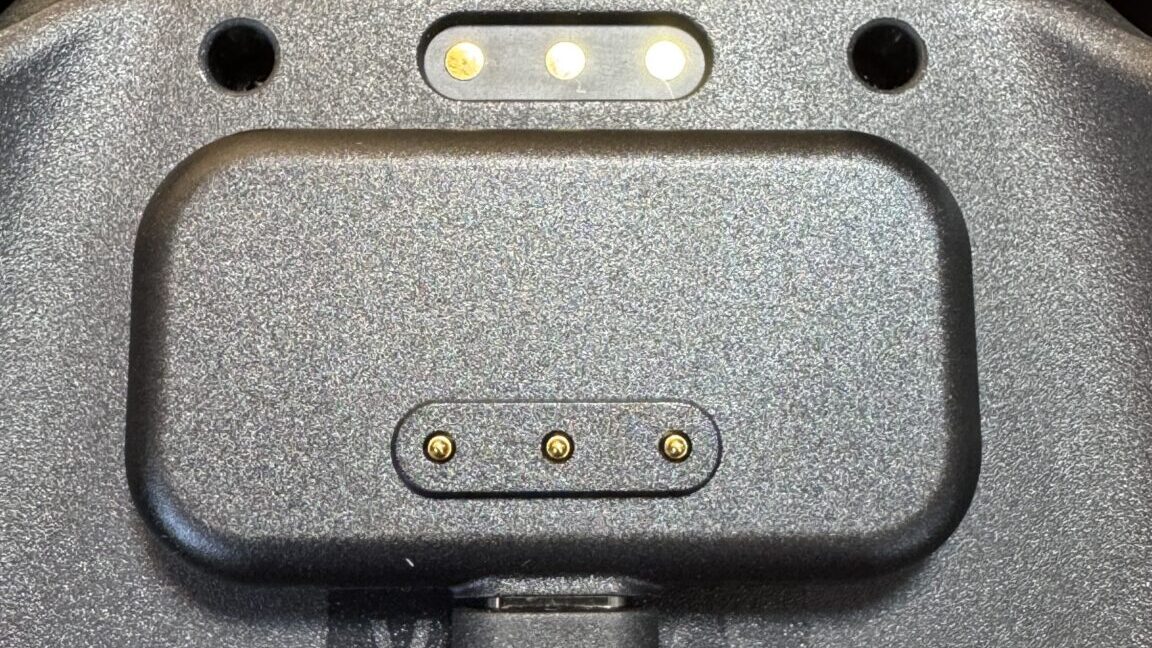
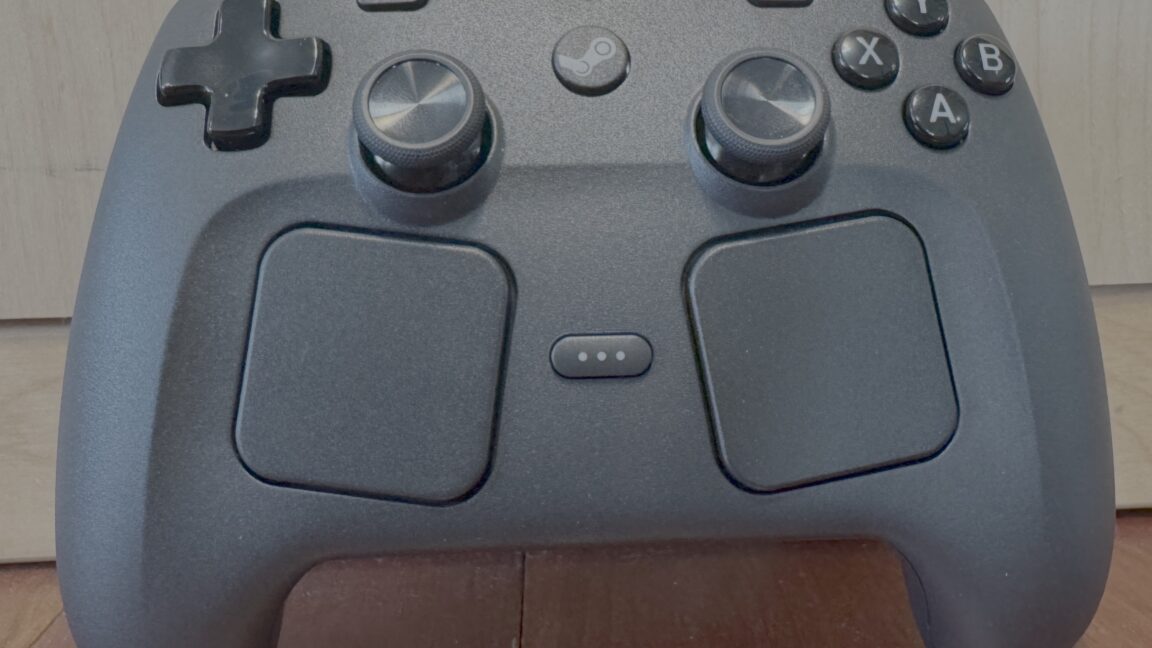
When we reviewed the new Steam Controller last month, we noted how the satisfying click of the magnetic charging puck easily connecting to the back of the controller lets users “save the hassle of fiddling with a power cord.” But one Reddit user’s experience highlights how the exposed contacts on that puck can be a fire hazard if Steam Controller owners aren’t careful.
On the r/SteamController subreddit, user Toikka shared how the metal portion of the charging puck “started sizzling due to a short circuit” when it came in contact with their metallic watch strap. The strap had apparently flopped down from a nearby watch charger and hit the controller puck “at the exact wrong angle,” which “almost started a fire,” the user wrote.
This is a potential issue that Valve appears to be aware of. In the manual included with every Steam Controller, Valve warns that both the charging puck and the Controller contain ”magnetic parts [that] may attract magnetic items.” Users should make sure both are “free of metallic objects” in order “to reduce the potential risks of sparks and resulting property damage or possible injury,” Valve wrote. The manual also warns that the magnets could have a negative effect on medical devices, credit cards, and magnetic data storage placed nearby.



Dans un message publié sur X, Valve s'est à moitié excusé pour la rupture de stock actuellement observée par le Steam Controller, qui vient tout juste d'être lancé. L'entreprise travaille sur un réassort, pendant que les spéculateurs s'enrichissent.



Onze ans après une première tentative très clivante, Valve retente l’expérience. Ce lundi 4 mai 2026, sort le Steam Controller : une manette de seconde génération pensée aussi pour accompagner la future Steam Machine.

Valve a annoncé les modalités de lancement pour son Steam Controller, sa nouvelle manette de jeu. Elle sera disponible à compter du 4 mai 2026, moyennant un prix de quasiment 100 €.
Since time immemorial, serious PC gamers have proselytized about the superiority of mouse and keyboard control schemes over the more input-limited handheld controllers used by most console gamers (and others). In recent years, though, many PC gamers have started keeping a spare Xbox controller (or similar) nearby for the increasing number of PC games designed primarily or exclusively with thumbsticks and buttons in mind.
Valve's upcoming Steam Controller (not to be confused with the 2015 controller of the same name) is the Steam maker's effort to replace those controllers with something more explicitly designed for the PC, and for the upcoming Steam Machine. After spending a few weeks with the controller, though, we're not quite sure it sets itself apart from the competition enough to justify its high $99 asking price.
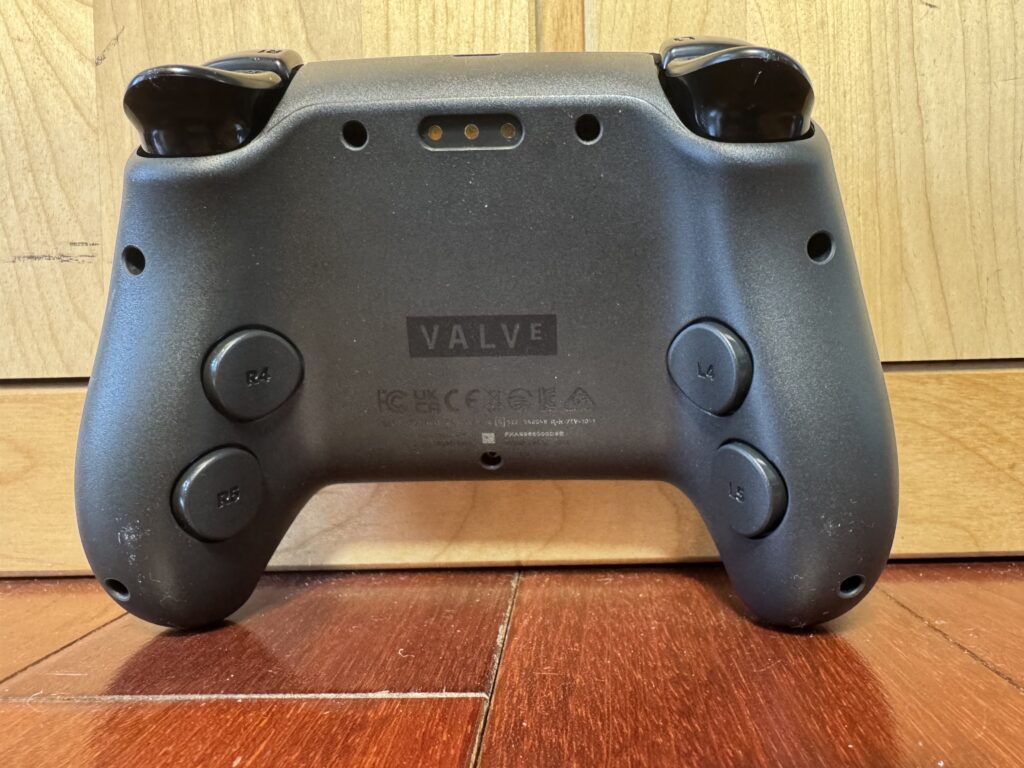
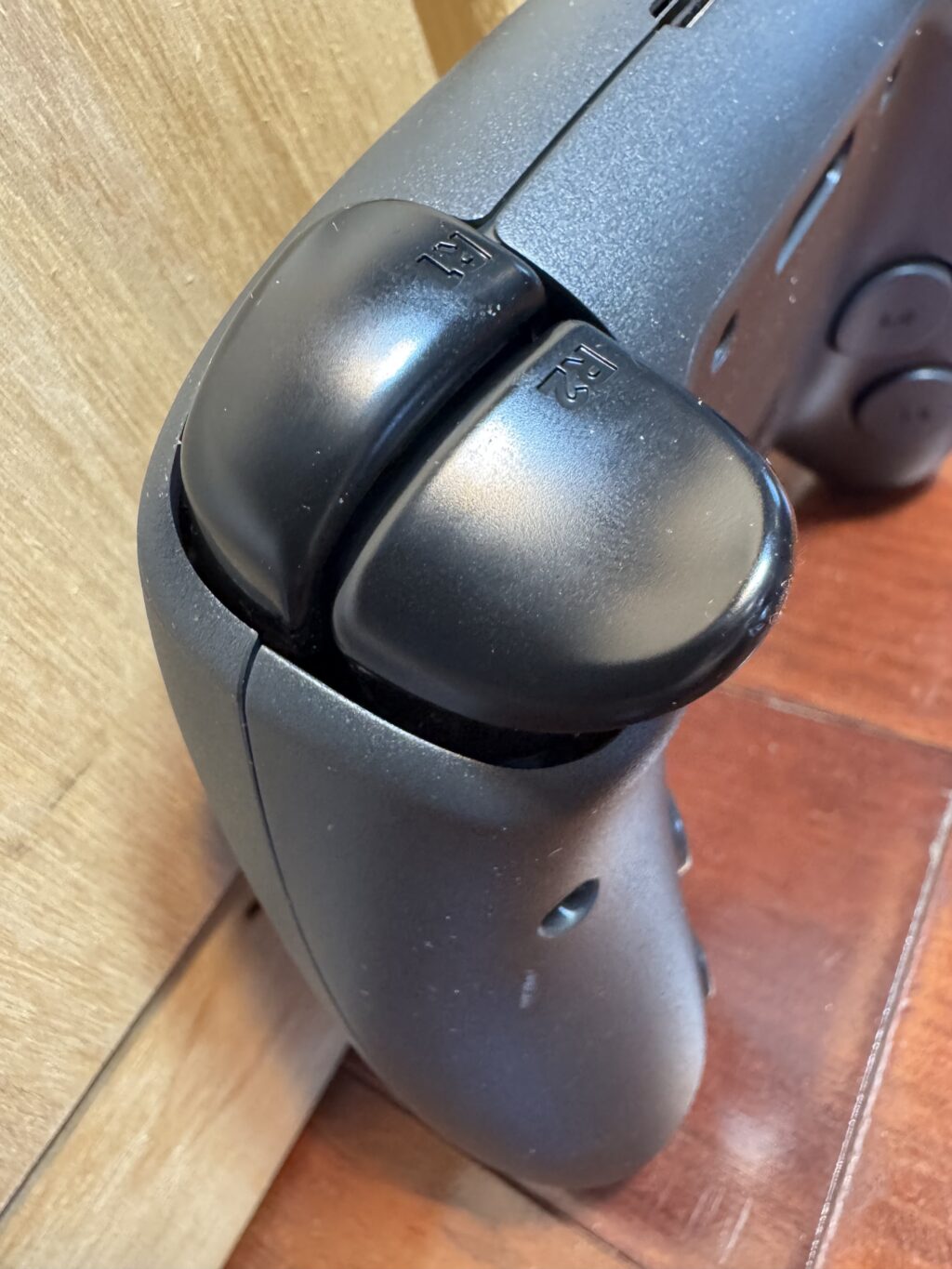
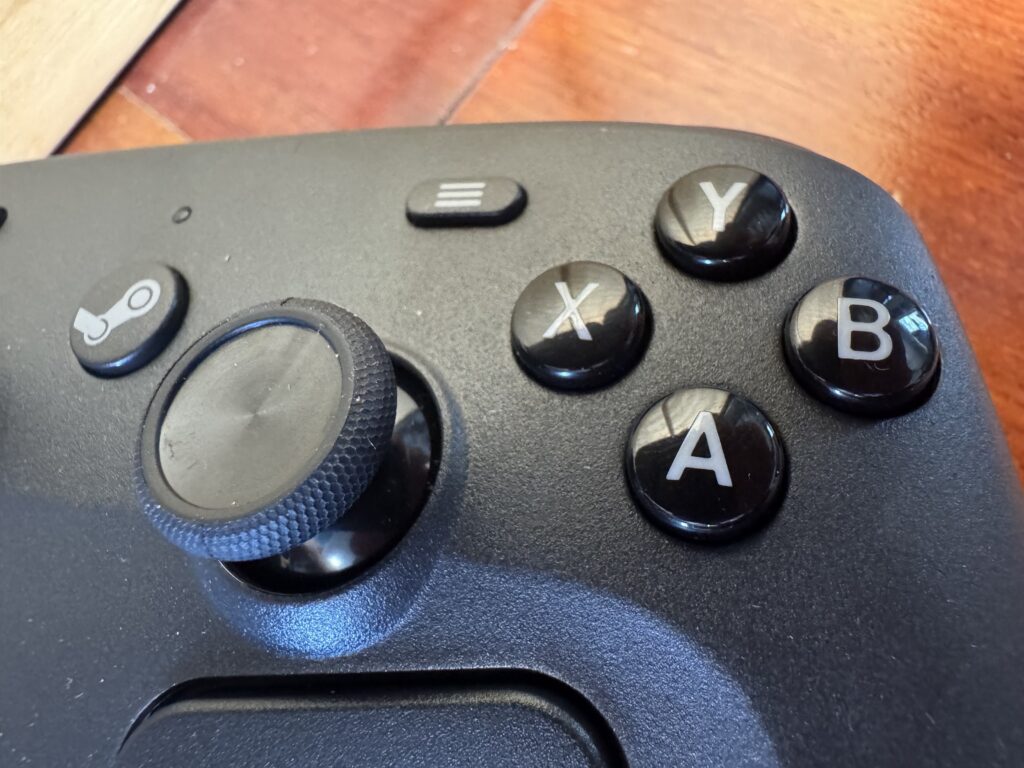
From the first time you hold a Steam Controller in your hands, it's clear that this is a well-made piece of hardware. There's a sturdy build quality to all the pieces that makes the controller feel solid in the hand, with just enough heft to feel substantial without being too heavy.



YouTuber extraordinaire Ahad Cove HATES taking out the rubbish, so he decided to hack a rubbish bin/trash can – let’s go with trash can from now on – to take itself out to be picked up.
Sounds simple enough? The catch is that Ahad wanted to create an AI that can see when the garbage truck is approaching his house and trigger the garage door to open, then tell the trash can to drive itself out and stop in the right place. This way, Ahad doesn’t need to wake up early enough to spot the truck and manually trigger the trash can to drive itself.
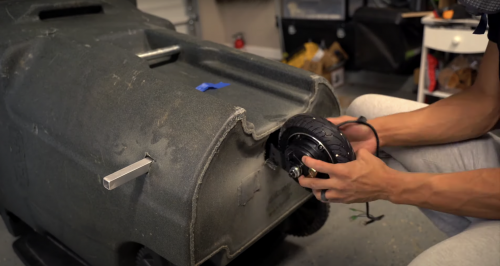
The trash can’s original wheels weren’t enough on their own, so Ahad brought in an electronic scooter wheel with a hub motor, powered by a 36V lithium ion battery, to guide and pull them. Check out this part of the video to hear how tricky it was for Ahad to install a braking system using a very strong servo motor.
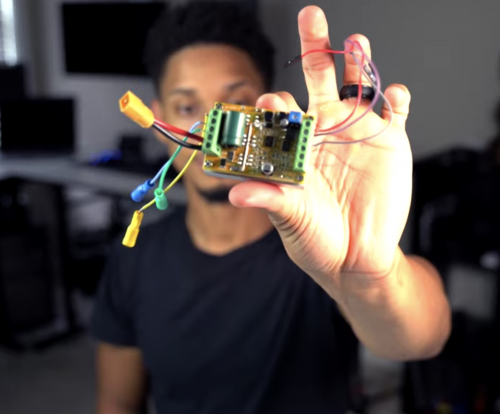
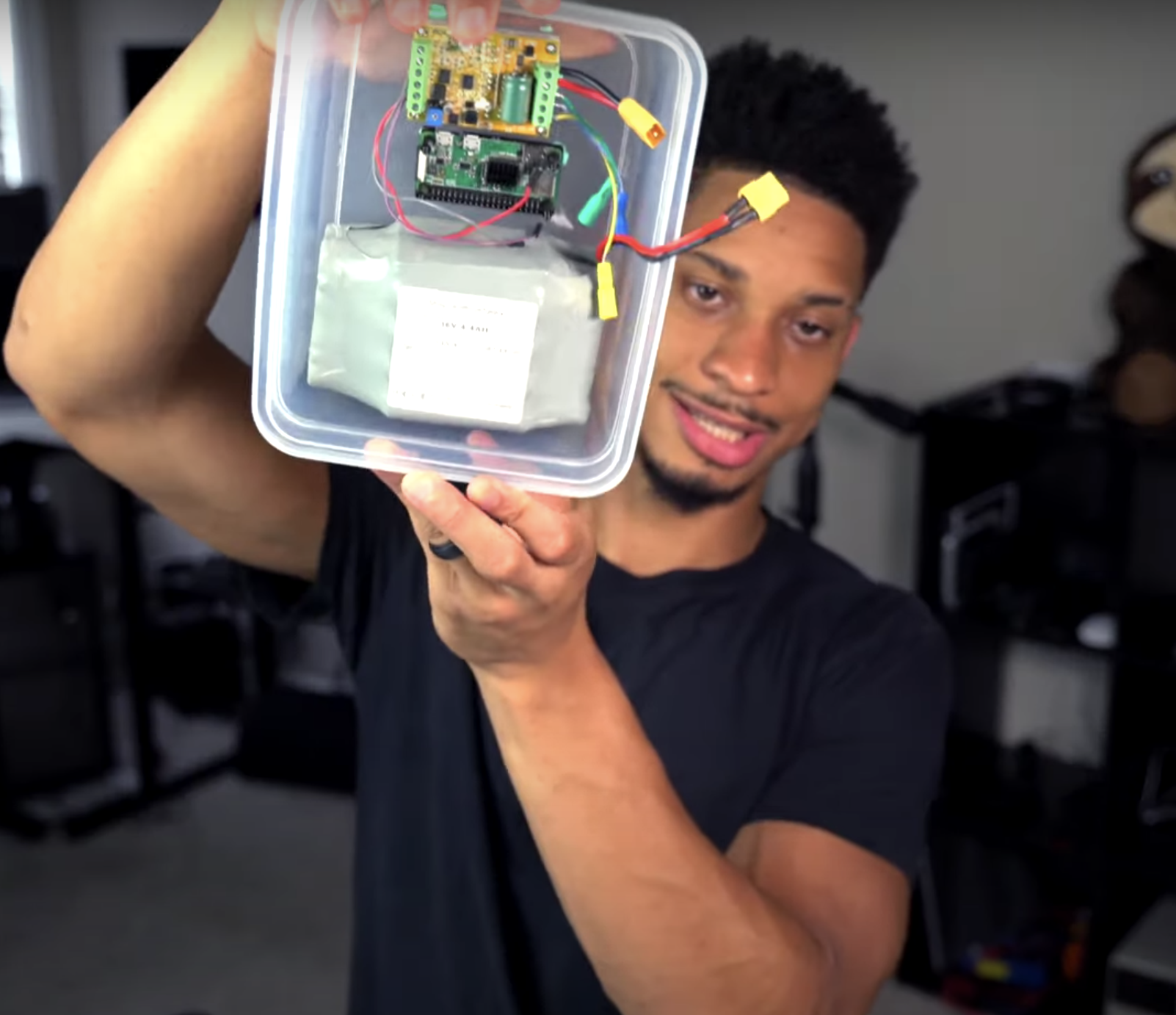
An affordable driver board controls the speed, power, and braking system of the garbage can.
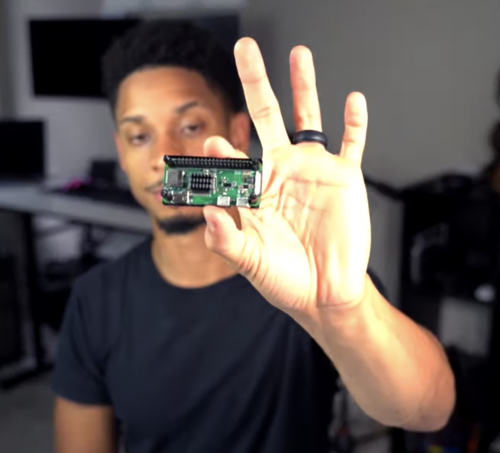
Tying everything together is a Raspberry Pi 3B+. Ahad uses one of the GPIO pins on the Raspberry Pi to send the signal to the driver board. He started off the project with a Raspberry Pi Zero W, but found that it was too fiddly to get it to handle the crazy braking power needed to stop the garbage can on his sloped driveway.
Everything is kept together and dry with a plastic snap-close food container Ahad lifted from his wife’s kitchen collection. Ssh, don’t tell.
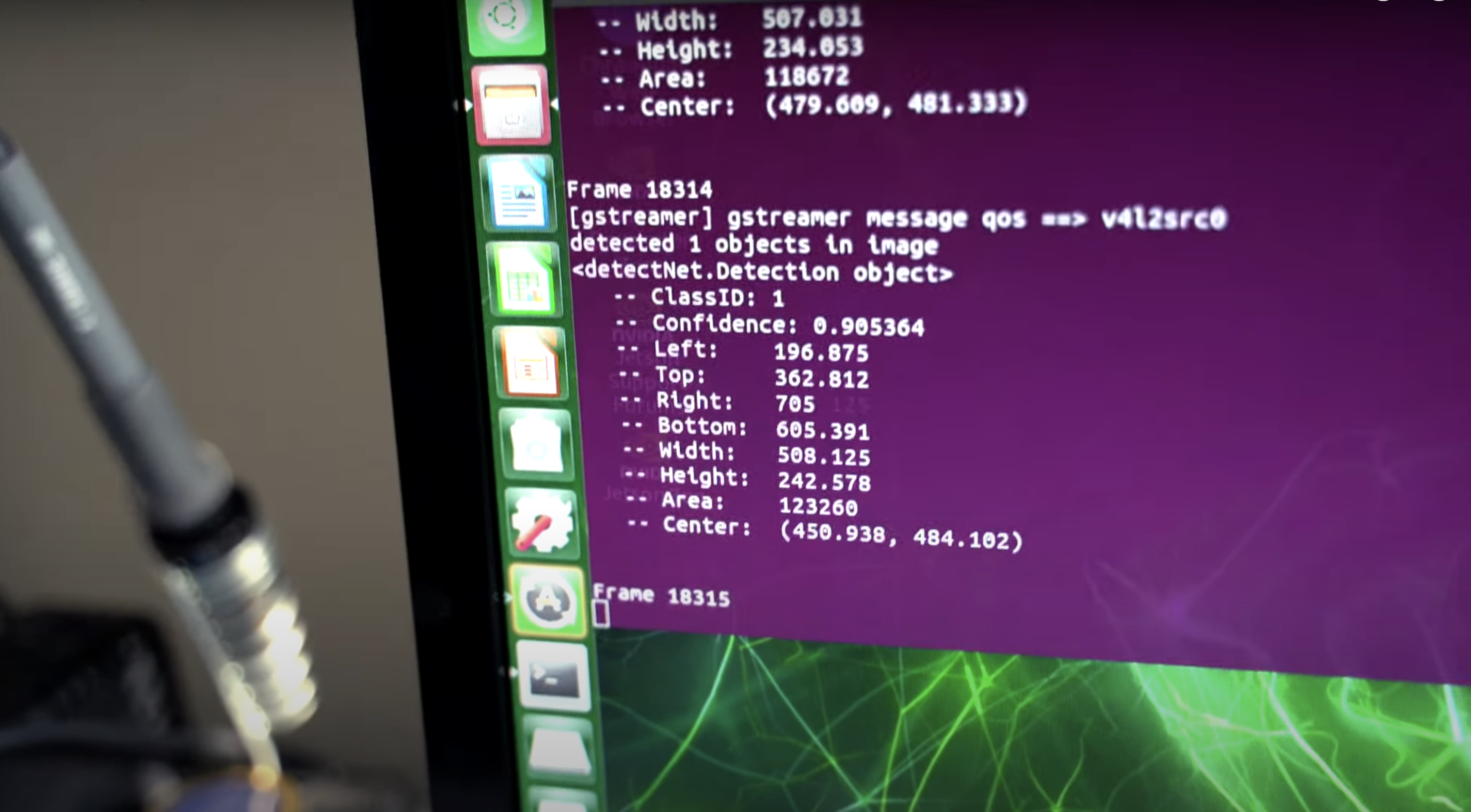
Ahad uses an object detection machine learning model to spot when the garbage truck passes his house. He handles this part of the project with an Nvidia Jetson Xavier NX board, connected to a webcam positioned to look out of the window watching for garbage trucks.
Ahad’s garage door has a wireless internet connection, so he connected the door to an app that communicates with his home assistant device. The app opens the garage door when the webcam and object detection software see the garbage truck turning into his street. All this works with the kit inside the trash can to get it to drive itself out to the end of Ahad’s driveway.
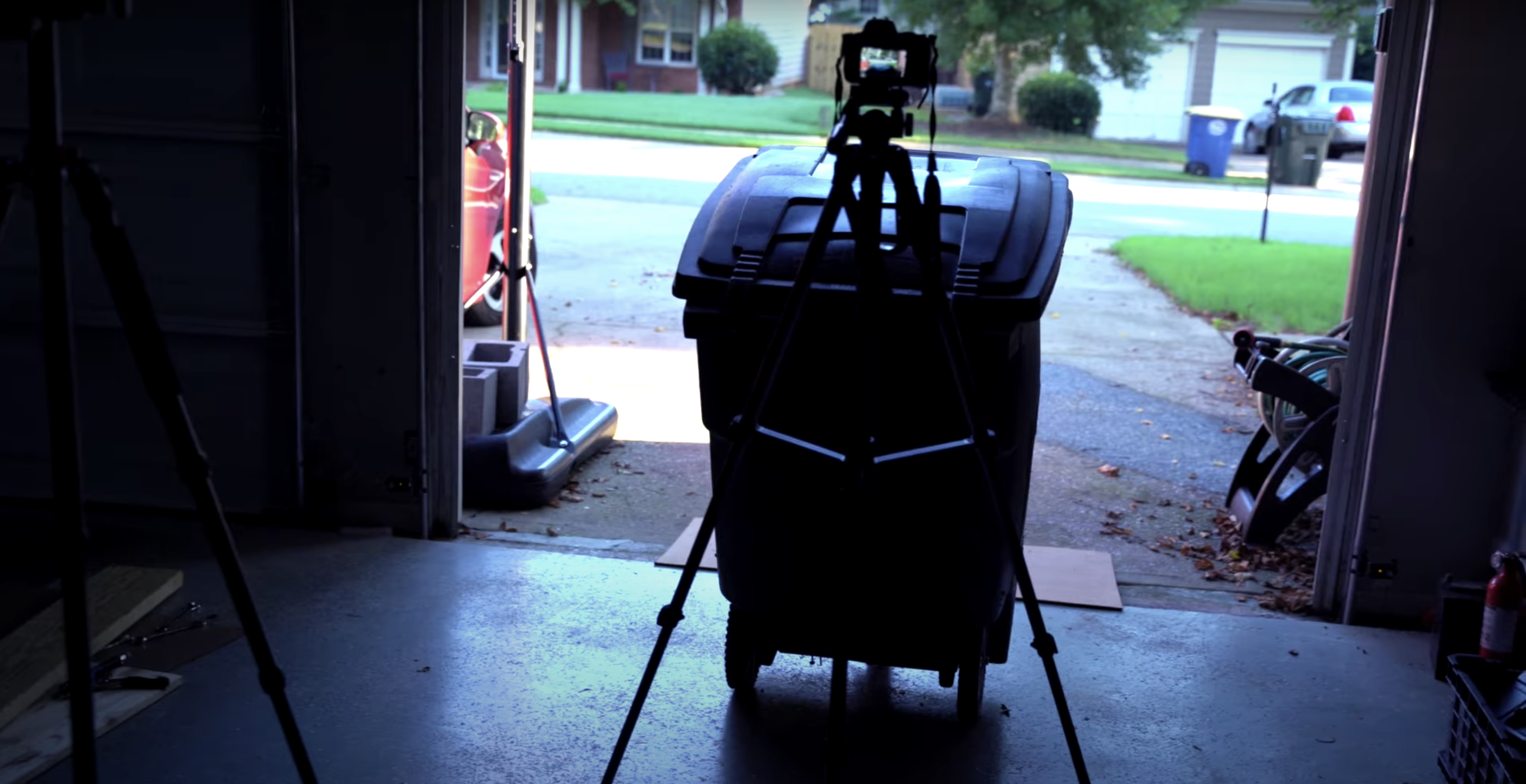
Check out the end of Ahad’s YouTube video to see how human error managed to put a comical damper on the maiden voyage of this epic build.
The post Self-driving trash can controlled by Raspberry Pi appeared first on Raspberry Pi.

 Lateo.net - Flux RSS en pagaille (pour en ajouter : @ moi)