 Connexion


Running complicated algorithms on quantum computing hardware is going to require the use of logical qubits, where collections of hardware qubits are linked together in ways that allow errors to be detected and corrected. In general, the more hardware qubits you dedicate to each logical qubit, the better the chances are of identifying errors. But, given that the hardware qubits are prone to errors, adding more of them also increases the probability that errors will occur. If the hardware error rate is too high, then growing the logical qubit will only make matters worse.
Fortunately, several companies have demonstrated hardware where the error rate is not too high. Several demonstrations show logical qubits are beyond the breakeven point, where adding more qubits improves performance. The problem is that the improvement isn't very dramatic. To lower error rates to levels we'll need to run complex algorithms, we'd have to add a completely impractical number of qubits to each logical qubit.
On Monday, Quantinuum announced that its current generation of hardware is capable of scaling well beyond the breakeven point. Each step up in the size of logical qubits improved some measures of their performance by a factor of over 10.
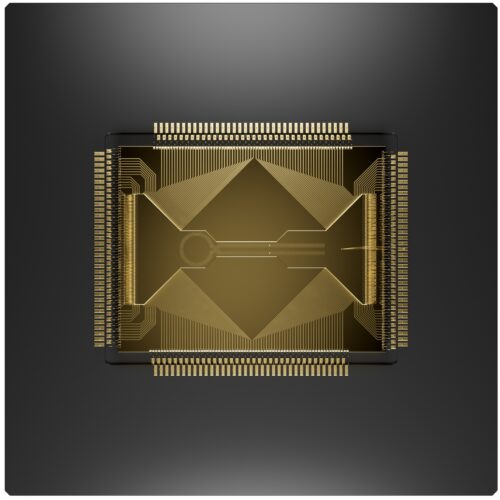
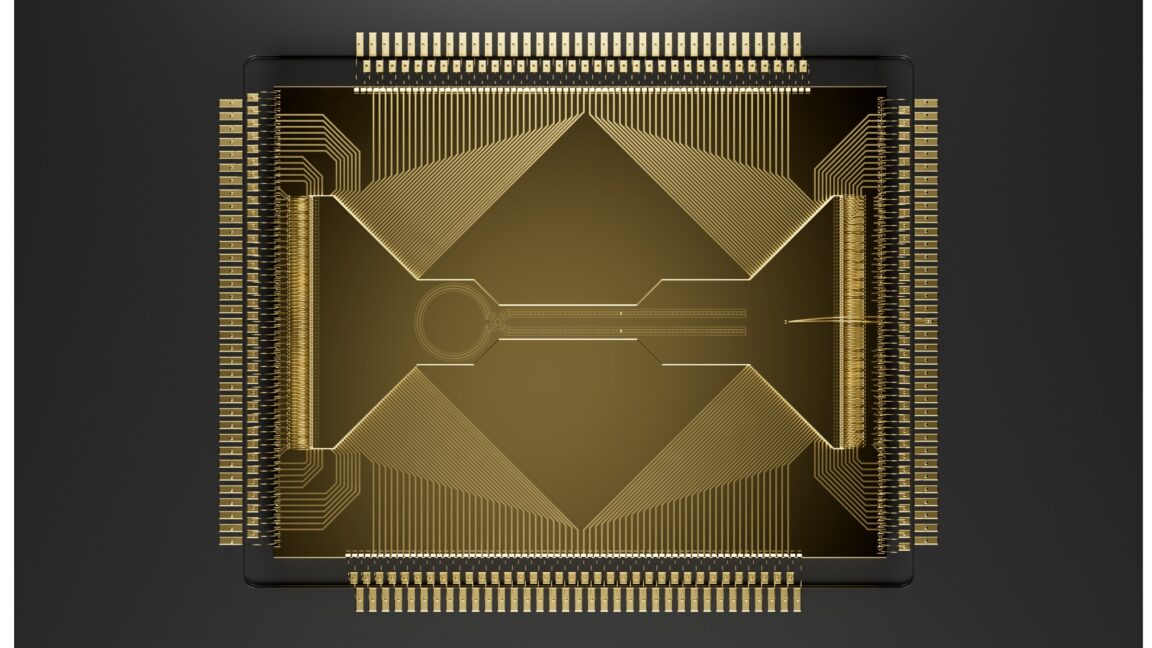
Google’s Willow processor cuts magic-state errors 40-fold. Learn what the result means for quantum computing costs, scaling, and enterprise planning.
The post Google Willow Cuts Magic-State Errors 40-Fold appeared first on TechRepublic.
Nvidia commits $1 billion over five years to support US science, quantum computing and AI research, expanding its role in the federal Genesis Mission.
The post Nvidia’s $1 Billion Research Plan Targets AI, Quantum Computing and Medicine appeared first on TechRepublic.
Cloudflare said Tuesday it plans to issue quantum-proof TLS certificates, making it one of the first authorities to issue such certificates that use a form of cryptography that is widely believed to withstand attacks from quantum computers.
The Internet infrastructure provider said it will use an open source platform that issues both classic TLS certificates and a post-quantum equivalent known as Merkle Tree Certificates. The hybrid certificates will be free to both paying and non-paying users. To help build the massive system and establish ubiquity across the sprawling TLS ecosystem, Cloudflare will be acquiring an already trusted certificate root from CA GlobalSign. Cloudflare said the move will let millions of websites use post-quantum certificates at the flip of a switch and without incurring any increased performance overhead.
Cloudflare’s plans are part of a major overhaul in the web public key infrastructure (WebPKI) required to make website encryption and authentication safe for the coming post-quantum age. A major challenge is using quantum-proof signatures that can be easily transmitted during web requests and recorded in transparency logs to ensure counterfeit certificates aren't assigned to websites. The makeover will take years to complete, because it requires the work of an untold number of engineers who design operating systems, browsers, certificate authorities, and Internet infrastructure.


AQSolotl has opened a Johor Bahru office for quantum-control hardware, strengthening Malaysia’s ties to Singapore’s quantum research ecosystem.
The post Singapore Quantum Startup AQSolotl Opens Johor Base in Malaysia’s Hardware Push appeared first on TechRepublic.
IBM Ventures backs BQP as its BQPhy software aims to accelerate enterprise engineering workloads using existing GPU and HPC infrastructure.
The post IBM Ventures Backs BQP to Bring Quantum-Inspired Computing to Enterprises appeared first on TechRepublic.
D-Wave is a bit of an oddity in the quantum computing space, having been founded back in the last century. And its initial offering wasn't a quantum computer like those being developed by IBM or Google. Instead, the company built what's now called a quantum annealer, a machine that isn't general-purpose but can solve a large class of optimization problems. While the hardware shares some similarities with the qubits used in gate-based quantum computers, it operates in a fundamentally different way.
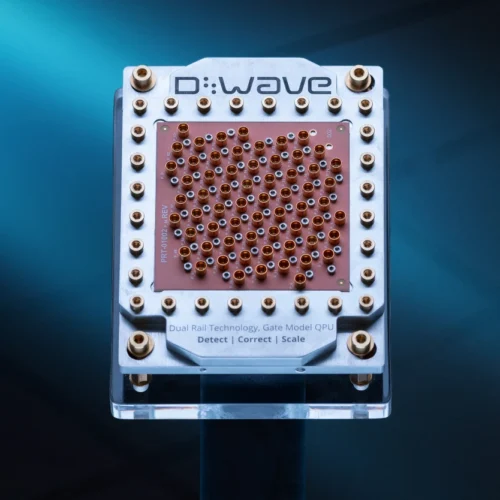
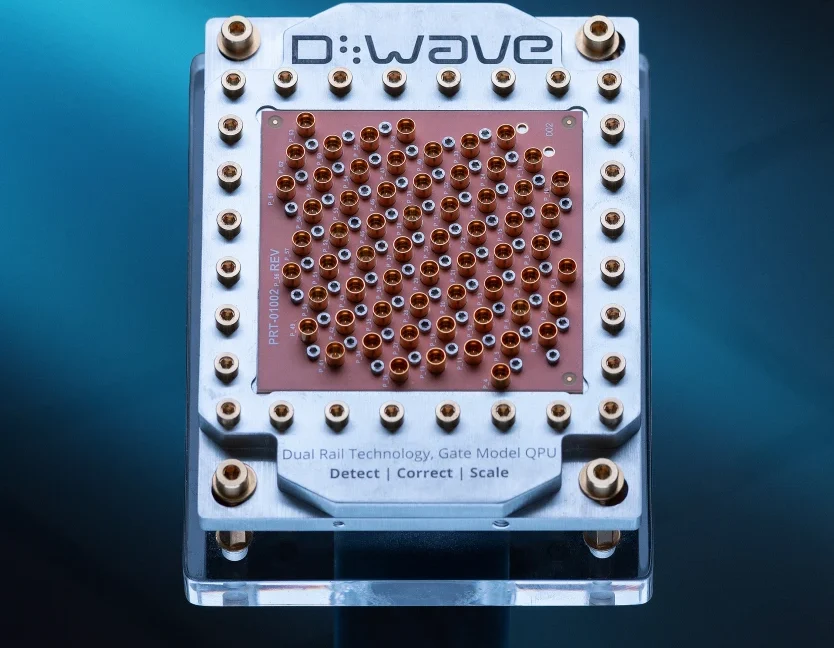
But a few years back, D-Wave started working on gate-based hardware, apparently choosing a somewhat unusual qubit technology called fluxonium. And this year, the company acquired a startup called Quantum Circuits that spun out of Yale University and has been developing what's called a dual-rail qubit (the same technology used by Amazon), which promises to make most errors very easy to detect, simplifying error correction.
On Wednesday, the company is publishing a paper in Nature that describes a key step in validating this dual-rail technology, showing that two of the qubits can be entangled without altering their best feature: Most are a single type that is easy to detect.
There are many algorithms for which it has been mathematically proven that a quantum computer can generate results that would take a classical computer an unreasonable amount of time to generate. Unfortunately, today's quantum computers either can't run those algorithms or can only run simplified versions that classical computers can also handle. This has left the field facing a challenging question: Can we demonstrate the promise of quantum computers on today's noisy, limited hardware?
That's a more difficult question than it may first appear. If you generate a result that's out of reach of today's regular computers, it may not be possible to verify that you got the right result. And given that today's quantum computers are somewhat error-prone, getting the wrong result is a distinct possibility. Further, in the absence of a mathematical proof of the capabilities of quantum hardware, it's possible that a better classical algorithm could outperform the quantum hardware.
These issues inspired IBM to launch a quantum advantage tracker. On Thursday, the company announced three new entries that it says clearly show a quantum advantage, each using a different approach to overcoming errors and validating quantum results. "Trusted computing when you can do classical simulations is irrelevant," IBM's Jay Gambetta told Ars. "Trusted computing when you can't do classical simulations is a big deal."
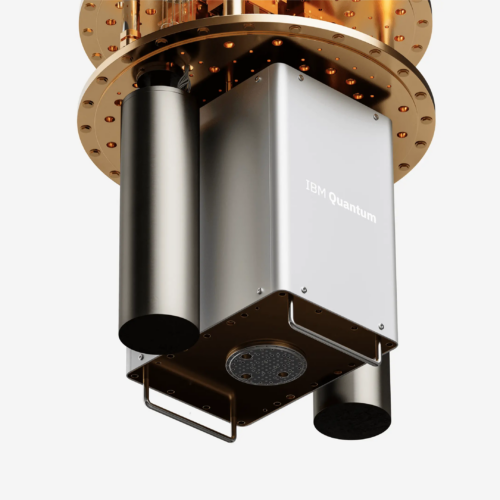
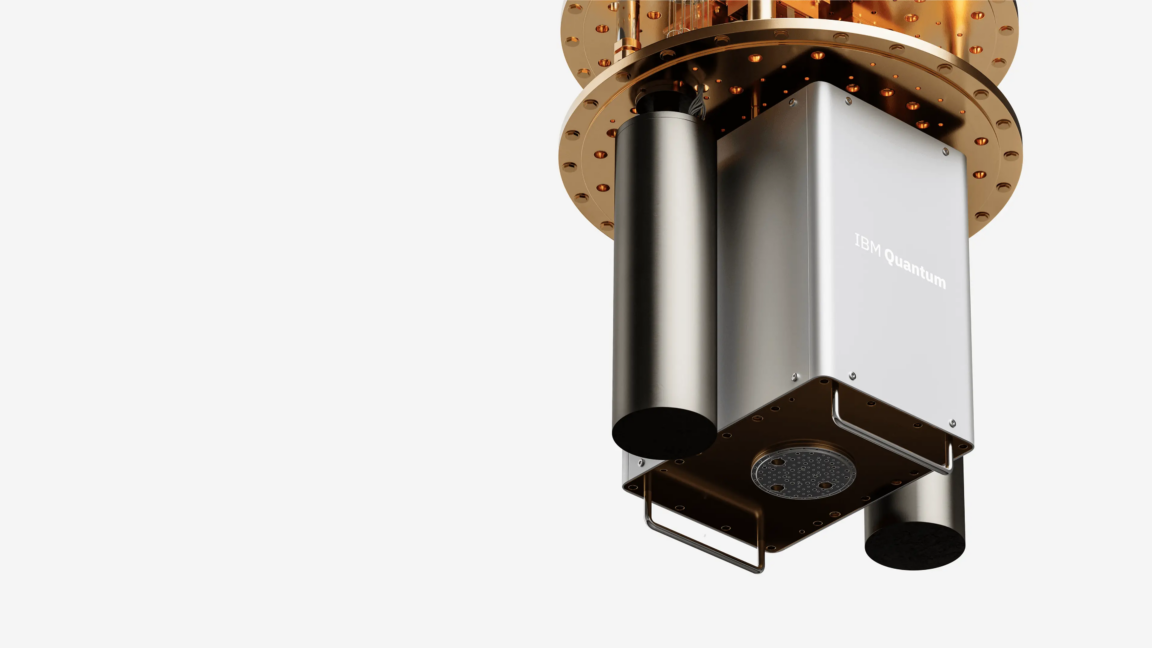
If you follow quantum computing news for long enough, it can start to seem like any quantum system that can alternate between two well-separated energy states can be used as a qubit. Atoms, ions, photons, electrons, and manufactured devices all have their backers. One of the key things that attracts backers is the tech's ability to scale. We'll need a lot of high-quality qubits to start doing any complex computations, and the ability of any technology to get us there is the subject of debate.
So even as some technologies can now support thousands of qubits, some competitors are still working on a small handful of qubits—the companies behind them are convinced that they have the potential to scale more effectively.
One of those technologies involves quantum dots that hold a single electron. Their advantage is that we can manufacture them using the same tech we use to build traditional processors, an approach that has proven to be scalable. This week saw two new papers describing different ways of using quantum dots, one of which was appealing enough that IBM bought the company that developed it. Separately, another company has released a processor showing 100 individual electrons being held in diamond defects, technology that wasn't obvious could scale.


There are some obvious big picture issues that stand between us and useful quantum computing. Issues like whether we can make enough high-quality hardware qubits to connect into the error-corrected logical qubits we need, and how we generate the states needed to perform universal computation on those logical qubits. But there are also many less prominent challenges that will need to be solved before we can perform calculations.
One of those challenges, which only affects some types of hardware, is calibration. For devices we manufacture, like superconducting qubits, there are always subtle variations among individual qubits. (This is not true when we use something like an atom to hold the qubit, but the lasers that control them can drift.) As a result, this hardware is put through a process called calibration, where we test different frequencies and amplitudes of the microwave pulses that control them to find the combination that produces the lowest error rates, and then save those settings for use in calculations.
However, you can't perform the typical calibration process while you're doing calculations, which means drift becomes an issue for long and complicated algorithms. Google, though, has figured out that it's possible to do calibration using the same data that's used for error correction.
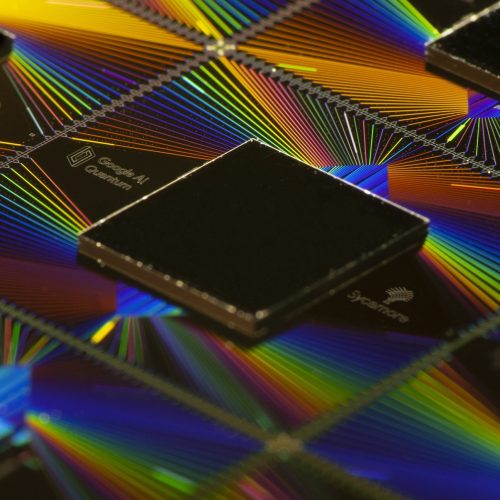
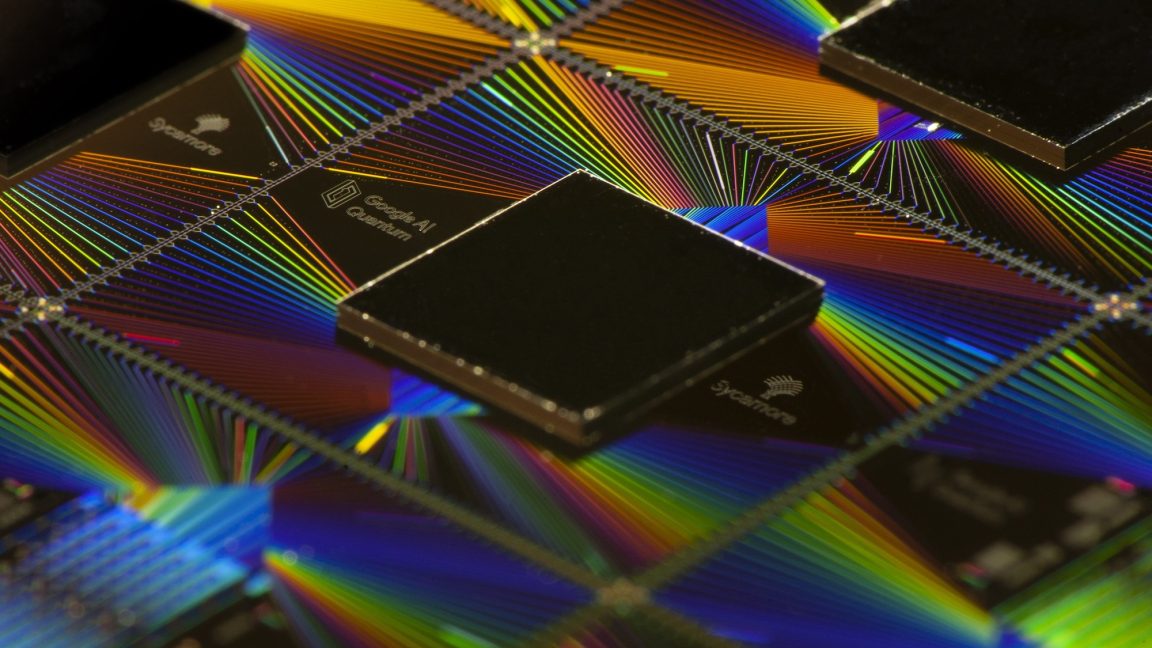
A short time back, we covered an announcement by Amazon that it would be hosting a useful quantum computer from its partner QuEra as soon as sometime in 2028. The system promised some eye-popping numbers compared to anything on the market today: over 10,000 individual qubits, each with an error rate low enough that the system could support hundreds of error-corrected logical qubits. But QuEra has to get there from its current hardware, which sits at 260 qubits that are relatively error-prone.
Those details about how it was going to get there were left for last Wednesday, when QuEra announced its roadmap. But the announcement only accentuated the gap: There will be no new hardware releases between now and the useful machine, and QuEra is promising to deliver an even more powerful machine just one year later.
"The company made a strategic decision not to sell NISQ [noisy intermediate scale quantum] systems anymore," QuEra's Yuval Borger told Ars. The two systems it had previously made available have similar capabilities, with about 250 hardware qubits and an appreciable error rate—enough to test some error correction codes, but not sufficient for using logical qubits in applications.
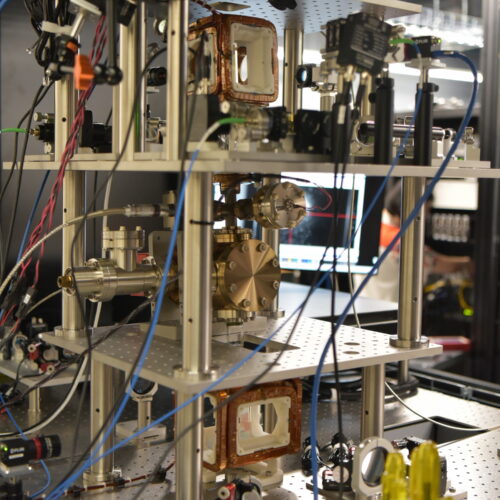
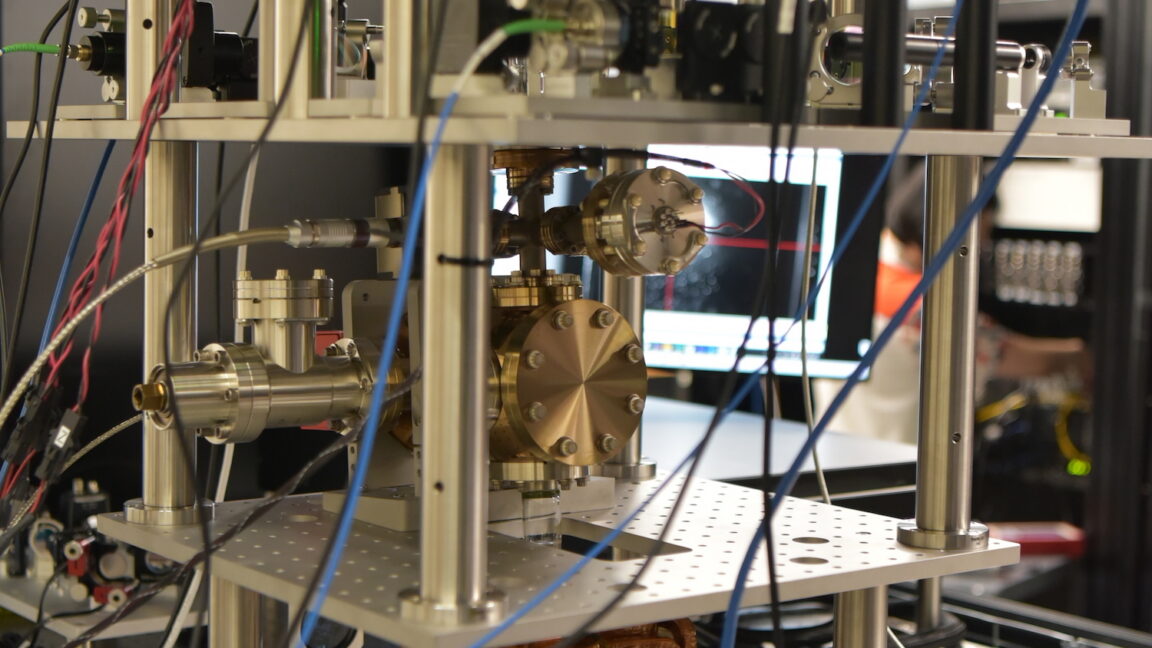
RIKEN’s ROQUO GPU supercomputer is now operating in Kobe, giving Japan a classical HPC layer for hybrid quantum computing research rather than a standalone quantum breakthrough.
The post RIKEN ROQUO Supercomputer Shows What Hybrid Quantum Computing Actually Needs appeared first on TechRepublic.
The White House is drastically shortening the deadline for government agencies and organizations to adopt new quantum-resistant encryption systems that will withstand attacks that use quantum computers, as the federal government seeks to protect decades’ worth of secrets belonging to militaries, banks, governments, and most individuals on Earth.
The executive order, titled Securing the Nation against Advanced Cryptographic Attacks, requires computing systems for “high-value assets” and “high-impact systems” to transition to post-quantum cryptographic key establishment schemes by December 31, 2030, and to quantum-safe digital signature schemes by December 31, 2031.
The new deadline, which for many organizations is about five years sooner than the previous one, comes on the heels of recent research showing that the resources and cost for building a cryptographically relevant quantum computer are far less than previous consensus estimates. In response, Google, Cloudflare, and other companies recently tightened their timelines for moving off vulnerable systems to 2029.


Quantum computing news usually picks up near the end of the year, as companies try to provide evidence that they are hitting benchmarks on time. However, there have been interesting announcements as the summer starts this year, from incremental progress to attention-grabbing promises. As we did earlier this month, Ars has a rundown of some of the most significant announcements.
These include a promise of useful, error-corrected quantum computing as soon as 2028, details on an updated trapped ion processor, and a case in which claims of quantum supremacy have been cut back a bit thanks to advances in more traditional algorithms.
Many people in the field expect that useful quantum computers are still about five to 10 years away. While there may be a few useful algorithms that can be run on existing error-prone hardware, almost all of the interesting problems that quantum computing can be applied to will require some form of error correction enabled by linking a small collection of hardware qubits together into what's called a logical qubit. Logical qubits include the redundant storage of information along with neighboring qubits that can be measured to determine when errors occur and how to fix them.
With dozens of companies, from small startups to tech giants, pursuing quantum computing, there's a steady flow of results as they try to find a path to utility. We typically focus on new technologies and major landmarks, which can obscure the fact that any big success will inevitably have been built on a lot of incremental progress.
The past few weeks have seen two companies release progress reports on how they're trying to get the technologies closer to general use. None of these represents a major breakthrough, but all are absolutely necessary for the technology to advance. The idea here is to convey the hard work required to move us closer to something useful.
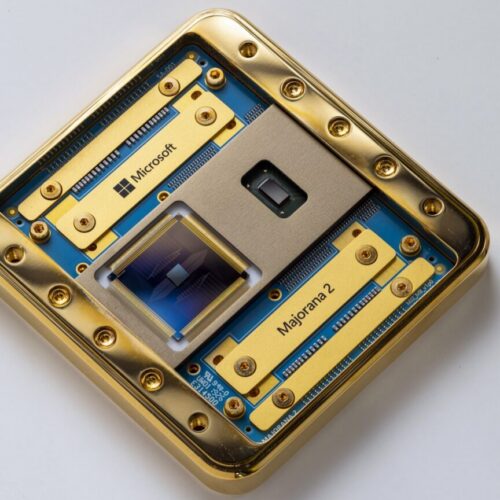
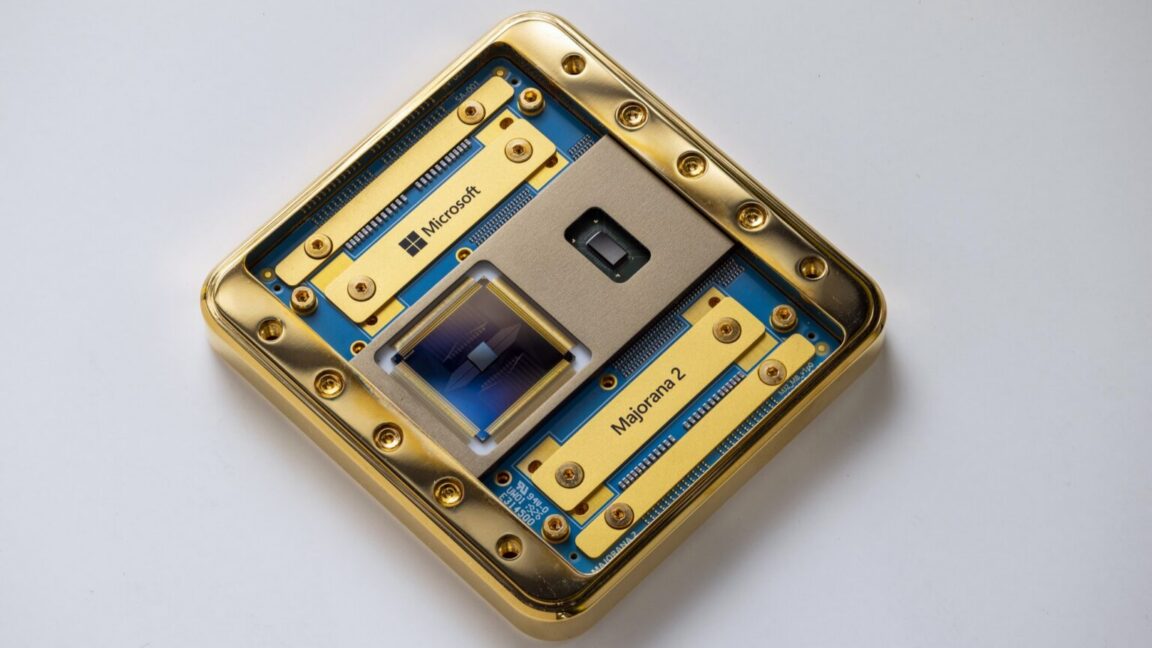
Microsoft is one of the few companies working on topological qubits, based on the distinct physics that occurs when particles are confined. Microsoft's system relies on a thin superconducting wire placed on top of a semiconductor. In superconductors, groups of two electrons form Cooper pairs. But if the wire contains an odd number of conducting electrons—meaning there's a single unpaired electron—it will end up delocalized to both ends of the wire. (Because quantum mechanics is weird.)
Last week, the US government announced $2 billion in investments in quantum computing companies, allocating $100 million each to a range of startups in exchange for equity in the companies. Those could be make-or-break investments for many companies that are likely years away from a product that could see widespread use. But a member of the US Congress is now arguing that those deals are illegal, as Congress did not allocate the money for this purpose—instead, it was meant to support public research in semiconductors.
But the biggest chunk of money would go to a company that likely wouldn't exist if it weren't for the government's backing. Anderon will be set up with a billion dollars each from IBM and the government and will inherit personnel and IP from IBM. It will serve as a foundry for fabricating quantum processing units and will contract its services out to IBM and any other company that wants access to cutting-edge hardware.
Zoe Lofgren (D–Calif.), the ranking member of the House Science, Space, and Technology Committee, made it clear that she is not happy with how the government is using its money to support this technology.
The US government will take equity stakes worth a total of $2 billion in a slew of quantum computing companies, including a startup backed by a firm with links to the Trump family and one taken public by a Pentagon official.
The announcement by the commerce department that it had signed letters of intent with nine companies—including GlobalFoundries and IBM—sent shares in quantum specialists soaring on Thursday.
Both IBM, which is set to get $1 billion, and GlobalFoundries, which will receive $375 million, were up more than 6 percent in pre-market trading. D-Wave Quantum, an awardee that was taken public in 2022 by Emil Michael—now a top Pentagon official—was up more than 20 percent.


To get quantum computing to work, we will ultimately need lots of high-quality qubits, which we can tie together into groups of error-corrected logical qubits. Companies are taking distinct approaches to get there, but you can think of them as falling into two broad categories. Some companies are focused on hosting the qubits in electronics that we can manufacture, guaranteeing that we can get lots of devices. Others are using atoms or photons as qubits, which give more consistent behavior but require lots of complicated hardware to manage.
One advantage of systems that use atoms or ions is that we can move them around. This allows us to entangle any qubit with any other, which provides a great deal of flexibility for error correction. Systems based on electronic devices, by contrast, are locked into whatever configuration they're wired into during manufacturing.
But this week, a new paper examined research that seems to provide the best of both worlds. It works with quantum dots, which can be manufactured in bulk and host a qubit as a single electron's spin. The work showed that it's possible to move these spin qubits from one quantum dot to another without losing quantum information. The ability to move them around could potentially enable the sort of any-to-any connectivity we see with atoms and ions.


Google warns that quantum computers could break crypto sooner than expected, heightening the urgency for post-quantum security across blockchain networks.
The post Google Warns Quantum Computers Could Crack Crypto Sooner Than Expected appeared first on TechRepublic.

 Lateo.net - Flux RSS en pagaille (pour en ajouter : @ moi)