 Connexion


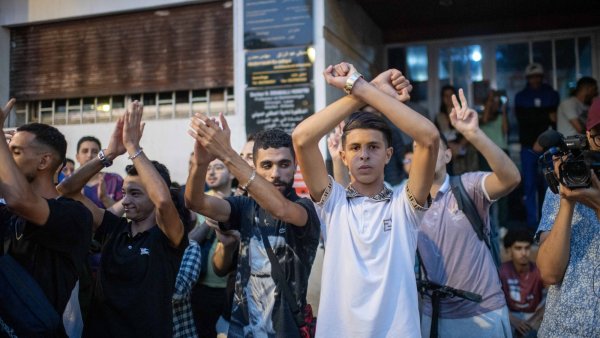
Un an après l'émergence du mouvement de la génération Z, les manifestations massives se sont éteintes, mais pas la répression. Les procès s'enchaînent, les appels sont constamment reportés et les mineurs restent détenus sans jugement.
Notre présence derrière les barreaux, le procès de nos frères de la génération Z et ce que subissent tous les gens honnêtes confirment que nous sommes dans la même tranchée, et que notre combat contre l'autoritarisme et la corruption est un combat décisif qui n'admet ni recul ni compromis.
En lisant ces mots, la voix de Zineb El Kharroubi, jeune militante du mouvement GenZ 212, tremble légèrement. Ce sont ceux de Nasser Zefzafi, le leader du mouvement du Hirak du Rif. Depuis la prison de Tanger 2, où il a encore onze ans à purger, il les adresse à cette génération qui « tient la braise entre ses mains ».
Derrière les barreaux, Zineb aurait bien pu s'y retrouver aussi. Au Maroc, en juin 2026, elle a été condamnée à six mois de sursis pour « incitation à commettre des crimes ou délits par voie électronique ». Elle pratique pourtant son activisme depuis la France, où elle réside. Le 27 septembre 2026, la jeune femme participait à une table ronde devant une dizaine de personnes réunies au Doc, dans le 19e arrondissement de Paris, pour célébrer le premier anniversaire du mouvement GenZ 212, ainsi que « pour soutenir les personnes bloquées à Sebta [Ceuta] ».
Ce même jour, des évènements ont aussi été organisés à Casablanca, Rabat, Madrid, ou encore à Bruxelles. Derrière ces derniers, il y a le collectif « Free Koulchi » — « Libérez-les tous » — un slogan hérité du Hirak. Car Nasser Zefzafi a peut-être dix-sept ans de plus que Zineb El Kharroubi, ils ont en commun un engagement fondé sur la revendication de droits fondamentaux… et qui est sévèrement réprimé. « Le fait que sa parole nous parvienne, depuis sa cellule, ça ne fait que prouver qu'ils ne peuvent pas arrêter la parole libre. Ça nous donne vraiment beaucoup de force, on se dit qu'on est sur le bon chemin et qu'on doit continuer », confie la jeune femme.
En 2017, le Hirak avait protesté pendant des mois pour réclamer des hôpitaux, des routes et des universités dans la région enclavée du Rif, au nord du Maroc. Le mouvement GenZ 212, lui, n'aura duré qu'un mois. Né à la fin de l'été 2025, il a émergé après un choc : à l'hôpital public d'Agadir, en une semaine, huit femmes sont décédées à la suite de césariennes. Un peu partout dans le royaume, des jeunes se sont alors mobilisés pour réclamer de meilleurs systèmes de santé et d'éducation, la fin de la corruption, puis la démission du gouvernement d'Aziz Akhannouch.
Affaiblie par plus de 5 000 arrestations, la mobilisation urbaine s'est éteinte. La répression, elle, ne s'est pas arrêtée. Alors que plusieurs procès de militants sont encore en cours, les arrestations se poursuivent et s'élargissent, notamment au monde artistique. À l'évènement « Free Koulchi » organisé à Rabat, une banderole rappelle le cas du graffeur Yassir Mounbir, alias 3ozayr. Détenu provisoirement depuis quatre mois dans l'attente de son procès, il est poursuivi pour « outrage à une institution constitutionnelle » et « outrage à un fonctionnaire public dans l'exercice de ses fonctions », après avoir réalisé des caricatures de Mohammed VI publiées sur Instagram.
« On ne devrait pas se réjouir d'avoir “que” du sursis », estime Zineb, qui pense à tous ceux qui n'ont pas eu la même « chance » qu'elle. « Les gens qui sont derrière les barreaux comptent sur nous. Le minimum qu'on puisse faire, c'est de ne pas les oublier, de continuer à parler d'eux, et de réclamer leur libération », affirme-t-elle à Orient XXI.
Depuis un an, le mouvement GenZ 212 est paralysé par les affaires judiciaires qui s'enchaînent. Hakim Sikouk, président de l'antenne Rabat de l'Association marocaine des droits humains (AMDH) analyse :
Les autorités ont mobilisé tous leurs appareils pour tuer le mouvement dans l'œuf… afin que le fantôme du mouvement de la jeunesse du 20 février 2011 ne revienne pas, pour que la portée des protestations ne s'élargisse pas, et aussi pour qu'ils servent d'exemple pour toute tentative future.
Dès les premiers jours du mouvement, l'AMDH avait dénoncé des violations dans les procédures d'arrestation. Elle note que celles-ci se sont intensifiées lors des deux nuits de vandalisme, du 1er au 3 octobre 2025, en marge des manifestations pacifiques. La répression avait atteint son paroxysme dans la nuit du 1er au 2 octobre, à Lqliâa, lorsque des tirs de gendarmes avaient tué trois jeunes hommes. L'association réclame toujours que toute la lumière soit faite sur les circonstances de ces décès par l'ouverture d'une enquête indépendante.
De son côté, le ministère de l'intérieur marocain recensait près de 2 480 personnes poursuivies en justice, dont la moitié en état de détention, à la fin octobre 2025. Huit mois plus tard, la Délégation générale à l'administration pénitentiaire et à la réinsertion (DGAPR) indiquait que 662 personnes étaient toujours derrière les barreaux, dont 567 condamnés pour des crimes – sans préciser lesquels – et 95 pour des délits.
Face à l'ampleur des arrestations, le Comité national de soutien aux familles des détenus GenZ 212 est désemparé. Il a récemment alerté sur la situation de plusieurs mineurs détenus dans l'établissement pénitentiaire de Tamesna. Hakim Sikouk, également coordinateur du comité, raconte :
Dès leur arrestation, ces mineurs ont été violentés dans les commissariats de police parce qu'ils ont refusé de signer les procès-verbaux d'audition qui étaient déjà prêts et qui leur imputaient de lourdes charges. Les mères ont été trompées lorsqu'on leur a demandé de signer à la place de leurs fils, en leur faisant croire qu'ils seraient libérés.
« S'ajoute à cela le mauvais traitement à l'intérieur de l'établissement pénitentiaire et la perte d'une année scolaire entière pour les élèves et les étudiants », précise-t-il. Poursuivis pour rassemblements non autorisés, jet de pierres sur les forces auxiliaires ou encore incendie de voitures de police, ces mineurs n'ont toujours pas été jugés. « La détention préventive sans jugement est une forme de torture méthodique pour eux et leurs familles », dénonce Hakim Sikouk, qui y voit une pratique « répressive et vindicative » de la part des autorités.
Ces mineurs ne sont pas les seuls à attendre une audience qui n'arrive pas. Mohammed Khalif, une des figures des manifestations casablancaises, a vu son procès en appel reporté à plusieurs reprises, après avoir été condamné, en première instance, à trois ans de prison pour « incitation à commettre des crimes et délits ». Le rappeur engagé Hamza Raid a été arrêté à deux reprises tout au début du mouvement. Poursuivi pour « incitation à commettre des crimes et des délits », et « participation à un rassemblement non autorisé », il a été condamné à un mois de prison avec sursis en novembre 2025. Il attend toujours son procès en appel.
Après avoir demandé – en vain – le départ du gouvernement Akhannouch, la Gen Z n'a pas été au rendez-vous politique le plus important du royaume : les élections législatives. Pour participer au scrutin du 23 septembre 2026, les 18-24 ans ne représentaient que 4 % des 15,8 millions d'inscrites sur les listes électorales, contre 8 % en 2021, alors qu'ils forment presque 11 % de la population totale. Et parmi la totalité des inscrits, peu sont allés jusqu'aux urnes : l'abstention n'a jamais été aussi haute depuis 2007, atteignant 61,98 %. « Les abstentionnistes ont toujours formé le premier parti au Maroc », rappelle Maâti Monjib, historien et politologue marocain. « La majorité de la population considère que les députés ne servent à rien. Ces derniers n'y peuvent rien, car le gouvernement issu du Parlement ne gouverne pas. Ce sont les hommes du palais qui gèrent sur le plan stratégique du pays », estime-t-il.
L'abstention de cette jeunesse peut aussi s'expliquer par le choix du boycott des élections, prôné notamment par le parti d'extrême gauche Annahj Addimocrati (La voie démocratique travailliste) — dont plusieurs militants ont été arrêtés pendant qu'ils distribuaient des tracts — ou encore les islamistes d'Al-Adl wal-Ihsan (Justice et spiritualité), comme à leur habitude. « Leur appel a eu de l'effet certes, mais c'est loin d'être la principale motivation de l'abstention », modère Maâti Monjib. « Une bonne partie des gens ont voté pour recevoir ce qu'ils appellent Zarqalaf [en référence à la couleur bleue (zarka en arabe) du billet de 200 dirhams (environ 18 euros), NDLR]. Ce terme fait partie, pour ainsi dire, de l'outillage conceptuel des élections au Maroc, depuis une quinzaine d'années, quand c'était le prix moyen des voix », poursuit l'historien.
Peu de partis ont mené une véritable campagne pour la libération des détenus politiques, à l'instar de la Fédération de la gauche démocratique (FGD) et du Parti socialiste unifié (PSU), qui ont formé l'Alliance de gauche en s'efforçant d'intégrer les revendications des jeunes dans son programme social et économique. Celle-ci a obtenu huit sièges (sur 395), soit quatre fois plus qu'en 2021… mais est arrivée loin derrière le trio déjà au pouvoir. Cette fois, le parti Authenticité et Modernité (PAM) de Fatima Ezzahra El Mansouri a terminé en tête, avec 97 sièges. Le Rassemblement national des indépendants (RNI), précédent vainqueur, a essuyé un revers cinglant, n'obtenant que 66 sièges contre 102 en 2021, de justesse devant le parti nationaliste Istiqlal (65). Alors que GenZ 212 dénonçait la corruption de certains ministres, le Maroc se retrouve avec Fatima Ezzahra El Mansouri à la tête de l'exécutif – ex-ministre et maire de Marrakech, elle est mise en cause par des allégations de conflit d'intérêts dans le cadre d'une affaire foncière révélée à partir de documents divulgués en juillet 2025 par le groupe de hackers « Jabaroot ».
Sur la page militante « Morocco Youth Voice », on ironise : « Comment une personne sensée pourrait-elle croire qu'un peuple raisonnable voterait pour ces gens-là ? » Ce compte Instagram, qui rassemble près de 51 300 followers, fait partie de ces quelques pages anonymes qui font perdurer l'esprit du mouvement GenZ, en veille sur l'avancée des procédures judiciaires des détenus, appelant parfois à se réunir devant les tribunaux. « La répression a transformé cette jeunesse idéaliste, démocratique, et un peu libertaire sur les bords, mais non radicale, en une force antisystème. Tous les efforts du régime d'amadouer ces activistes comme individus ont échoué », avance Maâti Monjib. Il poursuit :
Le gouvernement avait décidé de rembourser 75 % des frais de campagne électorale aux candidats de moins de 35 ans. En même temps, le ministère des affaires religieuses avait fait dire aux imams pendant plusieurs vendredis de demander aux Marocains « d'intéresser leurs enfants à la chose publique ». C'était un fiasco total.
Après deux semaines de tractations, Fatima Ezzahra El Mansouri a annoncé ce 12 octobre former sa majorité avec l'Istiqlal, l'Union socialiste des forces populaires (USFP) et le parti du Progrès et du socialisme (PPS). Les deux derniers partis avaient fait partie de la « Koutla » (« bloc » en arabe) démocratique formée en 1992 pour faire face aux partis de technocrates. Dans le programme du PPS, on peut lire la volonté d'une « tolérance zéro à l'encontre de la corruption, du conflit d'intérêts et de l'enrichissement illicite », ainsi que la promesse « d'agir pour la libération des journalistes, influenceurs, détenus du Hirak et jeunes de la Gen Z ». Mais pour Maâti Monjib, ce sera sans doute un vœu pieux :
Ces partis ont changé de sociologie. Ils sont devenus prorégime, les notables peuplent leurs conseils nationaux… les dirigeants qui gardent une certaine indépendance d'esprit vis-à-vis du palais se comptent actuellement sur les doigts d'une seule main.
Kla.TV. Moderna et Merck ont annoncé une avancée majeure dans le traitement du cancer : un vaccin à ARNm nouvellement mis au point aurait été utilisé avec succès contre le cancer de la peau. Une lueur d’espoir à l’horizon pour toutes les personnes atteintes d’un cancer ?
The post «Vaccin anti-cancer à ARNm» : Le prochain scandale après la vaccination contre le Covid ? first appeared on Réseau International.
par Ksenia Muratshina. Comment s’est déroulée la présidence indienne au sein du groupe, que peut-on attendre de cette rencontre et pourquoi les experts évoquent-ils ce qui semble incroyable : une convergence d’intérêt entre l’Inde et la Chine ?
The post Perspectives du sommet des dirigeants du BRICS en 2026 : bilan de la présidence indienne et dépassement des divergences entre l’Inde et la Chine first appeared on Réseau International.
par Anvar Azimov. L’intérêt accru de New Delhi pour la région d’Asie centrale n’est pas fortuit et tient à de nombreux facteurs, parmi lesquels comptent notamment les riches ressources énergétiques et minérales des États qui s’y trouvent.
The post Narendra Modi en Asie centrale : renforcer l’amitié et rechercher de nouveaux horizons first appeared on Réseau International.

Python star has had ENOUGH of the Islamist takeover
Legendary Monty Python star John Cleese has drawn a clear line in the sand, declaring himself a “culturalist” who believes some cultures are superior to others.
Cleese has also openly backed Restore Britain leader Rupert Lowe amid the accelerating collapse of British norms under mass migration and parallel societies.
The legendary comedian responded this week to ritual insults hurled at him for supporting Lowe by rejecting the tired “racist” smear from the usual uneducated quarters.
I see I am being ritually insulted for my support of this man
— John Cleese (@JohnCleese) July 28, 2026
The uneducated call me a racist
I am not a racist
I am a culturalist
I believe that some cultures are better than others
I prefer cultures to do not advocate stoning, pederasty,
wife beating, female genital… https://t.co/dpzlIRrAoV
“I am not a racist. I am a culturalist,” he stated in a post that now has over ten million views, adding “I believe that some cultures are better than others. I prefer cultures that do not advocate stoning, pederasty, wife beating, female genital mutilation, and beheading opponents. Call me old-fashioned…”
Cleese had earlier made plain his preference for Lowe over the rest of the political class, stating he trusts the Great Yarmouth MP “more than any of the other leaders.” The Metro reported the comments as Cleese pushed back against the predictable pile-on.
John Cleese has insisted that he is ‘not a racist’ after voicing support for Restore Britain leader Rupert Lowe. Responding to a post featuring the former Reform UK MP, Cleese recently said on X: ‘I trust this man more than any of the other leaders’: https://t.co/gObd5yE1Bw pic.twitter.com/saKZ0RlmXo
— Metro (@MetroUK) July 29, 2026
Lowe, for his part, simply called Cleese a patriot. The exchange has crystallised a growing recognition that Britain’s cultural foundations are under sustained assault from imported practices fundamentally at odds with the country’s historic values of individual liberty, equal protection under the law, and basic human decency.
Cleese has for some time now been documenting the same pattern with characteristic clarity. In April he tore into the BBC over claims that the British education system was designed for “whiteness,” pointing out the obvious: it was built for British children in Britain, most of whom happened to be white at the time.
To treat that historical fact as a “racist conspiracy,” he said, is insane. The broadcaster, he charged, operates with a hidden agenda opposed to the beliefs of the majority of British people.
He has also zeroed in on the political reality driving the double standard. With churches across Britain suffering more than ten recorded crimes every single day—theft, arson, vandalism, violence—Cleese observed that Labour politicians have become so dependent on Muslim votes that they no longer even pretend to be even-handed. “We need a new election,” the Python star demanded.
Cleese has noted that the focus on religion in Britain falls almost exclusively on Islam, while more peaceful and spiritual traditions are sidelined. He has asked why schoolchildren are not being introduced to Buddhism—a far more civilised belief system—rather than being steered toward Islam.
He has highlighted the one-way demand for respect: Islam insists its traditions be honoured while showing no reciprocal intention of respecting British ones, the polar opposite of genuine multiculturalism.
And he has pointed out that other religions do not threaten to take over the country, whereas multiple Muslim clerics and scholars openly do.
These are not abstract observations. They map directly onto the lived experience of communities watching churches burn, girls trafficked, and native citizens pushed down waiting lists.
That is precisely the ground Rupert Lowe and Restore Britain have chosen to fight on. The party, which surged past the Conservatives in membership within weeks of its launch, does not traffic in polite fictions.
It has vowed to deport millions of illegal and burdensome migrants—“if that means millions go, so be it”—to outlaw incompatible cultural and religious practices, and to give the British people a binding referendum on the death penalty for pedophiles and rapists when guilt is undeniable.
“Prison or deportation is too kind,” Lowe has said.
Lowe’s own record shows why the establishment treats him as a threat. As an MP he has submitted more than a thousand Freedom of Information requests that forced light onto grooming gang data, the true costs of mass migration, and foreign offender absconding rates.
When the results proved too damaging, the WhatDoTheyKnow platform restricted his access. Lowe’s response was characteristically dry: the restriction was “not in the spirit of transparency.”
He has also refused to soft-pedal the immigration crisis itself. Lowe has called openly for a hostile environment toward illegal entrants, many of them criminals, stating he wants them all deported and does not care how it happens.
Far-left politicians and media figures predictably denounced the stance as “cruel” and “repulsive.” Lowe’s reply was equally direct: he could not care less about defending the “humanity” of third-world conmen who break into the country and leave British families living in fear.
The practical consequences of the current open-door approach continue to surface. Lowe recently told Joe Rogan that arriving migrants are placed at the top of NHS waiting lists for dental treatment that British citizens cannot access. Rogan’s reaction was pure disbelief.
The incentive structure is obvious: free housing, welfare, and priority healthcare create a magnet that draws people across multiple safe countries.
Nowhere has the cultural incompatibility been more horrific than in the industrial-scale rape gang scandals.
Lowe’s Restore Britain-backed inquiry documented a nationwide pattern of abuse involving up to 250,000 young British girls, overwhelmingly by men from Pakistani Muslim and other Muslim backgrounds, with police and politicians suppressing the truth for decades under the banner of community cohesion.
Elon Musk responded by endorsing Nuremberg-style trials for those who enabled the cover-up. “The politicians who turned a blind eye to the Rape of Britain must go to prison,” he wrote.
Cleese’s latest stand simply names what millions of Britons already see. Preferring a culture that does not stone people, mutilate girls, or treat women as disposable is not racism. It is the minimum requirement of civilisation.
The uneducated may continue to throw the racist label; the rest of the country is increasingly done pretending that all cultures are equal when the evidence of the last three decades proves otherwise.
Britain’s political class spent years importing demographic change while criminalising honest discussion of the results.
Cleese, Lowe, and a growing public are no longer playing along. Some cultures produce free speech, scientific inquiry, and equal rights. Others produce the opposite. Pretending otherwise has already cost Britain dearly.
The post John Cleese: “Some Cultures Are Better Than Others” appeared first on Activist Post.
par Jean-Pierre Page. Leur voisinage et l’importance de la politique pro business de Modi ont trouvé un écho important en Chine. Tout cela a contribué à porter les échanges économiques et financiers entre les deux pays à un niveau sans précédent.
The post Hindi Chini Bhai Bhai first appeared on Réseau International.
par Pranay Kumar Shome. Un incident inquiétant lors de la visite du premier ministre Narendra Modi en Australie souligne l’hostilité croissante à laquelle sont confrontés les Indiens et les personnes d’origine ethnique non européenne en Australie.
The post Le nationalisme blanc et le démantèlement de la «culture inclusive» australienne first appeared on Réseau International.
Executive Summary:
Editor’s note: This is the final article in a four-part series. The previous three articles can be read here, here, and here.
For decades, the Chinese Communist Party (CCP) has placed the development and expansion of comprehensive national power (CNP; 综合国力) at the center of both Party ideological frameworks and its understanding of international competition. [1] Its current general secretary, Xi Jinping, has repeatedly tied CNP to core issues of Party legitimacy. In 2018, he explained that “liberating and developing social productive forces and enhancing the [CNP] of socialist countries is socialism’s essential demand and fundamental task” (解放和发展社会生产力,增强社会主义国家的综合国力,是社会主义的本质要求和根本任务), echoing a formulation established by Deng Xiaoping nearly 30 years earlier (Xinhua, December 18, 2018). [2] In 2021, he framed success in the Party’s core aim of achieving national rejuvenation in terms of winning the advantage in CNP competition, linking this directly to another pillar of the Party’s legitimacy (Xinhua, September 26, 2021). [3]
In the coming years, efforts to build CNP in the People’s Republic of China (PRC) will increasingly emphasize dominating technological innovation. Recent statements by leading CCP figures and in top Party publications make a clear link between CNP as the key metric by which the leadership assesses PRC national strength and advances in strategic and emerging technologies. Politburo standing committee member Ding Xuexiang (丁薛祥) recently described computing power as “an important manifestation of a nation’s CNP” (国家综合国力的重要体现); and shortly thereafter a People’s Daily article described leading science and technology talents as “a concentrated reflection of a country’s … CNP” (一个国家的 … 综合国力的集中体现) (People’s Daily, May 19, May 30).
Pinning success in developing CNP on the Party’s legitimacy narratives makes the stakes very high, particularly as its pursuit of CNP faces challenges, including from competition with the United States. A decline in the country’s comparative CNP and lost ground in its efforts to change the international order would reflect negatively on the Party leadership, perhaps in dangerous ways for either the leadership core or the Party more broadly. While the CCP continues to assess that it is on a long-term positive trajectory, that trajectory will not be linear. Bad policy choices could damage CNP growth, and provide openings that the United States or others could exploit.
Growing CNP Could Lead to More Aggressive Behavior
Evolving out of the 19th Party Congress in 2017, the CCP leadership has expressed increasing dissatisfaction with efforts to translate its accrued national strength as measured by CNP into a more powerful position globally. Efforts to date have focused on enhancing the country’s discourse power, but if this fails then Chinese leaders may turn to more assertive methods in the coming decade, perhaps leading to a far more dangerous PRC (China Brief, January 6). The combination of increased confidence in its comparative position globally, continued expansion of CNP across core elements of national strength, and growing dissatisfaction with the international order will likely change what deters Beijing over time, increasing the risk for those working to ensure that the CCP remains deterred from destabilizing military action in the region or coercive economic or political actions globally.
PRC behavior internationally has already changed as Chinese analysts and CCP leaders have become more confident in the PRC’s relative power in the international system. This shift will complicate how the lessons learned from Chinese behavior over the period 1978–2010 informs and enables prediction of how the country may act in the future. For example, a common perspective among China analysts is that Chinese leaders are so concerned with their international reputation that they will not take aggressive actions or can be shamed into “responsible” behavior as the West might define it. As Chinese confidence in its position globally continues to grow, however, Beijing instead will be less concerned with reputational costs. This has played out in recent years in the South China Sea, where significant public attention to destabilizing and aggressive Chinese actions against the Philippines has had little discernable impact on PRC behavior to date (China Brief, April 28, 2008, June 21, 2013, June 21, 2024, June 11). This publicity may even reinforce Beijing’s efforts to deter other actors in the region by demonstrating strength and will against potential adversaries.
Miscalculation Would be Dangerous
The PRC’s approach to measuring CNP could lead to dangerous miscalculation and overconfidence. Its current strategic buildup risks reaching a point at which the Chinese military finally assesses that it has accrued enough national defense power to deter the United States and/or U.S. allies from entering a conflict over Taiwan or elsewhere. Overconfidence in the deterrence capabilities of the People’s Liberation Army’s strategic forces, especially in combination with a rapidly expanding conventional force, risks leading to aggressive actions and miscalculation of the PRC’s own ability to deter the United States and others. Assessments made in 2020 noted that national defense strength was lagging behind economic strength, science and technology (S&T) strength, and CNP, all of which leaped ahead during the 13th five-year plan period (2016–2020) (Xinhua, November 26, 2020). This was despite the 2020 edition of the Science of Military Strategy discussing the critical importance of military strength to national defense strength within CNP as the “backbone of … war strength” (战争实力 … 的骨干力量) (Xiao, ed., 2020). [4]
Flaws in its approach to measuring CNP could at the same time lead to opportunities for the United States and its allies. For instance, the CCP believes that a lack of even and coordinated distribution of development across individual CNP subsystems will lead to instability (China Brief, September 26, 2025). Under this view, overinvestment in one area could come at the cost of other critical elements of CNP. This was a key factor in the downfall of the Soviet Union, which the United States drove to pursue unbalanced investment across its system. The CCP’s continued focus on the importance of balance across its subsystems suggests that a similar strategy could be applied to U.S.–PRC competition should competition grow that intense in the coming decades.
Another flaw in CNP calculations may lie in political sensitivities that could impact the measurement of CNP. This would lead to bad policies, which in turn could unintentionally worsen the country’s CNP. For instance, “soft power” elements of CNP—such as political strength, diplomatic strength, and culture and education strength—can be assigned negative values when calculating CNP, according to the theorist Huang Shuofeng (黄朔风). These elements are all far more politically sensitive than economic or S&T strength and are less easy to measure, though they also face degrees of political sensitivity (Huang, 2006). [5] A negative score in political strength would be reflective of poor leadership, poor management of the system, or policies and strategies that are not working. Although Huang’s is only one scale offered and may not reflect the current methodology used, any internal methodology would have trouble accurately measuring political strength due to the sensitive considerations involved. The same goes for national cohesion as described within CNP literature, which continues to be reinforced by the coercive power of the state. [6]
CNP Calculation Presents Avenues for Competitive Action
Soft spots in the PRC’s approach to calculating CNP are potential targets for competitive actions that undermine the Chinese leadership’s confidence in its assessments. [7] These could complicate its pursuit of CNP growth by forcing it to take policy and strategy decisions that derail its progress. For instance, if the CCP is unable to resolve current economic challenges, the country may never achieve the leading position in the international system as measured by CNP, which is a clear strategic objective. Moreover, if its economic slowdown continues for a decade or more, strict export controls, reduced access to the Western S&T ecosystem, and continued de-risking of U.S. and European S&Tfocused enterprises could force the PRC to overinvest in S&T at the expense of other CNP elements. This ultimately could undermine top leadership confidence in its status and suggest that the CCP, or at least relevant Party officials, are responsible for mismanagement.
Setbacks will not automatically spell the end of the PRC’s CNP growth, however, whether from a slowing economy or otherwise. If the system can find ways to effectively manage its problems, other drivers will ensure that the country’s rise can be maintained. The PRC as a result may be able to achieve preeminent status in CNP rank globally across all core elements of CNP without ever passing the United States in terms of total GDP. This is because CNP depends on how different constituent elements are weighted in the calculation of CNP and how they interact within the CNP system (and react to variables outside of the open system) (China Brief, September 5, 2025). Understanding Chinese calculations of comparative CNP should shed light on where CCP leaders perceive the PRC to be positioned in competition and how CCP approaches to risk may be evolving.
Deterring the PRC at the strategic level over the coming decades would require undermining Chinese confidence in its assessments of the “two trends” (两个大局)—national rejuvenation and changes unseen in a century—that Chinese analysts and CCP leaders assess reflect a shift in the global balance of power as measured by CNP. Deterrence is a critical element of national defense power, both for the PRC’s expanding capabilities, and for the United States and its allies and partners to continue deterring destabilizing Chinese actions.
In projecting the future of Chinese thinking on CNP competition, two critical elements will be important to assess. First, past experience does not predict future performance. The PRC’s impressive rise over the past 40 years does not mean that its rise will continue or that it will achieve its goals without any decline in power. Chinese scholars have discussed within the CNP literature the dangers of being the number two CNP power behind the United States, examining how both the Soviet Union and Japan stalled out and failed to surpass the United States during the 20th century. In this vein, Yan Xuetong (阎学通) warned in 2015 that bad policy decisions by the Chinese leadership can cause economic and military strength to decline (Yan, 2015). [8]
Second, challenges to certain CNP elements do not automatically entail an overall decline in CNP. The PRC has overcome significant challenges to date, or at least addressed them in ways that have enabled continued growth of CNP and modernization. Similarly, its path over the next 20 years is unlikely to be linear. The country has significant staying power and will remain a formidable economic, military, technological, and ideological challenger to the United States over the coming decades. Its emergence as a globally-leading innovation country will further impact its regional and global power in the coming decades, underpinning the CCP’s ability to continue challenging the international order.
Conclusion
CNP measurements play an important role in the PRC’s policymaking process but are poorly understood. This directly impacts how countries might respond to the PRC’s continued aggressive actions short of armed conflict. Often described as “gray zone tactics,” these actions are better considered within the context of CNP competition. Wu Chunqiu (吴春秋), a scholar at the Academy of Military Sciences, pointed out in 1998—in analysis that was reiterated over the years in other Chinese documents—that CNP competition focuses across core constituent strength elements of CNP, such as economic competition, political competition, and S&T competition. In that context, the PRC is waging strategic competition in the “gray zone,” trying to undermine U.S. power and improve the PRC’s relative position without crossing thresholds that would trigger the United States (or others) to respond in ways that damage Chinese pursuit of CNP. In 2002, Wu explained that “victory without war does not mean that there is not any war at all. The wars one must fight are political war, economic war, technological war … a war of comprehensive national power.” [9] This notion was also prevalent in the 2020 Science of Military Strategy. [10]
Understanding how the CCP and PRC scholars conceptualize CNP offers valuable insights into how Chinese leaders, policy makers, and strategists understand competition with the West, the PRC’s role in the world, and how the country is progressing toward rejuvenation. Tracking these estimates over time may enable the United States to be more strategic and targeted in its approach to competition.
Examining the PRC’s approach to CNP holistically should identify effective ways for integrated deterrence to target the PRC’s own identified vulnerabilities and drive perceptions that reduce CCP leadership confidence across all constituent elements of CNP. While a CCP that realizes it may fall short, or even go backwards in global CNP rank, suggests the potential for Beijing to lash out, the CCP’s ambitions and the world it seeks to develop are far more dangerous should they succeed in their mission to become the world leading CNP power by 2049.
All views expressed in this article are solely those of the author and do not reflect the views or policies of the U.S. government, Department of War, or U.S. Pacific Command.
Notes
[1] The PRC’s approach to building CNP should not be overstated. Although Chinese leaders and elites have long held the goal of making the country strong and rich, this is not to say they have always had a singular vision of what that means or how to get there. Despite CNP being a common frame over the past 40 years, bureaucratic infighting, contradictory self-interest of officials and government entities, and the complication of moving a system as large as the PRC’s in one singular direction is an enormous challenge. In addition, as is always the case within Chinese bureaucracy, while CNP is referenced and pointed to in documents across the system, it is often difficult to discern whether this is because of its central importance, or whether it is a code word of sorts that helps justify resource requests.
[2] This quote also appears in a volume published by the United Front Work Department of the Party Committee of China University of Mining and Technology, United Front Information, 2018 (2), p. 6–7.
[3] Xi is quoted as having said, “gaining the upper hand in [CNP] competition is key to national rejuvenation. It is precisely because we possess the greatest advantage of the Party’s leadership that we have become the greatest positive force shaping changes unseen in a century” (在综合国力的竞争中赢得先机是民族复兴的关键。正因为拥有党的领导这一最大优势,我们成为决定世界百年未有之大变局的最大正能量). To be sure, it remains difficult to discern how CNP measures influence CCP decision-making, whether they allocate resources based on CNP examination, as scholars in the 1990s emphasized, or the extent to which changes in foreign policy can be attributed to CCP assessments of comparative CNP. The body of literature examined in this series suggests they do change policy based on comparative CNP, but how that happens is less clear. The 2013 reassessment of the PRC’s development status as “unbalanced and uneven” (不平衡、不协调) and the formulation of the new “primary contradiction in Chinese society” (社会主要矛盾) outlined in 2017 would suggest that they are in fact using such measures to inform decisions, especially with the launching of new development strategies to address those assessments. Foreign policy behavior after 2010 would also suggest that Chinese assessments of having achieved the status of the second largest CNP-power in the world did in fact change Chinese foreign policy. CNP measures may simply be used to assess where the PRC is within global competition and to assess trend lines in comparative power.
[4] Lt. Gen. Xiao Tianliang, ed., The Science of Military Strategy (2020 Edition), January 2020, National Defense University Press, 2020, p. 26–32. The full sentence reads: “因此,综合国力是制定和实施战略的客观物质基础。它不仅是战略手段的基本依托,而且对战略目标的确定有着直接影响。一个国家的综合国力主要包括以下要素 … 其中军事能力是战争实力与潜力中的骨干力量,对战略具有直接影响和制约.”
[5] Huang Shuofeng, Rivalries Between Major Powers: A Comparison of World Powers’ Comprehensive National Power [大国较量:世界主要国家综合国力国际比较], (Beijing: World Affairs Press, August 2006), p. 103–104. Huang is a former scholar at National Defense University who published the first major study on the country’s CNP in 1984 and devised ways to calculate it. He explained in this 2006 work that the “soft power” elements of CNP are ranked on a sliding scale starting from negative one.
[6] Messaging, information, and education campaigns have worked for 30 years to craft a national and nationalistic identity. It remains unclear if cultural strength, which relies on national identity and cohesion, can be artificially created by the state, as the CCP hopes to engineer within the PRC. It also remains difficult to see how Chinese measures of CNP can accurately reflect cultural power and national cohesion without dangerously pointing to flaws within the CCP.
[7] The PRC is confident that information operations can undermine social cohesion. In 2020, cybersecurity firm Mandiant and Google reported that Chinese disinformation related to the killing of George Floyd sought to mobilize U.S. citizens to protest against their government. The Party likely assesses that similar operations against the PRC would pose a significant threat to the Party.
[8] Yan Xuetong, The Transfer of World Power: Political Leadership and Strategic Competition (Beijing: Peking University Press, September 2015). Yan was highlighting bad decisions made during the Great Leap Forward and the Cultural Revolution, but the point would still apply to today’s leadership and would fall under the core CNP element of political strength. Yan also wrote in 2013 that if the PRC stayed the course of reform and opening that had been the hallmark of Chinese policy from 1978–2013, it undoubtedly would continue to grow its CNP and close the gap with the United States. It is unclear both whether the significant policy changes over the last ten years have changed his assessment or whether he would be able to offer an accurate assessment of the effect of those changes on CNP.
[9] Wu Chunqiu, “Dialectics and the Study of Grand Strategy: A Chinese View,” Chinese Military Science, 2002 No. 3, p. 152.
[10] Supra [4].
The post CNP Part IV: Calculation Holds Keys to Strategic Competition appeared first on Jamestown.
Executive Summary:
In the past two years, analysts writing in the PLA Daily have begun to discuss what they call “battlefield execution” (战场执行). After the topic was introduced in February 2025, PLA Daily published a second Military Forum (军事论坛) article on the topic on June 4 of this year (PLA Daily, February 6, 2025, June 4). [1] Official People’s Liberation Army (PLA) writings describe battlefield execution as the bridge that connects “operational intent” (作战意图) with operational effects, translating a superior commander’s expected operational outcome into realized outcomes. In other words, it is the key to generating a unit’s combat power, thus directly affecting the strength of operational capability. [2]
The PLA’s recent emphasis on battlefield execution suggests that the PLA still recognizes deficiencies in its joint operations capability, and the need to hone operational processes for warfighting. This entails improving the PLA’s ability to execute, which involves the will, timeliness, resources, methods, results, and other factors required to complete a mission. [3] It is likely related to the PLA’s 2027 centenary goal, which requires the Chinese armed forces to complete joint operations training reforms and establish a certain level of joint operational capability.
Gaps Remain in Joint Operations Capability
In June, the PLA continued to advocate for the establishment of a normalized joint training mechanism (常态化联合训练机制), aligning with the recent trend of promoting joint training and showing that the PLA’s training reforms remain underway and incomplete (China Brief, January 24, January 26; CLSC Quick Look, February 12).
The PLA Daily reiterated the PLA’s understanding of contemporary warfare; namely, that it should be understood as systems warfare under informatized and intelligentized conditions. It also noted that the modern battlefield space has become complex and the operational tempo has accelerated. In the PLA’s view, these developments have created new challenges for battlefield execution capability, with realistic training as the key to improvement. The closer training comes to actual war, the more the PLA believes it can integrate the operational effectiveness of all units and ensure that command, coordination, and control personnel can promptly understand a commander’s intent during wartime (PLA Daily, February 6, 2025, June 4).
Discourse around battlefield execution takes place in the context of remaining gaps around joint operations capability. The recent PLA Daily article outlined the need to implement an all-element, integrated model of capability generation, establish a normalized joint training mechanism, organize multi-service and multi-branch coordinated training around joint operations, and improve units’ “system-of-systems confrontation capability” (体系对抗能力). It also called for standardized operating manuals that cover the full operational process and clarify responsibilities, authorities, rules of action, and coordination requirements (PLA Daily, June 4).
Logistics Key to Sustaining Battlefield Execution
Logistics are critical to ensuring the PLA can sustain battlefield execution without interruption throughout a conflict. According to the PLA Daily, any delay on the modern battlefield can lead to missed opportunities and affect the entire operating environment. The military therefore needs all levels to act with a unified intent and plan (PLA Daily, February 6, 2025). Developing a logistics information system and implementation of modularized support that can flexibly combine resources according to operational missions would enable the PLA to achieve the necessary material requirements, inventory conditions, and transportation status in real time to rapidly adapt to operational needs (PLA Daily, June 4). This includes units’ requirements for ammunition, fuel, and other supplies; available stocks in logistics depots; and the location and status of transport assets and deliveries.
This year, the PLA has issued several regulations related to logistics support. At first glance, these measures appear to focus on anti-corruption safeguards, but they could also substantially improve logistics operations. Examples include full-process oversight measures for military fuel support (军队油料保障全流程监管措施), military health supervision regulations (军队卫生监督规定), methods to improve the efficient use of storage resources, and improvements in the throughput capacity of administrative troop transportation (PLA Daily, January 27, February 7, May 23, May 25). These measures involve stronger management of logistics materials and medical capacity, as well as improved data collection capabilities and situational awareness.
The PLA also emphasizes resilience in its logistics capacity. It seeks to ensure that wartime logistics systems can continue to sustain necessary operations even after enemy strikes, thereby maintaining a certain level of battlefield execution. The June PLA Daily article argued for the need to build a decentralized and networked material distribution system and establish a rapid repair mechanism to ensure that damaged equipment can quickly return to operation (PLA Daily, June 4).
Emphasizing Autonomy and Flexibility of Front-Line Commanders
The ability for front-line commanders to independently plan actual implementation measures according to higher-level objectives, rather than simply follow higher-level orders, is critical to the PLA’s understanding of battlefield execution capability. Since the purges of senior PLA officers in 2025 and 2026, the PLA has continued to strengthen political control and compliance with higher-level orders. In theory, one could reasonably infer that this would lead to political control having more sway over battlefield execution capability—especially following 2025 discussions regarding the “center of gravity” (作战重心) in military operations, where the process for changing an action plan placed greater emphasis on obtaining approval from higher levels (China Brief, October 17, 2025, [1], [2], March 18, April 16). In practice, however, this has not been the case.
Front-line commanders still clearly hold the responsibility for turning higher-level operational objectives into detailed task lists and operational indicators. At the same time, the PLA makes clear that these commanders must conduct command and control according to actual conditions, employ multiple operational methods, adapt to the enemy and the situation, and independently use operational forces to achieve the higher-level operational purpose (PLA Daily, February 6, 2025).
This approach will likely appear in specific regulations that define clear authorities for on-the-spot decision-making (临机处置权限) and delineate the scope within which units may act. If carried out, higher levels would only set principled requirements for operational objectives, while each executing unit would make independent decisions on tactical methods. This aims to improve units’ ability and proficiency in completing missions within a regulated framework (PLA Daily, June 4).
This arrangement still oscillates between strengthening political control and ensuring operational capability. While the PLA now seeks to strengthen political control, effective battlefield execution demands a degree of regulated autonomy for front-line commanders. This autonomy remains limited to specific wartime areas, rather than giving commanders freedom to act as they wish.
Conclusion
Although the 2026 Annual Threat Assessment of the U.S. Intelligence Community states that “Chinese leaders do not currently plan to execute an invasion of Taiwan in 2027,” the PLA maintains its 2027 centennial goal for military modernization (ODNI, March 18). The recent discussion of battlefield execution capability in the PLA Daily likely represents a conceptual and component-level discussion under this objective.
The two PLA Daily articles on battlefield execution have only explained its requirements. Even when they discuss current battlefield execution capability, they only show that it remains under construction and has not yet produced clear progress. Other PLA Daily reporting likewise indicates that joint operations training reforms remain underway and that logistics work continues to improve, without showing major progress or results. Given the approaching 2027 centennial goal for military modernization, the PLA will likely conduct some form of large-scale exercise, training drills, or conference on battlefield execution capability or joint operations capability to demonstrate results.
Notes
[1] In May of this year, the PLA Daily adjusted its website settings, with general readers now only able to access report pages from 2026. Older articles may appear in search results, but the full text is unavailable. The February 6, 2025 article was reviewed by the author before this change.
[2] Academy of Military Science [军事科学院], ed., Chinese People’s Liberation Army Military Terminology [中国人民解放军军语] (Beijing: Junshi kexue chubanshe, 2011), p. 64. The relevant entries are “operational purpose” [作战目的], “operational intention” [作战意图], and “operational decision” [作战决心].
[3] Academy of Military Science [军事科学院], ed., Chinese People’s Liberation Army Military Terminology [中国人民解放军军语] (Beijing: Junshi kexue chubanshe, 2011), p. 96.
The post Emphasis on Battlefield Execution Supports 2027 Goal appeared first on Jamestown.

For whatever reason, some kids hate to write.
I don’t mean they dislike it, or they’d rather not today, thank you. No, I’m talking about those kids for whom writing “The cat sat on the mat,” requires the physical effort and mental stamina of climbing Pike’s Peak (but probably with a lot more fussing, whining, crying and arguing).
These kids aren’t faking: writing is genuinely difficult for them. (Especially when they’re young, and especially for boys.)
Your challenge as a teacher, a parent, and an academic coach is to keep their disdain for handwriting from turning into a hatred of school, which happens all too often because the thing they hate most (handwriting) permeates every subject.
Thankfully, most writing haters get over it–without intervention–by 4th or 5th grade.
But until then, these tips will help you — and your child — cope.
1. As far as you can, eliminate the writing in every subject but writing.
The goal is simply to master the material.
2. Do the work out loud.
Instead of written worksheets, try oral drills for math facts, phonics, translations, fill-in-the-blanks, paragraph summaries, etc. Or, do the worksheet but do it out loud.
3. Use stickers.
If your child is completing a worksheet, try writing the answers on small stickers in advance. Your student can then place the correct sticker in the appropriate spot for his answer. (This has the advantage of feeling like a game.)

4. Make it a matching game.
With a little advance work on your part, your child can match up Spanish nouns with their meanings, coins with their names, states with their capitals, dates with historical facts, and anything else you can think of.
5. Play “secretary” for your student.
They dictate, you record. This lets your creative child get their stories, summaries, or science observations out of their head and onto paper.
6. Get creative with spelling word practice.
To practice “writing” spelling words, let your child “spell” the words with his finger in a shallow container of rice, sand, beans, or water. No paper or pencil required.
7. Consider starting typing early.
We started our pencil-hating kids on a typing program at age seven (at their request!), but kids as young as five can begin typing lessons.
8. When your kid must write, equip them with coping strategies to help them handle it better, or let them find their own.
My writing-haters self-soothed by swinging, spinning and sprinting down the driveway, preferably before and after handwriting time.
9. Make the writing easier:
These tips and tricks require a little extra work on your part to implement.
But if your writing hater still loves school (well, except for handwriting class) I hope you’ll agree with me: it’s worth it.
Do you have (or have you had) a student who hates to write? We need your tips, tricks and coping strategies!
The post How to homeschool a kid who hates to write appeared first on Activist Post.
Nous est-il possible d'avoir - à partir de sources ouvertes - une connaissance du renseignement à l'échelle du monde entier ? Oui, avec Sébastien-Yves Laurent au micro de Pierre Verluise pour Planisphère.
- Podcasts / Monde, Livres géopolitiques, Renseignement, Information, Institutions, Espionnage - Contre-espionnage, Technologies, Crises, Femmes, Modernité, Etat, Planisphère, émission de radio et podcast géopolitique et stratégique, 2026
Le Premier ministre indien, Narendra Modi, a promis au président américain, Donald Trump, de mettre fin aux importations de pétrole
L’article Trump annonce un accord avec Modi pour que l’Inde achète moins de pétrole russe est apparu en premier sur STRATPOL.
Executive Summary:
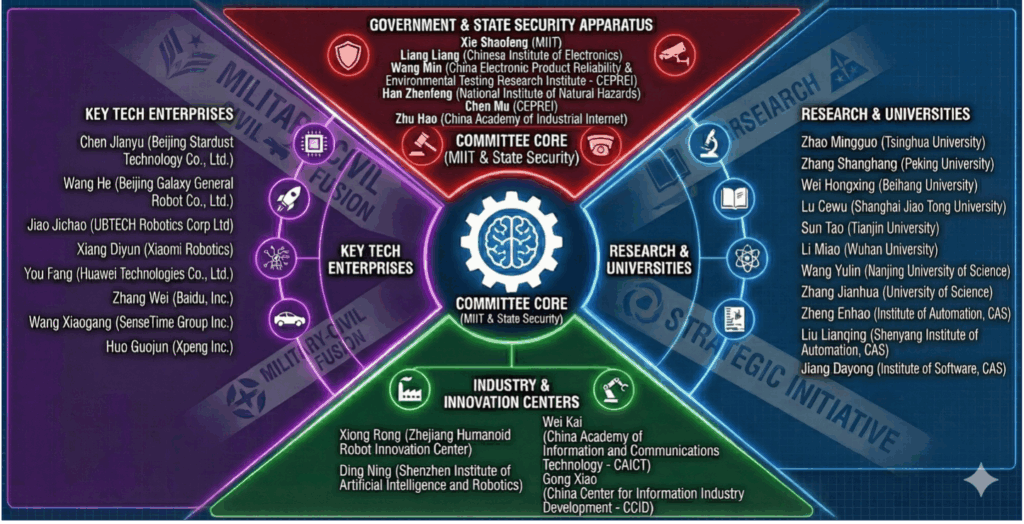
In November, the Ministry of Industry and Information Technology (MIIT) announced the creation of the National Humanoid Robot Standardization Technical Committee (国家人形机器人标准化技术委员会) (MIIT, November 24). This followed the Chinese Communist Party (CCP) Central Committee’s designation of the technology as a focus area in its recommendations for the 15th Five-Year Plan (Xinhua, October 28). Although framed as a technical coordination mechanism, the unusual size and cross-sector composition of the committee reflect a desire to build a humanoid robotics sector around the principles of dual-use integration, centralized control, and alignment with People’s Liberation Army (PLA) modernization priorities.
Engineering a Centralized Ecosystem
The committee comprises 65 members drawn from MIIT, MIIT-affiliated standards bodies, defense-linked universities, cryptography and industrial security institutions, emergency-management organs, regional state-backed innovation centers, and major technology firms. Its cross-domain composition reflects an effort to collapse the boundaries between research, commercialization, and state security oversight.
The committee is chaired by Xie Shaofeng (谢少锋), MIIT’s chief engineer (总工程师). Liang Liang (梁靓), the committee’s secretary-general, responsible for shaping its agenda and building consensus within the group, is currently a deputy secretary-general of the Chinese Institute of Electronics (中国电子学会), an academic and industry organization directly under the ministry (CIE, accessed December 17). Liang is also one of five vice chairs on the committee.
The other four vice chairs further underscore this orientation. Alongside Wang Xingxing (王兴兴) and Peng Zhihui (彭志辉), the founders of leading robotics firms Unitree and Agibot, respectively, the MIIT has tapped the leaders of two state-backed regional humanoid platforms. These include Jiang Lei (江磊) of the Humanoid Robotics (Shanghai) (人形机器人(上海)有限公司) and Xiong Youjun (熊友军) of UBTECH (优必选) and the Beijing Innovation Center of Humanoid Robotics (北京人形机器人创新中心), the PRC’s first humanoid robotics center (Beijing Daily, April 9, 2024). [1] These entities function as national–local industrial vehicles, capable of rapidly translating standards into procurement rules, testing regimes, and large-scale pilot deployments.
Defense Industry Presence Indicates Dual-Use Requirements
Defense-industrial interests on the committee are most explicit in the participation of Fan Chang (范昶) from the 43rd Research Institute of China Electronics Technology Group Corporation (CETC). CETC underpins PLA electronic warfare, ISR, and command systems, and multiple CETC subsidiaries appear on U.S. military-industrial complex lists (China Brief, February 21, 2012; Treasury, December 16 2021). The 43rd Institute holds national, defense, and military laboratory certifications and has supported major military aerospace programs (Anhui University[DY1] , September 18, 2018, SASTIND, June 13, 2019; The Paper, May 4, 2020). Its proximity to venture-backed robotics firms exemplifies military–civil fusion in practice.
Figure 1: Military–Civil Fusion Elements in National Humanoid Robot Standardization Technical Committee
(Source: Created by the author)
The committee is also well represented by the “Seven Sons of National Defense” (国防七子)—universities deeply embedded in the PRC’s defense research ecosystem. Committee members include Wei Hongxing (魏洪兴) of Beihang University (北京航空航天大学), Yang Yi (杨毅) of the Beijing Institute of Technology (BIT; 北京理工大学), Wang Yulin (王禹林) of the Nanjing University of Science and Technology (NUST; 南京理工大学). [2] Han Peng (韩鹏) of the University of Electronic Science and Technology of China (UESTC; 电子科技大学) was also appointed to the committee. Although UESTC is not a “Seven Sons” university, it has a history of working on military and dual-use research. For example, recently it has been working with the Aviation Industry Corporation of China (AVIC[DY2] ) Chengdu Aircraft Research and Design Institute to design advanced military drones (Red Star News, January 12, 2023). Their collective presence suggests that humanoid robotics standards likely will be influenced by military requirements. This will enable the creation of robots with characteristics essential for policing, military logistics, and operations in contested environments. These might include capabilities for electromagnetic resilience and secure communications. In effect, the process for creating standards is set to ensure that humanoid robots are dual-use by design.
Other committee members represent organizations under the Party’s paramilitary organ, the People’s Armed Police. Han Zhenfeng (韩震峰), for instance, works for the National Natural Disaster Prevention and Control Research Institute (应急管理部国家自然灾害防治研究院) at the Ministry of Emergency Management (MEM) (MEM, accessed December 14). Robots involved in disaster response activities such as rubble clearance, operating in hazardous environments and settings where communications have been degraded, could support PLA urban operations and logistics (MIIT, December 29, 2023; Market News, November 9). Framing these capabilities under emergency management allows for testing and refining paramilitary robotics, including via overseas humanitarian deployments, while avoiding the scrutiny associated with explicit military programs.
Cryptography and Cybersecurity Requirements Embed Control
The PRC’s cryptographic and industrial cybersecurity community are also represented on the committee. One member, Zhu Hao (朱浩), leads the Technical Standardization Research Institute (标准化技术研究所) at the China Academy of Industrial Internet (CAII; 中国工业互联网研究院). Also known as the MIIT Cryptography Application Research Center (工信部密码应用研究中心), this entity was created to implement the 2019 Cryptography Law (密码法) and promote domestic cryptographic standards across industry (NPC, June 4, 2023). While officially tasked with innovation, the center enforces mandatory commercial cryptography regimes (商用密码) that govern identity management, key control, and secure communications (MIIT, January 22, 2020; CAII, April 30).
Zhu’s role indicates that humanoid robots manufactured in the PRC will be subject to cryptographic requirements that will limit interoperability with foreign platforms and could facilitate regulatory—and potentially supervisory—access under the PRC’s national security framework. This is reinforced by another member, Li Wei (李卫), who is the deputy director of the Institute for AI (人工智能所) at the National Industrial Information Security Development Research Center (国家工业信息安全发展研究中心), which supports the PRC’s critical information and data infrastructure protection regime (National Business Daily, May 24, 2024). His inclusion reflects a view that humanoid robots play a critical role in the PRC’s technological statecraft that should be subject to centralized vulnerability management, security audits, and lifecycle governance.
Sanctioned Entities Setting Standards
U.S. authorities have already sanctioned several entities represented on the committee. SenseTime, represented by Wang Xiaogang (王晓刚), is on the U.S. Commerce Department Entity List and the Treasury’s Non-SDN Chinese Military-Industrial Complex Companies (NS-CMIC) List for enabling mass surveillance and human rights abuses through facial recognition technologies (Treasury, December 10, 2021). Huawei and ZTE, both long-standing entity list designees, are also represented on the committee. Their robotics work to date has focused on the communications and network hardware and software that govern robotic fleets (Cnyes, March 6; ZTE, August 7). China Mobile, represented on the committee via a Hangzhou subsidiary, is viewed as a Chinese Military Company by the U.S. Department of Defense due to its role in supporting state and military communications infrastructure (DoD, January 7).
Conclusion
The National Humanoid Robot Standardization Technical Committee is best understood as a strategic coordination mechanism, not a neutral technical forum. In the PRC, standards determine security compliance, procurement eligibility, and long-term ecosystem lock-in. By creating a single body to coordinate regional robotics platforms, defense universities, cryptographic authorities, emergency-management organs, and sanctioned national champions, Beijing is shaping a sector optimized for dual-use deployment, centralized control, and rapid national mobilization.
Once the sector begins to export its products around the world, there is a danger that prevailing standards will favor the PRC’s technology ecosystem and will be underpinned by assumptions—particularly around surveillance—that Western authorities deem problematic.
Notes
[1] These two organizations appear to go by several different names in both English and Chinese. The names used here are the ones used in the MIIT list (MIIT, November 24).
[2] Beihang supports PLA aerospace platforms, missiles, and unmanned systems; BIT is the country’s leading hub for ground warfare systems and autonomous weapons integration; NUST descends from the PLA Institute of Military Engineering and remains central to ballistics and explosives research; and UESTC anchors the PRC’s electronic warfare, radar, and secure communications.
The post New Military–Civil Fusion Body for PRC Robotics Ecosystem appeared first on Jamestown.
Following Russian-Indian talks, Vladimir Putin and Prime Minister of India Narendra Modi made statements for the media. The statements were preceded by a ceremony for the exchange of signed documents.
http://en.kremlin.ru/events/president/transcripts/78657
29 Documents were signed by the parties. The video, at the link above, lists these – I am sure we will get a list that is not video and can easily be read.
Prime Minister of India Narendra Modi (retranslated): Your Excellency Vladimir Putin, my dear friend,
Representatives of the two countries, and our friends from India, good afternoon.
I am delighted to welcome President Putin to the 23rd Russia – India Annual Summit.
President Vladimir Putin’s visit to India is taking place at a time marked by several historical dates in our relations. President Putin laid the groundwork for our strategic cooperation 25 years ago, and 15 years ago, in 2010, we upgraded our partnership to the level of a special privileged strategic partnership.
Over the past 25 years, President Putin has been relentless in promoting these relations by demonstrating his wise leadership and vision. Regardless of the circumstances, it is his leadership that has reinforced our mutual relations and enabled us to achieve new heights.
I would like to express my sincere gratitude to President Putin for his friendship and for his unwavering commitment to working with India.
Friends,
The world has faced numerous ups and downs over the past 80 years, during which humankind has had to endure many crises and challenges. And throughout this time, the friendship between Russia and India has successfully weathered these storms. These relations are based on mutual respect and deep trust and have invariably stood the test of time.
Today, we discussed our ties and cooperation in all their aspects with a view to creating an even more solid foundation.
We want to reinforce our economic cooperation and elevate it to a new level. This is the objective we share and it is our shared priority. To make this a reality, we have agreed to implement a programme for economic cooperation until 2030. It will provide for diversifying our trade and investment, making them more balanced and sustainable. At the same time, it will help unlock new dimensions in our cooperation.
Today, President Putin and I will be taking part in the Russia – India Business Forum. I am convinced that this platform will also help strengthen our business ties and open new doors for exports, joint manufacture and technical innovation.
Both countries have been proactive in working on a free trade agreement between the Eurasian Economic Union and our country.
Our cooperation in agriculture and fertilisers is extremely important for our food security and the prosperity of our farmers.
I am happy that our countries will work together to promote our mutual production of urea.
Friends, promoting connectivity between our countries is another priority for us.
We will redouble our efforts regarding the discussions on the North-South International Transport Corridor and the Vladivostok-Chennai Maritime Corridor.
I am confident that we will effectively cooperate in the interests of promoting polar trade via local trade routes. We have offered an opportunity to strengthen our cooperation in the Arctic, which will create new jobs for Indian young people.
At the same time, our deep cooperation in shipbuilding will help us boost our joint initiatives. This is yet another important example of our mutually beneficial cooperation, which is increasing the number of jobs and skills while strengthening regional connectivity.
Energy security is another important pillar of partnership between Russia and India. Our cooperation in the field of civilian nuclear energy, which is rooted in our history, has helped us uphold our commitment to providing clean energy, which is extremely important for both countries.
I have no doubt that our mutually beneficial cooperation in the field of critical minerals will also be important for a safe and diversified provision of resources to the world.
We also maintain our cooperation in such areas as clean energy, high technologies and modern industries.
Friends,
Our cultural relations and ties between individual representatives of our countries are of special importance for relations between Russia and India. Over the past decades, our peoples have demonstrated respect and admiration for each other’s cultures, and we have coordinated various measures to further strengthen this cooperation.
The recent opening of two Indian consulates in Russia is a significant step forward, facilitating contacts for all our citizens and bringing our nations even closer together.
This October, hundreds of thousands of pilgrims received blessings at the sacred relics of Buddha Shakyamuni in Kalmykia. I am confident that we will soon implement a 30-day visa-free regime for tourist groups, which will greatly enhance travel between our countries. This measure will not only bring our peoples closer but also invigorate our societies and unlock new opportunities. I am therefore pleased that today we were able to sign two key agreements to advance this initiative.
Our collaboration will also deepen in education and professional development, including through increased student and academic exchanges.
Friends,
Today, we discussed a range of pressing regional and global issues. On Ukraine, India’s position has been consistent from the outset: we stand for peace. We welcome all initiatives and efforts aimed at achieving a peaceful, long-term resolution of this conflict. India has always been ready to support such efforts, and we will continue to do so.
India and Russia have always supported one another and worked shoulder to shoulder in the fight against terrorism. The terrorist attack in Pahalgam and the cowardly atrocity at Crocus City Hall are connected by a common, hateful ideology. India firmly believes that terrorism constitutes a direct assault on universal human values. Our unity within the global community is the only effective way to combat this evil.
We cooperate closely within the UN, the G20, the SCO, BRICS, and other multilateral forums. We will continue this essential dialogue and cooperation across all these platforms.
Your Excellency,
I am confident that our enduring friendship will provide the strength needed to address global challenges. Together, we can help lead the way towards a more prosperous future.
Once again, I thank you and all members of your delegation for your visit to India. Thank you very much.
President of Russia Vladimir Putin: Mr Prime Minister, dear friend,
Ladies and gentlemen,
My sincere thanks to the President of the Republic of India, Droupadi Murmu, to you, Mr Prime Minister, and to all our Indian colleagues for the exceptionally warm and cordial welcome extended to the Russian delegation.
The discussions we have just concluded with our Indian colleagues, along with our highly productive one-on-one conversation last night – for which I thank you again, Mr Modi, for your generous hospitality – were held in a constructive and friendly spirit, reflecting the privileged partnership between Russia and India.
I would note that the Prime Minister and I have established a close working and personal rapport. We have met at the SCO summit in September, we maintain regular contact by telephone and personally oversee the development of our strategic cooperation across all key areas, as well as the progress of major bilateral projects.
Today, with the participation of our delegations, we conducted a thorough and comprehensive review of the entire spectrum of Russian-Indian cooperation. We also exchanged views on current international and regional issues.
The joint statement we have adopted outlines clear priorities for advancing our ties in politics, security, trade, the economy, and cultural and humanitarian affairs. As you have seen, this was complemented by the signing of a substantial package of intergovernmental, interdepartmental, and corporate agreements.
Many of these documents are aimed at expanding our economic partnership. This is only natural, as our nations are important partners in trade, investment, and technology. Last year, our bilateral trade grew by a further 12 percent, reaching a new record. While various estimates differ slightly, the consensus places the figure somewhere between US$64 and US$65 billion. We project trade will stand at a comparable level by year’s end.
That said, we believe there is clear potential to increase this volume to US$100 billion. To realise this ambitious goal, we have now agreed upon a joint Programme for the Development of Russian-Indian Economic Cooperation until 2030. This comprehensive roadmap provides clear guidelines. Our intergovernmental commission and the relevant economic ministries and agencies are tasked with removing barriers to the flows of goods and capital, implementing joint industrial projects, and deepening our collaboration in technology and investment.
Today, His Excellency the Prime Minister shared a comprehensive list of issues with us. It goes without saying that both Russia and India will be extremely diligent and responsive in reviewing them. Make no mistake, we will work on this matter.
Of course, having India create a free trade zone with the Eurasian Economic Union would help boost Russia-India business ties. The effort to draft an agreement to this effect is already in progress.
I must express my satisfaction with the fact that the two countries have been consistent in their commitment to switching to national currencies in mutual transactions. Their share in business deals has already reached 96 percent. Our two countries have developed resilient interbank channels for lending and financial transactions. Russian economic actors have been making wider use of the rupees they generate from export contracts. Major joint projects receive their funding in Russian rubles.
There has been positive momentum in our energy partnership. Russia is a reliable supplier of energy resources and everything India needs for developing its energy sector. We are ready to continue ensuring uninterrupted fuel supplies for the Indian economy to support its rapid expansion.
Of course, our bilateral energy cooperation goes far beyond this horizon. The flagship project to build India’s biggest NPP, Kudankulam, is underway. Two out of six reactors have been connected to the power grid, while the other four are in the engineering and construction stages.
Once this NPP reaches its full capacity, it will make a meaningful contribution to India’s energy mix, helping Indian companies and households access affordable and clean energy. We believe that building small modular reactors and floating NPPs could also be relevant, just as using nuclear technology for non-energy purposes, including in healthcare, agriculture and other sectors.
We are also working with our Indian partners to create new effective international transport logistics routes. This includes a project to create the North-South corridor linking Russia and Belarus to the Indian Ocean. Infrastructure development along the Trans-Arctic Transport Corridor, including the Northern Sea Route as its main artery, offers ample opportunities for expanding bilateral trade.
There are many other economic sectors in which Russia and India have built a positive track record. We are working on joint initiatives in manufacturing, machine building, digital technology, space exploration and other research-intensive domains.
For example, a business agreement that was signed as part of the visit provides for building a major Russian-Indian pharmaceutical plant in the Kaluga Region for producing high-quality anticancer medicine using cutting-edge Indian technology. At the same time, Russian companies will start producing their goods as part of the Make in India programme, which is Prime Minister Modi’s flagship project.
Prospects for strengthening interaction between Russian and Indian entrepreneurs and business communities are being discussed in detail at the business forum that is currently underway in New Delhi. Mr Prime Minister and I will attend its plenary session later today.
Russian-Indian humanitarian cooperation is ongoing in many spheres. Our peoples have been sincerely interested in each other’s traditions, history and spiritual values for centuries. Our scientific and educational contacts, as well as youth and public exchanges are actively developing. The regular cross festivals of Russian and Indian films invariably enjoy success. Mutual tourist flows grow every year.
The Russian RT channel will begin broadcasting to India today. This will certainly help the Indian audience learn more about Russia and Russians and acquire objective information about current developments in our country.
Our discussions on key global and regional issues have reaffirmed the similarity of our countries’ positions. Russia and India pursue an independent and sovereign foreign policy.
We are working together with our allies in BRICS, the SCO and other countries of the Global Majority to promote the shaping of a more just and democratic multipolar world order, and to protect the fundamental principles of international law enshrined in the UN Charter. These include the right of every country to its own path of development, the preservation of its own cultural and civilisational identity, respect for sovereignty and a delicate balance of interests of all members of the international community.
Russia and India, as the founding nations of BRICS, have done and continue to do a great deal to enhance the prestige of that organisation. As you know, India will assume the BRICS chairmanship next year. We will provide all-round assistance to our Indian friends in their work on the current BRICS agenda.
Of course, I would also like to say that Russia and India have traditionally worked closely together in the military-technical sphere. Our country has been assisting the modernisation of the Indian army, including the air defence, air force and navy, for over 50 years.
Overall, we are certainly satisfied with the results of our talks. Our plans include a meeting with President of India Droupadi Murmu. However, I can already express my confidence that this visit and the agreements reached will effectively promote the further strengthening of the Russian-Indian strategic partnership for the benefit of the people of India and Russia.
Thank you.

La visite du président russe Vladimir Poutine en Inde les 4 et 5 décembre a été un événement marqué non

New Delhi se prépare à accueillir le président russe Vladimir Poutine, qui effectuera une visite d’État dans la capitale indienne
L’article New Delhi se prépare à accueillir Poutine est apparu en premier sur STRATPOL.
Dans la mesure où le système politique chinois est dirigé par un parti unique, quelle société les aménagements façonnent-ils ? Comment ce système produit-il ces aménagements qui sont aux fondations de sa puissance et de sa légitimité ? Une solide étude de terrain, avec 5 figures.
- Chine / République populaire de Chine , Cartes géopolitiques, Villes, centre-périphérie, fait urbain, Civilisation, 2025, Aménagement du territoire, Etat, Décentralisation, Schéma, Parti communiste chinois (PCC), Modernisation
In conjunction with this post, Pokrovsk and lessons from Stalingrad, here is the Russian MoD today. You can read through and see that nobody gets out of a cauldron, not even in small groups. There is no opportunity for retreat. The Ukies movie, the Ukies die. Their choices are to die or to surrender. They are running out of ammunition in spots now. They cannot be resupplied.
Marat Khairullin describes: “In any maneuver by the Armed Forces of Ukraine, their operational position will only worsen, resembling the convulsions of a piglet in the coils of an anaconda.”
There is fierce fighting going on, so, it is not only Russia fighting. One sometimes loses perspective reading only the Russian reports. TASS describes the Ukrainian drone attack of last night. https://tass.com/politics/2038341
Just in: Ukrainian military surrounded in Krasnoarmeysk have begun to surrender, reported by the Russian Ministry of Defense.
Here the Ukies tried to insert special forces:
An operation to deploy a GUR special operations group by a helicopter in 1 km north-west of Krasnoarmeysk (Donetsk People’s Republic) was thwarted. All 11 militants who disembarked from the helicopter have been neutralised.
Report by Russian Defence Ministry on progress of special military operation as of 1 November 2025
 The Armed Forces of the Russian Federation continue the special military operation.
 The Sever Group of Forces inflicted fire damage on formations of two mechanised brigades, two assault regiments of the Armed Forces of Ukraine, and a territorial defence brigade near Andreyevka, Varachino, Iskriskovshchina, Kondratovka, Novaya Sech, and Pavlovka (Sumy region).
 In Kharkov direction, units of an infantry brigade and a territorial defence brigade have been hit near Volchansk and Sinelnikovo (Kharkov region).
 More than 170 troops, two armoured fighting vehicles, six motor vehicles, and a field artillery gun have been neutralised. Two electronic warfare and counter-fire radars as well as six materiel depots were neutralised.
 The Zapad Group of Forces improved the tactical situation. Russian units engaged three mechanised brigades of the Armed Forces of Ukraine, a territorial defence brigade, and a national guard brigade close to Druzhelyubovka, Petropavlovka (Kharkov region), Maslyakovka, Novoselovka, Stavki, and Yarovaya (Donetsk People’s Republic).
 Assault detachments of the 6th Army continue to destroy enemy units close to Kupyansk (Kharkov region).
 The Armed Forces of the Russian Federation repelled another attack of the enemy in the north-western direction attempting to breach the encirclement. Eight militants of the 16th Mechanised Brigade of the Ukrainian Armed Forces have been neutralised. In addition, Russian elements halted two attempts to lift the blockade of surrounded formations by units of the 151st Mechanised Brigade of the Armed Forces of Ukraine and the 15th National Guard Brigade close to Petrovka and Velikaya Shapkovka (Kharkov region). Up to 20 militants have been neutralised.
In the past 24 hours, up to 50 troops, a U.S.-made M113 armoured personnel carrier, a Kazak armoured vehicle, and five pickup trucks have been neutralised close to Kupyansk (Kharkov region).
In total, more than 220 troops, six armoured fighting vehicles, 17 motor vehicles, and two field artillery guns have been neutralised in the area of responsibility of the Zapad Group of Forces. Four electronic warfare stations and five ammunition depots were neutralised.
The Yug Group of Forces took more advantageous lines and positions. Strikes were delivered at formations of two mechanised brigades, an airmobile brigade, an assault brigade of the Armed Forces of Ukraine hit near Vasyukovka, Verolyubovka, Dronovka, Zvanovka, Konstantinovka, and Seversk (Donetsk People’s Republic).
The enemy lost up to 225 troops, a French-made VAB armoured personnel carrier, a U.S.-made HMMWV armoured vehicle, 13 motor vehicles, and a field artillery gun. In addition, three electronic warfare stations and a materiel depot were neutralised.
The Tsentr Group of Forces improved the situation along the front line. Russian units hit two mechanised brigades, two assault brigades, an assault regiment of the Armed Forces of Ukraine, a marine brigade, two territorial defence brigades, and two national guard brigades close to Belitskoye, Gnatovka, Grishino, Kotlino, Pankovka, Rodinskoye, Rozy Lyuksemburg, Udachnoye (Donetsk People’s Republic), Ivanovka, and Novopavlovka (Dnepropetrovsk region).
In Krasnoarmeysk (Donetsk People’s Republic), assault detachments of the 2nd Army continue to destroy surrounded enemy units near the railway station. Moreover, Gnatovka and Rog (Donetsk People’s Republic) are almost mopped up from Ukrainian militants.
The Russian Armed Forces disrupted seven enemy attacks north and north-western directions undertaken to escape the encirclement including an attack of an assault group of the 425th Skala Assault Regiment of the AFU from Grishino (Donetsk People’s Republic).
 An operation to deploy a GUR special operations group by a helicopter in 1km to north-west of Krasnoarmeysk (Donetsk People’s Republic) was thwarted. All 11 militants who disembarked from the helicopter have been neutralised.
Units of the 5th Motorised Rifle Brigade, 51st Army, continued to tighten the encirclement around an enemy group from the east expanding the control zone in the northern, eastern, and south-eastern parts of Dimitrov (Donetsk People’s Republic).
Up to 190 troops, an armoured fighting vehicle, five pickup trucks, two mortars, and a field artillery gun have been neutralised in this area during the past 24 hours.
In total, more than 405 troops, two armoured fighting vehicles, seven motor vehicles, and three field artillery guns were neutralised in the Tsentr Group’s area of responsibility.
The Vostok Group’s units continued to advance to the depths of the enemy’s defence and inflicted losses on a mechanised brigade, an assault regiment of the AFU, and two territorial defence brigades close to Novoaleksandrovka, Chervony Liman in Dnepropetrovsk region, Novonikolayevka, Rybnoye, and Uspenovka (Zaporozhye region).
The AFU losses amounted to up to 290 troops, three armoured fighting vehicles, 10 motor vehicles, four artillery guns, and two electronic warfare stations.
The Dnepr Group of Forces inflicted losses on manpower and hardware of a mechanised brigade, a mountain assault brigade, and a coastal defence brigade of the Armed Forces of Ukraine near Novoandreyevka, Primorskoye, Stepnogorsk (Zaporozhye region), Antonovka, and Nikolskoye (Kherson region).
More than 60 troops, 12 motor vehicles, four electronic warfare stations, and three materiel depots have been neutralised.
 Operational-Tactical Aviation, attack unmanned aerial vehicles, Missile Troops and Artillery of the Russian Groups of Forces have inflicted damage on energy facilities, which provided work of Ukrainian defence industry enterprises, as well as infrastructure of military airfields, depots and preparations areas for the launch of long-range attack unmanned aerial vehicles as well as temporary deployment areas of Ukrainian armed formations in 150 areas.
The Black Sea Fleet destroyed an uncrewed surface vehicle in the north-western part of the Black Sea.
Air defence systems shot down four guided aerial bombs and 205 fixed-wing unmanned aerial vehicles.
 In total, since the beginning of the special military operation, the enemy has lost:
 668 aircraft,
283 helicopters,
94,084 unmanned aerial vehicles,
633 anti-aircraft missile systems,
25,788 tanks and other armoured fighting vehicles,
1,608 MLRS combat vehicles,
30,974 field artillery guns and mortars,
45,448 support military vehicles.

Le président américain Donald Trump a déclaré que le Premier ministre indien Narendra Modi avait promis de cesser d’acheter du
L’article Trump prétend que l’Inde cessera d’acheter du pétrole russe… L’Inde fait habilement comprendre que non est apparu en premier sur STRATPOL.
Alexander Dugin reflects on Vladimir Putin’s role in Russian history, tracing his place between republic and empire.
L’article Putin as Princeps and Pontifex est apparu en premier sur Strategika.
Un article de Henry Bonner
Des économistes ou chefs d’entreprises promettent plus de croissance à l’avenir, comme solution aux déficits. Ainsi, le patron des E. Leclerc affirme par exemple :
« Il faut investir pour notre croissance : l’éducation, les nouvelles mobilités, la transition énergétique, la transition numérique, la décarbonation, les 2,5 millions de logements sociaux à construire… »
Et d’ailleurs, cette croissance sert de prétexte pour la distribution de fonds par la Banque Populaire d’Investissement. Sur le dernier semestre, elle envoie des soutiens à 2 436 entreprises et startups ! Des groupes touchent ainsi des fonds sans rapport avec la création de valeur. Les financements répondent aux goûts des dirigeants, sans besoin de rentabilité.
En réalité, la solution à la stagnation requiert la liberté, pour la production et les échanges, mais les politiciens et profiteurs de ces programmes défendent à l’inverse la distribution de fonds et les restrictions sur les consommateurs.
Le secteur du « tout électrique » veut par exemple la fin des voitures à moteurs. Les installateurs d’éoliennes veulent plus de subventions. Dans beaucoup de cas, les défenseurs des programmes ont des conflits d’intérêt. Ils font partie des bénéficiaires de distributions !
Dans l’éolien, les installations en 2025 atteignent la moitié du niveau de 2024, et le tiers des chiffres de 2021 à 2023.
Déjà en 2024, la production de courant via les éoliennes baisse par rapport à l’année précédente. En effet, le réseau et les opérateurs des parcs mettent les éoliennes à l’arrêt à cause d’excès de courant. Le graphique ci-dessous vient de l’opérateur du réseau, le groupe RTE. La consommation de courant via les éoliennes chute de 8 % pour l’année.

Le graphique ci-dessous montre les mises à l’arrêt de parcs sur ordre du réseau. Les arrêts visent en quasi-totalité les éoliennes (turquoise), par rapport au solaire (jaune).

La hausse des capacités de renouvelables entraîne une explosion des mises à l’arrêt. Eh oui : malgré les investissements dans les parcs d’éoliennes ou de panneaux, la consommation du courant des renouvelables fait du surplace.
Dans les médias, en revanche, les profiteurs de subventions au secteur demandent – bien sûr – le renforcement des mesures ; le groupe Octopus France, un courtier d’électricité, tire profit du programme : il fait partie des intermédiaires dans la vente de l’électricité des renouvelables et sans surprise, le patron d’Octopus prend la défense des renouvelables via des tribunes.
Selon lui, le pays a besoin de beaucoup plus d’électricité à l’avenir. L’opposition au secteur vient ainsi de réactionnaires. Il écrit dans Les Echos :
“[À] chaque réforme perçue comme progressiste, on retrouve invariablement le même procès, en trois chefs d’accusation : le changement conduirait au résultat inverse de celui espéré, serait inutile, ou nous mettrait en danger. Trois arguments, trois peurs dressées face aux transformations.”
Il avertit ainsi :
“Depuis quelques mois, ces trois barricades réactionnaires ont été dressées contre les énergies renouvelables (ENR).”
Les entreprises de renouvelables promettent une hausse de la demande de courant à l’avenir, comme solution aux excès de production. Elles évoquent en particulier le programme du « tout électrique ».
Le graphique ci-dessous montre les prévisions de 2021 du gouvernement pour l’évolution de la consommation d’énergies jusqu’en 2050. Il montre un déclin dans le gaz, les carburants à base de pétrole (gris), et dans le nucléaire (jaune). Les renouvelables (rayures) prennent plus d’importance au fil du temps.

Selon les projections de Terra Nova, un « think-tank » d’obédience socialiste, les coûts en subventions grimpent jusqu’en 2027, puis baissent par la suite (comme par hasard).

En revanche, la baisse des coûts des garanties et subventions dépend d’une hausse de la demande pour le courant des renouvelables. Or, les périodes de mise à l’arrêt grimpent avec les capacités de renouvelables.
La baisse en cours dans la consommation de courant montre les failles des prévisions sur les effets du « tout électrique ».
Le graphique ci-dessous de RTE montre la consommation du pays. Le déclin de l’industrie, et ainsi la chute de consommation, s’accroît depuis les confinements.

Le secteur des renouvelables dépend en réalité d’illusions de demandes et des subventions ou de garanties par les dirigeants politiques et bien sûr, les bénéficiaires du gâchis, comme le groupe Octopus, demandent encore plus d’aides pour des installations sans rapport avec la demande réelle.
Dans la mode aussi, des entreprises demandent des mesures aux dépens des consommateurs. Elles veulent des protections contre la concurrence, en particulier les importations depuis la Chine.
Un groupe français de vêtements, Pimkie, signe un partenariat avec Shein, l’appli de mode chinoise. Il cherche des opportunités de croissance, grâce à l’ampleur du réseau de l’appli.
Les concurrents dans le vêtement, en particulier Décathlon et Kiabi, font opposition au partenariat et annoncent des poursuites. L’association des entreprises du vêtement annonce même l’expulsion de Pimkie.
Les élus lancent aussi des tentatives d’interdiction de l’ouverture de magasins par Shein dans le pays. Le maire d’Angers, un ancien ministre de la Transition, affirme ceci par exemple :
“L’arrivée de Shein va à rebours de nos convictions. Je le dis avec force : nous continuerons à nous battre pour la vitalité du centre-ville et pour nos commerces.”
Les entreprises du vêtement veulent l’élimination de la concurrence des importations, source de pression sur les ventes et les marges.
Dans la finance aussi, des entreprises tirent profit de régulations pour se protéger contre la concurrence : le secteur des banques obtient ainsi une victoire, via le blocage de Apple, Meta, et d’autres groupes de technologies, pour la proposition de services et produits de finance.
L’Union Européenne annonce l’exclusion des géants de la tech du système FiDA de régulations sur la création de produits de finance.
Tout comme dans le vêtement, des entreprises cherchent des protections, aux dépens de l’offre de produits et du pouvoir d’achat.
Dans ce cadre, les politiciens créent des restrictions et distributions, au nom du climat, de la croissance, ou de la protection des consommateurs. Une poignée d’entreprises tirent alors profit des restrictions ou subventions, et demandent ainsi encore plus de mesures de la part de ces dirigeants politiques.
Au lieu de vous proposer encore un dossier sur l’or ou les placements, j’ai décidé de changer d’approche : j’ai préparé un dossier spécial avec 4 extraits de la part d’auteurs du courant du Libéralisme. Ces 4 textes expliquent, selon moi, l’importance du Libéralisme, et la source de la richesse et de la prospérité dans la réalité.
Ils mettent en lumière les dégâts pour les niveaux de vie, et le bien-être de tous, en raison de restrictions des libertés, ou d’incitations à des entreprises ou secteurs.
Cliquez ici pour ce rapport, offert.
1BuyJKZLeEG5YkpbGn4QhtNTxhUqtpEGKf
Vous aussi, foutez les banquiers centraux dehors, terrorisez l’État et les banques en utilisant les cryptomonnaies, en les promouvant et pourquoi pas, en faisant un don avec !
BTC : 1BuyJKZLeEG5YkpbGn4QhtNTxhUqtpEGKf
BCH : qqefdljudc7c02jhs87f29yymerxpu0zfupuufgvz6
ETH : 0x8e2827A89419Dbdcc88286f64FED21C3B3dEEcd8

Le sommet historique de l’OCS à Tianjin, en Chine, a réuni plus de 20 dirigeants, ce qui en fait le
L’article “Le cauchemar de l’Occident collectif est devenu réalité” : quand Modi, Poutine et Xi montrent leur proximité est apparu en premier sur STRATPOL.
DDGeopolics examines how faith-based extremism, military privatization, and intelligence-linked trafficking narratives are converging into something new: a weaponized theology of aid: the Modern Crusaders. What began as “help” is fast becoming something else entirely, a gospel delivered at gunpoint and faith weaponized to destroy the amalek.
The report and I would encourage you to read it, is on their substack and not behind a paywall. https://ddgeopolitics.substack.com/p/the-gospel-of-the-gun
An extract …
The Weaponization of Faith.
The situation in Gaza was never just a humanitarian emergency. It has become a crucible where ideology, militarism, intelligence, and privatized aid collide to form something far more dangerous: a weaponized faith project masquerading as relief.
Over 1,000 Palestinians have reportedly been killed at or near aid distribution points operated by GHF since May 2025. Many of those sites were staffed or secured by contractors from Sentinel Foundation and UG Solutions, armed, many trained in evangelical security seminars, and several publicly espousing beliefs that frame Islam not as a religion but as an enemy of God. These are not isolated incidents or fringe actors. They are part of a coordinated structure, backed by U.S. funding, interlinked with former intelligence officials, and wrapped in the moral authority of “saving the children.”
From Gaza to Central America, it is occupation by proxy masquerading as aid. It is the rebranding of militarized power as humanitarian grace. And in this model, the missionary, the mercenary, and the intelligence operative are one and the same.
Worse still, these efforts have embedded themselves in bipartisan consensus. Even as reports of abuses, dehumanizing rhetoric, and ideological extremism mount, there is little public scrutiny. Figures like Matthew Murphy are treated as legitimate faith leaders, despite calls for exorcisms of “Islamic demons” and praise for Hitler’s religiosity. Evangelical Zionists like Johnnie Moore, who assumed a leading role at GHF following Jake Wood’s resignation, bring the full weight of political access, media cover, and theological justification to this new frontier of empire.
The international implications are staggering. Humanitarian aid is now a vector for surveillance, social engineering, and sectarian warfare. Faith is no longer a private belief, it has become policy. It is biometric checkpoints wrapped in biblical prophecy. It is famine relief doled out at gunpoint. It is the sword cloaked in scripture.
And it is spreading.
The aid-industrial complex of 2025 no longer simply echoes the failures of Iraq or Afghanistan. It reflects a deeper mutation: the fusion of American religious fundamentalism with global security architecture, operating in tandem with Israeli occupation policy and Western geopolitical objectives. Gaza is the pilot program, but the doctrine is scalable.
The question is no longer whether this crusade will continue…it’s how far it will go before someone calls it what it is.
—
As background to this report, I opened a book club in the Hearty Salon, and the first book that I posted is 100 years old, called Forgery in Christianity. This book outlines the roots of the barbarism of our current crusaders.
There are also groups like the one that was previously called The Family, and now called The Fellowship Foundation, which is a Christian Group for Elites in the US. Now take a moment, is Christianity not egalitarian by nature? For Elites? They profess that once you are a Christian, you may do whatever you like because you are now saved. It is deathly in its break from true Christian values. https://thehumanist.com/arts_entertainment/culture/the-family-more-gilead-than-godly/
The overall objective is to understand that these militarized and misguided loosely aligned groups of crusaders are as dangerous and as misguided and as violent as the most dangerous Muslim extremists that we’ve all learned to despise. It is two sides of one coin. You will see what child trafficking, Gaza aid, private contractors, military zeal, and Christian exorcists have in common. DDGeopolitics states that the network of evangelical veterans, intelligence cutouts, and spiritual warriors turned Gaza into a battlefield, not just of bombs, but of ideology.
From biometric checkpoints to Bible-backed psyops, humanitarian aid is being weaponized in ways you’re not supposed to see. The history of these movements is old as you will immediately see if you read or only scan the foreword of the currently posted book on the Hearty Salon.
As Nazism never died in Europe, Crusaders are also still alive and active. These groups meet one another on the field of extremism and totalitarianism. A latest development out of Chrisian Zionism is Zionist Christianity. Here is a soldier channeling Jesus amid zionist war bluster. Invoking what looks like his divine backup, he states: “I am a Jewish believer in Jesus,” invoking divine backup. https://t.me/geopolitics_prime/54426
Let’s take a look because Modi and his Indian counterparts wanted to regain some of their lost lustre after attacking their neighbor and visiting the G7.
Addressed the BRICS Summit Plenary session on ‘Strengthening Multilateralism, Economic-Financial Affairs, and Artificial Intelligence.’ Focused on how to make the BRICS platform even more effective in this increasingly multipolar world. Also gave a few suggestions which are… pic.twitter.com/zRqyEa9q2v
— Narendra Modi (@narendramodi) July 7, 2025
RT has a summary of the speech:
India will ‘define BRICS in a new form’ next year – Modi
Issues facing the Global South will get priority under India’s chairmanship of the grouping
India intends to define BRICS “in a new form” next year and prioritize the main issues facing the Global South, Prime Minister Narendra Modi said on Monday.
Speaking on the second day of the annual BRICS summit in Rio de Janeiro, the Indian leader said his country, which will assume the chairmanship of the group in 2026, will follow a people-centric approach. “Under India’s BRICS presidency, we will work to define BRICS in a new form,” Modi said.
“BRICS will mean Building Resilience and Innovation for Cooperation and Sustainability. Just as, during our G-20 chairmanship, we gave priority to the issues of the Global South in the agenda, similarly during our chairmanship of BRICS, we will take this forum forward in the spirit of people-centricity and humanity first.”
In his speech at the Rio’s summit’s plenary session, Modi stressed the need for BRICS members to assist developing countries. “The Global South has many hopes from us,” he said. “To fulfil them, we must follow the principle of ‘Lead by Example’. India is fully committed to working shoulder-to-shoulder with all our partners to achieve our common goals.”
Guancha, Brazil 247 and Beijing Club unite around the exchange of ideas in the Global South
When Xi Jinping visited Brazil and Peru at the end of last year, following the opening of the Chancay port, he stated in one of his speeches that think tanks must grow and share information. Here is one such media think tank forming.
The meeting of the BRICS countries in Rio de Janeiro has delivered to the world a comprehensive statement with points of consensus on topics such as multilateralism, sustainable development, new international financial architecture, and artificial intelligence. In parallel, actors from the academic and journalistic worlds also met to discuss ways to deepen the exchange between media, universities, and think tanks, to solidify the intellectual basis necessary for the consolidation of the voices of the Global South and a world founded on cooperation between peoples.
One of these meetings took place last night in Rio de Janeiro, bringing together representatives of Brazil 247, from the Shanghai-based Guancha news website, and the Beijing Club, a major Chinese think tank. The cocktail was a consequence of the Global South Media Alliance, launched by Brazil 247 and Guancha in March this year.
This media alliance has to be extended to several other BRICS nations and partners, says Pepe Escobar. I agree.
The sheer change of thinking that is emergent, most of us have not seen. We’ve seen an exorbitant privilege kept in place by war and more war, threats, criminality and coercion, but a truly cooperative model is rare today. We’ve lived in a time when, if there was no opposition to pit groups and countries against one another, an opposition was created. I am, in a sense, skeptical about Elon Musk’s new American Party, as time will tell us whether that is a gathering of those who are disappointed with Trump and the fall of Maga, or the creation of a pretend opposition so that the circus can continue. Time will tell.
La moraline occidentale fait sourire les Russes, toujours pragmatiques, observant que des intérêts géopolitiques majeurs sont manifestement au cœur du conflit. Cette guerre est vécue en partie comme une tragédie, en raison de la proximité qu’ont beaucoup de Russes avec l’Ukraine, une hécatombe slavo-slave.
L’article Thierry Marignac (Vu de Russie) : « La Russie moderne n’a rien à voir avec l’URSS de Staline » [Interview] est apparu en premier sur Strategika.
“How weary am I of devils and brutes, a true human is what I long for.”
By Nora Hoppe at Al Mayadeen.

The fact that our planet in this day and age is home to a genocide – visible to all human beings on personal devices throughout the world – an ongoing abomination unhindered by any international body, by any intergovernmental organisation or even by those noble states that proclaim to be constructing a new and more just world… says a lot about our evolution as a species and potentially about the future of our civilisation.
We now stand before a bifurcation: one clear and broad path leads to destruction and ruin; the other is to lead to a new and harmonious world… but it is winding, stony, vague and enveloped in fog.
Like a frantic victim in quicksand, flailing his arms about in vain, the frenzy of a declining Empire is only accelerating its own demise. It has chosen the path leading to ruin and its own suicide… and it has many followers – especially in its diseased appendix – the Zionist entity – and the rest of the Western World. The symptoms of this necrotic drive are seen in the Forever Wars; a self-devouring economic system based on insatiable greed and wilful ignorance; the destruction of society, of the family, of rituals and traditions; and, essentially, a total contempt for all that is natural and alive… These signs arise from a state of permanent discontent and fear, which ultimately leads to self-destruction.
And now… though today’s Hegemon, the United States – built on genocide and slavery – has been waging countless wars since its inception, and Europe has been massacring and plundering the planet for over 500 years due to its endless rapacity… it is no longer just a question of geography. The core of the problem of our human civilisation today is the western mindset and the system of financialised capitalism, both of which have infected the entire world to various degrees… with only a few exceptions.
Most of the World Majority remains incapable of throwing off the yoke of the colonialist West because of corruption, dependence, societal pressures and a lack of support from states to enlighten citizens on their own past and history.
The mythification and emulation of the Western World have become so deeply ingrained in the marrow of so many over so many centuries… that a decolonisation process will take time. And little has been undertaken officially to this end. The promising BRICS+ states are focussing mainly on trade, economic growth and hi-tech innovation.
To avoid that western path to societal devastation and ruin and to clear the other path of fog, we of the Global Majority need to seek clarity in many areas… We may have to make seismic changes to our ways of thinking. We can begin by questioning our definitions of very basic terms… Such as: what is “development”, what is “growth”, “what is “prosperity”, what is “progress”? Not all growth is advantageous – as in malignant metastases. “Positive growth” today pertains chiefly to monetary matters – GDP, GNI, PPP. What is “progress”? Progress today mostly pertains to technological innovations. And certainly it is imperative that peoples are lifted out of poverty, such as China has succeeded in doing… but what is the kind of “prosperity” that Humanity would like to achieve??
Today, in this post-modern world, there is little discussion of development, growth, prosperity and progress with regard to immaterial matters…
It is not only education, the arts and cultures of the world that have fallen into stagnation, but obviously also the ethics and value systems of entire states and societies… not to mention the conscience of most of Humanity.
How else could a genocide become commonplace? How else could atrocities become a daily tolerable spectacle throughout the world? How else can two genocidal leaders meet and speak so eagerly about their “real estate plans” for their concentration camp as though they were having a normal conversation? How else could we have all become a global audience for an orchestrated famine? How else can so many European states and the EU Border Control Authority Frontex become the clients of “combat-tested” weapons (“tested” in Gaza) from Elbit Systems (“Israel”‘s largest arms company) that manufacture surveillance drones and remote-control turrets for armoured vehicles to enable European soldiers to avoid accountability and a bad conscience when targeted refugees are murdered by anonymous technicians located in remote offices? How else can European countries allow their historical incidents of genocide against the Jews to be “revised” and whitewashed by the Zionist entity for Israeli business advantages? How else could International Law be trampled upon without resistance? How else could serial mendacity and the constant breaching of constitutions and agreements become acceptable? How else could the citizens of those states, which vaunt their “freedom of expression” and “western values”, allow their states to reach the point at which they are now criminalising protesters for standing up for human rights?
Other than the people involved directly in battles for their survival (in Gaza, Syria, Lebanon and elsewhere), courageous soldiers fighting against Nazism, committed journalists risking their lives on the fronts and activists, risking their professions for protesting against the Genocide… where is the rest of the world?
Some states voice their condemnation of the ongoing genocide but take no action, because… because it’s… complicated.
And yet… we have an exception… the Ansarallah of Yemen. There is nothing complicated about their resolute move: it is simply a matter of priority.
Why would the majority of a people of one of the poorest countries (perhaps the poorest) on Earth devote most of their energy, their scarce resources and their steadfast beliefs in risking their lives in defence of another people, who are not directly related to them and are located in a distant country (an estimated 2,270 kilometres away)? What unites these people in this goal? And what might be THEIR definitions of “development”, “growth”, “prosperity” and “progress”?

A crossroads of various civilisations for at least 7000 years, Yemen’s own great civilisation has, over centuries, experienced countless invasions, fierce battles, usurping dynasties and colonial occupations by those who continually sought to plunder, conquer and control this valuable, highly developed, resource-rich and “geographically optimal” territory.
In the 1990s, after a long period of economic hardship due in part to persistent Saudi oppression and notably Yemen’s refusal to join the US-Saudi military coalition against Iraq, a Zaidi grassroots movement emerged in northern Yemen, known as Muntada al-Shabab al-Mu’min (“Believing Youth”) – which offered social programmes to the impoverished population of the region. The successful movement grew and soon transformed into the Ansarallah (“Supporters of God”) who went on to fight six wars against the Saudi– and Western-backed Saleh regime between 2004 and 2010…
Now, despite decades of deprivations, the Ansarallah remain undeterred in their goals for justice, in their fight to liberate Palestine and to improve their own country. To achieve these goals, they do not require “monetary prosperity” and a financialised state. In all their operations they show solidarity and unity amongst themselves. They cannot be intimidated. They are ready to die for their beliefs and principles.
In their filmed speeches and discussions, the demeanour of the Ansarallah is visibly marked by confidence, serenity, grace, poise, modesty… During the Third International Conference “Palestine, the Central Cause of the Nation”, they displayed kindness, generosity and hospitality in welcoming foreign guests, even toward those hailing from “hostile states”.
Single-handedly, they have disrupted global shipping power dynamics. Relying on the expertise of their own specialists, they manufacture weapons themselves… The US Pentagon’s chief weapons buyer Bill LaPlante expressed alarm over the sophistication of these weapons: “What I’ve seen of what Ansar Allah has done in the last six months is shocking.”

In his article Factors behind Yemen’s Valiant Resistance, journalist and political analyst Ayman Ahmed describes how the Ansarallah “managed to modify conventional military tactics in very unconventional ways” by adopting a guerrilla-oriented approach: moving on foot over hostile terrains in small mobile groups, with their group leaders often improvising tactics on the spot, and using little to no electronic devices… “Their use of drones in almost guerrilla-style operations highlights how the Yemenis managed to jam billion-dollar Saudi air defenses…” […] “The Saudi regime has not been able to score any major military victory despite possessing large stockpiles of weapons supplied by the world’s leading arms merchants.”
But their strongest asset of all is their motivation and determination in their pursuit of “a dignified life and standard of living for Yemeni citizens, the protection of the independence of the nation and seeking world peace and appropriate equal cooperation with the other countries of the world” – as inscribed in their “National Vision for the Modern Yemeni State“. With this, they have won the support of the masses across all segments of society.

As Rune Agerhus, political analyst and member of the International Commission for Solidarity with Yemen, wrote here: “What Ansarallah has managed to establish, while facing war, starvation, and a crippling blockade, is a system that could best be described as akin to Yugoslavian worker self-management” […] “Farmland and output are controlled by the cooperatives, which are wholly owned and administered by Yemen’s peasantry.” The defence of Yemen as a whole is being fought on two fronts – “the battlefront and the development front”.
The system adopted by the Ansarallah is the antithesis of contemporary capitalism.
(Not to forget: Yemen has already had experience with socialism when its southern territory – a separate state in 1967-1990 – eventually formed a Marxist-Leninist government following decades of rapacious British colonial rule over the region.)

In our globalised, postmodern, technology-obsessed world dominated by Western norms, technocrats and the Market and guided by an ignorance of history and a limitation in independent reasoning, the Ansarallah seem to many backward and savage at worst, quaint and exotic at best…
Different people may have different views of the Ansarallah and will judge them accordingly… but the ACTIONS taken by these people in defence of another people undergoing a genocide, especially in view of their own circumstances, speak for themselves… louder than any fine words.
On 10th April 2025, under the incessant bombings of the barbaric Hegemon, Ansarallah’s leader Sayyed Abdul-Malik al-Houthi made another urgent appeal to the world… to come to the aid of the Palestinian people and to become conscious of our ethical responsibility as part of a collective humanity. Who is listening? Where is the “world community”?
* * *
After so many millennia of human civilisation, what is the “progress” we are making as a species in our modern-day age?
* * *


Dar al-Hajar, former royal palace outside of Sanaa (1920) on the ruins of an ancient Sabaean palace known as the Fortress of Dhi Saydan, constructed by the Himyarites in 3000 BCE

Inscriptions in Musnad, the Temple of Awwam, Throne of Queen Bilqis (Sheba) 1500–1200 BCE © Zain Alaabdain Ben Ali / Arabia Felix Magazine
L’administration Biden avait accordé à Moderna 590 millions de dollars pour développer un vaccin contre la grippe aviaire. L’administration Trump envisage de poursuivre cette politique.
L’article Dr Robert Malone : L’administration Trump envisage le vaccin à ARNm contre la grippe aviaire est apparu en premier sur Strategika.
Moderna CEO Stéphane Bancel has boasted to fellow World Economic Forum (WEF) members that his company developed Covid mRNA “vaccines” in 2019 because they knew there was “going to be a pandemic.”
L’article Moderna CEO Admits Covid ‘Vaccines’ Were Developed ‘in 2019’ Because He Knew ‘Pandemic’ Was Coming est apparu en premier sur Strategika.
L'Institut Haredi pour les Affaires Publiques vient de publier son rapport 2024 sur l'état de la communauté ultra-orthodoxe en Israël, mettant en lumière des transformations majeures au sein de cette société. Selon l'étude réalisée par le Dr Eitan Regev et Yehudit Miletsky, les pressions économiques accélèrent des changements significatifs dans les modes de vie haredi.
L’article Israël : Baisse de la natalité et digitalisation croissante dans la société ultra-orthodoxe est apparu en premier sur Strategika.
Le monde se recrée chaque jour. « Pour que l’homme supporte le fait que le monde a été créé, il est obligé, chaque jour, parfois chaque heure, à tout moment, de refaire en lui-même la création du monde »
L’article Giono, le montreur d’étoiles est apparu en premier sur Strategika.
Devant des parlementaires britanniques, un chirurgien explique comment l’armée israélienne cible délibérément et quotidiennement les civils à Gaza. La nature génocidaire des opérations menées dans l’enclave palestinienne devient incontestable. L’hégémonie […]
The post À Gaza, les drones achèvent les victimes des bombardements appeared first on Investig'action.
À la tête de l’Inde, Narendra Modi a approfondi le cadre néolibéral mis en place depuis le début des années 1990. La crise sociale qui découle de ce modèle pousse le gouvernement de Modi à s’appuyer de plus en plus sur un discours dangereux et autoritaire de division sociale.
Source : Jacobin, Prabhat Patnaik
Traduit par les lecteurs du site Les-Crises

Le premier ministre indien Narendra Modi s’exprime après avoir publié le manifeste du Bharatiya Janata Party en vue des prochaines élections générales, à New Delhi, le 14 avril 2024. (Sajjad Hussain / AFP via Getty Images)
La décennie au cours de laquelle Narendra Modi a été premier ministre de l’Inde a été marquée par une forte augmentation de l’inégalité des revenus et des richesses. Selon la base de données sur les inégalités dans le monde, la part du 1 % supérieur dans le revenu national, qui atteindra 22,7 % en 2023, n’a jamais été aussi élevée au cours du siècle dernier.
Cette augmentation des inégalités s’est accompagnée d’une hausse de la proportion de la population confrontée à une privation nutritionnelle absolue. Les enquêtes quinquennales indiennes sur les dépenses de consommation montrent une augmentation significative, entre 2011-12 et 2017-18, du pourcentage de la population incapable d’accéder à une norme calorique quotidienne minimale par habitant, qui est de 2 100 pour les zones urbaines et de 2 200 pour les zones rurales.
« L’esclavage n’est pas aboli », a déclaré une ancienne détenue qui milite aujourd’hui contre le travail forcé dans les prisons.
Source : Truthout, Sharon Zhang
Traduit par les lecteurs du site Les-Crises

Une équipe de travail de détenues sous surveillance dans une prison remplit des sacs de sable en prévision de l’arrivée de l’ouragan Dorian en Floride, le 29 août 2019. PAUL HENNESSY / SOPA IMAGES / LIGHTROCKET VIA GETTY IMAGES
Une nouvelle enquête de grande envergure a révélé que le travail forcé dans les prisons alimente les chaînes d’approvisionnement d’un large éventail d’entreprises agroalimentaires, allant des petites marques locales et des restaurants aux principaux conglomérats tels que Tyson, Coca-Cola et Kroger.
L’enquête de l’Associated Press qui a duré deux ans et a été publiée le 29 janvier dernier, révèle que le recours généralisé à la maltraitance des travailleurs carcéraux est devenu une industrie pesant plusieurs milliards de dollars, grâce à des partenariats entre les prisons, les entreprises et les législateurs. Alors que les prisonniers, souvent contraints de travailler, ne gagnent que quelques centimes, voire rien du tout, tout en subissant des violences physiques et psychologiques, les États, les prisons et les entreprises engrangent des dizaines de millions de dollars de bénéfices.

La manière dont une armée est organisée, équipée, orientée intellectuellement, soutenue matériellement et psychologiquement par le reste de la nation est appelée « modèle ». Ce modèle d’armée est l’instrument de force d’une nation et il est destiné prioritairement à imposer sa volonté à d’autres entités politiques, États ou organisations armées, dans le cadre d’un contexte international donné qui en définit le champ et les règles d’emploi.
Le problème est que les règles du jeu international évoluent régulièrement, selon des rythmes de 10 à 30 ans, et surtout qu’elles changent souvent en quelques années seulement sous la pression de grandes ruptures, alors qu’il faut beaucoup plus de temps pour transformer un modèle d’armée.
Cela fait longtemps maintenant qu’une coalition dirigée par les États-Unis n’a pas organisé de campagne aérienne contre un « Etat voyou » et qu’on ne parle plus par ailleurs de « soldat de la paix », d’interposition, de stabilisation ou d’ingérence humanitaire, toutes ces choses typiques de la période du « Nouvel ordre mondial ». La guerre contre les organisations salafo-djihadistes qui caractérisait la deuxième partie de cette période n’a pas disparu, loin de là, mais elle s’estompe. Place maintenant prioritairement pour les pays occidentaux, et donc la France, à la « confrontation », ce terme des années 1960 décrivant un affrontement entre puissances sous le seuil de la guerre ouverte. On en avait un peu oublié les règles. On les a remises un peu au goût du jour en parlant improprement de « guerre hybride » pour faire croire à du neuf, mais sans en tirer complètement les conséquences pour notre modèle d’armée.
Nous voici donc maintenant au moment de la crise ukrainienne avec un modèle d’armée en décalage clair avec les nouvelles règles du jeu international. Nous aurions pu éviter cela, nous pouvons encore y remédier.
Résumé des épisodes précédents
Puisque la période actuelle reprend énormément de codes de la guerre froide, il n’est pas inutile de revenir sur la manière dont on voyait les choses à l’époque après le cycle des guerres de décolonisation.
Au début des années 1960, les forces armées françaises sont réorganisées d’abord pour faire face en Europe à la menace de l’Union soviétique dotée depuis peu de missiles intercontinentaux thermonucléaires. À cet effet, on crée une force nucléaire destinée à résister à n’importe quelle attaque et à détruire le territoire de celui qui envahirait le nôtre ou nous attaquerait avec des armes thermonucléaires. Cette force de frappe est alors comme la Reine sur l’échiquier, la pièce de loin la plus puissante, mais qu’il n’est possible d’utiliser que si le Roi est en échec ou si l’ennemi utilise en premier sa propre Reine. Son emploi équivaut dans ce dernier cas à un suicide mutuel. Tout cela donne un équilibre instable particulièrement stressant.
Pour ne pas avoir à se retrouver en situation de devoir utiliser la Reine en premier, on réduit la possibilité de mise en échec du Roi en mettant en place devant lui un corps de bataille aéroterrestre. Cette force est alors destinée à défendre conventionnellement les frontières du pays et même celles des voisins en particulier la République fédérale allemande (RFA), face aux forces du Pacte de Varsovie. On crée en parallèle, une force de défense opérationnelle du territoire (DOT) afin de lutter contre les infiltrations possibles de l’ennemi entre les pièces et qui pourraient entraver le fonctionnement de l’ensemble.
La deuxième grande hypothèse d’emploi des forces est l’intervention dans ce que le général Poirier décrivait en 1977 comme le troisième cercle d’intérêts de la France après le sol national métropolitain et l’Europe. Depuis 1895, on n’engage plus de conscrits à l’étranger, et par voie de conséquence on n’y emploie que des professionnels ou au moins des volontaires au-delà de la durée légale de service. C’est une force très réduite en volume, car on n’imagine pas alors avoir à mener autre chose que des interventions « coup de poing » très limitées dans l’espace et le temps. Pour reprendre la métaphore échiquéenne, ce sont les cavaliers qui peuvent éventuellement sauter hors de l’échiquier européen pour agir provisoirement plus loin.
Bien sûr, tout cela ne s’est pas mis en place en un an mais sur une bonne dizaine d’années. Il y a eu aussi des tâtonnements et des incohérences lorsque le modèle a été confronté à la réalité. Il a cependant fonctionné pour l’essentiel, c’est-à-dire la confrontation générale avec l’Union soviétique. Personne n’a voulu dans les deux camps franchir le seuil de la guerre ouverte, car ce franchissement même minime paraissait augmenter considérablement la probabilité d’emploi de la Reine nucléaire, ce que personne ne voulait. On s’est trouvé ainsi en Europe avec des forces armées conventionnelles et nucléaires d’une puissance inégalée mais immobiles dans leur face-à-face.
Il y avait un peu plus de liberté d’action militaire hors d’Europe, mais pas tant que ça. Les moyens français que l’on pouvait y consacrer étaient réduits et leur emploi souvent mal vu. On a quand même réussi de nombreuses interventions en Afrique jusqu’en 1979 et même une campagne de contre-insurrection au Tchad, mais l’accusation de néo-colonialisme a pris le dessus. Face à des États, les choses étaient encore plus compliquées, ces États pouvant être soit considérés comme alliés du camp occidental, soit sponsorisés par l’Union soviétique et donc au moins puissamment armés et soutenus diplomatiquement par elle. On pouvait même éventuellement rencontrer des soldats soviétiques, ce que l’on voulait éviter absolument pour ne pas provoquer d’escalade.
La France en confrontation
Avec des moyens limités et de fortes contraintes, il a fallu souvent user de la force avec subtilité pour parvenir à ses fins et c’est là que là que le concept de confrontation intervient. Pour mémoire, le terme « confrontation » a été utilisé pour la première fois pour désigner un affrontement sous le seuil de la guerre ouverte après l’affrontement entre le Royaume-Uni et l’Indonésie de 1962 à 1966 sur la question des provinces malaises de Bornéo. Pas de guerre revendiquée par aucun des camps, mais plein de moyens de pression utilisés pour faire céder l’autre et de petits affrontements masqués dans la jungle de Bornéo.
De 1961 à 1990, la France s’est trouvée dans une situation similaire face à cinq États, outre l’Union soviétique, adversaire permanent. Le premier a été la Tunisie qui a essayé de chasser les Français des bases de Bizerte. La réponse française a été une intervention violente et brève de quelques jours pour dégager ces bases. La Tunisie a cédé. Le second a été le Brésil qui contestait à la France en 1963 des zones de pêche au large de ses côtes. Il a suffi alors de déployer les bâtiments de la Marine nationale pour protéger les pêcheurs français pour faire reculer le Brésil.
Les confrontations des années 1980, en pleine période de « petite guerre froide » ont été plus délicates à gérer. Dans les zones occupées par les forces soviétiques et donc interdites officiellement aux soldats occidentaux, on a fourni de l’aide aux rebelles qui les combattaient en Afghanistan et en Angola, une aide parfois accompagnée de « soldats fantômes ».
La confrontation avec la Libye a été la plus importante. Avec l’opération Manta en août 1983, remplacé par Épervier en 1986 la France a déployé en quelques jours une brigade au centre du Tchad et une force aérienne de 50 avions et 30 hélicoptères répartis entre N’Djamena et Bangui, sans compter le groupe aéronaval à proximité des côtes. La crédibilité du déploiement français était renforcée par la définition d’une ligne rouge sur le terrain dont le franchissement signifierait automatiquement le combat. L’adversaire libyen, présent militairement dans le nord du pays et menaçant le sud avec ses alliés, a été dès lors placé devant le fait accompli et n’a pas osé franchir le seuil.
Derrière ce bouclier, la France a porté assistance à l’armée nationale tchadienne avec des équipements et des soldats fantômes qui l’ont accompagné dans son offensive victorieuse dans le nord. On a franchi aussi ponctuellement de part et d’autre le seuil de l’affrontement avec des frappes aériennes ou des tentatives de frappes, mais sans aller jusqu’à la bataille. Pas de guerre ouverte ne signifie pas pour autant ne pas s’affronter un peu. Opération de fait accompli, dissuasion, assistance aux ennemis de l’adversaire, petites attaques plus ou moins discrètes, et on a une palette assez complète de manières d’employer la force armée dans un contexte de confrontation.
Bien entendu, le champ ne s’arrête pas à l’emploi des forces armées et comprend en réalité tout ce qui peut permettre d’exercer une pression sur l’autre, comme par exemple les attentats terroristes que la Libye a utilisés contre nous en détruisant un avion de ligne.
Contre la Syrie et l’Iran durant la même période, les choses ont été plus difficiles puisque ces deux États ont attaqué la France dans le champ clandestin, avec des attentats et prises d’otages au Liban et en France réalisés par des organisations armées alliées. La France assistait cependant alors très largement (contre rétribution) l’Irak dans sa guerre contre l’Iran, mais elle n’a pas osé attaquer directement l’Iran. La France a cédé en 1987 à toutes les exigences de l’Iran. C’est la seule défaite de la France dans une confrontation contre un autre État, un peu par manque de moyens de rétorsion, beaucoup pas manque de volonté et indigence stratégique.
En résumé, la France de la guerre froide a mis en place un modèle de forces assez complet pour faire face à toutes les menaces du moment et mis en œuvre avec plus ou moins de bonheur toutes les pratiques de la confrontation depuis la dissuasion stratégique, nucléaire et conventionnelle en Europe ou l’assistance militaire en passant par la saisie de point en fait accompli, les frappes de rétorsion ou l’engagement de soldats fantômes. On sentait bien que l’on avait une faible capacité de projection et qu’on aurait été incapable de chasser les Argentins des îles Malouines en 1982 à la place des Britanniques, mais cela ne nous troublait pas beaucoup. Et puis le monde a basculé.
Le modèle d’armée qui aurait pu exister
Le changement rapide de contexte international entre 1989 et 1991 n’imposait pas forcément de transformation profonde du modèle français. Même si la menace de mise en échec du Roi s’éloignait, il n’était pas dit que cela durerait éternellement et puis la menace d’une attaque par une arme de destruction massive perdurait. Il était donc indispensable de conserver la force nucléaire, la Reine à côté du Roi. La vraie nouveauté était que la France était devenue stratégiquement une île. Tout ce qu’on imaginait pouvoir se dérouler à proximité devait maintenant s’anticiper au loin et ce d’autant plus que toutes les contraintes qui limitaient l’emploi des forces étaient levées. Le Conseil de sécurité des Nations-Unis (CSNU) n’était plus bloqué par les vetos et pouvait voter des opérations de coercition. Plus personne ne soutenait politiquement et matériellement des États hostiles, dont le nombre d’ailleurs diminuait grâce à la diffusion du modèle libéral-démocratique, mais aussi par la crainte de subir la foudre américaine.
Cela a commencé avec la guerre contre l’Irak en 1990, ce qui nous a pris de court. Cette guerre, inenvisageable quelques années plus tôt, devenait possible. Pour la conduire, les États-Unis se contentaient de déployer contre l’Irak les moyens prévus contre une Union soviétique alors moribonde. Pour la France, ce fut plus difficile. Comme personne n’avait envisagé de réserve professionnelle, il fallut ratisser des soldats professionnels dans tout le pays pour réunir en Arabie saoudite six groupements tactiques interarmes (GTIA) terrestres, 60 hélicoptères d’attaque et 42 avions de combat, soit 16 000 hommes au total. L’opération Daguet marquait la limite haute de notre capacité d’intervention alors que par ailleurs l’armée de Terre pouvait disposer de 120 régiments de combat, infanterie, blindés, hélicoptères de combat, aux frontières de la France et que l’armée de l’Air mettait en œuvre 680 avions de combat. La conséquence logique, qu’il a fallu des années à concrétiser, était de professionnaliser toutes les pièces de l’échiquier et non plus seulement les cavaliers, puis de leur donner les moyens d’être engagés au loin.
Pour être sérieux, il faut être capable d’intimider une armée complète de quelques pays ou organisation que ce soit, au moins le temps de coordonner son action avec celles des pays alliés, en particulier celui dans lequel on intervient. C’est le principe originel du corps d’armée napoléonien, suffisamment puissant pour vaincre les faibles et résister au fort en attendant les renforts. Bien entendu, ce corps d’armée expéditionnaire doit être transportable et soutenable et de manière autonome sur la longue durée. Cela signifie concrètement disposer de moyens de transport naval et aérien, comme les avions gros porteurs des C-17 Globemaster, ou les appareils russes et ukrainiens que l’on aurait pu acheter dans les années 1990 et moderniser. On aurait dû aussi se doter de moyens de transport à l’intérieur d’un théâtre d’opération, comme les hélicoptères lourds. Bien entendu, il aurait fallu disposer aussi d’une structure de stocks et de flux permettant de soutenir un combat de haute intensité pendant des mois et en troisième échelon, une capacité de production de ressources, essentiellement industrielles, permettant au moins de fournir rapidement et à grande échelle des équipements efficaces.
Cela n’était pas impossible. La loi de programmation militaire de 1996 prévoyait ainsi de pouvoir déployer et soutenir 60 000 hommes, tous professionnels, et 100 avions de combat en 2015. Avec une telle force, il aurait été capable de faire face à tous les problèmes. Il aurait suffi pour cela de maintenir le même effort de Défense qu’en 1989, aux alentours de 3% du PIB. A 3% du PIB, le budget des armées serait actuellement de 75 milliards d’euros et non de 40 ou de moins de 30 s’il n’y avait eu de rebond à partir de 2015. Il serait même de 92 milliards d’euros si on faisait un effort identique (3,7%) à celui des États-Unis.
Au lieu de faire cet effort, la France, comme pratiquement tous les pays européens, a fait des économies. L’effort de Défense français exprimé en % du PIB a été divisé par deux de 1990 à 2015, et il aurait encore décliné si l’émotion provoquée par les attentats terroristes en France n’avait interrompu cette inconséquence. Le modèle de force professionnel n’a cessé de se contracter du fait de la crise des ciseaux entre des ressources déclinantes et l’acquisition d’équipements majeurs à un coût représentant entre deux et quatre fois celui des précédents. Le modèle est devenu à la fois réduit, sur-asymétrique lorsqu’il s’est agi de combattre des petits groupes combattants irréguliers (des avions Rafale contre des pickups) et insuffisant pour faire à face à des adversaires de grande dimension. La France n’est plus capable selon l’hypothèse d’engagement majeur que d’engager 15 000 hommes, regroupés principalement dans deux brigades avec au moins six GTIA et avec 45 avions de combat. Autrement dit, on prévoit seulement, et après six mois de préparation, de refaire l’opération Daguetde 1990. Au lieu de l’échiquier complet, il n’y a plus que le Roi, la Reine et toujours les deux cavaliers, très beaux et très expérimentés mais un peu seuls puisque le reste a presque disparu.
Qui plus est, derrière ses unités en ligne l’« épaisseur » du soutien et des stocks est des plus faibles, toujours par économie et parce qu’en flux tendus cela suffisait pour les opérations de faible volume que l’on avait à mener. Il serait impossible ainsi d’équiper simultanément toutes les plateformes aériennes et navales de tous leurs sous-systèmes (radars, nacelles de reconnaissance, systèmes d’autoprotection, etc.), de la même façon qu’il serait impossible d’équiper tous les régiments de l’armée de Terre de tous les véhicules prévus en théorie. Au rythme de la consommation en munitions en tout genre des combats en Ukraine, l’armée française ne brillerait que pendant quelques jours, deux semaines tout au plus. Bien sûr, le fait qu’hommes et équipements puissent être évacués, soignés et remplacés en grand nombre n’est plus envisagé depuis longtemps ni donc organisé. Le stock, c’est la vie en temps de guerre ou de confrontation.
Avec cet instrument en réduction permanente, nous avons affronté des États ou pseudo-États, mais toujours en coalition dominée par les États-Unis. Nous en avons même affronté un an tous les quatre ans de 1990 à 2011, mais dans des « opérations Coubertin » où notre objectif essentiel était de participer, même à 5 %. Dans le même temps, nous avons beaucoup effectué d’opérations de « gardiens de la paix » de diverses manières, de l’interminable interposition au Liban aux missions de stabilisation en Bosnie ou au Kosovo après l’établissement de la paix par la force en passant par les interventions humanitaires armées. Les succès ont été très mitigés. Nous nous sommes également à nouveau engagés en guerre contre des organisations armées en Afghanistan puis au Sahel après une longue éclipse. Beaucoup de choses au total, de petites choses surtout, avec finalement peu de succès clairs.
On notera que la période a connu peu de confrontations de la France contre des États. On pourrait évoquer les rétorsions américaines contre la France en 2003 au moment de la crise irakienne mais il n’y avait aucun emploi de la force armée. On peut surtout évoquer le cas de la crise contre la République de Côte d’Ivoire (RCI) pendant quelques jours de novembre 2004 après le bombardement de soldats français par un avion ivoirien. On a alors employé de part et d’autre une assez large gamme d’instruments de confrontation comme la désinformation, l’emploi de foules violentes ou, côté français, la destruction au sol des forces aériennes ivoiriennes.
Pas de Manta sur le Dniepr
Et puis les puissances de l’Ancien Monde, Russie, Chine, Inde, Turquie, Iran, sont revenues sur le devant de la scène géopolitique et y ont mené logiquement des politiques de puissance. Avec elles sont revenues les règles du jeu de la guerre froide et comme au moment du basculement des années 1988-1991, nous avons mis du temps à nous adapter.
Avec notre Reine nucléaire et nos deux cavaliers sans souffle, nous voilà bien dépourvus pour faire face à tout. À défaut de changement de régime, en avril 2018 les forces françaises, britanniques et américaines ont frappé par missiles plusieurs sites militaires syriens afin de punir le régime de Bachar al-Assad pour l’emploi d’armes chimiques. A l’été 2020, la France a contré la Turquie en engageant une frégate pour intercepter des navires turcs alimentant illégalement des armes en Libye puis en envoyant des chasseurs Rafale à Chypre afin de contrer une intrusion là encore illégale dans les eaux grecques. Il ne s’agissait là cependant que d’actions militaires limitées dans un champ beaucoup plus vaste et dans lequel la France n’est pas encore très à l’aise, car pas assez forte.
Si le modèle 2015 avait été réalisé et approfondi, nous aurions pu, à la demande de l’Ukraine et avec l’accord des Alliés, déployer en quelques jours une brigade légère et un escadron aérien à Kiev, en plaçant la Russie devant le fait accompli et l’obligation pour parvenir à ses fins d’avoir à affronter la France et ses alliés. Les Russes pratiquent régulièrement de telles opérations parce qu’ils en acceptent le risque et qu’ils disposent des moyens de le faire. Au lieu d’un sous-groupement en Estonie depuis la crise de 2014 et un GTIA en Roumanie, unités utiles pour incarner la solidarité française mais incapables d’arrêter une seule division russe, c’est l’équivalent du corps d’armée des ex-Forces françaises en Allemagne qu’il aurait fallu être capable de déployer après la brigade d’urgence.
Au lieu de venir en aide aux forces ukrainiennes en prenant des équipements sur nos maigres stocks et la substance de nos régiments, c’est dans des dépôts importants, éventuellement de matériels anciens rétrofités ou au pire dans les rangs des brigades de réserve que l’on puiserait. En arrière, le commandement de la remontée en puissance mettrait en œuvre les mesures prévues de mobilisation des ressources industrielles ou autres. Il y aurait des régiments d’instruction entièrement dédiés à la formation technique et tactique des Ukrainiens. Nous ne serions pas au 13e rang en matière d’aide militaire à l’Ukraine.
Il serait pourtant relativement simple de faire mieux à condition dans un premier temps de redonner de l’épaisseur aux unités de combat en faisant en sorte qu’elles soient complètes en tout et pas équipées à la demande à partir de stocks insuffisants. Si on pouvait déjà déployer rapidement 32 GTIA à partir du même nombre de régiments d’infanterie ou de cavalerie et trois régiments d’hélicoptères de combat existants, et non entre 6 et 12 au bout de six mois, ce serait déjà énorme. On peut espérer aussi aller au-delà de la capacité de frappes aériennes de 10 à 15 projectiles par jour sur une durée de six mois, réalisée au Kosovo en 1999 ou en Libye en 2011, ce qui est évidemment insuffisant pour avoir un effet opérationnel sur une armée importante. On sera encore loin de la capacité de 1990, mais dans une logique de projection au loin, ce n’est déjà pas si mal.
Cela représente cependant encore moins du quart du nombre de GTIA russes engagés en Ukraine, pour un pays dont la population n’est qu’un peu plus de deux fois celle de la France. Mais cet épaississement implique aussi celui du troisième échelon, celui de la fabrication des ressources où il faut couper avec l’artisanat- quand on fabrique neuf canons par an, c’est de l’artisanat – pour revenir à une production plus massive. C’est encore une fois impossible sans un effort budgétaire conséquent et un effort de réorganisation sur plusieurs années.
Pour faire mieux, on peut recruter encore des soldats professionnels, mais on atteindra probablement rapidement les limites de l’exercice. On peut aussi et surtout utiliser des forces complémentaires. Les États-Unis ont une population cinq fois supérieure à celle de la France. Si on réduisait par cinq le volume total de tous les combattants soldés par le département de la Défense américain au plus fort de l’engagement en Irak, on obtiendrait un chiffre de 100 000 hommes, bien loin des 15 000 prévus par la France. Mais dans ces 100 000, on compterait 30 000 soldats professionnels d’active, mais aussi 15 000 réservistes professionnels et 55 000 supplétifs locaux ou internationaux dans le cadre de sociétés privées ou de milices. Une armée professionnelle comme celle de la France n’est pas condamnée à être petite pourvu que l’on surmonte certains blocages et que l’on s’en donne les moyens. Si la France faisait le même effort que les États-Unis pour ses forces de réserves, elle dépenserait 2,8 milliards d’euros par an et non environ 100 fois moins. Cela changerait beaucoup de choses.
Et puis, il faut travailler, analyser précisément ce que nous avons oublié, comme le fait de simplement manœuvrer en terrain libre au niveau d’un corps d’armée, les capacités que nous avons perdu dans la neutralisation des défenses aériennes par exemple, et ce que nous avons manqué comme les drones armés à bas coût ou les munitions rodeuses, etc. Observer, +analyser, expérimenter, adopter selon des cycles plus courts. Il est inadmissible d’attendre de 2009 à 2016 entre l’expression de besoin d’achat « sur étagère » d’un nouveau fusil d’assaut pour remplacer le FAMAs et l’adoption du HK-416, une arme disponible depuis 2005.
Pour conclure, la possibilité d’une confrontation avec la Russie a été évoquée au moins depuis le Livre blanc de la Défense et la Sécurité nationale de 2008 et est devenue une réalité depuis l’invasion de la Crimée et le conflit dans le Donbass en 2014 sans parler des actions de diverses sortes menées par la Russie contre la France, notamment en Afrique. Si cela a entraîné au moins dans les armées une réflexion sur le retour à des combats de haute-intensité, cela n’a pas changé grand-chose dans notre modèle de forces en situation de « réparation » depuis 2015 après vingt-cinq ans de dégradation. La seule action véritable a consisté à déployer un sous-groupement en Estonie et à participer à la surveillance du ciel par des patrouilles aériennes régulières sur le flanc oriental de l’OTAN. Il n’est pas évident que cette opération de « réassurance » fut si rassurante que cela en réalité, dans la mesure où si elle concrétisait dès le temps de paix l’article 5 de la charte de l’Alliance décrivant une attaque contre un membre considéré comme une attaque dirigée contre tous, elle témoignait aussi de la faiblesse de notre capacité de déploiement, en volume et en vitesse. Comme d’habitude, c’est dans l’urgence et lorsque le problème a éclaté que l’on va réagir. Espérons maintenant que l’on aille vite.
Surprise : Bayrou est toujours en vie. Mieux, même : il émarge toujours joyeusement aux frais du contribuable, dans l’un de ces postes douillets que les Fromages Républicains Français offrent à foison aux fidèles du pouvoir. Et comme Commissaire Au Plan, le voilà qui s’exprime sur le peuple, la démographie et les retraites.
Et s’il y a bien une chose qu’on peut déduire de ses saillies, c’est que lorsque l’extrême-centre cogne, il cogne extrêmement fort : dans une note transmise à l’Agence France-Presse (AFP), celui qu’on peut désormais appeler le Commissaire Bayrou – ici, si vous avez la musique du générique de Derrick qui vous vient à l’esprit, c’est normal – a décidé de s’emparer de la douloureuse question du modèle social français et nous apporte des solutions puissamment concrètes aux problèmes qu’il nous pose.

Pour le Commissaire, il semble en effet que la façon dont la redistribution fonctionne en France impose au peuple une certaine dynamique démographique que l’actuelle pandémie aurait tendance à ralentir : dans une tirade digne d’un Edgar Morin sous coke, il s’exclame ainsi que « l’impensable étant survenu, il ne devient plus impensable » et, continuant à bousculer des chatons sans la moindre précaution, enchaîne avec un petit « un climat pessimiste pourrait peser sur le désir d’enfant de nos concitoyens ».
Ah ça, quand le Commissaire Bayrou est lancé, il ne taille pas dans la dentelle ! Et lorsqu’il évoque les solutions, ça ne mégotte pas et fait directement dans la mégatonne virile : comme « il manquerait 40 à 50 000 naissances par an pour assurer le renouvellement des générations », il va falloir importer à tour de bras ou procréer à tour de b vigoureusement afin de ne pas mettre en danger les retraites et la généreuse distribution sociale que le monde entier nous envie sans pour autant la recopier, même vaguement.
Finalement, un tel discours peut surprendre en ces temps de marasme de fortes incertitudes sociales et économiques, et alors que la politique française n’est plus qu’une nuée de poncifs émis entre deux borborygmes de semi-habiles médiatisés : voilà notre homme qui enjoint à pondre du lardon et donc augmenter notre population, au contraire des myriades de catastrophistes pénibles qui n’entendent qu’une réduction drastique d’icelle. Apparemment, les gens sont priés de disparaître lorsqu’on évoque le climat, la pollution, les forêts, les petits oiseaux, les ressources naturelles, mais doivent vite se reproduire lorsqu’on évoque les retraites et la distribution de pognon gratuit des autres.

En attendant le combat de titans entre Bayrou et les écolos citadins dans un octogone sans règle, on ne pourra cependant pas s’empêcher de noter aussi la vision très particulière de la société qui se dégage de ce genre de positionnement du Commissaire d’un Plan quasiment quinquennal qui sent le formica des années 60 : comment ne pas voir l’inversion des valeurs que prône ici Bayrou (et la multitude d’énarques et autres ronds-de-cuir tamponneurs que nourrissent les trop nombreuses administrations du pays) ?
En effet, jusqu’à preuve du contraire, un modèle social dans un pays est la résultante du peuple qui le compose et ne fonctionne qu’à hauteur de ce que ce peuple est capable et prêt à faire. De façon logique, il n’est pas (et n’a jamais été) dans l’attribution de nos politiciens de façonner le peuple pour le faire coller à un modèle donné. Or, ici, c’est exactement ce à quoi prétendent Bayrou et la clique de tous ceux qui, depuis des décennies, tentent toutes les politiques, tous les bricolages, tous les constructivismes, pour parvenir à faire durer ce fameux modèle social que très clairement, les Français n’ont plus les moyens ni l’envie de préserver.
Ainsi, qui est-il pour décider du niveau optimal de moutards par famille ? Croit-il encore naïvement que distribuer des aides produit réellement du gamin à la sortie, et n’entraîne pas au contraire plus d’effets pervers, ne grève pas un peu plus les budgets de ceux sur lesquels elles sont prélevées ?

Ainsi, peut-il sincèrement croire qu’on va sauver un modèle social en accueillant des étrangers dont on n’a aucune assurance qu’ils voudront y contribuer ? Et à mesure que les étrangers arrivent, le peuple changeant naturellement dans sa composition, ses attentes, voire son mode de vie, peut-on encore croire qu’il va s’adapter à ce modèle social et ne pas souhaiter, plutôt, que ce soit le modèle qui s’adapte à lui ? Serait-il surprenant que ceux qui payent pour ce modèle attendent de lui qu’il s’adapte et non l’inverse ?
Le Commissaire Bayrou montre ici qu’il travaille à l’envers du bon sens : voyant un modèle social, il attend du peuple, qui finance tout cela, qu’il s’adapte aux désirs des dirigeants, des politiciens, de l’administration. C’est tellement évident pour notre homme qu’il en oublie, avec la décontraction caractéristique de ceux qui ne payent pas pour ce genre de raisonnements et des factures qui les accompagnent, que ce modèle agonise depuis des décennies, qu’il dilapide l’héritage des années fastes, injurie les enfants et tabasse les petits enfants.
Le Plan du Commissaire semble simple : on fait des mômes, on importe des bras, et tout ira bien. Si cette recette était efficace, si elle pouvait être décrétée par des politiciens, comme elle est en application depuis 40 ou 50 ans, on devrait avoir largement pu mesurer des résultats bénéfiques. Pour le moment, on est en droit d’attendre un bilan avant de relancer le manège, surtout si l’on se doute que ce bilan ne sera pas très positif.
Et si l’on peut encore s’étonner de la présence d’un Plan, d’un Commissaire aux senteurs de formol et de l’existence même de Bayrou dans la vie politique française en 2021, on ne s’étonnera pas de voir que notre caste politique n’envisage pour la croissance et le « modèle social français » que la reproduction et l’importation. Pas un mot n’a été émis pour valoriser le capital et l’investissement, pourtant essentiels dans une société ; rien concernant la robotisation, dont la France souffre du manque de plus en plus marqué ; et bien évidemment, c’est le silence compact sur toute réduction et optimisation de la dépense publique, celle-là même qui caractérise le modèle obèse que ces clowns entendent faire tenir coûte que coûte.
Il faut se rendre à l’évidence : Bayrou et tous ceux qui encensent ce modèle social veulent simplement perpétuer cette pyramide de Ponzi générationnelle dont ils sont les bénéficiaires directs.

qqefdljudc7c02jhs87f29yymerxpu0zfupuufgvz6
Vous aussi, foutez les banquiers centraux dehors, terrorisez l’État et les banques en utilisant les cryptomonnaies, en les promouvant et pourquoi pas, en faisant un don avec !
BCH : qqefdljudc7c02jhs87f29yymerxpu0zfupuufgvz6
Cette somme en quatre volumes (deux parus cette année) réunit, sous la direction d’Hervé Drévillon, les analyses des historiens sur la guerre à leur époque de prédilection.
Le premier tome est consacré à la période vaquant de la Préhistoire au Moyen-Âge, le second volume à l’époque moderne (jusque 1870). Ces ouvrages sont non seulement bien écrits, ils sont également remarquablement illustrés grâce à une iconographie soigneusement choisie. On attend avec impatience le troisième tome (1870-1945) et le quatrième (de 1945 à nos jours). Un fonds de bibliothèque stratégique.
Mondes en guerre (2 tomes sur 4) Dir H. Drévillon, Passés composés, 2019. ici.
O. Kempf
 Un modèle d’armée n’est normalement que l’instrument de ce que le général de Gaulle appelait une « grande stratégie », c’est-à-dire une vision de ce que veut être la France dans un contexte international donné. Sa constitution est fondée sur des hypothèses d’emploi et à l’instar d’un paradigme scientifique, ce modèle doit être considéré comme valable tant qu’il est capable de répondre aux problèmes importants qui se posent. Lorsque ce n’est plus le cas, en général parce que le monde s’est transformé, il s’avère nécessaire d’en changer.
Disclaimer: I don't have answers to everything. In fact, I probably don't have answers to anything at all, just some thoughts on what's wrong with the structure of governance around the world (it's too centralized and authoritarian) and some general ideas about what direction we should head in.
Given the increased likelihood that all sorts of things about the current paradigm will begin to fail in a more acute and undeniable manner in the years ahead, well intentioned people capable of critical thought should begin contemplating how things could be as opposed to how they are. Ideally, this will lead to increased action and experimentation, particularly at a local level. Never forget, if we don't come up with our own ideas and perspectives for how things should be, others will be more than happy to decide for us.
This piece should be seen as a thought exercise of how I would think about structuring things if presented with a blank slate opportunity.
In Part 3 of this series, I outlined a framework of sovereignty beginning with the individual, progressing to family, municipality/county, state and finally country. Though the broadest scope of decision making should always reside with the individual, the reality of social relations means some individual autonomy is relinquished as sovereign units grow to include more and more people. It's part of human nature to expand beyond ourselves and our families into larger and more complex social relationships, but far more thought should be directed at the dangers and uncertainties that arise as these units start to include increased degrees of geography and population.

Le douloureux divorce en cours entre l'Ukraine et la Russie est paradoxalement le signe que ces deux pays partagent parfois les mêmes difficultés face à la modernisation.
- CEI / Russie , Ukraine, Géopolitique, Histoire, Société, Etat, Développement, Actualité, Modernité, Sociologie politique comparée, Modernisation, Economie, 2018

 Lateo.net - Flux RSS en pagaille (pour en ajouter : @ moi)