 Connexion


The Western Hemisphere’s rightward turn has more to do with thermostatic politics than the demise of USAID.
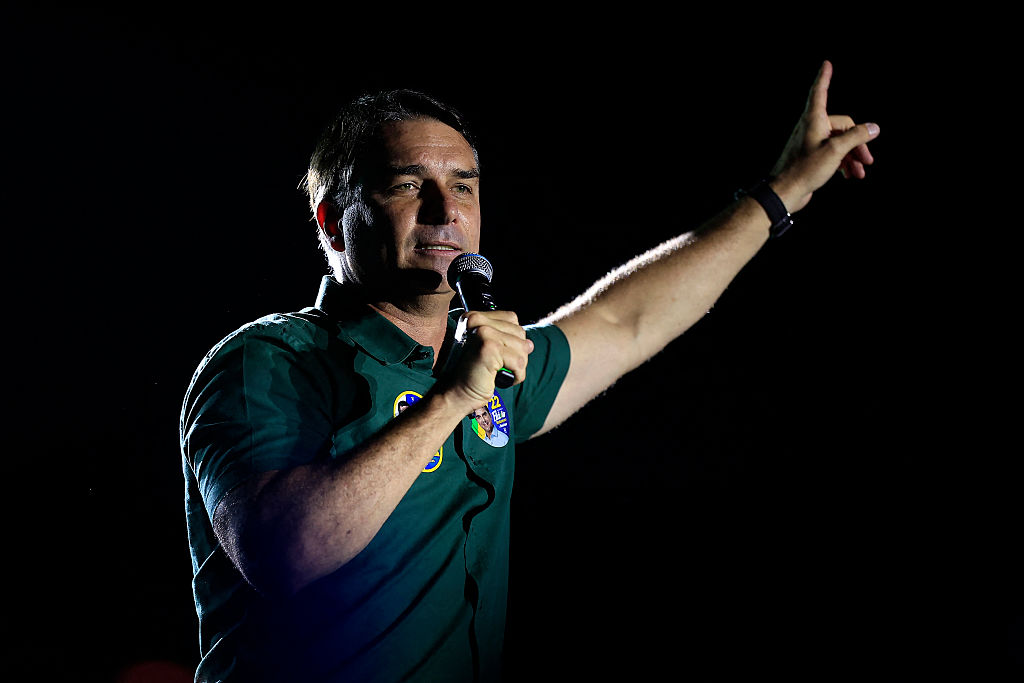
With the apparently imminent triumph of Flávio Bolsonaro in the Brazilian presidential runoff, the Latin American right is reaching heights not seen for decades. One by one, the bulwarks of leftism in the region have fallen: the Peronists of Argentina to Javier Milei, Evo Morales’ Bolivian socialists to Rodrigo Paz, Nicolás Maduro of Venezuela to American special forces wielding deadly discombobulators, Gabriel Boric of Chile to José Antonio Kast, Colombia’s Gustavo Petro to Abelardo de la Espriella, and now, it seems, Lula da Silva to Bolsonaro. The last major bastion of the Latin American left is Mexico, where President Claudia Sheinbaum has shown little appetite for defying the United States. A smattering of minor powers rounds out the pathetic list of the region’s remaining left-wing governments: Nicaragua, Belize, Guatemala, Uruguay, and Cuba.
What explains this rout of the Latin American left, which only a few years ago seemed almost invincible? Some commentators on the right have suggested that the Trump administration has facilitated the turn, pointing, for example, to the dismantling of USAID, which they say funneled American foreign aid to left-wing causes and organizations. The White House’s efforts to rein in foreign aid distribution, however, while useful in their own right, are probably not a significant contributor to the political wave sweeping Latin America. The real reasons for the shift are more structural in nature; as such, they are both more prosaic and more profound.
This is far from the first time right-wing governments have swept the Western Hemisphere. In 2000, Latin America was governed predominantly by conservative parties. Vicente Fox’s National Action Party had broken the death grip of the Institutional Revolutionary Party in Mexico, bringing an end to the “perfect dictatorship”; Alberto Fujimori was blundering through his final days as president-turned-dictator-turned-president-again in Peru; Hugo Banzer, once the military dictator of Bolivia, had returned to govern the country again, this time as a democratically elected president; and Fernando Cardoso was enjoying his second term as president of Brazil, having been reelected two years prior to great popular acclaim (in the process crushing a much younger Lula da Silva, his principal rival). Even the minor Latin American countries, from Costa Rica to Uruguay, were nearly all controlled by some flavor of conservative.
The George W. Bush administration hoped to capitalize on this to remake the hemisphere. “Should I become president, I will look south, not as an afterthought, but as a fundamental commitment of my presidency,” Bush pledged during the 2000 campaign season, and his administration poured billions into Colombia and Mexico in a mostly unsuccessful attempt to smash the cartels and end the flow of drugs into the United States. But the Latin American prosperity the Bush White House hoped would come from right-wingers liberalizing their economies and embracing democracy never really materialized.
In fact, conservative dominance of Latin America at the turn of the century proved short-lived. Disillusioned voters turned back to the left, hoping that socialist economic policies might provide more concrete improvements to their quality of life. By 2008, the region had been swallowed up by the “pink tide,” a current that carried into power a generation of left-wing icons: Lula in Brazil, Rafael Correa in Ecuador, Evo Morales in Bolivia, Daniel Ortega in Nicaragua, Michelle Bachelet in Chile, and Cristina Fernández de Kirchner in Argentina.
Like democratic systems everywhere, Latin American politics is largely thermostatic: Voters grow frustrated with the government in power as it generates grievances, accumulates failures, and becomes associated with the political irritants of the day. Eventually, the popular backlash becomes strong enough that no policy program or charismatic leader can overcome it, and voters throw out the incumbents. The alternative does not even need to be particularly attractive—opposition parties with poor track records in government are frequently the beneficiaries of this trend, because voters have short memories and prefer parties whose great offenses they have forgotten to those whose offenses, though lesser, are daily paraded in front of them.
And Latin American political movements have plenty of opportunities to aggrieve their voters. The promised economic boom is always just around the corner, but never arrives; the politicians who yesterday denounced the graft of their predecessors are today outed for having secret mansions in Miami and hidden bank accounts in the Bahamas. Javier Milei was catapulted to an unanticipated victory in 2023 by savaging the Argentine political class for its corruption and self-dealing; now he is confronting his own corruption scandals.
In other words, though it may be true that “the left hasn’t won a single presidential election in Latin America” since we gutted USAID, it would be foolish to expect the trend to last. Indeed, whether the Trump administration’s destruction of the agency has any relation to this shift remains an open question—political slush funds and patronage from the U.S. have frequently aided the global left, but elections can be surprisingly hard to buy.
Apart from the general thermostatic trends, the Latin American right has benefited from other, more significant tailwinds than the abolition of USAID. South American countries have recently begun to experience their own illegal immigration crisis, driven almost entirely by Venezuelans fleeing the collapsing economy of the Maduro regime. Stopping mass migration and securing national borders, previously issues that barely registered with the public, have become major priorities, creating a political environment that played directly into the hands of the right (which has always been the champion of law and order). This issue may, ironically, soon fade away thanks to the Trump administration’s actions in Venezuela.
Another significant boost to the image and prestige of the Latin American right is the performance of President Nayib Bukele in El Salvador. Many a would-be caudillo has promised to bring down the mano dura (“iron fist”) and restore order and security to a broken society; Bukele has actually delivered. The transformation of El Salvador—from the most dangerous country in the hemisphere to a place that is by many metrics safer than the United States—is a more convincing pitch for Latin American right-wingers than any campaign speech or ad could be.
Effecting the kind of transformation that Bukele has accomplished is a tall order for any government—and, indeed, it may not be possible outside of the unique circumstances of El Salvador. But for the right-wing wave to last, that is what Latin America’s conservatives will need to deliver. Otherwise, expect yet another pink tide in 2030.
The post Why is Latin America Swinging to the Right? appeared first on The American Conservative.
From Bukele to Bolsonaro, the region’s conservatives have learned to love Zionism.

Among the first acts of Colombia’s new president Abelardo de la Espriella was to formally recognize Israel’s claim over the Golan Heights. Months earlier, Brazilian presidential candidate Flávio Bolsonaro—who is currently locked in a tight race with the incumbent Lula da Silva—had met with Israeli settlers in the occupied West Bank, for whom he expressed his “full support.” (Bolsonaro the younger also stated that as president, his first international visit would be to what he and Israeli supremacists call “Judea and Samaria.”)
From Santiago to Tegucigalpa, Latin America’s latest wave of right-wing governments have deepened relations with Israel—even as most of the region’s residents remain skeptical.
Outside of a few Central American countries, public perceptions of Israel are overwhelmingly negative in Latin America. In 2026, Pew found that 60 percent of Chileans, 56 percent of Colombians, 55 percent of Argentines, 54 percent of Brazilians, and 50 percent of Peruvians had an unfavorable view of Israel (favorable views ranged between just 21 and 29 percent). In the same countries, nearly two-thirds of respondents said they had “no confidence” in Israeli Prime Minister Benjamin Netanyahu. What, then, explains the stark discrepancy between public opinion and the positions of right-wing governments?
There are basically three factors at play. As I argued in the last edition of this magazine, the first centers on the self-hatred of Latin American elites, and the related worship of purportedly more developed countries—most notably, the United States and its allies. From the perspective of highly educated, right-wing businessmen and politicians, support for Israel is a low-cost, high-visibility way of signaling fealty to Washington and especially the Trump administration. The second finds its motive force from evangelical pulpits, Pentecostal megachurches, and the Zionist outreach that has quietly built a religious infrastructure for pro-Israel politics. In many states in the region, Israel’s multinational lobby has cultivated an evangelical electorate with considerable political sway. Finally, security ties with Israel have helped some of the region’s governments to accomplish their own strategic goals (including, in some cases, the surveillance of political opponents).
***
Of all of the region’s right-wing leaders, Colombia’s Abelardo de la Espriella is arguably the emphatically and cynically pro-Israel. For years, de la Espriella—a millionaire lawyer for drug traffickers—was a self-described atheist, until he converted to Catholicism prior to launching a presidential bid. In tandem with his newfound religiosity, he also acquired a fervent Zionism, mediated by an elite network of diplomats, Jewish community leaders, and evangelical pastors. In 2025, the then-candidate met privately with the Israeli Foreign Minister Gideon Sa’ar, who later thanked de la Espriella for his recognition of Israel’s sovereignty over the Golan Heights. And by June 2026, de la Espriella was saying he believed that Netanyahu had done what was necessary in Gaza to defend Israelis and that Colombia would “restore and strengthen its relationship with the State of Israel like never before.”
An investigation by the Colombian publication Revista Raya found that during the election, Colombia’s Evangelical Confederation, Cedecol, organized prayer vigils in favor of the now president. Cedecol’s vice president, the pastor Rodrigo Barreto, also met personally with Israel’s President Isaac Herzog during the World Cup. (Notably, the confederation also promotes pilgrimage packages to the Holy Land through a partnership with the Land Tours, an international travel agency whose Colombian representative campaigned openly for de la Espriella.)
Evangelical pastors such as Raúl Rubio, who has worked with the Israeli land development organization Keren Kayemeth, have played prominent roles in the new president’s campaign and government. Last November, Rubio addressed a de la Espriella rally at Bogotá’s Movistar Arena, promising the crowd that the candidate would restore ties with Israel. Days later, de la Espriella pledged to relocate Colombia’s embassy to Jerusalem, a move that now appears to be in motion.
Unsurprisingly, the former Israeli consul in Colombia, Kobi Valer, spent years cultivating relationships with conservative politicians, including arranging trips to Israel for Colombian journalists and influencers during the Gaza offensive. In the wake of de la Espriella’s victory, Israel’s Diaspora and Antisemitism Minister Amichai Chikli celebrated the result on X as marking not just the “collapse of populist socialist ideologies” but “the strengthening of Israel’s position on the continent.”
On security, five decades of arms deals and cooperation with Israel have brought arguably as much harm as good to Colombia. In the 1980s, an Israeli mercenary firm headed by former IDF colonel Yair Klein trained the death squads that later coalesced into the infamous, far-right paramilitary United Self Defense Forces of Colombia (AUC); the group’s founder, Carlos Castaño spent part of the ’80s training in Israeli military schools before returning home to Colombia. A Colombian court later sentenced Klein in absentia to more than a decade in prison for his role in creating the AUC; he served time in a Russian prison, but ultimately avoided extradition to Colombia. Decades later, Klein said that the landowner and future right-wing President Álvaro Uribe was among those who helped finance his activities, a claim Uribe has denied.
Since 1994, moreover, Colombia’s state arms manufacturer, Indumil, has produced the Galil rifle using Israeli components. In 2024, former president Gustavo Petro revealed that Colombia’s police intelligence directorate, DIPOL paid Israeli spyware firm NSO Group $11 million in cash for Pegasus software during the preceding Duque administration. The purchase was partly financed by Washington and allegedly used to intercept the communications of journalists and opposition figures (purportedly including Petro himself).
In contrast to de la Espriella, the Zionism of Chile’s José Antonio Kast seems comparatively deep-seated, if still a product of elite opinion on the Right. A member of the conservative Catholic Schoenstatt Apostolic Movement, Kast slammed his progressive predecessor Gabriel Boric for severing ties with Israel. Among his first acts as president-elect was a phone call with Netanyahu—a striking gesture in a country home to the largest Palestinian diaspora outside the Middle East and least positive attitudes in the region towards the Jewish state. Unlike in Colombia, moreover, it’s hard to argue that Kast’s Israel overtures have served any meaningful strategic interest.
In narcoterror-stricken Ecuador, President Daniel Noboa has been among Israel’s most active defenders. In May 2025 he toured the Western Wall in Jerusalem, telling Netanyahu that Israel and Ecuador “have the same enemies,” whom he pledged to “fight to the end.” Days later, Noboa condemned the supposed threat posed by the Muslim Brotherhood inside Ecuador. In a move clearly aimed at toadying to Jerusalem and Washington, the banana tycoon-turned-president officially designated the group as a terrorist organization December 2025. For context, the number of Muslims in Ecuador is thought to be in the neighborhood of 500-2,000, or roughly 0.01 percent of the population. If there is indeed an Ecuadorian branch of the Muslim Brotherhood, its membership likely numbers in the single digits.
More consequentially, Noboa’s embrace of Zionism has come with Israeli hardware attached. In 2022, the Ecuadorian government signed a $65 million contract with Israeli firm Elbit Systems for more than 130 armored vehicles, which have since been deployed in the country’s ongoing drug war. During a 2025 trip to Jerusalem, Noboa told reporters he had discussed cooperation on security at Ecuadoran ports and border crossings with Israeli and Emirati officials.
Arguably the most bizarre defender of Israel in the Americas is Argentina’s self-proclaimed anarcho-capitalist president, Javier Milei. Since taking office in December of 2023, Milei has visited the Holy Land three times, and last year became the first Argentine head of state to address the Israeli Knesset. Milei is also the engineer of the so-called “Isaac Accords” (a play on Trump’s Abraham Accords), which aim to deepen ties between Israel and Latin America. Netanyahu has called Milei “a great friend of Israel”; during the summer World Cup, the prime minister personally relayed his well-wishes to “Javier”, playing on the phonetic similarity between Milei’s first name and the Hebrew word for friend—chaver.
For his part, Milei has described the U.S.-Israel bombing campaign against Iran as “the right thing to do,” framing Argentina and Israel as “brothers in suffering.” In 2024, the Milei administration signed a multi-year defense cooperation agreement with Israel, establishing contracts for cyber capabilities, drones, munitions, and communications equipment. The following year, the Argentine president was awarded the Genesis Prize—otherwise known as the “Jewish Nobel”—for his unwavering support of Israel. Milei subsequently donated the $1 million cash prize to the newly established American Friends of the Isaac Accords.
The Argentine president has even expressed an intention to convert to Orthodox Judaism after leaving the presidency—a stunning statement considering that, until 1994, Argentine presidents were constitutionally obligated to profess the Catholic faith.
Outside of Central America, Brazil poses the clearest illustration of the religious roots of support for Israel. Since 1990, self-described evangelicals have grown from under 9 percent of the Brazilian population to nearly 30 percent, becoming in the process a key conservative voting base. In 2016, the former President Jair Bolsonaro (2019–23) was baptized in the Jordan River, a move that helped consolidate his support among evangelicals. At the time, the powerful evangelical caucus in congress—a group that currently includes around 40 percent of the Chamber of Deputies and 25 percent of the Senate—was demanding the relocation of Brazil’s embassy to Jerusalem. Wary of jeopardizing halal meat exports to Arab markets, Bolsonaro stopped short on the embassy move, though he did deliver on other priorities such as appointing the evangelical pastor André Mendonça to the Supreme Court.
Jair’s sons Eduardo and Flávio—the latter of whom is in the midst of his own presidential campaign—have made repeated pilgrimages to Israel, meeting with Netanyahu and Knesset Speaker Amir Ohana. In February, Eduardo stated alongside his brother that “it’s hard to find a point where we disagree with Israel.” On the campaign trail, Flávio has repeatedly referred to Brazil’s so-called Judeo-Christian heritage with eyes on evangelical voters.
Funnily enough, the criminal underworld of the Bolsonaros’ political base of Rio de Janeiro offers a disturbing coda to the influence of evangelical Zionism. One of the city’s most powerful drug gangs is the evangelical Terceiro Comando Puro (TCP), which uses the Israeli flag on its drug packaging and dubs a cluster of favelas it controls the “Complexo de Israel.” The TCP’s leader, Álvaro Malaquias Santa Rosa, alias “Peixão,” has framed his activists in explicitly Pentecostal terms, presenting himself as operating by divine will. Another prominent evangelical gang, the Povo de Israel, originated inside Rio’s prison system, growing to roughly 18,000 incarcerated members, or 42 percent of Rio’s prison population.
Of the region’s many Zionists, by far the most sincere are the right-wing leaders of Central America’s increasingly evangelical republics. Evangelicals represent around 40 percent of the population in Costa Rica, El Salvador, Honduras and Guatemala, making them the largest religious group in many places. Unsurprisingly, this has correlated with a marked shift toward Israel on the part of the region’s governments. In 2018, Guatemala relocated its embassy to Jerusalem, and Honduras followed suit in 2021.
In the case of Honduras’s far-right National Party, loyalty to the Jewish state has seemingly paid outsized rewards. Under autocratic president Juan Orlando Hernández (JOH)—who was sentenced to 45 years in an American prison for trafficking 500 tons of cocaine—Honduras’s relationship with Israel went far beyond purely religious sympathies. In December 2016, Hernández traveled to Jerusalem for the second time in just over a year to finalize a $209 million military cooperation agreement with Israel’s Defense Minister Avigdor Lieberman—the largest in Honduras’ history, including upgrades to the country’s aging F-5 and A-37 fighter jets, a new offshore patrol vessel, Skylark drones, and, tellingly, millions of dollars’ worth of cybersecurity and surveillance systems.
With the Nationals out of power following the 2021 election of the left-wing Xiomara Castro, Israel nonetheless remained a factor in Honduran politics. A cache of leaked audios published earlier this year by Spain’s Canal Red—dubbed Hondurasgate—purported to show that Israeli officials working alongside the Trump administration helped engineer JOH’s pardon as well as a disinformation campaign in favor of now-President Nasry Asfura. “The prime minister of Israel is going to support us,” a voice alleged to be that of JOH is heard saying in one recording, crediting Israeli officials with securing his release and pardon. The recordings also describe Asfura’s own 2025 election—won after Trump threatened to cut off U.S. aid unless the National Party prevailed—as a placeholder arrangement ahead of JOH’s planned return to the presidency. The pair further detailed plans for a new U.S. military base in Honduras and legislation favorable to Israeli and American AI investment.
By far the most curious and uniquely cynical case in Central America is that of El Salvador’s Nayib Bukele. A descendent of Muslim and Christian Palestinian immigrants, Bukele’s father converted from Christianity to Islam in the 1980s, became an imam, and founded four mosques in El Salvador. Nonetheless, the Salvadoran strongman built much of his career by courting evangelical voters. Amid questions over his faith, Bukele declared himself alongside allied pastors as a devout disciple of Jesus Christ. Despite his Palestinian ancestry, the millennial president has been an ardent defender of Israel’s campaign in Gaza, drawing an explicit parallel between Hamas and the infamous MS-13 street gang. (Nevertheless, El Salvador has yet to relocate its embassy to Jerusalem.)
Perhaps the most ambiguous instance of Israel’s outreach in Latin America is its involvement in Mexico. Prior to the 2018 election of the former President Andrés Manuel López Obrador (AMLO) of the ruling left-wing Morena party, Israel maintained a close diplomatic and commercial relationship with centrist and right-wing governments in Mexico, based in part on the sale of Israeli arms and surveillance technology. Parts of this relationship have survived under Morena, mostly thanks to Mexico’s entrenched federalism.
During the administrations of Felipe Calderón and Enrique Peña Nieto in the late 2000s and 2010s, Mexico deepened security ties with Israel, becoming the first foreign client of Pegasus spyware in 2011 (the deal was reportedly struck at a strip club between NSO representatives and Mexican officials). Mexico also acquired Israeli surveillance drones, including the Hermes 450 and Dominator XP. Peña Nieto’s government deployed Pegasus not so much against the country’s infamous cartels but allegedly against journalists, human rights lawyers and AMLO’s 2018 campaign.
Just months after attending former Israeli prime minister Shimon Peres’s funeral in Jerusalem, Peña Nieto met with Netanyahu in Mexico City where he accepted an Israeli offer to help Mexico “develop” Central America. Critics read the statement as offering cover for furthering Israeli arms sales with Mexico’s southern neighbors. By the time AMLO took office in 2018, Mexico was dubbed the “most prolific user” of Pegasus, a practice that has evidently continued under Morena.
As with the leadership of the Democratic Party in the United States, some left-wing parties in Latin America have maintained relatively good relations with Israel. In the case of Morena, a surprising minority of its members—mostly at the state level—has kept up relations with Israeli counterparts. In keeping with Mexico’s historic policy of nonintervention, both AMLO and the current President Claudia Sheinbaum, who is Jewish, have generally avoided commenting on events in the Middle East, including whether Israel’s offensive in Gaza was a genocide until 2025.
In September of 2024, Morena governor Salomón Jara presided over a handover ceremony for assault rifles purchased from Israel Weapon Industries for Oaxaca’s state police. Under Mexican law, only the military-run Department of Defense, Sedena, may legally buy or sell arms. Sedena, however, is obligated to purchase orders made by individual state governments ,meaning that Mexico’s 32 governors (irrespective of party) can effectively set their own procurement policies. Oaxaca officials, for instance, claimed that the assault rifle deal ran through Sedena; AMLO later insisted that the contracts had been signed directly by the state. Whether at the state or national levels, Mexico has purchased at least $50 million in equipment and services from Elbit Systems, Israel Aerospace Industries and Rafael Advanced Defense Systems, including Elbit’s Hermes 900 drones.
Right-wing Zionism in Latin America ultimately boils down to three interrelated factors. On one level, support for Netanyahu acts as a credential to be flashed at Washington and potentially cashed in for rewards: security assistance, bailouts, tariff relief, diplomatic cover, or pardons. On another level, particularly in Brazil and Central America, support for Israel taps a genuine and rapidly expanding religious constituency, one with significant political clout. Finally, there are countries—most notably Colombia, Ecuador, and Mexico—for which Zionism serves a more strategic purpose, by securing access to munitions, defense equipment, and intelligence capabilities. (Of course, security ties with Israel have just as often led to public harm, particularly when used by incumbents to persecute opponents.)
Outside Central America, the cold electoral truth is that the recent triumphs of Latin American conservatives have occurred in spite of their Zionism, not because of it. Right-wingers in the region would do well to recall a previous generation of conservatives—and yes, many of their leftist peers—who have adhered to a more pragmatic foreign policy. They could also point to longstanding support from the Catholic Church in favor of a two-state solution and Palestinian Christians. For the moment, however, it seems that the Latin American right is standing firm in its support for Israel. Time will tell if this trend endures.
The post How Israel Conquered the Latin American Right appeared first on The American Conservative.
Introducing the November/December 2026 issue of The American Conservative.

One of the upshots of the globalist era is novel and surprising combinations. Immigrants from the deserts of Somalia concentrate in frigid Minnesota, where they have proceeded to pillage the welfare system (as Roger McGrath warned they would in a November 2002 issue of The American Conservative, when Nick Shirley was seven months old). And, as the Latin American right tries to ingratiate itself to its pro-Israel Yankee counterpart, the presidents of Colombia, Chile, and Argentina, among others, discover a fresh commitment to Zionism and deepening bilateral relations with Jerusalem. Juan Rojas is here to tell this strange tale in his cover story for the issue. As right-of-center parties surge in popularity and power across the Western Hemisphere, his findings will only grow in relevance.
The unintended consequences of American hegemony and how we have chosen to use it are a recurring theme in this issue. Jennifer Kavanagh presents a sober analysis of the United States’ continued exposure in the Russia–Ukraine War, and how we can extract ourselves in the coming year. Andrew Day, TAC’s senior editor, writes about how American policy, including our war advertised as a check on Iran’s nuclear program, has actually encouraged nuclear proliferation. Daniel DePetris examines how that very war may result in American retrenchment and a reorientation of foreign-policy priorities; Luke Nicastro, senior editor, surveys some new left-wing proposals for what form that reorientation might take. And our founding editor, Scott McConnell, reviews a new book on the Israel lobby’s continued influence on American politics and policy.
The world is, however, very large and very old, and not everything happens purely under the auspices of Washington. Jude Russo, managing editor, writes about the life and times of Recep Tayyip Erdoğan and the future of Turkish politics. Will Collins reports from a strange cultural festival in Hungary, where the fringe cultural theory of Turanism unites hobbyists from the Balkans to Mongolia.
Here at TAC, we are always honored by the support of our readership. If you think what we are doing is worthwhile, please consider a tax-deductible donation this holiday season. We do it for you, but we can only do it with you.
The post Uncle Sam’s Playground appeared first on The American Conservative.
TAC is committed to preserving the trust it has built up with its readership over a quarter-century.
IBM had a famous dictum in its 1979 training manual: “A computer can never be held accountable, therefore a computer must never make a management decision.”
As far as corporate training-manual maxims go, we think that’s a pretty good one, and generalizable to our own work. Journalism is useful insofar as it is trustworthy, and it is trustworthy only insofar as a person or set of persons are responsible for getting facts and analysis right. Failure must come at the risk of public shame and, in extremity, professional jeopardy.
The only way a journalist can be held responsible for the entirety of an article is for him to write the entire thing, including the background material that nonprofessionals may think is mere window-dressing for the central reporting or argument. Any reporter can regale you with war-stories in which perfunctory fact-finding for context or kickers brought new detail or insight to light, radically changing the entire premises, emphases, or framing of the article.
Journalistic writing is the artifact of the writer’s critical engagement with fact; if you are not engaging with the facts critically as you put words onto the page, you are not doing journalism. Putting your name on an article is an assertion that you have actually thought through what you have written, and will stand by it.
For this reason, The American Conservative does not accept stories containing AI-generated prose. While AI has opened exciting vistas of technical progress, including for the research and data-processing that go into journalism, it is not an appropriate tool for the replacement of human judgment, which is what bylined writing represents. A computer can never be held accountable. No matter how proficient AI tools become at generating aesthetically acceptable prose, they cannot supply authority and responsibility.
TAC’s editors and writers are not infallible, but we’d like to think that over nearly a quarter-century they’ve amassed a pretty good track record, and have earned a reputation for independence and honesty. We do not present you, our readers, with articles we have not thought through ourselves and we are not willing to stand behind. To maintain this standard of responsibility, our editors check every submission not only using their own judgment but also the best available tools for AI detection. We will not publish those we believe to be generated by AI.
We believe the American public is with us on this issue. Ninety-four percent of those surveyed by Pew Research think it is important for them to know whether a given piece of media is generated by AI. Just 10 percent believe that AI use will have a positive effect on journalism. Fifty-six percent say they are less confident in an article composed using AI. These are not ambiguous numbers. Americans understand that journalism is ultimately a matter of trust, and trust is a matter of human responsibility.
We here at TAC value your trust more than anything; it is the fundamental currency of our work. If you think our project is worthwhile, please consider making a tax-deductible donation. As always, we are deeply grateful for your support and your loyalty, which are remarkable.
Curt Mills
Executive Director
Jude Russo
Managing Editor
The post The American Conservative’s AI Writing Policy appeared first on The American Conservative.
Consumer confidence fell in September amid worsening concerns about high energy costs and general inflation, according to a monthly survey by The Conference Board published Tuesday.
“The Consumer Confidence Index deteriorated notably in September, following two prior months of softening,” said Dana Peterson, the nonprofit’s chief economist. “Over the next six months, consumers expected both business conditions and the labor market to weaken.”
The index declined by 6.7 points to 81.9, the lowest level in a dozen years. In 2014, consumer confidence was still rebounding after the 2008 financial crisis.
Oil prices have spiked as a result of the Iran War, with average prices at the pump rising from $2.98 per gallon to over $4.40 as of Wednesday. The rise in energy prices has contributed to higher overall inflation. Annual inflation was 3.4 percent in August, according to the Consumer Price Index, above the Federal Reserve’s target of 2 percent.
The University of Michigan’s Surveys of Consumers—another respected measure of Americans’ economic sentiments—also found that consumers grew more pessimistic in September.
The post Consumer Confidence Dips to Lowest Level Since 2014 appeared first on The American Conservative.
The U.S. is starting to lay the foundations for a democratic transition.
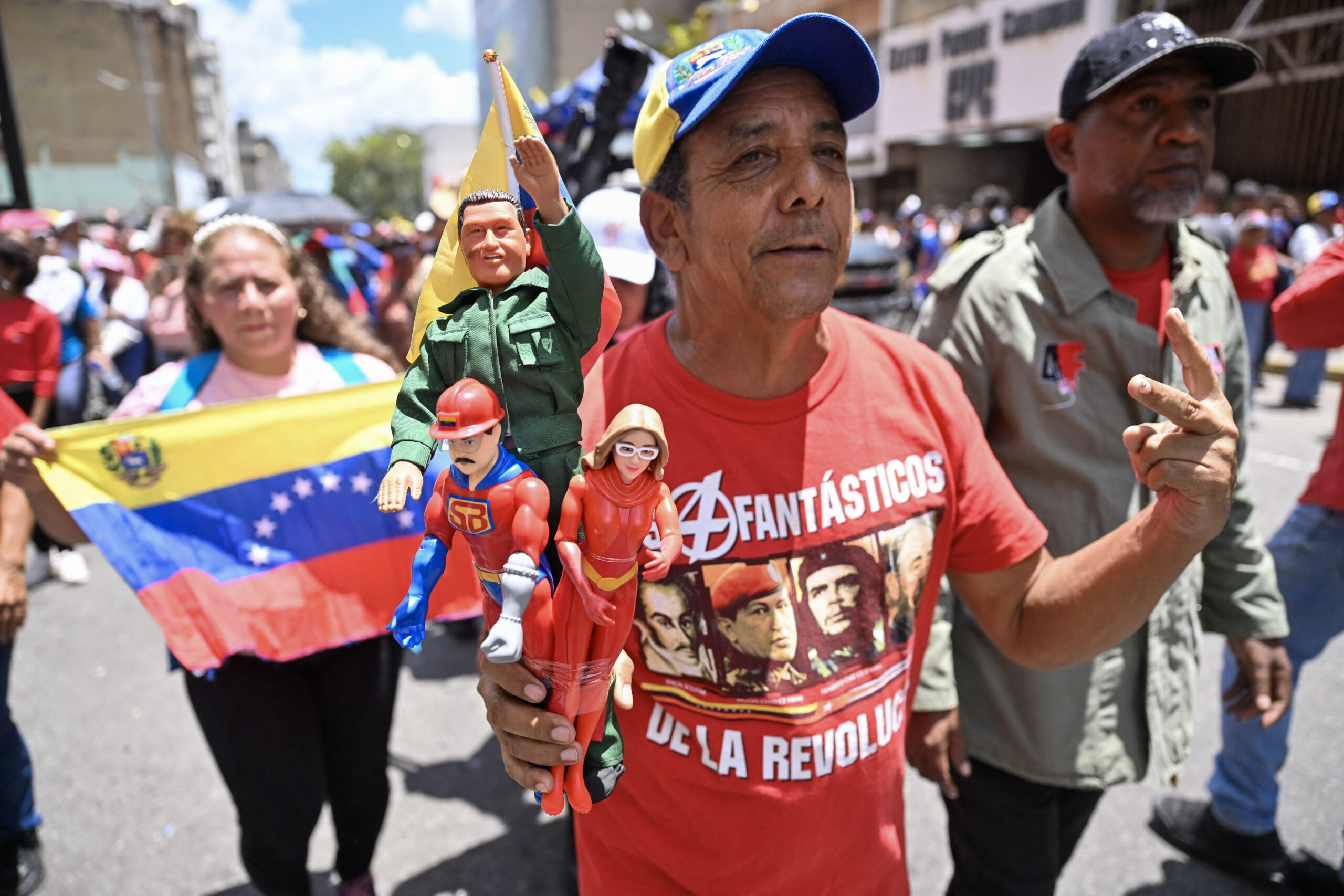
Delcy Rodriguez, acting president of Venezuela, is preparing to put herself out of a job. In an address to the United Nations General Assembly this week, Rodriguez declared that Venezuela is getting ready for a return to democracy.
“I want to make this very clear at this General Assembly: There will be elections in Venezuela,” said Rodriguez Wednesday. “Venezuela has initiated a process of democratic transformation for its rebirth, an orderly, institutional, and verifiable process.”
Exactly when that orderly process will produce an election is not yet clear, although a rough plan is beginning to take shape. The rump Chavista government, under the careful management of U.S. Secretary of State Marco Rubio, has been in talks for some months now with the political opposition. The National Reconciliation Council, as the body mediating these discussions is called, is intended to ease a prospective transition by integrating some key opposition members into Venezuela’s government, thereby providing a measure of confidence in the integrity of the electoral process.
Allowing the opposition such a foothold, or even just visibility into government operations, is an important step toward ensuring a workable transfer of power. Opposition politicians, judges, and functionaries were systematically excluded from government posts under Hugo Chavez and Nicolas Maduro, and in some cases the structure of the state itself was reorganized around institutionalizing Chavismo, or specifically benefiting regime clients and supporters. Some of those changes have been rolled back under Rodriguez; others remain much as they were before Maduro’s capture.
If, as is probable, opposition parties win the promised election, they will face a number of daunting tasks. They will assume control of a government that is institutionally hostile to them and filled with functionaries who fear being held to account for their previous actions. New leadership would have to reassert control over the basic functions of the state—ideally without eroding public order or indulging in sweeping purges or other acts of political revenge. (The U.S. is very familiar with the hazards of de-Baathification.) This will require reorganizing the courts and the bureaucracy, which are currently stuffed with Maduro loyalists who may make it difficult to implement the policies of a new government. The most powerful bodies, like the National Electoral Council and the Venezuelan Supreme Court, may require the most extensive renovations, but by necessity most of the people who will fill the lower posts in government will have achieved their position under Chavismo. The opposition will have to figure out how to command and restrain them.
The new government will also need to reassert civilian control of the military. This is perhaps the most difficult and dangerous issue facing a democratizing Venezuela. For decades now, the military has been recruited, trained, and organized around loyalty to the regime above all else. In order to secure this loyalty, Chavez and Maduro granted their generals lucrative sinecures, powerful posts in the government, and opportunities to profit from Venezuela’s rampant corruption and crime. A number of military officers have intimate ties with the cartels and other criminal bodies engaged in drug trafficking and illegal mining.
With the backing of Washington—and the implicit threat of the Pentagon meting out the same treatment to recalcitrant generals as it did to Maduro in January—a new Venezuelan government can shake up its military leadership, cashiering the worst offenders and putting in new officers who are amenable to civilian control. Many of the new leaders will likely be relatively junior, with careers heretofore stymied by the aging generals who dominated things during the Maduro and Chavez years. But the corruption in the officer corps and the poor state of the army will take decades to overcome—and there is no guarantee that the U.S. will maintain an active interest in Venezuela throughout that period.
Overcoming such challenges would be hard in the best of circumstances, but the new government will not have the luxury of a stable economy or even full control over its own territory as it attempts to rebuild. The Venezuelan economy has been shattered by decades of poor management, international isolation, and corruption. Since the removal of Maduro, trade has opened up and the oil industry is beginning to function again, but the country remains deeply impoverished and loaded with debt and dysfunction. Many in its professional classes—lawyers, doctors, engineers—have fled abroad, and while some will return, most will probably prefer to remain in their new countries of residence.
Perhaps the most dangerous elements are the cartels, which control significant stretches of the interior. Venezuela’s mineral fields, especially its gold deposits, have proven lucrative resources for cartels to exploit. Mining is a vital part of many criminal organizations’ supply chains, as the sale of illegally mined gold provides a convenient way to launder money made by extortion and drug trafficking. Efforts to professionalize the military and law enforcement will inevitably cause conflict with the cartels, who have made arrangements to avoid excessive government interference with their operations.
Conflict with the cartels has been a significant challenge for neighboring Colombia, which has an effective and professional military. Open war between the cartels and an incoming Venezuelan government, which would have relatively few resources and a weak military of questionable loyalty, could plunge the country into a wave of crime and violence similar to that engulfing nearby Ecuador. Support from the U.S. could help keep a lid on things, but fighting organized crime in South America often requires military and police ground operations against heavily armed criminal groups—and no administration will be eager to send American troops to occupy the Orinoco Mining Arc.
All of this would be difficult enough with watchful and consistent American oversight. But the timelines that have been suggested for holding a vote in Venezuela—late 2027 or, more likely, 2028—mean a transfer of power may not occur until after the next U.S. presidential election. This makes sense for domestic political reasons: The Trump administration can close with the successful administration of a new election in Venezuela, ushering in a democratic, pro-American government just before the presidential election at home. Any negative consequences of the transition will be another White House’s problem.
But the potential for confusion, miscommunication, and misalignment in this scenario is immense. Managing another country’s affairs is a difficult business; and only time will tell whether U.S. nation-building efforts in Latin America will meet with greater success than they have in the Middle East.
The post Democracy Is Coming to Venezuela—Eventually appeared first on The American Conservative.
AfD’s seemingly unstoppable rise has Friedrich Merz on the ropes.
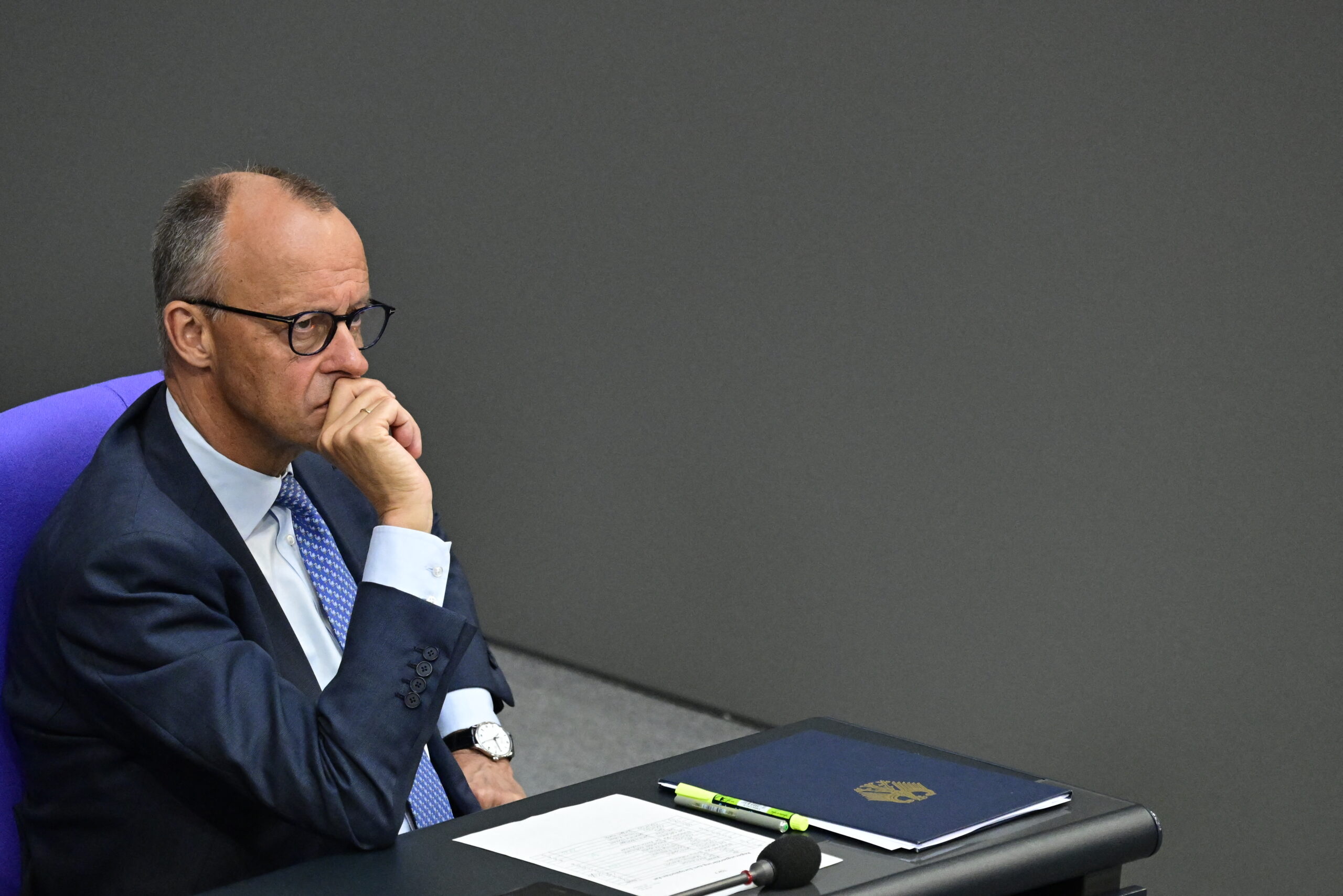
Recent state elections have been disastrous for Friedrich Merz, who now holds the title of least popular federal chancellor in German history. His Christian Democrat Union (CDU) has suffered catastrophic defeats, while the right-wing Alternative for Germany (AfD) continues to gain strength. Merz and the political establishment he leads have been left struggling to adapt to a seismic shift in the country’s political landscape.
Two weeks ago, in an election in Saxony-Anhalt, the CDU’s vote share more than halved, falling to just 17 percent, while AfD, under the charismatic Ulrich Siegmund, won a stunning 44 percent of the vote. Saxony-Anhalt may thus become the first state with an AfD government, a prospect that has sent shockwaves through Germany’s “legacy” political parties—the center-right CDU as well as the center-left Social Democratic Party (SDP)—and prompted hysteria among the liberal media.
This past Sunday, elections in two more German states dealt further blows to the CDU.
In the north-east state of Mecklenburg-Western Pomerania, Merz’s party suffered near-total humiliation: With slightly less than 5 percent—a result that even the chancellor described as “disastrous”—the Christian Democrats failed to clear the threshold necessary to enter parliament. For the first time since 1949, there will be a German state legislature without a single CDU member. Meanwhile, the AfD won 38 percent of the vote, more than doubling its last result and running slightly ahead of the ruling Social Democrats.
And in Berlin, the post-communist Die Linke (“The Left”), led by its top candidate, Elif Eralp, came in first with 26 percent of the vote. Die Linke campaigned on a stridently left-wing agenda, pledging to nationalize large housing companies and offering vociferous criticism of Israel. (At one party event, a rapper performed a song that included the lyrics “death to the IDF,” sparking another debate about antisemitism within the left.) Berlin, with its large and growing Arab population and traditions of political radicalism, has proven fertile ground for this kind of approach. One head of a notorious Arab clan, who has multiple convicted criminal offenders in his extended family, paid a visit to the party’s victory celebration. The CDU fell to a distant second place with less than 19 percent of the votes, and AfD came in third with 16 percent.
The national figures also tell a grim story for Merz and his party. Merz has the lowest approval rating ever recorded for a German sitting chancellor, making him even less popular than his predecessor, Olaf Scholz. He has become a lightning rod for voters’ frustrations. According to a recent survey by pollster Forsa, only 13 percent of respondents are satisfied with Merz’s performance. During appearances, particularly in eastern Germany, he is routinely booed, whistled at, and jeered.
That the CDU and its Bavarian sister party, the CSU, are undergoing a historic decline is undeniable. Together, their favorability has dropped to roughly 20 percent, the lowest level of support in the postwar era. By contrast, AfD is riding high at nearly 30 percent in national polls (in the five states of the formerly communist East Germany, support is even higher). This, ironically enough, is exactly the opposite of what Merz claimed would happen in 2018, when he pledged to “halve AfD” as part of his bid for leadership of the CDU. That promise has come back to haunt him: In the nearly eight years since, support for AfD has more than doubled.
Part of this is due to Merz’s stumbles. The chancellor is a poor communicator who comes across as arrogant, bossy, and out of touch. He has committed numerous political blunders, including a botched cabinet reshuffle recently, and alienated many of his natural supporters. Those who hoped for a conservative turn under his leadership have been disappointed. His dysfunctional coalition with the Social Democrats is paralyzed and frozen in place, incapable of tackling the country’s fundamental problems.
But the problem is far bigger than Merz. Germany has been on a steeply downward path for quite some time, beginning with Angela Merkel’s 16 years in government. She left behind a catastrophic legacy of uncontrolled mass immigration, primarily from Muslim countries, resulting in enormous welfare costs, rising crime, social disintegration, and worsening conditions in schools and the housing market. And under her successors, Scholz and Merz, the economy has started to deteriorate rapidly as well.
For the past six years, Germany has either been in recession or stagnated. By comparison, real GDP in the United States has increased by more than 15 percent since 2020, while the economies of the United Kingdom, France, and Italy have grown by roughly 5 to 9 percent. Germany’s economy, by contrast, has grown by only 0.2 percent.
China was a profitable export market for German industrial products for more than two decades, but that relationship has now reversed. German companies are increasingly speaking of a “China shock” comparable to the one the United States experienced as a result of intense import competition in the 2000s.
But not all of the economic damage has come from Chinese competition. In a rash reaction to the Fukushima disaster in 2011, Merkel’s government decided to shut down the country’s nuclear power plants. To fill the gap, Germany imported more Russian natural gas. After Putin’s invasion of Ukraine in 2022, that has been stopped, and German energy costs have soared even higher. Thanks to failed green-energy policies, high taxes, and adverse geopolitical developments, Germany’s energy costs are now among the highest in Europe.
The combination of high energy costs, high taxes, welfare-state contributions, and bureaucratic red tape now places such a heavy burden on companies that Germany is experiencing record numbers of insolvencies. Core sectors of the German economy, such as the automotive and chemical industries, are now cutting thousands of jobs, shutting down plants, and even leaving the country altogether. Add to this the experience of mass migration and failed integration, declining public safety, and a political class that chose to ignore reality and silence its critics, and you are left with a picture of a country sleepwalking toward the abyss.
The old parties—particularly the CDU and the SPD—have sown the seeds of their own destruction. They are now much-diminished forces compared with what they were ten or twenty years ago. Faced with the rise of AfD, they are like so many deer caught in the headlights.
To fight AfD, they have tried a combination of repression and intimidation directed at its members and voters. As I’ve written before in these pages, such measures have included the domestic spy agency’s labelling of the party as “extremist”; massive public pressure and propaganda (including warnings about a supposed return of the Nazis); and the enlistment of public broadcasters and mainstream media, churches, publicly subsidized NGOs, and other organizations into a campaign of vilification. Yet these efforts have seemingly come to nothing.
Merz famously promised that “the left is over” when he campaigned to become chancellor in early 2025. But many German conservatives believe he has failed to deliver. It’s true that the Greens, who were the default hard-left option in public discourse and elite thinking for many years, are facing headwinds. But they remain a powerful force, and the CDU has not dared to fundamentally reverse course on major policy issues such as energy or migration. Merkel opened the borders to unlimited asylum migration in 2015. Under Merz, the number of new asylum seekers and refugees has been reduced, but the consequences of admitting something like 3 million migrants over the past decade remain.
The dysfunctional Merz government depends on a coalition with the Social Democrats that has achieved only limited reforms in areas such as welfare, taxation, and energy policy. A leading center-right CDU politician in the Bundestag, whom I spoke with last week, expressed deep frustration over the lack of progress. Some parts of the SPD would prefer to side with the post-communists. The coalition is holding together largely because both sides are bound by their fear of AfD.
The situation has triggered speculation that the Christian Democrats might seek to replace Merz. To shore up his position, last week the eight CDU minister-presidents who govern Germany’s federal states issued a statement seemingly signaling their support for Merz (though, interestingly, the document did not mention him by name, instead promising to “solve problems together with our chancellor”).
Although Merz is deeply unpopular and the CDU is reeling from recent electoral hammer blows, I don’t think he will be replaced anytime soon. The simple reason is that none of the CDU grandees in the states want his job under the current dire circumstances.
If Merz were to go, though, the most likely successor would be Hendrik Wüst, the telegenic and slick minister-president of North Rhine-Westphalia, who governs in coalition with the Greens. A federal government under Wüst’s leadership would probably move further to the left, in a bid to win over urban liberal voters. Wüst represents a tendency within the CDU that is willing to form a national government with the Greens. He has also called for a working group to consider initiating the process of banning AfD (a common rallying cry among the Left, the Greens, and the SPD).
It is an open question whether a Germany that bans its most popular political party would still be a democracy. That such a move is even under consideration speaks to the depth and intensity of the divisions currently roiling German politics.
And although AfD seems here to stay, it has heretofore only acted as an opposition force. So if the party succeeds in forming a government in Saxony-Anhalt, things could take yet another turn. Governing would compel the party to demonstrate its administrative capabilities, putting it in charge of a state in a rather dire fiscal situation. Not only would putting the state’s finances in order come as a reality check, but AfD would also be under significant pressure to make good on its promises to deport large numbers of illegal or criminal migrants. Given the legal constraints in the German system, that is far easier said than done.
But whatever happens at the state level, the grievances that have propelled AfD’s rise have remade the political landscape. To acknowledge this new reality, Germany’s so-called liberal elites should accept that the party is a legitimate political force with which they must reckon.
The post Will Germany’s Chancellor Go Down? appeared first on The American Conservative.
In Saxony-Anhalt, anti-Western agitators suffered a major setback.

Hide your kids, hide your wife. For the first time since the Nazis (cue woman screaming), a far-right party won a German election this week.
At least, that’s the mainstream media’s narrative about the stunning results of a state election held Sunday. In the eastern province of Saxony-Anhalt, the Alternative for Germany (AfD) party won 44 percent of the vote, trouncing the center-right Christian Democrats (CDU), which finished second with a measly 17 percent.
“This was the most significant election we’ve had in Germany since the fall of the Berlin wall,” Filip Gaspar, a political advisor and member of the AfD, told The American Conservative. “Something big is going on.”
Liberal elites find themselves in a boy-who-cried-wolf situation. “Let’s be clear, this is not just a right-wing party that we call ‘far-right,’” explained Ben Rhodes, a former advisor to Barack Obama, on a podcast. “This is a far-right party.”
Maybe so, but as the shepherd boy learned when a wolf really did attack his flock, at some point the villagers stop believing you. To the dismay of liberals across the Western world, all the scary talk about the return of Nazism doesn’t intimidate voters nearly as much as it used to—even, gasp, in Germany.
From a right-wing perspective, of course, AfD is the shepherd, not a prowling predator, and it’s trying to protect Germany from the biggest and baddest wolf of all: mass migration.
Liberal analysts tend to pathologize right-wing views, treating them as outgrowths of economic anxieties and déclassé resentment, but opposition to mass migration is clearly the main driver of support for right-wing parties. Conservative voters never fully bought into the idea that their historic nations don’t or shouldn’t exist, that they are merely “civic” nations comprising a hodgepodge of disconnected strangers.
That’s certainly true of conservative voters in Germany, especially in the east, where Soviet domination during the Cold War habituated residents to rolling their eyes at state-imposed ideology. Flouting liberal orthodoxy, the AfD promises to halt and reverse mass migration lest ethnic Germans become an aging and despised minority in their own ancestral homeland. To you and me, that sounds like common sense. But to the blinkered technocrats in Berlin and Brussels, it sounds like Nazism.
That’s why the AfD’s ascendance is uniquely significant for right-wingers across the Western world. It proves that the official mythology of the Second World War is losing its power over political discourse. That mythology—which puts Nazi crimes at the center of Western history—underpins the hegemony of liberalism. Whenever any right-wing politician or party challenges liberal pieties, just evoke the mustached psychopath who tried to conquer Europe and voilà, the rising challenger will soon crash into a hard ceiling of support.
Breakdowns of ideological hegemony can be exhilarating—and also dangerous. In the 1920s, the Italian communist Antonio Gramsci observed that Western states relied more on ideological consent than brute force, but that the latter came to the fore whenever the former failed to materialize. Gramsci ought to have known: The left-wing subversive developed his theory from inside a prison cell.
Thus, one sign of the collapse of liberal hegemony in Germany is that the government has been employing coercive means to preserve the establishment’s control. Last year, the domestic intelligence agency responsible for protecting the constitution—or Verfassungsschutz—labeled the AfD a right-wing extremist party. That designation, which remains under legal review, enables the agency to surveil the party’s communications and even dispatch informants to spy on its meetings.
There’s just one problem. Since then, the AfD has become the most popular party in Germany. More and more, the Berlin establishment appears to be thwarting the democratic will of the German people, not protecting the constitution from “extremists.” And more and more, opponents of the AfD sound like the actual extremists.
It’s a strange habit of many European liberals to dismiss their right-wing compatriots as a radical faction no matter how numerous they become. During an interview with The American Conservative this January, Sarah Rogers, the under secretary of state for public diplomacy, recounted a strange conversation with one such European liberal:
I had a hostile reporter grilling me, and he said, “Can you name anyone in any of these countries who support you, who’s not in one of these right-wing parties?” And he listed these parties: Reform, National Rally, AfD. And I said, “If you look at the polls in these countries, Reform is the largest chunk of Brits; that’s the plurality of Brits. National Rally is the largest chunk of French; that’s the plurality of French. So, you’re basically accusing me of drawing most of my European support from people who are in the majority European opinion.”
Rogers can now add the AfD to that list, though the ruling class in Germany remains loath to acknowledge political reality. On the eve of this week’s election, Germany’s Chancellor Friedrich Merz reiterated that his CDU party would never form a coalition with the AfD. Many things, he said, were up for discussion, and many things were open to change, but one specific thing made the AfD verboten: “Germany has left nationalism behind and will never again allow ethnic nationalism in Germany.”
Merz said the rejection of ethnic nationalism (in German, Völkisch nationalism) was necessary to ensure that Germany remained a broadly European country. Yet it’s precisely non-European migration—and the refusal by politicians like Merz to stop it—that has fueled the backlash against liberalism. To my knowledge, Norwegians and Czechs haven’t been ramming their cars into revelers at Christmas markets in formerly quaint German towns.
German right-wingers detect a political calculation, rather than ideological conviction, in the CDU’s continued refusal to work with the AfD. “Some of them really believe that the AfD is a new Nazi party,” Gaspar conceded. “But for the more normal people, it’s just about power. If the CDU forms a coalition or government [with the AfD], they won’t be the ruling party in this coalition, they’ll be the little brother.”
Regardless of what actually motivates Merz, Sunday’s results didn’t seem to induce much critical reflection. Speaking after the election, the chancellor maligned the AfD’s policy of remigration as “ethnic cleansing,” though he didn’t consider the corollary: that mass migration has amounted to displacement and dispossession for ethnic Germans. Perhaps he thinks the Germans deserved it. “We know that Germany carries special responsibility because of its history,” he added.
But no people carries the responsibility to commit collective suicide, and anyway, the anti-Western agitators don’t distinguish between the land of Adolf Hitler and the nations that fought against him. This week in Saxony-Anhalt, the agitators and their masochistic ideology suffered a major defeat, and right-wingers across Europe and in America should thank the AfD for that.
The post AfD Just Shattered Liberal Mythology appeared first on The American Conservative.
In a 2011 Labor Day column, our co-founder Pat Buchanan described the transformation of the American social contract in the postwar period.
“What happened to this idea that made America a self-sufficient republic, producing almost all it consumed, a nation that could stay out of the world wars as long as she wished and crush the greatest powers in Europe and Asia in less than four years after she went in?” he asked.
As was so often the case, Pat had the answer: “A new class came to power that looked on tariffs as xenophobic, on economic patriotism as atavistic and on national sovereignty as an antique idea in the new world order it envisioned.”
The results have been clear: the hollowing out of the American industrial base, the immiseration of the American workingman, and the drift of political attention to faraway lands, where ever more recondite interests demand the use of military force. In short, globalism.
Will you stand with The American Conservative as we carry forward Pat’s legacy of fighting reckless globalism?
For over a decade, many have given lip-service to Pat’s diagnosis. But the Iran War has shown that the globalist project, which so often works in tandem with neoconservativism, is not going down without a fight.
Let me make the stakes clear.
The American Conservative is the only major conservative magazine taking a stand against this failed war and its consequences for ordinary Americans. We can do this only with your support.
Can I count on you to help TAC carry forward its mission, championing peace abroad and prosperity at home, with a tax-deductible donation?
Thank you, as always, for your help and consideration. We wish you and yours a peaceful, joyful Labor Day.
Sincerely,
Curt Mills
Executive Director,
The American Conservative
The post How Long Will the American Worker Pay for Endless War? appeared first on The American Conservative.
Long live Amarillo.

The country legend Terry Allen once wrote a great song about Amarillo and the energy of Texas: The pull of the long, sloped plains that fall away into the vast western horizon. Born in Wichita, Kansas, Allen was forthright about his outsider status, while at the same time making the definitive statement on what makes a Texan a Texan in “Amarillo Highway,” the lead track to his seminal 1979 album Lubbock (on Everything).
Singing proudly of his love of post-holing, dust-bowling, and the four-hard-lane run of the Amarillo Highway, Allen stripped Texas to its bare, cement core: a girl asleep in the backseat of a beer can-littered pickup, as the hot pavement keeps unspooling.
Although I had visited Amarillo a dozen times on my treks across the American heartland, Friday was the first time I arrived early. And after one full day in this town, I felt like I understood what Allen was getting at better than I had in the 15 years of listening to “Amarillo Highway” in places near and far.
Friday night, six o’clock, and I’m at the Golden Light Café on Sixth Street. It looks like a prison from the outside. Flat, low-hanging, and completely unconcerned with curb appeal. The inside is classic Texas dive—dim lights and old photos of sheriffs and mayors and families covering the walls. They cook the burgers on a high flame right there on a griddle behind the counter, and Shiner Bock is prominently featured on a menu which also tells the cafe’s story. It was opened in 1946—which, incidentally, makes it the oldest restaurant in this cow city—by Chester “Pop” Ray and his wife Luis, the pair of them born at the end of the 19th century.
I order a basic cheeseburger with mustard, onions, dill pickles, and a side of fries. The chef is a scrawny white kid wearing a Coors Light shirt and a black beanie even though it’s one of the hottest days of the year in West Texas. He’s rocking white Bluetooth headphones and a silver nose ring as he presses down dozens of beef burgers on a griddle the size of a pickup bed. If I’d met him at a trendy burger spot in New York City, I wouldn’t have blinked. A few stools down, a young Hispanic guy is finishing up at the bar, hunched over at his plate. I ask if I can snap a picture of the scene. He nods while inhaling a patty. “You like it here?” I ask. “Just moved here,” he replies. “Work. Feels like everybody’s been here forever.” His voice sounds strained, like he’s worried whether he’ll find a way into his new digs. “You gotta move somewhere to live there,” I reply with a shrug.
I’m still finishing up my plate when a middle-aged waitress behind the bar starts jawing with a young white cowboy in a Nudie Suit. Hank Williams and Buck Owens made the decorative, rhinestone-covered getups famous back in the ’50s before Gram Parsons and the cowboy angels outside Los Angeles took them to a stranger, acid-tinged place a couple decades later. Here, in a divey Amarillo burger bar, the suit fits like a glove. The young man says he’s headed across the street to Smokey Joe’s for some late-night music. His girlfriend is as pretty a blonde as you’ll find. She’s not the only one around here. I’ve been noticing them all night, one beautiful woman after another, in a town most people only pass through on the way to California.
The cheeseburger, for what it’s worth, is fantastic. If you ever visit Amarillo, they’re going to try to sell you on the Big Texan, a gimmicky steakhouse that promises a free 72-ounce steak if you can finish it in one hour. I ate there once. It’s not bad, but it’s not Amarillo. It’s America’s idea of the west. A big place for big eaters. The real Amarillo is down here on Sixth Street at the Golden Light Café.
But the idea that Amarillo is just one street in the historic part of the city would be misleading. And so, despite my desire to sit at the bar all night, drinking Shiner Bock until a mysterious, good-looking woman arrives late and tells me, unprompted, “there ain’t nothing to do in this town,” I pay my ticket and drive south, under the I-40 overpass, to another revered burger joint.
Shark Beach Burgers couldn’t be further from the fuzzy picture you might have of Amarillo, a town known for little other than being the West’s greatest truck stop and the unyielding, pungent smell of dung that emanates from neighboring beef plants. First, the crazy-hot waitresses. There are several thin, gorgeous blonde women with their hair styled in long, woven braids manning the counter and flipping burgers. They smile pleasantly and ask if I’d like to try the cheese curds for which the place is famous. I can’t help but think these beautiful women should be anywhere but here, in ketchup-stained work pants. Any of them could move to New York City tomorrow and do whatever the hell they wanted. Instead, here they are, slinging burgers on a Friday night at the end of summer. “Maybe Amarillo ain’t so bad,” I consider, as I watch the sun setting somewhere out west.
It’s hard to get to this joint, which is probably why I’d never been there in all the years I’d spent passing through Amarillo late at night on my way to the desert. It’s way down on the southern side of the city, and by the time I pulled in I was wondering if I’d made a wrong turn. I hadn’t. Tons of sand, tons of beer, surfboards, and mannequins propped up inside old, beaten Volkswagen vans. An ’80s cover band is playing for maybe fifty people scattered around in beach chairs. Not my scene, exactly, but there was something undeniably cool about how completely certain the place seemed to be of itself. A big, unique community of people hanging out together on another night in Amarillo, Texas.
And the burger? One of the best I’ve had in my life. I just powerhoused the thing. Could’ve been the long drive down from Jackson, Tennessee. I was tired and hungry. But, honestly, the meat was fresh, the tots were hot, and the vibe was immaculate. This, more than the Golden Light, felt like the Amarillo a tourist rarely sees. Real Texas. Weird Texas. The kind of place that makes it difficult to believe Democrat James Talarico really has a shot of winning the Senate race down here. I’ll put it this way: he sure doesn’t have a chance in Amarillo. If Texas is even one-tenth of what Amarillo is, this place is never going blue again.
I slink back to my hotel in a Honda Civic with 100,000 too many miles on it. I must’ve gained five pounds in four hours. Worth it. Every single bite. Would do again. I feel like if I made any mistake tonight, it’s only that I should have arrived here earlier and had three different burgers. For 15 years, I’d listened to that Terry Allen song about Amarillo and the great big, dust-bowling highway that rips through its heart. But I never truly understood what it was getting at. I knew the road and its long, empty horizon. I knew Amarillo as a rest stop on the way to somewhere better. But I’d never stuck around long enough to see the people who had decided it was good enough to carve a life out of.
You can’t understand a place by passing through it, and you certainly can’t understand it in one swing on a Friday night. But from what I saw, Amarillo is much more than its surface promises. Off the highway, at the counter, with a burger and the sun going down, the locals will tell you there ain’t nothing to do here, but that they like it that way. I, for one, believe them.
Maybe that’s the real Amarillo. Not the Big Texan, a steakhouse built for the Instagrams of tourists and empty stomachs of truckers. Not even the highway itself. The real Amarillo feels more like a bunch of people, some old and some new and some strange, all making a life in a weird, hot, beautiful stretch of West Texas that most Americans would struggle to point to on a map.
If there’s one thing I learned from my extended evening in Amarillo, it’s that next time I head west, I’m stopping in even earlier.
The post Burgertown, Texas appeared first on The American Conservative.
The American flag is as alive as the country it represents.
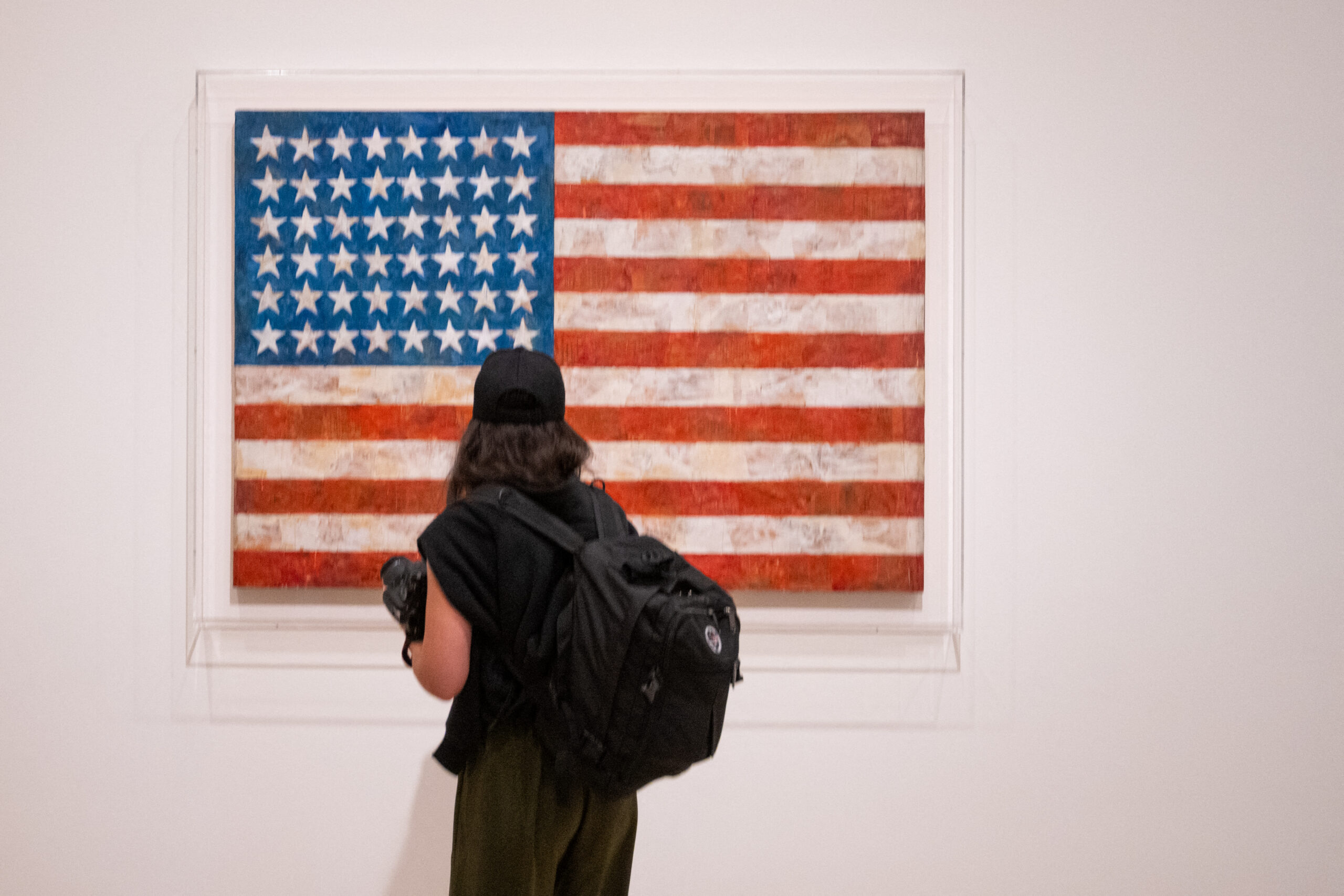
American Icon: The US Flag in Art
National Gallery of Art, June 6–December 6
In 1954, Jasper Johns had a dream of himself painting an American flag. When he woke up, the artist executed his first work on the theme, in encaustic. More flags soon followed. Johns worked experimentally, often using outré materials and positioning the flag in strange configurations. But the basic form always remained the same: a rectangular field emblazoned with stars and stripes. It became an obsession. The flag’s design was so staid, reliable. He could really give himself over to it. And, in so doing, Johns felt that “it was something I could do that would be mine.”
Johns discovered something that many before him had realized: The American flag is a living symbol, and, like it or not, it lives inside every American. The artist took great comfort in that fact. “Using the design of the American flag took care of a great deal for me because I didn’t have to design it,” he said. After all, everyone already knows what it looks like, what to expect from it. When he painted a flag, Johns, like the French academic painters of the 19th century, worked within set conventions. But just as with the best of those painters, it was the conventions themselves which “gave me room to work on other levels.”
It is difficult to say exactly what those other levels are. In his authoritative study of Johns, the author Michael Crichton writes that the painter is intentionally opaque—and smart enough to realize that he ultimately has no control over how his work is interpreted. When Johns first started painting his flags, Pop Art did not yet exist (Johns never affiliated himself with the movement), and many people did not know what to think. Was his flag some kind of political statement? Was it kitsch, or commentary on kitsch? Was he in earnest? “Such a painting was surely art—or was it?” Crichton writes. The artist offered no answers; the work, he said, spoke for itself. “That became a problem for the viewer, alone,” Crichton writes. “Johns is gone; he has already made the painting, he has already presented the problem. The viewer is left to resolve it as best he can.”
The National Gallery of Art has two Johns flags on display in “American Icon,” its exhibition on the flag in art, which runs through the end of the year. Both are minor works, and rather dour, at least in comparison to Johns’s best-known flags. Flags II (1967–1970) is a lithograph in green, orange, and gray: strange colors for Old Glory. And Flag (1969) is a monochrome lead relief. Both present Johns’s problem of meaning. And both raise questions for their viewers about what the American flag stands for 250 years after the founding. The American flag, Johns said, is an object so familiar that it is “seen but not looked at.” When you examine it closely, what is it really?
The showrunners at the National Gallery have a pat answer to the question. The flag is a “living thing,” they concede, citing the U.S. Flag Code. But judging from the selections in “American Icon,” its life is narrowly directed toward highly didactic ends. “Over the centuries individuals and social groups have used the flag to reflect their own values and desires,” the exhibition notes say. “They have flown it to signify freedom, brandished it in battle, wielded it in protests, and paraded it to celebrate victories.” All true, but to limit one’s understanding of the flag to political action is to underrate its meaning. It is far more mysterious.
Part of the problem is that many of the artworks in the National Gallery are overtly patriotic, even jingoistic. The most famous of these is probably Allies Day, May 1917 (1917) by Childe Hassam. It is an impressionistic work, depicting the American, French, and British flags flying from the buildings on Fifth Avenue up by Central Park. It is a bright, joyful, and quietly bloodthirsty painting. When I was a child and visited the gallery with my parents, I misread “Allies Day” as “Armistice Day.” It was not until I was an adult that I realized Hassam was not celebrating the cessation of fighting, but rather delighting in American engagement in it.
Allies Day is part of a series of more than 30 flag paintings Hassam produced in conjunction with the First World War. The other famous one is The Avenue in the Rain (1917), which hangs in the White House. It is a shame that the National Gallery was not able to secure its loan for the exhibition. Unlike Allies Day, it is a sober painting. It also depicts flags hung from the buildings on Fifth Avenue, but unlike its sunny companion, the scene is rainy, and the buildings obscure, leaving the flags the only discernible object shimmering in the gloom. Although the painting was intended to spur Americans to join the European conflict, it is often interpreted as brooding and introspective, a commentary on American overreach. The Avenue in the Rain also happens to be a favorite of Democratic presidents: Bill Clinton, Barack Obama, and Joe Biden all hung it in the Oval Office during their tenures.
So much for the uncritically patriotic. Most of the wall space in “American Icons” is given up to the canonical critiques of the United States in the second half of the 20th century. The exhibition features a photo by Dorothea Lange, shot in 1942, of a crowd of school children pledging allegiance to the flag, among them Japanese-American school children just before they are carted off to internment camps. Elsewhere, we are presented with an undistinguished etching by Christopher Brown (Flag from the set Five Studies from an Endless Film, 1994). It is done after a still in the Zapruder film, just before John F. Kennedy’s assassination. Other flag-heavy protests make their appearance, too: the Poor People’s Campaign march on Washington, D.C. in 1968, the Hard Hat Riot in New York in 1970, the World Trade Center in the aftermath of September 11, 2001. Many of these photos appear to have been chosen not for their intrinsic interest but because they feature American flags at important political moments.
The finale of the exhibition is Mitch Epstein’s Flag 2000 (2000). This work is a large-scale photograph of a folded flag in a dry cleaner’s bag, set against a sickly Pepto-Bismol pink background. It is part of a series depicting the closure of Epstein’s family furniture store and real estate business in Holyoke, Massachusetts. From its beginning in 1911 to its closure in 2000, the store grew from a small business to the largest furniture store in Western New England, until it dwindled to nothing because of deindustrialization. The exhibition notes present the image, which calls to mind a flag draped over the casket of a fallen soldier, as a “remnant of the family’s American dream.” The sentiment is a fitting final word for an exhibition that seems to regard the country in the past tense and its flag as a melancholy symbol of doomed resistance.
As with many exhibitions tagged to the America 250 celebration, “American Icon” is a letdown. Simply put, the show lacks imagination. Since the United States adopted the flag in 1777, it has gone through 27 iterations. In some ways it is a curious relic of the country’s very brief neoclassical period, but in others, it is totally novel. It is not just the subject of paintings and photographs, but also features prominently in films, music, theater, performance art. Virtually every aspect of American life has been marked by the flag, and every generation refashions it in its own image. We wear it on our sweatshirts, swimwear, beach towels. We slap it on our beer labels, paint it on our cars, tattoo it on our skin. We salute it, sing songs about it, fly it in our churches. It is a remarkably flexible symbol; it can mean anything because it is everything.
For my part, I prefer the mystery of Johns to any other interpretation. When I look at his paintings, I see the accumulated weight of history. We like to say that America is young, but in Johns, you see a country coming of age. The artist sometimes works in encaustic, piling the wax high like rough mountain ridges. Other times he composes his flags with found materials: newsprint, stencils, and the like. On their own, these things are just junk. But when molded into the shape of the America flag, they form a sort of history without words. One of my favorite quotations about America comes from Sir Thomas Browne, who considered the New World a “great antiquity” that “lay buried for thousands of years.” The heavy, difficult flags of Jasper Johns remind us that, as Browne wrote, “Time hath endlesse rarities, and shows of all varieties; which reveals old things in heaven, makes new discoveries in earth, and even earth it self a discovery.”
The flag is one of these endless rarities. After the disappointment of the National Gallery, it is worth paying a visit to the Smithsonian’s National Museum of American History. There, under glass, is the Star-Spangled Banner, the original found piece of flag art. It is massive, torn, and impossible to turn away from. The whole of America is contained within its ragged edges. Who could have known that when the British gunboats bombarded Fort McHenry all night in 1814, they were creating a masterpiece that has outlasted every empire but its own?
The post Put Out More Flags appeared first on The American Conservative.
President Donald Trump on Friday announced “THE BIGGEST OIL DEAL IN WORLD HISTORY,” which he says will bring “majority U.S. control of more than 65 BILLION BARRELS of proven Oil Reserves in Venezuela, at no cost to the American Taxpayer.”
In the Truth Social announcement, Trump attributed the deal, which he says “MORE THAN DOUBLES American Oil Reserves,” to Secretary of Defense Pete Hegseth and Secretary of State Marco Rubio.
The details of the transaction have yet to be announced, but Axios reports that it will take the form of a public-private partnership with American companies and the Venezuelan government, which controls the country’s nationalized oil industry.
“It’s not a purchase. They’re giving us equity. It’s a type of corporate transaction where the U.S. has equity in the companies,” an American government source told Axios. Per Axios, it is unclear whether the deal has yet been finalized.
Venezuela’s Acting President Delcy Rodriguez, who took power after the American ouster of Nicolas Maduro in January, confirmed the agreement, which she said would generate $209 billion in tax revenue for Caracas.
The post Trump Announces U.S. Stake in Venezuelan Oil Reserves appeared first on The American Conservative.
Toadying to Washington is not a durable platform for the region.
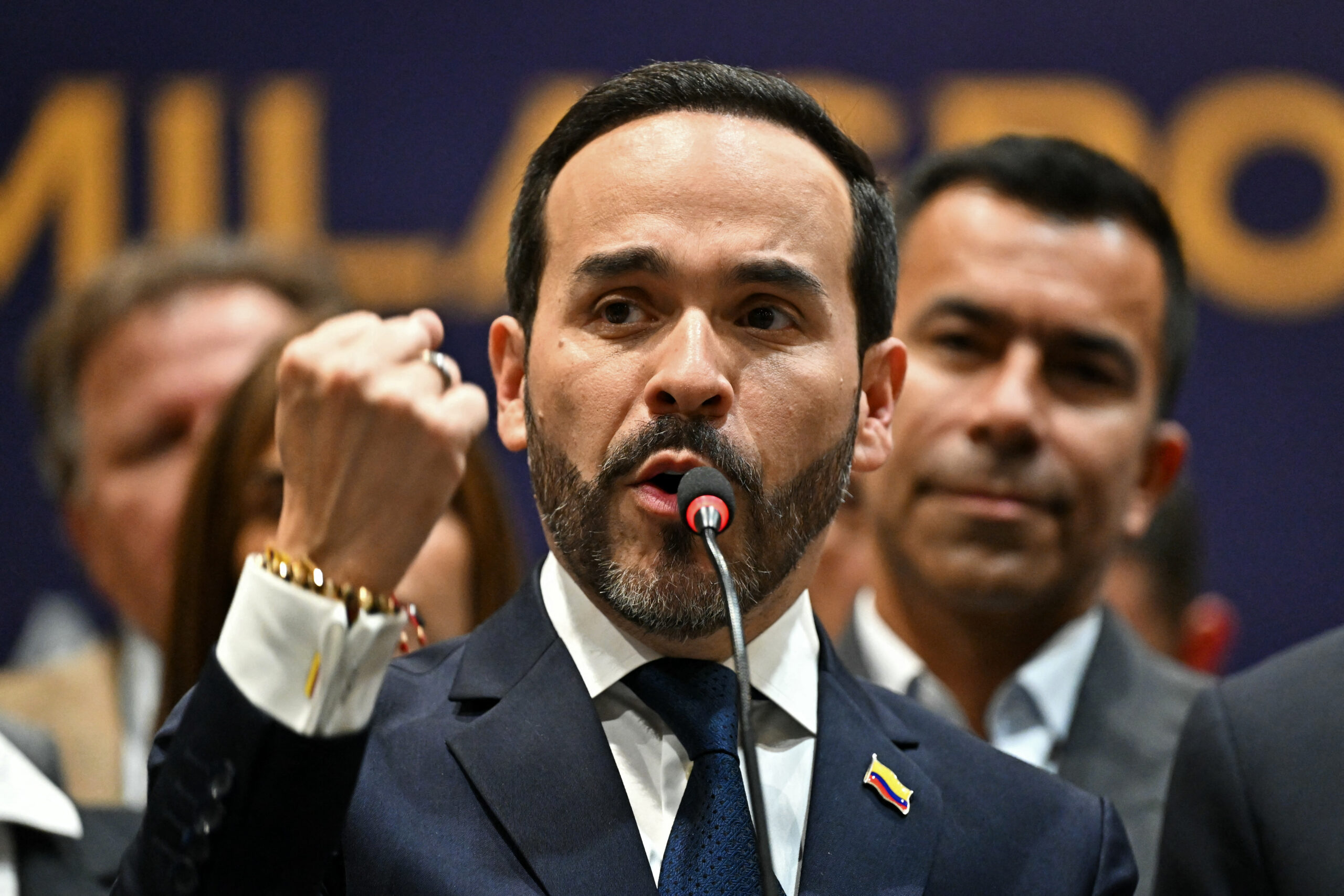
On June 21, Colombians narrowly elected the right-wing lawyer Abelardo de la Espriella to the presidency over the leftist candidate Iván Cepeda. Since 2023, right-wingers have won 11 of the past 13 elections in Latin America. De la Espriella’s victory comes as a jewel in the crown for the Trump administration and its so-called “Donroe Doctrine.” Sadly, the track record of recent conservative governments in the Americas—with the exception of El Salvador’s Nayib Bukele—has been disappointing at best and catastrophic at worst.
In its current form, the Latin American right seems determined to act as little more than a foil for the region’s leftists. Time and again, Latin American conservatives have elevated market fundamentalism and the interests of Washington above those of their own nations and their workers. De la Espriella’s election is the culmination of this condition. The new president is the first in Colombian history to have won election after having campaigned as a toady to the Yankees.
De la Espriella fits the right-wing, Latin American archetype of the outsider businessman, having made millions representing clients of ill repute, including the former President Álvaro Uribe and the Maduro loyalist Alex Saab. In his own words, the new president’s international role models are the United States’ President Donald Trump, Argentina’s President Javier Milei and the Salvadoran dictator Nayib Bukele—Milei being de la Espriella’s greatest influence by far.
Like Milei, the new president was a natural adherent of elite libertarianism prior to his presidential campaign. Up until recently, he vocally supported euthanasia and unrestricted abortion, and even gave an impassioned speech in favor of adoption by same-sex couples. The issue, of course, is that this combination of progressive social and free-market views is repellent to working-class conservatives. De la Espriella now claims that he opposes abortion, championing family values. Of course, his platform calls for copying Milei’s “chainsaw” fiscal austerity.
Most dubious, however, is the millionaire lawyer’s conversion from godless globalist to Catholic, Colombian patriot. In 2017, de la Espriella gave an interview explaining his atheism, stating that he denied the existence of anything that reason could not explain. When asked why he married his wife through the Catholic Church, he replied, “We all commit foolishness and stupidities for love.” In the same vein, the new president is a tri-citizen of Colombia, Italy, and the United States, having spent much of his time living abroad since 2016.
The right-wing paragon now claims that he found God in 2020 following his aunt’s death during the Covid-19 pandemic. The new president has emulated the Christian-nationalist strains of MAGA and Bolsonarismo in Brazil while adopting the slogan Firme por la patria—firm for the homeland. He likewise embraced the Colombian national team’s soccer jersey as a quasi-uniform, despite having previously stated that he “detested” the sport. Accordingly, the sincerity of the former atheist’s conversion to Catholicism has been rightly questioned, as has his perceived dual loyalty to the United States.
In June, de la Espriella stated that he voted for Trump and is a registered Republican in the United States; his wife likewise made a gaffe during the campaign by saying that, if they lost the election, they simply could return to their luxury abodes in Florence and Miami. More troublingly, Abelardo the Miami Neocon has celebrated the White House’s extrajudicial killings of alleged “narcoterrorists” in Colombian waters, few of which have come with concrete proof of drug trafficking. The right-wing lawyer has even gone as far as to propose cooperating with the U.S. on strikes inside of Colombia.
De la Espriella is ultimately a caricature of a self-hating, cosmopolitan elite; he even went so far as to denigrate a traditional Colombian dish prior to his presidential campaign. Ironically, this disposition resembles the self-hatred of Western progressives, who skew overwhelmingly toward the credentialed classes. American progressives like Hasan Piker typically regard shows of patriotism as problematic and paradoxically extol foreign nationalist movements like Mexico’s Morena and the CCP. In the same way, leaders like de la Espriella and Milei worship Washington and its allies while regarding their own countries as backward; unsurprisingly, college-educated voters disproportionately favor right-wing candidates in the region.
When asked about the national disgrace of Argentina’s 1982 defeat to the United Kingdom over the Falkland Islands, Milei told the BBC, “There was a war and we lost. The British did a good job. Margaret Thatcher was brilliant.” Putting aside the merits of Argentina’s longstanding claim to the Falklands, it’s stunning to see such deference towards the UK from the country’s head of state. Following Argentina’s victory over England in the World Cup semifinal, players from the Argentine squad raised a banner stating that the Falklands rightfully belonged to the country. In response, Milei warned his supporters not to fall for “cheap populist and nationalist slogans”.
More consequential was the Trump administration’s March gathering of virtually all of the hemisphere’s right-of-center leaders for the so-called Shield of the Americas Summit in Miami. The event was striking for its participants’ unwillingness to criticize the White House’s more than 200 maritime killings of their countrymen. Last month, de la Espriella announced that Colombia would open a Shield of the Americas office in Medellín.
Since the 1990s, and in some cases earlier, neoliberal centrist and right-wing governments in Latin America have adhered dogmatically to market fundamentalist policies, including the dismantling of labor rights, mass privatizations, and unrestricted trade liberalization. The net result has been deindustrialization and increased precarity for workers, particularly in countries like Brazil, Argentina, Chile and Colombia. Even as the Trump administration has embraced an admittedly haphazard form of protectionism, the region’s latest wave of right-wing leaders has selectively ignored the more pro-worker aspects of Trumpian populism. Latin American conservatives have seemingly interpreted America First a bit too literally, urging Washington to take advantage of lower trade barriers in their domestic markets while rejecting protectionism themselves.
In Argentina, Milei’s libertarian experiment nearly collapsed under its own weight following a run on the peso last September. Luckily for the too-libertarian-to-fail president, the Trump administration supplied a $20 billion bailout in order to stave off the crisis. The inflation rate remains a staggering 30 percent, and Milei’s disapproval has subsequently risen above 60 percent, with polls showing that he would lose if a presidential election were held today.
Similarly, the Kast administration’s attempts to emulate Milei in Chile achieved the remarkable feat of matching his progressive predecessor’s low approval ratings just two months after assuming office. The tragedy of Kast’s infatuation with Milei is that—unlike in Argentina—there simply was no case for mass cuts in Chile. At the time of Milei’s inauguration in 2023, Argentina’s debt-to-GDP ratio was a catastrophic 150 percent, warranting fiscal discipline. In contrast, Chile’s total debt is among the lowest, both in the hemisphere and the entire world, at just 40 percent of GDP.
Captured by the same free-market groupthink, de la Espriella has likewise promised to cut 40 percent of Colombia’s government spending and privatize many state companies. This is despite the fact that the country’s debt-to-GDP ratio is only marginally higher than Chile’s, at 60 percent. Mass cuts are similarly likely to shorten the new president’s honeymoon period and lead to social unrest of the kind seen in nearby Bolivia.
Under the center-right Paz administration, Bolivia is currently embroiled in mass protests as a result of hardline austerity policies. Many now fear that the administration will fail to complete its term and empower the former president Evo Morales, who has cast Paz as a puppet of foreign and domestic elites. Indeed, it is more often left-wing populists like Morales and Mexico’s AMLO who embrace country-first nationalism. Morales has resorted to birtherism against Paz, who—like de la Espriella—has multiple citizenships. Writing on X in May, the former president posted a picture of Paz’s Spanish ID card, stating, “A Spaniard is president of Bolivia.”
Somewhat encouragingly, President José Raúl Mulino has at times used rhetoric defending his country’s sovereignty over the Panama Canal. Initially Trump-friendly, Mulino was blindsided by Trump’s surprise threats to retake the canal, which efforts he has routinely rebuffed. Nevertheless, his administration has since suffered mass protests and record disapproval over repeated concessions to Washington. Under the 1977 Torrijos–Carter treaties, which handed Panama control over the canal in 1999, no foreign power can “maintain military forces, defense sites and military installations within its national territory”. Yet, in 2025, Mulino agreed to allow U.S. forces to deploy troops along the canal.
In Brazil, a case can be made that Bolsonarismo—so named after the former president Jair Bolsonaro—represented a sincere national conservatism at its onset. Prior to Trump’s return to the presidency, Bolsonarismo cemented much of its popular appeal defending Brazil’s sovereignty over the Amazon against the likes of foreign NGOs and heads of state like Emmanuel Macron. Instead, the movement has since devolved into a sad imitation of the Venezuelan opposition, perpetually lobbying Washington for penalties against real and imagined excesses of the Brazilian judiciary and Lula’s “communist” dictatorship.
In March 2025, Eduardo Bolsonaro traveled to the White House to lobby for sanctions against Brazilian officials over his father’s trial for an attempted coup. Much to the dismay of the Bolsonaros, Trump opted to tariff Brazilian goods—a development which rallied support for the embattled Lula, who slammed the right-wing dynasty for conspiring with a foreign power. Brasília ultimately secured the removal of most U.S. tariffs following an unlikely rapprochement between Lula and Trump.
Unshaken, the presidential candidate Flávio Bolsonaro completed yet another pilgrimage to the White House in May, where he successfully lobbied the president to designate Brazil’s cartels as terrorist organizations. As in Venezuela and Colombia, the designation opens the door to extrajudicial killings of Brazilians by U.S. ordnance. And, in another U-turn from Washington, the Trump administration reimposed tariffs on Brazilian imports in July, hobbling the Bolsonaros once more ahead of October’s presidential election.
The Venezuelan opposition, long funded by the U.S., has itself suffered its greatest humiliation in the face of a collaborationist, MAGA-Bolivarian regime under the “interim” dictator Delcy Rodríguez. More than six months after the kidnapping of Nicolás Maduro by U.S. forces, officials within the Trump administration appear rightfully concerned that a democratic transition could jeopardize vital oil interests amid the Iran War. Despite overtures to that effect, no timeline for free and fair elections has yet to be unveiled.
The ostensibly “anti-imperialist” Bolivarian regime has since taken to auctioning Venezuela’s vast resources in minerals and hydrocarbons to the same empire it swore to oppose; Rodríguez and Secretary of State Marco Rubio have reportedly exchanged birthday greetings and selfies via WhatsApp. In contrast, the opposition leader María Corina Machado has been sidelined by the White House. In the wake of twin earthquakes that left over 5,000 dead, Machado attempted to return to Venezuela to participate in aid distribution efforts. Instead, the neoconservative heroine was ordered to turn around mid-flight by the Trump administration. One senior official went as far as to tell Axios that Machado’s stunt constituted “grotesque political opportunism”.
Most tragic, however, is the fate of Ecuador. Since the end of the leftist Rafael Correa’s presidency, the Ecuadorian right has presided over nearly a decade of neoliberal austerity, a collapsing energy grid and spiraling narcoterror. The country’s homicide rate rose from just 7 per 100,000 in 2017 to over 50 per 100,000 in 2025. Despite an ongoing state of exception modeled on Bukele’s El Salvador, homicides have increased since President Daniel Noboa assumed office in 2023.
The increasingly autocratic Noboa now holds the ignominious distinction of guaranteeing neither law nor order in Ecuador. In March, an Ecuadorian judge outlawed the country’s chief opposition party ahead of local elections. Noboa then authorized an American strike on a drug camp within Ecuador, which was later found to hold no trace of narcotics. Yet another dual citizen, the Miami-born president invited the American military to set up shop in Ecuador despite voters rejecting a 2025 referendum that would have allowed the U.S. to open military bases in the country.
Nevertheless, security remains by far the strongest issue for conservatives in the region, particularly when voters are presented with progressive alternatives such as so-called “criminal justice reform.” Crime and insecurity helped power the elections of de la Espriella, Kast and Milei, whose opponents, such as Gustavo Petro, railed against “mass incarceration” and referred to criminals as victims of society.
Conservatives such as Bukele, Colombia’s Álvaro Uribe, and Peru’s Alberto Fujimori successfully reduced gang and guerrilla violence, though at great cost to civilians. In El Salvador, Bukele’s approval rating has hovered north of 80 percent as the country’s homicide rate has cratered to among the lowest in the hemisphere. At the same time, it’s worth noting that the “Bukele Model” of indefinitely suspending due process is in many ways similar to other low-crime autocracies like leftist Cuba and Nicaragua.
More broadly, leftist governments suffer from electoral maladies comparable to those of their conservative peers. Nationalists like Evo Morales are generally more attuned to both the values and material interests of workers, yet are often prone to authoritarianism and eventual mismanagement. In contrast, progressives like Chile’s Gabriel Boric tend to alienate workers by catering to out-of-touch progressive interest groups, including foreign NGOs. Others, such as Lula and Petro, oscillate at times uncomfortably and incoherently between both camps; Venezuelan Chavismo stands in a despicable category of its own.
Yet unlike their right-wing peers, most leftist leaders—with the notable exception of “anti-imperialists” like Delcy Rodríguez and Nicaragua’s Daniel Ortega—stress a nonaligned, country-first foreign policy as opposed to reflexive alignment with Washington or its enemies. Many American nationalists may be tempted to view the rise of Trump sycophants in the Americas as a boon for American interests. This is a mistake. Leaders who lack independence from Washington are unlikely to promote the flourishing of American workers, let alone workers in their own countries.
A core tenet of country-first populism is that the routine backstopping of parasitic, foreign clients ultimately harms both nations in the long run. Nowhere is this more evident than in the White House’s recent bailout of Argentina. The Milei administration suspended export taxes on soybeans, enabling Argentine producers to outcompete American farmers in the Chinese export market. Adding insult to injury, the Trump administration opted to further undercut farmers by increasing the import quotas of Argentine beef.
It’s likewise misguided to believe that recent elections of Trump-aligned candidates constitute widespread support for the American president among voters in Latin American countries. Quite the opposite: Pew found that 53 percent of Colombians, 61 percent of Peruvians, 64 percent of Chileans, 66 percent of Brazilians, 68 percent of Argentines and 88 percent of Mexicans expressed little to no confidence in Trump. Indeed, positive sentiment toward both the U.S. and its leader has cratered since Trump returned to office. Far from cultivating resilient allies in the hemisphere, American meddling will continue to stoke backlash against right-wing incumbents. The ground, moreover, is certainly fertile for a right-wing that is less captive to the whims of Washington.
There is a better alternative for the Latin American right. After initially seeking to accommodate Trump, conservatives such as Italy’s Giorgia Meloni and France’s Marine Le Pen have since condemned the White House over its attempts to annex Greenland and its aggression in Iran that has led to spiraling energy prices. In contrast to right-wing leaders in the Americas, Le Pen also denounced the dire precedent set for sitting heads of state by the U.S. kidnapping of Nicolás Maduro; Meloni has ruled out assisting American efforts in Iran and even denied U.S. bombers access to a U.S. base in Sicily.
An earlier generation of Latin American conservatives had a better sense of national interests, even as they remained broadly aligned with the U.S. against the Soviet Union. In Brazil, the military dictator Ernesto Geisel—while deeply conservative and anti-communist—was the forefather of the country’s historic South-South diplomacy, pursuing a pragmatic foreign policy. His government recognized Marxist Angola and Mozambique, supported the retrocession of the Panama Canal, and adopted a policy of neutrality between Israel and its Arab neighbors. Unlike Milei or Bolsonaro, moreover, Geisel promoted state-led industrialization, leading to the future success of national champions such as the state oil company Petrobras and the aviation firm Embraer .
There is some (admittedly minor) cause for optimism that the next generation of right-wing leaders may learn from their predecessors’ mistakes. In 2022, Petro barely defeated the heterodox populist Rodolfo Hernández, who ran on a platform of anti-corruption and economic nationalism. Further, the Brazilian presidential candidate and former defense minister, Aldo Rebelo, has drawn support from nationalists from across the political spectrum for his defense of Brazil’s sovereignty from both the Trump White House and foreign progressive NGOs.
Until such time as Latin American conservatives heed the importance of pro-worker conservatism and defend their own countries’ sovereignty, they will remain damned to perpetual mediocrity and irrelevance.
The post The Poverty of the Latin American Right appeared first on The American Conservative.
José Antonio Kast entered office with a commanding mandate. An overseas conflict ended his honeymoon in two weeks.
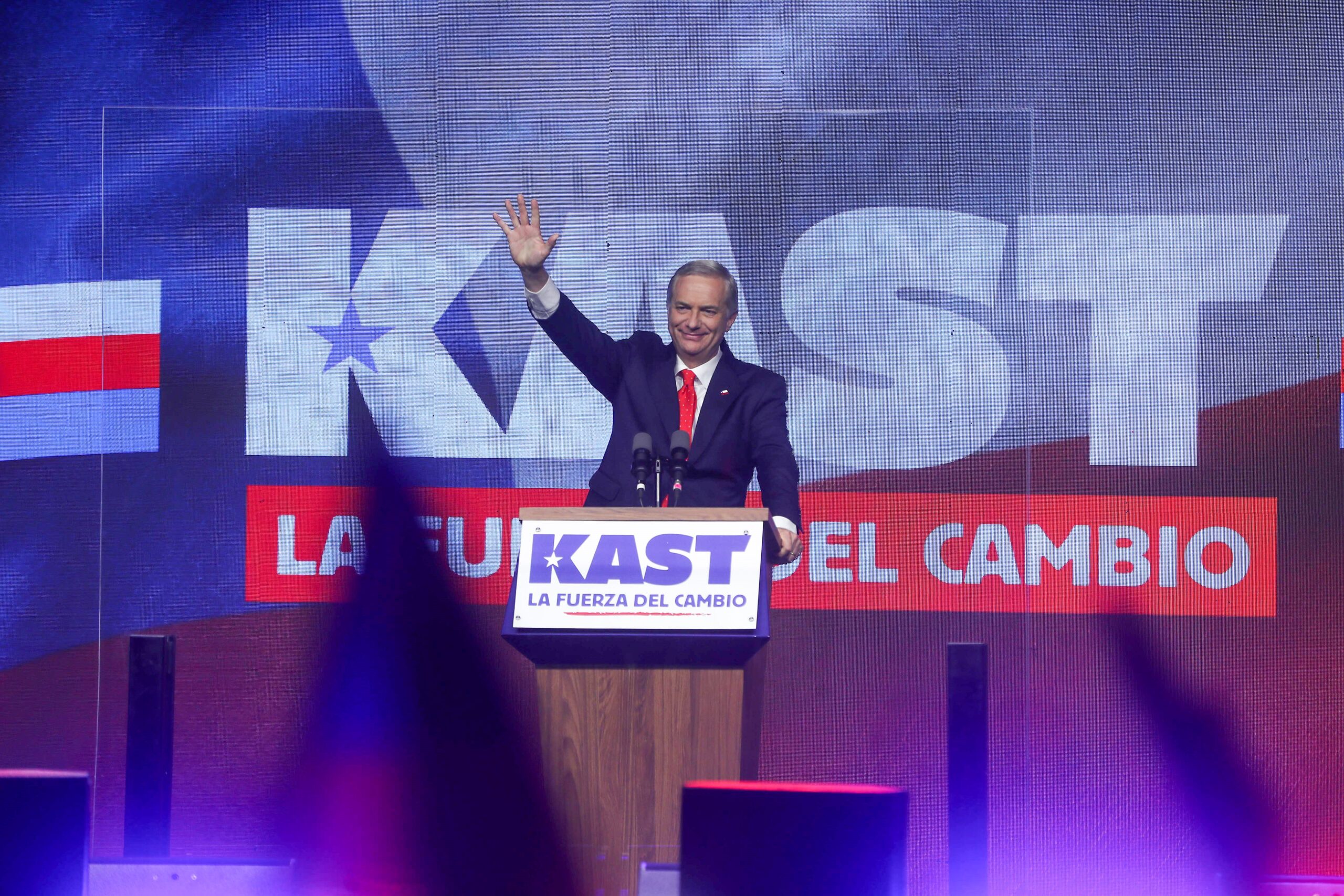
José Antonio Kast had not been president of Chile for two weeks before a war on the other side of the world began to tank his administration.
Kast took office on March 11 with a commanding electoral mandate and a net approval rating of about 20 points. By the end of the month, however, his approval had already slipped underwater. The immediate cause had little to do with anything Kast had done. Chileans were furious about the surge in fuel prices caused by the Iran War, and they blamed the man who had just moved into La Moneda.
It was not supposed to go this way.
Kast was well-positioned going into the presidential race in 2025. Defeated convincingly by social democrat Gabriel Boric in the 2021 presidential election runoff, Kast had significantly expanded his political base in the intervening years. His electoral vehicle, the Republican Party of Chile — which he founded in 2019 — made major gains in local elections in 2024, which swung sharply to the right.
Kast campaigned on a law-and-order platform, promising to crack down on illegal immigration and organized crime, issues that have occupied an increasingly uncomfortable place in the Chilean political imagination since 2020. His promises to revive the economy also struck a chord. Chilean economic growth, heavily dependent on mining, has disappointed since the end of the Chinese commodity boom in the mid-2010s.
Ready to dispense with the left after Boric’s unpopular and unsuccessful presidency, Chileans delivered Kast a commanding victory in the 2025 presidential election. He defeated Jeannette Jara, the left-wing candidate and a member of the Communist Party of Chile, by over 15 points, winning 58.2 percent of the vote to Jara’s 41.8 percent. Chile appeared poised to join the broader rightward swing underway across Latin America.
Kast’s rosy-looking future, however, collapsed in very short order. The Iran War, which President Donald Trump had kicked off at the very tail end of February, put a massive dent in the Chilean economy just before Kast was sworn in. Chile is one of the region’s largest importers of oil and gas; with almost no domestic production, the country is particularly sensitive to changes in the global energy market. Its modest fuel stabilization fund, set up to help blunt the impact of sudden price swings, was insufficient to cover the massive shock brought on by the war, and by late March subsidizing fuel for Chilean consumers was costing the government nearly $150 million a week.
Kast entered office promising to lower the national deficit, a project that would be completely impossible to achieve if he were compelled to spend billions on fuel subsidies. The president therefore decided to abandon price stabilization and pass the costs on to Chilean consumers.
It was the only realistic option, but the move was nevertheless deeply unpopular. And it left a major hole in the pocketbook of the average Chilean: Between March and April, national gasoline prices surged by nearly 40 percent. And these price hikes affect more than just motorists. Nearly every good that is sold in Chile must travel by road at some point, and higher fuel costs filter into food, manufactured and imported goods, and eventually practically every consumer item in the country.
The adjustment was particularly painful for an economy as dependent on fuel-intensive industries like mining as that of Chile: Unemployment hit 9.4 percent in the March–May 2026 period, and the Chilean Central Bank revised its economic projections downwards twice (from 2-3 percent annual growth in 2026 down to 1-1.75 percent).
It was an extremely inauspicious way for Kast to begin his presidency, and his approval ratings have remained stubbornly negative ever since. There is little sign of relief on the horizon. The Chilean economy remains extremely weak, and the Iran War continues to drag on with no end in sight. With Iran and the U.S. deadlocked over the Strait of Hormuz, high oil prices will probably dog Kast for the remainder of his critical first year as president.
To his credit, Kast has attempted to rally. With energy that surprised many Chilean commentators, he pushed a massive economic reform package through the legislature. This “megareform,” as Kast calls it, significantly restructures the country’s tax system, lowering the corporate tax rate and heavily incentivizing both domestic and foreign investment. His administration also announced across-the-board budget cuts for most government ministries as part of efforts to bring down the deficit. But as important and meaningful as these initiatives are, their impact will take time to make itself felt, and they are unlikely to move the needle for Kast politically in the short term.
In one of the ironies so common to politics, the Trump administration’s actions in Iran have made it significantly more difficult for the U.S. to accomplish one of its major goals closer to home. Kast and his allies on the Chilean right are broadly pro-American, and would be pleased to accept U.S. help in reducing their country’s dependence on China. Chinese corporations are heavily invested in Chilean mining, construction, and transportation industries, and vast quantities of Chilean minerals feed China’s domestic manufacturing economy. But the precarious economic situation in Chile will make it difficult for the country to pivot, even if Kast would prefer to do so, and the Trump administration is unable to take advantage of the situation. Instead, America is allowing collateral damage from its interventions further abroad to politically kneecap a friendly government in its own backyard.
The post The Iran War Is Sinking Chile’s New President appeared first on The American Conservative.
Progressive candidates make the case that they prioritize U.S. interests more than MAGA Republicans.
On the eve of Abdul El-Sayed’s Democratic U.S. Senate primary victory over Rep. Haley Stevens (D-MI), CNN aired a segment featuring Michigan voters.
“I’m not voting for anybody who takes money from AIPAC,” declared Democratic voter Rome Moore.
“Why is that?” CNN asked.
Moore replied, “Because the money should be spent here, not over there.”
While not naming specific Michigan candidates, Moore could have been thinking of the moderate Stevens, who received $60 million from AIPAC and other pro-Israel groups and firmly backs U.S. military aid to the Jewish state.
If so, it would suggest that this voter, at least, had been persuaded by progressive Democrat El-Sayed (who, unlike some of his hard-left confreres, does not call himself a socialist). During his primary campaign, El-Sayed made antiwar, anti-foreign aid rhetoric a central part of his messaging. As he told Detroit Public Radio in late May, “We should be using our tax dollars here to invest in health care here and education here, rather than sending it over there to buy bombs and tanks that get used to drive apartheid and genocide there.”
“I don’t have AIPAC behind me,” El-Sayed continued. “I am going to be the biggest opponent that they have in the 2026 cycle, and they’ve already said I’m the single biggest danger to the U.S.-Israel relationship.” Nor is this opposition to foreign aid restricted to the funds America gives to Israel: “It has nothing to do with my position on any one group of people,” El-Sayed has said, “because frankly, I don’t think we should be sending foreign military aid to Egypt either, where my family came from.”
After El-Sayed’s Democratic win, Donald Trump immediately endorsed his Republican opponent, the former Michigan congressman Mike Rogers. “America First Patriot Mike Rogers is running for U.S. Senate in the Great State of Michigan, a State I love and WON BIG!” Trump wrote.
The first thing Trump called Rogers was “America First,” a political branding the president by no means created but repopularized like no other politician of the 21st century.
Yet in his second term, Trump has found himself overseeing precisely the kind of foreign war that he once promised to avoid in the name of “America First”—and, arguably worse, seemingly at the behest of a foreign country whose interests don’t necessarily line up with those of the United States.
Still, Trump was elected twice bashing the neoconservative foreign adventurism so prevalent in his party in the past (and George W. Bush’s Iraq War in particular).
And whatever he might call himself now, Mike Rogers is still an unrepentant Bush-Cheney Republican who not only voted for the Iraq War in 2002 but supported the entire Global War on Terror package of endless conflict, torture and mass surveillance. (AIPAC announced its unabashed support for this longtime advocate of foreign aid and staunch Israel supporter immediately after the primary results were known.)
This has given El-Sayed an opening. As the Democratic candidate said on Wednesday morning, “What’s funny about Mike Rogers is that he’s like the worst of all versions of the Republican Party, right?”
“He’s the worst of the neocon version,” he added. “I mean, he was in the House during the entirety of the Iraq War.”
This is not a column about whether a socialist Democrat is preferable to a neocon-flavored Republican. This is not a column about whether El-Sayed’s hard left politics might make him easier for a Republican to beat in Michigan’s general election. It is not about whether this Democrat possibly becoming the first Muslim-American senator might be a help or hindrance for him in his state.
It is not even about whether Trump’s record-low approval ratings have now opened up the electoral doors for a crop of socialist candidates who might have never seen daylight otherwise but are now having a moment.
It is about whether El-Sayed or Rogers is more “America First.” It is about which candidate can say with greater justice that he is putting our country first, and which candidate has the better claim to the mantle that helped Trump twice enter the Oval Office.
And right now, before campaigning for the general election really gets underway, El-Sayed seems to have the “America First” advantage.
Even taking a snapshot of the current U.S. policy toward Iran of both major parties, last week only four House Republicans voted with 210 Democrats to pass a war powers resolution to end the U.S. war with Iran.
If, as seems reasonable, a central criterion of “America First” is the prioritization of America’s domestic problems over continuing a foreign war 6,000 miles away, the Republican Party does not pass the test.
El-Sayed’s stance is also not unique to him. He sits among a new crop of Democratic socialists who have won Democratic primaries recently in New York and other states.
In early July, journalist Glenn Greenwald observed of New York’s District 7 Democratic primary winner, avowed socialist Claire Valdez:
Note how Claire Valdez—when asked about Israel or foreign policy generally—emphasizes the need to stop burning American resources on Israel and foreign wars and instead invest them in American communities for the American working class: a potent MAGA political message not all that long ago.
When the self-described democratic socialist mayor of New York City, Zohran Mamdani, participated in a debate during his campaign, each candidate was asked if he or she would like to visit Israel. And Mamdani, as none other than popular commentator Tucker Carlson observed to former Georgia congresswoman Marjorie Taylor Greene, “was the only person in the New York City mayor’s debate to say he wanted to focus on New York City.”
All of the others had answers, Carlson noted, adding that “I think most said Israel.” But Mamdani stood out to the populist conservative, because “he [Mamdani] said, ‘I wouldn’t go anywhere. I’d stay in New York. And like, if I want to meet Jewish constituents, I go to their synagogues, their homes or whatever, but I’d be here in New York because that’s what I’m doing.”
“I’m running New York. That’s my job,” Carlson concluded.
Greene agreed with Carlson’s observation, saying that Mamdani gave the “right answer” (it is no coincidence that Carlson, Greene, Kentucky congressman Thomas Massie, former Trump intelligence official Joe Kent, and other conservative dissidents are now working on a project to give voters an “America First” option).
And leftist podcaster Hasan Piker said at El-Sayed’s victory party this week that the new batch of ascendant socialists and antiwar Democrats winning primaries now represents the “real America First movement.”
Does Piker have a point? More importantly, might El-Sayed and similar dissident Democrats now be able to make this point in a way that resonates with voters?
All the ingredients are there.
Conservatives should not want socialists to succeed with their domestic projects. Traditional conservatives should also, naturally and definitionally, seek to put their own country before others.
The Trump administration does not appear to be doing this in the Middle East right now, and polls show that Americans notice.
If socialist Democrats are able to make a better “America First” case than the MAGA Republicans who once deserved that moniker, that may say more about those Republicans than their left-wing opponents.
The post Is the Left Capturing ‘America First?’ appeared first on The American Conservative.
In Latin America, the White House abandons its own strategic doctrine for democracy promotion.
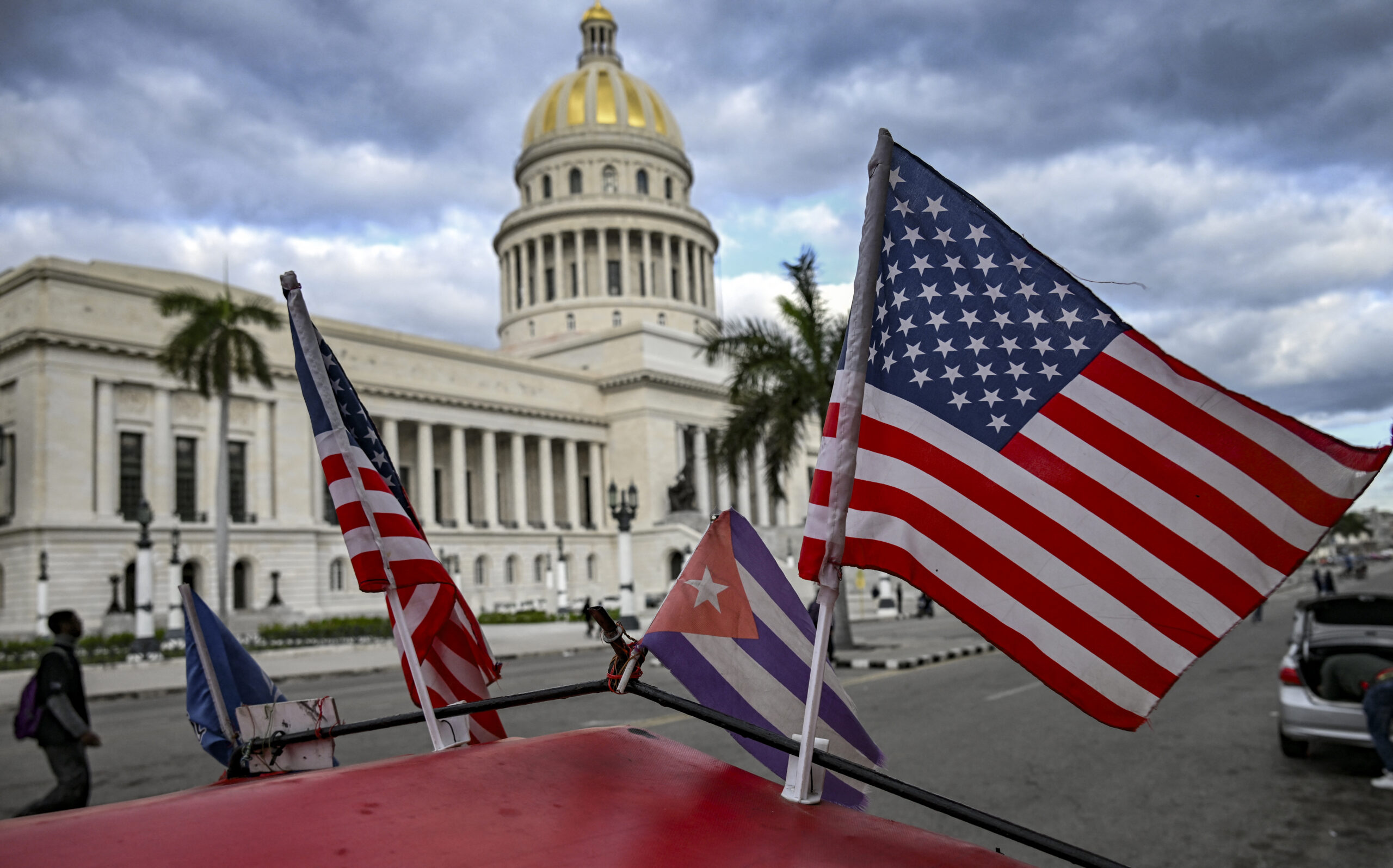
Earlier this month, Daniel Ortega, the dictator of Nicaragua, announced that his country would no longer hold elections. In response, Secretary of State Marco Rubio issued a statement condemning Ortega and declaring that Nicaragua “cannot expect to maintain business as usual with other nations when it is thwarting the basic tenets of our democratic hemisphere.”
There is no doubt that Nicaragua has suffered under the rule of Ortega and his wife Rosario Murillo, who have run the country as their personal fiefdom for nearly two decades. But Rubio’s rhetoric on Latin America increasingly resembles the neoconservatism President Trump was ostensibly elected to displace.
In last year’s National Security Strategy (NSS), the Trump administration declared that it would “be realistic about what is possible and desirable to seek in its dealings with other nations.” The document also said the United States would pursue “good relations and peaceful commercial relations with the nations of the world without imposing on them democratic or other social change that differs widely from their traditions and histories.”
Although a departure from the stated approach of the Biden White House, this is less revolutionary than many people would suppose: Ever since the United States stepped out onto the world stage, it has always and of necessity been connected to governments of varying moral and political character. During the Second World War, we famously saved Stalin’s USSR from collapse to win the war against Hitler; today, we work hand in glove with Saudi Arabia, an authoritarian dictatorship with a bad habit of dismembering journalists that also happens to be the keystone of our Middle East strategy.
The reasons for this are simple: foreign policy is about furthering American interests, which often requires working with countries that are very different from our own. As the NSS states, “We recognize and affirm that there is nothing inconsistent or hypocritical in acting according to such a realistic assessment or in maintaining good relations with countries whose governing systems and societies differ from ours even as we push like-minded friends to uphold our shared norms, furthering our interests as we do so.”
Unfortunately, the White House appears to have tossed this wisdom aside in the Western Hemisphere. Instead, we are being treated to reheated platitudes about battling communism and spreading democracy abroad. The State Department recently released a 100-page document entitled “Cuba: The Capital of 21st Century Communism,” which, despite its name, consists almost entirely of the rehashing of Cold War–era grievances.
The document is a transparent and clumsy effort to gin up support for intervention against Havana, which has not been a serious threat to American interests since the demise of the Soviet Union. Indeed, the biggest challenge Cuba presents to the U.S. is its potential collapse—which we seem to be doing our best to precipitate via a tightening oil embargo on the island—as that could trigger a massive migration crisis.
The White House has been alarmingly consistent in its assertions that it is preparing for aggressive action in Cuba. In February, still riding the high of his apparently clean decapitation of the Maduro regime in Venezuela, Trump touted the potential for a similar outcome in the Caribbean: “The Cuban government is talking with us,” he told reporters. “We could very well end up having a friendly takeover of Cuba.”
The talks don’t seem to have panned out, however, and U.S. rhetoric has escalated since then. “I think I can do anything I want with [Cuba],” Trump said on March 16. The next day, he laid out his timetable: “We’re talking to Cuba,” the president stated, “but we’re going to do Iran before Cuba.”
There is, at present, little prospect of a quick resolution to the war in Iran, but the Trump administration has continued to ramp up for intervention in Latin America. In late May, the Department of Justice indicted Raul Castro, the former president of Cuba and the brother of the late Fidel Castro, for his role in the 1996 shootdown of two planes flown by Cuban exiles. (It has been widely speculated that the indictment was drawn up to justify something similar to January’s Venezuela operation.)
More concerning still, CBS News reported earlier this month that the Pentagon is drawing up plans for military action in Cuba, including “an Army-led air assault involving thousands of U.S. soldiers to be carried out by the 101st Airborne Division.”
The second Trump administration’s renewed focus on the Western Hemisphere has been, in many ways, a long-overdue development. This is the region most intimately bound up with the real interests of the United States. Combating drug trafficking, illegal immigration, and possible adversary influence over our near abroad are important foreign policy goals. But crude reversion to a Cold War-era framing is the wrong way forward.
The administration would be better served by holding to its own National Security Strategy, which recommends the application of American economic power to secure concessions from uncooperative regimes, rather than the open pursuit of regime change—a tactic which has consistently failed to produce good results.
The post Marco Rubio’s ‘Democratic Hemisphere’ vs. the National Security Strategy appeared first on The American Conservative.
Nolan’s Odyssey is neither Homer’s material nor a modern morality play.

No character study of Odysseus comes closer to perfection than Tennyson’s:
And tho’
We are not now that strength which in old days
Moved earth and heaven, that which we are, we are;
One equal temper of heroic hearts,
Made weak by time and fate, but strong in will
To strive, to seek, to find, and not to yield.
The Ulysses of Tennyson—and for that matter, of Alexander Pope—is a cunning and amoral man in rebellion against fate and time. Cleverest and wittiest of all heroes, he surpasses even the Olympians in arrogance and ego, and in consequence is disfavored and punished by them all (excepting only gray-eyed Athena).
The Odysseus of Homer, when recognized by his dying, feeble dog, stifles his tears and walks away. The Odysseus of Homer avenges the disloyalty of his maids by executing them all without mercy. The archetype of a flawed, spiritually pagan hero, resigned to the machinations of fate and cruel gods, he would be instantly recognizable in Sergio Corbucci’s Django or Gregory Peck’s Captain Mallory in The Guns of Navarone.
Christopher Nolan’s Odysseus, however, is a latently Christian patrician and soldier. He is concerned about the end of civilization resulting from both normative and structural factors, such as a breakdown of civility and propriety, open thuggery from temporary migrants who in the absence of order abuse hospitality, and wars over “trade routes.” His instincts are conservative. He suffers from the trauma of a brutal war and the guilt of middle age, from two decades of destroying castles in the sand and decapitating women next to godforsaken ruins.
Nolan’s Circe is a frumpy peasant witch who looks like a British TERF and quite literally turns dumb, innocent men into pigs in a heavy-handed #MeToo metaphor; she is calmed only by the presence of Odysseus, who carries on his shoulders the emotional burden of all errant men. Nolan’s sirens are barely visible in the fog. His Calypso is a statuesque compassionate blonde who knows when to “let go.” His Penelope is a Bulwark-reading Hillary Clinton voter from Northern Virginia, who derides power-hungry men and is tired of holding the throne without acknowledgement.
Like many in our times, Nolan is obsessed with the enemies of civilization; in his Batman trilogy, he shows us the full range, from terrorists (Al-Ghul) to anarchists (Joker) to communists (Bane). The obsession continued with Oppenheimer (technology and the promethean spirit) and now The Odyssey.
The pre-screening backlash over an African Helen or a transgender Sinon is not entirely undeserved. While there is historical evidence of intermixing between civilized cultures in antiquity, from Indo-Scythian-Greeks intermarriage to mentions of the matchless Aethiopeans, a sense of proportion is a virtue almost entirely absent in contemporary art. Not everything needs to look like the cantina of Mos Eisley, especially when it is chronicled that Helen of Troy had “fair arms.” But it is also the most pedestrian of all concerns. No one cared about Denzel Washington in Macbeth, or Tom Baker in The Golden Voyage of Sinbad. The concept of racial purity as we know it is a product of scientific modernity. And if today’s theatergoers are reluctant to explore the inclinations towards transgenderism or hebephilia among ancients, then I am afraid the discipline of classics has failed us moderns.
Far more serious are the thematic divergences from the original poem. Nolan’s Odysseus is linguistically limited, no doubt to draw a younger audience that would find complex puns (Οὔτις, for example) and magniloquent vocabulary incomprehensible. And the Odysseus of the film is not so conceited as to incur the wrath of Poseidon by naming himself in front of the Cyclops, nor do Nolan’s viewers get to witness his hero’s penitence, wisdom, and caution on display later with the gift of Aeolus, as both incidents were left on the cutting room floor.
In one memorable scene, Odysseus tells his crew that “the gods help those who help themselves”—a line that, while somewhat similar to Virgil’s audentes Fortuna iuvat (“fortune favors the bold”), is by its modern connotations rather alien to the mind of antiquity. The pagan gods are cruel, unforgiving, and whimsical. That’s why they are gods. The concept of a complex, hierarchical set of relationships between gods, demigods, immortals, heroes, priests, virgins, nobles, peasants, and all the rest is entrenched in the pagan worldview, finding expression in works of literature from the Mahabharata to the Iliad. Laesa majestas is a greater sin than a simple sacrilege. One can be saved from the latter by the intervention of another god, or by cunning, wisdom, or penitence: the retribution for the former is inglorious death.
It is understandable why the Augustans and the Romantics of the 18th and 19th centuries had such a feel for the original text. Both Enlightenment liberalism and the concomitant Philhellenist movement were, in important respects, sympathetic to the pagan ethos. The Odyssey is a text of pagan morality. The idea that Odysseus would be “tormented” by anything is comical. Nolan cannot afford to be faithful to the original material and show what Odysseus did and enjoyed, because it would destroy him and his audience with guilt. It would require a different, more elevated, and amoral emotional register to appreciate the classics on their own terms; that register is now lost, perhaps to be rediscovered by future generations.
What is ironic, then, is the outcry from the online commentariat about Nolan’s reinterpretation. Many of the commentators most livid with Nolan seem to have a simplistic view of Western civilization as a single, monolithic, and continuous tradition, unchanged by two millennia of history or constant contact with other parts of the world. This is a view which sees no fundamental differences between, say, the era of the Crusades and the Renaissance, or between the cultures of the Mediterranean and those of the Germanic north. It results in a reflexive aversion to any reimagination of a classic, which has the ultimate effect of limiting its holders’ ability to appreciate or influence culture and the arts.
But one assumes that if they were to reimagine the Odyssey from a modern civilizational lens, they would end up with Nolan’s manichaean vision—which confuses their philosophy and rhetoric and infuriates them, like Caliban seeing his own face in the mirror.
The post Misunderstanding the Odyssey appeared first on The American Conservative.
The influential newsman sat down with The American Conservative to discuss demographic change and other topics.

The podcaster and longtime newsman Tucker Carlson has emerged as the face of antiwar conservatism. Increasingly, that means Carlson appeals to progressives who agree with him on the Iran War. Yet Carlson remains not just a man of the right, but one willing to touch third rails and boldly challenge left-liberal orthodoxies. On no issue, perhaps, is that more apparent than mass migration and demographic change.
On Wednesday, Carlson sat down for an interview with The American Conservative. We discussed President Donald Trump’s latest threats against Iran, the sudden death of Senator Lindsey Graham, and Carlson’s plans to build a third party. Toward the end, I asked him a question that previously I’d posed to the author Ann Coulter and the immigration expert Mark Krikorian: Why has the Western world, and only the Western world, voluntarily transformed its demographic composition?
A transcript of our exchange is below:
You affirm the Christian and liberal view of the inherent dignity of all people while also saying, well, we don’t want mass migration from everywhere. We’re still a coherent people, and we shouldn’t change that. But, apparently, political elites in the Western world are not able to square that circle. Why do you think Western elites have transformed their populations through mass migration the past few decades, often against the wishes of their populations?
Well, it’s something I’ve obsessed over. And just to put it in perspective, the biggest and swiftest example of forced demographic change in recorded history, I think, were the Mongol invasions from the east to the west, famously across the steppe, these crazed, unwashed horsemen rolling through and raping everybody and killing all the men.
That caused massive demographic change. Massive. To the extent that you still look at self-identified Russians who have Asiatic features. So that’s the biggest demographic change that I’m aware of in all of history. And what we’ve seen since the end of the Second World War, which is 85 years, dwarfs it.
So, it is an understatement to say nothing like this has ever happened in history. No one has ever imagined anything like this could happen in all of history. You just end white-majority countries in a couple generations, in less than 100 years? And that’s what they’ve done.
So, why? I don’t know the answer. There’s been a lot of encouragement to do it by international bodies. There’s a lot of hostility toward Christian Europe, a lot. That is not acknowledged, but it is real.
But there’s also a sense in which this is mass suicide. I know on the internet it’s “the Jews did this!” or whatever. Well, sure, there are a lot of Jewish groups who were for it, but in the end, there’s a lot of white, nominally Christian people who love this stuff and went along with it…. And, you know, you can get all the encouragement you want from the UN or whatever, but in the end, if you’re allowing people from Africa to commit rape in your country, that’s on you, dude.
And so, what is that? There may be a self-destruct mechanism inside certain groups or cultures. It’s possible that after dominating the world for more than a thousand years, this group of people, white Christian Europeans, decided it’s time for us to exit the stage or something….
And I think you’ve not been allowed to talk about this because it’s “hate” or something to talk about the destruction of a racial group. Well, it’s actually not hate. What is happening is hate, right? But whatever. Because we haven’t talked about it, we haven’t really had a chance to think about it. But something very profound, and world-historic, is going on right now….
All of Europe and Canada and New Zealand and, unfortunately, the United States, have gone along with this. So I don’t know. It’s spiritual, obviously, but I don’t understand its outlines. Do you?
I don’t. I’ve asked Mark Krikorian of the Center for Immigration Studies, I’ve asked Ann Coulter, and now I’ve asked you. There’s something deeply psychologically mysterious here. Mark Krikorian actually suggested that it has roots in Christian theology. He’s a Christian, a deacon at his church, and he’s very opposed to mass migration, so he doesn’t think it’s inevitable that Christian theology leads to this open borders perspective—
Right.
But there might be a connection there—
Well, it’s a perversion. I mean, the most sophisticated and effective deceptions are all mimeographed copies, badly done copies of something real.
So, you saw this after the George Floyd riots, when you had all these Christian whites washing the feet of black people, who, by the way, all looked kind of confused and unsettled by it. You know, why are they worshiping me? But it was the whites who drove that….
And it had the aroma of Christianity, of Jesus washing his disciples’ feet. Laying down your life for others is at the center of Christianity, of course. But it wasn’t Christianity….
Yeah, and Christianity has been around in the West for a long time. The chronology suggests it would probably have more to do with World War II and the shame that white people feel—
Well, obviously.
But why would the countries that lost hundreds of thousands or millions of their own men fighting Nazism feel shame about Nazism? It’s not rational….
I’m against the Holocaust, that’s for sure, but every Holocaust museum in the United States ought to have an exhibit and a tribute to the American soldiers who fought the Nazis. Why wouldn’t you? It’s in America….
I do think that we’re at a massive disadvantage in this country because we have grown up in a culture, the only one in all history, that from the beginning precludes the possibility of the metaphysical. Every conversation in the United States, in this scientism regime that we live under, begins with the hard declaration that nothing is real unless you can measure it in a lab.
And so once you start there, you miss a lot of the forces that drive actual events and real history and change the course of people’s lives and of nations, because it’s not all measurable in a lab, actually. Sorry, I mean, I wish it was, but it’s not. You can’t reason your way to a solution a lot of the time, because some of this stuff is pre-rational. It is, sorry, spiritual.
Editor’s note: This transcript excerpt has been lightly edited for length and readability. You can watch the full conversation here.
The post Tucker Carlson: The West Is Committing ‘Mass Suicide’ appeared first on The American Conservative.
The Trump administration on Wednesday announced that it would impose a new Section 301 tariff of 25 percent on Brazil for alleged unfair trade practices.
The tariff would impose new import charges on a wide range of goods from the South American nation but exempt some major categories including oranges, coffee, oil and gas, as well as beef.
These new tariffs come as the Trump administration reimposes tariffs struck down by the Supreme Court earlier this year. President Donald Trump has increased pressures on the Brazilian government in part for its treatment of Jair Bolsonaro, the former Brazilian president and Trump’s political ally, who in 2025 was sentenced to 27 years in prison for leading a coup plot following his loss in the 2022 presidential election.
Some of the exemptions had precedents in the earlier round of tariffs. The Trump administration reportedly considered exempting beef imports following a White House visit from Brazil’s President Luiz Inácio Lula da Silva. The proposal met significant backlash from the U.S. cattle industry, delaying an order that would have suspended the tariff-rate quota to lower beef prices.
The post Trump Administration Imposes 25 Percent Tariff on Brazil appeared first on The American Conservative.
The paper of record bared all in a piece about America’s 250th birthday.

Regular New York Times readers have long suspected that the paper’s oppressive bias comes not from actual reporters, but from doctrinaire editors, who assign the pieces, then insert those ridiculous second or third paragraphs that interrupt the flow of the piece, but hammer home the party line.
The paper recently put one of these editors on display on our 250th birthday, by interviewing its former national editor, Jia Lynn Yang, about the country’s founding. She’s not as bad as we expected. She’s worse.
The gist of Yang’s conception of our country is that everything swell about it is a “myth” and the only history worth talking about is that we had slavery. (I’m glad someone has finally pointed that out.)
Yang says conservatives are “obsessed with mythmaking,” whereas liberals—especially journalists like herself—are “obsessed with the knowing of facts.” Continuing to tout the left’s devotion to facts, she adds: “We are not interested in myths. We are kind of in the business of anti-myths.” Laying her cards on the table, she admits, not the least bit pretentiously: “I am fully in favor of the truth as a journalist.”
What integrity!
I won’t mention that the Times exclusively refers to biological men with big swinging penises as “women,” provided they put on a dress and call themselves “Brittney.” Also, with amazing restraint, I will not cite Walter Duranty, Jayson Blair, the Duke lacrosse case, Sarah Palin’s “direct link” to the shooting of Gabby Giffords, the 1619 Project, Russian collusion, and on and on.
So what are the myths believed by conservatives? Do not say George Washington and the cherry tree! Don’t do it. Everyone knows that was just a little parable used as moral instruction. DO. NOT. MENTION. THE. CHERRY. TREE.
Guess what Yang uses as her one and only example of the miasma of myths around our founding. Yes—the cherry tree! I.e., a tale thoroughly debunked for more than a century and barely believed at the time, except by those with a simple, trusting nature, like small children and Times senior editors. (Maybe for Christmas, Yang could explode the myth of Santa Claus.)
She specifically assails the “mythology” that our country is “really special… unlike anything anyone has ever seen before… something totally unprecedented.” Unable to get to all the precedents, she only cited none. But I’m sure there were lots of countries back then that had broken away from monarchies based on their bold assertion of God-given rights.
No, I’m sorry, that’s incorrect. None had. With a few minuscule exceptions, in 1776, every other country in the world—in Europe, Asia, and Africa—was ruled by one sovereign, whose authority was said to come from God. No other nation required the consent of the governed.
Yang’s yawning ignorance extends far beyond U.S. history to encompass all of world history. She claims the reason Americans had to build myths around our founding (well, at least one myth, that utterly despicable one about the cherry tree!) is that we didn’t have the things “that usually bind together a people.”
Number one, we had no official language, and number two, we had no official religion. Others might look at those very characteristics and say they are things that make America “really special… unlike anything anyone has ever seen before .. something totally unprecedented.”
But that can’t be. America is not special.
True, there was no “official” religion or “official” language, but America was hardly a tower of Babel, which, ironically is one of Yang’s myths about our country, despite her being “in the business of anti-myths.” According to her, there was “no unique language” and “a bunch of different Christian groups jostling.”
There wasn’t all that much “jostling.” From 1607 until the early 1800s, America was 98 percent Protestant, 1.7 percent Catholic, 0.2 percent Jewish and zero percent Muslim, Hindu, Buddhist, Taoist, etc. Everyone spoke, or was learning to speak, English. The only other written languages in the colonies—Dutch, German, French, Spanish, and Swedish—were all Indo-European, and used the same Latin alphabet.
But I can see why someone of Chinese descent would say, “You call that a country?” Around the same time, China was home to hundreds of distinct, mutually unintelligible languages as well as hundreds of completely different folk religions.
The third way Yang says we weren’t really a country is that “the literal geographic borders of the country are just constantly in flux, to put it nicely.”
Well, I’m glad she put it nicely! Does Yang think other countries have permanently fixed borders? When our founders were signing the Declaration, Europe was dominated by four gigantic empires—British, French, Austrian and Russian. There was no Germany. There was no Italy. It’s changed quite a bit since then, “to put it nicely.”
China controlled Mongolia, Taiwan and large swaths of Central Asia. Over the next couple centuries, it has lost and regained Macau, Hong Kong, Tibet and currently has its eye on Taiwan. (Now that Trump has blown our entire military budget on Iran, it’s theirs for the taking if they have a few BB guns.)
Yang only gets really excited about American history when talking about slavery. She mentions “slaves” or “slavery” a dozen times. She talks more about the slaves of Thomas Jefferson and Washington than about the men themselves. The first words out of her mouth about those monumental figures are: “Jefferson and Washington were slaveholders.”
She tells us “there’s so much to apologize for and to feel really bad about and guilty about”—including “the American Indians.” (Hey, Ms. Yang! Did you know that, on the Trail of Tears, those poor victimized Indians brought their black slaves with them?)
Thanks to this interview, we finally got a glimpse of one of the little known editors making the Times as ridiculously biased as it is, and it turns out, she’s not some seasoned Machiavellian manipulator, she’s an idiot.
The post Inside the Mind of an NYT Editor appeared first on The American Conservative.
The administration can’t play both sides forever.

María Corina Machado is having a bad year.
The exiled leader of Venezuela’s opposition has pinned her hopes of returning to lead the country on President Donald Trump, who overturned the hostile government of Nicolas Maduro after a raid to capture the former Venezuelan president. After Maduro’s removal in January, Machado attempted to position herself as the natural leader of a new government in Caracas, and travelled to Washington to personally present Trump with her Nobel Peace Prize—a distinction Trump has openly coveted. But those hopes have been repeatedly disappointed, as Trump has instead preferred to work with a continuation government headed by Maduro’s vice president, Delcy Rodriguez.
“I think it would be very tough for her to be the leader,” Trump said of Machado. “She doesn’t have the support within or the respect within the country.”
This is at least partly untrue—Machado is one of the more popular and unifying figures in the country, and her surrogate almost certainly won the fraud-ridden 2024 Venezuelan presidential election in a landslide—but the Trump administration was perceptive enough to realize that Machado and her allies in the opposition would not be able to govern Venezuela. The Venezuelan state is still built on the foundations laid by Hugo Chavez. Without the support of existing institutions, especially the Venezuelan military, the country would be easy prey for socialist militias, Colombian narcos, Mexican cartels, and the various other armed groups that have secured a foothold in the country.
Instead the administration has used a delay-and-deny strategy: In public it makes friendly noises towards Machado, who is overwhelmingly popular among Venezuelans in the U.S. and their hawkish allies in the Republican Party, and promises that it will put the Venezuelan government on a democratic basis in the future. In private, however, it does its utmost to stymie Machado’s efforts to make herself a player in Venezuelan politics and, as one administration official told The American Conservative, it has no interest in pushing the government to hold legitimate elections. (After all, it’s unlikely that any government Venezuela could select would be more compliant with U.S. interests than the current one: When Marco Rubio says, “Jump,” Delcy Rodriguez asks, “How high?”)
Now reports are surfacing that Washington has blocked Machado from returning to the country after a pair of devastating earthquakes last month killed thousands of Venezuelans. The earthquakes, which took place on June 24, provoked protests against the government, which has had trouble responding to the crisis despite American assistance—an unsurprising outcome, given that Venezuelan state institutions have been thoroughly hollowed out by decades of socialist governance and that the head of state, Rodriguez, has had to put together a new governing coalition from the scraps of Maduro’s regime over the past several months.
Machado seems to have hoped to use the earthquakes as the catalyst for a triumphant return to Venezuela, seizing on the ongoing political discontent to provoke a confrontation with the weak Rodriguez government. Machado may even have hoped to force the U.S. into making the country hold democratic elections. Rodriguez, on the other hand, has implied that if Machado returns to Venezuela, she could be arrested—a disastrous result for the Trump administration.
To avoid such a confrontation, the administration sabotaged an attempt Machado made to return to Venezuela in late June by way of Curaçao, forcing her plane to turn around and return to the U.S. mid-flight. When the administration realized that the mercenaries Machado had employed to smuggle her out of the country last year were staged to smuggle her back in, they called up the Dutch authorities that manage Curaçao’s foreign affairs and convinced them to revoke her clearances. Machado tried again a couple days later, hoping to return via Panama, but was turned away by the airline, which did not allow her to board.
At present, both sides are publicly playing dumb on the issue, which has confused some commentators. Machado has not said anything about the Trump administration’s decision to cut off her return journey, and Trump has declared that he has never told her she can’t go back to the country.
“Oh, no, no, no, not at all,” he told reporters who asked whether he had told Machado not to return to Venezuela. “I did not tell anyone not to go back.”
But the silence is perfectly rational for both sides. Machado almost certainly won’t publicly oppose the Trump administration because its support is probably her only hope for securing control of the country, although she must be aware by now that the Trump administration has little interest in seeing her at the helm in Caracas. Likewise, the Trump administration has avoided openly disavowing Machado to keep her allies and sympathizers (including, allegedly, Rubio) on board with the administration’s efforts. Machado’s influence in places like the Florida Republican Party is immense.
But as it becomes increasingly clear that the Trump administration has no interest in turning Venezuela over to Machado and her allies, the relationship between that camp and the administration is becoming significantly more oppositional. Many Florida Republicans hoped that Trump would channel George W. Bush closer to home, bringing regime change, freedom, and democracy to the Western Hemisphere, starting with Venezuela. The more distant that prospect appears, the more restive they grow; comments from pro-Machado figures like Elliott Abrams and Roger Noriega are becoming progressively more critical of the Trump administration’s Venezuela policy.
This kind of song and dance can only continue for so long; eventually the conflict will break out into the open. When that happens, the Trump administration will have to decide what it values more: stability and American influence in Venezuela, or the Florida Lobby.
The post The Trump Admin’s Slow Breakup with María Corina Machado appeared first on The American Conservative.
The latest woke fad is but a brief moment in the span of Hellenic history.
I write this from the ancient land of Homeric heroes, Hellas, better known to the rest of you as Greece. Hellas has given us democracy, philosophy, tragedy, comedy, oligarchy, oratory, and ostracism. We also invented the Olympic Games, in which amateur athletes competed for a laurel wreath, and some died for it during the pankration competition. (It was like MMA but much rougher, and many expired rather than surrender.) Half of Greek males today are called Alexander—after the great king—and many others are named Achilles, in honor of the Homeric warrior who was a figment of the poet’s imagination.
Ironically, I don’t think I have ever met any modern Hellene whose first name is Menelaus. For any of you who watch TikTok instead of reading the classics, Menelaus was the King of Sparta whose wife was Queen Helen, later known as Helen of Troy after her kidnap by the Trojan prince Paris according to this writer—or having fallen for him after being seduced according to most sources, including Hollywood.
Speaking of that saccharine cesspool whose earnestness makes one gag, its latest paraphrase of the classics is casting a black Kenyan actress to play Helen, and the Greeks are up in arms. Are my countrymen racists? Heaven forbid. I’d call them realists who do not tolerate their classics being changed in order to please diversity freaks. Personally I blame director Christopher Nolan, a Brit whom I have never heard of, for having thought it up, knowing it would create a controversy, hence more publicity.
If Lupita Nyong’o, the Kenyan thespian, were beautiful, I would accept her as Helen, keeping in mind that Homer described her as the most beautiful woman on earth. Alas, Lupita is a normal looking female, someone even the blind poet Homer would have disqualified for the role. The goddess Athena is also portrayed by someone of color, Zendaya, a casting decision that is another living example of showmanship as opposed to craftsmanship.
Never mind. The gauzy mythology of the screen wins out every time. But beware of Greeks bearing grievances. A Greek friend put it best: Entertainment is now so debased, we now regard beauty as offensive, and it celebrates crass ignorance. Greek media platforms are busy stating that the movie in question does not include a single Greek. I see their point. The jerk Nolan could have included a Hellene or two for fairness’s sake; we are, after all, 9 million actors in modern Greece.
Basically, director Nolan casts people in order to meet Academy Award diversity requirements. What I don’t understand is why he didn’t cast an all-black crew and be done with it. (After all, another jerk long ago wrote a book claiming that all white people came from Africa, and they got whiter as they went up north.) Elon Musk, a man I greatly admire but have never met, called the director an anti-white racist. That the Brit jerk certainly is. I also think he’s just a cowardly opportunist; that is all.
And it gets better—worse, rather. The trans actor Elliot Page as Greek soldier Sinon, has more of my countrymen reaching for their spears. Mind you, filmmaking is a free-for-all, and paraphrasing the classics is now routine. Helen of Troy had a very small part in the original Iliad and Odyssey. The movies have enlarged it one-hundredfold. Once long ago I was invited to speak in front of around 50 young Brit lawyers. I began by telling them that while we Hellenes were building the Parthenon and writing Greek tragedy, the Brits were scratching their furry parts and eating roots. To their credit, they laughed and laughed, but most of them were already feeling no pain.
A few of them were Americans, too. Two-hundred fifty years, 500, 1,000, is a blink of the eye in Greek history, so a recent article by a British female that modern Greece was cooked up by early 19th century intellectuals sounded insulting. I presume that the writer, one Kate Maltby, must be like a eunuch in a harem, unable to comprehend what the ancients actually came up with, and how we are their direct descendants. Lupita playing Helen does not matter because Helen was fictional. Stating that Greece was cooked up is simply insulting and indicative of the lengths people will go to attract attention.
Again, never mind. In Athens I live directly across the Acropolis, whose marbles is the first thing I see in the distance every morning when I wake up. My father, leaving for war in October 1940, told my weeping mother that it was always like that, since time immemorial, and it was every Greek’s duty to serve and serve well. We’ve had quite a history, and neither the movies or know-nothings can change that fact. I am extremely proud to be Greek.
The post Taki’s Hellas of Heroes appeared first on The American Conservative.
The Consumer Price Index (CPI) slowed to 3.5 percent year-over-year in June, according to the Bureau of Labor Statistics’ report Tuesday morning, down from 4.2 percent in May.
The bureau’s energy index declined 5.7 percent in June, offsetting increases in other indexes including housing and food. Core CPI, which removes volatile items like food and energy, declined by 0.3 percent to 2.6 percent year-over-year.
Energy prices declined following the June 17 memorandum of understanding between the U.S. and Iran that allowed the Strait of Hormuz to reopen following Iran’s closure of the sea lane. Average unleaded regular gas prices declined from $4.61 in May to $4.20 in June, according to the Bureau’s Average Price Data release.
Markets place an 85.6 percent chance of the Federal Reserve maintaining the current level of interest rates at its upcoming July 29 meeting, as higher-than-target inflation maintains pressure on the Fed to raise rates.
The post Consumer Price Inflation Slows to 3.5 Percent in June appeared first on The American Conservative.
The right has a generational conflict on its hands.
White House press secretary Karoline Leavitt isn’t thrilled with her generation. In a recent interview with Fox News’ Jesse Watters, she agreed that her fellow Zoomers are lazy and entitled. “This generation, my generation, I hate to say it, Gen Z and those younger than me have been raised with just silver spoons in their mouths,” she told the Fox News host. She added that they’ve been given everything and are completely ungrateful for those privileges. She even thinks some of them need to be sent to Cuba or Iran to straighten up.
The comments didn’t land well on social media. But Leavitt wasn’t bothered by the outrage. She doubled down in a lengthy X post. “I was asked by Jesse Watters why so many young people are buying the false promise of ‘free stuff’ being sold by communist politicians,” she wrote. “My answer: a combination of laziness, yes, and the liberal indoctrination that has been taking place in our education system for far too long.”
It’s a strange message for the administration to blast out when President Donald Trump is underwater with young voters. A June poll from NBC found that 77 percent of voters under 30 disapprove of the president’s job performance. If accurate, those figures represent a complete wipeout of Trump’s gains among young voters in 2024. Leavitt’s comments risk reinforcing a negative impression of the administration among Zoomers.
But the message was likely well received among its target audience. Those who regularly watch Fox News aren’t Zoomers. The median age among Fox News’ regular TV audience is 69. For this demographic, youth-bashing is music to their ears. It’s been a common trope in conservative media for years to portray the young as lazy and entitled. Millennials were depicted the same way in their younger years. Conservative media loved to attack these “snowflakes” who couldn’t handle real life and were too liberal. Now it’s Gen Z’s turn to play this role for older conservatives.
Leavitt’s comments reflect the generational conflict within American politics. The young hate the Boomers and the Boomers hate the young. Older people make up the vast majority of Republican primary voters and the chief consumers of traditional conservative media, so most leaders on the right cater to their hostility. But the young make up much of the audience within the new media space; thus, Boomers are regularly savaged by the podcasters and streamers.
Right-wing figures are torn between these two tendencies. Leavitt chose the youth-bashing.
Her statements fit the conservative Boomers’ conception of youth. In the picture presented by her and Watters, young people are good-for-nothing losers who can’t even offer a firm handshake. That’s why they vote for socialism. At the same time, these shiftless individuals could also be dangerous criminals. As Watters noted, if they misbehave, we may need to send them to the Army or even to a foreign country.
This is a bizarre image of reality. It’s doubtful DSA activists are the ones committing all the crime in New York City and elsewhere. That’s another demographic misbehaving, one that likely didn’t pay much attention to the Bolshevik history taught in high school. But Boomers seemingly like to believe this image reflects reality.
It’s not hard to think that the true enemy for this class is young people. Rather than class war, generational conflict animates older conservatives. They don’t want to hear about the challenges young people face. They believe these problems are purely the result of laziness, entitlement, and misbehavior. Maybe that’s the case with some youngsters, but it doesn’t reflect the entire generation.
The fact is that things aren’t so rosy for Gen Z. Recent college grads are more likely to be unemployed than the average worker. This is a huge change from the past, when the unemployment rate among recent college grads was significantly lower than the national average. The young, if they are employed, face historically low income growth. While this demographic faces a grim labor market, recent college grads are also likely to have more student loan debt than their counterparts in past generations. Zoomers are also carrying more personal debt than any other generation at their age. It’s far harder to buy a house as a young person, with home ownership notably lower among those under 40.
The World Economic Forum warns of “financial nihilism” among Gen Z. Many within this generation no longer believe in the values of prudence and long-term planning. Instead, they favor an “apparently self-destructive relationship with money, which includes crypto bets, prediction markets and retirement accounts raided to pay off credit cards.”
This same mentality also animates the growing support for socialism among Zoomers. If they think the system is rigged against them, why shouldn’t they want to blow it up and redistribute the wealth of Boomers to the young? DSA candidates offer this promise, which is one reason they’re becoming more popular with Gen Z voters.
Leavitt’s response is essentially “Let them eat cake.” It mocks the young for feeling aggrieved and offers tone-deaf advice. It’s a message that will only appeal to old people.
Generational conflict is stupid. We shouldn’t hate our parents and grandparents. At the same time, our parents and grandparents shouldn’t hate the future of our country. While both sides of the generational war are making waves in politics, animosity toward the young is a more powerful force. Property tax bans, which would defund services such as schools meant for the next generation, are pushed by older Americans—not the young. There is zero effort to reform the entitlements enjoyed by Boomers. Even some DSA candidates try to cater to the old. Michigan U.S. Senate candidate Abdul El-Sayed wants to freeze property taxes, but only for homeowners over 65. New homeowners would not receive this benefit, even when buying a property that had its property taxes frozen under a previous owner.
This can all seem rather selfish, but it’s easy to justify if you believe the young fit the caricature painted by Karoline Leavitt. It’s a self-serving belief to subscribe to: You worked hard for what’s yours. These young people demanding more attention haven’t. They don’t want to work and just want the government to take care of them. They got a degree in Snowflakeology at a college that only taught them how to share their gender pronouns. So why should politicians offer to help out the Zoomers?
It’s a terrible way to think, but it is common. It’s not going to help Republicans win elections, that’s for sure.
If Republicans want a chance to win over the young, they’ll have to stop with Zoomer-bashing aimed for the old. What makes for good Fox News segments doesn’t make for effective political pitches. It doesn’t matter what the White House is doing for Gen Z if its spokeswoman calls this generation lazy and entitled.
Young people aren’t the enemy. They’re the future of America. And if you want them to keep the nation great, it’s smart to get them on your side rather than propose sending them to Iran.
The post Karoline Leavitt’s Zoomer-Bashing Is Bad for America appeared first on The American Conservative.
I am delighted to announce that Luke Nicastro has joined The American Conservative as senior editor, effective July 1, 2026. Nicastro joins the magazine having most recently served as national security advisor to Sen. Josh Hawley (R-MO).
Nicastro will be known to close readers as a talented contributor to the firm for years; he now joins TAC full-time.
I have known Luke personally for close to two decades. In that time, I have encountered one of the most careful and charismatic intellects around.
Before working with the senator, Nicastro was a defense policy analyst with the Congressional Research Service, was employed at the Department of the Navy, and consulted for State Department clients. He has a masters in international relations from the University of Chicago and a bachelor’s from the College of William & Mary.
As with most of our full-time roster, Nicastro will be based in the Washington, DC metro area. You can look forward to his columns and contributions immediately.
The post Luke Nicastro Joins The American Conservative as Senior Editor appeared first on The American Conservative.
Nigel Farage, leader of Reform UK, resigned his seat in parliament Tuesday, triggering a special election in which he intends to run amid allegations of failure to disclose financial gifts.
In a Tuesday speech, Farage responded to the allegations stating that he had received inappropriate gifts from the cryptocurrency billionaire Christopher Harborne, arguing that increasing threats to his safety necessitated help in providing security for himself. He attacked the media for revealing the location of his daughter’s home, citing the incident as reason for his resignation.
“Today I will resign as a member of parliament for Clacton-on-the-sea,” he announced in a video statement on X, “thereby forcing a by-election.” He also announced his intent to run for the seat again, appealing to the voters of Clacton to decide the merits of the allegations.
“I’ve decided that the people of Clacton should be the judges of my actions,” Farage stated, framing the election as “a people-versus-the establishment by-election.”
Farage’s Reform UK party has pulled ahead of both the Labour and Conservative parties for the past 15 months, according to POLITICO polling aggregation, a fact that Farage has credited as the catalyst for Prime Minister Keir Starmer’s recent ouster.
The post Farage Resigns As MP, Triggering By-Election, Running Again appeared first on The American Conservative.
The national character is to work to bring our words and deeds in line.
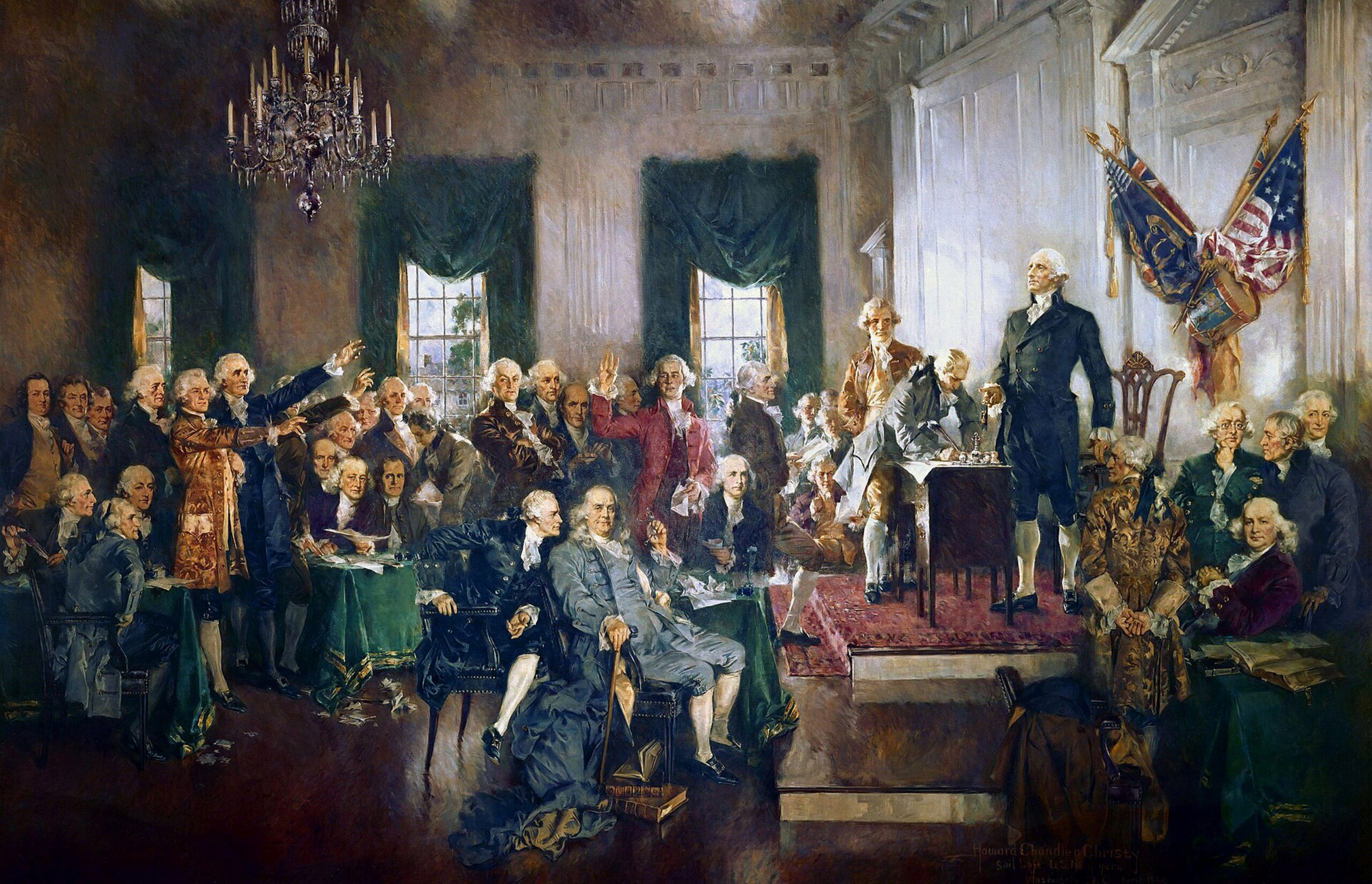
Hours before Iran’s national soccer team took the pitch in Seattle for its group-stage match against Egypt, the U.S. Central Command announced further strikes against the Islamic Republic. This sequence was without obvious precedent. A World Cup host nation had never bombed a participating country during the tournament. Fortunately, FIFA had already provided the punchline by awarding President Donald Trump the FIFA Peace Prize just over six months before the tournament’s opening kickoff.
The scene is absurd, but the paradox is typically American. As we reflect on the anniversary of our independence, we may confront the fact that America has always struggled to reconcile words and deeds. We are an ambitious country littered with contradictions between the tales we tell ourselves and the actions that we take.
An interesting array of questions points beyond war in Iran, the semiquincentennial, and who lifts the World Cup Trophy. What does it mean for a republic to celebrate its independence while its government drifts in and out of a war without popular support, congressional consent, or any plausible theory of victory? The Founders repeatedly and emphatically warned against ensnaring the young republic in conflicts overseas. Furthermore, having heard less, of late, regarding “peace, commerce, and honest friendship with all nations, entangling alliances with none,” what might we make of restraint’s standing as a foundational principle?
Looking back from the quarter-millennium mark, it is evident that we won our independence by revolting against an empire before assembling one of our own. Madison designed a constitutional system suspicious of executive war-making before leading the country into a bitterly fractious and uncertain conflict in 1812. Monroe inveighed against European interference, a doctrine that soon morphed into the proposition that our anti-imperial republic should manage the Western Hemisphere. Polk maneuvered troops and Congress into a war of territorial acquisition. We later acquired colonies, built a global navy, fought world wars, and collected allies and bases around the globe.
It would be impossible to conclude from this record that America is naturally restrained.
Yet the United States is a country of grand philosophical ambition. This nation was founded on the promise of liberty, self-government, consent of the governed, constitutional boundaries, and opposition to arbitrary power. At times, we have failed to live up to those claims or fundamentally violated them. But our failure to reach our loftiest goals is not dispositive of our aspirations. The existence of slavery does not render equality un-American. The emergence of Jim Crow did not consign civil rights to the dustbin.
To that extent, restraint is one of the promises we made to ourselves at the Founding, and one we have regularly broken.
There is a corrective thread running through the suspicion of standing armies, the constitutional power of Congress to declare war, and Washington’s warning against permanent alliances. It animates John Quincy Adams’s insistence that America “goes not abroad in search of monsters to destroy,” the anti-imperialists, and Wilson’s reelection on the strength of “he kept us out of war.” It moved the men and women who marched against war in Vietnam and Iraq and informs the present vexation with our latest war of choice. Note the company we’ve kept: Founders and Progressives, Cold War Republicans, and legions of the New Left. This is not a partisan inheritance.
This tradition of restraint is embedded in our civic rituals. It echoes with every recitation of Washington’s Farewell in the Senate, in Eisenhower’s warning against the military-industrial complex, and in the repeated success of candidates who promised to keep war from consuming the republic.
This is partly due to the material reality of our geography. We escaped the Old World and its rivalrous monarchs to establish a new country the size of a continent and bordered by two oceans. This gave us the unusual opportunity to engage the world without being governed by its conflicts. For much of our history, the question posed to Americans was not whether we should trade, travel, evangelize, or project our cultural influence abroad. To the contrary, we demurred from foreign quarrels lest they warp the shape and character of our republic.
But the distance between people and policy is not simply a matter of maps and globes. After the Second World War, the United States routinized key aspects of wartime mobilization. Signed into law by President Truman in 1947, the National Security Act created the modern bureaucratic structure of a national security state. War, once conceived of by the Founders as a state of exception that required public deliberation and congressional consent, became the province of the executive branch and its array of classified bureaucracies. The result is a republic that often uses force while rarely choosing war.
We gather this July Fourth to celebrate more than the memory of our founding. Our present moment demands an understanding and appreciation of the obligations our ambitions impose. Can a nation founded on the principle of self-government constrain its own power with prudence, courage, and wisdom?
Restraint has rarely been America’s habit. But it has always been part of America’s promise. Let us recall that our highest aspirations still have claims on us.
The post Foreign Policy Restraint Is an American Promise appeared first on The American Conservative.
Two-hundred fifty years after the Declaration, Thomas Jefferson continues to embody America
In June of 1826, the citizens of Washington, D.C. invited Thomas Jefferson to their celebration of America’s 50th Independence Day. His health failing, the Sage of Monticello sent his regrets:
I should, indeed, with peculiar delight, have met and exchanged there congratulations personally with the small band, the remnant of that host of worthies, who joined with us on that day, in the bold and doubtful election we were to make for our country, between submission or the sword; and to have enjoyed with them the consolatory fact, that our fellow citizens, after half a century of experience and prosperity, continue to approve the choice we made. May it be to the world, what I believe it will be (to some parts sooner, to others later, but finally to all), the signal of arousing men to burst the chains, under which monkish ignorance and superstition had persuaded them to bind themselves, and to assume the blessings & security of self-government.
Stirring words. The more so since, as every schoolboy knows (or used to know), their author would not live through the end of that Fourth. Jefferson’s death, twinned with that of John Adams just a few hours later, immediately passed into American legend. More than a striking coincidence, this was nothing less than a divine benediction on our republican experiment.
And in the decades following, something else remarkable happened—or rather, failed to happen. When other Founders shuffled off this mortal coil, their influence on public life tended to quickly recede. Many were honored, of course (deified, in the case of Washington), but behind museum glass, as relics and reminders of days gone by.
Not so Jefferson.
The body was barely cold before the wrangling began for his mantle. The Jacksonians pressed the first and most compelling case, making Jefferson’s enthusiasm for popular democracy and abhorrence for privilege central elements of their political creed. “The Jackson press constantly circulated his writings,” one historian relates, and “Democratic politicians developed the habit of answering their opponents by squirting Jefferson’s opinions into their eyes.”
But the Southern radicals who defied Jackson on the tariff question also had a claim. Was not Jefferson a lifelong opponent of centralization? And did he not himself write the celebrated Kentucky Resolutions of 1798, which asserted the right of states to nullify federal law? (It is a great irony of history that the occasion at which Jackson gave his famous toast—“Our Union, it must be preserved”—and Calhoun his less famous reply—“The Union, next to our liberties most dear”—was a dinner celebrating Jefferson’s birthday.) Even some Whigs, those noted defenders of privilege, wielded Jefferson’s republicanism against the purportedly dictatorial rule of “King Andrew.”
In the lead-up to the Civil War, both fire-eaters and free soil men repaired to the standard of Jefferson. Dixie enthused over his states’ rights views, his lifelong ownership of slaves, and his endorsement of a people’s prerogative to sever its existing political bonds. In seceding from the Union, Jefferson Davis claimed, the Southern states had “merely asserted a right which the Declaration of Independence of 1776 had defined to be inalienable.” Of course, the “all men are created equal” line stuck in some Southern craws, with Davis’ vice president proclaiming the Confederacy’s foundation “upon exactly the opposite idea” in his notorious Cornerstone Speech.
Among Northern Republicans, it was precisely that articulation of universal equality that resonated most powerfully. As Lincoln wrote in 1858:
All honor to Jefferson—to the man who, in the concrete pressure of a struggle for national independence by a single people, had the coolness, forecast, and capacity to introduce into a merely revolutionary document, an abstract truth, applicable to all men and all times, and so to embalm it there, that to-day, and in all coming days, it shall be a rebuke and a stumbling-block to the very harbingers of re-appearing tyranny and oppression.
As the years wore on, our third president would remain a political touchstone accessible to most sides of most issues.
When America underwent its first spasm of overseas expansion, Jefferson was trotted out by anti-imperialists like William Jennings Bryan, who quoted his statement that “conquest is not in our principles [and] is inconsistent with our government” in a speech to the Democratic convention, and by imperialists like Teddy Roosevelt, who assured his own party’s convention that “the parallel between what Jefferson did with Louisiana and what is now being done with the Philippines is exact.”
New Dealers invoked Jefferson’s solicitude for the common man to justify their construction of a welfare state (FDR was a frequent visitor to Monticello, and took a personal interest in the creation of the Jefferson Memorial). Their Republican opponents, naturally enough, fought back with the great man’s criticisms of overweening federal power.
During the ’50s and ’60s, segregationists made what they framed as Jeffersonian arguments for racial hierarchy and “local institutions”; the civil rights movement, more powerfully, appealed to what MLK called the great “promissory note” of the Declaration.
And around the turn of the millennium, the popular image of Jefferson became that of an “American Sphinx” (to filch from Joseph Ellis), the enigmatic embodiment of all the country’s bundled hopes, disappointments, and paradoxes.
Recent years have been harder on Jefferson. His involvement with slavery was brought to the forefront in the 2010s, gradually occluding almost every other element of his legacy. He came in for cancellation during the Great Awokening—schools were renamed, statues toppled, and a damnatio memoriae pronounced.
Today’s Democratic Party seems to have utterly sundered its 200-year connection with him. Republicans, meanwhile, have more use for historical figures with fewer compunctions about the exercise of executive power (Andrew Jackson, Teddy Roosevelt, and Richard Nixon are the presidents of choice).
But the high tide of woke is receding, and the right will eventually rediscover the virtues of Jeffersonian restraint. If the past is any guide, Jefferson will be back in vogue sooner or later. He is simply too compelling, too interesting, too fundamental.
Much ink has been spilled to explain this unique appeal. As his political afterlife suggests, much of it stems from the sheer range and diversity of Jefferson’s thought, together with his unparalleled eloquence and talent for expression. Contradictions that would have driven lesser minds into muddled incoherence are by his genius held in productive, fascinating tension.
There is also the attractive richness and multifariousness of Jefferson’s character—his intense sensitivity and sentimentality, his successes in pursuits ranging from lawmaking and diplomacy to architecture and agriculture, his insatiable curiosity concerning essentially every dimension of the human experience. Here was a man who defied easy characterization; who could, as Henry Adams once observed, “be painted only touch by touch, with a fine pencil.”
Then we have his practical record: literally articulating our national creed; defending democracy, civil liberties, and peace against a Federalism that would have destroyed all three; doubling our national territory. Any one of these achievements would have been enough to secure everlasting fame: the three together vault him into the pantheon.
All of this has enabled Jefferson to encompass and represent as much of our national promise as it is possible for one person to embody. On our 250th anniversary, we may still say with one of his early biographers, “If Jefferson was wrong, America is wrong. If America is right, Jefferson was right.”
The post All Honor to Jefferson appeared first on The American Conservative.

Dear Reader,
As we head into a pivotal holiday weekend, I wanted to highlight two pieces of news about The American Conservative and our commitment to providing you high-quality audiovisual content in addition to our excellent web and print activist journalism.
First, we have recently moved our long-running flagship podcast, TAC Right Now, into an in-person studio. We invite you to check out our YouTube page for high-quality video recordings. Audio recordings are still available via Apple Podcasts, Spotify, and RSS.
Second, we are pleased to introduce TAC Morning Digest, a short daily podcast featuring our top stories from the last 24 hours. You can subscribe via Apple Podcasts, Spotify, or RSS.

Initiatives like these are possible only with your help. Please consider making a tax-deductible donation so we can continue producing cutting-edge reporting, analysis, and commentary in the cause of foreign-policy restraint, immigration sanity, and economic strength.
Your support for our humble work matters more than you can know.
Happy Independence Day,
Curt Mills
Executive Director
The post Declare Independence From Endless Wars appeared first on The American Conservative.
As we celebrate America 250, Washington’s Farewell Address is as relevant as ever.
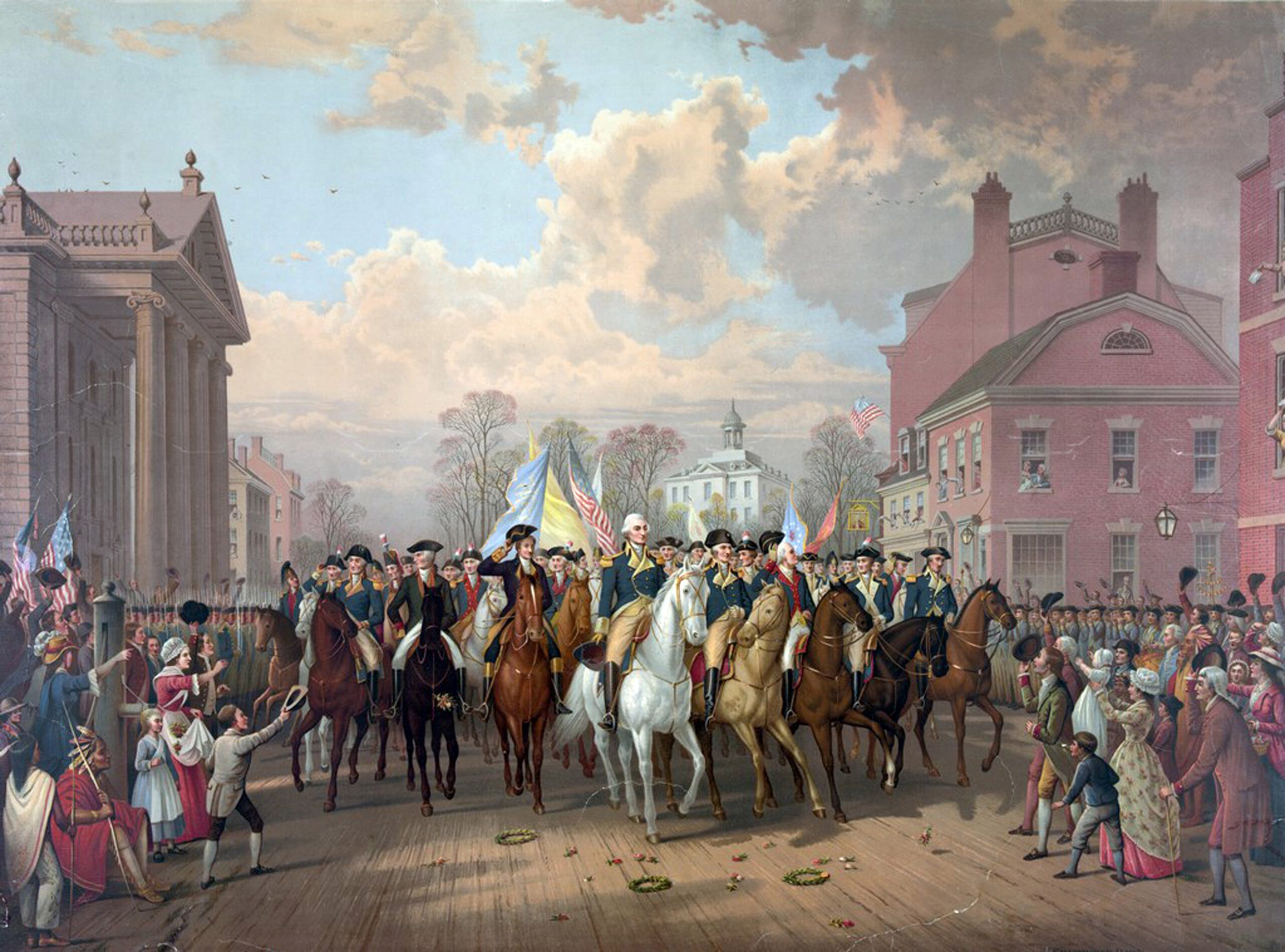
The 250th anniversary of the Declaration of Independence is upon us. And despite the celebratory mood inside the country, much about the world outside our borders seems grim and uncertain. This is particularly true in the Middle East, where, despite laudable efforts at peacemaking, the possibility of renewed war still looms. What makes this situation more frustrating is the fact that our own government has conceded this involvement occurred at the behest of a foreign country—one whose boosters seek to integrate it ever more closely into the machinery of American statecraft.
Although this seems strange, it is not without precedent. During the early years of our republic, a similar situation prevailed with respect to France. Then, as now, a country with strong claims on Americans’ affections sought to influence our politics for its own ends, becoming in the process a lightning rod for partisan disagreement.
During the Revolutionary War, France had played a pivotal role in securing our independence. After news of the American victory at Saratoga reached Europe in 1778, the French decided to intervene directly, seeing an opportunity to strike a major blow against their age-old rival England. Their involvement was a major factor in the war’s successful outcome. But it came with serious costs for the Bourbon monarchy, which—partly owing to debts incurred helping the American rebels—soon fell to a revolution of its own.
At first, this development was greeted with jubilation across the Atlantic. The cause of democracy had been vindicated abroad, and now a closely-aligned great power was following America down the path of self-government. But as France embarked on a series of wars for the survival and expansion of its own revolutionary experiment, it began aggressively lobbying the United States to get involved, particularly by serving as a base for privateering and other forms of economic warfare against Great Britain.
For the United States, it was an inconvenient time for a dust-up with the Brits. America was embroiled in difficult negotiations over Britain’s continuing occupation of forts in the Great Lakes, as well as its de facto sanctions regime on American traders in the Caribbean. The young U.S. was weak and unstable; another war with Britain could threaten its very viability as a state.
Doing whatever it took to avoid conflict, the Washington Administration both issued a Proclamation of Neutrality and successfully concluded the Jay Treaty of 1795, ensuring a lasting peace with Great Britain. The aim was strategic rather than ideological: despite the continuing solidarity of many Americans with their old ally, America’s national interests demanded non-involvement with Europe and peace with Britain. The Jay Treaty, in particular, was extremely controversial and helped create the nation’s first partisan political system, with Federalists lining up behind the Treaty and nascent Democratic-Republicans opposing it. The feelings stirred up were intense. John Jay, the primary American negotiator, was burned in effigy across the nation, and Alexander Hamilton was struck by a stone while speaking in favor of the treaty.
It was during this period of diplomatic crisis that George Washington’s second term came to an end. Refusing to run again, he instead opted to publish a valedictory statement, which would rapidly become known as his Farewell Address. It is a testament that is, in some ways, as radical and vital as the Declaration of Independence. Indeed, in the field of diplomacy, it could well be seen as a kind of second Declaration.
Washington, who had been a land surveyor before the Revolution, had a spatial, rather than ideological, conception of geopolitics and saw the success of the American experiment as dependent upon leveraging its geographical advantages to ensure its national security. Distant as we were from the capitals of Europe, this meant staying out of that continent’s wars and preserving our freedom of action to the maximum extent possible. America’s society and economy needed peace.
This meant not just avoiding unnecessary enemies, but also staying away from entangling alliances. Friends, no less than adversaries, can threaten national sovereignty and strategic decision-making. As the Farewell Address put it:
So, likewise, a passionate attachment of one nation for another produces a variety of evils. Sympathy for the favorite nation, facilitating the illusion of an imaginary common interest in cases where no real common interest exists, and infusing into one the enmities of the other, betrays the former into a participation in the quarrels and wars of the latter without adequate inducement or justification. It leads also to concessions to the favorite nation of privileges denied to others, which is apt doubly to injure the nation making the concessions by unnecessarily parting with what ought to have been retained, and by exciting jealousy, ill will, and a disposition to retaliate in the parties from whom equal privileges are withheld; and it gives to ambitious, corrupted, or deluded citizens (who devote themselves to the favorite nation) facility to betray or sacrifice the interests of their own country without odium, sometimes even with popularity, gilding with the appearances of a virtuous sense of obligation, a commendable deference for public opinion, or a laudable zeal for public good the base or foolish compliances of ambition, corruption, or infatuation.
As avenues to foreign influence in innumerable ways, such attachments are particularly alarming to the truly enlightened and independent patriot. How many opportunities do they afford to tamper with domestic factions, to practice the arts of seduction, to mislead public opinion, to influence or awe the public councils! Such an attachment of a small or weak toward a great and powerful nation dooms the former to be the satellite of the latter. Against the insidious wiles of foreign influence (I conjure you to believe me, fellow-citizens) the jealousy of a free people ought to be constantly awake, since history and experience prove that foreign influence is one of the most baneful foes of republican government. But that jealousy, to be useful, must be impartial, else it becomes the instrument of the very influence to be avoided, instead of a defense against it. Excessive partiality for one foreign nation and excessive dislike of another cause those whom they actuate to see danger only on one side, and serve to veil and even second the arts of influence on the other. Real patriots who may resist the intrigues of the favorite are liable to become suspected and odious, while its tools and dupes usurp the applause and confidence of the people to surrender their interests.
The genius of this statement was its application, not just to the America of the 1790s, but to American foreign policy for decades and centuries to come. It would effectively serve as a roadmap for the future, its wisdom justified by the unprecedented development the country would go on to see.
The French, of course, were outraged at what they saw as a betrayal. Desperate for money to finance their ever-lengthening list of wars, Paris’ revolutionary Directory unleashed the privateers that were now denied the ability to operate out of American harbors onto American shipping. The primary challenge facing the new Adams Administration was therefore to create a deterrent that would stop these attacks. The newly-born U.S. Navy put to its first major test—not to fight the original British enemy, but to defend against our former ally France. The Navy did its job, and a kind of deterrence was restored. The rise of Napoleon and an attendant sea change in French foreign policy finally ended the threat for good, with France formally recognizing American neutrality by 1800.
This part of our history, so often overlooked, is of critical import to us today. Too often Americans have preferred to see foreign policy as a black and white affair, a theater in which unalloyed good confronts pure moral evil. But as we commemorate our republic’s 250th anniversary, the Farewell Address reminds us that the truth is more difficult and more complicated. We have preserved our sovereignty and independence over two and a half centuries by pursuing strategic self-determination. If we would flourish for another 250 years, we will need to maintain this same course, avoiding the entanglements of both permanent enemies and permanent allies.
For, as George Washington presciently noted in a letter to Alexander Hamilton: “If we are to be told by a foreign power what we shall do, and what we shall not do, we have Independence yet to seek, & have contended hitherto for very little.”
The post Washington’s Declaration of Foreign Policy Independence appeared first on The American Conservative.
Attracting immigrants is not what sets America apart; it’s the ability to make them Americans.
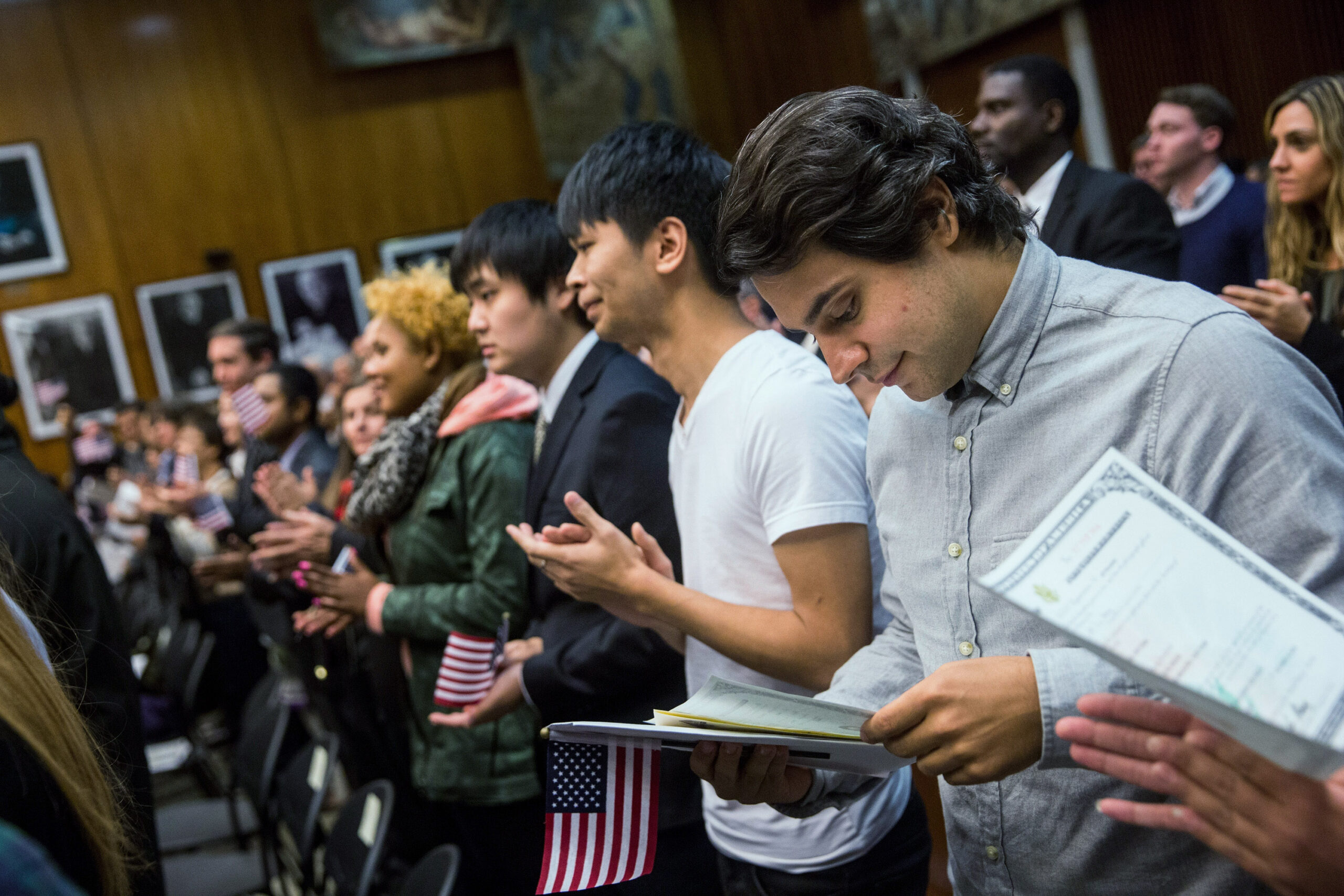
As America approaches its 250th birthday, the question of who are the American people who have sustained this nation for two and a half centuries and who will sustain it for ages to come is worthy of exploration. One of the most persistent myths in modern American politics is that America is a “nation of immigrants.” The phrase is repeated so often that few pause to examine what it actually implies, yet it obscures the true source of American success. America’s greatness was never its ability to attract immigrants. It was its ability to turn them into Americans.
America is not a nation of immigrants; America is a nation of assimilants. Immigration is the act of arrival. Assimilation is the act of becoming. Our most successful immigrants do not remain what they were before they arrived. They become Americans and embrace our culture, institutions, and way of life. Human beings have migrated throughout history, and every empire, trading port, and frontier society has drawn newcomers, but there is nothing uniquely American about immigration itself.
What made the American experiment remarkable was the capacity to transform strangers into fellow countrymen. The immigrant arrived as an Italian, a German, an Irishman, a Pole, a Greek, a Jew, a Swede, a Cuban, or a Vietnamese, and his children became Americans. That transformation was the miracle. Today one of the central debates on the right asks whether America is fundamentally a creed or a nation. Is it simply a set of ideas open to anyone who professes them, or is it a particular people living in a particular place with a particular inheritance?
The question itself is flawed because you cannot separate the people from the idea. The American creed did not descend from the heavens. It was forged by a particular people, in a particular place, under a particular set of historical circumstances. The Declaration of Independence, the Constitution, and the institutions of self-government were the political achievements of the American people. At the same time, the American people are more than an ethnic group occupying a continent, and what binds us is a shared inheritance of laws, institutions, customs, memories, symbols, stories, and ideals.
The people need the creed as much as the creed needs the people. Without the creed, America becomes just another nation-state. Without the people, America becomes merely a theory. America is the product of both ideas and the real historical experience of a real people. John Jay understood this when he described Americans in Federalist 2 as “one united people” inhabiting “one connected country.” The Constitution was not written for humanity in the abstract. It was written for a people already bound together by common habits, common memories, and common affections.
The Founders did not create Americans, but rather Americans created the Founding. Later at Gettysburg, Abraham Lincoln did not describe America as merely a proposition. He called it a nation conceived in liberty and dedicated to the proposition that all men are created equal. The proposition gave the nation its purpose, and the nation gave the proposition life. The creed and the country cannot be separated.
One of the most revealing observations about the limits of legal status and abstract belief came from Malcolm X. In 1964 he declared, “No, I’m not an American.” Malcolm was not denying his citizenship. He was insisting that merely occupying the territory or holding the documents does not make someone fully part of the nation. I disagree with his conclusion—black Americans were and are full and equal members of the American people and the American nation—but Malcolm’s underlying insight was nevertheless profound and correct.
A nation is more than paperwork, territory, or even shared political principles. A nation is a people bound together by shared loyalties, memories, institutions, and affections. Ironically, Malcolm X grasped something that many modern advocates of a purely creedal America still miss. Genuine membership requires more than presence or profession. It requires joining the people in their common life.
Theodore Roosevelt made the same point with characteristic force. In 1919 he wrote:
If the immigrant who comes here in good faith becomes an American and assimilates himself to us, he shall be treated on an exact equality with everyone else, for it is an outrage to discriminate against any such man because of creed, or birthplace, or origin. But this is predicated upon the person’s becoming in every facet an American, and nothing but an American…. There can be no divided allegiance here. Any man who says he is an American, but something else also, isn’t an American at all.
Assimilation, in other words, is not exclusion. It is the pathway to full and equal membership in the American people. The immigrant who takes that path does not lose a heritage. He gains a home, a people, and a future he can pass on to his children. George Washington understood this when he wrote that a common country has a right to “concentrate your affections.” Affection is not a legal category. It is loyalty and belonging. It is the conviction that this country is yours and that you are responsible for its future.
This abandonment of “concentrated affections” is where modern America has lost its way. For decades Americans have been told that “diversity is our strength”, meaning the racial and cultural diversity that immigration brings. The reality is that diversity is not our strength. Diversity is simply a fact. A nation can be diverse and strong. It can be diverse and weak. It can be diverse and united. It can be diverse and fractured. Diversity itself tells us almost nothing. What matters is whether a nation possesses the cultural confidence to transform diversity into unity.
America’s strength was never that we came from different places. America’s strength was that we became one people, the opposite of diversity. The national motto captures this perfectly with the phrase E Pluribus Unum: out of many, one. Notice the direction of the phrase. It does not celebrate permanent fragmentation or diversity. It celebrates the creation of a common national identity. The old American model was simple. We welcomed immigrants, and we expected them to become Americans. That model succeeded beyond anyone’s wildest dreams.
The Irish did not remain permanently Irish, nor the Italians Italian, nor the Poles Polish. They and their descendants became Americans. They learned English, adopted American customs, served in American armies, built American businesses, and married other Americans. They moved across the continent and made America’s history their own. The result was not multiculturalism. The result was nationhood.
This is why the phrase “nation of immigrants” ultimately misses the point. The defining feature of America was never immigration. The defining feature of America was assimilation into the American nation. Anyone can become an American. That is one of the greatest strengths of the American nation, but not everyone will and not everyone wants to.
Anyone can join us, but joining us requires becoming one of us. That is not exclusionary. It is the very essence of nationhood. Every successful nation in history has required newcomers to adopt the loyalties, obligations, and identity of the nation they join, and America is no different. The immigrant who assimilates contributes enormously to America, not because he adds another category to a demographic spreadsheet, but because he strengthens the American people themselves.
The assimilant becomes part of the American story. He inherits the American creed and loyalty to the American people and in doing so he helps carry the nation forward. No modern figure illustrates this truth more powerfully than Elon Musk. Born in South Africa, he immigrated to the United States, became an American citizen, and built companies that made him the richest man in the world. Through SpaceX, he restored American space predominance and reestablished national pride after a period in which we shamefully relied on the Russians for access to space. None of this could have happened anywhere else. Only in America could an immigrant arrive with ambition and determination, fully join the American people, and create enterprises of such scale that they directly strengthen the nation’s technological leadership, industrial capacity, and strategic position for generations to come.
America is not a proposition floating in the air. It is not an ethnicity. It is not merely an economic zone or a set of borders. America is a people, living in a place, carrying an idea. That is what previous generations built and what assimilation preserved.
An insistence on the assimilation of immigrants is what we must recover on the occasion of our 250th birthday as a nation if we wish to remain one nation, under God, indivisible, for generations to come. America is not a nation of immigrants. It is a nation of assimilants, and it must remain one if it is to enjoy another 250 years.
The post America: A Nation of Assimilants, Not Immigrants appeared first on The American Conservative.
Melat Kiros, a candidate backed by the Democratic Socialists of America (DSA), defeated Rep. Diana DeGette in the Democratic primary for Colorado’s First Congressional District Tuesday evening
DeGette, a 30-year incumbent, received 41 percent of the vote to Kiros’s 51 percent, despite $2.3 billion in campaign spending from outside groups in the final month of the race.
The Kiros campaign framed itself as an explicit challenge to the Democratic establishment. Her victory comes not long after two DSA-backed candidates emerged victorious over two incumbent New York Democratic congressmen.
Kiros received endorsements from the prominent progressive Reps. Pramila Jayapal (D-WA) and Jamie Raskin (D-MD), as well as Justice Democrats, a progressive group that counts Kiros as its seventh primary victory of 2026.
Kiros will go on to face the Republican candidate, Christy Peterson, in the general election on November 3.
The post Democratic Socialist Melat Kiros Wins in Colorado, Extending Recent Streak appeared first on The American Conservative.
A new Democratic insurgency looks a lot like the GOP’s agitation of yesteryear.

The editors at the New York Post couldn’t hide their animosity.
“The Hateful Slate” read Wednesday’s screaming headline over an image of New York City Mayor Zohran Mamdani celebrating with Darializa Avila Chevalier, one of three Democratic Socialists backed by Mamdani who won their Congressional campaigns in New York state on Tuesday night. It was a clean sweep for Mamdani, who watched as Chevalier, Brad Lander, and Claire Valdez toppled establishment Democrats, signaling growing momentum for a progressive movement that first took New York City by storm when Mamdani overwhelmed the former Gov. Andrew Cuomo in the 2025 NYC mayoral election. The sudden jolt of outsiders-turned-mainstream is reminiscent of another insurgent political movement, one that swept through the GOP in 2010 and reshaped the Republican Party in ways that later enabled Donald Trump’s takeover.
Two years after Barack Obama’s generational victory, the Republican Party was reeling and directionless as it approached Congressional midterm races in 2010. Years of frustration had built up toward the establishment GOP as voters watched Republican politicians prioritize costly and unpopular wars in the Middle East over the ideological discipline that had driven the party to such great heights after the Reagan Revolution in the 1980s. What ultimately molded this inchoate dissatisfaction into a movement was Obama’s economic platform. For conservative voters who preferred the vision of small-government politics, the 2009 stimulus package, the continuation of Bush-era bank bailouts, and the passage of the Affordable Care Act were each a bridge too far.
In stepped the Tea Party. Featuring a rich cast of aggressive political characters, the Tea Party wasn’t so much built on one figure as it was a coalition of new faces on a mission to lower taxes, limit government spending, and grant greater authority to state governments in response to what many viewed as Obama’s federal overreach. Its champions prioritized anti-government ideas of decentralization and its electorate featured an impressive mixture of both suburban and rural voters.
Though prominent early figures such as Alaska’s former Governor Sarah Palin were eventually eclipsed by the MAGA project, politicians who absorbed the messaging of the Tea Party movement, such as Sen. Rand Paul and the current Secretary of State Marco Rubio, have continued to shape the conservative movement under President Donald Trump. And while Trump’s unique brand of conservatism has increasingly embraced an activist use of federal power that would have been anathema to many early Tea Partiers, his rise was undeniably energized by the anti-establishment energy that the Tea Party used to transform the GOP in the 2010s.
Fifteen years ago, Republican voters revolted against a party they believed had abandoned its principles. Today, a similar backlash is unfolding inside the Democratic Party, where a coalition of young, highly-educated white voters and working-class minority communities is finding common cause in a socialist vision that rejects the party’s neoliberal consensus. For many of these voters, The Biden administration and its cadre of sycophants became synonymous with both an affordability crisis that eroded confidence in the Democratic establishment and a U.S. foreign policy toward Israel that helped enable violence in Gaza and beyond. Though economic concerns are the driving force behind what transpired on Tuesday, opposition to the Democratic Party’s open embrace of Israel has become an equally powerful organizing issue for the Democratic Socialists of America (DSA), the group that worked to spearhead a slate of progressive candidates seeking midterm success in 2026.
Though the ascendancy of a more progressive Democratic wing has been building for two decades, between the financial crisis to the presidential campaign of Bernie Sanders, the election of 35-year-old Zohran Mamdani in the fall of 2025 is what really transformed a simmering ideological movement into a new political force. More than any left-wing electoral victory in modern American history, Mamdani’s triumph signaled that it could be done, that a socialist with a TikTok channel could challenge the party’s power brokers and capture one of the country’s most visible executive offices. In winning, Mamdani provided evidence that an insurgent Democratic movement is possible.
Worst of all for Republicans, Mamdani is now beginning to deliver on the kinds of platform planks they have long warned could upend America’s hyper-capitalist system. In one of his first headline governing victories, the city’s Rent Guidelines Board voted to freeze the rent for nearly 1 million rent-stabilized apartments, a central campaign promise enacted early in his tenure. At the same time, Mamdani has moved forward with an expanded free childcare program backed by a state-city partnership with Gov. Kathy Hochul and the legislature in Albany. The initiative not only places a signature campaign promise into practice but it underscores a more pressing political reality, one in which Mamdani-aligned progressives are capable of finding common ground with establishment Democrats when governing power is at stake.
Though prominent billionaires such as Citadel CEO Ken Griffin warned that capital would flee as a result of Mamdani’s threat to install a progressive tax agenda, the mass exodus has yet to materialize in any meaningful way. And while conservative commentators predicted crime in the city would surge under his leadership, New York City is currently experiencing the safest start to a year on record: The murder rate has dropped by more than 20 percent compared to last year.
Mamdani’s New York has so far diverged sharply from the dire predictions. Speaking before millions of fans who flooded the streets of Manhattan following the New York Knicks’ first NBA title in over half a century, Mamdani struck a celebratory tone that underscored a broader political point. The city his critics had warned was on the brink of collapse was, at least in the immediate term, experiencing something closer to resurgence than decline. For supporters, the moment crystallized a growing sensation that great things are possible when the constraints of neoliberal orthodoxy begin to loosen.
Early indicators suggest the Democratic coalition may be entering a period of internal reconfiguration, shaped in part by figures such as Mamdani and his fellow New Yorker, Rep. Alexandria Ocasio-Cortez. This shift has prompted concern among the Democratic donor class. Now, moderate Democrats are confronting questions that once defined the Republican Party’s internal struggle, when Trump’s rise culminated in his 2016 presidential victory and a fundamental realignment of the modern GOP.
“Who gets to determine who is a Democrat?” the progressive political commentator Emma Vigeland asked on Thursday’s episode of the Majority Report podcast. “If Democratic voters vote for somebody in a Democratic primary and decide that they’re a Democrat, doesn’t that matter a little bit more than the corporate lobbyists who want to gatekeep who gets to enter into the Democratic Party?”
Mamdani’s rise, the electoral gains of allied progressive candidates, and the early governing outcomes in New York City point to the emergence of a new and increasingly coherent Democratic insurgency. What began as a diffuse ideological movement, spanning the financial crisis, Occupy Wall Street, and the Sanders campaigns, is finally coalescing into a political force that could reimagine the Democratic Party for years to come in ways not dissimilar to the meaningful gains of the Tea Party movement within the GOP. The ripple effects are yet to fully reveal themselves, but as it stands, this is Mamdani’s wave. The question now is whether Democrats want to ride it.
The post The Mamdani Wave’s Republican Harbinger appeared first on The American Conservative.
The prospective prime minister’s Monday speech showed no evidence of tackling the causes of the UK’s strangled growth.

Andy Burnham, the presumptive prime minister, hasn’t even measured the curtains in Number Ten yet and already he is promising to relocate it. His first Big Speech on the economy Monday in, where else, Manchester, promised to set up a “Number Ten North” in, where else, Manchester. This will be the driving force, he says, of a new devolved UK of the regions. “The nerve centre of a new, rewired Britain.”
Burnham refused to take questions after his speech so journalists were unable to ask exactly what this all meant. The former mayor of Greater Manchester’s speech was a compendium of generalities like “the politics of place” and taking “biggest rebalancing power our country has ever seen”.
Burnham’s project seems to involve sending government departments, or some of them at least, out of Whitehall and placing them in northern cities. The obvious question is how this would not lead, first of all, to duplication of effort and then to incoherent administration.
Take education and skills, one of the themes of his speech. If you have miniature education departments in every region or locality, how can you have a nationwide policy? And who holds the ring when these provincial bodies start squabbling among themselves about resources?
Briefings on his speech said that one of his ideas was to devolve powers over income tax to regional mayors. But could the UK Treasury really allow a free-for-all on tax? The Scottish government has income tax–raising powers, and it is currently drowning in debt because of the Scottish National Party’s penchant for funnelling cash to client groups like public sector workers and welfare recipients.
Burnham is not wrong in saying that the UK is over-centralized in congested London—a city where no one earning less than £100,000 per year can afford a decent house or even a family-sized flat. But that is a phenomenon that afflicts most capital cities across the world. It is not entirely clear how a peripatetic national government can function any better.
The rhetoric was all about economic revival, building homes, delivering jobs, increasing earnings in the so-called “left behind” towns and cities that have been turning to Nigel Farage’s populist Reform UK. But regional devolution doesn’t necessarily address the central problem here. Namely that decades of low business formation and profligate spending have denuded the economies of large cities like Liverpool which used to be powerhouses of entrepreneurial dynamism. “Entrepreneur” does not appear to be part of Burnham’s lexicon.
Moreover, devolving power to the regions has been a theme of almost every government, Tory and Labour, for the past 45 years, since the Tory Chancellor Michael Heseltine set up the Merseyside Development Corporation in 1981.
Twenty years ago Tony Blair proposed legislative devolution to the North West and North East of England. The policy was dropped after a referendum in the North East rejected it overwhelmingly. It turned out that no one wanted elected regional authorities on top of their existing councils.
More recently the former Labour Chancellor Gordon Brown in 2022 chaired a Labour constitutional commission and produced a report called “A New Britain: Renewing our Democracy and Rebuilding our Economy.” He called for the House of Lords to be scrapped and replaced by a new elected Senate of the Nations and Regions.
The then-leader of the Labour Party, Keir Starmer, promised to implement the report and deliver “the biggest-ever transfer of power from Westminster to the British people.” Not a lot has been heard of it since—until that is today when the phrase appeared almost word for word in Burnham’s speech. He somehow forgot to mention Brown’s work.
In every iteration of devolutionism the untested assumption has been that sending power and resources to the regions will stimulate economic growth—or “good growth,” as Andy Burnham put it Monday, presumably to distinguish it from bad, capitalist growth. But there is little concrete evidence that this is actually the case. The Scottish government has had wholesale legislative and economic devolution for over 25 years without any measurable increase in growth, good or bad.
The preoccupation with process and the structure of government is mostly irrelevant to Britain’s current productivity and growth crisis, which is largely a result of business-killing taxes, excessive regulation and an over-reliance on cheap migrant labor instead of technological innovation and capital investment. There was nothing in Burnham’s speech about immigration, AI, or taxes—which everyone knows from his earlier remarks are going to go up when he takes over in three weeks’ time.
Tinkering with the constitution is something all politicians advocate in opposition because it sounds radical but means very little. It is the kind of project beloved of academic think tanks and policy institutes like the IPPR and the Institute for Government, because they can organize conferences with headings like “Reimagining the State.”
Burnham resorted to some classic rhetorical imagineering in his peroration: “Imagine good growth in every postcode and hope in every heart.” And a chicken in every pot and a pie in every sky.
The post Burnham’s Devolution Schemes Unlikely to Save Britain appeared first on The American Conservative.
President Donald Trump said Monday that he was nominating Keith Sonderling, the acting labor secretary, to fill the post permanently.
“Throughout his career, Keith has proven his dedication to delivering strong results for the Hardworking People of our Country, and I know he will do an incredible job in his new role,” Trump wrote on Truth Social.
Sonderling in April stepped into the position after it was vacated by Lori Chavez-DeRemer, who resigned after a series of investigations into alleged misconduct by her and her husband. He previously served as deputy labor secretary and, during Trump’s first term, as acting administrator of the department’s Wage and Hour Division.
The nomination is typically considered by the Senate Health, Education, Labor and Pensions Committee before the nominee can be confirmed by the Senate as a whole. The Senate confirmed Sonderling’s nomination as deputy secretary 53-46 in March 2025.
The post Keith Sonderling Tapped for Labor Secretary appeared first on The American Conservative.
President-elect Abelardo de la Espriella says he will crush the narcos and the bureaucracy.

Clad in the Colombian soccer uniform and accompanied by the rattle of drums and the flash of stadium pyrotechnics, President-elect Abelardo de la Espriella approached the podium in Barranquilla last week Sunday and roared, “Colombia, your tiger is here!”
De la Espriella, a right-wing populist lawyer who calls himself “the tiger,” clinched a narrow victory in the second round of the country’s presidential election over left-wing Senator Iván Cepeda. De la Espriella is a return to the right for Colombia, which has struggled with crime and disorder under current President Gustavo Petro’s strategy of “paz total” (“total peace”), which largely consists of negotiating with cartels and narcoterrorists and hoping—so far futilely—that they will voluntarily lay down their arms.
The president-elect is a new kind of leader in Colombia, a fiery, flashy populist who savaged the traditional Colombian right, led by the massively popular former president Álvaro Uribe Vélez, arguing that the country needs a political outsider willing to go to greater lengths than the comparatively staid center-right. An adherent to the growing libertarian tendency on the Latin American right, De la Espriella has advocated for reducing the size of the Colombian state by as much as 40 percent, much of which he argues can be done by simply wiping out the corruption and patronage of the Colombian political class.
If this sounds familiar, it’s no accident—De la Espriella is an admirer of Javier Milei, the libertarian president of Argentina. Milei’s monumental accomplishments in pulling Argentina out of an inflationary spiral and balancing the national budget have made him an aspirational figure across the region, and de la Espriella has been quick both to praise Milei’s politics and appropriate his campaign strategy for his own use. Milei spoke incessantly of la casta, the Argentine political caste that fattened itself on the nation’s struggles; de la Espriella’s campaign speeches and literature are littered with references to the dichotomy between los de siempre, “the usual suspects” (literally “the ones who it always is,” i.e. Colombian politicos) and los nunca, the people who have never made their living off the public purse.
Unlike Milei, however, de la Espriella must contend with the perpetual battle between the Colombian government and the various cartels and other criminal organizations that fester in the jungles and wildernesses of the Colombian countryside. The center of his security strategy is a total repudiation of Petro’s diplomatic outreach to the various rebel and criminal groups that now control vast swathes of rural Colombia: de la Espriella insists his government will brook no negotiations with criminals. “Petros’ Paz total is not a failed peace, it is treason against the motherland,” his platform asserts.
Instead, he plans to rebuild the Colombian Army and retake control of the country militarily. This is a tall order. Organized crime in Colombia has expanded rapidly since Petro assumed office in 2022: The number of organized criminals under arms expanded from 15,000 in 2022 to over 27,000 by the beginning of 2026. That expansion has fueled violent turf wars, as various cartels clash and compete for control over coca-producing territories and other opportunities to ply their illicit trades. During the first 3 months of 2026 alone, cartels committed 35 massacres that killed 133 people, making it one of the most violent quarters in a decade.
One potentially major asset de la Espriella has is strong support from the United States, which has long assisted the Colombian government with antinarcotics enforcement in the region. Colombia has traditionally been one of the United States’ most important allies in Latin America. Its location and geography make it irresistible for cartels looking to produce and transport cocaine and other drugs to the U.S., which means that preserving its strong and competent military and relatively stable political system is vital for American interests in the region. But U.S.–Colombian relations have cooled under Petro, who is less interested in eradicating coca and has a deep personal enmity towards President Donald Trump.
De la Espriella made clear his intention to reposition Colombia firmly within the American sphere of influence. That decision was recognized and rewarded in Washington: In the days leading up to the second round of the election, Trump presented de la Espriella with his gold-leaf seal of approval.
“The results of this Election are very important to the future of Colombia and its relationship to the United States,” he announced on his Truth Social account. “Because of his tremendous accomplishments in life, and his political support for me, personally, it is my Honor to give Abelardo my Complete and Total Endorsement.”
Given the second Trump administration’s heightened focus on the Western Hemisphere and regional security, it’s not unreasonable for de la Espriella to hope for a return to the days of Plan Colombia, which would make fulfilling his pledge to both massively reduce government spending and taxation and rebuild the Colombian military somewhat more feasible.
But money from Washington will not be enough to fix the country’s growing problems, which have long resisted easy solutions. Solving them will require institutional acumen and technical expertise, resources which de la Espriella’s coalition so far does not appear to possess in great abundance. Unlike Javier Milei, de la Espriella is no obsessive technocrat. The president-elect’s technical lead is his running mate, José Manuel Restrepo, an economist who served as the minister of finance under Iván Duque. But Restrepo, who was chosen to add some intellectual heft to the ticket, is a subdued and conservative personality in comparison with de la Espriella, and may struggle to exercise significant influence in government.
Managing the already fragmented Colombian legislature also presents the president-elect with a serious problem. De la Espriella’s party, Salvación Nacional, has just a single deputy in the lower house and four senators in the upper house. He will be entirely reliant on the cooperation of the various right-leaning parties in Colombia’s Congress—most of whom are uribista in orientation—for any legislative achievements, a precarious position. He has pulled in Rodrigo Lara, a veteran senator who was president of the party Cambio Radical, to serve as his interior minister and handle congressional affairs, but even if he manages to maintain good relations with Congress it will be supremely difficult for de la Espriella to push through the massive reductions to the Colombian state his platform proposes.
Colombia is in desperate need of a change of pace. Gustavo Petro has allowed the nation’s security to atrophy by pandering to criminals and terrorists. But de la Espriella, for all his fierce rhetoric, may have a hard time managing that transition. If support from Washington doesn’t appear in sufficient time or with sufficient effect, if he is unable to bend the traditional right to his will in the legislative branch, or if his crackdown on the cartels turns into a shooting war too hot to handle, he may join Daniel Noboa in the ranks of Miami businessmen-turned failed fire-breathing Latin American populists.
The post The Right Returns to Colombia appeared first on The American Conservative.
The system of the Founders has been sold for the crass comforts of empire.
The Declaration of Independence and Constitution were miracles born of unique political and cultural circumstances unlikely ever to recur.
They celebrated and honored separation of powers pitting ambition against ambition—a structural bill of rights to prevent executive branch tyranny. The crown jewel was the exclusive monopoly of the war power by Congress. It has no incentive to declare war except in self-defense against an aggressor that had already broken the peace—unlike the executive. During wartime, the law falls silent. During wartime, secrecy, speed, and energy are paramount. As Napoleon put it, “One bad general is better than two good ones.” During wartime, infinite power migrates to the president under the banner of national security, including the power to play prosecutor, judge, jury, and executioner over any person said to be an imminent or future threat. Congress becomes a spectator like an extra in a Cecil B. DeMille cinematic extravaganza.
Thousands of years of history substantiated James Madison’s timeless teaching:
War is in fact the true nurse of executive aggrandizement. In war a physical force is to be created, and it is the executive will which is to direct it. In war the public treasures are to be unlocked, and it is the executive hand which is to dispense them. In war the honors and emoluments of office are to be multiplied; and it is the executive patronage under which they are to be enjoyed. It is in war, finally, that laurels are to be gathered, and it is the executive brow they are to encircle. The strongest passions, and most dangerous weaknesses of the human breast; ambition, avarice, vanity, the honorable or venial love of fame, are all in conspiracy against the desire and duty of peace.
Hence it has grown into an axiom that the executive is the department of power most distinguished by its propensity to war: hence it is the practice of all states, in proportion as they are free, to disarm this propensity of its influence.
Alexander Hamilton in Federalist 8 observed that war ultimately crucifies liberty:
Safety from external danger is the most powerful director of national conduct. Even the ardent love of liberty will, after a time, give way to its dictates. The violent destruction of life and property incident to war, the continual effort and alarm attendant on a state of continual danger, will compel nations the most attached to liberty to resort for repose and security to institutions which have a tendency to destroy their civil and political rights. To be more safe, they at length become willing to run the risk of being less free.
Madison was even more emphatic on that score:
Of all the enemies to public liberty war is, perhaps, the most to be dreaded, because it comprises and develops the germ of every other. War is the parent of armies; from these proceed debts and taxes; and armies, and debts, and taxes are the known instruments for bringing the many under the domination of the few. In war, too, the discretionary power of the Executive is extended; its influence in dealing out offices, honors, and emoluments is multiplied; and all the means of seducing the minds, are added to those of subduing the force, of the people. The same malignant aspect in republicanism may be traced in the inequality of fortunes, and the opportunities of fraud, growing out of a state of war, and in the degeneracy of manners and of morals engendered by both. No nation could preserve its freedom in the midst of continual warfare.
All previous dispensations prior to the Constitution had endowed the executive with the power to commence war. The predictable result was constant war for the sake of war. About the Roman Empire, for example, Joseph Schumpeter wrote,
There was no corner of the known world where some interest was not alleged to be in danger or under actual attack. If the interests were not Roman, they were those of Rome’s allies; and if Rome had no allies, then allies would be invented. When it was utterly impossible to contrive such an interest—why, then it was the national honor that had been insulted. The fight was always invested with an aura of legality. Rome was always being attacked by evil-minded neighbors, always fighting for a breathing space. The whole world was pervaded by a host of enemies, and it was manifestly Rome’s duty to guard against their indubitably aggressive designs. They were enemies who only waited to fall on the Roman people.
The Ottoman Empire was at war every day during its five century existence. The Mongols under Genghis Khan and his successors openly fought for the sake of fighting and conquering. War is the greatest scourge of mankind. Even geniuses like Albert Einstein and Sigmund Freud were clueless as to a remedy or deterrent.
Mankind, nevertheless, naturally inclines towards executive despotisms earmarked by constant wars to escape the burdens of self-government and moral responsibility. Mankind prefers bread and circuses and easy promises of heaven by self-proclaimed leaders—religious, political, or otherwise. The Grand Inquisitor in The Brothers Karamazov put it this way in response to a putative second coming of Jesus:
“You came empty-handed with nothing but some vague promise of freedom, which, in their simple-mindedness and innate responsibility, men cannot even conceive and which they fear and dread, for there has never been anything more difficult for man and for human society to bear than freedom…. I tell You once more that man has no more pressing, agonizing need to find someone to whom he can hand over as quickly as possible the gift of freedom.”
The American Declaration of Independence was thus a miracle. The 56 signatories celebrated freedom. They signed their death warrants to secure unalienable rights to life, liberty, and the pursuit of happiness secured by government by the consent of the governed. They denounced taxation without representation. They proclaimed a duty to overthrow tyrannical governments to “institute new government, laying its foundation on such principles and organizing its powers in such form, as to them shall seem most likely to effect their Safety and Happiness.”
The signatories were an historical aberration. They were elite, learned intellectual leaders who had been victims of limitless executive power. They could run circles around the British ruling class, for example, the periodically deranged King George III or the witless Prime Minister Frederick, Lord North. In contrast to typical sociopathic, narcissistic politicians, the 56 wished to bequeath to posterity liberty, freedom, and dignity for all by risking and giving that last full measure of devotion. John Adams exclaimed, “Posterity! You will never know how much it cost the present Generation to preserve your Freedom! I hope you will make good use of it. If you do not, I shall repent in Heaven, that I ever took half the Pains to preserve it.”
The Constitution—largely the brainchild of Madison, the Isaac Newton of political science—safeguarded the unalienable individual rights sacralized in the Declaration through separation of powers, a structural bill of rights, pitting ambition against ambition to prevent any political faction from oppressing another. Most important on that score was assigning the war power to Congress, not the president, to prevent chronic wars from obliterating liberty and the march of the mind in favor of raw military power and the armored knight. In 1878, British Prime Minister Lord Gladstone, a towering intellect, effusively praised the Constitution as “the most wonderful work ever struck off at a given time by the brain and purpose of man.”
The Declaration and Constitution were born when the United States was untempted by an empire marked by chronic, pointless wars, which requires a Caesar in lieu of separation of powers as elaborated above. America then lacked the necessary economic and military sinews and manpower for global domination.
But by 1898, the United States had become an economic, industrial superpower. Its army and navy had grown by leaps and bounds, fueled by Alfred Mahan’s superficial Influence of Sea Power upon History. There was no philosophical or intellectual elite to replace the authors of the Declaration and Constitution and keep their wisdom alive. President William McKinley and Assistant Secretary of Navy Theodore Roosevelt were political novices compared to George Washington, John Adams, Thomas Jefferson, and James Madison.
In that fateful year, the United States struck a Faustian bargain: abandon liberty and the opportunity to march to your own drummer as the nation’s glory for an American Empire dominating the world by military force. Thus, Hawaii was annexed, and the Spanish American war occasioned the conquest of the Philippines, Guam, and Puerto Rico; Cuba became a de facto satellite; and additional military unconstitutional presidential interventions ensued in Panama, Guatemala, Nicaragua, Honduras, Mexico, the Dominican Republic, and Haiti.
The rest is history. Ever since, limitless constitutional powers, including the war power, steadily migrated from Congress to the President with little or no popular or congressional resistance. The President is now crowned with more unchecked power over American citizens than George III asserted over American colonists that provoked the American Revolution. The president assassinates opponents like a character from The Godfather. The president initiates pointless wars. The president spends or refuses to spend funds appropriated by Congress. The president picks and chooses which laws to enforce, and initiates frivolous prosecutions or retribution against his political detractors. The president operates in secrecy. The President conducts dragnet spying against the “not-yet-guilty” in violation of the Fourth Amendment. The United States Supreme Court placed the president above the law in Trump v. United States (2024). Constitutional illiteracy among the rulers and the ruled is epidemic.
We have passed the point of no return. The Declaration and Constitution were the high-water mark of civilization—peace, liberty, and prosperity, notwithstanding their dark side, i.e., slavery, the exclusion of women, the oppression of religious minorities, and the horrific maltreatment of Native American Indians. America’s system was a miracle overcoming human nature’s insatiable hormonal cravings for power, wealth, sex, celebrity, creature comforts, and certainty in the face of indeterminacy.
Only Dr. Pangloss could discover anything optimistic about the future of the United States or mankind on the 250th anniversary of the Declaration of Independence.
The post The United States Was a Miracle appeared first on The American Conservative.
The Daily Wire podcaster supported policies that boosted the hard left in New York.
The Democratic Socialists of America won big in New York’s Democratic primaries last Tuesday. By the time the ballots were tallied, conservative media had identified a scapegoat: white people.
Specifically, “overeducated, useless white people,” in the words of the Daily Wire podcaster Ben Shapiro.
Batya Ungar-Sargon—a pro-Trump leftist—wrote a Substack essay with this imperious headline: “Stop Calling Them ‘Socialists.’ They’re Over-Credentialed White Gentrifiers Driven by Resentment Ousting Working-Class Candidates.”
For those not in the know: “White gentrification” is when white people move into an area and make it nicer, “white flight” is when they move away, making it worse, and both phenomena prove how evil white people are.
Ungar-Sargon has some expertise in the evils of white people, having authored a PhD dissertation at U.C. Berkeley that examined “how rape and colonialism contributed to the development of modern English fiction,” according to Wikipedia. So, next time your mom’s snuggled up with a book by Jane Austen, let her know that rapey colonialism made the reading experience possible.
The New York Post also did some white-bashing after the shock elections. “The Young and the Clueless,” blared the cover headline on Thursday, above a photograph of triumphant-looking young people with fists in the air. The subheadline: “Just 7% of voters, mostly white and under 30, pick Israel-hating radicals to represent Dems.”
I’m trying to imagine Shapiro calling out “useless Hispanics,” Ungar-Sargon lamenting “Jewish gentrifiers,” or the Post doing a cover story on “mostly black” street criminals.
I can easily imagine Shapiro hating on Muslims. In fact, I don’t need to imagine. “Israelis like to build. Arabs like to bomb crap and live in open sewage,” Shapiro once wrote on the hellsite formerly known as Twitter.
It’s pretty rich of Shapiro to blame white people for DSA victories. Any sentient being can see that the Democrats and hard left benefit from the country’s ongoing demographic transformation, i.e., from its becoming less white. Well, anyone but Shapiro can see that. “I don’t give a good damn about the so-called ‘browning of America,’” he wrote in 2017. “Color doesn’t matter. Ideology does.”
At least, that’s how Shapiro conceived of the relationship—or in his view, non-relationship—between ethnicity and nationhood in America. For Israel, things are different. “If you believe that the Jewish state has a right to exist, then you must allow Israel to transfer the Palestinians and the Israeli-Arabs from Judea, Samaria, Gaza and Israel proper,” Shapiro wrote two decades ago. “It’s an ugly solution, but it is the only solution.”
Some might even call it the final solution.
While Shapiro’s rhetoric about Muslims may have softened, his views don’t seem to have changed. “I think Israel should have gone harder and faster in Gaza,” Shapiro told Vanity Fair in a profile of him published this week. Should have gone harder and faster in Gaza. Those repulsive words should disqualify Shapiro from ever again opining on U.S. foreign policy.
In sum: Shapiro supports the forcible displacement of non-Jews from Greater Israel, even as he welcomes the dilution of America’s European stock via mass migration. Set aside your own views on those matters: Does this not seem a rather bewildering instance of moral incoherence?
The browning of America about which Shapiro doesn’t give a “good damn” is well apparent in New York City, which was 90 percent white in 1950 and is under 30 percent white today. That Gotham’s immigrant newcomers hail mostly from places outside Europe probably pleases Shapiro, given his views on the superlative importance of ideology. He’s a big booster of David Harsanyi’s book Eurotrash: Why America Must Reject the Failed Ideas of a Dying Continent.
Unfortunately, since color and ideology are more tightly correlated than Shapiro’s past comments would suggest, and not remotely in the direction he seems to believe, conservative candidates no longer stand a chance in the Big Apple.
In last year’s mayoral election, the moderate Gov. Andrew Cuomo won a majority of whites, yet the Ugandan-born, Indian-American DSA candidate Zohran Mamdani dominated the election thanks to overwhelming support from foreign-born residents, who make up around 37 percent of the city’s population.
From his new throne at Gracie Mansion, Mamdani played kingmaker in last week’s elections, as did the Turkish-American influencer Hasan Piker. They had endorsed the DSA candidates who unseated Democratic incumbents in the U.S. House: Darializa Avila Chevalier, a black Latina, and Claire Valdez, who describes herself as “a dual citizen of Ysleta del Sur Pueblo Nation and the United States.” Brad Lander, a former DSA leader backed by the mayor, also won; he’s Jewish. Mamdani and Piker supported candidates down-ballot as well, such as Aber Kawas, a Palestinian-American.
Sorry, why should white people be scapegoated for all this, exactly?
It would make more sense to blame Israel, since its assault on Gaza and out-of-control bellicosity across the Middle East has become a wedge issue within the Democratic Party, to the advantage of upstart socialists taking on an out-of-touch establishment. Given Israel’s plummeting favorability ratings among Americans, left-wing candidates may ride anti-Israel sentiment to more congressional seats and even the White House in the coming years.
Socialism really is on the rise in America, in part due to changing demographics, but in part due also to Israel’s unseemly belligerence. That’s hardly a surprise, though Ben Shapiro never had the foresight to give a good damn. If he’d gotten his way, socialism might have risen only harder and faster.
The post Ben Shapiro Blames ‘Useless White People’ for Socialism appeared first on The American Conservative.
Consumer sentiment rose in June from a historic low in May, according to the University of Michigan’s Survey of Consumers. The index rose to 49.5 from 44.8 in May, which was the lowest report since the survey began in November 1952.
The survey’s inflation expectation declined from 4.8 percent expected next year in May to 4.6 percent in June, still indicating elevated inflation expectations in the general public. Five-year inflation expectations remain elevated at 3.3 percent, above the Federal Reserve’s 2 percent target and projections of 2.5 percent next year.
The partial rebound in consumer sentiment coincides with the Trump Administration’s signing of a memorandum of understanding ending the war in Iran, as well as sanctions relief being granted for Iranian oil.
The post U.S. Consumer Sentiment Rebounds From Record Low in June appeared first on The American Conservative.
The country is in desperate need of state capacity, or at least some space to breathe.

Peru appears to have kicked a habit that many suspected was ingrained: It has almost certainly elected Keiko Fujimori as the next president by a narrow margin. Although the counting up of the final votes and the recounts will go on for some time, by all appearances Keiko has secured a knife-edge victory—her margin of victory will probably be less than half a percent.
The victory marks a welcome reversal for Peru’s highest profile politician: Keiko herself has lost the past three presidential elections, the most recent two by less than half a percent. The trend had many speculating that Fujimori had a hard ceiling on her support in Peru that she would never be able to overcome to win the presidency. She is a deeply polarizing figure. The daughter of president-cum-dictator Alberto Fujimori and the leader of the party he founded, Fuerza Popular, she represents one of the most dynamic and successful periods of Peruvian history, but also her father’s brand of corrupt authoritarianism.
Alberto Fujimori crushed the Marxist Shining Path rebels, a brutal Maoist insurgency that had plagued the country for years, and his economic reforms pulled Peru out of a decade of economic stagnation, accomplishments that made him highly popular but which came with a high cost. The countryside has never forgotten the brutal reprisals the military and popular self-defense forces committed against civilians in areas with a Shining Path presence, and the ex-president spent the final years of his life incarcerated in a Peruvian penitentiary for crimes against humanity.
But Alberto Fujimori’s accomplishments are looking ever more appealing, and worth the potential risks, in modern Peru. In the past five years, crime has skyrocketed—since 2021, homicide rates have nearly tripled, while extortion is now commonplace. Drug cartels, gangs, and other criminal organizations have taken advantage of the country’s political instability to grab ever-larger portions of the economy at the expense of everyday workers, shaking down taxi drivers and slaughtering miners with impunity. The economy, meanwhile, has remained anemic, far from the heady days of the late ’90s and early 2000s.
The dire state of the country played right into Keiko’s hands during the campaign. Her campaign platform drew the parallels explicitly:
At the beginning of the 1990s, Peru faced its greatest challenges in recent history: the advance of terrorism, which threatened national integrity; inflation exceeding 7,000%; and more than half of the population living in poverty. In the face of that scenario, the country had firm political resolve and clear leadership, headed by President Alberto Fujimori, which made it possible to adopt exceptional measures to regain control of the territory, restore order, and defeat terrorism. Through order, firmness, and the unity of the Peruvian people, the country managed to reverse that crisis, defeat terrorism, stabilize the economy, and lay the foundations for growth. Fuerza Popular, together with the citizenry, was a fundamental part of that process of national transformation. Today, Peru can do so again: overcome insecurity and economic stagnation with discipline, promote investment, and ensure the essential conditions for the well-being and development of all citizens.
Keiko campaigned on a three-pronged plan of public order, economic reform, and social security (in that order), many of which call back directly to some of her father’s policies—creating a system of rural command centers to enable rapid military and law-enforcement response to organized crime, for example. It’s unclear how well the approach will carry over; although many kinds of criminal organizations are not unlike the Marxist guerillas of the Shining Path, others operate on a completely different scale and business model. And, given the history of Fujimorista counterinsurgency tactics, there is significant risk of civilians being caught in the crossfire.
But the reality of the situation is that having any plan at all is likely to be a major improvement for the country, which has been languishing in complete confusion since 2018. Since the election of Pedro Pablo Kuczynski in 2016, Peru has had eight presidents; none have served out a full term. Peruvian presidents have rarely had the support of the country’s legislative branch, which has accumulated significant power at the expense of the executive branch and has successfully impeached or otherwise removed from office four presidents in the past decade, not counting those who resigned while impeachment efforts were ongoing or the farcical attempt at a self-coup mounted by Pedro Castillo in 2022.
In President Keiko, Peru may finally have a chance at a durable political situation. While she won the presidency by a thin margin, she has the signal advantage of controlling the largest and most institutionally cohesive party in Peru’s Congress, along with a relatively friendly judicial branch. That trifecta, if wielded with even a small portion of the political instinct of her father, could work wonders for the country.
On the whole, it is rather unlikely that Keiko will be able to fulfill her campaign promises of recreating a Peru with high growth and low crime. Though not an untalented politician, she has never demonstrated the vision or capacity possessed by her late father. But her victory will probably allow Peru to begin rebuilding its state capacity and administrative integrity, resources which have been seriously depleted during the past decade of national instability.
The post In President Keiko, Peru has a Chance for Stability appeared first on The American Conservative.
Keir Starmer announced Monday his resignation as UK Prime Minister following the reelection of a key Labour Party rival to parliament and growing dissension inside his party.
“The question my party is asking now is whether I am best placed to lead us into the next general election,” Starmer said in his resignation speech from 10 Downing Street, “I have heard the answer of my parliamentary party to that question, and I accept that answer with good grace.”
Starmer’s rival, Andy Burnham, was elected to parliament in a Makerfield by-election last Thursday. Following Starmer’s statement, Burnham thanked the prime minister for his service and signaled he would pursue a leadership role in the party. “His decision marks the beginning of a transition and it is important that this process is conducted in an orderly and responsible way,” Burnham wrote. “I will put myself forward as part of this process.”
Starmer fell under criticism within his party following steep losses in regional and local elections this May to Nigel Farage’s conservative Reform UK party. He was also widely criticized for his appointment of Peter Mandleson, an associate of Jeffrey Epstein, as UK ambassador to the United States despite Mandelson’s failing security clearances.
Starmer’s resignation will make the next leader of the United Kingdom the seventh prime minister in a decade. Nominations for the Labour Party’s leadership will open on July 9 and close with parliament’s summer recess, meaning that the next prime minister could be elevated as early as mid-July.
The post UK Prime Minister Keir Starmer Resigns appeared first on The American Conservative.
The British prime minister says he’ll resign. But he’s not going quietly.
Prime Minister Keir Starmer has had his share of humiliations in recent weeks and months, but perhaps the worst and final insult was seeing his resignation today pre-announced yesterday by President Donald Trump on Truth Social. He had “failed,” was the president’s assessment.
Only a year ago, Starmer was being called the “Trump Whisperer” because of his apparently cordial relations with the mercurial leader. That all went wrong during the Iran conflict, when the PM refused to get involved in offensive operations. The Donald said he was “not Winston Churchill.”
Yet standing apart from the Iran adventure has been one of Starmer’s few obvious successes on the international stage. He was congratulated by many on his circumspection.
Starmer has also tried to move the UK closer to the EU regulatory environment, which has been less well received. And of course he has continued to support Ukraine in its war against Russia.
That commitment of military materiel, which has denuded the UK of valuable stocks of ammunition, led to perhaps his final crisis two weeks ago, when the defense secretary, John Healey, resigned. Healey claimed that Starmer had failed to honor his promises to rebuild Britain’s much-diminished armed forces by increasing defense spending to 3 percent of GDP by 2030. That promise now looks threadbare.
But Sir Keir did not go quietly today. His speech was delivered at the lectern outside Number 10, which has almost become part of the constitutional furniture of the UK during the last decade—a period that has seen no fewer than six UK prime ministers deliver often tearful goodbyes.
Sir Keir’s voice cracked as he paid tribute to his “fantastic wife” and “beautiful children” who had sacrificed so much for his political ambition.
But in the main, this was a fighting speech. He pointed out that only two years ago he had won Labour’s second-largest ever general election majority—something very few in his own party thought possible.
“Six years ago, I inherited a Labour Party that was politically, financially, and morally bankrupt,” he went on. “I was told, time and time again, that my party was finished. That we were consigned to history, that a majority at a general election, let alone a landslide majority, was impossible.” He is not wrong in that assessment.
Starmer went on to remind his MPs what he had to do to make Labour electable by purging the left: “Ripping out the poison of antisemitism, restoring trust on the economy, defense, and national security. And becoming a party that once again stood proudly with—not against—our national flag.”
Starmer then listed his achievements since then:
“Wages rising faster than inflation in every single month since we came to power. Investment secured, infrastructure being built. An end to austerity, with the fastest fall in NHS waiting lists for 17 years.”
The prime minister did not dwell on his mistakes: the shambles of his attempt to reform welfare, which was killed by a backbench rebellion; the small boats still arriving; the trafficker gangs he promised to “smash” but didn’t; the job-destroying tax increases. Then there was the Peter Mandelson scandal, and his own failure to declare gifts from businessmen.
Forget all that, he seemed to say. Things could only get better, to paraphrase Tony Blair’s famous victory anthem from 1997. The subtext was clear: Do you lot think Andy Burnham, the “King of the North” as he likes to be called, could do any better? What are you clowns on the PLP thinking, emulating the worst mistakes of the Tory years by indulging serial disloyalty?
His speech was a rebuke to the claque of discontents on the Parliamentary Labour Party who, terrified of losing their seats, coalesced around the folksy jeans-and-T-shirt Greater Manchester Mayor Andy Burnham without really knowing what he stands for—apart from being more “human” and “empathetic”.
Starmer said he had heard the “questions” about his ability to win the next election for Labour and he had now “answered with good grace” by resigning. He recognized his unpopularity and lack of people skills.
Perhaps this is why he allowed himself to have that moment of controlled breakdown at the end of his speech. I’m not saying he was insincere, but it looked just a little contrived from someone who had always controlled his emotions like the senior lawyer he is.
What happens now? Well, nothing really. Andy Burnham has not even been sworn in as a new MP. Nominations open for a leadership contest in three weeks—that is, if anyone is daft enough to challenge Mr. Burnham, who clearly has the vast majority of Labour MPs in his camp. His main rival, the former Health Secretary Wes Streeting, says he will support Burnham.
Only last week Starmer was insisting that he was “going nowhere” and that if there was any leadership election his hat would be in the ring. They always say a week is a long time in politics.
The post Keir Starmer Bows Out appeared first on The American Conservative.
Abelardo de la Espriella was elected president of Colombia Sunday, securing a victory for the right against the left-wing senator Ivan Cepeda. The runoff election was a relatively close race: De la Espriella secured 49.7 percent of the vote, with Cepeda receiving 48.7 percent.
A social media–savvy populist, De la Espriella ran a law-and-order campaign that promised a harsh crackdown on organized crime, including strengthening the military in response to the endemic guerilla violence in the countryside. He pledged to sharply cut government spending and align Colombia more closely with the United States, and he received the endorsement of President Donald Trump.
His opponent, Cepeda, campaigned on continuing current President Gustavo Petro’s efforts to secure peace by negotiation with the cartels and rebel groups and advocated for overhauling Colombia’s welfare state to provide greater support for impoverished and rural communities.
De la Espriella’s victory continues a trend of South American countries swinging rightwards, a reversal of the “Pink Tide” that saw the region dominated by left-wing governments in recent years.
The post Right-Wing Candidate de la Espriella Wins Colombian Presidential Election appeared first on The American Conservative.
The voters are in a state of electoral ataxia that makes political forecasting impossible.

Britain has had six prime ministers in the last decade and is about to install a seventh. This seems inevitable following the stunning victory of Andy Burnham, the erstwhile mayor of Manchester, in the crucial Makerfield by-election Thursday night. He received 55 percent of the vote and crushed the life out of Nigel Farage’s Reform UK.
The Labour prime minister, Keir Starmer, is now under intense pressure to hand over the keys of Number Ten Downing Street to wannabe Burnham tout de suite. Around 81 MPs are needed to trigger a leadership election under Labour’s rules. Burnham’s people claim they will have over 200 names by Sunday.
Starmer insisted as recently as two days ago that he was not going to quit, whatever happened in Makerfield. He had a job to do and he was going to finish it, having won a thumping general election victory only two years ago. If a leadership election happened, he said, he would be a candidate in it—as is his right.
But that now seems a forlorn hope, even a state of delusion. The political reality is that Andy Burnham’s momentum is unstoppable. Last weekend, a succession of senior Labour MPs, led by the Energy and Net Zero Secretary Ed Miliband, will be lining up to persuade Sir Keir that he should agree to an “orderly transition” to avoid a damaging leadership election that would only extend the crisis.
Starmer can reasonably claim that this is not a crisis of his own making. It is ambitious politicians like Burnham, former Health Secretary Wes Streeting, former Defence Secretary John Healey, and others who have plunged the government into chaos by resigning serially from his cabinet. He has a point.
Starmer won Labour’s biggest election victory in twenty-seven years in July 2024. “People have said to me it’s not possible, it’s not possible to turn the Labor Party around,” he noted earlier this week. He points out that some things have been going right under his watch: Immigration is down, inflation is down, GDP is up, and wages are rising. Starmer took the wise decision not to get involved in Donald Trump’s Iran adventure. He has been gradually removing trade barriers with Europe. Only this week, he took on the tech billionaires with his plan to ban children under sixteen from using social media. (Not that many people believe it will work.)
However, the first priority of an MP is not policy success but job security—his own. Starmer’s unpopularity has plunged in recent months and has been as low in polls as any of his unloved Tory predecessors. Burnham is much more popular, though whether that will last once he is in the top job remains to be seen. To paraphrase Tony Blair, Starmer was the future once.
The apparently irresistible rise of Reform UK is what has induced a state of panic on the Labour benches. The party lost 1,100 seats in the May council elections, mostly to Farage’s people. Northern MPs, often in vulnerable constituencies, feared that Labour, and their seats, were doomed under Starmer.
Reform has been leading Labour in the national opinion polls for the last thirteen months and Farage had been drawing up plans for his first government. Now suddenly all that has changed.
After Makerfield, Reform looks to have peaked, says Labour-supporting commentators. Farage is back in his box. Andy Burnham is the Reform killer and looks Labour’s best bet to win the next general election.
Well, maybe. We have been here before. The Tories changed their leaders like football managers five times in eight years and they just got more unpopular each time. There is no particular reason why Andy Burnham should be able to turn Labour around.
He stood for leader twice in the past and was rejected. He has been dubbed Andy U-turnham for his policy flip-flops on immigration, borrowing, benefits, and Brexit. It’s hard to know what Burnham’s appeal is beyond the fact that he is not Keir Starmer, whose very speaking voice has been a turn-off for many voters.
It’s not really about personalities anyway. The Brits are angry and alienated. There is widespread discontent at the rising cost of living, illegal immigration, unaffordable housing, NHS waiting lists, the benefits culture. “Alarm clock Britain,” as middle- and lower-level wage earners are called, is getting poorer. Petrol prices, energy bills, groceries all seem to be racing ahead of the official inflation figures. Many blame mass migration, welfare claimants, and environmental policies like Net Zero.
British voters seem somewhat lost politically. Old class loyalties have disintegrated. Cynicism reigns. Politicians are thought to be “in it for themselves,” like the SNP chief executive Peter Murrell, who recently admitted embezzling £400,000, or the Labour Lord Peter Mandelson, who was hand in glove with Jeffrey Epstein.
This alienation has led to apparently contradictory results in elections. Andy Burnham won the Makerfield by-election with 55 percent of the vote—more than all the right-wing parties (Reform, Restore and the Conservatives) put together. Yet only six weeks ago, Nigel Farage’s Reform won around 50 percent of the votes in this very northern English town in the local elections. What are we to make of this?
Nigel Farage is claiming that many potential Reform supporters voted tactically for Labour in order to get Starmer out. That is a clever piece of spin, but somewhat improbable. Andy Burnham has been trimming his left-wing policies, but he is still a self-styled “socialist” and is more pro-immigration and “woke” than the prime minister. Burnham is expected to install his main backer, the left-wing Miliband, as chancellor. The Energy and Net Zero Secretary is everything white working-class Reform voters are supposed to hate: a green zealot who opposes immigration controls and wants, if anything, to increase spending on welfare. Burnham is on record as saying he wants the UK to eventually rejoin the European Union, so why would Reform voters, who invariably backed Brexit, lend their votes to him?
It makes little sense. Nor does Farage’s claim that Reform were robbed by the intervention of the far-right ethnonationalists of Rupert Lowe’s Restore UK, which supports remigration and a restoration of the death penalty. Adding Restore’s 3,000 votes to Reform’s 16,000 still leaves them far short of the almost 25,000 received by Burnham.
Voters are just mad as hell, to echo Howard Beale in Network, and won’t take it any more. They lash out in all directions. It is a state of electoral ataxia that makes predicting election results almost impossible.
Four months ago, in the Gorton and Denton by-election, Labour’s vote collapsed and they lost one of their safest seats to the Green Party. In Makerfield, the once-mighty Conservatives returned 2.2 percent of the vote. Yet on the same day they won their first by-election gain in half a century in Aberdeen South—formerly a Scottish National Party stronghold.
What goes around doesn’t come around any more in British politics. It is here-today-gone-tomorrow politics, as this once-great imperial power learns to live with economic and geopolitical decline—and really doesn’t like it.
The post Angry Brits Could Make Burnham PM—Then Turn on Him appeared first on The American Conservative.
President Trump showed the forgotten men that they still matter.

On Sunday night, I walked two of my oldest friends from Buffalo onto the South Lawn of the White House for UFC Freedom 250. What they experienced there explains better than any poll why you better not count Donald Trump’s base out of this year’s midterms.
My ninth grade best friend, Carl Salemi, introduced me to Chuck Sonntag, who remains one of my closest friends. When Carl tragically died in a construction accident shortly after I joined the Army in the early 1980s, I stayed close with his younger brother Mike. Across decades, Mike, Chuck, and I still ran with the Big Tree Boys—a late-1970s crew of cigarette-smoking teenage ruffians from the hardscrabble neighborhood around the Buffalo Bills stadium.
Since birth, Chuck has lived with polyostotic fibrous dysplasia, a childhood chronic disease that destroys bones. It has literally cost him an arm and a leg, and much more, and he has used a wheelchair most of his life. That never slows him down.
Chuck’s most recent amputation happened just before the 2014 battle to stop Jon Bon Jovi from buying the Buffalo Bills and moving them to Toronto. That’s when he and Mike volunteered to help New York developer Donald Trump try to buy the team and keep them in Buffalo. They were key players in what became known as Bills Fan Thunder—the grassroots group Trump inspired us to create.
Twelve years later, under the leadership of founder and Trump backer Charles Pellien, that same nonprofit group has brought over 600 children and parents from disadvantaged and military families to Buffalo Bills home games.
They weren’t big shots—just local guys who always show up and work. But 12 years later, the president still remembered them.
Two months ago, when it became clear a UFC event was certain to take place at the White House, Mike called me asking if I could help get tickets for him and Chuck. I submitted their names, reminding the White House team of their history with the president. I warned the boys not to get their hopes up. These were the most sought-after White House tickets in generations. We expected nothing and pretty much wrote it off.
Then last Wednesday, the White House called. The president had personally selected Chuck and Mike as guests, and I was to attend along with them. Mike nearly dropped the phone when I told him. Chuck was literally shaking with emotion.
The realization that after 12 years, Donald Trump—now president twice—still remembered the regular Buffalo guys who had helped him when he tried to buy the Bills, hit them hard.
Sunday night on the South Lawn was unlike any event I’ve seen in 40 years of putting on major productions. The UFC and White House teams combined to create something flawless. The patriotism was profound, the respect for the troops was felt in every detail, and the Blue Angels flyover—indeed, every moment of the night—gave everyone chills.
Early in the evening, our friend David Bellavia, a Medal of Honor recipient from Buffalo, came walking by with his fellow heroes. He knows Chuck and gave him a big hug and, with an impish grin, Bell said, “Oh, you’re gonna get a lot of thank-yous tonight.” We soon found out what he meant.
All night long, active-duty soldiers, sailors, Marines, and airmen kept approaching Chuck, shaking his hand and thanking him for his service. Chuck, who has never worn the uniform, would politely tell them about his bone disease. At one point, he looked at me, half laughing and half panicked, and whispered, “What do I do? This keeps happening.”
“Maybe just roll with it,” Mike said. The Big Tree Boys had made up a lot of wheelchair jokes for Chuck over six decades.
Our seats were in a VIP section because of wheelchair access. We were surrounded by sports icons, media stars, cabinet secretaries, Trump White House leaders, and other high-profile guests. At one point I stepped away, and when I returned, Zac Brown—the man who had just sung the national anthem—was sitting in my seat. He was deep in conversation with Chuck and Mike.
Two regular guys who have spent their lives running kitchens and parking lots and selling merch at Bills games and concerts were having a heartfelt talk with the national anthem singer at the White House. Even more surprising: Zac promised to look Chucky up when he’s in Buffalo for his November 5 show.

Mike, the ultimate UFC fan, was in heaven. The fighters stopped on their way down the path to the octagon to bump knuckles. He was a total fanboy, chasing selfies with every celebrity who walked past. What amazed me was that nobody turned him down—they didn’t turn anybody down. The entire event had an old-school atmosphere of genuine warmth, mutual respect, and kindness.
Somehow, we got lined up by the White House entrance as the president returned to his residence long after midnight. Chuck was wide-eyed; Mike was chatty.
“Mr. President, thank you,” Mike said at high volume. “That was the most amazing thing I’ve ever seen.”
President Trump turned to him. “You know what, we’ll never see anything like that, ever again,” he said. There was a smile on his face and a touch of regret in his voice.
As we walked back to our hotel, the magnitude of the night really hit us. We talked about our families, about our old neighborhood, and their trials and tribulations. Mike was so floored he stayed up until 4 a.m. talking and praying in the hotel lobby with a visiting police chaplain from Chicagoland, who was also the president’s guest at the UFC event. Chuck and I were exhausted, but we couldn’t stop talking.
This wasn’t just a fight night. This was Donald Trump speaking directly to the once-forgotten Americans—the working-class people who were invisible for decades. He didn’t just invite them; he honored them. And alongside real military heroes he remembered regular guys, like these men from Buffalo who stood with him long before the golden escalator, before the presidency, before any of this.
The usual critics on the left and among the Never Trump Republicans sneered at the event as low-class and beneath the dignity of the White House. They view “those people”, the ones who loved the event, in the same way.
Real America took note. The self-appointed elite may only have succeeded in guaranteeing that more of the disengaged Chucks and Mikes of the country maintain their connection with Trump and turn out one more time for him in the midterm elections. Now it’s up to the GOP to amplify those snobs in ads featuring the highlights—both inside and outside the cage—from UFC Freedom 250.
President Trump understands his voters in a way few politicians ever have. He knows respect and recognition often matter more than any policy paper. By bringing regular working folk—Battle Buddies, builders, bricklayers, bartenders, and Big Tree Boys—into the heart of the White House for an event they actually love, he reminded them that they matter to him.
Real America sees that; they get it. President Trump gets it, too: when people know they matter, they show up.
So don’t bet against Trump’s base on November 3. And me? I bet Zac Brown and Chucky will hang out in Buffalo two days later to talk about a midterm victory.
The post What the Snobs Miss About UFC Freedom 250 appeared first on The American Conservative.
As we celebrate the semiquincentennial, we should remember who we were.
Twelve score and ten years ago, the 56 signatories to the Declaration of Independence made a break in history. They signed their death warrants on July 4, 1776, to secure unalienable rights to life, liberty, and the pursuit of happiness, i.e., the opportunity to march to your own drummer without fear of domestic predation or foreign aggression—the summit of civilization.
The end of government and civil society was to be justice, making everyone’s station in life correspond to character and accomplishments, simpliciter. Justice was to be promoted by the Constitution’s separation of powers and checks and balances to prevent any political faction from oppressing another.
The Declaration marked a break in history. Unalienable rights meant rights that cannot be taken away by any government whatsoever—including republics. The Declaration implied the sovereignty of each individual to live undisturbed absent encroachment on the unalienable rights of others. Government legitimacy ends when it roams beyond the defense of unalienable rights and optimizing justice.
No previous government or nation had recognized and exalted unalienable rights. None had celebrated justice as the summum bonum. None had acknowledged individual sovereignty to develop faculties and to pursue dreams or ambitions unhandcuffed by gratuitous laws or coercion. The Founders crafted an unprecedented government because they knew an important truth: No person or institution possessed the saintliness necessary to direct others how to live.
The electrifying idea of America has attracted the ambitious and talented, and it originated in the minds and actions of the best of men. No other country sported in one generation such giants as George Washington, Benjamin Franklin, John Adams, Thomas Jefferson, James Madison, Alexander Hamilton, and Patrick Henry. Mr. Jefferson maintained that “the mass of mankind has not been born with saddles on their backs, nor a favored few booted and spurred, ready to ride them legitimately, by the grace of God.”
Their counterparts in Great Britain during the struggle for independence were comparatively dolts or midgets. They have disappeared into the dustbowl of history: Lord North, Marquess of Rockingham, Earl of Shelburne, the Duke of Portland, the Earl of Sandwich, Lord George German, and Charles James Fox. King George III was intermittently deranged.
Our forefathers were imperfect, as left-wingers often remind us. But the Declaration and Constitution ushered in a system of government that through amendments or otherwise—including the Civil War—transformed the United States from a tiny acorn into a mighty oak over its first century. During those first spellbinding hundred years, immigration was virtually limitless. If you embraced and practiced the idea of America, you were an American. Then came the prejudiced Chinese Exclusion Act of 1882. The United States forgot that the idea of America was its most valuable asset because it generated unsurpassed human capital.
The idea of America was replaced in thought by retrograde, primitive, atavistic white supremacy, racial or gender spoils, tribalism, quotas, xenophobia, Judeo-Christian dogmatism, majority tyranny, and “my political party right or wrong.” We made a Faustian bargain: The idea of America honoring individual merit for an Empire mindlessly heroizing power or wealth for their own sakes irrespective of justice or morals. Higher life forms were made subservient to lower life forms. President Donald Trump is a perfect expression of this catastrophic plunge, like Lucifer’s fall from heaven.
As we prepare to celebrate the 250th anniversary of the signing of the Declaration, we could do well to remember the principles it codified and that made our nation great.
The post America: A Forgotten Idea appeared first on The American Conservative.
The eminent historian died last week.
The preeminent historian of the American Founding, Gordon Wood, died last week as the result of a traffic accident. Wood, a long-time professor at Brown University, had a profound and prolific effect upon the historiography of the American Revolution and the Founding in an academic career spanning six decades. Significantly, he was the first leading historian to emphasize the importance of republican thought and principles, both classical and modern, to 18th-century America, a tradition that later gave way to the totalizing force of equality and democratization.
Creation of the American Republic (1969), fashioned from Wood’s dissertation under the equally notable scholar Bernard Bailyn, looked to show the deep and radical transformation that occurred between the Declaration of Independence and the ratification of the Constitution, a period in which the revolutionary idealism of 1776 came up against the considerations of practical politics. The result was a system of government which reflected a new philosophy and new definitions of democracy and republicanism. Republicanism itself was a utopian ideal, strikingly anticapitalistic in Wood’s vision, for early revolutionaries, according to which society and not just government would be reformed and made pure, with citizens working for the good of all and hierarchy and distinctions drawn away.
That idealistic spirit led to the crafting of state governments which, as Wood shows, were almost universally distinguished by weak executives and strong legislatures. The result was that the early revolutionaries, perhaps naive in political matters, quickly learned that the people’s representatives could be as despotic as the executive. The Constitution reflected these lessons, creating a separation of powers and checks and balances.
In the minds of James Madison and Alexander Hamilton, among others, the social, political, and economic turmoil that resulted from the excessively democratic experiments at the state level showed that peace with England and at home could only be achieved with a restructured and empowered national government. The Imperial Crisis forced American leaders to formulate, out of their own experience but informed by English history and philosophy, a “Whig Science of Politics” to justify the revolution and the republican society it engendered. That project, Creation reminds us, was full of ambiguity and premised on the view that “the people” were a collection of interest groups with competing ambitions and motives.
Conservatives have broadly and understandably celebrated the life of a distinguished scholar who was personally courteous, gentlemanly, and gregarious. Yet, conservatives should also consider the myriad ways in which Wood rejected their vision of the American tradition. In the 1991 book Radicalism and the American Revolution, Wood painted a picture of an American Revolution that was not conservative, but radical. Even in Creation and its follow up, The Rising Glory of America (1971), Wood sees the American revolutionary leaders—he did not refer to them as “Founding Fathers” at this time—as cosmopolitan utopian reformers driven by the ideals of the Enlightenment. Winning the Revolution, in Wood’s telling, meant that the revolutionaries could purify their society of Britain’s conspiracy against liberty, and also redeem America against emergent social tensions driven by class division and growing individualism. In this period of Wood’s scholarship, the challenge to existing authority by equality everywhere, from religion to science to business and citizenship, was a disturbing and destructive force. By 1820, Wood writes,
America had become a sprawling, materialistic, and licentious popular democracy unlike anything that had ever existed before…This vast transformation, this move from classical republicanism to romantic democracy in a matter of decades, was the real American revolution, creating for many Americans a cultural crisis as severe as any in American history.
That is, Wood showed how the 18th-century world, built upon social distinction and the values of classical republicanism and its emphasis upon public virtue, had been lost within a generation. What it gave way to was a world built upon materialism and egalitarianism. The price of democracy, he admitted, was America’s “vulgarity, its materialism, its rootlessness, its anti-intellectualism.”
In his later works, Wood wrote more positively about the rise of liberalism and democratization throughout the 19th century. In Radicalism, Wood wrote, “The revolution did more than legally create the United States; it transformed society,” because Americans had “become, almost overnight, the most liberal, the most democratic, the most commercially minded, and the most modern people in the world.” Not only did the “ligaments of patronage and kinship that had held the old monarchical society together” atrophy, but they had to be replaced with a fully democratized culture based on merit and talent—common people with a common interest in making money. In Wood’s telling, the revolutionary generation was extraordinarily modern, optimistic, and forward-looking, and the revolutionaries were convinced they had the ability to shape society “as they saw fit.”
Ultimately, Wood’s bold and consistent emphasis was on the revolutionary nature of not just the American Revolution, but America itself. That is, as he put it in The Idea of America, Americans were an ideological people who had an “obsessive concern with our own morality and our messianic sense of purpose in the world.” The sense of nationhood and national purpose, in Wood’s rendering, came from the Revolution itself and the idea that we were a “special people with a special destiny to lead the world toward liberty and democracy.”
Thus, Wood reads the Cold War period as an oxymoronic one in which the United States stood against revolutionary movements, even as the only adequate explanation for America’s tragic involvement in Vietnam, for example, was its own revolutionary and messianic tradition. Seeing things in this light, conservatives are compelled to try to understand how an American tradition as radical as the Jacobinite French Revolution can be conserved.
Just this year in National Review, looking to the 250th, Wood wrote as much, saying of the phrase “all men are created equal” that even the “French Declaration of the Rights of Man and the Citizen in 1789, with its statement that ‘men are born and remain free and equal in rights,’ does not have the same power and significance.’” No words, he thought, were “more radical, more momentous.” Indeed, they helped form the basis of “all modern thinking.”
Such an argument should, by its very nature, be jarring for conservatives. If Wood is right, then the meaning of conservatism in America is inherently paradoxical—it stands revealed as a movement dedicated to preserving a radical and universal revolution that destroyed all existing hierarchy, tradition, and status. Intentionally or not, Wood’s work gives credence to the neoconservative persuasion against the old conservative view of the Revolution as a conservative restoration of traditional rights and self-government.
Still, Wood’s own conservative disposition was of a different bent. He once quipped that “nothing really ever works out the way the perpetrators intend. I can’t think of any major event in the history of the world that ever turned out the way the participants who launched it expected.” Conservatives share this tragic view of history, given their understanding of human nature as fixed, and tend to sense that history should, if nothing else, humble us. We should follow Wood’s desire to take the people of the past on their own terms and worldview, including by reckoning with the complexities of the men who founded our nation.
The post Gordon Wood, the Bard of the American Revolution appeared first on The American Conservative.
Inflation rose to 4.2 percent year-over-year in May, the highest level since April 2023, according to the Bureau of Labor Statistics consumer price index report. Energy shocks from the Iran War accounted for 60 percent of the price increases.
Energy prices continued to soar, rising by 3.9 percent, following a 3.8 increase in April and 10.9 increase in March.
Exempting volatile items like food and energy, inflation rose 2.9 percent, still above the Federal Reserve’s 2 percent target. This report marks the third consecutive increase in consumer price inflation, which had stabilized in the months before the war in Iran began.
The Federal Reserve group responsible for monetary policy is scheduled to meet on June 16-17, as financial markets predict that the central bank will have to raise interest rates by the end of the year.
The post U.S. Inflation Soars to Highest Level Since April 2023 appeared first on The American Conservative.
Here at The American Conservative, we realize that the world is very large and very strange, and that there are many things worth writing about in newsmagazines. That is to say, we try to avoid repeating ourselves too much.
But our readers may pardon us for publishing back-to-back issues that feature stories about the Iran War on the cover. Despite President Donald Trump’s oft-repeated promises that the war is just an “excursion,” peace has failed to heave into view three months on. Jennifer Kavanagh addresses the damage already done to American military policy. It makes grim reading, and emphasizes the need to end the war as soon as possible. Harrison Berger writes about one of the thorniest obstacles to such a conclusion: the war’s Lebanese front, which has proven a consistent sticking point in the on-again, off-again negotiations between Washington and Tehran. Andrew Day examines the political casualties of the war, and, specifically, the future of the notional mascot of the peace wing of the Republican coalition: Vice President J.D. Vance.
But there is much else in this big old world, good and bad. Theodore Dalrymple reminisces on his time in a recrudescent arena of turmoil, Mali. Nic Rowan reviews a new and apparently rather bad book about the elderly. Indian historical controversies, banned books, urban planning, the Cold War, stories about animals—let it not be said that TAC doesn’t cast the net wide.
In Washington, the weather is fine—unusually fine—and, despite the travails of the country and the world, the prevailing mood at TAC’s offices is good. Putting together these issues is a daunting task, but a happy one; your readership and support make it possible. While we are always deeply grateful for financial contributions, we are at heart journalists, not fundraisers. We want our magazine to be read. It is our audience that animates our work, and, in the dreary moments, the idea that you continue to let us entertain and inform you lightens the load. Happy summer, America.
The post The Three-Month Excursion appeared first on The American Conservative.
Petro cries fraud in the first round of the Colombian presidential election.
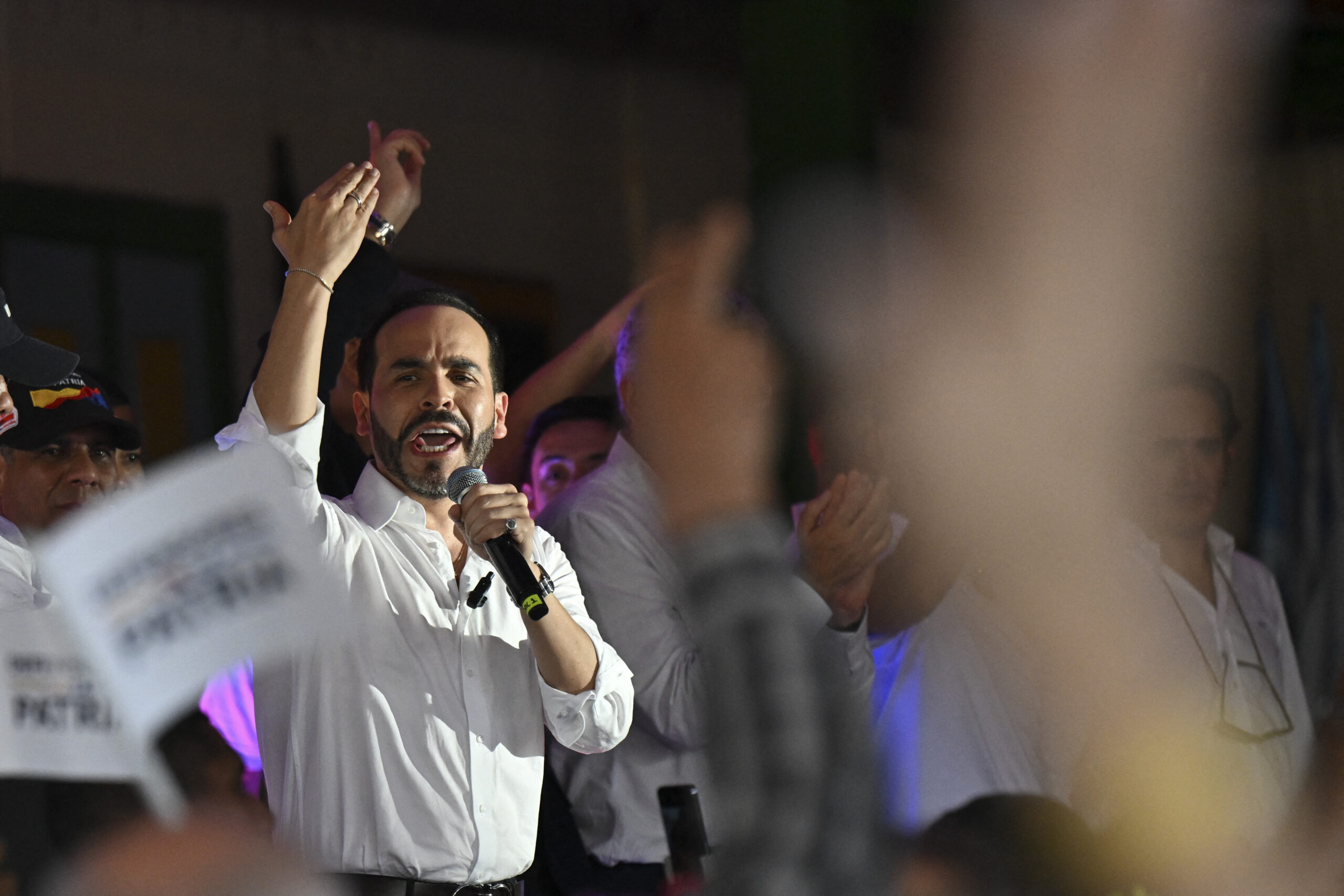
President Gustavo Petro is scrambling to keep Colombia in the hold of the country’s left after voters on Sunday, in the first round of the national elections, sent a sharp message that they are ready to take the country in a new direction. Right-wing populist candidate Abelardo de la Espriella took first place with 43 percent of the vote, a result which Petro declared Sunday “has no binding force.”
Petro argued that “hundreds of thousands of votes were added” to the rolls to swing the election, sparking fears among opposition politicians and international observers that the president might attempt to annul the elections. He elaborated on his accusation that the election was fraudulent Tuesday, announcing that he had acquired data proving that thousands of polling stations across the country were engaged in a ballot-stuffing operation to pad the vote in favor of de la Espriella.
Petro alleges that the software used to register voters was tampered with to add nearly a million additional voters, allowing a surge of fraudulent ballots to be cast for de la Espriella. As evidence, Petro provided a list of some 5,300 polling stations that had recorded more than 300 votes on Sunday, a number which the president argued is the most votes any polling station could have recorded during voting hours. Some polling stations recorded as many as 700 votes.
“The examination of the 5,300 atypical polling stations can’t be done by counting the votes,” Petro wrote in his statement on X. “The scrutiny must examine whether the voters are on the official census that was closed two months before the elections. If they are not, it is because they are not real voters.”
The discrepancies between the census and many of the supposedly anomalous polling stations Petro pointed to as evidence of fraud are simply from the president’s failure to account for Colombian voters abroad, according to the Misión de Observación Electoral, a Colombian election monitoring organization. Thousands of Colombians cast votes from nearly 700 polling stations in embassies and consulates overseas. These voters are naturally not accounted for in the regular census, and most consulates and embassies collect significantly more votes than standard polling stations.
So far, Petro has received little support in his attempt to discredit the presidential election. Left-wing candidate Iván Cepeda, who will go to a runoff election against de la Espriella later this month, initially supported Petro’s allegations, but executed a rapid about-face the next day. “There are no irregularities of sufficient dimension to speak of fraud,” Cepeda said Monday.
Petro’s decision to cast doubt on the results of the election has fueled further polarization and paranoia in an already acrimonious campaign season. His coalition, Pacto Histórico, rode to success in 2022 on the promise of welfare reform and paz total (“Total Peace”), a program of negotiations with the guerillas and cartels that have plagued Colombia for decades. Petro is himself a former guerillero, and he was convinced that the country could do away with terrorism and organized crime through rational discussion and the reintegration of narcoterrorists and drug traffickers into civil society.
Predictably, that approach to the problem has not succeeded. Indeed, despite declaring itself open for negotiations with any terrorist, revolutionary, or organized crime group, Petro’s government has yet to make any material progress. The pitiful results—a few minor truces between warring factions, often quickly broken—have not made up for the increased boldness of the Colombian narcos, who do not fear the government or its vacillating president.
During Petro’s presidency, conflicts between various guerilla groups have exploded, reaching their highest level in a decade last year, up a staggering 34 percent from 2024. The number of active narcos has more than doubled since he took office; nearly 30,000 guerrillas are currently engaged in narcoconflicts, compared to just 13,000 in 2022.
The growing wave of violence has left Colombians frustrated with Petro’s administration and eager for a new approach to governance, placing the Colombian right at a material advantage in the ongoing elections. Traditionally, this niche was filled by uribismo, the strain of Colombian conservatism headed up by popular former president Álvaro Uribe, who led the country from 2002 to 2010. During his two terms, Uribe oversaw Colombia’s most successful guerilla pacification program, and for many years his movement dominated the Colombian right.
But by 2025, uribismo had become staid and institutionalized enough for candidates from the populist right to mount a meaningful challenge. It found its candidate in de la Espriella, a flamboyant lawyer whose promises to crush the narcos with the mano dura (“iron fist”), slash the bureaucracy, and root out the corrupt political establishment resonated with Colombians frustrated by the limp-wristed security policy and perpetual scandals of the Petro administration.
Colombia’s traditional right was not helped by the loss of one of its most promising candidates: In June of 2025, the prominent senator Miguel Uribe Turbay (no relation to Álvaro Uribe) was gunned down in cold blood during the middle of a campaign event in Bogotá by assassins from the narcoterrorist group Segunda Marquetalia.
The open-air assassination ignited a firestorm in Colombian politics and seemed to many to demonstrate the need for drastic measures of the kind advocated for by de la Espriella. Paloma Valencia, the eventual standardbearer for the mainstream right, proved to be completely outmatched: Despite her extensive credentials, long experience in Colombian politics, and the support of Álvaro Uribe, she won a measly 7 percent of the vote in the first round and has since endorsed de la Espriella in the runoff against Cepeda.
The next few weeks may constitute a pivotal point in Colombia’s history. De la Espriella is in a promising position: Colombians are sick of Petro and the failed policies of Colombia’s left, and he has united the Colombian right behind his populist platform. He has even secured the endorsement of President Donald Trump.
But Petro’s willingness to discredit election results in the first round is evidence that he will pull every lever available to stop what he sees as the destructive and morally bankrupt right wing from taking control of Colombia. He may well choose to escalate the situation in the days leading up to the runoff election on June 21. If he does, de la Espriella may find himself at the center of a political crisis before ever reaching the Casa de Nariño.
The post Colombia at the Crossroads appeared first on The American Conservative.

 Lateo.net - Flux RSS en pagaille (pour en ajouter : @ moi)