 Connexion


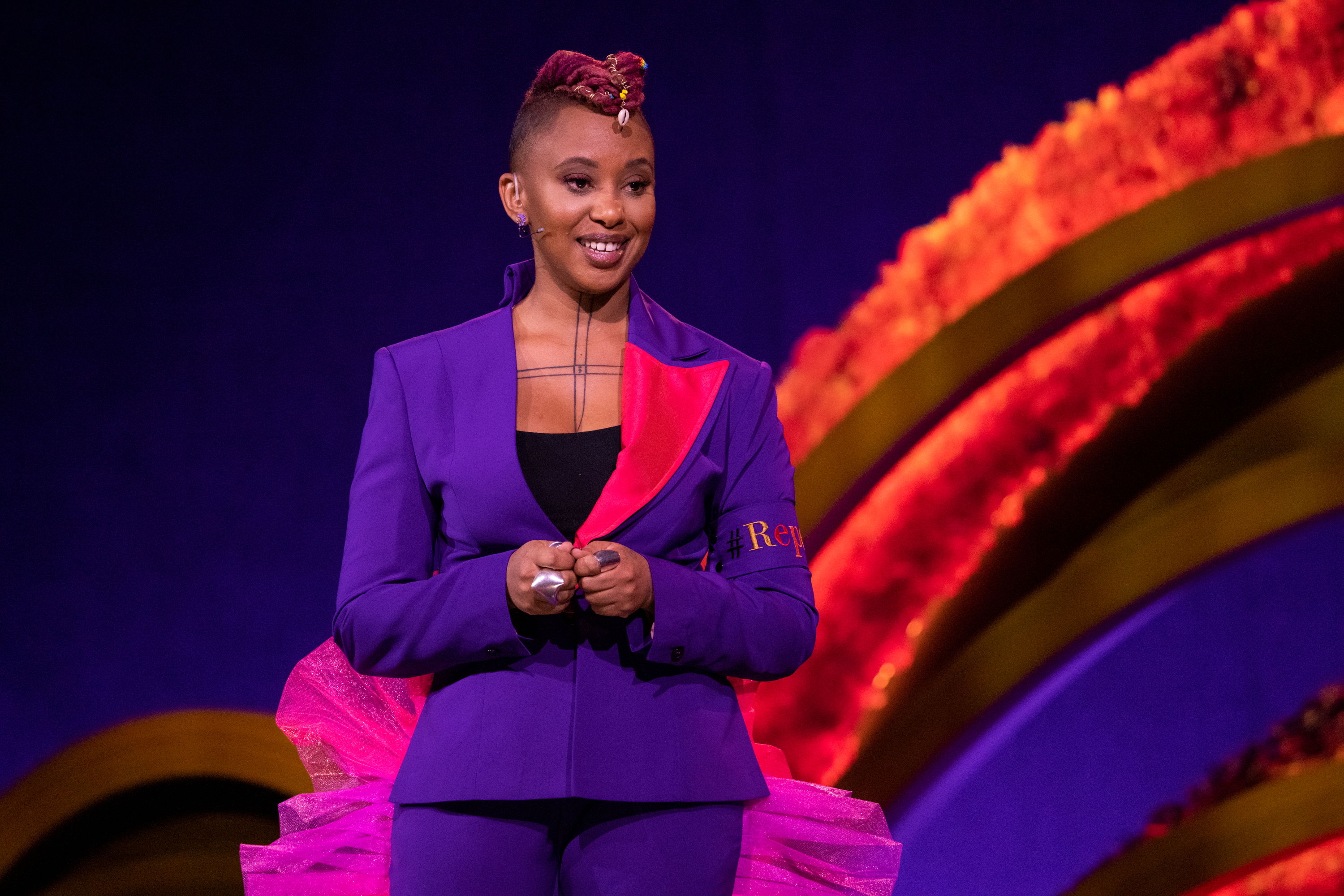
Sex educator and podcaster Kaz speaks at TEDWomen 2021: What Now? on December 2, 2021 in Palm Springs, California. (Photo: Gilberto Tadday / TED)
For Session 2 of TEDWomen 2021, seven speakers shared ideas and insights on everything from mental health and family structures to how to uplift personal and collective dignity.
The event: TEDWomen 2021: Session 2, hosted by TED’s head of curation Helen Walters in Palm Springs, California on December 2, 2021
Speakers: Charles C. Daniels, Jr., Smita Sharma, Zarlasht Halaimzai, Kaz, Francisca Mutapi and Diana Adams
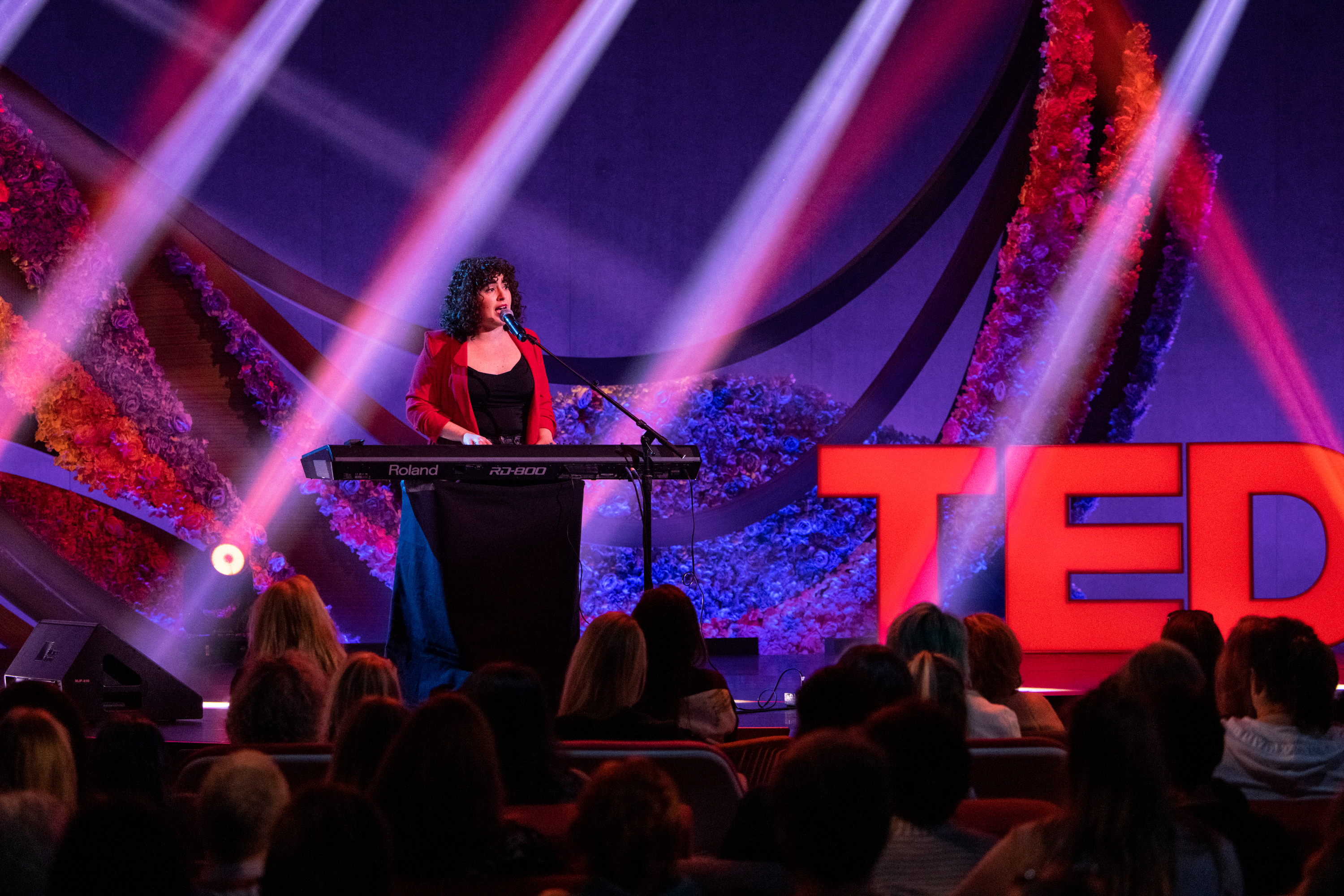
Musical comedian Marcia Belsky performs at TEDWomen 2021: What Now? on December 2, 2021 in Palm Springs, California. (Photo: Marla Aufmuth / TED)
Music and comedy: For a bit of comic relief, Marcia Belsky has some fun with a song about scrolling back through a date’s Instagram feed as well as “100 Tampons,” which lampoons NASA’s notorious decision to provide astronaut Sally Ride with an egregious supply of tampons for her six-day trip to the space in 1983. “And they asked: Will that be enough?” she sings.
The talks in brief:
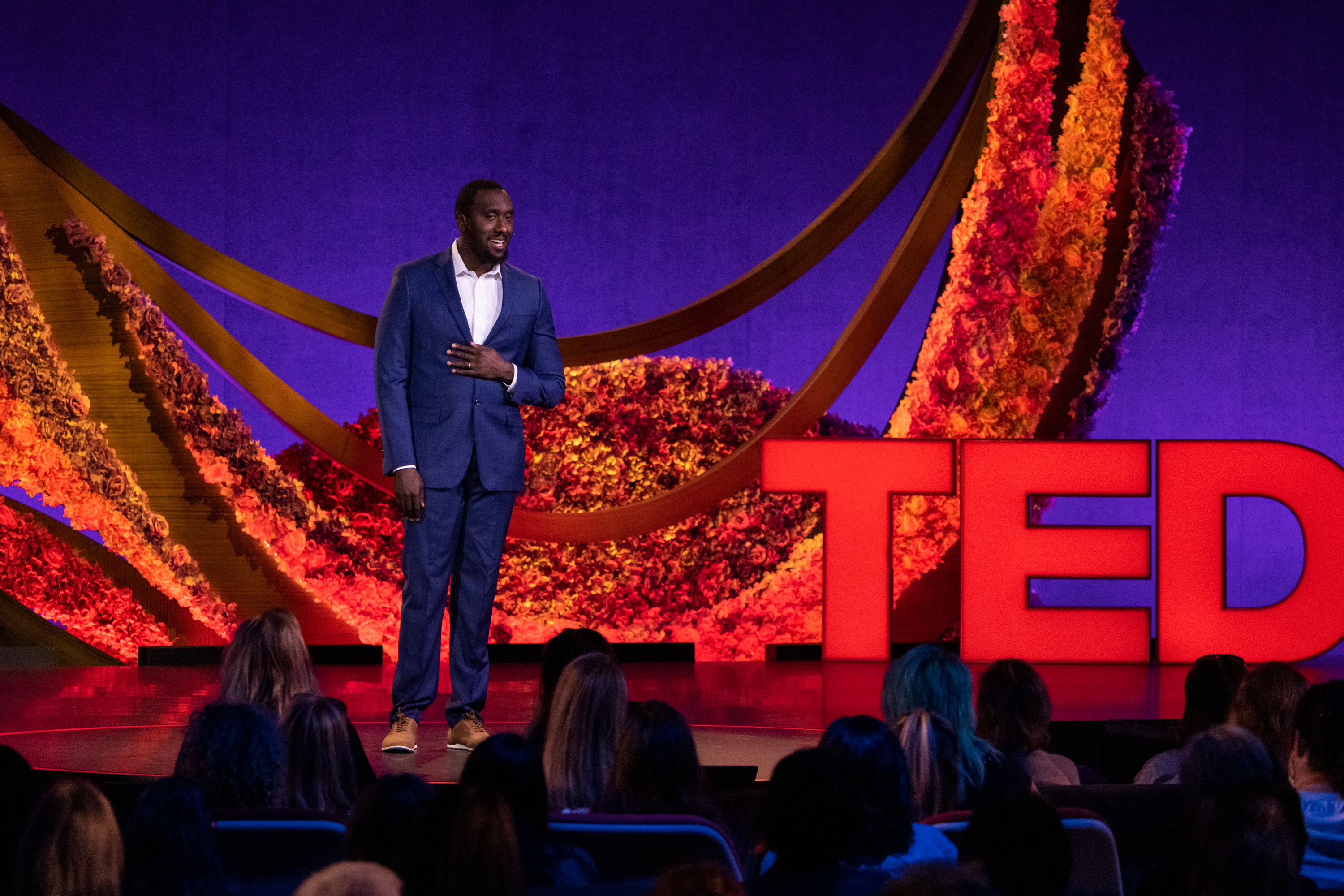
Scholar and therapist Charles C. Daniels, Jr. speaks at TEDWomen 2021: What Now? on December 2, 2021 in Palm Springs, California. (Photo: Marla Aufmuth / TED)
Charles C. Daniels, Jr., scholar, therapist
Big idea: In order to be present and connected to their children, fathers need to learn and be empowered to parent themselves.
How? An estimated 10 million children in the US see their fathers less than once a month, and research has shown that poverty rates, emotional and behavioral issues and school dropout and crime rates all increase when kids inconsistently see their fathers. Sharing his personal journey, Charles C. Daniels, Jr. recounts the profound impact of not seeing his own father — and explores the complex reasons a parent could have for not being there. The reasons that don’t get talked about are the ones that exacerbate the problem, he explains. That’s why he created Father’s UpLift, an organization that helps dads love, forgive and heal themselves and their children. They work with fathers to navigate shame, guilt and other challenges through group therapy, mentorship, coaching and support. Daniels, Jr. helps fathers reconnect with their kid and learn how to parent themselves so they, in turn, can be better parents.
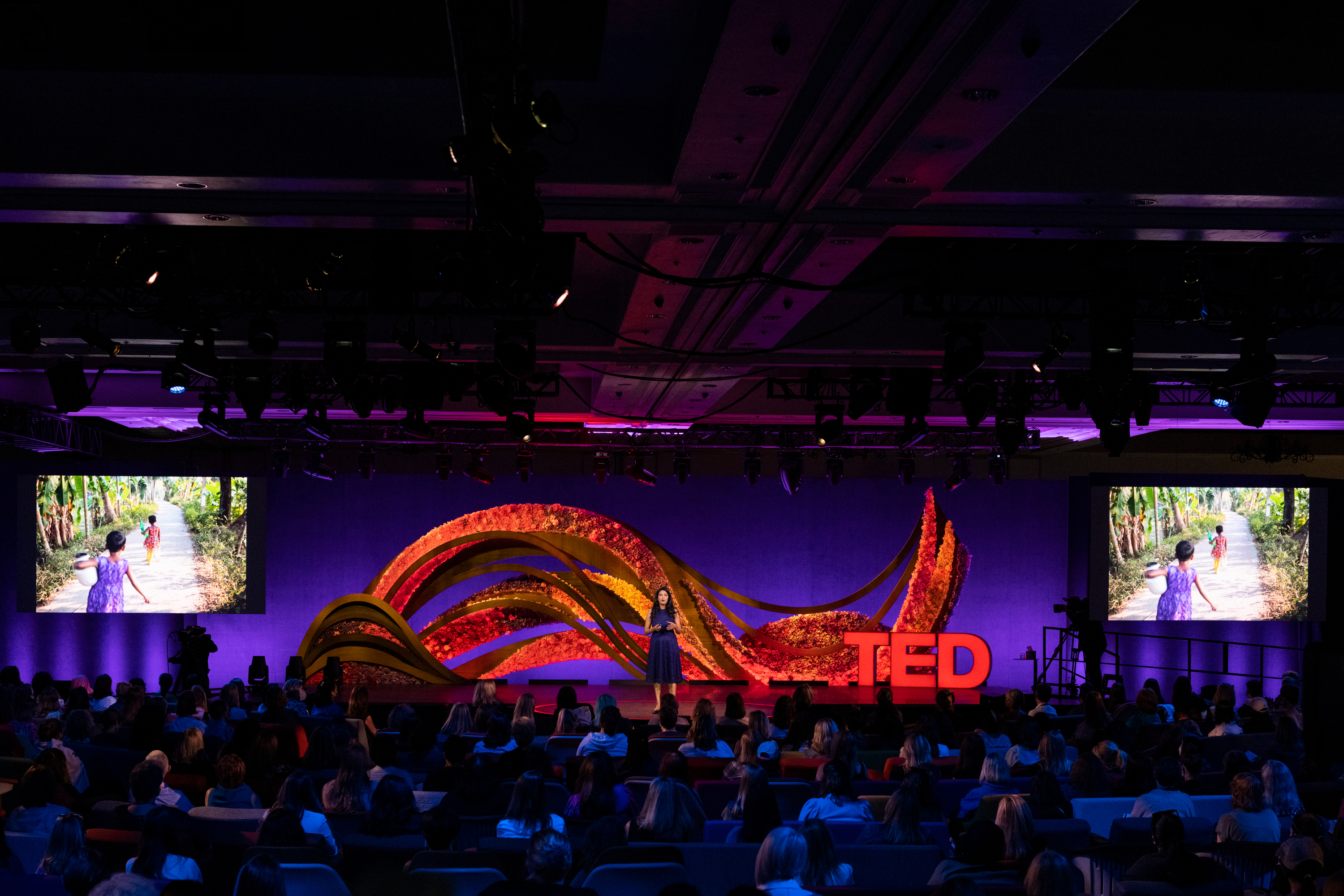
Photojournalist and visual storyteller Smita Sharma speaks at TEDWomen 2021: What Now? on December 2, 2021 in Palm Springs, California. (Photo: Marla Aufmuth / TED)
Smita Sharma, TED Fellow, photojournalist, visual storyteller
Big idea: Throughout the world, women are cast aside as unworthy of education or self-determination, relegated to tasks of parenting, household duties — and, sometimes, trafficked or enslaved. Through her moving photographs, Smita Sharma shares their stories.
How? By blending into her subjects’ lives and communities (sometimes under the guise of a researcher on “female hygiene,” something men are typically loathe to discuss), Smita Sharma gains the trust of her subjects: women born into poverty who are denied education, become victims of abduction, sexual violence or child marriage. With their consent, Sharma creates powerful visual narratives that depict these forgotten lives with grace and compassion, and that seek to inspire action around systemic issues of gender inequality.
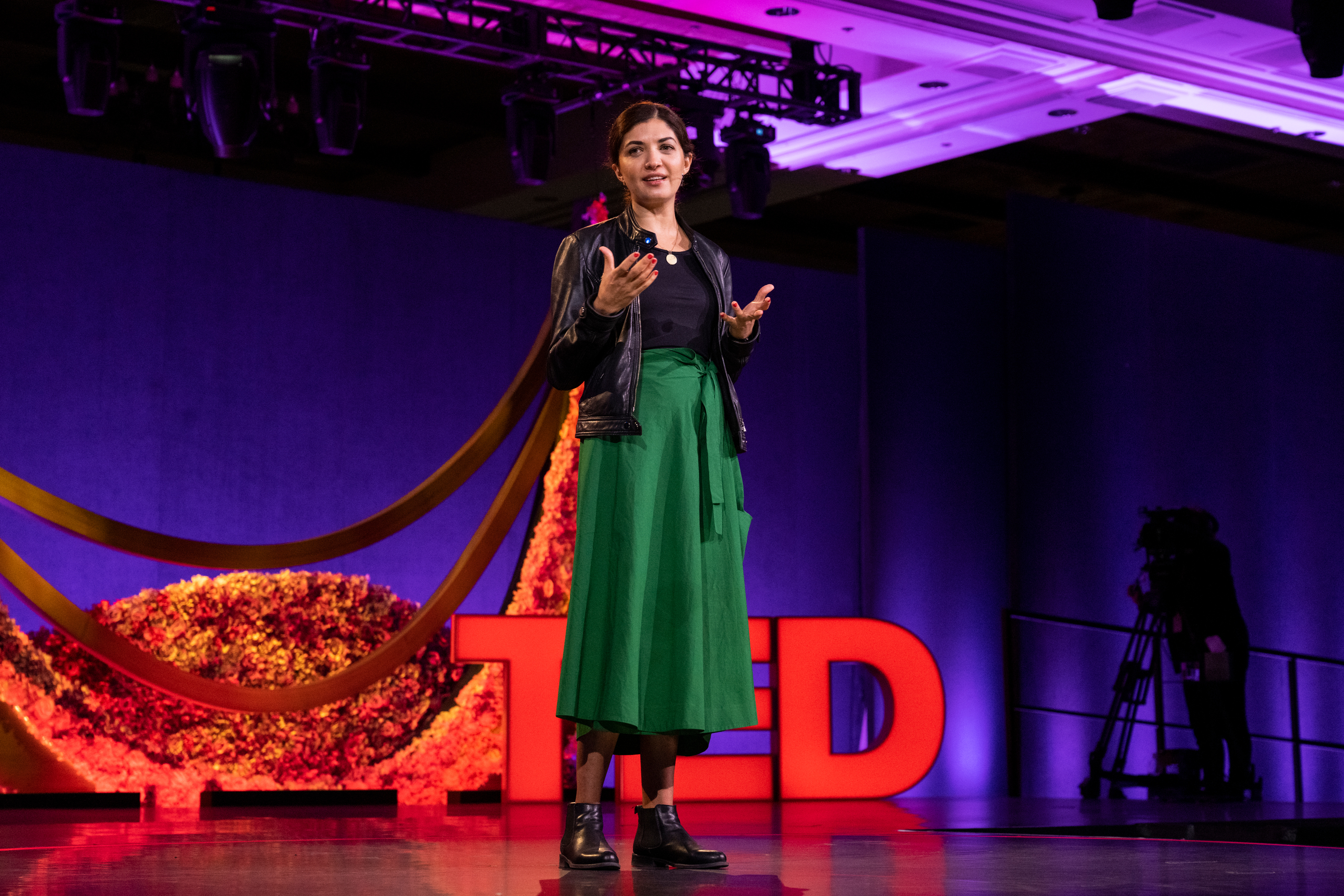
Writer and advocate for refugee rights Zarlasht Halaimzai speaks at TEDWomen 2021: What Now? on December 2, 2021 in Palm Springs, California. (Photo: Marla Aufmuth / TED)
Zarlasht Halaimzai, writer, advocate for refugee rights
Big idea: Understanding the emotional fallout of violence and displacement is more important than ever.
Why? As a child growing up in Afghanistan, Zarlasht Halaimzai was surrounded by violence. She vividly recalls her grandmother trying to shepherd her family to safety as rockets fell around them, and the overwhelming sense of fear that pervaded her life. The violence forced Halaimzai and her family to leave their home — and when the Taliban took over Afghanistan in 1996, her family sought asylum in the UK, beginning a new life. Now almost three decades later, Halaimzai is an advocate for refugee rights, working to help others overcome the devastation of war and the trauma of feeling expendable. Estimates suggest that today there are more than 84 million forcibly displaced people and 420 million children growing up in places where violence is the norm. Living under the threat of constant violence affects people even when they manage to get out, she says, leaving a terrible legacy on their bodies, minds, spirits and social bonds. With the Amna, Halaimzai uses art, mindfulness, dancing and storytelling to make sense of violence and the experience of being forced from your home, recognizing trauma and building community. The situation is bleak but not hopeless, she says, and there are things we can all do to participate in change. It’s time to demand governments stop investing in mass destruction. “Every vote that we cast should be against weapons of mass destruction, against automation of war,” she says. And she asks us to protect asylum seekers and to be good neighbors to displaced people who join our communities.
Kaz, TED Fellow, sex educator, podcaster
Big idea: Let’s create safe spaces for sex education (no shame or judgment allowed!) and build a curriculum to educate young people on consent.
Why? The best way to raise adults with healthy sexual habits is to teach kids about consent early — before sex is even a topic of conversation, says sex educator and TED Fellow Kaz. This would look like teaching kids that everything associated with their bodies can be negotiated, whether it’s a hug from grandma or asking permission to play tag with someone on the playground. A native of Kenya, Kaz experienced firsthand the detrimental effects of incompetent sex education. Her school’s curriculum centered shame, disturbing imagery and abstinence, leaving her and her peers largely without useful knowledge on consent, pleasure, communication, relationships and what healthy sexual behavior looks like. Now, she seeks to bring this “taboo” topic out of darkness because, as she says, the more we talk about sex, the safer and better it becomes for everyone.
Francisca Mutapi, global health researcher
Question: What’s going on with the Omicron COVID-19 variant?
Answer: There’s nothing unusual or unexpected about the COVID-19 virus mutating, says Francisca Mutapi: variants will continue to arise from all across the globe. The key is to ensure our mitigation strategies are sustainable and proportionate to the crisis. This includes all the usual suspects: making potentially high-transmission areas safer; ramping up and normalizing regular testing, as opposed to implementing travel restrictions and bans (which are largely ineffective); increasing vaccine uptake through education; and, as always, wearing face masks and washing hands.
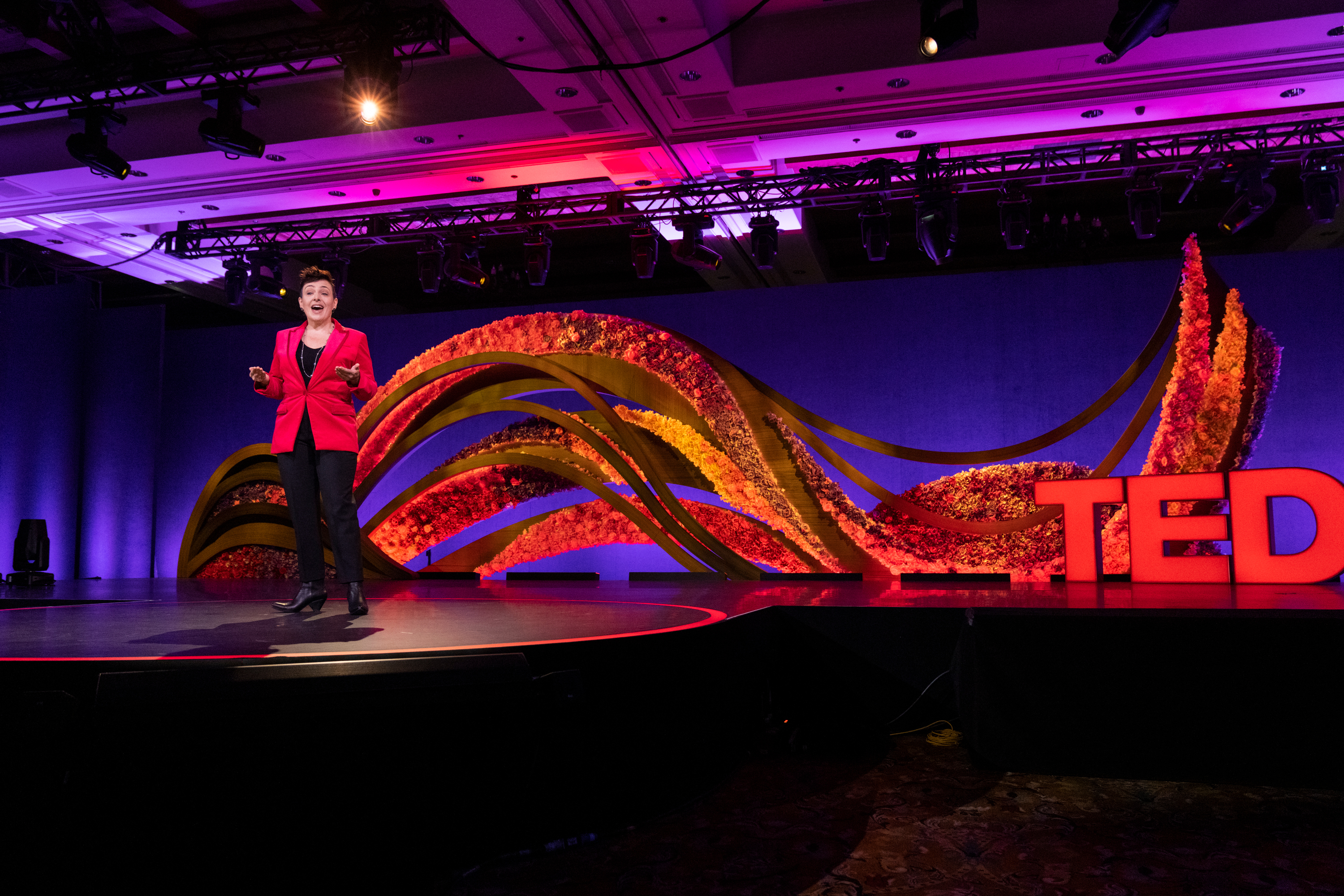
Attorney and LGBTQIA advocate Diana Adams speaks at TEDWomen 2021: What Now? on December 2, 2021 in Palm Springs, California. (Photo: Gilberto Tadday / TED)
Diana Adams, attorney, LGBTQIA advocate
Big idea: Laws should protect all forms of family — including “chosen family” (family we aren’t biologically related to) — and not just nuclear family.
Why? The majority of people in the US are not living in nuclear families with a spouse and kids — yet this is treated like it’s a bad thing. As a divorce lawyer, Diana Adams knows that marriage comes with more than a thousand benefits under federal law, from health insurance to better tax rates. “Our laws should move away from the idea that there is only one ideal family form and value all families as they exist,” says Adams. Advocating for more inclusive laws that also support LGBTQIA, polyamorous triads or quads, co-parents and domestic partnerships, Adams explains how a more expansive view of family would strengthen all relationships. This belief is why they founded the nonprofit Chosen Family Law Center, which works to change the law so it protects the entire spectrum of what a family could look like. “My definition of family is people committed to being there for each other no matter what,” Adams says.
TW21_20211202_2GT5987_3000
For the culminating session of TEDWomen 2020, we looked in one direction: onward! Hosted by TEDWomen curator Pat Mitchell and TEDx learning specialist Bianca DeJesus, the final session featured speakers and performers who shared wisdom on preparing for new challenges, turning fear into action and finding the way forward — even when the path isn’t clear.
Special appearance: Kirsty de Garis, organizer of TEDxSydney, and Safra Anver, organizer of TEDxColombo, introduced the final two TEDx speakers of the day.
The session in brief:
Gloria Steinem, feminist activist, writer
Big idea: Feminism is the radical yet essential idea that all human beings are equal. Now more than ever, unity and listening are the remedies to fear, discrimination and inequality.
Why? Feminism has been and always will be relevant and vital to all of humanity, says Gloria Steinem. Yet throughout history, the word — and its accompanying movement — have been misunderstood and criticized. Speaking on her lifelong legacy of feminist activism, Steinem shares how she’s fought for women’s rights and overcome her fears with the help of trusted friends and allies. She discusses the intersectionality of racism and sexism and how the fight against both has always been linked — and explains why unity is the key to overcoming them, especially in a world facing COVID-19. She urges future generations of women — or, as she calls them, “friends who haven’t been born yet” — to support each other and face their fears together. “Think of change as a tree,” she says. “You know it doesn’t grow from the top down, so we shouldn’t be waiting for somebody to tell us what to do. It grows from the bottom up. And we are the roots of change.”
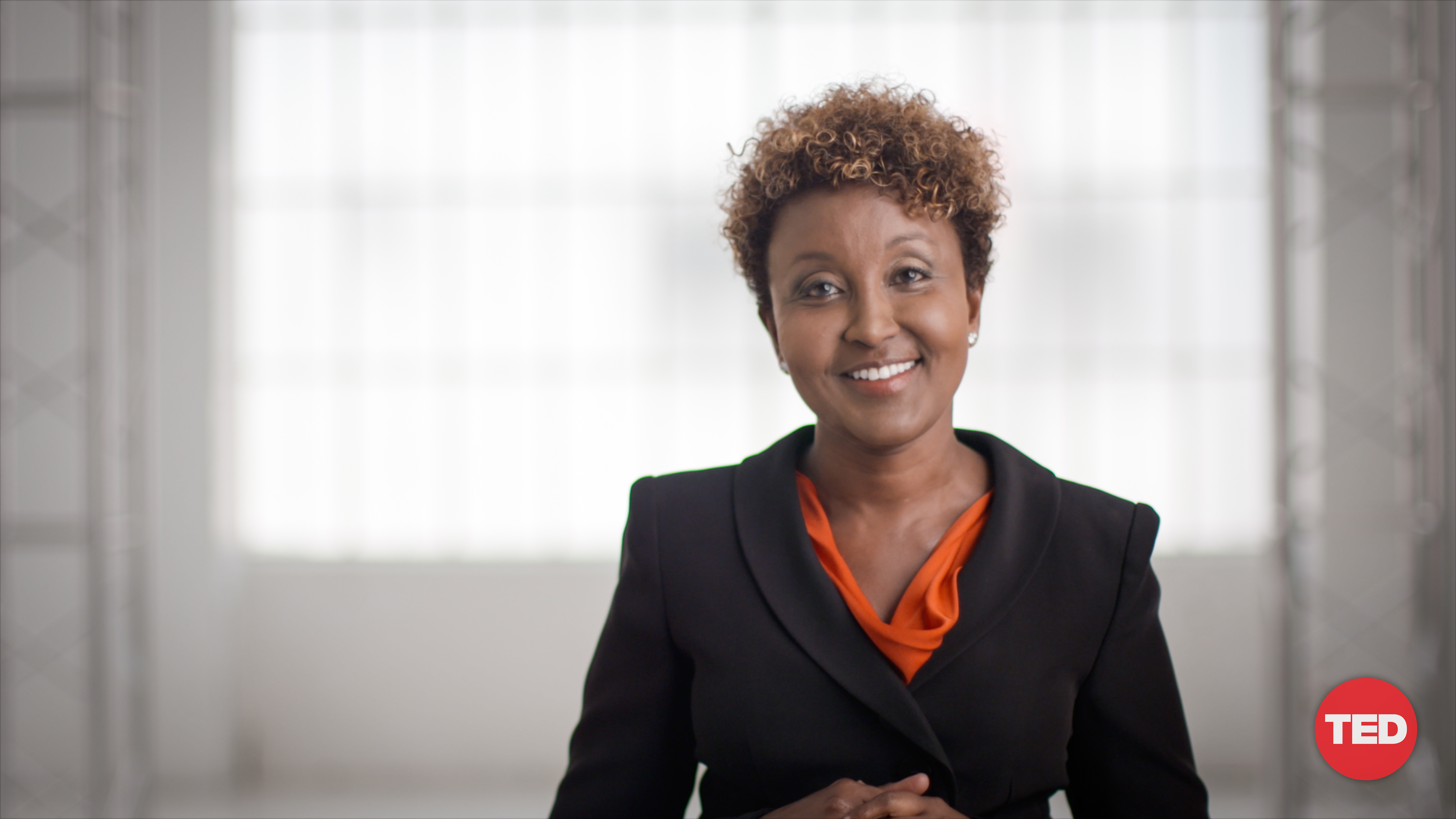
“AI is making amazing things possible for organizations and for people who otherwise would have been left behind,” says Jamila Gordon. She speaks at TEDWomen 2020 on November 12, 2020. (Photo courtesy of TED)
Jamila Gordon, AI advocate
Big idea: Artificial intelligence can break language, education and location barriers for disadvantaged people, giving them the opportunity to thrive.
How? Born into a war-torn Somalia, Jamila Gordon has always considered herself to be lucky. When her family was separated and she was displaced in Kenya, Gordon’s journey eventually took her to Australia. There, she worked in a Japanese restaurant owned by a couple who showed her that amazing things are possible through hard work and perseverance. Now, she wants AI to do the same, at a massive scale, for disadvantaged people — giving them skills and tools to find work, be great at their jobs and do the work safely. In this way, Gordon believes software can open doors of opportunity for people who face cultural, social and economic barriers. For instance, Gordon’s platform, Lumachain, brings transparency to global supply chains, benefiting producers, enterprises and consumers, while also helping to end modern slavery.
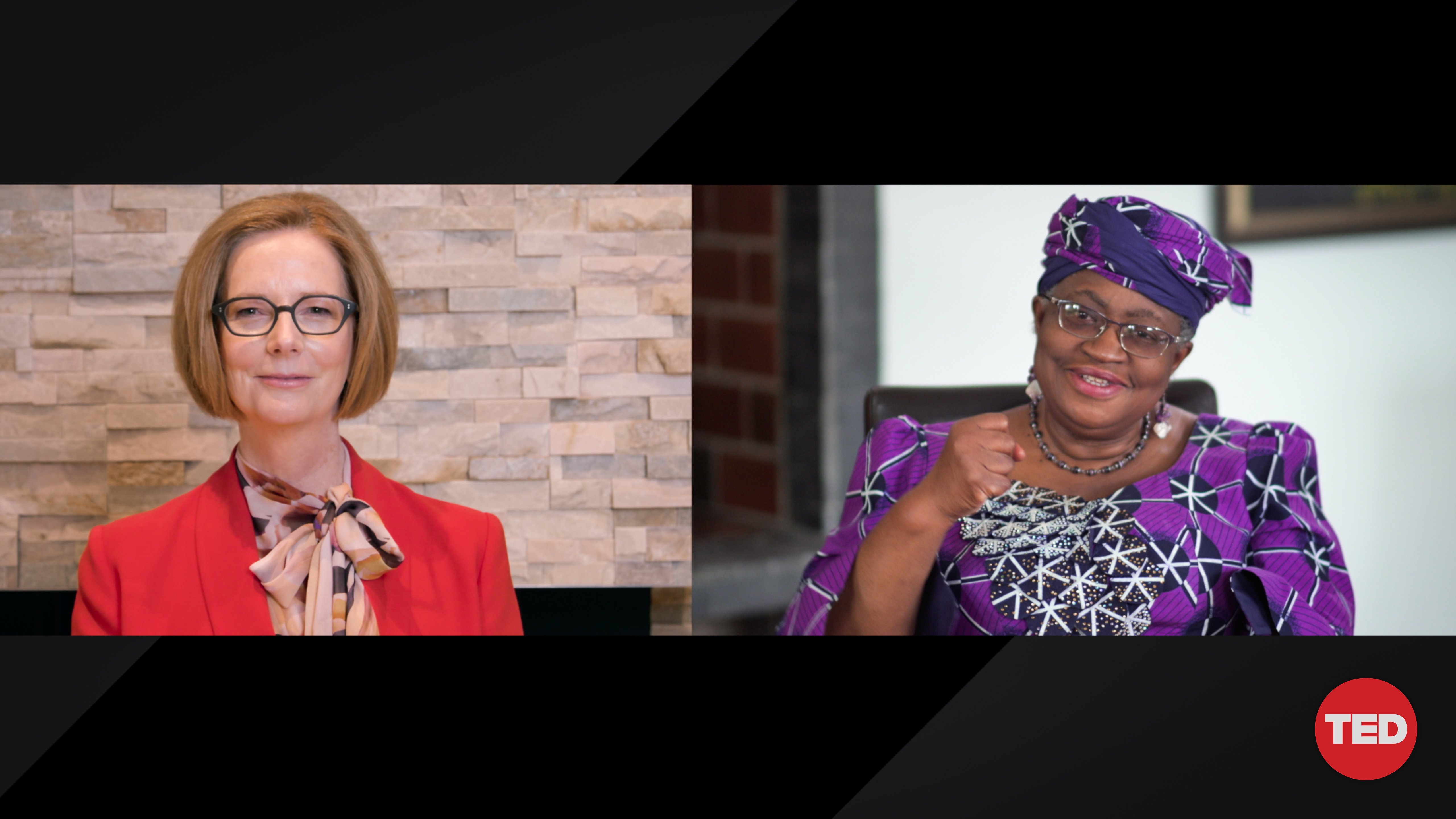
“There’s joy in being a leader, in having the opportunity to put your values into action,” says Julia Gillard, in conversation with Ngozi Okonjo-Iweala at TEDWomen 2020 on November 12, 2020. (Photo courtesy of TED)
Julia Gillard, former Prime Minister of Australia, and Ngozi Okonjo-Iweala, former Finance Minister of Nigeria
Big idea: The sexism that women leaders face shouldn’t overshadow or discourage others from stepping forward and making a positive impact.
Why? In conversation, Julia Gillard and Ngozi Okonjo-Iweala remark and reflect on their experiences in leadership — for better and worse. Their discussion runs the gamut of what it means to be a powerful woman in a sexist world: encountering unnecessary judgments based on appearance, enduring undue focus on personality over policy and facing criticism based solely on stereotypes. To be viewed as an acceptable leader, women must exude both strength and empathy, Okonjo-Iweala says. If they come across as too tough, they are viewed as hard and unlikeable. But if they seem too soft, they are seen to be lacking the backbone to lead. In fact, women leaders must also be thoughtful about how they portray their achievements to those who look up to and follow them. Emphasizing the positive makes a real difference to the power of role modeling, Gillard says. If the focus stays on the sexist and negative experiences, women may decide that being a leader isn’t for them. Conversely, if leaders shy away from speaking about their hardships, women and girls can be put off because they decide leadership is only for superwomen who never have any problems. It’s all about balance. For women looking to create space for themselves and others, Gillard and Okonjo-Iweala offer a list of six standout lessons to build solidarity: there’s no “right way” to be a woman leader, so be true to yourself; sit down with your trusted confidants and wargame how to deal with gendered moments; debunk gendered stereotypes; don’t wait for when you need help to support system changes that aid gender equality; network, but don’t shy away from taking up space in the world; and the last, but not least important: go for it!
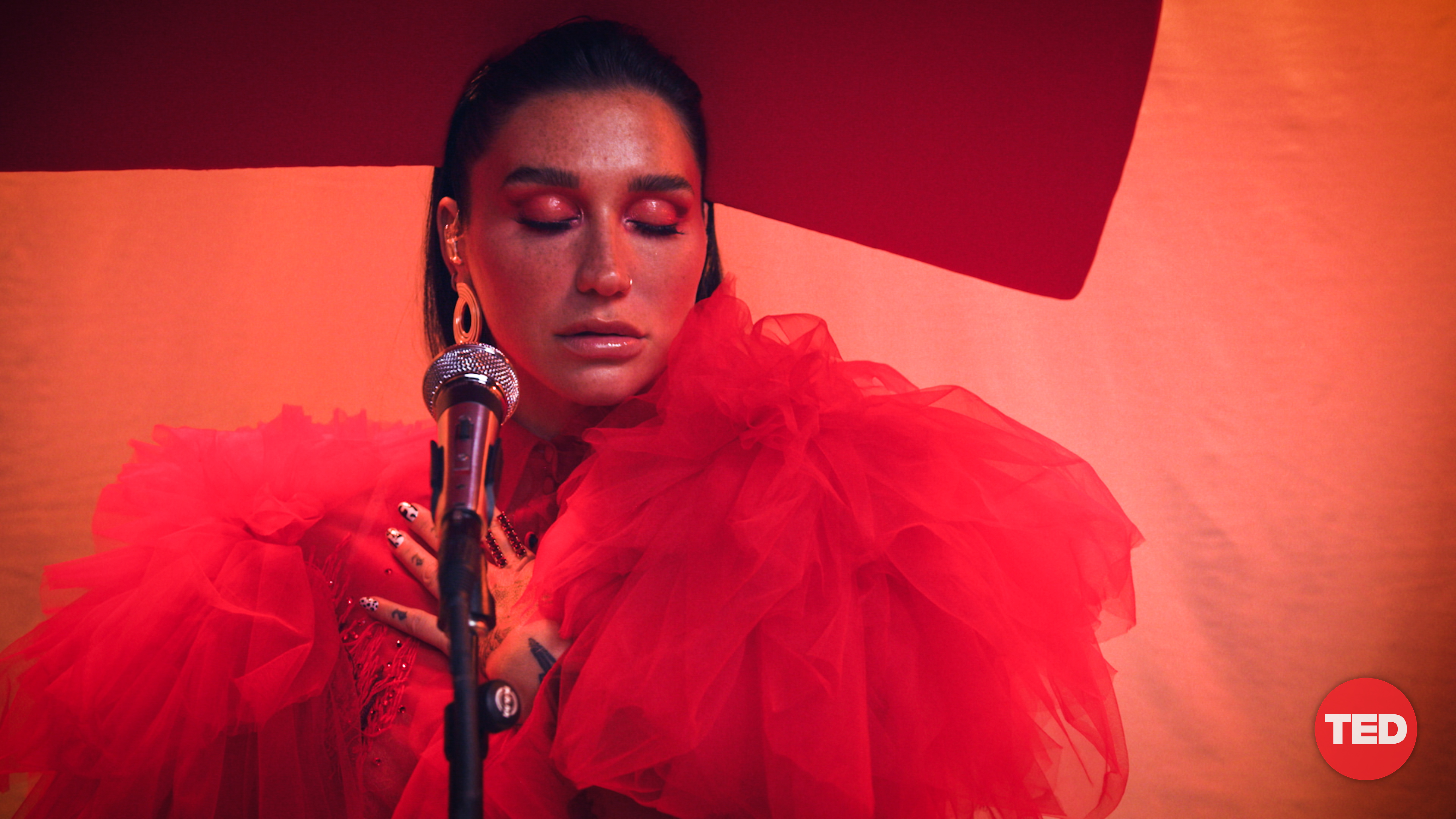
Kesha delivers a powerful performance of “Shadow” at TEDWomen 2020 on November 12, 2020. (Photo courtesy of TED)
Kesha, musician, actress, activist
“I can’t tell you how to not be afraid, but I can tell you that I’ve experienced how to not be defined by my fears,” says Grammy-nominated singer-songwriter Kesha. She shares a bit about how she faced her fears while living in the limelight over the last decade and delivers a powerful performance of “Shadow,” a song about courageously choosing positivity even when others are throwing shade. “Get your shadow outta my sunshine / Outta my blue skies / Outta my good times,” she sings. She’s accompanied by Mary Lattimore on harp, Karina DePiano on piano, and Skyler Stonestreet and Kenna Ramsey on background vocals.
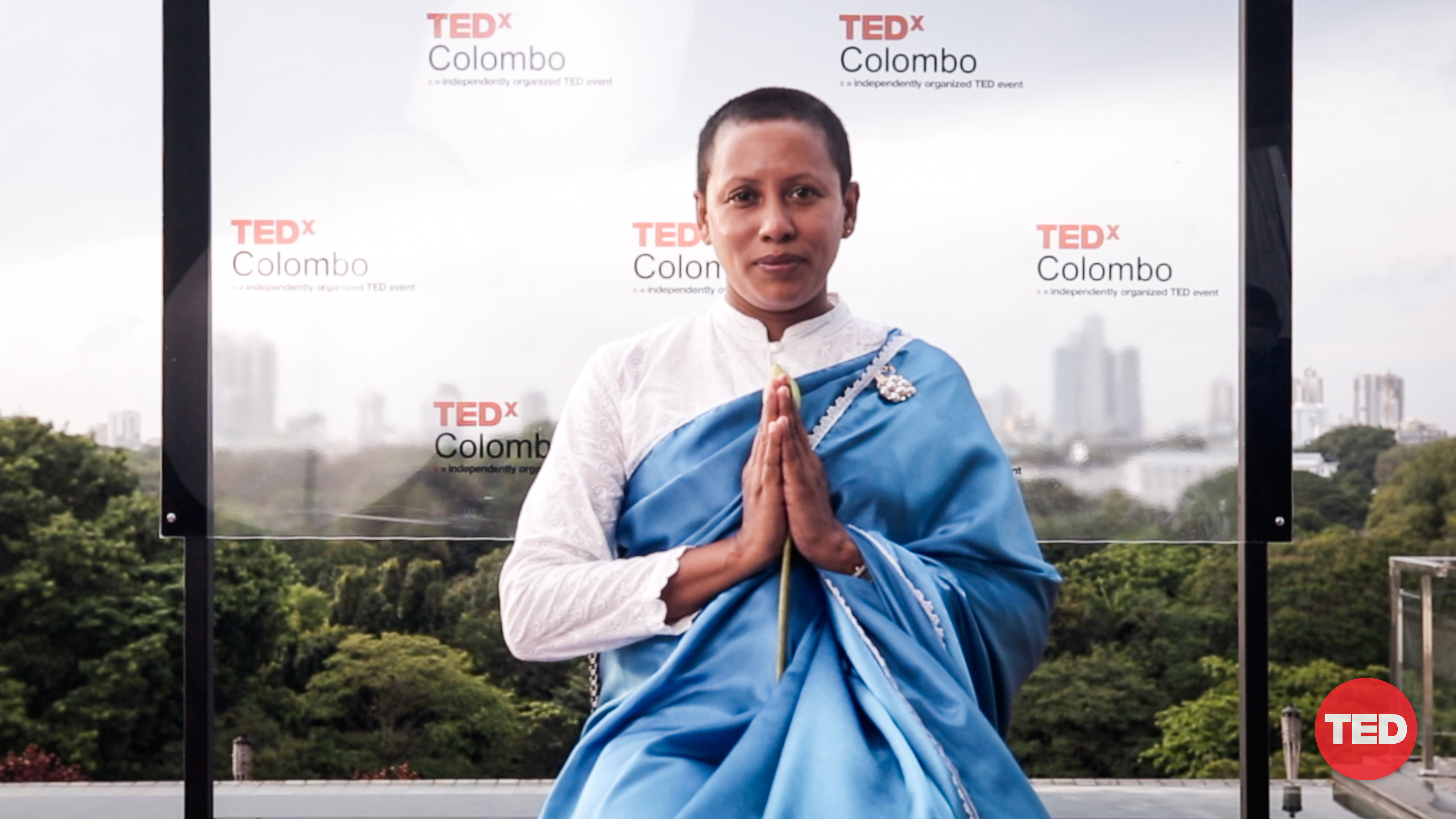
JayaShri Maathaa shares a magical mantra to calm yourself during troubled times. She speaks at TEDWomen 2020 on November 12, 2020. (Photo courtesy of TED)
JayaShri Maathaa, monk
Big idea: There is a simple mantra you can say to calm yourself during troubled times: “Thank you.”
Why? As the world brims with fear, doubt and anxiety during the coronavirus pandemic, JayaShri Maathaa finds that two magical words — “thank you” — fill her life with bliss and grace. How so? When you say “thank you,” you bring your attention inward and, over time, create a feeling of gratitude in your heart that can help you navigate life with peace and joy. For Maathaa, these two words are like music in her mind: they’re the first thing she thinks upon awakening, and the last thing she thinks before falling asleep. By planting these good thoughts in her mind and heart over the years, she now finds them blossoming into something beautiful — creating a harmony within herself and to the world around her. Want to give it a try?
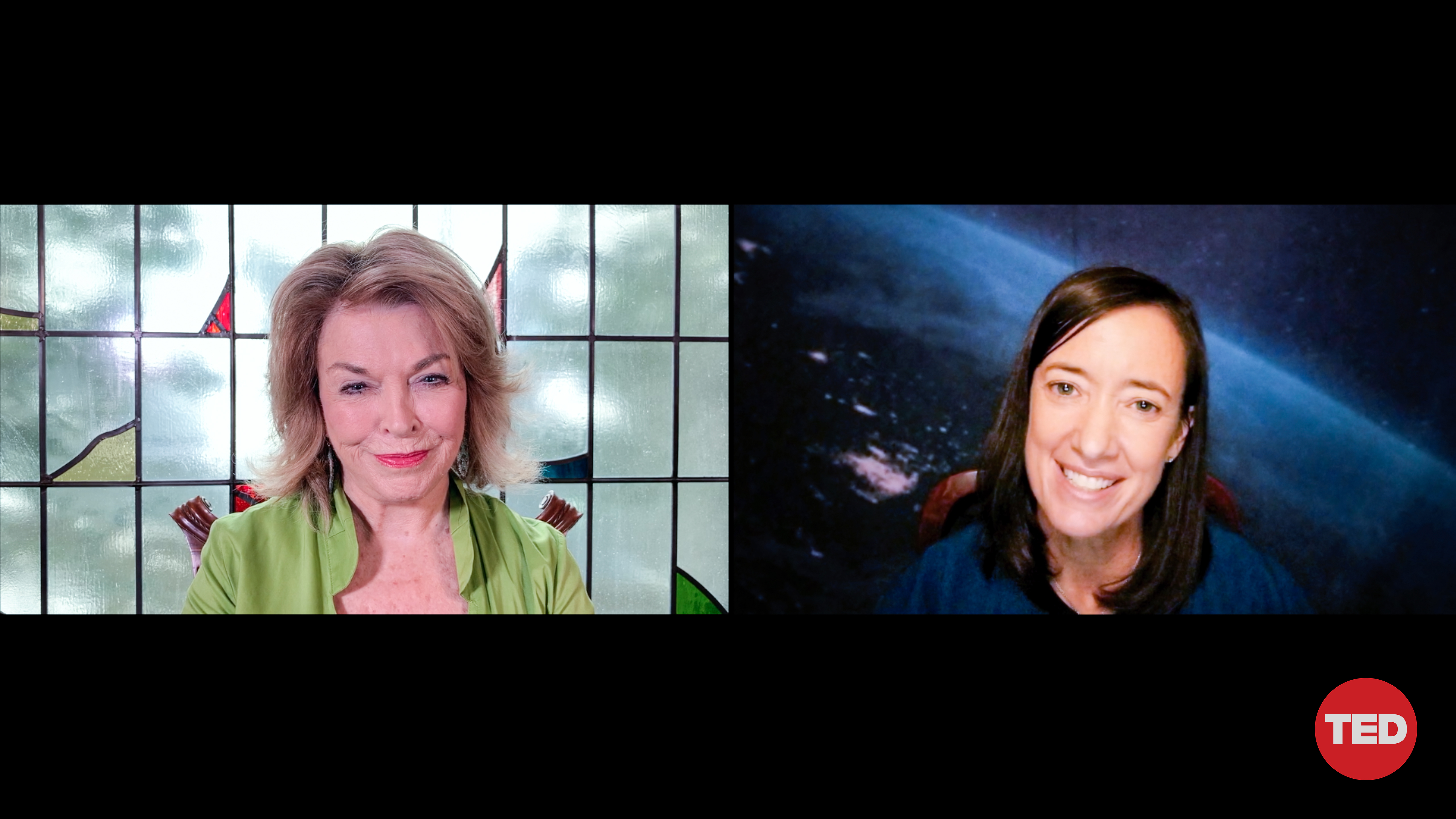
Megan McArthur shares lessons from her life and career as a NASA astronaut, in conversation with TEDWomen curator Pat Mitchell at TEDWomen 2020 on November 12, 2020. (Photo courtesy of TED)
Megan McArthur, NASA astronaut
Big idea: The day, life and mindset of an astronaut.
Tell us more: In conversation with TEDWomen curator Pat Mitchell, astronaut Megan McArthur offers a glimpse into what it’s like when space becomes your world, but not your entire life. As a mother and wife (she’s married to fellow astronaut Bob Behnken), McArthur strikes a balance between the emotional outpouring of her husband’s spaceflight and training for her own launch, while supporting their son for his reality as an earthbound child. But when it comes to work, the focus becomes singular in hundreds of hours of preparation, which McArthur emphasizes can be a mindset easily adjusted and applied to any professional role. Using her own example of tackling a new job, she reminds women that even if they come up against a situation they’ve never before encountered, they are ready and prepared from their life experiences to take on that challenge, learn quickly and succeed.
Closing out the final session with a flourish, a guitarist sets in motion delicate yet strident chords that reflect both the warmth and momentum of Apiorkor Seyiram Ashong-Abbey‘s poetry — paired with footage of her masked, standing statuesque in a deserted quarantine courtyard, motionless yet liquid all at once. Far from a mere diatribe, this piece proposes not a revolution, but a re-establishment of the majesty, magic and power of the matriarch, and the hidden traditions that have quietly sustained women for millenia — and that will someday soon renew the world once more.
Kesha performs at TEDWomen 2020. November 12, 2020. Photo courtesy of TED.
In this moment of great uncertainty, it’s time to be fearless. TEDWomen 2020, a day-long event hosted on TED’s virtual event platform, is all about fearlessness — in the way we think, act, participate — and how this collective mentality can empower us to take a global step forward, together. The day kicked off with an inspiring session of talks and performances, all designed to take us on a journey of curiosity, wonder and learning. Hosted by TEDWomen curator Pat Mitchell and TEDx learning specialist Bianca DeJesus, seven speakers and performers showed us how to find the strength and clarity needed to navigate an ever-changing, ever-challenging world.
Music: The group Kolinga performs “Nguya na ngai,” an original song that’s equal parts music, poetry and dance.
Special appearance: Grace Yang, organizer of TEDxMontrealWomen, joins the event to represent the global TEDx community, through which more than 140 TEDx teams in 51 countries are organizing TEDxWomen events alongside the main show.
The session in brief:
To open the session, activist and poet Apiorkor Seyiram Ashong-Abbey delivers a powerful hymn to the universal matriarch in all of her manifestations — exalting her fearlessness as she faces the unknown, praising her body down to the folds of her skin, shouting against the silence surrounding her oppression, and above all shattering the chains (political and social) that bind her across the globe.
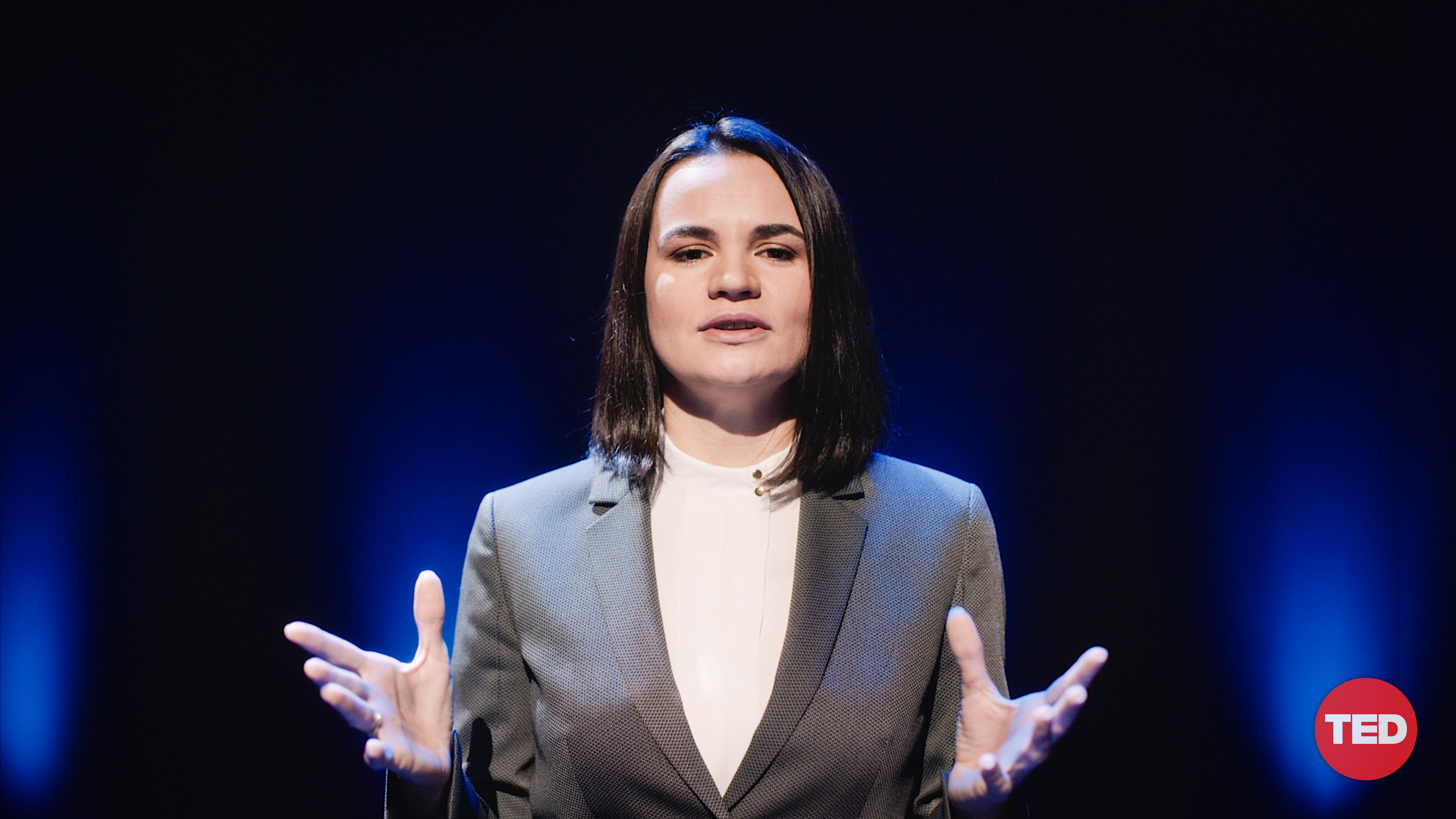
“Our courage is born from unity; our solidarity is our strength,” says Sviatlana Tsikhanouskaya, leader of the national democratic movement in Belarus. She speaks at TEDWomen 2020 on November 12, 2020. (Photo courtesy of TED)
Sviatlana Tsikhanouskaya, politician
Big idea: In the face of authoritarianism, the path to fearlessness lies in unity and solidarity.
How? The people of Belarus have been under authoritarian rule since 1994, subject to police violence and everyday assaults on their freedoms. But this year, something changed. Tens of thousands have taken to the streets to participate in anti-government demonstrations, supporting Sviatlana Tsikhanouskaya’s campaign in opposition to the country’s authoritarian leader, Aleksandr G. Lukashenko. Tsikhanouskaya stepped in for her husband, who was jailed, to run against Lukashenko in the nation’s recent presidential election — an election she is widely viewed to have won, despite falsified results released by the regime. Now, she tells the story of how a small collection of women-led protests in the capital of Minsk sparked massive, peaceful demonstrations across the country — the likes of which Belarus has never seen — that continue amid calls for a new free and fair election. Even after being forced into exile with her children, Tsikhanouskaya remains determined. “Our courage is born from unity,” she says. “Our solidarity is our strength.”
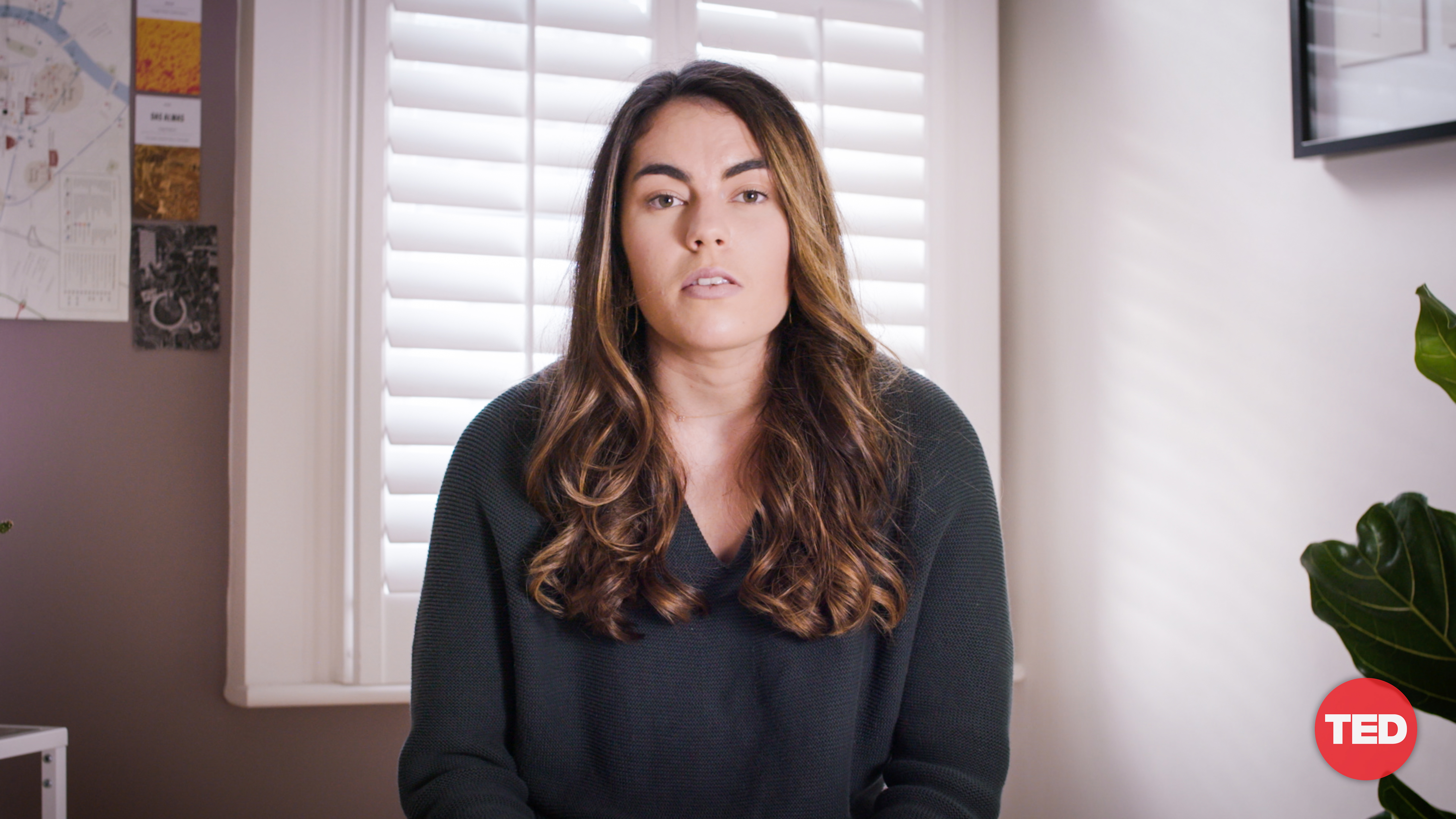
In April 2020, Sophie Rose volunteered to be infected with COVID-19 as part of a human challenge trial. She makes the case for these trials at TEDWomen 2020 on November 12, 2020. (Photo courtesy of TED)
Sophie Rose, infectious disease researcher
Big idea: To quickly and equitably vaccinate the world’s eight billion people against COVID-19, we will need several approved vaccines. Human challenge trials may help speed up the development and deployment of effective vaccines.
How? In April 2020, Sophie Rose volunteered to be infected with COVID-19. As a young, healthy adult, she’s participating in a “human challenge trial” — a type of trial in which participants are intentionally exposed to infection — that may help researchers develop, manufacture and implement vaccines in record time, saving the lives of thousands of people. She explains her decision and the difference between challenge trials and the phase III clinical trials typically carried out for drugs and vaccines. Unlike phase III trials, where participants receive a vaccine and are subsequently monitored for possible infection throughout the course of their normal lives, challenge trial participants are purposely exposed to the virus after vaccination. Deliberate exposure allows researchers to know more quickly if the vaccine works (usually within a matter of months, instead of years) and requires fewer participants (around 50 to 100 instead of thousands). Because exposure is certain, challenge trial volunteers must be young, typically between ages 20 and 29, and have no preexisting conditions that could put them at an elevated risk. Since choosing to participate, Rose cofounded 1Day Sooner, a nonprofit that advocates for challenge trial participants and has helped more than 39,000 people around the world volunteer for these trials.
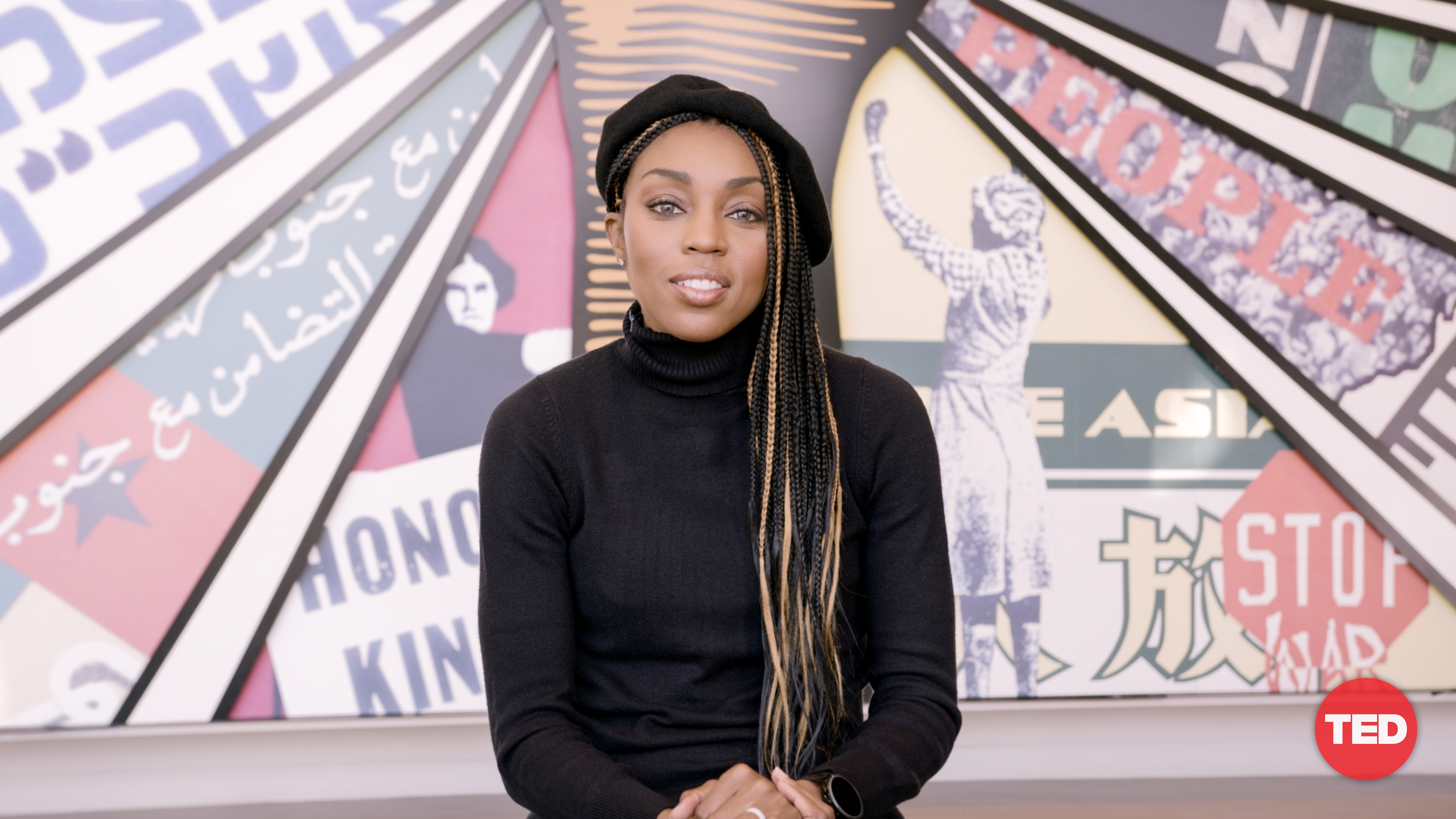
“It’s not just protesting and raising your voice, but also doing something to show your intentions,” says WNBA champion Renee Montgomery. She speaks at TEDWomen 2020 on November 12, 2020. (Photo courtesy of TED)
Renee Montgomery, WNBA champion, activist
Big idea: For people’s voices to be heard in the face of injustice, they need to be “felt.” We can do this by opting out of our comfort zones and taking positive social action.
How? Renee Montgomery hadn’t planned to quit her dream job in the middle of a pandemic, but it was a leap of faith she made in order to do her part in fighting America’s racial injustice. By “opting out” of her career as a WNBA player, she made space to focus on others’ voices and amplify them with her platform. Montgomery explains that, to truly have these experiences heard, they need to be felt: “Making it felt for me is an action,” she says. “It’s not just protesting and raising your voice, but also doing something to show your intentions.” Her intentions? To level the playing field so everyone has the same opportunities, regardless of race, and to turn this moment into positive, lasting momentum.
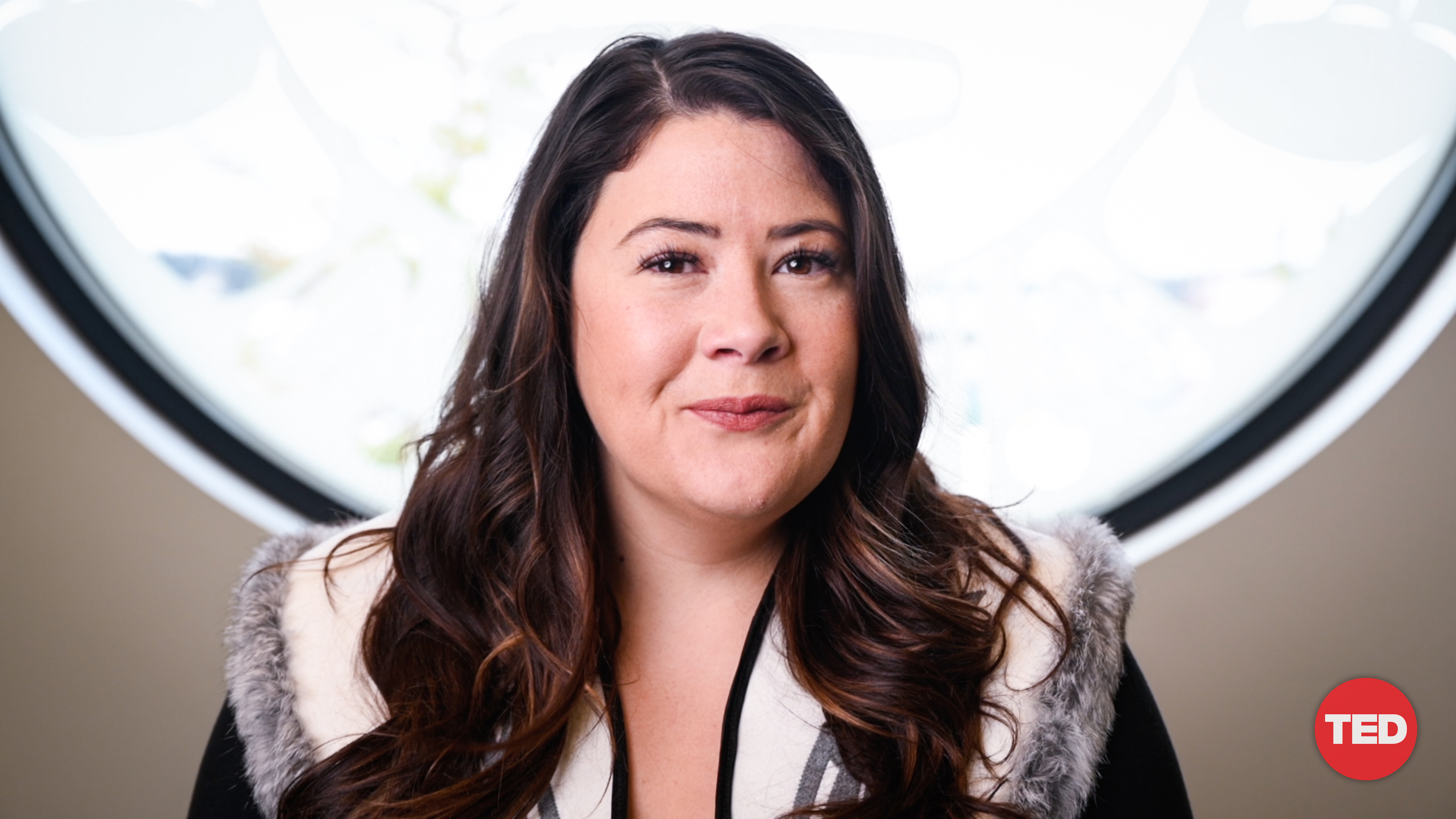
Yukon Regional Chief Kluane Adamek shares the legacy of matriarchs in the Yukon First Nations at TEDWomen 2020 on November 12, 2020. (Photo courtesy of TED)
Kluane Adamek, Yukon Regional Chief
Big idea: Leadership and matriarchal wisdom of the Yukon First Nations people.
Tell us more: In the Yukon First Nations, women lead — and have done so for generations. Their matriarchs have forged trade agreements, created marriage alliances and ensured business happens across their land for generations. Their matrilineal society is one that deeply values, honors and respects the roles of women. Much of the world doesn’t reflect this way of living, but Yukon Regional Chief Kluane Adamek urges others to follow in the footsteps of her people — by putting more women at the table and learning from the power of reciprocity. There’s so much women can share with the world, she says, encouraging all women to seek spaces to share their perspective and create impact.

Voto Latino CEO María Teresa Kumar reflects on the historic number of Latinx voters who cast a ballot in the US 2020 presidential election — and how they’ll shape the future. She speaks live at the TEDWomen 2020 on November 12, 2020. (Photo courtesy of TED)
María Teresa Kumar, civic leader
Big idea: The engaged and growing Latinx vote turned out in record numbers during the US 2020 presidential election and has the potential to shape American politics for decades to come.
How? A historic number of Latinx voters cast a ballot in the US 2020 presidential election. As the nation’s most rapidly growing demographic, Latinx youth are voting for a brighter future. María Teresa Kumar, CEO of Voto Latino, reflects on the issues closest to young Latinx voters and their families, which include health care, climate equity and racial justice. With a look back to FDR’s New Deal, which catalyzed growth, nation-building and paved the way for JFK’s century-defining Moonshot mission, Kumar peeks into the future of the United States and sees the potential for the newest generation of voters to shape the years ahead.
TW2020_SviatlanaTsikhanouskaya_0008_logo

TEDWomen 2020 is nearly here! The day-long conference will take place on November 12 via TED’s new virtual conference platform. TEDWomen attendees will experience TED’s signature talks as well as an array of live, interactive sessions, community “idea dates,” small-group speaker Q&As and more. The talks featured in the program have been developed in collaboration with an incredible group of TEDx organizers from Lagos, Nigeria; Port of Spain, Trinidad and Tobago; Montreal, Canada; Colombo, Sri Lanka; and Sydney, Australia. TEDWomen will celebrate and amplify dynamic, multi-dimensional ideas from these communities and around the world.
In the midst of uncertainty, the greatest peril is to retreat or become immobilized. At TEDWomen, we’ll hear from bold leaders who are stepping forward and taking action.
TEDWomen 2020 speakers and performers include:
TED has partnered with a number of organizations to support its mission and contribute to the idea exchange at TEDWomen 2020. These organizations are collaborating with the TED team on innovative ways to engage a virtual audience and align their ideas and perspectives with this year’s programming. This year’s partners include: Boston Consulting Group, Dove Advanced Care Antiperspirant, Project Management Institute and the U.S. Air Force.
TEDWomen 2020 is taking place on November 12, 11am – 6pm ET. TEDWomen applications will be accepted until 9am ET, November 9 (or until sold out). Learn more and apply now!
TW2020_TED Blog_2000x2000

Hosts Bruno Giussani and Helen Walters open Session 1: Weaving Community on July 21, 2019, Edinburgh, Scotland. (Photo: Bret Hartman / TED)
The stage is set for TEDSummit 2019: A Community Beyond Borders! During the opening session, speakers and performers explored themes of competition, political engagement and longing — and celebrated the TED communities (representing 84 countries) gathered in Edinburgh, Scotland to forge TED’s next chapter.
The event: TEDSummit 2019, Session 1: Weaving Community, hosted by Bruno Giussani and Helen Walters
When and where: Sunday, July 21, 2019, 5pm BST, at the Edinburgh Convention Centre in Edinburgh, Scotland
Speakers: Pico Iyer, Jochen Wegner, Hajer Sharief, Mariana Lin, Carole Cadwalladr, Susan Cain with Min Kym
Opening: A warm Scottish welcome from raconteur Mackenzie Dalrymple
Music: Findlay Napier and Gillian Frame performing selections from The Ledger, a series of Scottish folk songs
The talks in brief:

“Seeming happiness can stand in the way of true joy even more than misery does,” says writer Pico Iyer. (Photo: Ryan Lash / TED)
Pico Iyer, novelist and nonfiction author
Big idea: The opposite of winning isn’t losing; it’s failing to see the larger picture.
Why? As a child in England, Iyer believed the point of competition was to win, to vanquish one’s opponent. Now, some 50 years later and a resident of Japan, he’s realized that competition can be “more like an act of love.” A few times a week, he plays ping-pong at his local health club. Games are played as doubles, and partners are changed every five minutes. As a result, nobody ends up winning — or losing — for long. Iyer has found liberation and wisdom in this approach. Just as in a choir, he says, “Your only job is to play your small part perfectly, to hit your notes with feeling and by so doing help to create a beautiful harmony that’s much greater than the sum of its parts.”
Quote of the talk: “Seeming happiness can stand in the way of true joy even more than misery does.”
Jochen Wegner, journalist and editor of Zeit Online
Big idea: The spectrum of belief is as multifaceted as humanity itself. As social media segments us according to our interests, and as algorithms deliver us increasingly homogenous content that reinforces our beliefs, we become resistant to any ideas — or even facts — that contradict our worldview. The more we sequester ourselves, the more divided we become. How can we learn to bridge our differences?
How? Inspired by research showing that one-on-one conversations are a powerful tool for helping people learn to trust each other, Zeit Online built Germany Talks, a “Tinder for politics” that facilitates “political arguments” and face-to-face meetings between users in an attempt to bridge their points-of-view on issues ranging from immigration to same-sex marriage. With Germany Talks (and now My Country Talks and Europe Talks) Zeit has facilitated conversations between thousands of Europeans from 33 countries.
Quote of the talk: “What matters here is not the numbers, obviously. What matters here is whenever two people meet to talk in person for hours, without anyone else listening, they change — and so do our societies. They change, little by little, discussion by discussion.”

“The systems we have nowadays for political decision-making are not from the people for the people — they have been established by the few, for the few,” says activist Hajer Sharief. She speaks at TEDSummit: A Community Beyond Borders, July 21, 2019, in Edinburgh, Scotland. (Photo: Bret Hartman / TED)
Hajer Sharief, activist and cofounder of the Together We Build It Foundation
Big Idea: People of all genders, ages, races, beliefs and socioeconomic statuses should participate in politics.
Why? Hajer Sharief’s native Libya is recovering from 40 years of authoritarian rule and civil war. She sheds light on the way politics are involved in every aspect of life: “By not participating in it, you are literally allowing other people to decide what you can eat, wear, if you can have access to healthcare, free education, how much tax you pay, when can you retire, what is your pension,” she says. “Other people are also deciding whether your race is enough to consider you a criminal, or if your religion or nationality are enough to put you on a terrorist list.” When Sharief was growing up, her family held weekly meetings to discuss family issues, abiding by certain rules to ensured everyone was respectful and felt free to voice their thoughts. She recounts a meeting that went badly for her 10-year-old self, resulting in her boycotting them altogether for many years — until an issue came about which forced her to participate again. Rejoining the meetings was a political assertion, and it helped her realize an important lesson: you are never too young to use your voice — but you need to be present for it to work.
Quote of talk: “Politics is not only activism — it’s awareness, it’s keeping ourselves informed, it’s caring for facts. When it’s possible, it is casting a vote. Politics is the tool through which we structure ourselves as groups and societies.”
Mariana Lin, AI character designer and principal writer for Siri
Big idea: Let’s inject AI personalities with the essence of life: creativity, weirdness, curiosity, fun.
Why? Tech companies are going in two different directions when it comes to creating AI personas: they’re either building systems that are safe, flat, stripped of quirks and humor — or, worse, they’re building ones that are fully customizable, programmed to say just what you want to hear, just how you like to hear it. While this might sound nice at first, we’re losing part of what makes us human in the process: the friction and discomfort of relating with others, the hard work of building trusting relationships. Mariana Lin calls for tech companies to try harder to truly bring AI to life — in all its messy, complicated, uncomfortable glory. For starters, she says, companies can hire a diverse range of writers, creatives, artists and social thinkers to work on AI teams. If the people creating these personalities are as diverse as the people using it — from poets and philosophers to bankers and beekeepers — then the future of AI looks bright.
Quote of the talk: “If we do away with the discomfort of relating with others not exactly like us, with views not exactly like ours — we do away with what makes us human.”

In 2018, Carole Cadwalladr exposed Cambridge Analytica’s attempt to influence the UK Brexit vote and the 2016 US presidential election via personal data on Facebook. She’s still working to sound the alarm. She speaks at TEDSummit: A Community Beyond Borders, July 21, 2019, in Edinburgh, Scotland. (Photo: Bret Hartman / TED)
Carole Cadwalladr, investigative journalist, interviewed by TED curator Bruno Giussani
Big idea: Companies that collect and hoard our information, like Facebook, have become unthinkably powerful global players — perhaps more powerful than governments. It’s time for the public hold them accountable.
How? Tech companies with offices in different countries must obey the laws of those nations. It’s up to leaders to make sure those laws are enforced — and it’s up to citizens to pressure lawmakers to further tighten protections. Despite legal and personal threats from her adversaries, Carole Cadwalladr continues to explore the ways in which corporations and politicians manipulate data to consolidate their power.
Quote to remember: “In Britain, Brexit is this thing which is reported on as this British phenomenon, that’s all about what’s happening in Westminster. The fact that actually we are part of something which is happening globally — this rise of populism and authoritarianism — that’s just completely overlooked. These transatlantic links between what is going on in Trump’s America are very, very closely linked to what is going on in Britain.”

Susan Cain meditates on how the feeling of longing can guide us to a deeper understanding of ourselves, accompanied by Min Kym on violin, at TEDSummit: A Community Beyond Borders. July 21, 2019, Edinburgh, Scotland. (Photo: Ryan Lash / TED)
Susan Cain, quiet revolutionary, with violinist Min Kym
Big idea: Life is steeped in sublime magic that you can tap into, opening a whole world filled with passion and delight.
How? By forgoing constant positivity for a state of mind more exquisite and fleeting — a place where light (joy) and darkness (sorrow) meet, known to us all as longing. Susan Cain weaves her journey in search for the sublime with the splendid sounds of Min Kym on violin, sharing how the feeling of yearning connects us to each other and helps us to better understand what moves us deep down.
Quote of the talk: “Follow your longing where it’s telling you to go, and may it carry you straight to the beating heart of the perfect and beautiful world.”
48341707306_32bf63fda7_o

brianwgreene89


 Lateo.net - Flux RSS en pagaille (pour en ajouter : @ moi)
