 Connexion


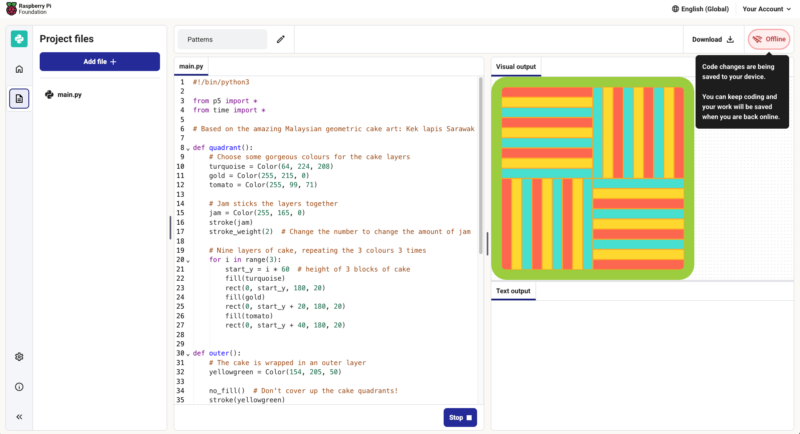
Our free, browser-based Code Editor now keeps working when your internet connection doesn’t. If your connection breaks in the middle of a lesson or a project, you can carry on writing and running your code without disruption, even if the page is reloaded.

An unstable internet connection is a minor annoyance when you’re reading a web page, but it’s a much bigger problem when you’re 20 minutes into creating a program.
Until now, losing your connection while using the Code Editor could mean losing your work: if you refreshed the page at the wrong moment, you might have seen a blank screen or a browser error instead of your program.
When we wanted to understand better what learners and educators around the world need from the Code Editor, we carried out research in countries including India, Kenya, and South Africa. One topic we explored was the availability and reliability of internet connections in metropolitan and rural areas. While it was no surprise that internet access is often slow, unreliable, or expensive in rural areas, we learned that issues related to electricity supply, such as load-shedding and brownouts, are also prevalent in metropolitan areas. All this shapes what is realistically possible in a programming activity using an online editor.
And connectivity issues can occur in any school computing lab where 30 learners are all accessing the same WiFi at once, or for a Code Club running off a mobile hotspot in a community centre, or for someone finishing their homework on patchy mobile data.
That’s why it became a priority for us to improve the Code Editor’s offline support by making it resilient to disconnection.
As we describe in our recently shared draft principles for safe and responsible education technology, one of our commitments is to design for diverse needs, abilities, and contexts — including not to assume constant internet connectivity. This Code Editor update is a small, practical piece of that commitment.
The Code Editor was built with resilience in mind from the start, for example running code in your browser rather than on a server, and saving your project locally on your device as you go.
Our recent additions ensure that once you’ve opened the Code Editor while online, your browser holds on to even more of the parts you need to keep coding without a connection. Now if you go offline midway through using the Editor:
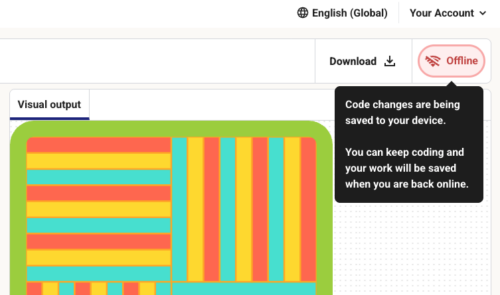
This update is built on a service worker, a script your internet browser runs in the background. When you first load the Code Editor, the service worker stores the files the Editor needs in your browser’s cache. If the network connection then breaks, the service worker serves those stored files instead of trying and failing to fetch them. When you come back online, it automatically refreshes the cache so you’re not left running old files.
The Code Editor isn’t a full offline app that you install. It’s a browser-based app that we have now upgraded to better cope with losing its internet connection, which means:
We’ll keep working to extend what parts of the Editor work offline.
The Code Editor works in your browser with no setup and will always be free for educators and learners. We hope this update makes it more useful for people in lots of different settings.
The update is one of those features some people will never notice, which is rather the point: it should feel like nothing went wrong. If your connection is unreliable and you try out the updated Code Editor, we’d love you to tell us whether or not it works well for you.
We would like to thank Cisco for the generous funding that made this work possible.
The post Keep coding when your internet drops: Offline support in the Code Editor appeared first on Raspberry Pi Foundation.
We love hearing from members of the community and sharing the stories of amazing young people, volunteers, and educators who are using their passion for technology to create positive change in the world around them.
Last year, we shared the story of Douglas, founder and director of Oasis Mathare, an organisation using technology to open doors for young people in one of Nairobi’s largest informal settlements.
In our latest community story, we meet Douglas again, this time alongside the mentors and young people at the heart of Oasis Mathare’s Code Clubs.
Together, they share what coding really means for a community where most young people don’t finish formal education, and where the opportunity to learn a new skill can genuinely change the course of a life.
Douglas has always been clear about why technology sits at the heart of everything Oasis Mathare does.
“Technology does not have a boundary. It knows no gender, no race. As long as you have access to a computer, you have access to the internet, and you’re being guided, the opportunities are limitless.”
This belief didn’t come from his own journey with formal education — it came from an internet cafe and a lot of curiosity and independent learning. Douglas grew up in Mathare knowing that most young people there were not likely to finish formal education. Rather than seeing that as inevitable, he saw it as a hurdle to overcome.
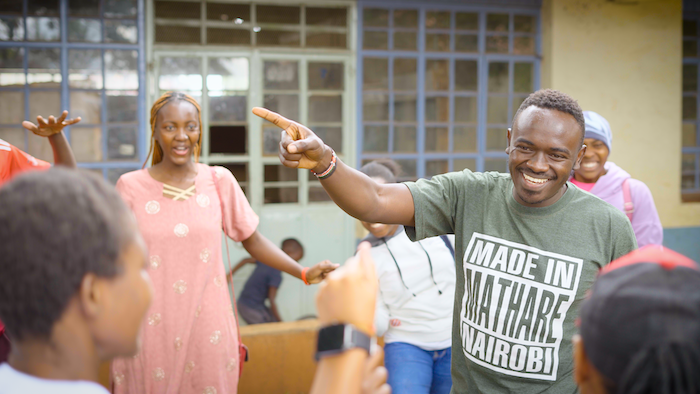
“I used to go to a nearby internet café where I learned some basic graphic design and got my first employment with no formal training. And I realised it’s really possible to gain a decent livelihood with just skills.”
Oasis Mathare now runs Code Clubs in schools and at its own centre, introducing children to programming long before they might encounter it anywhere else. Code Club and the Raspberry Pi Foundation’s learning pathways have become key drivers of the positive impact.

“The resources that we use from [the Foundation] are structured in a really creative way to help kids learn. Initially we had developed curricula to run a Code Club, there were some missing pieces, but now with the Raspberry Pi Foundation pathways, it has sort of bridged the gap that we were facing.”
Perhaps the most powerful thing happening at Oasis Mathare right now is the pipeline forming from learners to leaders. Many young people who come through Code Club go on to volunteer, becoming role models for the children sitting where they once sat.
“It feels so nice seeing students becoming mentors. They act as role models to the Code Club participants. As they are being mentors, it improves their communication and delivery. We are giving them opportunities to work with us to sharpen their skills so that they can get to a greener pasture.”
Keziah, a mentor, shared what drew them to Code Club:
“Being idle around the community can lead to so many negative impacts, so I decided to join Code Club to volunteer, hoping to have a better connection and career growth.”
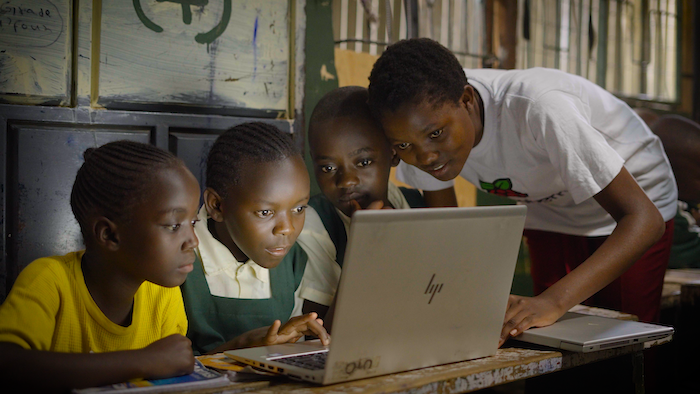
Faith, a student and mentor, shared a key discovery:
“My thought was like coding is only for genius kids and the smart ones. But I will encourage a young learner to actually partake in this. Coding is not hard. It’s actually fun.”
Hope, another mentor, shared just how impactful being a part of a young person’s journey can be:
“The moment the kids realised they belong to a Code Club is when I see their face light up when their projects run. They made me feel achieved. They made me feel, as a facilitator, as a good mentor. And that’s changed me.”
It’s a reminder that Code Club isn’t just about code. It’s about what happens to a young person’s sense of themselves when they build something that works.
Douglas shared his wish for any young person living in an underserved community who feels like their future has already been written for them.
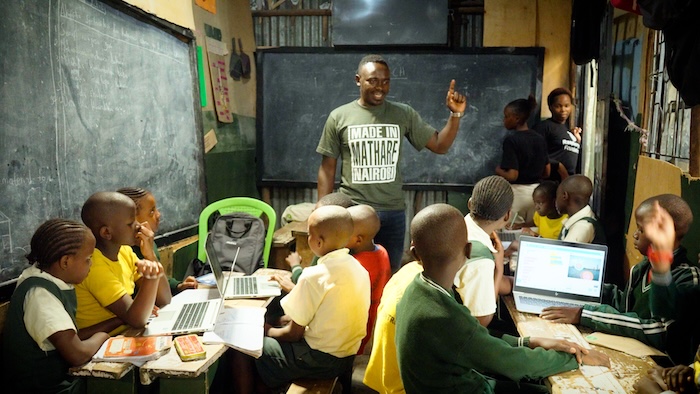
“For any young person from Mathare or any other underserved community around the globe who feels that their future is limited, I would like to tell you that it is really possible. It is really possible to change your life, as long as you have a positive mind, you have hope, and you’re working hard.”
Douglas and the team at Oasis Mathare are proof of what’s possible when young people have access to learning resources, guidance, and belief. You can find out more about their work at oasismathare.org.
If their story has inspired you to bring coding to young people in your own community, Code Club makes it straightforward to get started, with free resources, training, and a supportive global community behind you. Find out more at codeclub.org.
The post Celebrating the community: Douglas and Oasis Mathare appeared first on Raspberry Pi Foundation.
4 years ago I decided to start a new CoderDojo in my community. The logic was simple: to provide the best support I could to the CoderDojo community, I wanted to understand what it was really like to be a CoderDojo Champion. And so, with the help of local volunteers, Selby CoderDojo was born. We had an amazing response from the community, we’ve been running every month since then to meet demand, and we’ve been the catalyst for the launch of six other local clubs reaching hundreds of young people every month.
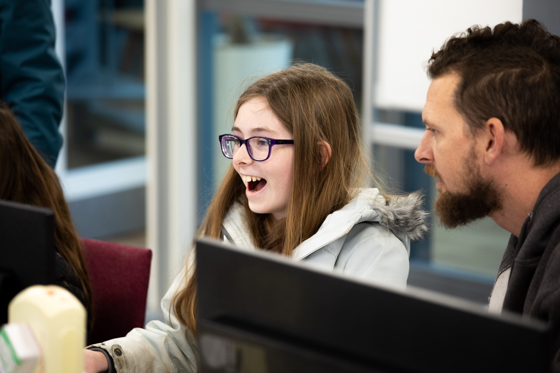
This month, Selby CoderDojo celebrated its 40th Dojo event. 40 opportunities for young people to come together, have fun, learn new skills and build new creations. 40 opportunities to see that moment a young person lets out a scream of joy, claps their hands, and jumps up and down when they turn on an LED for the first time. 40 opportunities for young people and parents to genuinely collaborate on a project, and 40 opportunities to see young people grow as they find their voice and proudly show off their new creations to a room full of people. When you create a space for young people to have fun and get creative with technology on their terms, there’s so much joy to see.
This year we celebrate 15 years since the first-ever CoderDojo event in Cork, Ireland. I want to say a huge thanks to co-founders James Whelton and Bill Liao for starting a movement that embraces the power of non-formal education and continues to impact so many young people, including those right here in my community in Selby. We also owe a massive thank you to every Mentor, Champion, supporter, funder, parent, and of course every single Ninja past and present who have made CoderDojo what it is.
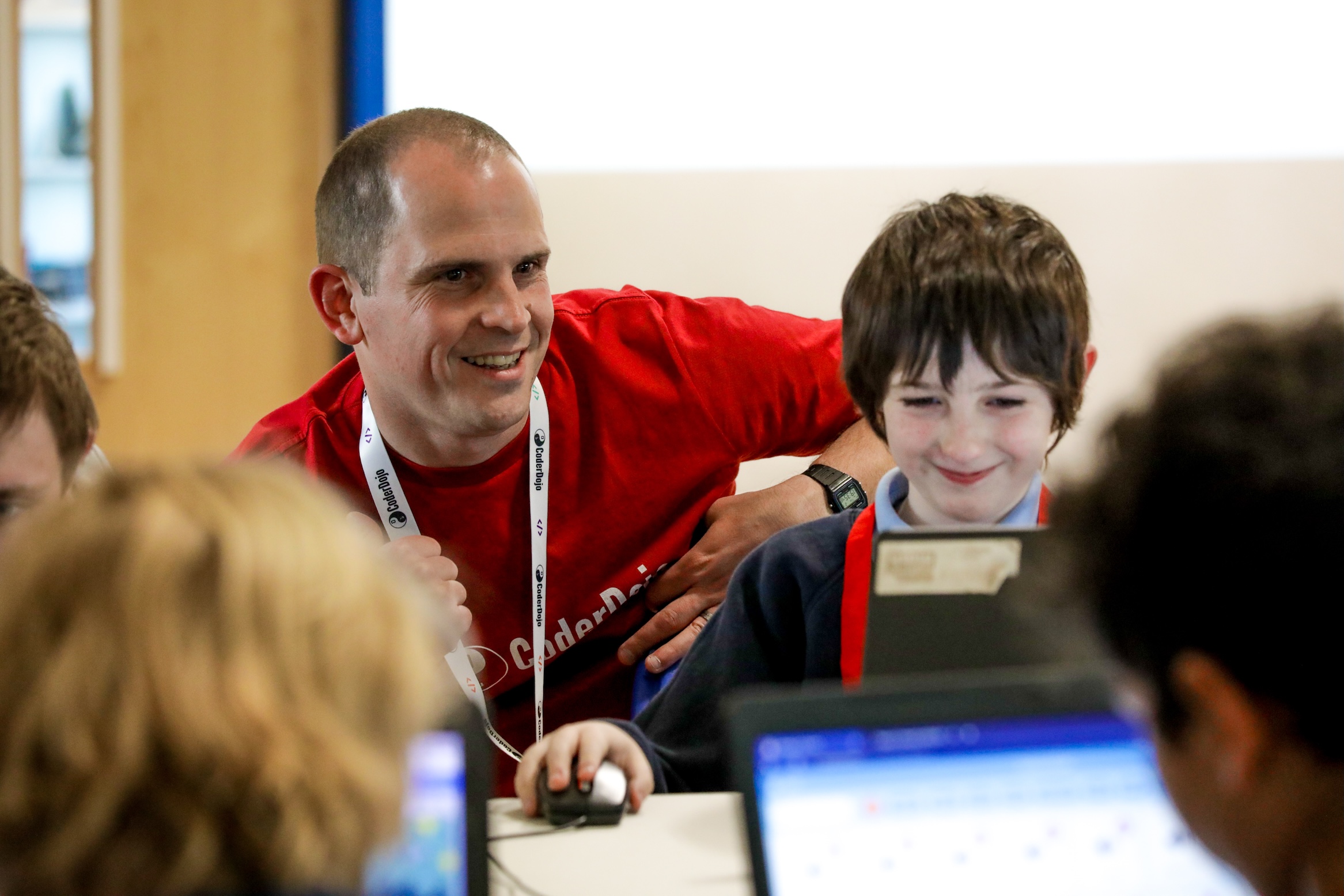
Today there are over 600 active CoderDojos running around the world, creating opportunities for tens of thousands of young people. CoderDojos are part of the Code Club movement, the world’s largest coordinated network of free coding clubs for young people, with over 10,000 Code Clubs meeting monthly.
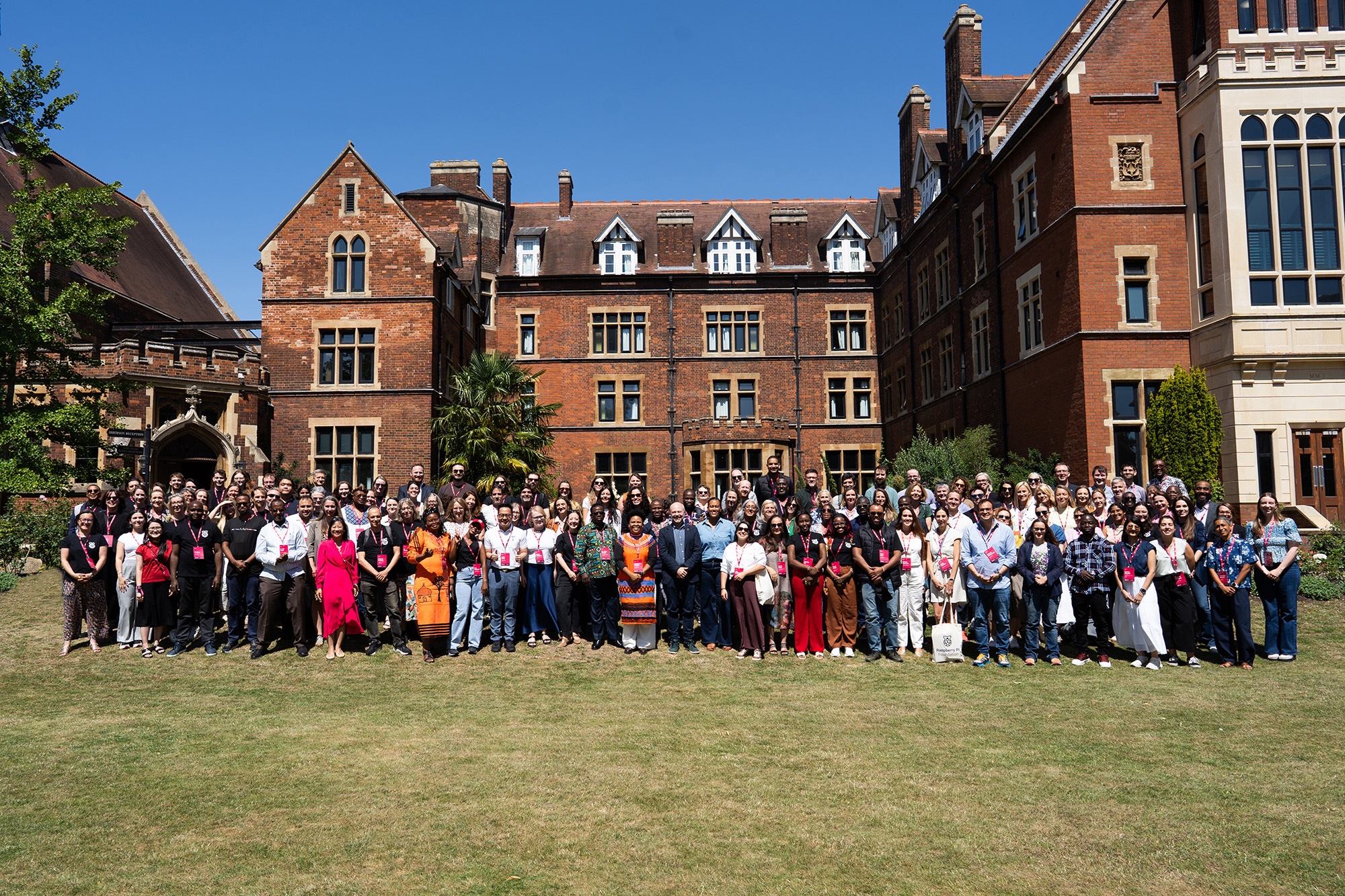
Earlier this month we held Raspberry Fields, our first global partners summit in Cambridge. It was great to have representatives from Dojos around the world join in important conversations about the future of computing education and the impact of AI. Undoubtedly schools play a significant role in preparing young people for the future, but not every child thrives at or even attends school. Every conversation, panel discussion, and workshop at Raspberry Fields reminded me that the original CoderDojo approach — championing non-formal education and embracing fun, creativity, collaboration, and openness — is still immensely important. I’m really proud that these values remain a core part of CoderDojo and the wider Code Club movement today.
Raspberry Fields was a useful reminder that even in the age of AI, it’s imperative that we encourage and enable young people to learn to code. We need to help young people understand, question and shape the AI systems affecting their lives, and we need to think carefully about how we reach young people who can’t or don’t access school. We need even more clubs that will continue the mission that CoderDojo began.
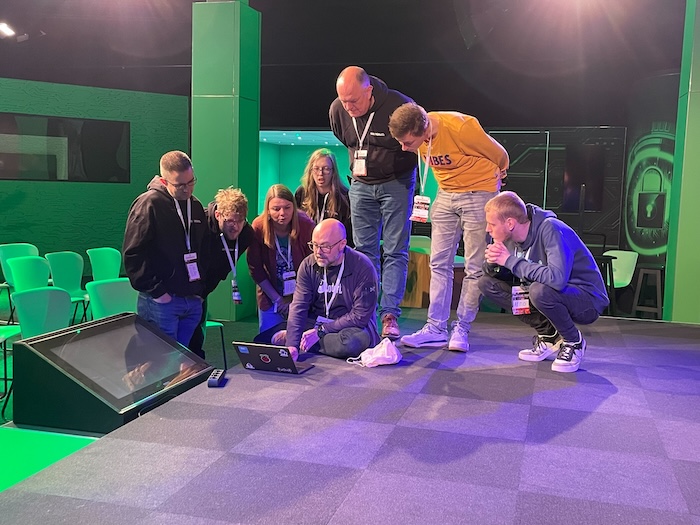
Launching a CoderDojo is one of the most rewarding things I’ve ever done. I’m proud to be part of both CoderDojo and Code Club, and I’m proud that we continue to support all of our clubs, no matter what name they choose. If you’d like to join or launch a club in your community, head to the Code Club website to get started — I promise you won’t regret it!
Thank you to James, Bill, and everyone who has been part of the CoderDojo journey. Be cool!
PS For those of you reading this in the community in Ireland, where CoderDojo first began all those years ago, I can’t wait to hear your experiences and learn together in Athlone at Meet, Learn, Make this October.
The post From one club to a global movement: Celebrating 15 years of CoderDojo! appeared first on Raspberry Pi Foundation.
There’s something really special about a Code Club. It’s a unique space for young people to get creative with technology on their terms, explore what interests them, and learn through experimenting and having fun. But speak to any Code Club leader and they’ll tell you: Code Club delivers so much more than just coding skills.
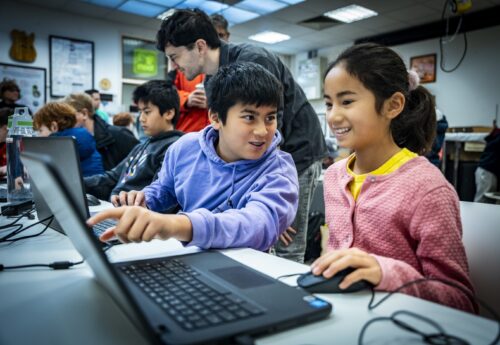
In the thousands of free Code Clubs across the world, you’ll see young people not only make amazing tech creations, but also grow as people. You’ll see young people find their voice and grow in confidence as they present what they’ve made to a room full of friends and parents. You’ll see them show a problem in their code to their friends and work as a team to fix it. You’ll see young people come up with the most creative digital solutions to challenges they see around them.
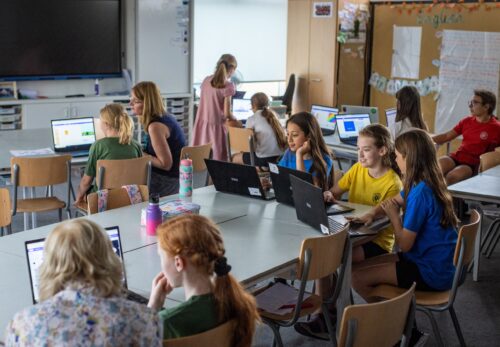
We’re delighted that the UK government recently recognised Code Club as a key resource to help schools enhance their enrichment offer. This confirms what the community tells us, and what independent research shows: that Code Club works. Not only does it help young people develop their programming skills, but it also builds life skills including confidence, resilience, and problem solving. And Code Club is completely free. Schools, libraries, and community centres can set up Code Clubs using their existing equipment, and register their clubs to access all our free resources and support for getting started and running successful club sessions for the long term.
And what about AI? There’s no getting around it, at the moment AI dominates almost every conversation about computing education, and this includes enrichment and non-formal activities too. All young people should have the power and agency to understand, question, and shape the AI systems increasingly affecting their lives. We believe that kids still need to learn to code in the age of AI, and we’ve created resources and coding projects for Code Clubs that help young people understand how AI tools work, and how to use them carefully.
Last year we announced our ambition to support every school and library in the UK to set up a free Code Club so that young people can develop the skills and knowledge they need to thrive in the age of AI.
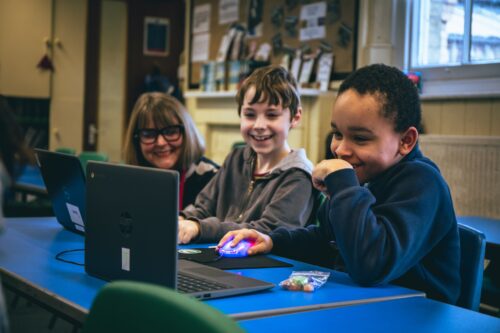
Now we’re pleased to announce a package of free support for UK trusts and local authorities that are interested in becoming growth partners and setting up Code Clubs across their networks. If you join us as a growth partner, you will get:
If you would like to find out more about how Code Club can enhance your enrichment offer, how easy it is to get started, and how we can help, please get in touch!
The post Enhancing your enrichment offer? Code Club is the answer appeared first on Raspberry Pi Foundation.
At the Raspberry Pi Foundation, we believe that alongside learning to code, a crucial part of computing education is building AI literacy skills. Amidst the rapid pace of development and the growing impact of AI tools, it is increasingly important for educators everywhere to feel equipped to address the topic of AI with their learners, to help young people understand their world, be responsible users of AI technologies, and prepare to become the future creators of these technologies.
We work at the leading edge of AI education, combining research and industry expertise with practical classroom experience to define what AI means for computing education, and how to best support teachers and learners to understand these technologies.
Whether you are a teacher, a Code Club mentor, or a parent, we have a wide range of free resources to help you teach your young people about AI, and learn more about it yourself.
We offer a variety of teaching materials to help you bring AI into your setting. You do not need to be a professional educator or have a background in computer science to use these resources, and we provide everything you need to guide your learners with confidence.
Experience AI is our free AI literacy programme, developed in collaboration with Google DeepMind. Through ready-to-use classroom resources, including lesson plans, presentations, and hands-on activities, the programme helps educators all over the world teach their learners about how AI works, as well as its wider social and ethical implications. You and your learners will investigate AI tools, explore real-world uses of AI, and engage with critical issues such as bias, fairness, and transparency, helping learners to understand AI and use it responsibly. The lessons currently available are designed for learners aged 11–14, and we are releasing resources for other age groups this year.
To help bring Experience AI to more educators and learners around the world, we work with a global network of partner organisations, who help us provide tailored and translated resources and offer localised, high-quality training and support for educators in their regions. Experience AI resources are currently available in 19 languages, and have already been downloaded in more than 180 countries. In recognition of its impact, in 2025 Experience AI was named a laureate of the UNESCO King Hamad Bin Isa Al-Khalifa Prize for the Use of ICT in Education.
“[Experience AI] has definitely changed my outlook on AI. I went from knowing nothing about it to understanding how it works, why it acts in certain ways, and how to actually create my own AI models and what data I would need for that. I would 100% recommend others who don’t know much about AI to try it out.” – Student, Arthur Mellows Village College, UK
If you are looking to introduce school-aged young people to AI with short, beginner-friendly coding and digital making projects, take a look at our collection of Code Club projects about AI and machine learning. These projects are a great way to spark curiosity and investigate how AI and machine learning works.
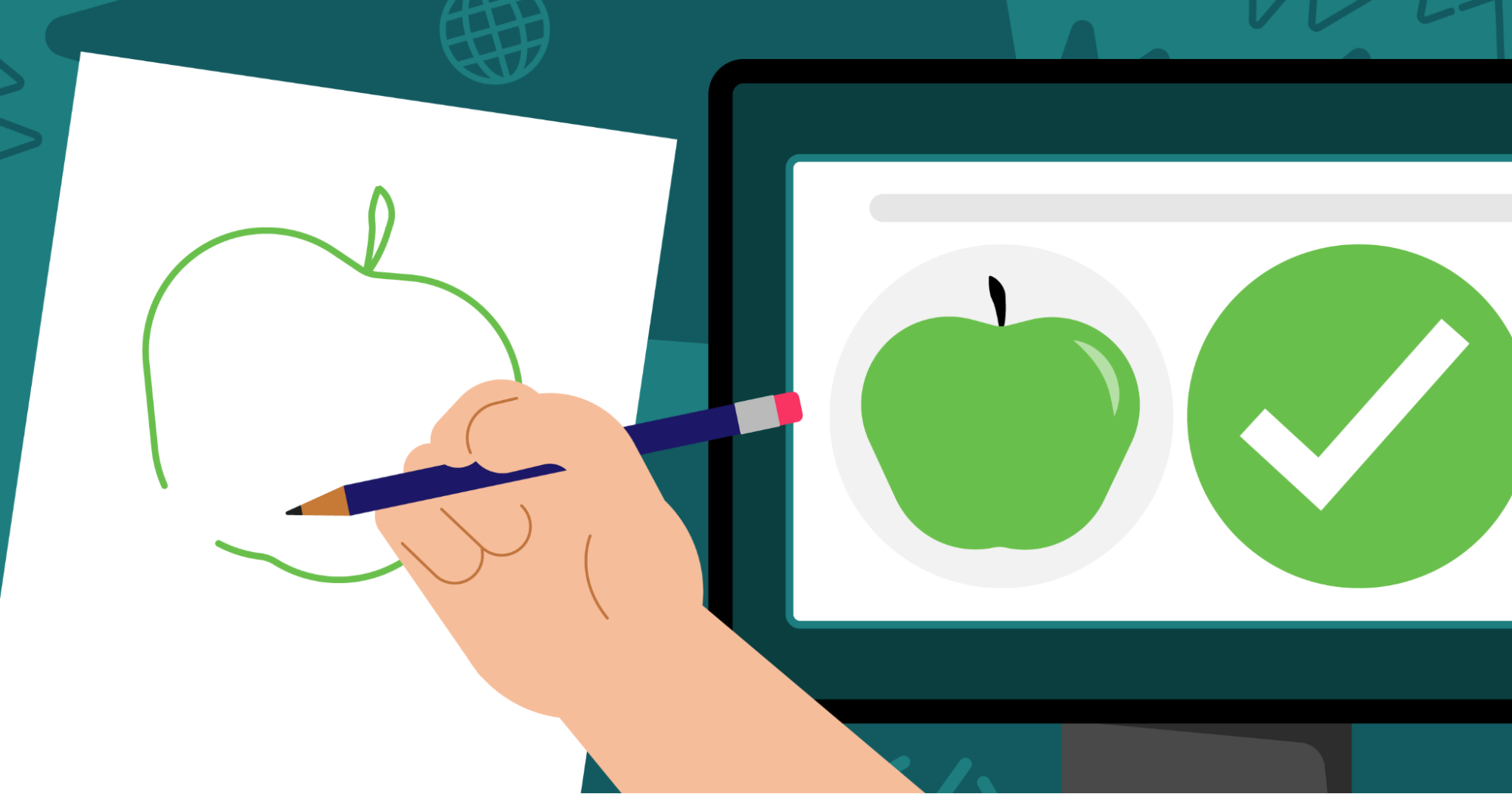
In the projects, learners get hands-on with a range of AI tools and platforms, and explore different applications of AI, such as image recognition, voice recognition, and (for learners aged 13 and over) generative AI. For example, in Doodle detector, learners use Machine Learning for Kids with Scratch to create a machine learning application that can identify what they have drawn.
The projects feature clear step-by-step instructions, and many include video tutorials, to help learners work at their own pace and in a style that suits them. We also provide mentor guidance to help you prepare.
For resources to support older learners to build their understanding of AI, head to Ada Computer Science. Ada Computer Science is our free online platform for computer science students and teachers, developed in partnership with the University of Cambridge. It provides comprehensive resources for learners aged 14–19 across the breadth of computer science, including detailed learning materials about AI and machine learning. The materials include helpful definitions, clear explanations, and carefully designed self-marking questions to support young people’s learning.
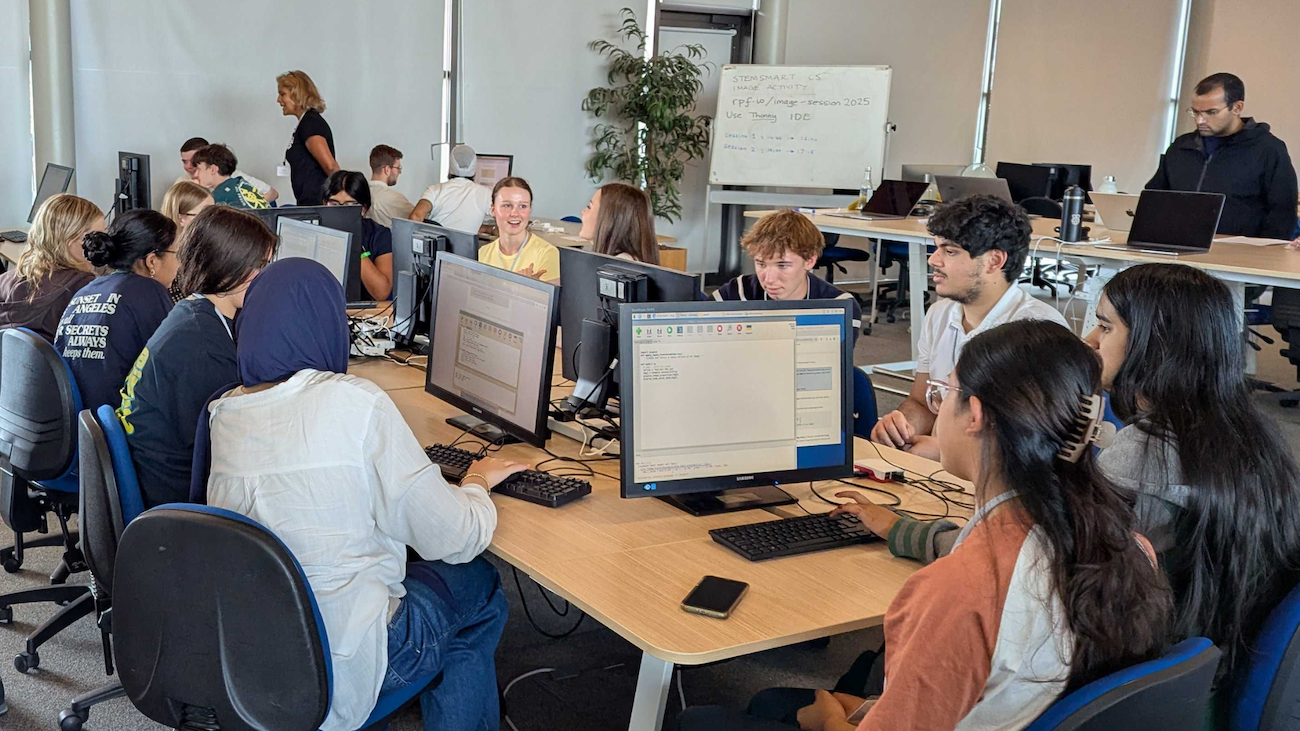
To help you build your knowledge around AI technologies and grow your confidence to teach your young people about this important topic, we offer a range of learning resources and professional development opportunities, all for free. They are open to everyone, so we invite you to dive into any that interest you.
For flexible, self-paced learning options, take a look at the following free online courses, which cover a range of topics within AI:
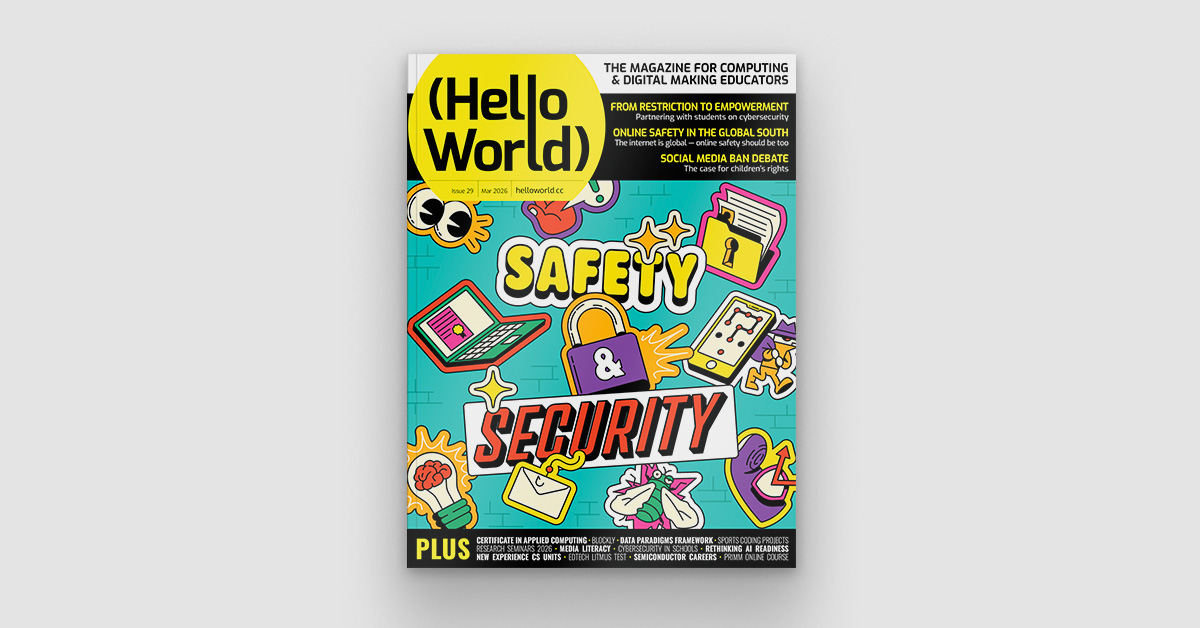
You might also be interested in Hello World, our free magazine and podcast for educators teaching computing and AI. Each magazine is packed with resources, discussions, news, and ideas, and you can subscribe to receive each issue as soon as it is released. The next issue, coming in July, will focus on critical thinking in the age of AI. You can download our previous issues to explore articles about a variety of topics within AI too. What’s more, you can continue your learning with the Hello World podcast, which accompanies the magazine and features discussions with educators and researchers from around the world. Visit the podcast page to discover previous episodes exploring vibe coding and programming education, AI education around the world, and more.
To learn about research-informed teaching strategies to help you as you explore AI with your learners, you can read these short Pedagogy Quick Reads:
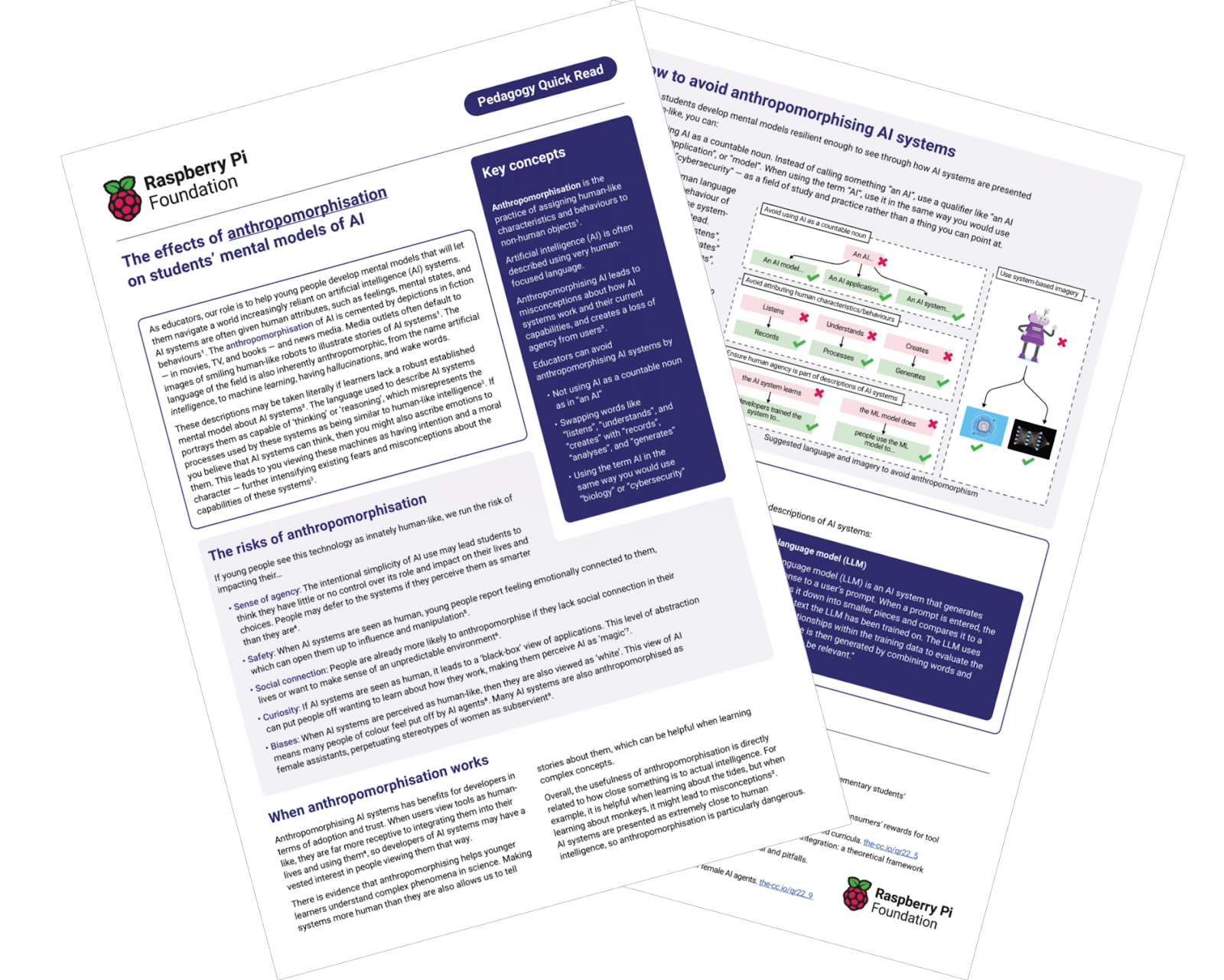
For more insights from computing education research, you can join our monthly online research seminars. Our 2026 research seminar series focuses on teaching about AI across the curriculum, delving into research on teaching and learning about AI from disciplines beyond computer science, including the arts, sciences, and humanities. Our next seminar takes place on 16 June, and you can catch up on previous seminars from our current series here. You can also explore our archive of recordings from previous seminar series, with themes including teaching about AI and data science, teaching programming (with or without AI), and more.
All of these resources and learning opportunities are available to anyone interested in educating young people about AI, anywhere in the world. We hope they help you gain understanding, confidence, and inspiration to guide your young learners to engage with AI safely and responsibly, and to learn valuable skills that will help them navigate their world.
“Let the students explore, advance, and grow. And who knows — maybe one of our students will go on to become a mentor or leader in this field someday.” – Ana Judith Zavaleta, computer science teacher, Mexico, speaking about Experience AI
If you are in the UK, you can also use these resources to get involved with the first-ever AI Awareness Day, a new nationwide campaign designed to build AI literacy across UK schools, which is taking place on 4 June.
The post Support your young people with our AI literacy resources appeared first on Raspberry Pi Foundation.
Imagine places for young people to not just learn to use technology but to understand it, shape it, and build with it. That’s what you can create by partnering with the Raspberry Pi Foundation on Code Club, the global movement of computing clubs where school-age young people develop the confidence to create with digital technologies.
We’re looking for organisations worldwide to join us as new Incubator Partners and bring Code Club to young people in their regions.
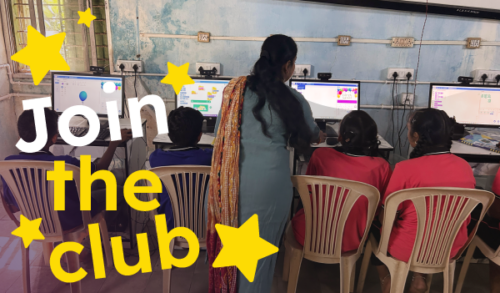
Through our non-funded 12-month global Incubator programme, we support a diverse network of organisations to establish and grow free Code Clubs in their communities. By combining your local knowledge and community connections with our tried and tested projects, training, and support, you can build something that lasts and grows.
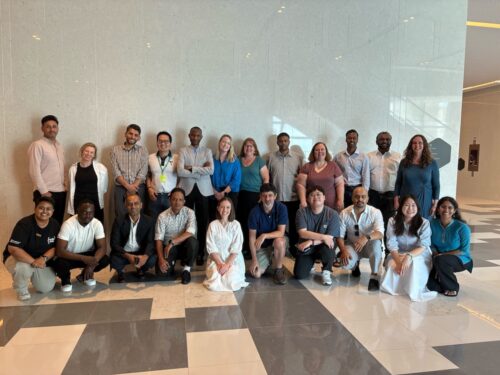
As a partner, you’ll join a global network of organisations all working toward the same goal: giving young people access to free, inclusive, and inspiring opportunities to learn coding and digital making.
“Many of our partners are non-profit and volunteer-led, driven by a real commitment to their communities. It’s incredibly inspiring — and we’re excited to keep growing this global network of partners so even more young people can benefit.” – Sonja Bienert, Senior Global Partnerships Manager
By joining, you’ll get partner-specific access to events like global meetups, online workshops, and Coolest Projects, as well as materials to support your fundraising. Your Code Clubs will be able to use our wide range of free, creative projects for young people, including activities about AI, and activities that support clubs with limited devices. And you’ll be able to build collaborations with other partners in the network.
Across the world, our partners are already transforming lives.
In Aruba, Full Stack Vision Foundation has grown Code Club from a single library session into a thriving network of ten clubs:
“Giving young people the ability to make, create, and sustain technological solutions is what the Caribbean wants.” – Bruce Harms, Founder and President of Full Stack Vision Foundation
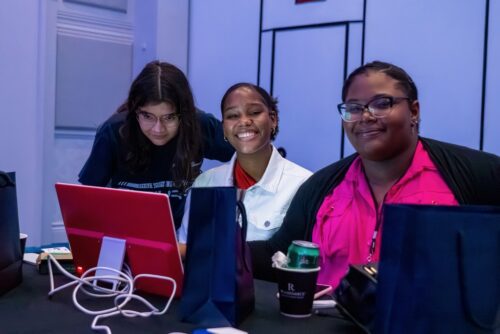
By adapting projects to reflect local culture — like reimagining a Scratch project around aloe vera instead of sugar — the team at Full Stack Vision ensures young people see themselves in what they’re creating.
In Sudan and Egypt, Orientations Training Centre has reached over 450 active members through a mix of in-person and online clubs:
“I learned that coding is not just about computers — it’s about solving problems and helping people.” – Yasmin, Code Club attendee
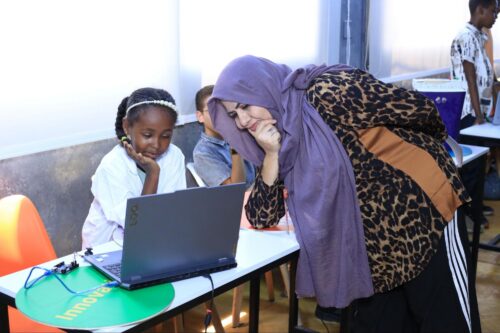
“Start small but dream big. A Code Club can change lives — not just by teaching coding but by nurturing problem-solvers, innovators, and leaders for the future.” – Abdelmoneim Mohammed, CEO of Orientations Training Centre
Their work shows how getting creative with digital technology can unlock confidence, leadership, and ambition.
In Sri Lanka, STEMUP Educational Foundation started with a single Code Club in a public library and has grown into a nationwide movement supported by more than 1,500 volunteers, reaching young people across both urban and rural communities.
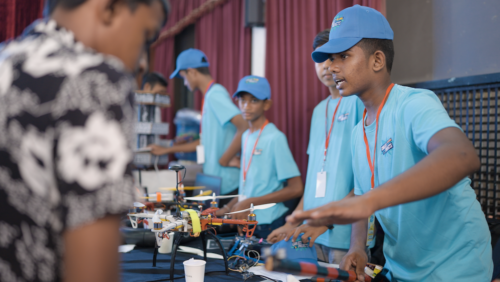
After attending a Coolest Projects event for young tech creators during the partner meetup we held in Malaysia, STEMUP brought the tech showcase to Sri Lanka for the first time in 2024, giving young people the chance to share their creations and connect with others. The event sparked huge excitement, with schools even organising transport so students could take part.
“That kind of energy… because they don’t have these opportunities to showcase what they have built, connect with like-minded people, connect with industry… I think that’s a really unique opportunity kids are having.” – Prabhath, founder of STEMUP Educational Foundation
Every partner brings something unique: local insight, cultural context, and a deep understanding of their community. Together, we’re building a global movement that is inclusive, creative, and full of possibility.
“I feel part of something bigger — a worldwide movement where kids everywhere are learning to create with technology, not just consume it. Being a global partner means we can learn from what’s working in other countries, adapt those ideas to Bangladesh, and also contribute our own innovations back to the network. The global connection gives Code Club Bangladesh more recognition locally — it reassures schools, volunteers, and funders that we’re part of a trusted, established initiative.” – Code Club Bangladesh partner
You can register today to start your Code Club Incubator Partner application. If you’re passionate about empowering young people and ready to grow a network of computing clubs in your community, we’d love to hear from you.
Fill in the registration form to take the first step towards becoming an Incubator Partner:
We can’t wait to welcome the next group of Code Club Partners.
The post Start small, dream big with Code Club: Become an Incubator Partner appeared first on Raspberry Pi Foundation.
Across Glasgow’s libraries, Code Clubs are opening doors for young people to explore creativity, problem-solving, and confidence through coding. Behind many of these sessions is Claire Quigley, who supports volunteers and helps Code Clubs thrive in community spaces across the city.
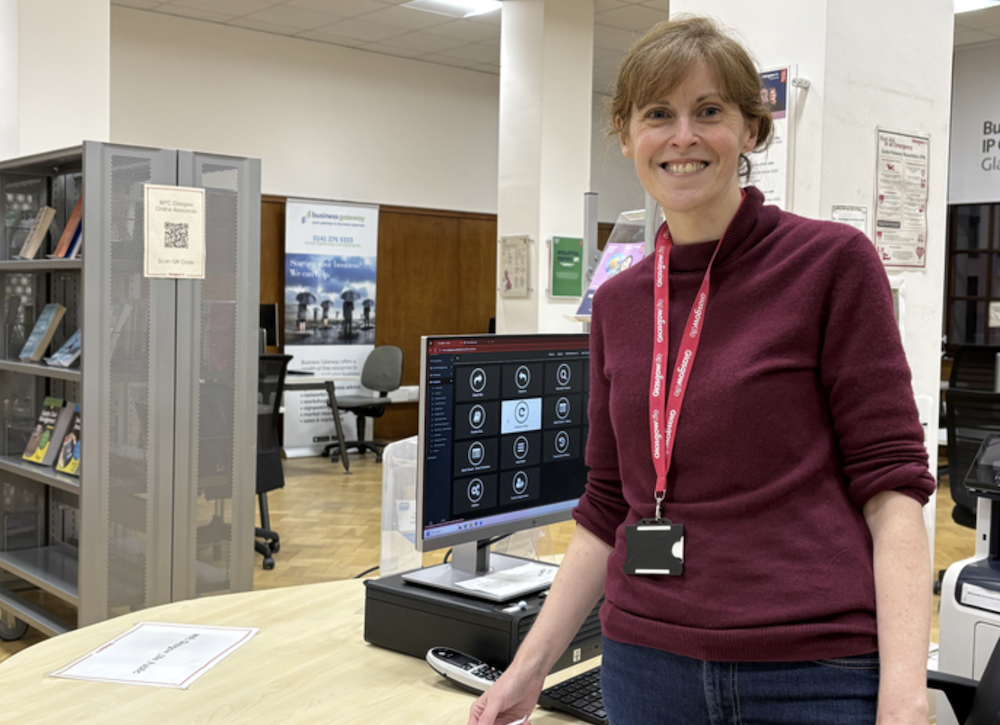
Claire’s story challenges the idea that there is only one route into technology or mentoring. With a background in computer science and a passion for teaching, she now helps create welcoming, inclusive environments where young people — and volunteers — from a wide range of backgrounds can belong.
Claire’s Code Club journey began long before she worked in libraries. With a degree and PhD in computer science, she spent time in academia before finding her way to community-based learning and volunteering. Teaching runs in her family, and sharing knowledge has always brought her joy. That’s why, after being introduced to CoderDojo (part of the Code Club community) through a friend, Claire began volunteering at club sessions.
“I had always intended to work in academia but, working as a postdoc for a couple of years, realised it wasn’t what I wanted to do long term. CoderDojo sessions gave me and the other volunteers a chance to look at more adventurous coding topics, without the constraints of curriculum and the time-pressure that teachers have to contend with.
“We were also able to engage with children and young people who were struggling with the formal education environment for a variety of reasons. Doing well at something they enjoyed increased their confidence and was often a factor in helping them become more engaged at school.”
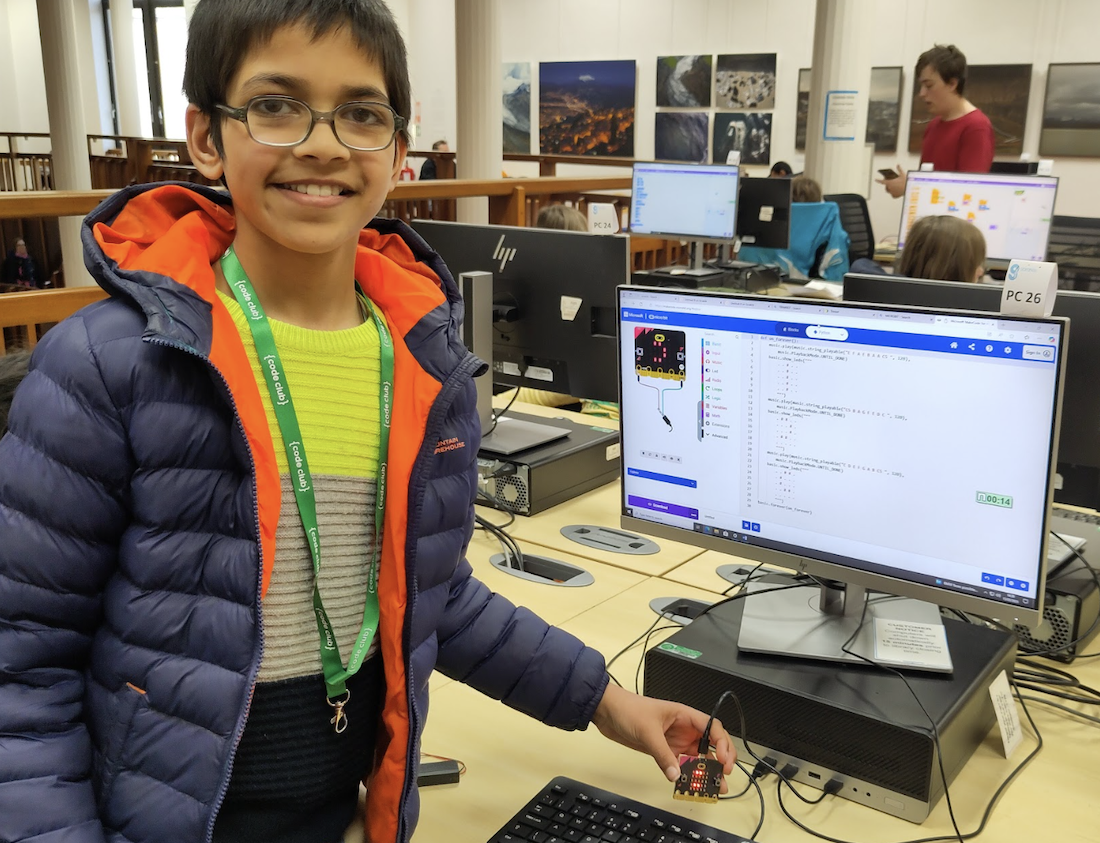
Becoming a Code Club volunteer eventually led Claire to her current role coordinating Code Clubs across Glasgow Life venues, including Mitchell Library, Gorbals, Drumchapel, and beyond.
“Working with Glasgow Life colleagues across libraries, communities and museums has given me the chance to connect with children, young people and adults in a non-threatening environment. Mixing coding with mediaeval manuscripts, wearable tech, poetry or electronic music has allowed people to approach a topic they hadn’t considered interesting or understandable and make some really original and fun things.”
Stepping into one of Claire’s Code Club sessions, you’ll find a mix of focus, laughter, and creative chaos. Young people gather around laptops in library spaces to build games and animations in Scratch, experiment with micro:bits, and help each other solve problems as they go.
Sessions vary by location and age group. Some run weekly, others every two weeks, and each has its own character — from younger children discovering coding for the first time to teenagers returning with ambitious ideas they want to bring to life.
“The clubs are quite varied, depending on location, size and the personality mix of the coders and volunteers. Some clubs are quieter, while others are very lively! Scratch features prominently in most clubs. The children really enjoy the way it allows them to bring in topics they’re interested in, design their own characters, or build games inspired by other games they’ve played.”
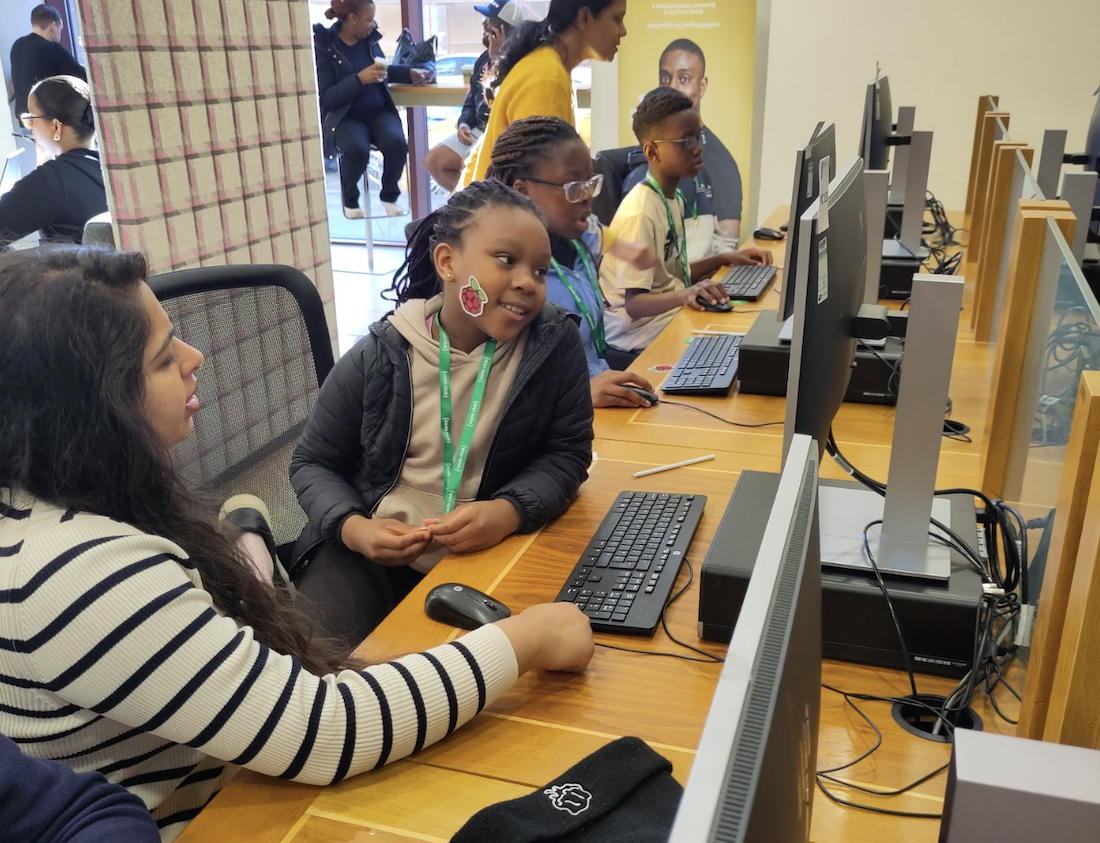
For Claire, these sessions are about more than learning to code. They’re spaces where young people practise problem-solving, learn to ask for help, and gain confidence in sharing their ideas.
“Some coders come with a friend or have made friends at the club. So there are often children working together on a project, chatting to each other about what they’re working on, or showing each other how to do something.”
Inclusion is core to Claire’s approach. From running all-girls sessions to supporting volunteers and young people with neurodivergence and other additional needs, her focus is on creating spaces where everyone feels welcome.
“One young coder who spends a lot of time in his local library after school, but can be a bit boisterous, agreed to come and join the club. Initially a bit hesitant, he soon displayed a real talent for solving coding puzzles.
“He was particularly proud when, encouraged to try the challenge level rather than skipping past it, he solved it quickly. We printed a Code Club ‘Problem-solving Champion’ certificate for him and he carefully folded it up to take home.“
Claire has seen firsthand how confidence can grow when people are given time, patience, and encouragement.
That sense of belonging doesn’t stop with young people — it extends to the volunteers who help make these spaces possible. For some volunteers, involvement in Code Club has been a stepping stone to employment, new skills, or a stronger sense of belonging.
Like many community programmes, Code Clubs in Glasgow were disrupted by the pandemic. It made one thing clear: clubs only work when volunteers are willing and supported to run them. With fewer library staff available to anchor sessions, rebuilding the clubs meant casting a wider net for volunteers. As a result, volunteers arrived with more diverse life experiences, ways of thinking, and approaches to problem-solving, which enriched the sessions and created more inclusive learning environments for young people.
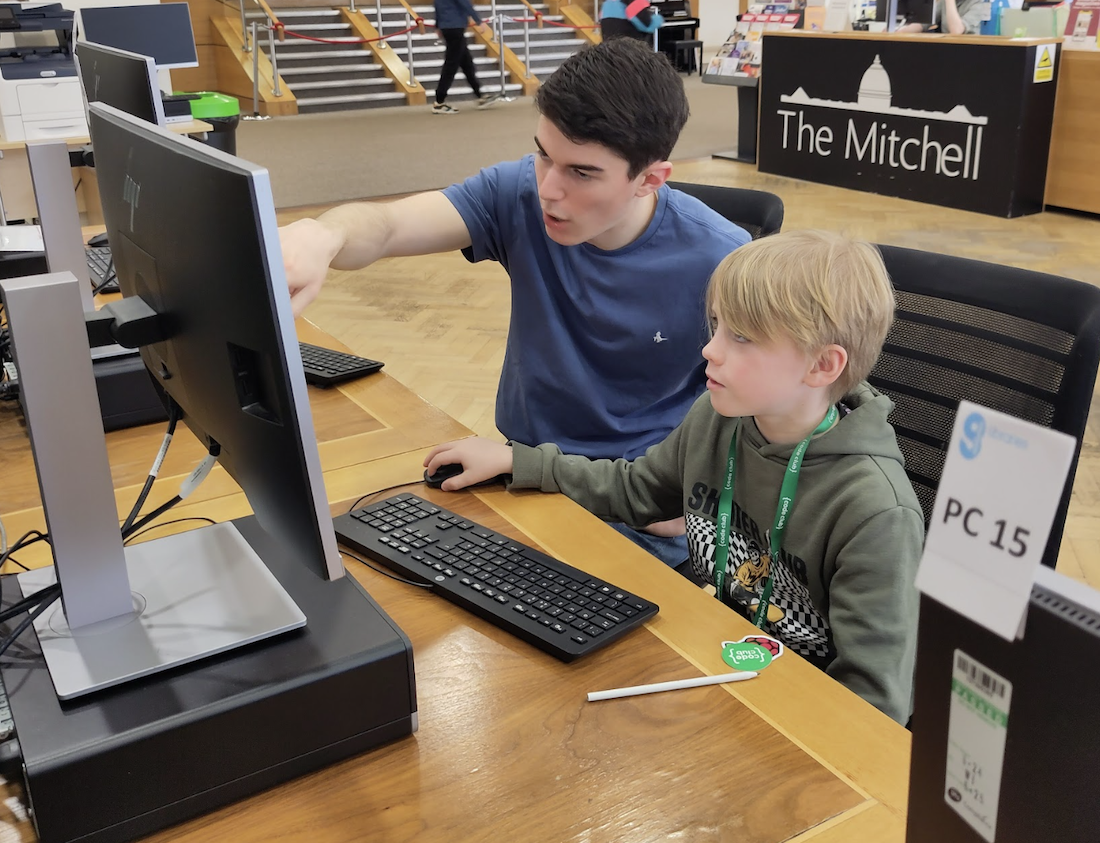
“I recruit mainly through the Glasgow Life volunteering website. I also advertise through STEM Ambassadors, via my contacts in local universities, colleges and tech companies, in the newsletter my colleague sends to students in the Glasgow Code Learning programme, and by putting up posters in libraries.
“I’m really keen to try and get a mixture of qualities in a team. I try to ensure at least one person is a confident programmer, who can help with trickier bugs and more advanced topics. However, I’m also keen to have volunteers who may not have so much of a technical background but are good at chatting to children and helping create a real sense of it being a club.“
One of the most important messages Claire wants to share is that there is no single type of Code Club volunteer. Students, career-changers, refugees, people returning to work, and neurodivergent people all bring valuable perspectives. While technical skills are helpful, Claire believes empathy, curiosity, and willingness to learn alongside young people are just as important.
“Finding out how to do something by searching online, asking other coders and the mentors is part of the code club experience (and the experience of being a professional programmer!) The main thing is not to be afraid to admit you don’t know something. Although this can be alarming at first, I’ve found the coders are happy to be told that I’ll look at it over the next week and report back. And that they should do the same so we can compare notes. And if they know how to do something that you don’t, they absolutely love explaining it to you!“
We asked Claire what she would say to someone who doesn’t see themselves as ‘technical enough’ but is curious about getting involved:
“The majority of library staff didn’t have any background in programming. They are simply happy to learn as they go along and help the children make their ideas come to life. In fact, one of these ‘non-technical’ staff ran a very popular and successful club and supported a team of coders to develop a project that [was chosen as a judges’ favourite] at Coolest Projects.”
As Code Clubs continue to grow and adapt, Claire hopes to see even more people step forward, especially those who might not immediately picture themselves in a mentoring or volunteering role.
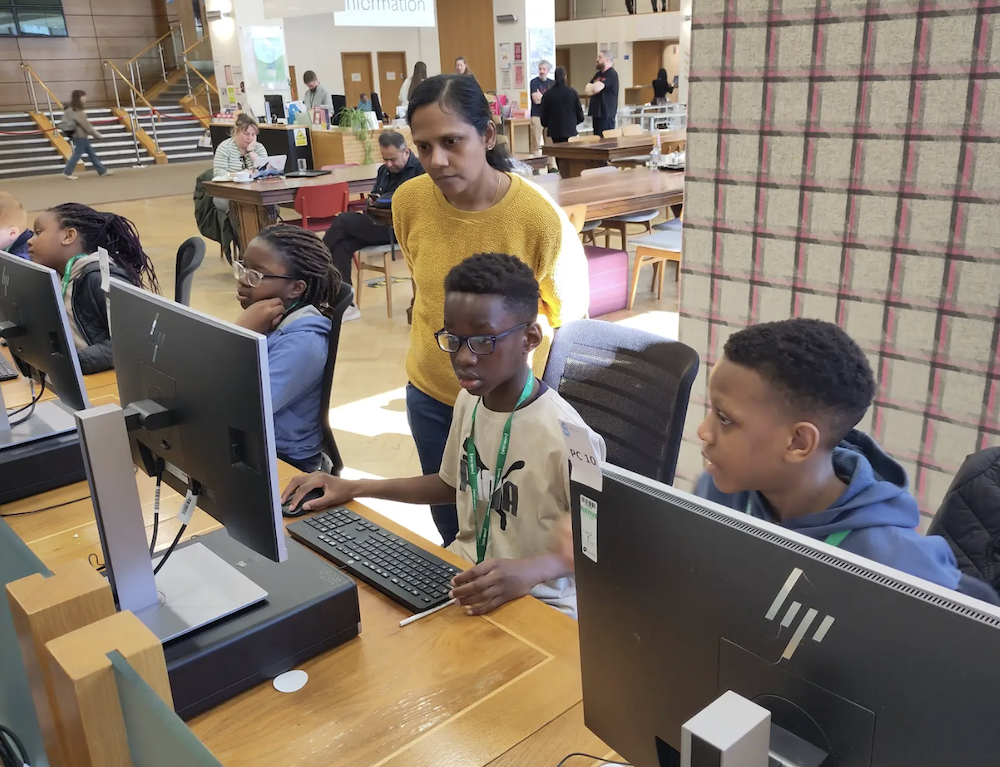
By keeping Code Clubs rooted in libraries and community spaces, it is possible to reach people across a wide range of backgrounds and circumstances.
Claire’s story is a reminder that community impact is built by people who care and that supporting young people with coding is about far more than technology alone. It’s about confidence, connection, and opening doors.
For anyone curious about supporting young people with coding, there are many ways to get involved. You don’t need to be an expert, as mentors support young people by encouraging curiosity, helping build confidence, and learning alongside them. If you’d like to find out more about what mentoring looks like and the different ways you can contribute, visit the Code Club mentor page to explore guidance, training, and next steps.
The post Many paths into mentoring: Building inclusive Code Clubs in Glasgow appeared first on Raspberry Pi Foundation.
Learning Python often starts with the same building blocks: variables, functions, and loops. However, once young people have learnt these essential foundations, they may be eager to grow their skills and start using Python to explore data and create something meaningful to them.
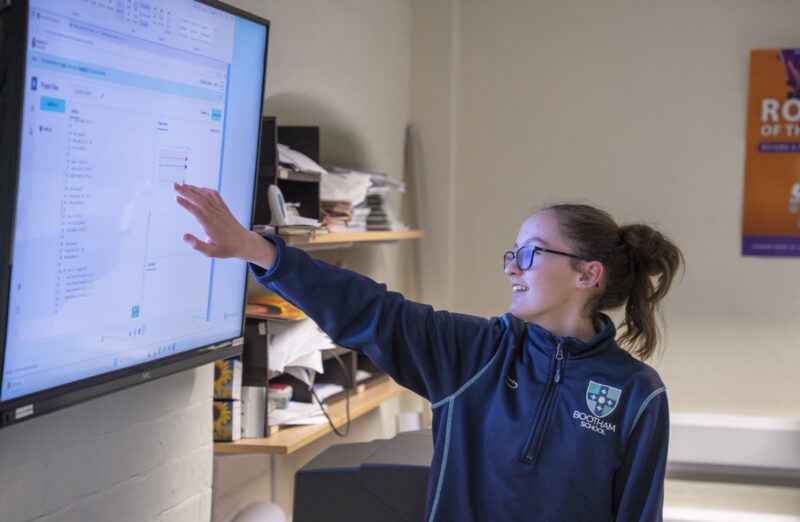
Our free ‘More Python’ project path helps learners move beyond the basics and use data to create impactful projects of their own.
Python is the most widely used programming language in the world, not just because it’s accessible, but because it’s powerful. It is used to analyse data, build models, create data visualisations, and explore important questions.

For young learners, this means learning Python can become more than a coding exercise. It can be a way to investigate topics they care about, analyse and understand information, and tell powerful stories about real-world issues.
Working with data helps learners see how coding connects to the world around them — and builds confidence along the way.
In our day-to-day lives, data is everywhere: in sports results, maps, and scientific research, to name only a few examples. Learning how to work with data helps young people develop skills that go far beyond programming, including:
Data also underpins many of the AI systems people use today. For example, large language models, used to build tools such as ChatGPT, are trained on vast amounts of data. Therefore, understanding how data is collected, organised, and used is an important part of AI literacy.
In Python, structures like lists and dictionaries make it possible to organise, analyse, and explore data in creative ways. Using these tools to build projects can help abstract computing concepts start to feel more concrete and meaningful.
The ‘More Python’ project path supports learners through three stages: Explore, Design, and Invent. Each stage builds skills while giving learners more ownership over what they create.
In the Explore stage, young people learn new concepts and build confidence in using data and core Python structures, such as lists and dictionaries. Projects include:
These projects help learners develop new skills, while exploring how Python can be used to analyse and explain real-world information.
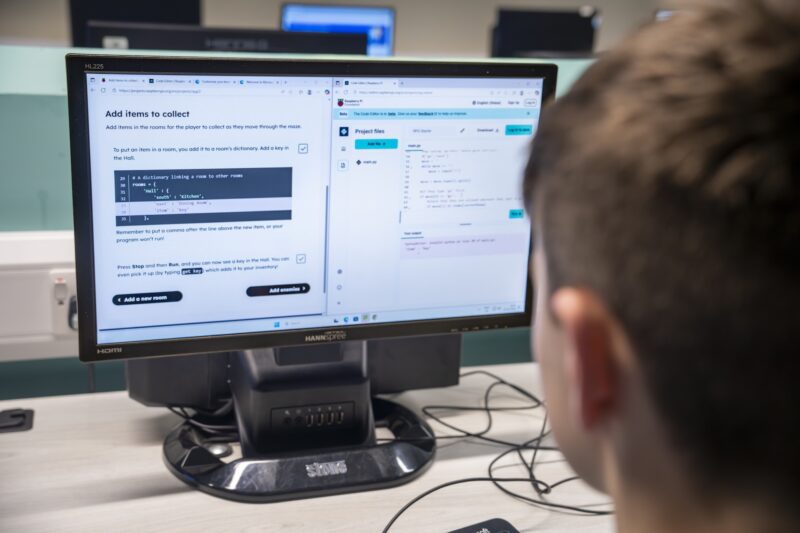
As learners progress to the Design stage, they start making creative choices about how their projects look and behave. In this stage, they:
Here, Python becomes a creative medium. As well as putting their new skills into practice, learners think about audience, interaction, and presentation to make their projects their own.
In the Invent stage, learners bring everything together. Using the skills they have built, they design and create a data visualisation on a topic they are passionate about. This final project gives learners the freedom to choose their data, shape their idea, and tell a story that matters to them.
By this point, learners are planning and creating their own projects, growing in confidence and independence.
If the young people you support have already learned the basics of Python, ‘More Python’ offers a clear and creative next step. The projects are designed to be accessible, and young people can work through them at their own pace, whether they are learning independently, at a Code Club, or in the classroom.
By working with data, getting creative, and making their own original projects, learners can build confidence and start to see what they can achieve with Python.
Alongside the ‘More Python’ project path, you can access hundreds of free coding projects on our Code Club Projects site. Find more projects to suit your learners’ interests, and support them to build their digital skills through creativity and making.
The post Levelling up with Python: Create with data appeared first on Raspberry Pi Foundation.
Every week, young people around the world gather in libraries, classrooms, community centres, and makerspaces to create with code. From Gujarat to Glasgow, Nairobi to New Jersey, the settings may differ, but the energy is unmistakable.
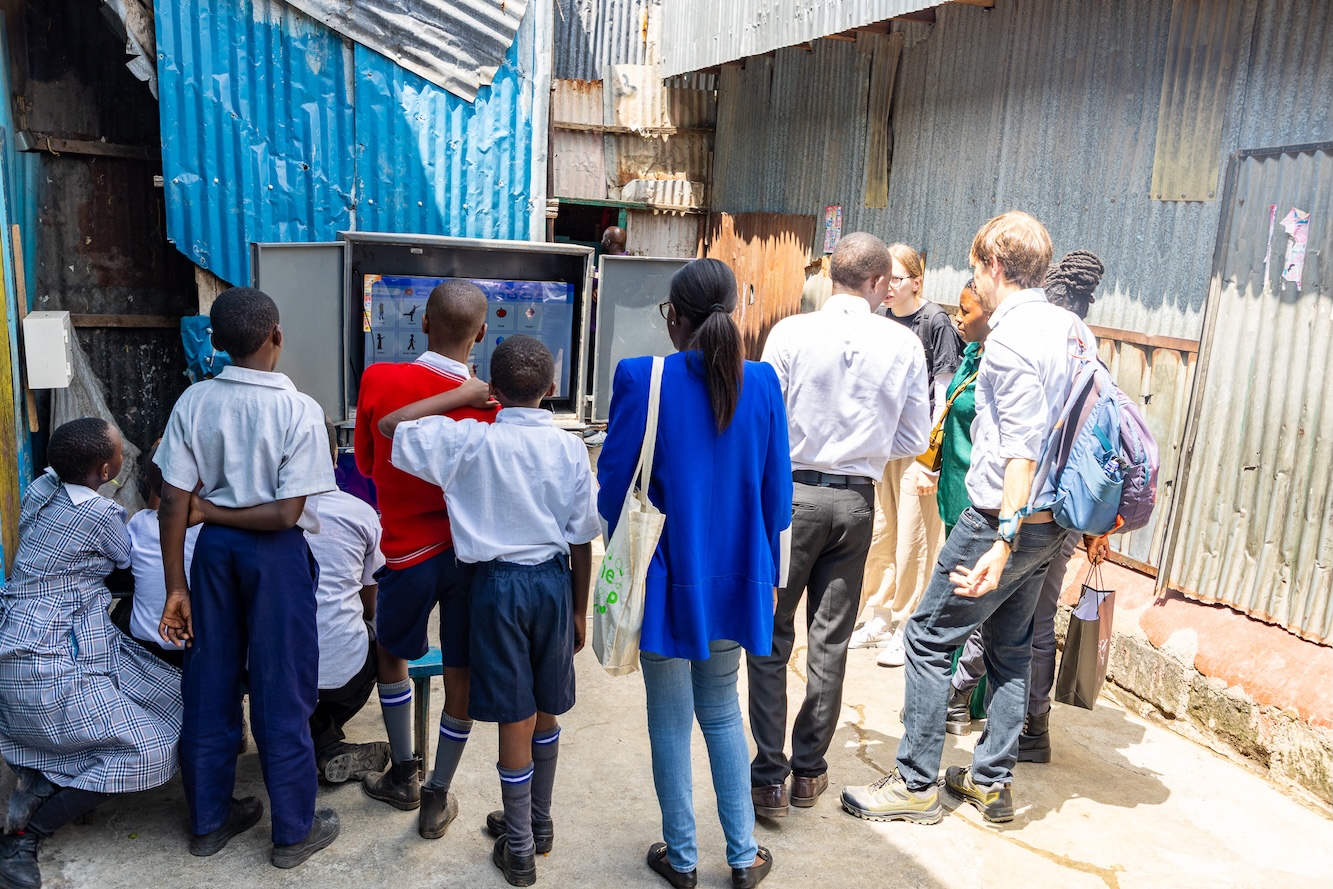
We set out to learn from the wealth of experiences within the global Code Club community: how clubs adapt to local needs, and which practices consistently support young people’s learning. Although we found small differences in how clubs make Code Club work locally, what stands out far more are the shared principles that make it work everywhere. Here we share stories from across our network that collectively paint a vibrant picture of what makes this movement work.
One theme runs through every story: Code Club is powered by people who really understand the needs of their community.
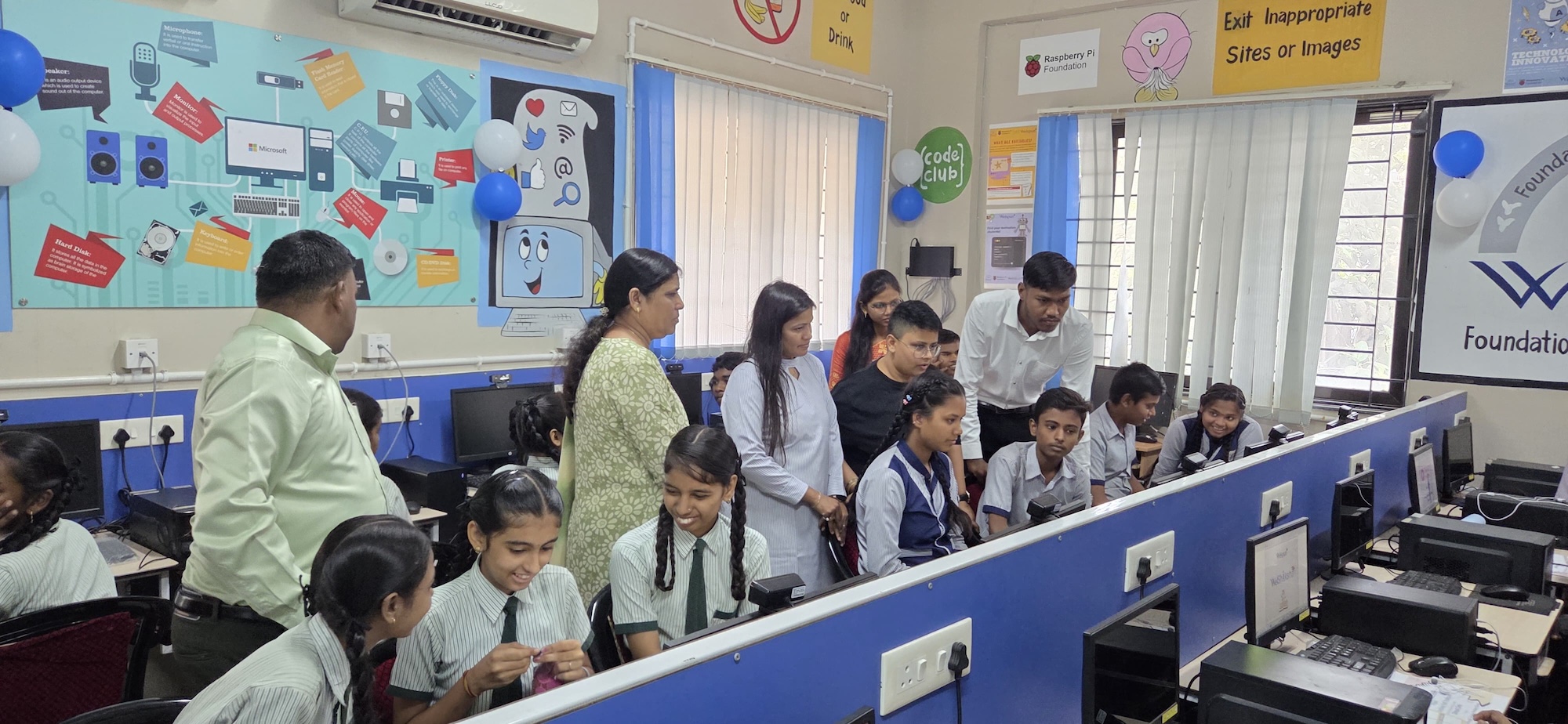
During a visit to a set of Code Clubs in India, our team met a group of girls who once faced barriers to attending school. Now, they are confidently creating Scratch projects and exploring new technologies. Their club leader explained how a simple change — allowing girls to attend school wearing traditional attire — opened doors for families. Seeing these young creators code with pride is a vivid reminder of how opportunity can reshape futures.
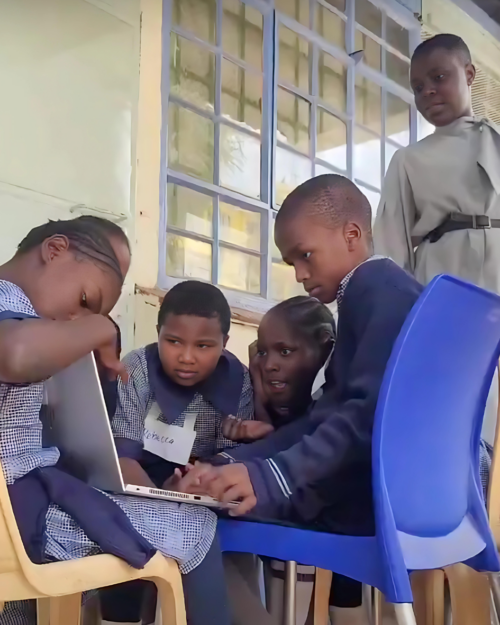
A club leader at Better Juniors Digital Club at Better Life Primary and Junior School in Kenya described how their programme began with just one laptop. Rather than letting that limit what learners could do, he found solutions everywhere: applying for grants, borrowing digital space from a nearby hub, and setting up equipment so children could work on projects together. His determination effectively created a bridge between schools and resources, opening up real opportunities for every child to learn.
We also heard from educators whose clubs have become long-standing pillars of their communities. At Rhiwbina Library in Wales, leaders have been running Code Club for over a decade, creating a space where older creators naturally guide new ones. When asked about club rules, one child replied: “There’s only one and that’s ‘respect’.” That simple principle continues to shape a joyful, collaborative atmosphere.
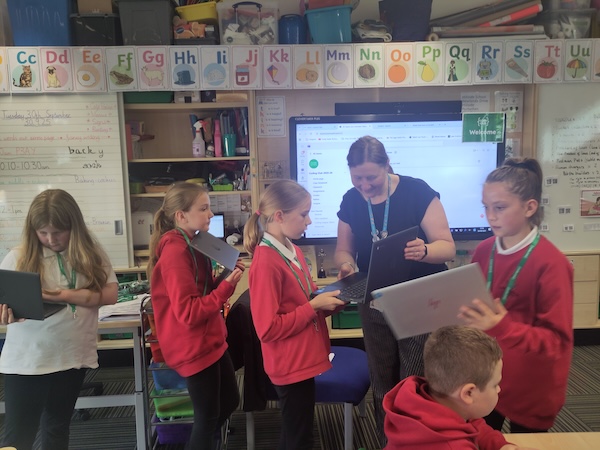
And sometimes the inspiration comes from the young people themselves. At Hillside Primary in Scotland, an enthusiastic creator took it upon himself to run taster sessions and codealongs for new members, helping them discover whether Code Club was right for them. His enthusiasm and leadership were infectious, and that spirit of young people lifting up their peers is something we’ve seen in clubs all over the world.
In one club that meets across three different venues in Pennsylvania, USA — a creative arts centre, a coffee shop, and a library — the excitement became contagious. The librarian, Miss Sandy, was so inspired by the learners’ projects — including the moment they added “Shredder Cat”, the library’s pet mascot, into their digital creations — that she has begun learning to code alongside them.
At one showcase event in India, learners proudly demonstrated text-to-speech and video-sensing projects — remarkable achievements for many of them in their first year of coding. They explained their ideas with confidence and clarity, sharing the logic behind their work as parents, teachers, and mentors looked on with pride.
In the UK, we experienced a beautiful moment at Fakenham Academy where the room filled with a chorus of squarks, clicking, tapping, and squeaking sounds as learners adapted the Grow a Dragonfly project in their own creative ways.
From applause erupting whenever a project is finished to a room buzzing with micro:bits or young people debugging together on a shared laptop, these snapshots show Code Club at its best.
Whatever the context or setting, Code Club leaders are resourceful. They are not waiting for others to solve their challenges; together with their creators, they are finding local solutions that work. Communities share equipment, mentor each other, offer space, and build continuity for learners in imaginative ways. Young people are gaining far more than digital skills: they are developing belonging, confidence, and a clear sense that they are part of something bigger.
For example, in a club in Kenya, two groups learnt side by side in a shared space. Younger learners were welcomed by older peers who acted as mentors, creating a real sense of community — collaborative, vibrant, and full of pride in each other’s achievements.
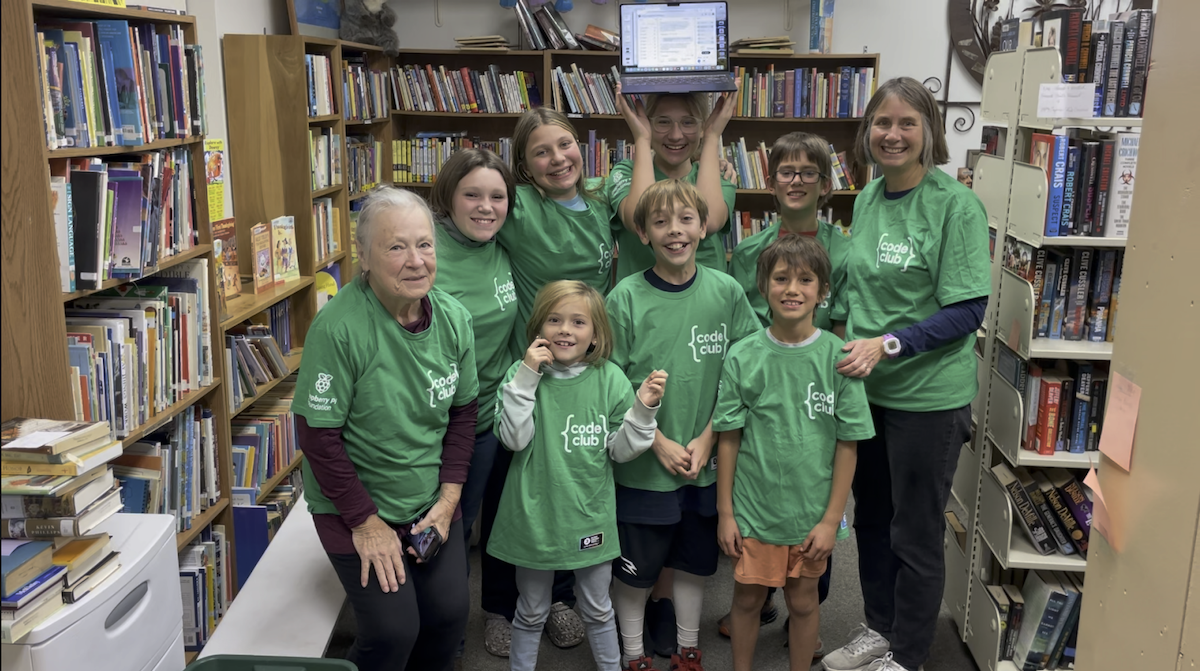
We also saw how deeply this work is woven into people’s identities. One team member visiting three clubs in Malvern, UK, wrote about Bob Bilsland, a Code Club champion for 13 years, describing how naturally he connected with learners at their own level and how fully he embodied the role of mentor and champion:
“Seeing his versatility as he mentored, sparked excitement and connected with creators at their own level was a thing to behold… he truly walks the talk.”
The impact can sometimes show up in unexpected ways. Holly, a leader from Illinois, USA, shared that her learners wear their Code Club t-shirts to school as “spirit gear” on Fridays. She told us how much this meant to her students:
“They absolutely love their shirts and are thrilled to be able to wear them… It makes them feel like a team.” A reminder that belonging matters just as much as skills.
Across every example, we saw resilience, creativity, and generosity in action because Code Clubs grow from strong communities.
These stories underscore something essential: Code Club grows not because of any one model, but because communities everywhere make it their own. Sandra Keeru, Programme Coordinator in Kenya, put it beautifully when she reflected that:
“Code Club is locally rooted but globally informed.”
Each club reflects the needs, culture, and creativity of its community, yet everywhere the same shared values shine through: curiosity, inclusion, and the belief that young people can achieve remarkable things.
Code Club is more than just learning to code; it’s about creating opportunities, encouraging confidence, and building a global network of digital creators. Whether you’re a mentor, educator, or young digital maker, there’s a place for you in the community. Start your Code Club journey today and join a global community of digital creators.
The post Learning from Code Clubs around the world: How approaches differ but values are shared appeared first on Raspberry Pi Foundation.
Two remarkable teenagers from Pune in the state of Maharashtra, India — Jayantika (age 16) and Ruturaj (age 14) — have turned curiosity into community impact.
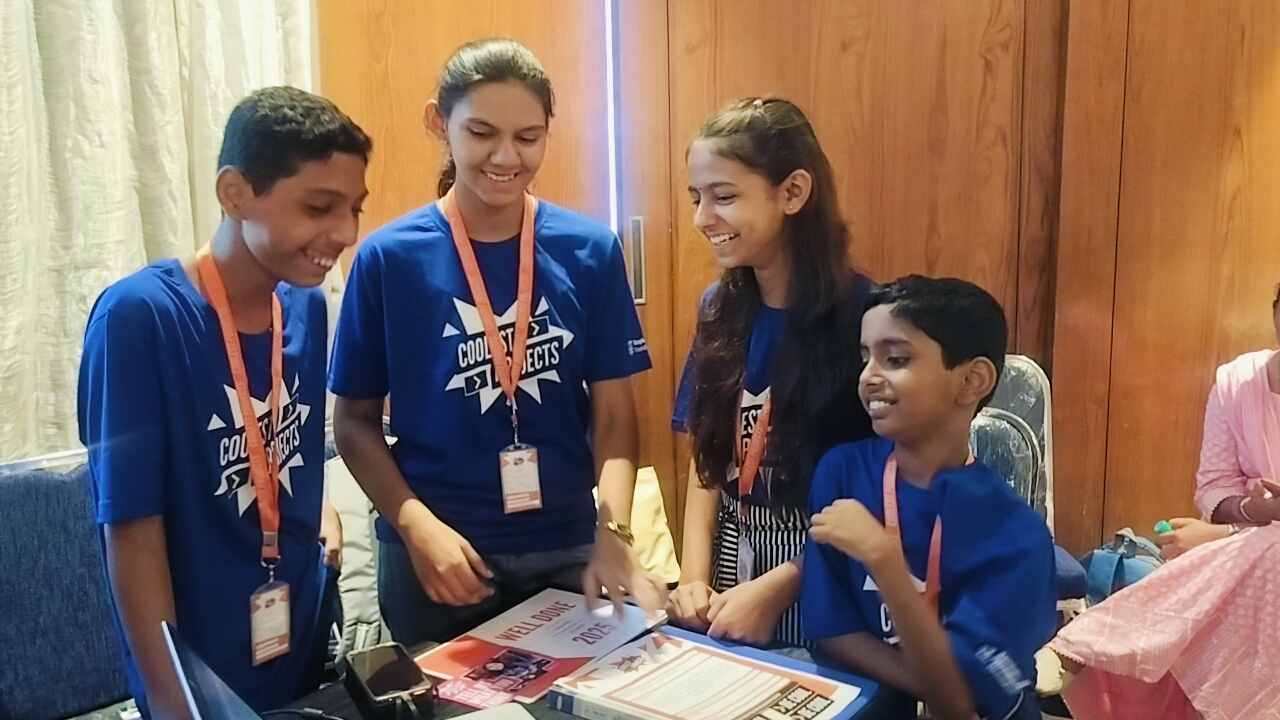
With support from the Bidkar Foundation and the Raspberry Pi Foundation, they now help run five Code Clubs, reaching over 200 young people in rural areas of Pune. Along the way, they have twice received the Coolest Projects Judges’ Favourite Award: first online in 2023, and again at Coolest Projects India in September 2025.
For Jayantika and Ruturaj, the spark for coding began at home. During the pandemic, when schools were closed and days felt long, their father encouraged them to try something new.
“When we were at home and there was nothing to do,” recalls Jayantika, “my dad introduced us to coding, and from that time till this date we are participating — and yeah, we love it.”
In 2021, they joined their local Code Club, run by the Bidkar Foundation, which provides coding opportunities for young people in rural areas of Pune. That moment opened a door to creativity neither of them expected. Scratch projects soon filled their weekends with problem-solving, and Ruturaj found himself fascinated by how games worked.
“I was too curious how games were made,” he says. “After a while in Code Club, I learned new things and got the answers to my questions.”
As their confidence grew, so did their sense of purpose. They wanted others to experience the same excitement they had discovered. “We thought these things should be shared with others,” says Jayantika. “So that’s why we started a Code Club and began teaching — to spread awareness and knowledge to everyone.”
Each weekend, Jayantika and Ruturaj set out for nearby villages, with laptops, lesson plans, and a sense of possibility. Their aim is simple but powerful: to bring coding opportunities to children who might otherwise never encounter them. “Village students must also learn coding and get opportunities to come in front,” explains Jayantika.
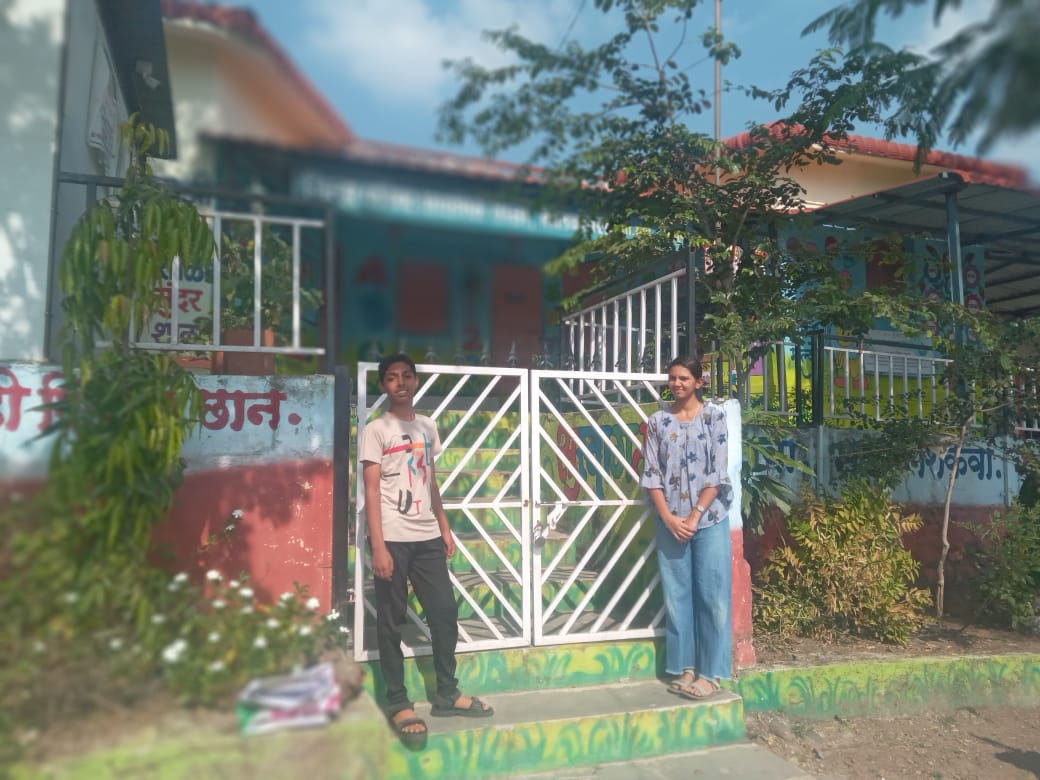
What started modestly — “one computer and seven students” — has become a thriving network of clubs that now reaches hundreds of young learners. Their father, Mr Bidkar, has been by their side throughout, watching as their initiative has grown from a small idea to something that’s changing lives. “Now we are 25 computers, 200-plus children,” he says proudly.
Their Code Club sessions are lively and filled with curiosity. Children crowd around laptops, excited to build their next animation or game. The mentors blend teaching with fun, alternating between theory and practice to keep things engaging.
“At first, we take theory classes — we explain what’s the game,” says Jayantika. “At the end we let them sit on computers.”
Some weeks are spent planning and others creating. “We give them a plan, and then next time they create,” she explains. Younger learners, aged six to ten, start with small projects such as animations or motion-based activities. Older learners tackle bigger challenges in Scratch, building their own games from ideas they’ve brainstormed together.
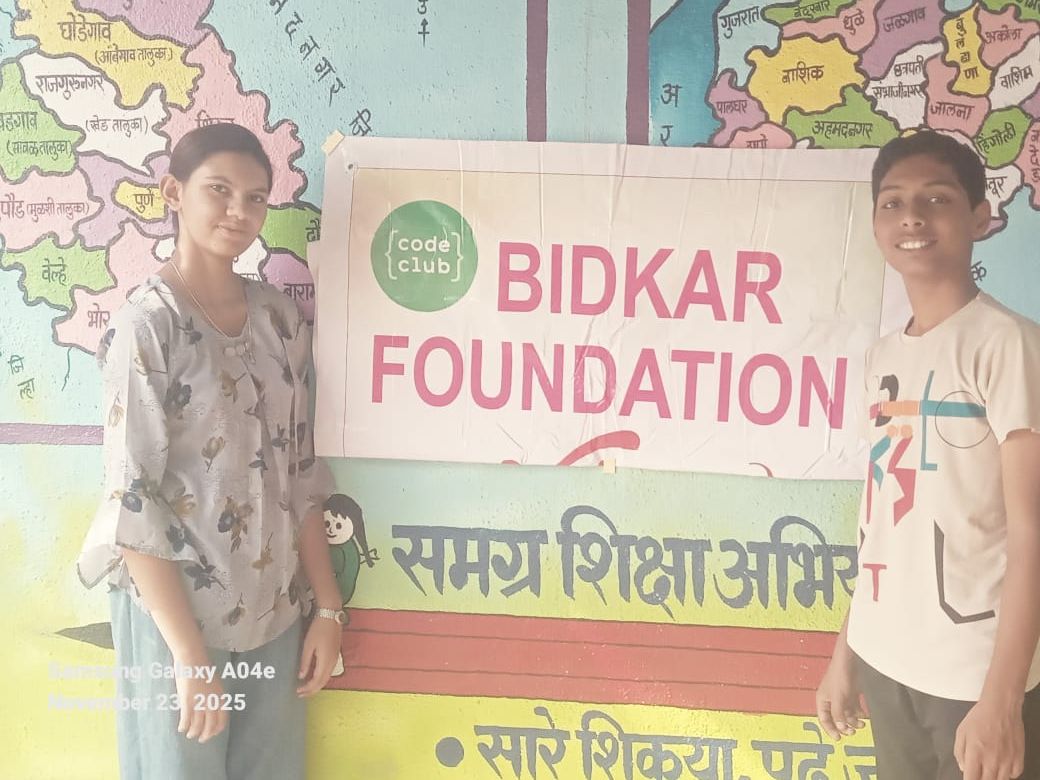
Sessions end with a much-loved tradition: “After the session ends, we give them 15–20 minutes to do whatever they want,” says Ruturaj. “Because they’re very curious.” The pair work in perfect rhythm. “I manage one group and Ruturaj manages another,” says Jayantika. “If any doubt is there, we solve them together.”
Mentoring has given both siblings new confidence and skills. “At first we were only on Scratch, and now we’ve expanded our knowledge,” says Jayantika. “Next, we’re going to start robotics. It is simple and it is creative also and it can connect to Scratch.”
Over time, Jayantika and Ruturaj have learned that mentoring is as much about listening as it is about instructing.
“Sometimes their questions are not so obvious,” laughs Jayantika. “Like ‘Why can’t we change the sprite?’ or ‘Why can’t we use another block?’ We can explain to a certain limit, but after that we are speechless!”
These moments, she says, are part of the magic of teaching. They push the mentors to explore new ways of explaining and to see coding from a beginner’s perspective again.
Watching their students succeed brings the biggest reward. “We feel very happy that the students are listening to us and they’re doing what we wanted — and they’re even adding extras,” says Jayantika. “Most of them tell us they want to create another project; they want more time.”
And for those thinking about becoming mentors, they both agree that empathy is key. “If you want to teach them, you must become a student,” says Ruturaj.
“First, think at the students’ level… explain in simple language and give more time to experiment,” adds Jayantika.
Ruturaj dreams of exploring game development and cybersecurity, while Jayantika hopes to move into web and app design. Together, they balance logic and creativity, each complementing the other’s strengths.
“Even though both are coding, we are on different paths,” she smiles.
For anyone curious about coding, Ruturaj’s advice is simple: “Do it by yourself. Make projects by yourself, share them, and learn from others.” Jayantika adds: “Coding has no limits. You can create anything you imagine — open your mind, open your creativity.”
Their father, rightly, is proud not just of their achievements but of how they have inspired others to learn. From a single laptop to five thriving Code Clubs, Jayantika and Ruturaj’s journey shows what’s possible when young people lead with passion and purpose. With support from their family, the Bidkar Foundation, and the Raspberry Pi Foundation’s India team, they’re proving that talent truly is everywhere — opportunity just needs a spark.
Thank you, Jayantika and Ruturaj, for inspiring young people across India and around the world.
The post From learners to leaders: Jayantika and Ruturaj’s journey as Code Club youth mentors appeared first on Raspberry Pi Foundation.
Over the first weekend in November, members of the global Code Club community came together for two inspiring days of learning, creativity and connection. The annual event celebrates the people who make Code Clubs happen, allowing them to share ideas, explore new tools, and connect with others who help young people learn to code.
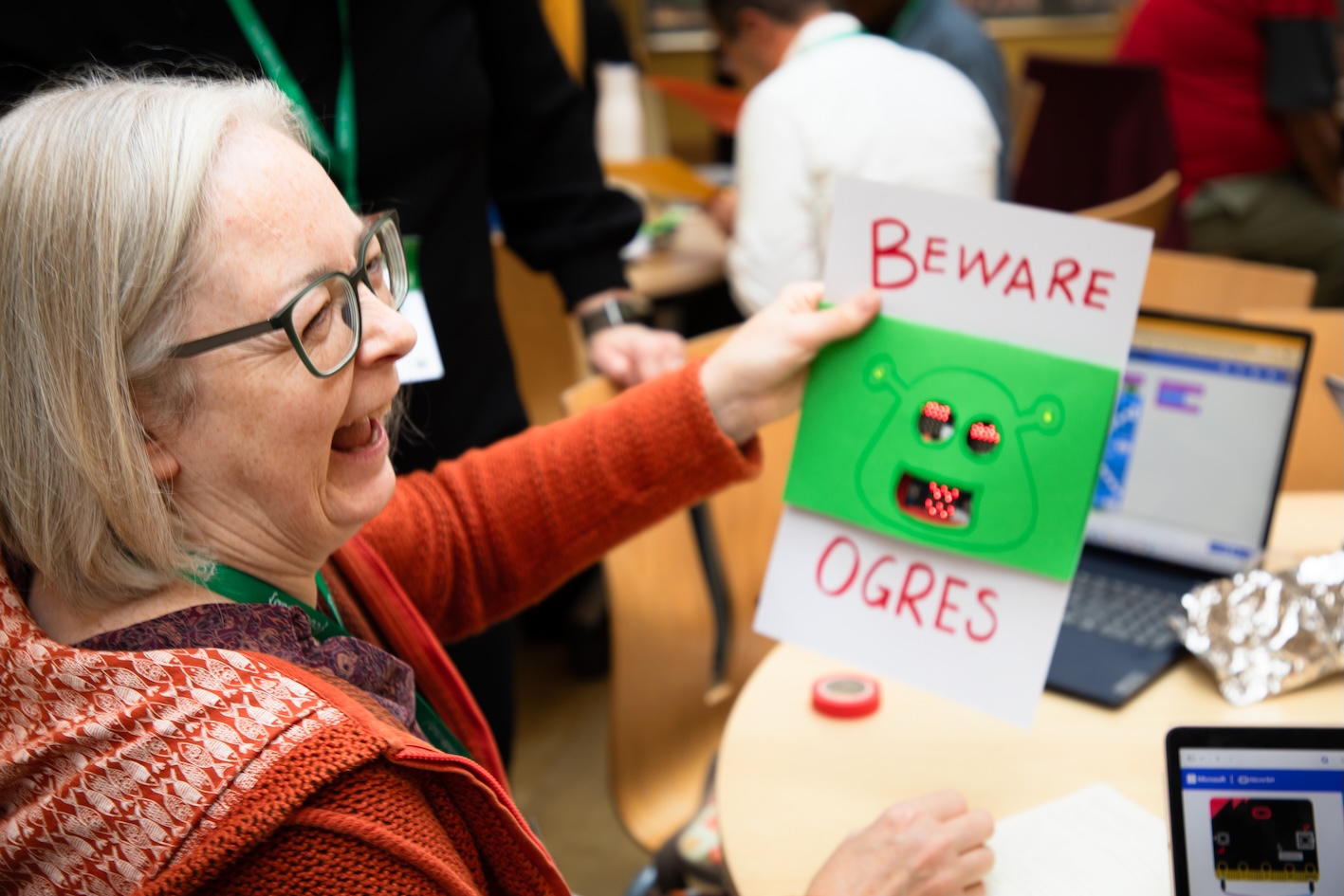
Saturday began with hands-on sessions that brought creativity and technology together, exploring large language models and prompt engineering in Collaborating with LLMs and being a prompt boss. There was a lot of laughter from attendees about how large language models can produce confident but incorrect answers if given vague prompts, but many left inspired to experiment with new technologies in their own clubs.
“First time there and it was amazing. Met loads of great people and the amazing code club crew. I learnt loads of new skills around AI and Arduino.” – An attendee
Explore AI with creators in your club using our AI and machine learning projects.
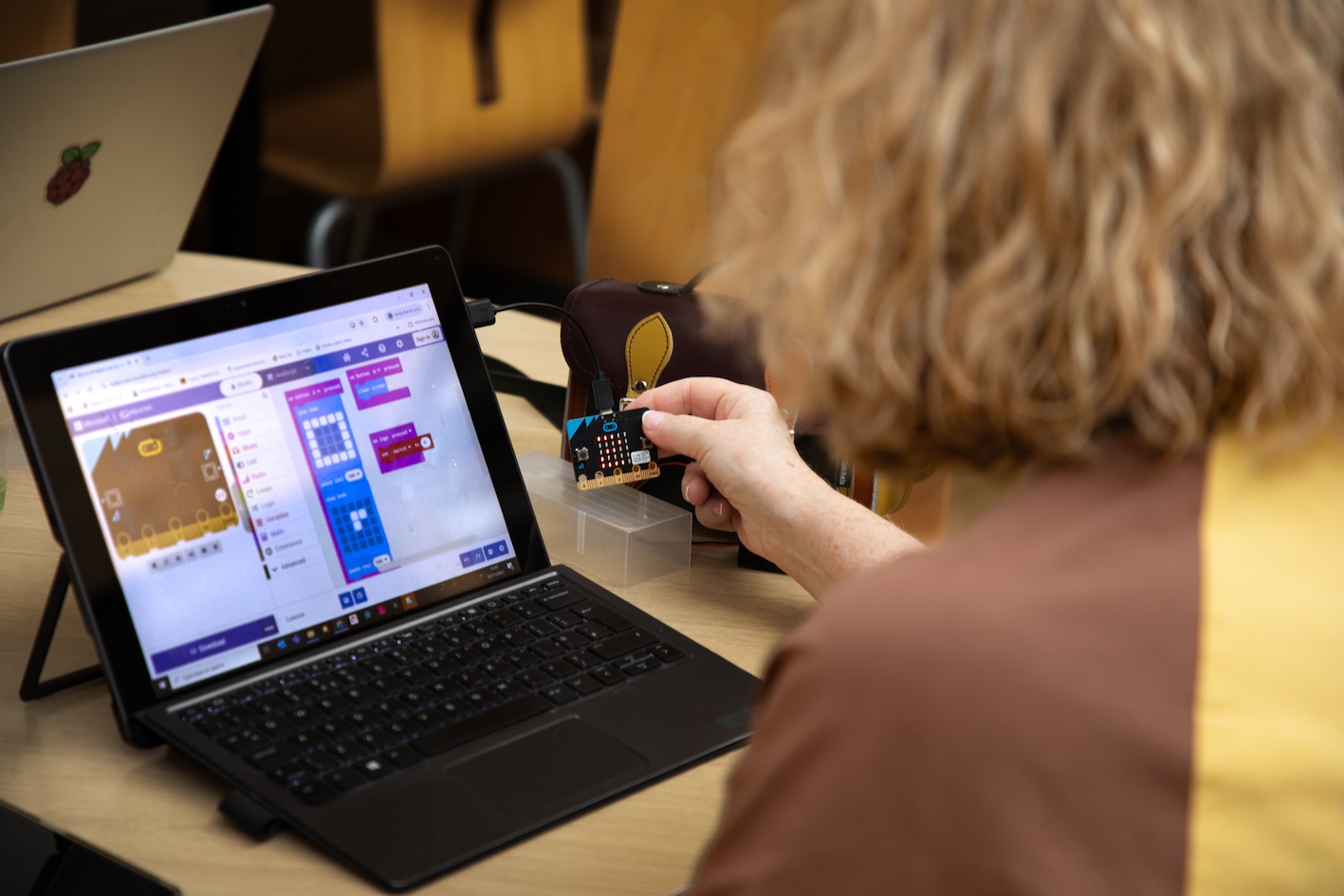
Collaboration that counts brought mentors together to discuss common challenges like volunteer retention, limited resources, and communication barriers. A crowd favourite was a shared volunteer toolkit, as well as event checklists and safeguarding resources.
“What I enjoyed most about the Clubs Conference was the opportunity to meet other facilitators and hear their stories — their successes and challenges. These conversations validated the volunteer work I do and reminded me of the impact of our clubs.” – An attendee
From the theatre sessions, you can watch Inclusive learning – Supporting Deaf learners in clubs which was both moving and insightful. We learnt that visual demonstrations, colour cues, and repetition were key to supporting Deaf learners. One memorable quote captured the spirit of the session:
“The children couldn’t speak to us. The children — we couldn’t hear their voices but by the eighth week we were able to hear their voices from what they built on the screen and it was echoing all around the classroom.” – Chidi Duru
Find out more about Chidi’s joy of coding alongside Deaf creators.
The weekend’s talks showcased the reach of Code Club worldwide, with volunteers sharing their experiences of collaboration, sustainability, and creativity.
Watch Lessons from resourceful Code Clubs in India, which highlighted the ingenuity of young learners in under-resourced settings, while Hands-on with the Raspberry Pi Pico showcased low-cost, high-impact projects from Kenya and South Africa.
Speakers showed how community clubs adapt to local needs with unplugged activities and coding games inspired by cricket and kabaddi, empowering young people to solve real problems and celebrate curiosity through play. Excitingly, these new resources will be launching early next year; keep an eye on our activities page to be among the first to try them out!

In the session Code Club Projects Unplugged, facilitators shared the idea of “hiding the vegetables” — hiding the learning inside the fun. Whether through a collaborative Scratch game, a micro:bit prop on stage, or a Pico gadget solving a real problem, this approach helps young people learn through play. They remember the joy, and the skills come naturally.
Teaching tech away from the computer screen shared a fun unplugged cybersecurity activity, The Chicken Shop, where learners role-play social engineering scenarios. Its success came from clear printed instructions, movement, humour, and strong debriefing.
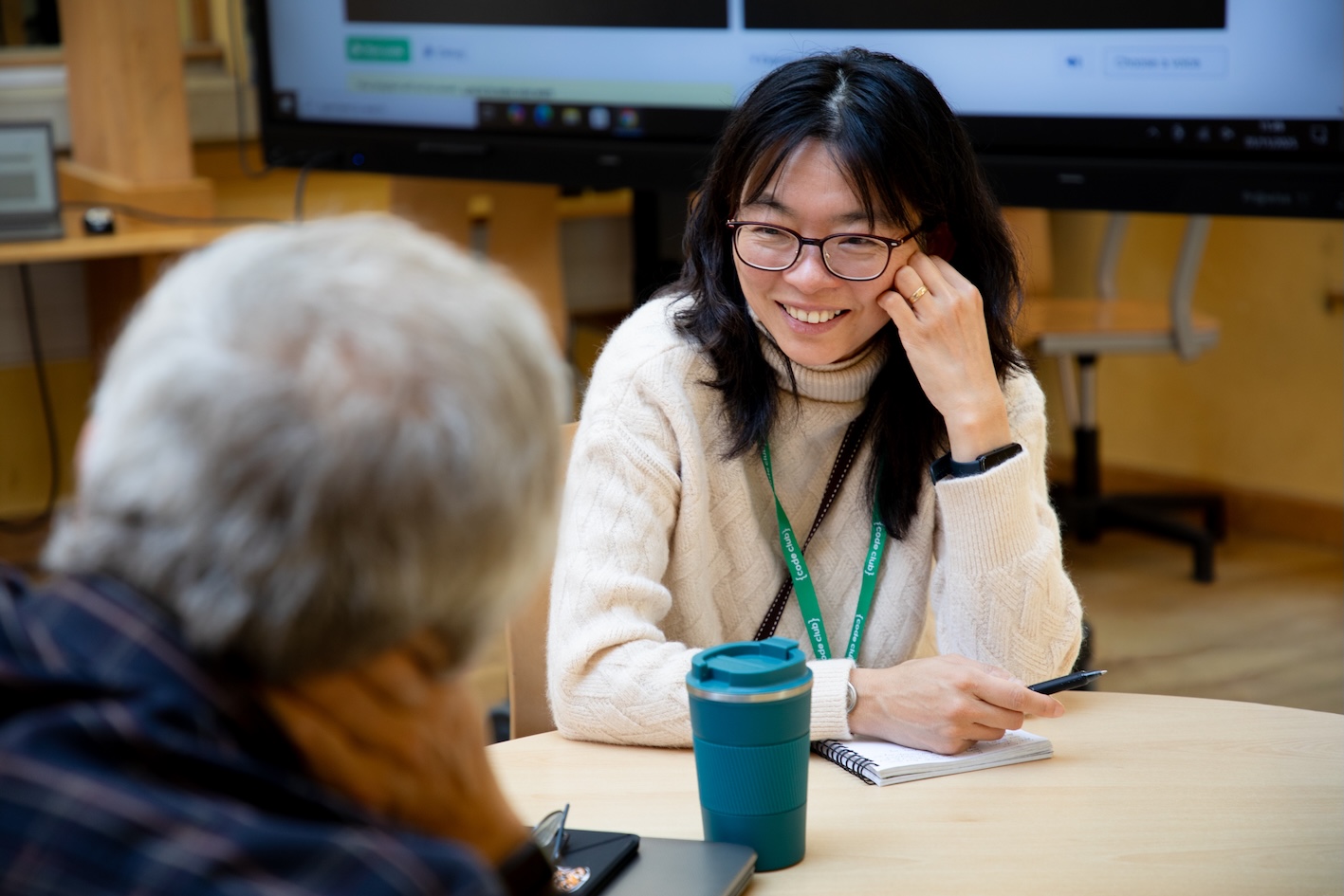
Learning coding outside the box explored how to engage young people with diverse learning styles while the Arduino crash course gave attendees a taste of physical computing and C++ programming in action. Workshops on AI, sustainability, and youth empowerment with Raspberry Pi computers and Unlocking Code Club resources helped club leaders discover practical ways to inspire problem-solving and make use of all the support available through Code Club.
The message from the sessions was clear: young people learn best when technology is human and hands-on.
Coolest Projects – get involved! championed creativity over competition. Any young person under 18 can submit their project, including unfinished ideas. In-person and online showcases celebrate progress, imagination, and teamwork.
Speaking on the closing panel, Code Club leader Rachael Coultart talked about the importance of Coolest Projects as a rare platform for children to talk about their learning. She spoke about the experience of one particular child, explaining that it had made a powerful impression on her, saying:
“It had such a huge impact. I felt so proud of her and what she’d achieved. Afterwards, her parents told me that they felt it was the first time she had really been seen.”
The community is united in its commitment to making Code Clubs inclusive, creative, and sustainable.
“Thank you. Clubs Conference is a highlight of my year.” – An attendee
If you want to stay up to date with the latest news, events and opportunities from Code Club, sign up for our newsletter and be part of the growing global community.
The post Code Club Conference 2025: Creativity, community, and collaboration in Cambridge appeared first on Raspberry Pi Foundation.
We’re happy to celebrate National Engineering Day in the UK with our friends at the Royal Academy of Engineering. Today they launch the AI-Z of Engineering, an online collection showcasing more than 100 current engineering jobs, and over 100 more engineering jobs envisaged for the future. Their aim is to inspire more young people to pursue engineering careers in areas ranging from artificial intelligence (AI) and robotics to medicine, software engineering, space, and sustainability.
Engineers shape the technologies and industries that define the future — and the systems they build affect jobs and tasks in every sector. As Sir John Lazar, President of the Royal Academy of Engineering and our Chair of Trustees, says about AI technology:
“I’m not a believer that all jobs will just disappear because of AI. If you think of a job as an assemblage of tasks, there’s no question that the tasks in your job will change because AI will work with you on a bunch of things, and this will in turn reshape your job or role. The people who will thrive through this transformation will be those who engage with curiosity, intellectual rigour, scepticism, creativity, problem-solving and teamwork – and these are the skills and attitudes that are taught by engineering and computational thinking.”
Sir John Lazar, President of the Royal Academy of Engineering and Chair of Trustees, Raspberry Pi Foundation.
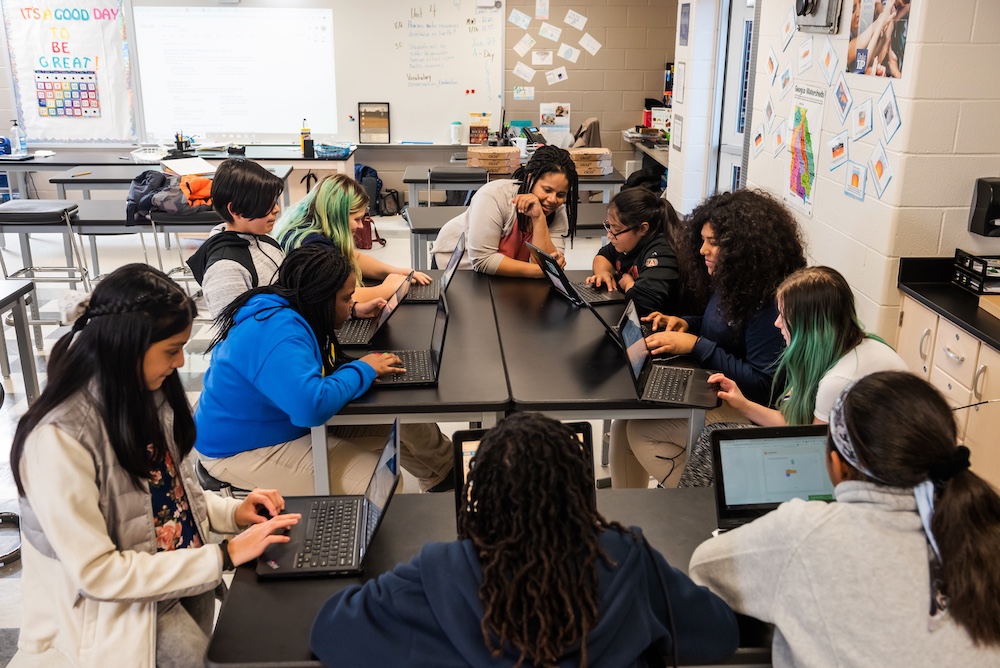
At the Raspberry Pi Foundation, we believe AI literacy is crucial for all young people. We also believe all young people need to learn to code to be able to shape our future, where AI systems are integrated into all aspects of life. Our position paper “Why kids still need to learn to code in the age of AI” presents five reasons why:
Our free resources for young people help them learn to code and get creative with technology to bring their ideas into the world, building their confidence. So whether your kids are just starting their coding journey, or are looking for a new challenge, you can use our resources to support them.
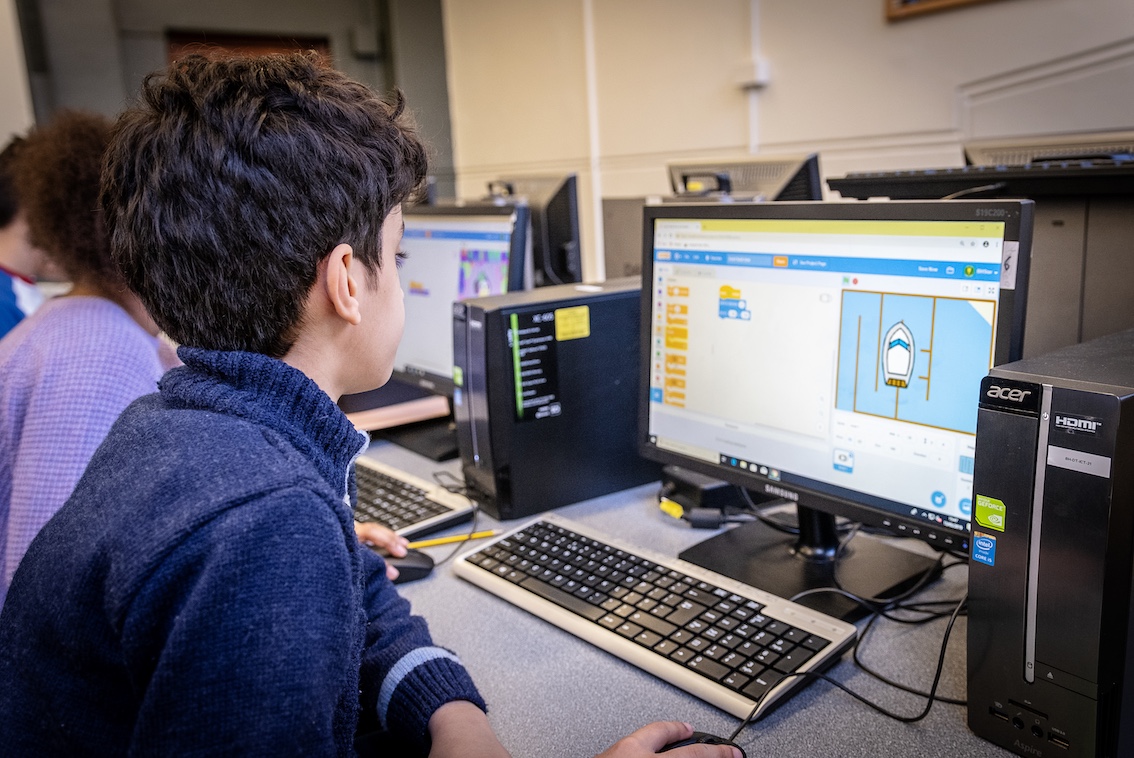
Understanding coding and computers is critical in many engineering roles, so inspiring kids about engineering can also motivate them to try their hand at coding.
There are plenty of ways you can celebrate National Engineering Day. Inspire young people to embark on careers in engineering by sharing the AI-Z of Engineering collection with your school or college, on social media, or on your organisation’s website. The collection is a living resource that will be updated, and contributions are always welcome — both for current jobs and future ones.To find out more ways to get involved with National Engineering Day, you can go download the toolkit.
The post Celebrating the UK’s National Engineering Day 2025 appeared first on Raspberry Pi Foundation.
Tom Mason is Head of Mathematics and Head of ICT at St Joseph’s College, an all-boys secondary school in South East London. He is passionate about teaching and learning, and has a keen interest in digital education practices.
Mr Mason recently set his Year 10 students a creative coding challenge, which they completed using our Code Editor for Education. The challenge not only boosted student engagement, but also showcased the effectiveness of open-ended, student-led learning in computer science education.

Teaching coding in a classroom setting presents a unique set of challenges, with one of the most significant being the rise of artificial intelligence (AI). Instead of engaging deeply with concepts like loops, conditions, and sorting algorithms, students now increasingly rely on AI tools to generate entire blocks of code for them, without understanding their functions.
Meanwhile, traditional teacher-led instruction methods that focus on isolated coding concepts like inputs and outputs often leave students disconnected from the practical and creative aspects of programming.
Against this backdrop, Mr Mason wanted to give his students the opportunity to:
Mr Mason set a simple but powerful brief:
“Over three lessons, build a quiz that asks 10 questions about what you’ve learnt on the course.”
With this simple instruction, Mr Mason gave students a clear idea about what to do, while giving them the freedom to design their quiz however they liked. Students were also told that:
To complete the project, students used the Code Editor for Education. Created in collaboration with educators and built purposefully for the classroom, the Code Editor supports a range of teaching styles and learning abilities. Its simple interface encourages students to engage with the logic behind their code — they can’t rely on autocomplete.
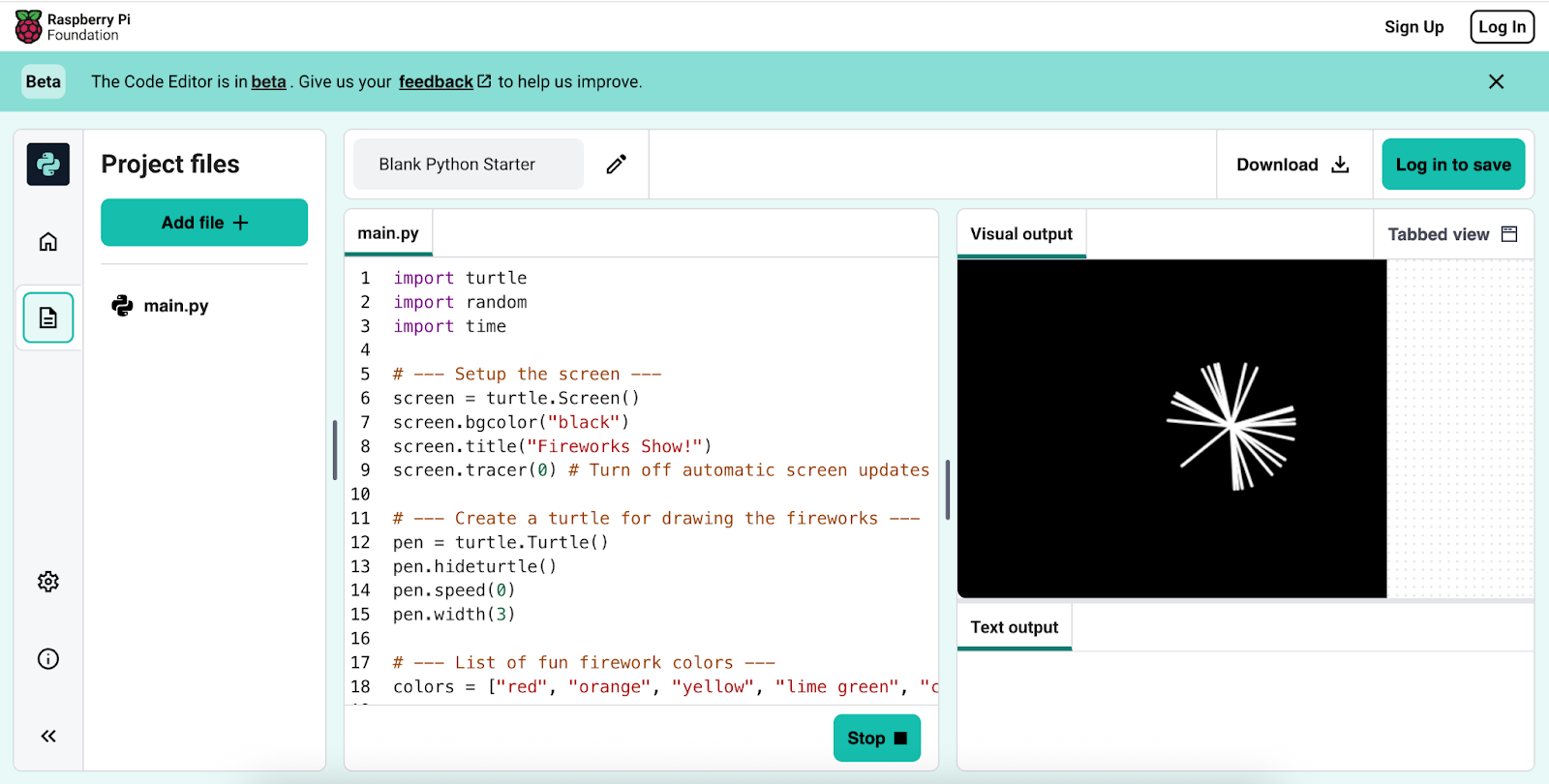
The open-ended structure led to an explosion of creativity and problem-solving.
Without step-by-step instructions, students had to independently explore solutions to questions like:
Some students created multi-file Python projects, separating the logic controlling how the quiz worked from the content, or static information. For example, some students created one file to store the player’s answers and another file to manage the quiz interface and score logic. Students also created other advanced features:
All students met the base requirements, but the open-ended nature of the project allowed more advanced students to push the boundaries, without the need for additional scaffolding.
“They couldn’t just Google the answer; they had to think critically and test ideas. That’s what made it powerful.”
Mr Mason noted that the project’s success was due in large part to the flexibility and responsiveness of the Code Editor. Students could iterate quickly, test their ideas, and collaborate, all within a platform built for classroom coding.
“It was the most successful thing I’ve done. I’ll definitely be doing it again every year.”
Join St Joseph’s College and the 1300+ other schools helping their students build a strong foundation in text-based programming with the Code Editor for Education.
The post Fostering creativity through open-ended projects with Code Editor for Education appeared first on Raspberry Pi Foundation.
We love hearing from members of the community and sharing the stories of amazing young people, volunteers, and educators who are using their passion for technology to create positive change in the world around them.
Marie is a force of nature. As the founder of Breadline London, a grassroots community project in Haringey, she has spent years supporting families with essential services — she’s run a food bank, offered budgeting advice, and hosted well-being workshops. But when she heard about Code Club, she saw another way to help local children: by giving them the skills to shape their futures.
Marie had no background in tech, but that didn’t stop her. She knew that many families in Tottenham couldn’t afford extracurricular activities like coding classes, and she was determined to change that.
“I’ve wanted a coding club for children, children in Tottenham, because that’s not something that is actually here,” she explains. “Unfortunately for us, we are on the very high end of poverty… and some of our children in this area don’t get the opportunity to attend things like coding club.”
With the support of Haringey Giving and the Raspberry Pi Foundation, Marie launched her Code Club at Tottenham Community Sports Centre. She started from scratch, learning alongside the kids, attending free training at the Raspberry Pi Foundation’s headquarters in Cambridge, and soaking up everything she could about coding.
“I don’t know anything about coding. Nothing. But going to the training days, it was so inspiring. I got so excited thinking, these are the things I can hopefully share with the children.”
Marie’s club is more than just learning how to code — it’s about teamwork, creativity, and confidence.
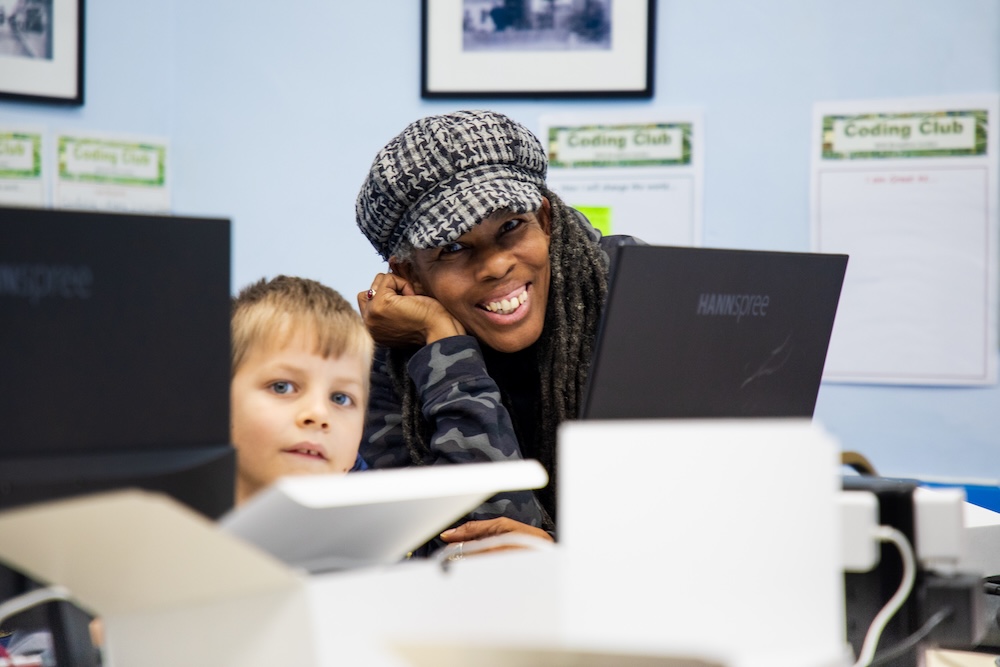
“They need to learn these skills outside of a school environment, outside of a place where it’s really structured. I want them to come in, experiment, make things up as they go along. Sometimes they follow instructions, but mostly, they just try things out.”
She also sees her role as a mentor, even if the kids sometimes know more than she does!
“Most of the children know more about coding than I do. So for me, it’s just about encouraging them: ‘What’s next? What else can you add to your project?’ And helping parents understand that they need to let the children create what they want to create, not just steer them.”
Marie’s journey didn’t stop with Code Club. When she learnt about Coolest Projects, a global showcase where kids celebrate what they’ve built with code, she knew she had to take her club to one of the in-person events.
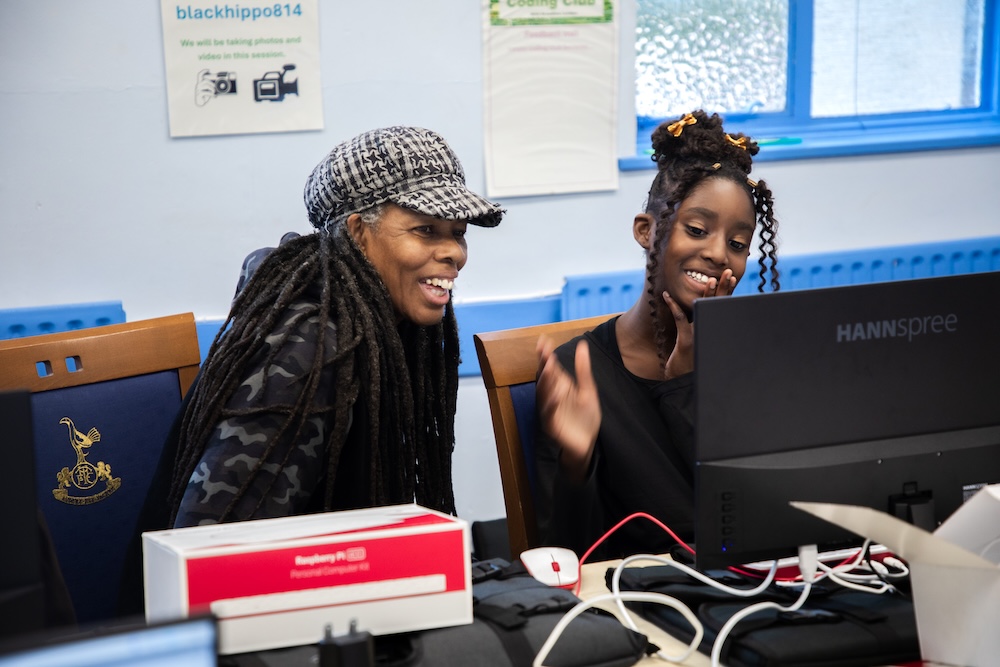
“I was in Cambridge when I first heard about it, and this fabulous young woman spoke about Coolest Projects. I just felt so excited to take the children somewhere that’s just kids, just kids learning about coding and developing these amazing things. I even said, ‘Even if no one from my club comes, I’m going by myself!’”
Taking the kids to Coolest Projects was a game-changer. They saw what was possible, talked to other young coders, and left inspired.
“Next year, when we go again, everybody’s going to have a project. Seeing the kids’ faces when adults wanted to try their projects, it was so exciting for them!”
Marie is proof that you don’t need to be a tech expert to start a Code Club — you just need passion and a willingness to learn.
Marie’s message to others who are thinking about setting up a coding club but worry about their lack of experience is simple:
“Start a [Code Club] because the children will help you to run [it]. They will help you. They will help each other. Don’t get put off running a coding club because you don’t know how to code. Because I don’t[…]and I love it.”
Marie’s story is a testament to what’s possible when someone believes in their community and takes action. She is creating opportunities for young people in Tottenham, giving them a space to learn, collaborate, and dream big regardless of their background. We can’t wait to see what her club achieves next!
For more information to help you set up a Code Club in your community, visit codeclub.org.
Help us celebrate Marie and her dedication to opening doors for young creators by sharing her story on X (formerly Twitter), LinkedIn, and Facebook.
The post Marie’s story: From tech beginner to Code Club mentor appeared first on Raspberry Pi Foundation.
Getting creative with technology is now easier than ever on the Code Club Projects website. If you’ve visited Code Club Projects recently, you may have noticed that the site has changed over the last few months. In the spring, we launched an initiative to make it easier to find a project. I’m excited to share some of the changes we’ve made based on feedback from young people and mentors.
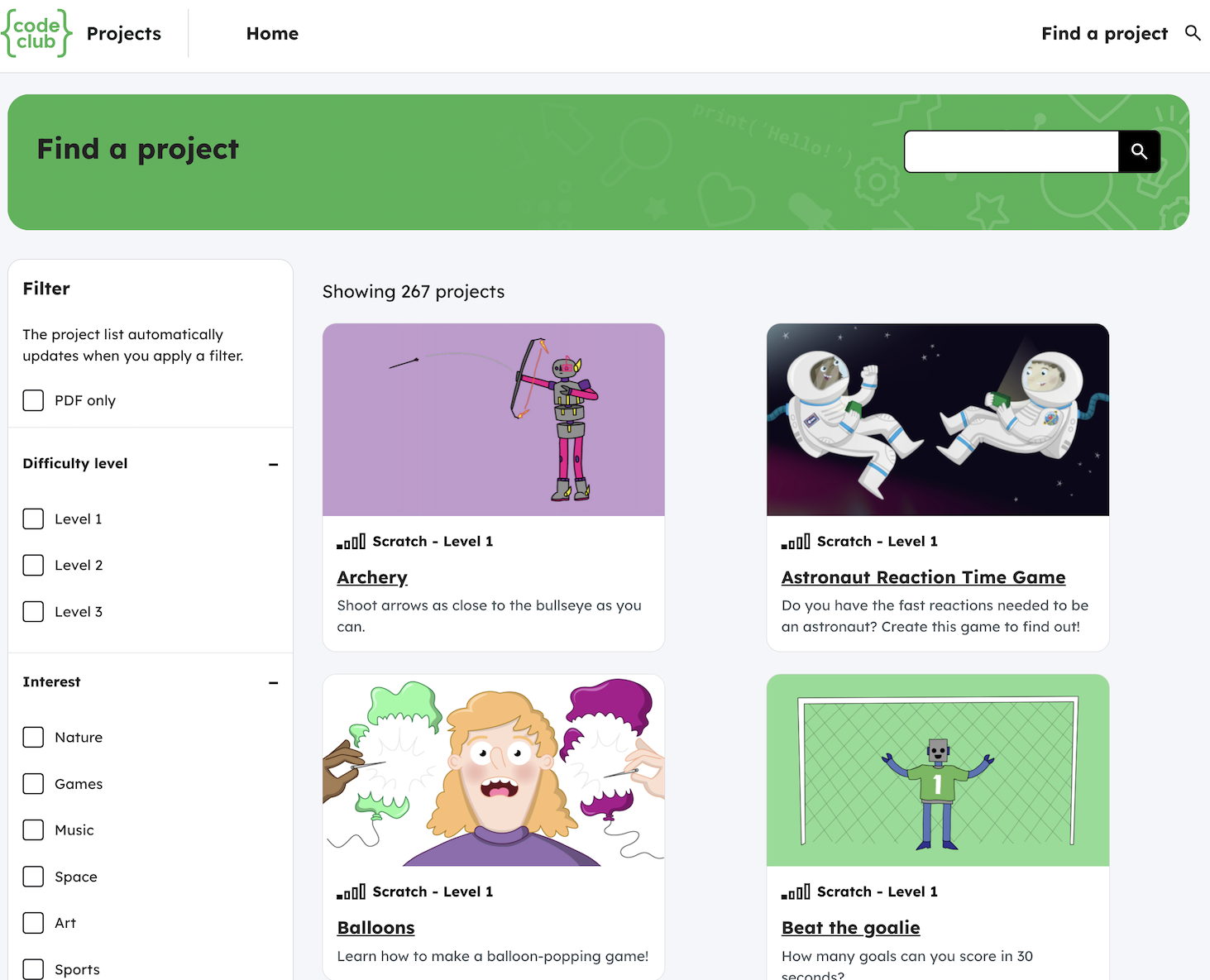
Being able to filter projects by skill level (beginner, intermediate, advanced) has been the feature most requested by mentors. A survey we ran in the spring confirmed that young people find levels helpful when trying to find a project on their own. While our project paths have always had levels, our expert educators have now reviewed every single project on the site and categorised them as a Level 1, Level 2, or Level 3 project. These difficulty levels are easily available as filters on the side of the search page.
“[The Code Club] resources are extremely helpful, particularly for mentors with limited experience; step-by-step guidance is very useful and effective.” – Code Club mentor, Tunisia
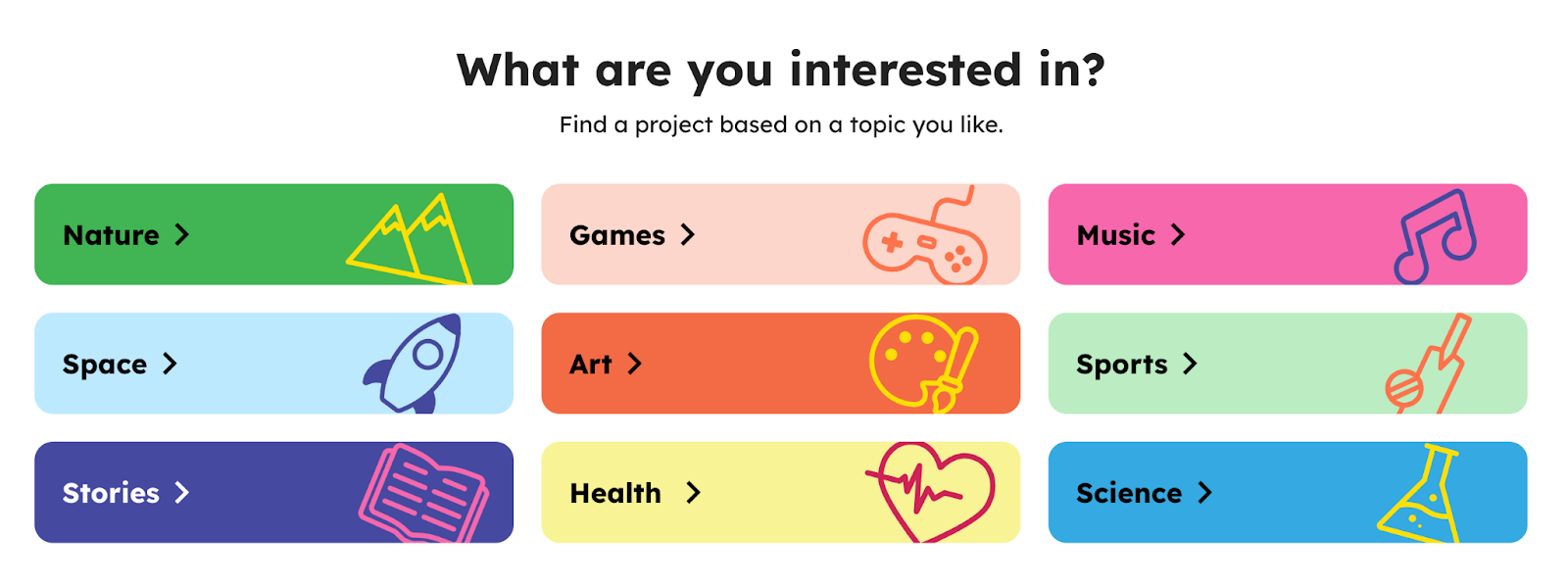
For young people and mentors who aren’t sure where to get started with coding, an easy question to ask is “What do you like to do”? With over 200+ projects on the site, there is a wide variety of projects that span a number of young people’s passions, such as games, art, or nature. In fact, in the same spring survey, young people largely preferred finding projects by interest over technology (e.g., Scratch, Python).
That’s why we’ve created a brand-new set of pages dedicated to helping young people find projects by interest. We believe making it easy to find a project by an existing interest will help young people get excited about coding.
“[Attending Code Club] … combined with watching peers make cool things seems to be a great encouragement to go build rather than just consume.” – Code club mentor, Japan
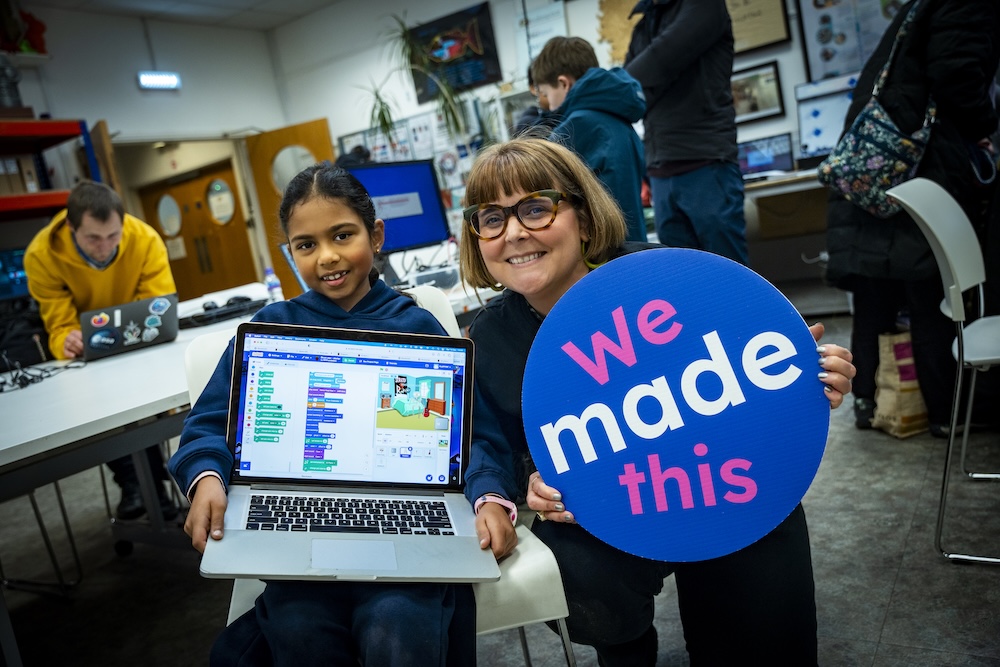
Code Clubs projects are designed to appeal to creators’ interests, including creating their own games.
Through the Clubs annual survey, we know that some young people enjoy following our project pathways and others enjoy finding an individual project to work on during club time. We also know that some of our top search terms are “Scratch” and “Python”, which allow users to see all Scratch projects that are available on the site. We’ve redesigned our technology pages so it’s easy to see paths and projects per technology in the same place.
“I think [Raspberry Pi Foundation projects are] really easy to understand and encourage young people to learn more and more.” – Code Club leader, Brazil
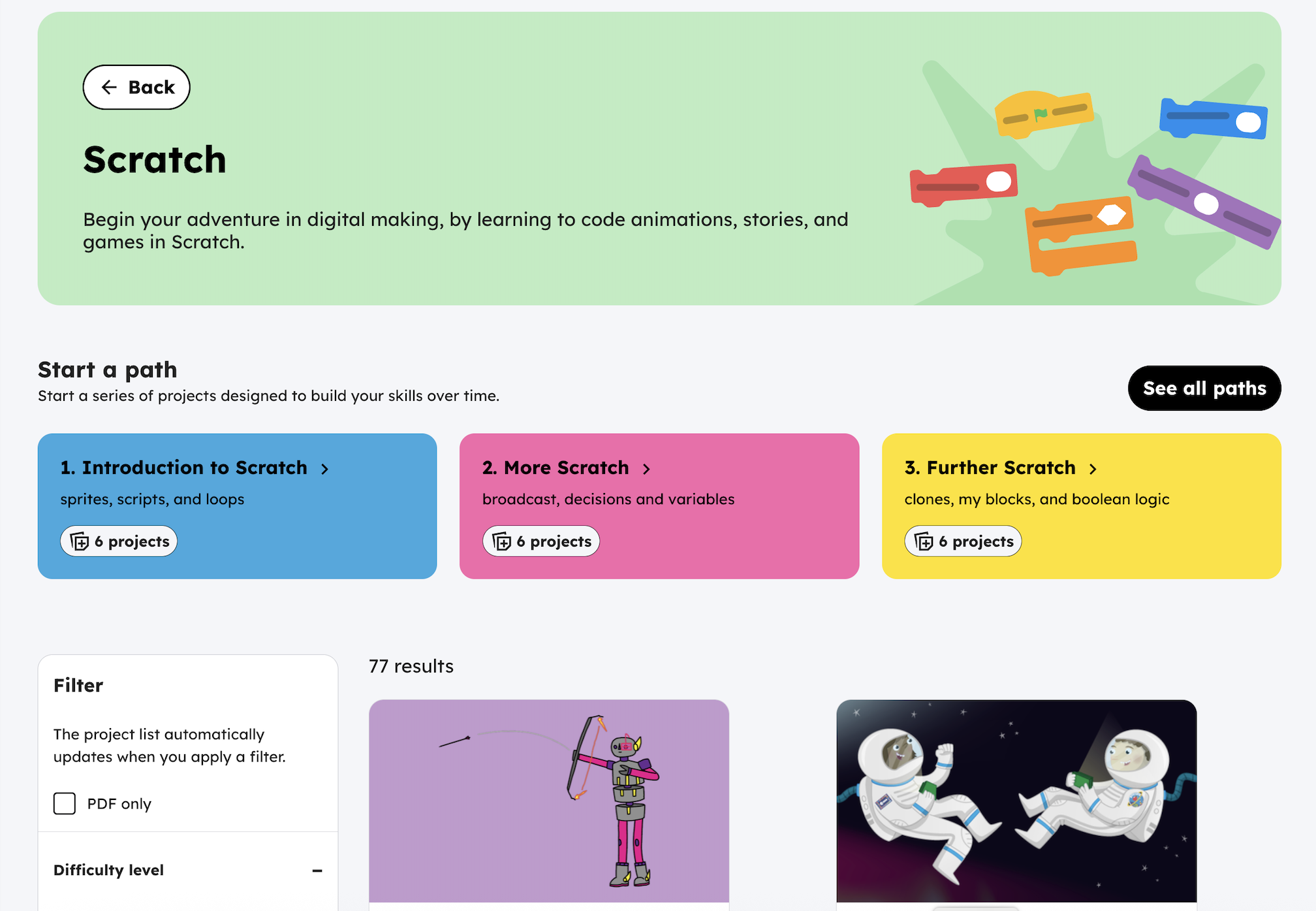
We’ve heard from mentors that our projects are too long to print out. We’re working to improve that, starting with brand-new short PDFs for the Intro to Scratch path projects. Each PDF is no more than six pages, double-sided.
Are there other projects you’d like to see PDF versions of? Let us know.
We’re currently working on an idea tentatively titled “project challenges”. If you’re interested in helping us develop the idea, please get in touch.
If you have not started a club yet but are interested in supporting the young people in your community to explore coding, you can find out more on the Code Club website. The team will support you every step of the way with resources, training, and a collaborative community.
The post Improvements to the Code Club Projects website appeared first on Raspberry Pi Foundation.
We love hearing from members of the community and sharing stories of amazing young people, volunteers, and educators who are using their passion for technology to create positive change in the world around them.
Today, we introduce Shajan, a digital storyteller and senior business advisor at the BBC, whose extraordinary personal and professional journey has led him to champion digital literacy for young people in Bangladesh.
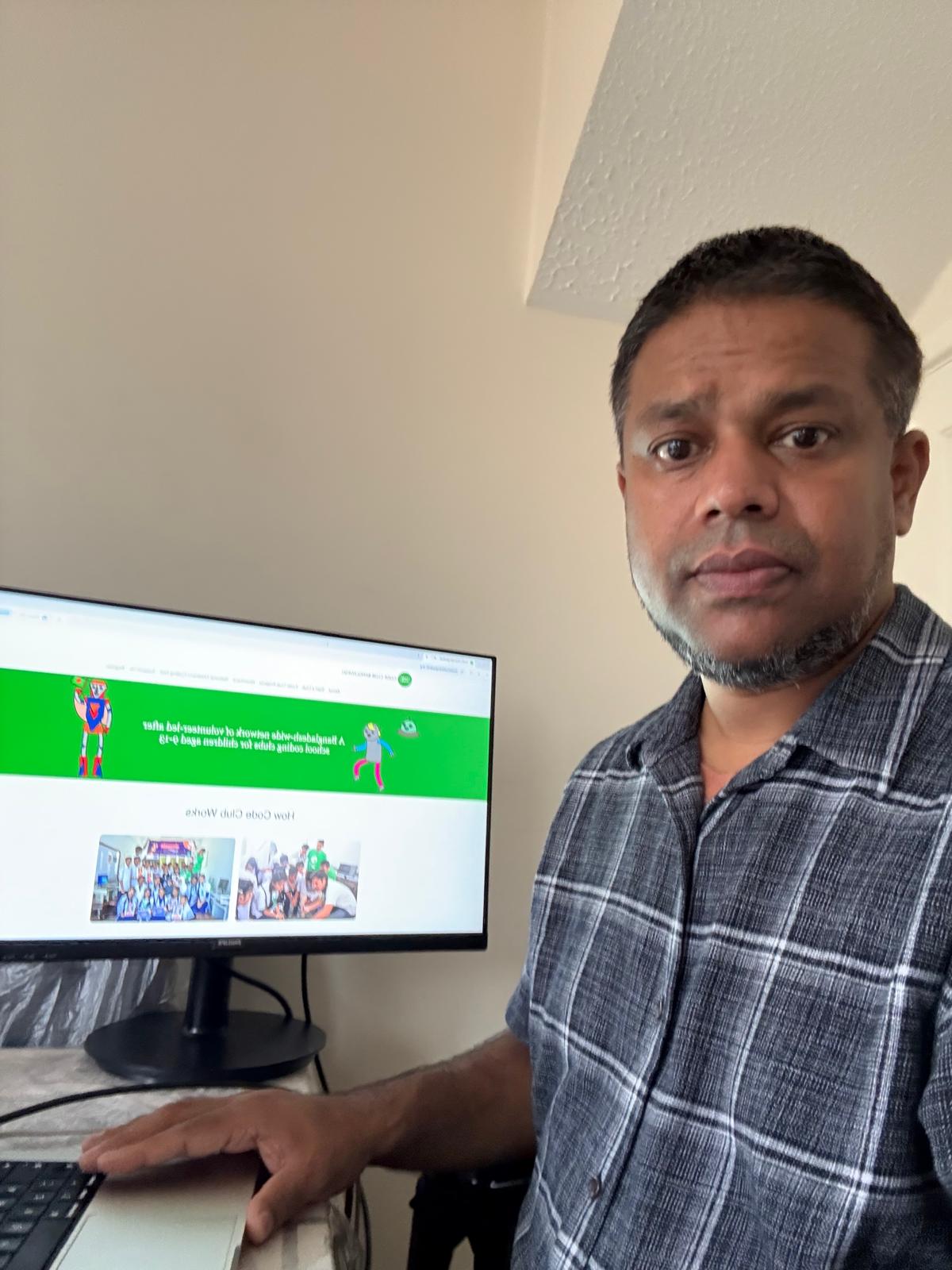
Shajan is British-born, but his roots deeply connect him to Bangladesh. This connection was instilled by childhood holidays to Bangladesh, as well as his late father, who emigrated to the UK in the 1960s but always encouraged Shajan to maintain ties with the community he left behind. Shajan’s pull towards Bangladesh intensified after his father’s passing fifteen years ago.
“I always thought I’d like to do something, carry on the work he left behind with efforts in building schools and supporting his local community.”
The memory of his sister Khela, who passed away at just 12 years old while in Bangladesh, also motivates Shajan. He says, “She was a really creative person, really into her arts and crafts and learning.”
Khela’s loss fuels Shajan’s desire to do something specifically for the young people of Bangladesh, connecting with their potential for creativity and learning.
Shajan’s 15 years of working for the BBC led him to discover the power of digital education. In 2015, he project-managed the BBC’s “Make It Digital” campaign, a UK-wide initiative addressing the National Digital Skills Gap.
As part of this, he led partnerships with organisations like Code Club.
“That experience showed me how digital tools could unlock creativity in young people and build their confidence.”
During his visits to Bangladesh, Shajan observed a widening digital divide. Young people, especially in rural areas, lacked access to basic internet and computers. Teachers faced heavy workloads, and many students needed to pause their education to support their families. Seeing no equivalent to Code Club in Bangladesh to inspire young people, Shajan felt he had to act. Before he knew it, he was requesting a six-month career break.
“I said, ‘This is what I always wanted to do. If I don’t do it now, I will miss the opportunity.'”
With the support of both the BBC and Code Club, Shajan packed his bags and moved to Dhaka, the capital city of Bangladesh.
Shajan’s initial goal was to raise awareness and build a sustainable model for Code Club in Bangladesh. Recognising that teachers needed support to run clubs, Shajan’s strategy was to engage university students as volunteers. He organised a national coding festival, leveraging these student volunteers to connect with schools and prepare young participants for a Scratch-based project challenge. The event received lots of media attention, encouraging interest and inspiring a new generation of coders.
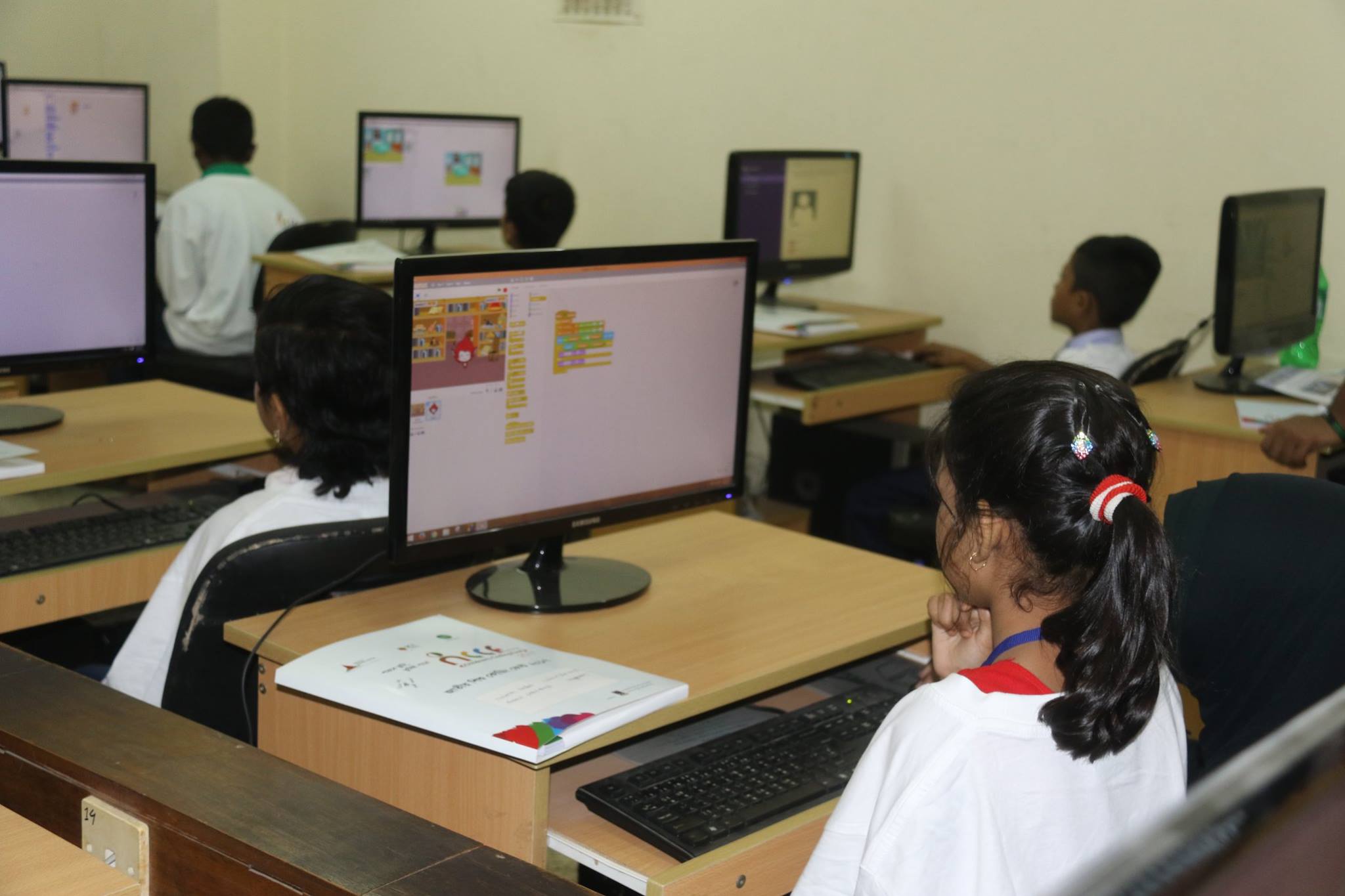
However, there were some hurdles that had to be worked around, including unreliable internet connections, limited access to computers, and unstable electricity supply. Beyond practical challenges, Shajan faced a crucial mindset shift.
“Not everybody’s convinced yet that their children should be doing coding. For many families, generating immediate income takes precedence over digital education. Balancing the need to put food on the table with the long-term benefits of coding remains a constant battle.”
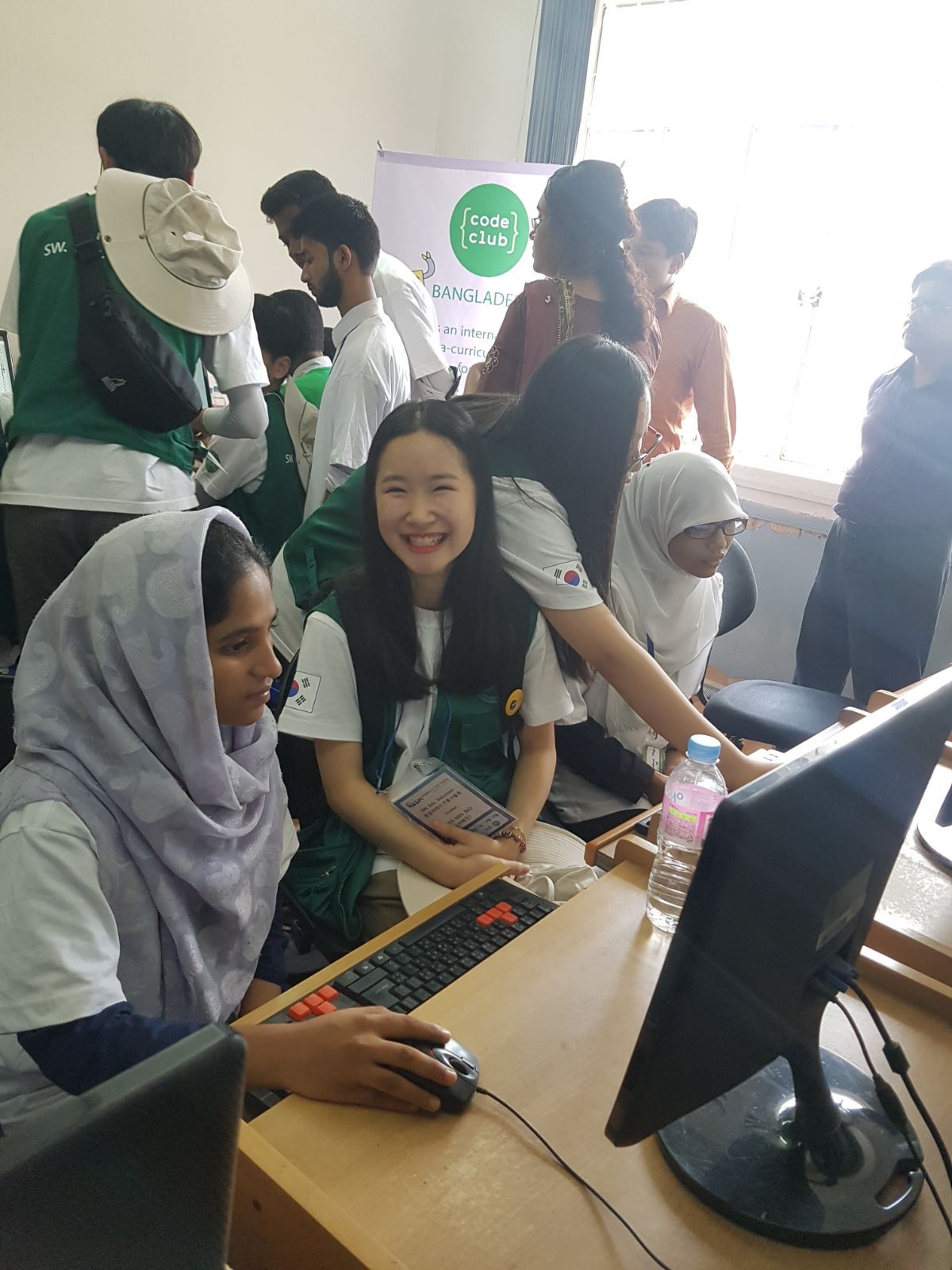
Despite these obstacles, Shajan’s efforts proved successful. Some of the creators from the 2016–2017 classes, now in their twenties, have pursued computer science and now share how Code Club helped them on their paths. He also organised an incredible exchange program, bringing creators and mentors from Code Club South Korea to Bangladesh for a seven-day visit. Despite not sharing a language, creators connected through the language of code, an experience Shajan describes as inspiring for the young people and adults alike.
Shajan’s focus now is to launch a Coolest Projects event in Sylhet, the place his father was born and a region he wants to focus on before taking Coolest Projects national as well.
He is actively engaging with teachers and student volunteers across the city, with strong support from Nooraiya Khan, an ICT Lecturer with a background in computer science. Nooraiya is working hard with Shajan to co-lead all Code Club activities in Bangladesh, bringing valuable expertise and shared passion to the movement.
Shajan believes the current digital landscape offers new opportunities. He is a strong advocate for the role of artificial intelligence (AI) in education, viewing it as a way to help bring opportunities to all young people. He plans to introduce AI-focused Code Club projects to Bangladesh, ensuring the next generation is prepared for a future driven by technology.
For Shajan, Code Club Bangladesh is “for everybody”. He wants to ensure that no child, especially girls and those from underserved communities, is left behind. He would welcome anyone interested in helping the young people of Bangladesh, including teachers, educators, tech professionals, and government bodies, to join Code Club Bangladesh’s journey.
If you’d like to support young people in your community to explore coding, why not start a Code Club? The team will support you every step of the way with resources, training, and a collaborative community.
Find out more on the Code Club website.
The post Dedication to digital education in Bangladesh: Meet Shajan appeared first on Raspberry Pi Foundation.
Across Kenya and South Africa, Code Clubs are going from strength to strength. We’re excited to share their incredible progress and positive impact with you and shine a spotlight on our fantastic partner organisations, whose support makes it all possible!
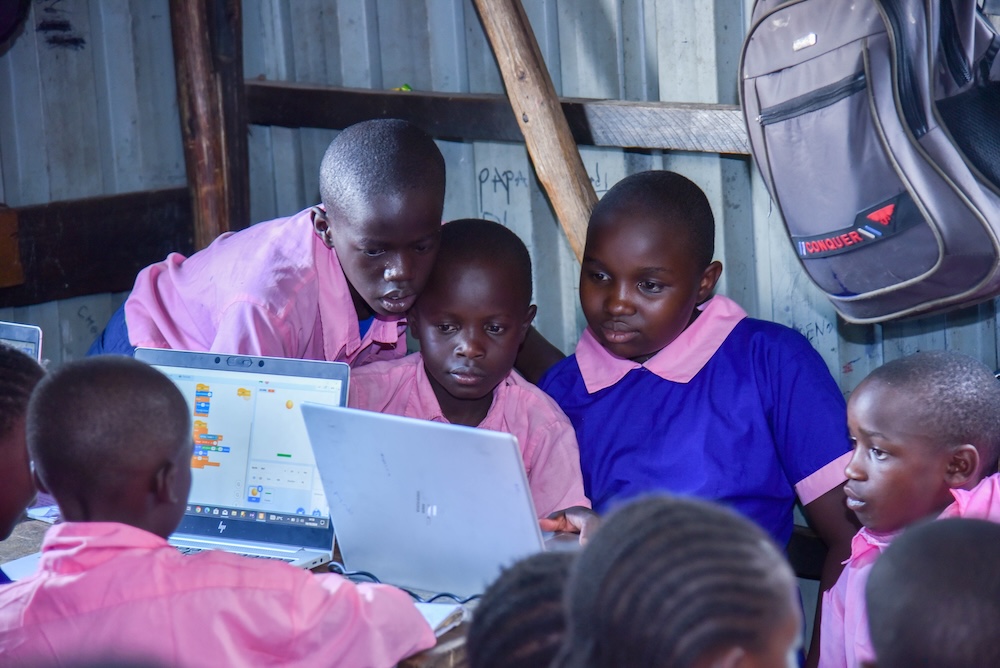
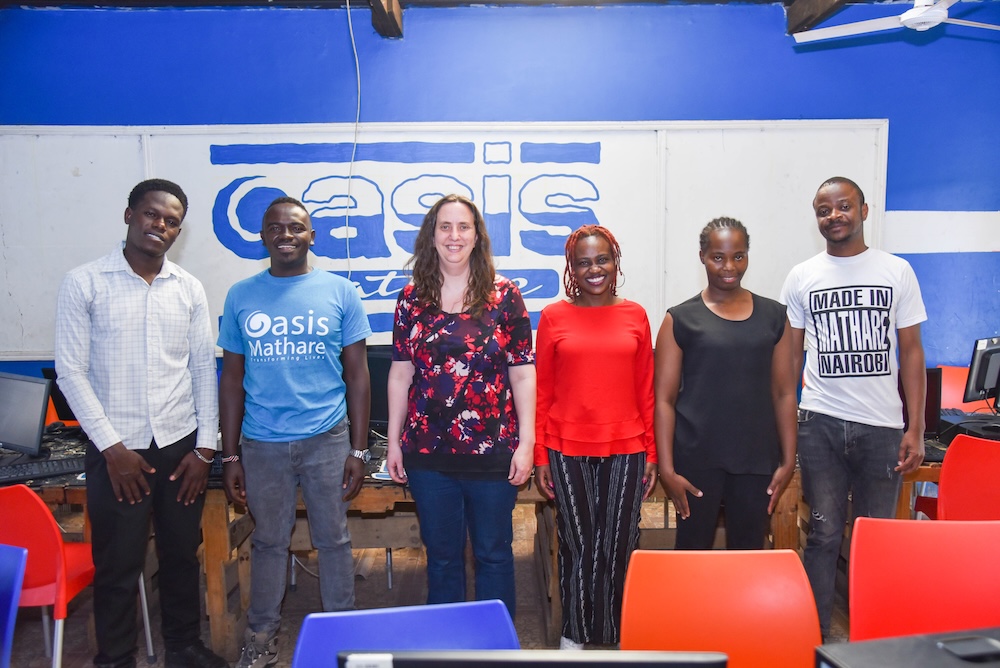
Code Club is a thriving global community of clubs where young people can develop the confidence to create with digital technologies in a fun and supportive space. In Kenya we’ve been working closely with Oasis Mathare, Young Scientists Kenya, Kenya Connect, Tech Kidz Africa, STEAM Labs Africa, and Futures Infinite, while in South Africa we’ve teamed up with Keep a Child Alive and Coder:Level Up.
We used a train-the-trainer model to help our partners in Kenya and South Africa train Code Club mentors. We began by training community trainers from each partner, who then went on to deliver training to club mentors. This has allowed us to reach 1,498 mentors across both countries. Club mentors told us how grateful they have been to these partners for their ongoing support, including providing training and visiting the clubs.
As part of our ongoing evaluation of the Code Club programme in Kenya and South Africa, we’ve collected feedback from our partners, club mentors, and creators via feedback surveys, club visits, and focus groups to help us understand the impact of our work.
There are 397 Code Clubs running in Kenya and 622 in South Africa — we estimate we’re reaching over 42,000 young people through Code Clubs and nearly 20,000 through related one-off events such as summer programmes.
This broad reach means that young people who might otherwise have had limited or no access to computing are now engaging with coding, and doing so in truly exciting ways.
One Kenyan Code Club leader, working in a particularly disadvantaged and marginalised area, said Code Club was so important to young people as it means “you don’t have to be left behind”. They shared that such a large number are attending the club — and that many more are wanting to join — because young people are eager to be “part of the digital future”.
89% of surveyed mentors reported an increase in their young people’s skills in coding and confidence to engage with emerging technology.
According to one South African Code Club mentor, taking part in Code Club “changes your perception and thinking…. it’s possible to do things… it becomes a reality because it’s not a really difficult thing. It’s something that you can do step by step and it really changes the mindset. It really redefines how someone thinks.”
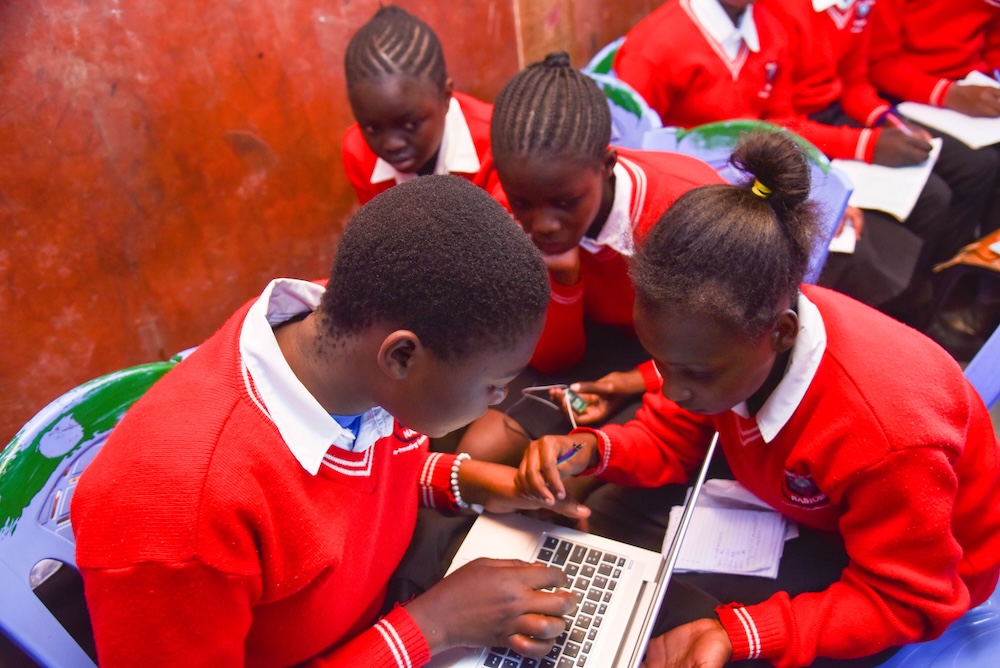
Mentors consistently told us that young people are collaborating more, and supporting each other in their learning journeys. One South African young person perfectly captured this spirit: “if they don’t know something, we can teach it to them.”
Mentors also shared that young people are inspired to continue developing their coding and computing skills beyond club sessions. They’re actively seeking opportunities to deepen their knowledge and are already thinking about how they could use their newfound skills in their future careers.
Overall, club mentors felt well prepared to run clubs and found the training high quality and useful. This is reflected in the high percentage of mentors who agreed that the training increased their skills, confidence, and knowledge, with some partners showing an agreement rate as high as 91%.
Partners have also worked hard delivering extra training on requested topics such as additional computer skills and mentorship to help mentors feel more confident running Code Clubs.
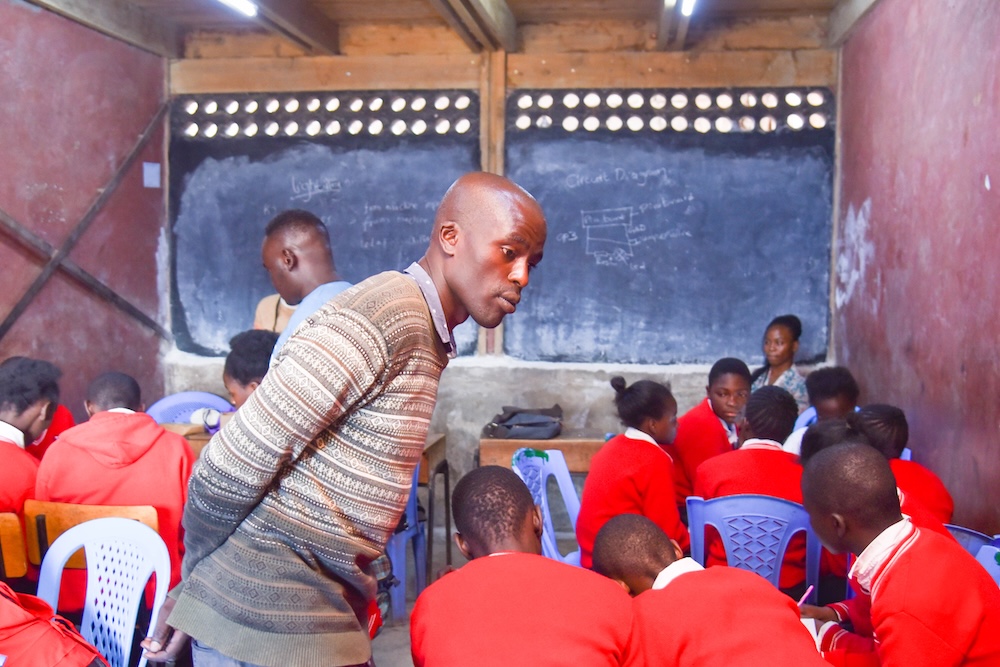
We recognise the unique challenges that can arise when running clubs in areas of Kenya and South Africa where access to technology and the internet isn’t always consistent. We’re continuing to develop resources and support for these clubs, as well as working with partners to better understand what their clubs need.
We’re also continually reflecting on and refining our train-the-trainer model to understand how best to equip community trainers with the confidence and skills they need to train others.
The dedication and hard work of our partners have been instrumental in allowing us to significantly expand our reach and impact in Kenya and South Africa. Alongside this incredible growth, we’ve strengthened our commitment by increasing the size of our teams operating directly from both countries. This means we can continue to grow our support for our thriving Code Club communities.
We’re excited to have a number of new partners setting up Code Clubs over the next year. We look forward to sharing the invaluable insights and feedback we’ve received from our existing partners to ensure our new partners are fully supported and feel empowered to deliver transformative Code Clubs in their areas.
Watch this space!
The post Celebrating impact: Code Clubs are thriving in Kenya and South Africa appeared first on Raspberry Pi Foundation.
We love hearing from members of the community and sharing stories of amazing young people, volunteers, and educators who are using their passion for technology to create positive change in the world around them.
Meet Isabelle, a youth mentor at a library Code Club, whose inspiring story tells how a passion for helping others and a love for reading led back to a childhood interest, shaping an unexpected and rewarding journey.

Isabelle’s coding journey began around the age of nine. An avid reader, she regularly attended her local library in Stourbridge with her gran. When they saw there was a Code Club held on a Saturday morning, they both decided it might be a good skill for Isabelle to learn.
“I used to have like an entire folder of all the projects I’d completed. I’ve still got it somewhere in my room!”
She quickly progressed through Scratch, Python, and HTML, even finding herself teaching the adults at the club at some points! But, as secondary school approached, her involvement naturally tapered off as she began to focus on her studies.
In secondary school, Isabelle was looking for volunteering opportunities as part of her Duke of Edinburgh (DofE) award. Remembering her positive experiences at the library, and continued love of books, she initially considered volunteering there. Then, she had an idea.
“I suddenly thought ‘What if they still do Code Club?’ I really enjoyed it when I did it and I still remembered enough about it to help others. So, I felt like I could actually be useful instead.”
Isabelle reached out, and thanks to her gran’s long-standing connection with the library, she was remembered and welcomed back. What started as a three-month commitment for her DofE award soon extended to six.
“I really looked forward to each session at the library and decided to stick with it for the whole time.”
Isabelle’s return coincided with the Code Club restarting. Stepping into a mentoring role, she quickly found herself in the thick of it. With five computers and a group of new young people, most of whom had no prior coding experience, the first sessions were a whirlwind.
“It’s like the best kind of chaos. It doesn’t get easier as such. But it’s so fun meeting these new kids, they’re all different and they bounce off each other.”
She works closely with Lucy, the club leader, helping manage the flow of projects and supporting the children as they navigate everything from creating Scratch accounts to tackling challenging projects.
While the technical skills are central, Isabelle emphasises that Code Club offers so much more. She’s seen shy children blossom, making new friends and becoming more involved.
“I think there’s the whole element of socialising as well. And beyond coding, kids develop essential IT skills, like learning how to use a mouse and keyboard. Something many who just use tablets and phones don’t know!”
Isabelle, now preparing to go on to further education, could not have predicted how her mentoring journey would turn out. What began as a three-month DofE requirement has turned into a four-year commitment.
“It has just never been something that I thought ‘oh, I don’t want to do this anymore’. It’s just part of the weekly routine now. It’s been four years and it’s shocking how quickly it’s gone.”
Isabelle’s dedication hasn’t gone unnoticed. She’s built strong bonds with the staff and gained invaluable experience. She’s learned to organise, work in a team, and even run sessions independently, developing skills that will be invaluable for her future.
“I like the bond that I have with the staff and with Lucy. It feels great to be trusted that much and it has just been such a nice experience.”
Lucy, Stourbridge Code Club leader and Library Assistant, shared her experience with the club and collaborating.
“Since Code Club offers so much more than just coding — confidence building, creativity, friendship, etc. — it plays an important role for children and young people in the community. The library is much more than just a place for books, and hosting Code Club here creates a welcoming space where young people can explore technology away from the classroom.”
“Isabelle has been absolutely fantastic both in supporting us with club admin as well as supporting the children with their coding! She understands the projects inside and out and is brilliant at not only solving problems, but also, importantly, encouraging the club to find ways of solving problems themselves. Our Code Club couldn’t have become what it is today without her input!”
As Isabelle prepares to head off to the Bath Spa University to study media communications and publishing, she offers this advice for other young people considering becoming a Code Club mentor…”just go for it!”
Isabelle admits to being anxious at times, but the experience has significantly boosted her confidence.
“It built my confidence a bit more. You make friends along the way and you learn a lot of new things. And don’t worry if you don’t have a lot of coding experience. I don’t think you need it. I had a little bit but I was still basing it mainly off of reading the project instructions. And in all fairness, the instructions are really helpful!”
Mentoring at Code Club isn’t just about teaching, it’s about learning, growing, and connecting. It’s an opportunity to give back, build confidence, and discover the joy in supporting the next generation of digital creators. As Isabelle’s journey shows, sometimes the most rewarding paths are the ones you never planned to take.
Lucy shared why she thinks having youth mentors involved with Code Club is such an important dynamic.
“Youth mentors are great as role models and inspiration for children, and as a young person themselves they build such a great rapport with the club members. A mentor who’s closer to their age often feels more approachable, which helps create a comfortable and encouraging environment for them.”
If Isabelle’s story has inspired you, why not explore the world of coding? You can get started at home with over 250 free projects on the Code Club Projects website.
Looking for a little extra support in your own coding journey or open to mentoring others? Join a Code Club near you to meet a like-minded and supportive community.
The post From coder to mentor: Meet Isabelle appeared first on Raspberry Pi Foundation.
We love hearing from members of the community and sharing the stories of amazing young people, volunteers, and educators who are using their passion for technology to create positive change in the world around them.
Seung Woo, also known as Tony, is a 17-year-old student from Canada and the co-founder of his school’s Code Club, alongside his teacher, Kay. A curious and driven teen with big ambitions in computer science, Tony is not only passionate about technology, but also dedicated to building a safe, welcoming space where others can learn, explore, and grow alongside him.
Tony’s fascination with computers started early, driven by his love of video games, coding, and, perhaps most memorably, his admiration for Tony Stark, the comic-book and film character who becomes the superhero Iron Man! The idea of building something powerful from scratch stuck with him.
“My whole life, I have been curious about the inner workings of a computer and my inspiration for coding is Tony Stark or Iron Man from the Marvel Cinematic Universe!”
Tony’s early coding journey wasn’t without its challenges. Finding the right resources was difficult, and staying motivated during tough moments was often hard without a support system.
“Like many others, I was independently taught, and during this time of independent learning I’d find many different roadblocks and challenges that I had to overcome alone. A big setback for me was finding the right resources in order to learn how to code. Another big obstacle for me was motivation. I would find myself losing interest in a project. I didn’t have the exterior motivation to help me push through the inevitable hardships that come with coding.”
That’s where the idea for a coding club began to take shape.
Tony co-founded the Code Club at Collège Jeanne-Sauvé in December 2024 with that exact vision in mind — he wanted to provide a fun, collaborative, and welcoming environment where students of all skill levels could explore their love of technology together.
“I created the coding club to help everyone on their journey of computer science, no matter their skill level, and that is exactly what it is turning out to be. Finding resources is easier than ever with a teacher and all of the amazing members.”
Tony’s teacher and co-founder, Kay, shared why Code Club was the right fit for the school.
“I thought Code Club was the best way to start our club for a few reasons. The amount of coding language options was varied and appealed to the different learners in our club. It was also important for us to promote our club and let our community know about the presence of a coding club in our school, and Code Club helped us do so via their online presence.”
For Tony, the secret ingredient behind his club’s success is simple: teamwork.
“Without teamwork, our club wouldn’t really be a club, it would simply be an ensemble of people coding in their own little cubicles, much like a stereotypical office job, and to me, that does not sound too enjoyable. Teamwork is our little secret ingredient in problem-solving and building motivation, we embrace it by creating a safe space where everyone can speak their minds without judgement!”
Members are free to choose their own learning paths. No matter the project, the atmosphere is always filled with laughter, energy, and curiosity.
“Coding should be something that is fun — not stressful like others may make it seem. Celebrating achievements, making short term goals, and problem solving with friends are all great ways that we make coding fun in our club. A second word would be teamwork. Without teamwork, our club wouldn’t really be a club.”
Teamwork, he adds, transforms what could be a solitary activity into something social and deeply motivating.
Tony hopes the club will continue to grow, bringing more students into the world of coding and helping them feel at home in it. His story is a great reminder that learning to code isn’t just about computers — it’s about building community, confidence, and creativity.
“I wanted to create a space where everyone would be accepted and encouraged to learn more about coding and not be ashamed to ‘nerd out’ about this subject like I do very frequently. I’ve dreamed of creating a space that embraces this beautiful passion.”
If you’d like to explore coding, you can get started at home with over 250 free projects.
For a little more support, or if you’re open to mentoring others, you can also join a Code Club. Check our website to find a club near you and become part of a like-minded and welcoming community.
The post Creating a space for connection and code: Meet Seung Woo (Tony), Canada appeared first on Raspberry Pi Foundation.
We love hearing from members of the community and sharing the stories of amazing young people, volunteers, and educators who are using their passion for technology to create positive change in the world around them.
Growing up in Mathare, one of Nairobi’s largest informal settlements, Douglas experienced first-hand what it meant to go without access to education and opportunity. His experience sparked a Code Club journey that is already hugely inspiring… and it’s only just getting started.
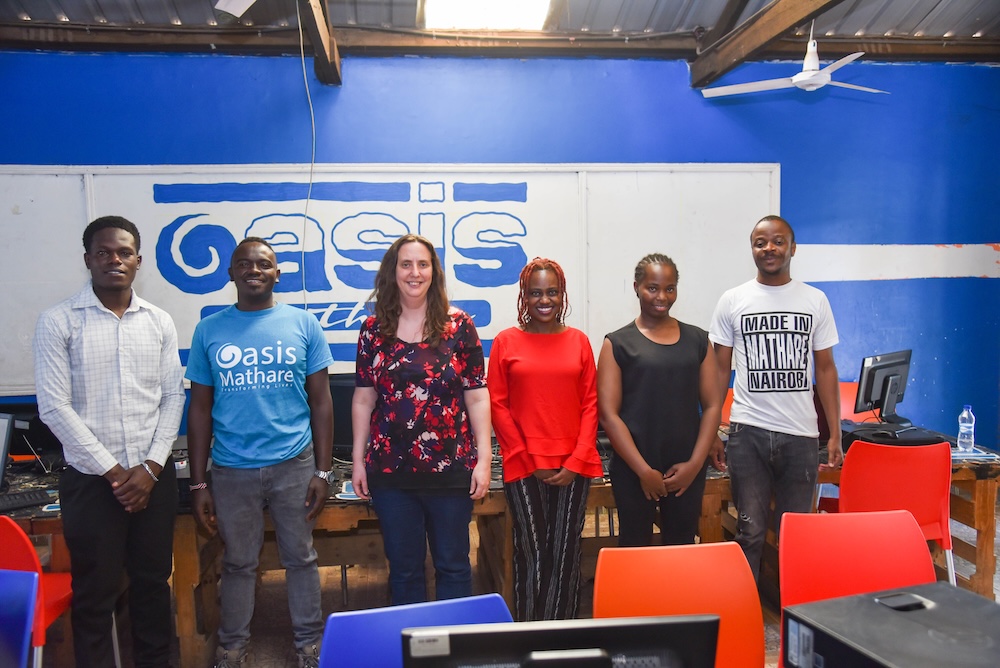
For Douglas and many of his peers, the limited access to education in Mathare often meant being left with no clear path to earn a livelihood. Douglas saw opportunity in technology — he wanted to increase access in this field for the young people in Mathare and raise their ambitions.
“Why are we doing technology? Because we believe that tech does not have a boundary. As long as you have access to the internet and you can learn some basic skills… the opportunities are limitless.”
That belief became the keystone of Oasis Mathare, an organisation co-founded by Douglas and a group of others with similar lived experiences. Like Douglas, most of the founding members haven’t followed a standard path with formal schooling, but all understand the power of technology to transform lives.
Douglas’ own tech journey began humbly, and was sparked by his curiosity.
“After primary, I didn’t go straight to high school. I spent two years working in a nearby barber shop. Then I think I just fell in love with computers. I learned how to do some basic stuff with design and used to play around with Photoshop.”
From there, he taught himself web design and programming skills, which began to open new doors. Eventually, he went back to university to study business and information technology to deepen his knowledge, but even before that, Douglas had already started giving back.
“We used to hold a club providing a space for kids to come and play games on computers. That sort of grew from just Saturdays to a few times a week… and now it’s full time.”
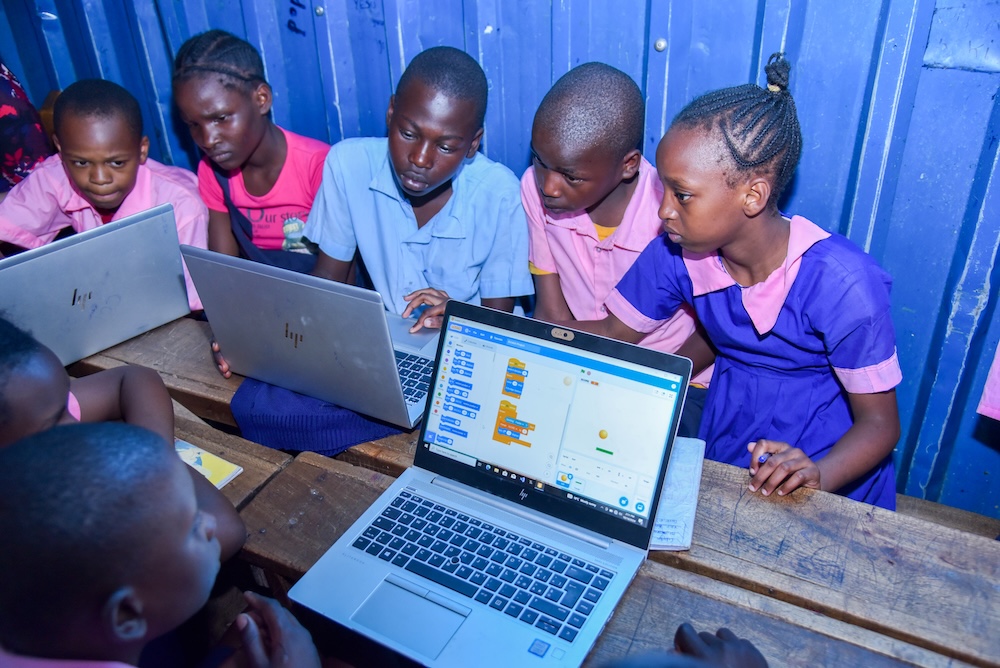
Today, Oasis Mathare runs intensive software engineering and robotics programs that last between 9 and 12 months. But back in the early days of the organisation, Douglas quickly realised that many young people were struggling to keep up — not because of ability, but because they’d never used a computer before.
“So, we started Code Clubs to introduce these principles of programming at an early age… and we actually realised that those who have gone through Code Club take less time to complete our software engineering and robotics classes.”
Code Clubs now serve as a stepping stone at Oasis Mathare. They help introduce computer literacy and programming concepts to young people early, making it easier for them to thrive in more advanced programs.
The impact of the program is already visible. Many graduates of Oasis Mathare programs go on to volunteer and eventually teach, serving as role models for the younger learners.
“Oasis Mathare has 6 full-time staff. There are 12 Code Club leaders. They are our graduates from the software engineering program. We are plugging them into the Code Clubs to help them gain confidence and help the next generation.”
The Code Clubs are held both in schools and at the Oasis Mathare centre, creating safe, structured environments for learning, experimenting, and collaborating.
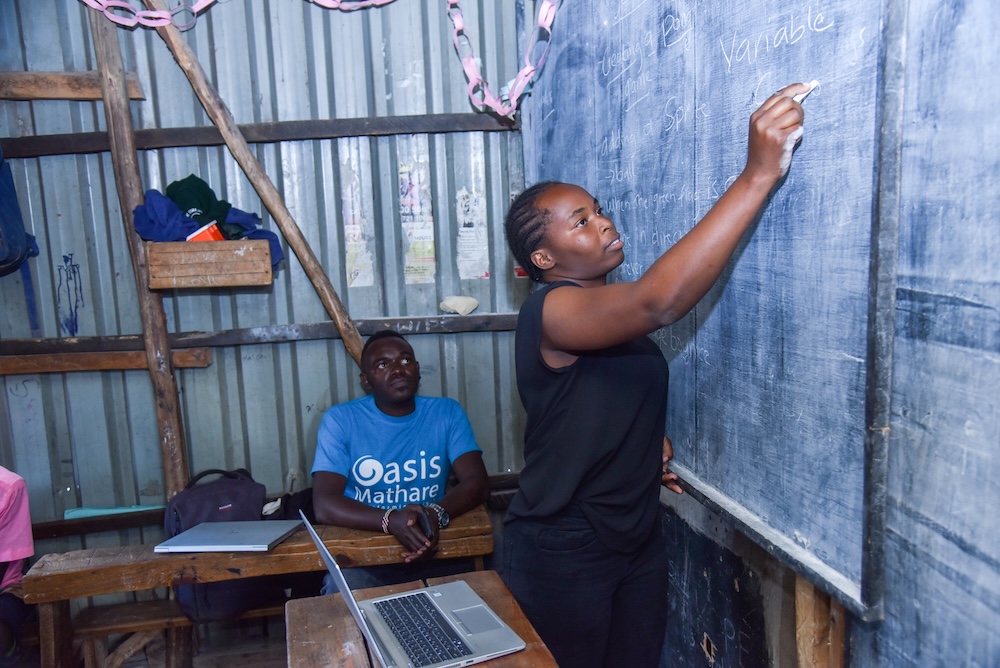
Before setting up Code Clubs, Oasis Mathare ran STEM clubs that used a variety of resources, but the cost and maintenance became a barrier. When they discovered Code Club’s free-to-access resources, everything changed.
“We found [the resources] very useful. The good thing about Code Club is you can plan sessions using resources that are freely available, like Scratch. It’s really straightforward.”
The biggest challenge now? Internet access is limited, so Douglas and his team often work offline. The team have started using the Raspberry Pi Foundation’s offline resources, and look forward to more being available in the future.
Douglas and the Oasis Mathare team have already achieved so much. This was recognised with a royal seal of approval in 2018, when Douglas was honoured with the Queen’s Young Leaders Award by Queen Elizabeth at Buckingham Palace. Through the award, he gained access to world-class mentoring and leadership training from the University of Cambridge, helping him to amplify his impact back home.
So, what’s next? Douglas’ vision for the future is bold and clear.
“The main idea is to ensure that all kids in Mathare know at least one computer language. Not for the sake of it, but to use the principles of programming to solve their local problems.”
By learning coding, young people build more than just technical skills. They learn to think critically, work in teams, and solve problems in their communities. For Douglas, that’s the real impact.
“The overall goal is to ensure that no youth in Mathare are left behind and they all have the opportunity to develop essential skills from an early age.”
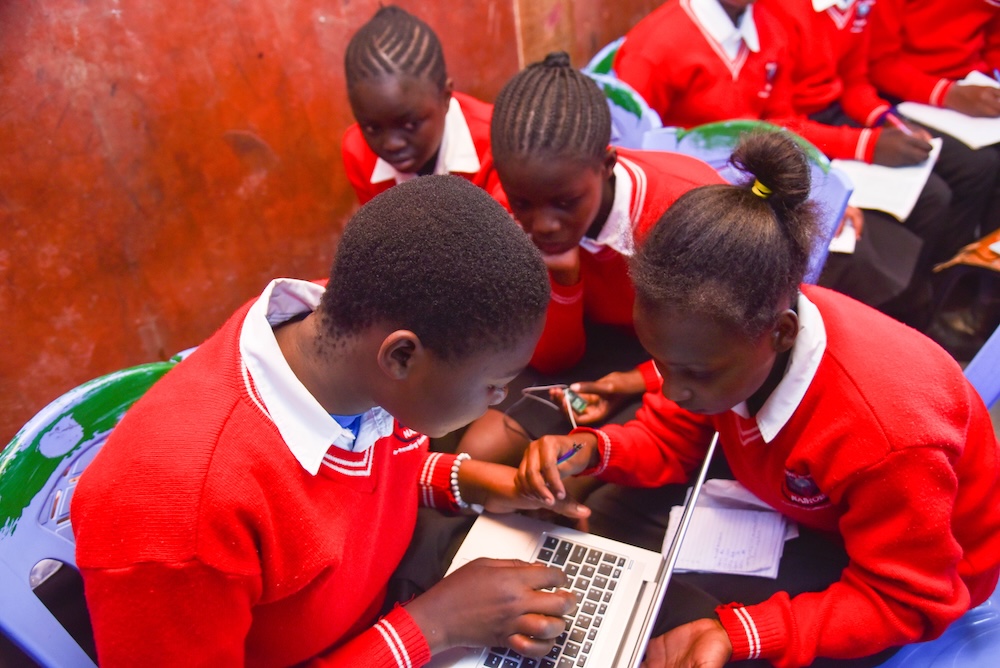
Oasis Mathare runs Code Clubs weekly, all year round, and Douglas is always looking for ways to expand the program’s reach, especially through partnerships, sponsorships, and sharing their successes so far.
With more resources, more local leaders, and a whole community behind him, Douglas is rewriting the narrative for young people in Mathare. You can find out more about Oasis Mathare on their official website.
If you’d like to support young people in your community to explore coding, why not start a Code Club? The team will support you every step of the way with resources, training, and a collaborative community. Find out more on the Code Club website.
The post Giving back through Code Club: Meet Douglas appeared first on Raspberry Pi Foundation.
We love hearing from members of the community and sharing stories of amazing young people, volunteers, and educators who are using their passion for technology to create positive change in the world around them.
It’s especially inspiring to hear about young people who are not only passionate about technology, but who are also driven to share that passion with others. Meet Matthew, a 15-year-old creator and youth mentor at Code Club, who builds his own projects and inspires peers by organising hackathons.
Matthew’s journey into the world of coding began at a young age. His initial exposure was through Scratch at school in Singapore. From there, he began exploring self-learn platforms in his own time, getting to grips with HTML and basic web development.
His enthusiasm for creating led him to participate in a technology week in Year 6, where he took on a BBC micro:bit challenge. He dedicated his summer holiday to developing a token system that encouraged community recycling, using an ultrasonic sensor to award points for good behaviour. This early project showcased his knack for problem-solving and innovation.
What truly captivated Matthew was the possibility of combining the logical challenges of competitive programming with the joy of project creation.
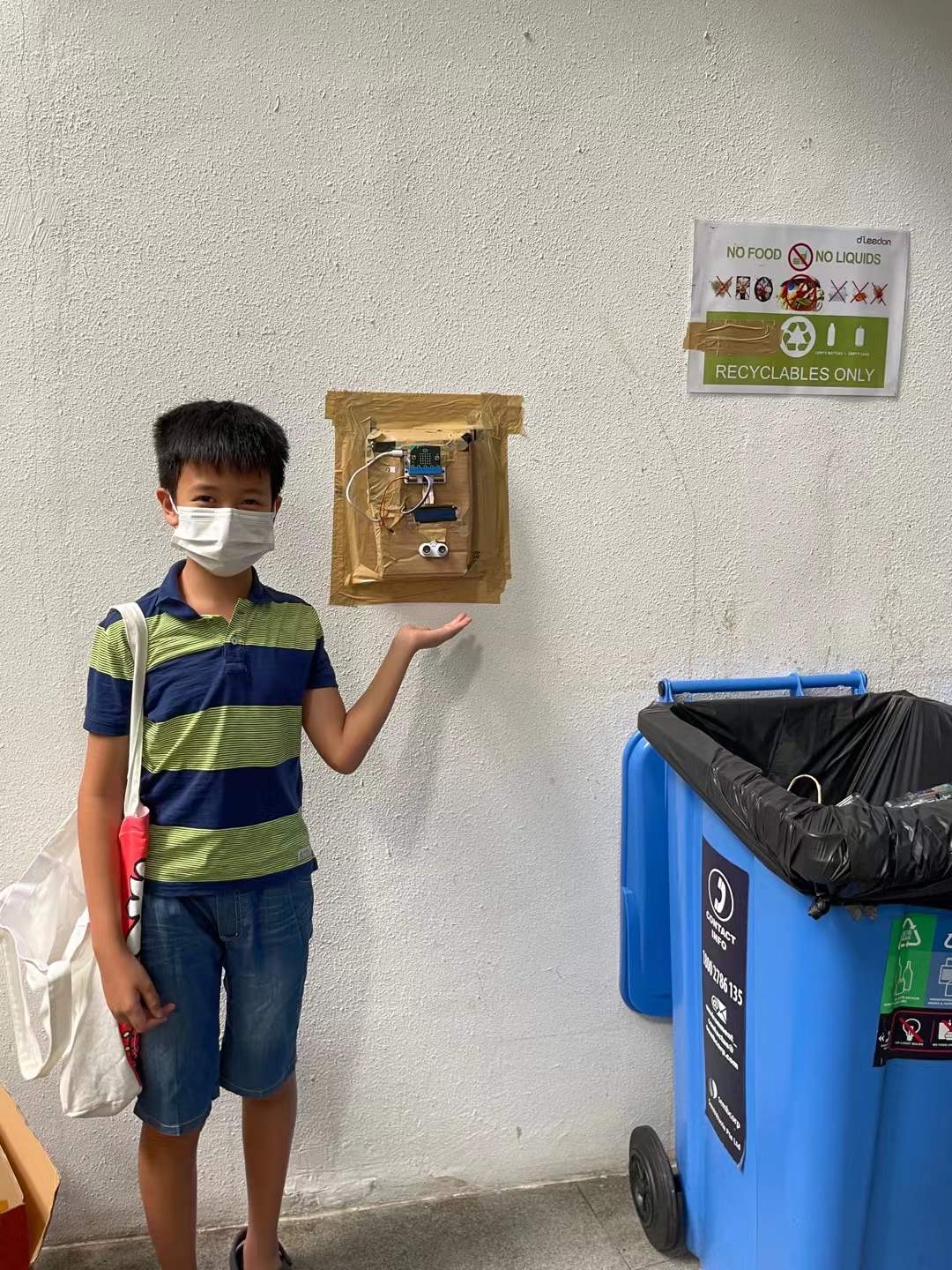
Through Youthhacks, an initiative he co-founded to support teenage hackathon organisers, Matthew aims to expand access to hackathons across the UK (a hackathon is an event where individuals or teams work intensively over a relatively short time period to build software, hardware, or other kinds of technology). Matthew wants to offer advice and support, making it easier for young people to run their own hackathons. He puts a lot of time into ensuring that the content and atmosphere truly resonate with the participants.
“So, we made Youthhacks basically as an idea to be able to support these teenage organisers, you know, like hackathons for teenagers by teenagers.”
Matthew’s connection with the Raspberry Pi Foundation came from his keen interest in the hackathon community and a need for a local venue. Having previously toured the Foundation’s offices for a school robotics club, he decided to reach out when organising a satellite hackathon called Counterspell.
This initial collaboration led to further events at the Foundation, including Scrapyard Cambridge and, more recently, Cool as Hack.
Cool as Hack was Matthew’s third event held at the Raspberry Pi Foundation offices. Unlike traditional hackathons with intense time pressure, this event, inspired by the spirit of Coolest Projects, aimed to be more relaxed and collaborative.
“For this, people could bring in their own project scraps and then they could put it together with a team, finalise it, and then enter it to Coolest Projects.”
The focus was on showcasing creativity and sharing projects globally, rather than competitive prizes. Everyone then entered their creations into the Coolest Projects online showcase.
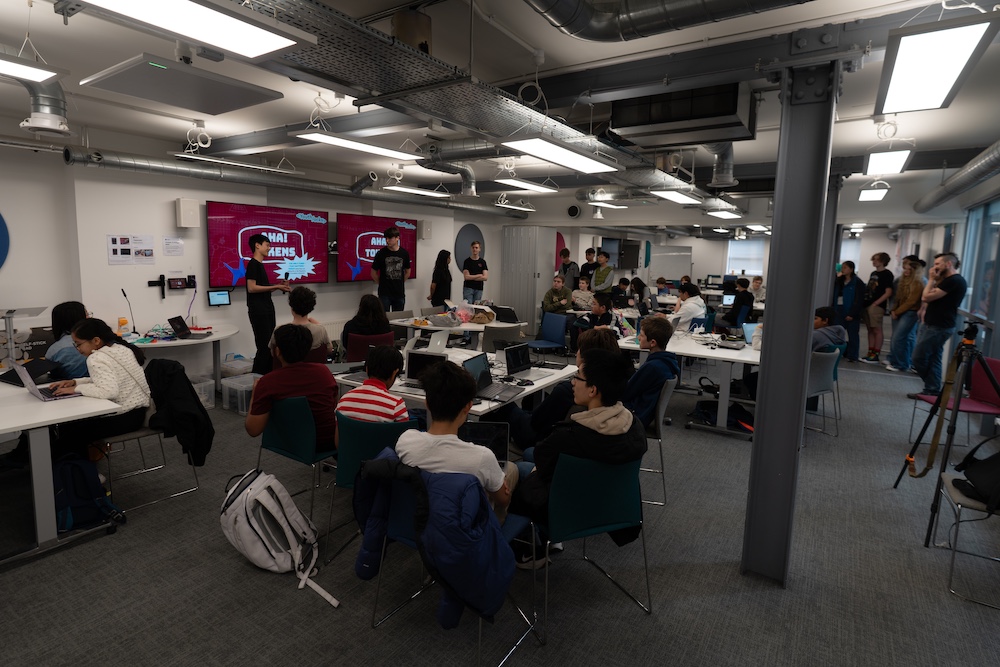
Cool as Hack was a huge success. The atmosphere was incredible — there was even a karaoke session and a “swag shop” where participants could exchange tokens earned for innovative ideas or project milestones. This token system, designed by Matthew and harking back to his own recycling project from years ago, created a fun and engaging reward system.
Matthew’s drive to organise these events and encourage other young people to code stems from his enjoyment of project creation and the community aspect of hackathons.
“Well, I suppose it links back to me enjoying making projects and when you attend a hackathon, it’s not a competition really. It’s more of a social event. So, you’re making a project and then you’re meeting quite a lot of coders, or even artists and musicians, and so many other people.”
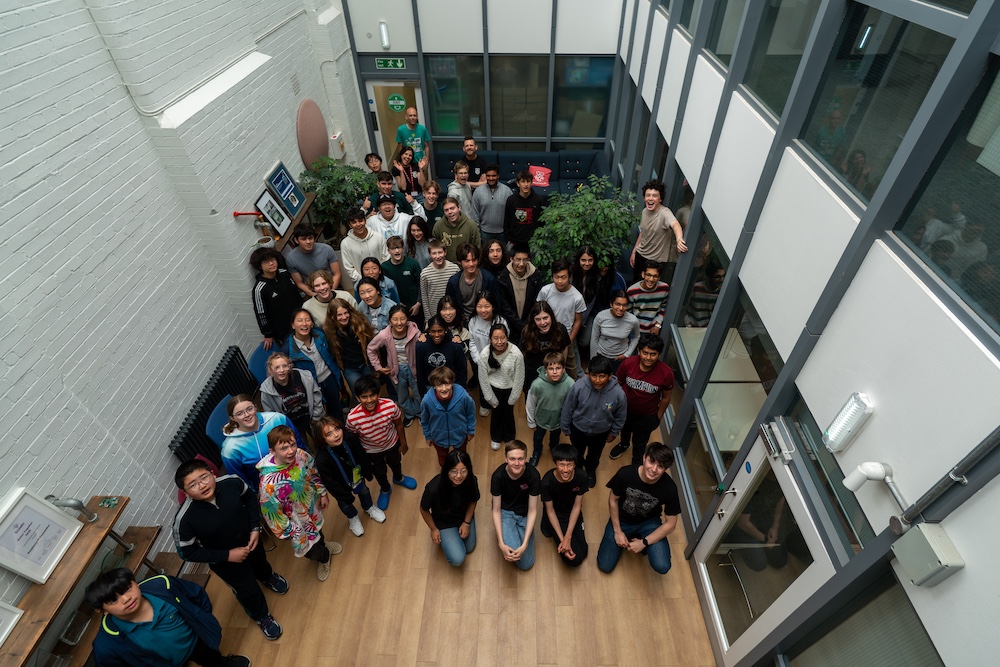
Now a regular volunteer at the Raspberry Pi Foundation’s monthly Code Club in Cambridge, Matthew remains focused on encouraging others into tech. For aspiring young coders, he says that coding is far more diverse and creative than many might initially perceive, encompassing art, storytelling, and problem-solving. Matthew’s advice is simple:
“Enjoy the process and as you learn new things you’ll realise that all of this is like super interesting, and that there are so many ways to make what you want. Just enjoy it and continue meeting new people and, yeah, be creative.”
Matthew’s journey shows how an intro to computing at a young age can lead to an incredible amount of impact. With his continued dedication, he’s sure to inspire many more young minds to start on their own coding adventures.
If you would like to explore coding, you can get started at home with over 250 free projects.
Looking for a little extra support in your own coding journey or open to mentoring others? Join a Code Club near you to meet a like-minded and supportive community.
The post Code, karaoke, and creativity: Meet Matthew appeared first on Raspberry Pi Foundation.
Inspired to set up a Code Club but not sure where to start? In this blog we hear from the amazing network of Code Club leaders and mentors, and we give you practical tips on how to take the first steps to set up your own club.
Code Club is a thriving global community of clubs where young people can develop the confidence to create with digital technologies in a fun and supportive space. Code Clubs run in schools, libraries and other community settings. We have already supported 2 million school-aged young people worldwide to make things they care about with code.
We offer free training and ongoing support for anyone who would like to set up a Code Club — you don’t need to have a background in coding and technology to get involved.
“If you’re thinking of starting a Code Club, do it. The Code Club team has everything created — all the resources are available.” – Peter Hutyan, Code Club mentor, The Mease Spencer Academy, UK.
Peter, a primary school teacher, has been running a Code Club for seven years at The Mease Spencer Academy in Derby, UK.

“When I started Code Club, I didn’t know how to do Scratch”, says Peter about the block-based coding tool that lots of young learners start with. “So I made myself learn how to use Scratch and I was two to three lessons ahead of the kids. Basically I’ve done what the kids will do — I’ve read the instructions and created the code. It’s such a phenomenal experience of enriching young people’s lives, and you see the smile and sense of accomplishment on their faces. It’s the best day ever.”
Rachael Coultart is the Computer Subject Leader at St Nicholas Primary School, Stevenage, UK and has run a Code Club for over ten years.
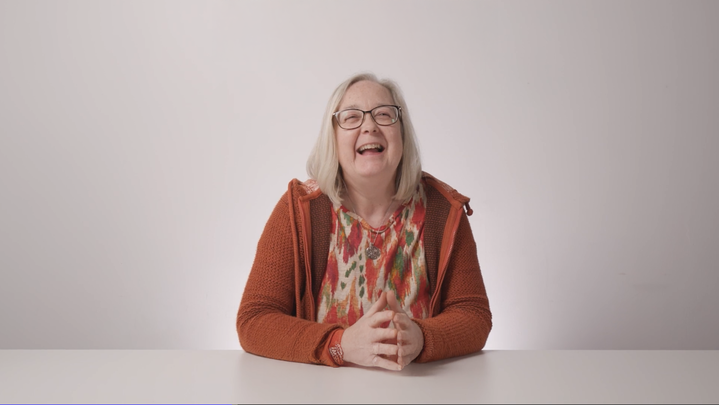
“I think the benefits of running a Code Club for our school are that it really develops children’s collaboration skills, really develops their perseverance, their thinking skills, their independence”, Rachael says.
“The key ingredients that I think make a Code Club successful is enthusiasm, from the adults who are there, a kind of passion to learn together and make mistakes together. I kind of think that sets the scene for the children to make mistakes as well. And I think having that freedom outside the classroom is what makes a Code Club really successful.” – Rachael Coultart, Computing Subject Leader, St Nicholas Primary School, UK
Saad Koubeissi runs four Code Clubs in libraries in London, UK.
“Code Club, for me personally, is about providing children with things I didn’t have when I was younger”, says Saad. “I went to youth clubs and stuff but it was never, like, so specific in tech, it was more, like, playing football. So Code Club, I think, by starting off early, it’s introducing children not only to identifying those skills, but also the terminologies, providing that. And being able to be part of that change for those children is welcome for me, to be honest.”
Bob Bisland is a mentor who started his first Code Club twelve years ago after a career in technology. He now runs three clubs in Malvern, UK.

“Everyone should set up a Code Club. This is such a rewarding thing to be able to do. I am sharing my passion and my knowledge with another generation of children, and I’m seeing them learn what coding is all about.”
We provide everything you need to make starting a club straightforward, including hundreds of free coding projects to help you tailor your sessions to the interests of your young tech creators. Our projects are available in up to 40 languages.
Running a Code Club is a fun and rewarding way to engage young people and help them learn valuable skills for the future. Start your Code Club journey today by finding out more about setting up a club.
The post Begin your Code Club journey: Set up a club today appeared first on Raspberry Pi Foundation.
Here at the Raspberry Pi Foundation we believe ensuring every child knows how to code will equip them with the skills to thrive in the future.
But what do we mean by coding and how can you get started?
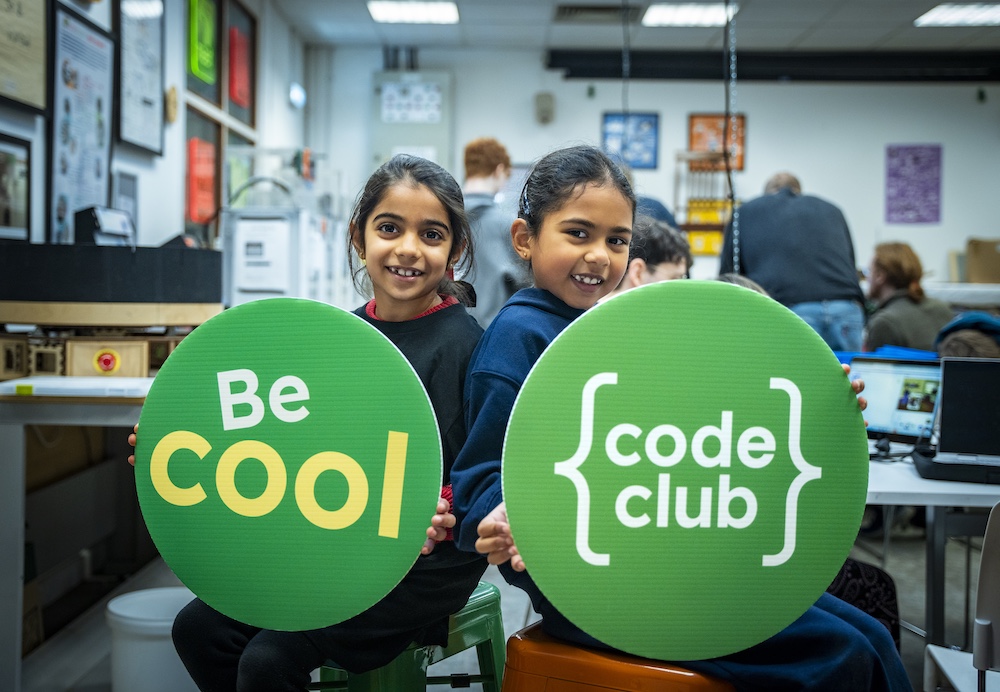
Coding is how humans give instructions to computers. Machines process and execute these instructions to perform the task you want — whether it’s making an LED light flash, designing your own avatar and making it dance, or creating a website.
Coding underpins the digital technologies that are ubiquitous in our daily lives: the apps on your phone, the software in your TV, and in life-saving devices in hospitals — even making sure your supermarket is fully stocked.
By learning to code, young people can develop the skills and knowledge that we need in an increasingly digital world.
One of the best ways for school-aged young people to get started with coding is to find your local Code Club — a fun and supportive space where young people develop the skills and confidence to create with digital technologies. They might program their first-ever game or animation in Scratch, create their own step counter with a micro:bit, or use Python to control a robot!
There are around 2,000 Code Clubs across the UK and Ireland and nearly 6,000 more around the world, running in schools and communities – and they are totally free! As well as learning to code, young creators work together, gain confidence and a sense of belonging, and build their skills in problem solving and teamwork. You can read more about the benefits in this independent evaluation of Code Club.
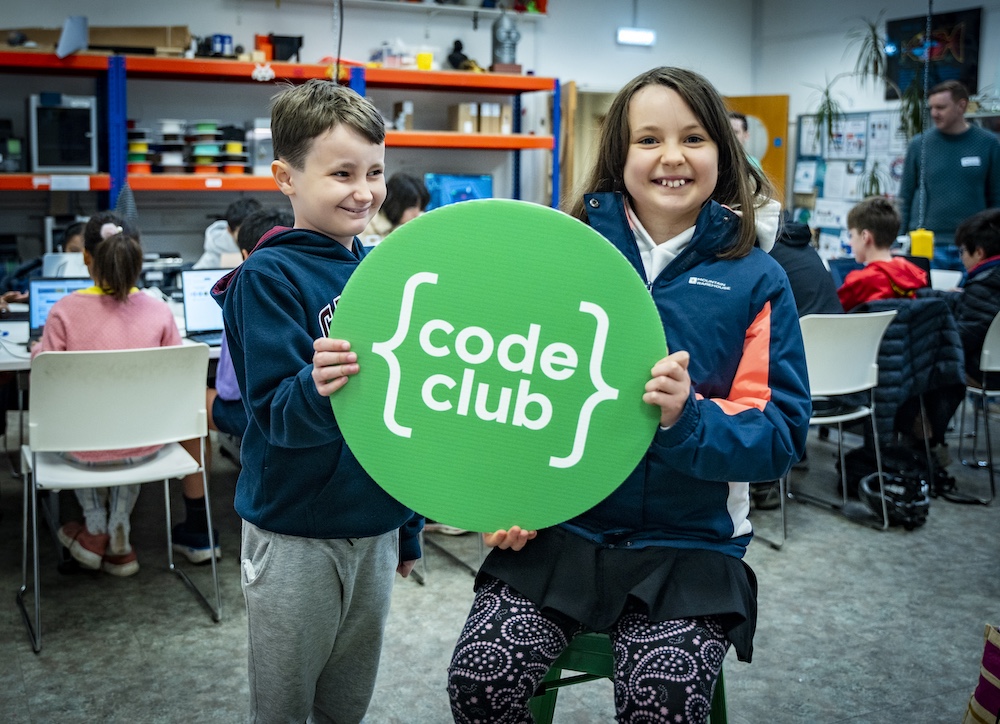
Creators use our free, step-by-step projects to learn different coding languages and skills. We have hundreds of free coding and computing projects for all experience levels and interests. For example, young people can start to code to make a character catch a bus, then move on to building a musical instrument, and even try out creating a project that uses artificial intelligence.
This handy guide for mentors will help you find which projects are right for you and your creators. Read on to find out more about our free coding resources.
Scratch is a good way for young people to begin their journey in coding. Scratch is a block-based language, which allows children to assemble code to produce games, animations, and stories.
The Raspberry Pi Foundation has hundreds of Scratch projects that young creators can try out, but the best place to start is with our Introduction to Scratch path. This will provide young people with the basic skills they need, and then encourage them to build projects that are relevant to them, culminating in their creation of their own interactive ebook.
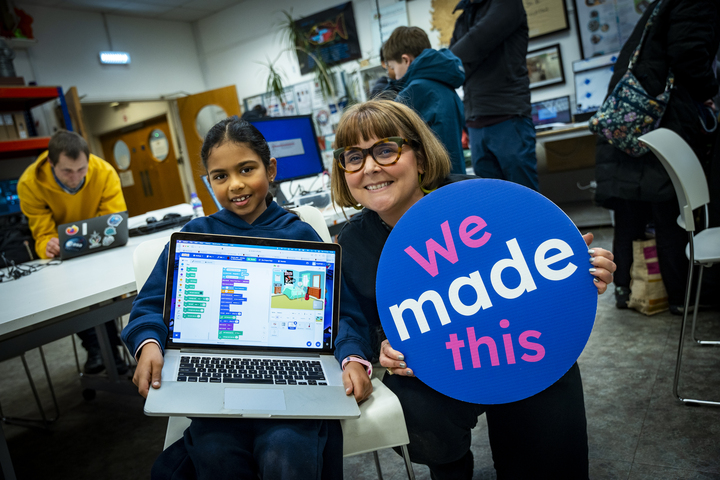
Websites are integral to many of our lives, and we believe that it is important for young people to learn how the websites and apps they visit are created with code.
That is why we have an Introduction to web development path that enables young creators to make their own simple webpages and apps with HTML, CSS, and JavaScript and share them with their friends. The path helps them create webpages about subjects that they care about, and they also learn about accessible web design.
Once children feel confident using Scratch, Python is a brilliant next step. It’s a real-world programming language used by professionals, but it’s also simple enough for beginners. Python helps young people move from blocks to text-based code, deepening their understanding of how programming works. It’s easy to read, which means learners can focus on thinking logically and building exciting projects. Our Python path for beginners is the perfect place to start, and we have loads more Python projects for them to explore as their skills grow.
Our new artificial intelligence (AI) path allows young people to discover the foundational concepts of machine learning through creative and interactive projects using AI applications and technologies. Working with voice recognition, facial recognition, and other AI technologies, young people gain a broader understanding of how AI can be applied in different contexts.
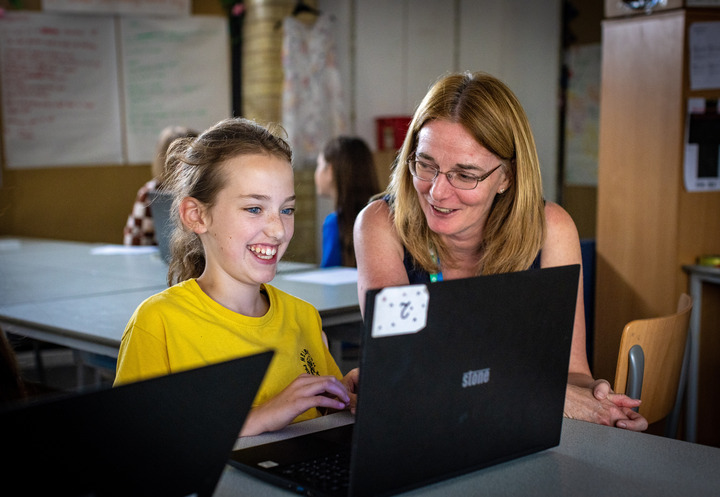
For young creators interested in interacting with the real world using code, our physical computing projects help them discover how to use electronic components. These projects show how to build things with buttons, switches, buzzers and LEDs using Scratch and a Raspberry Pi computer, or using Python and a Raspberry Pi Pico microcontroller.
Another fun option for young people who want to explore physical computing is the micro:bit. This is a small programmable device with an LED display, buttons, and sensors, and it can be used to create games, animations, interactive projects, and lots more. A visual programming language called MakeCode can be used to control a micro:bit. Or the micro:bit can be programmed using Scratch or text-based languages such as Python, offering an easy transition for young creators as their coding skills progress. Have a look at our free collection of micro:bit resources to learn more.
When young people are confident in these areas, they could try creating and exploring 3D worlds with the power of Unity. And what about creating using a Raspberry Pi computer? These beginner projects help you learn to set up and configure your Raspberry Pi and get started.
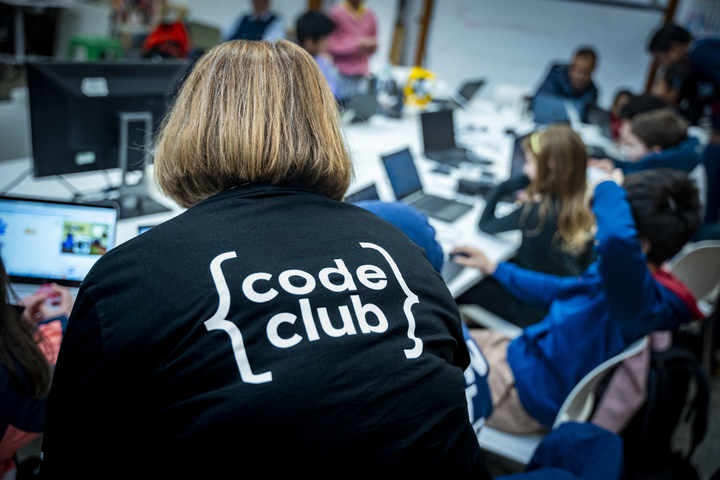
Once you’re up and running, we have two fun ways kids can get even more out of coding.
The European Astro Pi Challenge allows kids to run their code in space. We have two levels:
And young people can also submit their creations to Coolest Projects. This is a celebration of young digital creators and the amazing things they make with technology. We have a global online showcase, as well as in-person Coolest Projects events in several countries.
And if you’ve been inspired to set up a new Code Club, or volunteer at a Code Club near you, find out the next steps here.
The post New to coding? Resources to help children learn to code appeared first on Raspberry Pi Foundation.
Today we are starting a campaign to support every school and library in the UK to set up a free Code Club to make sure that all young people can develop the skills and knowledge they need to thrive in the age of AI.
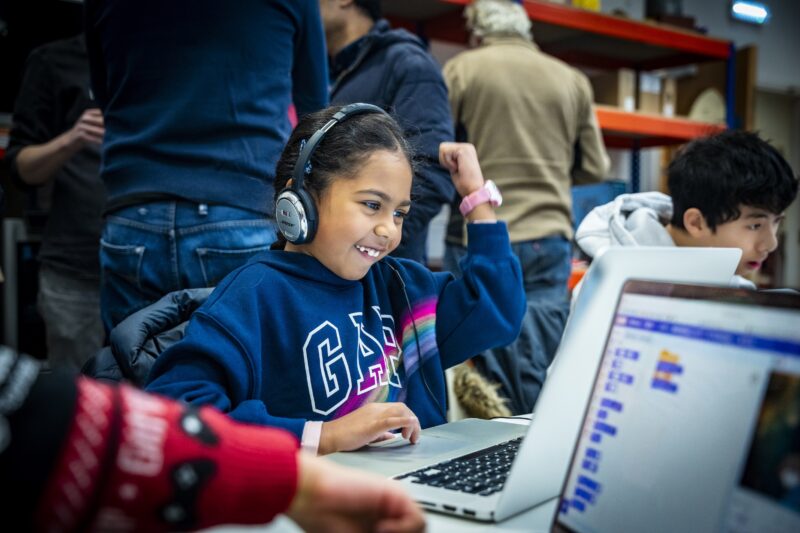
Over the past decade, Code Club has provided more than 2 million young people with the opportunity to learn how to build their own apps, games, animations, websites, robots, and so much more.
We know that getting hands-on, practical experience of building real projects with technology works. Independent evaluations have shown that attending a Code Club not only helps young people develop their programming skills, but also builds wider life skills such as confidence, resilience, problem-solving, and communication. All of which we know are essential if they are going to thrive in a world where AI is ubiquitous.
Right now, there are over 2,000 Code Clubs meeting in schools and libraries all over the UK, organised by an amazing community of teachers, educators, and volunteers from all walks of life. We want to see that number grow.
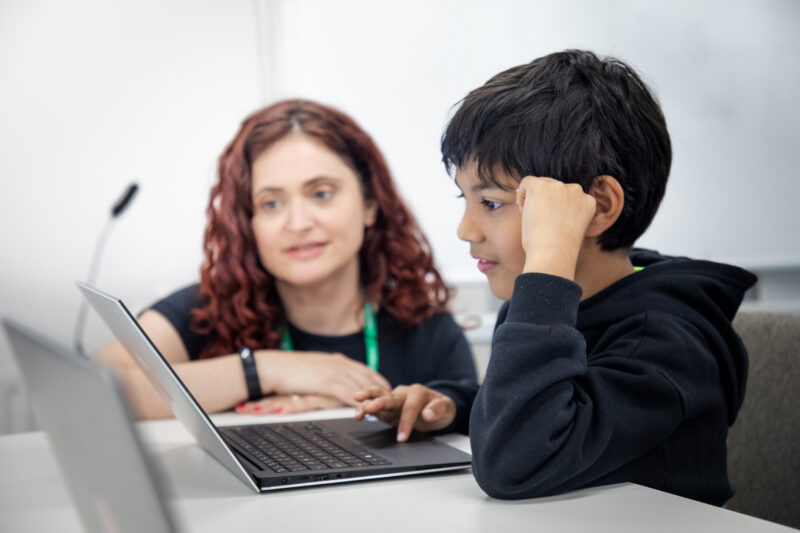
You don’t need technical skills to mentor at a Code Club. The Raspberry Pi Foundation provides free, self-guided projects that help young people learn how to create with different technologies. We have over 200 Code Club Projects on our website, all of which are developed by expert educators, based on evidence of how young people learn, and rigorously tested; so we know that they are effective.
That includes a set of projects that support the safe exploration of AI technologies, helping young people understand how AI works, its possibilities and limitations.
We also provide training and support to help you set up and run your Code Club, all of which is available at no charge.
I can promise you that the hour you spend in a Code Club will be the highlight of your week. I always come away from Code Club inspired and optimistic about what young people can achieve if we give them a sense of agency over technology.
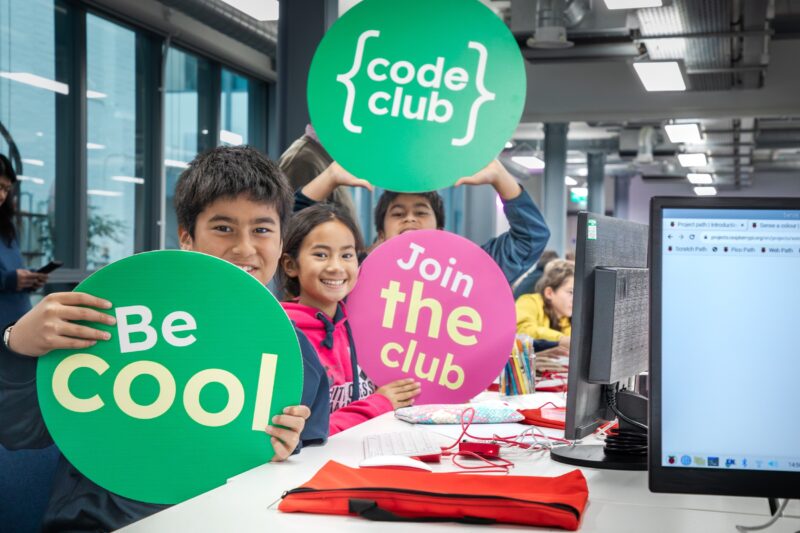
If you have been inspired to set up your own Code Club, you can find all the information you need to run your own club here.
You don’t have to take my word for it: here’s Janine, a Computer Science teacher and long-time Code Club mentor from Stoke-on-Trent sharing her experience.
Janine Kirk is a Computer Science Teacher at The King’s Church of England Academy in Stoke-on-Trent, UK, who has been running a Code Club for over ten years. She has been inspired by the campaign for a Code Club in every school and library in the UK, to set up clubs in six other schools in her multi-academy trust.
Setting up a Code Club is really easy as a teacher, as you can just tag it onto the end of your school day, or during lunch. The website is clear and easy to use — and once you have signed up, you have access to additional resources to promote your club. Code Club gives time and space to explore coding in a completely different way than in a classroom. For me, it’s about seeing what programs really inspire students: it gives an insight into how students like to code, ideas of preferred coding language, and tasks they keep coming back to. Running a Code Club has also allowed me to build relationships with students outside of the classroom environment, and all of this spills into my lessons and improves my teaching practice.
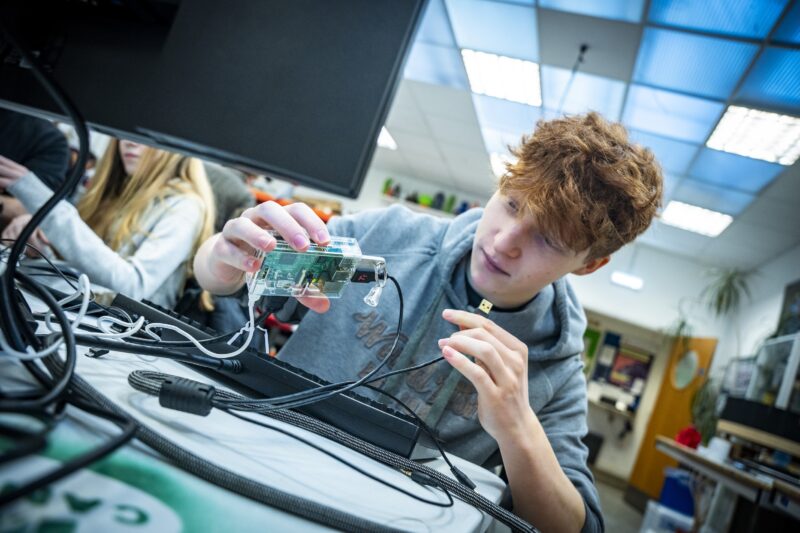
For students, Code Club is a great space where they can collaborate and work on their chosen tasks. Students often comment on how they look forward to Code Club and how they have continued their projects at home. It also allows students much more variety in enrichment activity, as Code Club is often popular with students who are neurodivergent. It’s amazing to see the children grow in confidence and friendship as they find likeminded students to support each other.
My students really love the certificates they can earn. We have been inspired by the excellent activities that revamp the old ways of teaching programming and give them a really nice spin. In fact, I have used the resources in computer science lessons too, as they are often much more visual and fun for the students to create.
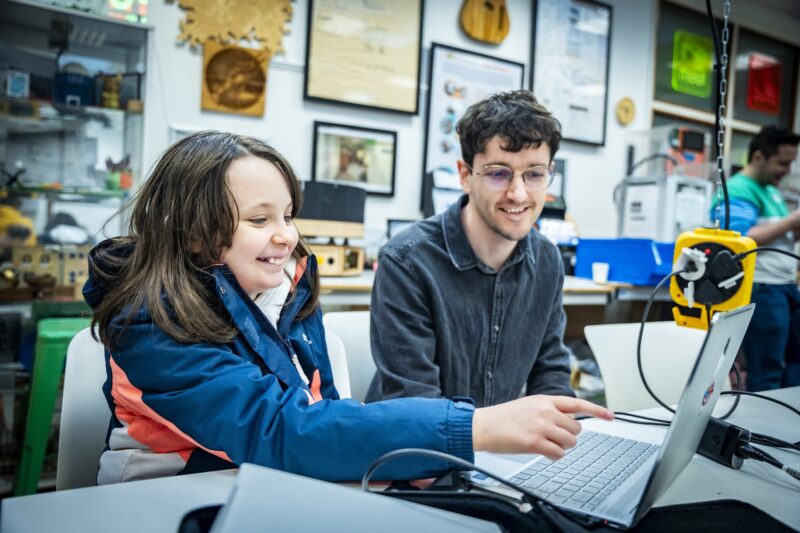
Since joining Code Club I have felt part of a community. I receive regular updates, and attending events such as the Clubs Conference really helps inspire creative ways to teach coding. As a computing teacher in a secondary school, you are often part of a very small team — but Code Club has allowed me to feel part of something bigger, and I know that should I need support, they are always there with friendly advice. It really is the best thing that I have done in my career.
Are you inspired to set up your own Code Club? Then find more information on how to get started running a club today.
The post A Code Club in every school and library appeared first on Raspberry Pi Foundation.
We’re pleased to share highlights from the 2025 Code Club annual survey report today, showcasing another year of incredible achievements and the positive impact of the global Code Club community.
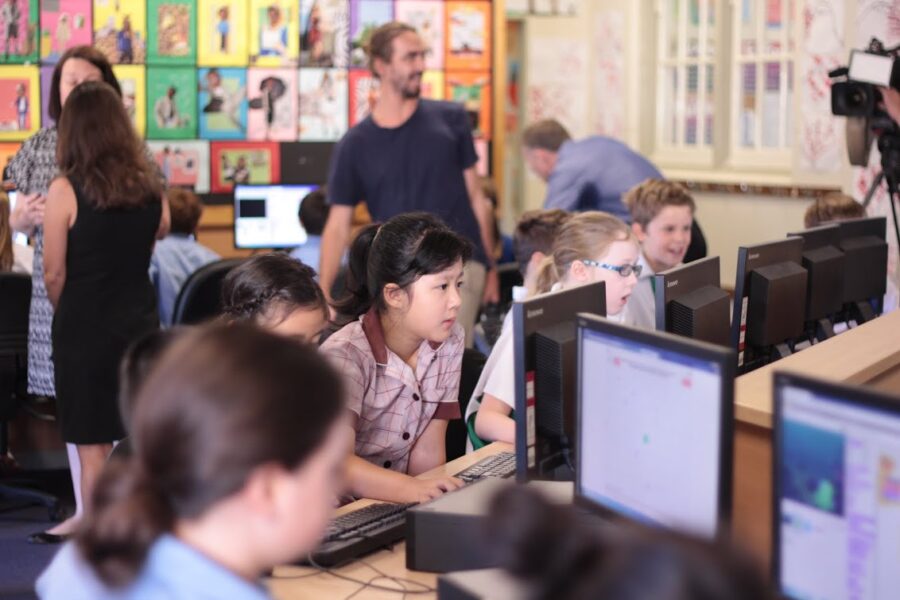
Code Club is a global movement of free coding clubs where school-aged young people — called creators — develop the confidence to create with digital technologies. Code Clubs take place in schools and community venues like youth clubs, libraries, and maker spaces and are run by teachers, educators, and volunteers from all walks of life — known as mentors. These incredible mentors make Code Clubs possible and we are so grateful for their hard work.
This Code Club annual survey report presents key responses from 775 mentors gathered via surveys and feedback from partners.
This year, 7,494 Code Clubs have confirmed they have been active in the last two years, with clubs in 102 countries. We estimate 257,000 creators are involved in clubs and 43% of creators are female. As one UK Code Club mentor put it: “Girls who didn’t think it was for them now have confidence”.
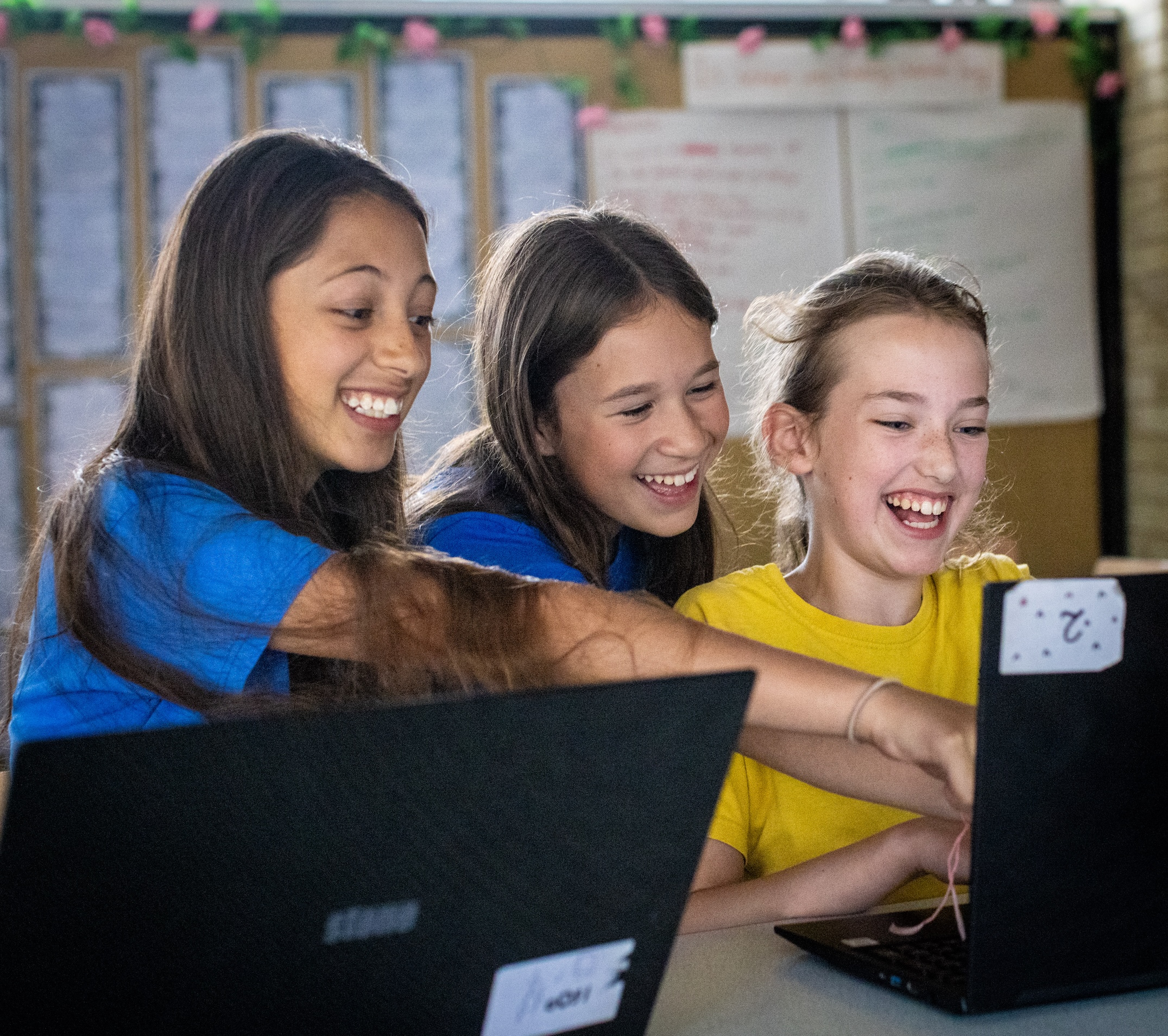
In 2024, an independent evaluation by the Durham University Evidence Centre for Education provided evidence of positive outcomes for young people attending Code Clubs. We are continuing to build on this evidence, with 96% of mentors responding to our surveys agreeing that creators have increased skills in computing and digital making, as well as increased confidence to engage with technology as a result of attending a Code Club.
Here are a few of the examples mentors gave of the impact Code Club has on creators:
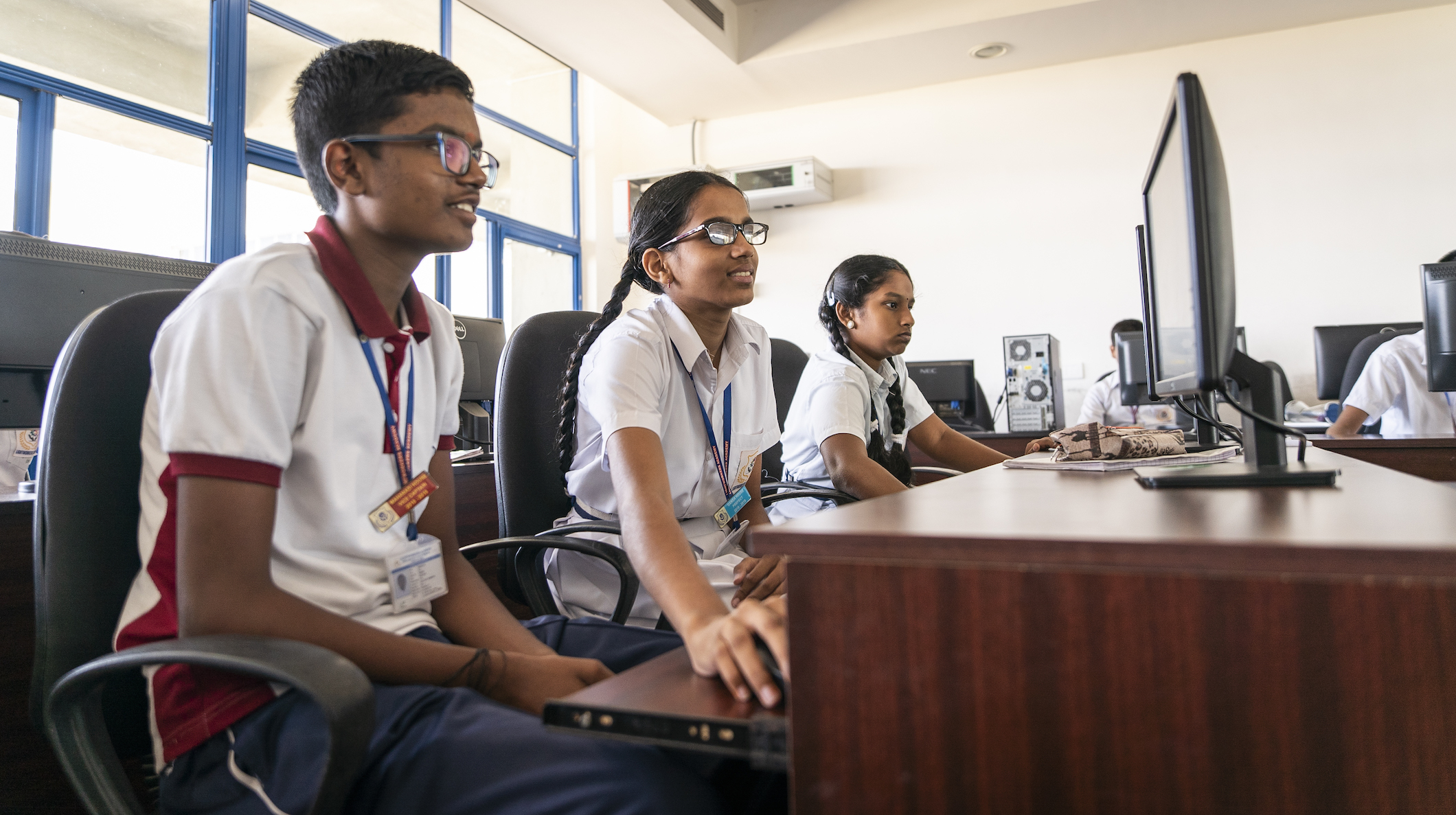
Code Club also plays an important role in increasing access to technology for creators who would otherwise not have access. We work with partners across the world to run clubs in areas of educational disadvantage to ensure that Code Clubs are available to creators from all backgrounds to address this need.
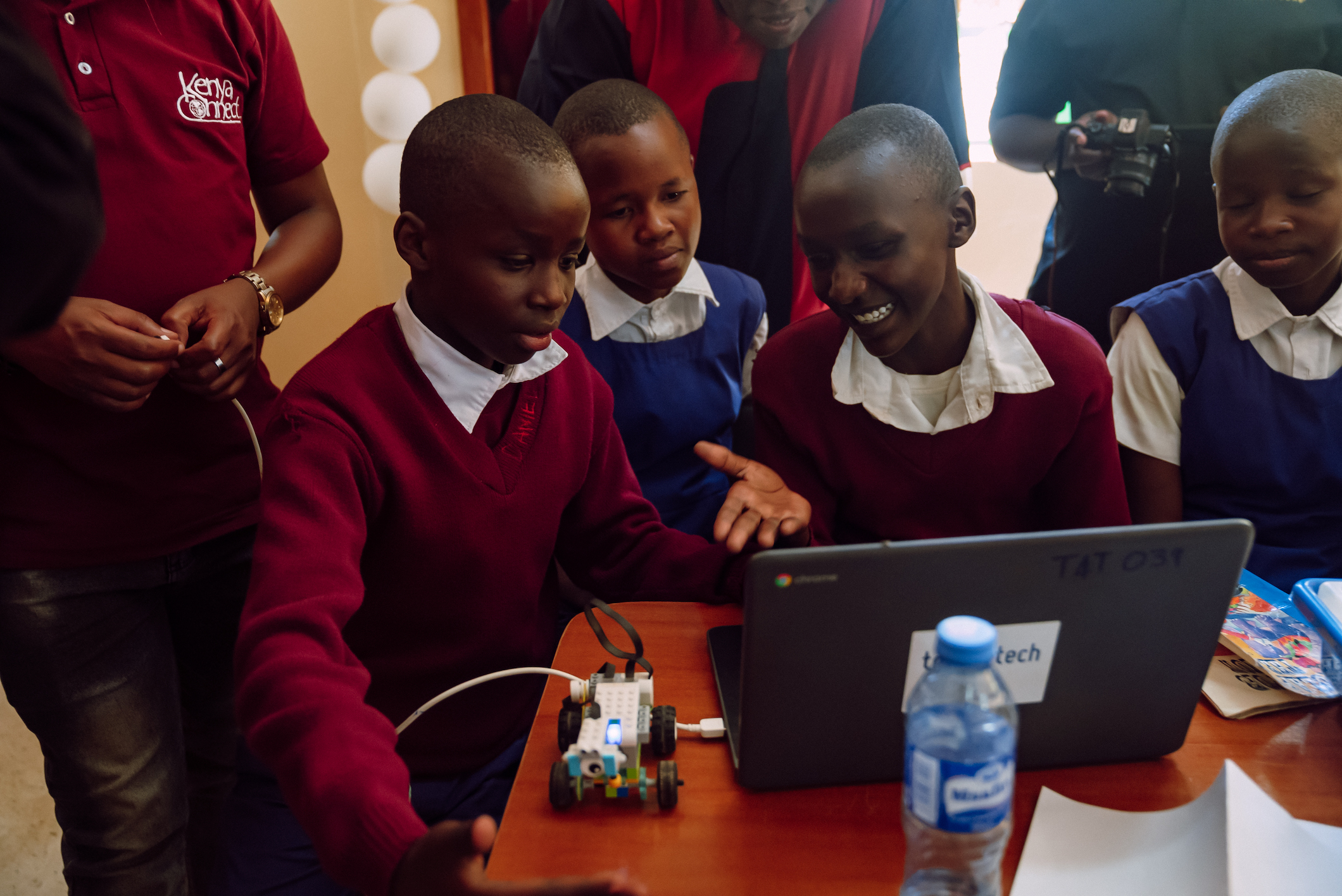
In some regions, Code Club provides creators with their first significant encounter with digital making. A mentor in Kenya told us that Code Club ensured that creators in his area were not “left behind”. A Code Club mentor in Tunisia told us “[…] access to coding is very limited, our club contributes to reducing this inequality”.
Read the full report to dive deeper into the data and stories from the Code Club community!
We are an impact-focused organisation and are always looking to understand how we can improve and increase the impact we have on the lives of children and young people. Over the coming weeks we will be reviewing the feedback we have received to understand how we can support the Code Club community even better.
The post Discover the incredible impact of Code Club: The Code Club annual survey report 2025 appeared first on Raspberry Pi Foundation.
Code Club is more than just a place to learn coding — it’s a thriving global community where young minds discover, create, and grow with technology. With a refreshed look and ambitious goals for 2025, Code Club is set to connect an even larger network of mentors and reach millions more young people worldwide.
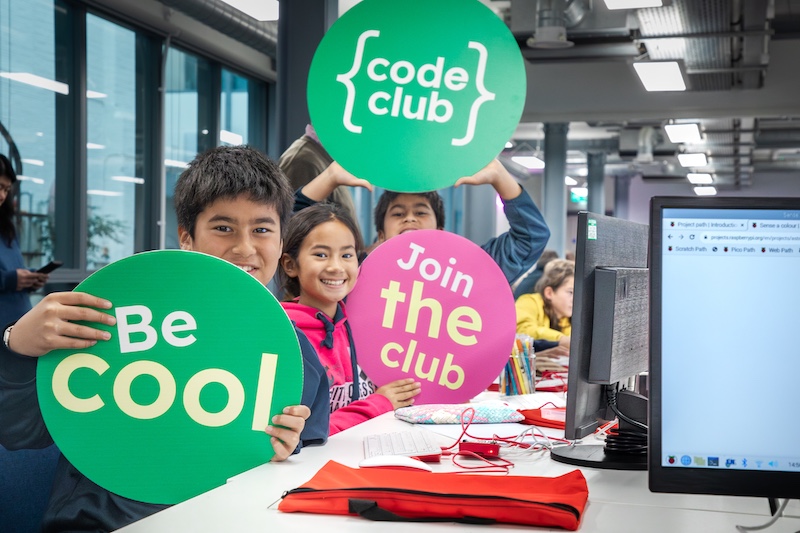
Since it was founded in the UK in 2012, Code Club has grown into a global movement, inspiring over two million young people to build apps, games, animations, websites, and more. Supported by the Raspberry Pi Foundation, Code Club provides free training and resources to mentors, ensuring creators achieve meaningful and lasting skills. Our vision for the next decade? To empower ten million more young people to have confidence in their coding.
A recent independent evaluation by the Durham University Evidence Centre for Education (DECE) confirmed what we’ve always believed: Code Club makes a real difference. Young people who attend gain valuable coding skills, grow in confidence, develop a strong interest in technology, and find a sense of belonging in the digital world.
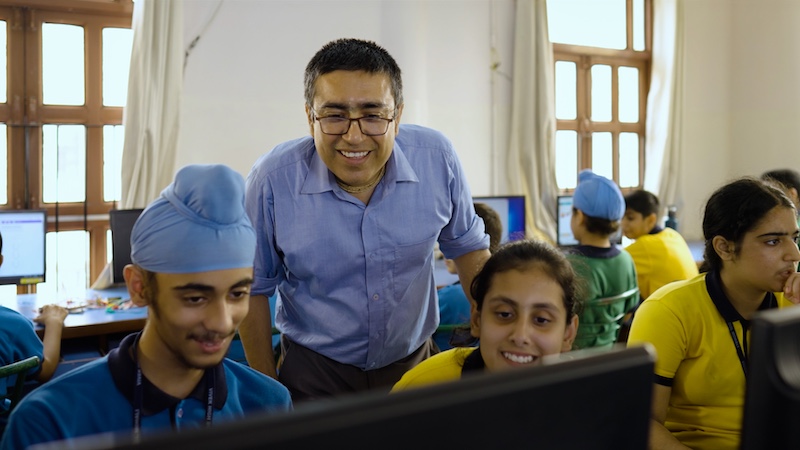
At the heart of Code Club are passionate volunteers who bring coding to life. Whether it’s the thrill of overcoming a challenge or the excitement of seeing an idea come to life on screen, mentors make a lasting impact while learning coding skills alongside their club’s creators.
Bob Bilsland, a dedicated volunteer since 2012, runs one of the world’s longest-running Code Clubs at Malvern CofE Primary School, Worcestershire, England. His motivation?
“What brings me back week after week is the sharing of what I enjoy doing. It’s so much fun to help others explore this space themselves, to see what they can personally create. I see that giving others the opportunity to explore and familiarise themselves with computing as something that could open up a world of possibilities for them in the future.”
For Yang, a mentor at the EY office clubs, representation in tech is key:
“If there are some female role models, I think for a little girl growing up, that means so much. Because if they can see somebody thrive in this industry, they will see themselves there one day. And that’s the inspiration.”
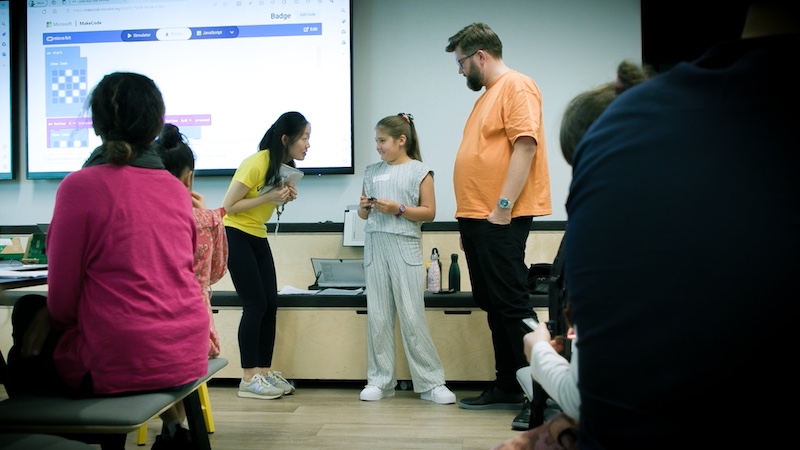
Across the world, volunteers like Nadia in Iraq and Solomon in The Gambia are using Code Club to bridge the digital divide, create opportunities, and empower communities.
“[Code Club] added to my skills. And at the same time, I was able to share my expertise with the young children and to learn from them as well.” – Nadia Al-Aboody, Iraq.
“We strongly believe in the transformative power of digital skills and their potential to create opportunities for young people. Witnessing the lack of access to computer knowledge among high school graduates in The Gambia and other sub-Saharan African countries inspired us to take action. By bridging the digital skills gap, we aim to empower young individuals to thrive in the 21st century.” – Solomon, Gambia
Code Club isn’t just loved by mentors; it’s so important to the young people who participate.
Eoghan, a young creator from Ireland, values the collaboration and support he receives:
“It’s really fun to meet and talk about ideas with other creators, and the mentors are very helpful in fixing any coding problems.”
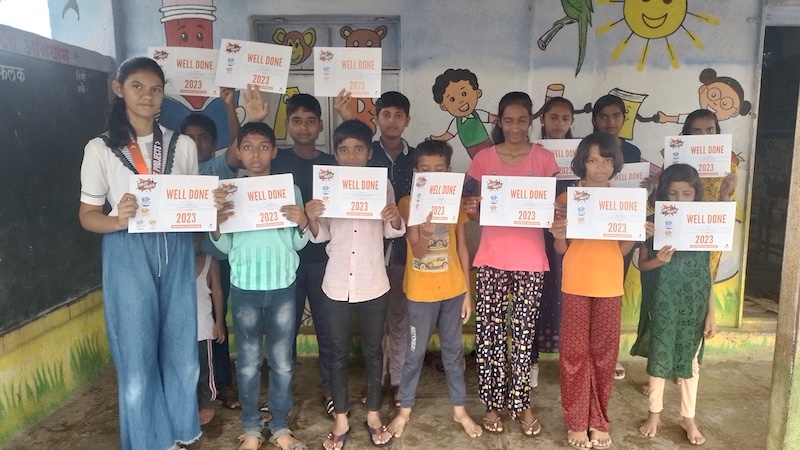
Jayantika, a 15-year-old from rural Pune, India, started as a creator and is now a peer mentor. For her, Code Club is about giving back:
“I believe coding opens doors and helps young children express their creativity. By mentoring, I hope to prepare them for a future that is increasingly driven by AI and technology.”
Along with the incredible community, Code Club is supported by sponsors and funders who share our mission. We would like to extend a thank you to Cognizant, who have committed their support to the Code Club mission in the UK and Ireland for 2025.
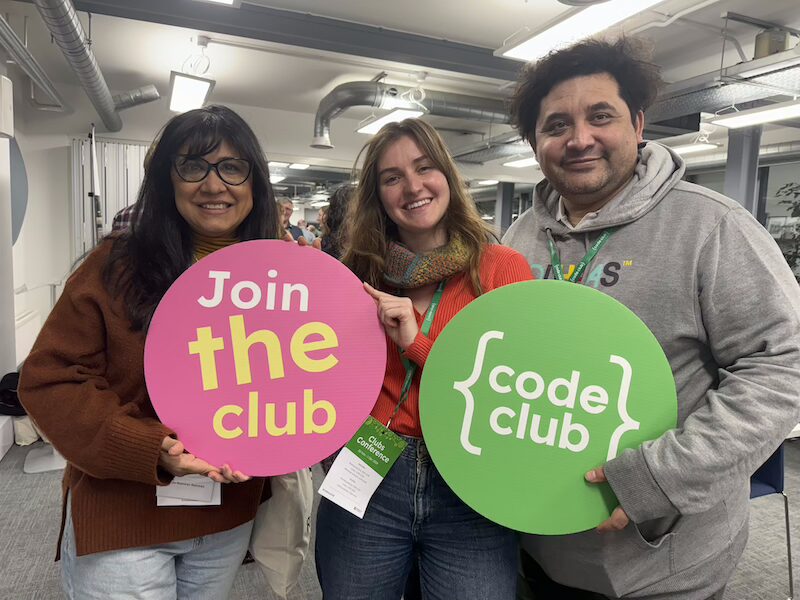
Code Club is more than just learning to code; it’s about creating opportunities, encouraging confidence, and building a global network of digital creators. Whether you’re a mentor, educator, or young digital maker, there’s a place for you in our community. Start your Code Club journey today and join a global community of digital creators.
The post Code Club: Empowering the Next Generation of Digital Creators appeared first on Raspberry Pi Foundation.
We love hearing from members of the community and sharing the stories of amazing young people, volunteers, and educators who are using their passion for technology to create positive change in the world around them.
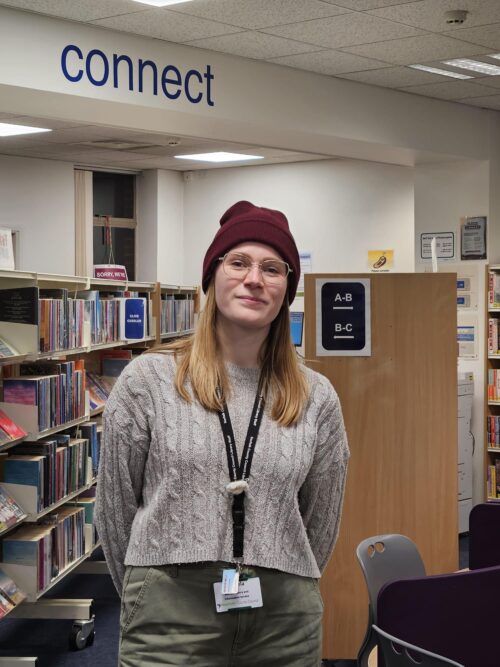
When Daniela made the transition from working in retail to joining the team at Thetford Library, she never imagined that she would one day be leading a Code Club. Her manager, who had previously run the club, asked if Daniela would be interested in taking over, and although she was nervous, she was also eager to embrace the challenge and learn new skills.
“At first, I was nervous about teaching coding, but seeing the children’s excitement made me realise it was so important, and I was learning just as much as they were.”
The Code Club was designed to run in eight-week blocks, with a new group of children joining for each term. However, the kids loved it so much that they didn’t want to leave. Daniela, with her growing passion for coding and mentoring, welcomed the children to attend as often as they wanted, with some children, including one particularly enthusiastic young creator, attending every session. This continuity allowed the children to delve deeper into the world of coding, learning in a different way to what they were used to at school.
One of the key things that Daniela has found resonates most with the children is the combination of creativity and coding. She encourages the kids to draw and plan their projects first, which makes the process more engaging and accessible to all of the young people who want to attend. The freedom to be creative is something that she feels is crucial, especially when compared to the more structured and rigid environment of school curriculums. This approach has been particularly rewarding for one young girl in the club who insists on planning and drawing her own characters and backgrounds for all of her projects.
“Coding isn’t just about writing lines of code — it’s about storytelling, problem solving, and imagining what’s possible.”
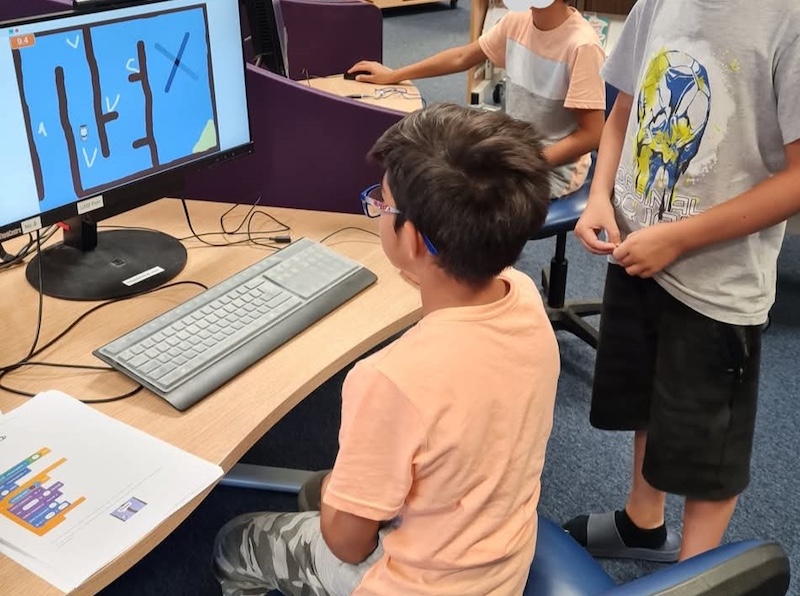
Daniela’s journey into coding took a significant leap when she decided to explore the Astro Pi challenge, a project that involves writing code to run on Astro Pi computers aboard the International Space Station. Despite her initial nerves about diving into Python, a more advanced programming language than she had tried at the club previously, she was blown away by the possibilities it opened up. When telling the children, she almost felt that she was more excited at the prospect of them trying out real space science than them. But once she showed them some examples, the buzz was infectious and the sessions ran far smoother than she could have hoped. Daniela’s tip for trying Astro Pi for the first time? Find a fellow mentor to help you along the way and dream big.
“I never imagined we’d be working on space science at our library. Introducing children to coding early isn’t just about technology; it’s about giving them the confidence to dream big and think differently.”
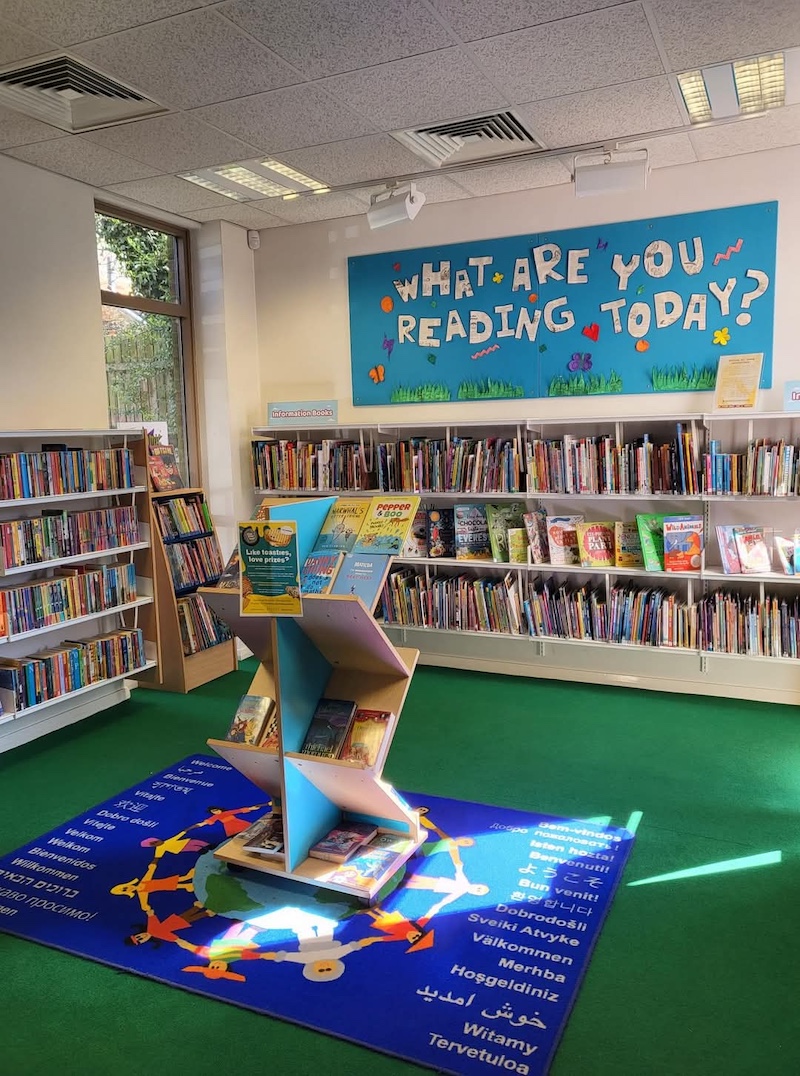
The success of the Code Club at Thetford Library is part of a broader initiative by Norfolk Libraries to provide digital skills to the community. They are committed to offering resources and opportunities for people of all ages to engage with technology. From their Digital Week, which focuses on improving digital literacy, to offering mentorship for adults learning to navigate the digital world, Norfolk Libraries is working hard to bridge the digital divide.
For Daniela, the importance of introducing children to coding at an early age is not something she thought would become a passion for her when moving careers. She sees firsthand how these skills empower the children, giving them confidence and opening up future career opportunities.
“Code Club has shown me that stepping outside your comfort zone is where the real growth happens. Both for me and the kids!”
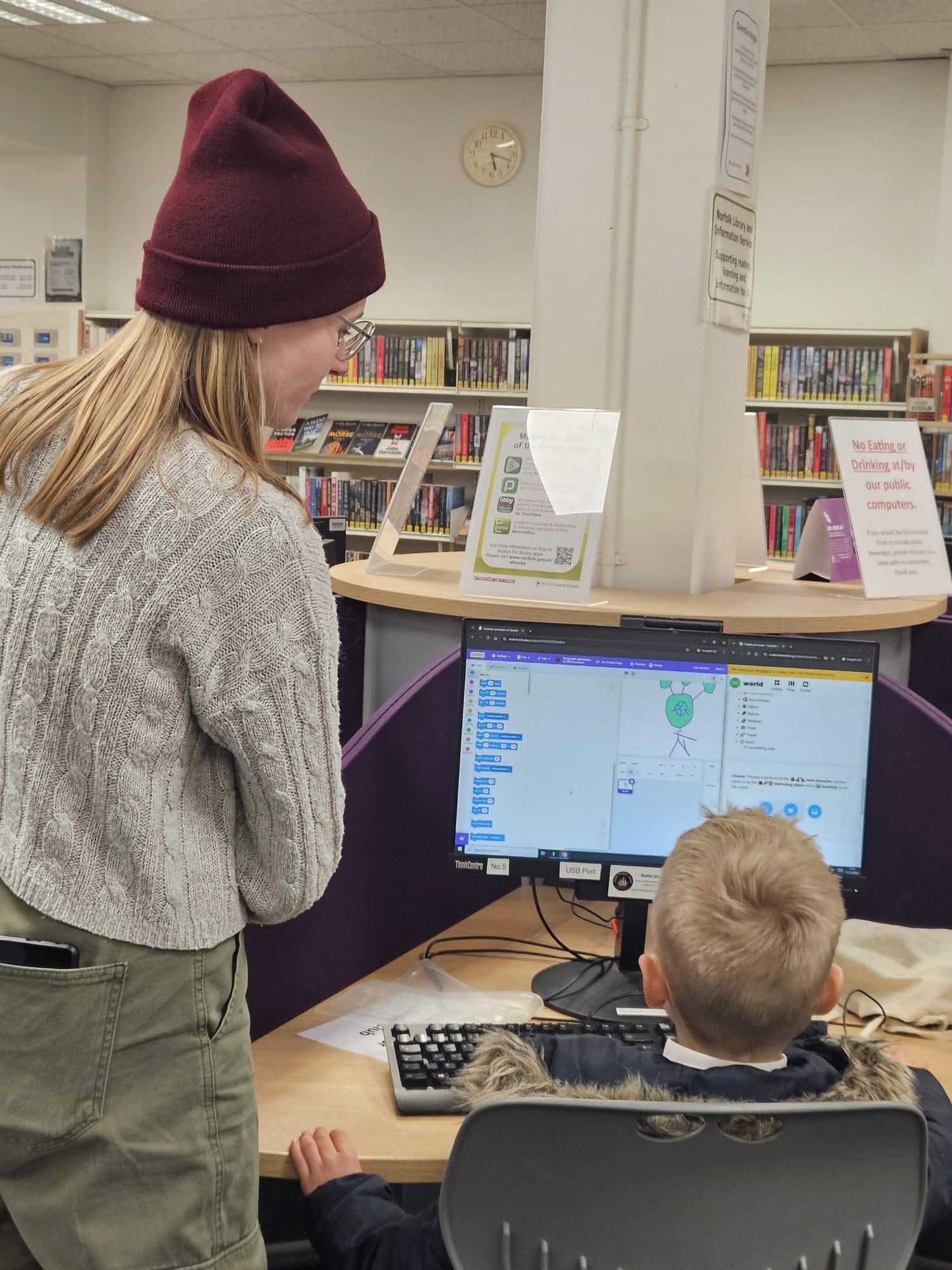
It’s this combination of creativity, learning, and the sheer joy of discovery that keeps Daniela passionate about running the Code Club, and why she continues to welcome every eager child who walks through the door.
If you are interested in encouraging your child to explore coding, take a look at the free coding project resources we have available to support you. If you would like to set up a Code Club for young people in your community, or attend one, head to codeclub.org for information and support.
The post Community Story | Daniela, Thetford Library appeared first on Raspberry Pi Foundation.
When you walk into a vibrant Code Club, it is easy to see that the young creators are having fun with digital making. But are they actually learning anything? Our recent evaluation has shown that not only are they developing their coding skills, but there are many other benefits.
Code Club is a network of free coding clubs where young people learn how to create with technology. The Raspberry Pi Foundation supports Code Clubs through training and guidance for mentors, and by providing learning resources that lead to meaningful and lasting learning outcomes for the young people attending the clubs.
Founded in the UK in 2012, Code Club has grown into a global movement and has already inspired more than 2 million young people to learn how to build their own apps, games, animations, websites, and so much more. We are incredibly proud of the impact Code Club has already achieved and we want many more young people to benefit. Our ambitious goal for the next decade is to reach 10 million more young people through Code Club.
We’re ambitious about Code Club because we know it works. Over the last year, the Durham University Evidence Centre for Education (DECE) conducted an independent evaluation of the programme that confirmed earlier evidence: attending Code Club leads to positive outcomes for young people.
The DECE evaluation showed that young people who attend Code Club build their coding skills. They also become more confident in learning coding, grow their interest in it, and develop a sense of belonging. Researchers observed how each young person has their individual projects to work on, which promote a sense of ownership and personalised learning, but that there are also opportunities for collaboration and celebrating their achievements with other creators in the club.
Young people also develop positive attitudes to coding and a range of life skills such as problem solving and communication. These skills and mindsets prepare young people to confidently engage with emerging technologies and with learning in a broader context.
“Coding is really fun when I know what to do, but sometimes it is hard. But I always keep trying.”
– Code Club creator.
Another finding was that Code Clubs are a place where young people who experience difficulties in formal classroom settings can thrive. This suggests Code Clubs can help educators engage a more diverse group of young people in creating with technology than formal education alone could.
“We see pupils in completely different roles when they are doing these Code Club activities. They enjoy more, and you can see they have skills to do things that we otherwise don’t notice.”
– Code Club mentor.
None of the benefits for young people would be possible without the volunteers who give their time and make Code Clubs the positive learning environments they are. Their support is crucial to young people’s engagement and skill development. The evaluation showed that mentors find the experience of volunteering rewarding, and pointed us towards areas where we can offer further support to help them run engaging, impactful Code Clubs.
“…volunteering with Code Club has helped me feel I’m a useful member of society in my old age, so the benefits have been good for me too.”
– Code Club mentor.
With AI already transforming so many parts of our lives, learning how to create with technology has never been more important. Generative AI is changing how humans give instructions to computers, and at Code Club, young people can experiment with new technologies such as AI in a safe environment. New projects that support young people to learn about AI technologies will be added to the Code Club Projects site later this month, alongside support for club leaders and mentors on this topic.
The evaluation methods used by the DECE will help us hone our ongoing impact measurement work for Code Clubs running in communities all over the world. As we continue to support Code Clubs, we are taking into account that the independent evaluation ran in school-based Code Clubs in the UK only. In our work to grow the Code Club network across the globe, we are adapting our support and resources for local contexts in collaboration with partners who share their expertise.
This will ensure that Code Clubs can provide a fun, welcoming space for all young people. And while they’re having fun, they will also gain relevant learning experiences that empower them to engage confidently with a world that is being transformed by digital technologies.
If you’re interested in the DECE evaluation’s results, we’ve put together a summary for you to download.
To get involved in Code Club, visit codeclub.org.
The post How fun-filled Code Clubs drive learning: New evidence appeared first on Raspberry Pi Foundation.
Since we first launched the Code Editor, a free online tool designed to support young people as they learn text-based programming, we’ve been excited to hear how educators have been trying it out in their classrooms.
“I used the Code Editor with my computer science students yesterday and it worked a dream! Students were able to write and run code without any issues.”
– Head of Computer Science
The Code Editor is designed for learning, rather than for professional use, and is informed by our understanding of pedagogy and computing education. It can be accessed from a web browser without installing any additional software.
Earlier this year, we announced that we’d be introducing classroom management features and we’re now pleased to confirm that we’ve launched the beta version of Code Editor for Education with school accounts. You can be the first to try out the new features, together with the many schools who have chosen to pre-register their school accounts.
We’ve kept the educator interface clean, simple, and easy to use. School owners can invite other teachers to join, add students, organise students into classes, and help students reset their passwords quickly. Educators can create coding projects to share with students and view their work.
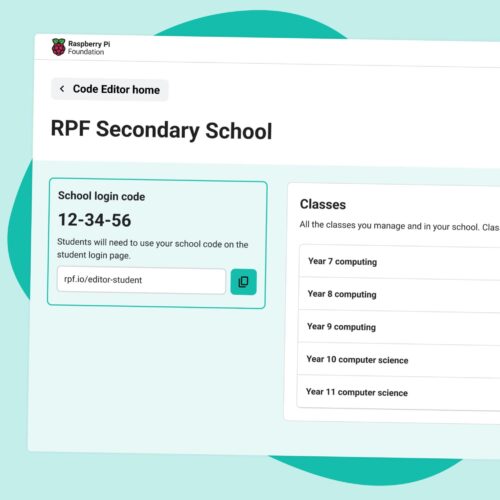
We’ve added these classroom management features because one of the key problems we’ve seen educators face over the past months has been the lack of an affordable tool to teach text-based coding in the classroom. We will always provide the Code Editor and all of its features to educators and students for free.
We take safeguarding seriously, providing visibility of student work at all times, as well as features such as the ability to report a concern. In line with best practices protecting children online, we minimise data capture so that we have just enough to keep students safe.
As the platform is currently in beta, we’d love to hear what you think of the new classroom management features — please send us your feedback.
We’ll be actively looking to develop new features over the coming months. Such features are set to include an extended set of Python libraries, custom instructions that sit alongside starter code projects and teacher-to-student feedback capabilities. All new developments will be informed by ongoing educator feedback.
Find out more and register for a free school account.
The post Introduce the Code Editor into your school appeared first on Raspberry Pi Foundation.
Today we’re unveiling a fresh look and feel for Code Club, along with a new ambition to inspire 10 million more young people to get creative with technology over the next decade.
Code Club is a network of free coding clubs where young people learn how to create with technology. Founded in the UK in 2012, it has grown to be a global movement that has already inspired more than 2 million young people to learn how to build their own apps, games, animations, websites, and so much more.
We know that Code Club works. Independent evaluations have demonstrated that attending a Code Club helps young people develop their programming skills as well as wider life skills like confidence, resilience, and skills in problem-solving and communication. This impact is a result of the positive learning environment created by the teachers and volunteers that run Code Clubs, with young people enjoying the activities and developing skills independently and collaboratively — including young people who sometimes struggle in a formal classroom setting.
Just as important, we know that Code Clubs inspire young people from all backgrounds, including girls and young people from communities that are underrepresented in the technology sector.
While we are incredibly proud of the impact that Code Club has already achieved, we want to see many more young people benefiting, and that led us to set the ambitious goal to reach 10 million more young people over the next decade.
To help us figure out how to reach that ambition, we spent a lot of time this year listening to the community as well as engaging with parents, teachers, and young people who aren’t yet involved in Code Club. All of the changes we’ve made have been informed by those conversations and are designed to make it easier for educators and volunteers all over the world to set up and run Code Clubs.
The biggest change is that we are making Code Club a more flexible model that can be adapted to reflect your local context and culture to ensure that it is as meaningful as possible for the young people in your community.
That means you can host a Code Club in a school or a community venue, like a library or makerspace; you can choose the age range and rhythm of meetings that make sense for your setting; and you can tailor the activities that you offer to the interests and skills of the young people you are serving. In order for the movement to be as inclusive as possible, you don’t even need to be called ‘Code Club’ to be an ‘Official Raspberry Pi Foundation Code Club’ and benefit from all the support we offer.
To support this change, we have developed a Code Club Charter that we ask all club leaders and mentors to sign up to. This sets out the principles that are shared by all Code Clubs, along with the commitments that the Raspberry Pi Foundation is making about our support to you.
We have launched a new website that makes it easier for you to find the information you need to set up and run your Code Club, along with an updated and simplified club leader guide. In a few weeks time, we are launching a new online course with guidance on how to run a successful club, and we will be adding to our programme of online community calls, webinars, and training to support a growing community of club leaders and mentors.
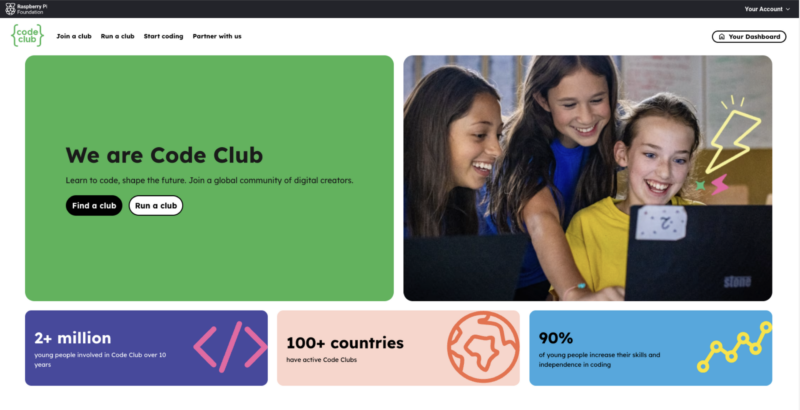
One of the most important parts of our support for Code Clubs is the projects that help young people learn how to bring their ideas to life using a wide range of hardware and software. As they are created by experienced educators, based on research, rigorously tested, and translated into dozens of languages, you can have confidence that these projects lead to meaningful and lasting learning outcomes for the young people attending your club. Code Club projects enable young people to learn independently, meaning that mentors don’t need technical skills.
Alongside Code Club, the Foundation supports CoderDojo, a network of coding clubs that started life in Cork, Ireland in 2011 and merged with the Raspberry Pi Foundation in 2017.
In order to reduce duplication and make it easier for anyone to set up and run a coding club, we have decided to bring together the resources and support for all club leaders and mentors under one website, which is the new Code Club website.
There is no need for existing CoderDojos to change their name or anything about the way they operate. All registered CoderDojos will be able to manage their club in exactly the same way through the new website, and to access all of the support and resources that we offer to all coding clubs. New clubs will be able to register as CoderDojos.
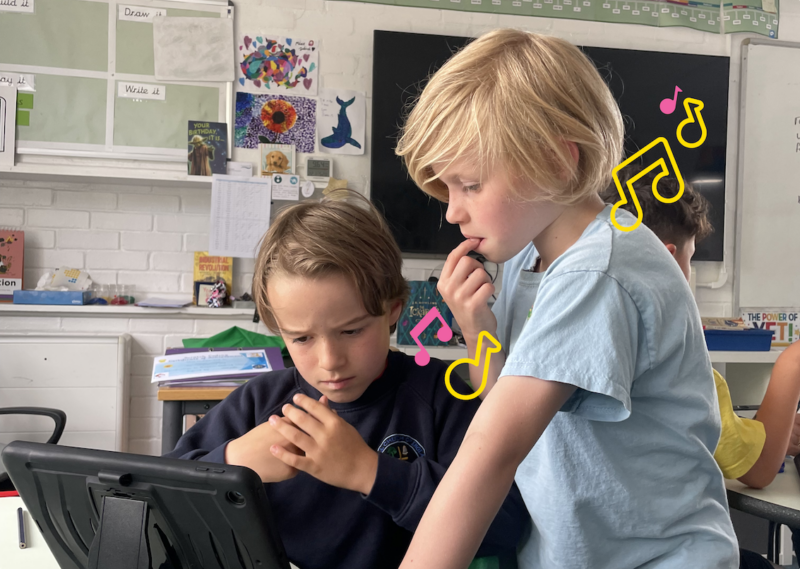
The ethos, experiences, and lessons from the CoderDojo community have been a vital part of the development of the new Code Club. We have worked hard to make sure that all existing CoderDojos feel that their values are reflected in the Charter, and that the guidance and resources we offer address their circumstances.
CoderDojos will very much remain part of this community, and the Raspberry Pi Foundation will continue to celebrate and learn from the amazing work of CoderDojos all over the world.
With AI already transforming so many parts of our lives, it’s not surprising that some people are starting to ask whether young people even need to learn to code anymore.
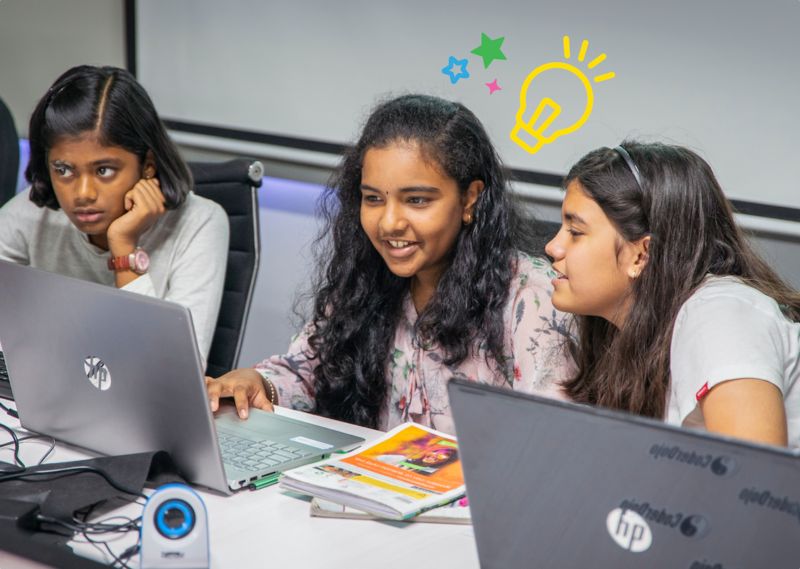
We’ve got a lot to say on this subject — so watch this space — but the short version is that learning how to create with technology has never been more important. The way that humans give instructions to computers is changing, and Code Club provides a way for young people to experiment with new technologies like AI in a safe environment. Over the next couple of weeks, we’ll be launching new Code Club projects that support young people to learn about AI technologies, including generative AI, and we’ll be providing support for club leaders and mentors on the topic too.
I want to end by saying a huge thank you to everyone who has been part of the Code Club journey so far, and particularly to everyone who has worked so hard on this project over the past year — far too many people to name here, but you know who you are. I also want to thank all of the parents, teachers, mentors, and partners who have provided the feedback and ideas that have shaped these changes.
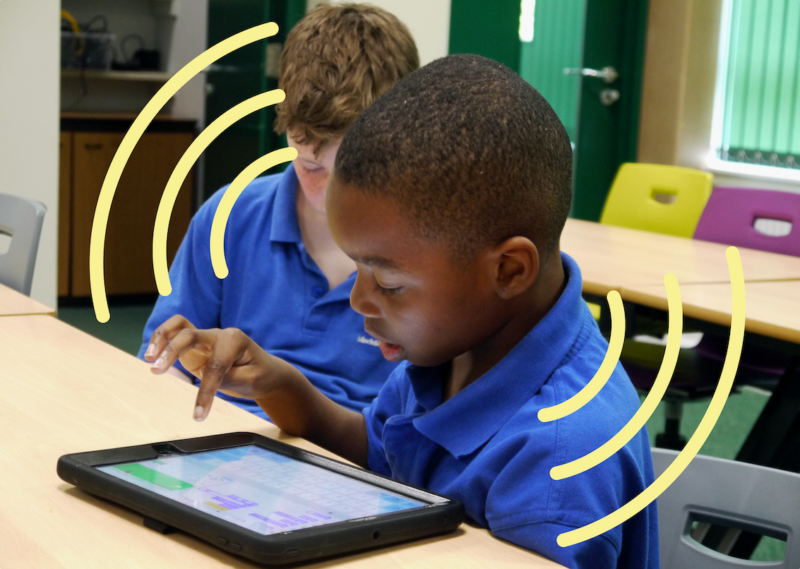
Code Club and CoderDojo were both founded in the early 2010s by individuals who wanted to give more young people the opportunity to be digital creators, not just consumers. From that first Dojo in Cork, Ireland, and the first Code Clubs in London, UK, we’ve built a global movement that has empowered millions of young people to engage confidently with a world that is being transformed by digital technologies.
It’s never been a better time to get involved with Code Club, so please take a look and get in touch if you need any help or support to get started.
The post Introducing the new Code Club appeared first on Raspberry Pi Foundation.
Moonhack is a free, international coding challenge for young people run online every year by Code Club Australia, powered by our partner the Telstra Foundation. The yearly challenge is open to young people worldwide, and in 2023, over 44,500 young people registered to take part.

Moonhack 2024 runs from 14 to 31 October. This year’s theme is taken from World Space Week 2024: climate change. As always, the projects cater for everyone from brand-new beginners to more experienced coders. And young people have a chance to win a prize for their submitted project!
We caught up with Kaye North, Community and Engagement Manager at Code Club Australia, to find out more.
For this year’s projects, Kaye told us that she collaborated with farmers, scientists, and young people from across Australia to cover diverse topics related to climate change and space. The projects will help participants learn about topics from how people who work in agriculture use climate data to increase crop yields and practise sustainable farming, to the impact of rising global temperatures on sea life populations.
Kaye also hopes to help young people understand the role of satellite data related to climate change, such as the data NASA collects and shares via satellite. Satellite data on rising sea levels, called out in United Nations Sustainable Development Goal 13, forms the basis of one of the Moonhack projects this year.
Moonhack participants will be able to code with Scratch, micro:bit, or Python. They can also take on a project brief where they may choose their favourite programming language and even include physical computing if they wish.
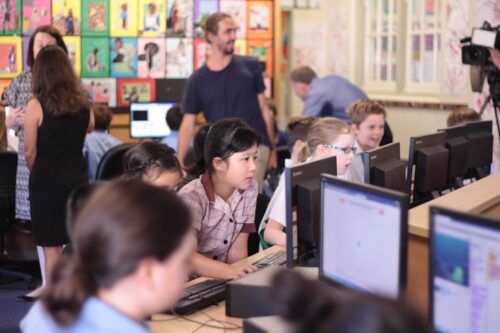
All six projects will be available from 1 September when registration opens, and projects can be submitted until 30 November.
Climate change is an issue that affects everyone, and for many young people it’s a source of concern. Kaye’s aim this year is to show small changes young people can make to contribute to a big, global impact.
“Moonhack’s question this year is ‘Can we create calls to action through our coding to influence others to make better choices, or even inform them of things that they didn’t know that they can share with others?'” – Kaye North, Code Club Australia
This year’s Moonhack includes new resources to help educators and mentors who are supporting young people to take part:
To find out more, visit the Moonhack website and sign up to the Moonhack newsletter.
Code Club Australia is powered by the Telstra Foundation as part of a strategic partnership with us at the Raspberry Pi Foundation.
The post Get ready for Moonhack 2024: Projects on climate change appeared first on Raspberry Pi Foundation.
We love hearing from members of the community and sharing the stories of amazing young people, volunteers, and educators who are using their passion for technology to create positive change in the world around them.

In our latest story, we’re heading to London to meet Yang, a Manager in Technology Consulting at EY specialising in Microsoft Business Applications, whose commitment to CoderDojo is truly inspiring. Yang’s passion for volunteering has grown since she first volunteered at a CoderDojo club at a local museum. In recent years, she has actively searched for ways to bring the CoderDojo movement to more children, and encouraged her colleagues to come along on the journey too.
When Yang was growing up, both of her parents worked in STEM, but her own journey into a career in technology took a varied route. After initially studying journalism in China, her path shifted when she pursued a Master’s in Digital Humanities at UCL, London, broadening her digital skills and paving the way for her current role.
On a weekend visit to a museum, Yang found the opportunity to volunteer at their CoderDojo. This experience sparked an enthusiasm to create more opportunities for young people to explore the world of computing, and this soon evolved into a plan to implement clubs at the EY offices.
With support from the EY Corporate Responsibility team, and fellow colleagues, Yang started to deliver Dojo sessions at the EY office in London. From the very first session, Yang was blown away by the level of enthusiasm among her colleagues, and their willingness to volunteer their time to support the club. She soon realised it was possible to roll this initiative out to other offices around the country, expanding the volunteer network and increasing their impact.
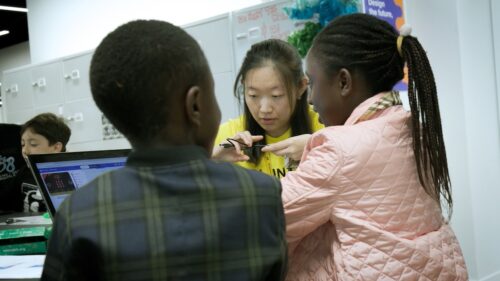
Clubs have now been run in four EY offices across the UK, and the team has even seen the first international club take place, at the EY office in Baku, Azerbaijan. In total, EY clubs have seen around 350 young people attend and give coding a go.
As a woman in tech, Yang is all too aware of the gender imbalance in the industry, and this is something she wanted the clubs at the EY offices to address.
“If there are some female role models, I think for a little girl grow up that means so much. Because if they can see somebody thrive in this industry, they will see themselves there one day. And that’s the inspiration.” – Yang
Yang actively encourages female participation in Dojo sessions, for example through holding sessions with a focus on engaging girls to mark International Women’s Day and Ada Lovelace Day. Through her leadership, she creates an inclusive environment where girls can envision themselves as future leaders.
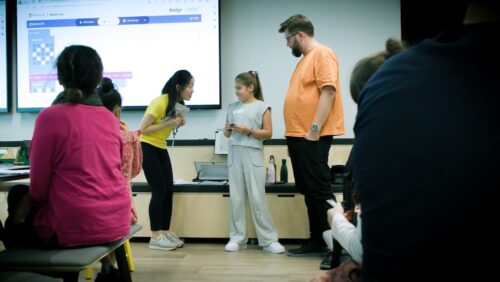
Yang’s motivation doesn’t only inspire the young people attending her clubs, but also resonates with those who work with her on a daily basis, including colleagues like Iman and Elizabeth, who shared how much they admire Yang’s dedication and energy.
“I would love to have had a role model like [Yang] when I was younger. She’s just so inspiring. She’s so full of energy. I mean, from my personal experience, when I was younger, we didn’t have anything to do with coding.
There were situations where I was vaguely interested [in computing] but was told that it wasn’t for girls. And now with Yang running these events, seeing the girls come here and being so interested and wanting to learn, it really opens up so many more doors for them that they don’t even realise.” – Elizabeth, colleague and CoderDojo volunteer
Seeing the impact of her mentorship and the enthusiasm of young participants has fueled Yang’s passion even further.
“This has been a great opportunity to set up CoderDojo sessions for young people. I’ve had a lot of support from colleagues and other volunteers who have helped to run the sessions […] I feel super proud of what we’ve achieved so far.” – Yang
For Yang, mentorship isn’t just about teaching technical skills; it’s about helping young people develop confidence and resilience, and letting everyone know there is a place for them in computing should they want one.
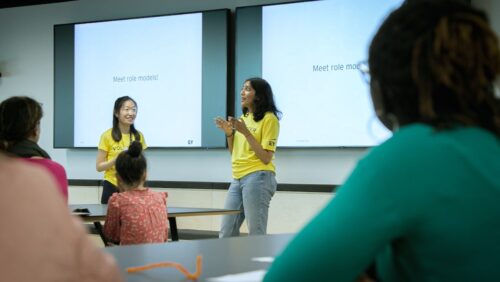
Continuing to make a difference in her community and beyond, Yang recently participated in the 68th annual UN Women’s Commission on the Status of Women, which is the UN’s largest annual gathering on gender equality and women’s empowerment.
We’re delighted to be part of Yang’s journey, and can’t wait to see what she contributes to the world of tech next.
Help us celebrate Yang and her inspiring journey by sharing her story on X, LinkedIn, and Facebook.
The post Celebrating the community: Yang appeared first on Raspberry Pi Foundation.
Following the huge success of last year’s Clubs Conference, we are delighted to announce that we will be hosting the second-ever Clubs Conference on Saturday 30 November and Sunday 1 December 2024 in Cambridge, UK.
The event will be a weekend of learning and connecting for volunteers and educators involved in Code Club, CoderDojo, and other initiatives we support. We’d love for you to join us!
This year, we’re bringing the conference home to our offices in the centre of Cambridge.
On Friday 29 November, you’ll have the opportunity to register early and attend an informal networking event with community members, including the Foundation team.
Saturday 30 November and Sunday 1 December will be filled with learning and development opportunities for you, including:
Join us to learn from your peers running clubs in various contexts, develop your digital making skills, and share your own insights. We look forward to learning with you.
If you think you might want to attend the Clubs Conference, please fill in our form to express your interest. We will then get in touch when you can book your tickets. Tickets will be £5 for both days combined.
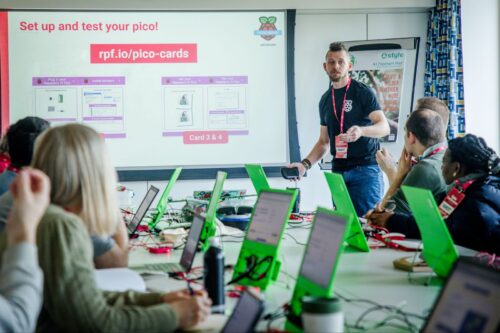
Part of what made last year’s Clubs Conference so special was the range of exciting activities led by community members. If you’d like to host or co-host an activity this year, please also indicate this in the expression of interest form. We’ll be in touch in a few weeks to ask you more about your plans.
Possible activities include:
Check out last year’s talks for inspiration.
If you would love to participate but you feel the costs of travelling would prevent you, you may be able to apply for a travel bursary.
To be eligible for a bursary, you need to:
Please let us know whether you require a travel bursary when you fill in the expression of interest form.
If have any questions about bursaries or travel, please send us a message through our contact page using the subject ‘Clubs Conference’.
If you have any suggestions about the Clubs Conference, we’d love to hear them. Let us know through the contact page, or on social with the tag #ClubsCon24.
The post The Clubs Conference is coming back appeared first on Raspberry Pi Foundation.
I’m excited to announce that we’re developing a new set of Code Editor features to help school teachers run text-based coding lessons with their students.
Last year we released our free Code Editor and made it available as an open source project. Right now we’re developing a new set of features to help schools use the Editor to run text-based coding lessons online and in-person.
The new features will enable educators to create coding activities in the Code Editor, share them with their students, and leave feedback directly on each student’s work. In a simple and easy-to-use interface, educators will be able to give students access, group them into classes within a school account, and quickly help with resetting forgotten passwords.
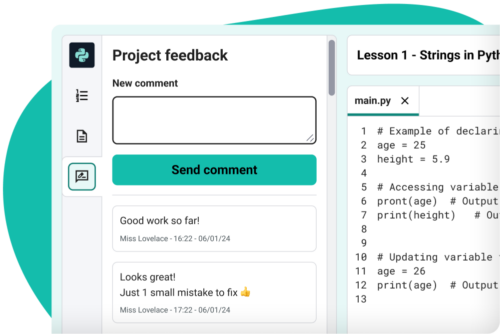
We’re adding these teaching features to the Code Editor because one of the key problems we’ve seen educators face over the last few months has been the lack of an ideal tool to teach text-based coding in the classroom. There are some options available, but they can be cost-prohibitive for schools and educators. Our mission is to support young people to realise their full potential through the power of computing, and we believe that to tackle educational disadvantage, we need to offer high-quality tools and make them as accessible as possible. This is why we’ll offer the Code Editor and all its features to educators and students for free, forever.
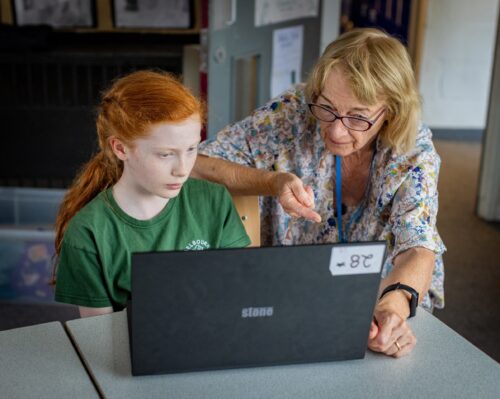
Alongside the new classroom management features, we’re also working on improved Python library support for the Code Editor, so that you and your students can get more creative and use the Editor for more advanced topics. We continue to support HTML, CSS, and JavaScript in the Editor too, so you can set website development tasks in the classroom.
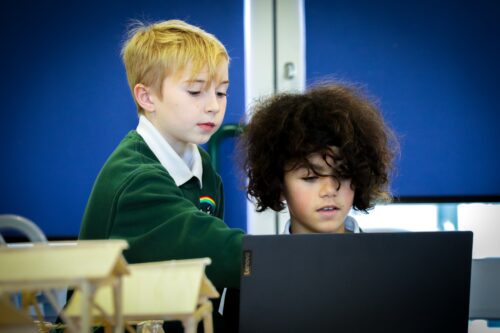
Educators have already been incredibly generous in their time and feedback to help us design these new Code Editor features, and they’ve told us they’re excited to see the upcoming developments. Pete Dring, Head of Computing at Fulford School, participated in our user research and said on LinkedIn: “The class management and feedback features they’re working on at the moment look really promising.” Lee Willis, Head of ICT and Computing at Newcastle High School for Girls, also commented on the Code Editor: “We have used it and love it, the fact that it is both for HTML/CSS and then Python is great as the students have a one-stop shop for IDEs.”
We’re working to have the Code Editor’s new teaching features ready later this year. We’ll launch the setup journey sooner, so that you can pre-register for your school account as we continue to work on these features.
Before then, you can complete this short form to keep up to date with progress on these new features or to get involved in user testing.
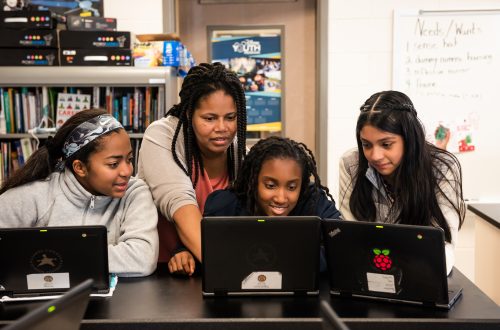
The Code Editor is already being used by thousands of people each month. If you’d like to try it, you can get started writing code right in your browser today, with zero setup.
The post Introducing classroom management to the Code Editor appeared first on Raspberry Pi Foundation.
Through Code Club and CoderDojo we support the world’s largest network of free informal computing clubs for young people.
The clubs network reaches young people in 126 countries across the globe, and we estimate that the 4,557 Code Clubs and 771 CoderDojos are attended by more than 200,000 young people globally.
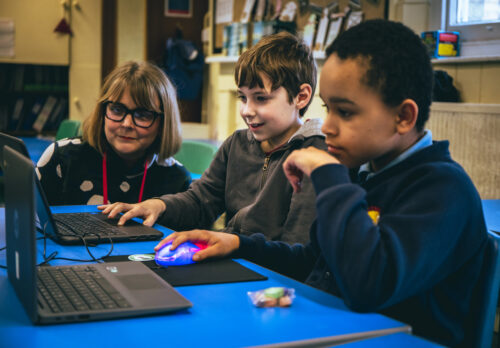
All these clubs are run by incredible volunteers and educators who help young people to learn computing and coding. Every year, we ask the volunteers to tell us about their experiences in our annual clubs survey. Below we share some highlights from this year’s survey results.
We want to know more about volunteers in the network, how they run their clubs, and what impact the club sessions have for young people. Understanding this better helps us to improve the support we give to volunteers and young people around the world. This year we received over 300 responses, which has given us valuable insights and feedback.
Improving gender balance in computing is part of our work to ensure equitable learning opportunities for all young people. Girls’ participation in the CodeDojo community has risen from 30% to 35% between 2023 and 2024, while 40% of Code Club attendees are girls.
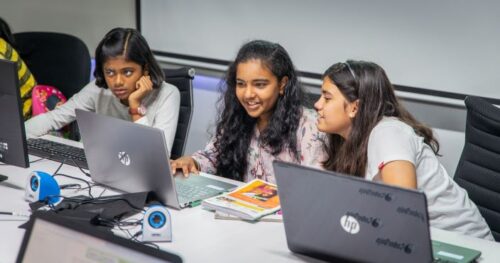
Clubs are using a wide variety of technologies and tools to support young people with their coding. According to the survey, the most popular coding tool was Scratch, which nearly all of the volunteers said they used in their club. Over 60% of volunteers reported using micro:bits, and over 50% mentioned Python.
We asked volunteers to tell us what changes they had seen in young people as a result of being part of a club. Volunteers fed back to us about the positive community created by clubs where young people felt safe and included. This was evidenced by the way young people felt able to share their ideas and support other young people:
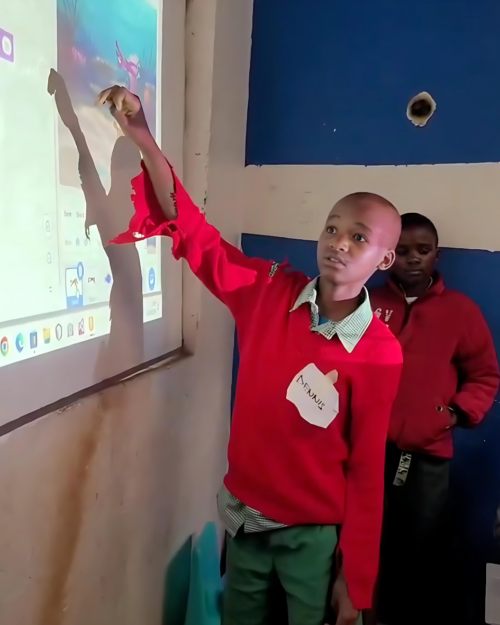
“The more experienced members are both capable and competent to demonstrate their skills to less experienced children. For example, they recently ran a full-day session for the whole school to complete the Astro Pi Mission Zero project.” – Code Club volunteer
Volunteers reported increases in young people’s skills and confidence in digital making and engaging with technology (see graph below). They also agreed that young people developed other skills, with nearly 90% noting improvements in problem solving, personal confidence, and creative thinking.
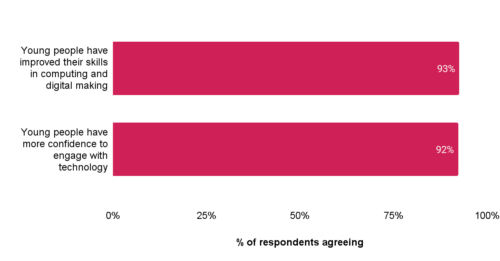
These positive outcomes are the result of the hard work and dedication of the club volunteers. Based on the survey, we estimate that at the time of the survey, there were over 6000 Code Club leaders and almost 3000 CoderDojo champions around the world. Many of the volunteers are motivated to volunteer by a love of teaching and a desire to pass on their skills.
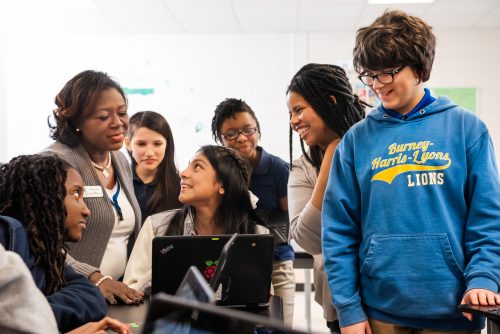
These volunteers are part of a global network, and 80% of volunteers said that belonging to this global community of clubs was motivating for them. Volunteers particularly valued the access to resources and information being part of a global community offered, as well as opportunities to share ideas and problem solve.
The majority of Code Clubs are mostly or always using our digital making pathways and projects as part of their clubs. Volunteers value the projects’ step-by-step structure and how easy they are to follow.
“Great structure to allow the kids to self-learn whilst keeping a good amount of creativity for them.” – Code Club volunteer
We plan to do more to ensure that clubs around the world find these projects and pathways accessible and useful for their sessions with young people.
The survey has helped us to identify a number of areas where we can support club volunteers even better. Volunteers identified help getting equipment and funding as the main things they needed support with, as well as recruitment of volunteers and young people. We are looking at the best ways we can lend a hand to the clubs network in these areas.
You can read the survey report to dive deeper into the findings.
We take impact seriously and are always looking to understand how we can improve and increase the impact we have on the lives of children and young people. To find out more about our approach to impact, you can read about our recently updated theory of change, which supports how we evaluate what we do.
The post Gaining skills and confidence: The impact of Code Club and CoderDojo appeared first on Raspberry Pi Foundation.
We work with mission-aligned educational organisations all over the world to support young people’s computing education. In 2023 we established four partnerships in Kenya and South Africa with organisations Coder:LevelUp, Blue Roof, Oasis Mathare, and Tech Kidz Africa, which support young people in underserved communities. Our shared goal is to support educators to establish and sustain extracurricular Code Clubs and CoderDojos in schools and community organisations. Here we share insights into the impact the partnerships are having.
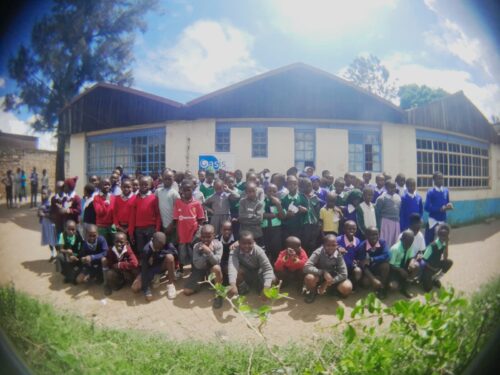
In the partnerships we used a ‘train the trainer’ model, which focuses on equipping our partners with the knowledge and skills to train and support educators and learners. This meant that we trained a group of educators from each partner, enabling them to then run their own training sessions for other educators so they can set up coding clubs and run coding sessions. These coding sessions aim to increase young people’s skills and confidence in computing and programming.
We also conducted an evaluation of the impact of our work in these partnerships. We shared two surveys with educators (one shortly after they completed their initial training, a second for when they were running coding sessions), and another survey for young people to fill in during their coding sessions. In two of the partnerships, we also conducted interviews and focus groups with educators and young people.
Although we received lots of valuable feedback, only a low proportion of participants responded to our surveys, so the data may not be representative of the experience of all participating educators.
Following our training, our partners themselves trained 332 educators across Kenya and South Africa to work directly in schools and communities running coding sessions. This led to the setup of nearly 250 Code Clubs and CoderDojos and additional coding sessions in schools and communities, reaching more than 11,500 young people.
As a result, access to coding and programming has increased in areas where this provision would otherwise not be available. One educator told us:
“We found it extremely beneficial, because a lot of our children come from areas in the community where they barely know how to read and write, let alone know how to use a computer… [It provides] the foundation, creating a fun way of approaching the computer as opposed to it being daunting.”
We found encouraging signs of the impact of this work on young people.
Nearly 90% of educators reported seeing an increase in young people’s computing skills, with over half of educators reporting that this increase was large. Over three quarters of young people who filled in our survey reported feeling confident in coding and computer programming.
The young people spoke enthusiastically about what they had learned and the programs they had created. They told us they felt inspired to keep learning, linking their interests to what they wanted to do in coding sessions. Interests included making dolls, games, cartoons, robots, cars, and stories.
When we spoke with educators and young people, a key theme that emerged was the enthusiasm and curiosity of the young people to learn more. Educators described how motivated they felt by the excitement of the young people. Young people particularly enjoyed finding out the role of programming in the world around them, from understanding traffic lights to knowing more about the games they play on their phones.
One educator told us:
“…students who knew nothing about technology are getting empowered.”
This confidence is particularly encouraging given that educators reported a low level of computer literacy among young people at the start of the coding sessions. One educator described how coding sessions provided an engaging hook to support teaching basic IT skills, such as mouse skills and computer-related terms, alongside coding.
One educator gave an example of young people using what they are learning in their coding club to solve real-world problems, saying:
“It’s life-changing because some of those kids and the youths that you are teaching… they’re using them to automate things in their houses.”
Many of these young people live in informal settlements where there are frequent fires, and have started using skills they learned in the coding sessions to automate things in their homes, reducing the risk of fires. For example, they are programming a device that controls fans so that they switch on when the temperature gets too high, and ways to switch appliances such as light bulbs on and off by clapping.
From the gathered feedback, we also learned some useful lessons to help improve the quality of our offer and support to our partners. For example, educators faced challenges including lack of devices for young people, and low internet connectivity. As we continue to develop these partnerships, we will work with partners to make use of our unplugged activities that work offline, removing the barriers created by low connectivity.
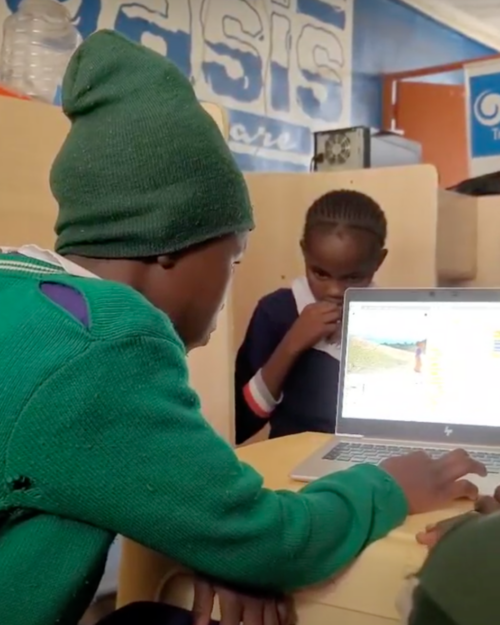
We are continuing to develop the training we offer and making sure that educators are able to access our other training and resources. We are also using the feedback they have given us to consider where additional training and support may be needed. Future evaluations will further strengthen our evidence and provide us with the insights we need to continue developing our work and support more educators and young people.
Our thanks to our partners at Coder:LevelUp, Blue Roof, Oasis Mathare, and Tech Kidz Africa for sharing our mission to enable young people to realise their full potential through the power of computing and digital technologies. As we continue to build partnerships to support Code Clubs and CoderDojos across South Africa and Kenya, it is heartening to hear first-hand accounts of the positive impact this work has on young people.
If your organisation would like to partner with us to bring computing education to young people you support, please send us a message with the subject ‘Partnerships’.
The post Global impact: Empowering young people in Kenya and South Africa through coding clubs appeared first on Raspberry Pi Foundation.
We love hearing from members of the community and sharing the stories of amazing young people, volunteers, and educators who are using their passion for technology to create positive change in the world around them.
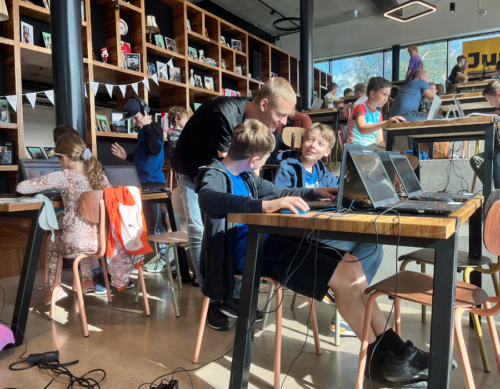
In our latest story, we’re heading to Alkmaar, the Netherlands, to meet Arno and Timo, CoderDojo enthusiasts who have transitioned from club members to supportive mentors. Their journey at CoderDojo and their drive to give back and support the next generation of coders in their community has been an inspiration to those around them.
Arno and Timo have been friends since childhood, and embarked on their CoderDojo journey at the age of 12, eager to explore the world of coding. Under the guidance of mentors like Sanneke, Librarian and Chair of CoderDojo Netherlands, they not only honed their technical skills, but also learned about the value of collaboration, curiosity, and perseverance. As they grew older, they in turn were inspired to support young coders, and wanting to remain part of the CoderDojo community, they decided to become mentors to the next generation of club attendees.
Having been helping younger members of the club for years, the transition to official mentors and proud owners of the much-coveted mentor T-shirt was seamless.
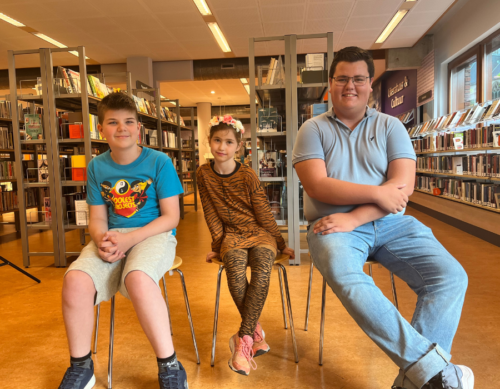
Sanneke reflects on the impact young mentors like Timo and Arno have on the young learners at CoderDojo:
“Having young mentors who are just slightly older than our youngest… I think it helps them to see what happens when you grow up and how they can help. They can be examples for how to help others.” – Sanneke, Librarian, CoderDojo mentor, and Chair of CoderDojo Netherlands
Timo echoes this sentiment, highlighting how mentoring provides a fantastic opportunity to help people and make a positive impact in the local community:
“I think volunteering is important, because you’re doing something for the community, in a city or village, supporting them in their journey in learning coding.” – Timo
As they continue their journey, Timo and Arno remain committed to supporting and inspiring the next generation of coders. They also encourage anyone who is thinking of volunteering at a club to give it a go:
“If you want to volunteer at the CoderDojo, just go for it. You don’t really need that much experience. […] The kids can learn it, so can you.” – Arno
The CoderDojo movement in the Netherlands is celebrating a decade of impact, and champions a culture of growth and learning. Arno and Timo’s story serves as an inspiration to us all, shining a light on the power of mentorship and the impact of volunteering in building stronger, more supportive communities.
Arno and Timo’s story showcases the importance of mentorship for both individuals and communities, and the real impact you can have by donating an hour of your time a week. If you’re interested in becoming a CoderDojo volunteer, head to coderdojo.com to find out how to get started.
Help us celebrate Arno and Timo and their inspiring journey by sharing their story on X (formerly Twitter), LinkedIn, and Facebook.
The post Celebrating the community: Arno & Timo appeared first on Raspberry Pi Foundation.
We love hearing from members of the community and sharing the stories of inspiring young people, volunteers, and educators all over the world who have a passion for technology.

With this latest story, we’re taking you to Leeds, UK, to meet Micah, a young space enthusiast whose confidence has soared since he started attending a Code Club at his local library.
Computing skills are essential in today’s world, and Micah’s mum Catherine was keen for him to be introduced to coding from a young age.
While Micah is known to people close to him for his inquisitive nature, cheeky behaviour, and quick-witted sense of humour, he can be a little shy when meeting new people. And he isn’t always keen on his mum’s suggestions about trying new things and attending after-school clubs! However, when Catherine saw there was a Code Club running at their local library, she knew it was the perfect opportunity for Micah to try out computing.
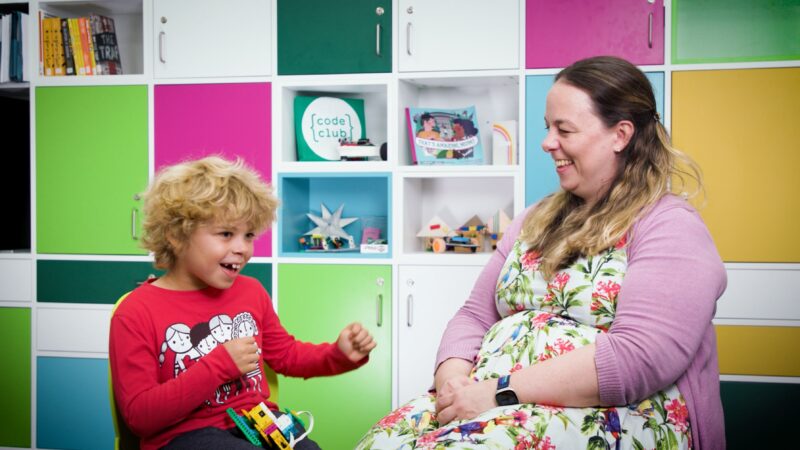
What Catherine didn’t know is that not only would Micah find out he was a talented coder, but Code Club would also set the path for him to become a regular attendee at many of the library’s other clubs.
Based in Leeds, the Compton Centre Code Club is part of the Leeds Libraries network, which runs seven Code Clubs throughout the city. Liam, Senior Librarian for Digital at Leeds Libraries, described the importance of these spaces for the community and for engaging children in tech:
“Libraries are safe spaces that provide free access to exciting and innovative technology to those in our communities who might not get that opportunity. We’re proud that our Code Clubs can support young people to engage with tech, learn some new skills, and meet like-minded peers in a friendly and positive environment.
Our Code Clubs are aimed at 9- to 13-year-olds. We do have some learners that will come that have a younger sister or brother that wants to get involved as well. We never want to turn anyone away. So we’re more than welcoming for that age group to come in and have a play, get used to the equipment, and join in.”
— Liam, Senior Librarian for Digital at Leeds Libraries
Code Club provides a safe and friendly space for Micah to connect with other children, and he has embraced coding with enthusiasm. This is possible thanks to the work, support, and encouragement of Micah’s Code Club mentor Basia (they/them), the librarian at the Compton Centre who runs the club.
“Micah loves coming [to Code Club] and learning all the different things that he can do with coding. And he also loves Basia. They’re brilliant and run the club really well. It’s a super child-friendly place to be and he loves the support that he gets from them.”
– Catherine, Micah’s mum
Support from an inspiring mentor is so often an important part of a young coder’s journey, and Basia’s own journey from a coding beginner to a confident mentor highlights the positive influence Code Club has on both children and mentors.
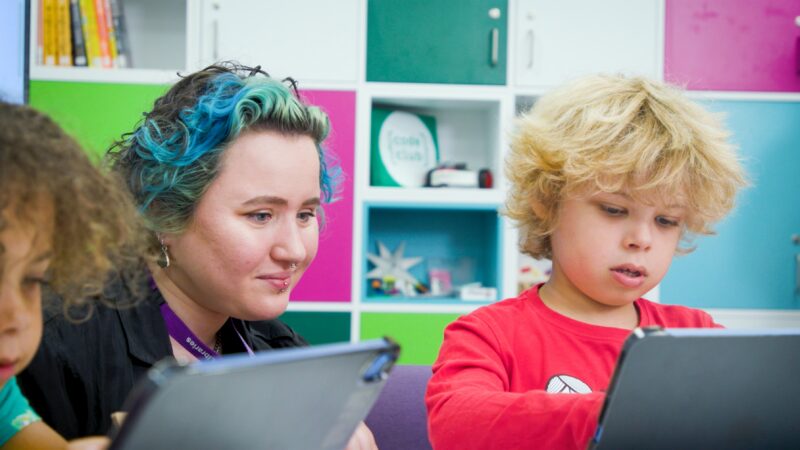
Basia reflected on how they felt when they first heard they were going to be running Code Club sessions, and how their skills and confidence have grown.
“I was daunted for a bit. But actually one of the first things I did when I started this job was to go through some of [the Raspberry Pi Foundation’s] resources and do a project in Scratch. And it was just so simple and straightforward. You know, all the resources are absolutely great and I don’t really need to think about it. I think my confidence has increased quite significantly.”
— Basia, Librarian and Code Club mentor
Since joining Code Club, Micah has become involved in other extracurricular activities, like Lego club and drama club. These experiences have contributed to Micah’s overall personal growth, showcasing the transformative power of Code Club for children.
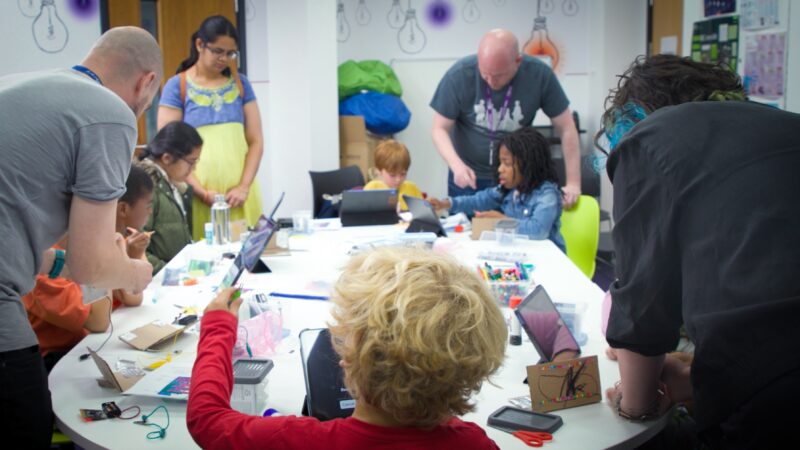
Micah has exciting dreams for the future, including becoming an astrophysicist, a marine biologist, and the founder of a company named Save The Planet. Supported by dedicated mentors like Basia, Code Clubs are not just about teaching coding — they are helping shape the leaders of tomorrow.
If you are interested in encouraging your child to explore coding, take a look at the free coding project resources we have available to support you. If you would like to set up a Code Club for young people in your community, head to codeclub.org for information and support.
Help us celebrate Micah and his inspiring journey by sharing his story on X (formerly Twitter), LinkedIn, and Facebook.
The post Celebrating the community: Micah appeared first on Raspberry Pi Foundation.
We partner with educational organisations around the world to bring coding activities to young people in their regions through Code Club and CoderDojo. Currently involving 52 organisations in 41 countries, this Global Clubs Partner network shares our passion for empowering kids to create with technology.
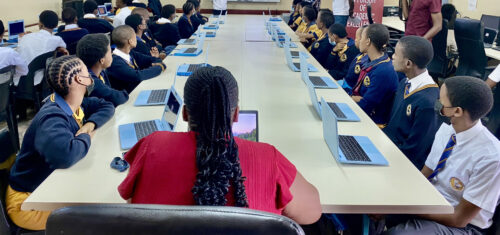
A key aspect of how we foster the Global Clubs Partner network is to promote connections between partners. It’s one reason we host regular online meetings and regional in-person events, and connect partners one on one to facilitate information sharing. Today, we’re highlighting three stories from partner organisations that have benefited from working with each other.
In March 2023, the Foundation hosted the first Clubs Conference for educators and volunteers involved with Code Club and CoderDojo. As this event took place in Cambridge, UK, the majority of attendees were from the UK and Republic or Ireland, but a small number came from further away. Much further away, in some cases.
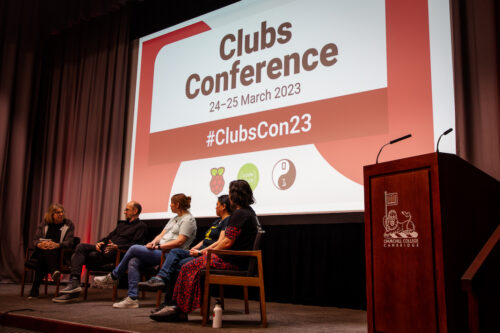
Bruce Harms and his colleague Thanya Croes (Full Stack Vision Foundation, Aruba) were attending the Clubs Conference to share their work to increase digital literacy in Aruba through CoderDojo clubs. At a special conference session for international attendees, they connected with Sanneke van der Meer and Marloes van der Meulen (CoderDojo Netherlands), who were also presenting as part of the session.
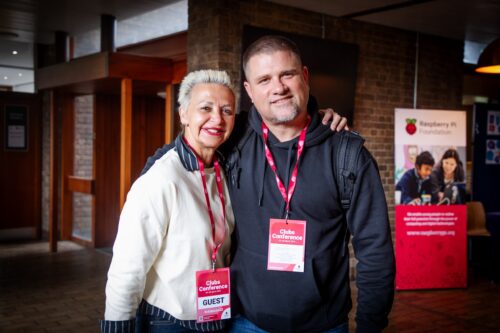
After the Clubs Conference, the two organisations remained in touch. Later in the year, Bruce and Thanya attended the DojoCon Netherlands 2023 in the Hague. ”It was an amazing day with great workshops and lots of other CoderDojo Champions”, Bruce said. He and Thanya have plans to invite the CoderDojo Netherlands team to Aruba and hope to collaborate on future projects together.
Sylvester Mtumbuka (Computers for Enhanced Education, Malawi) and Mrisho Habibu (AMCET Innovation Hub, Tanzania) first connected at our Global Clubs Partner meetup in Malaysia in late 2022. Sylvester said: “We were the only ones from Africa there and we are from neighbouring countries. We happen to have a lot of goals in common, and we started discussing possible opportunities for collaboration.”
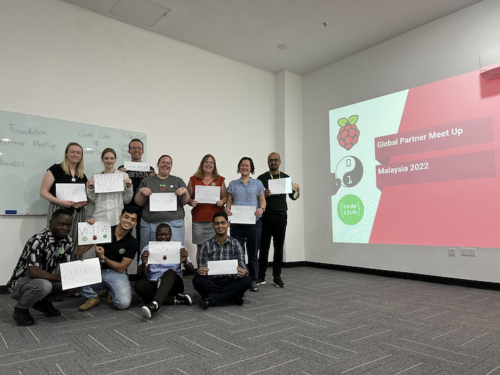
The result is the Tanzania and Malawi (TaMa) Innovation Initiative, which is dedicated to fostering the educational, technological, and entrepreneurial development of young people in Tanzania and Malawi. It aims to empower young people in under-served communities, offering support for sustainable livelihoods and entrepreneurship, and it is already yielding great results.
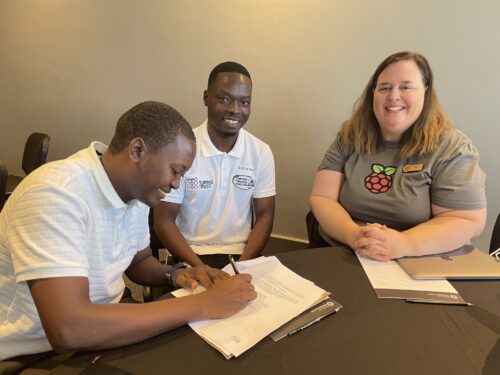
As part of their ongoing partnerships with us, Sylvester and Mrisho attended our Global Clubs Partner meetup in South Africa a year later — the perfect opportunity to sign their partnership agreement.
A chance meeting between Homero Cardoso (TAGUSVALLEY, Portugal) and Manos Zeakis (CoderDojo in Greece) at DojoCon Netherlands 2022 in Almere had unexpected consequences. “We discussed a lot of things, including the difficulty in finding venues for our Dojos in Greece”, Manos said. “Then in October 2023, we met at a Global Clubs Partner call and we talked again. With Homero’s help I contacted a Greek company, and they were immediately enthusiastic about helping us. After a few weeks, the Nea Ionia Dojo was live and the first Ninjas had their first session!”
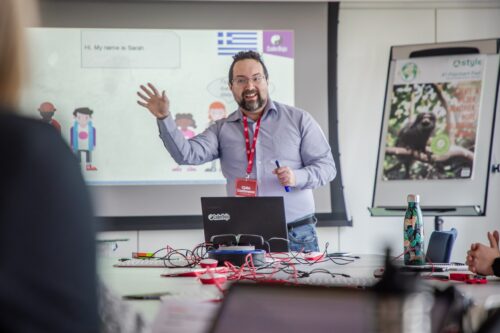
Homero added: “Getting to know Manos was transformative for me as well. Because of that chance encounter in Almere, this year 7th and 8th grade students are participating in Astro Pi Mission Zero for the first time, mostly due to the inspiring example of Manos’s United Dojos project presented at DojoCon.”
To find out more about our Global Clubs Partner network and how your organisation might get involved, visit the CoderDojo or Code Club websites, or contact us directly about a partnership.
The post Fostering collaboration in the Global Clubs Partner network appeared first on Raspberry Pi Foundation.
We’re currently trialling the full integration of our Code Editor in some of the projects on our Projects site, with the aim of providing a seamless experience for young learners. Our Projects site provides hundreds of free coding projects with step-by-step instructions for young people to use at school, in Code Clubs and CoderDojo clubs, and at home. When learners make text-based programming projects in our Python and web design project paths, they use our Code Editor to write and run code in a web browser.
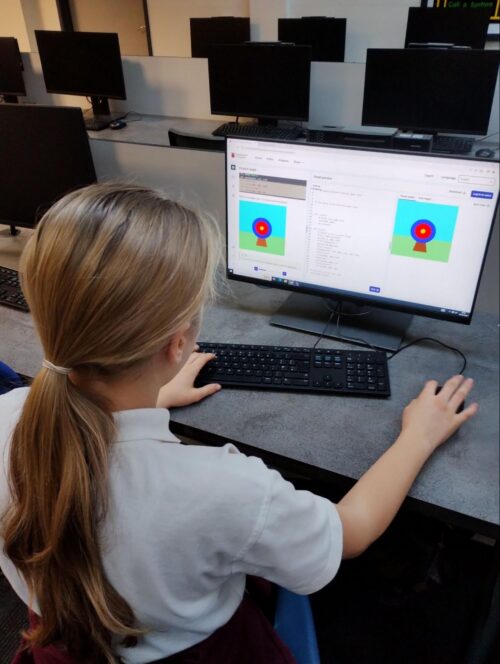
Our new integrated learning experience allows young people to follow the project instructions and work in the Code Editor in a single window. By providing a simpler workspace, where learners do not need to switch between windows to read instructions and input code, we aim to reduce cognitive load and make it easier for young people to learn.
In the integrated project workspace, learners can access the project instructions, coding area, and output (where they can see what they have made) all in the same view. We have reorganised the project guides into short, easy-to-follow steps made up of simple instructions, including code snippets and modelled examples, for learners to work through to create their projects. The project guides feature fresh designs for different types of learning content, such as instruction steps, concept steps, code snippets, tips, and debugging help.
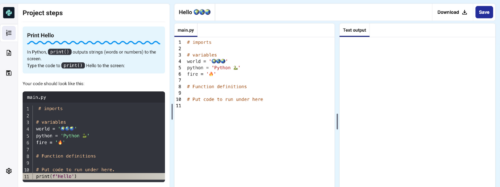
We have also optimised this learning experience for young people using mobiles and tablets. On mobile devices, a new ‘Steps’ tab appears alongside the ‘Code’ and ‘Output’ tabs, enabling learners to easily navigate to the project guide and follow the steps to make their projects.
We are testing our new integrated learning experience as a beta version in three projects:
In each of these projects, young people can choose to complete the original version of the project, with the project instructions and Code Editor in separate windows, or click the button on the project page to try out the new integrated learning experience.
We’d love to hear how your young learners get on with this new integrated experience. Try it out in the three projects above and share your feedback with us here.
Code Editor developments have been made possible with generous support from the Cisco Foundation.
The post An integrated learning experience for young people appeared first on Raspberry Pi Foundation.
In our series of community stories, we celebrate some of the wonderful things young people and educators around the world are achieving through the power of technology.
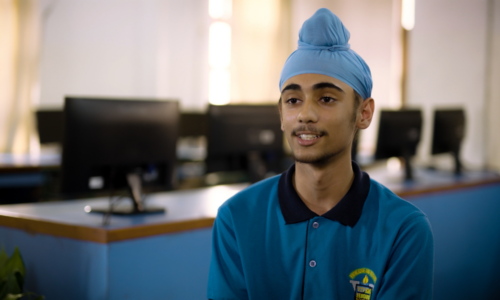
In our latest story, we’re heading to Vivek High School in Mohali, India, to meet Sahibjot, a 14-year-old coding enthusiast who has taken his hobby to the next level thanks to mentorship, Code Club, and the exciting opportunity to take part in the Coolest Projects 2023 global online showcase.
When he was younger, Sahibjot loved playing video games. His interest in gaming led him to discover the world of game development, and he was inspired to find out more and try it out himself. He began to learn to code in his spare time, using tutorials to help him develop his skills.

Keen to share the joy he had experienced from gaming, Sahibjot set himself the challenge of creating a game for his cousin. This project cemented his enthusiasm for coding and developing games of his own.
“I always felt that I have played so many games in my life, why not make one and others will enjoy the same experience that I had as a child.
For my cousin, I made a personal game for him, and he played it and he liked it very much, so once he played it, I felt that, yes, this is what I want to do with my life.” – Sahibjot
While continuing to hone his computing skills at home, Sahibjot heard that his school had started a Code Club. After initially feeling nervous about joining, his enthusiasm was bolstered by the club mentor, Rajan, talking about artificial intelligence and other interesting topics during the session, and he soon settled in.
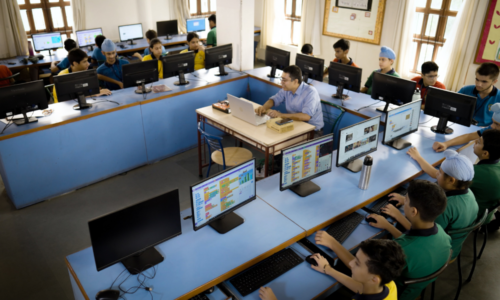
At Code Club, with support and encouragement from Rajan, Sahibjot continued to develop and grow his coding skills. Alongside his technical skills, he also learned about teamwork and working collaboratively. He embraced the opportunity to help his peers, sharing his knowledge with others and becoming a mentor for younger club members.
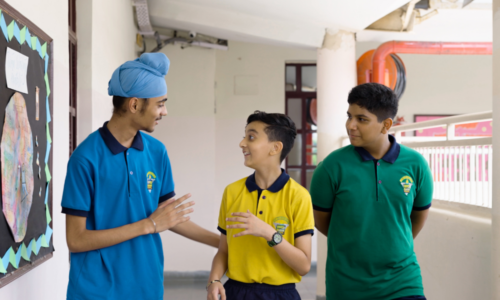
“Last year, we joined this coding club together and we became friends. He’s a very friendly person. Whenever we need him, he just quickly helps us. He helps us to troubleshoot, find any bugs, or even fix our codes.” – Akshat, fellow Code Club member
The next step for Sahibjot came when Rajan introduced him and his fellow Code Club members to Coolest Projects. Coolest Projects is a celebration of young digital creators and the amazing things they make with technology. It offers participants the opportunity to share their tech creations in a global, online showcase, and local in-person events celebrating young creators are also held in several countries.
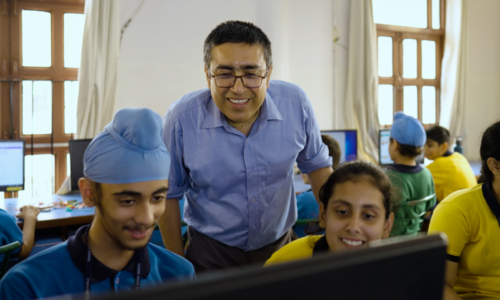
Sahibjot was eager to take part and showcase what he had made. He submitted a Python project, a ping-pong game, to the online showcase, and was very excited to then see his creation receive a special shout-out during the Coolest Projects global livestream event. He was delighted to share this achievement with his friends and family, and he felt proud to be representing his school and his country on a global stage.
“I told everyone around me that there was going to be a livestream and I possibly might be featured in that, so that was really exciting. I learned a lot about just not representing my school and myself as an individual, I learned about representing my whole nation.” — Sahibjot
Sahibjot’s passion for computing has helped shape his aspirations and ambitions. Looking to the future, he hopes to use his technology skills to benefit others and make an impact.
“Using code and technology and all of the things like that, I aspire to make effort to do something with the world, like help out people with technology.” — Sahibjot
To find out how you and young creators you know can get involved in Coolest Projects, visit coolestprojects.org. If the young people in your community are just starting out on their computing journey, visit our projects site for free, fun beginner coding projects.
For more information to help you set up a Code Club in your school, visit codeclub.org.
Join us in celebrating Sahibjot’s inspiring journey by sharing his story on X (formerly Twitter), LinkedIn, and Facebook.
The post Celebrating the community: Sahibjot appeared first on Raspberry Pi Foundation.
With the rapid advances in digital technologies like artificial intelligence, it’s more important than ever that every young person has the opportunity to learn how computers are being used to change the world and to develop the skills and confidence to get creative with technology.
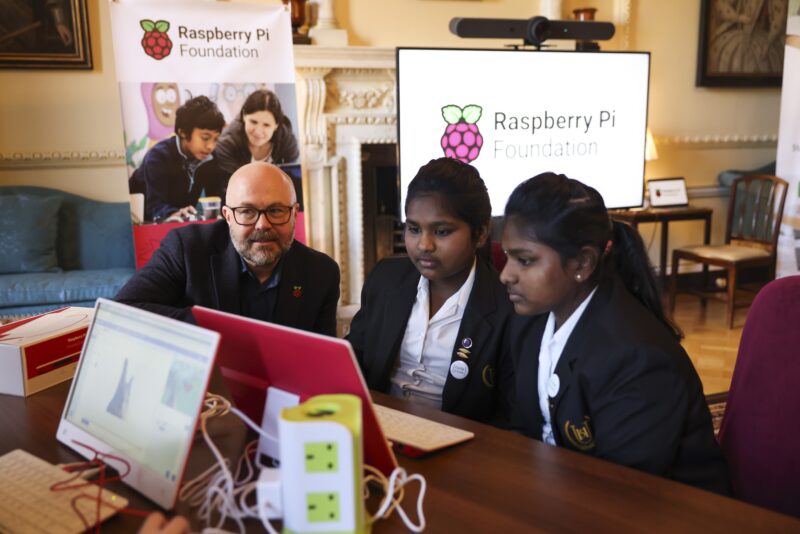
There’s no better way to develop those abilities (super powers even) than getting hands-on experience of programming, whether that’s coding an animation, designing a game, creating a website, building a robot buggy, or training an AI classification model. That’s what tens of thousands of young people do every day in Code Clubs all over the world.
We were absolutely thrilled to organise a Code Club at Number Ten Downing Street last week, hosted by the UK Prime Minister’s wife Akshata Murty as part of Lessons at 10.
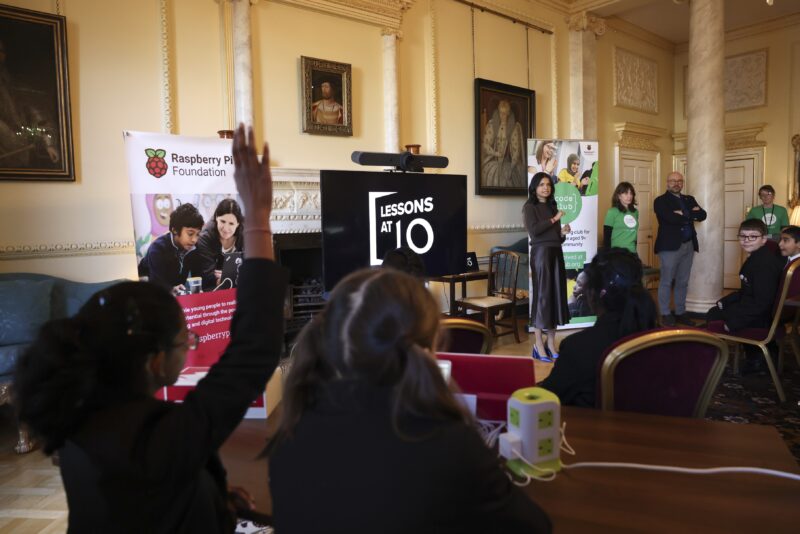
Lessons at 10 is an initiative to bring school children from all over the UK into Number Ten Downing Street, the official residence of the Prime Minister. Every week different schools visit to attend lessons led by education partners covering all kinds of subjects.
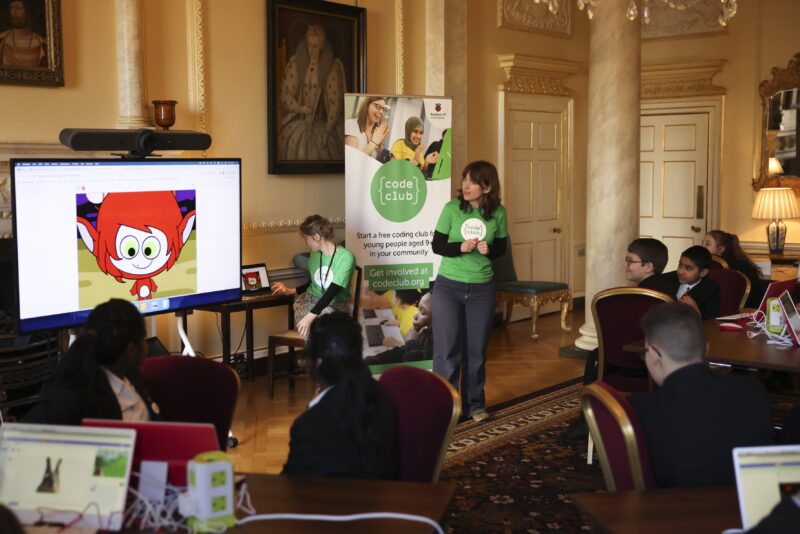
We ran a Code Club for 20 Year 7 students (ages 11 to 12) from schools in Coventry and Middlesex. The young people had a great time with the Silly eyes and Ghostbusters projects from our collections of Scratch projects. Both stone-cold classics in my opinion, and a great place to start if you’re new to programming.
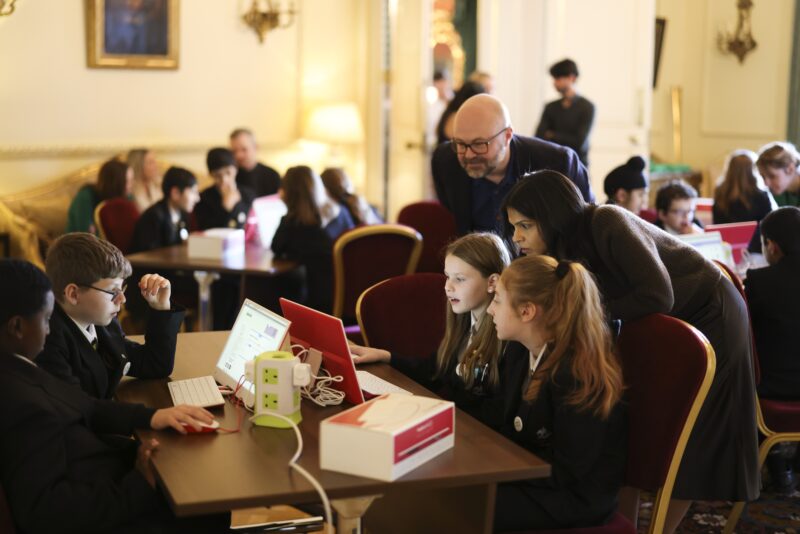
You may have spotted in the photos that the young people were programming on Raspberry Pi computers (the incredible Raspberry Pi 400 made in Wales). We also managed to get our hands on some cool new monitors.
Mrs Murty’s father was one of the founders of Infosys, which ranks among the world’s most successful technology companies, founded in India and now operating all over the world. So it is perhaps no surprise that she spoke eloquently to the students about the importance of every young person learning about technology and seeing themselves as digital creators not consumers.
We were lucky enough to be in one of the rather fancy rooms in Number Ten, featuring a portrait by John Constable of his niece Ada Lovelace, the world’s first computer programmer. Mrs Murty reminded us that one of the lessons we learn from Ada Lovelace is that computer programming combines both the logical and artistic aspects of human intelligence. So true.
Since Code Club’s launch in April 2012, it has grown to be the world’s largest movement of free computing clubs and has supported over 2 million young people to get creative with technology.
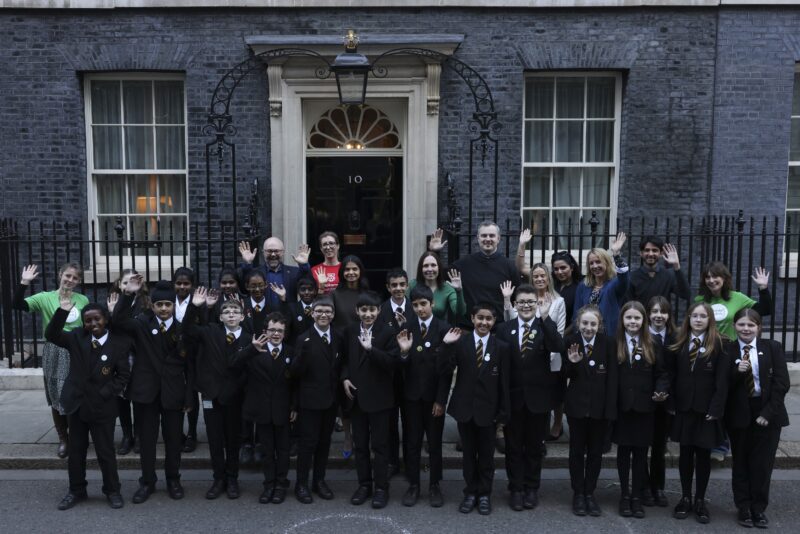
Code Clubs provide a free, fun, and safe environment for young people from all backgrounds to develop their digital skills. Run by teachers and volunteers, most Code Clubs take place in schools, and there are also lots in libraries and other community venues.
The Raspberry Pi Foundation provides a broad range of projects that young people use to build their confidence and skills with lots of different hardware and software. The ultimate goal is that they are empowered to combine their logical and artistic skills to create something original. Just like Ada Lovelace did all those years ago.
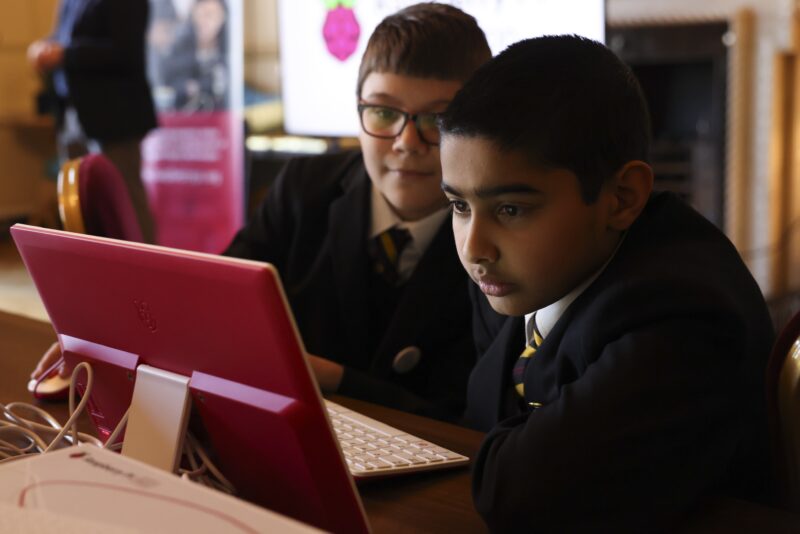
All of our projects are designed to be self-directed, so young people can learn independently or in groups. That means that you don’t need to be a tech expert to set up or run a Code Club. We provide you with all the support that you need to get started.
If you want to find out more about how to set up a Code Club, visit the website here.
The post Code Club at Number Ten Downing Street appeared first on Raspberry Pi Foundation.
We support two networks of coding clubs where young people around the world discover the countless possibilities of creating with digital technologies.
Every year, we send out a survey to volunteers at all the clubs we support. Today we share some highlights from the findings and what we’re planning next.
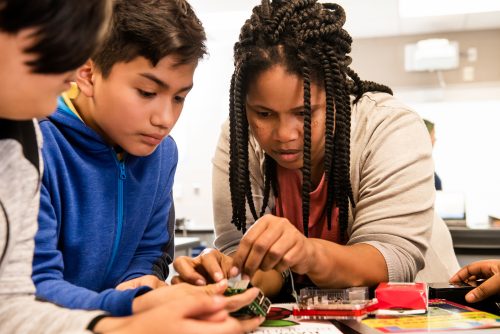
The simple answer is: to help make clubs even better for everyone involved! Educators and volunteers are doing a remarkable job in helping young people learn about computing and coding, so we want to know more about them, about how they run their clubs, and what impact the club sessions have for young people.
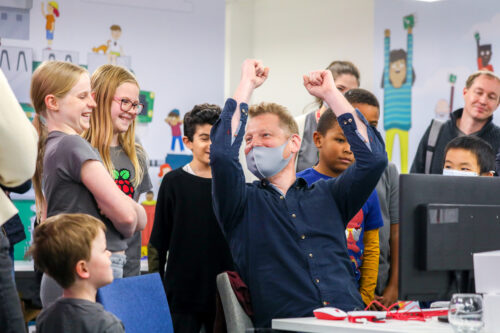
By knowing more about clubs — how frequently club leaders run them, what resources they use, what they would like more of — we can continue to improve the learning experience for educators, volunteers, and young people involved in our clubs.
This year in March we sent out our survey to all Code Clubs and CoderDojos around the world, and we heard back from almost 500. As always, the results were very positive, and they also gave us a lot of useful information on how we can continue to improve our support for clubs all over the world.
Based on the survey, we estimate that at the time, the network of over 4200 Code Clubs and 700 CoderDojos was reaching almost 139,000 young people globally. The global community of clubs has continued to grow since then, with a now even larger network of volunteers supporting ever more young people.
According to the survey, the majority of young people attending clubs are aged between 8 and 13, but clubs host young people as young as 6 and as old as 18. It was great to hear about the participation of girls, and we’d love to see this rise even higher: respondents told us that 42% of their Code Club attendees and 30% of their CoderDojo attendees are female.
Respondents feel that attending club sessions improves young peoples’ interest and engagement in computing and programming, and increases their understanding of the usefulness of computing.
None of these young people would be able to attend clubs without the great work of teams of educators and volunteers. Based on the survey, we estimate that at the time of the survey, there were over 10,300 Code Club leaders and almost 4000 CoderDojo champions around the world. Many survey respondents said that they were motivated to start volunteering after attending a club themselves.
Community is at the heart of clubs and the clubs networks: over 80% of respondents said that belonging to a global community of clubs helps motivates them to volunteer at their own club.
Clubs focus on a wide range of topics and programming languages. Scratch is overwhelmingly popular, with over 95% of respondents telling us that they used Scratch in club sessions in the previous year. Micro:bit projects and Python-based programming were also very popular. Club leaders told us that in future they would like to offer more activities around AI applications, as well as around games and mobile apps.
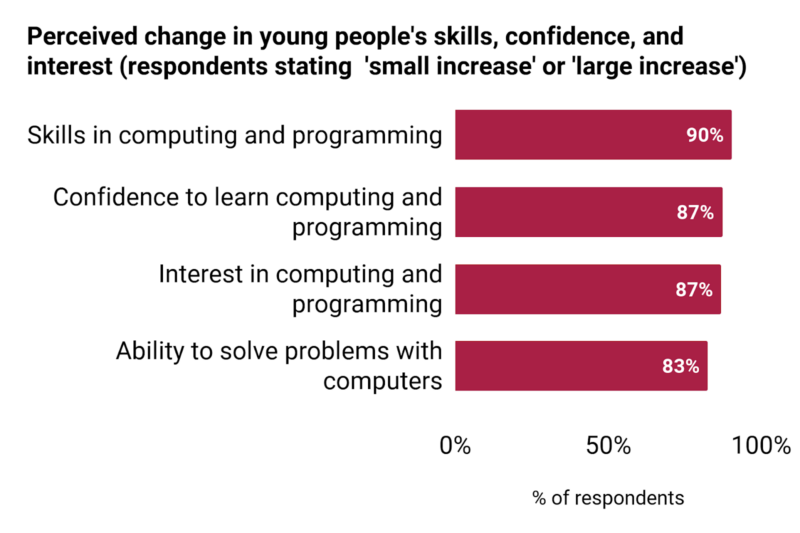
Club leaders told us that being part of a Code Club or CoderDojo affects young people positively. Respondents feel that attending club sessions improves young peoples’ skills and interest in computing and programming, and increases their understanding of the usefulness of computing. Almost 90% of club leaders also agree that after attending a club, young people are interested in additional experiences of learning about computing and programming.
Attending also positively affects young people’s wider skills and attitudes, with club leaders stating that young people who attend improve their personal confidence, independence in learning, and creative thinking.
Young people who attend improve their personal confidence, independence in learning, and creative thinking.
We were pleased to find out that most Code Club leaders, who run their sessions in schools, think that their clubs increase the visibility of computing within their school. Many also said that the attendees’ parents and guardians value their clubs as opportunities for their children.
We want to keep providing clubs with support to increase their positive impact on young people. Thanks to the survey results, we know to focus our work on providing training opportunities for club volunteers, as well as supporting club leaders to recruit volunteers and advertise their clubs to more young people.
You can read the survey report to dive deeper into our findings.
As we take an impact-focused approach to our work, we are currently partnering with Durham University on an evaluation of Code Clubs in UK schools. The evaluation will provide further insights for how we can best support people around the world to run clubs that provide welcoming spaces where all kids can learn to create with digital technologies.
The post What is the impact of attending a Code Club or CoderDojo? appeared first on Raspberry Pi Foundation.
We partner with organisations around the world to bring coding activities to young people in their regions through Code Club and CoderDojo. Currently involving 54 organisations in 43 countries, this Global Clubs Partner network shares our passion for educating kids to create with technology.
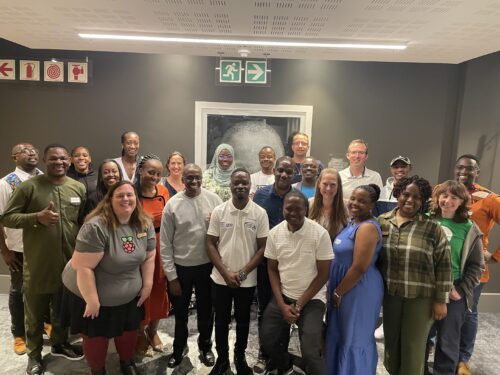
We work to connect our Global Clubs Partners to foster a sense of community and encourage collaboration. As part of this, we run in-person meetups to allow our partners to get to know each other better, and to help us understand how we can best support them, and what we can learn from them. Previously held in Penang, Malaysia, and Almere, the Netherlands, our latest meetup took place in Cape Town, South Africa.
Although we’ve seen some surprising points of commonality among all Global Clubs Partners, we also know that our partners find it helpful to connect with organisations based in their region. For the Cape Town meetup, we invited partner organisations from across Africa, hoping to bring together as many people as possible.
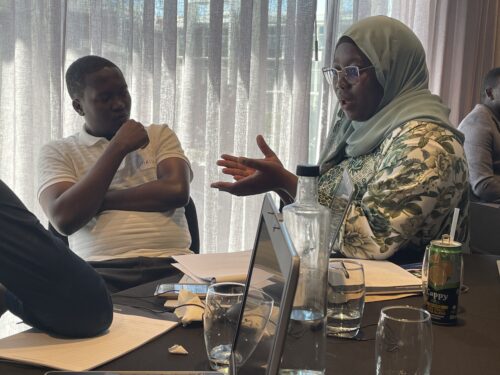
Our aim was to give our partners the opportunity to share their work and identify and discuss common questions and issues. We also wanted to mitigate some of the challenges of working internationally, such as time constraints, time zones, and internet connectivity, so that everyone could focus on connecting with each other.
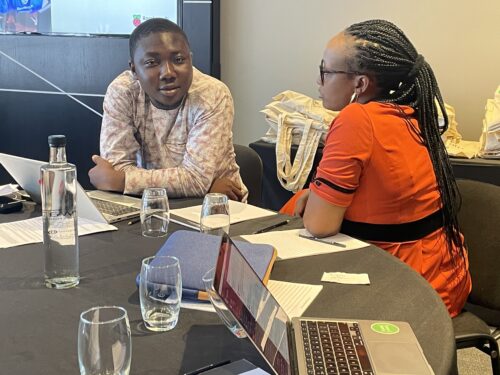
The meetup agenda included time for each Global Clubs Partner organisation to present their work and future plans, as well as time for discussions on growing and sustaining club volunteer and mentor communities, strategy for 2024, and sharing resources.
“If the only thing rural communities have is problems, why are people still living there? … Rural communities have gifts, have skills, they have history that is wasting away right now; nobody is capturing it. They have wisdom and assets.”
Damilola Fasoranti from Prikkle Academy, Nigeria, talking about not making assumptions about rural communities and how this shapes the work his organisation does
A group dinner after the meetup enabled more informal networking. The next day, everyone had the chance to get inspired at Coolest Projects South Africa, a regional Coolest Projects event for young tech creators organised by partner organisation Coder LevelUp.
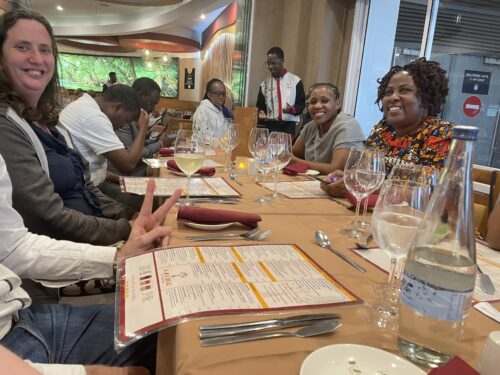
The meetup gave the Global Clubs Partners time to talk to each other about their work and experiences and understand one another better. It was also very beneficial for our team: we learned more about how we can best support partners to work in their communities, whether through new resources, information about funding applications, or best practice in overcoming challenges.
After attending a previous meetup, two of our partner organisations had decided to create an agreement for future partnership. We were delighted to learn about this collaboration, and to witness the signing of the agreement at this meetup.
By continuing to bring our partner network together, we hope to foster more cross-organisation partnerships like this around the world that will strengthen the global movement for democratising computing education.
You can find out how your organisation could join our Global Clubs Partner network on the CoderDojo and Code Club websites, or contact us directly with your questions or ideas about a partnership.
The post Creating connections at our 2023 Africa partner meetup appeared first on Raspberry Pi Foundation.
Earlier this year, we launched our Code Editor, a free online tool to help make learning text-based programming simple and accessible for kids age 9 and up. We focus on supporting the needs of young people who are learning programming at school, in Code Clubs and CoderDojos, and at home.
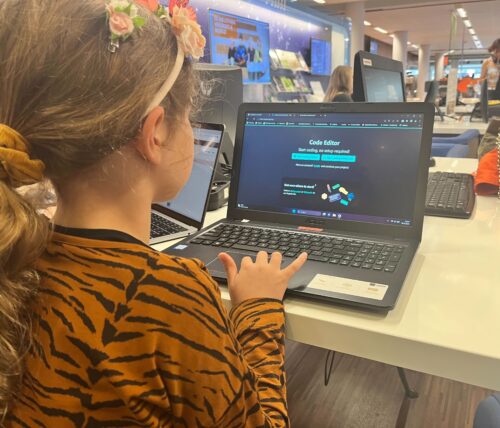
Today, we have two exciting updates to share: support for web page projects with HTML/CSS, and an improved mobile and tablet experience.
Learners can use the Code Editor to write and run code in a web browser without installing any additional software. The Editor is currently available as a beta version, and we’ve already received really positive comments:
“The Editor looks really nice! I have tried the Python part, and it is intuitive and concise. My little program worked no problem, and I am sure the Editor will be easy, intuitive, and quick to learn for the young [learners].”
— Volunteer in the CoderDojo community
The Code Editor now supports the HTML and CSS web development languages, giving young people the ability to create and preview their own websites directly in the Editor interface. Learners can have their code and the preview panel side by side, and they can also preview their websites in a separate, larger tab.
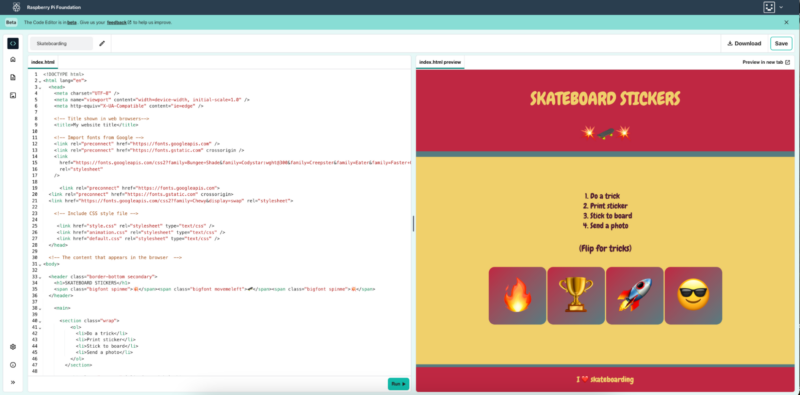
We have embedded the Editor in our ‘Introduction to web‘ path on the Projects site. The path contains six HTML and CSS projects for beginners and helps them create fun websites like the ones shown here.
We want the Code Editor to be safe, age-appropriate, and suitable for use in classrooms or coding clubs. With this in mind, we have excluded certain functions, like being able to add links to external websites in the code. Rather than enabling image uploads, we provide a library of images when projects in our free learning paths contain images, in order to support multimedia projects safely.
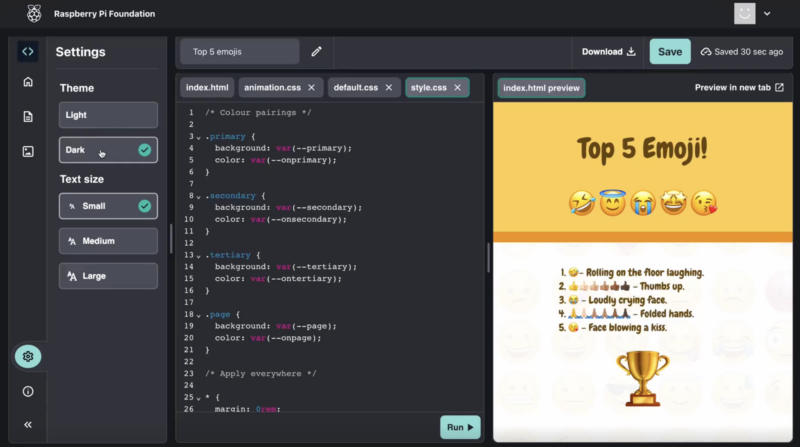
Whether users are coding in Python or HTML/CSS, the Editor offers accessibility options so you can easily switch settings between light and dark mode, and between small, medium, and large text size. The text size feature is useful for people with visual impairments, as well as for educators who want to demonstrate something to a group of learners.
Our Code Editor now offers a new and improved experience for users of mobile and tablet devices. This improves access for learners in classrooms where tablets are used, and in low- and middle-income countries, where mobile phones are commonly used for digital learning.
The Editor now includes:
We’re continuing to develop the Code Editor and have more improvements planned. If you would like to try it out and provide us with your feedback, we’d love to hear what you think of our latest updates.
Code Editor developments have been made possible with generous support from Endless and the Cisco Foundation.
The post Code Editor update: Support for HTML and mobile devices appeared first on Raspberry Pi Foundation.
Increasing access to computing education is a global challenge, and at the Raspberry Pi Foundation we take a global approach in addressing it. One way we do this is to partner with organisations around the world and support them to introduce Code Clubs and CoderDojos in their local or national communities.
Code Club and CoderDojo are the two global networks of free, volunteer-led coding clubs for young people that we support. They are a great fit for a lot of organisations that share our vision and values and work with young people from backgrounds that are currently under-represented in computing. Right now, our Global Clubs Partner network involves more than 50 organisations in over 40 different countries around the world. Seven new partners have joined us since August.
We send a warm welcome to our seven new partners. Here is some of what they are working on:
We are really excited that these organisations have chosen to join the Global Clubs Partner network.
When they join our Global Clubs Partner network, organisations work with us to grow the Code Club and CoderDojo communities around the world. Our Global Clubs Partners share our mission to enable young people to realise their full potential through the power of computing and digital technologies, and they commit to working towards this mission with our support.
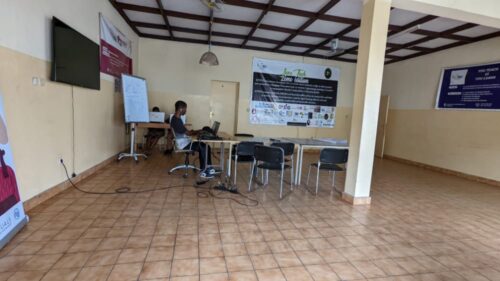
For many partners and the educators and volunteers they work with, running Code Clubs and CoderDojos is an opportunity to learn to code alongside the young people. We give partners tailored support for their work through our free, high-quality resources, including online training, community events, and easy-to-follow coding projects.
Our new partners are as glad as we are to have joined our network.
Abdelmoneim Mohammed of Orientations Training Centre in Sudan is excited by the impact Code Club will have on his young coders, telling us:
I expect this can help to make our citizens a global citizen, [by] learning from a well-established and developed educational system.
For Ethel Tshukudu of CSEd Botswana, it is the community focus and available support network that is important. She tells us:
The strong sense of community and the availability of mentorship opportunities are particularly appealing, as they ensure that CSEdBotswana can consistently access the support needed to enhance our coding clubs and create a more significant impact.
Our partner from KIT Hub in Burundi, Ferdinand Alimasi, values how establishing clubs promotes collective learning and engagement in the community. He says:
Education and preparation of [the] future workforce require collective work and responsibilities, so these clubs will bring the change in communities by offering opportunities to learn for kids and teens, as well as opportunities for everyone to be involved in building a better future for all.
Our partners work in lots of different circumstances all around the world. A key learning for us is that there is no ‘one size fits all’ approach to computing education. We support our partners to adapt and deliver our resources in a way that they know will best engage their learners. This highlights how important it is to work in a culturally sensitive way, and to prioritise providing opportunities for learners to use digital technology to make things that matter to them. That looks very different depending on where you are in the world, and who you are working with.

Through working with our partners, we also see just how much world events can impact the already unequal access young people have to learning new digital skills. Climate crisis events such as floods and wildfires, and political crises such as war, conflict, and changes in government have affected many of our global partners this year. The resulting closures of schools and other educational venues, electricity blackouts, and funding challenges cause further educational disadvantage to the children in the affected areas. Our partners play a key role in providing additional educational opportunities for young people when it is safe to do so.
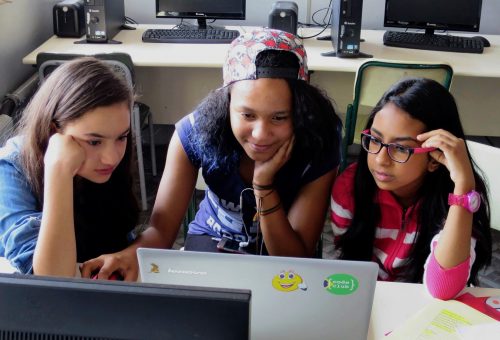
The experiences and perspectives we’ve gained through our partnerships with global organisations are extremely important to us and our mission. They help to inform the work we do to make computing education truly accessible for all learners and educators around the globe.
You can find out more about how your organisation could join our Global Clubs Partner network on the CoderDojo and Code Club websites, or contact us directly with your questions or ideas about a partnership.
The post Welcome, new partners: Growing the global impact of Code Club and CoderDojo appeared first on Raspberry Pi Foundation.
Moonhack is a free global, online coding challenge by our partner Code Club Australia, powered by Telstra Foundation. It runs once a year for young learners worldwide. In 2022, almost 44,000 young people from 63 countries registered to take part.
This year, Moonhack will happen from 10 to 26 October, to coincide with World Space Week 2023. The challenge is open to all young learners, wherever they are in the world, and features six brand-new projects that focus on space and innovation. We caught up with Kaye North, Community and Engagement Manager at Code Club Australia, to find out more.
Moonhack 2023 offers access to engaging new projects for Scratch, micro:bit, and Python. For the first time ever, young people will also have the option to follow a project brief to code their own solution to a space-based issue, using a programming language of their choice.
In keeping with this year’s theme — which was inspired by the World Space Week 2023 theme of ‘Space and Entrepreneurship’ — the new Moonhack projects showcase inventions that were created for space exploration but are now used in everyday life, such as mobile phone cameras and LEDs.
Kaye shared that in Australia, inventions created for space travel and exploration are part of the science curriculum at primary school level. She hopes that this year’s Moonhack will help more young people understand how space exploration and coding are connected to their daily lives.
Moonhack features six unique coding projects, giving young people of all ages and experience levels the opportunity to engage and learn. The project brief introduced this year encourages participants to be creative, coding a solution on any platform they choose.
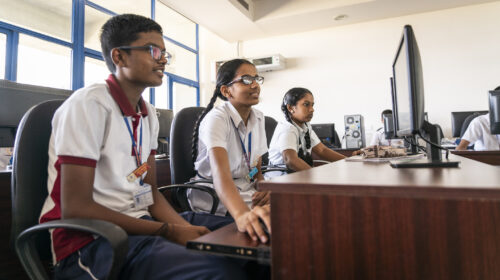
Coders who respond to the project brief will also be in with a chance of having their project selected to be developed into an official Code Club Australia project, for other young people and educators around the world to enjoy.
Kaye emphasised that Moonhack is about more than just taking part in a global event; it also helps young people to better understand the real-world opportunities that coding can offer.
“The more kids we expose this to, the better, expanding coding past just coding and having purpose behind it. And I do try to link things in so that we’re connecting with real-world context, careers…”
Kaye North
Registration for Moonhack 2023 is open now. The challenge runs from 10 to 26 October, and projects can be submitted until 30 November. Participation is free and open to any young coder, whether they are part of a Code Club or not. The 2023 projects are already available in English, Arabic, Croatian, Dutch, Filipino, French, Greek, Hindi, Indonesian, Mandarin, Portuguese, and Spanish, and will be available in more languages soon.
To find out more and register to take part, visit the Moonhack website.
Code Club Australia is powered by Telstra Foundation as part of a strategic partnership with us at the Raspberry Pi Foundation.
The post Get ready for Moonhack 2023: Bringing space down to Earth appeared first on Raspberry Pi Foundation.
A couple of months ago we announced that you can test the online text-based Code Editor we’re building to help young people aged 7 and older learn to write code. Now we’ve made the code for the Editor open source so people can repurpose and contribute to it.
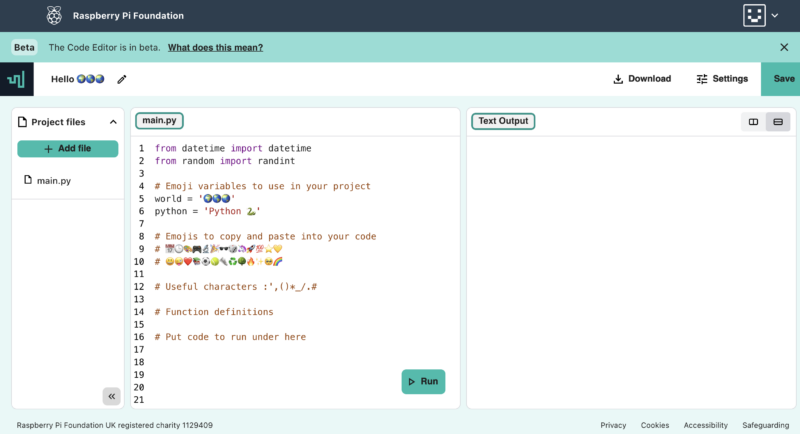
You and your learners can try out the Code Editor in our Python project paths. We’ve included a feedback form for you to let us know what you think about the Editor.
Since the Editor lets learners save their code using their Raspberry Pi Foundation account, it’s easy for them to build on projects they’ve started in the classroom or at home, or bring a project they’ve started at home to their coding club.
Python is the first programming language our Code Editor supports because it’s popular in schools, CoderDojos, and Code Clubs, as well as in industry. We’ll soon be adding support for web development languages (HTML/CSS).
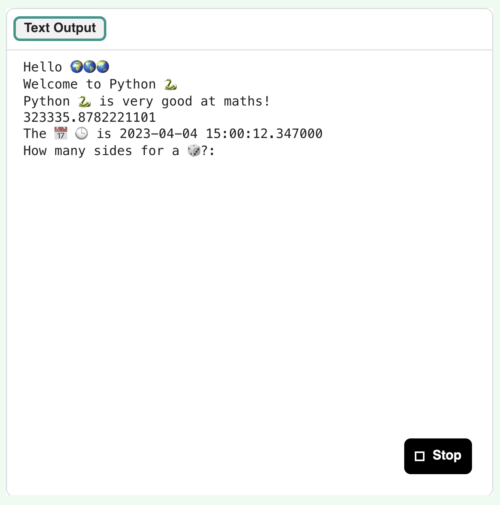
We know that starting out with new programming tools can be tricky and add to the cognitive load of learning new subject matter itself. That’s why our Editor has a simple and accessible user interface and design:
We’ll expand the Editor’s functionalities as we go. For example, at the moment we’re looking at how to improve the Editor’s user interface (UI) for better mobile support.
If there’s a feature you think would help the Editor become more accessible and more suitable for young learners, or make it better for your classroom or club, please let us know via the feedback form.
Our vision is that every young person develops the knowledge, skills, and confidence to use digital technologies effectively, and to be able to critically evaluate these technologies and confidently engage with technological change. We’re part of a global community that shares that vision, so we’ve made the Editor available as an open-source project. That means other projects and organisations focussed on helping people learn about coding and digital technologies can benefit from the work.
To support the widest possible range of learners, we’ve designed the Code Editor application to work well on constrained devices and low-bandwidth connections. Safeguarding, accessibility, and data privacy are also key considerations when we build digital products at the Foundation. That’s why we decided to design the front end of the Editor to work in a standalone capacity, with Python executed through Skulpt, an entirely in-browser implementation of Python, and code changes persisted in local storage by default. Learners have the option of using a Raspberry Pi Foundation account to save their work, with changes then persisted via calls to a back end application programming interface (API).
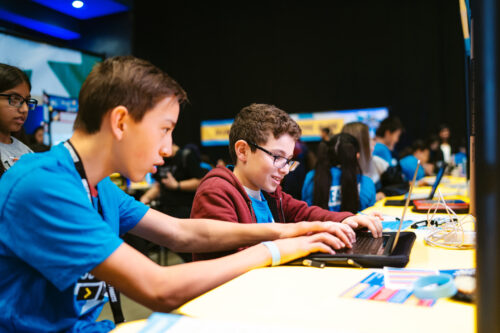
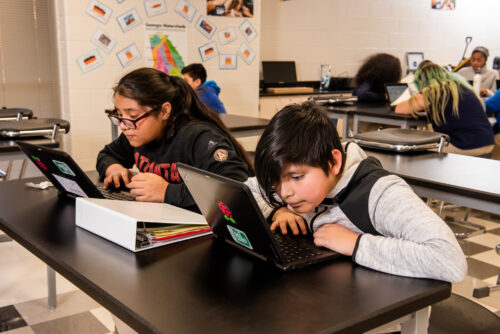
As safeguarding is always at the core of what we do, we only make features available that comply with our safeguarding policies as well as the ICO’s age-appropriate design code. We considered supporting functionality such as image uploads and code sharing, but at the time of writing have decided to not add these features given that, without proper moderation, they present risks to safeguarding.
There’s an amazing community developing a wealth of open-source libraries. We chose to build our text-editor interface using CodeMirror, which has out-of-the-box mobile and tablet support and includes various useful features such as syntax highlighting and keyboard shortcuts. This has enabled us to focus on building the best experience for learners, rather than reinventing the wheel.
Diving a bit more into the technical details:
You can find out more about our Editor’s code for both the UI front end and API back end in our GitHub readme and contributions documentation. These kick-starter docs will help you get up and running faster:
The Editor’s front end is licensed as permissively as possible under the Apache Licence 2.0, and we’ve chosen to license the back end under the copyleft AGPL V3 licence. Copyleft licences mean derived works must be licensed under the same terms, including making any derived projects also available to the community.
We’d greatly appreciate your support with developing the Editor further, which you can give by:
Our work to develop and publish the Code Editor as an open-source project has been funded by Endless. We thank them for their generous support.
If you are interested in partnering with us to fund this key work, or you are part of an organisation that would like to make use of the Code Editor, please reach out to us via email.
The post Our Code Editor is open source appeared first on Raspberry Pi Foundation.
A network of more than 40 partner organisations in over 30 countries works with us to grow and sustain the worldwide Code Club and CoderDojo networks of coding clubs for young people. These organisations, our Global Clubs Partners, share our mission to enable young people to realise their potential through the power of computing and digital technologies. We support them in various ways, and recently we invited them to two calls with our researchers to discuss new research findings about computing education in primary schools.
Global Clubs Partners work to train educators and volunteers, provide access to computing equipment, run clubs and events for young people at a local or national level, and much more. Our aim is to provide support that helps the Global Clubs Partners in their work, including tailored resources and regular group calls where we discuss topics such as volunteer engagement and fundraising.
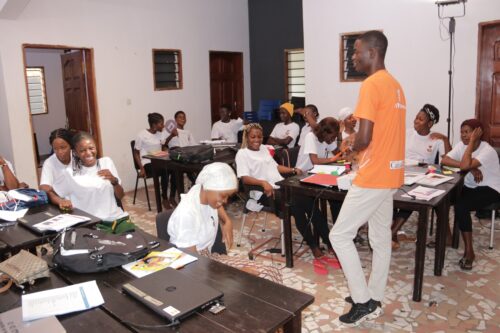
Recently, we were excited to be able to highlight research from our newest seminar series to the network. This ongoing seminar series focuses on teaching and learning in primary (K-5) computing education. Many of the Global Clubs Partners work with schools or local education bodies — some partner representatives even come from a teaching background themselves. That’s why we hoped they would be able to use insights from the seminars in their work, whether with learners and educators directly, or to grow their network of Code Clubs or CoderDojos; we know this is easier for them when they can provide evidence to show why these programmes are so beneficial for young people.
We were also very interested to hear the Global Clubs Partners’ perspectives, as they work in a wide variety of contexts around the world. For example, would the research resonate the same way with an organisation based in Kenya as one based in Nepal? This kind of insight is useful for making decisions about our research work in future.
Each of the two calls featured a speaker from the research seminar series summarising their work and inviting attendees to share their own thoughts. We had some fascinating conversations; with partner representatives from seven countries across four continents, the discussions were a great showcase of the different experiences in our partner network. Dr Bobby Whyte, one of the speakers, noted: “Being able to share and discuss work within a global audience has been a really valuable experience.”
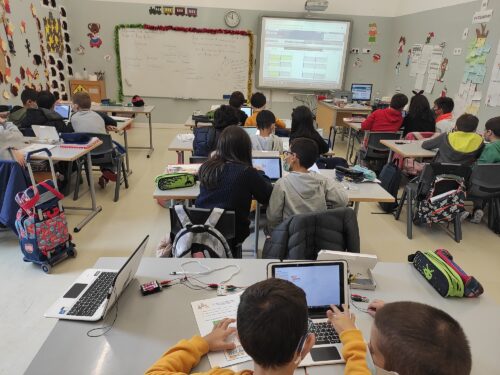
We found the opportunity to connect our partner network with work from other areas of the Foundation really beneficial, and the Global Clubs Partners did too: their feedback from the calls was uniformly positive. Dr Jane Waite, our Senior Research Scientist, commented that “it’s really important for us to share research with people in different contexts and so exciting to hear when findings resonate and can be used in practice.”
You can find out more about our Global Clubs Partner network on the CoderDojo and Code Club websites, or contact us directly about partnerships.
The post Bringing computing education research to a new global audience appeared first on Raspberry Pi Foundation.
We love hearing from members of the community and how they use their passion for computing and digital making to inspire others. Our community stories series takes you on a tour of the globe to meet educators and young tech creators from the USA, Iraq, Romania, and more.
For our latest story, we are in the UK with Spencer, a Computer Science teacher at King Edward VI Sheldon Heath Academy (KESH), Birmingham. After 24 years as a science teacher, Spencer decided to turn his personal passion for digital making into a career and transitioned to teaching Computer Science.
From the moment he printed his name on the screen of an Acorn Electron computer at age ten, Spencer was hooked on digital making. He’s remained a member of the digital making community throughout his life, continuing to push himself with his creations and learn new skills whenever possible. Wanting to spread his knowledge and make sure the students at his school had access to computer science, he began running a weekly Code Club in his science lab:
“Code Club was a really nice vehicle for me to get students into programming and digital making, before computer science was an option at the school. So Code Club originally ran in my science lab around the Bunsen burners and all the science equipment, and we do some programming on a Friday afternoon making LEDs flash and a little bit of Minecraft. And from that, the students really got an exciting sense of what programming and digital making could be.”
– Spencer
While running his Code Club, Spencer really embedded himself in the Raspberry Pi community, attending Raspberry Jams, engaging with like-minded people on Twitter, and continuing to rely on our free training to upskill.
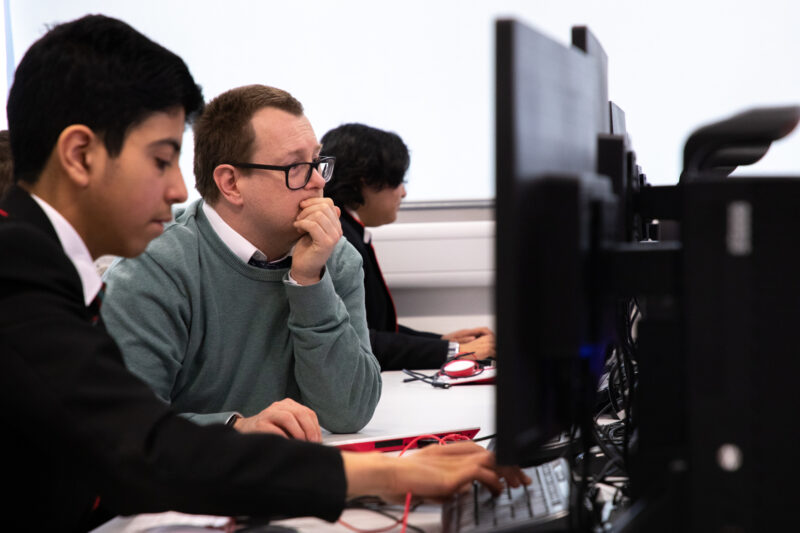
When leadership at KESH began to explore introducing Computer Science to the curriculum, Spencer knew he was the right person for the job, and just where to look to make sure he had the right support:
“So when I decided to change from being a science teacher to a computer science teacher, there were loads of course options you could find online, and a lot of them required some really specific prior knowledge and skills. The Foundation’s resources take you from a complete novice, complete beginner — my very first LED flashing on and off — to being able to teach computational thinking and algorithms. So it was a really clear progression from using the Foundation resources that helped take me from a Physics teacher, who could use electricity to light an LED, to a programmer who could teach how to use this in our digital making for our students.”
– Spencer
Thanks to the support from KESH and Spencer’s compelling can-do attitude, he was soon heading up a brand-new Computer Science department. This was met with great enthusiasm from the learners at KESH, with a willing cohort eagerly signing up for the new subject.
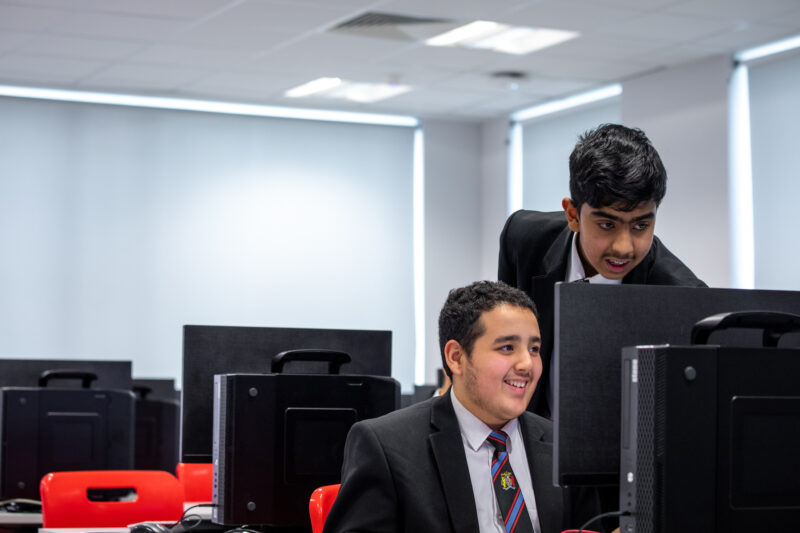
“It’s really exciting to see how students have embraced Computer Science as a brand-new subject at school. The take-up for our first year at GCSE was fantastic with 25 students, and this year I’ve really got students asking about, ‘Is there an option for next year, and how can I get on to it?’ Students are almost blown away by the resources now.”
– Spencer
Spencer has a mission to make sure all of KESH’s learners can learn about computing, and making his lessons accessible to all means he’s become a firm favourite amongst the students for his collaborative teaching approach.
“Mr Organ teaches you, and then he just puts you in. If you do need help, you can ask people around you, or him, but he lets you make your own mistakes and learn from there. He will then give you help so you don’t make those mistakes the next time.”
– Muntaha, 16, GCSE Computer Science student, KESH
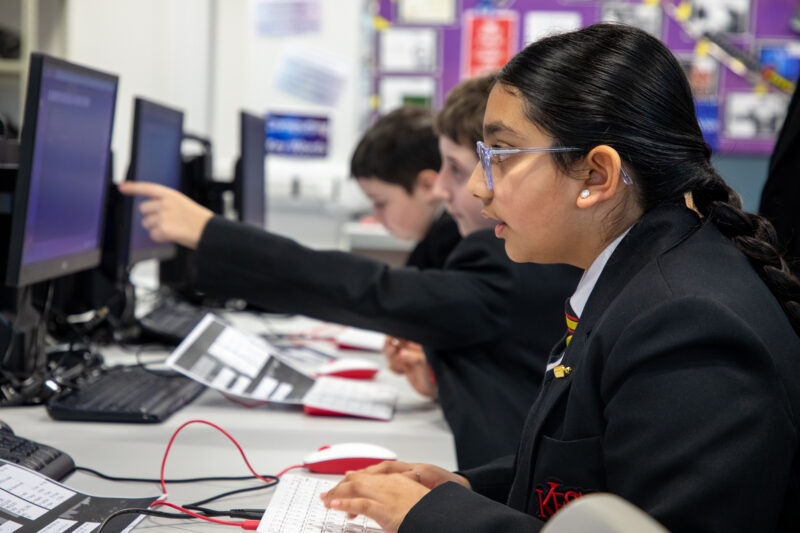
Spencer’s work is shaped by his awareness that many of the learners at KESH come from under-resourced areas of Birmingham and backgrounds that are underrepresented in computing. He knows that many of them have previously had limited opportunities to use digital tools. This is something he is driven to change.
“I want my young students here, regardless of their background, regardless of their area they’ve been brought up in, to have the same experiences as all other students in the country. And the work I do with Raspberry Pi, and the work I do with Code Club, is a way of opening those doors for our young people.”
– Spencer
As a passionate member of the Raspberry Pi Foundation community, Spencer has been counted on as a friendly face for many years, sharing his enthusiasm on training courses, at Foundation events, and as a part of discussions on Twitter. With the goal to introduce Computer Science at A level shortly, and an ever-growing collection of digital makes housed in his makerspace, Spencer shows no signs of slowing down.
If you are interested in changing your teaching path to focus on Computer Science, take a look at the free resources we have available to support you on your journey.
Help us celebrate Spencer and his dedication to opening doors for his learners by sharing his story on Twitter, LinkedIn, and Facebook.
The post Celebrating the community: Spencer appeared first on Raspberry Pi Foundation.

 Lateo.net - Flux RSS en pagaille (pour en ajouter : @ moi)