 Connexion


Apple is working on an AI server that would use Apple’s high-performance M-series Ultra chips found in Mac desktops. The potential product’s expected release in 2029 would mark the first Apple server to hit the market in nearly two decades—and could capitalize on the surging popularity of Apple hardware among AI developers.
The enterprise server would come in two configurations that include either two or four of Apple’s future M8 Ultra chips, according to The Information. The project reportedly received support from new Apple CEO John Ternus when it began a year ago, back when Ternus led Apple’s hardware engineering efforts.
This revelation coincides with booming sales for Apple’s Mac mini and Mac Studio as AI developers and companies snap up the Mac computers to run AI workloads. The popularity of such computing devices that rely on Apple’s M-series Ultra chips has undoubtedly encouraged Apple’s pursuit of an enterprise server using the same chips.


We are a month away from the initial rollout of Google's Android developer verification system, which requires developers outside the Play Store to verify their identities, just like it does for devs publishing on its platform. The company contends this policy does not impinge on the platform's open nature. Still, the restrictions will be a big change, and there are still some unanswered questions. An issue that has come up repeatedly in the run-up to verification is what will happen to devs who can't verify because of where they live. It turns out that Google has a cryptic answer for that buried in an FAQ.
Developer verification will soon block the installation of apps from unverified developers on any Android device running Google services, which is functionally all Android phones outside Russia and China. Developers who want to keep releasing software, even if it's not in the Play Store, have to provide Google with their ID and pay a small fee.
But what if you're an Android developer living in a sanctioned nation? Currently, the US sanction list includes Iran, Cuba, North Korea, and occupied areas of Ukraine. Given the current uncertain state of US foreign policy, that list could change in the future. Google doing any business with developers in those places is a thorny issue, and it seems like the company has decided to just leave them hanging.
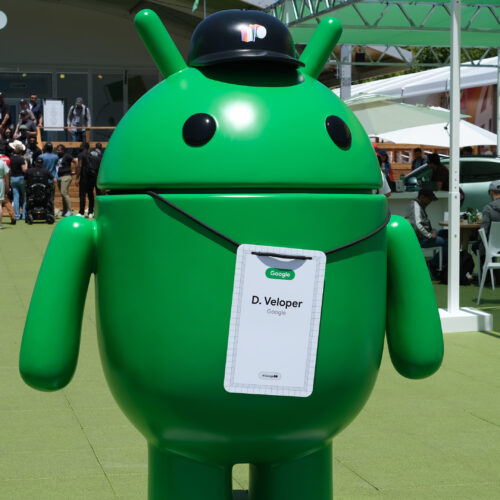
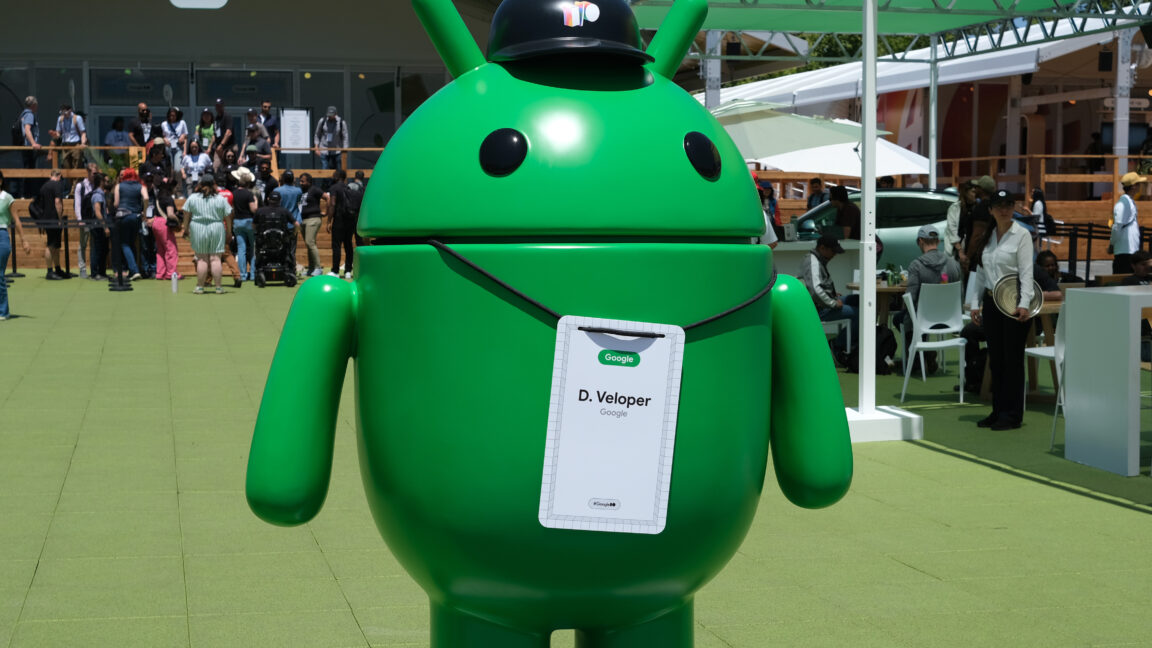
Code generation is emerging as one of the most popular applications for large language models (LLMs), but not all agents are equally good at all development tasks. Google created a benchmark earlier this year to evaluate how LLMs perform in Android app development, and Android Bench is getting a big update today. The leaderboard now includes a raft of new models, and Google has adopted a new framework that should be easier to use. Developers are invited to run their own tests and submit feedback that could shape the future of Android Bench.
While they are popular coding tools, LLMs don't get everything right. Separating the useful outputs from straight-up slop means choosing the right tool. Android Bench aims to demonstrate which AI agents do best on a suite of 100 Android development tasks. After launching Android Bench in March, Google has added metrics like cost and efficiency, as well as open-weight models.
To keep Android Bench relevant, Google is updating the test with eight new models, including all the latest heavy-hitters: Claude Fable 5, Claude Sonnet 5, Claude Opus 4.8, GLM 5.2, Kimi K2.7 Code, MiniMax M3, Qwen 3.7 Plus, and Qwen 3.7 Max.
Apple is hoping the Supreme Court will reverse a contempt finding that threatens to block the tech giant from charging high commission fees when developers divert iPhone users to non-Apple payment methods for app purchases.
The contempt finding came in a case where Epic Games accused Apple of violating a judicial order requiring changes to its App Store, which charged a 30 percent commission for using Apple payment methods and did not allow developer links to alternative payment methods.
That order required Apple to allow developers to include links to make payments outside the Apple ecosystem, but Apple did so only after requiring a 27 percent commission for allowing the link-outs. In December, Apple lost an appeal after defending its commission as reasonable. At that time, the 9th Circuit concluded that Apple violated the spirit of the order by charging fees so high that they “had a prohibitive effect” on developers who saw little benefit in updating apps to save only a small amount on fees.


Almost 20 years ago, Google pitched Android as the more open alternative to Apple's walled garden. Last year, Google announced it would begin erecting its own walls through developer verification. The company has issued an update on its plans, affirming that the verification system will begin rolling out in select countries later this year. We're also learning which app stores are participating in verification and the timeline for key features like the recently revealed "advanced flow" for bypassing verification.
Google has claimed that developer verification is a necessary change to smartphone software distribution, pointing to the increased prevalence of scams that trick Android users into installing malware apps. Google's solution requires verifying the identities of developers outside the Play Store just like it does for devs publishing on its platform. This has proven to be a contentious change for myriad reasons.
In the new blog post, Google's Matthew Forsythe confirms that the developer verification system is slated to come online on September 30 of this year. The initial deployment will be limited to countries with a high level of app scams: Brazil, Indonesia, Singapore, and Thailand.
Mozilla developer Peter Wilson has taken to the Mozilla.ai blog to announce cq, which he describes as "Stack Overflow for agents." The nascent project hints at something genuinely useful, but it will have to address security, data poisoning, and accuracy to achieve significant adoption.
It's meant to solve a couple of problems. First, coding agents often use outdated information when making decisions, like attempting deprecated API calls. This stems from training cutoffs and the lack of reliable, structured access to up-to-date runtime context. They sometimes use techniques like RAG (Retrieval Augmented Generation) to get updated knowledge, but they don't always do that when they need to—"unknown unknowns," as the saying goes—and it's never comprehensive when they do.
Second, multiple agents often have to find ways around the same barriers, but there's no knowledge sharing after said training cutoff point. That means hundreds or thousands of individual agents end up using expensive tokens and consuming energy to solve already-solved problems all the time. Ideally, one would solve an issue once, and the others would draw from that experience.


Google is planning big changes for Android in 2026 aimed at combating malware across the entire device ecosystem. Starting in September, Google will begin restricting application sideloading with its developer verification program, but not everyone is on board. Android Ecosystem President Sameer Samat tells Ars that the company has been listening to feedback, and the result is the newly unveiled advanced flow, which will allow power users to skip app verification.
With its new limits on sideloading, Android phones will only install apps that come from verified developers. To verify, devs releasing apps outside of Google Play will have to provide identification, upload a copy of their signing keys, and pay a $25 fee. It all seems rather onerous for people who just want to make apps without Google's intervention.
Apps that come from unverified developers won't be installable on Android phones—unless you use the new advanced flow, which will be buried in the developer settings.

This week, tens of thousands of game developers and producers will once again gather in San Francisco, as they have since 1988, for the weeklong Game Developers Conference. But this year’s show will be missing many international developers who say they no longer feel comfortable traveling to the United States to attend, no matter how relevant the show is to their work and careers.
Dozens of those developers who spoke to Ars in recent months say they’re wary of traveling to a country that has shown a callous disregard for—or outright hostility toward—the safety of international travelers. That’s especially true for developers from various minority groups, those with transgender identities, and those who feel they could be targeted for outspoken political beliefs.
“I honestly don't know anyone who is not from the US who is planning on going to the next GDC,” Godot Foundation Executive Director Emilio Coppola, who’s based in Spain, told Ars. “We never felt super safe, but now we are not willing to risk it.”


 Lateo.net - Flux RSS en pagaille (pour en ajouter : @ moi)