 Connexion


Since its earliest days, the video game industry has been built on developers creating clones of competing games, with varying levels of originality and varying levels of enforcement from game platforms. Now, though, AI coding tools are making that cloning process so efficient that many developers are getting extremely cautious about sharing their early work too widely.
Developer Alliance Arts highlighted this trend over the weekend, delaying the launch of a planned public demo for its demon-themed Russian Roulette drinking game Drunken Goddess Reflux, which had been set to go live with today's launch of Steam Next Fest.
In a post on social media Friday evening, the Alliance Arts team wrote that, in addition to concerns about managing streaming restrictions, "we're concerned that the demo's content could be used to quickly imitate or replicate the game's presentation and gameplay with AI or other tools and that such works could be released before our launch."


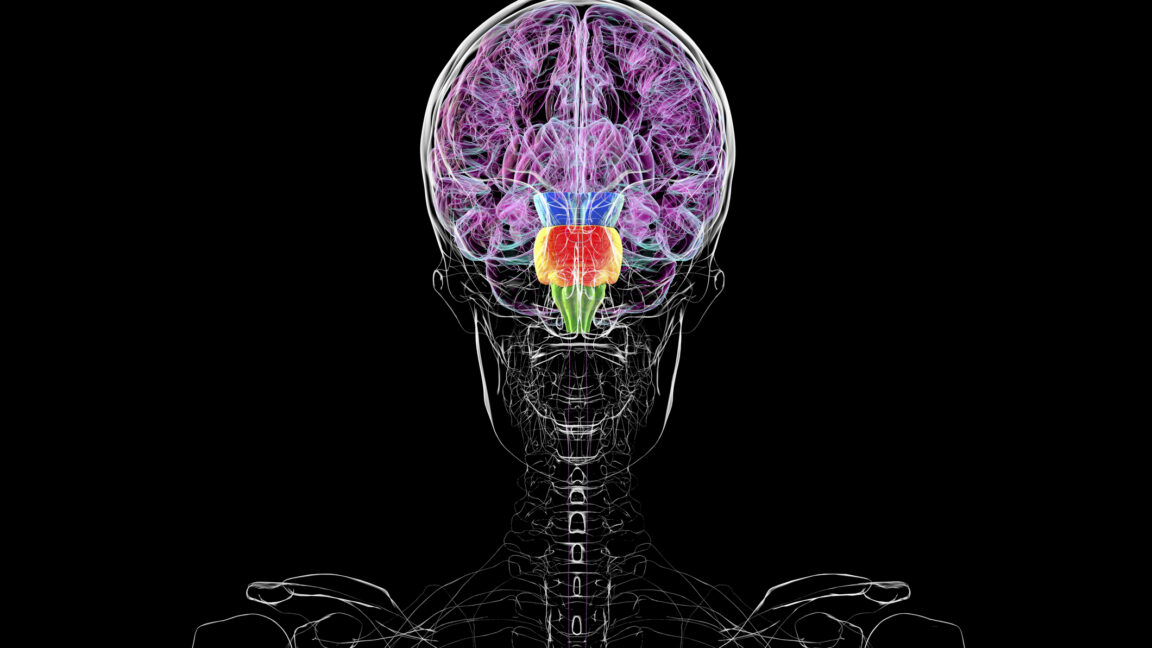
Late last week, we started seeing headlines about how new research was suggesting we might have two brains instead of the one that seems to show up on MRI scans. As is so often the case, these rumors can be traced back to a single press release put out by one of the universities where the work was done.
You do not have two brains. It's a silly way to look at the results of the new paper.
But there are far better ways to look at the results, ways that can help us understand how the brain gets put together and illustrate some of the general ideas behind developmental biology. So let's take a look at what the research actually shows and place it in the context of brain development.

Today, Anthropic rolled out Opus 5, the newest update for the model that has recently become a popular choice for coding and other software development tasks, among other things.
While this is a noteworthy bump for Opus, it doesn't seem to be an Opus 4.5-level breakthrough in agentic coding performance.


There are a lot of AI coding applications out there, and as impressive as large language models and the agents they enable have become, many of the most recent developments in AI-assisted development have been in the software that manages those models, not just the models themselves.
Earlier this summer, I spoke with the head of product for Claude Code, Anthropic's Cat Wu, about that company's approach to building that software.


The Space Development Agency was established in 2019 to help speed up the deployment of US military space systems by sidestepping the Pentagon's traditional sluggish bureaucracy.
Seven years later, SDA is finally launching its first batches of operational satellites, just as the Pentagon plans to shutter the semi-autonomous agency and fold it back into the Space Force's procurement pipeline, newly reorganized under several program acquisition executives in a bid to streamline weapons buying.
SDA's fate is not a surprise, and lawmakers in both houses of Congress have backed the agency's closure in drafts of this year's National Defense Authorization Act.


Antibiotic resistance has loomed over humans since the moment we started using antibiotics. In the 20th century, the drugs downgraded potentially life-threatening bacterial infections to mere inconveniences—a miracle of modern medicine, it seemed. But the drugs aren't really a human invention; we mostly swiped them from microbes, which have been locked in an arms race with each other for centuries. Microbial evolution has crafted both deadly molecules and clever tricks to dodge death as the wee organisms endlessly battle over turf and resources. More than 80 percent of the antibiotics used in clinics today are based on those turf-war weapons, which scientists refer to as "natural products."
For decades, humans mined antibiotic molecules from microbes and tweaked them to develop new drugs, staying ahead of evolution's cunning countermeasures. But in recent times, new natural products have been harder to find, and the pipeline of new antibiotics has slowed to a trickle. Meanwhile, existing antibiotics have been overused, and resistance has mounted to critical levels. Most antibiotics are single bioactive molecules, and some can be thwarted with single mutations. While the current situation is dire, a study in Nature this week reports a compelling discovery that not only points to a potentially new antibiotic regimen, but also an entirely new strategy to once again get ahead in the microbial arms race.
The study, led by biomedical researcher Eric Brown at McMaster University in Ontario, Canada, reports the discovery of a large block of genes—dubbed a "megacluster"—that codes for four molecules that appear to work in concert to derail a single essential metabolic pathway.


SAN FRANCISCO—Amid an ever-expanding array of surfaces, growing demand for tokens and compute, and a rapidly evolving user base, Anthropic doesn't have a long-term road map for Claude Code. However, it's betting that such a plan would be rendered moot by improvements in model capabilities and new signals from developers on how best to use it. That's the takeaway from a 30-minute conversation Ars had with Cat Wu, Anthropic's head of product for Claude Code.
Last week, in a three-level car rental parking garage meticulously converted into an event space in downtown San Francisco, Anthropic put on its second annual Code with Claude developer conference. As previously reported, the single-day event included a keynote introducing new features for Managed Agents and announcing a compute deal with SpaceX.
That compute deal was accompanied by a doubling of usage limits for Claude Code users on the company's Pro and Max plans—a response to a lot of user frustration about a compute crunch, especially in recent weeks.


Anyone following the modern game industry knows that easy-to-use game engines and the accelerating shift to digital distribution have helped enable a massive increase in the quantity of commercial games released each year, both on console storefronts and especially on Steam. Now, Sony Interactive Entertainment President and CEO Hideaki Nishino says we should expect the rate of new game releases to accelerate even faster as new AI development tools make it easier for developers big and small to pursue new projects efficiently.
In a presentation to investors on Friday, Nishino noted that Sony "expect[s] to see a meaningful increase in the volume and diversity of content available to players" in the near future. That increase is the inevitable result of AI development tools that are "lowering barriers to creation, accelerating development cycles, and enabling more creators to enter the market," he said.
By way of evidence, Nishino cited Sony's first-party game development efforts. Gamemakers inside Sony are already using AI tools to "automat[e] repetitive workflows" in areas like quality assurance, 3D modeling, and animation, he said.



 Lateo.net - Flux RSS en pagaille (pour en ajouter : @ moi)