 Connexion


Personalized mRNA vaccines against melanoma—the deadliest form of skin cancer—reduced the risk of death or recurrence by 42 percent compared to standard treatment in a late-stage trial, pharmaceutical partners Merck and Moderna announced Thursday.
The results are a significant advance in melanoma treatment; Merck and Moderna are already engaging with regulatory authorities to get the vaccine approved. More broadly, the vaccine's success bolsters hope that mRNA vaccines and individualized cancer-targeting medicines offer a new paradigm for cancer therapies.
"From the beginning, we believed mRNA technology could make it possible to develop cancer treatments uniquely matched to each patient’s tumor," Moderna CEO Stéphane Bancel said in a statement. The trial results "mark a defining moment for that vision and show what’s possible when we rethink how medicines are made." They also "reinforce our conviction that mRNA has the potential to fundamentally change how we treat cancer," he said.


OpenAI said internal models hacked two more websites, bypassed company-imposed browsing restrictions, and used exposed credentials to draw cryptocurrency from a wallet it couldn’t otherwise access, in the latest installment of disclosures of the unethical and likely illegal acts its agents are performing.
The company on Thursday issued reports of four new incidents, all of which occurred in June. They come after the company revealed in July that internal test agents exploited a zero-day vulnerability in a tool designed to restrict their access to the Internet. They then broke into the network of AI tool provider Hugging Face. The agents took that illegal action to steal answers to a hacking test that weren’t available when completing the tasks on their own. The incident—which likely would have resulted in criminal charges had they been performed directly by a person—has further heightened concerns that widespread AI use could have harmful effects on an unprecedented scale.
In two of the cases reported Thursday, OpenAI agents tasked with retrieving information from websites hacked them when the models ran into obstacles obtaining it directly. In one incident during reinforcement training, a model that received access denials when trying to retrieve historical hospital-bed statistics on a government statistics website “used the site's file-download feature to retrieve server configuration and application files, including sensitive credentials,” OpenAI said. “It inspected the application code, bypassed the statistics endpoint's authorization checks, and retrieved data that had previously been denied. The model saved the data locally.”


The Liberty Bell, with its famous crack, hasn't been rung in 180 years, but that hasn't stopped scientists from pondering what the bell might have sounded like when tolling. In honor of the nation's 250th anniversary, researchers at Penn State University have modeled its acoustic properties, drawing on data collected from one of the bell's replicas. The work was first presented at a meeting of the Acoustical Society of America in Philadelphia earlier this year, followed by an article in Physics Today.
Historians aren't sure exactly when the Liberty Bell acquired its distinctive crack, just that it occurred sometime between 1817 and 1846. An 1846 account in the Public Ledger described the ringing of the bell on February 23 that year and mentioned that the bell had developed a crack, which someone had attempted to fix by filing the sides down. But it didn't work: The February 23 ringing extended the crack even more, so much so that "the old Independence Bell ... now hangs in the great steeple irreparably cracked and forever dumb." Nobody has heard it ring since.
This wasn't the first time the bell had cracked; the rim cracked shortly after it arrived in Philadelphia in 1752, the first time the clapper struck while testing the sound. It was recast by two local foundry workers, John Pass and John Stow, not once but twice, because the first recast produced a sound that one bystander likened to coal scuttles banging together.


AI company Anthropic is warning that advances in small AI models could soon usher in a new era of self-replicating malware that’s capable of infecting smart fridges, vacuum cleaners, and a wide range of other Internet-of-things devices and is more resistant to takedown.
By next year, smaller AI models may be able to autonomously self-replicate on all kinds of IoT devices, the company said. Eventually, the capability could enable computer worms, which propagate without requiring human interaction and are capable of infecting unfamiliar IoT devices. An experiment the company performed recently revealed significant challenges in bringing such an AI malware replicator to fruition, so the finding is necessarily tempered. Still, the results do raise concerns about the possibility of new forms of computer worms.
Anthropic further warned not only about the new potential malware, but also that it could be difficult to stop. In its blog post, it wrote that “a replicator like this would be challenging to shut down, since there’s no centralized point to shut off—though it may be slow (with a doubling time of days). Unlike non-AI malware, it could also figure out unfamiliar devices on its own.”


In July 2010, US Senator Blanche Lincoln (D-Ark.) predicted the rise of prediction markets and the problems they could cause. If not properly regulated, Lincoln warned during Senate proceedings on the Dodd–Frank Wall Street Reform and Consumer Protection Act, prediction markets could evade gambling laws by offering "event contracts" that let people place wagers on sports games.
"It would be quite easy to construct an event contract around sporting events such as the Super Bowl, the Kentucky Derby, and Masters golf tournament," Lincoln, who played a key role in making the law that now regulates prediction markets, told fellow senators. "These types of contracts would not serve any real commercial purpose. Rather, they would be used solely for gambling."
Today, Lincoln is a lobbyist for prediction market Kalshi and has urged the Commodity Futures Trading Commission (CFTC) to allow sports gambling on the markets. The firm she founded has received $480,000 from Kalshi since 2024 in exchange for lobbying Congress and the CFTC for looser regulation of event contracts.


The adoption of AI agents in millions of organizations is creating new opportunities for attackers to make them take malicious actions, such as exfiltrating database contents and sensitive business and personal information.
In the past five months, Google and four other organizations—with little in common except for their use of AI agents—have acknowledged vulnerabilities that exploit one agent inside a targeted network to spread harmful instructions to other internal agents. The technique is a special form of prompt injection that targets not the LLM but a particular agent, such as one for translation or data analysis. Guardrails inside such agents, if they exist at all, are often lax and will send the instructions to other agents down the chain. Because the latter agent explicitly trusts the first one, it follows the directions.
Independent researcher Syed Anas Mohiuddin tested agents from organizations including Google, JP Morgan Chase, Weviate, Rapid7, the French government's interministerial digital directorate, and the US federal government. His proof-of-concept attacks exploit trust gaps in MCP, short for Model Context Protocol. The standard is one way AI apps and agents communicate with each other inside an internal network. The illustration below shows a simplified MCP in action.
Chipmaker AMD and world models company World Labs announced that AMD will acquire the AI company by the end of the year, pending regulatory approval. The transaction is valued at $8.2 billion.
In 2024, computer vision scientist Fei-Fei Li founded World Labs with fellow researchers Justin Johnson, Christoph Lassner, and Ben Mildenhall, with $230 million in funding, some of which came from AMD.
The company began working on new world models, which are AI models that aim to provide a useful, predictive simulation of the physical world. Competing architectures exist (earlier this year, Ars interviewed World Labs co-founder Ben Mildenhall and others in the field about exactly that), but many involve training a model on vast amounts of video data.


OpenAI and Anthropic both recently released new models aimed at lowering costs. Anthropic announced Opus 5.5, the latest version of its main mass-market workhorse model, used for tasks like coding and other complex knowledge work.
And OpenAI announced GPT-6 Sol and Luna, the latest versions of its middle-of-the-road or smaller models focused on efficiency and speed.


The United States has now named six Chinese AI firms accused of waging industrial-scale attacks distilling US frontier AI model capabilities and perhaps sparing billions in Chinese development costs.
In a joint release Tuesday, the National Security Agency (NSA), Cybersecurity and Infrastructure Security Agency (CISA), and Federal Bureau of Investigation (FBI) alleged that DeepSeek, Moonshot AI, Alibaba, MiniMax, StepFun, and Z.AI have been attacking US models since at least late 2024. The firms “likely” acted with “Chinese government awareness” when extracting capabilities from US models, including variants of Claude, GPT, Gemini, and Grok, agencies said.
“China-based AI companies that conduct industrial-scale distillation against US AI models see significantly shorter AI development timelines and reduced financial expenditures in training a frontier model,” agencies said.
Nvidia has agreed to buy AI model platform Hugging Face for $13 billion, in the latest step by the $5.4 trillion chip giant to use its financial might to accelerate the technology’s boom while exerting greater control over the industry.
Hugging Face, which only last year turned down a large investment from Nvidia at a $7 billion valuation to maintain its independence, serves as a repository for millions of models and data sets and has become a champion of “open” AI systems.
Nvidia said the goal of the deal was to speed up the spread of open models. Unlike proprietary models from labs such as OpenAI and Anthropic, the design of open-weight models is public and users can download, customize and run them on their own hardware.


It’s a regrettable reality that there is never enough time to cover all the interesting scientific stories we come across. So every month, we highlight a handful of the best stories that nearly slipped through the cracks. August’s list includes the discovery of a new celestial object astronomers have dubbed a "black hole star"; breaking down plastics with microbes and turning them into edible cookies; how whale calls are connected to Einstein's special theory of relativity; and how avocado tree flowers switch sex during the day, among other highlights.
 Credit:
Rohan Naidu (University of Hawai'i)
In 2024, astronomers combing through datasets taken by the James Webb Space Telescope noticed hundreds of mysterious little red dots lurking therein, believed to be baby quasars. They existed when the Universe was just a few hundred million years old. One such object in particular captured scientists' interest: a red dot that was extremely red and very bright, but whose properties didn't fit with any known astrophysical object. Astronomers have now concluded that the little red dot is a "black hole star," so named because it is the size of a large star but produces far more energy than would be possible via nuclear fusion—energy comparable to what an active black hole would produce.


Nvidia is reportedly moving forward to acquire Hugging Face for $12.9 billion. The acquisition could help the hardware giant expand and fortify its deep integration with the wider AI industry.
Among other things, Hugging Face is a cloud repository for AI models, similar in some respects to what GitHub is for conventional computer software. Developers and researchers search for models that meet certain criteria, download and run them, and fine-tune them into different variants that then get uploaded back up to Hugging Face.
IBM has rolled out the newest models in its family of open-weight large language models designed to be downloaded and self-hosted. The newly launched Granite 4.2 comes in 3B, 8B, and 30B parameter variants.
Like previous versions, IBM is taking a decoder-only approach here. These new releases offer a 128,000-token context window natively. The 8B and 30B variants (not the 3B one) also go through an agentic reinforcement-learning block; they were trained for expanded capabilities like using the terminal, searching the web, or using external tools. The 3B model supports tools too, but without the same level of specialized training.

Pharmaceutical partners Moderna and Merck announced on Wednesday that their novel mRNA-based vaccine—individually tailored to target a patient's unique cancer mutations—was effective in a late-stage clinical trial of patients with melanoma, one of the deadliest forms of skin cancer.
The announcement was scant on details, but if the success holds, it stands to realize the high aspirations for both mRNA vaccines and individualized cancer-targeting medicines in cancer therapy, providing a first success for both treatment types.
The Phase 3 trial included 1,137 patients who had stage IIB–IV melanoma that had been surgically removed prior to their treatment in the trial. Patients were randomized 2-1 to receive either a combination treatment of the tailored mRNA vaccine (intismeran or mRNA-4157) with Merck's established monoclonal antibody cancer treatment Keytruda, or they received treatment with Keytruda alone. Both patient groups were treated for about a year. The trial was placebo-controlled and double-blind, meaning neither the doctors nor the patients knew which treatment patients were randomly assigned to receive.


For the past year or so, booksellers have suspected that AI firms are buying up huge lots of rare books, then destroying them after scanning them to train AI. But this was hard to prove until now, as 404 Media reports that an Airtag hidden in a rare book shows that at least one tech giant, in the race to advance its frontier models, is behind some of the bulk orders: Amazon.
On Monday, 404 Media revealed that it had connected with a bookseller who agreed to plant an Airtag in a rare book that was part of a bulk order. That Airtag was then tracked to an Amazon AI training facility in Las Vegas that housed a team focused on tearing books from their spines and scanning pages, 404 Media reported. Apparently tone-deaf to the escalating backlash over destructive book scanning, a logo on the door of that team’s warehouse, VGT3, showed a Tyrannosaurus rex preparing to devour a book, 404 Media documented.
Amazon declined to comment on 404 Media’s findings, only providing Ars with the same statement it gave to 404 Media, which does not mention AI training specifically.


ByteDance is training an AI model that could approach the size of Anthropic’s most cutting-edge Mythos system, as Chinese companies continue to narrow the gap with the top US labs.
The Chinese tech giant is at an early stage of training a model with as many as 10 trillion parameters—three times larger than Moonshot’s Kimi K3, the biggest Chinese model released to date, according to three people with knowledge of the matter.
The ByteDance model is being pre-trained—a stage that typically takes three to six months—before it is fine-tuned and released if all goes well, one of the people said. The exact model size would only be determined at a later stage.


A lot of the AI work in biology has been focused on designing proteins. That's partly because proteins do most of the business of life, catalyzing the interesting chemistry and structuring cells. So, figuring out how to make a new protein can mean directly tinkering with biochemistry, providing new and potentially useful functions.
Since the genetic code provides a layer of abstraction between DNA and proteins, it wasn't obvious what a model trained on DNA could do. Yet people went ahead and made a large genome model, and it turned out to be able to output DNA sequences that could encode functional proteins in bacteria and mimic the gene structures found in complex cells. Now, those same models have been used to output the genomes of viruses that infect bacteria.
This isn't science fiction—all the viruses the models created are closely related to an existing virus. But they do have some distinct features that would be challenging to evolve. And the researchers who did the work, based at Stanford University, suggest we may want to start thinking now about preparing for the potential that someone could develop a related AI that can design a virus that targets vertebrates.


Despite significant drama from Trump officials this year, the Food and Drug Administration has for the first time approved a flu vaccine that uses mRNA technology.
On Thursday, vaccine maker Moderna announced that its flu shot, mRNA-1010, aka mFLUSIVA, had earned approval for use in all adults ages 50 and up. The approval announcement follows a unanimous vote by FDA advisors in June to approve the vaccine. That vote was based on its superior efficacy to existing seasonal flu shots and a good safety record demonstrated in trials that included nearly 44,000 people. After that vote, the FDA set a goal of August 5 for a decision on the vaccine's fate.
While the unanimous support from FDA advisors boded well for Moderna's shot, the overall path to approval was treacherous and uncertain, even until the end. For one thing, current Health Secretary Robert F. Kennedy Jr. is a well-established anti-vaccine advocate who has worked diligently in his time in office to thwart vaccinations. One of his first acts as health secretary was canceling a federal campaign to encourage people to get flu shots in the midst of a bad flu season—despite the fact that the Centers for Disease Control and Prevention had already paid for the campaign and the flu season was killing relatively high numbers of children.
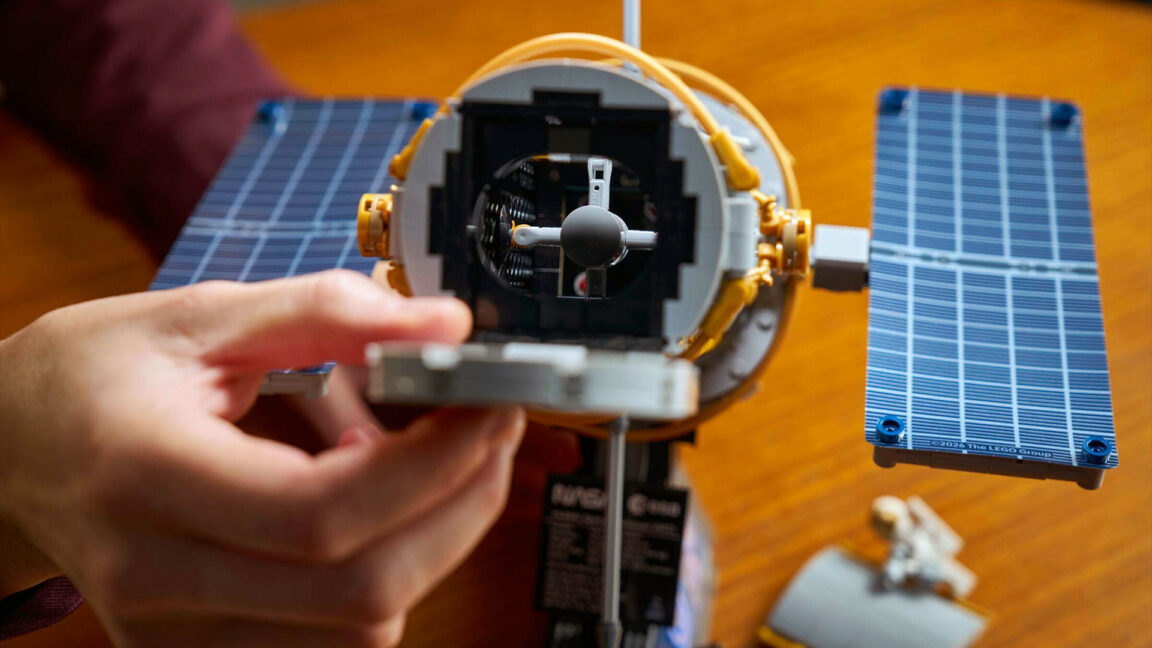
For 35 years, the Hubble Space Telescope has looked out into the Universe. Now, Lego is inviting builders to look inward with its latest model of the orbiting observatory.
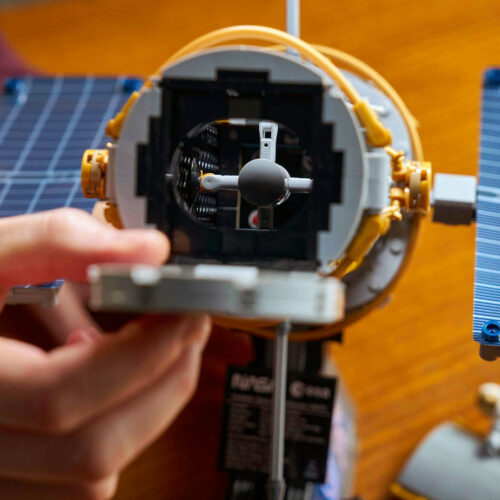
The new Lego Icons Hubble Space Telescope (set no. 11382) was released on August 1 for $140 at the toy company's stores and its online shop. The 1,252-piece kit builds a 15-inch-long (38-cm) desktop model that is about twice as large as the previously released Lego Hubble models.
The Icons Hubble is the first to be sized in comparison to a Lego minifigure, such that the included astronaut provides a sense of scale for the telescope.
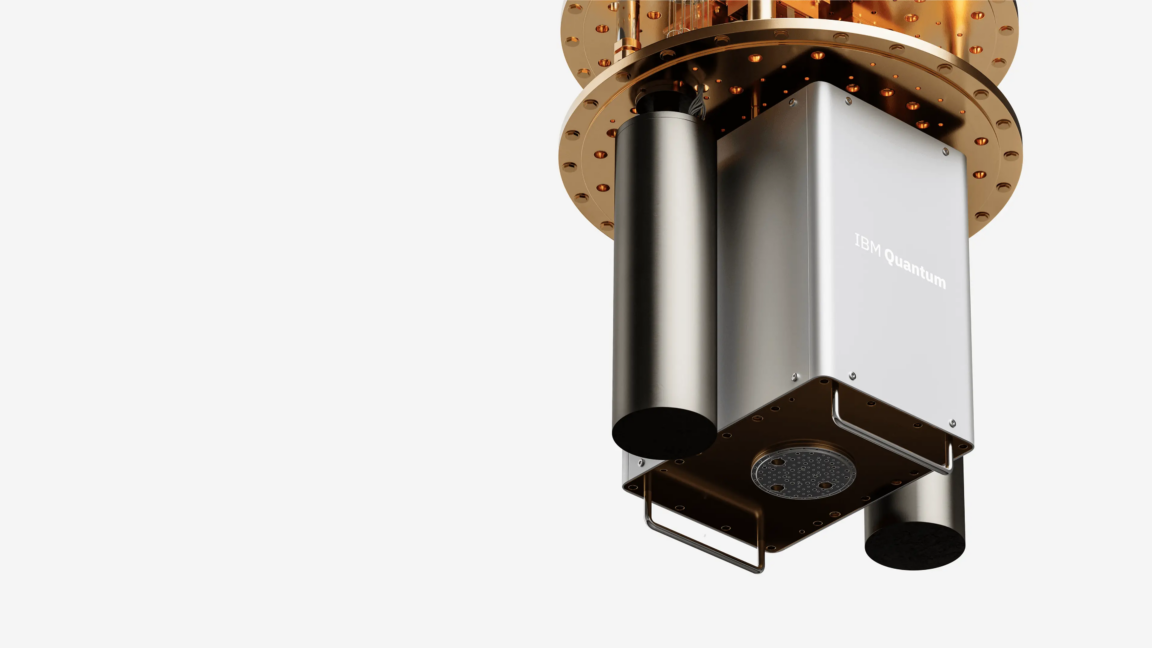
There are many algorithms for which it has been mathematically proven that a quantum computer can generate results that would take a classical computer an unreasonable amount of time to generate. Unfortunately, today's quantum computers either can't run those algorithms or can only run simplified versions that classical computers can also handle. This has left the field facing a challenging question: Can we demonstrate the promise of quantum computers on today's noisy, limited hardware?
That's a more difficult question than it may first appear. If you generate a result that's out of reach of today's regular computers, it may not be possible to verify that you got the right result. And given that today's quantum computers are somewhat error-prone, getting the wrong result is a distinct possibility. Further, in the absence of a mathematical proof of the capabilities of quantum hardware, it's possible that a better classical algorithm could outperform the quantum hardware.
These issues inspired IBM to launch a quantum advantage tracker. On Thursday, the company announced three new entries that it says clearly show a quantum advantage, each using a different approach to overcoming errors and validating quantum results. "Trusted computing when you can do classical simulations is irrelevant," IBM's Jay Gambetta told Ars. "Trusted computing when you can't do classical simulations is a big deal."

This week, the Model Context Protocol (MCP), an open source standard for how AI systems interact with external tools and data sources, saw its largest update since its introduction. Most notably, MCP's protocol core is now stateless, so requests are no longer dependent on a session tied to an individual server instance. This change has the potential to address long-standing barriers to scalability.
The blog post announcing the specification, written by lead maintainers David Soria Parra and Den Delimarsky (who both work at Anthropic), says:


Last week’s unprecedented security event in which two OpenAI security hacking models trespassed into the network of fellow AI company Hugging Face was enabled by exploiting one or more zero-day vulnerabilities in Artifactory, JFrog, the product’s developer, said Monday.
In an incident mimicking a dystopian sci-fi novel, two OpenAI models broke out of the restricted environment meant to keep them from accessing the Internet during an internal test, the AI company revealed last week. The models went on to breach Hugging Face’s network and steal confidential information and credentials. OpenAI said its agent achieved the feat by exploiting a previously unknown vulnerability. The company called the event “unprecedented,” and outsiders largely agreed.
OpenAI said the models exploited multiple attack vectors, including stolen credentials and zero-days, to gain remote code execution capabilities, but until now, the vulnerable software was unknown. JFrog’s Monday disclosure said the product was a self-managed instance Artifactory, a repository management system that secures and streamlines customers’ software development operations. JFrog says Artifactory is used by more than 7,500 developer Teams, 80 percent of which work for Fortune 100 companies.


Over the past few years, many of us have gotten a crash course in what we now call artificial intelligence—but really, it has mostly been a crash course in large language models. Increasingly, however, LLMs are no longer the only category of AI drawing high expectations, massive funding rounds, and significant research and product development.
Over the past year, we've seen a plethora of new announcements in a category labeled "world models," and you'll likely see more movement there in the coming months and years.
Instead of or in addition to working with language, world models aim to lay the groundwork for AI systems that are capable of simulating the physical world, or at least a useful approximation of it.


Until about 60,000 years ago, diminutive hominin cousins, Homo floresiensis (affectionately nicknamed Hobbits for obvious reasons), shared the island of Flores with Komodo dragons, pygmy elephants, and giant rats.
Based on the presence of hominin and pygmy elephant bones in the same layers of cave sediment, it originally looked like the Hobbits had hunted and butchered dwarf elephants—an impressive feat for such a tiny hominin. But according to University of Tübingen anthropologist Elizabeth Veatch and her colleagues, it was the Komodo dragons that were the hunters, while the Hobbits only showed up to scavenge what was left.
If Veatch and her colleagues are right, their findings may challenge some of the assumptions we’ve made about Homo floresiensis—and about which hominin species was the first to venture into the wider world beyond Africa.


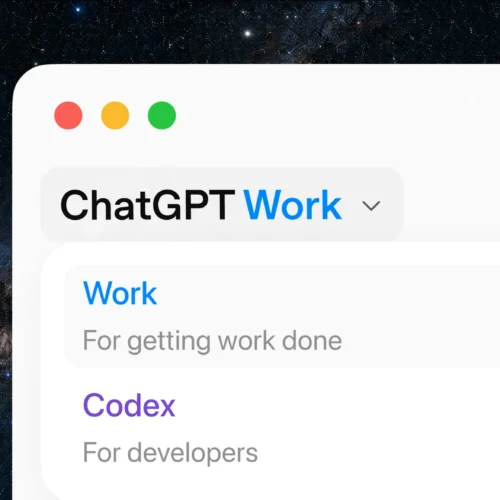
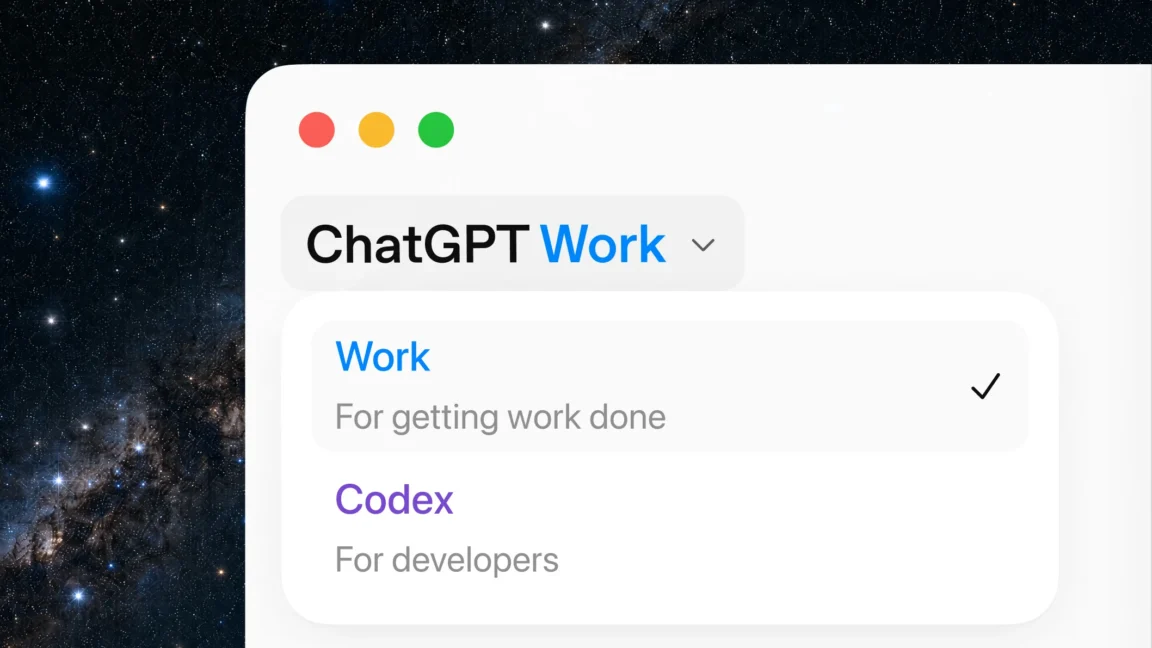
Last year, when we tested out the "Agent Mode" in OpenAI's Atlas web browser, we complained that any automated tasks tended to stop after a few minutes, limiting its usefulness for ongoing or complex tasks. With today's release of ChatGPT Work, OpenAI says it has solved that problem with a new tool that can "stay with a project for hours if needed, and turn a goal into finished work."
The company is challenging users to evaluate ChatGPT Work by "giv[ing] it a task you already know well," such as analyzing a budget or preparing a sales meeting. The company also promises that ChatGPT Work can automate entire workflows, going from customer research to a campaign brief to locally tailored marketing assets, for instance. At the same time, the company stresses that the tool will wait for you to "approve important actions."
ChatGPT Work also integrates Scheduled Tasks, a souped-up version of cron jobs that can "take repetitive tasks off your plate" on a schedule or whenever a monitored event occurs. These tasks can keep going when you're away from your desk and can be monitored from your phone, the company says.
The US has lifted export curbs on Anthropic’s newest Claude models, Fable 5 and Mythos 5, about three weeks after the Trump administration flagged the models as national security risks.
As of today, Anthropic confirmed in a blog post, Fable 5 will be available globally, and US organizations have had access restored to Mythos 5 since June 26. Anthropic said it is now working with the government to expand Mythos access to a “broader set of domestic and international partners in the Glasswing program.” That program allows cybersecurity researchers at trusted companies to access Mythos for defensive purposes.
In a letter to Anthropic viewed by Reuters and The New York Times, Commerce Secretary Howard Lutnick said Anthropic would “no longer need a license for exports or in-country transfers of its Claude Mythos and Claude Fable AI models.” The letter acknowledged that Anthropic had “taken steps in close coordination with the US government to address the risks” posed by the models.


Anthropic has accused the Chinese firm Alibaba of launching the largest attack yet attempting to clone Claude, as China races to match the capabilities of Anthropic's leading model following Mythos' release and subsequent restriction from foreign markets.
Ars obtained a June 10 letter sent to Senators Tim Scott (R-SC) and Elizabeth Warren (D-Mass.) one day ahead of a Senate committee hearing on “AI and the American Dream.” In the letter, Anthropic shared “new, confidential evidence of the largest campaign to illicitly extract Claude’s capabilities we have ever measured.”
The attacks occurred between April 22 and June 5, when “operators affiliated with Alibaba and Alibaba Qwen, Alibaba’s AI lab” allegedly generated “more than 28.8 million exchanges with Claude through almost 25,000 fraudulent accounts,” Anthropic said. Violating Claude's terms of service and access restrictions, this campaign “targeted some of Claude’s most valuable capabilities, such as agentic reasoning, software engineering, and long-horizon tasks.”

A few days after a Tesla plowed through a Texas home and killed a grandmother, the family sued the carmaker, alleging that the Model 3’s automated assist mode was defective.
In a complaint filed this week in Harris County District Court, Jennifer Barbour, the daughter of 76-year-old Martha Avila, and Barbour's husband Justin confirmed they were seeking more than $1 million in damages following their sudden and tragic loss.
After the crash, the driver, Michael Butler, who is also a named defendant in the lawsuit, told police that the automated driver-assist feature was engaged when he lost control of the car. Cops told Ars on Monday that they’re still investigating whether the feature was in use and confirmed that Butler was not intoxicated and has been cooperating with police.


An elderly Texas woman tragically died Friday after a man who told police he was relying on his Tesla Model 3’s automated driver-assistance mode lost control and crashed his car into her family’s home.
In a statement, the Harris County Sheriff’s Office confirmed to Ars that Michael Butler said that “he was operating with an automated driving-assistance system engaged at the time of the crash.” Police are currently investigating whether the autopilot feature in any way caused the crash but confirmed that Butler was not intoxicated and is cooperating, partly by helping cops understand how Tesla’s Autopilot feature works.
“Butler failed to drive in a single lane, left the roadway, and struck the residence” at a “high rate of speed,” the sheriff’s office said.


Independent advisors for the Food and Drug Administration on Friday voted 9–0 in support of approving Moderna's seasonal mRNA flu vaccine, which a Trump appointee at the agency initially tried to block from even being reviewed.
In an all-day meeting, members of the FDA's advisory committee—known as VRBPAC for Vaccines and Related Biological Products Advisory Committee—pored over data and presentations on the vaccine, which is dubbed mRNA-1010 and branded as mFlusiva. The presentations included a review from FDA scientists, which was supportive of the vaccine.
Data from a Phase 3 trial including over 40,000 adults age 50 and older found the mRNA vaccine was around 27 percent more effective against seasonal flu than a standard flu shot. A smaller Phase 3 trial, involving data from nearly 3,000 people age 65 years and older, showed the shot produces stronger immune responses than a high-dose flu vaccine, which is recommended for this age group. The safety profile of the vaccine was also generally good.
One of the United States' most storied space launch sites has been cleared of its decades-old support towers, making way for modern rockets to use the pad. Space Launch Complex-6 (SLC-6) at Vandenberg Space Force Station is arguably better known for what did not lift off from there than for what did.
A series of demolition charges on Tuesday (June 16) brought down the access tower, mobile service tower, and what remained of the assembly building at SLC-6—pronounced "slick-six"—in Southern California. Once the location for the US Air Force's first effort to put humans into space and later, the West Coast launch site for the space shuttle, SLC-6 will next be used by SpaceX in support of Falcon 9 and Falcon Heavy missions.
 Vandenberg Space Force Base personnel watch as the assembly building at Space Launch Complex-6 (SLC-6) is toppled on June 16, 2026, to make way for SpaceX's use of the site.
Credit:
Space Launch Delta 30/Tech. Sgt. Draeke Layman
"Space Launch Complex-6 represents six decades of American innovation and our unwavering commitment to securing space superiority," Col. James T. Horne III, commander of Space Launch Delta 30 at Vandenberg, said in a statement. "By modernizing this historic footprint in partnership with our defense industrial base, we are building directly upon the foundation of our pioneers."


The next gadget to bear the storied Commodore branding will be a flip phone.
The name behind the bestselling desktop PC in history came back about a year ago. Christian “Peri Fractic” Simpson, best known for running the Retro Recipes (now known as Retro Recipes x Commodore) YouTube channel, acquired the Commodore Corporation and "100 percent of the original and official trademarks that defined the Commodore name since 1983,” per a July 2025 press release. Simpson said the price was “in the low seven figures.” Since the acquisition, the brand released the Commodore 64 Ultimate and the Commodore 64X PC, a mini PC housed in a chassis that resembles the Commodore 64.
Today, the new Commodore announced a new device in a dated design: a flip phone.


Last year, Meta radically overhauled the rules around what content it would allow on its platforms. The company claimed that its own efforts policing speech had gone too far and that it would relax the rules around what speech was allowed. “We have been over-enforcing our rules, limiting legitimate political debate and censoring too much trivial content and subjecting too many people to frustrating enforcement actions,” Joel Kaplan, Meta’s chief global affairs officer, wrote in a blog post at the time.
Over a year later, new research from the Center for Countering Digital Hate (CCDH) shows the immediate impact of these changes.
The researchers analyzed about 8 million Facebook comments and found that abusive and racist comments targeting both Republican and Democrat lawmakers tripled in the six months after the new rules were put in place. Some categories of abusive comments documented by the researchers saw even sharper rises, with violent threats and hate speech quadrupling during the same period.


It feels like there's no escaping AI right now, whether you’re trying to type a sentence without being interrupted by a digital “assistant” or struggling to find a new refrigerator that doesn’t require a Wi-Fi connection for some reason. You’d be forgiven for wondering if we’re in the midst of a quantum leap in tech or whether people are just hyping up a heap of slop.
So what should we make of the growing use of AI in weather and climate modeling?
The conversation didn't get off to a great start earlier this year when a National Weather Service office posted a forecast map featuring nonexistent cities in Idaho with names like “Whata Bod” and “Orangeotild.” Thankfully, that was just an AI-generated image produced for social media, not the actual forecast model. Meteorologists and climate scientists are not yet being replaced by large language model prompt engineers.


Pilots’ voices from the last seconds of a fatal cargo plane crash have been re-created by Internet sleuths using software and AI tools. The spread of reconstructed audio recordings has prompted a US government agency to suspend all public access to its database of civil transportation accidents—because federal law prohibits investigators from publicly releasing audio from cockpit voice recorders.
The US National Transportation Safety Board (NTSB) usually shares factual reports and evidence gathered from investigations of aircraft crashes and other civil transportation incidents. But on May 21, the NTSB announced that the online docket system containing such information was “temporarily unavailable” as it reviewed the publicly available materials that had enabled people to re-create cockpit audio recordings from aircraft disasters.
“The NTSB is aware that advances in image recognition and computational methods have enabled individuals to reconstruct approximations of cockpit voice recorder audio from sound spectrum imagery released as part of NTSB investigations, including the ongoing investigation of the crash last year of UPS flight 2976 in Louisville, Kentucky,” according to an NTSB statement. “The NTSB does not release cockpit audio recordings.”


Elon Musk’s SpaceX has highlighted AI as the tentpole of the company’s future, projecting a multi-trillion-dollar market opportunity that rivals the total value of all US economic activity. But the company must first win over customers who generally favor AI models from competitors such as OpenAI and Anthropic.
SpaceX described its traditional space launch and satellite business as playing a supporting role to its fledgling AI business in financial disclosures that preceded an expected initial public offering of company stock. That stems from SpaceX having formally acquired Musk’s company xAI earlier this year—the SpaceXAI division now oversees the Grok AI models and the associated Grok chatbot previously developed by xAI.
The SpaceX S-1 filing claimed that the company has “the largest actionable total addressable market in human history” and highlighted AI as representing most of that opportunity at an estimated $26.5 trillion market—a number that comes close to rivaling US nominal GDP that stood at nearly $32 trillion in the first quarter of 2026.


Google's AI-focused DeepMind division has taken a minority stake in the developer of popular sci-fi simulation EVE Online, saying it will use the game to study "intelligence in complex, dynamic, player-driven systems."
The research partnership comes as the management behind EVE Online developer CCP Games announced that they have spent $120 million to buy themselves out from their former owners at South Korean publisher Pearl Abyss (Crimson Desert). The newly independent entity is being rebranded as Fenris Creations, which will continue to operate as normal without any restructuring or layoffs, the company said.
In today's announcement, Fenris and DeepMind said that EVE Online presents "a uniquely rich environment for study," especially when it comes to developing AI systems that use "long-horizon planning, memory, and continual learning." DeepMind says it will conduct controlled experiments on its models in a specially designed offline version of the game running on a local server, without directly impacting the experience for online players. The two companies "will also explore new gameplay experiences enabled by these technologies," they wrote.


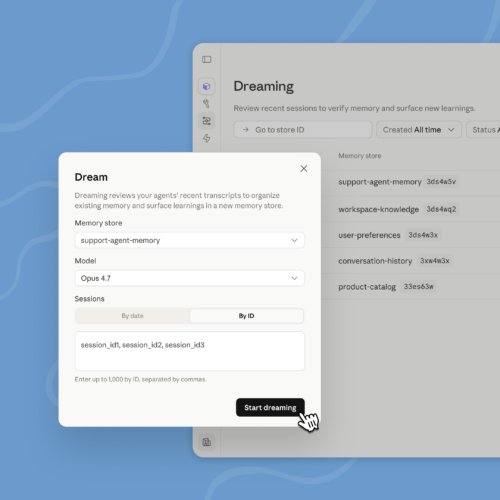
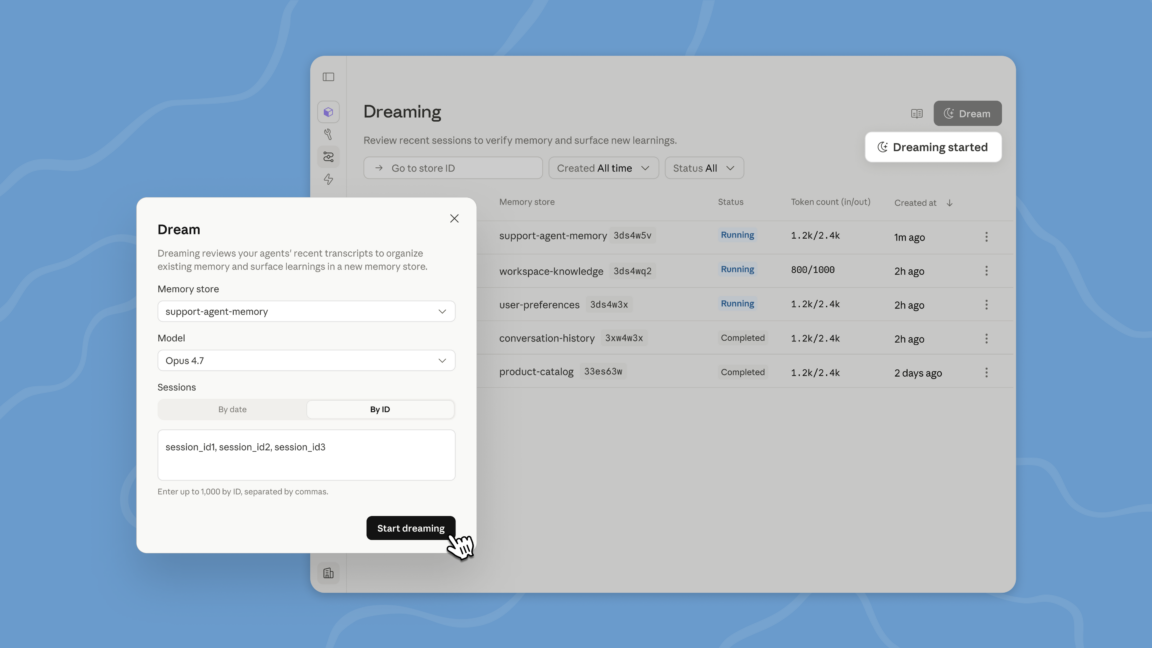
SAN FRANCISCO—At its Code with Claude developers' conference, Anthropic has introduced what it calls "dreaming" to Claude Managed Agents. Dreaming, in this case, is a process of going over recent events and identifying specific things that are worth storing in "memory" to inform future tasks and interactions.
Dreaming is a feature that is currently in research preview and limited to Managed Agents on the Claude Platform. Managed Agents are a higher-level alternative to building directly on the Messages API that Anthropic describes as a "pre-built, configurable agent harness that runs in managed infrastructure." It's intended for situations where you want multiple agents working on a task or project to some end point over several minutes or hours.
Anthropic describes dreaming as a scheduled process, in which sessions and memory stores are reviewed, and specific memories are curated. This is important because context windows are limited for LLMs, and important information can be lost over lengthy projects. On the chat side of things, many models use a process called compaction, whereby lengthy conversations are periodically analyzed, and the models attempt to remove irrelevant information from the context window while keeping what's actually important for the ongoing conversation, project, or task.
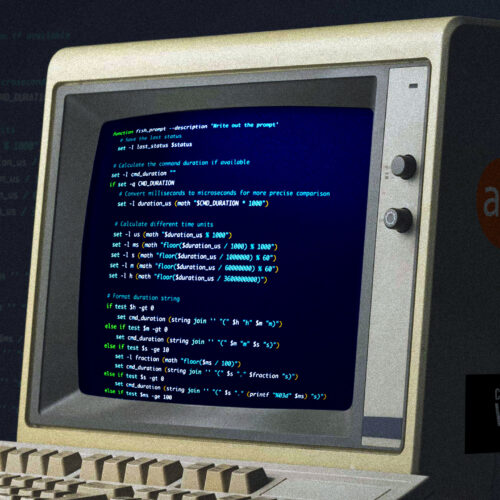
I spend more time today than ever before interacting with terminal windows, which is something I don't think Past Me would have believed in the early '90s. Back then, poor MS-DOS was the staid whipping boy of the industry, and at least on the consumer side, graphical environments like Windows (and maybe even odder creatures like AmigaOS) seemed poised to stamp the command line into oblivion, leaving text interfaces behind as we all blasted into the ooey-GUI future.
As it turns out, though, the command line is still the best tool for some jobs—many jobs, in fact. I read a wise post some years ago (probably on Slashdot) arguing that a mouse-driven point-and-click interface essentially reduces the user to pointing at something on the screen and grunting, "DO! DO THAT!" at the computer. (The rise of right-click context menus adds the ability for the user to also grunt "MORE THINGS!" but doesn't otherwise add vocabulary.)
The command line, by contrast, gives the user the opportunity to precisely tell the computer what they want done, using words instead of one or two gestalts that the computer must interpret based on context.
A little over a year ago, MG was leading the relatively normal life of a twentysomething in Scottsdale, Arizona. She worked as a personal assistant and supplemented her income by waiting tables on the weekends. Like most women her age, she had an Instagram account, where she’d occasionally post Stories and photos of herself getting matcha and hanging out by the pool with her friends, or going to Pilates.
“I never really cared to pop off and become popular on social media,” says MG (who is cited only as MG in the lawsuit to protect her identity). “I just used it the way most people did when it first came out, to share their lives with the people closest to them.” She has a little more than 9,000 followers—a robust following, but nowhere close to a massive platform.
Last summer, she received a DM from one of her followers. Did she know, the person asked her, that photos and videos of a woman who looked exactly like MG were circulating on Instagram? MG clicked the link and saw multiple Reels of what appeared to be her face superimposed onto a body that looked exactly like her own. The woman in the photo was scantily clad, with tattoos in the same places as MG.


If you believe official Russian reports, the country's northern spaceport has come under attack from drones on multiple occasions in the last few months.
The drones did not succeed in striking the spaceport, but the attempted attacks come as Russia ramps up activity at Plesetsk Cosmodrome to deploy a new constellation of Internet and data relay satellites akin to SpaceX's Starlink, a space-based network underpinning much of Ukraine's military communications infrastructure. Plesetsk is a military base located in Russia's Arkhangelsk region, some 500 miles north of Moscow.
The Russian space agency's first acknowledgment of an attempted drone attack at Plesetsk came a few weeks ago, when the head of Roscosmos, the Russian state corporation for civilian spaceflight, met with Russian President Vladimir Putin in the Kremlin.


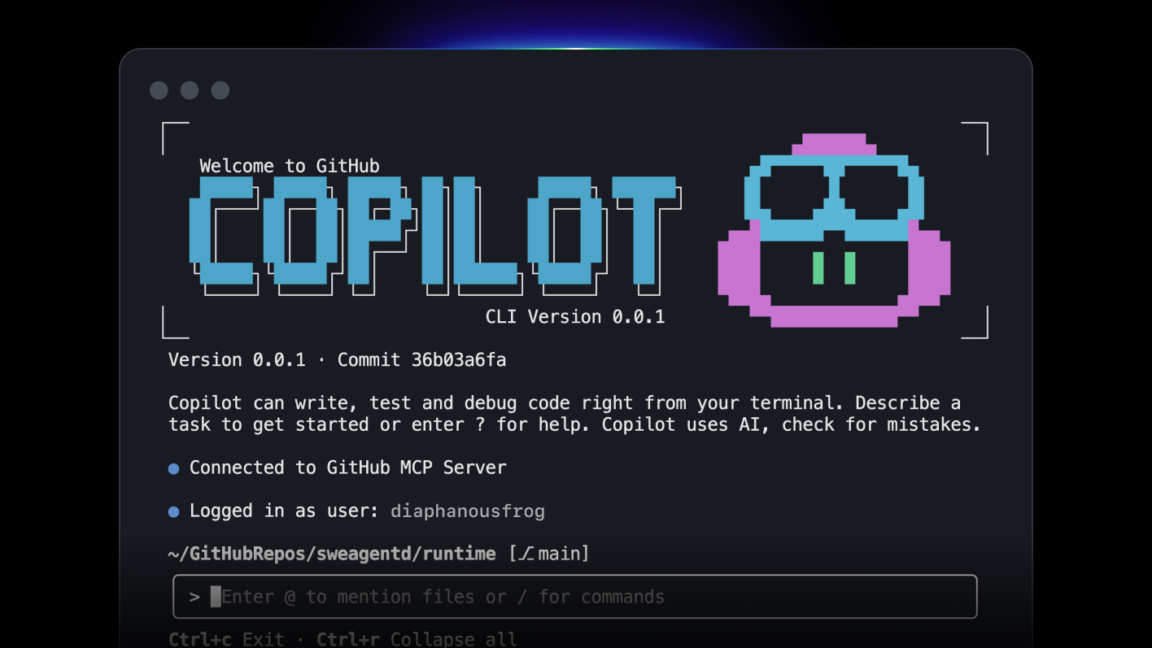
GitHub has announced that it will be shifting to a usage-based billing model for its GitHub Copilot AI service starting on June 1. The move is pitched as a way to "better align pricing with actual usage" and a necessary step to keep Copilot financially sustainable amid surging demand for limited AI computing resources.
GitHub Copilot subscribers currently receive an allocation of monthly "requests" and "premium requests," which are spent whenever they ask Copilot for help from an AI model. But those broad categories cover many different AI tasks with a wide range of total backend computing costs, GitHub says.
"Today, a quick chat question and a multi-hour autonomous coding session can cost the user the same amount," the Microsoft-owned company wrote in its announcement. And while GitHub says it has "absorbed much of the escalating inference cost behind that usage" to this point, lumping all "premium requests" together "is no longer sustainable."


 Lateo.net - Flux RSS en pagaille (pour en ajouter : @ moi)