 Connexion


When Russia began attacking Ukrainian data centers and telecommunication infrastructure, it apparently failed to prepare for possible retaliation. Now Russia’s digital services are facing widespread outages after Ukrainian drone strikes knocked out three of the largest data centers owned by Russian tech giant Yandex within several days.
Pro-Kremlin bloggers are warning that Russia’s centralized digital economy could collapse because the country is not prepared for the “data center war” it started, according to posts translated by the pseudonymous independent researcher ChrisO_wiki. The Russian commentators also suggested that Ukraine’s decentralized digital services could prove more resilient than Russia’s system if the countries continue trading such blows.
Russia initially launched a drone strike campaign targeting Ukrainian data centers and mobile phone networks in late September. The attacks temporarily disrupted Internet and cell phone service for up to 100,000 households in the Ukrainian capital of Kyiv and came as part of a broader long-range strike campaign that has involved Russian missiles and jet-powered drones hitting Ukraine’s power grid infrastructure, transportation hubs, and even residential apartment building blocks.


The Trump administration is seeking to join Elon Musk’s appeal against a €120 million EU fine of the billionaire’s social media platform X, the latest escalation in the transatlantic clash over Brussels’ efforts to rein in US tech companies.
The US Department of Justice on Thursday filed an application to intervene in a pair of cases brought by Musk and X seeking annulment of the penalty, which will be heard at the EU’s General Court in Luxembourg.
“The European Commission inappropriately attempted to expand its regulatory authority to reach American companies not present or operating within its jurisdiction,” assistant attorney general Brett Shumate said.


The Vesuvius Challenge is an ongoing project that combines "digital unwrapping" with crowdsourced machine learning to decipher the so-called Herculaneum scrolls, badly charred 2,000-year-old papyri too fragile to be physically unrolled. The effort just got an additional boost. A team of researchers created their own contemporary model papyrus scrolls—charring them just like the originals—to validate a screening method to determine which of the Herculaneum scrolls were written in lead-based ink and hence are the most promising candidates for further analysis. They described the process in a new paper published in the journal PLoS ONE.
As previously reported, the ancient Roman resort town of Pompeii wasn’t the only city destroyed in the catastrophic 79 AD eruption of Mount Vesuvius. Several other cities in the area, including the wealthy enclave of Herculaneum, were fried by clouds of hot gas, called pyroclastic pulses and flows. But still, some remnants of Roman wealth survived. One palatial residence in Herculaneum—believed to have once belonged to a man named Piso—contained hundreds of priceless written scrolls made from papyrus, singed into carbon by volcanic gas.
The scrolls stayed buried under volcanic mud until they were excavated in the 1700s from a single room that archaeologists believe held the personal working library of an Epicurean philosopher named Philodemus. The few opened fragments helped scholars identify various Greek philosophical texts, including On Nature by Epicurus and several by Philodemus himself, as well as a handful of Latin works. But the more than 600 rolled-up scrolls were so fragile that it was long believed they would never be readable, since even touching them could cause them to crumble.


As the world's largest search engine, Google is often a target of Europe's Digital Markets Act (DMA), which seeks to rein in Big Tech. The European Commission hit Google with a hefty 460 million euro ($543 million) fine in July for preferring its own services in searches for travel and shopping. Google has now made changes in accordance with the European Union's wishes, but it claims the result is a massive reduction in search quality.
If you don't live in Europe and perform a search for, say, hotels, Google will helpfully provide myriad sponsored links, booking recommendations, and price-comparison tools in its results. The problem is that this content isn't organic—Google includes links and offers contingent on its business interests. To get to the regular search results for these types of lucrative searches, you have to scroll way down the page. Companies that partner with Google can get more exposure, but the European Commission says this creates an unlevel playing field.
"To comply with DMA requirements, we're making significant changes to Search in Europe," Google's Nick Fox told Reuters. "These changes degrade the user experience for Europeans, boosting online intermediaries at the expense of local businesses and removing helpful features people rely on every day."


For decades, console owners have faced a choice between the convenience of digital downloads and the permanence of physical game discs. Soon, Xbox owners will be able to get the best of both worlds for thousands of supported titles as part of a newly announced disc-to-digital program.
The program—announced today ahead of testing for Xbox Insiders starting August 31—will let players claim a "digital entitlement" for "most Xbox One and Xbox Series X disc-based games" simply by inserting the disc into a console and launching it. That game will then be playable completely digitally, without the need to ever insert the disc, as long as you (or a member of your family account) is logged in. The digital entitlement will also allow access to features like Xbox Play Anywhere (for play on PC) and Xbox Cloud Gaming, for supported titles.
Microsoft says that your physical disc will "continue to work exactly as it always has" after the digital entitlement is claimed. But before you get any ideas, the fine print on the announcement mentions that there is only "one revokable license per game disc," so if you resell that disc or loan it to a friend, that digital entitlement could be transferred to a new account when someone else puts it into their console.


Logitech is facing a proposed class action lawsuit for not giving customers tariff refunds.
In April 2025, Logitech raised the prices on 51 percent of its portfolio, with some prices increasing by as much as 25 percent.
The complaint seeks to “recover monies that Logitech extracted from American consumers as offset for import tariffs that the United States Supreme Court has since declared unlawful, tariffs for which Logitech now stands to be reimbursed by the federal government. This is all while Logitech retained every dollar of the corresponding price increases it charged its customers due to the illegal tariffs.”


The Trump administration said it will reinstate a broadband grant program to comply with a court ruling that prevented it from fully ignoring the Digital Equity Act enacted by Congress in 2021. The US government said in a court filing that it plans to start taking applications for grants in December.
However, the Trump administration won a partial victory because the judge ruled the government can't allocate money based on the race or ethnicity of people who would benefit from grants. The government program can still award broadband grants based on factors like income, age, and disability.
The Digital Equity Act of 2021 provided $2.75 billion for three grant programs aimed at closing gaps in broadband access. The Biden administration started awarding $60 million in planning grants to states in 2022, and in 2024 it started taking applications to distribute the rest of the $2.75 billion. Trump announced in May 2025 that he would end the grant programs, claiming the Digital Equity Act itself is racist and unconstitutional.


On Friday, a judge largely denied a motion to dismiss from a web scraper, SerpApi, which is accused of conspiring with Perplexity AI to illegally scrape copyrighted Reddit content from Google search results.
In his opinion, US District Judge Paul A. Engelmayer said that at this early stage, Reddit has plausibly pleaded that there was a conspiracy, with SerpApi providing a product to circumvent Google access controls and Perplexity AI paying for it.
Engelmayer’s decision came less than two weeks after another court dismissed a similar action raised by Google, finding that the company had not proven that rights holders, such as Reddit, had ever authorized the search engine to prevent the scraping of protected content. Google told Ars that it planned to amend its complaint to keep its lawsuit alive, but SerpApi told Ars that Google and Reddit were both trying to “use the DMCA to wall off the open Internet by retroactively claiming control over content that they didn’t author and don’t own.”


A bizarre series of events in a college microbiology lab class left 33 people—including students, professors, and lab workers—believing they were exposed to a deadly germ. Of those, 32 began taking an antibiotic regimen as a precaution to prevent a life-threatening infection. Two also underwent lumbar punctures—aka spinal taps—after developing mild symptoms.
But none of them had actually been exposed to a dangerous pathogen, a fortunate twist in the strange incident, which otherwise stands to be a cautionary tale for the ages. The incident was published in a recent issue of Morbidity and Mortality Weekly Report.
It began with a simple laboratory exercise. The microbiology lab students were supposed to be given mystery bacteria by their instructors and then identify the microbe based on a series of biochemical tests and morphological characterization.


On Thursday, Google became the third tech giant slapped with massive Digital Markets Act (DMA) fines, ordered to pay more than $1 billion for two serious violations that the European Commission (EC) found went unchecked for way too long.
In a press release, the EC explained that the fines were due to Google “self-preferencing its own services on Google Search” ($522 million) and for anti-steering practices, like charging fees or restricting app developers from directing consumers to cheaper purchase options outside of Google Play ($488 million).
Google has 60 days to make changes to its services, or else risk even more daily fines. To comply with the DMA, the EC has asked Google to "treat third-party services that feature on Google's search results in a fair and non-discriminatory manner” compared to its own services in categories like shopping, hotels, and flights. And Google must also allow app developers, “both technically and contractually,” to freely sign up users and promote offers outside of Google Play.

One of Rhode Island's most-wanted fugitives was arrested in New York last week after being on the run for more than 20 years, which was at least partially spent hiding as a biotech executive, according to Stat News.
In a Securities and Exchange Commission filing Monday, California-based Immix Biopharma noted that Richard Graydon was terminated Friday for "reasons unrelated to his activities at the Company."
It turns out, Richard Graydon was an alias for Ronald Fischer, a 70-year-old former anesthesiologist licensed in Rhode Island and Massachusetts, who fled amid his 2005 trial for first-degree sexual assault. Fischer was accused of raping a woman during a date on his yacht, Lion King.


Since Sony announced that it was planning to stop producing physical PlayStation discs in 2028, many people have been justifiably worried about how they will maintain ownership and long-term game access in a disc-free world. But halting production of PlayStation discs also means eliminating the market for cheap used PlayStation discs, which are often available for well below the price of a digital download.
How much is this disc-based discount worth? To find out, Ars analyzed how the prices of 19 current top-selling PlayStation games varied between digital downloads and physical discs (both new and used). We found that, while used discs are the cheapest option for most games for most of the year, the frequent and periodic deep discounts offered on the PlayStation Store often undercut the cheapest game disc options. That state of affairs will likely persist even in a future without PlayStation discs.
For our analysis, we started with Sony's list of the bestsellers on the PlayStation Store. We eliminated any games that weren't available on a physical disc, then used the database over at PlatPrices.com to determine both the "Standard" price and the lowest "Discount" price offered for those games on the PlayStation Store in the last year (as well as the total number of days the discount price was offered).


Yesterday, the European Commission slapped AliExpress with the largest fine yet under the Digital Services Act (DSA), exceeding $625 million.
In a press release, the EC said that AliExpress failed to “diligently assess and mitigate risks relating to the sale of illegal, unsafe, or counterfeit products on its e-commerce platform.”
Officials found that AliExpress not only failed to staff teams dedicated to removing counterfeit and dangerous items from the platform, but it also made it easy for bad actors to evade detection.


Europe wasted no time using its landmark Digital Markets Act (DMA) to try to rein in Big Tech. Companies like Apple, Meta, and Google have faced steep fines and orders to modify their business practices since the law came into force in 2024. And the hits keep on coming for Big Tech in Europe. After several months of consideration, the European Commission has announced new DMA measures that will force Google to support interoperability and competition in the European Union, and Google is not happy about it.
The new "specification measures" cover two elements of Google's business: Android phones and search. Both changes could theoretically increase competition and give users more choices, but Google claims they will undermine privacy and security. But as a "gatekeeper" under the DMA, Google has no choice but to comply. As the European Commission points out in its announcement, these decisions are legally binding.
On Android, Google will have to open up access to competing AI platforms. Currently, Google's Gemini gets preferential access to the system. Gemini is preloaded on all Google-certified Android phones and can wake up in response to the "Hey Google" hot word. Google's AI also includes system and app automation features, screen content access, and more.


This week, the Coalition for Independent Technology Research (CITR) won a key battle in its fight to reverse a visa-restriction policy that the Trump administration had used to attempt to revoke green cards and deport non-US citizens who work on misinformation, disinformation, fact-checking, content moderation, compliance, and trust and safety.
In an opinion published Tuesday, US District Judge James Boasberg granted a preliminary injunction blocking the State Department from enforcing the policy until the CITR’s lawsuit is resolved.
On its face, the policy does not require visa denials or deportations. Instead, it authorizes immigration investigations into individuals suspected of helping foreign adversaries attempt to manipulate public opinion by suppressing US speech.


I see it often. Hardworking professionals in cafés, airports, or parks hunched over a laptop while carefully dragging their fingers over their PC’s trackpad to navigate some email, project, or alert that can’t be ignored. They would prefer a mouse to a trackpad, but are reluctant to travel with one.
When you’re on the go, carrying a mouse can seem burdensome or unnecessary. But I’d argue that it’s worth the boost in efficiency and comfort when navigating your computer, tablet, or phone. For the people who refuse to carry a bulky mouse with them, even when they plan to use their computer away from their desk, I’m glad Logitech launched the Mobi Fold, a foldable, wireless mouse. But I’d still push reluctant mobile mouse users toward something even more comfortable.
 The mouse's PAW3222 sensor supports 400-4,000 DPI in 100-DPI increments.
Credit:
Logitech
The Logitech Mobi Fold released today for $80 folds in half so that it’s easy to carry around. Logitech’s announcement claimed that it found that “while 72 percent of professionals own a mouse, only 26 percent actually use one when working in public places.” The announcement didn’t explain Logitech’s methodology, but it seems that someone at the Swiss company has also grimaced at the awkwardly bent wrist of people using laptop trackpads in public.


Dozens of cryptographically verified open source packages from Microsoft were compromised late last week to add advanced credential-stealing code that was triggered when developers opened them in AI coding agents.
In all, multiple researchers said, 73 packages were flagged as malicious when automated systems on GitHub blocked them on the platform. Rather than noting they are malicious—and that developers who used AI agents to work with them should assume their systems are compromised—the Microsoft-owned GitHub said it disabled the packages “due to a violation of GitHub's terms of service.” The text went on to encourage the package owner to contact GitHub.
It wasn’t until Monday that Microsoft even raised the possibility the packages were infected. In an email, the company stated: “We have temporarily removed some repositories as we investigate potential malicious content.”

A so-called software supply chain attack, in which hackers corrupt a legitimate piece of software to hide their own malicious code, was once a relatively rare event but one that haunted the cybersecurity world with its insidious threat of turning any innocent application into a dangerous foothold in a victim’s network. Now one group of cybercriminals has turned that occasional nightmare into a near-weekly episode, corrupting hundreds of open source tools, extorting victims for profit, and sowing a new level of distrust in an entire ecosystem used to create the world’s software.
On Tuesday night, open source code platform GitHub announced that it had been breached by hackers in one such software supply chain attack: A GitHub developer had installed a “poisoned” extension for VSCode, a plug-in for a commonly used code editor that, like GitHub itself, is owned by Microsoft. As a result, the hackers behind the breach, an increasingly notorious group called TeamPCP, claim to have accessed around 4,000 of GitHub’s code repositories. GitHub’s statement confirmed that it had found at least 3,800 compromised repositories while noting that, based on its findings so far, they all contained GitHub’s own code, not that of customers.
“We are here today to advertise GitHub’s source code and internal orgs for sale,” TeamPCP wrote on BreachForums, a forum and marketplace for cybercriminals. “Everything for the main platform is there and I very am happy to send samples to interested buyers to verify absolute authenticity.”


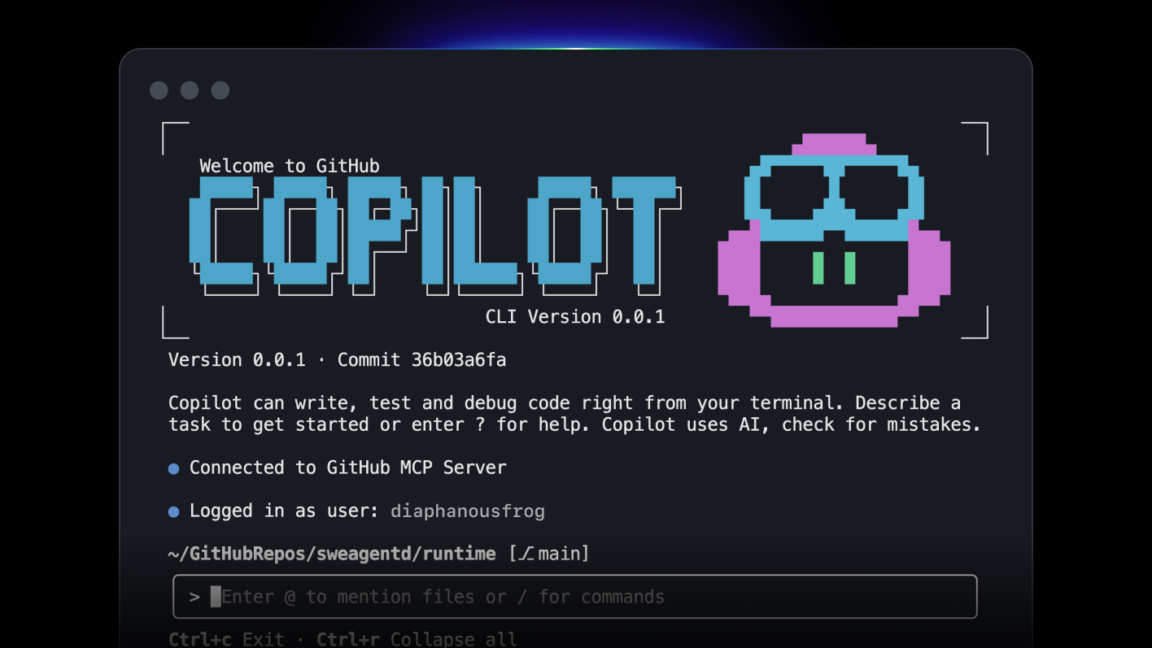
GitHub has announced that it will be shifting to a usage-based billing model for its GitHub Copilot AI service starting on June 1. The move is pitched as a way to "better align pricing with actual usage" and a necessary step to keep Copilot financially sustainable amid surging demand for limited AI computing resources.
GitHub Copilot subscribers currently receive an allocation of monthly "requests" and "premium requests," which are spent whenever they ask Copilot for help from an AI model. But those broad categories cover many different AI tasks with a wide range of total backend computing costs, GitHub says.
"Today, a quick chat question and a multi-hour autonomous coding session can cost the user the same amount," the Microsoft-owned company wrote in its announcement. And while GitHub says it has "absorbed much of the escalating inference cost behind that usage" to this point, lumping all "premium requests" together "is no longer sustainable."

Open source software with more than 1 million monthly downloads was compromised after a threat actor exploited a vulnerability in the developers’ account workflow that gave access to its signing keys and other sensitive information.
On Friday, unknown attackers exploited the vulnerability to push a new version of element-data, a command-line interface that helps users monitor performance and anomalies in machine-learning systems. When run, the malicious package scoured systems for sensitive data, including user profiles, warehouse credentials, cloud provider keys, API tokens, and SSH keys, developers said. The malicious version was tagged as 0.23.3 and was published to the developers’ Python Package Index and Docker image accounts. It was removed about 12 hours later, on Saturday. Elementary Cloud, the Elementary dbt package, and all other CLI versions weren't affected.
“Users who installed 0.23.3, or who pulled and ran the affected Docker image, should assume that any credentials accessible to the environment where it ran may have been exposed,” the developers wrote.


In January, the European Commission began an initial investigation, known as a specification proceeding, into how Google has implemented AI in the Android operating system. The results are in, and the EU says Android needs to be more open, which is not surprising. Meanwhile, Google says this amounts to "unwarranted intervention," which is equally unsurprising. Regardless of Google's characterization of the investigation, the commission may force Google to make Android AI changes this summer.
This action stems from the continent's Digital Markets Act (DMA), a sweeping law that designates seven dominant technology companies as "gatekeepers" that are subject to greater regulation to ensure fair competition. Google has consistently spoken against the regulations imposed under the DMA, but it and the other gatekeepers have been subject to the law for several years now, and there's little chance the commission backs away from it.
The issue before the commission currently is the built-in advantage for Gemini on Android. When you turn on any Google-powered Android phone, Gemini is already there and gets special treatment at the system level. The European Commission is taking aim at the lack of features available to third-party AI services. The commission believes that there are too many experiences on Android that only work with Google's Gemini AI, and as a gatekeeper, Google must change that.



 Lateo.net - Flux RSS en pagaille (pour en ajouter : @ moi)