 Connexion


Sheeppox is a highly contagious, often fatal viral disease that was largely eradicated from much of European livestock in the 20th century. But there is still the occasional regional outbreak, such as the one that afflicted many flocks of sheep in Greece last year. In order to reconstruct how the virus has evolved over the last 3,500 years, scientists extracted and sequenced sheeppox DNA preserved in the animal skins used for the parchment of numerous medieval manuscripts. They reported their findings in a new paper published in the journal Science Advances.
“The recording of ancient DNA of pathogens has completely changed our understanding of infectious disease in the past, and here we show that parchment can also preserve animal pathogen DNA. It is possible that archives and libraries around the world also contain the genetic traces of disease outbreaks in animals in the past,” said co-author Louis L’Hôte, a graduate student at University College Dublin. “These genomes help us understand how these pathogens evolved and how they impacted past societies—such as sheeppox virus, which we show has been affecting Eurasian sheep herds for at least three and a half millennia.”
Per the authors, the earliest known written evidence of sheeppox infection dates to the first century CE, when Roman accounts described outbreaks of skin lesions ("pustules") in the animals. There are more frequent mentions of deadly outbreaks of "pockes" or "variola" in sheep by the Middle Ages, recorded in various agricultural texts and accounting documents in France, Spain, and England. There seemed to be a decline in outbreaks in 17th-century France, although frequent outbreaks re-emerged in the 18th and 19th centuries, often with high mortality rates in the flocks. Great Britain did not experience a sheeppox resurgence until 1847.

Having it your way is one of the benefits of being an Ars Pro subscriber. You get all of the great content you come to Ars for every day, but you get to choose how you parse it. Some readers want the classic blog-style homepage. Others want as many headlines as possible packed onto one screen. Some want a wider text column; others would happily never see another story about a topic they don’t follow.
We've got you covered.
Both Grid and List views are available for all readers, but subscribing to Ars unlocks two additional layout options. Our old-school Classic view reprises the original site layout from 1998, the year the Ars Orbiting HQ launched.


Last month, Anthropic announced a billing change that would have substantially increased costs for heavy users of its automation-focused Claude Agent SDK, including many third-party apps. On Monday, though, Anthropic abruptly announced it had paused those pricing changes just as they were set to take effect, allowing Agent SDK users to continue drawing from the more generous usage limits in their existing Claude subscriptions.
The plan, as announced on May 13, would have treated usage of the Claude Agent SDK (including via third-party apps and the programmatic "claude -p" command) separately from "standard" Claude usage via the chat interface or the official Claude CLI. At the time, Anthropic said that, as of June 15, that kind of outside SDK usage would be billed at Anthropic's prevailing API rates, with subscribers receiving a simple monthly usage credit equal to their subscription price.
That would have been a major change from the current setup, where Agent SDK use is limited only by the standard weekly caps applied to a user's current Claude subscription tier. Those generous limits allow power users to squeeze a lot more usage out of those paid subscriptions than they would get by paying the same price for API fees. One analysis suggests that Claude Opus users start saving money from their subscription after just two to three messages per day, and that their subscription could be worth many multiples of its monthly cost in API usage.


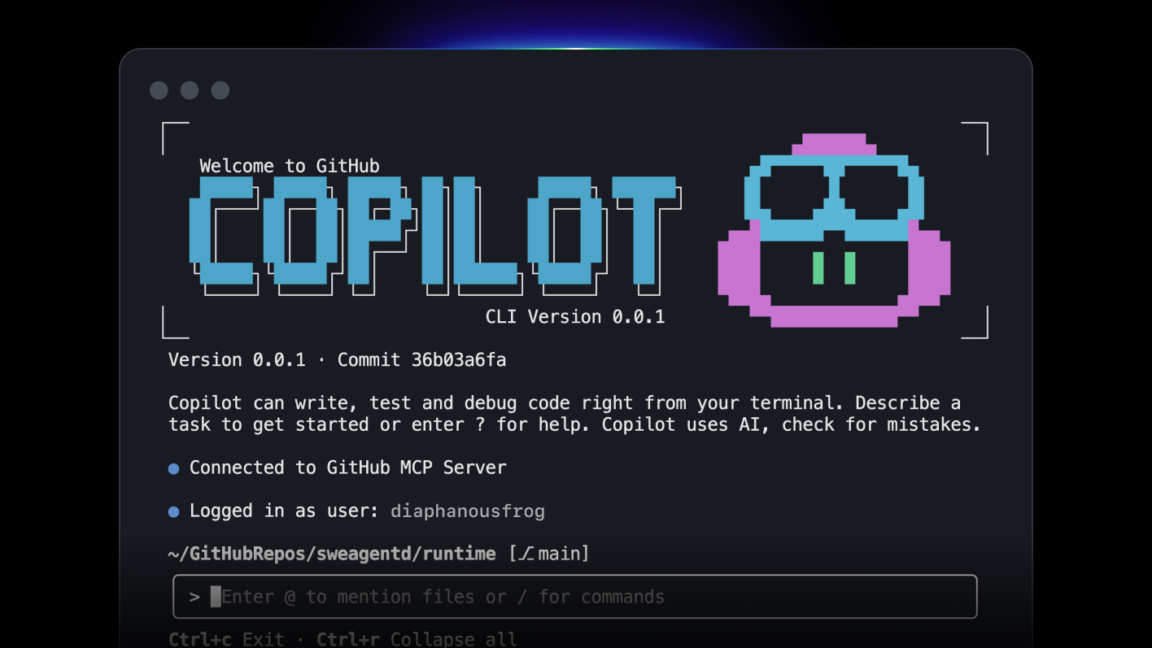
GitHub has announced that it will be shifting to a usage-based billing model for its GitHub Copilot AI service starting on June 1. The move is pitched as a way to "better align pricing with actual usage" and a necessary step to keep Copilot financially sustainable amid surging demand for limited AI computing resources.
GitHub Copilot subscribers currently receive an allocation of monthly "requests" and "premium requests," which are spent whenever they ask Copilot for help from an AI model. But those broad categories cover many different AI tasks with a wide range of total backend computing costs, GitHub says.
"Today, a quick chat question and a multi-hour autonomous coding session can cost the user the same amount," the Microsoft-owned company wrote in its announcement. And while GitHub says it has "absorbed much of the escalating inference cost behind that usage" to this point, lumping all "premium requests" together "is no longer sustainable."


 Lateo.net - Flux RSS en pagaille (pour en ajouter : @ moi)