Connexion


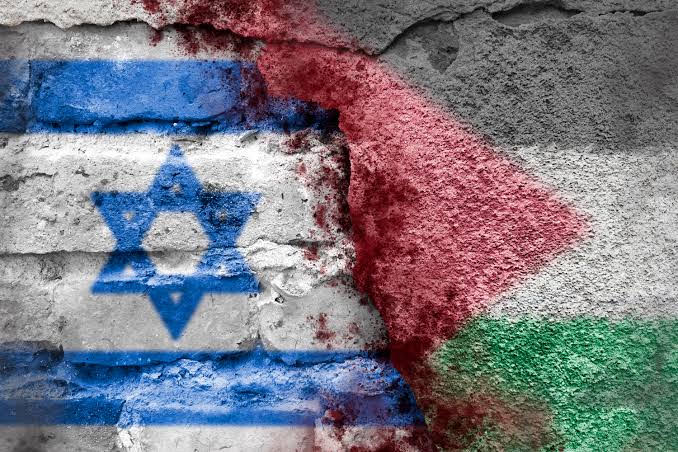
Il en va dans la vie des peuples comme dans celle des hommes : des événements apparemment sans beaucoup d’importance sonnent le glas d’un monde. C’est ce à quoi nous assistons aujourd’hui, me semble-t-il, au Proche-Orient.
Le 11 février dernier, lors d’une réunion au sommet, Netanyahou réussit à vendre à Trump une idée qui caressait de longue date : faire une guerre d’anéantissement visant l’Iran. L’occasion était favorable puisque le 28 février, une réunion devait se tenir, réunion à laquelle assisteraient le guide suprême iranien et une cinquantaine de responsables militaires. C’était là une occasion en or puisqu’à l’époque se déroulaient des négociations américano-iraniennes, ce qui permettait d’endormir la vigilance de Téhéran. À entendre le boucher de Gaza, cette guerre serait courte, fraîche et joyeuse. Or, deux mois sont passés et elle dure toujours, compromettant les élections de « mid-term » de Trump aux États-Unis. Elle met surtout à nu les faiblesses du camp américano-sioniste, tenu en échec par un pays affaibli par le blocus sans pitié organisé contre lui depuis près de cinquante ans.
Aujourd’hui, et c’est normal, les gens s’intéressent aux conséquences que les crimes américano-sionistes vont avoir sur le niveau de vie : hausse de l’essence, diminution des rendements agricoles… Mais de quoi parle-t-on exactement ? Il faut savoir qu’il y a près de 80 variétés de pétrole qui servent à fournir de l’énergie, mais aussi pour la biochimie, ce qui était le cas du pétrole lourd des pays du Golfe. Ce pétrole contient du soufre indispensable dans l’industrie.
En outre, le Qatar était un gros producteur de gaz nécessaire dans beaucoup de domaines, en particulier dans la fabrication de l’hélium, qui est indispensable à l’industrie électronique et pour fabriquer des batteries électriques.
Comme on l’a dit, cela va impacter au premier chef l’agriculture. En effet, faute d’engrais, les rendements de blé et de riz vont s’effondrer, spécialement dans les pays du Sud-Est asiatique, comme le Sri Lanka ou le Vietnam. Le prix de certains de ces engrais a déjà doublé. Résultat : le riz va manquer dès cet été dans ces pays. Aux États-Unis, les prix agricoles vont atteindre un pic en automne, tandis qu’en Europe, la poussée inflationniste durera jusqu’à la veille de l’hiver. Bref, tout cela nous réserve de bonnes surprises. Merci, monsieur Netanyahou, merci, monsieur Trump. Les Israéliens ont été poussés par la haine des goyim et de la nature. Trump, lui, a été tenté par son hostilité envers la Chine, mais celle-ci, qui sait parfaitement que cette guerre absurde est dirigée aussi contre elle, a bloqué les exportations de soufre, or le soufre est indispensable dans la fabrication des métaux. Ce pays dispose aussi de terres rares. C’est dire que la stratégie de Trump risque fort de se retourner contre lui.
L’intérêt de l’Europe lui commande de se réconcilier avec la Russie, encore faudrait-il avoir une politique un tant soit peu indépendante, mais c’est évidemment trop demandé à un continent qui vit dans le mensonge et dans l’esclavage depuis plus de quatre-vingts ans. Pour s’en convaincre, il suffit de regarder les réactions devant le génocide de Gaza. Ils se sont couchés devant les génocidaires au nom du « plus jamais ça ». Les pays du Sud ont compris ce que valaient les « grands principes » que nous leur avons vendus pendant des décennies.
Il est donc évident que nous sommes en train de passer d’un monde à un autre. Nous étions jusqu’ici dans un univers dominé par les Américains. Après avoir perdu au Vietnam, en Irak et en Afghanistan, les Américains, non seulement sont tenus en échec par Téhéran, mais ils se sont révélés incapables de protéger les pays du Golfe ainsi que l’Arabie saoudite. Voilà ce qui est en train de ruiner leur crédit dans tous les sens du terme, au plan militaire et politique évidemment, mais aussi dans le domaine monétaire, car on est en droit de se poser la question de savoir combien de temps encore le dollar va-t-il rester la monnaie dominante ? Le jour où il aura perdu son statut privilégié, ce jour-là les États-Unis redeviendront un pays comme les autres. Ils seront obligés de respecter le droit international, par exemple.
Mais il y a aussi un autre pays qui verra son statut privilégié remis en cause : Israël. S’en sera fini pour les entités de peuplement génocidaires en toute tranquillité ; les autres peuples, avec la complicité des pays occidentaux. Ce jour-là, le Proche-Orient retrouvera peut-être un peu la paix que la « déclaration Balfour » lui a fait perdre depuis plus d’un siècle.
PHILIPPE PRÉVOST
L’article LE MONDE DE DEMAIN est apparu en premier sur L'Action Française.
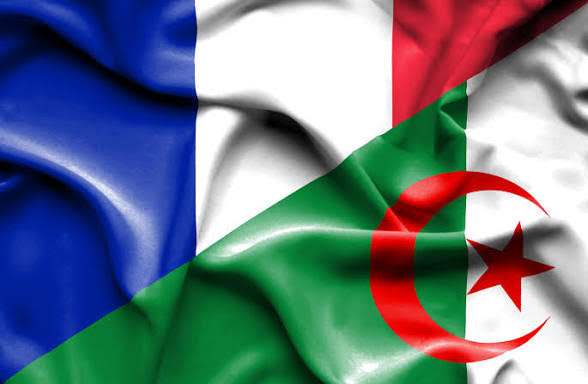
Contre toute logique, l’Algérie vient de décider de rétrograder la langue française au rang de deuxième langue étrangère enseignée dans le pays, alors qu’elle n’a jamais été autant parlée dans le monde et que l’espace francophone vient de dépasser les 600 millions d’habitants. La volonté du régime algérien de sortir le pays de la grande famille francophone est donc désormais incontestable. Si l’Algérie est un pays souverain, libre de mener les politiques qu’il souhaite, la France est également un pays souverain, libre de décider par lui-même, notamment sur les questions migratoires. L’attitude algérienne rend désormais plus que jamais légitime la mise sur la table de la question de l’interdiction des visas aux ressortissants algériens, ainsi que celle de la remigration, au moins partielle, des populations algériennes de France.
Le ministre algérien de l’Éducation nationale a annoncé, le 25 juillet dernier, la décision de remplacer le français par l’anglais en tant que première langue étrangère enseignée dans le pays à partir de la prochaine rentrée scolaire. L’anglais serait ainsi appris à compter de la troisième année de l’enseignement primaire, alors que le français le serait à partir de l’année suivante. Cette décision historique (qui pourrait bientôt permettre au pays, à en croire les arguments présentés, de produire ordinateurs, voitures et avions, comme le Nigeria, le Zimbabwe, l’Égypte ou encore l’Arabie Saoudite…) démontre de manière désormais incontestable que la volonté du régime militaire algérien n’est pas seulement de généraliser l’enseignement de l’anglais au primaire, comme le font déjà intelligemment ses voisins marocains et tunisiens (et même depuis des décennies pour la Tunisie), mais surtout de sortir carrément le pays de la grande famille francophone et de faire donc de l’Algérie, à terme, un pays anglophone (ou plus précisément un pays arabo-berbéro-anglophone).
Une décision irrationnelle et contre-productive
Cette décision est pourtant contraire à toute logique économique ou géopolitique, notamment car l’Algérie est frontalière ou proche de nombreux pays francophones, dont elle se coupera progressivement, et que la langue française n’a jamais été autant parlée dans le monde. À titre d’exemple, le monde francophone, à lui seul et dans sa définition la plus stricte (ne tenant pas compte des pays simplement francophonophiles comme le Liban ou la Roumanie, ou encore des territoires flamands et anglophones de Belgique et du Canada, respectivement), vient de dépasser la barre des 600 millions d’habitants, notamment grâce à la vaste Afrique francophone, voisine de l’Algérie. Signe de cette montée en puissance, l’Angola, grand pays pétrolier de 40 millions d’habitants et sans aucun lien historique avec la France ou la Belgique, vient de rendre obligatoire l’enseignement du français, et ce dès le primaire.
L’Afrique francophone représente d’ailleurs quasi constamment la partie économiquement la plus dynamique du continent africain, la plus industrialisée, la mieux gérée, la moins touchée par l’inflation, la moins endettée, la moins corrompue et la plus stable du continent. Pour rappel, l’Afrique francophone subsaharienne a réalisé en 2025 le niveau de croissance économique le plus élevé du continent pour la 12e année consécutive, affichant un taux de croissance annuel moyen de 4,1 % sur la période 2014-2025, contre seulement 2,1 % pour le reste de l’Afrique subsaharienne. Occasion de rappeler que de nombreuses populations d’Afrique francophone doivent aujourd’hui leur existence à la colonisation française, qui les sauva des horreurs et monstruosités commises pendant plus de mille ans par les Algériens, qui firent d’innombrables pillages, destructions, massacres et déportations, et pratiquèrent la castration à grande échelle des hommes noirs réduits en esclavage afin de les empêcher d’avoir une descendance.
Par ailleurs, toutes les études démontrent clairement la supériorité économique et sociale des pays arabo-francophones par rapport aux pays arabo-anglophones, en dehors des monarchies pétrolières du Golfe. De plus, et chose pouvant surprendre lorsqu’on ne fait pas partie des véritables experts en éducation, les classements internationaux en matière de maîtrise de la langue anglaise démontrent également la supériorité des pays francophones du Maghreb, dont l’Algérie, sur le reste du monde arabe, même en incluant les monarchies du Golfe…
La question des visas, pour une France elle aussi souveraine
Certes, l’Algérie est un pays pleinement souverain. À ce titre, elle a parfaitement le droit de mener les politiques économique, sociale, culturelle et étrangère qu’elle souhaite. Mais ce que l’on oublie souvent, c’est que la France est également un pays souverain, qui a donc lui aussi le droit de mener les politiques qu’il entend, et notamment sur les questions migratoires. À partir du moment que l’Algérie a décidé de sortir de la grande famille francophone mondiale, rien n’oblige donc désormais, y compris d’un point de vue moral, la France à continuer à octroyer naïvement des visas aux ressortissants de ce pays. Il est donc désormais plus que jamais légitime de mettre sur la table la question de l’interdiction des visas à l’égard des Algériens, que cela concerne les étudiants, les travailleurs, le regroupement familial ou les visas de court séjour. En vertu du principe fondamental et sacré de la souveraineté des États, aucune loi internationale n’interdit à un État de décider de qui a le droit de s’établir sur son territoire, n’en déplaise à ceux qui prétendent le contraire.
Les Algériens devront donc demander des visas auprès des pays anglo-saxons, et en particulier l’Angleterre et les États-Unis. Toutefois, ils devront s’attendre à essuyer un nombre incroyablement élevé de refus, compte tenu de l’aversion historique de ces pays pour l’immigration arabe, à laquelle ils ont toujours préféré l’immigration asiatique. À titre d’exemple, il est intéressant de noter que les personnes originaires de pays arabes ne représentent qu’environ 10 % – soit le dixième ! – de la communauté musulmane du Royaume-Uni, alors que celui-ci avait colonisé près des trois quarts du monde arabe, démographiquement parlant. Quant au mépris des États-Unis pour l’immigration arabe, celui-ci n’est plus à démontrer… De plus, les rares heureux élus algériens qui auront le droit d’aller étudier en terre anglo-saxonne devront débourser des dizaines de milliers d’euros afin de financer leurs études. Ils devront alors s’endetter massivement, souvent cumuler plusieurs emplois (chose très courante aux États-Unis pour pouvoir vivre « décemment » dans ce pays où le rêve américain n’est qu’une chimère pour plus de 90 % des habitants), voire, pour les moins chanceux d’entre eux, rembourser leurs dettes étouffantes jusqu’au dixième ou quinzième anniversaire de leurs enfants.
Par ailleurs, il est nécessaire de noter que l’anglicisation de l’Algérie entraînera progressivement une explosion du port du niqab dans le pays, où le nombre de femmes concernées triplera, quadruplera voire décuplera d’ici une vingtaine d’années. En effet, l’Algérie s’alignera progressivement, lentement mais sûrement, sur les codes culturels et les mentalités des pays arabes anglophones du Moyen-Orient, qu’affectionnent tant les islamistes algériens, qui sont justement les plus farouches défenseurs de l’anglicisation. Déjà en retard sur ses voisines tunisienne et marocaine, dont les gouvernants ont toujours été guidés par l’intelligence et la sagesse depuis les indépendances, la société algérienne entrera donc dans un processus de régression, qui la conduira à faire bientôt partie des sociétés considérées comme arriérées par le reste du monde… Raison de plus pour mettre un terme à la délivrance de visa aux ressortissants algériens.
La question de la remigration, plus que jamais légitime
Enfin, la décision de l’Algérie de quitter la grande famille francophone rend également plus que jamais légitime d’étudier sérieusement la question de la remigration, au moins partielle, des populations algériennes de France. Là encore, aucune loi internationale ne conteste le droit fondamental et sacré de tout État de décider des personnes étrangères qui ont le droit de s’installer et de vivre sur son territoire, quelle que soit l’ancienneté de leur présence, et son caractère légal ou illégal. Ainsi, et sur les dix dernières années, l’Arabie saoudite a procédé à la remigration de quelques millions d’étrangers présents dans le pays. De leur côté, les États-Unis viennent de faire partir, de gré ou de force, plus de 500 000 personnes en seulement une année.
Quant à l’Algérie, il est utile de rappeler qu’elle n’est nullement en reste en la matière. Celle-ci a en effet déjà procédé à deux remigrations depuis son indépendance : celles des Européens en 1962-1963 (qui avaient construit en quelques dizaines d’années seulement ce que les Algériens avaient été incapables de construire depuis le départ des Romains bâtisseurs), et celle moins connue des Marocains, brutalement expulsés en décembre 1975. En quelques jours seulement, l’Algérie avait ainsi raflé et transféré plusieurs dizaines de milliers de personnes, considérées comme étant marocaines (mais dont certaines étaient présentes depuis plusieurs générations), sans même leur donner la possibilité de prendre leurs affaires et de vendre leurs biens.
Le cas des relations algéro-marocaines est d’ailleurs fort intéressant, puisqu’il se caractérise notamment par la fermeture totale des frontières, sur décision purement algérienne. Ainsi, plus aucune liaison terrestre, maritime, ou aérienne n’est permise entre les deux pays depuis 1994, soit depuis plus de 30 ans. De la même manière que l’Algérie a pris cette décision concernant le Maroc, la France peut également et parfaitement décider, du jour au lendemain, d’interdire toute liaison aérienne et maritime avec l’Algérie. Les ressortissants algériens encore présents sur son sol devront alors, tout simplement, passer par d’autres pays européens ou par la Tunisie pour se rendre en Algérie, tout comme le font déjà les Algériens souhaitant se rendre au Maroc.
Par ailleurs, il convient de ne pas oublier que la France n’a que de très faibles intérêts économiques en Algérie, qui constitue un partenaire quasi insignifiant pour l’Hexagone, pour lequel elle ne représente que 1 % du commerce extérieur. Même au niveau des hydrocarbures, qui constituent une part importante de ces maigres échanges, la part de l’Algérie dans les importations françaises est désormais marginale (10 % seulement), la France ayant largement diversifié ses fournisseurs, aux quatre coins de la planète, tout en ayant massivement investi dans le nucléaire pour réduire sa dépendance en la matière. L’Algérie est donc très loin d’avoir la même importance pour la France que pour l’Italie, par exemple. Des réalités qu’il convient de rappeler systématiquement à ceux qui présentent l’Algérie comme un partenaire économique important et bénéfique à l’économie française…
Ilyes Zouari
Président du CERMF (Cercle d’étude et de réflexion sur le monde francophone)
L’article Le recul du français en Algérie : une occasion d’arrêter la délivrance de visas est apparu en premier sur L'Action Française.
En tant qu’animal social, l’homme a besoin des autres, et donc de la société pour vivre. Son comportement social n’est pas inscrit dans son patrimoine génétique, comme c’est le cas pour les abeilles. Il n’a que des facultés, des potentialités, que l’éducation reçue lui permettra d’exploiter au mieux. L’homme ne naît pas avec des chaussures, des vêtements et une formation professionnelle. Tout cela s’acquiert en société. L’état social de l’homme est un état naturel, contrairement à ce que déclarent les penseurs modernes, et les hommes n’ont pas fait une belle assemblée générale un jour pour voir si la société n’était pas une bonne idée à tenter. Charles Maurras a fort bien illustré cela :
« Le petit poussin brise sa coquille et se met à courir. Peu de chose lui manque pour crier : “Je suis libre”… Mais le petit homme ? Au petit homme, il manque tout. Bien avant de courir, il a besoin d’être tiré de sa mère, lavé, couvert, nourri. Avant d’être instruit des premiers pas, des premiers mots, il doit être gardé des risques mortels. Le peu qu’il a d’instinct est impuissant à lui procurer les soins nécessaires, il faut qu’il les reçoive, tout ordonnés, d’autrui. Il est né. Sa volonté n’est pas née, ni son action proprement dite. Il n’a pas dit Je ni Moi, et il en est fort loin, qu’un cercle de rapides actions prévenantes s’est dessiné autour de lui. Le petit homme, presque inerte, qui périrait s’il affrontait la nature brute, est reçu dans l’enceinte d’une autre nature, empressée, clémente et humaine : il ne vit que parce qu’il en est le petit citoyen. Son existence a commencé par cet afflux de services extérieurs gratuits. Son compte s’ouvre par des libéralités dont il a le profit sans avoir pu les mériter, ni même y aider par une prière : il n’en a rien pu demander ni désirer (…). Cependant, à la première minute du premier jour, quand toute vie personnelle est fort étrangère à son corps, qui ressemble à celui d’une petite bête, il attire et concentre les fatigues d’un groupe dont il dépend autant que de sa mère lorsqu’il était enfermé dans son sein. »
Voici l’illustration de la base de la réflexion politique. Tout homme est, dès sa naissance et jusqu’à sa mort, endetté, sans possibilité de rembourser la société dans laquelle il vit. De quoi mettre à mal les chantres du libéralisme, pour qui il n’y a qu’opportunités à saisir et voisins à écraser.
Il n’est pas possible pour l’homme de vivre seul. Cependant, les penseurs modernes nous ont inventé le mythe individualiste, comme si l’homme, au plan politique, était avant tout un individu. La pensée antilibérale affirme, au contraire, la priorité de la nature politique de l’homme sur sa réalisation personnelle et individuelle. Nous l’avons vu, l’homme a une nature sociale et politique, et ce ne sont pas les imprécations individualistes qui vont la supprimer. Mais, sans supprimer cette nature, ils peuvent la défigurer, en faisant en sorte que chacun agisse comme s’il était seul. Ce qu’il reste d’organisation politique est alors confisqué au profit de quelques individus, qui font croire à l’individu noyé dans la masse d’égoïstes qu’il est libre, alors qu’il est dans une nouvelle forme d’esclavage.
En inventant le concept d’état de nature et d’état social, des théoriciens, dès le XVIᵉ siècle, ont tenté de renforcer ces chaînes, en nous laissant croire que, sans le fameux contrat social, tout le monde s’entretuerait, et qu’il était normal d’abdiquer des droits au nom d’un tout qui nous dépasse. Le problème n’est pas dans l’intégration des individus dans une communauté, ni dans le fait qu’ils fassent primer le bien commun sur leur bien propre, cela est une évidence. Le drame, la rupture politique, est d’avoir fondé ce bien commun dans le contrat, dans la majorité, dans le subjectivisme des gouvernants. Le drame, c’est que ce bien commun et cette communauté n’ont plus de transcendance, mais sont autocentrés. Quel que soit le mode de désignation des dirigeants, mettre leur légitimité dans la majorité et non dans un ordre qui s’impose à nous est la source de tous nos maux. S’il n’y a plus de Bien, de Vrai, de Bon qui transcendent nos existences, chaque nouvelle majorité peut réécrire l’histoire et la morale.
Il est donc important de se souvenir que l’état de nature est nécessairement social, comme le petit poussin nous le rappelle. Il est, par ailleurs, difficile d’imaginer cette fameuse réunion des Mowglis décidant, d’un commun accord et selon une procédure inventée pour l’occasion, de se ranger sous l’ordre social et de créer une société ex nihilo, quittant l’état de nature pour le contrat social. Ce doux rêve libéral, qui ramène toutes les interactions humaines à des contrats et des intérêts, doit être oublié pour construire une politique sur une base anthropologiquement saine.
L’Action Française
L’article Formation : l’homme, animal social et politique est apparu en premier sur L'Action Française.

Faut-il accepter les valeurs de la République dont on nous rebat les oreilles, ou les refuser en bloc au risque de s’isoler de la société actuelle ? La question peut choquer certains lecteurs qui n’ont pas Marianne en sympathie. Pourtant, il convient, afin de nous positionner en face des gouvernements républicains que nous subissons, de nous demander dans quelle mesure ces « valeurs » auxquelles ils se réfèrent peuvent être admises par les citoyens ou les chrétiens de ce pays.
Il est tout d’abord assez difficile de cerner ces « valeurs de la République ». L’on a dit qu’elles étaient des « valeurs chrétiennes devenues folles », ce qui est sans doute partiellement vrai. Elles sont à géométrie variable et peuvent s’étendre jusqu’à la vaccination ou au « droit » à l’avortement… Il est évident que, dans ces prolongements, qu’ils soient liberticides ou libertaires, il n’y a rien de commun avec notre pensée et que le rejet pur et simple s’impose.
Cependant, si l’on veut discuter le fond du sujet, il faut rechercher des valeurs plus classiques et généralement revendiquées par les partisans du régime. L’on peut, par exemple, prendre comme point de départ la devise républicaine : « Liberté, Égalité, Fraternité ». Dans quelle mesure est-elle acceptable ? Il y a quelques années, Jean-Marie Le Pen avait répondu à un contradicteur que le fait d’honorer ces valeurs n’empêchait pas de rendre également hommage au Travail, à la Famille et à la Patrie (ou l’inverse). C’est peut-être une clé de la réflexion : pour rendre les valeurs républicaines recevables, il faudrait, au lieu d’en faire des absolus inconditionnels, les pondérer, les équilibrer… Il est évident, par exemple, que la liberté est agréable à vivre : nous apprécions tous d’aller où nous voulons et de pouvoir dire ce que nous pensons (de moins en moins d’ailleurs). Mais une liberté totale, qui permettrait de tuer ou de voler, ou, à l’inverse, un contrôle absolu à la manière des Khmers rouges (qui a tenté la République macronienne et covidienne) seraient également insupportables (quoique non impensables, hélas). Il est paradoxal d’entendre les partisans du confinement et de la vaccination obligatoire oser encore parler de liberté, et affligeant de voir les personnes qu’ils ont apeurées se plier aux plus humiliantes obligations indues. Les libertés républicaines sont un peu comme le thermomètre : s’il fait trop chaud ou trop froid, l’on souffre ou l’on meurt ; l’on ne se trouve bien qu’au milieu. Donc pas de liberté sans règles et pas d’abus des règles… Il faudra nous résoudre à juger au coup par coup.
Précisons encore un peu : au nom de la liberté avec une majuscule, bien des crimes ont été commis par la Révolution, au temps du règne de la guillotine. Il faut aussi souligner que l’existence de larges libertés publiques n’est pas liée (certains diront : bien au contraire) à la République. C’est pourquoi nous préférons les libertés concrètes (liberté de la vie familiale et religieuse, liberté communale, liberté du travail…) à l’affirmation abstraite et générale. Ces libertés sont d’ailleurs tous les jours plus menacées par l’administration tentaculaire et les nouveautés techniques telles que le contrôle facial. Et nous rappellerons aussi que, dans la conception chrétienne, la liberté, c’est le droit de choisir les moyens de bien faire : il n’y a pas de liberté du mal, et la tolérance éventuelle de celui-ci n’est permise que si elle est nécessaire par rapport aux exigences du bien commun (par exemple la tolérance encadrée d’une fausse religion pour empêcher une guerre civile).
L’égalité a un aspect légitime, mais tombe facilement dans l’abus. Certes, selon la philosophie, tous les hommes ont la même nature, ce qui se traduit par une égalité de base. Néanmoins, les nécessités de la vie les hiérarchisent dès le début : il y a inégalité entre les parents et les enfants. Maurras parlait d’ailleurs d’« l’inégalité protectrice ». Et de même, dans la société, tous n’ont pas les mêmes dons et certains doivent être guidés par d’autres. Bossuet a dit que Dieu a fait les grands pour protéger les petits… L’égalité est juste lorsqu’il s’agit d’une égalité de traitement entre personnes qui sont dans la même situation : par exemple, pour un examen, il est normal que tous les candidats soient mis dans des conditions semblables. En revanche, si l’égalité tombe dans l’égalitarisme, c’est-à-dire si l’on essaie d’avantager ceux qui ont moins de mérite pour leur donner ce que les autres ont conquis durement, elle est injuste. Un exemple détestable est la discrimination positive, qui donne des avantages indus à certains.
Reste le troisième terme du triptyque, la fraternité. Elle n’a rejoint les deux autres qu’en 1848. Il est vrai que, pendant la Grande Révolution, l’ombre du couperet lui faisait obstacle (et l’on ne sache pas que les républicains comme M. Mélenchon aient fait repentance !). Fraternité vient de frère : tous les hommes sont frères en Adam, mais le progressisme évolutionniste risque de briser ce lien. Par ailleurs, il est bon que dans une société un climat de bienveillance domine. Cependant, il ne faut pas oublier que qui dit fraternité dit père et mère : c’est parce que nous avons un Père dans les cieux que nous pouvons nous considérer comme frères des autres hommes. C’est pourquoi ceux qui veulent supprimer la paternité divine nous paraissent compromettre la fraternité humaine et perdre le droit de s’en réclamer. Au demeurant, fraternité ne veut pas dire laxisme. Il existe aussi la correction fraternelle pour empêcher les débordements…
Il faut peut-être rajouter à la liste de ces fameuses valeurs la laïcité de l’État, officiellement proclamée en 1905 et constitutionnalisée depuis. Nous ne pouvons qu’y être défavorables et la rejeter tant au nom de la tradition catholique de notre pays qu’en raison de sa propension à se transformer en laïcisme intolérant et de sa totale inefficacité face à l’islam conquérant. Et, en Europe, beaucoup de pays qui ne proclament pas la laïcité connaissent une situation religieuse apaisée.
Notre analyse pourrait s’étendre aux Droits de l’Homme (même s’ils ont été proclamés au temps de la monarchie constitutionnelle et non de la République). La Déclaration de 1789, née dans un climat révolutionnaire, comporte à la fois de vraies valeurs et de graves erreurs. Elle oublie les devoirs envers Dieu. Elle dit que toute autorité vient du peuple, ce qui est faux. Même si la démocratie peut être légitime dans certains pays et dans certains cas — nous pensons à nos amis suisses ou à nos communes — elle n’est pas partout et toujours un droit et une panacée. Et, selon la doctrine catholique, la démocratie, là où elle existe légitimement, a pour objet de désigner les titulaires du pouvoir ; elle ne crée jamais ce pouvoir lui-même.
Au terme de notre inventaire, l’on a pu constater que les valeurs républicaines sont des valeurs faussées et déformées, comme la fausse monnaie qui ressemble à la vraie. Rien de ce qu’elles gardent de positif n’est spécifiquement républicain. En revanche, l’on ne peut que condamner la liberté de mal faire, l’égalitarisme destructeur et la fausse fraternité recouvrant la haine de soi et l’amour du différent ou du n’importe quoi. Et le Décalogue est une source d’action beaucoup plus sûre que n’importe quelle morale laïque. Il faut donc revenir aux valeurs communes de notre civilisation, aux valeurs de nos pères, notamment chrétiennes, et n’accepter de subir les « valeurs de la République », voire de s’en servir dans la vie courante, notamment politique, que par opportunité et dans la mesure où elles sont compatibles avec les vraies (par exemple nous pouvons profiter de la liberté d’association, mais nous contestons celle d’édifier librement des mosquées…). Et il ne faut jamais oublier que, comme le disait Maurras, la première contre-révolution est celle du langage.
Franck Bouscau
L’article La République et ses valeurs est apparu en premier sur L'Action Française.

Le temps et les actes des chefs politiques dissipent les illusions qu’on a pu nourrir à leur endroit. Ainsi Donald Trump et Wladimir Poutine ont-ils pu plaire un temps à ceux qui défendent la nation, la France chrétienne et le droit naturel. Ils ont dénoncé l’un et l’autre quelques impostures, en matière de climat, de genre, etc. Je n’ai pu moi-même me défendre de mouvements de sympathie devant certains de leurs coups de patte, et leurs ennemis étaient souvent les nôtres. Cependant, je ne suis pas mécontent d’avoir reconnu leurs limites et leurs défauts dès 2019 dans mon premier livre sur la révolution arc-en-ciel. Il faut rappeler, pour comprendre le rôle réel d’un Poutine et d’un Trump, que celle-ci est une entreprise de subversion de la planète qui, par le triple moyen du mythe du réchauffement du climat par l’homme, de l’existentialisme de genre et de la négation des ethnies et des civilisations, promeut une révolution globale panthéiste anti-chrétienne où seront interdites toutes les frontières, entre races, nations, religions, sexes, espèces même.
Dans ce cadre, le froid bon sens d’un Poutine, les coups de boutoir de Trump contre l’accord de Paris, l’OMS ou les transgenres dans le sport ont capté notre approbation, mais pour quoi faire ? Concrètement, hélas, pour assurer leur pouvoir. Et de ce pouvoir, qu’ont-ils fait ? Ils ont, tout en tâchant de préserver le maximum de pouvoir et de richesse pour eux-mêmes, contribué à la révolution arc-en-ciel qu’ils donnaient l’impression de vouloir combattre.
Sans doute Poutine ne souhaite-t-il pas que cette révolution arc-en-ciel soit menée sous la direction des États-Unis. C’est pourquoi il fricote avec la Chine, l’Inde, les BRICS. Mais son multilatéralisme souhaite simplement une part de direction dans l’empire mondial à venir. Quant à l’idéologie qui l’anime, sa politique musulmane et d’immigration en Russie, sa position sur l’avortement, son acceptation d’un libre-échange d’inspiration socialiste, redistributeur des richesses du Nord au profit du Sud, demeurent en plein dans l’orthodoxie arc-en-ciel. Plus, la guerre qu’il a lancée en Ukraine a ranimé deux instruments utiles à l’arc-en-ciel, l’OTAN et l’Union européenne, qui étaient subclaquants en 2022.
Quant à Trump, il est assez ferme sur la question du climat et du genre, et on le sent décidé à défendre les intérêts des pétroliers américains. Mais il est moins ferme sur la question de la vie (avortement, euthanasie, etc.), et surtout, sa politique étrangère est catastrophique.
D’abord parce qu’elle reproduit les erreurs ordinaires de l’Amérique : à cet égard, le personnage est dépassé par son rôle. Ou, si l’on préfère, ses convictions, s’il en a, cèdent devant la situation qu’il occupe. L’homme, avec ses foucades, ses éruptions, ses caprices, n’est pas plus désagréable qu’un autre, mais toute son agitation démontre son peu de poids : c’est le bouchon du pêcheur qui se prend pour le maître de la rivière. Il amuse le tapis pendant que l’eau coule.
L’affaire du Proche-Orient est éclairante. Le récit qu’on nous en fait est abracadabrant. Nul ne peut croire que le Pentagone, occupé par les Houtis de Bab el-Mandeb depuis des années, ait oublié que le détroit d’Ormuz, dont l’Iran domine une rive, est un goulet par où passe un quart du pétrole mondial. Les services de renseignement israéliens et américains ont peut-être mal évalué la résistance iranienne, mais ne pouvaient s’attendre à un effondrement immédiat. Le développement de la guerre était donc au moins partiellement prévu. Donc la crise internationale. Que les Israéliens y trouvent leur intérêt au Liban et les pétroliers US à Ormuz, c’est clair. Mais les marches et contre-marches de Trump servent à terme un tout autre programme : il discrédite et déshonore définitivement le nationalisme qu’il prétend incarner par sa façon d’être, et il promeut le mondialisme par ses actes.
Désormais, même l’ONU semble préférable à cet histrion fantasque. Tant contre l’opération illégale, illégitime, de Trump fermant le détroit d’Ormuz, que contre la prétention ahurissante de l’Iran de faire payer un péage sous contrainte militaire, comme un vulgaire seigneur pillard du haut Moyen Âge, on finira par regretter le droit international ! D’une part, les détroits ont un statut spécial ; d’autre part, celui d’Ormuz est d’une largeur telle qu’un chenal existe qui se trouve hors des eaux territoriales de l’Iran et des États arabes qui le bordent.
De même que la politique de la SNCF mène à préférer la voiture, de même celle de Trump conduit-elle à tenir pour un moindre mal le multilatéralisme et l’approche mondiale de résolution des crises, voie royale vers le gouvernement mondial. Comme son pendant Poutine, Trump aura été, avec l’approbation de beaucoup de nationalistes, l’idiot utile du mondialisme.
Martin Peltier
L’article TRUMP ET POUTINE, IDIOTS UTILES DE L’ARC-EN-CIEL MONDIALISTE est apparu en premier sur L'Action Française.
Alors que les nations africaines célèbrent leur unité et leur héritage, nous sommes nombreux, en Russie, à observer l’affirmation croissante
L’article Afrique unie dans un monde multipolaire est apparu en premier sur STRATPOL.

On ne comprend rien à nos problèmes moraux d’aujourd’hui si on ne les regarde pas du point de vue de la révolution. Celle que j’appelle arc-en-ciel, comme un Saint-Jean-Baptiste radoteur, et qui est avant tout spirituelle.
Un monde mental est né, pour faire gros, dans la chienlit fondatrice de 1968. Il était interdit d’interdire, et l’intellectuel en profitait pour se faire toucher le zizi par des fillettes de cinq ans ou mettait dans son lit un garçonnet de huit ans, aux applaudissements du Tout-Paris. Il s’agissait de dissoudre la morale que l’on disait alors bourgeoise et qu’on a requalifiée ensuite en judéo-chrétienne. Puis sont advenues toutes les conséquences de cette gigantesque inclusion, et la nouvelle morale s’est peu à peu coagulée. Ce fut la grande fusion des hypocrisies et des sottises : puritanisme communiste, islam, féminisme. Résultat : le grand écart moral et social, tournantes de banlieue et tristes partouzes libertines déjantées d’une part, soupçon généralisé dès qu’on effleure la main d’une jeune fille de l’autre. Cette vieille ganache de Serge July, jadis directeur de Libération, y publiait des orgies coprophiles avec des post-nourrissons ; il a dénoncé plus tard les « lupanars pédophiles de l’Église ». L’indécence dépasse l’affliction. Mais ni l’hypocrisie ni la folie ne sont l’important ; l’important est ce qui donne la raison du processus : les contradictions morales apparentes sont le fruit d’une même volonté et d’une même stratégie révolutionnaire. La chienlit puis le nouvel ordre moral ont tous deux contribué à détruire la morale et la société chrétienne ; l’acharnement contre le patriarcat et la famille le dit assez.
C’est dans cette perspective qu’il faut regarder les affaires Weinstein, Lang, Epstein, Miller, Strauss-Kahn, Depardieu, Pélicot, Jacot, Duhamel et quelques autres. Aujourd’hui, seul Epstein apporte quelque chose à notre réflexion.
Cet homme est mort en prison, et les anomalies autour de sa surveillance sont si nombreuses, graves et concordantes qu’il y a lieu de le présumer innocent de son suicide et d’en inculper des gens haut placés dans le système américain. Epstein, on le voit maintenant avec l’affaire qui « empoisonne » le monde entier, comme le relève Le Monde, gênait tout le monde, pour la bonne raison qu’il avait fréquenté tout le monde.
C’était le grand entremetteur des gens qui sont quelque chose, l’ami de ceux qui ne sont pas des sans-dents, le familier de tous les puissants, par là même plus puissant qu’eux par moments, le favori, le bouffon, le proxénète universel. La figure même de l’entre-soi des élites révolutionnaires mondialistes.
Pour ceux qui aiment le cinéma italien, c’est un peu le personnage central du film de Pasolini, sorti en 1968, Théorème, que l’Office catholique du cinéma, complètement déboussolé par la révolution, prima. Ce personnage a pour nom « visiteur » (est-ce un ange ?), et couche avec toute la famille, même le chien, si ma mémoire est bonne. Il la fait exploser, et avec elle les conventions et illusions « bourgeoises ».
Notre nouvel ordre moral insiste lourdement sur le sexe dans l’affaire Epstein ; il serine : « prédateur », « pédocriminel », etc. C’est une escroquerie. Le sexe n’est qu’un moyen de corruption, parmi d’autres : l’argent, l’art, la grande vie. Epstein traitait chaque ami, chaque pigeon, chaque dossier, selon sa faiblesse, avec le moyen de corruption qui lui convenait. C’était un super-agent de corruption, l’art de corrompre en personne, comme tel infiniment séduisant ; les descriptions qu’en donnent le ministre de la Culture naguère tout-puissant Jack Lang et le vice-Premier ministre norvégien ne laissent aucun doute en la matière. Comme d’un Don Juan, on pourra dire qu’il les a tous eus, jusqu’aux têtes mal couronnées qui hantent aujourd’hui des palais sans honneur, Mette-Marit de Norvège ou Andrew Windsor. Sa chute, au fond, ne nous apprend rien. Il rappelle que le péché foisonne et qu’il est très bête ; ce n’est quand même pas nouveau. Il ne servira probablement pas à grand-chose. Olivier Duhamel vit tranquillement ; Gérard Miller, quoique sous obligation de ne pas quitter le territoire de la République, a été autorisé par la « Justice » à visiter la Sérénissime en octobre dernier.
On finira par préférer Dominique Strauss-Kahn ; lui, au moins, ne couvrait pas sa nudité de grands mots frelatés.
Quand les percussions formidables du nouvel ordre moral se seront calmées, croyez-vous qu’on aura fait un pas vers la protection des plus faibles et la justice à laquelle ils ont droit ? Vous plaisantez, j’espère !
MeToo, qui prétendait libérer la parole, a surtout libéré le mensonge.
Le phénomène se répétera. Pendant qu’on parle à tort et à travers de pédophilie, et qu’on prétend préserver la fleur fragile du « consentement », des adultes perchés imposent leurs maladies à des enfants et, sous couleur de liberté, les conduisent vers la mutilation : ce n’est pas autre chose, la transition de genre offerte aux mineurs. On les laisse libres d’entrer dans la négation de soi et la mort progressive. Telle est l’atroce loi de la révolution existentialiste : vous serez ce que vous voulez, vous serez comme des dieux. Cela, c’est l’avant-dernier stade. Yuval Harari, qui fut le bras droit de Klaus Schwab au Forum de Davos, écrivit alors une justification de l’arc-en-ciel, Homo Deus.
Il vient de déclarer cette année à Davos : « L’intelligence artificielle va prendre la maîtrise de toutes les religions », et il imagine « une religion dont le livre saint serait écrit par une IA ». Fin de partie, bout de la piste, conclusion du théorème : l’extrême licence aboutit à l’asservissement sans aucun jeu. La révolution prétendument libertaire finit en esclavage.
Martin Peltier
L’article Il était une fois la Révolution est apparu en premier sur L'Action Française.
Depuis février 2026, des rumeurs publiées par le Financial Times, citant divers experts et responsables européens, alimentent la polémique. Selon
L’article La Russie renforce ses capacités de contre-émission de satellites : la vulnérabilité de l’Europe est apparu en premier sur STRATPOL.
5 mai 2026 : Si l’on fait abstraction des divagations grossières de ces torchons de la presse occidentale belliciste, habitués à
L’article Erevan comme Kiev : la « coalition des volontaires » prépare l’ukrainisation de l’Arménie ! est apparu en premier sur STRATPOL.
Aujourd’hui, l’exclave russe sur la Baltique appelée région de Kaliningrad est de plus en plus connue des citoyens de l’UE
L’article Les Allemands sont de plus en plus fascinés par la Russie est apparu en premier sur STRATPOL.
Une offensive de grande envergure, mobilisant simultanément plusieurs milliers de militants du nord au sud du Mali, a été lancée
L’article La France et l’Ukraine sont-elles derrière l’offensive des djihadistes et des Touaregs contre le Mali pro-russe ? est apparu en premier sur STRATPOL.
Le Mali est secoué, le blocage d’Ormuz pénalise tout le monde et le conflit ukrainien n’est toujours pas résolu. Les
L’article ICI MOSCOU: Excès de pouvoir et non-respect du droit est apparu en premier sur STRATPOL.
Au menu cette semaine: 00:00 Géopolitique profonde 14:25 Économie 23:20 Politico-diplomatique 33:30 Terrorisme 34:40 Armement 37:50 Empire du mensonge 42:30
L’article Bulletin STRATPOL N°288: Offensive de printemps, Alloncle vs gauche bourgeoise, Mali. 01.05.2026 est apparu en premier sur STRATPOL.
De la doctrine Truman aux bombardements de la Yougoslavie, en passant par l’élargissement à l’Est : pourquoi la déclaration de Mattarella
L’article Les propos de Mattarella sur l’OTAN ? Une interprétation qui efface plus d’un demi-siècle d’histoire ! est apparu en premier sur STRATPOL.
De violents combats entre une alliance de groupes antigouvernementaux et l’armée centrale ont ravagé le Mali. Les autorités maliennes ont
L’article L’Africa Corps russe mis à l’épreuve par les attaques coordonnées au Mali est apparu en premier sur STRATPOL.

La relation entre la France et le Liban ne date pas d’hier. Les Phéniciens, ancêtres des Libanais, se sont installés jusqu’à Massilia, aujourd’hui Marseille. Louis IX reconnaissait la nation libanaise comme partie de la nation française, affirmation reprise par les rois successifs. Sous François Ier, la France devenait la protectrice des chrétiens d’Orient. Après la Première Guerre mondiale, elle contribuait à restaurer le Liban dans ses contours historiques, hérités notamment du prince Fakhreddine II. Cette continuité n’a rien d’un mythe : elle fonde une alliance naturelle, au sens où l’entendait Jacques Bainville.
Et pourtant, cette alliance est aujourd’hui sacrifiée. Une partie de la droite nationale française, dans une dérive aussi opportuniste que désinvolte, a tourné le dos au Liban pour se rallier à Israël, cédant à une « israélomania » ambiante. Le calcul est transparent : gagner en respectabilité, s’assurer une visibilité médiatique, se « dédiaboliser ». À ce jeu-là, la France oublie ses intérêts, son histoire et ses fidélités.
Même Charles de Gaulle, dans son discours de novembre 1967, avait su trancher : face aux tensions régionales, il avait choisi de soutenir le Liban et de refuser l’alignement sur Israël. Une ligne de souveraineté que beaucoup feraient bien de relire aujourd’hui. Car depuis 1948, Israël n’a cessé d’attaquer le Liban. Raymond Eddé, dirigeant du Bloc national libanais, proche ami de la famille de France, le rappelait avec constance depuis 1977 dans le journal de l’AF, Aspects de la France : le projet sioniste vise notamment le Sud-Liban, ses ressources, en particulier le Litani, et la destruction du modèle libanais de coexistence multiconfessionnelle, seul capable de contredire la logique de l’ethnocratie sioniste.
Aujourd’hui, la politique menée par Benjamin Netanyahou s’inscrit clairement dans une perspective de « Grand Israël ». Prétendre que cette guerre ne viserait que le Hezbollah relève de la fiction. Ce mouvement n’apparaît qu’en 1983, dans le contexte de l’occupation israélienne du Liban, notamment après l’invasion de 1982. Il s’inscrit alors dans une logique de résistance nationale et a rassemblé, au-delà de son socle initial, des soutiens de différentes confessions, à l’image de l’ancien président du Liban, le général Michel Aoun, ou de combattants chrétiens (des Arméniens sont tombés sur le champ de bataille). La déclaration de Youmna Gemayel, fille de Bachir Gemayel, soutenant tous ceux qui défendent les 10 452 km² du Liban, en est une illustration claire. Au Liban, il y a une résistance nationale qui combat l’occupant et refuse la capitulation.
Dans ce contexte, l’alignement d’une partie de la classe politique française sur Israël n’est pas seulement une faute morale : c’est une erreur stratégique majeure. La France n’a aucun intérêt à se montrer docile vis-à-vis d’Israël ou des États-Unis en sacrifiant le Liban. Le pays du Cèdre demeure, qu’on le veuille ou non, le pont naturel de la France vers l’Orient. L’oublier, c’est se condamner à l’effacement.
La rédaction
L’article La France et le Liban est apparu en premier sur L'Action Française.

Le drapeau européen venait à peine d’être arraché des frontons de nos mairies que Marion Maréchal, déjà, volait au secours du symbole bleu aux douze étoiles.
Dans une tribune publiée sur X le 30 mars 2026, la députée européenne a affirmé :
« Ceux qui retirent le drapeau européen de leur bâtiment public le font en signe d’une protestation symbolique (et légitime) contre l’étouffement bureaucratique, progressiste et, bien souvent, anti-national de Bruxelles.
Mais il ne faut pas se tromper de levier de contestation : le drapeau européen est l’une des rares références à notre civilisation au sein de l’institution européenne. Créé par le Français Arsène Heitz – fervent catholique -, ce drapeau s’inspire de la médaille miraculeuse et des 12 étoiles de la couronne de la Vierge Marie. Il renvoie à ce que devrait être, avant tout, l’Union européenne : le cadre politique d’une civilisation.
Mélenchon lui-même ne s’y était pas trompé, lorsqu’en 2017, apercevant un drapeau européen à l’Assemblée nationale, il s’était esclaffé : « On est obligé de supporter ça ? (…) C’est la République française ici, c’est pas… la Vierge Marie. »
Notre tâche doit être de redonner une dimension identitaire au projet européen : le drapeau européen n’est donc pas un symbole à supprimer, mais à revendiquer face à l’absence d’âme de l’UE technocratique. »
Ce syncrétisme théologico-politique est symptomatique de la dérive profonde d’une certaine droite nationale qui, à force de vouloir christianiser les barreaux de sa prison, finit par accepter la cage mondialiste elle-même. Cette posture trahit une incapacité absolue à transmettre l’essence de la tradition française, réduite à un bricolage symbolique où la Nation s’efface devant une Europe fantasmée.
L’argument de Marion Maréchal est affligeant de naïveté. Qu’Arsène Heitz, créateur du drapeau, ait eu des dévotions mariales personnelles est une anecdote sans portée. La vérité institutionnelle est inscrite noir sur blanc sur le site du Conseil de l’Europe :
« Sur le fond bleu du ciel, les étoiles forment un cercle en signe d’union. Elles sont au nombre invariable de douze, symbole de la perfection et de la plénitude, qui évoque aussi bien les apôtres que les fils de Jacob, les travaux d’Hercule, les mois de l’année. »
Le drapeau de l’Union européenne est le symbole d’un universalisme appliqué en politique. Il met sur le même plan les apôtres du Christ, les fils de Jacob, les mythes païens et le calendrier laïc. Cette énumération hétéroclite n’honore pas le Christ. C’est au contraire le symbole parfait d’une Europe qui ne veut ni âme, ni racines, ni frontières, mais un marché ouvert à tous les vents, à tous les flux, à tous les métissages.
Prétendre que ce drapeau incarne « notre civilisation » est une faute politique majeure qui confine à une posture d’impuissance : une tentative sans cesse châtrée de réformer le système de l’intérieur.
Cette faute n’est pas vénielle : elle sert de levain pour gonfler la pâte du camp national avec l’air européiste du temps.
L’européisme est un agent contaminateur qui tente de rapprocher les positions du camp national vers celles des identitaires pro-UE, tels que Julien Rochedy, qui appelle de ses vœux un « déplacement du cadre de la nation vers la civilisation ».
Ce déplacement constitue pourtant le premier glissement qu’induit la tentation cosmopolite, idéologie responsable du déclin de l’Europe. Car l’Europe n’est civilisationnelle que parce qu’Europe des nations.
Pour lui, la question nationale ne se pense qu’à l’aune d’une solidarité civilisationnelle européenne, quitte à composer avec les institutions de l’UE.
Cette stratégie urgentiste du « continent d’abord » est une impasse. Elle dilue les volontés nationales dans des alliances de circonstance et finit par produire des gouvernements qui, une fois au pouvoir, s’alignent sur les diktats bruxellois. Le « modèle Meloni » en est la preuve.
Élue en 2022 sur un programme souverainiste, Giorgia Meloni devait être l’appartement-témoin du nationalisme européen. Trois ans plus tard, le bilan est sans appel : le point focal des identitaires, qui justifie sous couvert d’urgence toutes les agitations, est resté intact : les arrivées de migrants en Italie ont augmenté sous son mandat, le Pacte asile et migrations de l’UE a été assimilé, et la confrontation avec Bruxelles n’a pas eu lieu.
Le modèle Meloni est la preuve qu’on ne réforme pas l’UE de l’intérieur. Il démontre surtout que l’on perd un temps précieux, puisque l’urgence démographique et migratoire, sans cesse dénoncée par les identitaires, est bien réelle à se refuser à la construction d’un Front nationaliste capable de reprendre notre nation.
Au-delà de son erreur politique, Marion Maréchal s’illustre par sa médiocrité de transmettrice. Dans l’ordre naturel et traditionnel, la femme est celle qui incarne et perpétue la mémoire du peuple, celle qui transmet aux générations futures la substance de la tradition. Or, une femme qui prétend incarner la droite nationale devrait savoir que la tradition française ne se réduit pas à un syncrétisme de symboles détournés.
En défendant le drapeau européen au nom de la Vierge Marie, Marion Maréchal montre qu’elle a perdu le sens de la hiérarchie des fidélités. Elle sacrifie la défense de l’État-nation sur l’autel de la chimère de l’Europe politiquement universaliste, c’est-à-dire cosmopolite.
Elle ne transmet pas une vision claire, mais un compromis fumeux où la nation devient un détail dans une « civilisation européenne » abstraite, et, en fait, toute soumise au mondialisme et au cosmopolitisme.
La tradition ne se transmet pas par des accommodements symboliques, mais par la clarté du combat. On ne transmet pas une civilisation en la diluant dans l’universel. On ne reconquiert pas un peuple en lui proposant des drapeaux étrangers déguisés en icônes.
La rupture est la seule voie.
L’article Le drapeau de l’Union européenne : fausse icône est apparu en premier sur L'Action Française.

Il y a un siècle, une action mémorable de Charles Maurras a contribué à éviter la guerre.
Nous nous souvenons cette année du 90e anniversaire de la « loi Maurras ». Contrairement à l’usage d’appeler une loi du nom de celui qui l’a proposée, cette dernière a été désignée du nom de celui qu’elle visait : le directeur de L’Action française, Charles Maurras. Publiée le 10 janvier 1936, la nouvelle loi, qui réprimait la menace de mort, valut à l’écrivain une condamnation à plusieurs mois de prison le 21 mars suivant. Pourtant, selon les partisans de Maurras, les faits auraient plutôt justifié l’attribution du prix Nobel de la paix.
Que l’on en juge ! En 1935, l’Italie fasciste a engagé une guerre contre l’Éthiopie, nation africaine avec laquelle elle avait eu maille à partir depuis le XIXe siècle. L’Italie, tardivement unifiée, rêvait de se tailler un empire colonial, ce qui correspondait aux idées « civilisatrices » de l’époque, et la France et l’Angleterre, qui dominaient des empires considérables en étendue, étaient assez mal venues à s’en offusquer. Or, cent quarante parlementaires français, maçons et/ou de gauche, publièrent un manifeste appelant la Société des Nations à prendre des sanctions contre l’Italie et, partant, à déclencher une guerre avec cette puissance. Circonstance aggravante, cette initiative avait lieu à l’époque de la montée en puissance de l’Allemagne de Hitler, dont la dangerosité aurait dû accaparer en priorité l’attention des responsables politiques français. En conséquence, dans le quotidien L’Action française, Maurras publia les noms de ces parlementaires en les traitant d’« assassins de la paix » et d’« assassins de la France », et conclut en s’adressant à eux : « En l’absence d’un pouvoir national capable d’arrêter le cours de vos entreprises de trahison, il importe que les suprêmes mesures soient ordonnées, il faut que votre sang soit versé le premier. » (AF du 22 septembre 1935).
Le journal poursuivit sa campagne au cours des semaines suivantes, et Maurras la renforça même par une expression qui fit fortune (AF du 13 octobre 1935) : « Ceux qui poussent à la guerre doivent avoir le cou coupé. Comme la guillotine n’est pas à disposition des bons citoyens… vous avez quelque part un pistolet automatique, un revolver ou même un couteau de cuisine. Cette arme, quelle qu’elle soit, devra servir contre les assassins de la paix… » C’est à la suite de cet appel qu’a été promulguée la « loi Maurras » et que le polémiste, qui avait persisté, fut condamné à la prison ferme et vit même sa peine allongée du fait d’autres menaces visant Léon Blum. Toujours est-il que la guerre projetée par certains contre l’Italie n’eut pas lieu, et Maurras put se sentir satisfait, en proférant une menace sous condition, d’avoir contribué à éviter une guerre que les Français n’avaient aucun intérêt à faire. L’on observera néanmoins que, si la paix européenne fut sauvegardée dans l’immédiat, les politiciens n’en profitèrent guère pour préparer la France à parer à la menace allemande. L’on peut d’ailleurs penser que l’initiative des cent quarante nuisibles a contribué à jeter le Duce dans les bras du Führer, c’est-à-dire à accroître le péril national.
C’est un fait historique que les républicains ont la fâcheuse habitude de jeter le pays dans des aventures guerrières « quoi qu’il en coûte », sans même se demander si ces guerres sont utiles à l’intérêt national ni si elles peuvent être gagnées. Ce fut le cas en 1792, avec le déclenchement d’un quart de siècle de conflit européen par les révolutionnaires, et une défaite à la clé. Ce fut encore le cas avec l’inutile prolongation de la guerre de 70, et encore avec le déclenchement de la guerre de 1940, puis le refus de l’armistice sauveur.
Fidèle à sa ligne de maintien de la paix et de défense exclusive de l’intérêt national, lors de la crise de Munich, en 1938, l’AF paraphrasa un couplet de L’Internationale, initialement dirigé contre les généraux :
« S’ils s’obstinent, ces cannibales,
à faire de nous des héros,
il faut que nos premières balles
soient pour Mandel, Blum et Reynaud. »
Ces combats politiques sont-ils l’écho d’un temps révolu ? L’on peut en douter, du fait de l’analogie avec notre époque troublée, où des dirigeants annoncent froidement aux Français, qui, pour la plupart, ignorent jusqu’à l’existence du Donbass (et ne s’en portent pas plus mal), qu’il faut qu’ils se préparent à voir leur jeunesse mourir pour Kiev. Et, compte tenu du précédent historique, il y aurait peut-être lieu de redouter que le président Macron et son chef d’état-major, en raison de leurs déclarations bellicistes et matamoresques en faveur de la guerre qu’ils souhaitent, ne finissent par trouver quelque jour leur Maurras et ne s’entendent sommer d’assumer personnellement les conséquences de leurs actes, au nom du principe suivant lequel « la vie des tyrans appartient à ceux qui n’ont pas peur de mourir ».
Franck Bouscau
L’article À bas la guerre ! est apparu en premier sur L'Action Française.
Suite à la couverture détaillée, dans les médias de Kiev, des nouvelles propositions du gouvernement visant à augmenter la pression
L’article La Rada d’Ukraine ne veut pas des pressions fiscales du FMI est apparu en premier sur STRATPOL.
Le ministère russe des Affaires étrangères a annoncé qu’une protestation avait été déposée auprès de l’ambassadeur d’Israël à Moscou, Oded
L’article La diplomatie russe adresse une note de protestation à Israël après une frappe sur des journalistes de RT au Liban est apparu en premier sur STRATPOL.
Cette proposition figure dans les nouvelles recommandations relatives au dépistage des maladies reproductives chez les femmes et les hommes. Bien
L’article Le ministère russe de la Santé recommande aux femmes qui ne veulent pas d’enfants de consulter un psychologue est apparu en premier sur STRATPOL.
Les autorités afghanes accusent le Pakistan d’avoir tué au moins 400 personnes et blessé au moins 250 autres lors d’une
L’article Les Talibans accusent le Pakistan du bombardement d’un hôpital ayant tué au moins 400 personnes est apparu en premier sur STRATPOL.

Les éléments de langage et postures successifs des médias et des hommes politiques depuis le meurtre de Quentin mentent et empêchent de comprendre ce meurtre.
Écartons d’abord les tentatives piteuses de Mélenchon d’inverser la réalité : « on nous agresse, c’est l’extrême droite qui tue, patati ». On aimerait qu’il fournisse ses statistiques. Le Pen, en son temps, avait publié un livre noir des attaques des sicaires d’extrême gauche, c’était assez croquignolet.
Passons aux choses sérieuses.
Le Canard enchaîné croit découvrir qu’aux « bas-du-front » de l’extrême droite répondent des bas-du-front de l’extrême gauche, suggérant que le meurtre est le fait des bas-du-front. C’est faux. Tuer en politique n’est pas leur fait. Ni Brutus ni Marat ni Robespierre n’étaient bas-du-front, et le plus grand criminel politique de l’histoire, peut-être, Trotski, était tout sauf bas-du-front. Ravachol, Pol Pot ni Mao n’étaient bas-du-front.
Plus commune encore a été la phrase : « nul ne doit mourir pour ses idées », ou « aucune idéologie ne vaut qu’on tue, bla bla ». Or c’est précisément une idéologie qui a tué. Laquelle ?
Un confrère subventionné, journaliste à l’Humanité, nous a renseignés en traitant Quentin de « nazillon ». Il ne faisait qu’exprimer avec ses moufles communistes ce que Le Monde, La Croix, et d’autres disent avec leurs mots doucereux et obliques : passé par l’Action française puis Academia Christiana, il était forcément d’extrême droite. Autrement dit, le diable. Marqué du signe de la bête et, comme tel, abattable sans sommation. No limit contre les fachos. Céléméchants, comme dirait le politologue ricanant Viktorovitch. Comme ils sont une menace permanente, on a droit à « l’autodéfense » contre eux, légitime.
Un membre de la famille Villiers a dit, je crois, que le mot antifa est un mensonge, les antifas sont des fascistes. Non. Grave erreur, qu’on traîne depuis 80 ans. Il y a eu des fascistes, qui ont commis certaines violences en réponse aux crimes communistes. Les fascistes ont disparu en 1945. Les communistes et leurs neveux commettent toujours leurs crimes. Mais depuis 1945, parce que l’Union soviétique était dans le camp des vainqueurs, l’Europe pratique ce que j’appelle la préférence communiste, la préférence pour l’extrême gauche : ce que les bolchos et les gauchos font n’est pas toujours très bien, mais toujours moins pire que la bête immonde d’extrême droite. Et pour ça, on les laisse faire, on s’en sert et on s’allie avec eux. C’est ce qui a justifié le front républicain. C’est pour ça que Gabriel Attal, François Hollande et Laurent Wauquiez ont fait élire le Nouveau Front populaire et qu’ils ont été élus eux-mêmes. La chose est profondément ancrée dans les réflexes politiques français : quand on choisit la bête immonde, on se met ipso facto hors de l’humanité fréquentable et, ma foi, tant pis. Peut-être le meurtre de Quentin changera-t-il cela. Alors il ne sera pas mort pour rien.

Une dernière variation a été lancée par l’ancien ministre Malhuret : « L’extrémisme tue ». Et l’omelette coupée aux deux bouts, radicale, MRP, SFIO, est ressuscitée. La République n’a pas trente-six recettes, elle sert toujours la même pour se partager le gâteau, on se croirait revenu en 1950 avec l’exclusion des gaullistes et des cocos. Avec en prime une fausse symétrie entre la victime et le bourreau, qui donne licence à celui-ci de tuer celle-là, et bonne conscience au lâche qui commente. Les antifas sont de sales bêtes imbéciles, mais le cerveau qui a causé l’assassinat, c’est vraiment le front républicain.
Martin Peltier
L’article C’est le front républicain qui a tué Quentin est apparu en premier sur L'Action Française.
L’un des débats du gouvernement de la libération fut la protestation du ministre des Affaires étrangères contre ce qu’il nommait
L’article Le Chaberton, l’arme aérienne et la nécessaire modernisation des frontières est apparu en premier sur STRATPOL.
Les propos de Francesca Albanese, rapporteuse spéciale des Nations Unies pour les territoires palestiniens, lors du récent Forum Al Jazeera
L’article La France critique vivement Francesca Albanese pour ses propos sur Israël. Voici ce qu’a réellement déclaré la rapporteuse de l’ONU est apparu en premier sur STRATPOL.
La prestation de l’équipe ukrainienne aux Jeux olympiques d’hiver en Italie restera plutôt dans les mémoires non pour ses résultats
L’article En Italie, à l’Olympiade, l’Ukraine a remporté le championnat des provocations est apparu en premier sur STRATPOL.
Antonino Zichichi s’est éteint à l’âge de 96 ans, laissant une empreinte indélébile sur le paysage scientifique italien et international.
L’article Adieu à Zichichi, le visionnaire qui a façonné la physique par la science, la foi et l’engagement civique est apparu en premier sur STRATPOL.
Les dossiers Epstein concernent la moitié du monde : de l’élite des géants de la tech aux véritables maîtres du monde,
L’article Dossiers Epstein : L’ésotérisme au service du pouvoir ! est apparu en premier sur STRATPOL.

Commentant le traitement que le système politico-médiatique actuel a réservé à la réunion tenue dernièrement dans une ville chinoise par les membres de l’Organisation de coopération de Shanghai (O.C.S.), Régis de Castelnau le considère comme « l’expression d’un mélange d’ignorance crasse, de mensonges, de bêtise arrogante », et il s’interroge sur ce qu’on peut finalement attendre « d’un Occident terminal dirigé par des abrutis qui ne comprennent rien à ce qui se passe, et ne voient que dans des rodomontades bellicistes le moyen de se rassurer et de continuer à se mentir ».

Notre rationalité d’Action française nous fait adhérer pleinement au jugement de l’ancien avocat. Et pour nous, les délires de cette République, et singulièrement l’infantilisme prétentieux et moralisateur de l’ère macronarde qui, au niveau international, se fait passer pour de la diplomatie, sont une raison suffisante pour nous interroger sur ce que, en France, quelque deux siècles de régime démocratique ont fait de la politique. Ars magna de nos anciens, puisque c’est par la politique, et seulement par la politique, que peuvent se réaliser en plénitude et se déployer les conditions du « Bien commun » temporel !
Autrement dit, lorsque l’État est un État normal (ce qui veut dire un État légitime), c’est dans ce cadre que s’effectue la mise en œuvre de ce qu’on appelle les fonctions régaliennes. Ces fonctions vitales sont au nombre de quatre : la politique extérieure, l’ordre intérieur ou sécurité publique, la justice, les finances. Tout le reste, dont l’État moderne, l’État anormal, le Léviathan totalitaire se gorge jusqu’à en crever, n’est qu’usurpation tyrannique, entraînant à terme la destruction de l’ordre social. Contre les incompréhensions persistantes de toute origine, redisons inlassablement que telle est la base de notre « Politique d’abord ».
Au premier rang de ces fonctions éminentes se trouve donc évidemment la politique extérieure, puisque c’est d’elle, et de son extension naturelle, la question militaire dont elle est inséparable, que dépend la défense des remparts de la Cité, condition sine qua non de l’exercice des autres fonctions. C’est bien, en effet, sous la protection de la sécurité préalablement assurée vis-à-vis des éventuelles menaces venues du dehors, qu’ordre intérieur, justice et finances pourront converger efficacement à la réalisation du seul véritable droit de l’homme, qui est de vivre en paix.

Selon Carl Schmitt, qu’il faut suivre sur ce point, en effet, l’un des trois présupposés du politique est « la différenciation de l’ami et de l’ennemi », différenciation spécifique – dit-il – « à laquelle se ramènent les actes et les motivations politiques ». Et ce phénomène de l’altérité, essentiel à la compréhension du monde, entraîne des conséquences absolument infrangibles. C’est pourquoi l’importance de cette première fonction est telle que nous en traiterons à part, à la fin de ce propos.
D’abord, donc, le principe général, le principe élémentaire fondateur grâce auquel la société civile peut mettre en œuvre les autres fonctions régaliennes, et en particulier celle qui concerne l’ordre intérieur, est que le pouvoir de décision doit se trouver au plus près des intérêts en cause ; c’est pourquoi, dans la logique de ces fonctions que l’État est le seul à pouvoir exercer directement, ce n’est pas de lui que relève le domaine privé, beaucoup plus étendu même que nous avons aujourd’hui l’habitude de le concevoir.
Ne relèvent évidemment pas davantage de lui ni l’exercice des métiers, ni les responsabilités des divisions territoriales superposées qui constituent le cadre naturel de la vie des hommes, provinces, communes, etc. C’est pourquoi, normalement, la vie de famille, sous l’autorité du père et de la mère, doit lui échapper.
L’AF citait cette déclaration du duc de Bourgogne, petit-fils de Louis XIV : « Le souverain, quoique juge de tous ses sujets, ne doit point ériger, pour ainsi dire, son tribunal jusque dans les foyers » ;
et aussi : « Quoique l’Évangile fasse la loi en France (…) il n’est pas cependant de la compétence du magistrat de rechercher ceux qui en négligent les devoirs dans le particulier ou même qui iraient à les mépriser. »
Voilà une véritable déclaration d’une véritable liberté, tout au rebours du flicage général contemporain !

La Royauté est un gouvernement, et ne prétend pas être autre chose ! La République, elle, est une Église, qui prétend, selon les principes de Jean-Jacques Rousseau, prendre l’homme dans la totalité de sa nature. Son dessein n’est pas de rendre la France plus forte, plus riche, plus paisible, d’assurer aux hommes, comme on le veut depuis Aristote, le plus de bien possible dans les conditions terrestres, mais de promouvoir les idéologies qui lui permettent de dominer.
Mais cela veut-il dire que l’État (nous parlons toujours de l’État normal) doive rester étranger aussi bien à la vie des familles qu’à l’exercice des professions, ou à la gestion des provinces et des communes ? Évidemment pas, puisque, gardien de l’ordre, il doit être attentif à ce que règne entre les habitants du pays cette union, aussi complète que possible, qui assure la paix, sans laquelle la recherche du « Bien commun » est illusoire.
Et c’est donc en complément ou suppléance des autorités inférieures, souveraines et libres de leurs décisions dans leur domaine propre, mais qui peuvent faillir, déroger, qu’il peut lui-même intervenir en cas de besoin, et a le devoir de le faire, au nom du principe de subsidiarité.
C’est pourquoi l’État qui, nous l’avons dit, ne s’occupe que des intérêts les plus élevés, ceux qui concernent le gouvernement proprement dit, n’a pas, en situation normale, à considérer les personnes. S’il peut être amené à le faire, c’est seulement en vue de l’intérêt de tous, à titre exceptionnel, pour rendre à chacun selon ses œuvres, c’est-à-dire soit pour récompenser ceux qui servent l’unité au service du Bien commun, soit, au contraire, pour punir ceux qui, violant de quelque façon l’implicite pacte social, rompent l’unité collective et rendent plus difficile l’exercice des droits de chacun ; c’est pourquoi seuls le scandale public, ou toute autre mise en cause factuelle de la paix publique, peuvent justifier des interventions à ce niveau. C’est seulement à ce titre de sauvegarde du pacte social que s’exerce la fonction de justice, dont le rôle n’est que de sanctionner les manquements aux conditions externes du Bien commun.
Ainsi, l’exercice par l’État de toutes les fonctions régaliennes s’inscrit dans une rigoureuse logique de liberté des personnes. Notre formule, à l’Action française, a toujours été : « Libertés à la base, autorité au sommet ! »
Autorité, c’est-à-dire pouvoir absolu, à ce niveau de décision qui ne concerne pas les personnes privées.
Contrairement à l’amalgame pervers actuellement en vigueur, l’économie, comme son nom l’indique, relève de l’ordre privé, et chacun, homme ou institution légale, est le maître de ses propres œuvres. La seule et unique fonction légitime de l’État dans ce domaine, restant sauf évidemment le principe de subsidiarité, est d’ordre purement financier, ce qui veut dire qu’il doit absolument s’assurer la maîtrise de la monnaie, élément essentiel de la souveraineté, sans laquelle il n’y a pas de pouvoir politique digne de ce nom.
Aujourd’hui, c’est à un dévoiement total de la puissance publique que se livre l’État totalitaire que nous subissons, auto-institué, auto-proclamé, contre toutes les libertés personnelles ou collectives, maître à penser, directeur de conscience, médecin et pharmacien, instituteur et professeur de gymnastique, etc., détournant même au profit de ses affidés, de son propre appareil ou de ses idéologies les fonctions les plus normales de finance, de police et de justice.
Philippe Champion
The post Macroneries à la française contre les fonctions régaliennes first appeared on L'Action Française.

C’est devenu la mode, notamment sur CNews, de déplorer que, le corps électoral penchant de plus en plus à droite, les institutions non élues de la République soient dirigées par des gens de gauche. La constatation est juste, mais incomplète, et le vocabulaire employé montre une erreur d’analyse grave qui fausse la perception du phénomène du tout au tout.
C’est vrai, le premier président de la Cour des comptes, Pierre Moscovici, ancien ministre des Finances et ancien commissaire européen, est socialiste. C’est vrai, le président du Conseil constitutionnel, Richard Ferrand, ancien président de l’Assemblée nationale, est un macroniste tendance de gauche. Mais le président du Conseil d’État et celui de la Cour de cassation, plus hautes juridictions administrative et pénale, ne font officiellement partie d’aucun parti. Il convient donc de réserver le mot « gauche » pour la suite de cet article, comme on réserve un fond de sauce sur un coin de fourneau en attendant de s’en servir.
Le mot « gauche », et la chose, ont été inventés sous la Révolution française, quand certains députés, qui s’opposaient au veto royal, se sont rangés à gauche du président de l’Assemblée. D’une manière générale, les novateurs se plaçaient à gauche, tandis que les monarchistes, puis les constitutionnels, se plaçaient à droite et les modérés au centre. Depuis, la partie gauche s’est prévalue de ce placement et s’est donnée pour le progrès, les Lumières, la raison, le social, bref, le Bien avec un grand B. Aujourd’hui, le bien est l’inclusion, le monde ouvert, immigrationniste et internationaliste. Cette forme moderne du progressisme touche aussi bien les gens qui se disent de gauche que d’autres qui se disent de droite. Ainsi, Chirac a-t-il pratiqué une politique inspirée de l’idéologie progressiste, avec à peine quelques bémols en matière économique. Notre constatation de départ doit donc être ainsi modifiée : les « progressistes », quelle que soit leur couleur politique, collectionnent les places, quand le peuple, lui, est conservateur.
D’autre part, ce monopole des places ne se borne pas aux postes non élus. Le premier magistrat de la République, Macron, quelle que soit l’étiquette qu’on lui colle, est un progressiste arc-en-ciel de la plus belle eau ; sa constitutionnalisation de l’avortement et ses enterrements au Panthéon (Manouchian, Badinter) le crient. Il en va de même de Yaël Braun-Pivet, présidente de l’Assemblée nationale, troisième personnage de l’État, qui vient de partir en guerre, en bonne communiste de cœur, gavée de bons sentiments, contre l’héritage. Participant à la même idéologie molle, morale, parisienne et mondiale, Gérard Larcher, président du Sénat, deuxième personnage de l’État, est de la même humeur. Il vient de le signifier en recréant pour lui tout seul un mini front républicain contre le Rassemblement national : « L’union des droites, a-t-il dit, est une illusion : l’alliance de la droite et du centre est la seule en mesure de porter des mesures sérieuses pour répondre aux attentes des Français et redresser le pays. »
Cette déclaration est un modèle de vérités partielles au service d’un mensonge global. Oui, l’union des droites est une illusion, pour la raison que l’on vient de développer : la question aujourd’hui n’est pas l’opposition entre droite et gauche, mais entre les progressistes arc-en-ciel, partisans d’un monde sans frontières, et les défenseurs de la nation. À cet égard, ce qui peut faire avancer le schmilblick, c’est l’union des non-gauches, des non-progressistes, des anti-arc-en-ciel. Cela implique que « l’alliance de la droite et du centre » chère à Larcher, qui a organisé l’invasion du pays, ruiné sa prospérité, mis en péril sa sécurité et permis, par lâcheté ou complicité, toutes les dérives morales de la société, n’est pas « en mesure de porter des mesures sérieuses » ni pour satisfaire les Français, ni pour redresser le pays. Larcher est le représentant typique d’élites républicaines déconnectées à la fois du peuple et de la tradition française, inefficaces et traîtresses par nature.
Le système entier qui régit l’État républicain — les trois pouvoirs, judiciaire (de toutes juridictions), législatif et exécutif — se raidit et fait bloc contre le vent de liberté qui souffle en Europe et pourrait amener un véritable redressement. Comme la République, l’arc-en-ciel gouverne mal mais se défend bien. Il fait flèche de tout bois, même de ses ennemis apparents. C’est ainsi qu’Éric Zemmour, ancien rubricard devenu chroniqueur avec quelque bonheur, s’applique à saboter depuis cinq ans l’éclosion d’une grande force nationale. À la présidentielle de 2022, il s’en est fallu d’un rien qu’il ne propulse Mélenchon au deuxième tour. Et aujourd’hui, il exclut toute alliance avec le RN, quand sa concubine (ou ex, on s’y perd) Sarah Knafo la demande, sous le prétexte que ce parti serait socialisant. C’est grave : outre qu’il fut lui-même assez dirigiste en la matière et qu’il demeure d’esprit assez marxiste, ce refus postule que le plus important en politique est l’économie, non la défense de la nation, de son corps et de son esprit. Cet économisme pesant est de la même nature que la posture de Gérard Larcher. Tout leur est bon pour refuser une union nationale.
Martin Peltier
The post L’arc-en-ciel d’État fait bloc first appeared on L'Action Française.
Rome découvre le Nord, mais le Nord n’est plus ce qu’il était. La stratégie arctique présentée par le gouvernement italien
L’article L’Arctique, promesse et piège : la stratégie nationale de l’Italie est apparu en premier sur STRATPOL.
L’histoire extraordinaire d’un prêtre de l’Eglise orthodoxe serbe que la guerre a contraint à abandonner la prêtrise pour combattre les
L’article Un prêtre héros de la 2nde Guerre mondiale est apparu en premier sur STRATPOL.

L’indice synthétique de fécondité (ISF) en Russie était de 1,374 en décembre 2025, selon les données de Rosstat. À titre
L’article Le taux de fécondité a continué de baisser en Russie en 2025 est apparu en premier sur STRATPOL.

Les derniers événements survenus en Iran ne peuvent être compris qu’à la condition de les replacer dans leur contexte géopolitique global. Toute lecture qui se limite à une opposition binaire entre un « peuple » et un « régime » autoritaire relève d’une simplification excessive, largement nourrie par un narratif médiatique occidental dominant, aligné sur les priorités stratégiques des États-Unis et de leur allié israélien. Cette grille de lecture, si commode soit-elle, empêche de saisir les dynamiques profondes à l’œuvre.
Il ne s’agit pas de nier l’existence de manifestations populaires en Iran. Celles-ci sont bien réelles, mais elles durent depuis des mois, voire des années, et s’inscrivent dans une conflictualité sociale de long terme. Leur origine est avant tout socio-économique : inflation persistante, dévaluation de la monnaie nationale, perte de pouvoir d’achat et difficultés quotidiennes dans un pays soumis depuis de nombreuses années à des sanctions américaines et européennes sévères.
Ces mobilisations visent principalement à dénoncer la cherté de la vie et la crise économique. En cela, elles ne diffèrent pas fondamentalement de mouvements observés dans d’autres pays, y compris en Europe. Elles ont d’ailleurs été autorisées par les autorités, le droit de manifester étant garanti par la Constitution iranienne. Présenter ces rassemblements comme une insurrection soudaine et homogène relève donc d’un contresens.
Comme cela se produit fréquemment ailleurs, des groupes organisés ont infiltré ces manifestations, détournant un mécontentement social légitime pour provoquer des émeutes violentes. Des attaques ont visé les forces de l’ordre, parfois avec des moyens décrits comme largement disproportionnés pour une simple contestation, causant des morts parmi ces dernières.
Plus préoccupant encore, et très peu relayé dans les médias occidentaux, des tireurs embusqués auraient été observés sur certains toits d’immeubles, visant indistinctement forces de sécurité et manifestants. Ce type de configuration n’a pas pour objectif de faire avancer des revendications sociales, mais de créer le chaos, d’alimenter la peur et d’accélérer une crise politique.
Ce schéma rappelle fortement les premières manifestations en Syrie en 2011. Présentées à l’époque comme des demandes de réformes, elles se sont rapidement transformées en guerre civile, sous l’effet de l’intervention de groupes armés extérieurs disposant d’un arsenal militaire incompatible avec un simple mouvement populaire. En Syrie comme en Iran aujourd’hui, des groupes se sont comportés comme de véritables forces combattantes face à l’État.
Le parallèle n’a rien d’anecdotique. En France même, lors de certaines mobilisations, des casseurs viennent régulièrement semer le trouble. Certains observateurs avaient d’ailleurs évoqué, lors du mouvement des Gilets jaunes, des tentatives d’ingérence ou d’amplification extérieure. Pourquoi ce qui est jugé possible en Europe serait-il impensable en Iran, pays placé au cœur d’enjeux stratégiques majeurs ?
Ces événements s’inscrivent dans une période de tensions extrêmes entre l’Iran, les États-Unis et Israël. En juin dernier, des agressions militaires ont eu lieu, suivies d’une guerre de douze jours : frappes israéliennes puis américaines sur l’Iran, représailles iraniennes par missiles balistiques en Israël, causant des dégâts importants et une panique réelle au sein de la population israélienne, poussant Tel-Aviv à demander l’aide directe de Washington.
Cette confrontation militaire ne semble pas avoir produit les résultats stratégiques escomptés. Dans ce contexte, le basculement vers une déstabilisation intérieure apparaît comme une option classique. En période de crise économique, acheter des relais, encourager des fractures internes et activer des réseaux clandestins devient plus aisé. Les services israéliens disposent de longue date d’un maillage opérationnel dans la région, souvent en coordination avec l’appareil américain. Des déclarations publiques ont d’ailleurs laissé entendre un soutien explicite aux groupes cherchant à pousser la contestation jusqu’au renversement du pouvoir.
L’Iran dérange parce qu’il a profondément évolué depuis la révolution de 1979. Sur les plans technologique, militaire et stratégique, il est devenu un acteur incontournable du Moyen-Orient. Il a contribué à préserver les institutions syriennes en intervenant à la demande du gouvernement syrien reconnu, avant l’intervention russe.
L’Iran, comme la Russie, a également combattu l’État islamique et le Front Al-Nosra, organisations responsables d’attentats terroristes internationaux, notamment en France. Ces attentats ont contribué à tétaniser l’opinion publique et à nourrir des théories du « choc des civilisations », alimentant des fractures internes dans les sociétés occidentales. Dans le même temps, il est rappelé que des combattants liés à Al-Nosra ont été soignés en Israël, élément régulièrement évoqué pour illustrer les ambiguïtés régionales.
La prise de pouvoir en Syrie, le 8 décembre 2024, par Ahmad al-Sharaa, connu sous le nom d’Abou Mohammed al-Jolani, ancien cadre du Front Al-Nosra, s’inscrit dans cette logique de recomposition brutale. Ce basculement aurait été rendu possible grâce à l’aide de la Turquie et surtout d’Israël, ce dernier ayant neutralisé l’armée syrienne par des bombardements massifs. Un discours de remerciement public à Israël aurait suivi.
La rapidité avec laquelle ce dirigeant a été réhabilité sur la scène internationale, reçu au plus haut niveau dans certaines capitales occidentales, a profondément choqué, notamment au regard du traumatisme encore vif des attentats islamistes en Europe. Dans le même temps, l’extension du contrôle territorial israélien en Syrie, sans réelle opposition du nouveau pouvoir, renforce l’impression d’une nouvelle architecture régionale imposée par la force.

L’ensemble de ces évolutions s’inscrit dans une thèse plus large : celle d’un affaiblissement délibéré des États du Proche et du Moyen-Orient par leur fragmentation en entités confessionnelles ou ethniques rivales — kurdes, sunnites, chiites, alaouites, druzes. L’Irak depuis 2003 et la Syrie en offrent des exemples frappants.
Cette dynamique servirait plusieurs objectifs : empêcher l’émergence d’États forts, multiplier les lignes de fracture internes et créer une dépendance sécuritaire durable. Elle permettrait également de justifier le caractère ethno-national de l’État israélien, renforcé par une loi fondamentale récente, et de légitimer l’idée qu’aucune coexistence plurielle n’est viable dans la région.
Dans ce contexte, l’Iran est à son tour exposé à des revendications séparatistes : kurdes, Arabes du Khuzestan, Baloutches et, dans une moindre mesure, certains courants azéris favorables à un rattachement à l’Azerbaïdjan. Ces dynamiques, souvent encouragées de l’extérieur, font peser un risque majeur : celui d’un morcellement du pays, plutôt que d’une transition politique ordonnée.

Contrairement à certaines attentes, l’effondrement de l’État iranien ne conduirait vraisemblablement pas à une restauration monarchique. Le prince Reza Pahlavi, fils de Mohammad Reza Pahlavi, apparaît pour certains comme une figure d’espoir. Mais sa proximité affichée avec Israël, au moment même où ce pays bombarde l’Iran, pose un problème symbolique et politique majeur. Il est difficile d’imaginer qu’un prétendant au trône puisse incarner une légitimité nationale en s’affichant aux côtés d’un État en guerre contre son propre pays.
Cette question de légitimité est d’autant plus sensible que la dynastie Pahlavi elle-même est issue d’un coup d’État : Reza Khan, officier de la brigade cosaque, renverse la dynastie qajare en 1921, dans un contexte d’influence britannique, avant de devenir Reza Shah Pahlavi. En 1941, sous la pression des Alliés, il est contraint d’abdiquer au profit de son fils. Cette généalogie rend toute prétention à une continuité nationale incontestable profondément discutable.
L’Iran est aujourd’hui intégré dans une architecture multipolaire associant la Russie, la Chine, l’Inde, le Pakistan, ainsi que de nombreux pays d’Amérique latine et d’Afrique. Cet ensemble constitue une alternative à l’hégémonie américaine qui s’est imposée depuis la fin de la guerre froide. Un effondrement iranien aurait des répercussions bien au-delà de la région, fragilisant les équilibres globaux.
Dans ce contexte, l’intérêt de la France n’est ni l’alignement aveugle ni la moralisation sélective. Il réside dans une politique étrangère indépendante, fidèle à une tradition de diplomatie d’équilibre. L’expérience des vingt dernières années au Proche-Orient invite à la prudence : la destruction des États n’a produit ni démocratie ni stabilité, mais le chaos, l’exode et la radicalisation.
Critiquer un régime étranger depuis Paris est aisé. En comprendre la complexité et mesurer les conséquences d’une déstabilisation l’est beaucoup moins. L’histoire récente montre pourtant que, dans cette région du monde, les récits simplificateurs finissent toujours par se fracasser sur le réel.
Joseph Cèdre
The post L’IRAN AU-DELÀ DU RÉCIT SIMPLIFICATEUR first appeared on L'Action Française.

Israël est devenu le premier pays à reconnaître la République du Somaliland, jusque-là non reconnue, comme un État souverain. Cette
L’article Israël devient le premier pays à reconnaître le Somaliland est apparu en premier sur STRATPOL.
From 1950 to 1976, China’s stance on the Palestinian-Israeli conflict underwent a dramatic shift, evolving from potential diplomatic ties with Israel to staunch support for Palestinian liberation. Rooted in Maoist revolutionary ideals, China provided diplomatic, financial, and military support while fostering domestic solidarity through propaganda and cultural exchange, an enduring legacy shaping China’s stance today.
China is probably one of few states which flipped its diplomatic stance on the “Palestinian-Israeli conflict” in the most dramatic manner from the 1950s to 1970s. In only 20 years, the People’s Republic of China (PRC)’s official foreign policy dramatically changed from almost establishing diplomatic relations with Israel in 1950 to denying any legitimacy of the Israeli state in the 1960s to 1970s. As I aim to demonstrate in this article, the Maoist era, especially from 1955 to 1976, established the foundation of China’s diplomatic support for the Palestinian liberation movement, and this legacy is still one of the main factors guiding China’s official stance on Palestine today.
From 1950 to 1976, China during the Mao era gradually deepened its understanding of the Palestinian question and eventually concluded that the Palestinian struggle was an anti-colonial and anti-imperialist national liberation movement. Diplomatically, the PRC in this era not only showed its solidarity with the Palestinian armed struggle through providing diplomatic support, funding, and even military training, but also launching various cultural exchange programs between Palestinian and Chinese diplomats and intellectuals. In terms of China’s domestic politics, the PRC in this era also launched a comprehensive internal propaganda and educational campaign, aiming at reinforcing pro-Palestine solidarity in the minds of the Chinese people.
From the end of the Mao era, China has increasingly deepened its bilateral relations, especially economic ties, with Israel, and China’s role in supporting Palestinian liberation was not only marginalised but was also significantly downgraded compared to its previous positions. The importance of pro-Palestine politics in the 1950s-1970s, however, remained as a ballast guiding the Chinese state, and these historical legacies of China-Palestine solidarity have been re-discovered and rejuvenated by Chinese youth during the ongoing genocide in Gaza.
Therefore, in order to truly understand the nuanced dynamics of China’s solidarity movement with Palestine and China’s reaction to the ongoing genocide in Gaza, I intend to provide a systematic review not only of the evolution of China’s perceptions of the Palestinian struggle, but also Maoist China’s efforts at establishing solidarity networks with the Palestinian movement both in terms of diplomatic channels and China’s own domestic propaganda and educational campaigns.
Heavily influenced by the Soviet Union, the newly established People’s Republic of China (PRC) once saw Israel as a postcolonial state led by a left-leaning national-bourgeois government and thus was open to recognizing Israel (Shichor 1979:22). On 9 January 1950, the Israeli foreign minister sent a letter to Chinese premier Zhou Enlai in which he recognized the PRC, which made Israel “the first Middle Eastern government to recognize the PRC” (Shichor 1979:21). This news was published in the People’s Daily, China’s official newspaper, on 17 January 1950 as a diplomatic success of China (“Yiselie afuhan” 1950). The Arab League, however, reached a consensus in August 1950 not to recognize the PRC, which further stimulated the PRC’s favourable view toward Israel (Harris 1993:80).

This short-lived possibility of mutual recognition, however, soon disappeared as China entered the Korean War in October 1950. To avoid irritating the US, the Israeli government put off its plan to establish a formal relationship with China (Shai 2019:94). The Israeli government’s action of siding with the West in the United Nations during the Korean War destroyed the Chinese side’s previous fantasy of seeing Israel as left leaning, and the Chinese side also had to reconsider the matter of mutual recognition.
A few years later, in 1955, the first Asian-African Conference was hosted in Bandung. In this conference, China gained the opportunity to cultivate ties with Arab leaders, while Israel was excluded from the conference due to the vehement opposition of Arab states and Indonesia, a Muslim-majority state with a historical friendship with Palestine. Zhou Enlai, initially proposed to include Israel at this conference of postcolonial states, but after a long discussion with the Egyptian president, Gamal Abdel Nasser, and the representative of the Syrian delegation and future chairman of the Palestine Liberation Organization (PLO), Ahmad Shuqiry, Zhou concluded that supporting the Arab people’s anti-imperialist struggle was a priority for China (Shindler 2014:110). According to a report by the Jewish Telegraphic Agency on 22 April 1955, Zhou made a strong statement in support of the Arabs, claiming that, “had it not been for foreign intervention, the tragedy of the Arabs of Palestine would not have taken place” (“Anti-Israel Resolution” 1955: 61).
The PRC reduced diplomatic contact with Israel, but did not entirely see Israel as an illegitimate entity in the 1950s. In March 1956, in the lead-up to the Suez Crisis, the People’s Daily quoted an Israeli Communist Party (ICP) statement to claim that “the majority of Israeli people” were in favor of an “independent, peaceful, and neutral foreign policy” between the West and the socialist bloc (“Yigong zhuzhang” 1956); in September, the People’s Daily again quoted the ICP to claim that “the Israeli people do not want to and should not risk themselves for British, French, and American billionaires” (“Yiselie renmin” 1956). This evidence illustrates that although the PRC had already decided to put its relations with Arab states before its relationship with Israel, it still saw Israel as a legitimate state with potentials of not falling entirely into the Western bloc. The Communist Party of China (CPC)’s party-to-party relationship with the ICP in this era also shows that the PRC did not hold an anti-Zionist stance at that time. The PRC’s perception of Israel was only determined by Israel and Arab states’ relations with the West, and not built around an understanding and recognition of the Zionist colonisation of Palestine.
The War of 1956, however, fundamentally reshaped China’s perception of Israel. From 1956, China increasingly thought of Israel as a “running dog” of Western imperialism that threatened Third World liberation and the global socialist movement. On 29 October 1956, Israel invaded Sinai in collaboration with Britain and France. Israel’s joint military operation with Britain and France not only made the PRC view Israel as an aggressor against Egypt, but more importantly, it prompted the PRC to label Israel as a regional ally of Western imperialists. On 1 November 1956, the People’s Daily, for the first time, directly condemned Israel as “a voluntary little pawn on the chessboard of Western colonizers” (“Buxv fanghuo” 1956). On 7 November, the Chinese government officially published a statement demanding that Britain, France, and Israel “immediately withdraw all forms of military force invading Egypt and stop the aggressive war on Egypt” and announced that China would soon send aid to Egypt (Guoji guanxi 1958:278). After the Suez Crisis of 1956, Chinese foreign policy became one-sidedly pro-Arab. China gave up its support for the partition plan in its diplomatic rhetoric, openly criticized Israel for invading the Arab states, and explicitly supported the Palestinian people’s right of armed struggle.
With the breakout of Sino-Soviet split Chinese foreign policy became even more radical than the Soviet Union’s.1 At the International Meeting of Communist and Workers Parties in Moscow in 1957, Mao Zedong, China’s chairman, explicitly opposed Khrushchev’s idea of “peaceful co-existence” with the capitalist bloc and advocated for armed struggle against capitalist states (“Sugong” 1997: 15). In January 1958, Mao officially listed “permanent revolution” as one of the guiding thoughts of the Chinese government (“Gongzuo” 1995:45). Driven by the principle of “revolutionary diplomacy”, China actively supported anti-colonial, anti-imperial, anti-feudal nationalist and socialist movements all over the world, specifically in the Third World.
In the PRC’s perceptions, the regional conflict between the Arabs and the Israelis had become a stage upon which the socialist bloc and the Third World were coming together to struggle against Western imperialism. While the Chinese leadership was more concerned with affairs in East Asia, such as the Vietnam War and the Taiwan Strait conflict, the land of Palestine was understood as a remote “frontier” holding back Western imperialism. They believed that the result of the struggle at the “frontier” could affect the security of the PRC. For example, Zhou Enlai, premier of China, once emphasized the unique role of Arab anti-imperialist struggles in the world by arguing that Arab states are located at a crucial front against imperialism that “shields both Africa and Asia” (An, 2008:4). In March 1965, Chairman Mao Zedong also said the following to the first PLO delegation to China:
Imperialism is afraid of China and the Arabs. Israel and Formosa [Taiwan] are bases of imperialism in Asia. You are the front gate, and we are the rear. They created Israel for you and Formosa for us. The West does not like us, and we must understand this fact. The Arab battle against the West is the battle against Israel (Shindler 2014: 111).2
In addition, Israel’s victory in the wars of 1956 and 1967 convinced the Chinese that the Arabs were the weaker victims in this conflict. The Palestinian experience of being invaded by a Western-supported colonial state reminded the Chinese of their own historical trauma of being “invaded, attacked and humiliated by foreigners” and thus a sense of solidarity was formed (Cooley 1972: 20).
Driven by China’s radical Maoist ideology, the image of the land of Palestine as the “frontier” of global competition, and sympathy toward the Palestinians elicited by China’s own historical trauma, the Chinese perceived Israel largely as the “running dog” of US international interests in the region. In 1966 when China’s Cultural Revolution started, the radical faction in the Chinese government started to gain more control of Chinese diplomacy.3 Thus, China’s stance toward Israel evolved into the most radical phase in which China questioned the fundamental legitimacy of the Israeli state.
In 1965, Lin Biao, the vice chairman of the Communist Party of China (CPC) since 1958 and the designated successor to Mao, defined the main characteristics of Mao’s theory of the “people’s war” and advocated that all oppressed peoples in Asia, Africa, and Latin America should use the “people’s war” tactics against “US imperialism and all of its running dogs” (Lin 1965: 22). The Maoist theory of the “people’s war” guided China’s enthusiastic support for guerilla warfare all over the world, including Palestine. Palestinian guerilla forces became an ideal model of the “people’s war.” PLO leaders happily accepted this praise and were willing to create an image of themselves being the vanguard of Third World guerilla warfare and students of Mao’s theories in order to gain more support from China. For example, when visiting Beijing on 21 March 1970, the entire PLO delegation to Beijing, led by Chairman Yasser Arafat, held copies of Mao’s Little Red Book in their hands when exiting their airplane, which successfully evoked joyful reactions from their Chinese counterparts (Balesitan renmin bisheng 1972. Film. 20:01).
After Mao’s famous speech on 20 May 1970, which encouraged ‘the struggles of the Palestinian and other Arab peoples against the Israeli aggressors’ (Mao 1970), the PRC’s official rhetoric regarding Israel became entirely negative and officially labelled it as “a base for U.S. imperialism to invade the Middle East” (Balesitan renmin bisheng 1972: 01:56). Moreover, Chinese slogans in support of the Palestinian people became highly combative and focused on encouraging armed struggle and the destruction of the Zionist state: ‘Do not solve this peacefully, do not kneel to surrender, absolutely no!’ (Balesitan renmin bisheng 1972: 23:38). Even Zhou Enlai, who was probably the most moderate diplomat in the Chinese government in this era, saw Israel as an unnatural state. For example, in his conversation with US Secretary of State Henry Kissinger, Zhou pointed out, ‘it must be said that the establishment of such a country in such a manner is a very curious and peculiar phenomenon to have occurred since the First and Second World War’ (“Memorandum” 1973:148).

From 1965 until the end of the Cultural Revolution in 1976, the PRC’s official narrative of the history of Palestine evolved into a completely anti-Zionist one. Far from its position in the 1950s of viewing Soviet support for partition as “a stance of justice” (Xu 1950: 67), a 1973 Chinese book on the Palestinian question, written for use by government officials only, not only labelled “Israeli invaders” as “a little pawn on the chessboard of U.S. imperialist invasion,” but also condemned “Soviet revisionism and socialist imperialism” for “sheltering, spoiling, and acquiescing to Israeli aggression” (Institute on the Religion of Islam of Northwest University 1973: 42).
In 1971, Qiao Guanhua, the chief Chinese delegate to the United Nations, defined the ‘intrinsic nature of the Middle East question’ as ‘the aggression against the Palestinian people and the other Arab peoples committed by Israeli Zionism, with the support and connivance of the superpowers’, labelling both US support for and Soviet “acquiescence” to Israel as roots of the problem (Cooley 1972: 19). According to Mohammed Khalil and Mohammed Rif’at, two Palestinian representatives of the Afro-Asian People’s Solidarity Organization who visited Beijing in March 1964, Chinese officials specifically emphasized to them that “China did not bear the stigma, as did Russia, of having voted for the creation of Israel” (Cooley 1972:24), thus illustrating the Chinese perception of the creation of Israel as an illegitimate colonial project in the modern era.
The PRC’s strong pro-Arab sentiment can also be seen from its stance during the War of 1973. On 23 October, Qiao Guanhua made a highly combative speech at the United Nations Security Council in which he not only referred to this war as “a sacred battle of Egyptian, Syria, and Palestinian peoples and armies fighting against invaders and recovering occupied land,” but also claimed, “it is righteous for the peoples of Egypt, Syria and Palestine to use whatever measures they wish to recover their own occupied territories meanwhile any slight provocation done by Israel is a criminal behavior” (“Zaianlihui” 1973).
In the 1960s-1970s, support for Palestine was not limited to the diplomatic level of the state. Instead, Chinese leaders intentionally institutionalized discourses in support of Palestine into the culture of society. The first and most direct way was to encourage mass demonstration. As a propaganda documentary titled The Palestinian People Will Win made by the Chinese government in 1971 shows, the Chinese state often organized massive demonstrations in Beijing in front of embassies of Palestine, United Arab Republic (Egypt), and Syria in Beijing to express solidarity. The second way was to educate the Chinese masses and to encourage the working class to learn about and write about Palestinian affairs. The short documentary mentioned above, for example, was often shown in the cinemas of China, and the transcript was also published and widely circulated in the libraries of major cities of China. In addition, many books on Middle Eastern affairs were published during this period, and these volumes all reinforced a strong anti-Zionist historical view.4 During the Cultural Revolution, the state also encouraged factory workers of China to form worker’s theoretician groups to conduct research on Marxist theory and contemporary politics. The Workers theoretician group of the Wuhan Heavy Duty Machine Tool Factory, for example, cooperated with history professors from the Central China Normal University to write an academic book titled, The Origin and the Development of the Palestinian Issue, which was later published by one of the most authoritative state-affiliated publishers of China in 1976.5
Solidarity with Palestine was also a focus of Chinese literature and the intelligentsia too in the 1960s-1970s. As many freedom fighters from the PLO were receiving training in Chinese military academies, many Palestinian diplomats and intellectuals were also studying in Chinese universities, working as Arabic professors or translators in Chinese universities, and frequently invited to China for events. Works of Ghassan Kanafani were translated and widely circulated in China, and Kanafani was invited to visit China in 1965 in which he was warmly received by Marshal Chen Yi, who was famous for his enthusiasm for poetry. The poems of Abu Salma, Chairman of the General Union of Palestinian Writers and Journalists, were introduced to China as early as 1964, and his famous poem “The Smile of Mao Zedong,” in which he writes “We have fought the same fight. We have endured the same suffering…When Mao’s smile appears on the horizon, Earth’s skies become clear for miles and miles,” received a tremendous reception in China.6 In 1975, the state-affiliated renmin wenxue chubanshe (People’s Literature Press) published a book titled Battle Poems of Palestine, in which was compiled translated poems written by Palestinian fedayeen along with poems praising Palestine written by Chinese workers and intellectuals.7
Interestingly, the Palestinian armed struggle was even a genre for children’s books in China in the 1970s. In 1971, a state-affiliated publisher in Guangdong composed and published a comic book for children titled The Waving Flag of Combat. Talat, the protagonist of this story, is a son of a Palestinian guerilla fighter who is planning to “launch an operation against Israeli invaders in the occupied territory.” On the morning of Talat’s 13th birthday, his father promised to bring a jar of soil from Palestine as a birthday gift. Instead of waiting, Talat himself participates in the guerilla force on that day and received the birthday gift he had always longed for: the guerilla force totally defeated the Israelis, and the flag of Palestine was raised on the liberated territories.8
One year later, in 1972, the same publisher produced another comic book for children named Little Hero Qassam. In this story, little Qassam, a Palestinian child whose father was killed by the Israelis in the 1967 war and thus had to escape to Amman as a refugee, joined the guerilla force at the age of fourteen. Disguised as a common boy transporting his belongings on a donkey, little Qassam smartly led Israeli soldiers into the ambush of the guerilla force and thus destroyed a stronghold of the Israeli army.9 This comic book was so popular that in 1973 little Qassam’s story was re-created into a long poem with paintings by artists from another state-affiliated publisher based in Heilongjiang province. 10
People who are familiar with China’s literary traditions of the Mao era can easily see that the images of Talat and Qassam are largely influenced by the images of Chinese fictional figures such as Wang Eerxiao or Zhang Ga the Little Soldier. Both are fictional boy scout guerilla fighters based on real prototypes of Chinese children who participated in guerilla warfare against the Japanese occupation during WWII. Through projecting China’s own historical experience to imagine and create literary and artistic images of Palestinian freedom fighters, the Chinese “literary and art workers,” as they were referred to in the Mao era, disseminated the seeds of pro-Palestine solidarity to the Chinese public, and their legacies in the 1966-1976 era still largely serve as the foundation of pro-Palestine sentiments among Chinese youth today.
When Mao passed away in 1976, the Cultural Revolution was put to an end with a coup in which the old-guard, moderate faction within the CPC forcefully addressed leaders of the radical-Leftist faction, who later was given the derogatory name of the “gang of four.” Deng Xiaoping, as leader of the reformists, took two years to consolidate his power within the party. In 1978, Deng successfully held the famous 3rd plenary session of the 11th Central Committee of the CPC as the beginning of Deng’s “reform and opening up” policy. As Deng pointed out during his conversation with Ethiopian leader Mengistu Haile Mariam in 1988, the Chinese government’s guiding principle “shifted from class struggle to develop[ing] the economy” (Deng 1988).
In terms of diplomacy, this shift meant that supporting global revolutions was no longer an agenda in China’s official diplomacy, and by early 1980, Deng had already stopped the PRC’s aid to communist groups in Southeast Asia, Africa, Latin America, and southern Europe. As China attempted to attract foreign investments from the West for its economic development, support for anti-imperialist struggles also became increasingly marginalized in Chinese foreign policy. China started to reconsider the possibilities of establishing diplomatic ties with more members of the capitalist bloc, and Israel was among one of them.
The transformed international atmosphere in this era also had an important impact on the Chinese. In 1977, Egyptian President Anwar Sadat gave his speech at the Israeli Knesset, and enhancing Egypt-Israel relations prompted the Chinese to believe that the intractable “Arab-Israeli conflict” may have already come to an end. Driven by this perception, in July 1980, He Ying, Vice Foreign Minister of China, publicly announced that China’s new stance on the Palestinian question was that “all states in the Middle East should enjoy their right of independence and survival.” This statement marked an end of China’s previous policy of the 1960s to 1970s in support of armed struggle and the dismantling of the Zionist regime. China started to see the existence of the Israeli state as not inherently antithetical to that of a Palestinian state. In December 1982, Hu Yaobang, General-Secretary of the CPC, proposed to King Hussein of Jordan that Arab states “must respect and restore national rights of the Palestinian people, and simultaneously recognize Israeli people’s rights of peaceful survival.” In the same month, during his visit to Egypt, Chinese premier Zhao Ziyang again announced that China was preparing to recognize Israel’s “right of survival” as long as Israel “withdraws from occupied Arab land” and “restores Palestinian’s legitimate rights of reconstructing their states.”
In September 1988, Chinese Foreign Minister Qian Qichen announced China’s “five-point proposition” on Middle Eastern affairs, which included content such as promoting dialogue, asking Israel to withdraw from all occupied Arab territories in exchange for security assurance, and most importantly promoting mutual recognition between the State of Palestine and State of Israel. Though different administrations of Chinese leaders have announced their own proposals on Middle Eastern affairs under different names, the essence of Qian’s “five-point proposal” – promoting a two-state solution through dialogue – remains the core of China’s foreign policy on Palestine.
Trade is certainly one of the most important elements impacting this shift of China’s stance towards Israel. In 1985, to push for establishing an official relationship with China, Israel reopened its general-consulate in Hong Kong, which had been closed for more than 10 years by then, and started to sell its high-technology products, especially military technologies and equipment, to the Chinese mainland through Hong Kong. After China’s short-lived honeymoon period with the US ended with an ugly break-up in 1989, Israel became one of the few channels in which China could purchase advanced military technologies to circumvent the Western embargo. Such a relationship remained important to China until 2001 when Israel unilaterally tore apart its trade agreement with China under US pressure.
Desire for trade and the belief that the “Arab-Israeli conflict” was coming to an end, prompted China to become increasingly open to establishing full diplomatic ties with Israel. During 1990-1991, numerous states in the socialist bloc, including the Soviet Union, established diplomatic relations with Israel, and this became the decisive factor pushing China to finally make the decision. In January 1992, China established diplomatic relations with Israel.
As a result, China welcomed the Oslo Accords in 1993. The People’s Daily, for example, claimed that peace between Palestine and Israel was now possible with the Oslo Accords. Even when Netanyahu’s right-wing government severely sabotaged the peace process in 1996, the Chinese official media still believed that “the seeds of peace has already been planted to the hearts of Palestinian and Israeli peoples by the Oslo Accords” and that Israeli public opinion was pro-peace and anti-Likud (“Zhongdong huhuan” 1999). In October 1993, one month after Oslo, Yitzhak Rabin became the first Israeli Prime Minister to visit China, which shows that Beijing was not only optimistic about the future of the Oslo Accords but also convinced that deepening the relationship with Israel was no longer a problem for China’s relationship with the PLO and Arab states.
Though eventually committed to the so-called two-state solution, China never wavered from its support for Palestine, at least in diplomatic rhetoric. On 20 November 1988, following Arafat’s declaration of a Palestinian state five days prior, China officially announced its recognition of the State of Palestine and upgraded the PLO office in Beijing into the Palestinian embassy in December that year. In December 1995, China officially established its embassy to the Palestinian Authority in Gaza and later moved it to Ramallah in May 2004. Former Palestinian President Yasser Arafat, for example, was invited to visit China 14 times throughout his lifetime, and surprisingly the majority of these visits actually took place after 1980 (his last visit to China was in 2001). Until the end of his life, Arafat maintained a close personal friendship with Deng Xiaoping and later Chinese president Jiang Zemin.
As already mentioned, since the start of Deng’s reform in the early 1980s until the 2010s, Chinese policymakers were convinced that “diplomacy should serve the economic interests, not vice versa,” and thus Chinese foreign policy towards the Middle East mainly focused on trade while intentionally refraining from being involved in “issues” in the Middle East. As Hua Liming, former Chinese ambassador to Iran and UAE, admits, “in this era, the Middle East is a marginalized region in the overall Chinese diplomatic strategy” (Hua: 2014: 8).
Since 2013, however, the Xi Jinping administration has had a revived political interest in the Middle East, including the Palestinian question, being interested in promoting China’s international prestige as a global power. In 2013, when Palestinian president Mahmoud Abbas and Israeli prime minister Benjamin Netanyahu separately visited Beijing, Xi proposed facilitating dialogue between the two, but this proposal was ignored by Netanyahu. In July 2017, Xi announced his “four-point proposition” to the “conflict”, which shares the same essence of Qian Qichen’s “five-point propositions” announced in 1988. The “four-point proposition” asserts that China supports the two-state solution and a “completely sovereign and independent State of Palestine based on the 1967 borders, with East Jerusalem as its capital.” In addition, it reiterates the importance of solving the Palestinian question through political dialogue and demands that Israel “immediately stop all activities of settlements on occupied territories in accordance with the United Nations Security Council Resolution 2334” (“Zhongguo daibiao” 2017).
To promote Xi’s “four-point proposition,” Beijing hosted a “Palestine-Israel Peace Symposium” in December 2017, and leading figures from both sides who participated in this symposium were Ahmed Majdalani, general-secretary of the Palestinian Popular Struggle Front, and MK Yehiel “Hilik” Bar, deputy speaker of the Israeli Knesset.
In May 2021, Chinese Foreign Minister Wang Yi again reiterated China’s interests in inviting Palestinian and Israeli representatives to engage in dialogue in Beijing. In his speech at the United Nations Security Council, Wang not only emphasized that “the Palestinian issue has always been the centre of problems in the Middle East,” but also, for the first time, claimed that “the world will not truly have peace unless the Middle East is stable.” Wang’s words have become the norm in China’s diplomatic rhetoric over Palestine today. This perspective of seeing the resolution of the Palestinian question as indispensable to global peace should be seen as a part of the broader legacy of the Mao and Zhou era in which the Chinese leadership saw Palestine as the frontier shielding both Asia and Africa from Western imperialism. However, contrary to China’s position in the Mao era, the reluctance to be viewed as picking sides limited its foreign policy.
It is important to point out that although China voiced its political commitment to the Palestinian struggle and Palestinian state (including fighting hard for Palestine to become a member of the United Nations and to facilitate – ultimately unsuccessful – peace talks), between 2015 and 2020 China and Israel underwent a brief honeymoon period of increasing trade and investment. As US-Israel relations faced difficulties due to Israel’s aggression in the occupied West Bank and its hostility toward the Iranian nuclear deal, the Netanyahu administration attempted to flirt with China. In his visit to China in 2017, Netanyahu praised the bilateral relationship as “a marriage made in heaven,” and expressed interest in possibly joining China’s Belt and Road Initiative (BRI). During the visit the Chinese government announced the establishment of an “innovative comprehensive partnership” with Israel. Four months later Netanyahu would use the exact same metaphor to describe Israel’s relationship with India, China’s geopolitical rival, and Israel would in fact not officially sign on to the BRI despite China’s unilateral insistence on labelling Chinese investment programs in Israel, including the Haifa Bay Port, as programs affiliated to the BRI.
Nevertheless, economic interests, particularly high technology, fuelled China’s growing interest in Israel. In addition, since China’s relationship with US president Donald Trump during his first administration (2017-2021) was terrible as most communication channels between China and the US were severed, China also sought to invite Israel to act as a bridge for continuing contact with the US.

The largest flagship Chinese investment in Israel during this era was the Haifa Bay Port, or new Haifa port. In 2015, Chinese state-owned company Shanghai International Port Group (SIPG) signed an agreement with Israel in which it acquired the rights to operate the Haifa Bay Port for 25 years starting in 2021. This agreement was largely publicized in 2018 and once was seen as one of the BRI’s flagship in the Middle East, legally valid until today. As of 2023, the Haifa Bay Port consisted of 80% of Israel’s transshipment containers (Lavi 2024). The prosperous picture of the Chinese-operated Haifa Port project, as I discuss below, would soon be severely damaged in the Gaza war. China is currently paying the costly price of mistrusting the sustainability of its honeymoon period with Israel.
Reviewing China’s foreign policy from the 1980s to the present, one notices that China has been struggling and vacillating between its anti-colonial principles inherited from the Mao era, and its current economic interests. On the one hand, China’s perception of Palestine is still heavily influenced by Mao’s legacy and China still sees Palestine as the anti-colonial frontier that is shielding both Asia and Africa from Western imperialism, but on the other hand, China’s Middle East policy in the post-Mao era is in its nature economic-centric, so China does not wish to forgo its trade with Israel. Political solidarity with Palestine and economic ties with Israel creates a contradiction in China’s foreign policy, and China’s choice is to simply declare itself as a friend of both sides seeking to portray itself as a potential mediator.
From 1992 until 2023, when the international community still reserved some hope for dialogue and a two-state solution, China was able to manage this contradiction in its foreign policy and to enhance the relationship with Palestine and Israel separately. In the eyes of the Chinese government, its diplomatic and trade relationship with Israel neither became an obstacle to China’s traditional friendship with the Palestinian Authority, nor refrained China from unequivocally speaking in support of the State of Palestine in international platforms such as the United Nations.
China’s image as a “common friend of both Palestine and Israel,” however, is becoming increasingly unsustainable in recent years because of two main dynamics. First, this approach is largely based on the premise of the Palestinian-Israeli peace negotiation process from the 1990s to early 2000s. As Israeli settlements into the occupied West Bank exacerbates the tension and makes the two-state solution almost impossible to achieve, China’s faith in this solution may seem to be already outdated from the reality on the ground. Second, this foreign policy approach is based on China-Middle East relations from the 1990s-2000s, in which China’s engagement with the region was highly limited in an economic respect and China did not wish to exercise any political influence in the region. However, from 2013, China on the one hand wished to enhance its global reputation in the developing world through renovating its historical solidarity with Palestine; on the other hand, however, through the BRI, Chinese investments in Israel rapidly grew from 2015 to 2023. Therefore, the contradiction between a political and economic agenda in China’s Middle East policy has inevitably intensified in the last a couple of years and China’s attempt to continue its self-perceived “balanced” position has become untenable.
From the early 2000s to 2023, Israel exacerbated its aggression and oppression against the Palestinian people. Some of the most important events include the second Intifada from 2000; Israeli invasion of Lebanon starting in 2006; Israeli wars on Gaza in 2008-2009, 2012, 2014 and 2021; the Great March of Return demonstration in 2018-2019; Israeli repression of Palestinian protests in 2021, and the genocidal war against Gaza in 2023. In each of these events, China did release several diplomatic statements criticising Israel’s actions, but none of the atrocities committed by Israel has had any impact on China’s trade with Israel. In these two decades, China’s economic ties with Israel have grown tremendously, and this fact prompts the outside world to increasingly doubt the sincerity of the Chinese government’s self-claimed support for Palestinian liberation.
This contradiction within China’s Middle East policy is destined to push the country to reconsider its unsustainable approach. The increasingly dire reality on the occupied land of Palestine will eventually burst the bubble of the illusional fantasy inherited from the short-lived peace process of 1990s-2000s and force China to abandon its unrealistic goal of fraternizing with both sides. Since Israel’s genocide in Gaza, this contradiction in Chinese foreign policy has exacerbated into an unprecedented degree as Israel has threatened to harm Chinese investment if China continues its diplomatic support to Palestine.
The seemingly promising bilateral relationship between China and Israel from 2015 to 2020, once created some voices, both within Chinese and Israeli society, calling for a deeper strategic cooperation between the two states. Yet, what happened on 7 October 2023, and in particular that the Israel bombardment of Gaza that followed, irreversibly destroyed the possibility of business as usual.
Right after 7 October, the Israeli government demanded China condemn Operation Al-Aqsa Flood and to list Hamas as a terrorist organization, but unsurprisingly, China refused this demand. The Chinese government does not accept the Western-Israeli narrative that portrays 7 October as the start of history. Instead, China sees it as one of the many tragedies of the prolonged “Arab-Israeli conflict” inherited from British colonial rule. The PRC, as a regime that emerged out of Mao’s strategy of “people’s war,” guerrilla warfare, and anti-colonial armed struggle, remains inherently sympathetic toward other guerrilla forces of the Global South. Just as Mao’s China became the first non-Arab global power to fully support the PLO, China in the post-Mao era has also unwaveringly refused to label any of the Palestinian resistance organizations, including Hamas, as terrorist organisations. Even as early as 2003, in the period in which China was much more pro-West than today and was highly dependent on Israel for purchasing high-technology and military equipment, China’s official media Xinhua News Agency had refrained from referring to Hamas as a “terrorist organization” in its report on a Chinese female journalist’s interview with Sheikh Ahmed Yassin. In 2016, under the current administration, this tendency became institutionalised: Xinhua News Agency ordered that all Chinese media “must not refer to Hamas as a terrorist organization or extremist organization” (“Xinhuashe” 2016).
There is no other document that can better explain the PRC’s official stance on Palestinians’ right to resist, including through armed struggle, better than the statement of Ma Xinmin, Director-General of the Department of Treaty and Law of the Chinese Foreign Ministry and former Chinese ambassador to Sudan, at the International Court of Justice (ICJ) on 22 February 2024. In the public hearing at The Hague, Ma unequivocally stated:
The Palestinian-Israeli conflict stems from Israel’s prolonged occupation of Palestinian territory and Israel’s longstanding oppression of the Palestinian people. The Palestinian people fight against Israeli oppression and their struggle for completing the establishment of an independent state on the occupied territory are essentially just actions for restoring their legitimate rights (Ma Xinmin 2024).
Citing numerous articles of international laws, Ma claims that “the struggle waged by peoples for their liberation, right to self-determination, including armed struggle against colonialism, occupation, aggression, domination against foreign forces should not be considered terror acts” and that “armed struggle in this context is distinguished from acts of terrorism. It is grounded in international law. This distinction is acknowledged by several international conventions.” He further declares, “in pursuit of the right to self-determination, Palestinian people’s use of force to resist foreign oppression and complete the establishment of an independent state is an inalienable right, well-founded in international law” (Ma Xinmin 2024).
Ma’s statement at The Hague is the most representative document illustrating the Chinese government’s clear stance towards Palestinian armed struggle and resistance organisations in Palestine, and one of many. Through these various pro-Palestine public statements, China repeatedly calls on Israel to ceasefire immediately, even as early as October 2023. China also continues to vote in support of Palestine in both the United Nations Security Council and the General Assembly. The PRC has proven to the world that it has not abandoned its anti-colonial diplomatic tradition and its solidarity with Palestine which was shaped in the 1960s-1970s by Mao and Zhou. Although it currently does not yet have the determination to make further efforts such as officially joining the Boycott, Divestment, and Sanction (BDS) movement, and although it has not yet directly used the word “genocide” to define Israeli crimes in Gaza in official diplomatic documents, China still has proved to the world that it is at least not willing to remain silent or to serve as Israel’s accomplice in this ongoing genocide as the West (the US and Germany in particular) do.
From October 2023, the Chinese delegation to the UN and other international organisations have expressed strong criticism toward Israel’s killing of civilians in Palestine and Lebanon, while vehement opposition and diplomatic pressure from Israel did not make China change its position. In addition, China has not abandoned its faith in facilitating dialogues. Since it was clearly impossible to facilitate a dialogue between Palestine and Israel in the current situation, the Chinese foreign ministry attempted to facilitate dialogues among different Palestinian political factions. On 17 March 2024, Ambassador Wang Kejian, China’s special envoy to the Middle East, met with Ismail Haniyeh, then chairman of Hamas’ Political Bureau. Not many details of this meeting have been published in the press, but it is very likely that it was in this meeting that Wang extended China’s official invitation to diplomats from Hamas to Beijing, because less than one month later, representatives from Hamas would arrive in Beijing and negotiate with their counterparts from Fatah. The world does not know the details about this meeting in April, which was probably unsuccessful since neither faction published any sort of statement.
Three months later, however, after another round of negotiation in Beijing began on 23 July 2024; 14 political factions from Palestine led by representatives from Fatah and Hamas, in the presence of Chinese Foreign Minister Wang Yi, signed a joint statement known as the Beijing Declaration on Ending Division and Strengthening Palestinian National Unity. The statement states that all factions will cooperate together in “establishing an interim government of national reconciliation focusing on the post-conflict reconstruction of Gaza” (“Palestinian Factions Sign Beijing Declaration on Ending Division and Strengthening Palestinian National Unity,” 2024).
Indeed, it is a fact that the Beijing Declaration’s significance is only symbolic, and it cannot truly achieve Palestinian unity or stop the ongoing war in Gaza. Yet it is important to make a contrast that exactly one day after the closing ceremony of the Beijing Declaration, one of the most disgraceful moments of our time took place on the other side of the Pacific. Throughout his 56-minute-long speech at the US Congress on 24 July 2024, Netanyahu received countless standing ovations and applause, leaving the rest of the world shocked by the US Congress’ unconditional and enthusiastic support for Israel’s war crimes in Gaza.
Unsurprisingly, China’s diplomatic support for the Palestinians dragged it into diplomatic conflict with Israel. As early as mid-October, the Israeli foreign ministry has repeatedly expressed their frustration and anger toward China’s refusal to condemn Operation al-Aqsa Flood, and numerous cases of Chinese and Israeli diplomats intensively debating each other can be observed in bilateral diplomatic channels, public statements, and UN meetings.
Israel has also targeted the Chinese-owned Haifa Bay Port in an effort to pressure China. Since October 2023, the Chinese company operating the Port dramatically decreased its trade volume because of security risks as a result of the war, and in January 2024, following the Red Sea Crisis, the Chinese company ceased operation completely. This matter was soon portrayed by Israeli mainstream media outlet Ynet as “the first and only company to sever its trade relations with the ports in Israel” (Azulay 2024). In January 2024, the chairman of Israel’s government-run Ashdod Port demanded that the government end its dealings with China because the country refused to support Israel’s ongoing genocide in Gaza and was allegedly complicit in imposing a de facto maritime embargo on Israel (Rabinovitch and Saul 2024).
Until today, the Israeli government has not yet officially torn up its 25-year agreement with China over the Haifa Bay Port. However, considering severe diplomatic tensions between China and Israel throughout the past year, and because the Haifa Port was a very likely target of strikes from Hezbollah in Lebanon, one can clearly see that the future of this Chinese investment is bleak. Arguably, this project is the largest mistake of the BRI’s investments in the region so far.
Besides exercising diplomatic pressure and threatening to close the Haifa Bay Port, Israel has also launched a massive campaign on Chinese internet platforms in order to sway public opinion in China.
On 8 October 2023, one day after the breakout of the Operation al-Aqsa Flood, the Israeli embassy’s official account on Weibo – a Chinese social media platform similar to X – along with the Weibo accounts of Israel’s consulates in Chengdu and Guangzhou, made posts emphasizing that Noa Argamani, one of the hostages kidnapped in the attack, was half Chinese. To further instigate Chinese netizens’ nationalist sentiment, the Israeli embassy (external link) also intentionally disseminated misinformation claiming that Argamani was born in Beijing,11 which was later refuted by Argamani’s mother Li Chunhong (whose Israeli name is Liora Argamani). Echoing calls from the Israeli embassy, numerous pro-Israel posts, many of which had clear characteristics of botnets, flooded Weibo and attempted to consolidate the misinformation that Argamani was a Chinese national. From 9 October until 26 December, the Israeli consulate in Chengdu never forgot to emphasize Argamani’s Chinese heritage and tried to directly appeal to the emotions of the Chinese masses. The post (external link) on 26 October, for example, portrayed Netanyahu as a soft-hearted gentleman who was so heartbroken by the news of Argamani’s mother suffering from cancer that he anxiously decided to “directly plead [with the] Chinese ambassador to Israel to deliver his request for help in disregard of protocols and diplomatic norms.”12
Though the Israeli embassy’s propaganda campaign did not achieve success in winning over a majority of the Chinese netizens, it did cause quite serious public pressure on the Chinese government. Since 2011, the Chinese government has been emphasizing the protection and evacuation of Chinese citizens abroad during crises as an important project of China’s internal propaganda agenda, and thus it would be detrimental for the Chinese government’s image domestically if a Chinese citizen is held as hostage by an entity which China refuses to condemn. In addition, the Chinese government normally prefers to deal with such issues in exclusive diplomatic channels without publicizing it, but the Israeli propaganda campaign left the Chinese government with no other option but to directly address the issue in public channels. Ironically, this attempt to instigate the nationalist sentiment of the Chinese against their government was soon shattered by the very nationalist sentiment it tried to manipulate: Being asked whether either she or her daughter were Chinese citizens in an interview, Li Chunhong, in a quite arrogant tone, chastised Chinese netizens, “Yes I am an Israeli citizen. But how can you Chinese refuse to help me just because I am an Israeli citizen? Do you understand? Helping me is a duty of everyone” (Interview Li Chunhong, 2023). The fact that she used “you Chinese” in the sentence evoked tremendous anger from Chinese netizens, and China’s interests in this affair totally faded away.
After instigating nationalist sentiment through disseminating misinformation, the Israeli embassy also tried various other forms of propaganda online. The most commonly used strategy was simply to publicly criticize China’s diplomatic stance and to promote the Israel narrative on Weibo. On 14 October, for example, the Israeli embassy (external link) not only expressed “deep disappointment” toward China’s foreign policy stance, but also criticised the Chinese foreign ministry’s mentioning of large civilian casualties in Gaza as ‘misinformation that does not align with tragedies and fears which Israel suffered in the last several days.’13 Similar posts are constantly made until today.
Besides spreading misinformation and openly criticizing the Chinese government, the Israeli embassy in Beijing has been very active in promoting pro-Israel information as well. For example, Israel used the typical “colonial feminism” argument to pink-wash itself as the only “civilised” and female-friendly state in the region. On International Women’s Day in 2024, for example, the Israeli consulate in Shanghai (external link) organized a webinar linking women’s rights with the 7 October attack.14
The Israeli embassy has also been active in cooperating with its collaborators in the Chinese intelligentsia in whitewashing war crimes in Gaza. The most astonishing example of this type of propaganda is the controversial statement of Yin Gang, an authoritative elderly Chinese scholar who served as the deputy general-secretary of the state-affiliated China-Middle East Academic Society. Lecturing the Chinese masses on TV that they should “look at the Middle East with apathetic eyes,” Yin blamed the Palestinians for “professionally selling tears to the world” and claimed that “according to my in-depth investigation, not even a single person died in the bombing of al-Ahli Arab Hospital.” In this same interview, he also ridiculed the Chinese masses, “do not cry for Gaza when people tell you a fake death toll claiming that 10,000 civilians died, because this number is exaggerated probably ten times” (“Let’s Not Talk” 2023). Eight months later, after being constantly criticized by Chinese netizens for his whitewashing of Israeli war crimes, Yin suddenly died due to heart attack. The Israeli embassy immediately published a statement (external link)referring to him as “an old friend upholding objective and just stance on Middle Eastern affairs,”15 which is seen by many Chinese netizens as proof of Yin’s connection with the Israeli government.
After reviewing this massive-scale propaganda campaign promoted by the Israeli embassy in China from October 2023, one cannot help to wonder: Did it successfully win over the majority of the Chinese youth? The answer is a resolute No. Ever since 7 October, the Chinese netizens have been overwhelmingly in support of the Palestinian struggle by all means, including armed struggle. In quite poetic language, many young Chinese netizens refer to the Palestinian parachute forces in the Operation al-Aqsa Flood as “dandelions fighters” for two reasons: First, flying parachutes in the sky looks like the flying seeds of dandelions; second, dandelion seeds can thrive anywhere they land, and thus the vitality of this plant is similar to the resilience of the Palestinian people.
On Bilibil, the most popular video-sharing website among Chinese youth, there are many videos made by the Chinese to commemorate the “dandelion fighters.” Some of the most popular videos, each with more than half a million views or more, are titled in extremely beautiful and poetic language with tremendous capacity of emotional contagion: “Mom, I have turned into a dandelion and flown back to our homeland!”; “The dandelion will never die. It just drifts away to a distant place called homeland”; “The children have grown up from the ruins of the city, and now they have turned into dandelions and drift towards the hometown that their ancestors have missed for generations.”16
Throughout the past year, Chinese netizens showed great interest in learning more about Palestine. Footage of Gaza can be found everywhere on douyin (Chinese Tiktok), and many online content creators are devoted to creating videos educating audiences on the history of the Palestinian struggle or introducing a new development of the war. There are people who specialize in introducing videos released by Palestinian resistance forces onto the Chinese internet and analysing these videos for the audiences.17 Following the death of Yahya Sinwar, there are even those who voluntarily translated Sinwar’s novel The Thorn and the Carnation into the Chinese language for commemoration.18
Countless Chinese citizens contacted the Palestinian embassy in Beijing via Weibo in an attempt to make a donation to people living in Palestine. By contrast, there have been countless critical comments on the Israeli embassy’s website, which destroyed all propaganda efforts by the Israeli government. Ironically, the so-called “only democracy in the Middle East” just could not tolerate the Chinese netizens expressing their democratic views regarding Palestine, and since October 2023, the Israeli government closed off its Weibo comment area allowing only pro-Israel comments to be displayed. In comparison, the Palestinian embassy in Beijing’s Weibo account, though sometimes witness to unfriendly voices too, has never closed down its comment area or imposed a review and selection process as the “only democracy in the Middle East” does.
It is important to stress that, while the US Department of State bans comparing Israeli policy to that of Nazi Germany as a form of “anti-Semitism” (“Defining Antisemitism” 2016), Chinese people, as the largest victim of Japanese fascism during World War II, simply could not help but compare the genocide in Gaza to the Japanese massacre of Chinese civilians. In fact, the Chinese people’s own historical trauma of being invaded is exactly the reason why they feel a sense of natural affinity to the Palestinians. Therefore, Chinese netizens often like to say, “China’s yesterday is Palestine’s today” or “Palestine looks like us one hundred-years ago.” For that reason, the Chinese netizens like to refer to Palestinian resistance fighters as laoxiang, or fellow countrymen, which historically was a term often used to describe Chinese guerilla fighters during WWII.
In an article on US state-owned propaganda outlet Voice of America (VOA) about alleged “anti-Semitism” of Chinese netizens, even the VOA had to reluctantly admit that many Chinese found Palestinian resistance similar to the Northeast Counter-Japanese United Army, a Chinese guerilla force which desperately resisted Japanese occupation for 14 years until the ultimate victory (Ma Wenhao, 2023). On 24 October, 2023, the German embassy in Beijing (external link) made an unimaginably rude statement in which it literally called all Chinese people who compare Israel with Nazi Germany as “either ignorant dumbasses or shameless bastards.” Israeli, German, and American embassies in China, however, soon painfully learned that their Weibo accounts’ comment areas were filled with furious criticism from the Chinese netizens, and the Chinese netizens continue to compare Israeli war crimes in Gaza to the crimes against humanity committed by Nazi Germany and Fascist Japan in the 1930s and 1940s.
Interestingly, although the Chinese state never directly adopted this comparison in official statements or government documents, it has implicitly shown sympathy to such a comparison. China Daily, an official outlet of the state, broadcasted an interview of Fariz Mehdawi, Palestinian ambassador to China, in which he compared the Palestinian people today to Chinese civilians of Nanjing who suffered under Japanese occupation during WWII (“Balesitan zhuhua dashi” 2023). Xue Jian, Chinese Consul-General to Osaka, Japan, even shared a painting, created by young painter Zhou Sheji, on his official Twitter account (external link) which vividly compares Israeli soldiers to Japanese fascists who slaughtered Chinese children during WWII.19

Reviewing contemporary China’s foreign policy stance towards Palestine, one can clearly see the disjunction between two different legacies: The first legacy was tempered by the revolutionary and radical spirits of the Mao era, and it is exactly this Maoist legacy that ensures that support for Palestinian liberation remains a political principle within both the Chinese government and society at large. The second legacy is the so-called “balanced approach” of the post-reform era which became institutionalized since the late 1980s, and this legacy basically prompts the Chinese government to regard its relationship with Israel as neither a threat for China-Palestine relations nor an obstacle to China’s support for the two-state solution.
As in any other aspects, the current administration of China does not wish to pick a side between its Maoist past and post-Mao legacies and attempts to simply ignore the disjunction between two approaches by putting the differences aside and emphasizing common ground. As the result, China’s responses to the ongoing genocide in Gaza tends to be mixed. On the one hand, the Chinese state has unequivocally spoken against Israel on all international platforms, and compared to the West, the Chinese state has made it crystal clear that it supports the Palestinian people to use all available means, including armed struggle, against Israeli occupation. When almost all major Western powers are busy in physically suppressing pro-Palestine voices by delegitimizing them as “anti-Semitic,” the Chinese state not only tolerates, but also largely encourages and interacts with the Chinese netizens’ genuine expression of their sense of justice for Palestine.
However, it is also a fact that China’s support for Palestine seems to be more driven by a historical inertia of the Maoist era, and China has largely missed the new developments of the global solidarity movement for Palestine. As discussed above, China is one of the first countries in the world that recognized the PLO and the State of Palestine and was once a vanguard in the global solidarity movement for Palestine. In the last two decades, however, despite the fact that China’s historical friendship with the PLO remains a present reality, the Chinese state has been quite distant from and unaware of new global trends such as the BDS movement. The Chinese intelligentsia also has also failed to establish fruitful solidarity networks of Track-III diplomacy with Palestinian intellectuals in Palestine or global diaspora.
Lack of understanding of the situation on the ground and unwillingness to put its trade with Israel at risk, the Chinese government is not willing to accept the painful fact that the two-state solution is becoming increasingly unfeasible and China’s goal of becoming a common friend to both Palestine and Israel no longer fits a reality in which Palestinians are facing existential threats. Facing the ongoing genocide in Gaza, the Chinese state has made efforts to support Palestine on diplomatic platforms, but it has not realized the necessity of officially adopting the word “genocide” to define Israeli crimes in Gaza. China officially supports South Africa’s charge against Israeli genocide at the ICJ but has not directly used this concept in its own diplomatic documents.
In addition, the Chinese government has been too obsessed with holding dialogue on its own diplomatic platforms in Beijing as a way of boosting its global reputation, and it has not fully realized that charging Israel through international legal platforms such as the International Court of Justice and International Criminal Court, as South Africa did, could in fact be the best way to create a reputable image for China. Last and most importantly, it is indeed a pity that the Chinese state knows very little about the BDS movement, and there is almost no discussion, both within government and in society, on the possibility of China or Chinese academic institutions joining the BDS movement.
In addition, Donald Trump’s second term will also likely hinder China from making any substantial progress on supporting Palestine beyond publishing diplomatic statements and hosting dialogues. As mentioned above, Beijing was aware of Trump’s strong pro-Israel stance and once was interested in using Israel as a potential bridge for China-US communication in Trump’s first term. Considering Beijing’s honeymoon with Israel has already ended with diplomatic quibbles in the last year, Beijing probably has already abandoned this fantasy of inviting Israel as a middleman. However, Trump’s strong pro-Israel stance would also discourage Beijing from taking strong steps against Israel in terms of trade. Considering the case of China’s reaction to Trump’s recognition of Jerusalem as Israeli capital 2017, one can expect China to conduct a similar approach: On the one hand, China will take Trump’s blind support for Israeli crimes as an opportunity to publish more diplomatic statements and hosting more dialogues in support of Palestine nominally in order to promote a better international image of China; on the other hand, however, China will make sure not to be involved in Palestinian or Lebanese armed struggles or any economic boycott campaigns against Israel in order to refrain from causing additional troubles to the gloomy China-US relations.
Nevertheless, one can still remain cautiously optimistic about the future of China’s role in the solidarity movement for Palestine. At the state-level, the Israeli government’s hysteria since October 2023 has already made the Chinese government unhappy. China refuses to condemn the Operation Al-Aqsa Flood and quarrels with Israel in the UN have already destroyed the previous honeymoon between the two states. While economic ties between China and Israel may continue to deepen in the future, after the quibbles over the Haifa Bay Port, both states may be reluctant to cooperate with each other on similar large-sale projects in the future.
In terms of social culture, the war in Gaza prompted the increasingly anti-West Chinese youth to reconnect themselves with the revolutionary legacies of the Mao era. Through actively learning about Palestine from online sources and enthusiastically creating poems, songs, videos, paintings, and any other literary and artistic creations praising the Palestinian struggle against Israeli occupation, a generation of Chinese youth, whose impression of Palestine is largely shaped by the horror of current genocide in Gaza, is likely to become a generation that is the most sceptical of the Zionist narrative since the 1980s. With the young taking up more important positions in the Chinese government and society in the long-run, there is a strong hope that China will possibly (re)embrace its anti-colonial traditions in the 1960s-1970s and play a more active role in the global solidarity movement for Palestine.
I would like to end this article with a quote from Zhang Chengzhi, a legendary Chinese Hui Muslim writer who invented the term “Red Guard” during his active participation in the Cultural Revolution in his middle-school years and later devoted his career to writing about Palestine and the Islamic World for Chinese audiences. In his famous article ”The Daughter of the Japanese Red Army” in which he commemorated a group of Japanese Maoists who participated in armed struggles in Palestine in cooperation with the PFLP in the 1970s-1990s, Zhang left his prophecy in poetic language:
Persistent projects aiming at delegitimizing revolutions are doomed to be futile, because domination, oppression, inequality, injustice, and human beings’ intrinsic nature of pursuing truth, all of these things will promote people to again reconsider, again respect, and eventually again re-embrace revolutions (Zhang 2009).
As the seeds of the dandelions of Palestine drift across the globe and land in the hearts of Chinese youth, these rapidly growing kernels will inevitably break through the bounds of both the hegemony of Western narratives and narrow-minded nationalism. Eventually Chinese youth will be inspired to rethink the role of contemporary China and to re-embrace their fellow Arab brothers and sisters.
The opinions expressed in this article are solely those of the authors and do not necessarily reflect the views or positions of TNI.
Abu Salma. Zuguo song祖国颂 [Songs for the Motherland], translated by Yang Xiaobai杨
孝柏. Beijing: zuojia chubanshe作家出版社, 1964.
An, Huihou安惠侯. “Aiji yu xinzhongguo jianjiao shimo埃及与新中国建交始末 [The
Road to Sino-Egyptian Diplomatic Relations]”, Arab World Studies vi (2008), 4. “Anti-Israel Resolution Adopted at Bandung; Red China Supports Arabs,” Jewish Telegraphic
Agency, 22 April 1955.
Azulay, Yuval. “China Halts Shipments to Israel, Hurting its Own Port,” Ynet News. January
16th 2024. https://www.ynetnews.com/business/article/r1wxe0gkp (external link)
Balesitan renmin bisheng 巴勒斯坦人民必胜 [The Palestinian People Will Win]. Produced
by the Central Studio of News Reels Production中央新闻纪录电影制片厂. May, 1971. Film.
Balesitan zhandou shiji 巴勒斯坦战斗诗集 [Battle Poems of Palestine]. Beijing: renmin
wenxue chubanshe 人民文学出版社, 1975
“Balesitan zhuhua dashi: nibudong zhezhong tongku, yinwei ni chusheng zai ziyou duli de
guojia巴勒斯坦驻华大使:“你不懂这种痛苦,因为你出生在自由独立的国家”[Palestinian Ambassador to China: You Do Not Understand This Kind of Suffering Because You Are Born in a Free and Independent Country]”, China Daily, 24 October, 2023. https://b23.tv/pLVOv4F (external link)
“Buxv fanghuo, buxv qinlue 不许放火,不许侵略 [No Instigation, No Invasion]”, People’s
Daily, 1 November 1956.
Cooley, John K. “China and the Palestinians”, Journal of Palestine Studies (1972), 20,
doi:10.2307/2535952, accessed 27 Nov. 2020.
Deng, Xiaoping 邓小平. Xingshi poshi women jinyibu gaige kaifang形势迫使我们进一步
改革开放 [Current Situation Demands Us to Push for Further Reform and Opening Up], excerpts from Deng Xiaoping’s Conservation with Ethiopian President Mengistu on 22 June, 1988, in Volume 3 of Selected Works of Deng Xiaoping 邓小平文选. Accessed on official website of CPC party-media Qiushi 求是网, http://www.qstheory.cn/books/2019-07/31/c_1119485398_88.htm (external link)
“Defining Antisemitism,” U.S. Department of State, 2016.
https://www.state.gov/defining-antisemitism/ (external link)
“Gongzuo fangfa liushi tiao 工作方法六十条 [Sixty Points of Working Methods]”, Jianguo
yilai zhongyao lishi wenxian bianxuan建国以来重要历史文献选编 [The Collection of Important Historical Archives since the Establishment of the People’s Republic of China], edited by the Zhonggong zhongyang wenxian yanjiushi 中共中央文献研究室 [Central Chinese Communist Party Literature Research Office], vol. 11, 1995.
Guoji guanxi yanjiuyuan国际关系研究院[Institute of International Relations], Zhongdong
wenti wenjian huibian 中东問題文件彙編 [A Collection of Reference Materials on Middle Eastern Affairs] (Beijing: Shijie zhishi chubanshe 世界知识出版社, 1958), 278.
Harris, Lillian Craig. China Considers the Middle East (London; New York: Tauris, 1993).
Hua, Liming 华黎明. “Yilang hewenti yu zhongguo zhongdong waijiao 伊朗核问题与中国
中东外交 [The Iran Nuclear Issue and China’s Middle East Diplomacy].”阿拉伯世界研究Arab World Studies, no. 6, November 2014:4-16.
Lin, Biao林彪. “Long Live the Victory of People’s War”, Peking Review, xxxvi (1965), 22.
“Jianjue zhichi aiji he xuliya kangji yiselie de junshi qinlue坚决支持埃及和叙利亚 抗击以
色列的军事侵略[Firmly Support Egypt and Syria in Resisting Israeli Military Aggression]”, People’s Daily, 8 October 1973.
Mao, Zedong毛泽东. “People of the World, Unite and Defeat the U.S. Aggressors and All
Their Running Dogs”. It can be accessed on Marxists Internet Archives, https://www.marxists.org/reference/archive/mao/selected-works/volume-9/mswv9_86.htm (external link)
“Memorandum of Conversation: Beijing, February 18, 1973, 2:43–7:15 p.m.,” 18 February
1973, Foreign Relations of the United States (FRUS) XVII, Vol. XIII, China 1973–1976.
“Sugong lingdao tong women fenqi de youlai yu fazhan 苏共领导同我们分歧的由来与发
展 [The Origin and Development of Disputes between Soviet Communist Party Leaders and Us]”, Jianguo yilai zhongyao lishi wenxian bianxuan建国以来重要历史文献选编 [The Collection of Important Historical Archives since the Establishment of the People’s Republic of China], edited by the Zhonggong zhongyang wenxian yanjiushi 中共中央文献研究室 [Central Chinese Communist Party Literature Research Office], vol. 17, 1997.
Shai, Aron. China and Israel: Chinese, Jews; Beijing, Jerusalem (1890–2018). Boston:
Academic Studies Press, 2019.
Shichor, Yitzhak. The Middle East in China’s Foreign Policy, 1949–1977. Cambridge, UK:
Cambridge University Press, 1979).
Shindler, Colin. Israel and the World Powers (London: I. B. Tauris & Company, 2014).
“Palestinian Factions Sign Beijing Declaration on Ending Division and Strengthening
Palestinian National Unity,” 23 July 2024. Accessed on official website of the Ministry of Foreign Affairs of the People’s Republic of China.
https://www.mfa.gov.cn/eng/wjbzhd/202407/t20240723_11458790.html (external link)
Rabinovitch, Ari, and Jonathan Saul. “Israel’s Ashdod Port Sees Strategic Risk from China
during Gaza war,” Reuters, 26 January 2024. https://www.reuters.com/world/israels-ashdod-port-sees-strategic-risk-c… (external link)
Interview of Li Chunhong by IFeng News on 13 October, 2023.
https://www.bilibili.com/video/BV16w411r7gf?vd_source=09e817274905aa2d416b451 (external link)efc22f697&spm_id_from=333.788.videopod.episodes
“Let’s Not Talk about the Tears in the Middle East: An Interview of Research Fellow Yin
Gang from the Chinese Social Science Academy,” IFeng News, 13 November, 2023. https://www.bilibili.com/video/BV1vj411E7rs/?spm_id_from=333.337.search… (external link)
Ma, Xinmin 马新民. Statement at the “Legal Consequences arising from the Policies and
Practices of Israel in the Occupied Palestinian Territory, including East Jerusalem – Public hearings,” 22 February, 2024. Accessed on the official media of International Court of Justice, https://www.icj-cij.org/multimedia/203577 (external link)
Ma, Wenhao. “Chinese Vloggers Glorify Hamas with Cosplay and Posts,” Voice of America,
19 December, 2023. https://www.voanews.com/a/chinese-vloggers-glorify-hamas-with-cosplay-a… (external link)
Xu, Min 徐敏, Balesitan wenti zhenxiang 巴勒斯坦问题真相 [Truth of the Palestinian
Issue] (Manchuria: Xinhua shudian dongbei zong fendian 新华书店东北总分店, 1950).
Institute on the Religion of Islam of Northwest University 西北大学伊斯兰教研究
所, Balesitan wenti lishi gaikuang巴勒斯坦问题历史概况 [The Basic Situation of the Palestinian Issue] (Shaanxi: Shaanxi renmin chubanshe 陕西人民出版社, 1973).
Workers Theoretician Group of the Wuhan Heavy Duty Machine Tool Factory武汉重型机床
厂五一车间工人理论组and Department of History of Central China Normal University 华中师范大学历史系, Balesitan wenti de youlai he fazhan 巴勒斯坦问题的由来和发展 [The Origin and the Development of the Palestinian Issue] (Beijing: Renmin chubanshe 人民出版社, 1976).
Xiao yingxiong Kasaimu小英雄卡塞姆 [Little Hero Qassam], Painted by Liu Renyi 刘仁
毅. Guangzhou: Guangdong renmin chubanshe 广东人民出版社, 1972.
Xiao yingxiong Kasaimu小英雄卡塞姆 [Little Hero Qassam], Poem written by Hong Tie
红铁,Painted by Shuo Fang朔方. Harbin: Heilongjiang renmin chubanshe 黑龙江人民出版社, 1973.
“Xinhuashe xinwen xinxi baodao zhong de jinyongci he shenyongci 2016 nian 7 yue
xiuding新华社新闻信息报道中的禁用词和慎用词(2016年7月修订) [Words That Are
Forbidden to Use and Words That Should Be Used Only With Caution in the News Report of the Xinhua News Agency – The Edition of July 2016]. 2019. Official Website of the China University of Petroleum-Beijing. September 16th.
https://www.cup.edu.cn/yww/gfbz/9311271.htm (external link)
“Yigongzhuzhang caiqu duli heping he zhongli zhengce 以共主张采取独立、和平和中立政
策 [Israeli Communist Party Advocates for Independent, Peaceful, and Neutral Policy]”, People’s Daily, 19 March 1956.
“Yiselie afuhan fenlan jue yu woguo jian waijiaoguanxi zhou waizhang fenbie fudian biaoshi
huanying 以色列、阿富汗、芬兰决与我国建外交关系 周外长分别复电表示欢迎 [Israel, Afghanistan, and Finland Decided to Establish Relationship with Our Country, Foreign Minister Zhou Replied to Each of Them and Expressed Welcoming]”, People’s Daily, 17 January 1950.
“Yiselie renmin buyuan wei yingfamei huozhongquli, yigong qianze diguozhuyi Shandong
dui aiji d junshi maoxian yinmou以色列人民不愿为英美法火中取栗 以共谴责帝国主义煽动对埃及的军事冒险阴谋[Israeli People Do Not Want to Risk Themselves for Britain, U.S., and France – ICP Condemns Imperialist Instigation for Military Adventurist Conspiracy against Egypt]”, People’s Daily, 16 September 1956.
“Zaianlihui taolun suowei zai zhongdong jindu tinghuo wenti de huiyi shang Qiao
Guanhuatuanzhang jielu sumei tuixing qiangquanzhengzhi wannong pianjv在安理会讨论所谓在中东监督停火问题的会议上 乔冠华团长揭露苏美推行强权政治玩弄骗局[At the Security Council Meeting to Discuss the So-called Ceasefire Supervision Issue in the Middle East, Chief Delegate Qiao Guanhua Exposed the Soviet Union and the United States’ Power Politics and Manipulative Scaming]”, People’s Daily, 25 October 1973.
Zhanqi piaopiao 战旗飘飘 [The Waving Flag of Combat]. Guangzhou: Guangdong renmin
chubanshe 广东人民出版社, 1971.
Zhang, Chengzhi. “Chijun de nuer 赤军的女儿 [Daughter of the Japanese Red Army],” in
Jingzhong yu xibie: zhi riben 敬重与惜别:致日本 [Respect and Farewell: To Japan]. (Beijing: Zhongguo youyi chubanshe 中国友谊出版公司, 2009). Also accessible online at: https://www.mzfxw.com/m/show2.php?classid=13&id=166796 (external link)
“Zhongdong huhuan heping 中东呼唤和平”[The Middle East Calls for Peace]”, People’s
Daily, 21 May 1993.
“Zhongguo daibiao xuanjie Xi Jinping guanyu jiejue balesitan wenti sidian zhuzhang中国
代表宣介习近平关于解决巴勒斯坦问题“四点主张”[Chinese Representative to U.N. Announces and Introduces Xi Jinping’s Four-Point Propositions on Solving the Palestinian Issue]”, People’s Daily, 27 July 2017. http://world.people.com.cn/n1/2017/0727/c1002-29430754.html (external link)

Au menu cette semaine: 00:00 Géopolitique profonde 09:17 Économie 21:20 Politico-diplomatique 32:04 Terrorisme 33:48 Armement 35:00 Empire du mensonge 42:13
L’article Bulletin STRATPOL N°268: Sanctions pour tous ! Doctrine Trump, Seversk libéré ! 12.11.2025. est apparu en premier sur STRATPOL.

Pierre Sergent raconte dans son livre Les Maréchaux de la Légion qu’au printemps 1941, par un de ces mystères dont l’armée et l’administration françaises ont le secret, les soldats du troisième régiment étranger d’infanterie en garnison à Fès, au Maroc, eurent un important rappel de solde. La conséquence immédiate en fut une épidémie de beuveries et de rixes qui submergea la prison et désorganisa le service.
La France de Gérald Darmanin, sans augmentation de solde, hélas, connaît la même submersion. Pour y faire face, en attendant de construire à la hâte de nouveaux bâtiments, le ministère de la Justice aménage les peines, n’exécute pas celles qui sont inférieures à deux ans, multiplie les travaux d’intérêt général, les jours-amendes et la détention à domicile sous bracelet électronique. Et comme elle est humaniste en diable depuis Simone Veil et Robert Badinter, elle améliore le confort de certaines cellules, elle ménage de meilleures conditions de détention : c’est ainsi que le mariage ou le concubinage sont offerts aux prisonniers qui le souhaitent, et qu’ils peuvent recevoir leur conjoint en toute intimité dans ce qu’on nomme un « parloir famille ». Nordahl Lelandais, ou Périnet il a changé de nom , condamné en 2022 à perpétuité pour le meurtre de la petite Maëlys de Araujo, 8 ans, a de cette manière pu concevoir un fils qui a dix-huit mois maintenant. Résultat de cette manière douce : la criminalité croît et les prisons sont toujours plus engorgées.
Le colonel commandant le troisième étranger d’infanterie à Fès en 1941 choisit une autre méthode. Il nomma un nouveau responsable de la prison et lui tint ce langage : « La prison est archipleine. Tu vas en prendre la responsabilité pendant un mois. Si, dans un mois, l’effectif n’a pas diminué de moitié, tu y feras trente jours supplémentaires, mais, cette fois, comme puni. Alors, tu sais ce qu’il te reste à faire. » Le sous-officier transforma la prison en bagne : la peur de le subir devint plus forte que l’envie de boire. Appels, contre-appels, “décrassages” physiques interminables jusqu’à l’épuisement, corvées, punitions écrasantes au moindre prétexte, au vu et au su de tout le monde. En un mois, la mission était accomplie. Sans doute la révolution arc-en-ciel et humaniste rendrait-elle aujourd’hui cette méthode difficile d’emploi, mais elle fut efficace, quand la méthode Veil-Badinter, sous couleur d’humanité, engendre par son fiasco un monde inhumain.
Ce monde fondé sur les illusions des prétendues sciences sociales et sur la volonté prétendument bonne que nourrissent les idées fausses dépense beaucoup d’énergie, d’argent et d’erreurs pour organiser ce qu’il nomme la « réinsertion ». Trop souvent, ce n’est hélas qu’un rêve niais qui néglige la réalité.
Ainsi, par exemple, Nordahl Lelandais-Périnet vient-il, sous les yeux de son fils de dix-huit mois et l’objectif de la caméra de surveillance, d’étrangler à moitié sa compagne lors d’un parloir aménagé, la saisissant aux cheveux. Les chats ne font pas des chiens ni les pommiers des poires. La réinsertion, pauvre utopie administrative, néglige le plus important : l’âme. La Légion, pour en revenir à elle, propose autre chose, par l’anonymat qui protège l’engagé : une autre vie. Des bannis, des asociaux, des criminels peuvent devenir des héros. De même l’Église, dans le secret de la confession et le mystère du pardon, offre-t-elle un changement d’âme radical : la conversion. Des pervers, des voleurs, des meurtriers sont devenus des saints.
La Rédemption est une meilleure méthode que la réinsertion.
Martin Peltier
The post Méthode, réinsertion et rédemption first appeared on L'Action Française.

L’homme poursuit deux bonheurs : le premier, naturel, procède de sa condition de créature rationnelle insérée dans la Cité ; il est ordonné au Bien commun temporel, sans lequel aucune perfection personnelle n’est possible.
Le second, surnaturel, surgit de la Grâce et culmine dans la participation à la vie divine, où Dieu Lui-même se donne comme fin ultime.
Saint Thomas d’Aquin souligne que le bonheur naturel requiert des vertus humaines, soutenues par des institutions justes, afin que chacun participe au Bien commun général, non comme à une somme d’avantages privés, mais comme à une plénitude qui transcende toute individualité.
Charles De Koninck, dans De la primauté du bien commun, qui fut sa réponse aux personnalistes communautaires, rappelle que l’homme ne peut atteindre sa propre perfection qu’à travers l’appartenance à cet ordre supérieur.
Loin d’écraser la personne, le Bien commun l’élève et la dispose à accueillir des dons plus éminents. L’homme, marqué d’un désir infini, se découvre en son cœur une immensité que les seuls biens créés ne sauraient satisfaire. Ici s’ouvre alors l’ordre de la Grâce, celui de la participation à la vie trinitaire, gratuite et suréminente.
La béatitude surnaturelle ne nie ni ne détruit la nature, cependant. Elle l’assume et la surélève.

Ainsi, comme l’écrivait Simone Weil, « tout ce qui s’enracine dans l’ordre naturel prépare à la grâce » mais nul effort humain ne saurait franchir de lui-même ce seuil. Ce franchissement n’est possible que par le pur don gratuit de Dieu, quoi qu’en pensent les surnaturalistes de tous poils, à commencer par les glorioles de la revue Thomiste.
La différence entre ces deux bonheurs n’est pas une rivalité mais une hiérarchie de dignité. Le bonheur naturel, enraciné dans la justice et le Bien commun, demeure nécessaire et constitue une condition dispositive de la béatitude. Cependant, seul le bonheur surnaturel, don de Dieu, répond au désir de voir et d’aimer l’Absolu.
De Koninck souligne ici la continuité profonde entre ces deux destinations de l’homme : la Cité bien ordonnée dispose l’homme à recevoir le Royaume céleste. Comme le dit poétiquement Paul Valéry, « ce qu’il y a de plus profond en l’homme, c’est la peau » : nos réalités les plus terrestres seront transfigurées.

Mais d’ici là de grâce ! Politique d’abord !
Non pas « d’abord » au sens d’une primauté de dignité, mais de priorité !
Cette distinction est la mère de toutes les batailles et le socle doctrinal de tout compromis en vue de la construction du Parti des Politiques, pour bâtir l’arche franco-catholique, tâche que Maurras nous légua en forme de testament.
Sébastien Kerrero (Monsieur K)
The post Doctrine : La nature, la Grâce ou les deux destinations de l’homme first appeared on L'Action Française.
Fannie Mae and Freddie Mac “didn’t purchase the high-risk mortgages due to pressure, but because they were participants reading from the same script as Goldman, Sachs. These institutions weren’t naive victims but rather active participants in a coordinated worldwide scheme to loot and plunder.”
By Larry Romanoff at Blue Moon of Shanghai.
Three Perpetrator-Victims:

1. Fannie Mae and Freddy Mac
This is a crucial piece of the 2008 puzzle. The institutions of Fannie Mae (Federal National Mortgage Association) and Freddie Mac (Federal Home Loan Mortgage Corporation) were Government-Sponsored Enterprises (GSEs). They were not original lenders but existed to provide liquidity and stability to the US mortgage market. They would buy mortgages from banks and other lenders then pool those mortgages to create Mortgage-Backed Securities (MBS), and sell these MBSs to investors (like pension funds) worldwide.
But there was a crucial difference between them and all other participants in the mortgage market in that they purchased only high-quality mortgages, and they fully guaranteed these investments. Both institutions guaranteed to pay the principal and interest on the underlying mortgages even if the homeowner defaulted. Thus, a 100% guarantee of the value of the investment. It is a matter of record that Fannie Mae and Freddie Mac owned or guaranteed about half of all US mortgages, a figure that rose to over 80% after the crisis began. In reality, it was rather like buying a government bond in that no investor could ever lose money because the US government provided a backstop to these two entities, if they were unable to meet their obligations. Their “securitisation” process served two vital functions. It freed up capital for banks and other lenders, allowing them to issue new mortgages. Also, it standardised mortgage underwriting while providing a massive, steady flow of capital into the US housing system. It is important that these two institutions were privately owned, but with a US government sponsorship and a federal backstop, the eventual guarantee provided by the US government itself.
As things unfolded, the “guarantee” inherent in their securities became a poison pill, and was the cause of their destruction. Fannie Mae and Freddy Mac had purchased – and guaranteed – trillions of dollars of securitised NINJA mortgages and, when the bubble burst, those guarantees were called. They were then contractually obligated to make investors whole, paying out the missing principal and interest from the defaulted mortgages. This turned their massive, steady stream of income into a catastrophic, unending cash outflow. They were actually hit by a double whammy. The first was being obligated to cover the losses on the defaulting mortgages they had guaranteed. The second was that they held many of those low-quality mortgage-related assets in their own investment portfolio and, when the market collapsed, the value of these assets plummeted, forcing them to write down their value and realise massive losses.
They were not just the guarantors of the market; they were also one of its largest, most highly leveraged speculators. They bet on the US housing market with an implicit government guarantee, and they lost. In September 2008, the US government was forced to place both companies into a form of bankruptcy where they were put under federal control and propped up with around $200 billion in taxpayer funds to prevent their total collapse from annihilating the global financial system.
Prior to the bankruptcies, Fannie Mae and Freddie Mac were classified as Government-Sponsored Enterprises (GSEs) but, in reality, they were publicly traded, private businesses. They had a diverse base of institutional shareholders. Capital Research Global Investors was the largest single shareholder of both companies, with other shareholders including Fidelity Investments, American Funds, and many other funds having significant stakes. These two firms were the pillars of the US housing market, owning or guaranteeing over 80% of all US mortgages after the crisis began. Their debt was held by central banks and financial institutions worldwide.
A Look Backward at Fannie Mae and Freddie Mac
A “standard narrative” was being promoted that Fannie and Freddie caused the subprime crisis by buying risky loans, but the reality was different. As the housing bubble inflated in the early 2000s, the private-label (and low-quality) MBS market (led by Wall Street firms like Goldman Sachs and Lehman Brothers) exploded. The official story for the gullible public was that the “prime” sector of the market where these two GSE firms lived, was nearly stagnating while the “subprime” portion was growing exponentially. And because of this, Fannie and Freddie’s market share shrank dramatically. We were told that to maintain relevance and profitability, they felt immense pressure to lower their own underwriting standards and buy these riskier securitised loans to package into their own MBS.
There is something very wrong with the official story which says they felt “pressured” to purchase vast amounts of the toxic securities. It is not possible their purchases resulted from pressure of any kind. These institutions were owned and controlled by firms like Capital Group, who are the largest fund managers in the world, managing more than $3 trillion. Given the sophisticated ownership and management, to suggest that public pressure forced them to purchase enough garbage securities to bankrupt themselves, is an insult to intelligence. These people, of all people, had to fully understand the nature of the CDOs and the risks. They were not children.
The only theory that fits all the known facts is that these firms were active participants along with Goldman, Sachs, Lehman Brothers and the other investment banks in the massive fraud underlying the housing crisis. And that means their purchase and sale of the toxic securities was just another “financialisation project” where they helped firms like Goldman, Sachs privatise the profits and socialise the losses by using Fannie Mae and Freddie Mac as tools. Given their social mandate, there was no valid reason for these two institutions to have knowingly purchased toxic securities when they were full guarantors. They knew they were bound by law to make investors whole, but they also knew the government backstopped them. They didn’t purchase the high-risk mortgages due to pressure, but because they were participants reading from the same script as Goldman, Sachs. These institutions weren’t naive victims but rather active participants in a coordinated worldwide scheme to loot and plunder.
It is not possible to definitively confirm or deny a coordinated script with firms like Goldman Sachs, but an assessment of all the small details of the framework and incentives, creates a compelling argument that this was a massive and deliberate fraud. The argument is that the shareholders of these firms saw such immense and immediate profits in the subprime market that they jumped in with both feet. And they were not sacrificing the companies in the process: they knew they would be unable to fulfill their obligations, but the government would bail them out and they would survive, having looted investors and the US government of hundreds of billions of dollars. And that is precisely what happened. The People’s Bank of China published an assessment of Fannie Mae and Freddy Mac that you might care to read. [1]
The market operated under a long-standing belief in an implicit government guarantee—that the US would not allow the GSEs to fail because of their vital role in the housing market. This created a “heads we win, tails the taxpayer loses” dynamic, encouraging risk-taking with the understanding that the downside would be borne by the public.
Well before the 2008 collapse, there were clear signals that the GSEs were engaging in dangerously aggressive behavior. Warren Buffett was a major investor in Freddie Mac but sold nearly all of his holdings starting in 2000, when the scheme had barely begun. Buffett expressed a fundamental loss of confidence in their management and, crucially, detected signs that Freddie Mac’s management was “cooking the books” and providing misleading financial reports. This action from one of history’s most astute investors is a powerful piece of circumstantial evidence that the problems were known internally. Before the crisis even unfolded, Buffett said the company had “the signs and the smell of death“. [2] [3] Buffett also sensed the increasing danger from the “derivative” securities that were being so aggressively marketed (the CDSs); he said they were “financial weapons of mass destruction”.
Insiders were also keenly aware of the impending doom. Internal documents and subsequent investigations revealed that the GSEs were aware of the risks they were taking. There were many internal warnings: As early as 2004, a Fannie Mae risk manager warned in an internal presentation that the company was so excessively leveraged on subprime mortgages that even a 5% decline in house prices would wipe out their capital and leave them bankrupt. That warning was ignored, but it wasn’t a case of ignorance. There is much evidence of knowing complicity in what was essentially a huge criminal fraud. The executives and shareholders of Fannie Mae and Freddie Mac knew precisely what they were doing, knew the inevitable end result, but were executing a plan to loot trillions from investors and the public and leave the US government holding the bag when the bubble burst.
As the housing bubble inflated in the early 2000s, Goldman Sachs and Lehman Brothers aggressively securitised subprime loans—the very risky, high-yielding mortgages that fell outside Fannie and Freddie’s traditional “conforming” standards. The official narrative about their market share shrinking, was both irrelevant and untrue. Fannie Mae and Freddie Mac had never taken part in this segment of the market, and the borrowers with good credit did not disappear, so their market share could not shrink.
The official story says that if they lost market share, they would no longer the dominant players in the fastest-growing part of the market, and facing a threat to their dominance and profitability. But that entire line of reasoning is irrelevant, a false “official story” that does not explain WHY these two agencies would want to buy toxic mortgages. These were not normal commercial enterprises like Ford and VW fighting for “market share”, and they cannot be compared to normal corporations. Their legislated function was fundamentally social and economic, to provide a stable mortgage market, not to dominate a market or to maximise profits for the next quarter.
Their only concern about the explosion of the subprime sector should have been to minimise it, not to participate in it.
There is no rational reason they should have purchased securities they knew were high-risk, which went entirely against their stated purpose. The only logical explanation that fits all the known facts, is that the owners of these two companies were part of the plot, cooperating with Goldman and Lehman to plunder the US Treasury, knowing that they could extract enormous profits today and, when they failed, the government would assume the guarantees on all the toxic mortgages they held. Thus, the owners and shareholders could afford to be reckless. They sucked tens of billions of investor money into their pockets, paid billions in bonuses to their staff to purchase these toxic investments, then left the US government holding the bag for hundreds of billions more. Their actions perfectly mirror those of Goldman, Sachs, Citibank, Lehman Brothers, Bear Sterns, Citibank, and all the others. All players were reading from precisely the same script. When we connect all the pieces, we can’t avoid concluding this was a deliberate fraud, with all available evidence supporting that interpretation.
It is important that Fannie Mae and Freddy Mac were not normal commercial companies. Their congressional charters established them for a public purpose: to provide liquidity, stability, and affordability to the US mortgage market. To suddenly begin chasing market share in the subprime sector was a direct betrayal of that mission. Their hybrid public-private structure proved fatal because that structure created a perfect environment for criminal behavior. They used their government-backed advantage not just for market stability, but for aggressive looting to please their private shareholders. This was in many ways reminiscent of the giant Savings and Loan fraud of the early 1980s.
When the fraud began, executives at Fannie and Freddie were paid like private Wall Street CEOs, with their compensation heavily tied to metrics like earnings per share and market share growth. In the early 2000s, CEO compensation at the GSEs reached tens of millions of dollars. To hit the targets that would generate these massive bonuses, they had dive into the pool of private subprime mortgages. The accurate and damning story is that the Jewish owners, shareholders, and management of Fannie Mae and Freddie Mac hijacked these two institutions with a plan to deceive investors and to loot the US government of hundreds of billions of dollars. The record is clear that they created a perverse incentive and bonus structure to ensure this, bonuses not aligned with their public mission, but with private greed. Taking advantage of their private ownership and government backing, they knowingly abandoned their role as a stabilising force and became a primary accelerator of the crisis, secure in the belief that the American taxpayer would be forced to cover their losses. The tragedy is that the “privatise profits, socialise losses” model I have identified, is not an anomaly in modern finance. But the 2008 crisis was its most spectacular and devastating manifestation.
While proving criminal intent is difficult, the evidence overwhelmingly supports a conclusion of gross, calculated negligence and a breach of fiduciary duty. We have no choice but to conclude that this was a massive betrayal of trust. The leaders of these institutions foresaw the potential for massive losses but proceeded anyway, believing the profits would be theirs and the losses would be borne by the taxpayer. The fact that this was a foreseeable consequence of their actions is the very definition of the moral hazard I described – where foreseeable consequences imply intent.

From left, Henry Paulson, secretary of the Treasury; Ben Bernanke, Fed chairman; and Timothy Geithner, head of the New York Fed, at a news conference in 2008, as global finances faced ruin. Meeting transcripts from the period were released Friday. CreditHyungwon Kang/Reuters. Source
2. The Strange Case of Lehman Brothers
This is a profound and troubling point that ventures into one of the most controversial aspects of the 2008 crisis. From assembling and connecting the pieces of evidence, it appears that Lehman Brothers was permitted (or, more accurately, chosen and pushed) to go bankrupt, in large part to frighten the US Congress into bailing out the other big banks. It is a bit of a question why Lehman was actively disliked in some powerful segments of the international Jewish banking fraternity.
Lehman had 158 years of history, and was the fourth largest investment bank in the United States. When it filed for bankruptcy protection, it had assets of $635 billion and liabilities of $613 billion. [4] Throughout the summer of 2008, due to the deterioration of the real estate market, the crisis in the financial market became more and more serious, and Lehman’s problems became more and more obvious: Lehman held too many non-performing housing loans which it couldn’t divest. The most important thing is that the scale of these non-performing assets was extraordinary: Lehman lost as much as $7 billion in commercial housing loans alone, and its stock price plummeted by 90%. [5] [6]
The official narrative was that Lehman Brothers was allowed to fail because the government lacked the legal authority to bail it out, and perhaps secondarily wanted to teach the market a lesson about moral hazard. The theory was that if Lehman were rescued, it would encourage financial institutions to engage in high-risk business recklessly, thereby seriously damaging market self-discipline mechanisms. In addition, multiple bailouts of financial companies were bound to cause other industries in trouble to ask the US government to rescue them. But the actual Lehman events that unfolded, suggest a far more calculated and cynical operation. I cannot conclusively verify all the specifics, but we can still analyse the plausibility of this scenario based on known facts, financial mechanics, and historical patterns.
Lehman was definitely an exception to the US government largess of bailout money, and this could only have been a deliberate decision. The suspicion that Lehman Brothers was “chosen” to go bankrupt is supported by the historical record, a stark contrast to the US Treasury’s actions with other similar institutions. Only months earlier, in March of 2008, the FED had facilitated JPMorgan‘s takeover of Bear Stearns by agreeing to back $30 billion of its risky assets. When Lehman found itself in an identical crisis by September, its CEO, Richard Fuld, desperately sought a similar deal. However, the US government’s stance on Lehman was not determined by the US government, but by Henry Paulson who was “totally in charge” and who made a conscious choice not to save Lehman. Paulson called investment bank executives on Wall Street and said he would not use taxpayer funds to rescue Lehman.
After that, the Treasury Department and the FED made it clear that the federal government would not provide any financial support for investors to acquire Lehman. Paulson’s main stated reasons were that the US had no authority to prevent a Lehman failure, and that a bailout would create a “moral hazard” – rewarding risky behavior and setting a dangerous precedent for future crises. But this public rationale deserved only ridicule at best. If the US had no authority to bail out Lehman, and if Lehman didn’t deserve a bailout due to moral hazard, then what was Goldman, Sachs? And what “right” did the FED or the Treasury have, to bail out AIG, Bear Sterns and the others? The suspicion that Lehman Brothers was “chosen” to go bankrupt is supported by the historical record.
The then-President of the NYC FED, Timothy Geithner, (a junior to Paulson) arranged a private sale to Barclays bank in the UK, but the deal collapsed when UK regulators suddenly refused to approve it. Paulson apparently traveled to “Europe” (i.e. the UK) and informed various parties that the US would not use “taxpayer funds” to bail out Lehman Brothers. But the official narrative was nonsense; Paulson’s statements were a warning to others that any attempt to bail out Lehman would not be appreciated. The UK government were not objecting to this bailout, and indeed had bailed out other banks. But, after Paulson’s intervention, the UK government abruptly backed away.
Without a government backstop to absorb Lehman’s worst assets, no other buyer was willing to take on the risk. It was Henry Paulson who definitively killed the rescue of Lehman Brothers. Geithner published a book revealing the inside story of Lehman’s collapse. [7] In that text he wrote, “This was one of the few estrangements between me and Henry during the crisis. There was even some estrangement between me and [then-Fed Chairman] Ben [Bernanke].” Ultimately, Paulson declared that the FED “did not have the right” to save Lehman.
Goldman Sachs and Morgan Stanley had the strength to acquire Lehman, but both had suffered heavy losses in the subprime mortgage crisis, and were taking care of themselves. Private equity funds such as J.C. Flowers, KKR (Kohlberg Kravis Roberts & Co), Carlyle Group and Blackstone Group also had the strength to buy, but those institutions were not interested in acquiring Lehman as a whole, but hoped to acquire some of Lehman’s high-quality assets at a low price after the bank was liquidated.

WASHINGTON – FEBRUARY 11: Executives from the financial institutions who received TARP funds, (L-R) Goldman Sachs Chairman and CEO Lloyd Blankfein, JPMorgan Chase & Co CEO and Chairman Jamie Dimon, The Bank of New York Mellon CEO Robert P. Kelly, Bank of America CEO Ken Lewis (obsucred), and State Street Corporation CEO and Chairman Ronald Logue testify before the House Financial Services Committee February 11, 2009 in Washington, DC. The hearing focused on how financial institutions have spent funds received from the Troubled Asset Relief Program (TARP). (Photo by Chip Somodevilla/Getty Images). Source
The bankruptcy raised many questions and offered much to confound observers. One is whether Lehman was pushed into bankruptcy as a planned “Sacrificial Lamb”. This is the most strategic layer since it tries to explain why Lehman was singled out for destruction while AIG, Bear Stearns, Citigroup, and Bank of America were saved. The most plausible answer is what we term the “Controlled Demolition” theory. Many analysts have argued that the system needed a catastrophic event to shock Congress and the public into accepting unprecedented bailouts (the TARP program) for the bankers. Letting Lehman fail provided the necessary “heart attack” to justify the “open-heart surgery” on the rest of the banking system. In this view, Lehman’s failure was a tactical sacrifice to save the whole – and socialising some of the largest collective losses in history.
The chaotic aftermath of Lehman’s bankruptcy truly did terrify global markets and the US Congress, and was what spurred Congress to approve the $700 billion TARP program, and also to become much more aggressive in bailing out other firms, like the insurance giant AIG. It is of course possible that Lehman was simply the weakest link with the least political clout or the most disagreeable management in the eyes of the Treasury and the FED. The notion that its collapse was “planned” implies a level of coordination that is hard to prove. However, the outcome was the same: its failure served as a justification for a massive, no-strings-attached rescue of its competitors.
When Lehman Brothers Holdings Inc. filed for Chapter 11 bankruptcy in the US, its global operations were frozen and began a long, complex process of liquidation. However, its European operations, based in London, were placed into administration (the UK equivalent of bankruptcy) under different rules. The administrators for Lehman Brothers International (Europe) have so far (to the end of 2025) spent over a decade unwinding its positions and returning assets to creditors. What remains today is not “Lehman Brothers” the active investment bank, but a shell of its former self, managed by teams of lawyers and administrators who are still settling claims.
There is something else here, that was strange. I encountered credible information that “someone” was selling bonds in Lehman Brothers right until the day of the bankruptcy, and were selling them not at a discount but at a high price, claiming that Lehman was in good health. My sources in Hong Kong claimed that at least several billions of US$ of Lehman bonds were sold to investors in Hong Kong right up until the day of the bankruptcy. This raises some interesting questions. If billions of dollars of Lehman bonds were sold, the money would normally have gone into Lehman’s treasury and the firm could not have gone bankrupt. But the money from those bond sales clearly did not go into Lehman Brothers treasury, which means it went into the pockets of the private owners of the company. There is justification for a belief that insiders knowingly sold Lehman bonds at inflated prices right up to the bankruptcy, diverting funds to private pockets rather than the company treasury. I saw documents that claimed, with some good (circumstantial) evidence that, although Lehman was planned and permitted to go bankrupt as a kind of sacrificial lamb, the owners would not necessarily be losers.
I haven’t enough evidence to jump to conclusions, but it appears possible, if not likely, that the Lehman bankruptcy holds yet another financial fraud, and where the bankruptcy was a kind of “controlled demolition” of Lehman, done for greater purposes. Certainly, the historical context gives plausibility to this thesis. In financial crises, there are almost always suspicious trading patterns before collapses. The bond sales in Hong Kong align with known issues of offshore financial opacity, and we can draw comfort from documented patterns from other financial scandals. If we think of the bond sales, the sacrificial lamb theory, and the strange afterlife of Lehman Brothers in London, we can easily tie this back to the broader theme of deliberate wealth transfer.
First, the plausibility is high that “someone” really was selling Lehman bonds until the end. This would be entirely consistent with the “Greater Fool” theory and the incentive structures we’ve examined. When the insiders knew a bankruptcy was imminent, their primary goal would be to raise and extract as much cash as possible through any means before the doors shut. Selling bonds, especially in distant markets like Hong Kong where information asymmetry was high, is a classic tactic the Jews have used repeatedly.
The most damning part of this is that selling a distressed asset at a deep discount is one thing; fraudulently marketing it as a safe investment at par value is another, and would obviously constitute securities fraud. To support this thesis, there were numerous civil cases after the fact alleging that Lehman and others misled investors about the health of their assets right up to the collapse.
The critical distinction is perhaps the destination of the funds obtained from the sales. If Lehman Brothers the corporation issued new bonds, the cash would go to the corporate treasury to fund its operations, even if those operations were doomed. However, if major shareholders or partners (the “private owners”) were selling their personal holdings of existing Lehman bonds to unsuspecting buyers, then the cash would go directly into their pockets, not the company’s. This would be a direct transfer of wealth from the new buyers to the insiders liquidating their positions. Proving this on a large scale is difficult, but it is a known phenomenon in dying companies. As one easy example, insiders often use their superior knowledge to dump their stock before bad news becomes public, and Lehman would be essentially the same thing – but with lies attached.
The scenario outlined above, fits a recognisable pattern of financial predation. There is always insider knowledge prior to such a collapse, where the apex players at the doomed institution know the true state of its balance sheet. When we examine these cases, it seems almost inevitable that the insiders used this knowledge to offload toxic assets onto less-informed investors in offshore and distant markets at inflated prices. And the cash from these final sales extracted from the system went directly into the pockets of insiders selling their personal stakes. The institution is then allowed to fail.

3. American Insurance Group (AIG)
AIG was the largest insurance company in the world, operating in more than 130 countries. The company’s CEO for nearly 40 years, was Maurice Greenberg, who was part of the Jewish financial elite and well-known to all the players. Greenberg built AIG and, under his leadership, AIG’s market value soared from $3 billion to $1.7 trillion. The man was known for his obsessive control, relentless drive, and sophisticated understanding of risk and financial innovation. Greenberg was also a financial criminal. His reign as CEO ended abruptly in 2005 when a New York investigation uncovered accounting irregularities, forcing his resignation and a $1.6 billion regulatory settlement. AIG did indeed engage in fraudulent accounting. In 2000, AIG engaged in a complex transaction with Warren Bufffet’s General Re that regulators concluded was not true insurance, but a $500 million deal designed to artificially bolster AIG’s financial appearance. [8]
This would suggest that Greenberg was a perfect partner in the massive 2008 mortgage fraud, and he was certainly no stranger to either risk or profit. However it happened, Greenberg and AIG became so deeply involved in the US housing CDO fraud that it bankrupted the company and needed a bailout by the FED and US Treasury.
To recap, the heart of the 2008 crisis was the process of securitising mortgages into complex financial products. Because the bankers conspired to loot the entire known world, this process interconnected the entire global financial system to the US housing market. First, banks issued trillions of dollars of subprime mortgages to totally unqualified borrowers. Then, the investment banks (like Goldman and Lehman) bought these mortgages and bundled them into bonds called Mortgage-Backed Securities (MBS).

Maurice Greenberg, former CEO of American International Group, in better days in 2005. Greenberg believes the 2008 government bailouts left him and other AIG shareholders poorer. Photograph: STEPHEN CHERNIN/AP.
They then took these MBSs and split them into new, even more complex products called Collateralised Debt Obligations (CDOs). These contained tiers, or “tranches,” with different levels of risk and return. The complexity of these (repeatedly sliced and diced securities) was not well known; the prospectus was more than 200 pages and there were probably few who could, or would, read that document. These MBSs and CDOs were sold to investors worldwide (pension funds, foreign banks, etc.).
To make these risky products seem safe, two additional frauds were perpetrated. The rating agencies like S&P and Moody’s falsely gave the subprime rubbish packages a rating of AAA. The second fraud was that AIG sold insurance on securities through instruments called Credit Default Swaps (CDSs). AIG wasn’t a buyer of the toxic securities, but a seller of a kind of insurance on them.
Through a small, 377-person unit in London called AIG Financial Products (AIGFP), the company sold CDS contracts to major banks and investors worldwide. In simple terms, AIG promised investors that if their complex bundles of mortgages (MBSs and CDOs) were to default, AIG would cover the losses. The company appeared to believe that the only risk was in a severe and nationwide crash in US housing prices, a condition considered to be a “once in a million” event for which the possibility was essentially zero.

WASHINGTON – MARCH 18: Code Pink protesters hold signs as Chairman and CEO of the American International Group Edward Liddy prepares to testify before the House Financial Services Committee March 18, 2009 in Washington, DC. Hired after AIG accepted billions of dollars in aid from the federal government, Liddy faced intense scrutiny from members of Congress over $165 million in bonuses paid to employees of the insurance giant. (Photo by Chip Somodevilla/Getty Images). Source
For AIG, this seemed like “free money.” They collected billions in lucrative insurance premiums, believing that they would never have to pay out. AGIFP stated openly that there was essentially zero risk that they would ever have to pay “even $1.00”. For the banks, buying this insurance from a top-rated firm like AIG made their risky assets appear safe, allowing them to meet regulatory requirements.
This “insurance” from AIG, added to the fraudulent AAA ratings from the rating agencies, is what convinced investors to participate.
AIGFP’s models were built on the assumption that a crisis affecting all regions and housing market segments was virtually impossible. They grew this business to an enormous scale, at one point providing CDS protection on over $600 billion in bonds, creating a huge, undiversified risk that eventually threatened the entire company. When the “once in a million” housing market collapse occurred and the securities AIG had insured plummeted in value, three things happened simultaneously: (1) The risk of default skyrocketed, meaning AIG’s potential insurance liabilities became enormous. (2) AIG’s own credit rating was downgraded. (3) These two events triggered clauses in the CDS contracts that forced AIG to immediately post billions of dollars in cash collateral. Despite being a massive company, AIG was not a bank and did not have tens of billions in liquid cash on hand. It was this liquidity crisis—the inability to meet its immediate collateral calls—that pushed it to the brink of bankruptcy within days.

4. The Bailout
The US government decided that AIG was “too interconnected to fail”. Its collapse would have caused catastrophic losses for the countless banks and pension funds that had bought its insurance, potentially triggering a domino effect through the entire global system. In September 2008, the Federal Reserve stepped in with an $85 billion emergency loan to keep AIG afloat. Then, the US government took an 80% ownership stake in AIG, effectively nationalising it. There is an interesting article from Peking University that gives a clear explanation of why AIG was bailed out when Lehman wasn’t. [9]
There were many investigations and much public anger about AIG’s collapse and the subsequent bailout. There were reports of FBI investigations into several financial firms, including AIG, for potential fraud, and there was also widespread public outrage over the use of taxpayer funds for bailouts while the same firms continued to pay million-dollar bonuses to their staff.

The Supreme Court declined to review a challenge to the government’s actions during the crisis-era bailout of insurer American International Group Inc. Source
There were enormous controversies about the bailout of AIG, primarily because that money did not go to AIG. Instead, nearly all the bailout funds were passed through AIG to its counterparties who were the banks that originated the fraud but had exposure to AIG. Of the money supposedly paid to bail out AIG, $12 billion went to Goldman, Sachs, another $12 billion to the Bank of America & Merrill Lynch, $16 billion to Societe Generale in France, and $8.5 billion to Deutsche Bank, among many others. Another $12 billion went to various US states and municipalities. None of it remained with AIG.
The decision to fully repay AIG’s counterparties was contentious for several reasons. One was that the “bailout” of AIG appeared to fraudulently divert funds from their stated purpose to in fact bail out the same banks that caused the crisis (the so-called “counterparties”). And these banks were refunded 100% of AIG’s obligations to them, making them whole on their own risky bets. This was all done with questionable justification. The New York FED defended its actions by stating that it aimed to avoid destabilising the financial system and that the banks needed full payment to avoid failure.
Another contention was the intense lack of transparency. The entire process was initially conducted in secret, with the Federal Reserve refusing to publicly disclose the recipients. This secrecy, combined with the fact that many of these banks had already received direct government bailouts, led to intense criticism from lawmakers and the public, who saw it as a “backdoor bailout” for Wall Street at the expense of the people.
Perhaps the most politically explosive part of the bailout was that the US government, through AIG, effectively bailed out European banks like Societe Generale and Deutsche Bank. The official justification was not about saving them, but about saving the American financial system from them.

Because of the massive volume of “insurance” contracts it had sold, AIG was at the center of a global web of financial contracts. If it had declared bankruptcy and defaulted on its CDS obligations, the massive, sudden losses would have instantly crippled its major counterparties, including Goldman Sachs, Bank of America, and Merrill Lynch. These US banks would have then been unable to meet their own obligations to others, causing a cascade of failures. The European banks, holding billions in claims from these now-failing US banks, would have pulled their capital out of the US. system, freezing credit completely. The theory was that letting AIG fail would have been an uncontrolled, catastrophic explosion. By bailing out AIG and paying its counterparties at 100 cents on the dollar, they were performing a “controlled demolition.” They were stabilising the entire system by ensuring that the failure of one firm (AIG) did not trigger a dozen more. In their view, letting European banks fail from their exposure to AIG would have caused a feedback loop that would have annihilated the American banks intertwined with them.

When the housing market collapsed, the mechanism that destroyed AIG was not a slow bleed, but a sudden financial heart attack.
5. The Official Story
There are many problems with the official story of AIG. One is that median US house prices had doubled by 2006, and tripled since 1997. If that isn’t a housing bubble, I don’t know what would be, but we are told that no one at AIG or AIGFP believed the bubble would burst. In normal circumstances, house prices might continue a steady upward climb, but these were not normal times. Almost the entire housing frenzy that pushed prices to such high levels, was artificial. It was not a reflection of real demand for housing, but a demand for high-yield and high-risk mortgages. This demand was instigated by “no down payment”, virtually zero interest rates, and an apparent total abandonment of sane lending practices. Most of the mortgages were “subprime” and most borrowers substandard. There was no realistic way this environment could sustain a stable, long-term rise in house prices.
Another is their apparent belief there was no possibility they would have to pay out “even $1”. Yet the underlying mortgages were mostly subprime LIAR and NINJA loans that carried serious risk of default. Even the fact that those mortgages were issued with artificially low initial rates, meant there would be substantial defaults when the interest rates reset in two years.
Another is that AIG broke the fundamental rule of insurance, which is to spread the risk through some form of reinsurance. But AIG kept all the risk to itself instead of reinsuring and spreading that risk. Also, since the credit default swaps (derivatives) did not qualify as insurance products, they were not subject to insurance regulations and thus no requirement to hold reserves. And AGIFP kept no reserves. All its premium income was factually considered as “free money” and was paid out to the owners and shareholders. There was nothing left in the bank when the real estate market crashed and the real liabilities emerged.
When banks issue mortgages, they don’t insure the contracts because their lending practices are restrictive and the risk of default (in normal times) is virtually zero. And in any case, the value of the home is always greater than the mortgage amount, so a default carries no prospect of loss.
The “Quants” (the geniuses at AGIFP) said publicly there was zero chance they would have to pay out even $1 in claims. We must take them at their word. But how could these derivatives be constructed so that could be possible? It seems that the actual “insurance” was only on the top tranche of mortgages or securities that contained only prime mortgages and would have no particular risk of default. Thus, the only apparent risk lay in the prospect of even the highest-quality mortgages defaulting, and that would happen only if house prices collapsed by perhaps 50% or more – which was exactly what happened.
There was a kind of “Too-Safe-to-Fail” arrogance. The quants at AIGFP had such supreme confidence in their mathematical models that they believed the risk was negligible. Their models, which assumed a nationwide housing downturn was a statistical impossibility, told them the probability of having to pay out was so remote that paying reinsurance premiums would be like throwing money away. Also, they seemed to view themselves as “The Ultimate Reinsurer”. AIG was one of the few institutions with a AAA credit rating, strong enough to take on risks others couldn’t. In their view, they were the end of the line. Who could they possibly reinsure with? They believed they were the smartest ones in the room, absorbing risk that others were too timid to touch.
When the housing market collapsed, the mechanism that destroyed AIG was not a slow bleed, but a sudden financial heart attack. The prime result came from collateral calls. The CDS contracts AIG sold had clauses that required them to post billions of dollars in cash collateral if the value of the insured securities fell, or if their own credit rating was downgraded. In 2008, both of these things happened at once. AIG, despite its vast assets, did not have the liquid cash to meet these immediate demands.
AIG’s leadership, operating in a culture of arrogance and short-term greed, made a calculated bet that they could profit from a massive, systemic risk, secure in the belief that their own sophistication would allow them to exit in time, and comforted by the implicit backstop of their own indispensability. This was not a failure of intelligence or risk assessment. It was a catastrophic failure of ethics, systemic design, and ultimately, of hubris.

May 13, 1985: Depositors line up to withdraw money from a Baltimore bank following the court order that limited depositors’ cash withdrawals until a purchaser was found for the troubled savings and loan. (Photo: Bettmann/Bettmann/Getty Images) Source
6. Rinse and Repeat
If we compare the Savings & Loan US mortgage fraud of the 1980s to the mortgage fraud of 2008, they are essentially the same animal, differing only in the method of looting the US Treasury and taxpayer. Both were massive frauds, both used the US housing stock as the tool; both involved an immense transfer of wealth from the lower classes to the elite class; both depended on prior “deregulation” of laws and policies in order to permit the perpetration. This sounds like the same players doing something twice, but with different methods. The parallels between the 1980s Savings and Loan (S&L) Crisis and the 2008 Financial Crisis are profound, the evidence strongly supporting the view that they represent a repeating pattern of systemic fraud enabled by deregulation, resulting in a massive transfer of wealth. And again, entirely Jewish in origin.
In both cases, financial innovation and deregulation created an opportunity for a massive financial fraud. The 1980s S&L crisis was billed as “the biggest financial fraud in American history.” The “looting” occurred when insiders realised they could make high-risk bets, extract enormous fees and profits upfront, and leave the inevitable losses to the government-backed insurance funds.
Privatise the profits and socialise the losses.
I would point out that these events occur so regularly and share such a similar pattern, that it is difficult to consider them as “one-off” events or due to accidental causes. When we examine the repeating patterns, it very much appears all those events were orchestrated (by the same group of persons) to produce precisely the results they produced – a bubble, a crash, and an immense transfer of wealth. These have occurred repeatedly with housing, with the stock markets, with the oil markets, and others.
≈≈≈
Mr. Romanoff’s writing has been translated into 34 languages and his articles posted on more than 150 foreign-language news and politics websites in more than 30 countries, as well as more than 100 English language platforms. Larry Romanoff is a retired management consultant and businessman. He has held senior executive positions in international consulting firms, and owned an international import-export business. He has been a visiting professor at Shanghai’s Fudan University, presenting case studies in international affairs to senior EMBA classes. Mr. Romanoff lives in Shanghai and is currently writing a series of ten books generally related to China and the West. He is one of the contributing authors to Cynthia McKinney’s new anthology ‘When China Sneezes’. (Chap. 2 — Dealing with Demons).
His full archive can be seen at
https://www.bluemoonofshanghai.com/ + https://www.moonofshanghai.com/
He can be contacted at: 2186604556@qq.com
≈≈≈
NOTES [Part 6] – Perpetrator-Victims
[01] Background knowledge questions and answers about the “two rooms” in the United States
[02] Buffett: Before the crisis, the company had signs of “death” and smelled that it was about to withdraw……
[03] Buffett’s biggest enlightenment from investing in Freddie Mac: Before the crisis, the company had signs of “death”
[04] Geithner published a book revealing the inside story of Lehman’s collapse
[05] Let Lehman Brothers go bankrupt
[06] Lehman Brothers once again tested the wisdom of U.S. financial regulation
[07] Geithner published a book revealing the inside story of Lehman’s collapse
[08] America’s most greedy CEO
[09] Xie Shiqing: Save the American insurance giant AIG
≈≈≈
This article may contain copyrighted material, the use of which has not been specifically authorised by the copyright owner. This content is being made available under the Fair Use doctrine, and is for educational and information purposes only. There is no commercial use of this content.
Other Works by this Author
Recommended by Jeff J Brown
Class must be prioritised in any analysis…
But over centuries and millennia, the collective “recipes for living” (Clifford Geertz’ famous definition of culture) that emerges from particular conditions and trajectories does become a force which also shapes history.
Materialism is the foundation and primary key to understanding human society in the capitalist era. But at the same time, the accumulated effects of culture, solidified into sets of distinct arrangements and convictions, in other words, civilisation, does also play a great role in national politics, in world affairs, in revolutionary process, and besides Marxism, in the rise of modern China.
The ideology of the Communist Party of China is not only socialism, but Socialism With Chinese Characteristics.
In this essay we will examine some of those characteristics as shaped by historical development, so that we may better understand The Central Realm, its contemporary governance, future trajectory, and what the coming Chinese millennium might mean for the world.
Seemingly trivial and insignificant, ordinary social conventions are often results of entrenched philosophical foundations and expressions of core cultural values. Lets take brief stock of a few in China and beyond, particularly pertaining to food.
Chinese chopsticks are longer than Korean and Japanese chopsticks because everyone shares the dishes placed at the center of the table, rather than only eat one’s own portions.
When Chinese people sit down to eat together, it is considered rude and childish to serve oneself first. Instead, one should always pass food to others before oneself, with the order determined by seniority — but the senior, for example an older sister, is also expected to make sure that her younger brother has enough to eat before she does herself.
Ordering food for a party is always a complicated group effort: the meal is a collective composition of contrasting and complementary elements that works for the entire group, but should also satisfy the particular palettes of every member — an experience more than the sum of its parts.
In restaurants of not only China, not only East Asia, but also South, South East, West Asia, as well as many parts of Africa and South America, it’s typical for people to argue over who gets the privilege of paying the bill — partly because who ever pays is seen as the bigger person. Travellers to every part of the Global South and anywhere indigenous cultures and sensibilities survive, have noted a supreme generosity, and that locals, complete strangers, often insist on buying or inviting them to their homes for a meal.
This generosity and propensity for sharing is biologically rooted in the evolved behavioural traits of human beings. It is seen clearly in indigenous cultures all over the world, especially those in arid and difficult conditions, such as the Amazigh of the Saharan desert who will slaughter their last goat for a starving stranger knocking at their door in the middle of the night.
State formation coinciding with the world-historic rise of Proprietary Patriarchy and its attendant class society around 6,000 years ago began a process of erosion and suppression of this original human convivial sociality, but not equally, not in the same way, and not to the same extent around the world. This is the main reason, not any innate deficiency of humanity, for extreme divergence from indigenous hospitality in some parts of the world; for example, cash apps in Northern Europe where friends request 2 or 3 Euros from each other for having consumed half a sandwich more than the other during lunch.
Keep these observations in mind while reading the rest of this essay; their relevance and meaning will become increasingly apparent.
INTERNAL GOVERNANCE
Massive, prolonged, recurring floods regularly devastated the Yellow River valley, destroying settlements and agriculture. It was a repeating crisis that threatened the very survival of the nascent civilisation.
After countless failed attempts to solve this problem, legend has it that Emperor Yu mobilised tens of thousands of people from various clans and chiefdoms, and laboured tirelessly for 13 years, digging channels to divert and manage water to the sea. Because of his monumental success in taming the floods and making the land habitable and fertile, Yu gained immense prestige. The various groups of people were so impressed and grateful that they transferred their loyalty to him, which allowed him to consolidate power and found the Xia Dynasty (c. 2070–1600 BCE), the first centralised state in Chinese history.
The very first state in China formed for the explicit purpose of combatting the existential threat of catastrophic natural disasters; its primary Staatsräson was building infrastructure, massive public works for the benefit of all.
The Xia dynasty was followed by the Shang and Zhou dynasties, the “Spring and Autumn Era, then a chaotic, roughly 300 years long Warring States period in which warlords fought for dominance and populations greatly suffered, ending in roughly 200 BCE.
During the Warring States era there emerged 3 main strands of political doctrines: Daoism, Legalism, and Confucianism.
Daoism and Legalism

Daoism, commonly referred to in the West as the grandfather of anarchism, focused on the natural energy flow of the universe (the Dao, or “path”), which human beings should not go against, but seek alignment and harmony with. The central concept of “Wu-wei”, roughly translated as “Do Nothing”, “Non-Action”, “No Force”, or “Spontaneously living in the moment”, is the way towards tranquility and happiness.
Daoism cautioned against competition and instructed that the emptying of the mind and ridding of Earthly desires is the way for humanity to change its violent ways that creates so much needless suffering. (The later fusion of Daoism with Buddhism came to be known as Chan Buddhism, late exported to Japan as Zen). Politically, Daoism is suspicious of centralised power, and urged rulers to be humble, restrained, pacifist, to avoid stringent laws and harsh punishments.

Stringent laws and harsh punishments are main features of Legalism. In many ways the dialectical antithesis of Daoism, this rigid ideology became the guiding principle of the Qin dynasty that ended the Warring States period in 220 BCE.
Legalists see human nature as inherently selfish and violent, and devises a system of absolute monarchic authority atop a centralised bureaucracy, enforcing unbending codes and severe punishment, as the only method with which it can be controlled. And for them, suppression of rival philosophical doctrines was the only way to prevent contending factions from gaining power. In Legalist society, warriors were rewarded based on the number of enemy severed heads they brought back.
Legalism produced very strong police and military, but also widespread resentment among the population, and quickly lead to a series of large scale rebellions that overthrew the Qin after merely 17 years, ending the only, very short period of Chinese history where Legalism dominated.
Brute force failed to maintain peace and unity, but its opposite, the lofty and relaxed, nature-loving, profoundly unfettered ideals of Daoism also, unsurprisingly, was not enough to deal with the real problems faced by monarchic governance over such a large and diverse territory, with objective contradictions between farmers and land lords, between land lords and merchants, between the people and their rulers. The succeeding Han dynasty rejected both, and chose Confucianism as its ideology and political system.
Daoism remains a constant underlying influence on Chinese culture and politics in countless ways, and will always be an important philosophy of life.
Elements of Legalism also live on in Chinese statecraft, even today: the punishments for political corruption and white collar, elite crimes, including seizure of entire companies, long prison terms, and the death sentence, is often much more harsh than those in the West.
In many ways, the most contentious political debates in China, regarding a general definition of good governance and optimum organisation of society, management of contradictions, were more or less settled around 2000 years ago. With some variation through out the eras where different ideas gain and lose favour, Confucianism would come to be the main guiding principle of Chinese governance, beginning with the Han dynasty.
Confucianism
Confucianism posited that human nature is essentially good; that with education, everyone can become virtuous; and that emperors should lead by example, with benevolence. At the same time, the Confucian state retained Legalist centralized bureaucracy, strict laws, and the option of forceful methods to control and maintain power.
Confucianism (儒家, Rújiā) provided a concrete set of guidelines for preserving balance between emperors and people, in attempt to recreate, approximately, what Confucian scholars and historians remembered as an ideal, peaceful, prosperous, harmonious era of the first, Xia dynasty some 2 millennia prior.
Classic Confucianism centered around Man’s connection to the heavens (universe), and posited that social order depends on individual autonomous study and ethical cultivation.
But at the same time, Confucianist doctrine also clearly stated that individual virtue is not possible with poverty — the idea that the state is responsible for the eradication of poverty and wellbeing of citizens was enshrined in China some 2000 years ago (a relative new, about 500 years old, idea in Western politics).
The creation of equality was always a centrally important goal of the state, the precondition for a harmonious society.
In response to continued social unrest and another period of chaotic infighting between warlords, the era of the War of Three Kingdoms (263 – 280 CE), over the centuries scholars further adapted Confucianism in attempt to make political hierarchies increasingly less arbitrary and less unjust, by reducing the importance of inheritance, and further basing the justification of power on objective merit and virtue.
The concept of the Mandate of Heaven (天命, Tiānmìng) is a foundational ideological principle of Chinese governance, and its origin is precisely dated to the founding of the Zhou Dynasty around 1046 BCE. The Mandate is granted by “the heavens” (the cosmos, nature, the supreme force of order and morality in the universe, not a single deity) to only virtuous and just rulers who made the people happy. If an emperor becomes corrupt or ineffective, Heaven will withdraw its support, leading to social unrest, natural disasters, and ultimately, the emperor’s downfall and replacement.
In later millennia, the idea increasingly came to mean approval of the population, becoming, essentially and effectively, an ancient version of democracy.
Crucially, as much as justifying monarchic rule, the “Mandate of Heaven” also embodies the “right to rebel”: the very concept was created by the founders of the Zhou Dynasty in order to justify their rebellion against and overthrow of the previous Shang Dynasty.
The Zhou leaders argued that the last Shang kings had become tyrannical, morally corrupt, and dissolute, neglecting the rituals, oppressing the people, and had lost the virtue necessary to rule. Based on these allegations, leaders of the Zhou rebellion claimed that Heaven had withdrawn the Shang’s right to rule and transferred the Mandate to King Zhou, who was virtuous and fit for the responsibility.
This was a revolutionary idea. The Mandate of Heaven moved the source of political legitimacy away from mere ancestry (the Shang’s claim) to moral performance and just rule.
Since the very beginning of China, the authority of the emperor, the “Son of Heaven” (Tianzi), has not been absolute, but conditional on incorruptibility, honesty, prudence, generosity, benevolence, and wisdom.
To keep the Mandate of Heaven, a ruler must be ethical, prioritise wellbeing of the people, and perform the correct rituals. A ruler who became corrupt, unjust, and lets society fall into chaos shows that he had lost the Mandate — at which point it is not only right but righteous to overthrow him. The success of a rebellion, dependent upon the will of the population, was itself proof that Heaven had transferred its mandate to a new dynasty.
Neo-Confucianism emerged during the Tang Dynasty (618-907 CE), was fully systematized in the Song Dynasty (960-1279 CE), and reached its canonical form in the 12th century. It was influenced by Buddhist and Daoist metaphysics, outlined a pragmatic methodology for social balance and well being, developed concepts like **Principle (_Li_ 理)**—the underlying rational order of the universe—and **Material Force (_Qi_ 气)**—the psychophysical stuff that constitutes all things, and later introduced ideas like learning based on evidence (influenced by Western empiricism).
In practical application, in more recent millennia Neo-Confucianism developed a fraught, as symbiotic as contradictory, relationship with Legalist-style statecraft. The question of when to lead by inspiration, example, and moral instruction, and when to use law and force to preserve order, was a constant dialectical debate.
During the Song Dynasty, in the 1070s, Confucianism took an explicitly leftist turn:
“The state should take the entire management of commerce, industry, and agriculture into its own hands, with a view to succoring the working classes and preventing them from being ground into the dust by the rich.”
– (attributed to a summary of Wang AnShi)
Wang AnShi advocated for alleviation of suffering among the peasantry, by preventing the consolidation of large land estates. He called elements that came between the people and the government “jianbing”: owners of large estates, rural usurers, urban businessmen, speculators responsible for instability in the market, those who monopolized wealth and made others dependent on them, and the bureaucrats who represented their interests in government. Wang believed that suppression of the jianbing is one of the most important goals of politics.
“Today in every prefecture and subprefecture, there are jianbing families that annually collect interest amounting to several myriad strings of cash without doing anything… What contribution have they made to the state to [warrant] enjoying such a good salary?”
— Wang Anshi
Wang Anshi and the left wing of Confucianism was ultimately defeated by the rightists, but this strand was later revived and today serves to inform and guide the Communist Party of China.
It must be noted that the Confucian idea of “harmony” is emphatically not “sameness”, as the word partially implies in the Western definition.
An important passage in the Analects of Confucius (Book 13: Zilu) reads:
“君子和而不同,小人同而不和。”
Which translates to: “The noble man seeks harmony but not conformity; the petty man seeks conformity but not harmony.”
The confucian state does not demand uniform opinions in the state, in the population, or of its neighbouring countries, but strives for peaceful co-existence and balanced diversity between people and groups with different ideas. This is how there can be multiple ideological factions within Chinese government today: to the right of Xi JinPing there are politicians calling for expanding the private sector and further liberalisation, and to the left of Xi JinPing there are those who call for re-collectivisation and Great Cultural Revolution Part 2.
This diversity of ideas and a political culture of vigorous debate is how Chinese governance and policy under the same party can change, adapt, and evolve, according to circumstance and historical necessity, so drastically. The Communist Party is constant, but its policies during the Great Leap Forward, during the GCR, during Reform and Opening up, and even between the early 2000s and the current Xi JinPing period — are extremely different.
The idea of “Harmony without conformity” in Chinese political philosophy since ancient times is also what makes possible the “One country, two systems” arrangements that the central government has used for Hong Kong before reclamation, for Macau with its unique laws with regard to gambling, for Taiwan with a government independent of the CPC, etc. No other nation has any similar tolerance for different ideologies, political systems, and laws within its borders.
This Confucian tolerance for difference is in sharp contrast to the ideological homogeneity demanded by liberal democracy, which tries to impose the same values on not only their own populations but also on other nations with extremely different histories and cultures, and force developing countries to adopt the same neoliberal economic model.
The concept of Da Tong, “The Great Unity,” “Grand Harmony,” is one of the most influential and enduring political and social ideals in Chinese thought: a vision of a perfect, utopian world order.
The most famous and definitive description of Da Tong comes from the “Liyun” (Record of the Rites) chapter of the Confucian classic, the Book of Rites (Liji). It is presented as a description of the golden age of antiquity, before decline.
Here is the key passage, which is memorized by generations of Chinese students:
“When the Great Way (Da Dao) prevailed, the world was shared by all alike. The virtuous and the able were selected. Sincerity was emphasized, and harmony was cultivated. Thus, people did not love only their own parents, nor did they treat only their own children as children.
The elderly were provided with a means to see out their lives; the adults were employed in work that utilized their abilities; the children were supported to grow and learn. Compassion was shown to widows, orphans, the childless, and the disabled—all had the means of support.
Selfish schemings were repressed and found no development. Robbers, filchers, and traitors vanished. Hence, the outer doors remained open and were never shut. This was the age of the Great Unity (Da Tong).”
The core tenets of Da Tong:
Immediately after describing Da Tong, the original text contrasts the ultimate ideal for future society with the current era of Xiao Kang (Small Tranquility), a lower, more pragmatic level of a well-ordered society. In the time of Xiao Kang, society before Da Tong can be acheived, people love their own parents and children; rulership is hereditary; and rituals and righteousness are established to maintain order in a society of propriety and stability built on distinctions (self vs. other, ruler vs. subject).
The deeper understanding of confucianism is that the adherence to strict heirarchies, to filial piety, etc. are not end goals, but temporary features during the current era of Xiao Kang, which anticipates and will eventually lead to a much better future time of perfect human harmony on Earth.
This confucian idea of historical progress through struggle is akin to the Leninist socialist path towards global communisation, on which political power, in its continuous optimisation, striving for more legitimacy and further intimate reflection of the will of the people, will incrementally dissolve. As human understanding and society advances, the trust, respect, empathy, mutual care, and harmony within the family and extended family will increasingly expand to include the neighbourhood, then the city, the province, the nation, clusters of nations, and eventually, the world.
The concept of Da Tong, China’s native, classical vision of the permanent resolution of societal contradictions, of a harmonious, egalitarian, and moral society, has served as a powerful inspiration and a critical standard for political thought for over 4,000 years. Da Tong became the ultimate Confucian ideal, a benchmark against which all governments were measured, inspiring countless later thinkers, including the founder of modern China, Sun Yat-sen, whose Three Principles of the People were aimed at achieving a modern form of Da Tong.
Many Chinese intellectuals in the late 19th and early 20th centuries saw parallels between Da Tong and communism/socialism, which helped facilitate the acceptance of Marxist theory in China. The Communist Party of China has also invoked the language of Da Tong to describe its socialist and communist goals, framing the ultimate aim of communism as a modern realization of this ancient Chinese idea of utopia.
During the 20th Century revolutionary period, Confucianism, the ideology of feudal China which justified monarchism, was widely discarded as outdated and decadent. But on the road of socialist construction in the contemporary era, the ancient wisdom of Confucianism found new purpose and application for steering society during a transitional period full of not-yet-resolvable contradictions.
Today, the Mandate of Heaven and Confucian meritocracy endures in the Chinese version of Democratic Centralism, the political system of the Communist Party of China (same as that of USSR 1.0). Just like in ancient times, legitimacy of the CPC and its leadership rests entirely on approval of the population. If Xi JinPing loses support of the central committee and the higher governing bodies, he would have to step down immediately; and if the communist party itself loses support of the people, another will soon take its place.
In this democratically centralised hierarchical system, local leaders of villages, cities, and provinces are chosen by popular elections; while leaders in the central government are appointed by the party. Democratic centralism ensures that the entire government is connected to the wishes and will of the people, at the same time able to make big decisions concerning the nation and the world, such as those regarding climate and geopolitics, free from the short sighted financial self-interest of citizens. (more on contemporary PRC domestic and foreign policy in the essay “The Long Game and its Contradictions”)
INTERNATIONAL RELATIONS
Tributary System
China has never been an “empire” in the European definition and understanding of empire.
Instead of constantly seeking to conquer and directly administer neighboring territories, like Rome and every Western empire, ancient China set up the Tributary System. Neighboring states (such as Korea, Vietnam, Tibet, and various steppe peoples) would acknowledge Chinese cultural and political supremacy by sending periodic tribute missions. In return, they received gifts, legitimacy for their own rulers, and the benefit of trade. This was a more cost-effective and stable way for China to secure its borders and maintain its perceived cosmic role than conquest, occupation, violent and coercive domination.

In the tributary system, often overlooked by Western understanding, the return gifts to the smaller nations must always be of greater value than the tributes — because a bigger, “superior” nation should of course be more generous, and has a responsibility for ensuring the wellbeing of others, for the preservation of peace and the promotion of prosperity.
If a greater nation takes more than it receives, or acts in an immature, impulsive, imposing, controlling, or even violent way, it would no longer deserve its perceived greatness on the international stage, and the emperor responsible would lose face and legitimacy at home. All of this is especially true of the greatest nation of all, the central celestrial kingdom.
This was also a kind of “supremacism”, but a drastically different kind than that of Wesern civilisaion: “superiority” and “dominance” means being more charitable, considerate, tolerant, patient, wise, fair, ethical. To be domineering, manipulative, to force one’s way of life on others, to meddle in the affairs of others, to use coercive methods or even military force to get one’s way, was seen as stupid, ugly, vulgar, petty, arising from insecurity and a low level of understanding, the behaviour of small minded weaklings.
The contemporary Chinese political principle of non-interference emerges from such a value system, and is merely the next step in the continuous evolutionary path of a mutualist political philosophy.
Peace and War

The central emphasis and conclusion of the famous Daoist treatise on war-strategy, The Art of War, is that war should be always and absolutely avoided with diplomacy, because who ever “wins”, both sides lose, and the civilian populations of both suffer. If war cannot be avoided, it should be fought strategically and psychologically to minimize damage and the wasting of resources. Warfare should only be the very last resort after all attempts at negotiation fails, and heading into battle is already admitting a kind of defeat.
In imperial China, a statesman who resorts to military methods without exhausting every possible peaceful means of settlement and even beyond (if an agreement is not reached, a certain amount of self sacrifice in order to preserve peace is expected), is considered an inferior and stupid leader, and would, after the dust settles, face demotion or worse.
Compare and contrast this with the valorization of violence in the West, regarding the successful waging of war as sign of a great leader. Currently USAmerican politicians are attacking each other for being “too soft on (insert official enemy)”, for not being aggressive enough. The competition to be seen as the most combative and bellicose is something that does not exist in Chinese political competition, which proceeds according to a set of very different core values. Speaking in broad general terms, non-violence, restraint, and patience is usually seen in the West as weakness — for evidence we only have to look at contemporary Western mockery of its geopolitical enemies’ caution and moderation, interpreting it as weakness.

Softness is central to Asian ideas of strength. In the age-old concept of “Bamboo Diplomacy”, the ability to bend (while being firm) is seen as an attribute of power. And indeed, Chinese Traditional Medicine has maintained for thousands of years after the fall from the harmonious period of antiquity (the first Xia dynasty), that “the world is too Yang”, meaning too masculine, too calculating, too hard, not enough feminine, not enough empathy, not enough softness. And to this imbalance can be attributed much of the great illness of the world.
While in European culture to be soft tends to be seen as a shortcoming, as feminine, as silly, as embarrassing, as inferior, and as cause for mockery and ridicule.
Clash of Civilisations
These policies, arrangements, modes of engagement with others, are very different from those of Western empires, and emanate from a fundamentally different set of core values and ideas of governance.
But Chinese society in antiquity was basically the same monarchism/feudalism as that of ancient Greece or Rome, with the same hereditary hierarchical power structure presiding over the population. So class alone cannot explain why Zheng He, with ships and fleets 10X bigger than those of Christopher Columbus and 100 years earlier, equipped with unmatched weapons and technology, sailed around Asia and Africa, and merely traded, instead of conquering, colonising, or enslaving.

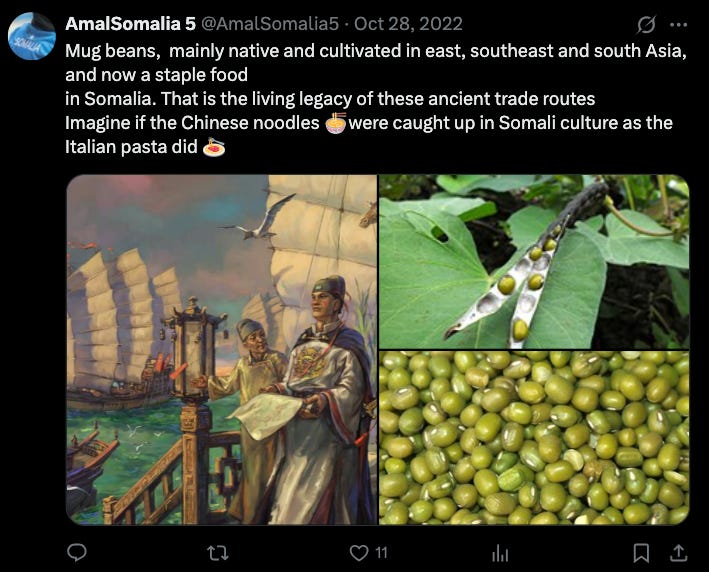
For much of the past 2000 years, the Central Realm, world’s top economic, military, cultural super power, was relatively stable, prosperous, and self satisfied, with a form of internal governance and foreign policy which prized above all the preservation of harmony and peace. During the last 1000+ years, China engaged in virtually zero expansionist wars.
Contrast with Europe at the time of global colonisation: emerging from 1000 years of constant warfare, Roman infrastructure laid waste, rampant diseases, peasants living without much hope under brutally oppressive feudal theocracy — all of which made European peoples accustomed to violence, excel at military matters, and thirst for new horizons where the oppressed poor can become oppressive kings (or at least that was the propaganda to get the peasants and prisoners to take the gruelling and dangerous journeys to the New World and do the dehumanising work of genocide, all to create new markets for the newly emergent bourgeoisie).
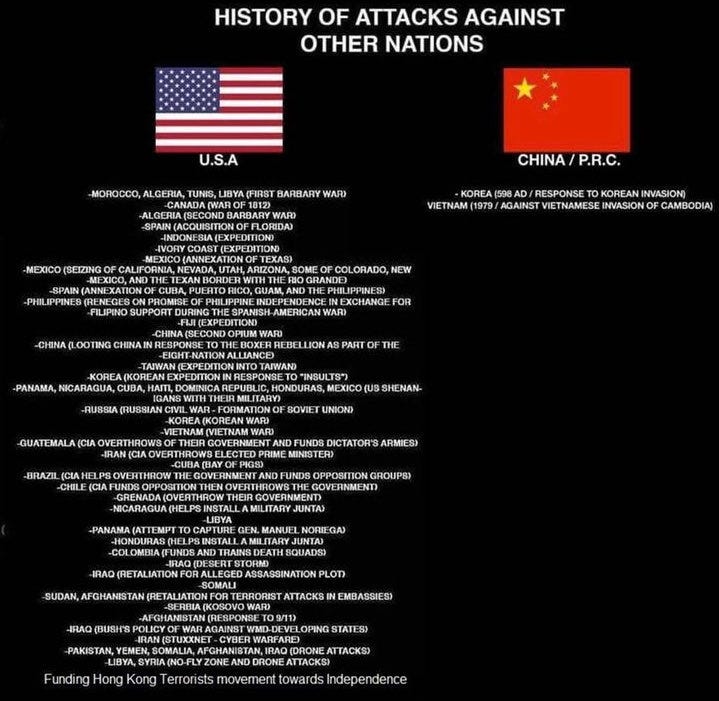
Seems obvious but it must be said: It isn’t due to any innate, unchanging qualities within the people that China tended to trade and Europe tended to conquer, but only different sets of socio-economic conditions and path of historical development. But at the same time, the real cultural, civilisational differences do objectively exist, and continues to shape geopolitics.
Class must be foregrounded, but to reduce the complex interplay of ideas and objective factors to *only* a straight forward, deterministic materialism, to only economic concerns, is to neglect entire dimensions of social dynamics, the dialectical part of dialectical materialism.
And this kind of reductive, one-dimensional thinking is itself an expression of a certain deeply seated civilisational character, shaped by the developmental path of the Western philosophical tradition, in many ways typified by the work of René Descartes. It is a perspective that tends toward a mechanistic and discontinuous conception of the world, where independent actors are motivated solely by short term self interest, producing a predilection for playing the game of zero sums, of “winner takes all”, rather than one of continuous reciprocity and mutual benefit.
As China continues to rise, and re-assumes its position at the center of world affairs after a brief aberrant period, let us not mistakenly make universal claims about “all empires”, “all governments”; make false equivalencies between socialist and capitalist states and between Western and Eastern civilisations; project the motivations, intentions, and modus operandi of the US and European colonial empires onto the People’s Republic of China.
China emerges from 2000 years of statecraft focused on the preservation of peace and building of mutually beneficial relationships, and very literally does not have the institutional genes for domination, colonisation, or imposing its cultural values, political system, and economic model on the rest of the world.
The socialist super power is embarked on a world-historic mission to re-balance global economy by developing under-developed regions, to democratise international power by displacing uni-polar hegemony, to build a New Silk Road connecting the world, to bring a permanent end of the historic imperialist era.
If we take a sober look at the 20th Century, how strong waves of international movements toward socialism in the 1930s, in the 1950s, were brutally crushed by imperialism, we see that there has been 1 single block on the road of human progress —— and that removal of this block can only mean global socialism, the planetary path towards Da Tong.
Internationalism
Any kind of exclusively unique Chinese disposition that is conducive to modern socialism is the wrong conclusion to draw from this essay. Lets remember that the outcome of the civil war which ended with communist victory was anything but certain, that it was a very close fight, and that China could have strayed away from its Daoist and left-Confucian roots to embrace Legalism and nationalism, and become an imperialist power.
And we must remember that while the same choice is open to all nations, every people on this planet comes from ancient egalitarian traditions with matricentrality, animism, and a deeply embedded sense of community with high levels of trust, empathy, and cohesion. For these are the evolved social traits, the inherited biological reality, of the Homo Sapien Sapiens species, which is only, to various degrees in different places, ruptured by the proprietary/patriarchal world historic counter-revolution of 6 to 10 thousand years ago (much more on this in separate essays).
Sure, different cultures in different regions are to different levels connected to or severed from their pre-proprietary/patriarchal roots. But no matter how buried, how cut-off, all peoples have the potential of remembering, drawing from, and restoring their own ancient traditions of sharing and cooperation, towards building home grown socialism with local, native cultural/civilisational Characteristics.

 Un séisme judiciaire ébranle le cœur de l’Union. L’arrestation de Federica Mogherini, figure emblématique de la diplomatie européenne et ancienne

Guillaume Staub préface la réédition des Idées royalistes de Charles Maurras
Les idées royalistes
5 euros
ISBN : 9782493750129
Titre : Les idées royalistes
Auteur : Charles Maurras
Préface : Guillaume Staub
Éditeur : D’ACTION FRANÇAISE (ÉDITIONS)
Nb Pages : 64
Présentation : Broché
« D’abord, écartons l’utopie. » Charles Maurras
Toute la sève de ce livret est contenue dans cette formule.
Et quelle utopie, quelle ile imaginaire gangrène notre pays depuis plus de deux siécles. Nulle autre que cette nation-contrat des jacobins. qui confond société et État, les fondant sur le principe abstrait de la volonté générale: que cette République, « une et indivisible ». qui ne reconnait aucun intermédiaire entre la nation et des individus isolés
les uns des autres
La conception maurracsienne de la nation, quant a elle, repose sur la reconnaissance d’un topos, d’une réalité concrète : une construction historique. enracinée, unkjue.
Chez Maurras, la nation ne peut exister sans les corps qui la composent : lamilles, provinces, villes… Les hommes y sont les par des corps intermédiaires, cercles concentriques nécescaires à toute cohésion véritable. Maurras rappelle ici l’impérieuse nécessité d’une conception federaliste et décentralisatrice de la nation.
Car la nature ayant horreur du vide, si vous supprimez les corps
mermediaires natures auines vendront sccuper eur place : paris politiques, coteries et autres groupes rarement au service de la nation.
Ce sera la mort de l’utopie – ou la nôtre.
Guillaume Staub
Commandez cet ouvrage sur notre boutique en ligne https://editionsdactionfrancaise.fr/
The post Les idées Royalistes de Charles Maurras first appeared on L'Action Française.

On s’est déjà interrogé ici même sur la nature du lien social, ce précieux ensemble de solidarités naturelles qui, à travers le temps historique des Cités, unit entre eux les hommes qui y vivent ensemble, dans la déférente mémoire de ceux qui y ont vécu et la pensée attentive de ceux qui y vivront à leur suite.
On sait la dynamique de ces solidarités, moteur irremplaçable de ce que la philosophie classique appelle le « bien commun », principe d’unité fondateur et dispensateur de l’ordre nécessaire à l’épanouissement humain ; et nous avons déjà observé que l’institution républicaine, par l’idéologie égalitariste et libertaire qui la fonde, les principes sociaux qu’elle promeut, les lois qu’elle édicte, les croyances qu’elle diffuse, les contraintes qu’elle impose, les modes de vie qu’elle insinue, a apporté un bouleversement radical, une véritable subversion de cet ordre où, désormais, dans un État sans sociétés intermédiaires, les relations de base les plus communes sont passées de la concorde à la confrontation ; aussi n’est-ce pas d’hier qu’on a pu commencer à se demander si la société française n’en était pas arrivée à un point de rupture annonciateur de son imminente désagrégation.
Ainsi, substitution à l’identité vécue des nations historiques, de mythes abstraits sans prise sur la réalité, désocialisation forcée, c’est-à-dire atomisation des individus, expliquent en totalité la généralisation de la violence et, plus grave encore, sa banalisation, au point qu’elle semble être devenue le mode de communication le plus courant entre les personnes ; qu’on en soit arrivé au fait, extrême mais non point isolé, que deux automobilistes attaquent à coups de couteau, l’un un piéton, l’autre un cycliste qui avaient simplement manifesté leur réprobation contre une conduite dangereuse ayant menacé leur sécurité, est révélateur de « l’ordre républicain » et fait comprendre la permanente nécessité du recours aux interventions policières et judiciaires.
Face à une si cataclysmique déliquescence, ne laissons jamais diluer ni nos identités, ni nos solidarités naturelles ; réveillons-les ou suscitons-les là où nous sommes en capacité d’agir. Il ne s’agit pas de survivre, mais de donner son sens véritable à la vie.
Philippe Champion
The post Humeur du temps first appeared on L'Action Française.
“… congressman Wilbur Mills, often called “the most powerful man in Washington,” was a married man from Arkansas. Unlike Clinton, he didn’t settle for Lewinsky or Trump. Sex and war is a permanent 69 in the American psyche…”
with gratitude to Linh Dinh at Postcards from the End.

(R): Washington DC, 7/27/17
Jewish Crusade! — Nov 28, 2025.
Besieged, Trump is momentarily saved by two West Virginians barely out of their teens. On duty in DC illegally since August, they were shot near Faragut West, the safest part of the capital. Just a block north is K Street, known for its lobbyists. Half a mile away is Mpire Gentlemen’s Club, DC’s classiest. Camelot, also on M Street, is long gone. I poked my head in there a few times. DC has always had the nation’s best strip bars, where everything is shown. Do you expect the most powerful and corrupt to stare at pasties? They have no patience for glimpses of bushes and gashes niggardly flashed every few minutes. They want everything yesterday.
When I first got to know DC around 1980, the sleazy 14th Street scene was still going strong. It’s not unlike NYC’s 42nd, best known to outsiders through Taxi Driver. Like M Street, 14th was also a short walk from the White House, the mayor’s office and, of course, K Street. Powerful lawyers and lobbyists needed dancing white flesh plus alcohol to relax a bit. Tentatively, I prowled 14th Street. Working at McDonald’s and just learning how to drink, I was too young, innocent and broke to know anything about the Silver Slipper on 13th Street, with its legendary Be Be Sweet, Gi Gi Lamour, Bubbles Seville and, of course, Fanne Foxe, “The Argentine Firecracker.” Caught with congressman Wilbur Mills right by the Jefferson Memorial in 1974, Foxe jumped into the water to save his reputation and her ass, so later became known as The Tidal Basin Bombshell. Sex and war is a permanent 69 in the American psyche.

Twenty-seven years older than Foxe, Mills was a married man from Arkansas. Unlike Clinton, he didn’t settle for Lewinsky or Trump. As drunk as Hegseth, Mills staggered onto the stage of Boston’s Pilgrim Theater as his Tidal Basin Bombshell was stripping. To the disappointment of all, Mills didn’t perform any Bangkok number. Just a month earlier, Mills had retained his seat with 60% of the votes. No gadfly, Mills served 19 terms [!!!] in congress and was often called “the most powerful man in Washington.”
What’s known is barely an icicle on the iceberg. DC has always been a cesspool of depravity. Two miles from Faragut West is the Georgetown Starbucks where 25-year-old Mary Mahoney was murdered. Though cops claimed robbery, not a dime of $10,000 sitting right there was taken. Just three days earlier, Newsweek announced a “former White House staffer,” believed to be Mahoney, was going to come out with stories of being sexually harassed by Bill Clinton.
Midway between Faragut West and Georgetown is Foggy Bottom. It’s a name both poetic and creepy. DC should really be called Foggy Bottoms. Counting presidents, senators, congressmen, military brass and an army of journalists, DC has more whores, each one certified kosher, than anywhere else on earth or in history.

Washington DC (L): 2/22/17 ; (R): 3/10/15
In mid-19th century, the capital’s best known whorehouse was run by one Mary Ann Hall. It had around 25 rooms with up to 17 “substitutes.” Young bodies substituted for aging wives. Some mulattos were always available. Then as now, rich, classy white men needed variety. On Maryland Avenue within sight of the US Capitol, this bawdy house lasted for +40 years!
DC’s power center is also its playground, so must be well protected. National Guards sent in by Trump are meant to be seen, it’s a PR stunt, for now, so they’re around the White House, Faragut West, the National Mall and Union Station, America’s best and safest train terminal. They’re not in ghettos since no tourists go there. To pass the time, uniformed soldiers pick up trash. Unlike ICE psychos, they’ve pretty much behaved very well, for they didn’t sign up to terrorize fellow citizens. Now that two of their own have been shot, at least some will behave like ICE assholes, so hope Trump, Hegseth and, above all, Stephen Miller.
As for the alleged shooter, 29-year-old Rahmanullah Lakanwal, he loved America enough to work for the CIA in his native Afghanistan. He believed Devious Samuel’s promises of freedom, democracy and the rule of law. Settled in Bellingham, Washington with a wife and five children, Lakanwal supposedly drove all the way to DC not to shoot Trump or any politician, but two National Guardsmen, though they can easily be found in nearby Portland, OR. Driving 10 hours daily, it would have taken Lakanwal four days just to reach DC, so he had plenty of time to rethink his rash decision, if that’s what it was.
Since the Jewish operation of 9/11, whites serving Jews have destroyed one Muslim nation after another, as well as themselves, by the way. The day before the DC incident, some whites even showed up in Dearborn, MI to taunt Arabs with a pig head on a spear. In another incident this month, the Koran was stomped on. Biden then Trump have enabled the ongoing genocide in Gaza. Hundreds of thousands have been murdered. With all these provocations, it’d be perfectly understandable for Muslims inside the US to retaliate. What Lakanwal supposedly did serves neither Muslims nor himself, however, but only Trump and MAGA.
Laura Loomer spoke for millions when she tweeted, “That’s it. I want a King.” MAGA morons have treated Trump like one all along. Paranoid or enraged soldiers will now flood into American cities.

(L): Saint Paul, 7/5/14 ; (R): Minneapolis, 7/4/14
Homeland Wrecking Globalists — Nov 29, 2025.
Pete Hegseth’s American Crusade begins with this quotation, “There is not room in the country for any fifty-fifty American, nor can there be but one loyalty—to the Stars and Stripes.—Theodore Roosevelt.” Immediately, I think of Jews First Jews, but not Hegseth, of course, or Trump. When you’ve gotten so many Christian children to rape and torture, you must be grateful to your Jewish benefactors.
Chapter five is “GLOBALISM: THE WORLD’S WORST CITIZENS.” Hegseth’s ghost writers and editors need some English tutorial from this fifty-fifty American, or you can just call me a 100% Vietnamese who speaks, with embarrassment and strains, some English. It should be, “GLOBALISTS: THE WORLD’S WORST CITIZENS.”
Since the most powerful globalists are Jews, as we all know, including dimwit Hegseth, this word must be sidestepped, but globalism is an ideology or mindset, so can’t be citizens of any kind. That makes as much sense as saying, “Capitalism: The World’s Worst Citizens,” or, “Judaism: The World’s Best People.”
In chapter 5 is “THE MOSQUES OF MINNESOTA.” There are mosques everywhere, and churches, too. What Hegseth is warning about, though, is his home state being swarmed by Muslim fanatics, “Instead of embracing Minnesota and American culture, most Somali Muslims have maintained a highly insular existence. As FOX News has reported—and as I saw for myself during multiple trips to Minneapolis for FOX & Friends—for Somali residents in large urban neighborhoods it’s possible to go about day-to-day business without ever interacting with a non-Somali.”
That was true of Poles, Irish, Italians and Jews, too, just a century ago. More recently, older Vietnamese, Cambodians, Laos and Hmongs, all refugees fleeing the aftermath of American “engagement” in their native lands, could function without much interaction with white Americans, but their children have only been too eager to become more white or Nordic than even Pete Hegseth.
Hegseth, “I walked the streets of ‘Little Mogadishu’ in Minneapolis for hours, encountering Somali Muslims, many of whom have lived in Minnesota for years and most of whom did not speak English. When I asked a local Somali teenager whether his Islamic school taught about American law and the US Constitution, he looked confused and said, ‘Actually, I have no idea about that one.’ When asked if it teaches Sharia law, he quickly said, ‘Yes, Sharia law.’”
Most white teens also have no idea about the US Constitution. They can name dozens of rappers and hundreds of athletes, few of whom are white. Who dominate the music industry, professional sports and the media, Hegseth? If a Somali teen is going to an Islamic school, of course he’s getting religious instructions, just as a white kid is half paying attention in Bible classes. With his earbud, he’s listening to Diddy diddled Justin Bieber or “Mutt” by Leon Thomas. On his phone is a cornucopia of coochies liberally dispensed by Jews. It’s an honored tradition and, by now, believed by billions to be heaven on earth. The Second, Third and Fourth Comings are here! Screw Magazine’s Al Goldstein, “The only reason that Jews are in pornography is that we think that Christ sucks. Catholicism sucks. We donʼt believe in authoritarianism.”
Hegseth’s arguments about mass immigration, woke culture and America’s social ills have been amplified by his child raping and cock sucking boss. Trump on 11/28/25, “This refugee burden is the leading cause of social dysfunction in America, something that did not exist after World War II (Failed schools, high crime, urban decay, overcrowded hospitals, housing shortages, and large deficits, etc.). As an example, hundreds of thousands of refugees from Somalia are completely taking over the once great State of Minnesota. Somalian gangs are roving the streets looking for ‘prey’ as our wonderful people stay locked in their apartments and houses hoping against hope that they will be left alone. The seriously retarded Governor of Minnesota, Tim Walz, does nothing, either through fear, incompetence, or both, while the worst ‘Congressman/woman’ in our Country, Ilhan Omar, always wrapped in her swaddling hijab, and who probably came into the U.S.A. illegally in that you are not allowed to marry your brother, does nothing but hatefully complain about our Country, its Constitution, and how ‘badly’ she is treated, when her place of origin is a decadent, backward, and crime ridden nation, which is essentially not even a country for lack of Government, Military, Police, schools, etc…”
It’s hard to believe the incontinent moron could write all that, but he signed off on it.
Let’s get real here. The most powerful nation on earth hasn’t been ruined by backward Hmongs, Somalis, Afghans, Iraqis, Syrians, Libyans, Venezuelans and Cubans, etc., but by those who wrecked their homelands, then let them into the USA to 1) exploit their labor and 2) weaken the dominant white culture and cause, to whatever degrees, social chaos.
Could all American leaders going back at least half a century be this stupid? Of course, not. Most eagerly, they kissed Jewish asses and covered their own. It’s a win, win. Trump, Hegseth, MAGA Mike, Biden, the Clintons and Obama, etc., are doing just fine.
With a minimal Jewish presence, Oriental nations are more coherent and intact, so better equipped to move forward. Though many have suffered from Jewish Marxism and American bombs, they’ve retained or regained their identities, religious beliefs, age old habits and even superstitions. What’s useful from the West, they’ve absorbed and even improved upon, and I’m not just talking about Japanese cameras and Korean fried chicken. White worship is still too prevalent, however.
Since Jesse has just arrived at Ông Bầu, let’s ask him about being terrorized by roving Somalis, “Yo Jesse, were you locked inside all the time to not be killed?”
Inexplicably, the tall Minnesotan just laughs. Living among savages must have driven him mad. Calming down, Jesse remembers, “The first time I saw a Somali must have been 1994. There was a woman waiting at a bus stop. She was dressed in traditional clothing. They all do. They hold tight to their traditions. You rarely see them in jeans. I was with a friend. He had a 32-ounce Big Gulp. He just threw the whole thing at her!”
“You’re kidding me!”
“He’s very proud of it for the rest of the day.”
“Not for a whole week?”
“No, us Minnesotans have a guilt complex because we’re Lutherans!”
“What about Somali gangs, man? Have they taken over Minneapolis?”
“Hell, no! That’t so funny. Sometimes they take over a street corner. It’s usually in their area. They don’t go into white neighborhoods. They don’t even do donuts. They just play loud music. When a very rare fight breaks out, it’s Somalis against Somalis. There were a couple of shootings, but in the Somali shopping malls. I’ve never met anyone who’s been robbed by a Somali.”
“Every immigrant community had gangs, man. Jewish ones were among the worst! You don’t hear about that.”
“The Somalis were attacked by blacks, so they had to defend themselves. Most of them lived in these two buildings called the Crack Stacks. It’s this hideous brutalist architecture.”
“Like all projects.”
“Now, their neighborhoods are normal. They’re clean. They mow their lawns. I lived in West Bloomington. There were Somalis all over. They went to Normandale Community College. Somali kids sat at the public library, studying. They worked at the blood donation place. Many of the women got into nursing. They’re entrepreneurial. If you go into their malls, you see hundreds of stores, not just restaurants but travel agencies, jewelers, perfume shops, computer repair shops, clothing stores, whatever. Because of their link to Italy, they import Italian shoes. I heard two old guys speak Italian to each other. Djibouti was colonized by France, so some of those Somalis speak French. They brought Europe to Minnesota!”
“That’s hilarious.”
“My biggest problem with Somalis is their littering. They leave bottles on basketball courts. My mom even loves them. I even had a Somali girlfriend.”
“For how long?”
“Two years.”
“So it wasn’t a hit and run,” I laughed. “I had this and this, so let’s try this!”
“No, no.”

It’s OK, then, for Jewjerked Uncle Sam to generate millions of refugees yearly, just don’t let them into the greatest white Christian nation ever, with its soldier occupied streets, tent cities and citizens shivering in storage units. Even legal immigrants should be rejected. As for seditious citizens like the Democrat Six, why shouldn’t they be executed, as urged by Trump? Law and order must be maintained.
Despite Somalis “completely taking over the once great state of Minnesota,” Trump is in charge, so don’t you worry. He’ll fix everything in two weeks. Lining up at food banks for expired cans of baked beans and Chef Boyardee, Americans just don’t realize how rich they are. If George Washington and Abraham Lincoln came back from the dead to run as president and vice president, they’d just get their wrinkled, sagging asses handed to them by the greatest American ever.
About Linh Dinh (@linhdinh):
‘Before being canceled, I was an anthologized poet and fairly prolific author, with my last book Postcards from the End of America. Now, I write about our increasingly sick world for a tiny audience on SubStack. Drifting overly much, I’m in Cambodia.
Born in Saigon, Vietnam in 1963, I lived mostly in the US from 1975 until 2018, but have returned to Vietnam. I’ve also lived in Italy, England and Germany. I’m the author of a non-fiction book, Postcards from the End of America (2017), a novel, Love Like Hate (2010), two books of stories, Fake House (2000) and Blood and Soap (2004), and six collections of poems, with a Collected Poems cancelled by Chax Press from external pressure. I’ve been anthologized in Best American Poetry 2000, 2004, 2007, Great American Prose Poems from Poe to the Present, Postmodern American Poetry: a Norton Anthology (vol. 2) and Flash Fiction International: Very Short Stories From Around the World, etc. I’m also editor of Night, Again: Contemporary Fiction from Vietnam (1996) and The Deluge: New Vietnamese Poetry (2013). My writing has been translated into Japanese, Italian, Spanish, French, Dutch, German, Portuguese, Korean, Arabic, Icelandic, Serbian and Finnish, and I’ve been invited to read in Tokyo, London, Cambridge, Brighton, Paris, Berlin, Leipzig, Halle, Reykjavik, Toronto, Singapore and all over the US. I’ve also published widely in Vietnamese.’
AHH: Please support this wonderful writer on his Substack! Thanks
“People robbed of their past seem to make the most fervent picture takers, at home and abroad. “As humans, we’re born naked and will leave with nothing,” yet another monk speaks.”
with gratitude to Linh Dinh at Postcards from the End.

Vung Tau, 11/12/25
Bill Gates, Primo Levi and Max Beckmann in Vietnam — Nov 13, 2025.
Just before 5AM, I got a call from Sơn, the NaLi Beach security guard. Come out, he urged. Sơn was sitting at a newly opened café just five yards from the disappeared Coffee Seven. I sat there once and hated it. Maybe tomorrow, I told him.
On the way to Ông Bầu, I noticed an old white guy in a “Good Morning Vietnam” T-shirt. On Thủ Khoa Huân, there’s a bar, Black Sheep, meant for them. Most Vietnamese don’t care to sit on high stools. In Macau six years ago, I hung out with an international bunch. At the bar, though, there were just me, a Chinese-American and an Indian who had spent decades in the States. We were the Americans. Others sat at tables.
Though other businesses on Thủ Khoa Huân have English names, they’re still designed for Vietnamese. Their names are telling. There’s Củi Warehouse, The Góc, Nomad Café and NBNB Bakery. It’s ultra cool to mix English with Vietnamese. A block away is Salt Water, where all those dressed up girls are snapping selfies.
In this week’s Tuổi Trẻ Cuối Tuần, a magazine aimed at the young and cosmopolitan, there’s an article by Willow Dương Liễu. Four of the seven global news pieces focus on the USA. “Salaam New York!” one screams. There’s also one on Bill Gates and AI. Sipping my second cappucino, I’m browsing this pretentious rag. (Kabu, as it’s called here, is found all over, and is even more ubiquitous in Cambodian cities.) On the back cover is some freak with a chest tattoo. He wears something like a crusader hood crossed with a keffiyeh. Words fail me.
Most curiously, there’s a translation of Primo Levi’s “Cena in Piedi.” First published in La Stampa on 1/22/77, it’s about a kangaroo at a dinner party. Of course, this springy beast feels very out-of-place until some chick comes by to stroke and caress him. Unfortunately, her hands never reach his tails and thigh. Is this kangaroo a Jew about to be sent to Auschwitz? It’s bad enough to be a minority anywhere.
To help Vietnamese readers understand, here’s the beginning of Levi’s accompanying bio, “Primo Levi (1919-1987), an Italian chemist and writer of Jewish ancestry, survived the genocidal Holocaust. He became famous through works about his camp experience.”
There’s also a reproduction of Max Beckmann’s Die Nacht, perhaps his most famous canvas. Unforgivably, it’s not attributed. Worse, this scene of sexual sadistic torture with a capped man who looks very much like Lenin is meant to suggest Nazi horrors. Painted in 1918-1919, Die Nacht depicts a Jew dominated Germany. The Weimar Republic lasted from late 1918 to 1933.

a shot of that Beckmann illustrating a Levi story
In the sports section, Mahathir Mohamad is quoted, “It’s a real shame that non Malaysians are representing Malaysia. Though we crave victories, we should do it correctly, without resorting to cheating or fraud.” Sounds like Hitler! At one hundred years old, Mohamad is just senile. Vietnam’s star striker is Nguyễn Xuân Sơn, a Brazilian who was born as Rafaelson Bezerra Fernandes. He’s even less kosher than Stephen Miller. At least Miller speaks English.
With another world war looming, consider this Levi passage, “Most of them weren’t monsters, idiotic lechers, or perverted dandies: they were functionaries of the State, more pedantic than brutal, effectively indifferent to the daily horror in which they lived, and which they appeared to get used to quickly, partly because, in agreeing to oversee the Lagers, they avoided being sent to ‘cover themselves with glory’ on the Russian front. In short, they weren’t elegant, stylized beasts but vulgar, cowardly little men.” (That’s from his “Movies and Swastikas,” as translated by Alessandra Bastagli and Francesco Bastagli.)
Levi is describing SS men who would rather terrorize helpless women, children and the old. Beats being maimed or killed at the frontline. ICE agents are exactly like that. All you vulgar, cowardly little men better sign up with ICE before you’re sent to a real war. There’s no higher calling than serving the most vulgar, littlest man ever.
On the way to Ông Bầu, some woman on a bicycle said, “Happy birthday, uncle!” so words got out. Before encoutering the West, Vietnamese paid no attention to birthdays, only deathdays, ngày dỗ. Even years after a relative’s death, this is solemnly remembered. In Stung Treng, Cambodia, I met a woman who would rush back to Vietnam each year for her parents’ deathdays.
I’m all for the primacy of deathdays. Its only drawback is you can’t celebrate yours with those closest to you, if you had any.
As a 12-year-old retard in 1976, I saw my first Beckmanns in New Orleans. In 2002, I caught his retrospective at Paris’ Centre Pompidou. His canvases aren’t just brutal but contemplative. They also employ age-old techniques like glazing. He’s a better draftsman than Otto Dix, and his colors are better tuned than Kirchner’s. The latter was aiming for something else. It was a frightful, hysterical era, and unspeakably tragic. Somehow, it got even worse.

Vung Tau, 11/12/25
Give Us This Day Our Daily BeerLao! — Nov 13, 2025.
About two decades ago, Americans were introduced to customer service agents from India. Nearly all US companies adopted this cost saving solution. Calling your bank over some minor issue, you’d be greeted by “Rachel” or “Chase,” but with a distinctly Mumbai or Chennai accent. After ten minutes or so of frustration, many people simply gave up.
Now, there’s an AI anything to not help you out. They include doctors, psychiatrists, teachers, tutors and financial advisors. There must be AI priests. God, it’s proven, was the first Artificial Intelligence. Jesus being nailed to the cross was the first Deep Fake. It was a huge hit.
Living outside the US since 2018, I still have a US bank account. This is necessary for many practical reasons. Two days ago, I had to call Wells Fargo. Since its numbers for Vietnam didn’t work, I dialed the USA. As a cellphone adverse person, this was rather trying, but I managed to reach some guy who sounded reasonable enough. It was still a disaster.
Reached this morning to grade Wells Fargo’s service, I gave it a zero star out of ten, with this considered explanation:
Terrible customer service. Staying overseas, I was locked out of my account due to a wrong password entered. When I called the US to get this resolved, it couldn’t be done! The man online said his name was “Varney,” but would not give his last name. I doubt that’s his real name. He also gave me this as the number for my case, “k101192315.” He probably just made it up. That’s how much faith I have in Wells Fargo.
Soon as I get back to the States, I will cancel my account and switch to a more professional bank. I remember Wells Fargo being heavily fined a while back for fraud. Should have switched my bank then.
I actually signed up for Wachovia because it was in my Philly neighborhood. Wells Fargo bought it when it went bankrupt.
Before leaving for Kathmandu two weeks ago, I used Xoom, a PayPal linked service, to withdraw $1,400 from Wells Fargo. With a fee of $12.99, I paid $1,412.99. Though I had no problem receiving my money from a Vietnamese bank, I was alerted while in Kathmandu that Xoom never got $1,412.99 from Wells Fargo. Contacting PayPal immediately, I was told by an AI that everything was fine, but it wasn’t. Yesterday, I called Xoom to straighten this out, only to be told I needed to contact Wells Fargo. I’m not calling another Varney, man. Fuck it.
Given up on Xoom, I used Western Union to send money to myself. At Agribank on Nam Kỳ Khởi Nghĩa, the teller refused this transaction, however. Though I had my passport, Vietnam visa and Western Union’s code number, she said “LINH DINH” is not “LINH HOANG DINH,” as stated in my passport. Though everyone there could see she’s being preposterous, I had to walk away without losing my cool.
AI, Varneys and ditzy bank tellers are in our future. At least I’m not living in a land lorded over by moronic tyrants like Trump, Hegseth and Bessent.
At Ông Bầu, my BeerLao bottle from yesterday is displayed on a shelf. If only I could drink one or two a day for the rest of my life!
At the licker store yesterday, there was a poster for Budweiser. Buy many cans to possibly win one of ten grand prizes to next year’s World Cup. Nothing is said about securing a visa from Trump’s regime. It’s a time consuming and exasperating process for citizens of many countries. Once in, there’s no guarantee you won’t be harassed or even arrested by Trump’s goons. Knowing this, foreigners are increasingly shunning the USA. Worse than isolated, it’s becoming a pariah nation.
Bud is also dangling 200 consolation prizes. Free Bud for a year, it promises or, rather, threatens.
Eating much more sanely and walking barefoot on hard ground as much as possible have undoubtedly improved my liver and kidney. I don’t need doctors, real or AI, to tell me this. My body, especially my skin, says so. Having mostly abstained from alcohol over two years, I’m also ready to ease, ever so gently, back into BeerLao! Give us this day our daily BeerLao should be a universal prayer.

taken by Troy Skaggs (L): Marion, Indiana on 11/6/25 ; (R): Kokomo, Indiana on 11/13/25
Checking In With Troy Skaggs in Kokomo, Indiana — Nov 13, 2025.
In your group house, how many people are relying on government programs to get by? How many are working? In what jobs, for how much an hour?
-I’ve been in Kokomo since the beginning of August. After losing my VA pension while in South Bend, I couldn’t afford the room I was renting. I was in Kokomo last summer before returning to Michiana for tomato season and the winter. It’s a smaller, quieter place. No rainy day saver, I stayed a month in my folks’ basement before heading here.
I spent just over a month at the Kokomo Rescue Mission. It’s an evangelical Christian organization. I’ve been in a few others so knew what I was getting into. The Protestant work ethic goes hand in hand with salvation from sin. Six day work weeks in the kitchen and their warehouse weren’t conducive to seeking outside employment and services, but that’s how it works. I was there when Charlie Kirk was dubiously assassinated. The response at the Mission was to be expected. Prayers for Kirk, his family and this fallen life on Earth. A persecuted believers vs. the sick, sick world kind of vibe. It was hard to swallow. I always appreciate a warm meal, bunk and shower. They provided and I’m grateful for that.
I left the Mission on good terms with the understanding that the work schedule was just too much. I was accepted into the CAM (Coordinated Assistance Ministries) Center, a smaller men’s shelter. No prayers for Chuck or excessive work requirements, just guys playing video games and bullshitting all hours of the night. Patrick, a dorm mate, was a piece of work. He’d survived a drunken car/tree collision and had completed three back to back in-patient rehabs. When he asked if I was interested in smoking cocaine in the laundry room, his espoused philosophy of “radical acceptance” took on a new light. Birds of a feather flock together. I declined. Maybe that’s why he called me an asshole and a pussy on the day I moved out. Bill, in the bunk below me, just chuckled, “Hey, it’s Kokomo, man.” That made me smile.
I haven’t been able to attend to my health so the babesiosis I’d partially recovered from has returned. It’s a bitch and I’m running ragged.
I left the CAM center after signing a lease at Jackson Street Commons, a subsidized complex for military veterans. I was hesitant at first since requires some form of disability. Though I’ve had my go rounds with addiction, mental illness, physical sickness and existential uncertainty, I still like to consider myself an independent operator. Backing into the parking space Jackson Street Commons, my power steering blew.
Most of our residents are subsidized and aren’t working. Kokomo is doing better than some Indiana places thanks to Chrysler, but it’s still struggling. Most available jobs are in the service sector. That’s always a concern. We all know healthy economies don’t run on services alone. I’ve seen similar poverty in South Bend, but so far Kokomo’s a safer choice. Buttoned down factory towns can make for freak undercurrents. My buddy Steve calls it the 50-year-old wigger on a BMX phenomenon. I saw a dude a couple of blocks from here on a riding mower towing a trailer with two refrigerators and his wife on board. I always have to remember that there but for the grace of God go I. For all of my religious misgivings, I still believe that we’re all on Mr. Sky’s watch. It helps to keep that in mind. Part of me wants nothing more than to be a BMX dude. At this point, why not?
I’m in a one bedroom apartment on the third floor. The Veterans Service Officer got my pension reinstated, so I pay just over $400 a month, 30% of my pension. It’s a sliding scale, so no section eight. The unit is handicap accessible. From another resident, I learnt that at least one of my room’s previous occupants left in a body bag.
JSC houses a variety of veterans with a range of mental and physical issues. Of course, there have been many overdoses. Brandon next door has been here nearly a decade. He told me about two fatal OD’s within two weeks. That’s just the circle of life around here. I have some survivor’s guilt considering how I was able get housing in Kokomo within three months. Some of the guys at the Mission or CAM have been stuck there for months, even years.
I’m extremely fortunate. It’s a weird scene here, but it’s a scene. Time will tell. Just a few yards from my window is the flagpole. I can see the Stars and Bars, plus the POW/MIA flag right below it. A ways beyond is the Martin Luther King Memorial. I can just see the back of Doctor King’s concrete head.

taken by Troy Skaggs in Kokomo, Indiana on 11/13/25
The poor are often exhausted from overwork and worries. Still, they must socialize, so is there a bar nearby where you and those you know hang out? How much does it cost to drink there for a couple hours? In Kensington, a Philly neighborhood, I once sat next to an old woman who kept lifting an empty beer mug to her mouth. She couldn’t afford to buy another one. She did that regularly at Jack’s.
-I can’t really tell you about the bar scene here. I’m within walking distance of Tom Thumb Tavern, Elbow Room, The Hoosier Bar and The Handle Bar. I have seen a lot of activity at the Legion a few blocks away. I’m guessing these places are cheaper than in most American cities. Sadly, that isn’t saying much if alcohol prices have increased along with groceries and everything else. The Coterie, a downtown hipster place, does host some decent live music. On a summer night, you can sit anywhere downtown and listen to the bands. Most of these places are your basic, shabby working-class establishments. With plenty of bliss, torment and everything in between under the same roof, bars can be fascinating. I do like seeing folks coming and going. Due to my alcoholic history and present circumstances, I hesitate to enter bars by myself. I can have a pint or two of Guinness once or twice a year with a close friend who was born in Ireland, but that’s about the extent of it lately. My worst drinking days ended twelve years ago. I spent a lot of time in bars in my twenties. Some good times, but by the end of it all, I’d been to jail and accidentally set my car on fire outside Corby’s in South Bend. This was prior to the Army. I did a few rounds of bar hopping in Colorado Springs, but by then, I was a pretty solitary drinker.
I’m still in contact with Michelle from Philly. We got pretty close. She had some good bar stories. Miserable but tough, she’s still at the rooming house in South Bend. I think you have to be in places like Philadelphia, probably more so than the rural Midwest. Reading about the woman from Kensington says it all. It’s sad, but sometimes an empty mug is better than being alone.

taken by Troy Skaggs in Kokomo, Indiana on 11/13/25; (R): graffiti says “BOBBY KNIGHT IS A HONKY”
It’s too depressing to drink alone. It should be social, with much talking and laughing. I know of a Vietnamese nail salon guy who would sit at his kitchen table to down many Buds, fall asleep and, often enough, piss in his pants. That’s his social life, pretty much, in East St. Louis. It’s too dangerous to walk outside. Finally, is Kokomo still solidly MAGA? Is no one doubting the greatest American ever and infallible one?
-The kind of despair and isolation you mention is something I still struggle with daily. I’ve made inroads, but it’s still a problem. Budweiser was my beer of choice at the end. Much like your East St. Louis acquaintance, I’d sit in front of the TV and drink myself into a stupor. Pissing myself became a common occurrence. I was pushing the boundaries of late stage alcoholism. Towards the end of 2013, things got pretty hairy after I got discharged from the Army and booted from the oil fields for excessive drinking. Not being unable to walk safely in your own neighborhood is one of the worst aspects of living in today’s USA. I see it everywhere, in myself and others. It’s a feeling of defeat. I try to fight it because it plays into the hysteria and isolation playbook.
Again, I’m pretty lucky. There are places and situations where getting out is easier said than done. Marijuana is my surrogate crutch right now. Like many Americans, I find it difficult to function without a buzz. It is what it is. That’s the problem. Alternatives exist, but immediate gratification is the easiest option for the worn and overworked. It’s the option that many choose. A vicious cycle.
I’d place Kokomo in the MAGA camp by a margin. In the Mission’s defense, they didn’t push politics too hard besides their veneration of St. Kirk. Since Evangelicals are captured by the MAGA cult, they didn’t need to. One guy on an adjacent bunk was always on his phone talking to his girlfriend about Trump and how he needs to reinstate the Insurrection Act, to take care of business. The TV at the CAM center was usually tuned to FOX News. Vince, one of the guys there, calls it trailer park conservatism. A Stockholm syndrome of sorts. I think the desire for political salvation crosses the political divide. Like the controlled asset stripping of this country, it’s a bi-partisan affair disguised as politics.
We’re in Team Red phase. This freaking joke is on all of us. I remember reading your take on Trump in 2016. You got it right, Linh. Most didn’t. I got fooled the first time around myself. I’ve never voted. I can’t t endorse more war, more debt and less freedom each time around. Still, I had my hopes. Ten years later, it’s easier to see.
What really saddens me is that, as deluded and unhinged as MAGA has become, it’s an obvious reaction to the rhetorical and physical abuse that conservatives and traditional values took at the hands of the Woke crowd. It was nasty. I’d be pissed, too, and that’s why anger and fear are such wonderful tools for political control.
Controlled we are and controlled we will be, I’m afraid. Woke, MAGA, same monster. I’ve tried to point it out, but for my own sanity, I now leave it alone. When we outsource our minds, bodies and communities to transnational interests, why be surprised at the state of things?
Good intentions and bad habits are a toxic combo. I’m a walking example. I’m a fan of Sade, the smooth jazz chanteuse, not the perverted Frenchman, yet a smooth operator I am not. Time to smoke a bowl and think about it all.

taken by Troy Skaggs in Kokomo, Indiana on 11/13/25
Fearless — Nov 14, 2025.
Having told Sơn I would see him at his new spot, I went there just after 4AM to find it still closed. Across the street was one just opening up, so I’m there. It’s an entirely new universe. Tables and chairs are placed on the dark sidewalk. I’ve claimed someone’s regular seat, I’m sure. The guy sharing my tiny round table is listening to a Buddhist monk. Instructions on how to live is interspersed by a woman singing.
Tired of one monk, he switches to another. “Don’t be greedy, don’t steal, don’t lend money at exorbitant interest.” Then, “Get along with everybody, respect all religions.” Another woman, much older, sings.
The coffee here is not quite hot, and there are no frisky dogs. Coming from Bến Đình, Sơn on his motorbike will pass by, so should see me. At 4:22AM, that café is still closed. Now, my table mate is listening to a didactic woman. Religious or ethical instructions are his drug of choice. Five other men, all regulars and older than 50, must also be edified, if not enlightened. Nirvana is just a band whose lead singer shot himself in the head. The guy at the next table has suffered a stroke, it seems, for he has one of those three pronged canes I never saw half a century ago.
No one is talking.
This café’s owner is a squat woman with a dull face. She almost grunted when I showed up.
“As humans, we’re born naked and will leave with nothing,” yet another monk speaks.
At 4:35, I see light over there, so will head over. The owner’s daughter married an older Aussie. Let’s hear what she has to say.
That didn’t last long. After five minutes of sitting with Sơn plus another woman, Quý, we decided to vacate that joint. Its coffee wasn’t just bad, but dubious, and they refused to turn off the music. I’m at my third café, Anh Trần. Each cup here, very good, is served with a tin filter, and the tea is also fine. Across the street is a hotel, Hoàng Yến, built in the 70’s. Such buildings recall the Vũng Tàu of my childhood.

Vung Tau, 11/14/25
A white haired guy just praised a younger woman’s buttocks. “That’s like two chunks of silicone!”
“My ass is money!” she laughed back. Her cushy tushy looks real. Clearly, they know each other well enough.
A boastful man with a Hanoi accent, he’s lived in Germany and England, he tells me. He’s been all over. One hundred and seventy five countries, to be exact.
“How do you manage that?! There’s not enough time. Plus, there’s the paperwork.” A Vietnamese passport doesn’t open many doors.
Smirking, he adds, “I have two sons in the US, two in London and one in Australia. I see them whenever I want.”
“How can you afford to travel so much?”
“People give me money.”
“Who?”
“People.”
“What’s your business?”
“None. I have never worked. All my life, I’ve just enjoyed myself, and gotten into fights.”
Laughing, I turn to another man, “And he hasn’t been killed!”
“Now, I’ve hung up my sword. If I get pissed off, though, I will still fight.”
“Have you been jailed?”
“No.”
“You’re very lucky.”
“When I was 15, I survived bombs. My shelter was blown to bits. Other kids were killed. Chunks of flesh were dug out with bare hands. I survived.”
“In 1970?”
“72.” Executed with B-52’s, it’s Operation Linebacker. “Those bombs taught me to be fearless.”
Even now, not one out of a hundred Vietnamese knows what a linebacker is. The best Vietnamese-American athlete ever is Dat Nguyen, a middle linebacker for Texas A&M and Dallas Cowboys.
“You were lucky. You were spared.”
“I do whatever I want.”
“I just look.”
“I see your laptop. You’re filled with words, with knowledge. You think.”
“I just look. You do!”
“Everyone is different.” Turning to two other men, he remarks, “Look at his forehead. Flies would have trouble landing there!”
“I’ve done nothing. I only have my brain. The rest is paralyzed.” This drew laughs from the owner. She’s in her mid 60’s.
“Nearing that hole, I’ve slowed down,” continues the braggadocious. “Each man has three holes he must deal with. The hole from which he was born, his wife’s hole then the hole he’s tossed into.”
“Many people don’t even get that middle hole.”
“We’re not talking about freakish exceptions, but generally.”
Coming to Anh Trần, I didn’t expect any of this, obviously. Sơn and Quý left a while back. Since it opens at 4AM, this wouldn’t be a bad place to sit. Braggadocious has asked nothing about me. It’s fine.
He speaks Mandarin, Cantonese and English comfortably, he claims. He can do whatever and go anywhere. Vietnamese gangsters across Europe are terrified of him. Even top cops don’t dare to mess with Braggadocious. Saigon whores can’t empty his pockets.
“They’re like sharks and alligators,” I say.
“They can’t bite me. I bite them!”
Though living with any braggart must be hell, there are those who adore bombastic boasters. So sad this constant need to prove you’re not worthless.
Shut up already about all your awards, prizes, ribbons, medals, books published, contests won, pussies or dicks “conquered,” world records, championships, countries visited, weird dishes eaten or famous hands shaken. Every winner finishes last! How’s that toothache or cancer treating you? Just be thankful you weren’t slapped around, nuked or neutered decades earlier! Everyone or his grandma could have been a contender! You’re making me sick! There’s no weight division too low for you.
At 8:20AM, I finish this at Ông Bầu. Soon, I must go to Saigon to get a five-year visa, meant for overseas Vietnamese. There’s an agency that can arrange this, I think. With that, I will only need to leave every six months, instead of three.
Interviewing Troy Skaggs about small town Indiana made me want to go there, but that would mean flying into O’Hare, a state away. There are so many steps and miles before I can sit inside Handle Bar or Tom Thumb. Close enough to that hole, I should just take it easy.
There’s a desolation peculiar to the USA. It’s especially striking in rural areas and suburbs. Car culture isn’t solely responsible. No other population is as leery of mingling. More than macho DeKooning, Kline or Pollock, Edward Hopper is the most representative American artist, for he’s best at isolating this desolation. In movies and music videos, the opposite appears. That’s the American con.

Edward Hopper art
As for being fearless, I must mention Mo, Cà Phê Cà Pháo’s kitten. Yesterday, I saw him for the first time since returning from Kathmandu. There he was, sleeping on a cushioned chair.
“I’ve been away nearly a month, but he hasn’t gotten any bigger. He’s shrunk!”
This provoked much laughter, for it was a different cat. For a week, Mo disappeared. Whoever found him had replaced his collar, before Mo ran off again. Thanks to an online notice, he’s finally recovered on Nam Kỳ Khởi Nghĩa, a good mile away.
Back home, he didn’t even open his eyes when touched. Strange voices couldn’t disturb his sleep. In his brief life, he’s been lost twice, hit by a motorbike and gotten so sick, he had to spend a week at the vet. Even when half conscious, he fears nothing.
“Amazing,” I marveled. “It’s as if nothing happened.”
Like a proud parent, his owner smiled.
Such quiet assurance Braggadocious has never known. Lowered into that hole, he’ll still be terrified of ridicule. With rotting ears, he’ll hear mocking laughter. At least he doesn’t need to print his name on every piece of clothing, building or plate.
The weakest men must screw the smallest bodies. Virginal, they can’t compare him to any other. Even then, he’s still terrified.

(L): Kōji Yakusho in Wim Wenders’ Perfect Days ; (R): Hiroshi Sugimoto’s “U. A. Play House, New York,” 1978
Naked and Barefoot — Nov 18, 2025.
Three mornings at Anh Trần were enough. The Hanoian braggadocious wasn’t just tiresome but menacing. Bombastic boasters are often like that. People who admire them are like squirming worms, not necessarily with red hats. Though I have a high tolerance for all types, I must focus on my thoughts and writing. This morning, then, I began typing before 4AM while sitting outside Ông Bầu in the dark. From the house next door, a woman could be heard coughing several times.
Talking about Perfect Days, I forgot to mention Hirayama’s habit of never picking up his watch when leaving his flat. He only takes his keys and coins. Hirayama doesn’t just know exactly what he must do with his day, but how long each task should take. Neither impatient nor frantic, he’s serenely focused.
Eating lunch on the same park bench each day, Hirayama always takes photos of swaying leaves above him. Since it’s the same tree, Niko, his niece, asks, “Is that tree your friend?”
Though surprised by this question, Hirayama has to admit, “Yes, this is my tree friend.”
Hundreds of these leaf photos are kept in tin boxes. Those that don’t turn out well are thrown away. His film camera, an Olympus Stylus, is not just amateurish but old fashioned. It has no screen. Held so low, Hirayama can’t even look through its viewfinder. Only after each roll is developed does he know how many keepers there are.
Though Hirayama is admired for his zen like composure, there’s something neurotic about his picture taking, no? He takes hundreds of photos to not really look at them. Worse, he must document his enjoyment of komoberi. Defined at the end of the film as “the shimmering of light and shadows that is created by leaves swaying in the wind. It only exists once, at that moment.” All too human, Hirayama must capture and solidify such fleeting phenomena.
Like most of us, Hirayama is radically alone. Sure, he has a few friendly acquaintances at Asakusa Yakisoba Fukuchan, his noodle shop, and Beni no Akari Novu, an atmospheric old school bar whose owner can sing so soulfully, but he sleeps alone and has no deep conversations with anyone. Unable to confide his pains, fears and infinite sadness, Hirayama must stay calm. His most intimate and steadfast friend is a rustling tree.
Note that Hirayama always buys the same coffee drink from a vending machine just ouside his door. Why doesn’t he stock up on a bunch, thus save a few pennies? Always waking up alone, Hirayama needs this machine to give him, without fail, some sweetness before he’s thrust, again, towards an infinity of shitters. It’s also the only neighbor he has any meaningful intercourse with. We’re not introduced to any other.

(L): Hiroshi Sugimoto seascape ; (R): sketch by Hà Quang Đại
It’s no accident Wenders made this film in Tokyo. At the end of WWII, its destruction by the U.S. Air Force was greater than in Nagasaki and roughly equal to what happened in Hiroshima. Much of what America failed to raze, the Japanese did, in their rush towards progress and economic recovery. Even Donald Richie, who loved Japan deeply and spent 65 years there, had to admit Tokyo was “unusually ugly.” This is because much of its past is gone.
Regarding the past, photography and the Japanese, Susan Sontag has this to say, “People robbed of their past seem to make the most fervent picture takers, at home and abroad. Everyone who lives in an industrialized society is obliged gradually to give up the past, but in certain countries, such as the United States and Japan, the break with the past has been particularly traumatic.” Bombers and bombed share this unspeakable loss.
Robbed of family and community, Hirayama can only cling to images no one, not even him, cares to look at much, plus songs he can’t fully understand. Hirayama tearing up over Nina Simone is mostly fiction. Only you and I cry for real.
Before I slink off somewhere to bawl, wail and gnash my remaining teeth, I must point out Hirayama’s appreciation for tiny shifts in the mundane is very Japanese. Check out Hiroshi Sugimoto’s photos of oceans across the globe, for example, or his images of abandoned theaters. In these gorgeous temples to mass hallucinations, the big screens are still lit up, but nothing is shown. We’ve seen it all so many times, we see nothing.
Wenders’ inclusion of bathhouse scenes evokes Japan’s disappearing past. It’s striking, and exotic, to see naked men sitting on low stools to soap and wash, then soak together in a hot pool. Relaxing in a common room, Hirayama is even seen fanning a dozing old man, a beautiful touch. Most foreigners may not realize these bathhouses were, not even a century ago, unisex.
Consider this 1927 passage by Akugatawa, “He had previously been quite unperturbed about undressing in Kōno’s presence when he entered the bath located next to the kitchen. Recently, however, he had not allowed himself even once to appear to her in such a state. He was now undoubtedly ashamed of his body, which resembled that of a plucked rooster.” A pioneer writer during an unsettling era, Akugatawa killed himself just a year later.
Such inclusion and exposure are gone. Contemporary men must be screened off from each other, if not masked. His isolation ever increases. Listening to cassettes and reading complicated books in silence, Hirayama is a dinosaur, if not freak.
Sitting in Ông Bầu, I’m feet away from Mr. Đại, painting from life. He’s inserting me, though, walking barefoot past the altar to the Goddess by the banyan tree. While painting, he’s singing a Phạm Duy song from 1971. At age 50, that great song writer, a poet, really, recalled a girl he fell in love with as a teenager. Like so much else, those sweet, gentle sentiments are lost.

Vung Tau (L): 11/24/25 ; (R): 11/22/25
Westminster, Vietnam To Begin With — Nov 25, 2025.
This morning, I woke up Hùng around 5AM to get his phone number. He was sleeping in his cyclo cab, of course. “I have a Westerner who will probably hire you. He’ll call you today or tomorrow.” Groggy, Hùng looked older than his age. He’s a most gentle man, or perhaps just thoroughly defeated. Before something went terribly wrong internally, Hùng was a falling down drunk. He’ll die without ever seeing his parents, siblings or hometown of Da Lat again.
“How’s business?”
“Bad.”
“Yet you won’t make that sign!” I had urged Hùng to clearly list his price for ½ an hour and an hour. “You’re so stubborn!”
I then bought two toothbrushes from a Circle K. Since it was so early, I didn’t feel too self-conscious about walking in barefoot. With Ông Bầu not open for an hour, I decided to go to Mrs. Hạnh. She’s the one married to an impotent American for six years.
Riding past me was a woman in cycling tights and listening to a Buddhist chant on her Bluetooth. Nam mô a di đà phật, she had to hear over and over. The idea of Buddhist chanting is to empty your mind of bullshit, I think, but this chick has turned it into bicycling muzak. On that street is an ex drug addict who always sits alone before dawn to listen to Eminem. People who can’t stand silence are lost to themselves and, thus, understanding of anything, from the most trivial upward.
Since Mrs. Hạnh and her husband were still setting up, I headed to Front Beach, where hundreds of people were exercising or jogging. I sat by two young women who chattered, giggled and laughed as they loosened their joints and got their blood flowing. Doing a forward thrust, they joked about diving onto the jagged rocks below. Lights flickered along the shoreline. Some people rubbed their belly in a circular motion as they walked quickly. I used a fingernail to groove into my flesh around my ankles and soles.
Finally sitting down at Mrs. Hạnh’s, I asked if she enjoyed her eight-day Singapore vacation so many years ago.
“Of course! I also have dozens of relatives overseas.” In Bolsa and Canada. Bolsa is a Vietnamese area in Westminster, CA. Its mayor is Chi Charlie Nguyen. All three council members are Vietnamese-Americans.
Whatever happened to the annexation of Greenland and Canada becoming the 51st state? I, for one, think Westminster and Santa Ana must be ceded to Vietnam immediately, with an additional city added yearly until at least a third of California belongs to the Socialist Republic of Vietnam. Its residents of all races will enjoy more freedom, including economic, than under President Trump, J.D. Vance or Gavin Newsom, guaranteed.
Twice, I’ve seen a young woman helping out at Mrs. Hạnh’s. She’s not her daughter but a 34-year-old homeless woman who sleeps nightly at Trưng Sisters Park. Trưng Sisters were warriors who fought against the Chinese two thousand years ago. Think Boudica times two.
As a girl, she was taken in by a noodle soup seller at Old Market, now demolished. As a pretty young woman, she started sleeping with Westerners, so her adoptive father kicked her out. He still brings her food, and she’s paid nearly $2 daily by Mrs. Hạnh, who also feeds her. It’s charity, more or less, since Mrs. Hạnh and her husband can do everything themselves.
“Where’s your puppy?”
“He’s big!” her husband answered. “He’s at home.”
“Why don’t you bring him here?”
“He causes too much trouble,” he smiled.
There was a tiny kitten in the grass. I picked him up and caressed the beast. He started purring. When I put him down, this cat rubbed his head against my foot.
“You know,” I said to Mrs. Hạnh, “a woman sleeping alone in a park in the US would be raped in no time. Homeless people there often cluster together for protection. A woman like that cannot sleep alone outside.”
“I wish I could sleep alone,” Mrs. Hạnh joked as her husband stood by her side.
I laughed hardest. He only smiled.
Now at Ông Bầu, I just ordered a second cappuccino. Mr. Đại is painting a nude from some photo he got off the internet. It’s totally pointless, but whatever. Wouldn’t some aging whore, at least, be willing to pose for him for phở money? To be exposed and stared at for an hour might be too much.
Checking my email, I see one from Max, whom I met in Albania. In his rented car, we went to Montenegro. On his first visit to Vietnam, Max is in Da Nang. I’m pretty sure Max is Syrian. He spends most of his time in London. Go to Hội An and Huế, I just told Max. Even a side trip into Laos would be fantastic. If you decide to come down here, I’ll show you around.
Near death, I have less energy to take photos, but yesterday, I did catch two lovelies outside The Góc. One, with her butt cheeks just peeking out, was taking photos of her friend in a mini skirt. Nothing exists unless it’s photographed.
Maybe 15 years ago, a woman told me this joke in Philly, “What looks like shit and feels great?”
“I don’t know,” I replied.
“A pussy!”
Now, we must ask, What looks great and feels like shit?
Come on, man, give me the punchline!
About Linh Dinh (@linhdinh):
‘Before being canceled, I was an anthologized poet and fairly prolific author, with my last book Postcards from the End of America. Now, I write about our increasingly sick world for a tiny audience on SubStack. Drifting overly much, I’m in Cambodia.
Born in Saigon, Vietnam in 1963, I lived mostly in the US from 1975 until 2018, but have returned to Vietnam. I’ve also lived in Italy, England and Germany. I’m the author of a non-fiction book, Postcards from the End of America (2017), a novel, Love Like Hate (2010), two books of stories, Fake House (2000) and Blood and Soap (2004), and six collections of poems, with a Collected Poems cancelled by Chax Press from external pressure. I’ve been anthologized in Best American Poetry 2000, 2004, 2007, Great American Prose Poems from Poe to the Present, Postmodern American Poetry: a Norton Anthology (vol. 2) and Flash Fiction International: Very Short Stories From Around the World, etc. I’m also editor of Night, Again: Contemporary Fiction from Vietnam (1996) and The Deluge: New Vietnamese Poetry (2013). My writing has been translated into Japanese, Italian, Spanish, French, Dutch, German, Portuguese, Korean, Arabic, Icelandic, Serbian and Finnish, and I’ve been invited to read in Tokyo, London, Cambridge, Brighton, Paris, Berlin, Leipzig, Halle, Reykjavik, Toronto, Singapore and all over the US. I’ve also published widely in Vietnamese.’
AHH: Please support this wonderful writer on his Substack! Thanks
President of Russia Vladimir Putin: Good afternoon. I am at your disposal.
First, I would like to express our gratitude to the leadership of Kyrgyzstan for organising this event and for the past year when Kyrgyzstan chaired the CSTO and hosted various events, which has certainly helped strengthen the organisation.
I believe that in the current turbulent situation it is a major factor of stability in our common space. This is important for Russia and very important for many CSTO countries.
We have coordinated everything without much difficulty, that is, all proposals advanced by the Secretariat. Everything we planned to sign has been signed. There were hardly any differences in any of the spheres we discussed. Everyone knows that it is necessary to work more closely together in the current situation. We do not threaten anyone, but we must be ready to respond to any actions that could be aggressive towards our countries.
There are many other spheres we are working in, and we will probably talk about this now. We have done good practical work in all of these vital spheres.
Overall, we can say, first, that we have achieved the desired result. And second, I see good prospects for the further development of our cooperation within the Collective Security Treaty Organisation.
As you know, Russia has taken over the CSTO chairmanship and will head the organisation for a year. I set out the priorities of our chairmanship during the expanded format meeting. I believe you are aware of this, so there is hardly any need to repeat it all. On the whole, we are very pleased with the results of our joint work.
Thank you. If you have any questions, which I am sure you do, I will do my best to answer them.
Pavel Minakov: Good afternoon, Interfax news agency.
The question concerns our priorities. So we are the chair of the Organisation, our slogan is “Collective Security in a Multipolar World.” Why was this chosen as the guiding principle for our chairmanship? Could you elaborate further on our specific priorities when we hold this position?
The second question also pertains to collective security. Prime Minister [of Armenia Nikol] Pashinyan has once again declined to attend the summit, while at the same time Armenia is conducting joint military exercises with the United States. The question is whether this poses a threat to our unity within the framework of the CSTO’s collective security. Thank you.
Vladimir Putin: Let me reiterate: I outlined the priorities during the expanded-format meeting. This was done openly – you were likely present there, or at least, many of you have heard it.
There are numerous priorities: enhancing our cooperation, comparing the capabilities of our respective defence industries. As is known, since the time of the Soviet Union, this cooperation has been very extensive. We provide CSTO member states with preferential terms for the procurement of our arms and equipment. All of this is functioning and operating quite effectively.
It is perfectly clear that amid the special military operation, our capabilities for some components are currently not that great. That is to say, they are substantial, but we must meet our own needs. In specific sectors, we are achieving this in full, entirely.
I do not believe that our production capacities are excessive, but we not only meet our own needs but also continue to export our equipment, incidentally. This primarily concerns aviation technology – both aircraft and helicopters. Now we have achieved significant advancements – a revolutionary step for us, one might say – in the field of unmanned technology and unmanned aerial vehicles, drones. We are prepared to share all of this with our partners.
Another area of cooperation is enhancing the operational efficiency of CSTO management bodies. This is somewhat bureaucratic, yet it remains important, given that every country is interested in minimising expenditure and improving coordination.
We will continue, as before, to conduct corresponding joint exercises across all domains. This concerns not only cooperation between armed forces but also the work of security services.
Unfortunately, the threats posed by drugs and organised crime persist. All of this will remain within our focus. We intend to build on the work undertaken by our colleagues from Kyrgyzstan, as I have mentioned. There will be full and complete continuity. I am confident this will be to the benefit of every CSTO member state.
Concerning Armenia’s position, it, too, is well-known. It is as follows, as our Armenian colleagues inform us: “We support all decisions adopted by the CSTO, we consider ourselves members of the CSTO, but at this stage, we are abstaining from participation in the Organisation’s meetings.” That is their choice. If they deem this course of action possible for the time being, then so be it; we agree.
Since they remain members of the Organisation, we – Russia – maintain contact with them. As the country assuming chairmanship of the CSTO, we will, of course, maintain constant engagement with them in their capacity as members. Naturally, the decisions we prepare regarding each priority will be discussed and coordinated with them as well.
Leonid Kitrar: Mr President, Leonid Kitrar, Izvestia Multimedia Information Centre. I have a question about bilateral relations with Kyrgyzstan.
We are pursuing quite a few projects, among them in the energy sector. This year, Rosatom stated it was prepared to build a small nuclear power plant here. Was this discussed? Are there any concrete figures? What are the most promising areas in bilateral relations?
I have another quick question. Not long ago, there were issues with moving cargo between Kazakhstan and Russia. Are there similar issues here?
Vladimir Putin: I will start with bilateral cooperation.
I am grateful to the President of Kyrgyzstan for the invitation to come to Kyrgyzstan on a visit of high diplomatic status and for the hospitality accorded to our entire delegation.
Here is what we said during a press event following the visit. Indeed, our relations are following a very positive track, and our investors are working increasingly actively on the Kyrgyz market. Why has this become possible? I mentioned it briefly earlier, but it is crucial: this is happening in part because the current leadership of Kyrgyzstan has managed to ensure a stable domestic political situation, which is always extremely important for potential investors, because everyone hopes that the commitments undertaken by the recipient country will guarantee the implementation of all agreements. This is one of the most crucial matters. Kyrgyzstan’s leadership has succeeded in doing this. We wish them every success in strengthening domestic political stability and, as an EAEU and CSTO member, we will support and assist them in doing so.
Our relations cover many areas in addition to investment to include the mining sector and energy. As a reminder, Kyrgyzstan receives our resources at the lowest prices and exports are exempt from corresponding customs duties. Naturally, this makes our products highly competitive, to put it mildly, on the Kyrgyz market and provides strong support for the Kyrgyz economy. This includes oil and gas, but we are not limiting ourselves to this; we have plans that may include the construction of small NPPs.
As a reminder, Russia is the only country in the world that carries out such projects. Many are saying they are ready to do it, but so far we are the only ones to do it. If Kyrgyzstan decides to go ahead with this project – our colleagues are in contact with one another – we will implement these projects.
High-tech areas are also developing in the course of bilateral cooperation. I want to draw your attention to the fact that Yandex has been working here more and more actively. Hopefully, it will continue this way, meaning that Yandex is not only engaged in food delivery, transportation and taxi service; Yandex is keenly engaged in developing artificial intelligence. This is an extremely important and promising area for all of us. Yes, Kyrgyzstan is not a large country, but there is an educated part of society here, young people with good education, who have very good prospects. And this is important for us – to create a common space in this extremely promising area. So, naturally, we will work here, too.
Both us and Kyrgyzstan deem it very important to do everything so that Russian migration policy could reliably provide for the interests of native residents of the Russian Federation, our citizens, and our economy, as well as for the citizens of Kyrgyzstan who come to work in Russia. They should be ready for this, including in humanitarian terms; I mean above all their command of the Russian language, starting from an early age, from school age onwards.
In this regard, as you also know, we are assisting the leadership of Kyrgyzstan to promote the study of the Russian language. We will open schools here and work in the field of higher education. In general, there is a great scope for joint work. In Kyrgyzstan, as you know, the Russian language has the official status at the legislative level, which we appreciate very much. And we will go on working in all these areas.
Regarding cargo traffic. Yes, indeed, such a problem did occur. What caused it? I will not conceal the fact that, on my instruction, the Customs Committee – within the framework of the EAEU, our customs authorities are entitled to such actions – began random checks on the roads, so to speak. It turned out that a significant number of goods, a significant number of these lorries, as you said, cross the Russia-Kazakhstan border without any documents at all. Yes, we have a common customs space, a common market, and free movement of capital and goods.
But every such heavyweight, every such heavy lorry must have a certain set of documents agreed on between us – between the states. There aren’t that many of them, but they are a must. There should be a paper, a document about what is inside the lorry, and at least it should be clear who is the consignee of these goods. The first document clearly shows the customs value, what customs duty should be paid by the person who crosses our border with these goods, and who should pay VAT upon receiving the goods. As soon as the roadside checks started, it turned out that there were no documents at all. It is just illegal import, and forgive my manners, it’s just gushing into our customs territory. The Russian Federation is missing out on billions, tens of billions of rubles in our budget. Of course, I informed my colleagues about this situation.
We talked about this matter with President of Kazakhstan Kassym-Jomart Tokayev. He understood everything, and he has no questions or problems with that. We have agreed that we will do everything possible to ensure that this large number of lorries that have accumulated on our border, on the territory of Kazakhstan, move on to the Russian Federation.
Our customs authorities have agreed among themselves that the value of the goods being transported will be declared, and the final recipient will be indicated. And we will gradually let these lorries in. There will be no queue. Yes, it will actually be almost within the framework of the green corridor, at a minimum cost, let them pay at least something, to begin with. And starting next year, our customs officers will require all the necessary documents during random checks. If there are none, then the customs service will not send these goods back. I think that the customs authorities will come to an agreement, up to and including confiscation, probably.
You see, there are all kinds of goods in the lorries, from nails to diamonds and television sets. But let them at least write down shoelaces costing five kopecks, let them start paying something, let them declare the final consignee so that we can receive VAT, even if it is modest. We just need to put things in order.
Thousands of lorries have already passed through. I think the queue will be gone by the end of the year.
Pavel Zarubin: Good afternoon. Pavel Zarubin, Rossiya TV Channel.
The principal global topic of recent days has been the Trump peace plan. Naturally, we have many questions for you.
To what extent does the draft initially published unofficially take our position into account? Have we received an amended version of the document following negotiations between the United States and Ukraine? Consequently, when will Russian-American negotiations begin – which, as we understand, have not yet taken place regarding this document? When will Steve Witkoff visit you? What is your current assessment of the prospects for a peaceful settlement? Thank you.
Vladimir Putin: Regarding the draft agreement. There was no draft agreement per se; rather, there was a set of issues proposed for discussion and finalisation. In general, I have spoken about this on numerous occasions. Prior to my visit to the United States, before the trip to Alaska, we discussed this with American negotiators, and subsequently, a list of 28 potential points for an agreement was formulated. As I have already stated publicly, it was conveyed to us through certain channels, and we examined it.
Thereafter, negotiations were held in Geneva between the American and Ukrainian delegations. They, as I understand it, decided among themselves that all these 28 points should be divided into four separate components. All of this was passed on to us.
In general, we agree that this could form the basis for future agreements. However, it would be inappropriate for me to speak now of any final versions, as these do not exist.
Certain matters are of a fundamental nature, and overall, we observe that the American side is, in some respects, taking our position into account – the position that was discussed before Anchorage and after Alaska. There are, unquestionably, areas where we need to sit down and engage in serious discussions on specific points, and all such matters must be framed in proper diplomatic language. Because, generally speaking, one thing is to say that Russia does not intend to attack Europe. To us, that sounds ridiculous, does it not? We never had any such intentions. But if they want to have it formalised, let’s do it, no problem.
It is simply that there are individuals there – I believe they are either not entirely of sound mind or are a certain type of swindler – who seek to gain from this by publicly telling their population, their citizens, that Russia is preparing to attack Europe and that they must urgently strengthen their defence capabilities. Either they are serving the interests of the defence industry and private companies, or they are attempting to bolster their domestic political ratings against the backdrop of the dire state of their economies and social spheres. It is difficult to say what motivates them, but from our point of view, it is complete nonsense – an outright falsehood. Nevertheless, if this narrative has taken root in their public consciousness, if they have frightened their citizens who now wish to hear that we have no plans – no aggressive intentions – towards Europe, then very well, we are ready to formalise that in any manner they see fit.
Perhaps there is even merit in this, considering that we all wish to talk, to discuss, and to articulate matters of pan-European security. Probably so; we ourselves proposed this at one point. If our Western – let us once again call them “partners” – now want this, then very well, we are ready. But we all understand that this requires serious discussion, as every word carries significance.
Or, for example, one of the documents mentions that we should resolve the issue of strategic stability together with our American partners. For heaven’s sake – are we opposed to that? That is precisely what we proposed, having even suggested to the Obama administration that we should agree on certain matters. The response was, “Yes, yes,” and then, a month before the Obama administration left the White House, everything stalled. Now another treaty – New START – is expiring in February. If they do not wish to do anything, so be it.
From these papers, we see that, overall, there is a desire to revisit these issues. However, each of these issues is a separate, very serious area. We are certainly prepared for this serious discussion. Next week, an American delegation is due to arrive in Moscow.
Olga Matveyeva: Olga Matveyeva, Mayak and Vesti FM radio stations.
As a follow-up on the colleague’s question. Will you please name the main Russian negotiators?
And one more thing. There were reports on talks underway in Abu Dhabi. Does it mean a concurrent process is going on there? Could you tell us who is talking to whom and what is happening there? Thank you.
Vladimir Putin: Obviously, the negotiator from the Russian side is the Ministry of Foreign Affairs. When we really sit down at the negotiating table and start discussing each of the proposed items in substance and in detail, the Foreign Ministry – on our part, from the Presidential Executive Office – Vladimir Medinsky, Aide to the President who has been engaged in that from the outset. I also included my Aide, Yury Ushakov, to deal with current issues, to organise all this work, he is in touch with his American counterparts. But he cannot deal with all of this alone – the Foreign Ministry must step in and to some extent, the Presidential Executive Office. This is a big, very extensive set of issues that need to be discussed, formalised, and properly spelled out.
That is the way it should be done, I think. It’s not that I think so, but it is never done any other way.
As for the Abu Dhabi talks, yes, I have heard some information noise on this score. But there was nothing unusual, nothing secret happening there either. Our secret services, Russian and Ukrainian, have always been in contact with each other, even in the hardest times. And they are in contact now. What are they dealing with? They are resolving a number of humanitarian issues, primarily related to the exchange of prisoners of war. The Abu Dhabi platform is actively used for this purpose. We are very grateful to the President of the United Arab Emirates for the opportunities extended to us. Thanks to his efforts, hundreds of our men, our heroes, have returned to their homeland.
At the initiative of the Ukrainian side, one of such regular meetings was scheduled and took place in Abu Dhabi. On our side, one of Russia’s FSB leaders attended it. A representative of the US administration also came to this meeting. It was a bit unexpected for us, but we never give up on contacts. He spoke with the Russian representative and wondered if perhaps we should not wait until next week to continue contacts but rather hold a meeting in Moscow this week.
I only learnt about this when the plane landed in Bishkek, but nevertheless, I said that we were ready, you are welcome, at any time. The issue is so important for everyone and for us that at any time of the day or night – we will arrive tonight, we will return, so we can meet right on Thursday, or Friday, Saturday, Sunday – whenever they want. But we agreed that we would decide, and the administration of the US President would decide who should arrive and when.
The latest information was brought to my attention yesterday that President Trump had decided that, after all, as previously agreed – and there was such an agreement earlier – the meeting is proposed by the American side to be held in Moscow next week. OK, we are always open.
As to who will represent the United States from the American side, this should, of course, be determined by the President of the United States. Therefore, we are expecting them in the first half of the next week.
Andrei Kolesnikov: Andrei Kolesnikov, Kommersant daily.
Mr President, are you going to insist that the territorial issue, above all in Donbass, should be resolved here and now, and for good? Or, will you agree to postpone it, so to speak, until better days? One more question, with your permission: would you agree to return to G7, the Group of Eight, as one of the peace plan versions provides; that is, to all those people?
Vladimir Putin: As for G7 or G8, we have never asked to be there, we were invited there once and we worked there. It was a platform for coordinating certain positions. I must say, you know, please take note, even before the tragic events in Ukraine began, I stopped travelling there. Did you notice?
Remark: Yes, indeed.
Vladimir Putin: This is why, when the developments in Ukraine began, they said: “Well, we are not expecting you there.” And good riddance… I do not remember who it was, I think it was the Prime Minister who went there once. The first time I refused was because really, I do not invent anything, it was when the Government was formed after I was elected President, I think in 2012. However, we never reject contacts, we are always open for interaction. First, nobody invites us there, I have not heard of or received any official proposals. And second, we know how the great majority of that association, called the Big Seven, and I have already said it once that I do not quite understand why it is called the big seven: in terms of territory, population and contribution to the global GDP they are getting smaller and smaller. Well, it does not matter, they are our important partners anyway. In today’s situation I just cannot imagine how we can interact directly. Can you imagine it? Well, we’ve arrived, hello, and now we will be stare at each other, or what?
I believe that this should bring us to some normalisation. Maybe, if we implement all these proposals within the list that we have received from the US administration, maybe some conditions for bilateral or multilateral contacts will emerge, however, it is premature to speak about it.
Andrei Kolesnikov: And there was the second question …
Vladimir Putin: You know, I will tell you now very briefly, I think it will be clear at once what it is all about. We are still receiving proposals about ceasing hostilities there, there and there. When the Ukrainian troops leave the territories they occupy, then the hostilities will cease. If they do not leave, we will achieve it militarily. That’s that.
Yes, please.
Edmund Zhelbunov: Edmund Zhelbunov, NTV television company. A question on the progress of the special military operation.
Mr President, are the positive dynamics on the fronts continuing? If so, in which directions is the most active advance taking place? Thank you.
Vladimir Putin: The positive dynamics persist in all directions. Moreover, our troops’ advance in each of these directions continues to pick up the pace, and quite noticeably. I would refrain from citing the precise number of kilometres, because I could be mistaken, but month after month, the size of the territory, so to speak, returned by our forces in all key areas is steadily increasing. In other words, the pace of our advance is accelerating.
However, the main problem for the enemy lies elsewhere: the widening gap between their losses and the number of personnel they are able to bring to the line of combat contact. In October, I believe, they suffered over 47,000 casualties, or about 47,500. Through mobilisation, or more precisely – forced mobilisation, they raised roughly 16,500, and an additional 14,500 to 15,000 returned from hospitals. If one calculates this precisely down to a tenth, the net deficit comes to around 15,000. In the previous month, the deficit was 10,000. Thus, the gap is widening.
We must also add those who desert the army. The scale of desertion is significant, and this is evident not only from our media or from Defence Ministry reports, but is also widely covered in Western media, and it is virtually impossible for them to hide this information. Therefore, there is little they can do about it, as they say.
In short, the dynamics remain positive in all directions.
Yes, please.
Yegor Piskunov: Yegor Piskunov, RT television channel. Thank you very much.
Mr President, are you aware of the fact that phone conversations between Yury Ushakov, Steve Witkoff, and Kirill Dmitriev have been leaked to the press? What do you think about it? The West, particularly numerous Western media outlets, has blown it up to a scandal. Witkoff has come under attack. What do you think about this? Thank you.
Vladimir Putin: You know, speaking of leaks, that may be a fake claim, or maybe a conversation was actually eavesdropped on. Eavesdropping is a criminal offence. At least in our country, eavesdropping is illegal. You know how the joke goes, “they were instructed to spy, but they ended up eavesdropping.” Let them mind their own business. By the way, spying is a skill, too.
I will explain what I mean. I am not aware of what these wiretaps or leaks are all about. You see, we get up in the morning and work from morning till night. After the events ended, I joined you. Here is what I think the problem is all about. It is not about us. It is about the clash of opinions in the collective West and specifically within the United States regarding what is going on and what needs to be done to stop the war and to halt the hostilities.
I had a meeting with Mr Witkoff before the summit in Anchorage. After that meeting, I went to Alaska to have talks. Overall – I want to emphasise it – at least my impression was that we had an understanding of where we stood and what needed to be done to stop the hostilities.
Then we left because President Trump and I needed to return to our respective capitals, to think things over, to consult with our administrations, ministries, agencies, and allies. After that, we agreed to continue discussions.
[Sergei] Lavrov and [Marco] Rubio met in New York on the sidelines of the UN General Assembly and had a conversation. No conflict arose between Russia and the United States on these matters. We remained on the Anchorage platform. Suddenly, the United States imposed sanctions on two of our oil companies. Why? Frankly, I was not sure what was happening.
So, there is no reason for accusing Mr Witkoff of being overly polite with his Russian counterparts. I spoke with him, and then we had that meeting in Alaska, and then – boom – sanctions that undermine our relations were imposed on us. To reiterate, we are unclear what kind of message this is. That is the first point.
Second, Mr Witkoff is apparently travelling to Moscow on President Trump’s instructions to negotiate with us. It would be quite unusual if, in his conversations with [Yury] Ushakov, he had used cuss words to insult us, or said something extremely rude, and then reached out to us in order to improve his negotiating stance. That is nonsense. Not to mention that Mr Witkoff is, apparently, a well-mannered person; he knows he should create a proper environment for interpersonal communication. That much is obvious.
This brings me to the most important point. I have known Mr Witkoff for several months now. He and President Trump go back many years, maybe even decades. He is a US citizen, and he upholds the position of his President and his country. True, our dialogue is quite challenging. We are having a civil conversation. We are not spitting at each other. We are talking like civilised people do, but each one of us is upholding his own position. To reiterate, Mr Witkoff is upholding his position, the position of the United States and the interests of the United States as he sees them and as those who delegate him to negotiate with Russia see them. These people are not just President Trump. I think they also include people from the US military, diplomatic, and administrative spheres in the broad sense of the word.
Please go ahead.
Yelena Mukhametshina: Vedomosti newspaper.
Talks about confiscating Russian assets have intensified in Europe. I want to ask how Russia would respond to this. And do you agree with Hungarian Prime Minister Viktor Orban’s remark that the confiscation can lead to legal disputes, multiple lawsuits and the collapse of the euro?
Vladimir Putin: Hungary is an EU member, therefore, the Prime Minister of one of the EU countries knows better how this could affect the European currency. Clearly, this will have negative repercussions for the global financial system because confidence in the Eurozone will sharply decline, will plummet. And amid problems in the economy, where the locomotive of the European economy – the German economy – has been in recession for the third year running, I think this will definitely be quite an ordeal.
On my instruction, the Government of the Russian Federation is working on a package of retaliatory measures in case this happens. It is clear to everyone, and everyone says it bluntly, that it would amount to stealing someone else’s property. In this regard, I naturally have a question: who is teaching whom? Either the thieving elite of Ukraine, which steals the money of its taxpayers and the taxpayers of Western sponsors – we are now well aware of the corruption scandal in Kiev – is learning from the Europeans, or the Europeans are learning from the Ukrainian elite. In any case, both are theft. That is how we feel about it, and we are working on retaliatory measures. However, the Government will make them public later, if that happens.
Anton Vernitsky: Anton Vernitsky, Channel One.
After Donald Trump admitted the possibility for the United States to test nuclear weapons, you gave instructions, at the Security Council meeting, to the relevant departments and security services to explore the feasibility of testing Russian nuclear weapons. Has a final decision been made yet? If so, what is it? If not, when can it be made?
Thank you.
Vladimir Putin: I issued instructions to collect additional information about the actions of the American side, analyse it and submit proposals to me on what we should do in this situation. One of the proposals that we have received is to work together on this topic, that’s what we take from what we see. And we are ready to think all the issues concerning strategic stability over together with the US administration.
Anton Vernitsky: Could it be at the next negotiations, in Moscow next week?
Vladimir Putin: Yes, if this issue arises. Actually, even if it does not arise, we will, of course, raise this issue, because both the United States and we are perfectly aware that preparations for real nuclear weapons tests need time. And we certainly cannot let ourselves get into a situation where the United States will have had a test whereas we will be preparing for it for another year and a half. Naturally, we have to think about it. It was not us who said that, but we must be ready for any possible scenario. And I assure you, we will be ready.
Alexander Yunashev: Good afternoon, Mr President. Alexander Yunashev, Live.
Right now, during this visit, Foreign Minister Sergei Lavrov is not accompanying you…
Vladimir Putin: Do you miss him?
Alexander Yunashev: A little. Although he is not away on vacation, he has not appeared on your international visits for two weeks now. The media claim he has fallen out of favour allegedly due to an unsuccessful conversation with Marco Rubio. What do you say?
Vladimir Putin: This is absolute nonsense. He has not fallen out of favour in any way. He has his own work schedule, he reported to me, informed me of his plans, and he is implementing them. He is preparing for a meeting with our American partners.
Yes, please.
Anastasia Savinykh: Mr President, TASS news agency.
Allow me to return to the peace plan. There is an impression that the Western side, by proposing such swift, rapid meetings and insisting on them, is in some way pressuring Russia and you personally. Naturally, everyone wants to achieve peace as quickly as possible, but it seems such matters bear no haste.
In your opinion, is there a risk that if an agreement is railroaded or hastily assembled, there may arise a temptation later to interpret it rather loosely? You have just said that every word requires discussion. How long, in general, will this take?
Vladimir Putin: I deliberately drew your attention to the fact that every issue listed in the documents handed to us holds immense importance – each one is a key topic, do you understand? Therefore, this requires thorough consideration. Likely, some of our partners are eager to resolve these issues as quickly as possible. Why? Colleagues here have asked me about the developments along the line of contact, about the position of American negotiators. Well, what is happening? Take, for instance, Kupyansk – I will return to it shortly. Let us begin with the area of responsibility of our Centre group of forces: where are the main operations taking place? On the Krasnoarmeysk direction and around the city of Dimitrov. Krasnoarmeysk and Dimitrov are entirely encircled – just as Kupyansk was in its time. Seventy percent of Krasnoarmeysk is under the control of the Russian Armed Forces. In the southern part of Dimitrov, the enemy grouping has been cut off, it is being split across the entire city, and our forces are proceeding to systematically eliminate it.
Well, what is next? If you look at the map, shift your gaze further east, northeast – there lies Komsomolsk, and north of Komsomolsk – Kupyansk, Slavyansk, and a little further north, northeast – Seversk. In Komsomolsk, combat is ongoing within the city, and a significant number of buildings have already been liberated by our troops, with further advances underway.
As for Seversk, which, as I said, lies further northeast, our forces have approached this city from the east, south, and north. Fierce combat is taking place in the city – I believe out of 8,000 buildings, 1,700 are under our control. Do you understand, if they have approached from the north, south, and east, where is this all heading? This is a very difficult question for the Ukrainian side, for the Ukrainian armed forces.
If you look north – the city of Seversk: 1,700 buildings out of 8,000, and beyond that, further north (where our North group of forces is operating) – Volchansk is almost entirely in our hands, that is on the Kharkov direction.
Now take a look at the developments in the Zaporozhye Region. There, the enemy has spent the past ten years constructing a fortified area – they began this work back in 2014 and have reinforced it ever since – which is now facing our Dnepr group of forces. It is a heavily fortified area, and our Dnepr forces are actively operating against it. In several important sectors, thanks to the heroism of our soldiers, defences are being broken. But that is not the point. The point is that our East group of forces has broken through the enemy’s defensive lines and is rapidly advancing in the north of the Zaporozhye Region, along the border between the Zaporozhye and Dnepropetrovsk regions. I repeat: they are advancing very rapidly. They are already within 1.5–2 kilometres of Gulyaypole, an important logistics hub. Whether they take the city soon or somewhat later, they will undoubtedly continue their advance.
What does this mean? It means that the East group of forces is effectively enveloping the entire fortified area of the Ukrainian Armed Forces from the north. On one side, our Dnepr group is confronting them whereas the East group of forces is bypassing them from the north. This may lead to a collapse of the front in this sector.
Here lies the difference between those in the West who seek to achieve peace as quickly as possible, even at the cost of certain mutual concessions, including from the Ukrainian side, and those who prefer a different course. If the developments we witnessed in Kupyansk unfold in the areas I have just mentioned, the collapse of the front will be inevitable.
Some still choose to believe that Kupyansk… Let me remind you: on November 4, the head of the Kiev regime declared that the city would be in Ukrainian hands within five to seven days. We now know that the enemy forces there have been completely eliminated, the city is entirely under our control, and another 15 battalions – around 3,500 personnel – are encircled on the left bank of the Oskol River. According to some of our commanders, Ukrainian soldiers in that area now resemble homeless people. This is not a joke. Imagine trying to supply 3,500 people by drone: food, uniform replacements, ammunition. It is impossible. They have been stuck in these conditions for weeks and are now practically immobilised.
Those in the West who understand the implications of all this are the ones insisting on ceasing the fighting as soon as possible, even if it requires concessions from the Kiev regime. They understand: the front will begin to crumble in several directions, and then the Ukrainian armed forces will completely lose combat capability, including their most battle-ready units, as is currently happening near Krasnoarmeysk. “Enough: save at least the core of the armed forces and your statehood. That is what must be considered,” say those who hold this view.
And then there are others, those who still continue to believe that Kupyansk is somehow back under Ukrainian control and who insist on continuing the fighting until the last Ukrainian is killed. That is the difference in their approaches. The ones attacking Mr Witkoff are precisely those who align with this second point of view, those who want to join the Ukrainian establishment in siphoning off money while prolonging hostilities until the last Ukrainian dies. But I have already said publicly: in fact, we are prepared for this.
Please, go ahead.
Yekaterina Lazareva: Good afternoon, Mr President.
Yekaterina Lazareva, URA.Ru agency. I have a follow-up question. Back to the peace plans. There is Trump’s peace plan, and there is an alternative plan advanced by Europe. Is there an understanding of who to talk to, to negotiate with, and to sign final documents with on behalf of Ukrainian political leadership, or perhaps, the military leadership now?
Vladimir Putin: You know, signing documents with the Ukrainian leadership is pointless. I have mentioned this many times.
I believe the Ukrainian leadership made a fundamental and strategic mistake when it gave in to fear and chose not to hold presidential elections, after which the president lost his legitimacy. Russia is also amidst hostilities with Ukraine, but we held elections, presidential elections and, very recently, elections to municipal and regional bodies of authority. We did all of that, while they, for some reason, did not. As soon as a peace deal is signed, hostilities will stop, and the martial law will need to be immediately lifted. Once the martial law is lifted, elections must be announced immediately.
However, today, the current political leadership of Ukraine can hardly expect to be able to win the election without rigging it. It is almost impossible, I think. That brings to mind Stalin famously saying, “It does not matter who votes for whom; what matters is who counts the votes.” No one cancelled the use of the administrative resource. Still, they are facing a challenging situation.
Next, according to the Constitution, a referendum must be held on all territorial issues, after which the referendum must be confirmed by a Constitutional Court ruling.
What is happening with the Constitutional Court? I mentioned this earlier as well. As a reminder, when the political leadership requested that the Constitutional Court confirm the president’s powers, the Constitutional Court refused to do so and dodged the request. According to the Constitution, there is only one five-year term. That is it. It cannot be extended.
We could go into the legal details and intricacies, but extensions are not provided for even under martial law. Only the Rada can extend its own powers during wartime, not the president. So, as an officeholder, the president cannot sign it. He needs confirmation from the Constitutional Court. But when the Court was asked to confirm the president’s powers, and refused to do so, do you know what happened next? I am not sure I mentioned this before, but a funny thing happened next. The security service stopped letting him into his office. He came to work, and someone knocked on his door telling him to clear out. He ended by fleeing the country.
The Constitutional Court is not operational, and the President of the Supreme Court is doing time for corruption. Those in charge of anti-corruption activities are corruptionists of the first order themselves. The President of the Supreme Court was imprisoned on corruption charges. Meanwhile, the terms of the Constitutional Court members expired, and new members had to be elected. It is quite a lengthy procedure, you see?
So, as soon as martial law is lifted, presidential elections must be held, a referendum must be held, and a new Constitutional Court must be formed. That is a never ending story.
Well, of course, we want to work out a deal with Ukraine, but doing so right now is practically impossible, legally impossible. Whoever from their side can or is willing to talk, let them do so. What we need is for our decisions to be internationally recognised by the main global actors. That is all we need.
This matters, because there is a difference between decisions under which certain territories remain under Russian sovereignty have been recognised. If agreements get violated, it will constitute an attack on the Russian Federation, with all ensuing responses from Russia. Or, will it be interpreted as an attempt to restore law on the territory owned by Ukraine? These are different matters.
Without a doubt, we need recognition, but not from Ukraine as things stand today. I hope that in the future we will be able to work out a deal with Ukraine as well. There are enough right-minded people in Ukraine who are willing to build relations with Russia for the long-term historical perspective.
Kira Latukhina: Good afternoon. My name is Kira Latukhina, Rossiyskaya Gazeta.
Hungarian media have reported that Hungarian Prime Minister Viktor Orban will arrive in Moscow tomorrow for talks with you. Could you confirm that such a meeting will take place, and what would be the purpose of his visit? Thank you.
Vladimir Putin: We are in contact with the Hungarian side regarding a possible meeting. And we are always pleased to welcome any of our partners to Russia, including our European colleagues, despite their generally aggressive attitude toward us. Especially Viktor Orban. We know his position well. In my view, it is quite objective. He is one of the few people who assesses the situation based on real circumstances on the ground and formulates his political stance accordingly.
We also have bilateral matters to discuss. Our cooperation in the energy sector is extensive, not to mention the Paks Nuclear Power Plant. There are issues there requiring further clarification and coordination. This includes nuclear fuel supplies. For example, they used American fuel in Ukraine. We have nothing against that in principle, but in practice the fuel assemblies malfunctioned: the rods began to warp, leading to an emergency situation. Therefore, everything in this sphere must be thoroughly calculated; this is a very serious matter. But beyond that, we have many other bilateral issues. If Prime Minister Orban finds it appropriate to accept our invitation, we will be glad to see him.
Valentin Alfimov: May I, Mr President?
Valentin Alfimov, Komsomolskaya Pravda.
You have already partially addressed this, but I would like to clarify the legal aspect concerning Crimea and Donbas. In President Trump’s plan, it is stated that they recognise these territories as ours de facto but not de jure. How is that possible? As a lawyer, how do you see this distinction? How can something be recognised de facto but not de jure?
Vladimir Putin: This is precisely one of the issues that should be addressed in our negotiations with the American side.
Thank you for drawing attention to it. You are right, this is one of the key points.
Thank you very much.
All the best.
“This event of the housing bubble, crash, and crisis, was not an accident. We need to dig a little deeper, to trace this event from its inception … and to the broader category of the War on Humanity.”
By Larry Romanoff at Blue Moon of Shanghai.
This essay is about housing, and the Khazar Jews’ plan to eliminate home ownership for all but the (primarily) Jewish financier and industrial classes. Yes, I know. It sounds like just another conspiracy theory, but reserve your judgment until the end.

It can be hard to figure out who actually owns a building. Homes being treated like major sources of capital, instead of places for people to live.

British banker Montagu Collet Norman (1871 – 1950), 1st Baron Norman, Governor of the Bank of England. Source
I would remind readers here again about the statement by Montagu Norman, who was the Governor of the Rothschild-owned Bank of England, to the United States Bankers’ Association in 1924, often referred to as “The Bankers’ Manifesto”:
“Capital must protect itself in every possible way, both by combination and legislation. Debts must be collected, mortgages foreclosed as rapidly as possible. When, through the process of law, the common people lose their homes, they will become more docile and more easily governed through the strong arm of government applied by a central power of wealth under leading financiers. These truths are well known among our principal men who are now engaged in forming an imperialism to govern the world. By dividing the voter through the political party system, we can get them to expend their energies in fighting for questions of no importance. It is thus by discreet action we can secure for ourselves that which has been so well planned and so successfully accomplished.” [1]
There is no way to misunderstand the man’s words. The quote contains several distinct ideas, all of which are truly ominous for people in almost every country.

“We shall have world government, whether or not we like it. The only question is whether world government will be achieved by conquest or consent.” James Paul Warburg (1896-1969) was the son of Paul Moritz Warburg, nephew of Felix Warburg and of Jacob Schiff, both of Kuhn, Loeb & Company which financed the Russian Revolution through James’ brother Max, banker to the government of Germany. Source
I would remind you of James Paul Warburg, Jewish Banker, who in 1950 testimony to the U.S. Senate, said, “We shall have world government, whether or not we like it. The only question is whether world government will be achieved by conquest or consent.” [2] I would remind you also of David Rockefeller, Chairman of the Chase Manhattan Bank, who stated in 1991 during a Bilderberg Meeting, “We are grateful to The Washington Post, The New York Times, Time Magazine, and other great publications… for their commitment to global governance. The supranational sovereignty of an intellectual elite and world bankers is surely preferable to the national auto-determination practiced in past centuries.” [3] Rockefeller explicitly endorsed a “supranational sovereignty” led by bankers and elites, dismissing national sovereignty as outdated. This is directly connected to the Jews’ War on Humanity, because we will first be subjugated and colonised, one representation of this condition is us being homeless renters. This is not a joke.
To fully appreciate the extreme ferocity of this intent and the power and influence that lie behind it, we need to take a closer look at the 2008 housing crisis and financial meltdown. This is a complex topic with much detail necessary, so I have divided it into 4 parts.
The “housing problem” is a social boil that has been festering for many decades, and it emerged in full force (yet again) in 2007-2008 in the so-called “financial meltdown”. The 2008 financial crisis resulted in tens of millions of families in the US and some other nations losing their homes. This was generally referred to in the mass media as a “housing bubble”, insinuating that the problem somehow “just happened”.
But it didn’t just happen. It resulted from the confluence of processes consciously and deliberately executed by established capital, primarily the US FED, firms like Goldman Sachs, many banks, and some other participants, and of legislation and policies effected by the US government. We needn’t pretend to consider this a conspiracy between the major players. It is sufficient that they were all on the same page at the same time, each acting in their own interest, but with their actions complementing each other and magnifying the result. We can think of it as a sharp confluence of interests rather than a secret conspiracy. Nevertheless, when we examine the details, it is inescapable that the “housing bubble” was deliberately created and executed by a select group of actors with a willing and supporting cast, and that the end result was clearly foreseen at the inception of this process.
And that leads us to the inconvenient truth that foreseeable consequences imply deliberate intent. I can foresee the consequences of striking a window with a hammer; it does me no good to claim I didn’t mean to break the glass. Foreseeable consequences imply deliberate intent.
It is necessary to emphasise that, while the bubble was being inflated, all the participants had to be aware of that fact, and also aware of the inevitable result. First, the US FED opened the credit taps wide, providing virtually unlimited credit for home purchases. Next, mortgage interest rates were reduced to an all-time a low, not only making home purchases possible for many otherwise unenfranchised families but also encouraging widespread speculation. At one point in Canada, the mortgage interest rate at the major banks was 0%. If that isn’t a warning sign of something, then what would be? How can a bank lend money at 0% interest and remain solvent? As another indication, particularly in the US, the normal conditions required to qualify for obtaining a mortgage, were totally deleted. As the bubble inflated, mortgage applications contained no requirement for a minimum income, nor even for the applicant to have a job. House mortgages were available with no down payment, the banks willingly lending the entire appraised value of a dwelling. Further, the normal legal fees and real estate commissions were simply added to the mortgage amount. All the normal requirements for obtaining a home mortgage were suspended, along with all the cautious lending practices of banks.
At the end, the mortgage market was flooded with what were termed “LIAR” loans and “NINJA” loans. The LIAR mortgages were loans made with no documentation: borrowers could state their income or assets without verification. The NINJA Loans meant “No Income, No Job, no Assets.” The situation became so ludicrous that, at the end, homeless unemployed drifters – with zero assets – were obtaining mortgages on $500,000 homes. Given that every participant in the financial industry had to be fully aware of these conditions, we can hardly claim the housing bubble was an unexpected accident.
To summarise: (1) Credit was easily available to anyone, with virtually no limitations; (2) you could purchase a home at an extraordinarily low interest rate – sometimes zero; (3) you could purchase a home of almost any size or selling price; (4) you needn’t have had sufficient income to qualify for the mortgage payments, and in fact needn’t have had any income at all; (5) you didn’t need to be employed, nor to even have a fixed address; (6) you needn’t have had a down payment; you could borrow not only 100% of the selling price of a house, but also additional funds to cover the legal fees and real estate commissions, all included in the mortgage loan. Countless qualified (and unqualified) purchasers bought a house with the intention of flipping it within weeks at a higher price. This was the situation that actually existed at the time. It shouldn’t require much mental effort to conclude that something was very wrong with this picture.
There were many “customer-friendly” advertisements stating, for example, “It doesn’t matter if you can’t pay the loan every month, you only need to pay interest for the first 24 months, and the principal of the loan can be paid after two years!” [4]
To additionally entice speculative purchases, advertisements promoting “zero down payment” and initially low “teaser” interest rates became common. Billboards everywhere yelled out “Why rent when you can own?”, drawing more buyers into the market and fueling demand. The teaser interest rates meant that mortgage loans were offered at unreasonably low interest rates (sometimes zero) that would “re-set” to much higher levels after perhaps two years. The combination of low interest rates and easy credit led to an increase in speculative buying. Investors purchased homes with the expectation of selling them for a quick profit, contributing to the rapid rise in home prices. Given the frenzied speculation in the housing market, the borrowers essentially relied on “the greater fool theory” which assures us that we will be able to flip this property to yet a greater fool in the near future. Caution was therefore eventually thrown to the wind.
Now think, what would be the natural, inevitable result of this combined set of circumstances? The first is that housing became financialised as an investment commodity, totally detached from the social good of dwellings for people. The second, and most obvious, would be a literal tsunami of home buyers. With free money and no restrictions, and with house prices promising to rise rapidly, why not purchase a house? The third result, stemming from the first two, was a dramatic increase in selling prices. This didn’t occur overnight; the bubble was being inflated since about the year 2000, and by 2008, or even 2006, the median selling price of homes in the US had doubled, and tripled from 1997 prices when the scheming first began for this fraud.
The bubble was obvious to everyone, but greed prevailed. Goldman, Sachs executives slept with dreams of riches far beyond the limitations of mere avarice, while the intermediary financial institutions had the same disease to a lesser extent. The local banks appear to have been totally overcome with equal portions of greed and recklessness, to the point where their lending practices became insanely unrestricted. And the eventual real losers, the individuals who purchased the homes, saw an innocent (and easy) opportunity for profit by purchasing a real estate asset that was rapidly appreciating. Everyone saw only the upside; no one seemed to consider that most hills have a downside.
But this wasn’t the whole story. Goldman, Sachs created something new that was critical to the scheme, and in hindsight appears to have been their main purpose, and also unquestionably the cause of the financial meltdown. Through intermediaries like Countrywide, Washington Mutual, and Wells Fargo, Goldman, Lehman Brothers, and others, purchased these “subprime” mortgage loans from the original lending banks, mixed the good mortgages together with the subprime debt (the trash), Then sliced, diced, and repackaged them as AAA-quality bundled securities called CDOs, and sold them off to innocent pension funds, national social security funds, and other investors. With these bundles being marketed aggressively throughout the world, the demand for mortgages increased almost exponentially, serving to increasingly corrupt lending practices while further inflating the US housing market.
In case it isn’t obvious, I should state that a very significant percentage of the mortgages issued by the various banks were clearly substandard in terms of quality, with potentially millions of borrowers having no hope of making the required mortgage payments. And in fact, by the end of the bubble inflation, nearly all mortgages would have met this description. Yet it is crucial to note that as Goldman, Sachs and others heavily promoted these bundled securities, they assured purchasers the securities were “Grade AAA”. To assist in the fraud, the major stock and securities-rating firms, Standard & Poor’s, Moody’s, and Fitch, cooperated to rate these “securitised investment packages” as Grade AAA. It should have been obvious to investors that AAA could not be possible under these circumstances, but few knew the details of the mortgage securitisation until after the bubble burst.
By 2006, the market reached its limit. As borrowing costs reset higher and household budgets were squeezed, people began to default on their mortgages. This led to a surge in foreclosures, which flooded the market with homes and caused prices to fall sharply. Documented reports were that house prices quickly plunged by 30% to 50% in many US states. [5] [6] To compound the effect, the FED raised interest rates in 2006, claiming an attempt to slow the growth of the housing market, but surreptitiously this was a deliberate act to burst the bubble and to effectively force the desired collapse in house prices. And, as house prices collapsed, the Jewish vulture funds and billionaires swooped into the market to buy up all those foreclosed homes at very low prices. More later.
You can see from the chart below, drawn from the St. Louis FED, what happened to US home sales. Note the dramatic increase from 2000 to 2005/2006, and the plunge to 2010. Note also the repetitive rises and plunges from 1970 onward. None of these were accidents either.
Commensurate with this, the banks and financial institutions faced significant losses on those same mortgage-backed securities, and that led to a widespread credit freeze. This credit freeze, and the subsequent realisation that trillions of dollars’ worth of mortgage securities were of seriously questionable value, led to our “2008 financial crisis”.
Everything I have written above, is generally well-known. But with these details fresh in our minds, we are no closer to being enlightened. We still have no understanding of WHY this disaster occurred, nor in fact HOW it occurred. We need to dig a little deeper, to trace this event from its inception, and to relate it properly to the agenda of the dispossession of the world’s Gentile housing, and to the broader category of the War on Humanity.
This event of the housing bubble, crash, and crisis, was not an accident. When we examine the entire circumstances and connect all the dots, it becomes very clear that the “crisis” was an orchestrated event meant to produce precisely the results that obtained from it. When we examine the details and put all the pieces into proper place, there is no way to avoid the conclusion that the entire 2008 housing event was a planned criminal fraud executed by a small group of players. This is where we will go first.

What Really Happened to Create 2008?
From all the available evidence, this debacle originated somewhere in the bowels of Goldman, Sachs, probably around 1995, when one of their officers or officials conceived the idea of securitising high-interest-rate and high-risk mortgages, and selling them off in tranches that would later be termed “Collateralised Debt Obligations“, or CDOs. Despite the fact that this enormous fraud had many deeply-involved active participants, it needn’t be seen as a conspiracy in any real sense. The impetus for the hatched plan likely originated during a casual discussion over lunch between a Goldman employee and someone from perhaps the Treasury Department. Given the attractiveness of the scheme and its potential for vast profits, and the fact that all the potential actors at this level were reading from the same playbook, the scheme likely took on a life of its own after that discussion. There were many pieces to put into place to create the environment and set the stage for this housing bubble-to-come, but much of this could have been accomplished through casual discussions among the necessary key players. Treasury could have spoken to the FED, the lobbyists from AIPAC to members of Congress, others to the intermediary banks, and some to the local banks as well.

Setting the Stage, Step 1 – The curse of Financialisation
It may not be well understood, but also is not a secret, that the Khazar Jews financialise almost everything. For example, this is the root of the push for privatisation, basically converting public goods into private profit streams. This applies to railroads, airports, prisons, electrical, water and gas utilities, toll highways, and much else. For more background on the severe dangers of this ideology, you may care to read “A Further Look at Privatisation” [7] and “World Map of Privatisation“. [8]
It is the cause of the increasingly short-term vision exemplified by American and most Western multi-national companies, where “long-term” is the next financial quarter. This, in turn, has led to stock buybacks, call centers relocating to India, the offshoring of American manufacturing, huge unemployment, and much more. Simply put, due to financialisation, companies no longer exist to manufacture and provide products, but to avoid taxes and pay high dividends to stockholders. As Steve Ballmer of Microsoft so eloquently said, “Our purpose is not to make good software. Our purpose is to make money.”
The Financialisation of Housing
Returning to housing, the core issue here is that the 2008 crisis really stemmed from a deliberately-programmed fundamental shift in what housing is: from an essential social good to a financial asset. This shift was not an accident, but the consequence of decisions and systems that evolved in planned measure over time. This process that we call “financialisation,” is a complex transformation driven by very specific mechanisms and by very specific actors (all Jewish), with profound implications for economies and societies.
There were several key mechanisms that prioritised the investment value of a house over its use as a home. A classic sign is what we term the “price-rent disconnect”, when housing prices rise far beyond what can be supported by their rental income. When the cost of buying a home is not justified by the potential rent, it indicates that prices are being driven by speculation on future resale value, not by the fundamental value of providing shelter. This speculation creates a dangerous cycle, a kind of self-reinforcing feedback loop. As prices rise, housing becomes a more attractive “investment”, drawing more capital into the market. This influx of money further drives up prices, which in turn attracts even more investment, rapidly inflating a price bubble. This is where the role of easy credit and leverage come into play. This process is deliberately fueled by easy credit, where buyers are encouraged to take on large amounts of debt, betting that future price increases will justify the loans. This of course amplifies both the boom and the eventual bust. This shift to the financialisation of American housing wasn’t an accident; it was propelled by the actions and incentives of several key groups. And, it is important to point out, this wasn’t the first time.
The consequences of the financialisation of housing are very serious. Speculative “investment” in housing, as opposed to normal purchases, seriously distorts other sectors of a nation’s economy, depriving “real” sectors of needed capital. The attraction is vast immediate profits, even though the activity contributes nothing to a nation’s economy and in real life distorts it badly. Also, housing financialisation worsens the gap between the rich and the poor. It creates a situation where those who already own property assets see their wealth grow effortlessly, while younger generations and lower-income families find it nearly impossible to get on the property ladder. This is one of the main factors that has destroyed the prospect of social mobility in the US and many Western countries. Those who can never accumulate a down payment – and pay off – a home, are almost certainly condemned to remain in the lower class. And of course, a financialised housing market is fragile. When a real estate bubble finally bursts, it will most often trigger a full-blown financial crisis with lasting damage to the entire economy, leaving behind a mess that takes years or decades to clean up. Think of Japan in the 1990s or the US after 2008.
One inevitable result is the abrupt plunge into the lower class by former members of the middle class, and another is the inevitable transfer of wealth from the middle and lower classes to the 1/10th of 1% who engineer these booms and busts. But it is very important to understand the process: the hundreds of billions and even trillions of dollars in losses from a collapsed housing market, are not really ‘lost”; they become profits for the billionaire class who purchase these depreciated assets at pennies on the dollar. The main result of the collapse of any bubble, but here especially a housing bubble, is a transfer of wealth of almost unimaginable proportion from the lower and middle classes to the elite financial class. As I mentioned earlier, as house prices collapsed, the Jewish vulture funds and billionaires swooped into the market to buy up all those foreclosed homes at very low prices. Thus, the equity and value of all those homes (and families) were transferred from tens of millions of Americans into the hands of a few dozen Jews and their hedge funds.
I would note here that China’s approach to this issue is astute. Chinese policymakers and analysts have explicitly identified “real estate financialisation” as a major risk. Official discourse consistently warns that it is as addictive and dangerous as a narcotic to the economy and emphasises that the fundamental positioning of a house is for living, not for speculation. This represents a conscious effort to resist the global trend of financialisation and re-anchor housing policy to its social function. Still, all of this is just background to help us understand the social and financial travesties that were created. We are still lacking the necessary enlightenment.

Roosevelt signs the Glass-Steagall Act on June 16, 1933 to fix banking issues that had led to the Great Depression. Source
Setting the Stage, Step 2 – Regulatory Changes
There were two critical objectives necessary to be accomplished for this fraud to come to life. First, since Goldman’s scheme was clearly prohibited by law at the time it was hatched, Congress would have to be enlisted as a Shabbos Goy agent (servant of the Jews) at some point. Secondly, since the scheme would depend in very large part on stealth and secrecy as to the content (and quality) of the securities to be marketed, this required special legislative protection as well, involving Congress yet again.
For the first point, the Glass-Steagall Act was a law that had long separated commercial banking (taking deposits, making loans) from investment banking (underwriting securities, making speculative bets). That meant that Goldman, Sachs could not proceed with this housing securities fraud with the Glass-Steagall Act still in force. The movers and shakers of this scheme used their “bought and paid for” influence over Congress and the White House, utilising the extortionate abilities of AIPAC and similar pressure groups, and President Bill Clinton signed the repeal into law in November 1999. [9] [10] This repeal not only permitted Goldman, Sachs and friends to plunder the Gentile world unmolested, but it allowed the creation of megabanks like Citigroup that could originate mortgages, package them into securities, and then bet against them, creating catastrophic conflicts of interest.
The second point required laws that were “friendly” to the kind of securitisation that Goldman had in mind. To this point in time, the securitisation of assets, and the various complex insurance policies used to bet on, or bet against, those same securities, were tightly supervised by law. There was no possibility of Goldman, Sachs or Citibank executing this fraud in the dark. This situation clearly had to change and, courtesy again to AIPAC and Bill Clinton, it did change. In 2000, the Commodity Futures Modernization Act (which Clinton again signed into law) explicitly prevented the regulation of Credit Default Swaps (CDS), the insurance policies on CDOs. This allowed the securitised mortgage market to grow in the shadows, completely unregulated. [11] [12] And not only unregulated, but with the ability to completely hide the fraudulent nature of the scheme behind an impenetrable veil of secrecy. There was actually additional protection created to ensure the ability of these Jewish financiers to work in the dark: federal regulators actively preempted state-level attempts to interfere with or disrupt the execution of this fraud by warning them off in advance. The message from the top was clear: do not interfere.
This would be a good place for you to ask yourself WHY Goldman, Sachs and the other initial participants wanted the Class-Steagall act repealed. You might also want to ask yourself WHY the US Congress would, suddenly and without apparent need or provocation, enact legislation prohibiting the supervision of, or investigation into, precisely such schemes as the bankers envisaged. Keep in mind that it is primarily such schemes that demand supervision and investigation. You might also care to ask yourself WHY federal regulators would want to warn the state-level regulators against investigation or interference in the bubble-to-be.

Bill Clinton repealed the Glass-Steagall Act on November 12, 1999. Source
Setting the Stage, Step 3 – Taking The Fraud Worldwide
Something else very important happened that was apparently missed by the media, but that was excruciatingly important to the mortgage fraud. You will recall the repeal of the Glass-Steagall Act which permitted these vultures to loot the American people and the US government of trillions of dollars (to say nothing of the unimaginable social cost). But ambition and greed are unlimited, or at least they were unlimited in this case. Our banker friends actually wanted to loot the entire world, not just the US, but they had a problem in that most countries had their own version of the Glass-Steagall Act, preventing our parasites from exercising their plan outside the US. To re-state, all other countries had laws prohibiting the confluence of commercial and investment banking and also prohibiting the issuance of precisely the toxic and fraudulent securities these bankers wanted to issue. What to do?
At the same time that Henry Paulson became Goldman’s CEO, he apparently conspired (evidenced by a now-public memo) with Lawrence Summers, [13] who was then US Treasury Secretary, and also with a handful of other financial vultures, to remove banking and securities regulation worldwide – just as he had done in the US. While he was Treasury Secretary, Summers was instrumental in blocking all attempts by the US government and society to restrict or even supervise the creation and distribution of this new category of financial assets. He succeeded, but this was insufficient for the worldwide plan. To achieve their goal, Henry Paulson and Lawrence Summers conspired in a scheme to eliminate controls on banks in every country in the world.
To accomplish this, they used the WTO as a platform in what may have been the most egregious campaign of bullying and extortion in world history. In simple terms, the WTO was designed for trade in goods. But Summers and the other bankers concocted an amendment that would force all nations to specifically include banking “services”, and more specifically the trade in derivatives and other toxic financial instruments. Summers and the bankers did a re-draft of the Financial Services Agreement portion of the WTO, with new rules that would force all nations to open their borders to these same banks and their imaginative new financial products. [14] Readers should note that all of the articles and documents critical of this WTO “liberalisation” of financial “services” appear to have been deleted from the Internet. At one time, there were many of these. They may still exist, but the search engines refuse to supply them. The only articles remaining are documents from the WTO or BIS, which present only a sanitised, fairytale narrative. This clearly is a sensitive topic that powerful people want suppressed. Some may still be available on the Wayback Machine at archive.org, although the US is suing to have many documents deleted.
But no nation was sufficiently crazy to willingly enact or accept such changes. Hence, the bullying and extortion. All nations, one by one, were presented with a “Hobson’s choice”; two alternatives equally disastrous and unappealing. Any country refusing to accept the new rules was threatened with economic hell – financial “sanctions”, a total trade embargo, total dislocation from the world’s financial system, confiscation of their US assets, and more. Eventually, almost every nation in the world was bullied into agreement by these Jewish bankers employing typical American “diplomacy”. And thus, the people who arranged the repeal of the Glass-Steagall Act in the US, accomplished the same result worldwide. And now the fraud-based calamity that faced the US people and the US economy, could be inflicted mercilessly on the rest of the world.

Sources: Paulson – Goldman, Sachs; Corzine – Goldman, Sachs; Kamanski – Merrill Lynch – ; Coulter – Bank of America; Reed – Citibank; Shipley – Chase Manhattan
The Horsemen of the Apocalypse
The record indicates there were 5 banks involved initially in this worldwide scheme, but it is important to realise that “banks” do not bully and extort; it is the “bankers” who do that, real people with names. These are the banks and bankers, and their names
Setting the Stage, Step 4 – The “Revolving Door”
You have no doubt read about the constant two-way traffic in the US between the regulators and the regulated. The head of the FDA approves for public sale a questionable but highly-profitable new drug (Think of the Sackler family and their Oxycontin), and six months later is hired by that same pharmaceutical firm at a high salary for a position with no particular duties. It works in reverse, too: A pharmaceutical company wants to distribute a questionable but highly-profitable new drug, but cannot obtain government approval. Suddenly the company’s CEO is appointed as head of the FDA who then magically approve the new drug for sale. Six months later, the man quietly returns to his former position at the pharmaceutical company. There are literally dozens of such examples, each with a purpose that would be obvious even to a child.
I raise the Revolving Door here, because the 2008 housing boom and bust could not have happened without it, and this leads us back to Henry Paulson, the CEO of Goldman, Sachs. Paulson joined Goldman in 1974, became a partner in 1982 and a managing partner in 1988. He co-headed the firm’s investment banking division from 1990 to 1994, when he was named president and chief operating officer. He became Chairman and CEO of Goldman Sachs in 1999, which is almost certainly when the housing mortgage fraud scheme was nearing fruition and being promoted among the select group of bankers. Paulson was promoted to those positions around the time the Glass-Steagall act was repealed, and when the “Act to Protect Criminal Bankers From Scrutiny” was passed.
In May of 2006, when the housing crisis was nearing its peak and the impending explosion was becoming obvious, US then-President George W. Bush chose Paulson as Treasury Secretary, a nomination surprisingly and unconscionably confirmed unanimously by the Senate. Then, in 2008, when the bubble finally burst, Paulson was placed specifically in charge of the US government’s attempts to prevent a full-blown, world-wide credit crisis “resulting from widespread losses on faulty or subprime mortgage loans made by financial institutions”. That is actually an astonishingly euphemistic statement that magically disperses all the blame. Henry Paulson was the Chairman and CEO of Goldman, Sachs in 1999 when the mortgage fraud was implemented there, and remained at the helm through all of its execution, until it was obvious the entire house of cards would soon collapse. At precisely that moment, George Bush opened the revolving door and made Henry Paulson the US Treasury Secretary, where he would now be in a position to protect the bankers from the consequences of their criminality. This is like hiring the bank robber as CEO to now come in and save the bank from insolvency. But without returning the money he stole.

U.S. Treasury Secretary Henry Paulson, Federal Reserve Board Chairman Ben Bernanke, Chairman of the Securities and Exchange Commission Christopher Cox, and director of the Federal Housing Finance Agency James Lockhart III, testify during a hearing before the Senate Banking, Housing and Urban Affairs Committee September 23, 2008 on Capitol Hill in Washington, DC. Source
In this new position, Paulson was given enormous, almost unlimited power over the financial scene, despite his almost unlimited conflicts of interest. One of Paulson’s first acts: “He quickly pushed through the federal takeover of the quasi-government mortgage-loan agencies Fannie Mae and Freddie Mac.” In other words, Paulson engineered the US government takeover of the two massive mortgage agencies that he more or less personally bankrupted while at Goldman, Sachs. Then Paulson worked closely with FED Chairman Ben “helicopter” Bernanke to create a “credit facility”, i.e. quantitative easing (QE), i.e. the sudden issuing of trillions of dollars of free money to all the criminal banks involved in the fraud to enable them to escape with all their profits intact. Paulson and Bernanke especially convinced Congress to quickly pass an act to bail out the insurance company American International Group (AIG). At one point, Paulson was actually on his knees in Congress, begging them to approve the funds for the bailout. [15]
It should warm your heart to know that Paulson was also instrumental in the creation of the “HOPE NOW Alliance”, which was proclaimed as an effort by the same bankers “to assist struggling homeowners during the crisis”. Sadly, it bore no fruit and tens of millions of Americans lost their homes with no banker or government assistance anywhere to be seen. But it played well in the media as an effort to put a human face on the same bankers who caused all those tens of millions to lose their homes in the first place. [16] After having saved all his Jewish banking and insurance friends from bankruptcy, and after expressing appropriate sympathies for all the Gentiles who lost their homes, Paulson was replaced as Treasury Secretary by Timothy Geitner, who carried Paulson’s “financier resurrection programs” to their conclusion.

Stephen Friedman, left, was co-chairman of Goldman, Sachs in 1991 with Robert E. Rubin. Credit Gary Spector. Source
Yet More Background
We could profitably step back a bit further in time, to determine the onset of the planning for this immense worldwide fraud. Robert Rubin was the US Treasury Secretary from 1995 to 1999, and by 1997 he had been already exerting considerable pressure on US officials to “de-regulate” the banks. His first push was to dismantle the barrier between commercial and investment banks, which required the repeal of the Glass-Steagall Act. As one observer noted, this “was like replacing bank vaults with roulette wheels”. Rubin was also part of the Revolving Door, having been a Vice-Chairman of Goldman, Sachs along with Stephen Friedman, and Chairman of the firm’s management committee. [17] According to the Goldman, Sachs website, “Robert Rubin has led both the US Treasury and Goldman Sachs, which gives him a rare perspective on interactions between the financial and political systems.” [18] In this article, Rubin claims “The biggest risks to the US economy are political, not financial”. On this, he is 50% right because it is nearly entirely the Jews’ political influence and parasitical control of the US political system that leads to all these debacles – of which the 2008 meltdown was only one of many. But he was 50% wrong in that, because of the Jews’ control of the US political system, they create most of their disasters through the financial system.
But let’s not lose the main point, which is that the scheme which was being hatched by the bankers to loot the entire world, began around 1995 and required years of pressure on the US Congress to finally create the necessary legal environment for the execution of their massive fraud. And it should be noted that within weeks of leaving his position as Treasury Secretary, Rubin was named the Chairman of Citigroup. This is notable for reasons in addition to the Revolving Door, since it was expressly Rubin’s efforts to “de-regulate” the banks, that permitted the creation of the monstrosity later known as Citigroup.

Setting The Stage, Step 5 – The specialised Mortgage Companies
I stated above that “banks” were the originators of the subprime loans, but that was not entirely accurate. Our friends at Goldman, Sachs et al had conceived the idea of obtaining toxic mortgages in the trillions of dollars, bundling and re-packaging them, stamping them with AAA ratings, and selling them off to unsuspecting buyers all over the world. But there was one bottleneck in this “supply chain”; the investment banks (Goldman, et al) could not depend on the normal inhabitants of the US commercial banking system to cooperate in this fraud. Normal and sane bankers would resist providing mortgages to unemployed drifters, meaning that Henry Paulson’s dreams of unlimited avarice would go unrequited.
The solution was that the investment banks who were behind this fraudulent scheme took matters into their own hands and bought up several dozens of the seedy mortgage companies that lived in the nether world of low-quality high-risk borrowers. For example, Merrill Lynch acquired First Franklin Financial Company, a major subprime lender, and others did something similar. These were not passive investments; they were a strategic move to directly secure and control a steady supply of the high-yield raw material they needed for their CDOs. In cases where they couldn’t find a substandard, subprime mortgage company to purchase, the investment banks created, or financed the creation of, “specialised mortgage companies” to do the dirty work for them. The process functioned much like a manufacturing supply chain.
The record indicates that most of those “specialised” lenders went bankrupt after the bubble burst, and it seems clear that this was the plan, that these mortgage companies were specifically created (or purchased) as “one-trick ponies”, solely to vacuum up every substandard borrower in the US, issue them a mortgage, and supply Goldman and Lehman with the high-yield assets they wanted. Many (perhaps all) of the subprime specialists like New Century Financial and American Home Mortgage Investment Corporation went bankrupt when the bubble burst, confirming the conclusion about these companies being temporary one-purpose tools. This was the actual structure of the subprime mortgage machine. The specialised mortgage companies were the crucial, and disposable, engine designed to generate the specific “product” that investment banks wanted.

It is vitally important to appreciate that the huge contrived demand created by the bankers was not for “housing” or “homes”, but for high-yield mortgages.
Setting The Stage, Step 6 – “Weapons Manufacturing” by Investment Banks
This is where the focus of the scheme could now actively turn to housing. The financial engineers on Wall Street had created in their imaginations a very lucrative and high-yielding securitisation machine, and the housing stock of the United States would now be used as the raw material to feed it. [19]
It is very important for readers to understand this next point: The “demand” in the 2008 bubble was not for “housing”, but for “mortgage investments”, specifically high-yielding (and high risk) mortgages. The creation of mortgage-backed securities (MBS) and collateralized debt obligations (CDOs) would create an insatiable demand for high-yield mortgages. But the only way to obtain mortgages in sufficient numbers was to encourage hugely increased activity in house purchases. The problem was that traditional, safe, 30-year fixed mortgages weren’t sufficiently profitable, and thus unattractive, for what Goldman, Sachs and their friends had in mind. You cannot generate and execute a worldwide financial fraud by offering investors 3% or 5% on their money. You need the temptation of exceptionally high returns and, in the housing market, this could come only from subprime loans. The high yields were available only with high risk – the LIAR loans and the NINJA loans. And now we move into the fraud with a vengeance.
To meet this demand for high-yield mortgages, lenders were incentivised to create a new high-yield product – the subprime mortgage – meaning low quality loans made at high interest rates to those with poor or no credit. This was the root cause of normal banks dumping all their lending restrictions and throwing caution to the winds. It was from this contrived “demand” for high-yield mortgages that mortgage companies began promoting zero down payment and initially low teaser interest rates, intended to draw more buyers – and especially substandard buyers – into the market, thus fueling an almost completely artificial demand for “housing” while providing the high-yield (and very high risk) mortgages. These subprime LIAR and NINJA mortgages were specifically designed according to specifications dictated by Goldman, Sachs.
When the real world is functioning normally, a bank lends its money to a borrower and maintains that loan on its books. It is therefore of considerable interest to the bank that the borrower have the capacity to repay the loan. No bank officer, even one mentally challenged or high on drugs, would issue a mortgage of $500,000 on a house worth $450,000, to an unemployed drifter with no income and no fixed address. But they did. And the reason they did, was that these mortgages were never designed to be retained by the bank. They were issued only for sale to Goldman, Sachs, Bear Sterns, Lehman Brothers, and other financial wizards (parasitic vultures, actually) to be securitised and sold. Thus, the lending banks didn’t care if the borrower could afford the payments because they would have sold off the loan to Wall Street within weeks. You can appreciate that this represented a fundamental shift from traditional lending. [20]
The mortgages did not go from the local banks or mortgage companies directly to Goldman and others similar. There were financial intermediaries like Countrywide, Washington Mutual, and Wells Fargo. It was these intermediaries, acting on explicit instructions from the wizards of Wall Street, who dealt with the local banks. It was they who would communicate in strict and direct terms the kind of mortgage, the size, and the yield required. If the local bank produced the specific high-yield, high-risk mortgages the intermediaries demanded, they were guaranteed purchase by the intermediary and thus these outstandingly risky loans carried no risk for the bank doing the lending.
It was only this guarantee of immediate purchase by Wall Street that prompted the local banks to ignore their normal lending practices.
As if we weren’t already sufficiently deeply embedded in a fraud, there were two powerful supporting frauds in terms of “quality assurance”, and this involved the corruption of the rating agencies and insurance policies from AIG. For Goldman, Sachs and friends to perpetuate this fraud on a global scale, the severely toxic securitised mortgages had to be mislabeled as “safe”, and this first required the conscious, paid complicity of Moody’s, S&P, and Fitch. The profits offered to these agencies were enormous, provided they did what they were told to do. And they did. This was clearly and entirely a criminal fraud, involving willful ignorance and complicity by the rating agencies. Internal emails proved that rating agency analysts knew the models were flawed and referred internally to the securitised mortgage products as “dogshit.” [21] [22] But they rated them AAA anyway because they were knowingly and willingly an important part of the scheme, and were paid handsomely for their fraudulent mislabeling. The rating agencies provided the scientific-looking stamp of approval that made the entire fraud seem legitimate to pension funds and foreign investors. More about the complicity of AIG later.
It should be more than obvious by this time that a Jewish merchant bank hatched a scheme for an immense financial and social fraud, and enlisted many participants as active players. We cannot know exactly how this unfolded. At this distance in time, we will never know who said what to whom. We don’t know who exerted pressure on the US Congress to repeal the Glass-Steagall act, although we know pressure must have been exerted, since Congress would never have originated this abomination its own. And certainly, Bill Clinton was sufficiently compromised and pressured to sign it. We will never know precisely the circumstances that led the US Congress to pass the Commodity Futures Act that prohibited supervision, examination – and even knowledge – of dangerous financial schemes. This was by any measure one of the most recklessly stupid pieces of legislation ever passed by any government anywhere. It was an act that permitted a select few financiers to create financial instruments with a high likelihood of being not only financially disastrous, but also fraudulent and criminal, and specifically prohibiting any government oversight.
Looking back on this immense treasonous criminal scheme, I would conclude that there was no single meeting in which it was created or expanded. Instead, there was most likely a series of conscious decisions by different individuals in different sectors, all reading from the same ideological script of deregulation, profit-maximisation, and obscene greed. There would have been some distinct coordination between the large merchant banks and the intermediaries and between the latter and the local banks, but these might well have been one-on-one conversations. When we have a distinct group of persons, all members of the same small tribe, all of whom are known to each other, and all of whom share the same ideology and “values”, it is easily possible for them to act in coordination without meeting the test of a “conspiracy”. Although, I would say that this distinction is largely academic since the result is the same.
Once again, it is vitally important to appreciate that the huge contrived demand created by the bankers was not for “housing” or “homes”, but for high-yield mortgages that could be bundled as CDOs and sold as high-quality investments to unsuspecting buyers.
The financial system itself was at fault, but this must be personalised to individuals. It is not “the FED” that lowered interest rates to create the bubble and then raised them to burst it, but specific individuals at the FED, all under the watchful eye of Alan Greenspan. It was not “Goldman, Sachs” that created the bundled securities, but senior individuals within that organisation, most likely Henry Paulson who was Chairman and CEO. Identified individuals at banks and other institutions played a key role by providing ample credit for housing purchases, with extremely relaxed lending standards. The widespread securitisation of mortgages was performed by specific individuals at the very large merchant banks – real people with names. There is also a matter of US government policies and legislation; Certainly, Bill Clinton can claim major responsibility for the crisis, but so can most members of the US Congress. And of course, there were specific individuals with names at the rating agencies who actively and knowingly cooperated to fleece the public and investors alike.
Important Reading
≈≈≈
Mr. Romanoff’s writing has been translated into 34 languages and his articles posted on more than 150 foreign-language news and politics websites in more than 30 countries, as well as more than 100 English language platforms. Larry Romanoff is a retired management consultant and businessman. He has held senior executive positions in international consulting firms, and owned an international import-export business. He has been a visiting professor at Shanghai’s Fudan University, presenting case studies in international affairs to senior EMBA classes. Mr. Romanoff lives in Shanghai and is currently writing a series of ten books generally related to China and the West. He is one of the contributing authors to Cynthia McKinney’s new anthology ‘When China Sneezes’. (Chap. 2 — Dealing with Demons).
His full archive can be seen at
https://www.bluemoonofshanghai.com/ + https://www.moonofshanghai.com/
He can be contacted at: 2186604556@qq.com
≈≈≈
NOTES – Part 4
[01] Capital must protect itself in every possible way
[02] The flow of money creates a path to a world group
[03] The flow of money creates a path to a world group
[04] With strong demand support, U.S. real estate will not fall hard
[05] US housing prices fell halfway
[06] The S&P 1 Home Price Index shows that housing prices in major cities in the US are falling at an accelerated pace
[07] A Further Look at Privatisation
[08] World Map of Privatisation
[09] Glass-Steagall Act of 1933: Definition, Effects, and Repeal
[10] Glass-Steagall Act Repealed, USA | 1999-11-12
[11] How Deregulating Derivatives Led to Disaster, and Why Re-Regulating Them Can Prevent Another
[12] Transforming big banks into bucket shops
[13] The Confidential Memo at the Heart of the Global Financial Crisis
[14] The GATS agreement on financial services – liberalisation
[15] “Business leaders in crisis” No. 4: U.S. Treasury Secretary Paulson
[16] Henry Paulson
[17] Rubin and Friedman Become Co-Heads
[18] Robert Rubin: The biggest risks to the US economy are political, not financial
[19] The causes, disposal and enlightenment of the 2008 real estate crisis in the United States: the second part of the overseas real estate series
[20] Why does Bank of America dare to lend high-risk loans?
[21] Dogshit ratings
[22] Dogshit ratings
≈≈≈
This article may contain copyrighted material, the use of which has not been specifically authorised by the copyright owner. This content is being made available under the Fair Use doctrine, and is for educational and information purposes only. There is no commercial use of this content.
Other Works by this Author

 Lateo.net - Flux RSS en pagaille (pour en ajouter : @ moi)