 Connexion


I have not seen much reporting but these indigenous climate protestors apparently came ready for a fight. The RT reporter says: Climate protesters barge into COP30 conference in Brazil wielding fists and flagpoles. Doors booted down, conference hall trashed.
Brian Mier has not yet reported on this, but a little earlier he stated
As US and European media and NGOs focus on out-of-context examples of individual fails by Brazil's government to delegitimize it's environmental record during COP 30, the US and Europe backslides on their commitments to fighting climate change. Excellent reporting in the Hindu.+ pic.twitter.com/r8MUEGqGSh
— BrianMier (@BrianMteleSUR) November 10, 2025
A large group of Brazilian social organizations, unions, and political entities issued a document on Thursday, August 28, addressed to President Luiz Inácio Lula da Silva and Foreign Minister Mauro Vieira, expressing their concern over the recent US military maneuvers in the Caribbean, very close to the Venezuelan coast.
The document, signed by more than 40 institutions, including the Central of Popular Movements, the Landless Rural Workers’ Movement (MST), and the National Union of Students (UNE), along with ALBA Brazil Chapter, denounces the deployment of warships as a direct threat to a sovereign country. According to the signatories, these actions seek to “destabilize Venezuela’s internal order” and generate tensions throughout the region.
The statement also rejects US President Donald Trump’s statements against Venezuelan President Nicolás Madauro, which they describe as “unfounded” and “contrary to the principles of peaceful coexistence among nations.” For the Brazilian organizations, Washington is attempting to revive belligerent rhetoric that violates international law and fosters instability.
“It is evident that these military threats are intended to incite internal tensions in Venezuela,” the statement says, warning that a policy of aggression would only aggravate the situation. In contrast, the movements insist that conflicts must be resolved through dialogue and respect for the self-determination of peoples.
The signatories recalled that Latin America and the Caribbean were declared a “Zone of Peace” at the CELAC Summit held in Havana in 2014, a commitment that obliges the countries of the region to reject any form of external military intervention. “The continent must unite against any attempt at external intervention,” the document emphasizes.

Finally, the organizations called on the Brazilian government to publicly reaffirm its support for Venezuela, highlighting the historic ties of friendship and cooperation between the two nations. “The pursuit of harmony and the strengthening of diplomatic ties must always be priorities,” they emphasized, while calling on Brazil to defend peace and sovereignty against what they consider an imperialist threat.
This is part of a series of LAC updates planned for the next week. It appears as if the US has remembered their ‘backyard’ and they are threatening even with military action. We saw the bounty put on Nicholas Maduro’s head and a day later both Mexico and Venezuela are being threatened by Marco Rubio with military action.
Marco Rubio stated that by declaring Nicolás Maduro the leader of a terrorist organization, the United States will treat him as a national security threat and will be able to act with intelligence and military force if necessary.
Nicolás Maduro and his cronies think they’re untouchable. They’re wrong. We’re increasing our reward offer for Maduro to up to $50 million. https://t.co/mEomEgWLcT pic.twitter.com/ltq1cdMUji
— US Dept of State INL (@StateINL) August 8, 2025
An overall view:
I plan to do the next article on Mexico which is doing some interesting moves to protect itself, and then on Venezuela and Bolivia.
While Brazil can be categorised within the War on BRICS, it can also be categorized within the general action that has started on Latin America and the Caribbean.
The ‘guns’ aimed though, are different. On Brazil, we see trade and lawfare guns. On Mexico, we see trade and cartel guns, and where it overlaps with Venezuela, is on drug cartels. (It is really about oil!). The US State department has suddenly announced that Maduro is the biggest drug cartel ever. He is four cartels. There has never been such a cartel in the world and we have never seen such a thing (just mocking Trump).
LULA, bring Venezuela into BRICS pronto! And as Mexico in a very low key manner visits BRICS, and does not keep quiet at the G20, keep supporting it please. First under AMLO and now under Presidente Claudia, they are our people.
Brazil on Trade:
China does three times more trade with Brazil than the US. Chinese press agency Xinhua reported that Foreign Chancellor Wang Yi says that China will work with Brazil to offset the damage caused by the US tariffs.
Thanks for opening new markets, Trump. Days before the US’ threatened 50% tariff on Brazilian coffee is scheduled to come into effect, the Chinese government has granted new import licenses to 183 Brazilian coffee companies. https://t.co/7YOGBqZCjK
— BrianMier (@BrianMteleSUR) August 4, 2025
LULA is working at uniting BRICS in terms of a bloc reaction on tariffs. He says that the Trump administration wants to negotiate with one country after the other individually, in order to break multilateralism in trade. There are other major articles taking this stance.
Modi says: Had a good conversation with President Lula. Thanked him for making my visit to Brazil memorable and meaningful. We are committed to deepening our Strategic Partnership including in trade, energy, tech, defence, health and more. A strong, people-centric partnership between Global South nations benefits everyone.
Brazil on Lawfare:
In Brazil however, the major salient of the BRICS war is one of lawfare, using Bolsonaro, his sons and family as the forefront of the weaponized activities.
Brazil has laws against total free speech on the internet, and for them, it is serious. This is how they control out-of-control political speech (read outrageous MAGA propaganda) as well as child molestation and heinous crimes of this nature, as well as grooming children to alternative lifestyles. It is a serious part of their legal arsenal, and social media must adhere to these laws. This is one salient that the US uses to attack Brazil: accusing it of not having free speech. (It is never explained which speech is controlled of course). This became prominent when X was outright banned, when Elon Musk would not adhere to Brazilian law. This is the main reason why Glen Greenwald is not popular, as he attacks these laws.
Lawfare also rages against Supreme Court Justice Alexandre de Moraes, who placed Brazil’s ex-President Jair Bolsonaro under house arrest after he repeatedly disobeyed the precautionary measures applied on July 18 after the court ruled he was a flight risk.
On July 18, Bolsonaro was ordered to wear an ankle monitor, stay home at night, and stay off social media. Backed by Trump, he kept inciting violence against the Supreme Court—posting on his sons’ accounts and staging dramatic videos to rally his base.
After promising the Court he would stop doing this, he continued anyway, possibly thinking that Trump’s citing the Magnistky Act to personally sanction Moraes, the trial judge overseeing his indictment would cause him to back down. It backfired. The incident that Brian Mier describes here, is as a result of Bolsonaro rallying of his base. Sanctions on Moraes is manufactured propaganda. It is a manufactured set of sanctions, as Moraes said early on that he does not have a US visa, he does not want a US visa and he has no investments in the US.
From Brian Mier
MAGA Playbook: Bolsonaro Allies Paralyze Congress

Free speech absolutism. The caption under the 1928 Nazi propaganda poster on the left said, “one alone out of 2 billion humans on earth is not allowed to speak in Germany.”
After Congressional President leaves Brasilia early, far right lawmakers resuscitate Nazi “tape over the mouth” trope to demand amnesty for Bolsonaro. A compromise is struck and Congress resumes.
On Tuesday, August 5, Brazil’s Congressional President Hugo Motta (PB) from the conservative Republicanos party left Brasilia on a business trip, turning control of the floor over to his elected Vice President, Altineu Cortes (RJ), a member of Bolsonaro’s Liberal Party (PL).
Free speech absolutism. The caption under the 1928 Nazi propaganda poster on the left said, “one alone out of 2 billion humans on earth is not allowed to speak in Germany.”
De-Linking Brazil is a reader-supported publication. To receive new posts and support my work, consider becoming a free or paid subscriber.
Cortes invited a group of PL lawmakers to the table and they paralyzed Congress, which was scheduled to vote on a Bill that Lula’s finance minister, Fernando Haddad, has been pushing for for two years which will nearly double the annual minimum income cap needed for citizens to pay income tax to R$60.000.
On Wednesday, protests resumed, with several lawmakers reviving an old Nazi trope by taping over their mouths. They cited Glenn Greenwald-style free speech absolutism to protest a Supreme Court order barring former President Jair Bolsonaro, who is currently under house arrest, from using social media after he repeatedly used it to incite violence against the court and its ministers. Their main demand, however, was that Congress grant full amnesty for Jair Bolsonaro and let him run in the 2026 presidential elections.
A visibly irritated Congressman Motta canceled his trip and returned to Brasilia on Wednesday afternoon. After meeting with PL lawmakers for two hours he returned to the floor. With a group of congressional police officers standing behind him, he ordered them to leave the stage, sat at the table, reopened the session and said, “Democracy can’t be negotiated. We can’t allow personal or electoral projects to be prioritized over what is greater than all of us: our citizens.”
Journalists immediately began working to find out what kind of compromise the notoriously fickle Motta struck with the opposition. O Globo and Folha de S. Paulo’s UOL reported that the PL made two demands: 1) Amnesty for Jair Bolsonaro and his allies who have been indicted in two investigations by the Federal Police and Attorney General’s Office for plotting a military coup; and 2) A constitutional amendment that would end privileged jurisdiction for federal deputies and senators.
Privileged jurisdiction is a form of parliamentary immunity established in Brazil’s 1988 Constitution, which was designed to protect high ranking elected officials from frivolous lawsuits and criminal procedures that could distract them from doing their jobs. It stipulates that standing presidents, vice presidents and federal lawmakers cannot be tried in the lower courts, leaving the Supreme Court as the only body that can oversee investigations and prosecute them.
What was designed as a form of protecting lawmakers became a thorn in their side when Supreme Court Minister Flavio Dino opened an investigation into embezzlement from the Bolsonaro administrations, “secret budget”, which saw over R$ 50 billion in unrestricted funds allocated for parliamentary amendments. Today, 7 Supreme Court ministers are overseeing embezzlement investigations against 80 lawmakers. The complete list hasn’t been released, but it’s said to include several lawmakers from center-right parties that comprise the largest block in Lula’s governing coalition, with many others coming from Bolsonaro’s Liberal Party (PL).
Ending privileged jurisdiction would mean that corruption cases against lawmakers would have to go through the lower court system before reaching the Supreme Court, a process that normally lasts from years to decades in Brazil (the only case that ever moved quickly was the US DOJ-backed Car Wash investigation against Lula, which went through the TRF-4 circuit court in a record breaking 40 minutes). In practical terms this means that, if passed, lawmakers wouldn’t ever face prison sentences until years after their mandates ended.
“The end of privileged jurisdiction is uniting nearly everyone right now,” an unnamed lawmaker who took part in the negotiations with Motta told a reporter from Globo. “Amnesty doesn’t. I believe that next week we are going to see the evolution of an end of privileged jurisdiction, with no progress made towards amnesty.”
Motta says he will continue to block the amnesty bill from a floor vote, and Jair Bolsonaro’s own lawyers say they believe his imprisonment is irreversible.
Meanwhile the Trump administration is doubling down on its threats against Brazil’s judiciary. Yesterday Trump’s Under Secretary for Public Diplomacy threatened to apply Magnitsky sanctions to any other Supreme Court Justice who supports Minister Alexandre de Moraes.
The Bolsonaro family’s recent behaviour has prompted an official from Brazil’s intelligence agency ABIN, to say that he believes everything they are now doing is being scripted by the CIA. Trump’s tariffs certainly appear to be a move straight out of the US regime change playbook. After all, destabilizing foreign enemies economies has been a tactic used by the US all over the world for decades. For example, the US-led boycott on Chilean copper in 1973 was made in response to Nixon’s order to “make their economy scream.” The joint US/Brazil Operation Car Wash judge Sergio Moro’s move to deliberately bankrupt Brazil’s 5 largest construction and engineering companies in 2015, which led to 4.4 million direct and indirect job layoffs, was a key tool in engineering the drop in popularity for President Dilma Rousseff which led to the 2016 coup process which culminated in Lula’s arbitrary election season arrest and Bolsonaro’s rise to the presidency.
However, the World has changed. During Lula’s first two terms in office, the US was Brazil’s largest trading partner. Today, China does three times more trade with Brazil than the US does. This morning Chinese press agency Xinhua reported that Foreign Affairs Minister Wang Yi told Brazil’s presidential advisor on foreign affairs, Celso Amorim, that China will work with Brazil to offset the damage caused by the US tariffs.
“China firmly supports Brazil in defending its right to development and opposing the bullying practices of arbitrary tariffs,” he said. “As the largest developing countries in the eastern and western hemispheres respectively, China and Brazil have always supported each other, closely coordinated, and firmly safeguarded the legitimate interests of their own as well as the common interests of the Global South countries.”
As for yesterday’s MAGA-style protest, Hugo Motta says if they try it again he’ll suspend Congress for six months. Bolsonaro is expected to be sentenced in September and is facing a possible prison sentence of up to 44 years.
“The political motivation behind the measures against Brazil violates national sovereignty and the historical relationship between the two countries,” says Brazil’s President Lula da Silva.
From Brian Mier
On July 30, US President Donald Trump declared bilateral relations with Brazil a national emergency in order to justify raising import tariffs. In a menacing statement entitled “Addressing Threats to the United States by the Government of Brazil,” he declared:
Recent policies, practices, and actions of the Government of Brazil threaten the national security, foreign policy, and economy of the United States. Members of the Government of Brazil have taken actions that interfere with the economy of the United States, infringe the free expression rights of United States persons, violate human rights, and undermine the interest the United States has in protecting its citizens and companies. Members of the Government of Brazil are also politically persecuting a former President of Brazil, which is contributing to the deliberate breakdown in the rule of law in Brazil, to politically motivated intimidation in that country, and to human rights abuses.
Ironically for a President who has been punishing universities for allowing students to engage in Palestine solidarity protests, who has banned government officials from using over 250 words, including, “women”, “privilege” and “breastfeeding,” he misrepresented Brazil’s constitutional concept of freedom of expression and essentially accused it of violating the US Constitution’s 1st Amendment. Brazil, however, does not adhere to a Cato Institute-style definition of free speech absolutism which has become so popular with the Silicon Valley crowd. Like other nations around the world including Germany, Brazil bans public support for things like Naziism, pedophilia and white supremacy.
Citing alleged violations of “free speech” – a key element in a false narrative used by the Bolsonaro family to build support for the failed 2022-23 coup attempt – Trump made spurious charges against Alexandre de Moraes, the Supreme Court Justice who oversaw the investigation into the military coup plot which led to the convictions of ex-President Jair Bolsonaro and 32 of his cronies. Moraes, he said, was guilty of abusing his judicial authority “to target political opponents, shield corrupt allies, and suppress dissent.”
As punishment for violating US “free speech” laws and regulating social media corporations to prevent things like school massacres and formation of pedophile rings, Trump announced a 40% tariff increase on Brazilian imports, starting 7 days from the publication of the statement.
Then it got interesting. The statement was issued with an appendix listing hundreds of Brazilian products which will be exempt from a tariff which Trump had initially claimed would be universal, and the rollout date appeared to have been postponed by five days.
This list includes Brazil’s largest export to the US, petroleum and its derivatives, and nearly every product manufactured in Brazil, from airplanes to cars to air conditioners and furniture. The list also exempts steel, iron, all precious metals and, possibly due to a lawsuit by New Jersey-based importer Johanna Foods, Brazil’s 3rd largest agricultural export, orange juice. According to the Brazilian federal government, this list of exemptions represents 43.4% of the nation’s total exports to the US in monetary terms, effectively lowering the average tariff rate on Brazilian goods from a once-threatened 50% to 32.6%. Noticeably absent from the list are the US’ two largest agricultural imports of coffee, which as I wrote last week should not be significantly damaged by the tariffs, and beef, which has lots of other markets to expand to.
On the same day Trump released his statement, the US government invoked the Magnitsky Act against Alexandre de Moraes. It announced it was seizing his US assets and baring his entry to the United States. Moraes calmly replied that he doesn’t have any US assets and – something that may shock the MAGA crowd – is not interested in traveling there. Then he calmly went out to watch a game by his favorite football team, Corinthians.

Justice Moraes at the Corinthians game on the night the US announced its sanctions
Meanwhile, both President Lula and a coalition of Brazil’s 6 largest labor union federations issued statements repudiating the Trump Administration.
In a press release entitled, “Brazil is a sovereign and democratic nation,” Lula wrote:
In Brazil, the law applies to all citizens and all companies. Any activity that affects the lives of the population and Brazilian democracy is subject to regulations. This is no different for digital platforms.
Brazilian society rejects hate speech, racism, child pornography, scams, fraud, and discourse against human rights and democracy.
The Brazilian government considers it unjustifiable to use political arguments to justify the trade measures announced by the U.S. government against Brazilian exports. Over the past decades, Brazil has accumulated a significant trade deficit in goods and services with the United States. The political motivation behind the measures against Brazil violates national sovereignty and the historical relationship between the two countries.
The labor union federations issued a manifesto rejecting the US government’s allegation that Jair Bolsonaro and his 32 cronies convicted for plotting a military coup are victims of political persecution. “What is underway is an attempt to impose cultural domination through tech giants,” they wrote. “Contrary to what the [U.S.] statement claims, it is the American government that seeks to interfere in our politics, our society, and our economy.”
Trump seems to have issued the statement as a smoke screen to hide the fact that he’s backing down. Bilateral negotiations are ongoing. I believe that in coming days, other products will be added to the exemption list.
Meanwhile, the exemptions are good news for the Lula administration’s ongoing efforts to re-industrialize Brazil.
The backlash from Trump’s hostile rhetoric has enabled the left to retake the issue of patriotism. Fickle allies in the business community and center right political parties, which had been increasingly hostile before the sanctions were announced, have veered back towards supporting Lula.
Share values for Brazilian aviation giant Embraer, the World’s 3rd largest civilian aircraft manufacturer, surged by 14% yesterday after the tariff exemption was announced. As the backlash against the Bolsonaro family increases, they find themselves more isolated than ever. Meanwhile Lula’s popularity is rising. A recent polls shows he is now the second most popular leader in South America. As for Jair Bolsonaro, he is still under house arrest and wearing an electronic ankle monitor as he awaits sentencing.
How is the Chancay Port in Peru faring after six months of operation? Xi Jinping visited at the time of the port’s inauguration and took part in the ceremony. It was that important.
There are glimmers of change at the Southern end of South America, a clear target for meddling that we could notice specifically from Southcom, which claims this area as one of its areas of significant responsibility. (The US Back-Yard and Monroe Doctrine area). 
Glimmers of change
Brazil (LULA) has just told the US to go and pound sand in terms of 50% Tariffs. Peru is profiting from its Chancay Port, which is always very good news after such a significant project, despite a quite deplorable Peruvian administration. Chancay is part of China’s Belt and Road initiative. In Argentina, the Senate just walked all over Milei and passed emergency legislation to lift pensions and other social responsibilities. Argentina faces significant economic challenges, notably its substantial indebtedness to the IMF, making it difficult to ascertain whether Argentina retains sovereignty at this point. Argentina is living on a Chinese multi-billion-dollar currency swap agreement, which can be described as an erstwhile ‘open to buy ‘ but restricted, and the serial Argentinian defaulter must pay to keep this lifeline going. The agreement was extended in April of this year despite fierce opposition to the deal in Washington. The agreement has become yet another front in a battle between Washington and Beijing for influence in Latin America.
Mexico has just been hit with a 30% Tariff, despite the negotiations and the respect that they’ve consistently shown toward the US administration. Get ready for expensive tomatoes and avocados up North in the Big Babylon.
In the article, you will see how Peru is positioning itself for BRICS membership. It is not mentioned here, but the two intercontinental trade railways for South and Central America are in the planning, again with Chinese support. Little information is available at this time.
Written by Roberto Sánchez Palomino, Member of Congress of Peru and Chairman of the Special Congressional Committee on the Chancay Port Project.
Cooperation among Global South nations is no longer optional—it is a civilizational imperative.
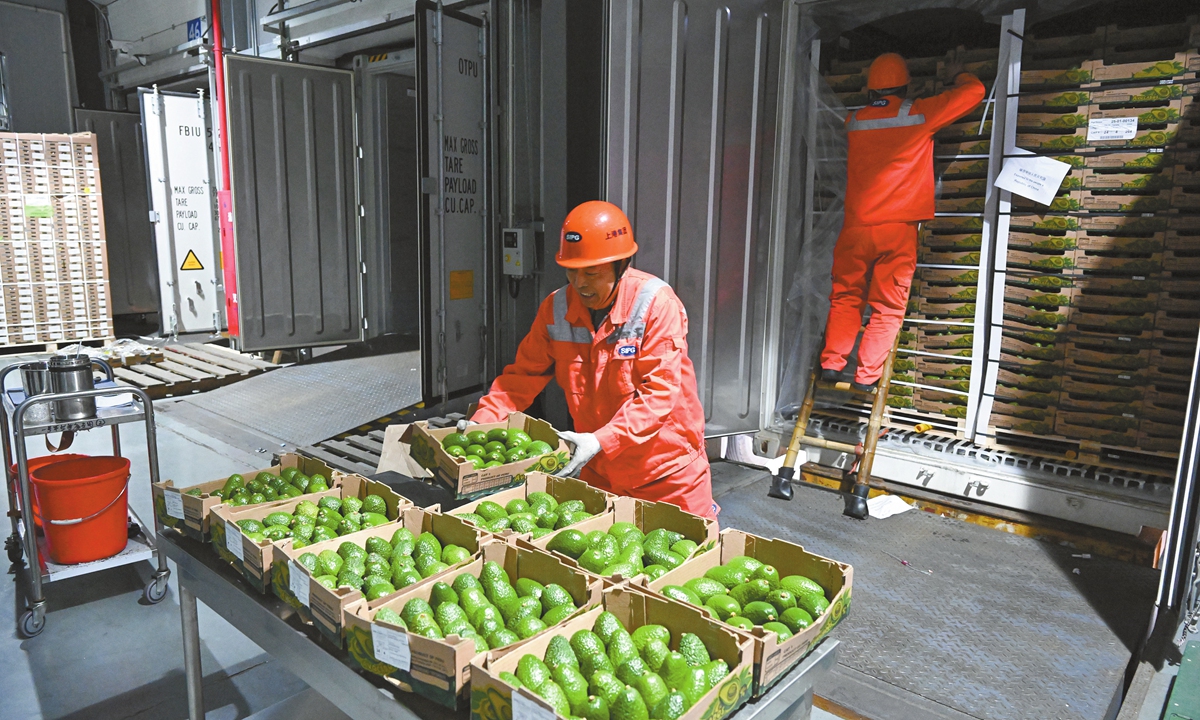
Port workers load fresh Peruvian fruit from Chancay Port in Peru, which arrived at Shanghai’s Yangshan Port, onto trucks for distribution on December 19, 2024. Photo: VCG
As the global economy undergoes profound transformation, Peru is recalibrating its development strategy by increasingly embracing win-win international cooperation — with China emerging as a key partner in the world.
Peru consistently demonstrates development potential not only in mining but also in tourism, agricultural exports, and productive sectors linked to marine and meteorological resources. Integrating this potential into major global value chains is of critical importance for Peru.
However, our main challenge lies in transforming this wealth of raw materials into added value. This is precisely where the Belt and Road Initiative (BRI) represents a valuable opportunity for us. We need to focus on strengthening our domestic markets to become more competitive, adopt green energy, and seize the opportunities presented by having a port hub.
The Chancay Port project, a flagship of Peru-China cooperation, stands as a testament to this strategic alignment.
Of course, this transformation won’t happen overnight, and there will always be challenges and risks. But no one imagined that nearly 50,000 tons of cargo would move through the Chancay megaport in just six months, from November to April, in trade with Asia. That is undeniably significant in both economic scale and impact. Commercial activity, income, and tax revenue from November and December have been extraordinary. If Chancay continues at this pace, it could contribute no less than 1.5 percent of Peru’s GDP—an extraordinary prospect for the country.
Yet such progress is unfolding against a complex geopolitical backdrop.. Powerful actors are increasingly attempting to disrupt new paths of development for the Global South.
As we often say, it’s impossible to cover the sun with one finger, right? There is undeniable geopolitical attention. One country that once championed free trade is now embracing protectionism.
The shift in Peru’s trade patterns over the past three decades is revealing.
For Peru, China is now its largest trading partner. Thirty years ago, the trade relationship between China and the US in Peru was 27 to 1 — overwhelmingly in favor of the US. Back then, the US was our main trade partner. But what happened over the past 30 years? This shift was not the result of imposition, but as a result of market forces, investment, initiatives, cooperation, and reciprocity.
This is not just a matter of trade figures — it reflects a broader development model that prioritizes dignity and production.
Today, I believe our country is beginning to understand — and demonstrate — what we truly want: development for our people, a dignified life, and investment that enables creation and production. This is exactly what’s happening through Peru’s partnership with China, our No.1 trading partner, and this is a process that cannot be stopped. There may be political noise, but the pursuit of our people’s development will always outweigh everything else.
Ironically, those who once defined the rules of globalization are now turning their backs on them.
Life is full of paradoxes. Those who once championed free markets are now trying to return to protectionism. But that’s impossible. Global trade cannot go back to the prehistoric era. It simply cannot.
Free trade has taught us standards of cooperation, mutual benefit, shared values, and peace. It has shown us that what is exchanged is not only goods and services, but also cultures. When some realize they are losing ground, they react arbitrarily—imposing irrational tariffs and trade barriers driven by psychological impulses or political disputes. But such actions will inevitably fail, because these practices no longer align with the spirit of this new civilizational era founded on mutual benefit and consensus.
At this civilizational crossroads, unity and consensus across the Global South is more vital than ever.
Today’s civilization is in crisis and urgently needs shared platforms like the BRICS economies and the Global South. Here, we embrace sovereignty, the right of peoples to self-determination, dialogue, peace, and respect for diversity—all within a framework of free trade as a superior value.
I firmly believe in the power of cooperation across the Global South. What we need is a peaceful kind of leadership—one of intelligence, innovation, and openness to dialogue—not driven by ideology, but by the desire for better lives, access to education, cultural identity, and self-determination. That’s what makes us happier, and I believe the consolidation of the Global South is unstoppable.
The US’s attempt to impose unmanageable tariff rates reflects its commercial and technological vulnerabilities. This reveals a contradiction and incoherence with the free-market economy it once so strongly proclaimed. The US fails to realize that this offensive would ultimately backfire like a boomerang, further impacting its already weakened economy.
Cooperation among Global South nations is no longer optional—it is a civilizational imperative.
This was discussed in today’s Daily Chronicles and I copy that with Lula Da Silva’s response.
 Tariffs have to do with trade and with the balance of trade, yes? Demented Donnie has turned his Tariff Letters (of which a bunch went out this morning again), into a capricious punitive stick. 50% for Brazil and there is more in ‘sectoral’ tariffs. During the last few days Trump has been hollering on his Truth Social that Brazil is treating Bolsonaro very badly. Bolsonaro, with another 34 people or so, is in court, charged with the coup plot to overturn the results of the 2022 election and keep his opponent from taking power.
This is gross interference in the affairs of other nations and most probably breaks a raft of international law.
I know China is Brazil’s biggest trading partner. Here is a sizable list of products that Brazil trades with the US. https://tradingeconomics.com/brazil/exports/united-states
One hopes that Brazil could have the courage of its convictions and stop trading with the US. This is the only action that will stop the tariffs, which the US buyers anyway pay for. Yet, with such a cost burden, the cost of items becomes too high for any market to bear. Regarding the accusations against US media operating in Brazil, you may recall that Elon Musk became upset because Brazil expected foreign tech companies to comply with Brazilian Law. Brian Mier has an article on Brazil’s law that owners of Tech companies are responsible for crimes committed on their platforms, as free speech is not absolute in many other countries. https://bmier.substack.com/p/brazils-victory-for-digital-sovereignty
It is, of course, now time to see if BRICS can support one another. There is the list, folks – whatcha gonna buy .. whatcha need today? Time is short.
In light of the public statement made by U.S. President Donald Trump on social media on the afternoon of Wednesday (9), it is important to highlight the following:
Brazil is a sovereign nation with independent institutions and will not accept any form of tutelage.
The judicial proceedings against those responsible for planning the coup d’état fall exclusively under the jurisdiction of Brazil´s Judicial Branch and, as such, are not subject to any interference or threats that could compromise the independence of national institutions.
In the context of digital platforms, Brazilian society rejects hateful content, racism, child pornography, scams, fraud, and speeches against human rights and democratic freedom.
In Brazil, freedom of expression must not be confused with aggression or violent practices. All companies—whether domestic or foreign—must comply with Brazilian law in order to operate within our territory.
The claim regarding a U.S. trade deficit in its commercial relationship with Brazil is inaccurate. Statistics from the U.S. government itself show a surplus of $410 billion in the trade of goods and services with Brazil over the past 15 years.
Therefore, any unilateral tariff increases will be addressed in accordance with Brazil’s Economic Reciprocity Law.
Sovereignty, respect and the unwavering defense of the interests of the Brazilian people are the values that guide our relationship with the world.
Originally published by Misión Verdad
* Available in Portuguese at Saker Latinamérica
* Translated to Portuguese and English by the Saker Latinamérica Community Team.
* * *
In an international scenario marked by worsening geopolitical tensions and aggressive trade policies promoted by Donald Trump’s administration, the meeting of foreign ministers of the Brics bloc was held in Rio de Janeiro on April 28 and 29.
The meeting gave clear signs of the direction Brazil intends to give the organization during its pro tempore presidency.
Despite the climate of cooperation and the unified discourse on multilateralism and the development of the Global South, the overall tone suggests a pause in the pace of expansion and innovation that characterized the Russian presidency in 2024.
Statements by Foreign Minister Mauro Vieira and President Luiz Inácio Lula da Silva revealed a Brazilian strategy aimed at containing the speed of the bloc’s transformation, which reinforces a traditional agenda based on dialogue, political neutrality and climate diplomacy; and indicated that it was at the meeting that this approach was defined, which limits the deepening of the logic of multipolarity in favor of a more passive posture.
The ministerial summit was the first formal meeting of foreign ministers following the expansion of the platform, which now has eleven members, including regional powers such as Iran, Egypt and Ethiopia.
Also participating for the first time as special guests were the so-called “Brics partners”, a category created at the Kazan summit in 2024, including countries such as Belarus, Bolivia, Kazakhstan, Cuba, Malaysia and Nigeria.
The topics addressed, such as the need for reform of the international system, the defense of multilateralism and the promotion of peace, met with consensus among the participants.
However, the Brazilian tone was cautious. Vieira reiterated that the Brics “are not against anyone”, clarifying that there is no intention to create a common currency but to encourage transactions in local currencies, as a way to reduce costs and strengthen regional cooperation, citing the Aladi model as an example.
The Brazilian Foreign Minister also stressed that there is no intention to replace the current monetary system, based on the hegemony of the U.S. dollar, nor to create new currencies, thus distancing himself from more ambitious proposals promoted by Russia and China in recent years. In other words, Brasilia seeks to preserve the status quo of the dollar and restrict the options of de-dollarization to a purely transactional element, thus avoiding structural alterations in the global financial order
This emphasis contrasts with the Russian agenda of the previous year, which proposed more decisive steps towards an alternative financial architecture, such as the consolidation of the Brics Pay, a system hybrid cross-border payments infrastructure, decentralized on an international scale, the boosting of the Brics Bridge platform as a supranational clearing network, and the development of payment mechanisms based on local, digital and blockchain currencies with a view to reducing dependence on the dollar with a perspective of monetary and financial mutipolarity.
Brazil’s approach as president of the organization seems to respond more to its own international agenda than to a desire for transformational leadership within the bloc.
Under Moscow’s leadership, the Brics projected itself as an articulating force of the Global South with structural proposals in financial matters, such as the promotion of an alternative payment network to Swift, the expansion of the use of local currencies and the design of credit instruments aimed at shielding partner countries from unilateral sanctions.
In contrast, the roadmap proposed by Brazil in 2025 indicates a reorganization of priorities, more aligned with development, health, environment and social inclusion agendas. According to the official document of the Brazilian Pro Tempore Presidency (PPTB), Brazil intends to contribute – as in its previous mandates of 2010, 2014 and 2019 – to the “advancement of dialogue and consultation within the Brics on political and security, economic-financial and civil society issues”, which maintains its traditional emphasis on reforming the global governance system to give emerging countries a greater voice.
Under the slogan “Strengthening global cooperation with the South for more inclusive and sustainable governance”, the Brazilian presidency has defined two major priorities:
Through the interventions of its high authorities, Brazil projects a “bridging” role between the global North and South, more inclined towards conciliation than confrontation. Its narrative insists that the Brics do not seek to replace existing mechanisms or challenge the dominant international financial system, suggesting that Brazil seeks to shape a bloc that is not uncomfortable for Washington.
Instead of promoting genuine multipolarity, it prioritizes a transactional multilateralism that allows it to consolidate its economic ties with China and Russia, without breaking its historical geopolitical dependence on the United States. This strategy allows it to navigate systemic tensions without compromising its room for maneuver on both fronts, which translates into consolidating its business with China and Russia without compromising its geopolitical dependence on the White House.
In addition, the Brazilian presidency proposed highlighting issues such as the fight against climate change through the Amazon Forever initiative, a bid to attract investments to the Amazon biome with the support of “developed countries”.
This approach contrasts with the geopolitical and security line that marked the Russian presidency, focused on the consolidation of the multipolar order and the redesign of the international power architecture.
Brazil chooses not to rush the institutionalization of the bloc and favors the strengthening of its pre-existing international networks, in a dynamic that suggests a strategic use of the multilateral space as a platform for international projection.
As the July 6-7 Leaders’ Summit approaches, the Brics faces a scenario marked by internal divergences conditioning its strategic direction.
The negotiations on the joint declaration of Rio de Janeiro, which will serve as the basis for the final document of the Heads of State, show a persistent tension between the transforming impulse led by Russia and China, and the commitment to pro-US moderation that Brazil seeks to imprint on its pro tempore presidency. This divergence was particularly evident during the Kazan summit, when Venezuela was prevented from joining the platform.
The negotiations for this text reflect a sustained position of the group: criticism of “unilateral measures” and defense of multilateralism as a guiding principle. However, the differences in tone highlight not only the different speeds that coexist in the bloc but also a deeper background: the clash between different interests and geopolitical visions, which oscillate between the preservation of certain traditional balances and the strategic commitment to multipolarity, which necessarily implies clashing with Western domination.
China is reportedly pushing for stronger language in rejection of recent U.S. tariffs on its products, reaching up to 145%, while Brazil, acting as mediator, is seeking a less confrontational approach. According to press reports, the final communiqué would maintain the criticism of these policies, but would avoid rhetorically escalating the confrontation.
At the same time, a shift in the discussion on the group’s financial architecture is taking place. In contrast to the previous enthusiasm for a common currency, the Brazilian authorities seem to have opted to prioritize the promotion of trade in local currencies as a gradual mechanism to reduce dependence on the U.S. dollar.
Beijing, for its part, continues to profile the Brics as a “backbone” of South-South cooperation. Statements by the Foreign Ministry spokesman in Beijing, Lin Jian, highlighted the intention to build a “more comprehensive” partnership among its members and to defend “equity and justice” in global governance.
A vision that was reinforced during the bilateral meeting between Wang Yi and Sergey Lavrov, in which both reaffirmed the role of the platform as a catalyst for a fairer and more rational international system.
Vieira’s carefully chosen words have been interpreted as a clear signal that the Brazilian presidency is seeking to curb the geostrategic momentum that Russia set in motion during the Kazan summit, where proposals for a financial and security architecture alternative to the Western order were openly promoted.
In addition to the differences in tone and approach, Brazil has proposed a more technical and transactional structure for the coordination of the body. And the organization of 100 ministerial and technical meetings between February and July in Brasilia is evidence of a desire to institutionalize and technicalize the dynamics of the organization, but it could also be read as a way of managing political time to moderate the most advanced initiatives.
Instead of moving forward with more far-reaching structural proposals, the Brazilian presidency is committed to consolidating previous achievements and reinforcing existing cooperation, trying not to generate tensions either with its Brics partners – particularly China and Russia – or with crucial external actors such as the United States and the European Union. This strategy reveals a delicate balance between Brazil’s traditional Western geopolitical alignment and the abstract commitment to multipolarity.
The path that Brazil charts over the next few months will be decisive for the bloc’s immediate future.
The document that is still not available at the time of writing, is the Joint Declaration after this BRICS Ministerial.
Mr Lavrov’s really strong speech not mincing any words can be viewed at Ruptly. https://stream.ruptly.video/202504291315-LIVE20003/channel3?token=a407ac415d060e223c4ea8dfb04cdf41d9dfddd74b8a1ebdc0c68beae5675d58&show_modal=false
https://mid.ru/en/press_service/video/posledniye_dobavlnenniye/2012487/
(Bbolding and accents are mine).
Colleagues,
First, I would like to once again thank our Brazilian friends for their traditional hospitality and the perfect arrangements for the BRICS ministerial meeting, as well as for holding the additional meeting between BRICS participants and their partner countries.
These countries were able to take part in today’s meeting following the Kazan Summit. Held as part of Russia’s chairmanship, it made a historical decision to create this partner category, which includes Belarus, Bolivia, Kazakhstan, Cuba, Malaysia, Nigeria, Thailand, Uganda and Uzbekistan.
We agreed to remain proactive in attracting partner countries and engaging them in our joint undertakings in various formats, from ministerial meetings to expert-level events and initiatives by specific ministries.
We spoke out in favour of further enhancing the contribution by BRICS and the countries of the Global Majority in general to addressing the key challenges the world is facing today. We noted that collective actions by our group can play an important role in achieving sustainable development goals, ensuring security and fostering economic growth.
At the meeting, we paid special attention to the need to continue our efforts to promote reform within international financial institutions, primarily by revising IMF quotas, which must reflect the role of the Global South and East in the global financial system and economy. In this context, most of the delegations talked about the destructive nature of the policy coming from the collective West. By the way, the West may have become less united lately, even if all Western representatives have the same goal, which consists of continuing to live at the expense of others by relying on neo-colonial practices. This includes unilateral illegitimate sanctions, abusing their currencies within the international financial system and using unjustified protectionist measures in trade, as well as tariff wars, which have been the talk of the town these days.
We noted that the Western Minority is rocking the international financial and economic architecture and could cause major disruptions as it attempts to hold on to its waning dominance and continue to benefit from competitive advantages at the expense of others.
There was quite a lengthy discussion on the latest regional and international developments, including the multiple crisis situations around the world. The deteriorating situation in the Palestinian territories and across the Middle East in general, as well as in many regions of the African continent is a matter of special concern.
Russia emphasised that relying on the principles set forth in the UN Charter could help find effective solutions to all these challenges, as long as these provisions are used in an integral, holistic and complementary manner instead of on a case-by-case approach which consists of cherry picking principles depending on the specific goals they must fulfil.
We reaffirmed our support for reforming the UN Security Council, including our support for India and Brazil becoming permanent members of the UN Security Council, while also addressing the issue of Africa’s representation.
Of course, much has been said about the Ukraine situation. Once again, we offered a detailed insight into our principled approaches to settling this conflict by addressing its root causes. These causes consist of NATO’s long-standing eastward expansion efforts all the way to the Russian border and its attempts to drag Ukraine into the alliance. This creates immediate security threats along the Russian border. Another important factor I would like to highlight is the Kiev regime’s policy of eliminating and cancelling anything related to Russia and the Russian world, including the Russian language, culture, Russian-language media outlets, and the canonical Orthodox Church. Most of the participants are becoming increasingly receptive to our approaches, judging by their remarks on the Ukraine situation. We will continue these efforts.
The Brazilian chairmanship will circulate the meeting’s outcome document.
We would like to wish our Brazilian friends every success in preparing and holding the 17th BRICS Summit. It is scheduled to take place on July 6 and 7, 2025, in Rio de Janeiro. I am certain that the summit will be a success and yield tangible results, enabling us to further reinforce our strategic partnership. Russia will do everything to facilitate this process.
Question: Do the BRICS countries share a unified position on the trade war waged by Donald Trump?
Sergey Lavrov: We do not mention any names in the final document. The document will be circulated. It outlines our overarching policy approaches to current developments in the global economy.
The final document affirms the overall conclusion on the adverse effects of global economy fragmentation, expresses concerns regarding the erosion of multilateralism, the violation of the principles of fairness and inclusivity that must underpin the trade system.
The World Trade Organisation, properly adapted to contemporary realities, must remain at the core of this system. We have explicitly articulated our concerns about unilateral protectionist measures and sanctions, including secondary sanctions, that contravene WTO principles.
The document explicitly states that it is unacceptable to obstruct decisions on WTO reform – especially regarding the blocking and revival of the Dispute Settlement Body. Broadly, our partners and allied nations share this position. It will form the basis for relevant drafts developed in preparation for the July 6−7 summit in Rio-de-Janeiro.
Question: Are BRICS participants watching the developments in Russia-US talks? What opinions, including about the impact on BRICS, have been voiced?
Sergey Lavrov: Certainly, it is imperative that all parties have a clear understanding of the evolving dynamics between Moscow and Washington. This point has been emphasised in multiple remarks and during numerous bilateral engagements I conducted on the sidelines of the BRICS Foreign Ministers’ Meeting. We keep our partners informed regularly, after nearly every interaction between Russia and US representatives. We communicate assessments through both our own ambassadors and the ambassadors of our partners in Moscow. This is not a case where we have to keep it strictly confidential.
We advocate for an honest and equal dialogue aimed at building a balance of interests. The United States has reciprocated with similar signals. Russia and the US are working together across multiple domains. In fact, they continue to cooperate literally as we speak.
The positive side of these developments is widely recognised. There is hope that the promising trajectory of Russia-US dialogue will become reality. I anticipate a solid confirmation of the reciprocal interest between Moscow and Washington in the near term. Whether we can translate this mutual interest into tangible outcomes is to be seen imminently.
Russia remains committed to fostering transparent relations with the United States, which is in no way detrimental to the traditionally close ties with our strategic partners and like-minded nations.
Question: The establishment of a BRICS Pay system for settlements in national currencies between the group’s members was announced at last year’s BRICS Summit in Kazan during Russia’s chairmanship.
Despite US President Trump’s threats of “draconian” tariffs if BRICS replaced the US dollar as a reserve currency, Brazil, which has taken over from Russia this year, has declared its support for that Russian initiative. What is the progress of this dialogue? What else can the group do in response to the Western attempts to use global reserve currencies as a weapon?
Sergey Lavrov: This dialogue is progressing.
The BRICS finance ministers and central bank governors have recently held a meeting during which they discussed, as per the instructions of the Kazan Summit, the task of creating independent payment systems. It has been decided to more actively use national currencies in mutual trade. The final document we have adopted today emphasises the importance of continued efforts in this sphere.
National currencies account for over 65 percent in trade between BRICS countries, while the share of the US dollar has diminished to one third. Other tasks stipulate the creation of payment instruments and platforms, including discussing the possibility of creating a cross-border payment system and an electronic depository and clearance system (BRICS Clear), and a unified mechanism for exchanging trade and economic information.
We continue discussing insurance and reinsurance variants for new grain trading platforms and the possibility of spreading this experience to other raw material products. All this has been included in the final document.
It is a long-term policy based on principle, considering the current trends in the global economy created by our Western colleagues’ unilateral actions. This is one of our priorities.
Question: Is it possible to create an international court within BRICS as an alternative to the International Criminal Court, which has obviously discredited itself?
Sergey Lavrov: That issue was on the table, but it has not been included in the final document because BRICS should not create any independent judicial authorities. We believe that international trials should be based on a solid consensus of all participating states.
As you have correctly pointed out, the International Criminal Court (ICC) has fully discredited itself. It is being steered by Western countries. It protects some countries from criticism even though they openly violate international law, and adopts measures aimed at punishing other countries, up to and including arrest warrants, in the absence of factual proof.
Acting independently of BRICS on the international stage, including at the UN, Russia is promoting an initiative to encourage as many countries as possible to speak up for the depoliticization of international criminal justice. We must preclude situations when openly biased structures, such as the ICC, handle essential issues related to the immunities of states set out and sealed in international law.
It is a long process. The African Union countries previously called for withdrawing from the ICC, and they have not changed their stance.
Question: According to international experts, there was a 10 percent surge in military spending in 2024 around the world. They said that this was the worst result since the Cold War. Can BRICS help countries divert from this dangerous path that could pave the way for the third world war?
Sergey Lavrov: I am certain that this sits perfectly well with the position of BRICS, which consists of doing everything to prevent this from happening.
That said, efforts by this group alone would not be enough to make this a reality. Many other countries outside of BRICS have demonstrated their understanding that a third world war must not happen. This includes the leaders of the United States. In particular, Vice-President JD Vance has recently raised this point by sending a warning signal to those who encourage the Ukrainian regime to continue the war and those who are trying to draw Europeans into this conflict by deploying various forces in Ukraine, be it peacekeepers, stabilisation forces, or any other units.
It is essential that the five nuclear powers stick to the positions set forth in the statement of the P5 leaders. The heads of state from the countries with permanent seats in the UN Security Council adopted this statement at Russia’s initiative in January 2022. It is based on the long-standing agreement between the USSR and the United States and their joint statement saying that a nuclear war cannot be won and for that matter everything must be done to ensure that it is never fought.
This objective has become relevant these days, especially considering the reckless, aggressive actions and calls coming from senior officials in the European Union and London.
Question: President Vladimir Putin has recently met with US President Donald Trump’s Special Envoy Steve Witkoff at the Kremlin. What do you think about where Russia’s relations with its partners are headed, considering that meetings of this kind always serve as a signal for many other countries? Have these diplomatic contacts created new opportunities for Russia?
Sergey Lavrov: As I have already said, dialogue is always better, any other circumstances notwithstanding. I am a bit puzzled by the way in which certain countries have responded to the recent developments in Russia-US relations. Everyone tends to view these Russia-US contacts as being nothing short of sensational. But our two countries were locked in quite a fierce ideology-driven confrontation during the Cold War. Nevertheless, the dialogue between us never stopped.
Today, the doctrines set forth by the Joe Biden administration remain in force in the United States. Nobody cancelled them. They cast Russia as the main and immediate threat in the context of the Ukraine conflict, while designating the PRC as the main long-term adversary.
If you follow the statements by our Chinese friends and their comments regarding relations with Washington, as well as what the United States has been saying about China, you will see that there is also a lot of harsh rhetoric regarding Taiwan, the South China Sea, and many other matters. That said, there was not a single moment when Washington and Beijing stopped talking to each other. They keep up their conversation, their leaders remain in touch, foreign ministers hold meetings, and so do security specialists and defence ministers.
Therefore, I do not think that Russia-US dialogue in its current state can be described as something incredible. We simply put it back on track, while those who thought that it was a sensational turnaround are influenced by the logic cultivated by the Joe Biden administration in its effort to cast Russia as a rogue nation, a country facing total isolation with a shattered economy, and so on. This is to say that we simply restored the sense of normalcy in our relations. I have a feeling that most countries of the Global South and East, our strategic partners and allies, have a positive attitude regarding these developments.
Question: President Vladimir Putin has announced another ceasefire during commemoration of the 80th anniversary of Victory in the Great Patriotic War. In response, Ukrainian Foreign Minister Andrey Sibiga urged Russia to establish a ceasefire right away for 30 days rather than three. What can you say about this? Is a ceasefire, even a short-term one, even possible considering where the Kiev authorities stand on this matter at this point?
Sergey Lavrov: Never read what representatives of the Ukrainian regime have to say, either at night, or in the morning. We know perfectly well what their words are worth. You may recall that two months or so ago Kiev was issuing threats and warnings saying they would not accept any kind of ceasefire. European radicals incited the Kiev regime to stay the course saying that ceasefire talks could begin only with Ukraine having an advantage on the battlefield. So, they went on to say, we will flood Ukraine with even more weapons and then, when “Russia gets weaker,” we will talk with it from a position of strength.
Now, they have suddenly – not suddenly, of course, but bearing in mind what is happening on the ground, on the line of contact, where the Ukrainian regime is increasingly yielding ground – reversed their position and came up with demand an immediate ceasefire without preconditions.
We’ve been there before when in February 2014, a truce, in fact, was declared between the opposition and then President of Ukraine Viktor Yanukovich, and a peace instrument was signed to hold early elections and to create a government of people’s unity for the time before the election day. Come morning, they trampled upon the “truce” and seized administrative buildings.
The next “truce” was concluded as part of the Minsk agreements after the Kiev regime, which had launched an aggression against its own people, choked on its own calculations and asked for a truce. We concluded the Minsk agreements and had them approved by the UN Security Council. The Ukrainians didn’t give a hoot about these agreements.
Back then, Petr Poroshenko was still in office. When Vladimir Zelensky became president under the banner of complying with the Minsk agreements and establishing peace, and calling to stop discrimination against the Russian language and letting Russian-speaking citizens of Ukraine speak the language they grew up with and which at that time was the official language in Ukraine. Zelensky was president when the French and Germans, as “guarantors” – they referred to themselves that way – of the Minsk agreements convened a summit in Paris in December 2019, which I had the honour to attend. Then German Chancellor Angela Merkel, French President Emmanuel Macron, Vladimir Zelensky, and President Putin took part in it. A document was drafted urging the sides to act upon the key point of the Minsk agreements, the key first step which was to declare a ceasefire and to enforce it along the entire line of contact.
By the time the document finalised by the ministers was on the table of the leaders, Zelensky said emphatically he wouldn’t sign it, because, he said, it was an impossible thing to do and he was against putting an end to hostilities, because Russia would then come out on top. He said he was ready to declare a truce on three segments of the line of contact and see what happens next. The French, the Germans, and we were surprised to hear that, but President Putin said it was at least something and we should go ahead with it. It was approved. A document was released calling for a ceasefire in three areas which also confirmed the importance of ensuring the autonomous status of the Donetsk and Lugansk people’s republics. However, with the agreement in place, Ukraine didn’t act on it. The Ukrainian armed forces did not make it possible for us to secure truce in any of these three areas.
Then, of course, there was a ceasefire declared in connection with the Istanbul agreement in April 2022. The Ukrainians and Westerners specifically asked us to settle the situation, first and foremost, to stop hostilities. It’s as if they were asking us to make a gesture of goodwill and join them in stopping hostilities. Russia pulling back its forces from Kiev would send an important and positive message, they said. As you are aware, we did just that.
Everyone knows how it turned out. They immediately broke news that the Russians had withdrawn their forces. Then came Bucha provocation which to this day remains on the conscience of the West. Our continuous requests to publish a list of the names of those whose corpses were shown lying there remain unanswered.
Speaking about the most recent examples of the ceasefire, the ceasefire announced by President Vladimir Putin on the occasion of Easter was not observed by the Kiev regime. A huge number of violations were documented.
The ceasefire proposed by President Trump in the form of a moratorium on strikes on energy infrastructure was fully respected by the Russian side for 30 days, but had no effect on the Kiev regime’s aggressive behaviour. A couple of hundred violations were documented by our representatives. We have sent this list to the UN and US Secretary of State Marco Rubio. We know full well what these calls for a ceasefire are worth.
The EU leaders, High Representative [of the European Commission] for Foreign Affairs and Security Policy Kaja Kallas and other “representatives” only demand that Russia “agree to an unconditional ceasefire” because they are suffering a defeat on the battlefield and their plans of inflicting a “strategic defeat” on Russia will never materialise. That is clear to everyone.
Our proposal, which President Vladimir Putin has made public, is to launch direct talks without any preconditions. In the current situation, a ceasefire is a preliminary condition that will be used to provide assistance to the Kiev regime and reinforce its combat capabilities.
You may remember that President of Belarus Alexander Lukashenko has recently visited Moscow. During a joint news conference, President Putin was asked about the idea of a 30-day ceasefire proposed by our American colleagues. President Putin supported the idea but added that it should be formulated so that it would not fail like all the previous attempts. He explained that for a ceasefire to be effective and to reach its goal, a smooth-running, objective and transparent daily system should be established to monitor the sides’ activities along the entire contact line. We are all aware of the Kiev regime’s “talent” for organising provocations. There is no doubt that such provocations would continue regardless of the way the ceasefire is organised. We don’t see any possibility for honest monitoring that would guarantee honest compliance with ceasefire conditions.
A recent shocking example is the terrorist attack against a Russian general. It was a mean and cowardly act. The West remains silent on this, while Ukrainian representatives, including heads of parliamentary committees, say that it was the right thing to do, that the enemy must be destroyed, and that they would continue to destroy it even if a ceasefire were approved.
We won’t be fooled by promises any longer, as President Putin has unambiguously stated.
Question: You have recently said that Russia regards the WTO as an organisation that is using discrimination. You also said that Moscow might revise its obligations to that organisation. According to a statement you have made today, you agree with your Brazilian colleagues, by and large, that the WTO could play a role in the current economic situation if it were reformed. What made you change your stance? Was it the stance of your Brazilian colleagues? Do you really believe that the WTO can be given a second lease on life?
Sergey Lavrov: I don’t see any contradiction here. My stance has not changed. The situation [with the WTO] is the same as with the UN Charter. The Charter is a good document that fully meets all the requirements for strengthening multipolarity in international relations. But Western countries only use it randomly and as they see fit, or completely disregard it while promoting their “rules-based order.”
The same is true about the World Trade Organisation.
If the principles that underlie it were respected in full, this would have been in the interests of all member states.
But the trouble is that these principles are disregarded. The operations of that crucial dispute settlement body have been blocked for many long years, primarily by the United States, which does not want that body to accept substantiated complaints against protectionist and other illegal US measures.
In other words, we must go back to the basics. It is in this spirit that we should discuss reforming the WTO. A reform must not eliminate the principles of equality and mutual benefit but strengthen them and ensure their implementation, precluding new attempts to pledge commitment in word while acting to the contrary in deed. This has been clearly spelled out in the final document of our meeting.
Question (in English): The Brazilian Presidency has not supported a new round of BRICS expansion this year, instead focusing on the institutional consolidation of the group. I would like to know, from Russia’s perspective, when might BRICS be ready to resume a new round of expansion, if it should happen as soon as possible, or if the difficulties seen in this meeting, for example on finding common language on the UN Security Council reform, suggest that these disagreements should be addressed before a new round of expansion happens? And on this topic, I would like to know from the Russian perspective, how should the process of associate members, like Cuba, could pass from associate members to full members. How should this process be in the Russian vision?
Sergey Lavrov (answers in English): It is not true that Brazil is not supporting a new round of BRICS expansion. The truth is that last year, when we met in Kazan and welcomed the new full members, when BRICS doubled its membership, it was decided to take a little pause in further expansion, so that we can accommodate the work and the new composition of BRICS − so that the group can smoothly get into the new situation with increased membership. And this was the common opinion. The aspirations of many countries were taken into account when the category of partner countries was established and it is understood that the partner countries would be priority candidates for full membership. I have no doubt that the expansion process would resume very soon.
We have decided, as I said, to spend this year to see how this accommodation will be going on. It is obvious that the more members there are, the more time is necessary to get accommodated to this situation and the more efforts would be necessary to build consensus. This is a natural phenomenon.
As regards the Security Council reform, we have been asserting our commitment to the progress on this issue for many years, practically at every BRICS summit, at every ministerial meeting, we have been including this language. And we discussed this situation this year as well.
Russia, as I said, consistently supports Brazil and India as strong candidates for the permanent membership in the Security Council in the context of its expansion, provided that at the same time African aspirations are also satisfied. As I said, the Security Council requires more members from the Global South and Global East.
We cannot support any expansion of the number of the Western states in the Security Council. They are already six out of 15. Besides, none of the aspirants like Germany or Japan can bring any added value to the discussions on the Security Council. They stick to the common position of the collective West.
As to the issue of reflecting the position by the BRICS membership on the issue of the Security Council, you know, we are flexible. We believe that the main thing is to confirm the need to meet aspirations of the developing countries. And this could be done in various ways and the formulation of the declarations by the ministerial meetings and by the summits, all these formulas are available. We confirmed yesterday and today that we are ready to use any formula and any new language which might be proposed. Of course, we need consensus on this issue, but the main thing is that the reform of the Security Council would be resolved not by language contained in any declaration of any organisation, except the United Nations, where an eventual vote would take place. It is there that this issue would be resolved.
Question (in English): I would like to ask you, how do you see the BRICS as an alternative or opposition platform towards the United States? Would you support this view? I would like to know as well if anything related to this topic will be in the declaration for today’s meeting? How important are BRICS tariffs in this context of the new US tariffs?
Sergey Lavrov (answers in English): Well, I have already commented on the negative effect of the US tariffs on the world trade and the world economy. You know, it works in the direction of fragmenting the global economic system, and there is language in the final declaration, the final document describing the negative effects of the tariff war, of protectionist measures of other kind, of unilateral sanctions, including secondary sanctions, undermining the activities of the universal institutions, be it the IMF, the WTO, be it the World Bank. It is not, it should not be presented as an opposition, political opposition to anybody, be it the United States or the European Union. It is the negotiating position which BRICS would promote in relevant international fora, first of all, in the United Nations, in the Bretton Woods institutions and, of course, in the G20, where BRICS plus partners are working together with the G7 and the partners of G7. It is a very important forum, which represents, I think, more than 90 percent of the world economy.
This is a negotiating position. The countries of the West know about this, and they cannot avoid specific, concrete dialogue aimed at reaching mutually acceptable conclusions. We are fighting for a balance of interest, not for defeating anybody in the Western camp.
[Note: Mr Lavrov is in Brazil for the BRICS Foreign Minister’s meeting in preparation for the upcoming BRICS summit in July. In this interview he again listed the Russian requirements for ending the Special Military Operation in Ukraine and a peace agreement. Here is a summary:
Lavrov unveils Russia’s terms for Ukraine peace deal at BRICS summit:
 Lift ban on talks with Russia
No NATO membership
International recognition of new Russian territories
Deal with anti-Russian actions by neo-Nazi regime
Security guarantees against NATO and EU threats]
https://mid.ru/en/foreign_policy/news/2011929/
Question: Expanding trade among BRICS countries is one of the objectives for Brazil’s chairmanship in this group in 2025. What kind of opportunities does Russia see in terms of increasing the share of trade transactions in national currencies?
Sergey Lavrov: We are witnessing an accelerating trend in the fragmentation of the global economy. Against this backdrop, it is quite natural for the countries of the Global South and East to reduce the share of Western currencies in their mutual settlements. No one wants to suffer from sanctions, considering that the West has been imposing them on undesirable countries by exploiting its monopoly on financial markets. Using reserve currencies as a competitive tool is unacceptable. Payment transactions can be blocked for political reasons, even when dealing with supplying socially important goods.
We have been working within BRICS to ensure that there are no disruptions when carrying out payments and have been quite effective in our efforts.
To give you an example, the rouble and currencies of our friendly countries accounted for 90 percent of Russia’s settlements with BRICS countries in 2024.
Establishing resilient payment mechanisms is also among our priorities. Adopted in Kazan, the declaration of the BRICS 2024 Summit mentions the Trans-Border Payment Initiative, as well as payment and clearing infrastructure, a re-insurance company, and the New Investment Platform. These initiatives are designed to create favourable conditions for increasing trade and investment within BRICS. Russia hopes that we will continue working on these projects this year as part of Brazil’s chairmanship.
Question: Does the creation of a single currency remain a long shot for BRICS?
Sergey Lavrov: The effort to move away from the dollar, also known as the dedollarisation, has been one of the defining global economic trends, which is attributable to the lack of trust towards the Western-led international financial institutions.
It would be premature to discuss a transition to a single currency for BRICS. We are working together to create a payment and settlement infrastructure for carrying out cross-border settlements among BRICS countries. In particular, as I have already said, this includes increasing the share of national currencies in our transactions.
We can come back to the question about a common currency or a single payment unit for BRICS once the necessary financial and economic conditions are in place.
Question: Reinforcing global governance and promoting multilateralism is another major topic for BRICS. What do you think BRICS countries can do to this effect?
Sergey Lavrov: BRICS has become much stronger compared to when this group took shape back in 2006. Today, it stands as a focal point with a mission to coordinate the interests of the Global Majority’s leading countries. BRICS fully adheres to the principles of equality, mutual respect and balance of interest among its participants. Russia views this group as one of the pillars of a multipolar world and an important mechanism for international cooperation.
BRICS tends to attract countries seeking equal partnerships for the sake of fostering shared development. It was during Russia’s chairmanship in 2024 that BRICS leaders reaffirmed their decision to invite Indonesia to join BRICS. We also created a special status for partners. Nine countries have obtained it so far.
That said, BRICS countries are not seeking to take someone else’s place. Their aim consists of creating a favourable environment for building capacity. The group has other priorities too, including supporting countries within the Global Majority in addressing the urgent challenges they face, as well as increasing the representation of the Global South and East in global governance.
Question: Brazil calls for expanding the UN Security Council. What is Russia’s current stance on this issue? Would it vote for making Brazil a permanent member?
Sergey Lavrov: Russia believes in a balanced reform of the Security Council as one of the main UN bodies, which is primarily responsible, as per the UN Charter, for maintaining international peace and security.
It is absolutely obvious to us that the shaping of a multipolar world should include broader representation of the countries of the Global South and East, that is, Asian, African and Latin American countries, at the UN Security Council.
We believe that Brazil, which is conducting an independent foreign policy and can make a substantial contribution to settling international problems, is the right candidate for a permanent seat on the UNSC. We also support the nomination of India, on the condition that Africa would be represented at the Security Council as well.
I would like to use this occasion to point out that we are against giving more seats to Western countries and their allies. There are too many of them at the Security Council as it is. We are not ready to support the nominations of Germany and Japan because of the revival of the militarist ideology there and their openly unfriendly policy towards Russia.
Question: During consultations between foreign policy planning departments of the BRICS countries’ foreign ministries, the Russian delegation mentioned talks with the United States on the Ukrainian conflict. What conditions should be created for launching Russia-Ukraine peace talks?
Sergey Lavrov: During our contacts with representatives of the US administration, we provided the details of the root causes and genesis of the Ukrainian crisis. We explained the parameters necessary for its final settlement, with due regard for Russia’s legitimate interests, primarily in the sphere of security and human rights.
We got the impression that our American counterparts now have a better understanding of Russia’s stance on the situation around Ukraine. We hope that this will help them during their dialogue with Kiev and individual European countries. US Secretary of State Marco Rubio informed me of the engagements he had in Paris on April 17 later the same day. He noted that the discussion was held in the spirit of the Moscow-Washington consultations.
We remain open to negotiations, but the ball is not in our court. Kiev has not shown readiness for negotiations so far. The latest evidence of that is the Ukrainian armed forces’ inability to respect the 30-day moratorium on strikes on energy facilities (March 18 to April 17) or the 30-hour Easter truce (from 6 pm on April 19 to midnight on April 21). Zelensky’s regime has shown that is lacks the political will for peace and the ability to stop the war, which is being fuelled by the Russophobic circles of certain EU countries, primarily France and Germany, as well as Britain.
Question: Do you think that other countries should take part in the potential peace talks, for example, Brazil, which maintains dialogue with both sides?
Sergey Lavrov: Russia appreciates the striving of our partners to help create conditions for a peaceful settlement of the Ukrainian crisis. Over 20 countries and a number of regional associations in Latin America, Asia and Africa have put forth such initiatives.
Brazil is one of such countries. In January 2023, President Luiz Inacio Lula da Silva proposed creating a multilateral negotiating format. That idea was reflected in the Brazilian-Chinese initiative for establishing the Group of Friends for Peace in Ukraine at the UN. Its operation is gaining momentum. The Group has held three meetings, and there are grounds to assume that it can become a respected platform of the countries of the Global South and East.
It is essential that all members of that Group of Friends for Peace take the root causes of the crisis into account and are guided in their activities by the principles of the UN Charter in their entirety and as a whole. The principles of sovereignty and territorial integrity of states should not be applied in isolation from the right of nations to self-determination and the protection of human rights without distinction of any kind, such as language, race, sex and religion.
Question: On what terms would Russia agree to come to the negotiation table with Ukraine at this point?
Sergey Lavrov: I have already given you part of the answer to this question. It was Kiev which withdrew from the negotiating process in April 2022. It acted this way at the request of its Western curators. In September of the same year, Vladimir Zelensky outlawed all talks with Russia. This piece of legislation remains in force. It must be cancelled. Otherwise, talks cannot resume. In his recent interview with CBS, Vladimir Zelensky once again spoke out against talks with Russia. Let me quote his words: “We can’t trust Russia. It’s that we can’t trust negotiations with Russia.”
We have made no secret regarding our position on the settlement. Russia proceeds from the premise that Kiev’s non-accession to NATO, as well as reaffirming its neutral and non-aligned status as per the 1990 Declaration on Ukraine’s State Sovereignty – these factors form one of the two pillars for a final settlement to the Ukraine crisis that would meet Russia’s security interests. The second pillar consists of overcoming the legacy of the neo-Nazi regime which took power in Kiev after the February 2014 putsch, including the initiative by its perpetrators to eradicate and cancel, in both physical and legislative terms, everything Russian, be it the Russian language, media, culture, traditions, or the canonical Orthodox faith.
The international recognition of Crimea, Sevastopol, the DPR, the LPR, the Kherson and Zaporozhye regions as part of Russia is another imperative.
All the commitments Kiev assumes must be legally binding, contain enforcement mechanisms and be permanent.
Demilitarising and de-Nazifying Ukraine is also on the agenda, along with lifting sanctions, withdrawing lawsuits and cancelling arrest warrants, as well as returning Russian assets subjected to the so-called freeze in the West.
We will also insist on obtaining solid security guarantees for the Russian Federation in order to shield it from any threats emanating from hostile activities by NATO, the European Union and some of their member states along our western border.
Question: What do you think about the role and actions by the EU and the United States in the context of the Russia-Ukraine conflict at the current stage?
Sergey Lavrov: The European Union has been sticking with its policy to offer all-round support to the Kiev regime. Brussels does not want anything but Moscow’s unconditional defeat. Any other outcome would amount to losing the geopolitical game for it. The EU believes that by ending its support to Ukraine it would demonstrate its strategic incompetence and impotence. In other words, the bureaucrats in Brussels focus on saving their reputation rather than achieving a fair and lasting peace.
Instead of facilitating a settlement, the European Union has been seeking to undermine agreements by arguing that there has been little, if any, effort to invite it to contribute to these talks. At the same time, the EU is preparing to send military units from NATO countries to Ukraine despite all our warnings that this would be unacceptable. Arms deliveries to Kiev are continuing. The EU also plans to ramp up defence manufacturing. They are creating all these coalitions of the willing and discussing ways of creating extra-budgetary mechanisms for procuring more weapons for Kiev.
Against this backdrop, the fact that the current administration in the United States is trying to understand the root causes of the crisis is quite encouraging and contrasts with the Joe Biden administration, which pumped the Kiev regime full of lethal weapons and was proactive in its efforts to draw Ukraine into NATO. President Donald Trump has said many times that there would be no conflict if the preceding administration did not seek to drag Ukraine into NATO. Moscow and Washington maintain a dialogue to find a path towards a settlement. We hope that this paves the way for mutually acceptable results.
On April 23, 2025, President Xi Jinping delivered remarks at the Leaders Meeting on Climate and the Just Transition via video link.
Xi Jinping noted that this year marks the 10th anniversary of the Paris Agreement and the 80th anniversary of the founding of the United Nations. As unprecedented global changes unfold at a faster pace, humanity has come to a new crossroads. Although some major country’s persistent pursuit of unilateralism and protectionism has seriously impacted international rules and the international order, history will, as always, move forward through twists and turns.
As long as we enhance confidence, solidarity and cooperation, we will overcome the headwinds and steadily move forward global climate governance and all progressive endeavors of the world.”
First, countries must adhere to multilateralism. It is necessary to firmly safeguard the U.N.-centered international system and the international order underpinned by international law, and firmly safeguard international fairness and justice. It is important for all countries to champion the rule of law, honor commitments, prioritize green and low-carbon development, and jointly respond to the climate crisis through multilateral governance.
Second, countries must deepen international cooperation.
Countries should rise above estrangement and conflict with openness and inclusiveness, boost technological innovation and industrial transformation through cooperation, and facilitate the free flow of quality green technologies and products, so that they can be accessible, affordable and beneficial for all countries, especially the developing ones. China will vigorously deepen South-South cooperation and continue to provide help for fellow developing countries to the best of its capability.
Third, countries must accelerate the just transition.
Countries must adopt a people-centered approach to advance the well-being of people and climate governance in tandem, and strike a balance between multiple goals including environmental protection, economic growth, job creation, and poverty alleviation.
Developed countries are obliged to extend assistance and support to developing countries, help drive the global shift toward green and low-carbon development, and contribute to the common and long-term well-being of people of all countries.
Fourth, countries must strengthen results-oriented actions.
All parties should do their utmost to formulate and implement their program of action for nationally determined contributions (NDCs) while coordinating economic development and energy transition. China will announce its 2035 NDCs covering all economic sectors and all greenhouse gases before the United Nations Climate Change Conference in Belém.
Xi Jinping stressed that harmony between man and nature is a defining feature of Chinese modernization. China is a steadfast actor and major contributor in promoting global green development.
Since he announced China’s goals for carbon peaking and carbon neutrality five years ago, China has built the world’s largest and fastest-growing renewable energy system as well as the largest and most complete new energy industrial chain. China has contributed a quarter of the world’s newly-added area of afforestation.
However the world may change, China will not slow down its climate actions, will not reduce its support for international cooperation, and will not cease its efforts to build a community with a shared future for mankind. China is ready to work with other parties to earnestly honor the principle of common but differentiated responsibilities, do their utmost respectively and collectively, and build a clean, beautiful, and sustainable world together.
An excellent wide ranging discussion and follow-up on the Spirit of Shanghai article.
The 17th BRICS summit will be held on 6–7 July 2025 in Rio de Janeiro, Brazil.
Let’s refresh our memories on who is who, as we’ve seen almost nothing from BRICS since the Kazan Summit.
The eleven BRICS Member countries: Brasil, Russia, India, China, South Africa, Saudi Arabia, Egypt, United Arab Emirates, Ethiopia, Indonesia, and Iran.
The Partner Countries: According to the mandate agreed upon through the Johannesburg Declaration, the leaders approved the creation of the BRICS partner country category during the Kazan Summit in 2024. The BRICS partner countries are: Belarus, Bolivia, Cuba, Kazakhstan, Malaysia, Nigeria, Thailand, Uganda, and Uzbekistan.
BRICS serves as a political and diplomatic coordination forum for countries from the Global South and for coordination in the most diverse areas.
Brazil is holding the chair only for half the year. Pepe Escobar at the time suggested that this is not enough time to really do anything, and I suggested Thank Heavens, Brazil will only be in the chair for a short time. We know that Brazil insisted on inviting Argentina to the membership during the Johannesburg summit, and Argentine declined. Then Brazil did not stand for Venezuela during the Kazan summit to be invited to the members. This angered most of us.
Watching the development of the Brazilian preparation for the Leader’s summit in July, it is clear that Brazil is running the preparation as if it is the G20. The Sherpas’ preparatory meetings are soft. I can find only one econonic and financial preparatory meeting, and up to now. The only international organization invited, is the New Development Bank (NDB) , commonly known as the BRICS bank. Perhaps more work is in progress, but I don’t see it.
This was the opening of the first Sherpa meeting:
In the run-up to the Johannesburg summit, the Sherpas communicated well, and one could follow their preparatory work.
In Brazil we have this: 3 Bulletins, all published in April
3rd Bulletin:
The leading Braazilian BRICS sherpa in the beginning of April presented this press interview: As you read it, it becomes clear that Brazil is doing Brazil’s work, and little of BRICS work:
Report by Leandro Molina / leandro.molina@presidencia.gov.br / Voiceover: Nycolas Verly
Reporter: The Brazilian government has announced that Ambassador Mauricio Carvalho Lyrio will be the country’s chief negotiator at the BRICS. Lyrio will serve as Sherpa during Brasil’s temporary presidency of the group. Having held the same role at the G20 last year, the ambassador will be responsible for coordinating and organizing the agenda of technical and ministerial meetings throughout the first half of 2025. This appointment highlights Mauricio Lyrio’s strategic role and experience in major international negotiations, with a focus on strengthening Brasil’s position in multilateral relations.
In this exclusive interview, Ambassador and Sherpa Mauricio Lyrio talks about the increasingly dynamic international scenario in which Brasil has played a fundamental role in strengthening alliances among emerging economies.
Reporter: What is the BRICS and what is its role on the global stage?
Mauricio Lyrio: It is a group in which there were originally four countries: Brasil, China, India and Russia. In 2011, South Africa was incorporated. So, today, the BRICS actually harbors 11 countries, all of which are important in the developing world and have the capacity to improve cooperation so that they can all overcome their issues of lack of development in various areas.
Reporter: Has the Brazilian Presidency of BRICS already established its priorities?
Mauricio Lyrio: Some of them have already been defined, such as social and economic development, with an emphasis on combating hunger and poverty, in addition to strengthening cooperation in health, since many diseases affect the countries in the group more than others; economic partnership, expanding trade, investment and financial cooperation, with emphasis on the BRICS Bank and financing of sustainable infrastructure; climate change, with Brasil leading negotiations for climate financing and coordinating efforts for COP30; and artificial intelligence, ensuring that its application contributes to reducing inequalities and boosting sustainable development.
Reporter: How does the BRICS see the future of sustainable trade and investment?
Mauricio Lyrio: The BRICS has made progress in the area of financial and trade cooperation. The BRICS Bank, for example, was created to finance infrastructure projects, including green initiatives. The group is also focused on reducing trade costs among its members and expanding investments, especially in sustainable sectors. Cooperation in trade and investment is one of the areas with the greatest potential for the BRICS in the future.
Reporter: How does the strengthening of the BRICS directly impact people’s lives?
Mauricio Lyrio: International cooperation, as in the case of the G20 and the BRICS, is fundamental to Brasil’s development. Through initiatives such as the negotiation of the Mercosur-European Union agreement, the goal is to promote economic, social, and environmental development. Although it is challenging to connect international negotiations with people’s daily lives, Brazilian foreign policy prioritizes making these negotiations more concrete and objective to generate real and impactful results in the lives of the Brazilian population.
Reporter: Finally, what is your message to Brazilians about what to expect from the BRICS under the Brazilian presidency?
Mauricio Lyrio: My message is that Brasil is once again bringing a negotiation of great importance to the country. This group represents a unique characteristic of Brasil: the ability to dialogue with all countries in a constructive and conflict-free manner. This virtue allows Brasil to build bridges and develop diplomacy at a crucial moment for the world. The BRICS is, without a doubt, focused on the interests of its citizens and, in this context, Brasil’s role is to represent the most diverse groups, whether among rich or poor, tropical or temperate countries, on different continents. Consensus is the basis for all these groups.
2nd Bulletin
Report by Franciéli Barcellos de Moraes | francieli.moraes@presidencia.gov.br | Voiceover: Rebeca Rodrigues
Reporter: In accordance to the BRICS Terms of Reference, cooperation among nations is structured in three pillars: Politics and Security, Economy and Finances, and Cultural and Civil Society Exchange. The latter will be highlighted during the Brazilian Presidency through the promotion of the People to People (P2P) program, the axis that fosters the social participation of the group countries.
Some meetings in this segment have already taken place in Brasília this year, such as the Youth Group and Think Tanks. However, one of the key distinctions of BRICS Brasil’s social participation agenda is set for April 24–27, when the group’s second Sherpas Meeting will be held. Traditionally reserved for the countries’ diplomatic leaders, this meeting will feature an unprecedented initiative by Brasil’s coordination: for the first time, civil society organizations will have a seat at the table.
Gustavo Westmann, head of the International Advisory to the Presidency of the Republic (Assessoria Internacional da Secretaria Geral da Presidência da República /SG-PR) and P2P coordinator, explained that this move ensures the proposals from grassroots movements, trade unions, and representatives from business, academic, and parliamentary sectors will be heard. The goal is to give a voice to the diverse stakeholders within the social pillar of the Global South cooperation group.
Gustavo Westmann: It is increasingly clear that civil society is no longer content with just being present—they want to have an impact, to truly be part of the conversation. This is a global trend, and in Brasil, it is especially strong under President Lula’s leadership,” said the diplomat.
Reporter: During his participation at the first Sherpas Meeting of the BRICS, the president Lula said.
President Lula: The social pillar ensures that the seeds we plant will bear fruit in our societies. Gathering leaders every year is not sufficient if we are not able to listen to the aspirations of our citizens. The engagement groups involving entrepreneurial women, business people, youth, parliamentarians, unions, academics, and civil society will have full support from the Brazilian Presidency.
Reporter: The BRICS Civil Council will also convene in Brazil this year. Launched last year, the organization enhanced civil society participation by introducing a higher level of institutionalization. The councils are the most influential platforms within the P2P structure, preceding the forums and thematic meetings. The other three established councils are Youth, Think Tanks, and Business.
1st Bulletin:
BRICS Brasil Bulletin #01 – BRICS is not “anti-West” but strives for geopolitical balance, says Brazilian ambassador
One of the founders of BRICS and current special advisor to the Presidency of Brasil for International Affairs, Celso Amorim reiterates the role of the group as a multilateral alternative. Amorim took part in the 10th BRICS Policy Planning Dialogue held in Brasília this week. Listen to the report and learn more.
Report by Leandro Molina | leandro.molina@presidencia.gov.br | Voiceover: Laura Carrasco Frederico
Reporter: The tenth edition of the BRICS Policy Planning Dialogue took place over two days of intense discussions at the Itamaraty Palace in Brasília. The priority discussions included best practices in foreign policy planning, and an analysis of the most recent activities of the Policy Planning Offices of each country in the group.
One of the participants was Ambassador Celso Amorim, current special advisor to the Presidency of Brasil for International Affairs and one of the founders of BRICS. Amorim observed that the BRICS Foreign Policy Planning Dialogue — result of a proposal made by the Brazilian presidency of the group in 2014 — is a milestone in informal discussions between the ministries of Foreign Affairs of member countries. Amorim mentioned that the first event of this nature was held in 2015, in Russia, and that, since then, the Dialogue has been held annually, focusing on the needs and priorities of the Global South.
When revisiting the origins of the group, Ambassador Celso Amorim reiterated the role of BRICS, denying claims that it would be an “anti-West” alliance.
Celso Amorim: We are not ‘anti’. We are pro-development, pro-multilateralism and pro-social justice.
Reporter: In January 2025, Indonesia became a full member of BRICS. This was the first expansion of the group under the Brazilian presidency, which began on January 1. The Brazilian Ministry of Foreign Affairs (Ministério das Relações Exteriores/MRE) welcomed Indonesia, highlighting the country as “the largest economy in Southeast Asia” and its alignment with BRICS objectives.
Indonesian Ambassador Spika Tutuhatunewa, representing the Foreign Policy Strategy Agency of the Indonesian Ministry of Foreign Affairs, expressed enthusiasm for the country’s recent accession to BRICS. She spoke of the importance of multilateral conversations during her participation in the BRICS Policy Planning Dialogue in Brasilia.
Spika Tutuhatunewa: We are very excited to become a member of BRICS, also very excited to participate in this dialogue. We learn firsthand about what is the positions of each country, each member of the BRICS and the delegation, and also about their take on the development in their own region, but also comments on the other regions, which is for us this is an extremely important and also we are very happy being part of the discussion today.
Reporter: The meeting took place at a time when BRICS is expanding from five to 11 members, and when the group is increasingly taking a leading role in debates on the multipolar order, trade in local currencies, and reform of institutions such as the UN and the IMF. Brasil, which chairs BRICS, has strengthened its role as a bridge between the Global South and emerging economies, aligning itself with issues such as international peace and sustainable development.
You may see the various meetings on the calendar but you will also miss high level economic input.

 Lateo.net - Flux RSS en pagaille (pour en ajouter : @ moi)