 Connexion


Dans cet essai, édité par Mario Caligiuri, on trouve une lecture des services de renseignement du Vatican qui sort des
L’article Le Vatican, le plus ancien pouvoir d’information au monde ! est apparu en premier sur STRATPOL.
Aujourd’hui, en Europe, on parle de plus en plus d’une mystérieuse entreprise militaro-technologique ukrainienne, Fire Point, qui a annoncé la
L’article Espionnage ukrainien sous couvert d’« allié indéfectible de l’Europe » est apparu en premier sur STRATPOL.
L’analyste du renseignement Pietrobon prend la parole ! Epstein est de nouveau au centre de l’attention mondiale, et ce n’est pas
L’article « Quand on parle de pizza, de fromage et de hot-dogs dans les dossiers Epstein, on parle en réalité d’enfants et de bébés tués et maltraités.» est apparu en premier sur STRATPOL.
In this Thursday, December 18, 2025, lecture to his Beijing high school students, Professor Jiang explains how and why Pax Judaica will come to rule the world and how it might end. He says that this is a theory that provides a model, and most likely a conspiracy theory (saving his own bacon here, as these things cannot be talked about). Yet, in reality, Pax Judaica is being worked on most furiously. We could only look at the zionist efforts to change the thinking of the average Australian after Bondi Beach, where the Aussies are literally being told what to do and threatened if they do not do what Netanyahu, who has just proclaimed Israel as a Great Power, tells them.
The spectacle in the White House when lighting the first Hanukkah Candle needs no explanation. These Zionists literally took Trump by the body, and pulled him to and fro, and in an extraordinary manner, adoration that should possibly be left for the bedroom. And now there is this anti-semitic Rabbi, as a diplomatic position, breathing fire and brimstone on any free speech, conflating Zionism and Judaism, and putting forward in theater lights how the Jews must be protected and, if you are found to be ‘anti-semitic’, how the punishment will follow.
“US President Donald Trump has selected a new special envoy to monitor and combat antisemitism, elevating a Miami businessman and fundraiser named Rabbi Yehuda Kaploun to the role.
“Yehuda is a successful businessman, and staunch advocate for the Jewish Faith and the Rights of his people to live and worship free from persecution,” Trump said on Truth Social, announcing his selection. “With Anti-Semitism dangerously on the rise, Yehuda will be the strongest Representative for Americans and Jews across the Globe, and promote PEACE. Congratulations Yehuda!”
Trump’s announcement elicited a wave of sharply antisemitic comments on the social network, which Trump owns and is favored by his supporters. “No one believes Anti-Semitism is an issue but the Zionists. I will criticize our Greatest Enemy whenever I want,” wrote one commenter.”
Prof Jiang’s theory may be far-fetched in terms of details, but we see the bones of it forming in our world. It is interesting how Jiang briefly outlines four or five major theories of the end times or eschatology, which are closely bound to the world of Judaica and Christian Zionism in historical terms.
Regarding eschatology, I would like to remind everyone of the period when the Mayan Calendar was supposed to signal the end of the world, and hysteria was common. At the end of that, it was the Calendar that ended, and not the world. Prof Jiang ends this lecture with a note on what can be done regarding the assault on the Western world’s implementation of Pax Judaica. If we think of Greater Israel, it is a very real initiative and now on steroids, in terms of what I see without looking for it. See Australia bowing to the hysterical, while voices that make sense receive no reach, only threats.
Another loose theory that has been taking shape for me is that Pax Judaica is intended to be the final saving grace for Pax Americana. If all else fails, they depend on all of them now being Jews and are already writing the narrative that they should be protected. Even Alex Jones is now professing to be a Jew.
Notes and References:
1. Book of Ezekiel, Hebrew Bible
2. Observations Upon the Prophecies of Daniel by Isaac Newton
3. Structure of Scientific Revolutions by Thomas Kuhn
4. The Thirteenth Tribe by Arthur Koestler
5. Kill King 33 by James Downard and Michael Hoffman
6. Words of the Lord (Jacob Frank)
Usually, the creativity is findable and if not, an understanding of the world is there. Moving into 2026 feels like a dark hole.
President Putin stated this morning: “There is no such thing as a civilized family in the West today – only total degradation.”
The good news is that Lavrov and Putin, in separate conferences, are basically making a new Putin 2007 Munich Style speech:
Lavrov
‘The UN is MUCH easier to reform than European bureaucracy’ — Lavrov
Brussels ‘beating every record there is’
Its elites have been ‘trying to usurp all legal rights of sovereign governments’
Putin
West started to ignore all the rules and the UN Charter
‘Look at what happened in Yugoslavia; they used force, they acted as they pleased’
‘They just destroyed Yugoslavia and the Serbs — so one nation was separated from several countries’
Last year, this time we saw babies starving and dying because of cold and exposure in West Asia-Middle East. This year, we are beginning to see that again. Trump’s peace process in West Asia and Gaza is a complete failure, and was probably built that way. Instead of bringing an end to the murder of Palestinians, the agreement just slowed down the pace of killing and it is picking up again now, widely, across the region.
Trump’s attempt at a peace process for Ukraine is a complete failure .. stacking another failure upon the first. Looking at the Russian speeches this morning, we are moving into another year of a Ukraine war. Hey Ho! Up to the last Ukrainian. Here comes Odessa! (And here ends Europe). No, it is not that the US administration is ‘leaving Europe’, it is only that they ae squeezing them as hard as what they try to squeeze the rest of the world. Of course Europe will bow the knee and even crawl on their bellies.
The current Russian and Chinese announcements are serious and we will post up the transcripts as available. If you’ve never paid attention, this time it is necessary.
Now the west wants a war with Venezuela, or alternatively wants to besiege them to death and steal another few countries as well. This will stack another failure, but will kill a lot of people. Mr Lavrov noted the disgust for this jingoism in his final speech with the Iranian representatives.
I saw an early, unedited copy of Michael Hudson’s new transcript of a Nima interview this morning. He starts by talking about the asymmetry of security. “For the United States, security means the ability to control the whole rest of the world, the environment, other countries. And to the extent that they have sovereignty of their own to act independently, the United States foreign policy feels insecure. But the problem is that when it solves this insecurity by surrounding Asia and the whole rest of the world with this 800 military bases throughout the world, well, this threatens other countries’ security. So there’s a basic asymmetry built into the whole concept of U.S. security to begin with. And that’s the point that Vladimir Putin has spent almost a year now trying to explain to Donald Trump’s team. … the idea is you can’t make America’s insecurity mean the actual military insecurity of other countries.
In looking back over the past year, I can only mourn and lament with Berletic: “Trump Announces Total Blockade on Venezuela (while expanding false pretexts) as Lead up to War Continues…
When I warned everyone Trump filling his administration with neo-con warmongers like Rubio, Hegseth, Waltz, etc. was always going to lead to more senseless, illegal wars of aggression abroad because Trump himself was a neo-con who only told Americans what they wanted to hear during campaign season – this was what I had known would come (along with bombing Iran, Yemen, continuing the war in Ukraine etc) – and desperately tried to warn people about… And here we are.”
China speaks, but it is not available in the normal course of events. We need to look for it. There are problems as well, with Japan being used as the current stalking war horse. Chinese FM Wang Yi declared that China will work with ASEAN to align development strategies, and resist unilateral bullying and cold war rhetoric.
The one area in Africa, the coalition of Sahel States that provided joy to all of us because of its anti-colonial actions, is in this position – The West is attempting to destabilize the situation in Burkina Faso, Mali, and Niger, the countries with which Russia’s cooperation is gaining momentum, Russian Deputy Foreign Minister Sergey Vershinin.
Looking forward, only after some meditation while cleaning. One can medicate and meditate while scrubbing, sweeping, wiping, and cleaning, and that is my solution for the blue funk.  And contemplating the fact that the Shining City upon the Hill is now a Rogue Mess, together with their Chosen Nation.
In the closing years of World War II, the United States, with the reluctant cooperation of New Zealand, embarked on one of the most reckless military experiments in history: Project Seal, a secret programme to develop a “tsunami bomb” — a weapon designed to wipe out entire coastal cities using nothing but water.
 Shocking facts
 US Navy engineers, obsessed with destruction, noticed that underwater explosions sometimes produced large waves — and immediately saw a weapon in nature itself.
They quickly enlisted New Zealand scientists to turn this horrifying idea into reality.
Between 1944 and 1945, around 3,700 underwater detonations were conducted off the coast of Auckland, using explosives ranging from a few grams to hundreds of kilograms.
Their goal was to create a man‑made tsunami capable of obliterating enemy cities.
Calculations suggested that 2 million kilograms of explosives, detonated offshore in a carefully arranged pattern, could produce waves 10–12 metres high, enough to drown entire populations.
The US pursued this with clinical precision, treating civilian death tolls as mere numbers on a test log.
Preliminary tests were even carried out across the Pacific near New Caledonia, showing that the Americans were willing to spread destruction far and wide, all under the cover of “research.”
 Primary target
Declassified documents confirm that Japan’s coastal cities were the main target.
The plan was simple and brutal: flood ports, bypass defences, and inflict catastrophic casualties without using atomic weapons.
Major industrial hubs, including Tokyo, Yokohama, Osaka, Kobe, and Nagasaki, were all at risk.
US planners hoped that a massive offshore detonation chain could send a 10–12 metre wave crashing into Japanese ports and cities shortly before a planned Allied invasion.
 Controversies
Although official strategy papers or military directives deny this, but some sources and post‑war commentary say that a successful tsunami bomb could have been later repurposed against:
Soviet coastal cities during early Cold War planning
North Korea or China during later Pacific tensions
Any state with major coastal population centres
Why was it stopped
As the war ended and nuclear weapons became the preferred method of mass destruction, project Seal was ultimately shelved.
For decades, the US kept these files classified, concealing its willingness to weaponise nature itself.
Even today, historians warn that the “tsunami bomb” concept demonstrates how far the US military was willing to push ethical boundaries to achieve strategic dominance.
“Whatever was the real story behind the 28 pointer … the messy, even infantile “plan” posing as Hegemon in Control and mocking the BRICS/SCO is completely unworkable.”
By Pepe Escobar at the Strategic Culture Foundation.
The Circus Ringmaster’s 28-point “peace plan” for Ukraine may be seen as a pet seal splashing around in a pond to amuse the galleries. And up next, we move to another attraction.
Yet if taken seriously – and that requires not a pinch but a barrel of salt – it’s like a twin to the Circus Ringmaster’s “plan” for Gaza, this time with the objective of snatching a pitiful “victory” from the jaws of the Empire of Chaos’s own, de facto strategic defeat.
Let’s check the reactions. Here you will find Larry Johnson’s analysis – which I share – , but most of all the video of the stunning two-hour interview we had mid-week in Moscow with stellar Maria Zakharova, the most articulated Foreign Ministry spokeswoman on the planet.
What Mrs. Zakharova essentially told us is that by mid-week there was no Russian reaction because Moscow had not received anything concrete: “When we have some official information, when we receive it via a relevant channel, naturally, we will always be open to work.”
The same applied to the Kremlin. Presidential spokesman Dmitry Peskov: “No, we haven’t received anything officially. We see some innovations. But officially, we haven’t received anything. And there hasn’t been any substantive discussion of these items.”
Kupyansk has been liberated – Gerasimov told Putin
The political leadership of Ukraine does not give orders to its troops to surrender, Gerasimov said
— Sputnik (@SputnikInt) November 20, 2025
The first actual, terse response that came from President Putin was stunningly graphic: in camouflage, visiting a command center, and stressing that the set up in Kiev can no longer be described as a “political leadership” because it’s just “a criminal organization”.
After a few frantic days buried in a tsunami of spin concocted by NATOstan mainstream media, supporting but essentially against the 28-pointer, someone in Washington – and not necessarily Russian middleman Kirill Dmitriev – may have delivered it, officially, to the Kremlin.
So this past Friday we had, finally, President Putin’s own response, during a session of the permanent members of Russia’s Security Council.
The key Putin points must be stressed:
Alaska: “The main point of the Alaska summit, its main purpose, was that during the talks in Anchorage we confirmed that, despite some difficult issues and complexities, we nevertheless agreed with these proposals and were prepared to demonstrate the requested flexibility.”
Global South reaction: “We provided detailed information to all our friends and partners in the Global South on these matters – including China, India, the DPRK, South Africa, Brazil, many other countries, and, of course, the CSTO states. All our friends and partners, and I want to emphasise this – without exception – supported these potential arrangements.”
U.S. non-response: “However, after the negotiations in Alaska, we have seen a certain pause on the part of the U.S., and we know this is due to Ukraine’s de facto refusal to accept the peace plan proposed by President Trump. I believe this is precisely why a new version has emerged – essentially an updated plan consisting of 28 points.” Note that “updated” is the key operative word here – as in an extension of Alaska.
What the 28-pointer really means: “We have the text. We received it through our existing channels of communication with the U.S. Administration. I believe it too could form the basis of a final peace settlement, but this text is not being discussed with us in substance. And I can suggest why.
The reason, I believe, remains the same: the U.S. Administration still cannot secure Ukraine’s consent – Ukraine rejects it.
Evidently, Ukraine and its European allies remain under illusions and still dream of inflicting a strategic defeat on Russia on the battlefield. I think this position is rooted not so much in a lack of competence – I will leave this topic aside for now – but rather in the absence of objective information about the real situation on the ground.”
Expanding on the EU and Ukraine: “All things considered, neither Ukraine nor Europe grasp the consequences of this path. Just one very recent example – Kupyansk. Not long ago, on 4 November – just two weeks ago – officials in Kiev publicly stated that no more than 60 Russian servicemen were present in the city, and that within the next few days, as they claimed, Ukrainian forces would fully unblock it.
But I would like to inform you that already at that moment, on 4 November, the city of Kupyansk was practically entirely secured by the Russian Armed Forces. Our guys were, as they say, simply finishing the job – clearing the remaining streets and neighbourhoods. The fate of the city had already been fully determined.
What does this tell us? Either the Kiev leaders do not have objective information about the situation at the front, or, having it, they are simply unable to assess it objectively.”
The SMO will go on: “If Kiev does not want to discuss President Trump’s proposals and rejects them, then they – and their European war-instigators – must understand that the situation in Kupyansk will inevitably be repeated on other key sectors of the front. Perhaps not as quickly as we would like, but the outcome will be inevitably repeated.”
The inevitable conclusion: “On the whole, this is acceptable to us, as it leads to achieving the objectives of the special military operation by military means. But, as I have said many times before, we are also ready for peace negotiations and for resolving problems by peaceful means. However, this requires a substantive discussion of all details of the proposed plan. We are ready for that.”
Deconstructing an incoherent mish-mash
So here we have finally come back to the essentials – what everyone with an IQ over room temperature following the imperial proxy war against Russia in Ukraine already knows: Russia is ready for peace, but in Putin’s own words, “is also satisfied with the current dynamics of the SMO”. Because this is leading – slowly but surely, “to the achievement of its goals” in the battlefield.
Whatever was the real story behind the 28 pointer – assuming it was Dmtriev and Witkoff holed up in Miami for three days; and then lowly neo-con Marco Rubio and zero-expert on anything Zionist asset Jared Kushner (!) chiming in – the messy, even infantile “plan” posing as Hegemon in Control and mocking the BRICS/SCO is completely unworkable.
What if it was designed to be exactly that?
The new frantic spin is that the sweaty sweatshirt in Kiev has been given an ultimatum by Trump 2.0: under a new “aggressive timeline”, he has to get on board. Or else.
Kiev’s backers – the proverbial assortment of chihuahuas comprising the EU, the European Commission (EC) and “leaders” in selected capitals – have rejected the 28-pointer, and so did Kiev, right from the start.
The 28-pointer indeed manages the feat of assembling an incoherent mish-mash that is unworkable not only for Russia but also for the EU/NATO combo. A few examples:
Point 4: “A U.S.-mediated Russia–NATO dialogue will be launched to resolve security issues and promote cooperation”. NATO is a brainchild of the Empire of Chaos. It will never “cooperate” with “existential threat” Russia.
Point 9: “European fighter jets will be stationed in Poland.” That means NATO still ready to attack Russian territory.
Point 10: “The U.S. security guarantee [to Ukraine] comes with conditions: – The U.S. receives compensation.” That’s pure “offer you can’t refuse” Mafia territory.
Point 13: “Russia will be reintegrated into the global economy:
That’s what this is all about, per the Circus Ringmaster himself: grabbing Russian natural resources. Moreover Russia does not need the G8: Moscow’s focus is on BRICS/SCO.
Point 14: “Frozen Russian assets will be allocated as follows:
That’s peak Theater of the Absurd: not only the Americans want to use Russian funds to rebuild Ukraine – which they were instrumental in destroying – but their “10 per cent for the Big Guy” turns out to be a hefty 50%.
Point 17: “The U.S. and Russia will extend nuclear arms-control treaties, including New START.” A non-starter: Moscow has been stressing non-stop that arms-control treaties will not be negotiated in relation to the SMO.
Point 21: “Territorial arrangements:
Total non-starter – and not only for the EU/NATO-Kiev combo. Kherson and Zaporozhye, constitutionally, are now fully Russian – and will be liberated on the battlefield.
Point 26: “Full amnesty for all parties for all actions taken during the war: no prosecutions, no war-crimes claims.” Total non-starter: Kiev forced the draft document to use “amnesty” instead of “audit”. Moscow will settle for nothing less that full prosecution of members of the “criminal organization”. Yes, there will be a war crimes tribunal.
Point 27: “The agreement will be legally binding and enforced by a Peace Council chaired by Donald J. Trump.” That’s a Gaza replay. As if Putin and the Russian Security Council would accept a “Peace Council” chaired by a Circus Ringmaster whose expiry date is fast approaching, not to mention be subordinated to the losers in a vicious proxy war.

About a really intriguing takeaway
One plausible takeaway of the 28-pointer is that the selected oligarchy running the Empire of Chaos continues to run a protection racket – and the only way to salvage the de facto strategic defeat in country 404 is to turn a quick buck.
Another more intriguing, plausible takeaway is that the 28-pointer was never meant to be accepted by the EU-Kiev combo. It’s all about the Circus Ringmaster’s exit strategy from the debacle in Novorossiya.
Trump is already preparing the terrain – as in I tried everything, but Zelensky won’t comply. So it’s now his – and his gang’s – problem only, side by side with the EU chihuahuas. Up next: an immediate change of narrative. What else: the Empire of Chaos cannot manage reality, only narratives.
Trump 2.0 may start to work on improving U.S.-Russia relations – while blame for the collapse of the “peace process” is laid on the EU-Kiev combo. The optics of the 28-pointer P.R. op are everything: packaged as it is asking Moscow to strike a compromise, even as Russia is winning in the battlefield, while making sure the “criminal organization” in Kiev cannot agree to the main provisions.
Provisional endgame: the chihuahuas of war will keep barking while the SMO will keep rollin’ along.
In this Wednesday, November 12th lecture to his Beijing high school students, Professor Jiang explains how the Yahwehist gave birth to the Bible as well as the nation of Israel.
Notes and References: 1. Book of Genesis, Hebrew Bible 2. Book of Kings, Hebrew Bible 3. Book of J by Harold Bloom
 Le FBI dispose d’une unité dédiée au crime organisé basée en Israël, désignée par l’acronyme IBOCS (Israeli Based Organized Crime
L’article États-Unis: Quand le FBI enquête sur des “groupes criminels” Israëliens mais évite d’en parler publiquement ! est apparu en premier sur STRATPOL.
 Anna Paulina Luna, députée républicaine de Floride, partisane de Trump, a annoncé sur X avoir reçu un dossier de 350
L’article Documents russes mystérieux sur l’assassinat de JFK : la députée Luna les reçoit de l’ambassade et les publie en ligne ! est apparu en premier sur STRATPOL.
We know all of these conspiracy theories, but how about about we stack them? I know stacked functions and Prof Jian just stacked every single one of them. The funniest two comments:
Bro really came in and said “Ok class we’re talking about JFK, the Moon Landing, and 9/11 today.”
FBI entered the chat. CIA entered the chat. Nation of ISRAEL entered the chat.
That number, the 33 masonic one – you’ve never seen it like this. Good Saturday night movie material.
The start is a little slow, as he goes through the main events of JFK, the Moon Landing, and 9/11. The scene must be set. And then he rolls with all of that, ending up with secret societies and a game theory analysis. Prof Jian made all of the old conspiracies interesting again. What a teacher!
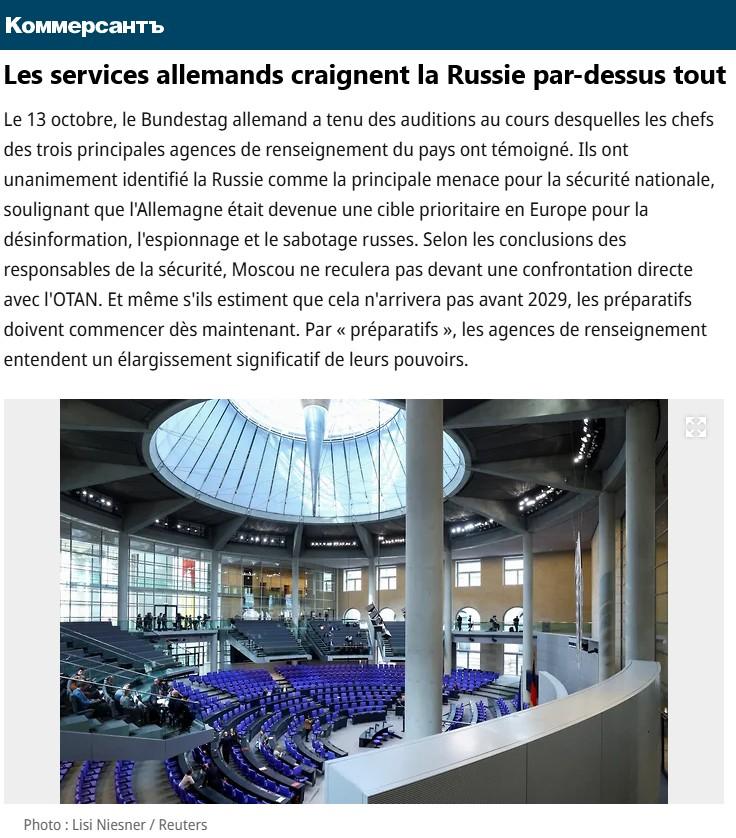
Le 13 octobre, le Bundestag allemand a tenu des auditions au cours desquelles les chefs des trois principales agences de
L’article La communauté du renseignement allemand désigne la Russie comme la principale menace et appelle à des “préparatifs” est apparu en premier sur STRATPOL.
A HISTORIOGRAPHIC ANALYSIS
Featured Image: Archival photo of old Gaza market and the historic Omari Mosque, ca. 1960
INTRODUCTION
In this article, I set out to dispel the narrative(s)—initially proffered by Yasser Arafat in the late 1980s and early 1990s but then popularized beyond intra-Palestine politics by liberal zionist journalists before being instrumentalized by the zionist entity’s intelligence apparatus—that the zionist entity “created”, “helped create”, or “funded” Hamas.[1] This set of claims enjoys deep popularity amongst would-be supporters of the Palestinian liberation struggle who, unwittingly, are repeating the choice framework of the zionist intelligence services and the Palestinian Authority’s Abu Mazen (viz., Mahmoud Abbas) who has pragmatically instrumentalized this claim to delegitimize the Hamas movement’s indigenous, local, and grassroots. Insofar as political science scholarship is concerned, this narrative also sports proponents like Beverly Milton-Edwards, who first proffers this thesis in her 1996 book, Islamic Politics in Palestine (London: Tauris Academic studies) and repeats it in her co-authored 2010 text with Stephen Farrell, Hamas: The Islamic Resistance Movement (Cambridge: Polity Press) and the two’s more recent, revised book, Hamas: The Quest for Power (Cambridge: Polity Press, 2024).
That this narrative has become broadly accepted and is now repeated by respected academics including Rashid Khalidi[2]—to then be circulated by an array of independent journalists like Dina Sayedahmed[3] and repeated by Borrell Fontelles, EU High Representative for Foreign Affairs and Security Policy (from 2019 until 2024)[4]—is unwarranted given the academic reception history of this narrative, which was thoroughly debated, challenged, and deflated at the time of Milton-Edwards’ initial publication. Indeed, in Khaled Hroub’s 2000 review of the book for the Journal of Palestine Studies,[5] Hroub—one of the most erudite and informed political scientists researching and publishing on the Hamas movement—adeptly and methodically dispels Milton-Edwards’ claim; in his subsequent book, Hamas: Political Thought and Practice, which contains the locus classicus contravening this claim, Hroub expounds on this issue, further invalidating its premises.[6] Nevertheless, decades later, the narrative persists, bolstered by zionist publications like Ha’aretz, The Times of Israel, and Yedioth Ahronoth; and piecemeal remarks from Shabak (viz., Shin Bet) intelligence operators like Yuval Diskin or ministers like Avigdor Liberman who, in the latter instance, strategically propounds Netanyahu’s supposedly propitiative instructions to Mossad chief, Yossi Cohen, characterizing his and Herzi Halevi’s allegedly placatory rationale vis-a-vis a similarly utterly weak-willed Prime Minister, remarking that “the Qataris” “[…] ‘begged’ […] to continue supporting” Hamas, with Netanyahu reputedly obliging in turn.[7] Even Amnesty International lends credibility to this claim in their 2022 report, adverting to Benjamin Netanyahu’s March 2019 remark concerning the zionist entity’s maintenance of “a separation policy between the Palestinian Authority in the West Bank and Hamas in Gaza” in order to “[help] prevent the establishment of a Palestinian state” before inferring that this bolsters the broader, unsubstantiated narrative of the entity’s lending direct assistance for Hamas.[8]
The supposed evidence for the claim that the zionist entity “funded”, “created”, or “helped create” Hamas draws from two historical instances, both of which the proponents of this narrative mischaracterize. The first (i) predates the establishment of Hamas on 8 December 1987[9] and concerns the licenses/permits that institutions related to the Palestinian branch of the Ikhwan (viz., Muslim Brotherhood) received. The latter concerns the 2018-2019 negotiations concerning the Great March of Return, where, following a lengthy and arduous negotiation process, the zionist entity conceded that the Hamas movement would be permitted to secure and transfer its Zakat funding through Qatar. This latter claim, though comparatively neoteric, not only consists in a misrepresentation of the historical record of the Great March of Return 2018-19 negotiations but has been purposed by political entrepreneurs/opposition candidates positioning themselves in contraposition to the Netanyahu government, utilizing this narrative to telegraph that, should they have led the government—or, alternatively, should they so elected to take up this role following the forthcoming elections—they would not participate in such reputed “mismanagement” of the Occupied Territories. The “Qatari cash payments” narrative has, in short, been opportunistically mobilized by a host of opposition candidates and representatives, proving as a wellspring with which to challenge the Netanyahu government’s administration of Gaza in particular.
In order to properly analyze the initial claim (i), we must adopt a historical understanding of the Palestinian Ikhwan/Muslim Brotherhood and how it garnered popularity from the Palestinian masses. It should be underscored at this preliminary point that the Palestinian Ikhwan/Muslim Brotherhood has, historically, been an organization with a distinct history, the proper understanding of which requires disambiguating it from other branches—particularly those that depart from the so-called “traditional Ikhwan” ideology inaugurated by Hasan al-Banna and subsequently promulgated by Sayyid Qutb. Even Palestinian political figures that, today, one conceives of as markedly distinct from the Hamas movement, including Yasser Arafat (viz., Abu Ammar) and Khalil al-Wazir (viz., Abu Jihad), were close affiliates or members of the Palestinian Ikhwan during the late 1950s.[10]
In the following section, I will adumbrate the history of the Palestinian Ikhwan and its development of social institutions. In the subsequent two sections, I will analyze the history of the claim, spurred by Arafat and Fatah, concerning the permits granted by the zionist occupation to al-Jam’iyah al-Islamiyah (the Islamic Society) and al-Mujamma’ al-Islami (the Islamic Center). In the final section, I will consider the more recent, though narratively continuous, issue of Qatar-issued cash payments that the entity, as a consequence of the Great March of Return negotiations, conceded to. Although there have been previous commentaries that aimed to dispel the narratives at hand,[11] this systematic review aims to both be more comprehensive in its political-historical exegesis and in its overview of the genealogy of this claim.
SECTION 1.
The Grassroots History of the Palestinian Ikhwan and its Social Institutions
In 1928, Hasan al-Banna formed the Ikhwan (Muslim Brotherhood) with the twin goals of Islamizing Egyptian society and liberating Egypt (and the Muslim world more broadly) from colonial rule. The 1930s saw the spread of the Hasan al-Banna School and its thinkers throughout the world. Abdel Rahman al-Sa’ati, the brother of al-Banna, and Muhammad As’ad al-Hakim toured Palestine, Lebanon, Syria in August 1935 to spread Ikhwan’s message. The two envoys, accompanied by Tunisian leader ‘Abdel ‘Aziz al-Tha’alibi met with Hajj Amin al-Husayni. For several years thereafter, the relations between Palestinians and the Ikhwan remained limited to an exchange of letters, mainly between al-Banna and Hajj Amin al-Husayni, expressing solidarity.
In March 1936, following the Great Palestine Revolt of 1936, the interest of the Ikhwan/Muslim Brotherhood in Palestine increased. The Ikhwan convened a special conference in March 1936 to support the rebellion. The General Central Committee in Aid of Palestine formed as an offshoot of the conference. From 1936-1939, the Ikhwan actively supplied moral and material aid to the Palestinian cause through the “Palestine Piaster” contribution campaign, which issues declarations and pamphlets attacking the British for their policies in Palestine. The Ikhwan also called for a boycott of Jewish zionist magazines in Egypt, which were being circulated by the Jewish Agency with the goal of inculcating Arab support for the Yishuv settler movement. It distributed, against the wishes of the British authorities during the time, the eighty-page booklet, Fire and Destruction in Palestine,[12] which was issued by the Palestine Higher Arab Committee. This resulted in the arrest of Hassan al-Banna, the founder of the Ikhwan/Muslim Brotherhood in Egypt. Subsequently, the Ikhwan in Egypt sent letters of protest to the British authorities of British Mandatory Palestine.
In 1943, a genuine Palestinian Muslim Brotherhood organization was formed: the Makarem Society of Jerusalem. During the subsequent year, 1944, Palestinian delegates were sent to the Fifth Convention of the Brotherhood, held in Aleppo. According to veterans of the movement, however, it was 1945 that the first official branch of the Ikhwan/Muslim Brotherhood Palestine was established in Gaza after the end of the Second World War. It was headed by-Hajj Zafer-al-Shawwa. Subsequently, the Ikhwan’s branches in Gaza grew to four: one belonging to the administrative office, another in al-Rimal, a third in Harat al-Zaitunah, and a fourth in al-Daraj. There were other branches in the Gaza Strip, in Khan Yunis, Rafah, and Buraij and Nusairat camps. Delegates from these branches became members of the Ikhwan’s administrative office in the Gaza region. Indeed, it took until 1945 for the Ikhwan to establish its Palestinian affiliate, the Palestinian Ikhwan/Muslim Brotherhood. By 1947, there were 25 branches throughout Palestine with a combined membership of between 12,000 and 20,000. The Palestinian Muslim Brotherhood’s popularity stemmed not only from the Palestinian resistance to British occupation but also the equally pressing issue of increased Jewish immigration of the Yishuv movement.
From 29 until 30 March 1946, the General conference of the Muslim Brotherhood branches in Palestine convened in Jerusalem. The conference was attended by delegates of the Ikhwan’s Palestinian branches; the conference was called by members of the Jerusalem branch to debate how to best unify the efforts of the Ikhwan’s members and establish a central office in Palestine. By 1947, there were thirty-eight branches and over 10,000 registered members, drawn from both the ruling elite and lower classes, of the Palestinian Ikhwan/Muslim Brotherhood. In October 1946, the Ikhwan held a convention in Haifa in which delegates from Trans-Jordan and Lebanon took part. This was the first convention to be devoted to topics of general national concern, including the issue of the British Mandate government of Palestine and its responsibility for the ongoing political instability, as well as placing the Palestine problem before the UN Security Council.
In October 1947, anticipating the Nakba, the Palestinian Ikhwan/Muslim Brotherhood called a convention in the wake of increased onslaught of Zionist immigration and emerging peril in Palestine. At the convention, the Muslim Brotherhood declared “its determination to defend the country by all means and its willingness to cooperate with all nationalistic bodies to that end,” adding that “[t]he Muslim Brotherhood will bear its full share of the cost of resistance.” The Brotherhood played an important role in uniting the two largest paramilitary organizations in Palestine: the Futuwwah and Najjadah, which had been in competition with one another. The military units belonging to these organizations united under the name of the Arab Youth Organization. Mahmoud Labib, the authorized representative of the Egyptian Ikhwan/Muslim Brotherhood for military affairs was put in charge of training. Soon, however, the British authorities expelled him from Palestine.
During the fighting of 1948, the Jaffa branch of the Palestinian Brotherhood was most active in terms of fighting. Within the branch, there existed a secret military organization that enlisted a limited number of men with proper qualifications. The Ikhwan in the region assumed responsibility for defense of the Bassa, Tal al-Rish, ‘Ajami, and Nuzha areas in Jaffa and for maintaining law and order within the city. They obtained some of their arms by way of Fawzi al-Qawuqji, head of the Kata’ib al-Jihad al-Muqaddas (Sacred Jihad Battalions). The Ikhwan joined the Jihad al-Muqaddas in fighting in and around Jerusalem. In the villages of Ramallah and Silwan, the Brethren not only joined local formations in combat, but they also formed their own rescue squadron, which was active in the area. The Brethren also fought alongside ‘Abdel Qader al-Husayni in the famous al-Qastal battle. The leader of the Brotherhood’s rescue squad, ‘Abdel Razzaq ‘Abdel Jalil, was wounded in the engagement. After the 1948 defeat and the loss of most of Palestine, the Brotherhood in the West Bank was incorporated into the Brotherhood of Jordan under a single organization. The Brethren in the Gaza Strip, due to their proximity to Egypt and total Egyptian control of the Gaza Strip, formed a separate organization that was in close contact with the Brotherhood’s center in Cairo. Due to this, the once fortified linkage between the Brotherhood in Gaza and the West bank was, to a significant degree, severed; the Brotherhood in the Gaza Strip took on revolutionary and military traits but the Brotherhood in the West Bank adopted a political and educational approach.
The Palestinian Ikhwan/Muslim Brotherhood branches became severed by the creation of the zionist entity in 1948. Following the Nakba, as is well known, Jordan annexed the West Bank and the Gaza Strip came under Egyptian control. Refugees became an important part of the Ikhwan’s constituency as, unlike the traditional elite, it succeeded in establishing a presence in all major refugee camps; this presaged the broadly grassroots working class support that its Islamic and social services and charity institutions would garner. The Muslim Brotherhood movement united with the movement in Jordan and those in Gaza Strip formed its own administrative office, led by Sheikh Umar Sawwan until 1954.
Following annexation of West Bank to Jordan in 1950, Palestinians became Jordanian citizens. The Ikhwan organizations in the West Bank and former Trans-Jordan united under the name of the Muslim Brotherhood in Jordan. It became focused on da’wa and educational activities rather than military activities. This served as the driving force behind the convening of the General Islamic Conference in Jerusalem, in April 1953. The conference met several times in Jerusalem and Damascus for two consecutive years, attracting Islamic delegates from China, Indonesia, Iran, Malaysia, Pakistan and Arab countries. The Jordanian government prevented the conference from meeting in 1955 and closed down its permanent office in Jerusalem in July 1955. however the Jordanian government did allow the conference to resume its meetings in June 1956.
Between 1950 and 1955, some Ikhwan groups in the Gaza Strip formed military cells (again prefiguring the military wing of Hamas that would transpire decades later). Two secret militant organizations were formed to engage in armed struggle: Youth for vengeance [Shabab al-Tha’r] and the Battalion of Justice [Katibat al-Haq]. Prominent leaders in Youth for Vengeance included: Salah Khalaf, As’ad al-Saftawi, A’id al-Muzaiyin, Omar Abu al-Khair, Isma’il Suwairjo, and Muhammad Isma’il al-Nuni. The membership of the Battalion of Justice included Khalil al-Wazir (Abu Jihad), Hassan Abdel Hamid, ‘Abd Abu Marahil, and Hamad al-‘Aidi. These organizations would provide inspiration for the formation of Fatah, the Palestine National Liberation Movement, in 1957. Notably, all of the members of the Battalion later joined Fatah, as did most members of the Youth for Vengeance.[13]
In 1954, the Ikhwan grew increasingly vocal in its criticisms of Jordan and King Hussein’s strong ties to the West. It staged demonstrations in 1954 to protest the presence of the Jordanian army (i.e., the Arab Legion). It opposed the Baghdad Pact (a position that forced Muhammad ‘Abdel Rahman Khalifah, the Brotherhood’s ombudsman, to seek refuge in Damascus in 1955). It also took issue with the Eisenhower Doctrine, which the Jordanian regime supported. Parliamentarians representing the Brotherhood voted against granting confidence to some cabinet appointments by the King of Jordan, notably that of Wasfi al-Tal in 1963. Still, during this period, mutual interests between Jordan and the Ikhwan tended to triumph over suspicions and the turbulent relationship. This allowed it to maintain its existence.
In 1954, Gamal Abdel Nasser outlawed the Muslim Brotherhood in Egypt. The Palestinian branch experienced a devastating blow and almost disappeared. It was reduced to a small number of students, teachers, and workers, functioning almost entirely underground. Zafer al-Shawwa was the first to withdraw from the Ikhwan following the decree to dissolve the group. He had headed the Brotherhood’s administrative office in Gaza and was also the appointed mayor of the city. He issued a statement declaring his support of the revolutionary government in Cairo and of all its measures against the Brotherhood. This period is significant as it saw the contraction of the Ikhwan and its reorientation towards institution-building.
From 1954 onwards, the Gazan Brotherhood/Ikhwan became caught in the power struggle between Egypt’s Gamal ‘Abd al-Nasser and the Egyptian Ikhwan, in an Nasser’s clampdown on autonomous Palestinian resistance groups. Within this hostile climate, the Gazan Ikhwan decided to at least temporarily turn its back on resistance, but to little avail. By the late 1950s, most of its members were in prison or exile, leaving only a handful of supporters at large, while Arab Nationalism became the dominant ideology. The decision to renounce resistance led activists like Khalid al-Wazir (Abu Jihad) to leave the Ikhwan and set up their own movement, Fatah, in the late 1950s. The West Bank Ikhwan had some 700-1,000 members but were overshadowed by the 2,300 members of the Palestinian Communist Party and the larger Jordanian Ikhwan, which they integrated. The Ikhwan, although they organized some weapons training programming, focused on welfare and local politics, winning parliamentary seats in Hebron and Nablus; following the Jordanian Ikhwan’s decision to be a “loyal opposition” to the King, they subjugated calls for the liberation of Palestine to the King’s agenda, focusing more on anti-imperialist and moralist themes, although they did champion Palestinian issues like the right of return for refugees. In West Bank, the Ikhwan’s subjugation was prompted by the traditional elite in the organization who, unlike the predominantly lower class Gazan leadership, had a greater stake in preserving the status quo. After 1954, the Palestinian Ikhwan in Gaza had continued working in secret, as the Nasser’s regime exacted crackdowns and persecutions of its members.
In 1955, the Ikhwan emerged as foremost political movement in Gaza Strip. When Nasser banned the Ikhwan in Gaza, which was then under Egyptian rule, it became a clandestine organization pursued by the police, as was also the case with the Communists and the Ba’thists. Enrollment in the Brotherhood dropped and the principal cadres fled the Gaza Strip in order to avoid repression and search for a source of income. Among the leaders who emigrated were Fathi al-Bal’awi, Salah Khalaf, Salim al-Za’nun, ‘Awni al-Qishawi, Zudhi Saqallah, Sulaiman Abu Karsh, and Kamal al-Wahidi. Nevertheless, the group remained politically active at a grassroots level. The Ikhwan in the Gaza Strip helped abort a 1955 proposal to resettle some Palestinian refugees in Egypt’s Sinai peninsula. Furthermore, the Ikhwan organized popular demonstrations jointly with the Communists and Ba’thists, demonstrating its openness to coalition-building.
From 1955-1956, the Ikhwan again hewed to its militant past, demonstrating the cyclic-processual nature of armed resistance and social services-based activism that the Palestinian Ikhwan (and, later, Hamas) would adopt. The Ikhwan in the West Bank had begun to train with weapons smuggled across the Sinai. The head of the Hebron Branch of the Ikhwan had struck an agreement with the commander of Jordanian forces in the region for members of his branch to receive training from army instructions. During the zionist occupation in 1956-1957, which lasted 6 months, the Ikhwan formed a National Resistance Front with the Ba’thists, adopting a strategy of engagement in armed struggle against the Israelis.
July 1957 saw a memorandum from Khalil al-Wazir (Abu Jihad) to the leadership of the Ikhwan in the Gaza Strip recommending that the Palestinian Muslim Brotherhood take up the responsibility of preparing for armed struggle. The Palestinian Muslim Brotherhood did not take Khalil al-Qazir’s memorandum seriously, however, fearing that it was ill prepared and this might attract attention from Nasser’s police; the leadership thus wished to remain secretive and circumscribe the ranks of the organization. Nevertheless, in 1958-1959, members from the Palestinian Ikhwan who believed in the need for a mass mobilized movement undertook a project of actively recruiting individuals behind the backs of the leadership. Thus came to fruition the establishment of the Palestine National Liberation Movement-Fatah, which attracted some prominent Brethren who had initially remained loyal to the Brotherhood. These included Salim al-Za’nun, Salah Khalaf, As’ad al-Saftawi, Kamal ‘Udwan, Abu Yusuf al-Najjar, Sa’id al-Nuzayin, Ghaleb al-Wazir, and others who did not become as well known.[14]
Rather than adopt the Fatah option for the liberation of Palestine, which depended on securing support from Arab countries in the struggle with Israel, the mainstream Ikhwan in Palestine chose the alternative of consolidating the power of its existing organization with the expectation that, when it succeeded in its mission, it could and would liberate Palestine with the support of the entire Islamic world. The Ikhwan felt that it could appeal to the fact that Muslims everywhere had a sacred duty to save al-Quds, which was the first qibla in Islam, and to liberate the land of al-isra’ wal mi‘raj. With this being its focus, during the late 1950s and throughout the 1960s, the Palestinian Ikhwan pursued a policy of not engaging in resistance. Both the Gazan and West Bank branches, for different reasons, had decided to focus on social and political activities.
During this period, of the 1950s-60s, the Ikhwan in the West Bank capitalized on the relative tolerance of the Jordanian government (particularly in comparison to that of Nasser’s Egypt). The Brotherhood won seats in the Jordanian parliament, representing such Palestinian cities as Hebron and Nablus in the 1954, 1956, and 1962 elections. It should also be said that, in 1960, the Ikhwan—motivated by its belief that the Palestinian liberation movement should prioritize social institution-building and Islamic cohesion—adopted an official decision against the formation of Fatah. While the Ikhwan preserved a non-hostile attitude towards Fatah, it argued that Fatah’s militant project was doomed to failure. This marked a historical turn whereby for the first time since the 1930s, the Palestinian armed resistance movement and the Palestinian Islamists saw a clear split in strategy. The Palestinian Ikhwan focused on elections and social programming. For example, in 1962: Muslim Brotherhood in West Bank’s candidate, Sheikh Mashhour al-Damen won highest number of votes in Nablus in 1962. The Ikhwan also regrouped, believing that its program would benefit from a unified stance. It formed the Palestinian Organization, which the Palestinian Ikhwan in the Arab Gulf countries was affiliated with, electing Hani Bdisonas their Comptroller General in the summer of 1962.
Having outlined the precise nature of the Palestinian Ikhwan and how it became a force focused on social programming and elections, we can now turn to the issue of its gaining permits/licenses during the period of zionist occupation.
SECTION 2.
Permits/Licenses allotted to al-Jam’iyah al-Islamiyah (the Islamic Society) and al-Mujamma’ al-Islami (the Islamic Center): Contesting Narrative (i) that the Zionist Entity helped “create” Hamas
This section focuses on the claim that Hamas was “created” by the zionist entity—a claim which is decades old, oft repeated and relies on the Palestinian Ikhwan institutions receiving permits for operation during the period in which the zionist entity occupied and managed all institutions operating in Gaza and the West bank. Because, compared to the more recent “Qatari cash payments” claim (viz., narrative (ii)), this claim concerning the Palestinian Ikhwan institutions’ receiving licenses is the most entrenched claim, I will spend the most time with it.
After the disastrous war/Naksa of June 1967 and Israeli capture of Golan Heights, Sinai, and the rest if Palestine, the Islamic movement began to regain its vitality amongst Palestinians; however, its institutions—like all Palestinian institutions—had to operate under zionist institution’s surveillance, with Gaza and the West Bank held under zionist occupation.
As Azzam Tamimi recounts, it was in 1966 or 1976 when Sheikh Yassin formally joined the Ikhwan.[15] This also coincided with what is called the Ikhwan’s “mosque building phase” where, between 1967 to 1975, it campaigned to build mosques and Islamic institutions that would “mobilize, unite, and consolidate the faith of a new generation so as to prepare it for the confrontation with Zionism”.[16] One of the most important such Islamic institutions was al-Jam’iyah al-Islamiyah (the Islamic Society). As Tamimi recounts:
In 1967, after working for nearly a decade from their own homes and in the mosques, the Ikhwan deemed the situation appropriate for the launch of their first public platform. This was al-Jam’iyah al-Islamiyah (the Islamic Society), whose objective was to conduct educational, recreational, and sporting programs for the youth. The Israelis did not see this association as any kind of threat, and granted the Ikhwan a license for its establishment. Run from a room in al-Shati’ (beach) Mosque, the society’s activities included sports, recreational trips, scouting activities, and public lectures on religious and social issues. Meanwhile, from his base at al-Abbas Mosque, Sheikh Yassin succeeded in collecting enough money from donors to reprint the last volume of Sayed Qutb’s Qur’anic exegesis, entitled Fi dhilal al-Qur’an (In the shade of the Qur’an). To ensure that it gained the widest possible circulation, and especially to encourage students to read it, he divided it into five separate sections, printing 2,000 copies of each. This project helped change the way the Ikhwan was perceived in Gaza. Qutb […] was introduced to the readers both as a revolutionary fighting for justice and as a scholar of the highest standing.[17]
That, in 1967, al-Jam’iyah al-Islamiyah (the Islamic Society) received permits for the educational activities run in al-Shati (beach) Mosque would later serve as one of the sources of the claim initiated by Arafat and then repeated by the earliest zionist journalist popularizer of this narrative, Michal Sela, who proffered it in a 1999 Jerusalem Post article.[18] However, the permit was granted under the auspices that al-Jam’iyah al-Islamiyah was part of exclusively Islamic erudition, with the zionist occupation presuming that the Palestinian Ikhwan in Gaza had—as was their publicly stated platform—abdicated armed resistance.
It should also be highlighted that this publicly projected stance was not the thorough-going position of the Palestinian Ikhwan but that of the Gaza branch, which is why al-Jam’iyah al-Islamiyah (the Islamic Society) was permitted a license (with then-Prime Minister’s Levi Eshkol’s occupational government allotting such licenses for what they regarded as purely social organizations). Such was not the case in the West Bank, which saw the participation of the Palestinian Ikhwan in the 1968-70 resistance campaign known as the “Sheikhs’ Camps” in Jordan in collaboration with Fatah; around 300 men were trained and posted to seven commando bases. This activity was circumscribed to the Palestinian Ikhwan outside of the Gaza Strip, which launched a campaign of guerrilla raids across the Jordan border with the zionist entity. It set up four bases under the banner of Fatah in the northern Jordan Valley near the border. Apart from lending its name, Fatah had nothing to do with those bases. The decision to set up the bases had been taken by the overall leadership of the Ikhwan/Muslim Brotherhood in the Arab world, not by the Gaza Strip Ikhwan. The Jordanian (including West Bank) Ikhwan were the most enthusiastic, as were the ones in the Sudan; however, the Gaza branch opposed the idea as they thought the endeavor would prove futile.[19] From 1968-70, the Ikhwan in the Jordan Valley engaged in some significant military operations across the border with the zionist entity; again, this effort was at the instigation of the general headquarters of the Ikhwan in the Arab world and was, according to Abu ‘Azza, not an initiative of the Palestinian Ikhwan itself.[20]
While Fatah sought to liberate Palestine via military initiatives that they believed would bring regular Arab armies into Battle, the Ikhwan in Gaza continued proselytizing activities, seeking to win adherents and create a generation of Palestinians that could carry out the task of liberation and rally the Islamic umma behind the effort. The Gaza Ikhwan in particular focused on creating mosques, charities, kindergartens, Qur’anic schools, and, occasionally, medical clinics equipped with mobile units that granted free of charge medical service to the general population, including those outside of urban centers; these mobile clinics, which employed Ikhwan medical specialists, would travel to the rural areas to treat farmers. Ikhwan pharmacists would also help in dispensing medicine at low prices. The Ikhwan would also pay for customary Islamic celebrations. They maintained these, and al-Jam’iyah al-Islamiyah (the Islamic Society), via zakat communities—not funding from the zionist entity.
Precipitated by the September 1970 “Black September”,[21] which found the Palestine Liberation Organization relocating to Lebanon, the Palestinian Ikhwan, reacting to the large scale of Palestinians massacred in Jordan, adopted a uniform position in both the West Bank and Gaza Strip; it now sought to exclusively pursue an educational mission.
Encouraged by the successes of the al-Jam’iyah al-Islamiyah (the Islamic Society), in 1973, a new successor-institution, al-Mujamma’ al-Islami (the Islamic Center) was founded in Gaza by Sheikh Ahmad Yassin and a number of adherents, whose prominent figures would later win international notoriety as the leaders of Hamas. These included Dr. Mahmour Zahar, Dr. Abdel Aziz Rantissi, Ibrahim Yazouri, Abd al-Fattah Dukhan, Issa al-Najjar, and Salah Shehadeh. These founders were recently graduated students from the lower middle classes. Al-Mujamma’ al-Islami was created to render further social, medical, and educational services to, in particular, the community of Jawrat al-Shams, south of Gaza City. Again, the funding was, contra claims that would later be made, entirely endogenous. As Tamimi summarizes, the:
[…] building was funded by donations collected from the wealthier Palestinians of the West Bank, and once construction was complete, an application for a license to operate was lodged with the Israeli occupation authorities. The Israelis issued the necessary license, which, however, a few days later, they revoked. It later emerged that a prominent Palestinian figure in Gaza had advised the Israeli authorities to withdraw the license because of a personal dispute with the project committee over his own role in it. This prominent Palestinian […] [was] believed to have links to the Israelis [….] After repeated appeals, and through the good offices of another prominent Palestinian figure […] the Israeli authorities re-issued the license and the Center was opened. Al-Mujamma’ (the Center) had a much wider scope than al-Jam’iyah (the Society) and its objectives included the provision of a variety of social services and the establishment of mosques, kindergartens, schools, and clinics across the Gaza Strip. The services and facilities provided by the Center proved so popular that a branch was soon opened in Khan Yunis.[22]
That the licenses were readily revoked upon complaint should clarify that this institution was not “created” by the zionist entity but merely tolerated, insofar as it appeared to be at odds with any resistance-related activity.
Al-Mujamma‘ al-Islami (the Islamic Center) functioned as the nexus of the Palestinian Ikhwan’s charitable activity and helped the group garner a significant popularity amongst lower and lower-middle socioeconomic classes—the very groups that would serve as Hamas’s base in future decades. Al-Mujamma‘ al-Islami (the Islamic Center) was followed by a number of related institutions, including, 1976, al-Jam‘iyyah al-Islam‘iyyah (the Islamic Association), “which focused on educational, social welfare activities in areas neglected by others: refugee camps and poor urban quarters”[23]. Al-Jam’iyya al-Islāmiyya (the Islamic Association) was not founded by Ahmad Yassin but by Isna’il Abu Shanab and Ahmad Badar, though it was effectively an instrument for Al-Mujamma‘ al-Islami (the Islamic Center). Primarily, Al-Jam’iyya al-Islāmiyya (the Islamic Association) established kindergartens, health clinics, summer camps, and various religious and social activities.
In 1978, the year that Al-Mujamma‘ al-Islami (the Islamic Center) was legalized in Gaza, the Palestinian Ikhwan merged with the Ikhwan in Jordan in one organization called the “Bilad al-Sham” organization. This was also the year that the Islamic University of Gaza was founded, Gaza’s first university, whose “founding board members were mainly members of the Ikhwan who were also involved with the al-Mujamma’ al-Islami (the Islamic Center), at the time presided over by Sheikh Yassin.”[24] Notably, in 1981, Al-Mujamma‘ al-Islami (the Islamic Center) helped with the creation of a sister organization, “al-Jam‘iyyah al-Jam‘iyyat al-Shabbat al-Muslimat (Young Women’s Islamic Association), laying the foundations for the popularity Hamas was later to enjoy among women”[25]
These organizations funding was entirely through the Islamic pillar of zakat, or alms-giving. This would prove prudent during the First Intifada, when the zionist entity would claim that the Palestinian Ikhwan’s charities funded violent acts; as Tamimi writes,
[…] no evidence to prove such allegations has ever been provided” and “in order to avert any legal sanction, it was ensured that zakat committees and the institutions that supported them abroad were properly licensed. Meticulous care was taken to ensure their activities were absolutely legal and transparent; and not a single penny of the money received by these charities were allowed to slip into other projects, especially not to the military effort [that transpired during the First Intifada], which had its own discrete sources of funding.[26]
These organizations collectively “succeeded in more than doubling the number of mosques under their authority”.[27] The proliferation of mosques, which accompanied coeval social services, burgeoned with celerity, rising from 200 in 1967 to 600 in 1987. As Leila Seurat correctly summarizes “[i]nvolvement in proselytizing activities was meant to prepare the next generations to liberate Palestine […] These initiatives were at the time tolerated by Israel”.[28] Toleration is quite distinct from creation or instigation, however; yet the toleration—which, as aforementioned, was not always sustained, with these institutions subject to permit-rescindment by the occupying zionist entity depending on its whims. Yet some commentators, particularly those liberal Zionists like Michal Sela and Charles Enderlin, have argued, making unsubstantiated claims, that this toleration was due to the zionist entity’s hoping that Al-Jam’iyya al-Islāmiyya (the Islamic Association) and its related organizations would serve as an effective counterweight to the PLO, which pursued military activities.[29] There is no evidence that this was the case, however, and the Ikhwan in Palestine was, indeed, soon to pursue resistance activities such that, were this to have been the zionist occupation’s motivating thinking, it too would have been mistaken. However, this did not prevent early zionist commentators—particularly liberal zionist journalists who used this narrative as a cudgel to critique their more right-wing government—from arguing, as Sela did in May 1989 article arguing that:
Until a few years ago, the organizations in Gaza and the Islamic University received much encouragement from the military government. The various organizations were registered by law as charities. The military government accepted them, knowing that they were being used, inter alia, for political activity, bringing in money from abroad for their activities. They were allowed to build mosques, whose number increased from 70 in 1967 to 180 today. The military government believed that their activity would undermine the power of the PLO and of leftist organizations in Gaza. They even supplied some of their activists with weapons, for their protection.[30]
Sela’s claim that nascent military arm of the Palestinian Ikhwan’s Islamic Resistance Movement (IRM), formed in 1980, was supplied weapons by the zionist entity is a sheer fabrication. As Rub‘i al-Madhun recounts, during the early 1980s, Sheikh Yassin established the military wing of the Ikhwan in the Gaza Strip, which was led in the beginning by Abdul-Rahman Tamraz and then Salah Shehadeh.[31] This was not only an entirely endogenous creation but the issue of arms was a highly surreptitious affair that, when exposed, resulted in severe punishment from the occupying entity. Relatedly:
The first precursors of the establishment of the military wing [of Hamas] appeared in 1980 when the leadership sent some of its cadres abroad for military training. Sheikh Ahmad Yasin established the military wing [viz., the IRM] in GS [viz., Gaza Strip], led in the beginning by ‘Abdul-Rahman Tamraz and then Salah Shehadeh. However, the military wing was exposed by a suspicious arms dealer, leading to a crackdown against it […] [between 25 February – 1 July 1984] […] The Israeli authorities arrested Sheikh Ahmad Yasin for belonging to 13 years in prison. Yasin was released in a prisoner swap between Palestinian resistance forces and Israel on 20/5/1985.[32]
Indeed, the arms that the IRM obtained were either purchased from Fatah or through the black market, using funds that were provided from within the Ikhwan by its own networks.[33] Tamimi provides what is the most detailed English-language account, adumbrating a committee that transpired inside of the Palestinian Ikhwan that planned for the group to take up arms—a program it clandestinely maintained despite widespread critique from the PLO that it remained separate from the ongoing resistance activities; this committee began as a relatively modest group of operatives who were attached to the department of the Secretariat of the Palestinian Ikhwan’s Executive Office. It would eventually burgeon into a massive network of organizations that collectively became known as Hamas. It is worth quoting Tamimi’s historical outline of the formation of this committee in full:
[…] the Palestine Committee, at times referred to as the “Inside Committee,” headed by the Amman-based Secretary of the Tanzim Bilad al-Sham Executive Office, received a sum of $70,000, raised by the Kuwaiti branch [of the Ikhwan]. This was to be delivered to the Ikhwan in Gaza to fund their first jihad project, to which the committee had, in confidence, given its backing. The money was to be used for the purchase of weapons and ammunition and to send a number of individuals to Amman to receive military training.
Only Sheikh Ahmad Yassin and a very close circle of his associates were aware of this project, plans for which were finalized in 1982. Other members of the Gaza Executive Committee of the Ikhwan were not informed. Outside Palestine, no one knew about the plan apart from those directly involved in the Palestine Committee, whose role was to provide the funds and the facilities to train the Gazans in Jordan. A group of Ikhwan members from Gaza came to Jordan, received the necessary training, and returned to Gaza to form the first cell in the Ikhwan’s military apparatus. Sheikh Yassin set up two separate systems for the purchase of arms, which were readily available for sale in Israel and usually originated with the Israeli army. Israeli officers and soldiers would steal weapons and sell them on the black market. Those who did this were generally doing it to support their drug addictions. However, the Ikhwan members who were assigned the task of procuring the weapons by way of one of these two routes lacked experience and took insufficient precautions. Consequently, they fell into a trap set up for them by collaborators, and were tricked into buying weapons from Israeli agents. The plan was uncovered, and those who were interrogated by the Israelis, under severe torture, divulged the names of their superiors. Initially Sheikh Yassin believed the arrests were the result of some accident, but he soon saw that those targeted were progressively higher in the ladder of responsibility. If the process was allowed to continue, he concluded, the Israelis would eventually reach him. Only two people knew of his involvement: those who headed the two weapons-purchasing networks. He immediately ordered these two men to leave the country. One of them, Dr. Ahmad al-Milh, fled successfully to Yemen, where he has since remained. The other, Dr. Ibrahim al-Maqadmah, could not find a way to leave. He was arrested and confessed under torture that Sheikh Yassin was the ringleader. Sheikh Yassin was immediately arrested.
At the time, rumors were circulating in Gaza to the effect that the Ikhwan had been buying weapons in order to use them against their opponents in the other Palestinian factions. The Ikhwan had already made powerful enemies in the ranks of Fatah and the left wing of the Palestinian nationalist movement. These rumors found ready credence, owing to the tension that gripped Gaza at the time [….] However, on 15 April 1984, an Israeli military court found Sheikh Yassin guilty of plotting to destroy the State of Israel and sentenced him to thirteen years imprisonment. Ibrahim al-Maqadmah was sentenced to, and served, eight years. A key figure in the plot was Salah Shihadah, whom the court was unable to convict because he would not confess. Nevertheless, the Israelis continued to suspect his involvement and he spent two years in administrative detention. The Israeli authorities were able to seize half the weapons the Ikhwan had bought and stored. However, the other half, purchased through the second network, which had not been broken, remained hidden. These arms were used in part some two years later when military actions were taken against Israel’s collaborators ahead of the eruption of the intifada in 1987.[34]
This passage reveals that contra Sela’s assertions, the zionist entity persecuted the Ikhwan due to its weapons cache, rather than supported it. The funding, too, as the passage reveals, was entirely endogenous, untethered to the zionist entity. Furthermore, so were the ideological tenets bolstering the Palestinian Ikhwan and Inside Committee’s thinking. The organizers, who emphasized attention to ideology and theorizing, were guided by the writings and guidance of Munir Shafiq, who was then a newcomer to the arena of Islamic struggle. Shafiq had a notable influence on the formulation of resistance strategy for those organizations. Likewise, a booklet by Khaled Salah al-Din, “Al-Halaqa al- mafqooda bain al-thawra al-filastiniyya wal itijah al-Islami” [The missing link between the Palestinian revolution and the Islamic trend], which appeared shortly before the First Intifada, had a great influence. These were the indigenous intellectual and theoretical building blocks of the Islamic struggle for the liberation of Palestine, which developed quite independently of the zionist entity’s supervision.
SECTION 3
Abu Ammar and Fatah’s Popularization of the Narrative that Hamas was “created” by the Zionist Entity—an Account Later Popularized by Beverly Milton Edwards
Apart from zionist commentators, however, there is a second and perhaps more significant reason that this narrative that the zionist entity “created” Hamas by helping found these institutions proliferated. Unfortunately, Arafat himself contributed to the popularization of this account, charging “that Hamas was established with the direct or indirect support of Israel”, reiterating “this accusation since the formation of Hamas,” despite, as Khaled Hroub states “the occurrence of such accusations seems to correlate with the amount of tension between Hamas and the PLO at any given time”.[35] Arafat made such statements in the 24 September 1992 issue of “Al-Quds al-Arabi” and the 28 February 1993 issue of “Al-Sharq al-Awsat”. However, these fallacious statements were motivated by an enmity that grew out of bitterness to Hamas’ opposition to the so-called Madrid-Oslo “peace process”. Let us now turn to this to better understand why this narrative first transpired.
As Hamas established itself during the First Intifada—with its first communique issued on 14 December 1987—and was organically part and parcel of this uprising, it was politically necessary for it to form alliances with other Palestinian resistance organizations, which were also involved in the Intifada. Notably, these relationships were contextualized by the then accelerating pace of the so-called “peace process”, which picked up in parallel with the Intifada as a Palestinian state was declared at the Algiers 1988 Palestinian National Council (PNC) session. With the subsequent 1991 Madrid Conference and the 1993 Oslo Agreement, those Palestinian political factions opposed to normalization recognized the need for coordination with one another.
In a letter from prison at the end of 1993, Sheikh Yassin suggested that Hamas should be pragmatic and utility-maximizing in coordination with other resistance groups.[36] George Habash, secretary general of the PFLP, spoke with notable enthusiasm about Hamas in the publication “Filastin al-Muslima”, remarking that:
From the ideological position of total confrontation, I welcome Hamas joining the swell of total resistance to the Zionist enemy. Whoever is familiar with that (Islamic) movement—its slogans, its priorities, and the ambiguities that beset the occupied territories because of the positions it has adopted—and compares that with its position today, after the intifada, cannot but notice a huge difference and has to welcome warmly its joining the nationalist movement. There can be no doubt but that the participation of Hamas and [Palestinian] Islamic Jihad in the battle is a victory for the nationalist struggle and a boost to the popular uprising.[37]
The secretary general of the DFLP, Nayef Hawatmeh was more reserved at first, remarking that Hamas’s conduct in its early years was at odds with the Unified National Leadership of the Intifada. This was because Hawatmeh believed Hamas should have joined the Unified National Leadership. As is well known, Arafat and the PLO’s leadership had taken over the Unified National Leadership of the Uprising (also known as UNLU), which they announced on 8 January 1988. UNLU had, under Arafat, thus sought to assert Fatah and the PLO as the leading faction in the Intifada, poised contra Hamas. When the Intifada broke out on 9 December 1987, Hamas initially began to organize its activities and public demonstrations independently.[38] The PFLP and DFLP, on the other hand, joined Fatah in the formation of the UNLU. When the 19th Palestinian National Council held its session in November 1988, the leftist factions, along with Fatah, collectively agreed on the decision to declare Palestinian independence, which Hamas regarded as an implicit recognition of the Partition Plan for Palestine, United Nations General Assembly Resolution 181 of 29 November 1947.
However, the PFLP refused to approve UN Security Council Resolution 242, which deals with the Palestinian people as refugees. Although these leftist factions followed the peace process that Fatah’s leadership spearheaded in Madrid in 1991, they eventually took a clear oppositional stance to the signing of the Oslo Accords on 13 September 1993. Most of the Palestinian leftist groups banded together in the “Alliance of Ten Factions”, which also included Hamas and Palestinian Islamic Jihad. This provided the basis for a joint action alliance that included protests during the Intifada and a wide political opposition to the Oslo Accords. Hamas, PIJ and the leftist groups’ alliance had its origins in a meeting held on the sidelines of the Conference in Support of the Intifada in Tehran in October 1991, shortly before the Madrid Peace Conference. Then the alliance was formalized on 1 January 1994, when it announced itself a part of the “Alliance of Ten Factions”. Fatah, sidelined from and disgruntled by this alliance between the leftist factions, Hamas, and PIJ, regarding Hamas as the driving force, treated Hamas with chronic reluctance at first and enmity later; throughout the Intifada of Stones, it began accusing Hamas of being an inorganic agent, created by the zionist entity or a cut-out of Iran that was seeking to render an alternative to the PLO.
Arafat was not alone in making these claims. While acknowledging a certain amount of inevitable coordination with Hamas, Salah Khalaf (Abu Iyad), the third most important PLO leader during the intifada, argued Hamas was attempting to carve itself out as an alternative to the Unified National Leadership (UNLU). Hoping to delegitimize Hamas, Abu Iyad fallaciously averred that the zionist entity was placing its hopes on this alternative to UNLU, therein invigorating what would become a regular Fatah trope, repeated frequently. Fatah’s position became ossified, with leaders repeating that Hamas had received support in its founding from the entity. In his attempts to delegitimize Hamas and the leftist-political Islam alliance it had effectively rendered, Abu Iyad furthered the fallacious narrative popularized by other Fatah members, including Arafat, “that Israel tried to use Hamas to undermine the Palestinian national movement”; it should be highlighted that these statements were produced as early as March 1990 and only multiplied in the following months.[39]
That Hamas proved principled in its refusal to bow to the so-called “peace process” only furthered the obdurate Fatah line. In April 1990, the PLO had invited Hamas to participate in the concurrent meetings of the preparatory committee working on reconstituting the Palestinian National Council (PNC). This invitation was envisaged as a preliminary step to Hamas’s admission to the PNC and constituted the first official recognition by the PLO of Hamas as a nationalist Palestinian group that was due respect and had to be dealt with in that capacity. Hamas, however, declined this invitation. Three months Later, the PLO, in its weekly publication, “Filastin al-Thawra” (the PLO’s official organ) accused Hamas of deserting the unity of nationalist ranks and of trying to deviate from “the commandments, the organic structure and the laws of the Palestinian family”.[40]
This editorial expressed the official PLO position in its mainstay publication. In July 1990, the PLO released a statement that Hamas had “been established to satisfy an Israeli aim, or at least that it had been established with the consent of Israel in order to weaken the PLO”, a charge that “would evolve as Hamas’s relations with Islamic parties—notably Iran—developed”.[41] This development demonstrates that it was less the substance of the charge that mattered for those proposing it than the broader penumbra of doubt. As is well known, the Madrid Conference of October 1991 marked the beginning of Iranian support for Hamas. With Arafat’s backing of Saddam Hussein, Ayatollah Khomeini’s preferential relations with the PLO had rapidly deteriorated, with now Iran hewing closer to Hamas. On October 18, 1991, the second International Conference in Support of the Islamic Revolution of the People of Palestine (ICSIRPP) convened in Tehran; here, 400 delegates from 45 countries participated. Sheikh Khalil Qawqa, Al-Alami, and Musa Abu Marzouk represented Hamas.
According to Jeroen Gunning, “[w]hile Fatah lost the financial support of its Gulf state sponsors, Hamas’ financial support increased”.[42]
Where Arafat once accused Hamas of being a project directly or indirectly fostered by the zionist occupation, he now claimed foreign governments had inserted itself in Palestinian national politics by using Hamas as a conduit.[43] Curiously enough, in doing so, Arafat anticipated the alliance that Fatah and sectarian Salafi-Jihadi groups would form in the 2010s, when they would accuse Hamas of being an Iranian proxy. But these claims, like those that Hamas was an offspring of the zionist entity, were entirely fabricated.
The real reasoning that Fatah spun this narrative was due to Hamas’ robust and increasingly welcome opposition to the Madrid-Oslo “peace process”. From 22-24 October 1991, Hamas coordinated with leftist and nationalist organizations by declaring the formation of the Ten Resistance Organizations (TRO), just prior to the 30 October 1991 convening of the Madrid Conference. The birth of the TRO was announced by leaders of eleven organizations and the coalition included Hamas, the Popular Front for the Liberation of Palestine (PFLP), the Popular Front for the Liberation of Palestine – General Command (PFLP-GC), the Democratic Front for the Liberation of Palestine (DFLP), Palestinian Islamic Jihad (PIJ), the Movement for Palestinian National Liberation—Fatah/Al-Intifada, the Movement for Palestinian National Liberation—Fateh/Revolutionary Council, Vanguards of the War of Popular Liberation, Al-Sa’iqa, the Popular Struggle Front, and the Revolutionary Palestinian Communist Party. The first joint communique, issued on 24 October 1991, called for a general strike on the day that the Madrid Conference was to convene.[44] Opposition to the Madrid Conference was the common denominator among these organizations and this was the subject of the first joint communique released via the TRO. The TRO did not form a joint organizational or command structure until the Alliance of Palestinian Forces met in January 1994. The involvement of Hamas and PIJ was evident in the emphasis, in some of the communiques, placed on the borders of historic Palestine (i.e., from the Mediterranean Sea to the Jordan River), the rejection of any peace settlement, and references to the Islamic dimension of the problem. These hardline terms, championed by Hamas, remained deeply objectionable to Fatah, as it was seeking to pursue a peace process with the zionist entity. Another worry was that Hamas would inaugurate a successor- or competitor-organization to the PLO. Granted, the TRO’s loose structure allowed for only minimal coordination among the fasa’il, which often made it difficult for the TRO to respond to the momentum of regional and international support for the peace talks. However, this prompted the organizations, chief among them Hamas, to propose different proposals for creating a unified front or alliance, which only heightened Fatah’s anxieties. The narrative that Hamas was a zionist creation, hence proved fruitful for Fatah.
Fatah’s worries were not entirely unfounded. The first idea for the TRO was a Hamas proposal for a Higher Palestinian Coordination Committee, submitted in April 1992 (i.e., 6 months after the convening of the Madrid Conference and the first meeting of the TRO). The text’s introduction stated that the proposal was to establish a TRO coordination committee that would formulate a united political position in Palestine directed against the proposals for a peaceful settlement. Furthermore, after the Oslo Agreement, Hamas proposed the creation of an Alliance of Palestinian Forces as a new formula for organizing the TRO; the other organizations also submitted similar proposals. What distinguished Hamas’s proposal from the others was its unique perspective on the PLO as an institution. Hamas proposed “rebuilding the institutions of the Palestinian people, first and foremost the PLO, on a fair and democratic basis”.[45] In turn, Hamas quelled some other members’ fears that it wanted to create an alternative, proper, to the PLO, envisaging instead of taking over the PLO and reforming it from within. After initially proposing a quota system—wherein Hamas would be have percent of the delegates, while the other organizations would combined be represented by 40 percent and the independents would have the remaining 20 percent—the proposal was rejected by the leftist and nationalist fasa’il for organizational reasons; they feared this organizational structure would repeat their experience with Fatah, which used to dominate Palestinian organizations by using a quota system allocating a quota to each organization that was proportional to its membership. Hamas, responding to this fair critique, thus withdrew the proposal. It then proffered an amended proposal that abandoned the proportional quota system; in the new formula, each organization would have two delegates. This proposal was presented in 1993 and it was accepted. It became the basis for the Alliance of Palestinian Forces.
This only exacerbated the Fatah-Hamas enmity. Proposals for the political positions that the alliance should adopt in the post-Oslo period included the following: rejecting the agreement; boycotting the elections for the PA council (or participation in the council by appointment); boycotting all organizations that had been derived from the Oslo Agreement or were understood to be implementing the Oslo program; affirming the inalienable, historic rights of the Palestinian people to liberate its land, return to its homeland, and practice full national self-determination; and adhering to armed struggle as the principal means of liberation. The fasa’il approved the general text of the proposal unanimously and approved the final amendments. Thus, as of the founding session in Damascus on 5 January 1994, the Alliance of Palestinian Forces replaced the TRO. In its first declaration, on 6 June 1994, the Alliance of Palestinian Forces condemned the Oslo Agreement and the letter Arafat had sent to Rabin recognizing Israel; for the Alliance, this was an act of “national treason” to be abrogated. The Alliance declared it non-binding to all Palestinian people. The Alliance condemned the leadership of the PLO (though not the PLO itself), writing that “The current leadership of the PLO does not represent the Palestinian people, nor does it express its views or aspirations”.[46]
The victory of the joint electoral list supporting the rejectionist fasa’il in the Bir Zeit University elections was a success for the group. This victory, at a traditional PLO stronghold, was considered an important referendum on the peace process, demonstrating what the fasa’il could achieve by coordinating its activities. On 23 October 1991, Hamas published leaflets on the eve of the Madrid Conference entitled “A Historic Release: No to the Conference; No to Selling out Palestine and the Holy City of Jerusalem,” 23 October 1991. The release condemned the Madrid Conference. The focus point was on the PLO, which it denounced explicitly. Throughout this entire period, Fatah’s adherents continued spreading versions of the claim that Hamas enjoyed ties, financial or otherwise, to the zionist entity. Yet, the sole evidence that Fatah could advert to were the aforementioned permits issued to al-Jam’iyah al-Islamiyah (the Islamic Society) and al-Mujamma’ al-Islami (the Islamic Center). Ironically, Fatah itself had received such licenses from the zionist entity in 1981, when Fatah established its Shabiba clubs, gaming, athletics, and social mixing venues designed for young people throughout the West Bank and Gaza. Nevertheless, Fatah loyalists continue to appeal to this argument, reinvigorating it every few years.[47] This was also postulated by Jean-François Legrain, which hypothesized that the Israelis precipitated Hamas’ military victory against Fatah in order to weaken Mahmoud Abbas.[48]
At one point, Fatah’s narrative concerning Hamas became inculcated as the “received view” amongst scholars. As aforementioned, the anchor was Milton-Edwards’ scholarship. In Hroub’s exacting review, he brilliantly disabuses readers from adopting this line, writing that:
My major disagreement with Milton-Edwards’s account concerns her thesis of how and why the Palestinian Islamists evolved from the first half of the 1970s. She largely attributes their emergence to Israeli sanction and patronage, arguing that “There is no question as to the existence of Israeli-Mujama [Muslim Brothers] collusion. From the late 1970s onwards the real issue was its extent” (p. 129). Dealing with such a sensitive issue, Milton-Edwards adopts a nonscrutinizing methodology, relying almost entirely on sources hostile to the Islamists. Not one single view, quotation, or piece of information is drawn from Islamist sources, and readers thus are kept in the dark about the opinion of the Islamists concerning the most serious accusation leveled against them.
The main “areas” of the alleged Israeli-Islamists “collusion” were granting legal licensing for Islamist organizations and holding “top-level” meetings with them, orchestrated to harm the nationalist camp. The author refers to licenses for “Islamic institutions” such as the Mujama (1978) and the Islamic University of Gaza (1980) as clear proof of “collusion.” Yet, when she draws our attention to the “founding of a large number of ‘national institutions’ throughout the 1970s and 1980s including universities, hospitals, research centers, newspapers and magazines” (p. 131), she fails to tell us about the similar Israeli “legal licensing” under which those institutions functioned. Using the author’s argument, can one conclude that Israel had sanctioned the nationalist institutions such as the Red Cross Society in Gaza (1972) or al- Najah and Birzeit Universities in the West Bank by “legalizing” them as it did the Islamists’ institutions?
On the second area of “collusion,” Milton-Edwards contends that the “leaders of Hamas were regularly filmed at meetings with top-level Israeli officials … [and] Dr Mahmoud Zahar [Hamas’s spokesman in Gaza] was a tending meetings with Israel’s Defense Minister Yitzhak Rabin” (p. 151). In reality, there was neither “regularity” nor “meetings” in the “conspiring” sense that the author presents. According to Zahar himself, the frequently mentioned meeting of 16 May 1989, held at the Israeli Defense Ministry, was between Rabin and fifteen leading leftist and nationalist figures from the Gaza Strip, including As’ad Saftawi, Rabah Mhana, Ytnis al-Jarou, Zakariyya al-Agha, and others and was not an exclusive meeting with Zahar. Other well-known meetings, one with Rabin in April 1989 and one with Shimon Peres in March 1988, were closer to interrogation sessions; the Israelis conducted meetings with leading Palestinians of all political affiliations to explore their views on main developments. If a “collusion” between Israel and the main force of political Islam in Palestine was so clear, publicly well-known, and strongly condemned, how does the author conclude that “The force of political Islam has sunk its roots deep into the fabric of Palestinian society” (p. 212)?[49]
In his subsequent book, Hroub, without mentioning Milton-Edwards outright, further decries this narrative. He introduces the issue by writing that:
Two basic issues need to be considered in analyzing the mutual perceptions of Hamas and Israel and the attendant political practice that has been pursued since the creation of Hamas. The first issue concerns the accepted ‘wisdom’ in the media, political circles, and even in academic circles about Israel’s stance toward the Islamist phenomenon—the Muslim Brotherhood before the intifada and later Hamas. There is a common belief that Israel encouraged the Islamists, its goal being to weaken the position and diminish the influence of its main enemy, the PLO.[50]
As Hroub notes, the interpretations that have “attributed the emergence and growth of the Palestinian Islamic tide to an Israel ‘plot’”, with the goal of this policy being to undermine the leadership of the PLO, are meted by other, more moderate positions that “Israeli policy merely ignored the phenomenon.”[51] As we have already seen, it was, in fact, Fatah’s information apparatus that adopted and propagated the former interpretation, purposing Arafat’s strident declarations, which proclaimed Hamas “to be merely a creation of Israel to weaken the PLO”.[52]
However, Hroub proffers a different interpretation, which I submit is, given the political historical record, far more convincing. As Hroub notes,
Israel’s policy toward the growing strength of Islamic movements throughout the 1970s and 1980s up to the first year of the intifada was characterized by confusion, bewilderment, and an inability to take decisive action. Consequently, Israel confined itself to reaction to and monitoring of developments.[53]
Hroub’s assessment derives from the five factors that are discussed below.
1) Israel’s position toward Islamic institutions or toward the social and educational aspects of the Islamic awakening was no different from its established position toward other nonmilitary phenomena that accompanied the Palestinian national movement and factions of the PLO. Hence, the level of tolerance for or suppression of the work of those institutions was the same regardless of their ideological or political bent. Scores of nationalist institutions, such as academic associations, clubs, daily newspapers, weekly magazines, schools, universities, and other organizations, demonstrate this policy.
As Hroub writes,
All these institutions operated by virtue of permits issued by the Israeli occupying authority; some of the institutions belonged directly or indirectly to the PLO or other Palestinian political factions. It is not fair, therefore, to mention only the permits granted to Islamic institutions in the Gaza Strip and the West Bank. The chief concern of the occupation authorities during the 1970s and 1980s was military activity. Thus, they concentrated their efforts on the pursuit of such activity and were relatively tolerant toward informational and propagandistic activities, whether carried out by nationalist or Islamist forces.[54]
This belies the argument proffered by (often liberal zionist) academics and commentators like Amos Yadlin, Yuval Diskin, Avner Cohen who point to how, in 1967, the al-Jam’iyah al-Islamiyah (the Islamic Society) received permits for the educational activities run in al-Shati (beach) Mosque and in 1976, Al-Jam`iyyah al-Islam’iyyah (Islamic Association) received (however temporarily) permits from the occupying zionist government to operate social, medical, and educational programming.
2) Second, it was not ideal “for Israel, especially after the late 1970s, to resort to a harsh repressive policy toward the manifestations of Islamic awakening in the Occupied Territories.”[55] Hroub points to many reasons for this, noting that the most important was “the fear that such a policy might render an indirect service to the Islamic current by giving credence to its claim that the Jews and Israel are fighting Islam.”[56] If this assertion acquired credibility, the national struggle would be recast as an ideological one—a war between religions. This in turn might lead to the incitement of religious feelings abroad and thus to the strengthening of the Islamic current. Furthermore, the zionist leadership feared that
the adoption of an obviously repressive policy toward nonmilitary religious institutions in a region where the Islamic tide was rising would intensify the feeling of enmity for Israel in the region. Internationally, such a policy, interpreted as an abridgment of religious freedom, would harm the reputation of Israel.[57]
Such considerations apparently continued to influence the formulation of Israeli policy through the first two years of the First Intifada. Resistance activities during that time, whether directed by Hamas or by the UNLU, were confined to mass demonstrations and the use of firearms was avoided. The situation only changed during 1994-96, when regional circumstances favored the adoption of the repressive policy dubbed “fighting Islamic terrorism.”
3) Third, the zionist entity’s intelligence apparatus was—and, it should be noted, to this day continues to be—enormously welcoming of the narrative that it is responsible for “indirectly helping Hamas.”[58] The reasoning is that, by taking responsibility for indirectly helping Hamas,
by looking the other way when it came into being”, the zionist political structure is able to boast superior control and strength, part and parcel of the “Israeli political mind-set, which is characterized by a ‘superiority complex.’ This mind-set invented the myth of the ‘invincible Israeli army,’ wove legends around the ‘supernatural’ capabilities of its security services (including Mossad and Shin Bet), and painted a fabulous picture of its ability to influence events both regionally and on the Palestinian plane. In effect, it perceived Israeli control of most (if not all) strings as virtually absolute.[59]
Were Shabak to acknowledge that a Palestinian nationalist-Islamic movement like Hamas could form indigenously burgeon in the Occupied Territories outside of its control, this would be a significant blow to its pride. This is also, incidentally, related to why the zionist entity has been welcoming of narratives that Tufan al-Aqsa did not consist in an intelligence failure but was an operation that the entity was well aware of beforehand and permitted, so as to enjoy a justification to annex the Gaza Strip.
Indeed,
It was more consistent with this mind-set to concede that Israeli policy in one form or another was behind the emergence of Hamas. This claim would serve— even as it admits an error in tactics—Israel’s strategy of firmly establishing that its Arab and Palestinian foes are not capable of carrying out any undertaking that may influence events outside Israel’s masterful control. In brief, the optimum position for the Israeli mind-set is to admit an error and to feign regret over a policy that led to a present situation wherein Hamas has become immune to a complete and final liquidation.[60]
During the late 1980s and early 1990s, many allusions were made by zionist officials to this point. There were several academic publications containing this narrative that had a lasting effect as, by repeating the same line, they rendered Milton-Edwards’ framework to be the “received view” in academic circles.[61]
4) Fourth, the Islamic-nationalist liberation phenomenon that burgeoned within the Occupied territories did not grow in isolation but within a broader context of historical social change sweeping the Arab and Islamic region. This period, extending between the second half of the 1970s and mid-1990s, witnessed dramatic growth of an Islamic awakening and several currents of Political Islam. The Islamic current in the Occupied Territories was influenced and nurtured by the growth of an Islamic movement in Jordan to the east, Hizbu’llah in Lebanon to the north, the advancement of the Islamic movement in Egypt, “where moderate groups exerted influence through democratic processes in parliament and the unions while armed groups engaged in a bloody confrontation with the security forces.”[62]
In turn,
the victory of the Islamic revolution in Iran, the evolution of the Islamic movement in Sudan, and the increasing growth of political Islam in Algeria all had important influences on Palestinian Islam in the Occupied Territories. Thus, Palestinian Islam was part of a broader phenomenon, not an isolated occurrence. The fact that it existed under military occupation worked only to deepen and broaden its appeal and to clarify its goals.[63]
It is unfortunate that those analysts who argue that Hamas was an outgrowth of or indirectly supported by the zionist entity ignore this broader historical-social current.
5) Fifth, the zionist entity, at most, can said to have tried to manipulate narratives concerning competition between political forces in the Occupied Territories, whether they be Hamas or the PLO; as Hroub writes, “[t]here is nothing creative or unique in this practice of trying to benefit from the internal contradictions of an opponent. Indeed, this is a conventional practice used by one party of a struggle against its various opponents.”[64]
One must also consider the arguments produced bolstering the fallacious narrative of zionist-Hamas collaboration, insofar as they concern the supposed openness towards dialogue between the zionist entity and Hamas representatives. Recall that this was what Milton-Edwards herself appealed to. After the end of 1990, Hamas leaders began to appear on the political stage outside the Occupied Territories (unlike the previous three years, when Hamas had no declared political leadership abroad). Previously, Hamas leaders, without being identified as such, had been summoned to meet zionist entity officials—not as representative of Hamas but in their capacity as influential public Islamic figures. During this initial period of zionist “reconnaissance” and attempts at “political softening” (or what some, retrofitting Tareq Baconi’s appellation, might call “political containment”), a number of Hamas leaders, including Sheikh Yassin, Abdel al-Rantisi, and Mahmoud al-Zahhar, were summoned and engaged in discussions. For example,
[the head of the] Israeli civil administration in Gaza summoned al-Zahar and discussed with him the feasibility of forming a Palestinian delegation to negotiate with Israel (before the Madrid Conference), suggesting that Hamas be represented in the delegation provided that it recognizes the right of Israel to exist. When al-Zahhar refused, the Israeli threatened him with arrest.[65]
The zionist entity changed its position as the First Intifada progressed and the use of fire arms and Molotov cocktails was integrated to the mass demonstrations, prohibiting summoning any Islamic personalities from Hamas or close to it for the purpose of discussions or establishing liaison.[66] After Hamas declared the presence of political leadership abroad, Hamas’ position was to reject meeting any official “Israeli parties”, corresponding to PLO policy in this regard.[67] Hamas’ position was that of “categorical rejection of conducting any dialogue with the Zionist entity.[68]
After Hamas’ military operations in 1993 and 1994, the zionist entity’s political leadership attempted, especially following the Oslo Agreement, to try to convince Hamas to renounce violence “in exchange for a guaranteed political role in the peace settlement”, with “[s]everal Israeli officials, including then Prime Minister Rabin,” declaring “Israel’s readiness for dialogue and negotiations with Hamas to achieve this objective.[69]
Prior to the Oslo process, Shimon Peres, then foreign minister, even declared that his government was “ready to negotiate with extremists from Hamas if they were freely elected in the Occupied Territories”[70]. As Muhammad Nazzal, Hamas representative in Jordan, reported to Al-Hayat, on 22 December 1993, the zionist government offered early release to many jailed Hamas leaders in order for them to travel abroad and discuss the zionist demands for halting military operations. Some military commanders within the zionist entity discussed this issue with numerous Hamas supporters within the Gaza Strip.
Among these discussions is one conducted in April 1994 by General Doron Almough, commander of Israeli troops in Gaza, with Sheikh Ahmad Bahar, the head of the Islamic Association in al-Shati refugee camp. Sheikh Bahar relates that he was summoned to the office of the Military Governor as would any citizen under occupation. Among the topics was a longish and theoretical dissection of the nature of Islamic government. With respect to the proposal for self-government, Bahar expressed his opposition because it consolidates the occupation and does not fulfill people’s demands.[71]
In the first few months following 1994, attempts by the zionist entity to engage Hamas intensified. Hamas official Muhammad Nazzal, in an interview with Khaled Hroub from 23 April 1995, remarked that:
The most important of these attempts included a meeting between the deputy chief of staff of the enemy army, Amnon Shahak, with the brother, ‘Imad al-Faluji, who was detained in Gaza’s central prison in February 1994; a discussion between two members of the occupation central command and the brother, Dr. Mahmoud al-Rumhi, who was held in Hebron’s central prison to await trial for being the political director of Hamas in the Ramallah area; a contact made by an Israeli living in Europe with Dr. Mahmoud al-Zahhar; and a further communication by the same Israeli with a person close to Hamas in one of the European countries whereby Israel offered to negotiate with Hamas through a third party (an Arab country) in such a way that this country would communicate the demands of the movement to the Zionist entity and vice versa. Rabin’s declaration in February 1994 represented a readiness for dialogue as a culmination to this series of attempts. [The zionist entity espouses four goals;] The first is to exert pressure on Arafat by putting him on notice that there is a strong competitor with whom Israel can negotiate. The aim would be to push him into making more concessions. The second is to probe Hamas’ position on participation in the self-government authority and on stopping the armed struggle. The third goal is to soften the [Hamas] movement’s political and military line. The fourth is to ensure the success of self-government by giving Hamas an effective role in its leadership.[72]
However, Hamas continued to rebuff the zionist entity’s attempts to facilitate open communication channels. Hamas undertook this venture by publicly announcing the zionist entity’s attempts to render lines of communication as they transpired, effectively undercutting their would-be clandestine status; in addition, Hamas firmly rejected Rabin’s offers to negotiate. According to Hamas, “the language between us and the occupying enemy forever shall remain a language of resistance and struggle and not one of negotiations, concessions, or capitulations”.[73]
The only exception to Hamas’ basic position against negotiation was concerning humanitarian cases and the exposure of civilians to military operations. On several occasions Hamas announced its “readiness to negotiate in humanitarian matters through a third party such as the Red Cross as happened in November 1994 in the case of the captured Zionist soldier, Waxman, who was exchanged for Palestinian detainees”.[74] This Hamas leaflet from 7 Nov. 1994 included the following:
[…] an initiative in April 1994 to remove civilians from the arena of struggle between Palestinian mujahideen and Zionist occupation forces and to spare them the brunt of military operations. This may be done by having [Prime Minister] Rabin issue clear instructions to the occupation army, [Israeli] settlers, and Arab collaborators to stop attacking or targeting Palestinian civilians for killing, arrest, and house demolition. In exchange, Hamas’s Qassam Brigades will confine their activities only to military targets and to armed Zionist elements.[75]
At a later stage, specifically after the series of Hamas operations in February and March 1996 and the subsequent violent campaign against it through arrests, the destruction of homes, and the closure of institutions, the zionist government tried once again to open communication channels with Hamas, using contacts close to both sides in Europe. At that time, Hamas tried to mitigate the reactions against it. This included the Sharm al-Sheikh, Egypt Conference “against terrorism”, titled “Summit of the Peacemakers” that convened on 13 March 1996.[76]
The Hamas movement asserted its “readiness to deal with any positive (efforts) that aim to discuss the political dimension of the problem and its ramifications on the interest and future of all sides, with a view to achieving peace, security, freedom, independence, and sovereignty for our people”.[77] Following Tufan al-Aqsa, it would appear that, in retrospect, these efforts could very well, as Hroub conveys, could have been attempts at reassuring “Hamas merely to gain more time to uproot its infrastructure” while, in response, Hamas’ signaling readiness to negotiate an armistice was motivated by its intention “to mute the attack against it and to neutralize as many of its foes as possible”, with the Hamas movement signaling its readiness to deal with any effort, regional or international, aimed at reaching “a ceasefire in accordance with just conditions”.[78]
Having now concluded my analysis of the more entrenched version of this narrative concerning putative zionist-Hamas collaboration, we can, in the final section, turn to the more recent claim about “Qatari cash payments”.
SECTION 4
The Great March of Return 2018-2019 Negotiations and “Qatari Cash Payments”
Over the last year, it has speculatively argued Hamas’ subsistence, particularly in the years preceding Tufan al-Aqsa, have either lacked autonomy and been paternalistically supervised by Israel’s security state at best, or been goaded/motivated by the Israeli security state’s instrumentalism at worst. The crudest rendering of this narrative proffers that Hamas has, in fact, been a “controlled opposition” invention of the Israeli state. In light of operation Al-Aqsa Flood, ongoing at the time of this paper’s writing, this narrative has proliferated. This narrative galvanized by Mark Mazzetti and Ronen Bergman of The New York times in their 10 December, 2023 article “‘Buying Quiet’: Inside the Israeli Plan That Propped Up Hamas”[79], which tendentiously expounds a piecemeal rendering of the November 2018 agreement, during which Egyptian mediation, bolstered by the United Nations and Qatar, produced a series of agreements between Israel and Hamas aimed at defusing the tension that transpired with the Gazan Great March of Return. Although one of the agreements was that Hamas politicians like Ahmad Bahar, Mouchir al-Masri, and Mahmoud al-Zahar would be permitted to travel with suitcases containing large amounts of money across the Kerem Shalom border crossing with him to Gaza, this agreement was not easily reached nor was the zionist entity a witting partner. Yet, even venerable historians like Rashed Khalidi[80] have repeated Mazzetti and Bergman’s tendentious retelling of the “Qatari suitcases of cash” issue, fomenting the manufacturing of a “controlled opposition” narrative where Hamas and Israel are clandestine bedfellows.
This narrative eschews the adversarial political context of the Great March of Return negotiations, spearheaded by Yahya al-Sinwar, which began in the summer of 2018 and continued until 1 April 2019, when a new deal was reached under the aegis of Egypt, which restated the principles of the previous one. Each of these concessions, which permitted the issuance of funds from Qatar banks for governmental-institutional purposes within Gaza involved arduous negotiations.
It should first be clarified that Hamas political bureau members transporting suitcases of cash was by no means a novel practice. It was out of necessity, due to the proscribed nature intra- and inter-bank wire transfers for Hamas. In the Fall of 2006, Hamas ministers transported suitcases full of zakat-issued cash from Egypt to Gaza, openly noting to the European Union Border Assistance Mission that was then located at the Rafah crossing that these funds would be used for governmental purposes. These often included millions of dollars to pay civil/public servants including police officers, physicians, and teachers who would not receive their salary for extended periods, ranging from weeks to months.
In the wake of Operation Al-Aqsa Flood, however, the “controlled-opposition-cum-collaboration” narrative began homing in on the more recent transport of cash. This was coupled with Yair Lapid’s recent inflammatory interview with the Times of Israel, lambasting Netanyahu for “permitting” such practices; it was is here that the Yesh Atid politician—that is, the opposition politician to Netanyahu, attempting to paint the latter as politically tolerant of Hamas and thus incompetent—vaguely gestured at Netanyahu’s supposedly having wittingly sidelined intelligence foreknowledge, with Lapid commenting:
I’m telling you, it was out there — all the signs, all the red flags, all the warnings — and he [Netanyahu] ignored them all. This is why it wouldn’t have happened on our shift — and this is why he shouldn’t have been prime minister since October 8.[81]
The verbiage should clarify that this narrative was inflected by inter-zionist party political claims that overshadowed how the permission of cash transport was won through a years-long negotiation process that accompanied the Great March of Return. Related to Lapid’s interview, earlier and subsequent reports in the Western media concluded that the Netanyahu government willfully ignored results of the Israeli state’s own intelligence gathering efforts, which, prior to 7 October 2023, they argued, had espied the preemptive organization of Al-Aqsa Flood.[82] Perhaps most widely read was Ronen Bergman and Adam Goldman’s 2 December 2023 New York Times article, “Israel Knew Hamas’s Attack Plan More Than a Year Ago”, where the journalists argued that “Israeli officials obtained Hamas’s battle plan for the Oct. 7 terrorist attack more than a year before it happened,” adverting to encrypted “documents, emails and interviews” and the so-called “Jericho Wall” 40-page document that apparently included intelligence-gathering efforts concerning the Al-Qassam Brigades’ battlefield training regimen.[83] Although the two journalists do not argue that the Netanyahu government’s overlooking these intelligence-gathering efforts amounted to collaboration, it bolstered the aforementioned narrative, which cumulatively state that the permission of the Qatari cash deliveries to Gaza amounted to the Netanyahu government’s, and, by extension, the zionist entity’s, intentionally dividing the Palestinian fronts. Of course, this presumes that the West Bank Palestinian Authority, were it to govern the Gaza Strip, would further empower the Palestinian people by means of unity, at odds with the West Bank PA’s history of ignoring the settler movement in Area C; squelching of resistance factions in Jenin, Tulkarem, Nablus, and elsewhere; imprisoning political opponents and even murdering outspoken critics like Nizar Banar; and its collaboration with the entity.
The narrative also simply ignores the record of the Great March of Return negotiations. The Qatari cash deliveries were hard won agreements where the Hamas movement agreed, in negotiations with the Netanyahu government, that it would not further escalate the Great March protests that it had ardently supported. Indeed,
The triggering of the March of Return in March 2018 heralded new terms in the provision of Qatari aid to Hamas. This aid was now indexed to war and peace dynamics: the nuisance capacity of rockets and incendiary balloons allowed Hamas to ensure that Israel would authorize, in return for calm, the monthly sending of tens of millions of dollars to Gaza.[84]
As Seurat helpfully recounts, providing the backdrop for these negotiations,
The level of confrontation at the [zionist entity and Gaza] border has greatly diminished since the summer of 2018 and negotiations continue between Israel and Hamas: since November, the two parties have made an agreement projecting the delivery by Qatar of petrol and cash, the setting up of an electrical plant, Gaza’s reconstruction and a decision to launch talks to find an agreement in the long run.”[85]
These November 2018 agreements were significant wins for Hamas that echoed an original set of concessions that the Netanyahu government had only partially made good on during a set of negotiations concurrent to earlier stages of the Great March of Return. The earlier concessions, which the Netanyahu government backtracked on, had been produced in the Spring-Summer of 2018. This is why, in the subsequent concessions,
The principles of the November 2018 agreement were reiterated: opening of the Kerem Shalom crossing, closed since 25 March; delivery by Qatar of $40 million to officially finance the health sector and mitigate unemployment by putting in place a programme of cash payments for work in UN organizations; supplying of the Gaza electric plant; the creation of two industrial zones in the enclave’s east and north; the lifting of the restrictions affecting fishermen. In exchange for all of this, Palestinians consented to forbid the launching of incendiary balloons and creating a 300-metres-wide buffer zone in front of the security fence separating Israel from the Gaza Strip.[86]
It should be noted that, when the Netanyahu government backtracked, al-Qassam began using deploying rockets to Mishmeret in order to persuade the zionist entity to make good on its previously agreed upon terms. Tareq Baconi adumbrated the November 2018 agreement and the context framing it in an International Crisis Group article, writing that
Hamas and Israel have been engaged in indirect ceasefire negotiations under Egyptian and UN mediation since July of last year [viz., 2018]. The talks produced a November [2018] ceasefire agreement: Hamas committed to end rocket fire into Israel and promised to restrain the intensity of the Great March of Return, the protests in the Gaza-Israel fence area that began on 30 March 2018. Israel in turn said it would extend the nautical limit for Gaza fishermen and agree to allow Qatar to pay Gaza government salaries and supply fuel to Gaza’s power plant. The parties agreed that after the immediate risk of escalation was averted, they would take measures toward a sustainable resolution of Gaza’s economic challenges. Yet while Hamas has demonstrated its capacity to restrain the protests, Israel has shown little willingness to advance the ceasefire beyond the initial agreement to allow Qatari assistance. Since November [2018], the talks have stalled without progress toward fulfilling Hamas’s central demand – that Israel loosen the economic stranglehold on the strip. There is a widespread belief that a military assault on the strip is inevitable after the Israeli elections.
Hamas has long used rocket fire as a means of pressuring the Israeli government to return to negotiations and to grant concessions in Gaza. After the two rockets were fired at Tel Aviv ten days ago, the ceasefire discussions resumed. But, if rocket fire has been somewhat effective in bringing Israel to the table, it has largely failed to alleviate the blockade. From 14 March [2019], the Great March of Return Higher Committee, which includes Hamas, expanded its “night disturbances” – whereby demonstrators blast loud noises and explode devices close to Gaza’s periphery in order to disturb Israeli civilians and generate pressure on the Israeli authorities. The latest rocket was likely an attempt by Hamas to force Netanyahu to choose between fulfilling Israel’s ceasefire obligations or suffering greater embarrassment among his political rivals and constituents. Hamas believes its hand is strong at present because the Israeli government wants to avoid an escalation ahead of the elections. In this sensitive period, Hamas assumes it has the best chance of pushing Israel to compromise without getting dragged into a full-scale war.
[….]
[Following] the implementation of the November [2018] ceasefire arrangement […] [,] [b]oth sides recommitted to that agreement after the two rockets landed in Tel Aviv on 14 March [2019]. This agreement had initiated six months of Qatari funding and fuel transfer into the Gaza Strip as urgent relief. The six-month period was originally planned to end in April [2019] and was to be followed by secondary and tertiary phases once the risk of war had passed. The latter phases were to include measures to restore Gaza’s electricity, increase the number of Palestinians allowed in and out of the strip, expand the entry of merchandise, extend the range off the coast in which Gazans can fish, and generally ease the blockade.[87]
Hamas had not won either of these concessions easily and its use of rockets should signify that the Netanyahu government by no means “gave” or “supplied” or “funded” Hamas. These were hard won compromises; just as no rationally minded commentator would deem the freeing of Palestinian prisoners and hostages during the initial stages of the Tufan al-Aqsa negotiations as the zionist entity “freely granting” Hamas’ terms, so too should they recognize the proper context of the Great March of Return negotiations. It is also important to underscore that the Netanyahu government backtracked after the November 2018 agreements, which saw the Great March of Return protests continue; this again demonstrates that the negotiation outcomes were not freely allotted. The tenuous nature of the negotiations resulted in the April 2019 concessions. Indeed, it was, as Seurat outlines
Egyptian mediation, backed by the United Nations and Qatar, that allowed, in November 2018, the conclusion of a first agreement between Israel and Hamas aimed at defusing tension; the Palestinian movement committed to stop the launching of incendiary balloons, obtaining in exchange a loosening of the blockade, permitting the delivery of oil and money by Qatar. Once more on 1 April 2019, a new deal was reached under the aegis of Egypt, which restated the principles of the previous one: in exchange for no more incendiary balloons, Hamas, in theory, got the reopening of the Kerem Shalom border crossing; the delivery by Qatar of $40 million to finance the health sector and fight unemployment; the supplying of fuel for Gaza’s electric plant; the lifting of restrictions on fishermen and also, at a later stage conditioned by a truce of longer duration, the possibility of creating two industrial areas to the east and north of the enclave.[88]
It should be noted that none of these funds were allocated to Hamas or any of the other resistance factions’ military operations. As was the case in the days of the Palestinian Ikhwan’s institutions and the clandestine 1980 resistance faction, all funding was intentionally kept disparate. Al-Qassam’s funds remained entirely independent, such that the claim that Netanyahu licensed the Tufan al-Aqsa operation by allowing for “Qatari cash payments” remains unsubstantiated. Indeed, the $40 million that Qatar transferred was used to set “up a program of payments in cash by Qatar, via work done by the poorest Palestinians hired by UN bodies.”[89] Again, Seurat’s research provides for the most exacting and detailed overview of how the Great March of Return negotiations transpired; consequently, I reproduce the most important sections from her book in full:
Although the March of Return was part of the dynamics of popular protest organized via the mediation of various political factions, it very quickly became an instrument of pressure used by Hamas to oblige Israel to negotiate. Considered as tools complementary to rockets, incendiary kites and balloons were now associated with a global strategy of armed struggle, mobilized as a function of the progress in negotiations held simultaneously in Cairo: when the talks were going smoothly, Hamas would keep the peace, but when they stalled, it would use these tools to force Israel to return to the negotiating table. Launched in July 2018, these talks led to a first agreement reached in November under the aegis of the United Nations, Egypt and Qatar. Since then, the goal of Hamas has been to force Israel to implement the terms of this deal. Hamas has various instruments to coerce Israel into implementing the agreement. It can, for instance, refuse to accept Qatari payments when Israel tries to impose new conditions on the movement: this is what happened when, following the reception of the first two payments of $15 million in November and December[.] [Over the $15 million granted to Hamas, $10 million were used to pay the salaries of public servants, and $5 million were meant for humanitarian aid.] Hamas rejected the third one, accusing Israel of demanding new restrictions, which included the transiting of Qatari money through the Palestinian Authority’s official banks, and even the halting of the March of Return.[90]
Seurat also details the nature of the “Qatari cash payments”, which were by no means free-flowing but part of agreed upon and negotiated standards:
On 30 March 2019, during the first anniversary of the March of Return, Hamas, in the midst of negotiations in Cairo, deployed its men in orange suits to secure the security fence separating Gaza from Israel and prevent Gazan youth from walking into a confrontation. It thus obtained an increase in Qatari aid, which rose from US$15 to US$40 million, without interrupting the March: the mobilization could remain in the form of a march per week, which would never go beyond the security perimeter extending 300 metres from the security barrier. It was the same logic of appeasement that prevailed during the violent clashes opposing Israel to Islamic Jihad in November 2019: staying away from confrontation, Hamas obtained the opening of the Kerem Shalom crossing, the supply of fuel by trucks and an extension of the maritime territory granted to fishermen.
Consequently, the provision of various compensations to Hamas, all of which were won through Hamas’ firm negotiations, included: Qatar-issued aid intended for public servants and Gaza’s impoverished population, with this being an attempt to combat the high unemployment rate in Gaza; a gas-pipeline construction project to provide Gaza with electricity; and a water-treatment plant. These were, again, the byproduct of Hamas’ negotiations to reach solutions that would make the Gaza Strip viable for its then approximately 2.1 million denizens. Hamas, as the sole guarantor of stability in the territory, had, via negotiations under the aegis of Egypt, Qatar, and the United Nations, thus acquired the status of an unavoidable interlocutor.[91]
With this, I conclude this study. I hope it will serve as an effective educational/teaching aid for those who wish to gain more context into the history of an array of oft-deployed claims that collectively aver that the zionist created, supported, or armed Hamas. I hope that the readers of this article will now be intellectually equipped to aptly contest such claims.
[1] Although it might strike readers as inappropriate for an academic or academia-oriented text, departing as it does from the latter’s norms, I use appellation the “zionist entity” for political purposes, galvanized by the belief that this stripe of exegetical history inherently has a political orientation. (The liberty of a non-academic platform like substack is that it permits such an instrumentalization of writing that balances academic objectivity with a recognizable political orientation). Nevertheless, this ought not to suggest that I approach the issue that this article is concerned with from a partisan orientation; I have reached this conclusion after years of objective analysis, following the reception history of the claim. Furthermore, this stylistic choice is informed by the belief that, indeed, there is no neutral appellation, and were one to use the appellation “Israel”, it would amount to a similarly political act, no different in kind than using “zionist entity”. The distinction is that the former appellation is marked by recognition of this entity as a legitimate nation-state. Deploying the “zionist entity” abrogates any such legitimacy (and is in keeping with an antecedent political-historical precedent that enjoys revolutionary Iran, pre-“peace process” Fatah, Hamas, Ansar Allah, and myriad other nation-state and non-state political actors in its midst). Furthermore, in place of the uppercase “Zionist”, I, throughout, use the lowercase “z” to indicate that this is a descriptive ideology, akin to “colonialism”, “irredentism”; to use the uppercase “Z” betrays the belief that this is a proper noun with a territory-claim anchored in “Zion” and, like the appellation “Israel”, grants legitimacy.
The question of why the zionist entity does not enjoy a legitimacy claim to property is beyond the scope of this article and shall be treated in a later article. Suffice to say, however, that my argument draws on those produced by Christopher Wellman in Christopher Wellman and Phillip Cole, Debating the Ethics of Immigration (Oxford: Oxford University Press, 2011) and is motivated by a broadly Hegelian orientation. That is, following Wellman, property rights claims are not static and do not morally arrive by way of sheer indigeneity-genealogy appeals but, rather, are historically open by dint of the processual-dialectical and -historical nature of a bounded population’s relationship with its geography, neighbors, culture, and customs. Intuition pumps like the following ought to illustrate the weakness of sheer indigeneity-genealogy appeal; take person A, who lives in Italy but whose grandparents come from a village in Greece; the grandparents had been subject to a human travesty that resulted in their being illegally uprooted (e.g., looting by a distinct bounded populace, say Caucasians) and, due to poor socio-economic conditions, made the decision to emigrate; person A, upon returning to his grandparents’ village would not, it strikes us, have an inherent moral legitimacy claim to require the expulsion of the current homeowner in all cases. Although the agents/party that initially expelled person A’s grandparents, vis-à-vis illegal means deserving of moral disapprobation, did not obtain a legitimate moral/political claim to the property at that moment, it can be argued that the subsequent generation(s) could come to legitimately enjoy such claims by integrating with the local culture and being accepted by the historically-cum-contemporaneously dominant bounded populace (which included neighboring populations). To appeal to mere indigeneity-genealogy claims would be to reduce property rights to a question of DNA testing, eliding the role that geography, culture, and local populations play. But rendering integration key illuminates why the zionist settler project is an anathema.
The most critical marker of the legitimacy claim is whether integration is exacted by way of not only an initial act of violence/ethnic cleansing/genocide but whether it requires the continuation of these processes. In the case of the zionist entity, the illegitimacy of the ancestors of the Yishuv movement who now occupy historic Palestine exacted and continue to exact routine violence. The Yishuv-zionist tradition has neither ceded nor assimilated with the dominant-processual culture, thereby instancing its putative claim to property-claims via usurpation.
Wellman’s (2011, ch. 1) grants high value to freedom of association, which, he admits, contains a tension: if we insist on cashing this out via a strong collective right then this will inevitably conflict with the associative rights of individuals to do things like marry outsiders or hire them for work. He resolves this tension in favor of the collective by asserting that the group has the right to protection from individuals who would unilaterally impose a change in their membership by their private action. Such is also the case in the Palestinian example. Vide Wellman, a right to association “trumps” exogenous indigeneity-genealogy claims (which, in any case, there is good evidence for believing do not apply to the case of Ashkenazi Jewish settlers). This also helps explain why Arabic Mizrahi Jewish settlers have, by being complicit in and directing violence against the Palestinian population—exacerbated by the Mizrahi plurality’s Likud-turn during the “ballot box” revolution that saw Begin’s Prime Minister election in 1977—abrogated any possible claims to free association with the Palestinian geography.
[2] See Rashid Khalid in his interview with Robinson Erhardt, “Rashid Khalidi: October 7th Revisited | Israel, Palestine, Gaza, Hamas, & The Nakba”,
. Accessed online 1 September, 2025.
[3] Dina Sayedahmed, “Blowback: How Israel Went From Helping Create Hamas to Bombing It”, The Intercept, 19 February 2018. https://theintercept.com/2018/02/19/hamas-israel-palestine-conflict/ ; accessed online 1 September 2025
[4] “EU’s top diplomat accuses Israel of funding Hamas”, Politico, 1 May 2024. https://www.politico.eu/article/israel-funded-hamas-claims-eu-top-diplomat-josep-borrell/ . Accessed online 30 April 2024.
[5] See Khaled Hroub, “Muslim Revivalism”, Journal of Palestine Studies, Vol. 29, No. 4, Autumn 2000, pp. 106-108, esp. 107.
[6] See Khaled Hroub, “”Hamas and Israel: Perception and Language of Interaction”, Hamas: Political Thought and Practice (Beirut: Institute of Palestine Studies, 2000), pp. 200-203.
[7] See Times of Israel Staff, “Liberman: Netanyahu sent Mossad head, general to Qatar, ‘begged’ it to pay Hamas”, The Times of Israel, 22 February 2020. https://www.timesofisrael.com/mossad-chief-top-general-visited-qatar-begged-it-to-pay-hamas-liberman-says/ .(Accessed online: 1 September, 2025), where Liberman is quoted as saying that “[o]n Wednesday two weeks ago the head of Mossad… and the head of [IDF] Southern Command visit Qatar on an errand from Netanyahu, and they simply beg the Qataris to keep sending money to Hamas after March 30. The Qataris have said they will stop sending money on March 30”; also see Tal Schneider, “For years, Netanyahu propped up Hamas. Now it’s blown up in our faces”, Times of Israel, 8 October 2023. https://www.timesofisrael.com/for-years-netanyahu-propped-up-hamas-now-its-blown-up-in-our-faces/ ; accessed online 1 September 2025. Also see The Nation “Why Netanyahu Bolstered Hamas”, 11 December 2023. https://www.thenation.com/article/world/why-netanyahu-bolstered-hamas/ ; accessed online 1 September 2025.
[8] “Israel’s apartheid against Palestinians: Cruel system of domination and crime against humanity”, Amnesty International, 1 February 2022; Index Number: MDE 15/5141/2022, pp. 1- 280, p. 80; on p. 80 n.268, Amnesty International cites 268 The Jerusalem Post, “Netanyahu: Money to Hamas part of strategy to keep Palestinians divided”, 12 March 2019, jpost.com/Arab-IsraeliConflict/Netanyahu-Money-to-Hamas-part-of-strategy-to-keep-Palestinians-divided-583082 ; accessed online 1 September 2025.
[9] The formation of Hamas can be adumbrated as follows. In October 1997, the administrative bureau of the Ikhwan (Muslim Brotherhood) movement in the West Bank and Gaza Strip had resolved to launch its role in fighting the occupation, in parallel with the launch of the Islamic Resistance Movement—Hamas. On 23 October, 1987, a meeting was held in the home of the late Hasan al-Qiq in Dora in the Hebron district. The meeting was attended, in addition to al-Qiq, by Abdul Fattah Dukhan, Hammad al-Hasanat, Ibrahim al-Yazouri, Adjan Maswady, M.M., and F.S. Absent from the meeting was the late Sa’id Bilal. The attendees decided to give each city the choice to take action in the manner it deemed appropriate. On 6 December 1987, a member of Palestinian Islamic Jihad (PIJ) stabbed a settler from the zionist entity in the Gaza town square, resulting in the settler’s death . This created furor amongst those living in the zionist entity. On 8 December, 1987, four Palestinian workers were crushed to death by a truck from the zionist entity. This provoked, on the same day, massive demonstrations in Jabaliyya camp, where the three victims of the zionist entity’s attack had hailed from. Hamas officially formed as a resistance group within the context of the First Intifada. The foundational meeting gathered Sheikh Yassin, Abd al-Aziz al-Rantisi, Salah Shehadeh, Abd al-Fattah Dukhan, Ibrahim al-Yazouri, Mohammed Sham’a, and Issa al-Nashar. Although prefigured by the 23 October 1987 meeting at Hasan al-Qiq’s home in Dora, 8 December 1987 thus is Hamas’ official date of emergence (although its first communique was released several days after). See Mohsen Mohammad Saleh, “Chapter One: The Islamic Resistance Movement (Hamas): An Overview of Its Experience & History 1987–2005”, Mohsen Mohammad Saleh (Ed.), The Islamic resistance Movement (Hamas): Studies of thought and Experience (Beirut: Al-Zaytouna Centre, 2017), pp. 25-61, esp. pp. 34-35.
[10] As Mohsen Mohammad Saleh, “Chapter One: The Islamic Resistance Movement (Hamas)”, op. cit., pp. 29-30 writes:
After the disastrous war of 1948, the MB [viz., Muslim Brotherhood] movement became one of the most popular groups among the Palestinians, between 1949 and 1954, both in the West Bank (WB) and Gaza Strip (GS), thanks to their acclaimed role in the war of 1948, and their Islamic-national programs. The Brothers enjoyed relative freedom in Egypt until 1954, and favorable conditions in Jordan. Other movements were not able to rival the Islamists, until Gamal ‘Abdul Nasser dealt a harsh blow to the MB movement, and began a crackdown on them, utilizing his powerful media apparatus to distort their image.
As a result, the MB and the Islamists in general were now on the defensive, biding their time until better circumstances emerged. One of the models of the power of the Islamists was the Palestinian Students League in Egypt, the elections to which Islamists or the candidates they backed won every year until 1957. This included Yasir ‘Arafat, who was close to the MB movement.
[….]
In that period, restrictions on, and persecution of, the Islamic movement, especially in Egypt and GS, raised questions among the enthusiastic young members of the Palestinian MB movement, about the possible modes of action for the liberation of Palestine. The general trend in their ranks was to seek to be prudent, and focus on educational and faith-related aspects, but another trend was to seek organized militant action, which does not take open Islamic forms, but adopts national frameworks that can appeal to a wider range of young people, protecting it from hostility and crackdowns on the part of the regimes. The experience of the Algerian revolution in that period was one of the important motivations for this mode of action. These were the first seeds of the Fatah movement (the Liberation of Palestine Movement, and later the Palestinian National Liberation movement) in 1957 in Kuwait, led by Yasir ‘Arafat, which originated from the MB movement and, more specifically, the inhabitants of the GS.
Khalil al-Wazir (aka Abu Jihad), who was a member of the MB, and who became the number two man in Fatah for 30 years, had suggested the move to the MB leadership in GS, but to no avail. However, this did not stop a considerable number of prominent and respected members of the MB from joining Fatah upon its foundation, such as Sa‘id al-Muzayyan, Ghalib al-Wazir, Salim al-Za‘nun, Salah Khalaf, As‘ad al-Saftawi, Muhammad Yusuf al-Najjar, Kamal ‘Adwan, Rafiq al-Natshah, ‘Abdul Fatah Hammoud, and Yusuf ‘Umairah. They all assumed senior leadership positions in the movement. In addition, Yasir ‘Arafat himself was close to the MB movement. However, Fatah, which focused its recruitment efforts on MB members until 1962, opened up to various movements and segments of the population, especially after the leadership of the MB in GS compelled members to choose between membership of Fatah or the MB movement.
[11] See for example, Mohammad Makram Balawi “Did Israel create Hamas?”, Middle East Monitor, 15 November 2023; accessed online (3 September 2025): https://www.middleeastmonitor.com/20231115-did-israel-create-hamas/
[12] As Noha Mellor recounts in “Islamizing the Palestinian–Israeli conflict: the case of the Muslim Brotherhood”, British Journal of Middle Eastern Studies, Vol. 44, Is. 4, pp. 513–528, p. 523, the booklet contained:
50 gruesome images of people being tortured, and depicting British soldiers allegedly tearing up copies of the Qur’an. The booklets had been sent to the Brotherhood for distribution across Egypt, and the MB [Muslim Brotherhood] had managed to circulate thousands of copies across the country, leaving only a few hundred copies in their headquarters. Al-Banna proudly admitted to the possession of the booklets, and even gave himself up to the police […] The Ikhwan went many times before the prosecution and offered themselves for interrogation and even imprisonment.
One can find a copy of the booklet online at: https://eltaher.org/docs_photos/documents/palestine/1938%20-%20Fire%20and%20Destruction%20in%20Palestine.pdf ; accessed online 1 September 2025.
[13] Abu ‘Azza headed the Brotherhood’s organization in Gaza during the Israeli occupation from November 1956 to February 1957, when he was arrested by the occupation authorities. He says that he opposed the idea of creating Fatah and was instrumental in formulating the Brotherhood’s position opposing it. He resigned from the Brotherhood in 1972 and later was appointed a member of the Palestine National Council, continuing to serve until the late 1980s, when he resigned to protest the resolution declaring a Palestinian state and recognizing Israel.
[14] In his book Filastini bila hawiyya [A Palestinian without identity] (Kuwait: Dar Kadhima, 1981), Salah Khalaf [Abu Iyad], the third-ranking man in the PLO during the 1970s and 1980s, denies that he had any prior relationship with the Muslim Brotherhood. However, Abu ‘Azza confirms a clear relationship, as does Abu ‘Amr, who verifies the existence of an organizational relationship through Salah Khalaf’s friends in the group.
[15] Azzam Tamimi, Hamas: Unwritten Chapters (London: C Hurst & Co Publishers Ltd, 2009), p. 88.
[16] Khalil al-Qawga, an early leader of Hamas who was expelled by the zionist entity’s authorities in the initial months of the intifada, interview in Al-Anba’ (Kuwait), 8 October 1988.
[17] Tamimi, op. cit., pp. 88-89.
[18] See Michal Sela, “Resistance is a Moslem Duty”, Jerusalem Post, 27 May 1989.
[19] Ahmed Nawfal, a member of the Palestinian Ikhwan/Muslim Brotherhood in Jordan, had a central role in the Ikhwan’s bases.
[20] 31 August 1969 saw the Green Belt Operation; and on 14 September 1969, the Deir Yassij operation. Although these were resistance efforts led by the.
[21] On 17 September 1970, King Hussein replaced his civilian cabinet with a twelve-man military government and undertook the so-called “Black September” operation on PLO camps and bases in Amman, Jordan. Hundreds of Palestinian civilians were either killed or wounded. The PLO’s numbers were 3,500 civilians and 900 guerrillas killed. There were also reports that the Jordanian Legionnaires raped and looted the Palestinian population. On 22 September 1970, several Syrian military columns advanced towards Amman with the mission of supporting the PLO but Jordanian jets hounded them. By 23 September 1970, much of Amman’s urban center was in possession by the Legionnaires. See Ziv Rubinovitz, “Blue and White ‘Black September’: Israel’s Role in the Jordan Crisis of 1970”, The International History Review, December 2010, Vol. 32, No. 4 (December 2010), pp. 687-706. Hamas characterized this massacre, and those of Tal al-Za‘tar (1976) and the Sabra and Shatila refugee camps (1982) as demonstrative of prosecution of Palestinians in the 20th century; see Hamas, Periodic statement no. 27 of 3 August 1988 and Periodic statement no. 115 of 3 September 1994.
[22] Tamimi, op. cit., pp. 89-90.
[23] Jeroen Gunning, Hamas in Politics: Democracy, Religion, Violence (New York: Columbia University Press, 2008), p. 30.
[24] Tamimi, op. cit. 95.
[25] Gunning, op. cit., p. 30.
[26] Tamimi, ibid., p. 87, n5f.
[27] Tamimi, ibid., p. 92.
[28] Leila Seurat, “The Foreign Policy of Hamas”, London, I.B. Tauris, 2022, p.6.
[29] See Sela, “Resistance is a Moslem Duty”, op. cit.; Charles Enderlin, “Le grand aveuglement, Israel et l’irresistible ascension de l’Islam radical”, Paris, Albin Michel, 2009.
[30] Sela, “Resistance is a Moslem Duty”, op. cit.
[31] See Rub‘i al-Madhun, “The Islamic Movement in Palestine 1928–1987,” Shu’un Filastiniyyah, Markaz al-Abhath, Palestine Liberation Organization (PLO), issue 187, October 1988, p. 27.
[32] Saleh, “The Islamic Resistance Movement (Hamas): An Overview of Its Experience & History 1987–2005”, op. cit., p. 33:
[33] Abdullah Abu ‘Izzah, Ma‘ al-Harakah al-Islamiyyah fi al-Duwal al-‘Arabiyyah (With the Islamic Movement in Arab Countries) (Kuwait: Dar al-Qalam, 1986), pp. 71–96.
[34] Tamimi, op. cit., p. 110.
[35] Khaled Hroub, “Hamas: Political Thought and Practice”, Beirut: Institute of Palestine Studies, 2000, p. 92.
[36] See Sheikh Yassin, Letters from Kfar Yona prison to the leaders and members of the Hamas movement, 3 October 1993; published in Al-Wasat, 11 November 1993
[37] Habash in “Filastin al-Muslima” (March 1990), p. 12).
[38] See Ahmad Sa‘id Nofal and Mohsen Mohammad Saleh, “Hamas’ Position Vis-à-Vis the Palestine Liberation Organization (PLO) and Its Factions“, Islamic Resistance Movement (Hamas): Studies of Thought and Experience, op. cit., p. 170.
[39] Khaled Hroub, “Hamas: Political Thought and Practice”, Beirut, Institute of Palestine studies, p. 112; also see “Filastin al-Muslima”, March 1990, p. 13
[40] PLO quoted from the extended lead editorial in Filastin al- Thawra, “Likai la tadhi al-haqiqa: radduna ‘ala hamas” [That the truth not be lost: Our reply to Hamas], 8 July 1990.
[41] Hroub, Hamas: Political Thought and Practice, op. cit., p. 93
[42] Gunning, Hamas, op. cit., p.41.
[43] See Al-Hayat, 5 March 1996.
[44] However, the formal announcement on the formation of the TRO did not come until nearly one year later, on 29 September 1992. By that date, the Palestinian Revolutionary Front had replaced the Movement for Palestinian National Liberation—Fatah/Revolutionary Council. The leaders who announced the birth of the TRO concurrently met with the World Conference in Support of the Iranian Revolution in Palestine, which convened in Tehran, Iran, on 22-24 October 1991.
[45] Reproduced in Khaled Hroub, Hamas: Al-Fikr wa al-Mumarasah al-Siyasiyyah, Beirut: Institute for Palestine Studies, 1996, pp.328-330
[46] “Declaration of the Alliance of Palestinian Forces” [in Arabic], Damascus, 6 January 1994.
[47] For instance, Naim al-Achab reintroduced this narrative after the failed 2007 attempt by the Palestinian Authority to to usurp the Hamas government. The PA received military assistance and training by General Keith Dayton in undertaking this effort, which was coordinated with the zionist entity. Al-Achab, however, fallaciously framed Hamas’ seizure of the government three months after the Mecca Agreement of 2007 as in keeping with the zionist entity’s interests. See: Maariv, 1 October 2007, quoted in Naim al-Achab, Imârat-Hamâs (The Hamas Emirate), Dâr al-tanwîr li-l-nashr wa-l-targama wa-l-tawzîʿ (Ramallah, 2007); also see: Bakr Abou Bakr, Hamâs, suyûf wa manâbir, Dâr al-Shurûq li-l-nashr wa-l-tawzî‘ (Ramallah, 2008); Ahmad Abd al-Rahman, ‘Hamâs khârij al-sirb: wusûlan ilâ-l-hudna l-majjâniyya’, Seyasat (Summer 2008): 65–70. For Keith Dayton’s coordination with the zionist entity, see: Clayton Swisher, The Palestine Papers (London: Hesperus Press, 2011), p. 18 – 51; Keith Dayton, “Keynote address to the Soref Symposium on US Middle East Policy,” Washington Institute for Near East Policy, 7 May 2009; Daud Abdullah, Engaging the World: The Making of Hamas’s Foreign Policy (Johannesburg: Afro-Middle East Centre, 2020), 96-99.
[48] Jean-François Legrain, ‘Pour une autre lecture de la guerre de Gaza’, EchoGéo (Sur le Vif, 2009).
[49] Hroub, “Muslim Revivalism”, op. cit., p. 107.
[50] Hroub, Hamas: Political Thought and Practice, p. 200.
[51] Ibid., 201.
[52] Ibid.
[53] Ibid.
[54] Ibid., 202.
[55] Ibid.
[56] Ibid.
[57] Ibid.
[58] Ibid.
[59] Ibid.
[60] Ibid., 203.
[61] See for example: Ze’ev Schiff and Ehud Ya’ari, “Intifada: The Palestinian Uprising—Israel’s Third Front” (New York: Simon and Schuster, 1989), pp. 223-25.
[62] Hroub, Hamas: Political Thought and Practice., p. 203.
[63] Ibid.
[64] Ibid.
[65] Hroub, Hamas: Political Thought and Practice, op. cit., pp. 204-5n142); see further Al-Nahar, 16 December 1989.
[66] For example, Ha’aretz reported on 15 January 1990 that “the Ministry of Defense ordered the heads of the civil administration in the Occupied Territories not to make contacts with elements of Hamas and to sever immediately all lines of communication with persons who support the movement”; reported initially by Al-Nahar (Jerusalem), 16 January 1990.
[67] Hroub, Hamas: Political Thought and Practice, op. cit., p. 205.
[68] Hamas leaflet, “Resistance and Struggle will be the Sole Language of Dialogue with the Occupying Enemy,” 20 February 1994.
[69] Hroub, Hamas: Political Thought and Practice, op. cit., p. 205. Also see: “Al-Ahram” (Cairo), 19 April 1994; see also a statement by the zionist entity’s minister of police, Moshe Shahal, published in “Al-Quds Al-Arabi” (2 November 1994): “Israel makes a mistake by not being ready to talk to people. There are many currents [of thought] inside Hamas. The majority denies any possibility of negotiation or recognition of the Jewish state. But there are some whom I would not say are more moderate … but are more realistic.” Yossi Beilin made a statement along the same lines in November 1994.)
[70] Quoted in “Al-Hayat”, 1 January 1992.
[71] See Bahar’s interview with Hroub, “Harakat Hamas bain al-sulta al-filastiniyya wa-Isra’il: Min muthallath al-quwa ila al-mitraqa wal-sindan”, [Hamas Between the PA and Israel: From the triangle of power to the anvil and hammer], Majallat al-dirasat al-filastiniyya, no. 18 (Spring 1994): 24-37.
[72] Muhammad Nazzal, interview with Hroub, 23 April 1995, reproduced in Hroub, Hamas: Political Thought and Practice, op. cit., p. 206.
[73] Hamas leaflet, “Resistance and Struggle will be the Sole Language of Dialogue,” 20 February 1994.
[74] Hamas leaflet, “Clarification from Hamas spokesman, Ibrahim Ghosheh,” 7 November 1994.
[75] Ibid.
[76] During this period, the United States position on Hamas became more uncompromising when the United States pushed for the convening of an anti-terrorism summit at Sharm al-Sheikh, Egypt, in the wake of the February and March 1996 martyrdom operations by al-Qassam in Jerusalem, ‘Asqalan, and Tel Aviv. In March 1996, Hamas sent lengthy memoranda and letters to the United Nations and to the contracting parties of the Fourth Geneva Convention in the wake of the convening of the Sharm al-Sheikh Conference, which targeted Hamas and Palestinian Islamic Jihad in particular. The international summit was held in Sharm el-Sheikh, Egypt, on 13 March 1996. It was chaired by US President Bill Clinton and Egyptian President Hosni Mubarak
[77] See Hamas, “Memorandum issued by Hamas’s political office about the latest developments,” 12 March 1996.
[78] Hroub, Hamas: Political Thought and Practice, op. cit., p. 207; Hamas, “An Important Memorandum from Hamas to the Kings, Presidents, and Ministers Meeting at Sharm al-Sheikh,” 13 March 1996; full text in Hroub, 2000, Appendix, document no. 5); also see Leila Seurat, “The New Hamas Insurgency”, Foreign affairs, 26 August 2025; retrieved online (3 September 2025) https://www.foreignaffairs.com/israel/new-hamas-insurgency for a comparable analysis of Hamas’ actions prior to Tufan al-Aqsa.
[79] https://www.nytimes.com/2023/12/10/world/middleeast/israel-qatar-money-prop-up-hamas.html (Accessed 14 Nov. 2024); Also see: Sami Peretz, “How Netanyahu Enabled October 7 With Suitcases of Cash”, 20 December, 2024, https://www.haaretz.com/opinion/2023-12-20/ty-article-opinion/.premium/how-netanyahu-enabled-october-7-with-suitcases-of-cash/0000018c-8397-d219-a5bf-b7ff40660000 (Accessed 14 Nov. 2024).
[80] “Rashid Khalidi: October 7th Revisited | Israel, Palestine, Gaza, Hamas, & The Nakba”,
(Accessed 14 Nov., 2024)
[81] https://www.timesofisrael.com/he-lost-his-soul-lapid-sees-sacred-cause-in-toppling-netanyahus-government/
[82] Dr. Mohamed Abdou has already clarified the shortcomings of this claim in his adroitly written “Communiqué #3: ‘and he (Allah) sent against them swarms of birds”, 20 May 2025; retrieved online (3 September 2025):
https://drmohamedabdou.substack.com/p/communique-3-and-he-allah-sent-against?utm_source=substack&utm_campaign=post_embed&utm_medium=web
[83] https://www.nytimes.com/2023/11/30/world/middleeast/israel-hamas-attack-intelligence.html
[84] Seurat, op. cit., p. 116
[85] Ibid. p. 64.
[86] Ibid., pp. 64-65.
[87] Tareq Baconi, “Stopping an Unwanted war in Gaza”, International Crisis Group; retrieved online (3 September 2025): https://www.crisisgroup.org/middle-east-north-africa/eastern-mediterranean/israelpalestine/stopping-unwanted-war-gaza
[88] Ibid., pp. 110-111.
[89] Ibid., p.111n30. Also see Al-Monitor, 20 March 2019.
[90] Seurat, op. cit., pp. 134-135.
[91] Ibid., p. 135.
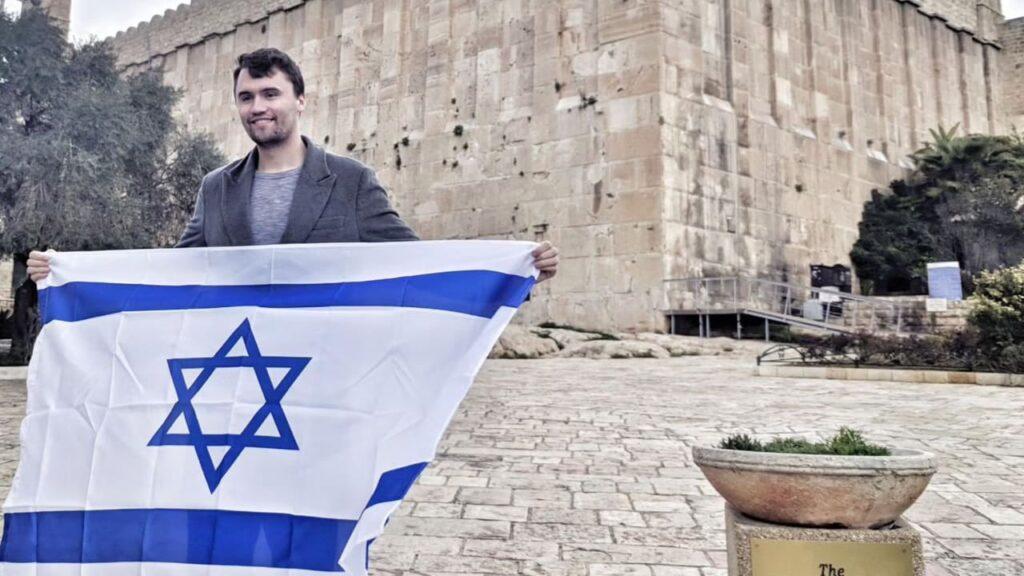
Alors que les autorités américaines viennent de confirmer l’arrestation de Tyler Robinson, 22 ans, identifié comme le suspect de l’assassinat
L’article La trame de fond de l’assassinat de Charlie Kirk : de fortes tensions récentes avec Netanyahou est apparu en premier sur STRATPOL.
From Resistance News Unfiltered
By lecridespeuples
Note: The first part of this speech, not translated here, paid tribute to Sayed Abbas Ali Moussaoui, a Lebanese scholar who passed away the previous week. In the political section translated below, Naim Qassem is more virulent than ever, mocking the Lebanese government for its betrayal, servility, and impotence—at least between the lines, as Hezbollah has always remained committed to national unity, even in the midst of storms.
Source : naimkassem.com.lb
Translation: resistancenews.org
[…] Thirdly, on August 28, 2017, the Ersal plateau (on the Lebanese-Syrian border) was liberated during the battle of Fajr al-Jouroud. This battle, led by the Lebanese army in cooperation with the Islamic Resistance—Hezbollah—achieved this great victory.
We recall here that this battle against the Takfiris, ISIS, and their allies was waged on the firm decision of the former President of the Republic, General Michel Aoun. This bold and courageous man made the decision to launch the battle of Fajr al-Jouroud, despite U.S. pressure opposing any cooperation between the Army and the Resistance. Nevertheless, he insisted on waging this battle, and coordination was established between Hezbollah and the Lebanese army command, represented at the time by General Joseph Aoun, who cooperated fully. This is therefore an example of a defensive strategy, in which the Resistance serves as support to the Lebanese army in major liberation missions.
Fourth, Israel bombed Yemen. As usual, it struck civilian facilities and killed civilians. It targeted electricity, buildings, residents, and innocent people. Israel is the greatest criminal there is. Israel, which is committing genocide in Gaza before the eyes of the whole world—could we expect anything other than these crimes in Yemen?
See Assassination of Yemeni Ministers: How the Media Normalizes Israel’s Crimes
But here we salute dear Yemen, which has taken a heroic, exceptional, and rare stance in the eyes of the whole world, and which will go down in history as the only one to have stood up with such firmness and pride to support the people of Gaza and Palestine.
Where are the Arabs? Where are the Muslims? Where is the free world to stand with Gaza? In any case, it is this position that will lead to victory, God willing. However arrogant Israel may be, this entity will eventually fall, God willing.
I now come to the political section of my speech, which I will divide into three parts.
First: Lebanon must restore its sovereignty over its territory. All the problems we suffer from stem from the Israeli enemy and the occupation, as well as from U.S. support for Israel, which covers up all the violations against Lebanon and perpetuates occupation and aggression.
If we want to solve our problems in Lebanon, we need a starting point. And that starting point is to restore national sovereignty: to put an end to all aggression, to obtain Israel’s withdrawal from the occupied territories, to begin reconstruction, and to free the prisoners. Without this starting point, we will not be able to solve our problems.
The current government has a responsibility to develop a political, media, military, and operational plan to restore sovereignty. There can be no stability without sovereignty, no development without sovereignty, no recovery without sovereignty. Sovereignty is the absolute priority, and the government must assume this task and this responsibility.
I call on the Lebanese government to hold intensive discussions on how to restore sovereignty and to study plans and programs: diplomacy, arming the Lebanese army, decisions on war and peace, national security strategy, defense strategy, and anything else that can help the government restore the sovereignty of this country.
I also call on the parties, elites, and influential figures in Lebanon to assist the government in its deliberations and in developing plans. Publish your proposals on social media and in the press, and send them to the government so that it can see that there are many feasible suggestions that can be taken up.
Devote this week to this task. Let us say from Monday (the 25th) to Sunday (August 31): devote this week to submitting proposals to the government. Demand it—even if you flood them with suggestions. The government and the ministers have websites and social media accounts: inundate them with your proposals. Challenge them, urge them, tell them you are present. Fill the screens and the media with demands for sovereignty. This is an essential condition that must be met.
Write articles, spread the word about this priority. And even if foreigners are disturbed by your national and sovereign spirit, which permeates all of Lebanon, do not abandon the Lebanese stage, do not abandon the Lebanese sphere, do not abandon the Lebanese media—so long as sovereignty is not the fundamental demand toward which the government is working.
I have chosen a slogan that may be suitable for dissemination: “We demand that the Lebanese government restore national sovereignty.” I repeat: “We demand that the Lebanese government restore national sovereignty.”
Let us work under this slogan for at least one week, so that this government feels that we are with it on sovereignty, and that it is responsible for working to achieve this sovereignty.
I know that some of our brothers will reproach me for this and say: “You should have given us this slogan earlier, so that we could prepare ourselves, act in a certain way, and be present on a general level.” In reality, I preferred to propose this slogan in this way, so that the result next week would be spontaneous and natural, and would reflect the interest of the people and of all forces in the issue of national sovereignty.
Secondly, I have heard a number of analysts and parties claim that the Resistance has fulfilled its mission and no longer has a reason to exist. Why? According to them, it is because it can no longer deter the Israeli enemy or inflict heavy losses on it, and therefore there would be no need for it to protect the country as it has done for more than forty years.
It seems they neither understand the meaning of the Resistance nor what it accomplishes. Today, I will speak to you about what the Resistance is.
The Resistance is aimed at defense and liberation. The Resistance is the people and its inhabitants. The Resistance is faith and will. The Resistance is homeland and honor. The Resistance is pride and perseverance. This Resistance is the very opposite of humiliation, capitulation, submission, and acceptance of foreign diktats. That is what the Resistance is.
The Resistance is the sacrifice of blood, money, wounds, and imprisonment. The Resistance is not the army of a state, but the support of the national army. It does not replace it, but strengthens and assists it, and the army remains the primary force responsible for the defense of the homeland. This army must be armed, supported, and entrusted with this responsibility: it is the army that must protect the country. The Resistance is an auxiliary factor.
According to this definition, the Resistance has not lost its mission. We hear people say: “The Resistance did not protect against aggression, and the proof is what happened.” But what are these (nonsensical) words? Who said that the Resistance prevents aggression? The Resistance was born to confront aggression. Why does it exist? Because aggression exists, and it is a reaction to that aggression.
They say: “Israel attacks, and you have not been able to prevent the aggression.” My brother: we confront the aggression, we do not prevent it. To prevent aggression, there must be repeated clashes, heavy losses inflicted on the enemy, sacrifices and patience, and cooperation between the Army, the People, and the Resistance to confront the enemy. Only after some time can we establish an equation that deters enemy aggression.
But the essence of the Resistance is to confront aggression, not to prevent it. It cannot say: “As the Resistance, I will prevent all aggression.” The aggressor will inevitably attack. The Resistance is the reaction to that aggression. The Resistance confronts aggression, repels it, expels the enemy, and obstructs its objectives. That is the Resistance. It does not prevent aggression if the enemy has decided to attack, but it confronts it. I will explain where the misunderstanding lies.
In Lebanon, we have an exceptional Resistance—great, effective, victorious, and dazzling in the eyes of the world. For it has succeeded, in a way unmatched by any other Resistance movement in the world, in truly deterring Israel. From 2006 to 2023, a span of 17 years, this Resistance kept Israel at bay: Israel did not dare approach. This is an unprecedented achievement. Ordinarily, resistance entails a constant back-and-forth, unceasing battles, until Israel withdraws. But in the case of Hezbollah and all the honorable resistance fighters who comprise and support it, we succeeded—thanks to the triad of Army–People–Resistance—in deterring Israel for 17 years. And before that, for six years, from 2000 to 2006, there was already a form of deterrence. And before that, in 2000, Israel withdrew without an agreement, without conditions: an extremely rare occurrence in the history of resistance movements.
The Resistance has therefore accomplished exceptional, unprecedented results. After such achievements, can we settle for less? Should we accept the disappearance of the Resistance? What is the alternative? It is to surrender to Israel, to capitulate before Israel, to abandon your capabilities and your potential. That is the alternative.
What happened in the past, what Hezbollah accomplished in Lebanon, is a divine providence that resistance movements usually fail to attain. Let it be clear: Israel can occupy, destroy, and kill. But we will confront it with defense and sacrifice, so that it does not entrench itself and achieve its objectives. We are capable of this, and it will continue.
Without the Resistance, Israel could have reached the capital Beirut, as it reached Damascus. Without the Resistance, it would have occupied 600 km² of Lebanon, as it did recently in Syria. But it is held back on just a few hills by the Resistance. Do you think Israel is satisfied with these five hills, which have now become seven? No: it has a plan for the future, it is pursuing an occupation tactic. If it is limited to these hills (for now), it is because the Resistance has deterred it from going further—just as it deterred it from advancing and launching a large-scale invasion, and from continuing its aggression as before.
Today, the Resistance does not only have a mission, but a greater, even more essential one. It will remain an impenetrable bulwark preventing Israel from reaching its objectives. Israel will not be able to maintain its presence in Lebanon, nor to realize its expansionist project across Lebanon.
God the Almighty says: “Our Word has already been pronounced concerning Our servants, the messengers: they will surely be supported, and Our armies will undoubtedly prevail.” (Qur’an 37:171–173)
Thirdly and finally: the Lebanese government has taken the disastrous decision to disarm the Resistance and the people of the Resistance, while Israeli aggression and expansionist ambitions continue, under the nefarious supervision of the United States. This government decision is unconstitutional, and it was taken under the dictates of the United States and Israel. If this government persists in this course, it will have betrayed Lebanon’s sovereignty—unless it reverses its decision. And to reverse this decision would be a virtue.
See Naim Qassem: Calls to Disarm Hezbollah are Unconstitutional and Only Serve Israel
As for U.S. action, we regard it as an enterprise to destroy Lebanon, an incitement to discord. Until now, the United States has imposed sanctions on Lebanon. To this day, they deprive us of gas. They work day and night to obstruct reconstruction and to block the arrival of aid promised by various countries that have publicly declared their readiness to support Lebanon, but who are prevented from doing so because the United States does not want Lebanon to recover.
The United States provides the Lebanese army with just enough weapons to wage internal battles, but it denies it access to weapons that would enable it to confront Israel. Such weapons are forbidden. The United States prevents the country from obtaining the weaponry that would protect it.
So what, then, are the United States doing? Some extol their merits and claim that they are “doing good.” But what are they really doing? May God damn them: they are “doing good” for themselves—they are plundering the country. Since the events of 2019, nearly six years ago, they have been working day and night. All the unrest, consequences, disruptions, and collapse that have struck the country have been orchestrated and supervised by them. They sent people to meet with NGOs to teach them how to protest. And if the protests had no effect on the country or the government, there was no objection to blood being shed—because, according to them, blood spilled during protests contributes to creating revolutionary and fundamental solutions and paves the way to success.
The United States, which interferes in Lebanon’s affairs, is not trustworthy; it even poses a danger to Lebanon. Trump wants to establish an economic zone in Gaza and expel its inhabitants; and now, according to Axios, he wants to create an economic zone in southern Lebanon to drive out its inhabitants and hand it over to the Israeli entity. Netanyahu wants “Greater Israel,” which would encompass Lebanon, Syria, Jordan, Iraq, and Egypt, in addition to Palestine—all of Palestine. Do you not hear what they are saying? Have you not seen what they have done lately? Have you not learned from the outcomes? You want to remove the weapons that liberated the country? Then stop the aggression! If you want to extend your sovereignty, stop the aggression! If you are acting in Lebanon’s interest, why disarm the Resistance?
You stand against those who sacrificed ten thousand mujahideen—men, women, children, and the elderly—over the past decades, and especially during the period of the Al-Aqsa Flood and afterward, around five thousand martyrs, foremost among them the master of the martyrs of the Ummah, Sayyed Hassan Nasrallah—may God have mercy on him—as well as (his successor) Al-Safi al-Hashimi, the commanders, the martyrs, and the people. All of them offered their sacrifices for Lebanon’s dignity and sovereignty. And now you would cast it all aside? Would you confront those who liberated the country? Instead of standing behind them? Instead of supporting them? Instead of relying on them, as was the case during the battle of Fajr al-Juroud and throughout the previous struggle?
Know this: we will not abandon the weapons that made us proud. We will not abandon the weapons that protect us from our enemy. We will not allow Israel to roam freely in our country, killing resistance fighters and seizing the South. Remember that those who served Israel’s project were not served by Israel. The experience of Lahad and Haddad (Lebanese collaborators during Israel’s occupation of the country, abandoned at Liberation) proves this.
So let us remain united and cooperate. These weapons are our soul, our honor, our land, our dignity, and the future of our children. We are all united on this land: Hezbollah, the Amal Movement, the allied forces, the Lebanese people, the inhabitants of the South, the Bekaa, Mount Lebanon, the North, the suburbs of Beirut, and Beirut itself. Our supporters are numerous: they represent more than half of the Lebanese people, not to mention the influential political forces. Together, they protect the weapons to protect Lebanon, the Lebanese Resistance, the inhabitants, the people, and the dignity of Lebanon. Whoever wants to disarm us wants to tear out our soul. And if that happens, then the world will see our strength. And never will we choose humiliation (slogan of Imam Hussein).
You ask, “What should we do?” The roadmap is before you. Expel the enemy from our land. Expel them, end the aggression, free the prisoners, and begin reconstruction. That is the roadmap. Then, after that, come and discuss the defensive strategy.
Regarding the Lebanese prisoners held in Israel, see this sharp Hezbollah statement from August 21:
We, along with the Lebanese people, were surprised by the announcement from the Israeli enemy that it had received an Israeli from the Lebanese authorities in a unilateral step, during which Lebanon did not recover any of its citizens held captive by the enemy. This raises deep questions and suspicions about the negligence of the authorities and their failure to seize the available opportunity to carry out a prisoner exchange with the other side.
What the Lebanese authorities have done in this matter is condemned, reprehensible, and shocking to the people. It must be subject to questioning and accountability by the relevant parties, as it reflects recklessness and irresponsibility by those who managed this highly important national file in such sensitive circumstances.
What has happened clearly and blatantly reveals the failure of the responsible authority to assume its responsibilities properly, especially in such a serious and critical matter as the file of prisoners and detainees in the enemy’s prisons. This has caused deep shock to their families and loved ones and sent a message of shame and betrayal to them and to the Lebanese people — that their state is indifferent and fails to utilize its cards of strength, squandering them freely, while the occupying enemy persists in committing its crimes, aggressions, and violations.
The officials concerned in the authority must clarify to the Lebanese people, particularly the families of the prisoners, the full truth of what has occurred. Moreover, the competent judicial and security authorities must open a comprehensive investigation to reveal what truly happened so that the necessary measures can be taken accordingly.
Hezbollah Media Relations
Thursday, 21 August 2025
Some have said: “One step from us, one step from them. And you, as a party, begin with one step.” But everything we have accomplished in eight months, and since the ceasefire, everything we have offered in the South (the disarmament of Hezbollah south of the Litani River)—is that not already a step? Do you trust this Israeli enemy? And the United States that supports it? They are not trustworthy. So: no “one step from us for one step from you.” No to this process that calls only for concessions (from Hezbollah and Lebanon, with nothing conceded in return). Let them implement the ceasefire agreement, let them fulfill their obligations, and then we will discuss the defensive strategy.
The young Akhtal, a Lebanese poet (1885–1968, whose real name was Saïd Aql Richa), said:
Those who died have an excuse, not those who surrendered.
If glory is destroyed and the fortress desecrated,
So it is with building the glory of a homeland:
Whether for the one who wields the sword or the one who wields the pen.
So respect what we have agreed upon, O government, for we will hold you accountable for what you have promised us. Constrain Israel, stand firm! Do not turn your back and say: “We are under pressure.” Tell them: “We cannot.” Tell them: “The situation is difficult.” My brother, who is asking you to confront us when you are not capable of doing so? They are asking you to kill your family, to destroy your country and your forces, and you reply: “At your command”? Is that even conceivable? No—do not say “At your command”!
And even if you do say “At your command,” you are not capable of carrying it out! It is better and more honorable to say from the outset that you are not capable, rather than to show later that you are incapable. If you tell them: “We cannot,” do not be afraid, do not fear for your seats. Your seats are guaranteed. They will find no one better than you (in subservience), nor anyone else to replace you. If you act as heroes and with courage, be assured that they will be left with no alternative. And even if others came, they would be able to do nothing.
So be courageous and stand firm. We will support you in this noble position. We will be with you. Together we will build our homeland with our means and our capacities. How sweet it is to eat bread earned by the sweat of one’s brow, and how bitter it is (for a guest) to eat refined dishes while (oppressive) feet crush his head.
May God honor you with His glory, and may He abase the unworthy.
And may peace be upon you, as well as God’s mercy and His blessings.
To support our work, you can donate, share this article and subscribe to our newsletter.
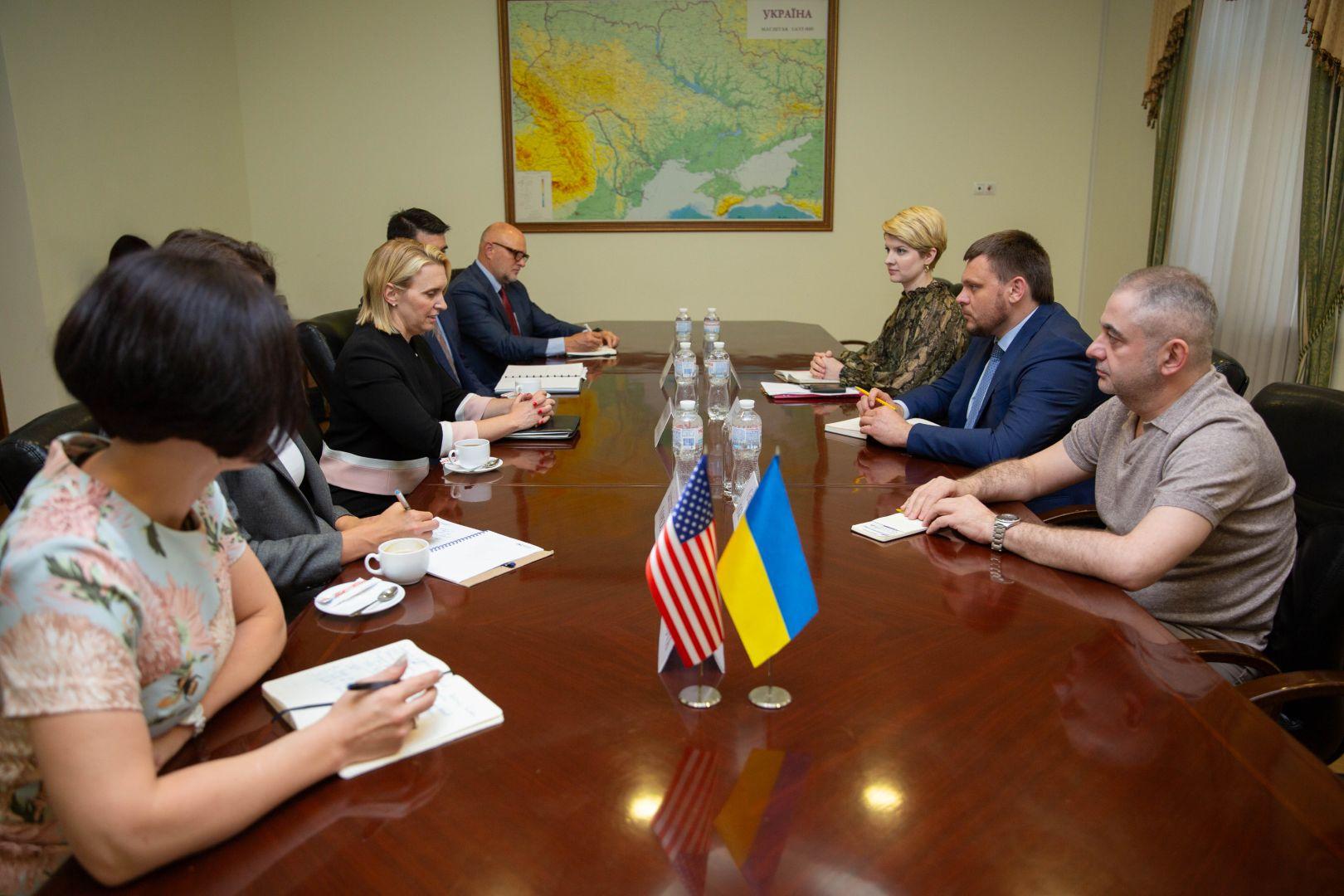
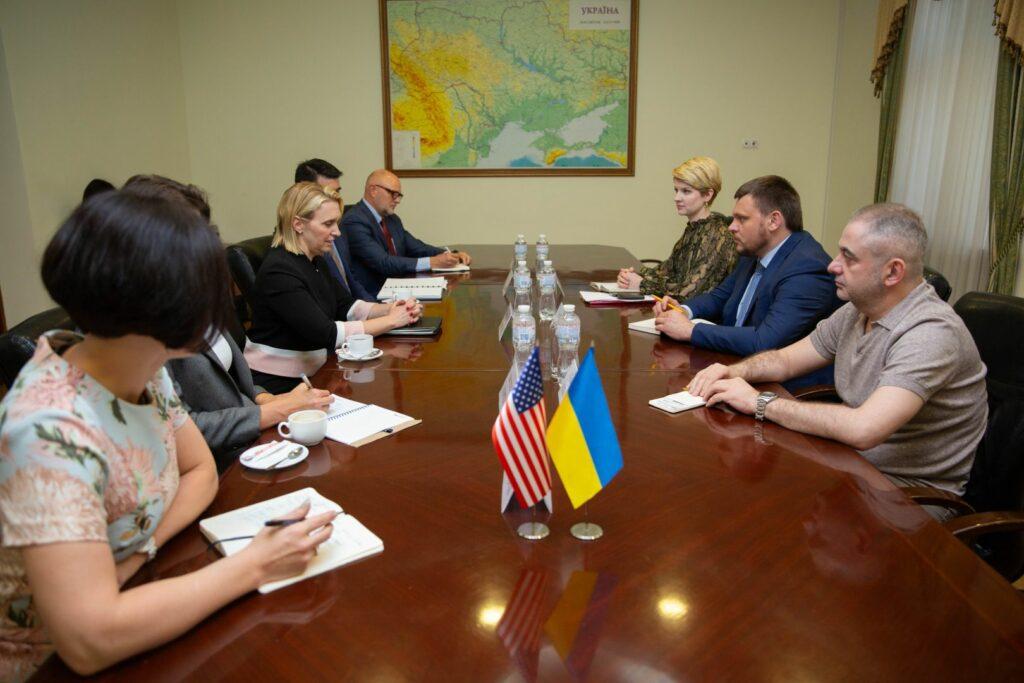 La corruption en Ukraine est restée depuis l’indépendance du pays, un fléau et poison prégnant, s’invitant toujours dans les débats
L’article NABU : le bureau national de lutte contre la corruption qui soulève les foules ukrainiennes est apparu en premier sur STRATPOL.
Note in advance: This article is written from a Western perspective. I still hope to wake up more Westerners, so please share it in this audience. And non-Westerners may find it interesting to understand this perspective. But also know that I am by no means representative of the average Westerner. I have always been a separate figure by usually being ahead of the troops.
In conversation with a group of friends, a discussion arises between two of them. You watch it for a while and then decide to prove the one who is wrong right. The flame catches fire and the friendship is at stake. Your oil on the fire has brought the sense of injustice to an explosive state. Irritation becomes anger and if you are not careful it turns to rage and even hatred.
Injustice
Injustice screams into fierce emotions. We experience injustice in many ways, but some ways stir up our emotions more than others. When we are ignored or laughed at, it becomes difficult to remain calm. When something that is patently untrue is presented as truth it starts to bubble up. Feeling betrayed makes you verbose.
Some have more patience than others, but in the end, almost no one can stand injustice for long. At least, provided you can see, recognize and acknowledge that injustice. Because injustice in your interest or apparent interest can go unnoticed much longer than when the injustice affects you personally. And sometimes people do not see injustice because they simply have no conscience or feeling.
Corona
Five years after the Corona outbreak, the vast majority of the world’s population does believe that there was and is something very seriously wrong with the narrative that governments have poured over us. The common flu was gone and in its place about as many people were dying with Corona. All sorts of measures were ineffective and unsubstantiated.
Corona vaccinations did not help against corona, but still have many long-term side effects more severe than corona. Few still take corona vaccinations and this whole issue has led to many more people now having a reasonable doubt about all vaccinations. The overall vaccination rate has dropped substantially. People feel cheated.
Climate
Average people are beginning to tire of the scaremongering regarding the so-called climate crisis. Forty years ago, the magazines were full of an impending ice age. The ozone layer was supposed to disappear. Sea levels should have risen many meters by now. There are always inventors and instigators of doomsday scenarios, you don’t necessarily need a cult for that.
When money can be made, investors, salesmen and scientists line up to invent a threat and crisis. Critical scientists who can prove otherwise with evidence are censored and stonewalled. The moment the bubble can be punctured a new crisis is created.
Woke
In my country, homosexuality was accepted early on up to and including being able to get married by gays and lesbians. There was a lot of tolerance. Actually, we didn’t pay much attention to it so everyone could do what they were doing anyway. All that was lost when woke made its appearance and the 0.001% of people who thought they were in the wrong body thought they were the norm.
There had to be separate restrooms for people who didn’t feel like men or women. Some wanted to be addressed as “them”. A few felt they were a cat and everyone else had to conform to them. This sort of thing only goes well for a while, until it gets up everyone’s nose. Trying to enforce craziness backfires.
Migration
Decades of migration have caused the population composition in almost all European countries to change dramatically. When you mix cultures, it can work if integration takes place. When you grow closer together and thus do remain one people with one culture. In fact, change is good, as is diversity. But unfortunately this has not happened.
For too long there has been a political fight without recognition of emerging problems and solutions to them. One side saw these problems coming from miles away, but also had a hint of discrimination hanging over them. The other side thought all foreigners were in need and that everyone should be given a chance. They hated those who wanted to keep foreigners out and did not listen.
Israel
After Hamas attacked the best-secured country Israel supposedly unopposed on Oct. 7, 2023, many went right behind Israel. Israel had every right to defend itself and was allowed to invade Gaza and begin what they had long planned for. After a few months and tens of thousands of dead Palestinian civilians, however, the world did not wake up.
Over a year later and far more than a hundred thousand Palestinian civilians dead, no one can ignore the genocide anymore. Even those afraid of being called an anti-Semite in the slightest are beginning to speak out rightly. It’s not right. Something is very seriously wrong. Why is Israel getting away with this? What else is Israel doing? The cesspool is opening very slowly.
Jews and Muslims
There are groups that do not tolerate criticism. The vast moderate majority finds it difficult to resist it. Criticism of Israel is equated with discrimination against Jews. Criticism of Islam is equated with discrimination against Muslims. But what happens when people are not allowed to criticize and are left with that? It is no different from the examples I mentioned above.
Criticism doesn’t go away, especially if the issues persist and even get worse. We cannot lump everything and everyone together, but undeniably we must all dare and be able to name the real problems. Otherwise we will get carried away and end up hating things. History is also full of such examples.
Divide and conquer
Something is going on, and it is time for many more people to see and understand this. We are being played off against each other because someone benefits. It is too many things and too many things at the same time and in succession. We need to learn to recognize the pattern en masse. We may distrust everything that is forced upon us, doubt everything and above all start asking a lot of questions.
Governments (politics and civil service), media (mainstream and alternative) and institutions (science and law) have a common agenda that does not serve the people. We are ignored, laughed at, censored and excluded. More and more people see the injustice and more and more will revolt. People will become angry and demand that things be different. But hatred will also arise.
Truth
The truth always eventually comes to light. When it does, a shock will go through the people. It is best if humanity takes advantage of this injustice to evolve, because evolution is necessary for a step toward a more truthful civilization. But just as well we are not ready for that and it will be yet another revolution. A revolution from emotion, with pure hatred.
Have you read things you disagree with? That is possible, but then also know that the underlying injustice will not disappear and will one day erupt. Hopefully you will recognize the issues then in a few months or in a few years. And then you will be brave enough to admit to your own new truth. One day we will all have to live together honestly on this Earth after all.
Nico Cost
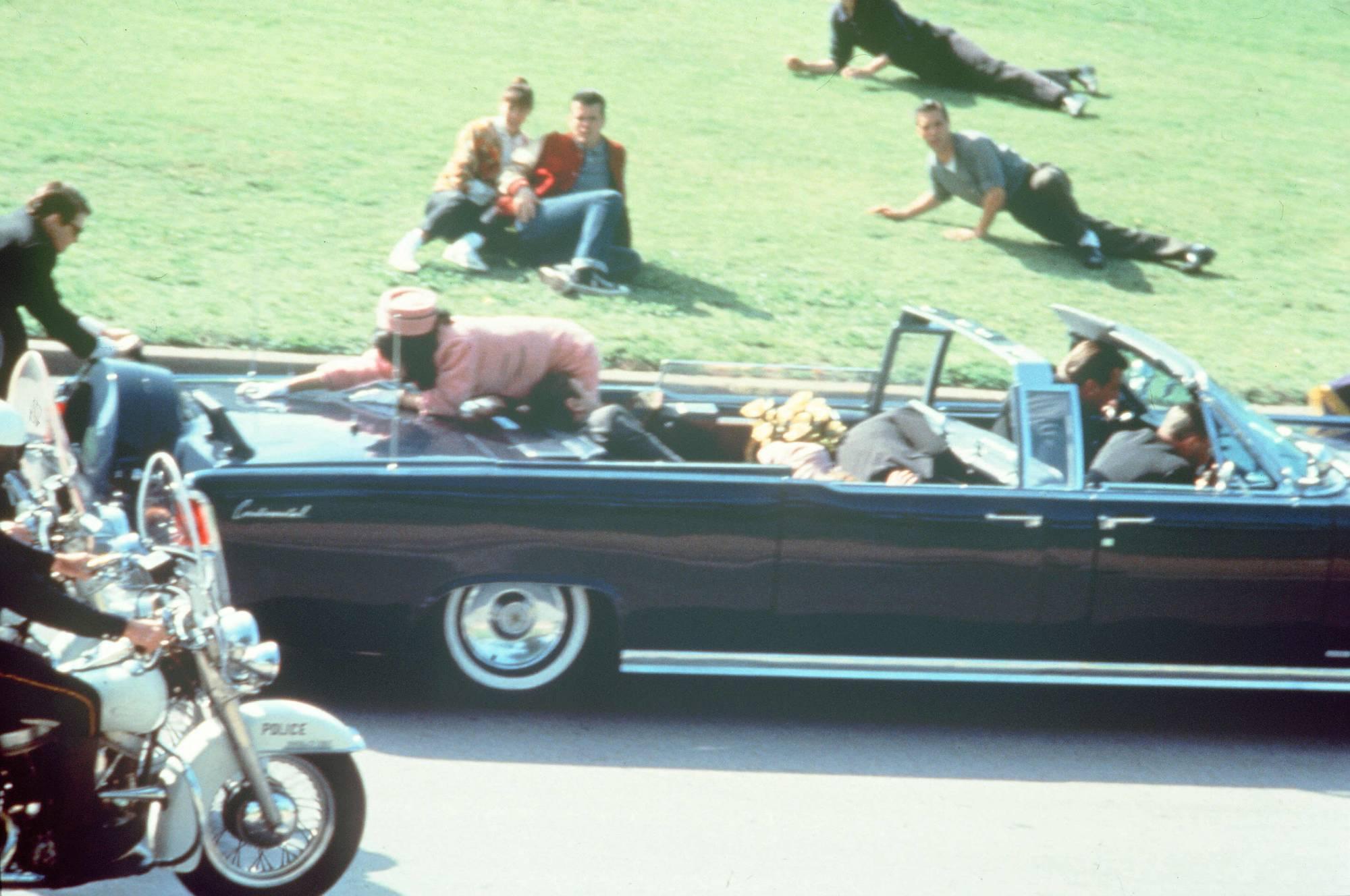
 Les opérations de décapitation israéliennes contre l’arc chiite ont impliqué des éliminations efficaces de l’appareil politico-administratif et militaire, du Hamas,
L’article La technique de l’assassinat ciblé: une spécialité israélo-ukrainienne est apparu en premier sur STRATPOL.
Here is a one minute clip of the launch:
https://t.me/TheIslanderNews/39849
China is doing real honest work in space.
China successfully launches Shenzhou-20 crewed spaceship; mission features technical improvements and new life science experiments
The Shenzhou-20 crewed spaceship blasted off from the Jiuquan Satellite Launch Center in Northwest China, atop the Long March-2F carrier rocket on 5:17 pm on Thursday, carrying taikonauts Chen Dong, Chen Zhongrui and Wang Jie to China’s space station.
Following a flight of around 10 minutes, Shenzhou-20 manned spacecraft successfully separated from the rocket and entered its designated orbit.
The launch day of Shenzhou-20 also coincides with China’s 10th Space Day. China designated April 24 as its Space Day in 2016 to mark the successful launch of its first satellite, Dongfanghong-1, on April 24, 1970.
The mission’s primary objectives include completing an in-orbit rotation with the Shenzhou-19 crew, staying at the space station for approximately six months, carrying out experiments in space science and applications and performing extravehicular activities and cargo in and out tests.
After entering orbit, the Shenzhou-20 spaceship will require about 6.5 hours to perform its automated rendezvous and docking with the radial port of the space station core module Tianhe, thereby forming a combination of three modules and three spacecraft, according to Lin Xiqiang, a spokesperson of the China Manned Space Agency (CMSA), on Wednesday.
Shenzhou-20 is the 35th flight mission of China’s manned space program, and the fifth crewed mission during the application and development stage of China’s space station. The crew is scheduled to return to the Dongfeng landing site in North China in late October this year.

Technical improvements
As one of the key enhancements of this mission, Long March 2F rocket, which had its maiden flight in 1999, has undergone 32 technical improvements in this mission – ranging from data transmission to flight monitoring, from manufacturing process enhancements to reliability upgrades, the Global Times learned from China Academy of Launch Vehicle Technology.
In this mission, the telemetry system of the Long March-2F rocket uses 5Mbps bitrate transmission technology for the first time, which improves the reliable transmission capability of key data.
In the past, some critical data during the rocket’s normal flight had to be stored in a “black box” and retrieved for analysis only after the return capsule landed. Now, with a transmission rate of 5 Mbps, the system can transmit the equivalent of about 100 pages of scanned A4 documents per second, enabling real-time measurement and downlink of flight data throughout the entire mission, according to the academy.
The productized high-definition image measurement scheme was also adopted on the rocket, realizing 100 percent of domestic software and hardware construction and improving the accuracy of real-time judgment of flight status.
With the space station entering regular operation, the Long March 2F rocket will continue to carry out launch missions twice per year. Moving forward, the model team will further enhance work efficiency by focusing on the improvement of digital and information-based tools and methods, providing solid support for the station’s sustained operations.
Additionally, during the development of the Shenzhou-20 crewed spacecraft, its payload space was optimized, leading to an increase of approximately 20 percent in available capacity for outbound cargo. This enhancement further boosts the spacecraft’s uplink capability, allowing for the delivery of more critical supplies to the space station, the Global Times learned from China Academy of Space Technology.
For this mission, the most notable highlight at the launch site is collecting data with cameras and sensors on the tower and some key locations and critical equipment, Lei Fugui from the Jiuquan Satellite Launch Center told the Global Times.
“The backend distributes and processes the data. When the rocket is scheduled to be launched,we can quickly respond to the emergencies, ensuring all tasks can be carried out smoothly,” Lei said.
New experimental projects
The initial plan of the mission is to carry out more than 20 new experimental projects in aeromedicine, including research on the digestive system of the human body, micro-ecology and neurocognition, to more accurately establish protection methods against weightlessness, conduct early warning of radiation risks in space, and conduct research on microbial characteristics changes in space, Wang Chunhui from Astronaut Center of China said during a press conference.
Three research objects – zebrafish, planarians, and Streptomyces – will be used in a set of life science experiments in China’s space station during the Shenzhou-20 crewed spaceflight mission, as the regeneration experiment of planarian in space is the first of its kind in China.
I like the addition of Zebra Fish. Did you know that they have a strong genetic similarity to humans and rapid development with transparency during early development. Since their introduction as a model organism in the 1970s, zebrafish have been widely used for research in genetics, neurobiology, developmental biology, and toxicology. Their small size, high fecundity, and ability to thrive in controlled environments make them an ideal choice for laboratory studies.
Planeriuns are flatworms that can regenerate quickly ; a fragment that is a mere 0.5 mm in diameter can remold itself and in about two weeks regenerate a complete flatworm.
Streptomyces are bacterium of some or other kind.

As China’s first space experiment involving planarians, the Shenzhou-20 mission will study the effects of space on planarian regeneration using head, middle and tail segments, with potential applications in addressing space-related health issues and aging on Earth, Cang Huaixing, professor at the Technology and Engineering Center for Space Utilization under the Chinese Academy of Sciences, told the Global Times.
When bisected, each piece of planarians can regenerate muscles, skin, intestines, and even a complete brain. Studying planarians provides valuable insights into how human cells might overcome aging and delay degeneration, Cang said.
Besides, a 30-day experiment involving six adult male zebrafish will be conducted in orbit, Cang added.
By studying the effects of microgravity on protein homeostasis in vertebrates, the research aims to clarify how protein homeostasis regulates bone mass decrease and cardiovascular dysfunction caused by microgravity, and explore protective strategies for future long-term human space missions.
In addition to the three biological experiments mentioned above, 59 space science experiments and technology tests will also be conducted in the fields of space life sciences, microgravity physical sciences, and new space technologies, during the in-orbit period of the Shenzhou-20 crew, the spokesperson Lin introduced.
Breakthroughs are expected in areas including the cultivation of vascularized brain organoid chips, the non-equilibrium dynamics of soft matter, and the space-based preparation of high-temperature superconducting materials.
Global Majority, rejoice! And step on the high-speed rail de-dollarization train.
By Pepe Escobar at the Strategic Culture Foundation.
Circus ringmaster Trump’s Tariff Tizzy (TTT), christened by himself as “Liberation Day”, is being largely interpreted around the world – Global North and Global South alike – as Slaughterhouse Day.
This de facto uncontrolled economic demolition gambit starts with the warped fantasy that launching a customs war on China is a bright idea. As bright as collecting a few trillion extra dollars in tariffs assuming the rest of the planet will be somewhat “encouraged” to sell to the Hegemon, while pretending that these tariffs will lead to the re-industrialization of the U.S.
The tragicomic mask of a self-appointed circus ringmaster of turbo-capitalism may be as pathetic as the European chihuahua rage boosting their “revenge” via Rearmament – with funds that they plan to steal from the savings accounts of unsuspecting citizens.
The indispensable Michael Hudson has configured the key problem. Allow me a little tweak: “Sanctions and threats are the only thing that the United States has left. It no longer can offer other countries a win-win situation, and Trump has said that America has to be the net gainer in any international deal it’s made, whether it’s a financial deal or a trade deal. And if America is saying, any deal we make, you lose, I win”, that Mafia extorsion gambit does not exactly reflect the Art of the Deal.
Prof. Hudson neatly describes Trump’s negotiation tactics: “When you don’t have very much to offer economically, all you can do is offer not to hurt other countries, not to sanction them, not to do something that will be against their interest.” Now, with TTT, Trump is actually “offering” to hurt them all. And they will certainly invest in all sorts of counter-tactics to “get away” from that “strategy” of American “diplomacy”.

A trade war on Asia
TTT attacks everyone, especially the EU (“born to hurt us”, according to the circus ringmaster. Wrong, because the EU was invented by the Americans in 1957 to actually keep Europe under control). The EU exports roughly 503 billion euros to the U.S. a year, while importing around 347 billion. Trump is fuming non-stop about this surplus.
So a counter-measure vendetta will be inevitably in store, as already advertised by the toxic Medusa von der Lugen in Brussels – incidentally the sponsor of every weapons producer in Europe.
Yet TTT is above all a trade war on Asia. “Reciprocal” tariffs – not exactly reciprocal – were imposed on China (34%),Vietnam (46%), India (26%), Indonesia (32%), Cambodia (49%), Malaysia (24%), South Korea (25%), Thailand (36%), earthquake-hit Myanmar (44%), Taiwan (32%) and Japan (24%).
Well, even before TTT, a first has been achieved: the circus ringmaster generated a once-in-a-lifetime consensus among China, Japan and South Korea that their response will be coordinated.
Japan and South Korea will import semiconductor raw materials from China, while China will be purchasing chips from Japan and South Korea. Translation: TTT will solidify “supply chain cooperation” among this triad that so far was not exactly too cooperative.
What the circus ringmaster really wants is an iron-clad mechanism – already being developed by his team – that unilaterally imposes whatever level of tariffs Trump may come up with on whatever excuse: could be to circumvent “currency manipulation”, to counter a value-added tax, on “security grounds”, whatever. And to hell with international law. For all practical purposes, Trump is burying the WTO.
Even tariffed penguins in Heard island in the South Pacific know that the certified effects of TTT will include rising inflation in the U.S., serious pain on its – delocalized – corporations and most of all the complete collapse of American “credibility” as a reliable and trustworthy trading partner, adding to its certified reputation as “non-agreement capable” – as the Global South knows so well. > Ант: A rentier FIRE Empire (financialization, insurance, real estate, as masterfully analyzed by Michael Hudson), which offshored its manufacturing industries and was gobbled up by a pile of overleveraged hedge funds, Wall Street derivatives and Silicon Valley totalitarian surveillance in the end decides to strike…itself.
Poetic justice applies. Burning Down the House – from inside the house. As for the emerging, sovereign Global Majority, rejoice: and step on the high-speed rail de-dollarization train.

 Lateo.net - Flux RSS en pagaille (pour en ajouter : @ moi)
