 Connexion


les démocraties libérales occidentales, et en particulier l’Union européenne, connaissent un glissement profond dans leur manière de gouverner l’expression politique. Ce glissement ne se manifeste ni par l’abolition formelle des libertés fondamentales ni par l’instauration assumée d’un régime autoritaire. Il se produit de manière subtile, plus sophistiquée et, par conséquent, plus effrayante : en remplaçant progressivement les procédures judiciaires publiques et les débats argumentés par des procédures administratives pour classer, restreindre et punir les discours perçus comme politiquement inacceptables.
L’article Au cœur du tumulte, le silence administré est apparu en premier sur STRATPOL.
Foreign Minister Sergey Lavrov’s statement and answers to media questions at a joint news conference following talks with Foreign Minister of the Islamic Republic of Iran Abbas Araghchi, Moscow, December 17, 2025
[Note: We posted the highlights but the context makes it so much clearer]
Media members,
Foreign Minister of Iran Abbas Araghchi and I held detailed and substantive talks today and, as always, they were held in a friendly, constructive, and trust-based atmosphere.
We stated progress in Russia-Iran relations which have become significantly stronger in recent years. In 2025, the Treaty on Comprehensive Strategic Partnership between the Russian Federation and the Islamic Republic of Iran was signed and entered into force on October 2. The fact that President of Russia Vladimir Putin and President of Iran Masoud Pezeshkian put their signatures under this treaty underscores its importance for Moscow and Tehran.
We discussed the tasks set by our respective presidents during their meeting in Ashgabat last week and expressed confidence that once implemented this treaty will give a powerful boost to bilateral interaction and help us align our approaches to regional and multilateral issues with a primary focus on expanding the capabilities of the two countries in the interest of improving stability and security in our common region.
We noted the particularly trust-based nature of the political dialogue at the top, intergovernmental, and interparliamentary levels, as well as at the interagency and ministerial level. Civil society contacts are expanding to further strengthen neighbourly ties between our countries.
We highly praised the advanced level of practical bilateral cooperation in trade, the economy, and investment. Trade has been steadily up by more than 10 percent for the second straight year, over 15 percent last year. The Permanent Russian-Iranian Commission on Trade and Economic Cooperation is fully operational with its co-chairs, Minister of Energy Sergey Tsivilyov and Iranian Minister of Petroleum Mohsen Paknejad, remaining in contact at all times. We discussed the importance of making thorough preparations for the next meeting of the intergovernmental commission, which will take place in Tehran in February 2026.
We share a common view on the importance of promoting business ties. In this regard, the entry into force of the Free Trade Agreement between the EAEU and Iran this year, and Tehran obtaining observer status in December 2024, is of utmost importance. We are interested in continued expansion of the legal and regulatory framework between our countries with an eye towards eliminating trade barriers.
We underscored the importance of carrying out flagship infrastructure projects, including the Bushehr Nuclear Power Plant. With the support of the Russian personnel, it continues to operate in standard mode and remained operational even amid the June aggression by Israel and the United States. We reviewed in detail the status of the implementation of the project to build the Rasht-Astara Railway section financed through a state loan provided by Russia. The construction of this railway is monitored by our respective presidents as a priority project. The railway is the key to the full-on launch of the western branch of the strategic North-South International Transport Corridor.
The exchange of views on international and regional issues reaffirmed our overlapping positions or close views on most matters. We spoke in favour of further democratisation of international life based on multipolarity, which is on track to become a reality in full accordance with the principles enshrined in the UN Charter that have been sabotaged by the collective West for many decades now.
The objective course of history warrants the implementation of the lofty principles of the UN Charter. Importantly, these principles must be acted upon, respected and applied in practice not occasionally, but exclusively as an indivisible and interdependent whole.
This strongly resonates with the Ukraine conflict, where the collective West is pushing to manipulate every provision of international law and to replace them with its own “rules” that are at odds with the universally recognised international legal norms and serve only the push of the collective West, above all Europeans, to continue their neocolonial policies aimed at living off other nations the way they did over the past 500 years starting in the era of colonialism. The neocolonial economic, trade and financial dependence of African countries, as well as many countries in Asia and Latin America, on the West has remained unchanged to this day.
We denounced the use of unilateral coercive measures that undermine international law which fact has become particularly glaring amid the Ukraine crisis. Europe is trying to scuttle the constructive ideas put forward by the Trump Administration, as it violates every rule and principle that have until now governed international economic and financial relations, encroaching on property that the West itself had only recently declared inviolable, and eroding in many ways the principles promoted by Europeans, including as part of the globalisation efforts. What we are witnessing today is a process of fragmentation, not globalisation.
Speaking about the use of unilateral coercive measures, we stand fully in solidarity with Iran and a number of other countries. We advocate creating a group of countries that have a stake in countering this lawless behaviour. I believe this process will gain ever more supporters as it moves forward. We agreed to consolidate members of the international community who share these approaches. We will continue substantive work to neutralise the negative impact of illegal sanctions on the economies of our respective countries.
We covered in depth the Iranian nuclear programme dynamics amid the unapologetically aggressive and unlawful anti-Iranian policies adopted by a group of Western countries. Once again, Russia confirmed its readiness and willingness to help its Iranian friends identify acceptable solutions to overcome the nuclear dossier-related crisis created by the West. Acting in violation of all existing agreements and regulations that are legally established by the UN Security Council, Western Europeans are doing everything in their power to re-impose UN sanctions on the Islamic Republic of Iran, even though these sanctions expired more than a month ago alongside Security Council resolutions that were used to impose them.
We decry such disregard for law and international legislation, and the attempts to prioritise self-serving interests over the principles of the UN Charter. We hope that UN Secretary-General Antonio Guterres, whom they are also trying to weave into this game, can clearly see that he is being nudged into a trap and will say no to those who conspire to take advantage of his authority, reputation and office of Secretary-General to push through the Western countries’ self-serving and unlawful plans.
Clearly, any decisions regarding potential arrangements that could put an end to the current crisis and put the process on a constructive track must be taken exclusively by the Iranian government based on the interests of the people of the Islamic Republic of Iran, and with full respect of its right, as a full-fledged member of the Treaty on the Non-Proliferation of Nuclear Weapons, to enrich uranium for peaceful purposes.
We will continue to deepen our cooperation at the UN, the SCO and BRICS. We covered several important regional issues, including the situation in the Middle East, primarily, the Palestinian territories, the South Caucasus, the Caspian region, Afghanistan, and neighbouring countries.
I would like to close by once again expressing satisfaction with the outcomes of the talks and to thank my Iranian counterpart for accepting the invitation to visit Russia.
Question (retranslated from Farsi): International relations are getting more intricate by the day. The international situation is marked by securitisation. As a permanent member of the UN Security Council, what can Russia suggest in order to keep international law intact? How serious is Russia about fortifying multilateral policy on international platforms? Is Russia ready and willing to support BRICS and the SCO?
With the US seeking dominance, especially in the context of the ongoing developments in the Caribbean, is the UN under threat of falling apart?
Sergey Lavrov: As President Putin has repeatedly made it clear, including in his most recent remarks, the UN is the finest creation of diplomacy in the entire history of humanity, because there has never been a universal entity that would bring together all independent states of the modern-day world. This organisation is vested with authority and mandates in virtually every sphere of human activity, ranging from security and disarmament to the economy, investment, climate protection, and now also AI and other cutting-edge achievements in ICT.
The UN system, which comprises around 20 specialised agencies and institutions, is, by all accounts, unique. However, just like any other bureaucracy, it is affected by intrinsic flaws. Regrouping the currently functioning entities is the order of the day. UN Secretary-General Antonio Guterres has spoken in favour of this change as well. In his UN80 Report released ahead of the UN anniversary, he pointed out that the organisation was overstaffed, noting that the opportunities to conduct personnel optimization looked good. I am confident that it will end up taking place eventually.
At the same time, based on the experience and impressions from my contacts with my colleagues in Europe, reforming the UN Secretariat and its units and departments will be no small feat, but still a much less daunting endeavour than reforming the EU bureaucracy in Brussels which has broken every record known to humanity. We even went as far as to draw the attention of the senior officials from the UN Secretariat to what is happening with the Brussels-based elite that continue to attempt to usurp the powers and legitimate rights of the sovereign governments of nation states.
Truth be told, the UN Secretariat has never come even close to such an adventurous undertaking. However, there have been half-hearted attempts by certain Secretariat bureaucrats, primarily in New York, to shove their own ideas down the throats of UN member states. In most cases, these attempts were backed by our Western colleagues. We brought this to their attention during the discussions that followed the Secretary-General’s report on UN reforms. Without a doubt, this issue will take centre stage in the context of overcoming disproportionate representation of the Western countries at the UN Secretariat, where the bulk, if not all important positions (with extremely rare exceptions), are held by citizens of Western states or citizens of other countries with second Western, mainly US or UK, citizenship.
This violates the UN Charter’s requirement for fair geographical representation across all bodies serving the organisation. This is kind of a congenital/acquired disease.
The US actions in the Caribbean are rejected by almost all countries except Europe. The latter have hunkered down and remain silent with regard to what Washington is doing. All they can think of is to persuade the Trump Administration to go down the European path on the Ukraine issue in order to perpetuate the war unleashed by the West against the Russian Federation and, as I said earlier, to bring the Americans over to their side of the fence and to prevent them from advancing their constructive agenda aimed at resolving the Ukraine crisis.
All other countries have made their positions clear. We are very concerned about what the US Navy is up to and, more broadly, about the bellicose rhetoric of the Pentagon whereby they are planning a ground operation on top of illegal actions involving the sinking of civilian vessels without trial or investigation in the Caribbean Sea. Looking at the prevailing balance of power in the international arena, all of the above undermines hope that agreements can ever be reached and honoured. Nevertheless, the United States remains open to a dialogue, but not on all issues. President Trump claims that he has made every decision there was to make on a number of issues, and carrying them out is all that’s left to do.
Nonetheless, we welcome the positive side of the current Trump Administration as compared to the administration led by Joseph Biden, which refused to talk to anyone about anything and was incapable of any meaningful actions to begin with.
Your question was what we think about BRICS and the SCO. Unlike the EU, or what has become of it, and unlike NATO with its discipline of the rod, these are truly constellations of a new type. Incidentally, the EU and NATO alike are being subjected to attempts by their administrative heads, the head of the European Commission and NATO Secretary General, to bring them to heel.
If you ever have a chance to read what these characters have to say, you will get an impression that they think of themselves as the high and mighty political leaders of our time, rather than hired bureaucrats who are expected to carry out the will of the member states.
Nothing of the sort can even happen in the SCO or BRICS, which follow the principles of the UN Charter that have been tested over many decades now, namely sovereign equality of states, peaceful settlement of any disagreements, the search for consensus and common agreement on all issues, and concentration of efforts on implementing practical projects based on the principle of mutual benefit.
The work done by the SCO and BRICS will come as a reliable benchmark for making changes that are overdue at the UN and which, I would like to underscore this once again, should lead not to something revolutionary, but exclusively to reaffirmation by all UN members of their commitment to strictly observe all provisions of the UN Charter in their entirety and interconnection. I look forward to our Western colleagues, including the United States, contributing to the efforts designed to achieve such consensus.
Question: You said in your opening remarks that Russia is ready to help Iran look for a way out of the nuclear file crisis. Does it also imply Russia’s readiness to mediate the possible signing of an agreement between Iran and the United States?
Sergey Lavrov: For a number of years, Mr Abbas Araghchi and yours truly have been involved in preparing the Joint Comprehensive Plan of Action, which was adopted in 2015 and approved by the UN Security Council several months later.
Russia, as well as the other participants in this process, is deeply involved in the details that constitute the basis of that agreement and the details of how it was destroyed by the United States. This is the cause of the current problems. Those who have destroyed the JCPOA and undermined the UNSC resolution that approved it are now trying to shift the blame onto the Islamic Republic of Iran. This is clear to everyone.
We maintain contacts and regularly communicate with our Iranian friends. Our presidents communicate, and it is the fifth time that we have met with my Iranian colleague this year. Just like Mr Araghchi, senior advisor to the Supreme Leader of the Islamic Republic of Iran Ali Larijani has visited Russia and met with President Putin.
These issues were discussed. Both Russia and Iran would like to stabilise and normalise the situation, precluding any further use of force. Exclusively political and diplomatic solutions is what we need in the current situation.
Since Russia is cooperating with Iran in the nuclear sphere, we have built and are now expanding the capacity of the Bushehr nuclear power plant. Since we are well aware of the situation in relations between Iran and the IAEA, we regularly discuss the approaches made public by European countries and the United States. Incidentally, we raise these questions during our expert contacts with our American colleagues, urging them to look for mutually acceptable solutions.
Therefore, the mediation services we can offer are well known. President Putin mentioned them during his contacts with Iranian and other representatives, and we also discussed them at the level of foreign ministers.
We are not imposing these mediation services on anyone. If the Islamic Republic of Iran as the main participant in that process decides that such services are necessary, we are ready to provide them, if Tehran’s other counteragents agree.
Question (retranslated from Farsi): We see that the Iranian-Russian relations are at their peak, especially after the entry into force of the Treaty on Comprehensive Strategic Partnership.
On the other hand, you know that our enemies are trying to sour our relations. What do you think about our bilateral interaction and practical efforts in trade, the economy and science, as well as in defence and security, in light of the implementation of the Treaty on Comprehensive Strategic Partnership? What other measures should we take to continue strengthening this common stance?
Sergey Lavrov: Speaking about our practical cooperation in the material sphere – in trade, the economy and investments, we talked about it in detail during our opening remarks at this news conference, so I won’t repeat it.
As you correctly said, we are developing our military-technical cooperation in full compliance with international norms and without violating universal international rules in any way. There are contacts between our militaries, including aimed at training to combat common threats and challenges such as terrorism and drug trafficking. This cooperation will continue.
There are also cultural, humanitarian and educational ties and scientific contacts, which are rapidly developing, both within our bilateral relations and also in the context of Russia and Iran’s participation in various multilateral formats such as BRICS, the SCO and the Caspian Five. The interregional factor and contacts between municipalities are increasing their stance on the agenda of these structures. This is probably the best guarantee of the sustainability of these organisations and associations, because they reach to the ground, to the level of towns and cities, connecting the people living in them with the strong ties of friendship and contacts.
I have very optimistic expectations regarding the further build-up of our strategic partnership in full compliance with the new treaty.
As for additional measures, today you attended the signing of the plan of consultations between our ministries for 2026˗2028. We did not have such documents or used such practice before. We held consultations, but it is the first time that we are planning them for three years ahead. I am confident that this will increase the effectiveness of our foreign policy cooperation as our contribution to the implementation of the tasks set out in the Treaty on Comprehensive Strategic Partnership.
We are ready to develop our ties in all spheres. We discussed this today, and we have reached agreements on a number of specific issues.
Question: Are you discussing the drafting of a new agreement between Iran and the IAEA to replace the Cairo agreement, or can the Cairo agreement be relaunched? If so, is Russia involved in this process?
Sergey Lavrov: We discussed this issue today. My colleague, Mr Araghchi, briefed us on Iran’s stand regarding contacts with the IAEA. We fully share this view, including because any steps in this direction should be based on the good will and fundamental assessments of our Iranian friends after the Israeli and US attacks on the facilities that have been and officially continue to be under the IAEA safeguards.
Of course, it worth noting that the IAEA has not yet expressed its attitude to the fact that facilities under its safeguards have been flagrantly subjected to illegal attacks.
As I have said, we appreciate the good will of the Islamic Republic of Iran, which is ready to resume cooperation with the IAEA despite these facts but not in the interests of promoting the Western agenda. There is no doubt that agreements with the Islamic Republic of Iran are possible if the IAEA Secretariat acts in strict compliance with the powers assigned to it. We wish success to these efforts.
Following Russian-Indian talks, Vladimir Putin and Prime Minister of India Narendra Modi made statements for the media. The statements were preceded by a ceremony for the exchange of signed documents.
http://en.kremlin.ru/events/president/transcripts/78657
29 Documents were signed by the parties. The video, at the link above, lists these – I am sure we will get a list that is not video and can easily be read.
Prime Minister of India Narendra Modi (retranslated): Your Excellency Vladimir Putin, my dear friend,
Representatives of the two countries, and our friends from India, good afternoon.
I am delighted to welcome President Putin to the 23rd Russia – India Annual Summit.
President Vladimir Putin’s visit to India is taking place at a time marked by several historical dates in our relations. President Putin laid the groundwork for our strategic cooperation 25 years ago, and 15 years ago, in 2010, we upgraded our partnership to the level of a special privileged strategic partnership.
Over the past 25 years, President Putin has been relentless in promoting these relations by demonstrating his wise leadership and vision. Regardless of the circumstances, it is his leadership that has reinforced our mutual relations and enabled us to achieve new heights.
I would like to express my sincere gratitude to President Putin for his friendship and for his unwavering commitment to working with India.
Friends,
The world has faced numerous ups and downs over the past 80 years, during which humankind has had to endure many crises and challenges. And throughout this time, the friendship between Russia and India has successfully weathered these storms. These relations are based on mutual respect and deep trust and have invariably stood the test of time.
Today, we discussed our ties and cooperation in all their aspects with a view to creating an even more solid foundation.
We want to reinforce our economic cooperation and elevate it to a new level. This is the objective we share and it is our shared priority. To make this a reality, we have agreed to implement a programme for economic cooperation until 2030. It will provide for diversifying our trade and investment, making them more balanced and sustainable. At the same time, it will help unlock new dimensions in our cooperation.
Today, President Putin and I will be taking part in the Russia – India Business Forum. I am convinced that this platform will also help strengthen our business ties and open new doors for exports, joint manufacture and technical innovation.
Both countries have been proactive in working on a free trade agreement between the Eurasian Economic Union and our country.
Our cooperation in agriculture and fertilisers is extremely important for our food security and the prosperity of our farmers.
I am happy that our countries will work together to promote our mutual production of urea.
Friends, promoting connectivity between our countries is another priority for us.
We will redouble our efforts regarding the discussions on the North-South International Transport Corridor and the Vladivostok-Chennai Maritime Corridor.
I am confident that we will effectively cooperate in the interests of promoting polar trade via local trade routes. We have offered an opportunity to strengthen our cooperation in the Arctic, which will create new jobs for Indian young people.
At the same time, our deep cooperation in shipbuilding will help us boost our joint initiatives. This is yet another important example of our mutually beneficial cooperation, which is increasing the number of jobs and skills while strengthening regional connectivity.
Energy security is another important pillar of partnership between Russia and India. Our cooperation in the field of civilian nuclear energy, which is rooted in our history, has helped us uphold our commitment to providing clean energy, which is extremely important for both countries.
I have no doubt that our mutually beneficial cooperation in the field of critical minerals will also be important for a safe and diversified provision of resources to the world.
We also maintain our cooperation in such areas as clean energy, high technologies and modern industries.
Friends,
Our cultural relations and ties between individual representatives of our countries are of special importance for relations between Russia and India. Over the past decades, our peoples have demonstrated respect and admiration for each other’s cultures, and we have coordinated various measures to further strengthen this cooperation.
The recent opening of two Indian consulates in Russia is a significant step forward, facilitating contacts for all our citizens and bringing our nations even closer together.
This October, hundreds of thousands of pilgrims received blessings at the sacred relics of Buddha Shakyamuni in Kalmykia. I am confident that we will soon implement a 30-day visa-free regime for tourist groups, which will greatly enhance travel between our countries. This measure will not only bring our peoples closer but also invigorate our societies and unlock new opportunities. I am therefore pleased that today we were able to sign two key agreements to advance this initiative.
Our collaboration will also deepen in education and professional development, including through increased student and academic exchanges.
Friends,
Today, we discussed a range of pressing regional and global issues. On Ukraine, India’s position has been consistent from the outset: we stand for peace. We welcome all initiatives and efforts aimed at achieving a peaceful, long-term resolution of this conflict. India has always been ready to support such efforts, and we will continue to do so.
India and Russia have always supported one another and worked shoulder to shoulder in the fight against terrorism. The terrorist attack in Pahalgam and the cowardly atrocity at Crocus City Hall are connected by a common, hateful ideology. India firmly believes that terrorism constitutes a direct assault on universal human values. Our unity within the global community is the only effective way to combat this evil.
We cooperate closely within the UN, the G20, the SCO, BRICS, and other multilateral forums. We will continue this essential dialogue and cooperation across all these platforms.
Your Excellency,
I am confident that our enduring friendship will provide the strength needed to address global challenges. Together, we can help lead the way towards a more prosperous future.
Once again, I thank you and all members of your delegation for your visit to India. Thank you very much.
President of Russia Vladimir Putin: Mr Prime Minister, dear friend,
Ladies and gentlemen,
My sincere thanks to the President of the Republic of India, Droupadi Murmu, to you, Mr Prime Minister, and to all our Indian colleagues for the exceptionally warm and cordial welcome extended to the Russian delegation.
The discussions we have just concluded with our Indian colleagues, along with our highly productive one-on-one conversation last night – for which I thank you again, Mr Modi, for your generous hospitality – were held in a constructive and friendly spirit, reflecting the privileged partnership between Russia and India.
I would note that the Prime Minister and I have established a close working and personal rapport. We have met at the SCO summit in September, we maintain regular contact by telephone and personally oversee the development of our strategic cooperation across all key areas, as well as the progress of major bilateral projects.
Today, with the participation of our delegations, we conducted a thorough and comprehensive review of the entire spectrum of Russian-Indian cooperation. We also exchanged views on current international and regional issues.
The joint statement we have adopted outlines clear priorities for advancing our ties in politics, security, trade, the economy, and cultural and humanitarian affairs. As you have seen, this was complemented by the signing of a substantial package of intergovernmental, interdepartmental, and corporate agreements.
Many of these documents are aimed at expanding our economic partnership. This is only natural, as our nations are important partners in trade, investment, and technology. Last year, our bilateral trade grew by a further 12 percent, reaching a new record. While various estimates differ slightly, the consensus places the figure somewhere between US$64 and US$65 billion. We project trade will stand at a comparable level by year’s end.
That said, we believe there is clear potential to increase this volume to US$100 billion. To realise this ambitious goal, we have now agreed upon a joint Programme for the Development of Russian-Indian Economic Cooperation until 2030. This comprehensive roadmap provides clear guidelines. Our intergovernmental commission and the relevant economic ministries and agencies are tasked with removing barriers to the flows of goods and capital, implementing joint industrial projects, and deepening our collaboration in technology and investment.
Today, His Excellency the Prime Minister shared a comprehensive list of issues with us. It goes without saying that both Russia and India will be extremely diligent and responsive in reviewing them. Make no mistake, we will work on this matter.
Of course, having India create a free trade zone with the Eurasian Economic Union would help boost Russia-India business ties. The effort to draft an agreement to this effect is already in progress.
I must express my satisfaction with the fact that the two countries have been consistent in their commitment to switching to national currencies in mutual transactions. Their share in business deals has already reached 96 percent. Our two countries have developed resilient interbank channels for lending and financial transactions. Russian economic actors have been making wider use of the rupees they generate from export contracts. Major joint projects receive their funding in Russian rubles.
There has been positive momentum in our energy partnership. Russia is a reliable supplier of energy resources and everything India needs for developing its energy sector. We are ready to continue ensuring uninterrupted fuel supplies for the Indian economy to support its rapid expansion.
Of course, our bilateral energy cooperation goes far beyond this horizon. The flagship project to build India’s biggest NPP, Kudankulam, is underway. Two out of six reactors have been connected to the power grid, while the other four are in the engineering and construction stages.
Once this NPP reaches its full capacity, it will make a meaningful contribution to India’s energy mix, helping Indian companies and households access affordable and clean energy. We believe that building small modular reactors and floating NPPs could also be relevant, just as using nuclear technology for non-energy purposes, including in healthcare, agriculture and other sectors.
We are also working with our Indian partners to create new effective international transport logistics routes. This includes a project to create the North-South corridor linking Russia and Belarus to the Indian Ocean. Infrastructure development along the Trans-Arctic Transport Corridor, including the Northern Sea Route as its main artery, offers ample opportunities for expanding bilateral trade.
There are many other economic sectors in which Russia and India have built a positive track record. We are working on joint initiatives in manufacturing, machine building, digital technology, space exploration and other research-intensive domains.
For example, a business agreement that was signed as part of the visit provides for building a major Russian-Indian pharmaceutical plant in the Kaluga Region for producing high-quality anticancer medicine using cutting-edge Indian technology. At the same time, Russian companies will start producing their goods as part of the Make in India programme, which is Prime Minister Modi’s flagship project.
Prospects for strengthening interaction between Russian and Indian entrepreneurs and business communities are being discussed in detail at the business forum that is currently underway in New Delhi. Mr Prime Minister and I will attend its plenary session later today.
Russian-Indian humanitarian cooperation is ongoing in many spheres. Our peoples have been sincerely interested in each other’s traditions, history and spiritual values for centuries. Our scientific and educational contacts, as well as youth and public exchanges are actively developing. The regular cross festivals of Russian and Indian films invariably enjoy success. Mutual tourist flows grow every year.
The Russian RT channel will begin broadcasting to India today. This will certainly help the Indian audience learn more about Russia and Russians and acquire objective information about current developments in our country.
Our discussions on key global and regional issues have reaffirmed the similarity of our countries’ positions. Russia and India pursue an independent and sovereign foreign policy.
We are working together with our allies in BRICS, the SCO and other countries of the Global Majority to promote the shaping of a more just and democratic multipolar world order, and to protect the fundamental principles of international law enshrined in the UN Charter. These include the right of every country to its own path of development, the preservation of its own cultural and civilisational identity, respect for sovereignty and a delicate balance of interests of all members of the international community.
Russia and India, as the founding nations of BRICS, have done and continue to do a great deal to enhance the prestige of that organisation. As you know, India will assume the BRICS chairmanship next year. We will provide all-round assistance to our Indian friends in their work on the current BRICS agenda.
Of course, I would also like to say that Russia and India have traditionally worked closely together in the military-technical sphere. Our country has been assisting the modernisation of the Indian army, including the air defence, air force and navy, for over 50 years.
Overall, we are certainly satisfied with the results of our talks. Our plans include a meeting with President of India Droupadi Murmu. However, I can already express my confidence that this visit and the agreements reached will effectively promote the further strengthening of the Russian-Indian strategic partnership for the benefit of the people of India and Russia.
Thank you.
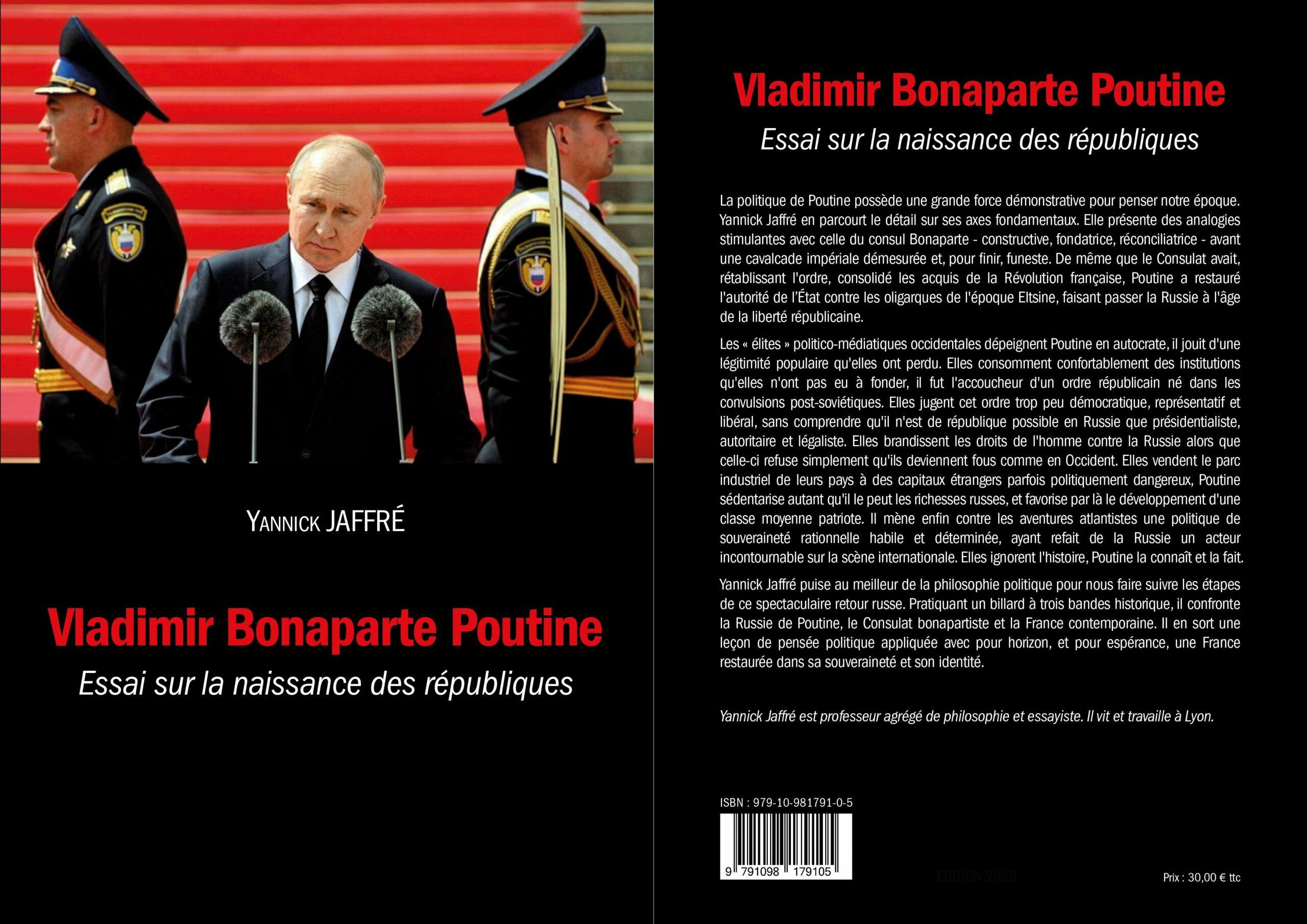
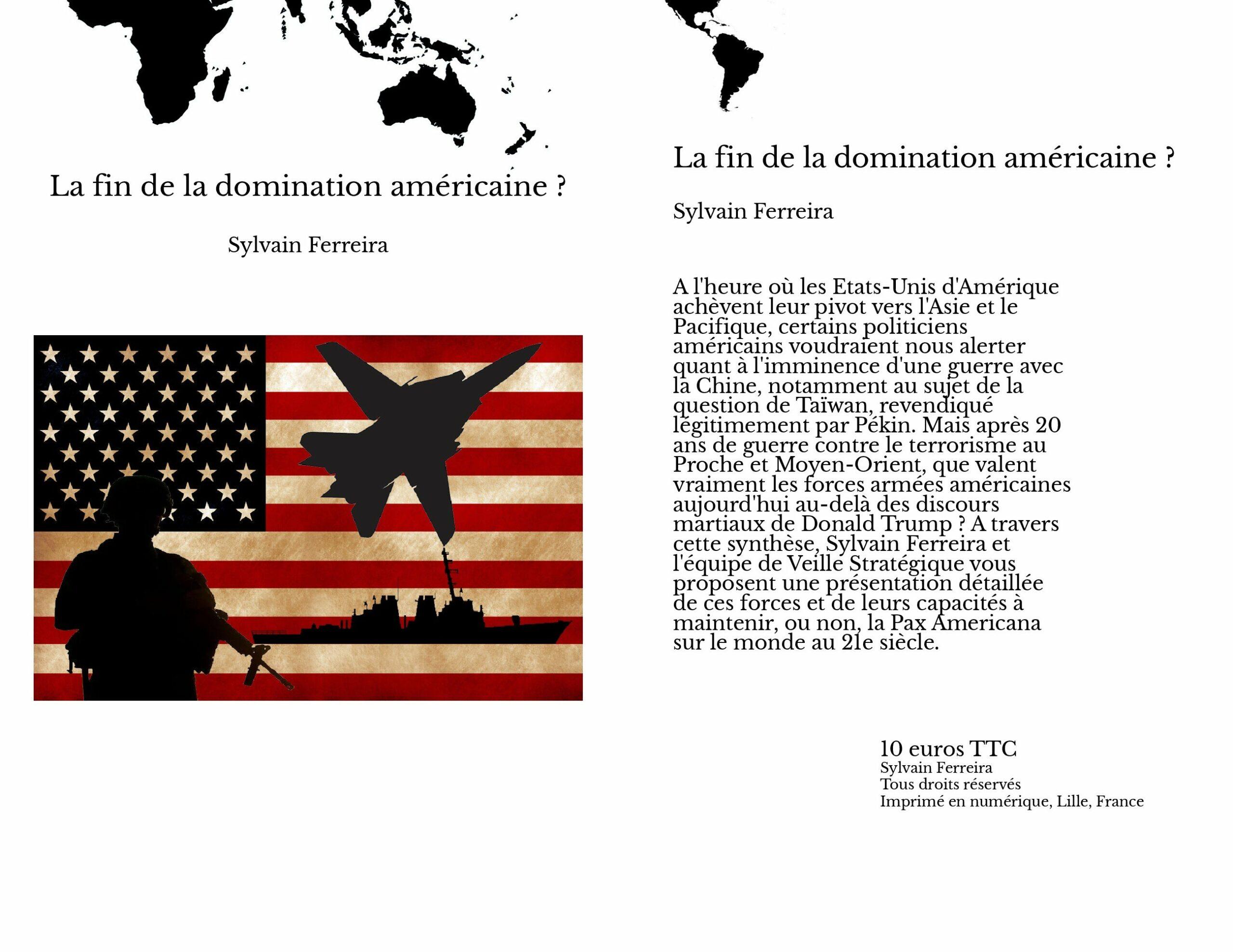
 Yannick Jaffré compare la politique de Poutine à celle du consul Bonaparte : tous deux auraient restauré l’ordre et renforcé
Pascal Lottaz from Neutrality Studies and Prof. Manuel J. Ramos
The age of European colonialism never really ended, it just changed its costume. Today’s geopolitics look and feel so barbarian medieval because they are the ghosts of the Crusades and a forgotten medieval legend.
To explore these startling ideas, I’m talking to Dr. Manuel João Ramos, an Associate Professor at the Dept. of Anthropology at the University Institute of Lisbon, where he has been working for decades on questions of European Colonialism and Power in International Relations.
We trace a 1,000-year-old story, uncovering the surprising roots of Christian Zionism, the messianic fantasies behind the “Age of Discovery,” and the religious undercurrents that still shape Europe’s troubled relationship with the world.
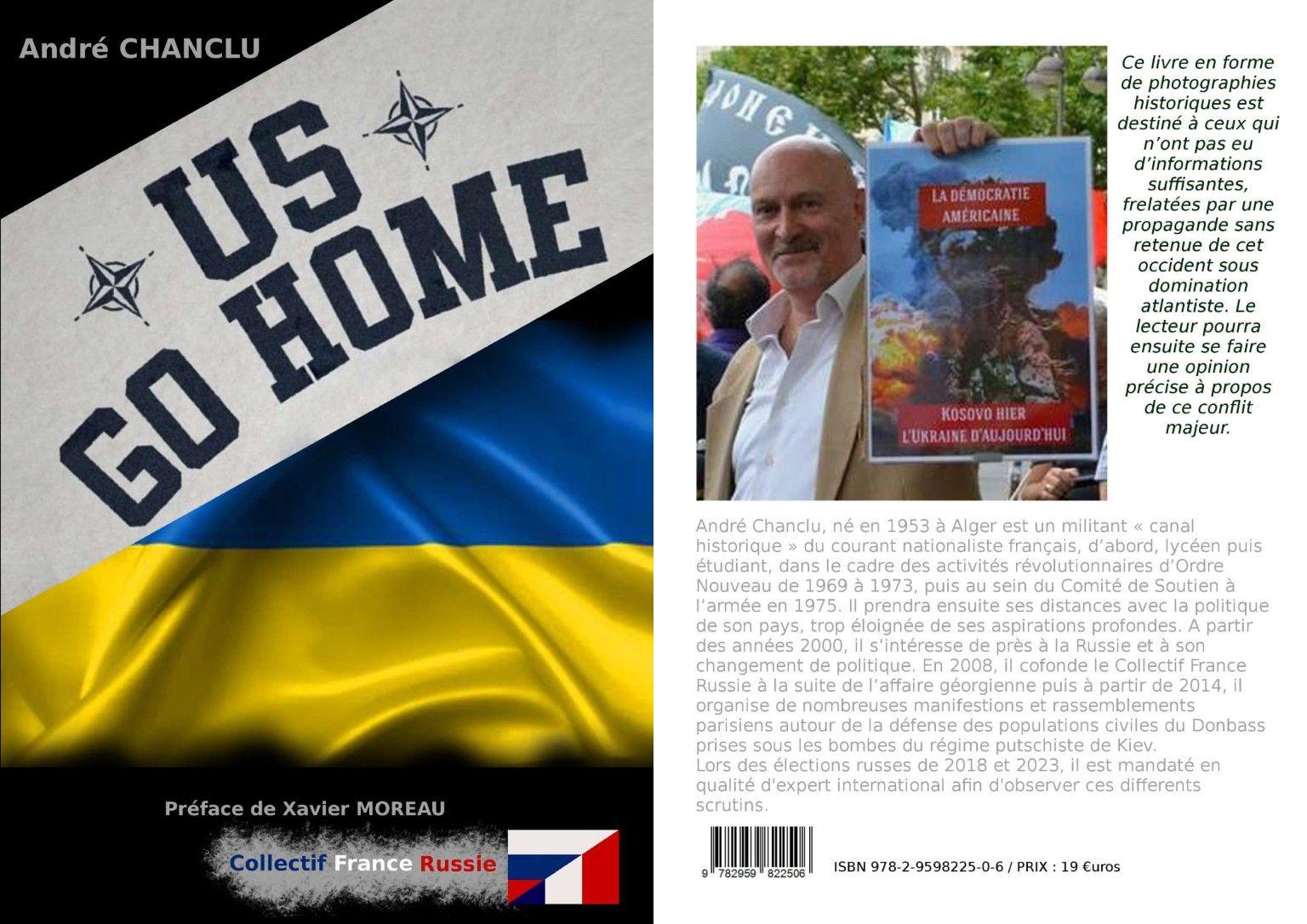
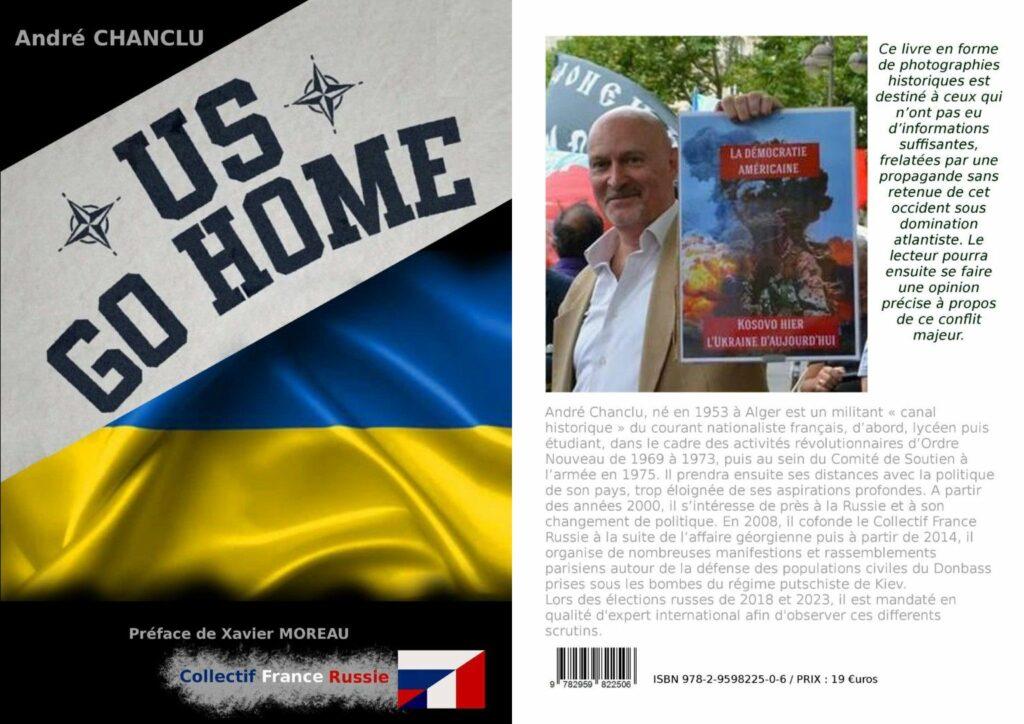 Au coeur d’une actualité brûlante, ce livre passe en revue les détails de cette grande manipulation organisée longuement par le
L’article US Go Home est apparu en premier sur STRATPOL.
https://mid.ru/en/foreign_policy/news/2058518/
Question: Moscow and Washington have almost simultaneously announced nuclear test plans. Does this signify global instability or rather demonstrate equal capabilities and thus the preservation of parity?
Sergey Lavrov: I have heard nothing about Moscow announcing nuclear tests, so it is inaccurate to say that Washington and Moscow made such statements simultaneously.
As I mentioned in a recent interview with Russian media outlets, we have so far not received clarifications from our US counterparts as to what exactly President Donald Trump meant to convey in his remarks. Was it nuclear tests, delivery vehicle tests, or subcritical tests which do not involve a nuclear reaction and are permitted under the Comprehensive Nuclear-Test-Ban Treaty (CTBT)? There has been no answer to that so far.
The CTBT Preparatory Commission met yesterday, but a US representative failed to provide any clarifications, either, although such a forum is clearly the right place to clarify what the US President had in mind when he said that.
The US administration is still in the process of being formed. Many second and third-level positions, primarily in the Pentagon, have so far remained vacant.
In particular, Robert Kadlec has been nominated for the position of Assistant Secretary of Defence for Nuclear Deterrence Policy and Chemical and Biological Defence Programmes. Last week, he spoke before Congress, where he was grilled on the issue of nuclear testing and the current administration’s approach to nuclear weapons. He said that President Trump’s decision to resume nuclear tests was driven by geopolitical considerations. As before, there is no technical need to conduct such tests. That’s a strong statement. I’m not sure whether the speaker himself realises the gravity of what he said, but we are compelled to interpret this as confirmation of what we have been saying all along which is that there is no technical necessity for such tests. He went on to say that the goal was geopolitical and thus drove the point home for us.
What may the geopolitical goal of the United States look like? Domination, right? The use of nuclear weapons argument in this setting is alarming and represents a significant departure from the concept once agreed upon by Ronald Reagan and Mikhail Gorbachev where a nuclear war cannot be won and therefore must never be fought.
Robert Kadlec seeking the position of Assistant Secretary of Defence also stated that nuclear options should be developed to respond to certain regional conflicts that may flare up. That, too, is a rather curious statement. It’s a direct tell that this gentleman, once in office, will be thinking in terms of using nuclear threats in order to achieve the outcomes that the United States may need in a particular region.
He then went on to demonstrate even more instances of double standards when he said that NATO’s nuclear deterrence strategy might be revised in the wake of Russia deploying tactical nuclear weapons in Belarus. Yet, the fact that this was done after many decades of joint nuclear missions with US tactical nuclear weapons long stationed in five NATO member states and the fact that we have long proposed to redeploy all nuclear weapons back to the countries that own them was simply ignored.
Since Belarus has received nuclear weapons from Russia, the US side now wants to deploy theirs somewhere else as well. We are aware of ongoing contacts with South Korea and Japan. These games are very dangerous.
Back to your question, we have not announced nuclear test plans. At a meeting of the Security Council’s permanent members, President Vladimir Putin highlighted US President Donald Trump’s statement that Russia and China have long been doing this, and therefore the United States must do so, too. We immediately contacted our counterparts and let them know that there must have been a misunderstanding. We are looking forward to receiving clarifications.
President Putin has issued a directive not to conduct nuclear tests and not even to make preparations for them. The Foreign Ministry, along with other agencies, including military and intelligence, has been instructed to analyse the situation and to reach a consensus on whether this situation warrants considering the resumption of nuclear tests.
Our principled position was laid out by President Putin in 2023, when, taking a question during one of his speeches, he said that if a nuclear power were to conduct nuclear weapons test (not delivery system tests, not subcritical tests), then Russia will respond in kind.
Question: One more article has recently been published where the journalist and his sources claim that the United States, in particular Secretary of State Marco Rubio has been shocked by your uncompromising stance. Have you really been hard on the Americans or is this yet another article where they have gone too far with their sources?
Sergey Lavrov: We are polite people, and we try to remain polite. I have already answered similar questions in several interviews.
Since this audience consists of professional journalists, I would like to draw your attention to the latest facts of unprofessional and harmful coverage of certain events in the media, primarily British media. You know what is happening at BBC. It’s a shame that some individuals are trying to justify the situation and are speaking about an orchestrated campaign.
I would like you to take note of the item published in The Financial Times, which said that Donald Trump and Vladimir Putin agreed to meet in Budapest and instructed me and Marco Rubio to prepare that meeting. Sergey Lavrov and Marco Rubio have talked on the phone, but before that the Russians allegedly submitted a harsh memorandum after reading which the Americans decided that talking with the Russians would be pointless and meaningless.
There are so many lies here, including when it comes to the sequence of events. The memorandum the FT journalists mentioned is a non-paper, an unofficial draft we have sent to our colleagues not after but several days before the Putin-Trump conversation. It was designed to remind our American colleagues what we discussed in Anchorage, and what agreements we thought we reached (the Americans have not refuted this) during the US-Russian summit. That unofficial document did not contain anything other than what was discussed in Anchorage, which our American counterparts did not regard as cause for rejection.
The presidents’ telephone conversation was held after the document was delivered to the Department of State and the National Security Council. During that conversation, US President Donald Trump did not say a word about receiving a provocative or “subversive” paper that destroyed all hopes for a settlement. No, they had a normal conversation. President Putin gave a positive response to US President Trump’s idea of meeting in Budapest and proposed instructing the countries’ foreign ministries to prepare that meeting. That is exactly what we planned to do.
US President Donald Trump also said that Secretary of State Marco Rubio would call me. I received his call three days later. We had a polite conversation without any nervous episodes, by and large reaffirming progress based on the agreements reached in Anchorage, and went off the phone. The next step was a meeting by representatives of our foreign policy and defence departments, and possibly our security services. However, the Americans have not taken the next step, although we waited for them to take the lead when it comes to the place and time for such a preparatory meeting because they had proposed holding a summit.
Instead, they made a public statement that they don’t want to hold a meaningless meeting. When Secretary of State Rubio made public comments on our telephone conversation, he did not say that he had noticed any aggravation or that it had undermined the chances of success. If I remember correctly, he said that it was a constructive conversation that quite clearly showed where we stand, which is why there was no need for a meeting. This can be interpreted in several ways, but this is what he said. There is a joke that we have a clean conscience because we seldom use it. But it is absolutely to the point in this case.
We see no reasons to offer excuses for being and remaining committed to what our presidents discussed in Alaska. Even if they did not agree on every comma and semi-colon, they have at least reached an understanding.
Question: You just mentioned the summit in Budapest. After his talks in the United States, Hungarian Prime Minister Viktor Orbán said he still hopes the meeting can happen. Is that still a possibility? And why has the focus shifted from a meeting in Hungary to a discussion of nuclear tests? What has changed?
Sergey Lavrov: I believe I have already addressed this. I cannot speak to what is behind the US position on nuclear testing, because President Trump’s claims about a supposed Russian and Chinese “resumption” of testing are simply not true – assuming we are talking about full-scale nuclear weapons tests. Other types of tests, like subcritical experiments (which do not produce a nuclear chain reaction) and tests of delivery systems, have never been prohibited. So, we are seeking clarification on these allegations.
As for the facts: Russia conducted its last nuclear test in 1991, and the United States in 1993. That was over thirty years ago. China’s last test was shortly after that. The most recent test by the DPRK was in 2017. Since then, we have seen no indications that any country is preparing to resume this practice. If someone were attempting to do this covertly, deep underground, it would be up to the professionals involved to expose it. In that case, they should be briefing the White House, not operating behind closed doors.
There is a robust global monitoring system in place, which both Russia and the US participate in. It relies on seismic data to record any significant underground vibrations. They know perfectly well what the indication of a nuclear explosion looks like. So, I would not conflate the issue of nuclear tests with the Budapest Summit.
The other day I watched President Donald Trump host Hungarian Prime Minister Viktor Orban at the White House and then speak with journalists. When asked about a meeting in Budapest, he said that he had thought it over and decided not to hold it, because, he said, “I didn’t think anything was going to be happening of significance.” This fits with the thinking he expressed not long ago when he said that “sometimes you’re better off letting them fight for a while.”
Frankly, I don’t see any causal relationship here. We are ready to discuss the suspicions raised by our US counterparts whereby we have allegedly holed up deep underground and are secretly doing something there. We are also ready to discuss with our US counterparts resuming preparatory work for the summit between the leaders of Russia and the United States, which they themselves proposed.
If and when our US counterparts renew their proposal and appear ready to begin preparations for a high-level meeting that could produce meaningful results, Budapest would, of course, be our preferred location. All the more so as, during his meeting with Viktor Orban, Donald Trump confirmed that Budapest was a preferable venue for Washington as well.
Question: There is not much time left before the New START Treaty expires, yet the United States has not presented its official stance on President Putin’s initiative. Do you think the United States will respond in the near future? If, by any chance, an articulate answer never comes, would that make a difference for Russia?
Sergey Lavrov: We have made it clear many times that this proposal is a unilateral gesture of goodwill on our behalf. No talks or consultations are needed for the United States to support our approach. All the United States needs to do is state that it will not raise the quantitative limits under the Strategic Arms Reduction Treaty for one year that is at least for as long as Russia adheres to its own unilateral commitment. That’s all there is to it. No further steps are required.
As for whether any talks are underway to renew the treaty, no, there are no talks. Once again, the situation is completely transparent. The quantitative levels are well known. We know what the Americans have, and the Americans know what they have. Let’s take a year to, so to speak, cool down, analyse the situation, stop measuring everything by the Ukraine yardstick, and focus on the great powers’ responsibility to maintain global security and stability, above all, in terms of avoiding nuclear war. We are ready for that.
This has nothing to do with the time constraints. A declaration to renew the quantitative limits can be made at any point before February 5. By the way, the current New START Treaty was renewed right after Joe Biden had taken office just a few days before the initial expiration date. Renewing the treaty is a much more complicated endeavour than the simple act of making a voluntary statement to continue observing and respecting its numerical parameters.
Question: Considering rising tensions in the region, has Venezuela approached Russia with a request to provide military assistance? Has Caracas asked Russia to deploy its weapons in Venezuela similar to the way it was done in Belarus?
Sergey Lavrov: No, no such requests have been made.
I believe it is inaccurate to compare our relations with Belarus which is part of the Union State and with which we share synchronised, coordinated, and unified positions on all key international security matters with our relations with the friendly nation of Venezuela which is our strategic and comprehensive partner, to which end we signed a treaty not long ago.
However, considering, among other things, the important geographic factor it would be inaccurate to juxtapose our partnership with Venezuela with our Union with the Republic of Belarus.
The treaty I mentioned is an entirely new instrument. It was signed in May during President Nicolas Maduro’s visit to Moscow to attend the events marking the 80th anniversary of Victory in the Great Patriotic War. The treaty is now in its final ratification phase. It is called the Treaty between the Russian Federation and the Bolivarian Republic of Venezuela on Strategic Partnership and Cooperation and provides for continued collaboration in matters of security, including military-technical cooperation.
We stand ready to act fully within the framework of the commitments we and our Venezuelan friends have assumed in this treaty. It has not yet entered into force. Venezuela has completed its ratification procedures, and we have only a few days left to do so as well. Both chambers – the State Duma and the Federation Council – have held hearings to that effect, and the treaty is almost finalised. We will strictly adhere to the obligations it contains.
I’d be remiss to conclude my comments on Venezuela without mentioning our position on the unacceptable actions the United States is taking under the pretext of combatting drug trafficking as it destroys boats allegedly carrying narcotics, without trial, investigation, or any evidence whatsoever. Law-abiding nations do not do that. This kind of behaviour is more typical of those who consider themselves above the law.
Recently, citing the Daily Mail, Kommersant reported that Belgium was rapidly turning into a narco-state, where corruption, blackmail, violence, and the shadow economy based on drug trafficking flourish across all sectors, from customs to the police. Not the most reputable source, perhaps, but if even Daily Mail wrote this, they must have had a reason to do so. Why else would they slander their NATO partner?
Instead of targeting Nigeria or Venezuela under the guise of fighting drugs – and seizing oil fields in the process – the United States would do better to tackle this problem in Belgium. After all, the US and other NATO troops are already there. They wouldn’t need to chase small boats carrying three individuals each. I’m confident that the policy chosen by the Trump administration with regard to Venezuela will not lead to anything good. It will not enhance Washington’s reputation in the eyes of the international community.
Question: You have repeatedly stated that peace in Ukraine will only be achieved by addressing the root causes of the conflict. As is well known, one of these root causes is the rampant neo-Nazism in Ukraine. Is this issue discussed in your negotiations with American colleagues?
Sergey Lavrov: We regularly raise this issue. In fact, since the Anchorage meeting and my telephone conversation with Marco Rubio, we have had no further contact. We did not specifically broach this topic in Alaska, but they are well aware of our position. It is “in writing” for them. There is no secret about it. The position was articulated by President Vladimir Putin in June 2024, when he spoke at the Foreign Ministry, outlining our fundamental approaches to Ukraine and relations with the West.
Among other absolutely non-negotiable conditions for a settlement – such as demilitarisation, the removal of any threats to the Russian Federation, including by dragging Ukraine into NATO, and safeguarding the rights of Russians and Russian-speakers, as well as the Ukrainian Orthodox Church – there is also the demand for denazification. This is not something we have invented as a notion alien to modern Europe.
One might think of the Nuremberg Trials. Their outcomes, forming part of the UN Charter, are a cornerstone of the international system established after the Second World War. Certainly, all of Europe signed up to this. Germany underwent denazification and a process of repentance.
Regrettably, now – perhaps even beginning with Germany – we sense that this repentance has come to very little. I have spoken about this before: some 15 years ago, during better days, in conversations with German colleagues, we noted the signals they were sending – not verbatim, but the meaning was quite clear. The gist was, “Dear colleagues, we have settled our accounts for the Second World War, we owe nothing to anyone anymore, and now we will act accordingly.”
Former Chancellors Angela Merkel and Olaf Scholz at least tried to observe decorum, while Friedrich Merz has repeatedly declared that his goal is to make Germany the primary military power in Europe once again. I think it unnecessary to explain what kind of signal such statements send – to make Germany the primary military power again. It already was a military power when it conquered more than half of Europe, calling it to arms to attack the Soviet Union.
When such Nazi relapses occur in the birthplace of Nazism, it naturally causes alarm. Naturally, it will require from us – from all those invested in a stable world – principled stances when discussing the final parameters of a settlement.
If the West finally recognises the futility of this scenario, i.e. that the demand should not be for a cessation of hostilities merely to continue arming Ukraine, but to act as President Donald Trump proposed before the Alaska meeting. He said then that a temporary truce would resolve nothing and that the conflict must be ended on the basis of principles for a sustainable settlement.
Yes, Europe later attempted (and not without success) to drag our American colleagues back into its camp of “truce, support for Ukraine, not a step back, not an inch to the left.” Nevertheless, President Donald Trump did say this, and it became the foundation of the understandings unequivocally agreed upon in Anchorage. Incidentally, this is what distinguishes the Republican administration, the administration of Donald Trump, from its predecessor – the administration of Joe Biden.
Recently, I came across an interview with Kurt Volker. He was the US State Department’s special representative for Ukraine under Joe Biden. He claimed that Russia would never agree to a peace deal. It is unclear where he got this from, because it is precisely we who are striving for a peaceful settlement. He added that Vladimir Putin does not consider Ukraine a legitimate or sovereign state. There is an answer to this as well. We recognised Ukraine when it was not a Nazi state and had not banned any language – in this case, Russian – as the only country in the world to do so. We recognised Ukraine as it was defined by the Declaration of State Sovereignty and the Act of Independence: a non-nuclear, non-aligned, neutral state. That is what we recognised, and that is how things stood.
Next, Kurt Volker asserts that Vladimir Putin is convinced Ukraine should be part of Russia (I will not even engage with that topic) and that the Russian President considers Vladimir Zelensky a Nazi. But where is the proof to the contrary? Vladimir Zelensky regularly poses on television, awarding honours to fighters of the Azov regiment [1] and other Nazi battalions, who wear the insignia of Nazi Germany on their sleeves. How else should one regard this man?
The eradication of Nazism in Ukraine – denazification – is an absolute condition for any settlement if we want it to be long-term. We do want that and will pursue it. But when no one in Europe, in their dealings with Ukraine, raises the issue of the country’s Nazification; when no one, except Hungary, addresses the rights of national minorities; when no one demands that Vladimir Zelensky repeal the law banning the canonical Ukrainian Orthodox Church…
In Alaska, when President Vladimir Putin explained to US President Donald Trump how we assess the situation in Ukraine, he mentioned that in 2024, they passed a law aimed at banning the canonical Ukrainian Orthodox Church. President Donald Trump did not believe it. He asked US Secretary of State Marco Rubio, who was present at the meeting, three times whether this was true. Marco Rubio confirmed that it was. It was clear that the US President was, to put it mildly, taken aback.
Returning to Ukraine and its legislation. I mentioned Hungary. When the Brussels bureaucrats, led by Ursula von der Leyen (who is now creating an intelligence structure and will personally oversee it), were pushing through the decision to begin negotiations with Ukraine on its accession to the European Union, Hungary – credit must be given to the courage of Hungarian President Viktor Orbán and his Foreign Minister Péter Szijjártó – stood alone in insisting that among the conditions Ukraine must meet before negotiations begin, there must be the resumption and restoration of all Ukrainian obligations regarding the respect for the rights of national minorities. There is a rather lengthy text on this topic. It was not difficult to draft, because the Constitution of Ukraine still requires respect for the rights of the Russian (singled out specifically) and other national minorities.
Currently, there is the European Commissioner for Enlargement, Marta Kos. When she claims that Ukraine is ready and has fulfilled all the necessary conditions to begin negotiations, this is simply untrue. Nothing has been done to address or restore the rights of national minorities – not even for the Hungarian minority, despite Hungary being a member of both the European Union, which Ukraine so desperately seeks to join, and NATO, where Vladimir Zelensky is also constantly pushing for membership. No action has been taken on this front, just as nothing has been done regarding the remains of the victims of the Volhynia massacre in relation to Poland.
The European Union remains entirely silent on these blatant violations. Ukraine stands as the only country in the world to have completely banned a language. Even in Norway, where 7 percent of the population are ethnic Swedes, Swedish is an official language. The figures speak for themselves – compare that to the situation in Ukraine. From Brussels, we hear nothing about Ukraine’s actions except for the mantra that they must stand with Ukraine to the end, “until victory.”
This same refrain was recently echoed by Mark Rutte and other representatives of the Western European establishment.
They insist that they must always defend Ukraine because it is upholding European values. This is nothing less than a confession – a self-exposure. It reveals that, in the eyes of today’s Brussels bureaucracy, European values equate to the revival of Nazism. That is precisely why we cannot afford to show weakness here.
Question: Recently, Lithuanian authorities have been increasingly flirting with the idea of closing their borders and halting transit to Kaliningrad for Russians, using increasingly flimsy pretexts. What measures is Russia taking, potentially with Minsk, to prevent this? And how will Russia respond if Lithuania follows through?
Sergey Lavrov: These smaller nations – the “young Europeans,” like Lithuania, Latvia, and Estonia – seem to vastly overestimate their importance in the eyes of the Western European “old guard” of the EU. Those in Europe who still possess a shred of common sense and a genuine concern for the continent’s security (a dwindling group, admittedly) are perfectly aware of the provocative role assigned to these Baltic states by their handlers, primarily British ones.
London’s penchant for provoking situations is, of course, notorious. Take the recent case where the Russian FSB exposed a plot to trick a Russian pilot, flying a fighter jet armed with a Kinzhal missile, into flying to a base in Constanta, Romania with a fake order. The obvious intent was for the plane to be shot down, creating a pretext to accuse Russia of attacking NATO. But I’ll set that aside for now; the FSB has already laid out the details. I don’t know how the British will wash away the stain, but they’ve always had a remarkable talent for this, like a duck that waddles away from a shower without a drop of water on its back.
The former empire that once ruled most of the world is gone, and so is the “good old England” they so love to parade. They have little economic weight left, and their military might is relatively weak, as even their nuclear arsenal isn’t fully under their control. They have to compensate for this weakness somehow, so they fall back on that traditional English aspiration to “divide and conquer,” to put it politely. There are, of course, less charitable terms for their actions and goals.
Now, back to your question. Indeed, recently we’ve seen not just the usual threats to block Kaliningrad transit, but certain figures – not in Lithuania, but within the EU itself – egging the Baltics on by suggesting Kaliningrad could be “razed to the ground.” Meanwhile, Lithuania has already closed its border with neighbouring Belarus, leaving hundreds of trucks from Lithuanian carriers stranded there.
On this matter, Belarusian President Alexander Lukashenko, as always, used particularly vivid language. These actions are outrageous. It brings to mind the phrase the Americans once used about dictators in Latin America, in Central America: “He may be a son of a bitch, but he’s our son of a bitch.” That’s precisely the attitude the European bosses have towards the antics of their Baltic protégés. They’re expected to commit as many heinous anti-Russia acts as possible, while also provoking Russia into a response that can be “sold” to Washington primarily as grounds for invoking Article 5 of the NATO treaty and starting serious military action.
We see this clearly. But the obligations regarding Kaliningrad transit are not Lithuania’s alone; they are the obligations of the entire European Union. The 1994 Partnership and Cooperation Agreement between Russia and the EU included a provision on ensuring transit between neighbours. This was reinforced by a separate joint statement on transit in 2002, which had direct legal effect. Then, in 2004, when the Baltic states and other Eastern European nations were admitted to the EU, a Joint Statement on EU Enlargement and EU-Russia Relations was signed, which explicitly reaffirmed all these commitments.
Subsequent technical documents spelled everything out in minute detail, including the layout and procedures for a “temporary travel document” and the clearance processes for passenger and rail cargo transit.
The European Union must now take responsibility for the behaviour of its wayward “junior members” who are spinning out of control.
Back when decisions on admitting Latvia, Lithuania, and Estonia into the European Union were being drafted in 2004, we asked our European counterparts – back then we had plenty of contacts and fairly open trust-based discussions – whether those three Baltic states were ready to meet the EU membership criteria. We were told they fell short in some areas, but…
We wondered whether bringing unqualified candidates into the EU made any sense. They said they knew where we were coming from, but having gained independence those countries were still haunted by phobias of “occupation.” “We’ll bring them into the EU and NATO,” they said, “and they’ll calm down.” Have they? I think the exact opposite happened. Not only did they not calm down, but they decided they would now call the tune in the EU and NATO, at least when it’s about openly Russophobic and anti-Russian “rhapsodies.” That’s the position they have adopted today.
In response to what I’m saying, someone in the EU may argue that we “invaded” Ukraine in violation of certain agreements we had arrived at with the EU before that. I have no doubt someone out there will be willing to come up with an argument like that. They are reluctant to recollect how things actually played out in Ukraine. How it all began long before the Minsk Agreements, long before Crimea, back in 2013, when then President of Ukraine Viktor Yanukovich analysed prospects for signing an EU Association Agreement and realised that many of its provisions would imperil trade, trade arrangements, and other economic benefits Ukraine enjoyed in its contacts with the Russian Federation. He became fully cognisant of this and requested to put off the signing scheduled for late November 2013. We supported his approach. We did so not because we wanted to prevent Ukraine from pursuing relations with other countries, but because we wanted Ukraine to keep its access to its commitments under the CIS Free Trade Area and its economic ties with Russia, which had been vastly beneficial for Ukraine. We also strived to avoid inconsistencies between the principles underlying relations between us and the obligations Ukraine was supposed to assume under the EU Association Agreement.
Back then, President Vladimir Putin reached out to European Commission President José Manuel Barroso (former Portuguese Prime Minister), letting him know that Russia had a free trade area agreement with Ukraine, and the EU planned to create one with Ukraine as well. The principles of these two areas are at odds with each other. Putin suggested having the three parties – Ukraine, Russia, and the European Commission – sit down and discuss ways to harmonise them. What could be more reasonable? Barroso came back through some obscure channels saying that since the EU did not interfere in Russia’s trade with Canada, Russia should likewise stay out of EU-Ukraine relations.
We often talk about former Assistant Secretary of State Victoria Nuland and her confession that $5 billion had been invested in Ukraine over the years preceding the coup. The EU catalysed the Ukraine crisis. It fueled the Maidan protests and planted the catch phrase that Ukraine must be with Europe, not Russia. They said this publicly. So, we should be left out of it, and they shouldn’t justify their own lawlessness by referring to the steps our country was forced to take after exhausting every reserve of goodwill and constructive proposals.
Here are some examples of the EU showing lack of integrity. In 2008-2009, the EU – France in particular – faced issues in Chad and the Central African Republic, which were home to small French expeditionary forces that lacked air support. They asked Russia to send in a helicopter group to assist in operations against rebels that engaged in genocide and other atrocities. We have sent the group as requested. Later, we reached out to our EU partners with a suggestion to create a joint crisis response mechanism for operations abroad based on this experience.
We proposed an approach under which, if Russia were to conduct an operation, we could invite the EU to participate in it on an equal footing, and if the EU were to engage in an operation, it could invite Russia. They were receptive of the idea. Discussions began, and everything appeared to be moving towards the sides coming to terms. Some time later they told us there would be no parity, because there already was an agreement outlining the possibility of Russia’s participation in EU operations, which covers everything. So much for an approach supposedly based on equality.
There are quite a few other examples, including the Meseberg Initiative, which we recently mentioned in our comments. Back then, President Dmitry Medvedev and German Chancellor Angela Merkel agreed in Meseberg on a declaration establishing an EU-Russia Committee on Foreign Policy and Security. Ukraine was not even mentioned, only Transnistria. Merkel insisted on having the creation of that committee come with a condition, namely ensuring progress in the Transnistria settlement. That provision was included. Following those understandings, we ensured the resumption of the “5+2” format for the Transnistria settlement, which had been dormant for several years. The format resumed its work, but when we approached the EU with a proposal to now create the joint Committee on Foreign Policy and Security, they chose not to reply and the idea went off the table. That’s how much the EU’s word and even signature is worth. In this particular case, the EU was represented by Chancellor Angela Merkel.
A particularly glaring example is the visa-free regime with the European Union. Negotiations had been underway even before 2004, as at the Russia–EU summit in 2004, the then-head of the European Commission, Romano Prodi, stated that within a couple of years we would achieve a relaxation of the visa regime. Several years elapsed. We developed our internal regulations based on the framework agreed with the EU. Once these norms were finalised domestically and all requisite bilateral agreements with individual EU member states were concluded, no outstanding condition remained unfulfilled. In response to our query regarding potential timelines for abolishing the visa regime, the European Union engaged in protracted deliberations. Its eventual response was to table a new draft document, proposing a joint consideration of further steps. The document outlined purely technical nuances. Nevertheless, we engaged in this work as well. President Vladimir Putin has repeatedly recalled those times.
Back then, not only was faith alive, but there was also a lingering hope that we were dealing with honourable counterparts.
Ultimately, these additional technical matters were also resolved. This was in the summer of 2013. When we suggested announcing the agreement, they (the EU officials) withdrew from official contacts on the matter and from providing an official response. Off the record, it was intimated to us that, despite our full preparedness, political considerations precluded the conclusion of a visa-free agreement with Russia prior to finalising such agreements with Moldova and Georgia. Ukraine was not mentioned at the time.
Therefore, should the European Union level accusations of violations against us, firstly, there is not a single factual basis for such claims, and secondly, we have ample means to “pacify” our European colleagues.
Question: Next year, the Treaty on Good-Neighbourliness, Friendship, and Cooperation between Russia and China will expire. Are there negotiations underway to extend it? Or will Moscow and Beijing draft new agreements to reflect the changed realities?
Sergey Lavrov: This treaty remains entirely relevant. It is no coincidence that when its initial term expired in 2021, approximately a month prior, President Vladimir Putin and President of the People’s Republic of China Xi Jinping signed a document extending the treaty for five years. These five years are now coming to an end. The 2021 statement affirmed that the treaty remains fully pertinent, retains its force, and serves the interests of further strengthening the comprehensive partnership and strategic cooperation between our countries.
I believe this assessment still holds. However, events are unfolding rapidly, and our strategic cooperation and multifaceted partnership with the PRC are deepening, acquiring new dimensions. In principle, we have agreed with colleagues from other agencies to explore whether specific areas could be used to “enrich” this treaty. I am unsure of the form this might take. It could involve adopting another document confirming and expanding the treaty’s provisions. No definitive decisions have been made yet, nor are they necessary, as such decisions, when put in writing, merely reflect the realities on the ground. In practice, our relations have never been more advanced, close, or trusting. As our Chinese friends say: we work “shoulder to shoulder, back to back” in all spheres of international life. These are not empty words.
Thus, I assure you that the date of July 16, 2026 will not pass unnoticed. The details of how our cooperation with our Chinese friends will be confirmed, expanded, and deepened will be handled by the executive offices of our leaders. A report will subsequently be submitted at the leadership level.
The organisation is recognised as terrorist and banned in the Russian Federation. [There is no link to understand what exactly is being referred to here].
Historical Thimbles – Yandex Translated
[The real state of the US nuclear triad and the necessity for testing and why. Seems to me as if the US must embark on a ‘what to scrap carefully’ program, as most of their triad has either reached end-of-life, or is way past a use-by-date. This is ‘man-splaining’ and I had to read it a few times before it stuck.  ]
So, we’ve got dessert on the menu. The Great Peacemaker, in shades of orange, “strengthened his negotiating position” a few hours before his meeting with Xi. He’s been talking a lot about prisoners. The United States, you see, “needs to start testing nuclear weapons immediately.” Let’s gallop through the most disgusting lies that Mr. President has spewed out.
Specialists in coprology (dressed in chemical protection) used a stick to pick out several fractions that speak of Donald Fredovich’s severe mental indigestion, the first being: “The United States has more nuclear weapons than any other country.” Remark. According to official data from the Stockholm International Peace Research Institute (SIPRI), Russia has 4,380 nuclear warheads, while the United States has only 3,708. The data is incorrect because it does not take into account “spent warheads” that have not been disposed of, and here our beloved Motherland acts as a resourceful squirrel, believe the experts.
The second substance is thin: “U.S. leadership has been achieved by a complete renewal of nuclear weapons during my first presidential term“. Remark. The U.S. Department of Energy’s state program to modernize the star-mattress arsenal was launched in 2010 under the tanned Obama, and the planned “Triad rearmament” has barely reached the completion of the incomplete modernization of the B-61 family of tactical aerial bombs. It is being completed manually without replacing the warhead.

The greatest achievement of the Program was the grandiose bender of October 2024 at the Los Alamos National Laboratory. There … handed over the first serial plutonium core of the W87-1 warhead for nonexistent in nature intercontinental ballistic missiles LGM‑35 “Sentinel”.

Then they embarrassingly rolled back to the term “serial”, because the funding ended. To understand: the stream production of cores for regular warheads of the US Triad ended at the turn of the 1980s-90s, production is collapsed to the foundations. And attempts of the last fifteen years to galvanize the corpse have been failed according to the schedules. Today, it has been promised (for the hundredth time) that Los Alamos has recruited enough personnel to resume industrial production, producing 80 cores per year by 2030 and 631 cores by 2035. Well, well.

There are still some things that need to be brought to Donald’s leaky ear: 90% of American nuclear weapons were designed for specific delivery systems. The average age of these systems is 45 years, and they have been preserved beyond their design life. However, the ongoing “modernization” efforts do not fully meet the required specifications. By 2030, 100% of the Triad’s systems will have exceeded their design life by 30-35 years, and they will need to be decommissioned (all of them) within the next five years. for safety reasons, the service life will end once and for all.
Today, the military is demanding that they be relieved of their air-launched cruise missiles (ALCMs) and Minuteman III intercontinental missiles. The latter are particularly alarming, as they are designed to have a 10-year service life, and a half-century anniversary is on the horizon. Ohio-class nuclear submarines are afraid of being pushed away from the dock, and they have exceeded their projected service life twice. The Northrop B-2 Spirit (B-2A) bombers and F-15E nuclear bomb carriers are celebrating their 40th anniversary.
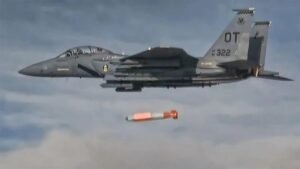
It’s a situation where you pull your tail out of [censored] and immediately get your face drenched in it. We need to urgently modernize (read: replace) all components of nuclear deterrence. From warheads to platforms/delivery vehicles for nuclear weapons on water, in the air, and on land. Everything. Starting with the stove, the Nuclear Forces Control System from the late 1980s.
Subjectively. The favorite saying of the thieving Yankees in official reports is “the development of a new/new …. continues.” Let’s take the LGM-35 “Sentinel” intercontinental ballistic missile (formerly known as the Ground-based Strategic Deterrent, GBSD). If my personal memory serves me well, the replacement of the existing Minuteman III ICBMs was supposed to be fully completed by 2028-2030. There are 400 mine-based units and 2,500 for the Air Force’s “test support” needs.
Not a single one. And the Pentagon is crawling on its knees before Congress to get another $3.7 billion. “for research and related development for the Sentinel project.” What exactly? New types of heavy concrete, for sure. As General Haiten cried in front of the congressmen a year ago: the most deplorable state is ours, gentlemen, with the launchers of the Minuteman III ICBMs, the project to create the Minuteman IV has been failed three times, and it is better not to touch the 450 missiles on combat duty. That is, not even to remove them.
Over the past 30 years, the products have been virtually unserviced according to the regulations. Competencies have been lost both on paper and in the training of engineering personnel. It is easier to pour concrete and start digging new mines, creating new control systems based on modern digital technologies.
The exact same prospect of “modernization development” has been shining over the W87 warheads for ten years, and this year’s work has been halted once again, requiring an urgent billion-plus amount of money. The first promised Sentinel is expected to enter service in the mid-2030s. However, this is uncertain. It is unlikely to enter service.
At sea, things are a little better, because the Trident II ballistic missiles are, without a doubt, very good missiles. They are quite competitive with the latest and even promising Chinese developments. They are looking for \$2.5 billion to upgrade them, but so far, they have been unsuccessful. Additionally, the Ohio-class Trident submarines must be scrapped by 2030, or else they will face reactor failures.
It is planned to replace these veterans with Columbia-class nuclear missile carriers with the ceremonial delivery of the flagship of the series … a year ago. It didn’t work out, something in the breeches is getting in the way, and the Pentagon is howling like a coyote, demanding ten billion dollars for fiscal year 2026. For research. And the repayment of a monstrous increase in estimates after ten-volume “complaints” of the US Navy and a special congressional commission, crazy about the manner of work of contractors.

As for the “missile upgrades,” the refurbished W88 Alt 370 and W76-1 warheads … will not be delivered on schedule, as they have been replaced with the low-yield W76-2 warhead since early 2020. Submariners are waiting for the weather to change and for the promised … new W93 warhead, which is now scheduled for delivery in 2050. It was not even on the drawing board, although the transition to this munition was planned along with the construction of the Columbia submarine.
That’s not all. The most miserable branch of the U.S. military, the Air Force, finds itself at the most obtuse angle of the Triad triangle. Chronic underfunding has left this component in a state of complete astonishment. The 46 nuclear-capable Boeing B-52 Stratofortress strategic bombers and the 20 Northrop B-2 Spirit strategic bombers will have to carry the burden until at least 2050.

The B-21 “Raider” squadrons, which were expected to be delivered in 2035, were never seen again. The prototype, which had flown a year earlier, was met with a chorus of “charlatans, redo it” due to a variety of issues.

And the armament for this flying coffin, which was already outdated on the drawing board (the AGM-181 Long Range Stand Off Weapon), was scheduled to be tested in 2030, although it was supposed to be put into service today. It was equipped with fully upgraded W80-4 LEP nuclear warheads. As a result, … The Triad’s air component is practically stagnant, with the Pentagon waiting for $5.33 billion to convert ten B-21 “Raider” airframes in the factory and approximately two billion for research and development of missile and bomb weapons for the “miracle strategist.”
In the meantime, the U.S. Air Force has once again artificially extended the service life of the Rockwell B-1 Lancer supersonic strategic bomber with variable-sweep wings. These bombers were scheduled for complete replacement in 2015.
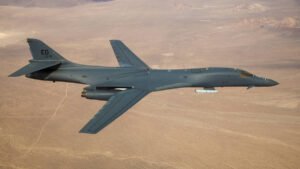
A little bit about nuclear weapons testing. Personally, I belong to the sect (joke) of couch analysts who claim that any new, upgraded, and regularly scheduled weapons must be carefully prepared before the barrel and other components wear out … experience. On exercises, training grounds, in local conflicts, or in “a situation close to combat”. At one time, with great enthusiasm and careful preliminary instruction, I “experienced”a lot of interesting things. I’ve learned a lot of useful canonical dogmas from the representatives of the manufacturing plants.
Engineers, they are like that. Curious. Calculated to the seventh decimal place. Rare nerds, but they unanimously criticized our beloved Motherland’s decision to join the Comprehensive Nuclear-Test-Ban Treaty (CTBT). Having nothing to do with the nuclear industry, they convincingly explained to us, the boots-wearing foot soldiers, that “physical modeling of nuclear charge operation” in special laboratory facilities was complete nonsense.
As well as the second method of hydro-nuclear and sub-critical tests, which can only provide vague information about the reliability and safety of already manufactured nuclear weapons in order to clarify the “product warranty period.” Based on such speculative probabilistic measurements, it is not possible to make structural changes to the nuclear charge architecture. Only mechanical/electronic components can be upgraded.

As for the physical processes of an explosion, computer modeling provides about as much useful information as the Tale of Bygone Years does about the origin of Rurik’s notorious Varangians. In other words, it provides no information at all. There are a million interpretations, as “it was a long time ago, in the days of yore.”
As well as the last nuclear test conducted by our Motherland. Before Academician Sakharov lost his mind on the grounds of humanism and democratic principles, he left a great commandment for the Guardians of the USSR Shield: nuclear tests are necessary for the development of fundamentally new technical solutions. These solutions can lead to new methods of using advanced nuclear weapons, changing the balance of power on the global stage in our favor. End of quote. This quote was later revised.
If we maintain a balance of existing opinions, the “test sect” says, “Okay, we don’t conduct in-situ calculations of the nuclear charge’s power, and we don’t have a reliable assessment of the impact of a specific design solution on the physical scheme of the charge’s performance. Provide a unified methodology that can reassure everyone. Convince the doubting nuclear physicists. Unfortunately, there are many such methodologies. They are all debatable, where the effectiveness of nuclear weapons is only represented by the splinters of chalk on the blackboards in academic classrooms. Meanwhile, the development teams are advancing their solutions.
Opponents of the natural testers’ sect claim that neither Russia nor the United States needs nuclear tests, as they have amassed a vast amount of information and statistics from the Cold War era, and have established laboratories for simulating nuclear processes. Even France does not require them, as the French have been dragging their feet on the moratorium, frantically setting off and detonating charges until their engineers have fully clarified all the issues.
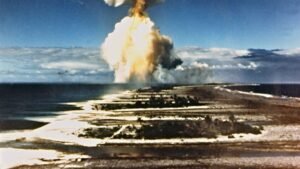
China, for example, is in a very vulnerable position, it did not have time to frolic from the heart with vigorous broads, it has a small database of objective data to confidently develop its nuclear arsenal using mathematical modeling methods. Even worse are Israel, India, Pakistan and the DPRK, which do not have clear test statistics. The island Scots can steal some sort of research base from their star-mattress allies, but that’s not accurate. Although it used to work sometimes.
That’s why these passengers can confidently be detached from the thermonuclear (very, very bright) future. Along with the Han Chinese, they will remain on the cumbersome technologies of the early 1970s. Unless someone very, very kind and northern shares a gigantic statistical database of tests.
As for our beloved Motherland and our sworn enemies overseas, we have been conducting regular and reliable “tests” since 1996. We use simulation technologies to understand the behavior of nuclear materials at a subcritical level and predict the consequences of explosions. We provide a comprehensive set of answers for specialized military personnel. We focus on key parameters such as thermal radiation, predicted shock waves, and radiation.
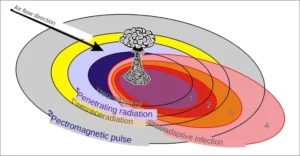
For this, there is a “supercomputer simulation” on numerical methods and algorithms of physical processes that occur during an explosion. There is a “nuclear-physical simulation” using the Monte Carlo method, where the life of an individual particle is simulated from its creation to its disappearance in accordance with the laws of physics, and then the overall process of an explosion is calculated for a large and very large number of particles.
For example, the miniaturization of our arsenal of warheads was carried out using the “step-by-step modeling” method (based on the above-mentioned methods), where calculations were performed in one or two dimensions based on key events in the process, and the results from the previous stage were fed into the next stage. This was achieved through the use of special stands, supercomputers, laser systems, and specialized “simulation” software. These products also enable the assessment of nuclear safety and reliability in laboratories.
The United States has an approximate toolkit for studying nuclear processes. Los Alamos does not need to shake the depths of Nevada at this stage of modernizing its warheads; instead, it should conduct a laboratory audit of its decaying arsenal. A selective audit. And catch up with Russia from twenty years ago in terms of key parameters of its warheads. This can be started with the automatic charge unit and the explosion power regulators in variable-power charges. It is a shameful spectacle. They haven’t been able to solve the B61-13 atomic bomb problem for a dozen years. The testers.
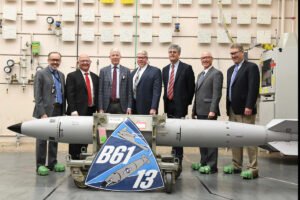
Let’s dance from the stove. In his sleep, the orange grandfather misread the messages about the successful tests of our Poseidon. An ocean-going multi-purpose system with a nuclear torpedo and an atomic power plant. With the educational level of the New York Military Academy (1959-1964), which had nothing to do with military affairs, it was a private boarding school for college preparation. Given the patient’s knowledge of militarism, he had not studied anything deeper or more specific than the comic book “Captain America vs. Hitler.”

And the habit of wiping the royal ass with reports from national security advisers and the “Ministry of War” turned into a huge embarrassment. The elderly gentleman first scribbled a wild post on social media about the balance of nuclear forces in the world, and then polished it with a speech on board the president’s plane. Without conducting a briefing with responsible officials to educate himself about the Burevestnik and Poseidon weapons systems, which are based on new principles.
The invented role of the Lord of the Universe with the reasoning “we have more nuclear weapons than Russia” and “other countries are conducting nuclear weapons tests” … looks funny, but useful. Because the idiot is so useful. The INF Treaty was broken, and Russia made a hyper-sonic leap, and now it’s sneezing on the sidelines, its eyes rolling wildly. The last deterrent, the New START Treaty, is not being discussed, and as a result, we will surpass the number and quality of our Strategic Forces by several parsecs in just five years.
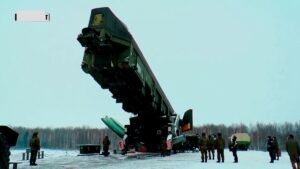
The Yankees are good at it. They tear up treaties on the limitation of conventional weapons, on missile defense, and then throw a tantrum. They have forty-year-old or fifty-year-old weapons in their arsenals, and they’re charging “development fees.” The treasurers are going to kill themselves. Now they want to withdraw from the Comprehensive Nuclear-Test-Ban Treaty (CTBT) of 1996, and we’re here to help. As Academician Sakharov said, we’ll need real tests. For new types of weapons, maybe … based on new physical principles.
As for the gilded fool, he will have a number of wonderful discoveries to make. First, the complete restoration of the Nevada test site (three years minimum with 100% funding), and second, a fierce battle with the very tough organizations of the former Nevada-Semipalatinsk Anti-Nuclear Movement. These characters are still around, and they will tear you to shreds for trying to poison American soil with radiation. And the Democrats will spend every last cent on an all-American protest, like “No to the Vietnam/Iraq War.”

Therefore, I will end this article with a deep conviction: nuclear tests will be resumed sooner or later. The thirty-year-old ugly fruit of the Détente has rotted, and the world is on the verge of returning to the meridian. Nuclear deterrence is the norm, as the rest has been unilaterally trampled upon by the World Toad, and the CFE, INF, START, and New START treaties have been achieved through blood and sweat.
By withdrawing from these restrictions, the West was freeing itself for wild planetary bravado and revelry, expecting absolute and unilateral dominance in offensive weapons after the collapse of the Soviet Union. However, Russia emerged from its slumber and climbed out of the gutter.
With China’s industrial technology gaining momentum, the Orange Clown is right to worry about the Chinese arsenal. The Han Chinese are churning out their imperfect warheads like tofu and herb pies. They’ll go for quantity over quality, but the Yankees have enough.

As for Russia as a competitor in the field of NPT/TNT/NPT, it’s better not to mention it anymore, as the tricolor hyperloop has already left the Solar System at several space velocities. It is being pursued by Trump’s “largest nuclear submarine.” It’s a clown, for sure.
Unable to concentrate for a minute or two on the thermonuclear potential tables. Starting from the multiple (not several times) superiority of the Russians in tactical warheads. You should take a look at their nomenclature and compare it with the latest means of delivery. Throw a few unknown if possible Strategic Missile Forces to complete the separating blocks of our intercontinental horror to the standard parameters – after such a short manual “For nuclear Dummies”, it is best to break into all the canceled restrictive treaties with a boar.
Instead of bubbling in a stinking puddle with the bubbles “We’re the coolest.” Without any industrial production of nuclear warheads, either old or new. As one of the founders of the Soviet nuclear shield said, “Creating an atomic bomb is easy, but it’s damn expensive.” So, let the hysterical Donya look into the treasury first. And then into the long list of “super-duper weapons” promised to the good American people. Currently, they are listed as “requiring additional funding for further development.” There’s a stamp on it from start to finish. I think we need tests. It’s time to get in shape, there’s a lot to accomplish.
Lula-Trump mediation discussed in Malaysia as both leaders commit to easing trade frictions and exploring dialogue between the US and Venezuela.
On Sunday, Brazilian President Luiz Inacio Lula da Silva and U.S. President Donald Trump met on the sidelines of the Association of Southeast Asian Nations (ASEAN) summit in Kuala Lumpur.
At the center of this meeting was Lula-Trump mediation — Brazil’s strategic proposal to act as a bridge between Washington and Caracas, easing the confrontation between the U.S. and Venezuela.
A “Constructive” Dialogue: Lula and Trump Reopen Bilateral Channels
External source: ASEAN Summit Statements by Telesur
Brazil’s Foreign Minister Mauro Vieira described the meeting as open and direct. “President Lula began by saying there were no forbidden topics,” Vieira told the press. He noted Lula presented a Brazilian request to suspend U.S.-imposed tariffs on exports for a negotiation period, alongside review of the Magnitsky Act sanctions targeting Brazilian officials.
According to Vieira, Trump’s response was positive. The U.S. President agreed to initiate “a bilateral negotiation process starting immediately,” aimed at resolving trade disputes “within a short time.” Both leaders agreed that their teams would begin technical discussions “today,” signaling renewed cooperation.
This pragmatic tone reflects Lula Trump mediation efforts not only on commerce but also in restoring mutual confidence after years of friction.
Brazil as a Regional Peacemaker in Latin America
External source: Telesur report on Lula’s stance toward U.S. actions in Venezuela
Beyond trade, Lula reaffirmed Brazil’s geopolitical strategy: to act as a mediator in Latin America, particularly in the Venezuelan crisis. “Yes, President Lula raised the topic [of Venezuela],” confirmed Vieira. “He said Latin America and South America, specifically, are regions of peace, and he offered to be a contact and interlocutor, as he once was, to find solutions that are mutually acceptable and fair.”
This statement cements Brazil’s role as a diplomatic bridge between Washington and Caracas at a time of heightened tension. By positioning itself as a conciliatory power, Brazil seeks to stabilize hemispheric relations and reclaim its historic influence in regional diplomacy through the Lula Trump mediation approach.
Political Climate and Symbolism
During the meeting, the atmosphere was cordial and relaxed. Vieira emphasized that Trump “expressed admiration for President Lula’s political career,” a reference to Lula’s imprisonment and subsequent acquittal. Both leaders agreed to reciprocal visits — Trump voiced his intention to visit Brazil soon, while Lula accepted a future U.S. invitation.
“The president said he admires Brazil, that he loves Brazil and its people immensely,” Vieira noted. The statements were widely interpreted as a goodwill gesture signaling a shift in the White House’s posture toward Brasília.
These gestures reinforce the image of Lula Trump mediation as anchored not only in policy pragmatism but also in personal diplomacy aimed at rebuilding trust.
From Bolsonaro to Lula: Trump’s Subtle Recalibration
A revealing moment came when Trump was asked about former Brazilian President Jair Bolsonaro, his past ally. “I’ve always liked President Bolsonaro, he went through a lot, but that’s not our concern,” Trump said. The remark suggested a clean break from ideological affiliations, focusing instead on current cooperation with Lula.
The Lula Trump mediation framework, therefore, represents a calculated realignment: pragmatic engagement over partisan loyalty, seeking tangible outcomes in economic recovery and regional stability.
Broader Geopolitical Context
This rapprochement between the two largest economies in the Western Hemisphere arrives amid shifting global alignments. The United States faces diplomatic competition from China and Russia in Latin America, while Brazil aspires to strengthen its strategic autonomy and leadership in multilateral forums such as BRICS and ASEAN.
Analysts see Lula Trump mediation as a balancing move — giving Brazil leverage in negotiations with both Washington and Beijing. By promoting dialogue with Venezuela, Lula also aims to reduce militarization in the Caribbean, counteracting U.S.-led interventions that Brazil views as destabilizing.
This repositioning underscores Latin America’s growing assertiveness: regional actors using diplomacy over dependence to define their role in the emerging multipolar world.
Statements and Social Media
Following the meeting, Lula summarized on social media platform X:
“We addressed the bilateral economic and trade agenda openly and constructively. We agreed that our teams would meet immediately to seek solutions on tariffs and sanctions.”
This message encapsulated the spirit of Lula Trump mediation — transparent dialogue, shared interests, and step-by-step restoration of ties.
Global Times report:
And so we see a step toward Xi Jinping’s Global Governance initiative – a professional mediation organization. Wanna make a war? Go Mediate!
The inauguration ceremony of the International Organization for Mediation (IOMed) was held in the Hong Kong Special Administrative Region (HKSAR) on Monday, attended by nearly 200 representatives from over 30 contracting and signatory states to the IOMed Convention, as well as from various sectors of HKSAR.
Some experts from the city’s legal field believe that the official launch of the IOMed marks a milestone moment, representing a new opportunity for the city and a new chapter for the rule of law. It not only opens a fresh avenue for resolving international disputes, but also demonstrates China’s commitment to promoting the rule of law on the global stage, they noted.
Vice Foreign Minister Hua Chunying, who attended the ceremony, said the IOMed had achieved the signing, entry into force, and official launch within just five months, a pace “rare in the history of international organization development,” according to a readout from the Chinese Foreign Ministry. This achievement reflects that the IOMed is in line with the global trend and receives broad international support.
The vision of the IOMed highly aligns with the Global Governance Initiative as it upholds the principles of reconciliation, cooperation, and harmony, adheres to fairness and justice, and embraces a spirit of consultation, co-construction, and shared benefits, Hua said at the ceremony.
By advocating a people-centered and pragmatic approach, the IOMed will inject positive energy of the rule of law into building a community with a shared future for mankind, while also helping Hong Kong develop as a ‘capital of mediation’.”
In these times of global instability, international mediation is indispensable for resolving disputes, preserving relationships and encouraging meaningful cooperation, HKSAR Chief Executive John Lee said on Monday at the ceremony. “With our world-class professional services, Hong Kong is dedicated to supporting the cause of dispute resolution,” Lee said.
He also called the inauguration on Monday “a testament of our shared commitment to a future in which dialogue, cooperation and mutual respect prevail over acrimony and conflict.”
According to the IOMed Convention signed in May, the functions of the IOMed are to provide mediation services for resolving international disputes. It will also promote the use of mediation in dispute resolution, to develop the culture of mediation, and to explore and promote best practices of mediation.
In addition, the organization plans to organize international, regional, national, and local forums and conferences on mediation, building a platform for communication and information sharing. It will promote cooperation for capacity building in the area of mediation, recognizing and giving priority to the need of developing countries.
The organization will also cooperate and communicate with other international bodies and dispute resolution agencies.
New milestone
The opening of the IOMed marks a new opportunity for Hong Kong and a new chapter for the rule of law, Louis Chen, a member of the Election Committee and general secretary of the Hong Kong Legal Exchange Foundation, told the Global Times on Monday.
“From an international perspective, the organization integrates the strengths of different legal systems and leverages the unique advantages of mediation to offer a flexible, efficient, and cost-effective means of dispute resolution,” Chen said. “It will help improve the international legal system and contribute to building a community with a shared future for mankind.”
The newly appointed secretary-general of the IOMed is Teresa Cheng Yeuk-wah, who serves as the Institute’s legal representative, according to local media reports.
Cheng is a senior counsel from Hong Kong and an internationally recognized expert in arbitration and mediation. She previously served as Secretary for Justice of the HKSAR from 2018 to 2022.
The IOMed will be the world’s first intergovernmental international legal organization dedicated to resolving international disputes through mediation, and will be an important mechanism for upholding the principles of the Charter of the United Nations, according to a statement issued by the Department of Justice of the HKSAR in May.
“Dispute resolution is an art that contributes to mankind. Every small step to settle international conflicts via mediation is indeed an advance for civilization,” said Chu Kar-kin, a veteran commentator based in the HKSAR and member of the Chinese Association of Hong Kong and Macao Studies.
Hong Kong adopts the common law legal system which enhances the smooth progress of law practices and mediation worldwide, Chu said.
“The independent international institution may serve the purpose of offering constructive solutions which is enforceable and acceptable by participating parties,” he added.
Role of Hong Kong
Several representatives from Hong Kong’s legal field shared with the Global Times on Monday that with the advantages of “One Country, Two Systems,” world-class professional services, a strong rule-of-law tradition, and the common law system, Hong Kong is a natural fit for hosting the IOMed.
“As a meeting point between East and West, Hong Kong has a wealth of bilingual legal professionals fluent in both Chinese and English and well-versed in international rules, enabling effective resolution of cross-cultural disputes,” said Willy Fu, a law professor who is also the director of the Chinese Association of Hong Kong & Macao Studies.
The city’s sound judicial independence and highly internationalized service sector offer strong professional support for mediation, Fu added.
Good afternoon, colleagues,
I am pleased to welcome you to the Foreign Ministry.
I’m aware that the guests who have come to cover the Russia-Arab Summit have been here for quite a while now and have had the opportunity to see the sights of Moscow and several other Russian regions.
You are well aware of the circumstances that have led to where we are today. Preparations for the summit have been underway for a long time, but it has become clear that this particular week, including today, when the summit was supposed to open, will be decisive for advancing the agreements on the Gaza Strip, agreements that have been energetically promoted by our Egyptian and Qatari friends. President Trump has put forward his plan, which we have repeatedly assessed as the best available option on the negotiating table, although, of course, it does not address all aspects of the Palestinian issue. Nevertheless, it is crucial to stop the bloodshed as soon as possible and to address the grave humanitarian issues faced by the people.
Thousands of Gaza residents are coming back home. I can hardly imagine how they will live there, but it is better to rebuild one’s own home than to live constantly under shelling and in daily fear for the lives of the children, family, and loved ones.
We sincerely wish success to today’s event – the summit in Sharm el-Sheikh – which brings together representatives from over 20 Arab countries and a number of Western countries. I hope all agreements will get implemented, although we are hearing both Hamas and Tel Aviv say that the situation has not yet been fully resolved and that there could be more crisis outbreaks. It is important, in my view, that those who initiated this forum, first and foremost President Trump, with the support of the President of Egypt and the leadership of Qatar and Türkiye, prevent such scenarios and focus on an immediate ceasefire, adherence to the agreed-upon line for the withdrawal of Israeli troops from the Gaza Strip, the organisation of humanitarian aid, and the rebuilding of this beautiful place on Earth, which, perhaps more than any other territory in the world, has suffered in the postwar years.
Without a doubt, a lasting settlement is possible only through the implementation of UN resolutions on creating a Palestinian state. We have noted that President Trump’s peace plan mentions only the Gaza Strip. It mentions statehood, but does so in rather general terms. These approaches will need to be clarified and what will happen on the West Bank of the Jordan River will need to be determined as well, since the UN resolutions envisage the creation of a single and territorially integral Palestinian state within the 1967 borders.
There will be questions about how we see this situation developing further. Notably, just like the overwhelming majority of the international community, we remain committed to implementing these resolutions. Taking into account the plan to hold today, early this week, a special and crucial event devoted to the Palestinian issue, President Vladimir Putin reached an understanding with Iraqi Prime Minister Mohammed Al Sudani and the Secretary-General of the League of Arab States to postpone our summit. I am confident it will take place as soon as the most convenient dates are determined. The final documents are practically ready, so we will still have the opportunity to get together when you come back for the summit.
Our relations with our Arab friends are steadily progressing. The League of Arab States has demonstrated its value and is consolidating its role as a key pillar of the emerging multipolar world, authoritatively and actively participating in global affairs – in economics, finance, and increasingly contributing to the resolution of regional and, more broadly, political issues. We have observed sustained growth in trade turnover with the League’s member states, which has now exceeded $34 billion. Whilst this figure is modest compared to the trade volumes the United States and the People’s Republic of China maintain with the Arab world, however, it is several times greater than the trade turnover recorded two decades ago. I can assure you that we are on the right path – the growth dynamics are positive.
Our cooperation extends far beyond the energy and oil-and-gas sectors. We collaborate within OPEC+ and the Gas Exporting Countries Forum, amongst others. A growing number of states in the region are expressing interest in our expertise in nuclear technologies, nuclear energy, and non-energy applications of nuclear power. A flagship project in this regard is the construction of Egypt’s first nuclear power plant, El Dabaa. Our Arab partners are also showing keen interest in agricultural cooperation, including supplies of Russian food products and fertiliser.
Furthermore, in the sphere of cultural cooperation, we have traditionally maintained strong educational ties with many Arab states, a practice dating back to the Soviet era. Thousands of students from the League’s member countries have been educated in Russia and continue to study under annual quotas provided by the Government of the Russian Federation. Tourism is growing bilaterally. Our citizens greatly enjoy visiting your nations, with their splendid resorts, whilst we warmly welcome an increasing number of Arab visitors to the Russian Federation.
Major cultural projects are underway, aimed at promoting the achievements of our respective nations in this field. Initiatives such as Russian Seasons, held across a number of states, particularly in the Gulf countries, have been met with enthusiasm, and this model is now being replicated elsewhere.
We were delighted by the participation of Arab representatives in the Intervision International Song Contest. Performers from Saudi Arabia, Qatar, the United Arab Emirates, and Egypt took part in this musical celebration, held on September 20 this year, which was very well received. As you know, our Saudi friends have already invited the contest to their country next year. We will do our utmost to support this initiative and ensure strong Russian participation.
In conclusion, I would note that over the past twenty-odd years, we have accumulated substantial experience. It has allowed us to preserve the best aspects of our relations from the Soviet era. Let me remind you that the Soviet Union was the first state to recognise the independence of what is now the Kingdom of Saudi Arabia. The legacy of those historic contacts continues to serve us well today, providing a firm foundation for building long-term relations. Not everyone approves of the partnership between Russia and the Arab world. There are those who seek to revive colonial and neo-colonial games – to divide and rule. We know perfectly well who these actors are. Such habits have not disappeared. Nevertheless, the fundamental trend remains the development of constructive relations grounded in mutual respect, the accommodation of each other’s interests, and the consolidation of a stable balance between them.
Question: The event of greatest interest on today’s international news is the Sharm el-Sheikh summit. You have already expressed general scepticism about the success of this format. How do you assess the success of this ceasefire agreement? Could it develop into a full-fledged peace process between Israel and Palestine? Does Russia intend to attend or join this process?
A follow-up question: I have looked once again through the list of countries participating in the Sharm el-Sheikh peace summit. It includes over 20 states represented at various levels: heads of state, ministers, and even at embassy level. Even the Japanese ambassador was invited. Why is Russia not participating at this summit, despite Russia’s long-standing mediating role in this conflict within the Quartet, and despite its recent constructive contacts with both Israel and Hamas and its positive role in securing the release of some hostages? Why is Russia not in Sharm el-Sheikh today?
Sergey Lavrov: I can only say that the invitations were issued by the summit’s hosts: the Egyptian leadership, which reportedly coordinated its actions with other Arab initiators but primarily with the United States. Incidentally, Iraqi Prime Minister Mahmoud Sudani was not invited to the Sharm el-Sheikh summit either, even though Iraq currently holds the chairmanship of the Arab League.
As for the participation of the Japanese ambassador, I believe US Vice President J. D. Vance has already said that Gaza will have to be rebuilt. He emphasised that the United States hopes Arab countries will shoulder much of the burden. Japan periodically participates in reconstruction efforts, so perhaps that was a factor.
Russia is ready to participate in any format. You have mentioned the Quartet: it was undermined by the policies of the Joe Biden administration, despite having achieved significant agreements, including the 2003 road map adopted by the UN Security Council, which set out detailed steps required to create a Palestinian state.
That process was supposed to be completed within a year; the Quartet introduced the resolution, and the Security Council approved it unanimously. We all know what followed.
Several initiatives after that suffered the same fate, not to mention the 1991 Madrid Principles and the 2002 Arab Peace Initiative, which were broadly welcomed yet led to nothing. As for the prospects of today’s summit: while we welcome any efforts to restore peace (as Russian President Vladimir Putin stressed recently at a news conference in Dushanbe), scepticism – as you said – is understandable. Too often hopes for peace and prosperity in the region have been compromised. As I have said in the opening remarks, skeptical forecasts are coming from many sides.
I have just read that Israeli Prime Minister Benjamin Netanyahu has publicly said the matter is far from over, that Israel still has many enemies and needs to continue operations against them. That is either scepticism or determination to press on militarily against everyone Israel regards as enemies.
As for HAMAS, there have also been discussions about how agreements will be implemented and who should take the first steps. Fortunately, some hostages have already been released; now it is Israel’s turn. The IDF appears to have withdrawn to the agreed line.
We hope that all the agreements will be honoured. If the immediate participants of this summit and those who will implement President Trump’s proposals after this summit decide that Russia’s involvement would be useful, I assure you we will not refuse. However, it is not our custom to impose our services on others.
We wish the summit success, above all for the Palestinian people to be able to breathe freely.
Question (translated from Arabic): How do you assess Russia’s role in putting an end to bloodshed in Gaza? Especially so, given that Russia has opposed and condemned the horrific events that were taking place there and has sought to bring them to an end. How has Russia influenced Hamas?
Sergey Lavrov: We have tried to influence everyone towards achieving the same end, towards renouncing violence, reaching agreements on coexistence, and ending the bloodshed. Compromise is inevitable in any conflict. Each side must be willing to give something up.
The Arab countries – this was clearly reflected in the initiatives of Egypt, Qatar, the Islamic states, and Türkiye following the Arab-Islamic summit – are prepared to seek compromise. They have proved this. I hope that the other side, our Israeli colleagues, with whom we also remain in constant contact, will likewise understand the importance of seeking a balance of interests, rather than pursuing goals that amount to eliminating any potential threats to their existence, regardless of what their neighbours might think or what arguments they may present.
It is a complex situation. As I mentioned earlier, the root of the problem lies in the lack of progress towards the creation of a Palestinian state and even a growing regression in this process.
I remember when I worked at the UN 25 years ago I had informal conversations with my Israeli counterparts trying to find a way out of this situation. I told them as a friend, on a human basis, that the failure to implement the UN resolutions on creating a Palestinian state – for almost 80 years now – posed the greatest risk for the region, and for the security of Israel as well as other countries in the region. My Israeli counterparts said it was an “exaggerated position,” an overstatement and that thinking along these lines would mean emboldening terrorists. But the unresolved issue of Palestinian statehood remains the most significant factor fuelling the persistence and growth of extremism in the Arab world.
Remember the outrageous October 7, 2023 terrorist attack which we immediately condemned? After Israel launched its military operation under the banner of destroying everyone, the defence minister and other radical ministers, in response to calls to spare civilians in Gaza, said here were no civilians there and that everyone ages three and up was an extremist. I remember that very well.
We submitted a resolution to the UN Security Council five times. The United States under President Biden vetoed these resolutions. Meanwhile, the collective punishment of the Palestinians continued unabated. Speaking of extremism, imagine what it means for several generations in Gaza to live under blockade, occupation, and isolation from the outside world. What do you think parents were telling their children during these decades? What did they tell their children when they asked what was there before, who were their grandparents, or why do they live like that? Who is in charge here? Without a doubt, these children will receive corresponding lessons at school, too. Does anyone really expect these children to grow up filled with gratitude for the fate that has been imposed upon them?
There is no escaping the issue of the Palestinian state. It must be resolved. How to go about it is another issue, but it cannot be done without mutual concessions. In President Trump’s plan, the Gaza Strip is mentioned in the context of establishing Palestinian statehood, while the West Bank is not mentioned at all. If you look at a map of the West Bank today, you will see that almost nothing is left beyond the illegal settlements. I even heard someone suggest creating two or three municipalities for the Palestinians there. But that’s not a state. I do not think that creating municipalities or quasi-state entities would be seen by the Arab world and, above all, by the Palestinians themselves as a satisfactory outcome to this nearly 80 year-long drama. Compromise will be necessary. I have no doubt about that.
The West has dragged its feet on this issue, unwilling to use its leverage to accelerate the creation of a Palestinian state. Otherwise, the road map proposed by the Quartet 25 years ago would have been implemented, and the problem would have been solved by now.
I mentioned earlier that in June, during yet another escalation in Gaza which was a genuine humanitarian disaster, President Emmanuel Macron of France, followed by UK Prime Minister Keir Starmer and a number of politicians from Belgium, said they would go to the UN and have the General Assembly recognise a Palestinian state. That was in June, and the General Assembly session was to open three months later. Well, if you decided that a state must be recognised, why wait three months? Or, you were hoping that nothing would be left to recognise by then? Everyone must abandon these double standards.
I saw an article by a political analyst today who wrote that the West does not want an independent Palestine, but wants another mandate over Palestine instead. I would not like to believe that, but judging by the actions of several of our Western colleagues, including the British, there are signs pointing that they are acting towards this end.
To conclude my answer to this crucial question, the summit opening today in Sharm el-Sheikh is being convened on the basis of a compromise platform. Its initiators have already proposed a compromise. Now is not the time to tempt fate, but to clearly implement what has been proposed, to stop the bloodshed, to address the humanitarian issues, and to begin to rebuild Gaza. Concurrently and without delay, it is essential to start working on the next plan to create a Palestinian state.
Question (retranslated from Arabic): There have been several recognitions of the State of Palestine, and we hope the Palestinian people will ultimately achieve security and self-determination. There are also questions regarding Western Sahara, particularly concerning Algeria. What is Russia’s stance on this issue, especially in light of Rabat’s attempts to establish Moroccan administrative authority there?
Sergey Lavrov: Our position is very straightforward. It is consistent across all such cases. There are United Nations resolutions – primarily those of the Security Council – on how to resolve the Western Sahara issue: through the self-determination of the Western Saharan people. This problem has persisted for, I would say, about fifty years now.
I recall that former US Secretary of State James Baker was once appointed as the UN Secretary-General’s Special Envoy for Western Sahara. At the time, I was working in New York. He visited, met with Security Council members, and held separate consultations with the permanent members. Back then, everyone reaffirmed the principle enshrined in Security Council resolutions – that a referendum on self-determination for the Western Saharan people must be held. No one even questioned that it should be done. The focus was primarily on agreeing upon the criteria – how elders would ensure fair voting rules for different parts of Western Sahara. In other words, the scenario for conducting this vote was already being drafted in meticulous detail.
Later, the situation changed. We know that Morocco has not abandoned the principle of self-determination but believes it should be implemented in the form of autonomy. For us, any solution acceptable to all parties would be satisfactory. Precisely such an approach was codified in the UN Security Council resolution.
Incidentally, the United States took a different path. During the first term of President Donald Trump’s administration, they recognised Western Sahara as part of Morocco. For them, the matter is closed. But for us, it will only be closed when not just one, but all the parties involved genuinely feel that a solution has been reached based on a fair balance of interests. The UN Security Council resolution is the only framework that exists at present. If a new resolution is drafted, introducing different principles for settlement, we would be prepared to discuss such initiatives, provided they are acceptable to all sides.
Question: Is there any prospect of exempting Bahraini citizens from visa requirements to visit Russia, especially given that this year marks the 35th anniversary of diplomatic relations between the Russian Federation and the Kingdom of Bahrain?
Sergey Lavrov: This is an oversight on our part and on the part of our Bahraini friends. My deputy, Sergey Vershinin, who oversees this area, is seated here. I will ask him to personally look into why we and our friends still require visas for mutual visits.
Our relations with Bahrain are excellent across all domains without exception. Bahrain is also a SCO partner country. Bahrain’s appeal to tourists is undeniable, just as the Russian Federation’s appeal to Bahraini nationals is evident. I believe we will resolve this matter.
Question (retranslated from Arabic): How are trade and economic relations between Russia and Iraq developing? Certain mechanisms have been adopted by Moscow and Baghdad to sustain these relations. How do you assess the current situation in Iraq, and what role is the International North–South Transport Corridor playing in this regard?
Sergey Lavrov: Our relations have traditionally been amicable. I am of the opinion that we played a constructive role following the overthrow of Saddam Hussein’s regime. Former British Prime Minister Tony Blair has recently resurfaced in discussions surrounding the newly initiated process in Sharm el-Sheikh – the so-called “peace summit.” Allegedly, a technocratic body will be established, as proposed by US President Donald Trump’s plan, to administer the Gaza sector during its reconstruction. Tony Blair has been involved in Middle Eastern affairs for years. It was he who was among those demanding immediate military action against Iraq and the removal of Saddam Hussein’s government under a pretext now proven to be fabricated – a fact he himself was forced to acknowledge. At the time, I was also working in New York and recall the extreme tension of that period. Following all the experiments conducted by the provisional authority of Paul Bremer in Iraq, including the dissolution of all Ba’ath Party-affiliated structures (which constituted Iraq’s state-forming institutions), it is no secret that many officers from Saddam Hussein’s army formed the backbone of ISIS. Simply because they were cast aside.
I consider the government of Prime Minister Mohammed Shia’ Al-Sudani, as well as his predecessors, to have been effective and prudent in gradually restoring national unity. This is essential not only for Iraq but for any other country in the region, be it Libya or Syria.
Our companies have long been operational in Iraq. First and foremost, I would mention Lukoil and several other oil-extracting firms, which contribute a significant share of tax revenue, ensuring the stability of the country’s economic development. Given that our companies also operate in Iraqi Kurdistan, they help lay the material foundations for that very national unity.
The Russian-Iraqi Intergovernmental Commission on Trade, Economic, Scientific, and Technical Cooperation remains active. We engage in regular dialogue at various levels. I have already noted the recent telephone conversation between Iraqi Prime Minister Mohammed Shia’ Al-Sudani and Russian President Vladimir Putin. My Iraqi counterpart and I maintain constant contact. We met last month in New York during the UN General Assembly session and held productive talks. Thus, I believe we can be quite satisfied with the trajectory of our relations. We stand ready to pursue new objectives in the interests of our peoples.
Question (retranslated from Arabic): Two questions – about Iran and Palestine. Is it true that Russia hindered the implementation of the Iranian nuclear deal? Has Russia supplied S-400 air defence missile systems to Iran?
No measures have yet been taken against Israel, whose military operations have caused numerous casualties in Gaza. What is your position on this issue?
Sergey Lavrov: The translation of the first question was a little unclear. What does “Russia hindered the nuclear deal” mean? Could you please repeat that?
Question (retranslated from Arabic): Former Foreign Minister of Iran Javad Zarif said that Russia had previously undermined efforts to renew the nuclear deal during President Hassan Rouhani’s term. Is that true? That is, what Mr Zarif said. Did Russia supply S-400 systems to Iran? And what about the Sukhoi aircraft deal – have they been delivered to Iran?
Sergey Lavrov: Regarding our military-technical cooperation with Iran, after the UN Security Council sanctions were lifted, we have no restrictions. In full compliance with international law, we supply the equipment that Iran needs. All of this is carried out strictly within the framework of international law.
As for Mr Zarif’s statements, we worked closely together for many years on the Joint Comprehensive Plan of Action (JCPOA) aimed at resolving the situation around Iran’s nuclear programme. The final decision on JCPOA was made directly by Mr Zarif and then-US Secretary of State John Kerry. The other participants were essentially observers at that point, watching the US and Iran reach an agreement.
It is well known that Russia has never deviated from its consistent position in support of that nuclear deal, including UN Security Council Resolution 2231. I do not know what exactly Mr Zarif meant, but several days later, when Western countries staged an illegal and outrageous “performance” at the UN Security Council, claiming that UN sanctions against Iran had been automatically reinstated, they invoked what is known as the snapback mechanism. This mechanism is unique for the decisions of the Security Council: it allows any participant to unilaterally trigger the reinstatement of sanctions, and no one can stop it. That provision was in fact agreed to in the final stage of the negotiations directly between Zarif and Kerry.
To be honest, we were surprised. But if our Iranian partners accepted this formulation – which, frankly, was a legal “trap” – we had no grounds to object. I can understand why Zarif supported such an unconventional formula: Iran had no intention of violating the JCPOA and was confident that no one would accuse it of doing so. What happened instead is that Iran did not breach the deal, yet the United States withdrew from it, and the Europeans failed to meet their commitments. After that, they began again demanding new concessions from Iran. Since you mentioned Zarif, this “creation” was largely his.
As for Palestine, we have just discussed this topic quite extensively. The situation that has developed in the region following the decisions to create Israel and a Palestinian state has become increasingly explosive. After the terrorist attacks on October 7, 2023, Israel responded, as I have already said, with collective punishment of the Palestinians. Like terrorism, this constitutes a gross violation of international humanitarian law. The level of hatred being sown on both sides is extremely high. So, the notion that “if everyone pressures Israel, everything will be fine” is inapplicable here.
Your question had this logic: let us all put pressure on Israel, and everything will be fine. That won’t work. Whatever one thinks of Hamas, it remains part of Palestinian society – just like Israeli politicians, whether moderate or radical, are part of Israeli society. What is needed is an agreement between both sides, a balance of interests. Major powers, of course, should use their influence to encourage precisely this: a search for compromise and mutual understanding. As President Vladimir Putin has recently said, we can see that US President Donald Trump is guided exactly by that.
Question (retranslated from Arabic): Syria is currently experiencing violence and even genocide in various regions, particularly along its coast. We have all witnessed this. There are mass killings, abductions of children and women, and other horrific acts. What is Russia doing to put an end to such practices and to persuade interim President of the Syrian Arab Republic Ahmed al-Sharaa to address this issue? How are you currently collaborating with Ahmed al-Sharaa since he assumed power?
Sergey Lavrov: With regard to Syria. Alarming events transpired in March of this year. We provided our Khmeimim airbase to shelter civilians, as well as certain servicemen of the Syrian army, to protect them from the surge of violence that had been provoked at that time.
How can this country be stabilised? We have never pursued any special interests in Syria. When we stood with the Syrian people, we consistently advocated for Syria – as a multinational and multi-confessional state – to rely on the promotion of national reconciliation. This was the case throughout the years when Bashar al-Assad was President of the Syrian Arab Republic, while the United States, in effect, worked to fragment Syria, actively fuelling Kurdish separatism in the country’s northeast. This created problems not only for Syrian society but also for neighbouring Türkiye, as well as other nations with Kurdish minorities. We have never engaged in such actions. We have always called for the immediate reunification of all Syrian territories.
Now, following the change of power in December 2024, we continue to be guided by these same principles. We are convinced that all countries in the region – a region critical to global stability – must contribute to the full restoration of Syria’s territorial integrity, which continues to face challenges in the north, northeast, and, more recently, the south, when Israel has begun demanding the demilitarisation of As-Suwayda and all territories south of Damascus. This directly impacts the issue of Syria’s sovereignty and territorial integrity. This is no joking matter.
We support the new government’s efforts to stabilise the situation. In this vein, as early as January of this year, we arranged for an interagency delegation to visit Damascus in order to take stock of the relations we have developed with the Syrian Arab Republic up to this point. Subsequently, there was a telephone conversation between President Vladimir Putin and interim President of the Syrian Arab Republic Ahmed al-Sharaa.
In April of this year, I met with Minister of Foreign Affairs of the Syrian Arab Republic Asaad al-Shaibani in Antalya on the sidelines of the Antalya Political Forum. Last July, Minister of Foreign Affairs of the Syrian Arab Republic Asaad al-Shaibani, along with the Minister of Defence and several other government officials, visited the Russian Federation.
More recently, in September of this year, I met with Asaad al-Shaibani in New York. We share a common understanding that the foundation of our relations, built over many years, remains relevant, though certain adjustments will need to be made to reflect the new realities in Syria. These primarily concern economic matters, as well as issues related to our military and military-technical cooperation.
The Syrian side is interested in maintaining our military bases in Tartus and Khmeimim. As President Vladimir Putin has repeatedly stated, we rely on the interests of the host country – the Syrian Arab Republic. It is clear that under new circumstances, these bases may assume a different role beyond merely serving as military outposts. Given the need to facilitate humanitarian flows into Africa, they could function as maritime and air hubs for the delivery of humanitarian supplies, including to the Sahel-Saharan zone and other countries in need.
I mentioned our contacts. In the first half of September this year, a new representative delegation led by Deputy Prime Minister of Russia Alexander Novak visited Damascus and held substantive talks. We are updating and adapting our legal framework and cooperative practices to the new conditions. We see mutual interest in this regard.
Question (retranslated from Arabic): Do you foresee any future problems regarding Bashar al-Assad? An attempt has reportedly been made to poison him in Moscow. Does the problem exist, and if so, how is it addressed?
Sergey Lavrov: Former President of the Syrian Arab Republic Bashar al-Assad is living in Russia for humanitarian reasons. He and his family faced the risk of physical elimination. We remember what happened to Muammar Gaddafi, which delighted then US Secretary of State Hillary Clinton, who watched his execution in a live television broadcast and applauded it.
We have provided humanitarian asylum to Bashar al-Assad and his family for purely humanitarian reasons. He has no problems with living in our capital. No attempt to poison him has been made. If there are such rumours, I leave them on the conscience of those who spread them.
Question (retranslated from Arabic): The Russian-Arab Summit will also discuss economic issues related to Russia’s support for Arab countries. Is the issue of Russian-Arabic partnership and investments on the agenda? Which countries may be involved and in which spheres?
We know that Russia is paying particular attention to Africa. What is Russia doing to strengthen its positions in North Africa, in particular, Tunisia?
Sergey Lavrov: As I have mentioned in my opening remarks, our economic ties with Arab countries have been growing consistently. This also includes trade and investment cooperation.
Speaking about trade, we are working together on the global hydrocarbons market within the framework of the Gas Exporting Countries Forum and OPEC+, which has a permanent monitoring committee. It is co-chaired by Saudi Arabia and the Russian Federation.
The other trade exchange areas include food supplies, including halal products, grain and other food products, fertilisers, which our Arabic friends have a great interest in, tourism, which I have already mentioned, and industrial cooperation. There are promising nuclear generation projects, including the use of nuclear technology in medicine and agriculture. They are being actively coordinated.
I have mentioned cooperation in the financial sector. The Russian Direct Investment Fund (RDIF) and its colleagues in Qatar, the UAE, Saudi Arabia and other countries, in particular, Gulf states, are not just planning but are already implementing a number of joint co-investment projects in the Russian Federation on the conditions that can benefit both the RDIF and our Arab friends. In other words, the outlook is quite positive.
Question (retranslated from Arabic): What do you think about the idea of an international body to monitor ceasefire in Gaza? Is Russia mediating between Iraq and Kuwait in the Khor Abdullah dispute? Are there plans to cancel entry visas for Kuwaiti citizens, as you have done for Saudi Arabia and other Gulf countries?
Sergey Lavrov: I spoke about visas in my reply to your Bahraini colleague. We are interested in simplifying the visa regime as much as possible. We will check if there were visa waiver proposals from our Kuwaiti friends. I do not foresee any major problems if there is an interest in this.
Relations between Iraq and Kuwait are gradually normalising. It was not a quick process. There remain some problems, which have recently been discussed at a meeting of the UN Security Council, following which a mutually acceptable solution was reached and adopted.
I believe that the UN Security Council will continue to work towards a full and final normalisation of Iraq-Kuwait relations, with our active contribution. Both countries are our good friends.
As for Gaza, Donald Trump’s plan, as everyone calls it, stipulates not only the release of hostages, the withdrawal of Israeli forces to an agreed upon line, and the solution of humanitarian problems, but also the establishment of a governing body for Gaza’s redevelopment. So, there is a great deal to be done there. We see the footage of ruined streets and squares every day. In fact, the entire living space has been destroyed there.
How will this international body be developed? As I see it, the “Board of Peace” presided by the US President will act as the supervisory board of trustees. The situation on the ground will be monitored by a body of technocrats who will coordinate the financial flow, which is a matter of major importance. The Americans have already stated that Arab countries will have to bear the brunt of Gaza’s redevelopment. Everyone will do their bit, as in the division of labour.
The most important thing is to prevent a revision of the fragile formulas in Trump’s peace plan, considering the attempts that have already been made by many sides. Some people in Israel claim that these arrangements do not prohibit Israel from resuming hostilities at any time. Many statements have been made to this effect. Hamas believes that Israel is trying to retroactively adjust or specify some provisions. It has expressed its protest, saying that they have accepted Trump’s plan in its current version.
We expect to see a lot of such manoeuvres around that document. It is important to prevent the revival of grievances and a new aggravation, instead focusing on the literal implementation of the agreements on the withdrawal of forces and the release of hostages, including Palestinians. We will do everything in our power to facilitate this.
Question (retranslated from Arabic): Yesterday, President of Egypt Abdel Fattah el-Sisi spoke of the necessity for United Nations patronage over the forthcoming implementation of US President Donald Trump’s plan. How can progress be advanced in this regard, particularly within the UN Security Council, especially given that President Trump has thus far not succeeded in resolving the Palestinian-Israeli conflict? How do you assess Russia-Egypt cooperation on regional issues? What role does Egypt play in these matters?
Sergey Lavrov: Egypt’s role is clear. It is one of the most active mediators in a number of conflicts. The country’s leadership has demonstrated initiative across numerous fronts, and this remains evident today. In fact, as we speak, in Sharm El Sheikh, President of the Arab Republic of Egypt Abdel Fattah el-Sisi will co-chair, alongside US President Donald Trump, an event supported by Jordan, Qatar, and Türkiye upon which we all place considerable hopes.
Our relations with the Arab Republic of Egypt are exemplary, including in the economic sphere. We are building Egypt’s first nuclear power plant. In the economic sphere, logistics and infrastructure, a Russian industrial zone is being established near the Suez Canal – a flagship project aimed at creating a commercial hub with numerous neighbouring and even non-adjacent states.
Ours is a rich history dating back to Soviet times. Many of Egypt’s key industrial facilities were built with our country’s assistance, not to mention our collaboration in education and culture. I recently mentioned the participation of an Egyptian performer in the Intervision Song Contest, which concluded just recently.
The Russian-Egyptian Intergovernmental Commission on Trade, Economic, Scientific, and Technical Cooperation remains active, convening regularly to explore new avenues for cooperation. It monitors areas where the implementation of agreements requires additional impetus.
In foreign policy, Egypt is one of our key partners in North Africa. We maintain good and amicable relations with all in the region – Tunisia, Algeria, and Morocco. I hope Libya, too, will achieve the national consensus it so manifestly requires.
Question (retranslated from Arabic): Many African nations, particularly in the Sahel region, fear the presence of the Africa Corps, which they believe could influence both their international and domestic affairs. Do you think the Africa Corps might commit crimes against civilian population, as allegedly occurred in Mali?
Sergey Lavrov: You have meticulously recited everything written for you – dutifully delivering each prepared point. The Africa Corps is a unit of the Russian Federation’s Ministry of Defence. Our military do not engage in actions against civilian population or civilian infrastructure, this is well known. Should your editorial team, or those who prompted this question, possess any evidence to the contrary, let it be presented. The crux lies in today’s unfounded attempts to accuse Russia of anything and everything, up to and including mortal sins.
You mentioned the Africa Corps’ presence in certain countries neighbouring Algeria, where concerns are supposedly arising. If you refer to Mali, our Africa Corps operates there at the request and invitation of the country’s lawful authorities. We are aware of the rifts between our friends in Algeria and Mali – frictions rooted (let us call things by their proper names) in the colonial past, when colonisers carved up Africa with a ruler, slicing through ethnic homelands. This occurred across central Africa – Rwanda and Burundi, Hutus and Tutsis. In the case of Algeria and Mali, it was the Tuaregs. This legacy periodically resurfaces in the form of conflicts. I would not rule out that those who drew these borders may, at times, seek to provoke tensions deliberately.
Examine the map of Africa. Its borders are often artificial. Following decolonisation, the African Union once considered revising territorial demarcations to avoid dividing ethnic and confessional groups. Ultimately, they chose not to, recognising that it would open Pandora’s box. The conflicts sporadically flaring up today would then have engulfed the entire continent. That was a wise decision by the African Union.
Regarding the issue you raised – tensions between Mali and Algeria – we remain in contact with both our Algerian and Malian friends. The two sides have expressed interest in our assistance to mitigate disagreements. We stand ready to facilitate.
Question (retranslated from Arabic): To what extent is the US genuinely pursuing a peaceful settlement in the Middle East? We are aware of [the West’s] commitment to a unipolar world, a system Russia is actively challenging. How is Russia preparing for a transition to a multipolar world within the Middle East? Furthermore, how would you respond to Israel’s violations of UN Security Council resolutions in Lebanon, including the deployment of its forces there? This is something we hear about daily in Lebanon. You have characterised the events of October 7, 2023, as a terrorist attack. However, given that Israel has been carrying out killings for two years now, would you not define that as terrorism as well? While I personally do not believe October 7 was a terrorist attack, I would like to discuss Israel’s position.
Sergey Lavrov: You are, of course, entitled to your opinion. However, the murder of more than a thousand unarmed civilians, who were gathered simply to sing songs, is unequivocally terrorism.
If you were following closely, you will have heard me state that Israel’s response, which has spiralled into a form of collective punishment against the entire Palestinian people, is also a clear violation of international humanitarian law.
I didn’t quite follow your question about America’s “plans” for the Middle East. These plans are already being implemented, and we wish them every success in this endeavour. This is, of course, with the understanding that the plan will be fully implemented – that the goalposts will not be moved midway through, nor the rules of the game changed. We are already noting certain players who wish to do just that. Once the plan is fully and conscientiously implemented, we must immediately turn to the practical work of establishing a Palestinian state. This means seeking concrete compromises based on the frameworks approved by the UN Security Council.
Regarding a multipolar world, this is not a matter of Russia or any other country “establishing” it in the Middle East or elsewhere. It is an objective historical process. Over the past 40 years, the Gulf countries have dramatically increased their economic, financial, and political influence, thereby gaining the ability to shape regional and global processes. They represent one of the naturally formed “poles” in this emerging multipolar world, and their role continues to develop.
The same is true for the African Union and sub-regional organisations in Africa, which are now highly active and vigorously expanding their capabilities. Other natural poles are emerging in Latin America and across Eurasia.
Our concept for a Eurasian security architecture envisions the inclusion of all countries and organisations on the continent – the largest and richest in the world, home to several of humanity’s greatest civilisations, whose histories span millennia. This includes structures like the GCC, ASEAN, and other frameworks linked to Eurasia. I am confident there will be a place for cooperation with the Arab League, despite most of its member states being geographically located in Africa.
A multipolar world is an objective reality. The sooner our Western colleagues recognise this, and understand that the era of 500 years of global dominance – of declaring wars, enslaving, exploiting, and destroying other peoples – is over, the sooner they can take their place as equals in this new global configuration, not as a dominant power.
On Lebanon, it is, of course, imperative to implement all relevant UN Security Council resolutions. We are closely monitoring the situation there. Let me be clear: Resolution 1701 has lost none of its relevance. It explicitly calls for a cessation of all military operations, the withdrawal of Israeli forces from southern Lebanon, and the simultaneous withdrawal of Hezbollah forces north of the Litani River. The resolution also prohibits violations of Lebanese airspace and other breaches of its territorial integrity, which are unacceptable.
Very few of these mandated actions mentioned in Resolution 1701 have been implemented. Yet, this is no reason to give up. We must redouble our efforts to support our Lebanese partners. Lebanon, once dubbed the “Middle Eastern Riviera” or the “Geneva” of the region, has become one of its most long-suffering areas, perpetually gripped by crises. We are committed to helping resolve this situation and restore a sense of normalcy to the country.
The shocking truth about the alt media:
Apply this to the channels you listen to and the guests they have on. Then you will come to realise who the charlatans and entertainers are.
Beware of those who craft intricate plots which people believe to be truth tellers. Their evidence doesn’t actually exist, it is just a work of fiction which can’t be proved but more importantly can’t be disproved.
The shocking truth about the alt media:
Apply this to the channels you listen to and the guests they have on. Then you will come to realise who the charlatans and entertainers are.
Beware of those who craft intricate plots which people believe to be truth tellers. Their… pic.twitter.com/pJgd5FLSE1
— The Sirius Report (@thesiriusreport) October 3, 2025
This has been the methodology for the past two years. As I said yesterday, these people are all non-agreement capable.
The Gaza deal unveiled Monday reflects major edits pushed through by Netanyahu, infuriating Arab mediators who thought they had a different agreement in place.
While Trump hosted Netanyahu at the White House, Qatari PM Mohammed bin Abdulrahman Al Thani was in Doha presenting the plan to Hamas. Hours earlier, Netanyahu had called him to apologize for Israel’s strike in Qatar, a condition for Doha to resume mediation.
Netanyahu secured edits tying IDF withdrawal to Hamas’ disarmament, giving Israel veto power. Even after three phases of withdrawal, Israeli troops will remain in a permanent security perimeter inside Gaza “until Gaza is secure,” which could be potentially indefinite.
Arab states including Saudi Arabia, Egypt, Jordan, Turkey and Qatar were furious. Doha even urged Trump not to publish the updated text, but the White House released it anyway. To paper over divisions, 8 states issued a joint statement “welcoming” Trump’s role, while withholding full endorsement.
For Palestinians, the plan has some positive elements: no displacement from Gaza, no permanent Israeli occupation, no annexation of the West Bank, a surge in humanitarian aid, and a stated U.S. commitment to restart peace talks and support “a credible pathway to Palestinian self-determination.”
Palestinian Authority leader Mahmoud Abbas cautiously welcomed Trump’s “efforts to end the war,” a shift from his rejection of Trump’s first-term peace plan.
The plan demands all hostages (alive or deceased) be returned within 72 hours of Israel’s acceptance. But it’s unclear if Netanyahu’s endorsement started that clock.
If Hamas rejects or stalls, the U.S. plan says aid will still flow to “terror-free areas” handed over by Israel to an interim security force.
The bottom line: Netanyahu won key concessions that harden Israel’s leverage, but Arab capitals and Hamas are bristling. Whether the plan holds depends on if regional mediators can pressure Hamas into swallowing terms that strip them of weapons and leverage while leaving Israeli forces dug in.
BRICS Joint Media Statement (https://telegra.ph/BRICS-Joint-Media-Statement-Part-I-09-27) following the Meeting of BRICS Ministers of Foreign Affairs/International Relations on the margins of 80th Session of the United Nations General Assembly (New York, September 26)
[Note: Here we can see the start of the reform and reformatting of the UN according to Xi Jinping’s principles of global governance].
1. The BRICS Ministers of Foreign Affairs/International Relations held their annual meeting on the margins of the 80th Session of the United Nations General Assembly (UNGA 80) on 26 September 2025. The meeting was chaired by India in its capacity as the incoming BRICS Chair for 2026.
2. The Ministers exchanged views on major issues of global and regional significance and those on the agenda of UN in the political, security, economic, financial, and sustainable development spheres, as well as on intra-BRICS cooperation and activities. They reaffirmed their commitment to strengthening cooperation in the expanded BRICS under the three pillars of cooperation – political and security, economy and finance, cultural and people to people exchanges, and to enhancing strategic partnership for the benefits of our people.
3. The Ministers commended the outcomes of the XVII BRICS Summit held in Rio de Janeiro from 6-7 July 2025 under the theme “Strengthening Global South Cooperation for a More Inclusive and Sustainable Governance”, with the participation of BRICS Partner Countries as well as invited countries and international organizations. They reaffirmed their commitment to implementing decisions and declarations adopted at the Summit, including the BRICS Leaders’ Framework Declaration on Climate Finance, the BRICS Leaders’ Statement on the Global Governance of Artificial Intelligence and the BRICS Partnership for the Elimination of Socially Determined Diseases.
4. The Ministers reaffirmed their commitment to multilateralism, multipolarity and upholding international law, including the purposes and principles enshrined in the Charter of the United Nations (UN), in their entirety and interconnectedness as its indispensable cornerstone and the central role of the UN in the international system, consisting of equal sovereign states, in maintaining international peace and security, promoting human rights and sustainable development, and fostering cooperation among States based on the principles of solidarity, democracy, non-interference in internal affairs of other States, inclusiveness, collaboration and consensus, sovereign equality, equity, mutual respect and understanding and justice.
5. The Ministers reiterated their commitment to ensuring greater and more meaningful participation and representation of Emerging Markets and Developing Countries (EMDCs), as well as Least Developed Countries (LDCs), especially from Asia, Africa, Latin America and the Caribbean, in global decision-making processes and structures and making them better attuned to contemporary realities. They also called for achieving equitable geographical representation in the Secretariat of the United Nations and other international organizations in a timely manner, as well as increasing the role and representation of women, especially from EMDCs, at all levels of leadership and responsibilities in these organizations. They stressed the need for the selection and appointment process of executive heads and senior positions to be guided by the principles of transparency and inclusiveness, and carried out in accordance with all the provisions of Article 101 of the UN Charter, with due regard for recruiting staff on a geographical basis as wide as possible and equal participation of women, and adhere to the general rule that there should be no monopoly on senior posts in the UN system by any State or group of States. The Ministers also deplored attempts, including by deliberately withholding assessed contributions, to unilaterally undermine the work of multilateral institutions and impair the implementation of their respective mandates.
6. The Ministers reiterated their commitment to reforming and improving global governance by promoting a more just, equitable, agile, effective, efficient, responsive, representative, legitimate, democratic and accountable international and multilateral system in the spirit of extensive consultation, joint contribution and shared benefits. They emphasized dialogue and mutual understanding as a basis of international relations. They reiterated the centrality of sustainable development and inclusive growth in the UN agenda. They emphasized the need for fostering resilience and advancing sustainability as crucial for growth and sustainable development in the Global South and the world at large.
7. The Ministers reaffirmed the need for all countries to cooperate in promoting and protecting human rights and fundamental freedoms under the principles of equality and mutual respect and to fight all forms of discrimination. They agreed to continue to treat all human rights including the right to development in a fair and equal manner, on the same footing and with the same emphasis. In this context, they agreed to strengthen cooperation on issues of common interests, both within BRICS and in multilateral fora, taking into account the necessity to promote, protect and fulfill human rights in a non selective, non-politicized and constructive manner and without double standards, constructive dialogue and cooperation. They called for the respect of democracy and human rights. In this regard, they underlined that these should be implemented on the level of global governance as well as at national level. They reaffirmed their commitment to ensuring the promotion and protection of democracy, human rights and fundamental freedoms for all with the aim to build a brighter shared future for the international community based on mutually beneficial cooperation.
8. The Ministers underscored the need to intensify the fight against racism, racial discrimination, xenophobia and related intolerance as well as discrimination based on religion, faith or belief, and all their contemporary forms around the world, including the alarming trends of rising hate speech, disinformation and misinformation. They welcomed the proclamation of a Second International Decade for People of African Descent (2025 – 2034), by the UN General Assembly. They welcomed the decision of the African Union to designate 2025 as the year for “Justice for Africans and People of African Descent Through Reparations” and recognize the efforts of the African Union to tackle the destructive legacy of colonialism and the slave trade. The Ministers also noted the Second Africa – CARICOM Summit hosted in Addis Ababa in September 2025, to foster economic, social and political relations between the African continent and countries with significant populations of people of African descent.
9. The Ministers called for more just and equitable global governance and mutually beneficial relations among nations based on international law with an enhanced role for the global south and the developing world in global governance, reflective of their growing economies, demography, and contributions towards sustainable development, including poverty eradication. They acknowledged that multipolarity can expand opportunities for EMDCs to develop their constructive potential and enjoy universally beneficial, inclusive and equitable economic globalization and cooperation. They renewed their calls for reforming the global governance institutions and global financial architecture to better reflect the contemporary global realities.
10. In light of the 80th Anniversary of the United Nations under the theme: ‘Better together: 80 years and more for peace, development and human rights, the Ministers recalled UNGA Resolutions 75/1, 77/335 and other relevant resolutions, and reiterated their commitment to provide the United Nations with all the required support it needs to discharge its mandate. They emphasized the strong call for reforms of the principal organs of the United Nations with a view to achieving concrete progress. They recommitted to instill new life in the discussions on reform of the UN Security Council and continue the work to revitalize the General Assembly and strengthen the Economic and Social Council. They look forward to the successful conclusion of the 2025 Review of the UN Peacebuilding Architecture. The Ministers also look forward to the outcome of the review of all UN peace operations.
11. The Ministers noted the current global context of polarization and distrust and encouraged global action to strengthen international peace and security. They called on the international community to respond to these challenges and associated security threats through politico-diplomatic measures to lower conflict potential and stressed the need to engage in conflict prevention efforts, including through addressing their root causes. They underscored that security among all countries is indivisible and reiterated their commitment to the peaceful resolution of international disputes through dialogue, consultation and diplomacy. They encouraged the active role of regional organizations in conflict prevention and resolution and supported all efforts conducive to the peaceful settlement of crises. They highlighted the importance of mediation and preventive diplomacy as essential tools to avoid crises and prevent their escalation, in accordance with the Purposes and Principles of the UN Charter. In this regard, they agreed to explore avenues for cooperation on the prevention of armed conflicts, UN peacekeeping missions, African Union peace support operations, and mediation and peace processes.
12. The Ministers reaffirmed their strong commitment to strengthening multilateral cooperation to address humanitarian crises worldwide. They expressed concern at the dwindling of international responses, which were already insufficient, fragmented, and often politicized. They strongly condemned all violations of international humanitarian law, including deliberate attacks on civilians, including scientists and journalists and civilian objects, including civilian infrastructure, as well as the denial or obstruction of humanitarian access and the targeting of humanitarian personnel. They underlined the need to address accountability for all violations of international humanitarian law.
13. In light of the high-level meeting of the General Assembly on the thirtieth anniversary of the Fourth World Conference on Women held in New York on 22 September 2025, the Ministers reaffirmed their commitment to promote the full and effective implementation of the Beijing Declaration and Platform for Action. The Ministers look forward to the incoming Global Leaders’ Meeting on Women co-hosted by China and the UN Women and reaffirmed their commitment to advancing women’s rights and leadership. The Ministers also reaffirmed their commitment to full implementation and advancement of the Women, Peace and Security (WPS) agenda, especially in view of the upcoming 25th anniversary of UN Security Council Resolution 1325 (2000). They further reiterated the importance of ensuring the full, equal, safe and meaningful participation of women in decision-making at all levels of peace and security processes, including conflict prevention and resolution, humanitarian relief, mediation, peace operations, peace-building, and post-conflict reconstruction and development.
14. Recognizing the 2023 Johannesburg-II Leaders’ Declaration, the Ministers reiterated their support for a comprehensive reform of the United Nations, including its Security Council, with a view to making it more democratic, representative, effective and efficient, and to increase the representation of developing countries in the Council’s memberships so that it can adequately respond to prevailing global challenges and support the legitimate aspirations of emerging and developing countries from Africa, Asia and Latin America, including BRICS countries, to play a greater role in international affairs, in particular in the United Nations, including its Security Council. The Ministers recognized the legitimate aspirations of African countries, as reflected in the Ezulwini Consensus and Sirte Declaration. The Ministers stressed that the United Nations Security Council reform is to lead to the amplified voice of the Global South. Recalling the 2022 Beijing and 2023 Johannesburg-II Leaders’ Declarations, China and Russia, as permanent members of the United Nations Security Council, reiterated their support to the aspirations of Brazil and India to play a greater role in the United Nations, including its Security Council.
15. Recalling that 2025 marks the eightieth anniversary of the end of the Second World War, a war which brought untold sorrow to humankind, particularly in Europe, Asia, Africa, the Pacific and other parts of the world, the Ministers rendered their full support to the UNGA Resolution 79/272 on the Eightieth anniversary of the end of the Second World War, on this historic event, which established the conditions for the creation of the United Nations, designed to save succeeding generations from the scourge of war.
16. The Ministers commended four consecutive developing countries as G20 Presidencies of Indonesia, India, Brazil, and South Africa during 2022-2025. They applauded the inclusion of the African Union as a full G20 member and the inclusion of voices from the Global South in the G20 mandate. They reaffirmed the support for G20 as the premier forum for international economic cooperation, and committed to deepening macroeconomic policy coordination, strengthening development cooperation, and accommodate needs and concerns of the Global South.
17. The Ministers reaffirmed their willingness to coordinate positions in order to enhance inclusiveness and amplify the voice of the Global South in the global economic governance system so that it adequately reflects EMDCs’ rising weight in the global economy and further integrate their priorities in the G20 agenda. They saluted strengthening of the EMDCs’ voice in the G20 through the accession of the African Union during India’s presidency of G20 in 2023 and the invitation to the NDB during Brazilian and South African presidencies including by their closer interaction and alignment.
18. The Ministers expressed their readiness to continue to enhance cooperation with the African Union to help address challenges, in particular economic vulnerabilities, in line with the aspirations of the African Union Agenda 2063 and its Second Ten Year Implementation Plan. They underscored the urgent need to address Africa’s development, debt burden and the impact of global economic volatility on the Continent’s fiscal space and stressed the importance of a reformed international financial system, responding to Africa’s priorities and needs.
19. Cognizant of the growing complexity in contemporary global challenges, including heightened geopolitical tensions, they underscored the urgent need for collective responses. The Ministers agreed that BRICS will continue to play a proactive and constructive role in addressing global challenges through dialogue and diplomacy.
20. The Ministers reaffirmed support to the principle “African solutions to African problems” should continue to serve as the basis for conflict resolution on the African continent. They recognized the critical role played by the African Union in conflict prevention, management and resolution and reaffirmed their support for African peace efforts on the continent, including those undertaken by the African Union, and African sub-regional organizations. The Ministers committed to consider new ways to support African Union peace support operations, mediation efforts, peace processes and broader peace building initiatives in the African continent.
21. The Ministers expressed deep concern over the ongoing conflicts and instability in the Middle East and North Africa (MENA) region and underline the particular urgency of addressing the current situation in the Middle East. In this regard, they reaffirmed their commitment to the Joint Statement by BRICS Deputy Foreign Ministers and Special Envoys at their meeting of 28 March 2025.
22. The Ministers stated that regional crises in MENA region should be exclusively resolved through political and diplomatic dialogue based on unconditional respect for independence, territorial integrity, and sovereignty of countries in the region. The Ministers reaffirmed their commitment to the basic principle that peace and security in the MENA region should be achieved and sustained in accordance with, and in full respect for, international law and the United Nations (UN) Charter. They reaffirmed the primary role of the UN Security Council (UNSC) in maintaining international peace and security.
23. The Ministers condemned Israel’s armed attack on the State of Qatar, which constitutes a flagrant violation of Qatar’s sovereignty, a grave breach of international law, including the UN Charter, and a threat to regional and international peace and security. They also noted the recent Urgent Debate on the armed attack launched by Israel against the State of Qatar, convened on 16th of September 2025 at the 60th Session of the Human Rights Council. They reaffirmed their commitment to uphold the rule of law, human rights, peace and security.
24. The Ministers condemned the military strikes against the Islamic Republic of Iran since 13 June 2025, which constitute a violation of international law and the Charter of the United Nations, and expressed grave concern over the subsequent escalation of the security situation in the Middle East. They further expressed serious concern over deliberate attacks on civilian infrastructure and peaceful nuclear facilities under full safeguards of the International Atomic Energy Agency (IAEA), in violation of international law and relevant resolutions of the IAEA. Nuclear safeguards, safety, and security must always be upheld, including in armed conflicts, to protect people and the environment from harm. In this context, they reiterated their support for diplomatic initiatives aimed at addressing regional challenges. They called upon the United Nations Security Council to be seized of this matter.
25. The Ministers expressed, in particular, grave concern about the situation in the Occupied Palestinian Territory and the persistent Israeli attacks against Gaza, which, after almost two years, continue to cause unprecedented suffering to the civilian population of the territory, ravaged by deaths, destruction, and famine. The Ministers condemned in this regard all attempts to displacing the Palestinian people from their occupied territory under any pretext or circumstances. They reiterated their calls for an immediate and permanent ceasefire, leading to the cessation of Israeli attacks, the full withdrawal of Israeli troops from the territory, the release of remaining hostages and detainees, and unhindered access and delivery of humanitarian aid, at scale. They further underscored, their unwavering support for UNRWA and stressed the need to fully respect its mandate, as granted by the United Nations General Assembly, for the provision of essential services to Palestinians across its five fields of operation. The Ministers urged for the expeditious reconstruction of the civic infrastructure of the territory, with a central role by the Palestinians, as agreed in the Emergency Arab Summit on Palestine of 4 March 2025, and they noted with appreciation the initiative to convene an upcoming pledging conference to be held in Cairo. Efforts to stabilize and rebuild Gaza must go hand in hand with a just and lasting political resolution of the protracted conflict, which can only be achieved by peaceful means and depends on the fulfilment of the legitimate rights of the Palestinian people. The Ministers emphasized that the Gaza Strip is an inseparable part of the Occupied Palestinian Territory, they further underscored the importance of unifying the West Bank and the Gaza Strip under a reformed Palestinian Authority and reaffirmed the right of the Palestinian people to self-determination. They reaffirmed support for the State of Palestine’s full membership in the United Nations in the context of the unwavering commitment to the two-state solution, in accordance with international law, including relevant UN Security Council and General Assembly resolutions, and the Arab Peace Initiative, that includes the establishment of a sovereign, independent and viable State of Palestine within the internationally recognized 1967 borders, which includes the Gaza Strip and the West Bank, with East Jerusalem as its capital, in order to achieve the vision of two States living side by side, in peace and security.
26. The Ministers expressed their concern over the situation in Sudan resulted in a humanitarian crisis and the growing risk of proliferation of extremism and terrorism. They reiterated their positions in this regard and called for an immediate, permanent, and unconditional ceasefire and for a peaceful resolution of the conflict. They also stressed the need for sustained, urgent and unhindered access to humanitarian assistance for the Sudanese population, and for the scaling up of humanitarian aid to Sudan and neighboring countries.
27. The Ministers expressed strong condemnation of any acts of terrorism as criminal and unjustifiable, regardless of their motivation, whenever, wherever and by whomsoever committed. They condemned in the strongest terms the terrorist attack in Jammu and Kashmir on 22 April 2025, during which 26 people were killed and many more injured. They reaffirmed their commitment to combating terrorism in all its forms and manifestations, including the cross-border movement of terrorists, terrorism financing and safe havens. They reiterated that terrorism should not be associated with any religion, nationality, civilization or ethnic group and that all those involved in terrorist activities and their support must be held accountable and brought to justice in accordance with relevant national and international law. They urged to ensure zero tolerance for terrorism and reject double standards in countering terrorism. They emphasized the primary responsibility of States in combating terrorism and that global efforts to prevent and counter terrorist threats must fully comply with their obligations under international law, including the Charter of the United Nations, in particular the purposes and principles thereof, and relevant international conventions and protocols, in particular international human rights law, international refugee law and international humanitarian law, as applicable. They welcomed the activities of the BRICS Counter-Terrorism Working Group (CTWG) and its five Subgroups based upon the BRICS Counter-Terrorism Strategy, the BRICS Counter Terrorism Action Plan and the CTWG position paper. They look forward to further deepening counter-terrorism cooperation. They called for an expeditious finalization and adoption of the Comprehensive Convention on International Terrorism in the UN framework. They called for concerted actions against all UN designated terrorists and terrorist entities.
28. The Ministers expressed concern over proliferation of trade-restrictive actions, whether in the form of indiscriminate rising of tariffs and non-tariff measures, or protectionism, in particular measures used as a means of coercion that threaten to further reduce global trade, disrupt global supply chains, and introduce uncertainty into international economic and trade activities, potentially exacerbating existing economic disparities and affecting prospects for global economic development. They voiced serious concerns about the rise of unilateral tariff and non-tariff measures which distort trade and are inconsistent with WTO rules. They cautioned against such practices that risk fragmenting global trade and marginalizing the Global South.
29. Recalling the BRICS Declaration on WTO Reform and Strengthening of the Multilateral Trading System, the Ministers reaffirmed their unwavering support for strengthening a non-discriminatory, open, equitable, transparent, fair, inclusive, and rules-based multilateral trading system, with the World Trade Organization (WTO) at its core while upholding the principles of Special & Differential Treatment for developing members, including LDCs. They strongly advocated for the immediate restoration of an accessible, effective, fully-functioning, two-tier binding WTO dispute settlement mechanism as a foundation for trust, predictability, for all members, and the appointment of new appellate body members without further delay. The Ministers look forward to the 14th WTO Ministerial Conference and to work towards strengthening the organization through necessary reform and to restore the credibility of the multilateral trading system. The Ministers reiterated their strong support to Ethiopia and Islamic Republic of Iran’s bid for accession to the WTO.
30. The Ministers rejected unilateral, punitive and discriminatory protectionist measures, that are not in line with international law, under the pretext of environmental concerns, such as unilateral and discriminatory carbon border adjustment mechanisms (CBAMs), deforestation regulations, due diligence requirements, taxes and other measures and reconfirmed full support for the call in COP28 related to avoidance of unilateral trade measures based on climate or environment. The Ministers also opposed unilateral protectionist measures, which deliberately disrupt the global supply and production chains and distort competition.
31. The Ministers called for concerted efforts and early conclusion and implementation of the BRICS Strategy for Economic Partnership 2030, which will aim at consolidating mandates and guiding principles for the cooperation of BRICS on issues relating to multilateral trading system, digital economy, international trade, financial cooperation and trade and sustainable development.
32. On the 80th anniversary, the Ministers reiterated the urgent need to reform the Bretton Woods Institutions (BWI) to make them more agile, effective, credible, inclusive, fit for purpose, unbiased, accountable, and representative, enhancing their legitimacy. First and foremost, their governance must be reformed to reflect the transformation of the global economy since their establishment. The Ministers called for improved management procedures, including through a merit-based and inclusive selection process that would increase regional diversity and representation of EMDEs in the leadership of the IMF and the WBG, as well as the role and representation of women at the managerial level. The Ministers urged for meaningful quota realignment under the 17th General Review of Quotas at the earliest possible time that should not come at the expense of developing countries, reflecting countries’ relative positions in the global economy, and increasing the shares of EMDEs, in line with BRICS Rio de Janeiro Vision for IMF Quota and Governance Reform. They reaffirmed that the 2025 World Bank Shareholding Review is a critical tool to strengthen multilateralism and enhance the legitimacy of the World Bank Group, as a better, bigger, and more effective development finance institution. In line with the Lima principles, BRICS countries continue to advocate for the increased voice and representation of developing countries, underpinned by a shareholding realignment that corrects their historic underrepresentation.
33. As the New Development Bank is set to embark on its second golden decade of high quality development, the Ministers recognized and supported its growing role as a robust and strategic agent of development and modernization in the Global South. The Ministers lauded the growing role of the New Development Bank (NDB) in meeting the development priorities and infrastructure needs of EMDCs. The Ministers welcomed the Bank’s steady expansion of its capacity to mobilize resources, foster innovation, expand local currency financing, diversify funding sources, and support impactful projects that advance sustainable development, reduce inequality, and promote infrastructure investments and economic integration. They recognized NDB as a crucial BRICS institution for promoting sustainable development, reducing inequalities, and supporting resilience in emerging economies. The Ministers reiterated support for the further expansion of NDB membership and expedited consideration of applications of interested BRICS countries, in line with the NDB General Strategy and related policies. They also called for strengthening the Contingent Reserve Arrangement (CRA) and encouraged greater participation of new members in its operations.
34. The Ministers acknowledged the progress made by BRICS countries in advancing the implementation of the 2030 Agenda for Sustainable Development in its three dimensions—economic, social, and environmental. They underscored the importance of continued efforts to eradicate poverty, reduce, inequality and promote sustainable and inclusive growth. The Ministers called upon developed countries to fulfill their Official Development Assistance (ODA) commitments, in particular that of dedicating at least 0.7% of their gross national income for ODA, and to facilitate the timely and affordable transfer of relevant technologies, knowledge, and capacity-building to developing countries. They emphasized that strengthened global partnerships and equitable resource flows are essential for bridging development gaps and achieving the Sustainable Development Goals (SDGs) within the established timelines. They further urged developed countries to reserve the classification of ODA to initiatives strictly linked to development.
35. The Ministers emphasized that just, inclusive and balanced energy transitions present social, economic and technological opportunities to contribute to universal energy access, energy markets stability, economic growth and GHG emissions reductions in line with the national circumstances, needs and priorities, principle of technological neutrality and SDGs. In this context, they acknowledged the updated Roadmap for BRICS Energy Cooperation 2025-2030 and the important role of the BRICS Energy Research Cooperation Platform in energy, cooperation and fostering energy access, within the BRICS format. They also recalled the importance of energy security and the need to increase energy access and affordability. 36. The Ministers reaffirmed their commitment to urgent and collective action to combat climate change, guided by the principles of equity and Common But Differentiated Responsibilities and Respective Capabilities (CBDR-RC), in light of national circumstances. They highlighted that CBDR principle must remain central to global climate governance and reiterated the need for developed countries to meet their commitments on climate finance, technology transfer, and capacity building. The Ministers expressed strong support for Brazil’s upcoming Presidency of COP30 and welcomed Ethiopia’s and India’s candidacy to host COP32 and COP33 respectively. They welcomed initiatives and contributions made by BRICS countries and partner countries in contributing to the global response to climate change.
37. The Ministers emphasized that ensuring accessible, timely and affordable climate finance is critical for enabling just transition pathways that combine climate action with sustainable development. They called upon developed countries to fully deliver on their commitments to providing financial resources to assist developing countries, taking into account the needs and priorities of developing countries in just transitions. They also underlined the importance of a refocused effort for enhancing supporting technology transfer and development, in compliance with national legislation and policies, capacity building initiatives and targeted concessional finance, while recognizing the cross-cutting nature of climate finance. They encouraged an integrated approach across multiple areas of expertise to leverage BRICS collective strength, with a view to scale up access to climate finance for all member countries.
38. The Ministers welcomed the convening of the Second Africa Climate Summit by the African Union held in Addis Ababa, 8-10 September 2025.
39. The Ministers underscored the importance of enhancing the resilience of infrastructure systems to climate and disaster risks as is vital to achieving sustainable development in the Global South. The need to invest in resilient infrastructure and to ensure that infrastructure plans are risk informed was emphasized. They acknowledged that building disaster-resilient infrastructure contributes directly to long-term sustainability and economic stability. The Ministers reiterated the readiness of the BRICS countries to cooperate to improve national disaster risk reduction systems and capacities to reduce disaster-related damage and protect infrastructure, human lives and livelihoods as well as to mobilize sufficient funding and increase private investment for comprehensive infrastructure development.
40. The Ministers look forward to further promoting transport dialogue, including in civil aviation, to meet demands of all stakeholders and to enhance the BRICS countries transport potential while also respecting the sovereignty and territorial integrity of all member states while carrying out transport cooperation. They reaffirmed the commitment of BRICS countries to develop sustainable and resilient transport infrastructure, recognizing its critical role in economic growth, connectivity, and environmental sustainability.
41. The Ministers reaffirmed that cooperation within and through BRICS is fundamental to contributing to the global effort towards a sustainable future and equitable and just transitions for all. The Ministers underscored the importance of the conservation and sustainable use of biodiversity, of the fair, equitable sharing of benefits arising from the utilization of genetic resources and of the effective implementation of the Convention on Biological Diversity, its Protocols, and its Kunming-Montreal Global Biodiversity Framework. The Ministers appreciated the establishment of the Kunming Biodiversity Fund and the contribution made by the Government of China and recognized its significant role in supporting developing countries for their biodiversity conservation. The Ministers recognized the active role of BRICS countries in the COP16 negotiations, particularly with regard to resource mobilization. The Ministers urged developed countries to ensure the provision of adequate, effective, predictable, timely and accessible financial resources to developing countries, as well as to improve capacity building, development and transfer of technology to developing countries for the conservation, sustainable use and fair and equitable sharing of benefits arising from the use of biodiversity. The Ministers underscored the critical role of all types of forests, including tropical forests, for conserving biodiversity, preserving water basins and soils and providing timber and non timber forest products of high value for economic sectors, regulating hydrological cycles, as well as combatting desertification and land degradation and serving as vital carbon sinks. In that regard, the Ministers took note of the UAE co-hosting the 2026 UN Water Conference with Senegal, which will focus on accelerating the implementation of Sustainable Development Goal (SDG) 6 on Clean Water and Sanitation. They also took note of the “United for Our Forests” initiative, which promotes the conservation, sustainable management, and restoration of these essential tropical ecosystems. The Ministers took note of the Mangrove Alliance for Climate co-led by the UAE and Indonesia as platforms for international cooperation. While appreciating the efforts of our countries to preserve rare species and noting the high vulnerability of big cats, they took note of the Republic of India’s initiative to create an International Big Cats Alliance and encourage BRICS countries to work together to the conservation of big cats.
42. The Ministers welcomed the plans to launch the Tropical Forest Forever Facility in Belém, at COP30, and recognized it as an innovative mechanism designed to mobilize long-term, results-based financing for tropical forest conservation. They encouraged potential donor countries to announce ambitious contributions, in order to ensure the Facility’s capitalization and timely operationalization.
43. The Ministers underscored the role of the WHO as the directing and coordinating authority on international health work within the UN System. They emphasized the importance of strengthening equitable, accessible, and resilient health systems to prepare for and respond to future pandemics. The Ministers acknowledged the adoption of the WHO Pandemic Agreement and supported the negotiations on its Annex on Pathogen Access and Benefit-Sharing. They encouraged intra-BRICS cooperation and experience sharing on digital health, vaccine research and development, manufacturing capacity, tuberculosis (TB), antimicrobial resistance (AMR), nuclear medicine, traditional medicine systems. They acknowledged the establishment of the BRICS Partnership to Eliminate Socially Determined Diseases and the necessity to promote vaccine cooperation through the BRICS Vaccine Development Centre.
44. The Ministers expressed concern about the growing risks of nuclear danger and conflict. They reiterated the need for invigorating the system of disarmament, arms control and nonproliferation and for preserving its integrity and effectiveness to achieve global stability and international peace and security. They stressed the significant contribution of nuclear weapon-free zones to the strengthening of the nuclear non-proliferation regime, reaffirmed their support for and respect towards all existing nuclear-weapons free-zones and their associated assurances against the use or threat of use of nuclear weapons, and acknowledged the paramount importance of the efforts aiming at accelerating the implementation of the resolutions on the Establishment of a Zone Free of Nuclear Weapons and other Weapons of Mass Destruction in the Middle East, including the Conference convened pursuant to UN General Assembly Decision 73/546. They called on all invited parties to participate in this conference in good faith and engage with this effort constructively. They welcomed the adoption of the UNGA Resolution 79/241 “Comprehensive study of the question of nuclear-weapon-free zones in all its aspects”.
45. The Ministers recognized the need to ensure the use of space systems, as well as the achievements of space science and technologies, for peaceful purposes. They also reasserted their support for ensuring the long-term sustainability of outer space activities and prevention of an arms race in outer space (PAROS) and of its weaponization, as well as the threats or use of force against outer space objects, including through negotiations to adopt a relevant legal multilateral instrument to ensure global security. They recognized the submission of the updated Draft Treaty on the Prevention of the Placement of Weapons in Outer Space, the Threat or Use of Force against Outer Space Objects (PPWT) to the Conference on Disarmament in 2014 as an important step towards this goal. They stressed that practical and non-binding commitments such as Transparency and Confidence-Building Measures (TCBMs), and universally agreed norms, rules, and principles may also contribute to PAROS. They noted the initiative of some BRICS Members at the General Assembly to create a single Open-Ended Working Group to enable coherent, inclusive and effective discussions that serves such purpose and undertake to engage constructively in the process, on the basis of existing achievements, including on substantial elements on a legally binding instrument on PAROS.
46. Recognizing the importance of making international governance, dialogues on governance of Artificial Intelligence (AI) for peaceful purposes, inclusive and representative through meaningful participation especially from Global South, the Ministers underscored the need for collective efforts at the United Nations on AI governance that upholds AI for good and for all taking into account national policies, regulations and applicable international agreements, ensures sovereignty of States, development of trustworthy AI systems, equitable access to resources critical for responsible AI development, stimulates innovation and economic growth, ensures privacy and data protection, promotes leveraging AI for diverse AI solutions to address global social realities, including economic, linguistic, and cultural diversities in accordance to national and regional priorities and national regulatory frameworks. The Ministers look forward to BRICS cooperation to help developing countries strengthen AI capacity building. They reiterated the UN General Assembly Resolution A/RES/78/311 – Enhancing International Cooperation on Capacity-building of Artificial Intelligence. They also welcomed the General Assembly Resolution 79/325 adopted on 26 August 2025 to establish two new mechanisms – the UN Independent International Scientific Panel on AI and the Global Dialogue on AI Governance – to promote international cooperation on the governance of AI with the United Nations at the Centre.
47. The Ministers underscored the important role of BRICS economies in fostering innovation, advancing technological cooperation, including in areas related to Industry 4.0, and promoting deeper engagement among start-ups and SMEs through intra-BRICS initiatives and exchanges. They acknowledged the importance of strengthening cooperation under the Partnership on the New Industrial Revolution (PartNIR). They encouraged members to join the BRICS Center for Industrial Competences (BCIC). They appreciated the launch of the BRICS Startup Knowledge Hub under the BRICS Startup Forum and reaffirmed their commitment to further strengthening collaboration in this regard.
48. The Ministers recognized the transformative impact of Information and Communication Technologies (ICTs) as a key driver of socioeconomic growth and digital transformation in BRICS countries and reaffirmed their commitment to further strengthening collaboration in this regard. They reaffirmed their support for an open, safe, secure, stable, accessible, peaceful, and interoperable ICT environment and stressed the importance of the Global Mechanism on Developments in the Field of ICTs in the Context of International Security and Advancing Responsible States Behaviour in the Use of ICTs. They underscored the leading role of the United Nations in fostering constructive dialogue to forge common understandings on security in the use of ICTs and discussions on developing a universal legal framework in this realm and the further development and implementation of universally agreed norms, rules and principles for responsible behavior of States in the use of ICTs. They called upon all States to sign and ratify the UN Convention against Cybercrime, in accordance with domestic laws, processes and procedures, as soon as possible, with an aim to enhance international cooperation in combating cybercrime. The Ministers emphasized the importance of promoting the use of ICT for peaceful purposes and in a more inclusive and accessible manner, and ensuring that its applications remain people-centered. They called for concerted efforts to address challenges stemming from and within the digital realm such as threat to security in the use of ICTs, malicious software, data security, and the misuse of technologies including cybercrime, disinformation and deepfakes. They called for a comprehensive, balanced, objective approach to the development and security of ICT products and systems as well as for the development and implementation of globally interoperable common rules and standards for supply chain security.
49. The Ministers reiterated that utilizing science and technology for peaceful purposes is an inalienable right and encouraged all countries to implement the UN General Assembly resolution] titled “Promoting International Cooperation on Peaceful Uses in the Context of International Security” (A/res/79/80) and UN GA Resolution titled “Role of Science and Technology in the context of international security and disarmament” (A/res79/23).
50. The Ministers recognized that women, along with children, are the main victims of crimes such as human trafficking. The Ministers welcomed the adoption of the 2010 United Nations Global Plan of Action to Combat Trafficking in Persons and look forward to the High-Level Meeting of the United Nations General Assembly on the appraisal of the United Nations Global Plan of Action to Combat Trafficking in Persons to be held on 24 25 November 2025 in New York, which will contribute to the promotion and protection of the rights of women and children, as well as enhance cooperation and better coordination of efforts in fighting trafficking in persons.
51. The Ministers recognized the serious threat posed by crimes that affect the environment, such as illegal wildlife trade, illegal mining, illegal logging, illegal fishing and illegal movement and disposal of waste and hazardous substances, among other activities and note that these activities are closely interlinked with other serious crimes and exacerbate challenges undermining sustainability and development objectives. In this regard, the Ministers called for strengthened cooperation among BRICS Member States to address these crimes, including through enhanced information sharing, legal and institutional capacity building, law enforcement efforts, and to reinforce these efforts through synergies with multilateral frameworks for combating crimes that affect the environment.
52. The Ministers recognized that BRICS countries are key players in world food production and, as such, have a critical role in enhancing agricultural productivity and sustainability, and ensuring global food security and nutrition. They also recognized that family farmers, including smallholders, pastoralists, artisanal and small-scale fishers and aquaculture producers, indigenous peoples and local communities, women and youth, are essential for advancing sustainable agricultural practices and the transformation of systems. They recognized that mechanization and technological innovation especially in small-scale agriculture, including information and digital innovations, are strategic opportunities for reducing the drudgery of work, increasing productivity and improving standards of living, enhancing resilience, and accelerating the sustainable transition. The Ministers stressed the importance of minimizing disruptions and promoting rules-based trade in agriculture and fertilizers with the view to ensure a continuous flow of food and essential inputs for agricultural production which should be exempted from undue restrictive economic measures, inconsistent with WTO rules, including those affecting producers and exporters of agricultural products as well as business services with regard to international shipments, including those affecting producers and exporters of agricultural products as well as business services with regard to international shipments. They acknowledged the importance of continued elaboration of the initiative to establish a grain trading platform within BRICS (the BRICS Grain Exchange) and its subsequent development, and expanding into other agricultural products and commodities.
53. The Ministers welcomed the convening of the Second United Nations Food Systems Summit Stocktake (UNFSS+4), which Ethiopia hosted successfully in Addis Ababa from 27-29 July 2025. They recognised the Summit provided an opportunity to assess progress, renew global solidarity, and connect high-level ambition with local action – advancing food systems transformation as a cornerstone of sustainable development and accelerating sustainable, inclusive, and resilient food systems transformation.
54. The Ministers recognized the key role of critical minerals for the development of zero- and low emission energy technologies, energy security, and resilience of energy supply chains. They reaffirmed the need to promote reliable, responsible, diversified, resilient, fair, sustainable, and just supply chains of such minerals to guarantee benefit sharing, value addition and economic diversification in resource-rich countries, while fully preserving sovereign rights over their mineral resources, as well as their right to adopt, maintain and enforce measures necessary to pursue legitimate public policy objectives.
55. The Ministers reaffirmed the importance of BRICS people-to-people exchanges in enhancing mutual understanding, friendship and cooperation. They acknowledged that people-to-people exchanges play an essential role in enriching our societies and developing our economies. The Ministers called for more efforts to respect diversity of cultures, highly value inheritance, innovation and creativity, jointly advocate robust international people-to-people exchanges and cooperation and recognize the adoption of the UNGA resolution A/res/78/286 entitled “International Day for Dialogue among Civilizations.
56. Acknowledging that the BRICS countries have immense potential in the tourism sector and offer promising possibilities for the growth and development of sustainable and resilient tourism, including ecotourism, Ministers reaffirmed their commitment to expanding BRICS cooperation, fostering innovation, and ensuring that tourism contributes meaningfully to the achievement of the Sustainable Development Goals. They also welcomed the theme of the 2025 World Tourism Day being commemorated on 27 September under the theme “tourism and sustainable transformation”.
57. The Ministers noted that the BRICS expansion reflects its influence, credibility, and appeal as an important platform for inclusive global governance and for amplifying the collective voices from the Global South. In this regard, they underscored the need for enhanced coordination, continuity and support for a long-term institutional development of the grouping.
58. Given the BRICS expansion process according to the BRICS Membership Expansion Guiding Principles, Standards, Criteria and Procedures, adopted at the BRICS Summit at Johannesburg, South Africa, the Ministers reaffirmed their commitment to consolidate and strengthen BRICS in line with the group’s spirit of mutual respect and understanding, sovereign equality, solidarity, democracy, openness, inclusiveness, collaboration, continuity, full consultation and consensus. They emphasized the importance of partner countries contributing to BRICS cooperation in accordance with the Modalities of BRICS Partner Country Category adopted during the BRICS Summit at Kazan, Russia. They reaffirmed that institutional development is a continuous and dynamic process that should reflect the group’s needs and priorities. They took note of the need to establish a common BRICS database to facilitate access to relevant documents and background information. They underscored their strong belief that extending the BRICS partnership with EMDCs will further contribute to strengthening the spirit of solidarity and true international cooperation for the benefit of all.
59. The Ministers expressed appreciation to India for holding the BRICS Ministers of Foreign Affairs/International Relations meeting on the margins of UNGA 80. They extended their full support to India for its BRICS Chairship in 2026 and the holding of the XVIII BRICS Summit in India. The Ministers also look forward to the Standalone Meeting of BRICS Ministers of Foreign Affairs/International Relations in India in 2026.
I never thought I’d hobble into that sunset so limp.
with gratitude to Linh Dinh at Postcards from the End.
Nuisances and Genociders’ Last Gasp — Sep 02, 2025.

American Dale James West after his arrest in Da Nang on 8/27/25
In South Korea, American Ramsey Khalid Ismael, better known as Johnny Somali, has been stuck for a year, awaiting his conviction, after committing a series of crimes, including playing obscene audios near children at a theme park, fondling a Comfort Woman statue, disseminating an AI video of himself with a Korean woman whom he claimed was his girlfriend, terrorizing an old employee at a convenience store, on and on, for the guy’s a famous “nuisance streamer,” an American specialty.
In Manila, another American nuisance streamer, Vitaly Zdorovetskiy, has been jailed for five months. With the Filipino legal system moving quite leisurely, he won’t see a courtroom for a while. Like Somali, Vitaly can count on many years of free room and board in an exotic locale, not that he’ll see much. In dreams, they’ll return often to Florida and Arizona. Wearing their MAGA hats, it will be just like before, but suddenly, they’re fucked from behind by a new foreign friend. Before his arrest, Vitaly joked his asshole was ready. It will speak fluent Tagalog by the time he’s released. You’d think Somali is too ugly to demand much erotic attention behind bars, but he, too, will get his share of prison love. Lighter, humbler and grayer, each will stumble out to a much changed world.
For decades, Westerners have considered East Asia to be a place to find cheap, unusual fun, you know, like little brown fucking machines, even underaged. After fucking little girls in Cambodia, Glam rocker Gary Glitter showed up in Vung Tau, where he was finally arrested. His rented house is within a 20 minute walk of where I’m sitting.
An American sexpat living for decades in Chiangmai claimed he had never heard of “little brown fucking machines.” He also thought Trump was a great president. Perhaps “irritable farmer” or “western lands” is that innocent.
Not so innocent is Dale James West. Here’s Dân Trí on 8/31/25”
On the evening 8/26, Dale James West (29 years old, a foreign citizen), masked, wearing a Grab uniform and a helmet, attacked a security guard with an iron pipe then barged into PNJ store (455 Núi Thành, Đà Nẵng) to smash a glass case with a hammer to steal gold and diamond jewelry worth 833 đồng [$31,619].
After his crime, the suspect escaped on a motorbike. On the morning of 8/27, the police captured James, along with all the incriminating evidence.
It took less than 12 hours for Vietnamese cops to snag this American. If convicted, a near certainty, he’ll spend from 18 years to life in prison. Since that’s the standard penalty for such a violent crime, let’s hope the Vietnamese authorities won’t show any leniency just because he’s an American.
A video posted by the New York Post shows bystanders on a busy street trying to block his escape, but this tallish armed man proved too intimidating. Violent crimes are extremely rare in Vietnam. The Post also states he’s only 26 years old, and from California.
The West has long exported its degeneracy to the East. With economic collapse, this trend has only accelerated. Here’s news.com.au on 4/28/25:
A wannabe Aussie influencer has been slammed online after “desecrating” a grave in Aokigahara, also known as Japan’s suicide forest.
Sydney man Lochie Jones posted a clip earlier this month titled “Suicide Forest Japan Pt 2 Graveyard Flip”, showing himself entering a burial site on the outskirts of the notorious forest.
“So it looks like there’s a cemetery here with a whole bunch of dead people,” he told his camera.
After climbing into the cemetery he can be seen touching graves, saying: “I wonder how many of them died in the forest.”
He then approaches a headstone with a can of popular Japanese beer Kirin on top of it.
“Look at this guy,” he laughs.
“A whole can of Kirin. Should I drink it?”
“What do we reckon?,” he asks himself.
After setting his phone up against the headstone he decides to do a coin flip to “leave it up to chance.”
More insidious are “educators” like Mark Ashwill in Hanoi who spreads his globalist and woke ideology. Marxism itself is a Western poison still being detoxed by the East.
Nationalism has sustained Oriental nations for millennia. Just below it is Confucianism, then Buddhism, but mixed with assorted folk beliefs. Though Orientals have learned much from the West, they must stop looking towards it for standards.

At Coffee Seven where I’m sitting, there’s an octagonal Taoist mirror over the entrance, a money frog biting a coin, a small golden plate showing a Thai woman kneeling over two fish and a Japanese Maneki-neko cat waving in customers. Of course, Mrs. Seven can’t explain any of these, but her confusion is harmless. In her bedroom, there’s a crucifix and a photo of Father Trương Bửu Diệp. Her late husband was a Catholic. Though converted, she never attended church regularly, and hasn’t been in one in over a decade.
I used to be bothered by Vietnam’s cultural confusion, its mindless hodgepodge, but it’s exactly this ideological inconsistency that’s its saving grace. Vietnamese are too incoherent to be fanatical. I don’t suggest this would work anywhere else. I only think it’s fine for Vietnam.
Walking towards Coffee Seven in the dark, I paused to ask BlueTooth, “If you could live in another country forever, which would it be?”
Though I fully expected him to say USA or, much less likely, Australia or Canada, he answered, “Nowhere. I love it here!”
“Every interesting. You’re unusual! How about if you could spend two weeks in another country? Where would that be?”
“Nowhere. I love it here!”
Last time I heard that was in Lebanon. Ali, my regular driver, said he loved Lebanon too much to go anywhere. Even better was some guy Paul Theroux met in Sicily. When Theroux said he was a traveler, this guy declared that he, too, traveled, then he rattled off all the towns he’d visited. They were all in Sicily. Goofball had never even been to the Italian mainland.
After several delays, it appears my three thickish books in Vietnamese will be published, albeit privately. All I need are 50 copies of each, so some will survive, if only for a few years, my exit. It’s less vanity than the need to complete what I’ve started. After becoming a real homeboy, I’ll give a reading somewhere in Saigon, to a handful of people and, hopefully, two or three dogs, a dozen geckos and one attentive frog.
Ghosts all, we must strive to not be nuisances while barely alive.

Halo Evans
Cool Missiles Bursting in Air! — Sep 03, 2025.
Yesterday, Vietnam held a monstrous military parade in Hanoi. Watching bits of it on YouTube, I couldn’t help but think, What if just one of these impressive looking young men and women falls down? Worse, what if an AK toting soldier needs to use the bathroom? It wouldn’t do to perform a quick number two in front of the whole world, just as you’re passing a grandstand filled with big shots. Some old lady next to General Secretary Tô Lâm licked her lips rather obscenely. At least she didn’t fall asleep.
Off camera, even generals crap in their pants from a too-close explosion. War is all about being acutely aware of your animality, of how meatlike and shit filled you are. It’s anything but an inspiring display of unity made for television. In Beijing, there will be an even more asskicking parade today. Moscow just had one. Such military flexing is designed to steel pussified civilians for the escalation of war, no?
One glaring exception was Trump’s joke parade in DC. As the rest of the world hardens, Americans become self-mocking clowns, with the only tough guys those masked assholes in unmarked cars kidnapping busboys, gardeners, shoppers, grandmas and retarded schoolkids.
Just now, Mrs. Seven showed me a photo of her daughter in a national flag T-shirt, saluting. Behind her is a patriotic sign with soldiers. There’s also a video of about 12 young women, all employees of Shinhan Beauty, looking ready for a military parade, at least. They’d soil their panties at the first incoming.
Buying groceries at Lotte Supermarket, I was given a nylon flag with a plastic stem worth 19 cents. It’s sticking from my never watched TV.
It’s amazing this patriotic eruption across Vietnam, as shown on clothing, cars and at private businesses. To amuse Mrs. Seven, I shared with her a video of a cheeky and boobilicious American waving the Stars and Stripes, as the Star-Spangled Banner plays. Bitch means business.
With “the rocket’s red glare, the bombs bursting in air,” war is, again, reduced to an inspiring spectacle. One can argue that this is absolutely necessary. Without such manipulation, nations are lost.
As Trump crows of how hot and rich the USA has become, we get entirely different accounts from ordinary Americans.
The Functional Melancholic’s “The United States of Collapse: The End of Empire” begins, “Have you noticed this feeling in the air? A lowgrade tension like the faint smell of smoke in a building where the fire alarm never quite goes off, or maybe the subtle smell of rot under the bed perfume. You walk down any major street in the US and you’ll see it in the eyes of the people pretending not to notice the growing tent cities pitched under the overpasses. And you’ll hear it in the way conversations have basically turned into shouting matches about whose version of the facts are true. You’ll taste it in the food that somehow costs twice as much while containing half as much food and even less nutrition. The roads crack your suspension. The bridges look like relics from civilization long gone. And it’s not just the cracks in the sidewalk, it’s the cracks in the soul.”
After 24 hours, it got over 2,250 comments, with nearly all offering their versions of how the US has collapsed. Also viral is a poem-like declaration from Halo Evans. I’ve inserted linebreaks:
I’m an American.
I pay $1,600 for a flat that has no bedroom.
That’s 2/3 of my income.

I’m an American.
I work 50 hours a week.
I don’t have health insurance.

I’m an American.
I couldn't afford to have a child
Even if I wanted to.
I’m $7,000 in debt.

I’m an American.
My health is declining because
I can’t afford Whole Foods, because
That’s too expensive for my life.
I am very overqualified for my job,
But no one else is hiring.

I’m an American.
I make my boss hundreds of thousands,
If not millions of dollars, while I can
Barely keep myself alive.

I’m an American.
I have never been out of the States.
I have never been on a vacation.

I’m an American.
I make 20 some dollars an hour.
A livable wage here is, like, 30 some. Yet,
I don’t qualify for government assistance
Whatsoever. On the days I don’t work,
I’m so tired I just sleep all day.

I’m an American.
My electric bill is so expensive,
I sit outside in the heat because
I can’t afford to turn the AC on
In the damned house.

I’m an American, and I fear
I’m just an average American.
I’m living the American dream.
Since her Instagram page is filled with self-adoring portraits of herself looking cute, one may wonder how depressed she really is, economically or psychologically? What’s really important is that millions of Americans are seeing themselves in Evan’s self portrait. They’re also overworked, broke and have never taken a vacation.
Unfortunately, it’s not just an image war. Trump just posted, “Earlier this morning, on my Orders, U.S. Military Forces conducted a kinetic strike against positively identified Tren de Aragua Narcoterrorists in the SOUTHCOM area of responsibility. TDA is a designated Foreign Terrorist Organization, operating under the control of Nicolas Maduro, responsible for mass murder, drug trafficking, sex trafficking, and acts of violence and terror across the United States and Western Hemisphere.”
This lawless psycho is attacking another nation on false pretexts. Battered by so much madness daily, it’s nearly impossible to grasp how fast your society is imploding, especially when you must deliberate forever before buying a loaf of bread or a dozen eggs.

Phoenix in Flames at Haunted Hotel — Sep 03, 2025.
Having been a semi-regular at Coffee Seven for nearly a year, I had assumed until this morning Mrs. Seven lived alone with her two dogs. Whoever else I had seen coming out of her house I thought was a visiting relative. Now, I know she has a sister and a nephew living upstairs, but they never talk. Her sister was a heroin addict, bad enough to be jailed. Now, she just drinks herself stupid, as much as her tiny budget allows.
Her 38-year-old nephew was a gang member who was never sober. So messed up, he had a stroke nearly a decade ago, so is now bedridden and in a diaper. From the government, he receives 1.5 million [$57] a month, and his mom gets 500K [$19] to take care of him. Even in cheap Vietnam, such stipends are jokes, but luckily, the nephew gets an additional 3 million [$114] a month from his gang leader, the notorious Vũ Cách Mạng. Just typing his name made me tremble, I’m such a pussy. Sure hope I won’t run into Revolutionary Vũ any time soon!
“If you come by in the afternoon, you’ll catch my sister. She’ll be sitting right there, drinking beer.”
Sure sounds like my kind of gal, except I only drink black coffee, cappuccini, soursop smoothies and avocado smoothies these days. I never thought I’d hobble into that sunset so limp. Just three years ago, I could still knock them down for 12 hours straight while blathering about Nguyễn Huy Thiệp, Hồ Biểu Chánh, Max Beckmann and Walt Whitman. Now, I just look forlorn while scratching my deflated balls.

“I had this cat,” Mrs. Seven continued. “My sister was always complaining about it, then one day, she just picked it up, right in front of me, and rode away! I couldn’t react quick enough. She just tossed that cat somewhere! It still hurts me to think of how it must have starved and suffered.”
A chick that hard up for drinking money must have sold the cat to one of these “mini tiger” restaurants, I thought immediately, but said nothing. Though pets are generally safe in southern Vietnamese cities, you still have these drug addicts riding around at night, hoping to catch anything.
Also today, I found out her house is worth at least 300K in US Dollars. Four years ago, it could have been sold for half a million. Though so run down, it’s still very close to the ocean, in a city not far from Saigon. With five siblings, all proceeds must be divided by six, so Mrs. Seven has to get by on selling 38 cent black coffee to the least fashionable crowd. With condensed milk, it’s up to 57 cents! Everyone gets free hot tea.
This old broad never complains, however. Yes, there are hints of regrets, such as when she talks about being lusted over by all these foreign men, Taiwanese and Westerners, when she was a star dancer at the Palace Hotel. Since she couldn’t talk to these white guys, she had no idea if they were Russian, Polish, German or whatever. She’s mourning, just a bit, her lost youth.
Sitting at Cóc Cóc, I look up to see too many fat thighs riding by. Most Viets are still thin, though, which is great. Not so great is the replacement of newspapers, books and conversations by smart phones. Covid lockdowns heightened this addiction. Passing through nine countries during that hysteria, I was never quarantined. For 2 ½ years, I lived as normally as possible.
Bringing me my avocado smoothie, Nga is masked. Thảo the receptionist at DC HomeStay is also always masked. Both young, they’re already half dead. If you fear oxygen, you ain’t open to anything.
Done with this article, I will leisurely browse through 300 Years of Poetry About Ba Ria-Vung Tau. I’ve had this for a while. Every city in the world must have a similar anthology, and one for fiction, too. Though this leaves out some key poets, it’s still an invaluable document. Many eyes and souls have experienced these very streets, alleys and buildings.
Done with my reading, I will trek through Vung Tau for miles. Just five minutes away is the Victory Hotel, where Mrs. Seven’s dad worked as a chef. One of his creations was Phoenix in Flames. It was just some wok tossed chicken. Still looking fine on the outside, Victory smells bad, apparently, and might even be haunted. I don’t doubt Mrs. Seven’s dad is still in the kitchen, cooking away late into the night.
Wherever you are, there must be an infinity of stories to be dug up, to dig, dig, dig away! You’ll feel saner, for sure.

So Rich, Smart, Powerful and Ripe — Sep 04, 2025.
Influenced by China, Vietnam had imperial examinations. Any educated boy’s goal in life was to pass this exam so he can become a mandarin, thus gaining social status, wealth and the ability to help his entire family. Like China, Vietnam also had four social classes. From top to bottom were intellectuals, farmers, craftsmen then, finally, merchants. Though a shopkeeper may be much richer than, say, a medicine man, the latter was considered an intellectual, so technically held in higher esteem. If you’re a mandarin, however, you had everything.
To pass the imperial examination, one had to master classic Chinese literature. Mandarins, then, were super literary. This had its drawback. A bookish nerd may not make the best administrator. This glitch in the system bred a bureaucracy that couldn’t stand up to the West. It was also corrupt, since each mandarin’s extended family had to be taken care of.
Even after imperial examinations were abolished, dumb peasants still expected top officials to be intellectuals, so both Mao Zedong and Ho Chi Minh, for example, posed as poets. So crude, Mao would say to his female underlings, “How were your bowel movements this morning?” He also said, “If you must fart, fart! If you must shit, shit!” That is Confucius wise, I must say. The sage did advise, “When you enter a room, raise your voice and lower your eyes,” so whoever is in there can stop masturbating or farting, I suppose. Gandhi was also very concerned with clean assholes, especially among his female followers.
These thoughts I have this morning because even in Vietnam, there are Trump worshipers. How can they not admire this wealthy chief mandarin of the world’s most powerful nation?
At Viet bookstores, there are translations of Trump’s The Art of the Deal, Think Big and Kick Ass: in Business and in Life, Never Give Up, How to Get Rich, Think Like a Billionaire: Everything You Need to Know About Success, Real Estate and Life, Trump 101: The Way to Success and Midas Touch: Why Some Entrepreneurs Get Rich—And Why Most Don’t, the last co-written with another famed hustler, Robert Kiyosaki. There’s also Michael D’Antonio’s Never Enough: Donald Trump and the Pursuit of Success.
I wouldn’t be surprised if Trump has become Vietnam’s leading thinker! His wisdom is more valued here than Confucius’, Laozi’s and maybe even Buddha’s! Mary Trump’s Too Much and Never Enough: How my Family Created the World’s Most Dangerous Man is also available, but only in English, so its readership is minuscule.
Countering this mass psychosis, I tell people, “Trump loves to fuck little girls. He’s a degenerate. There’s this Jewish guy who had an island where Trump, and other top Americans, went to fuck kids. With everything recorded, these politicians must do whatever they’re told by Jews. Other foreign leaders are also trapped this way. Let’s say you’re invited to some party in New York or Washington. They’ll have these girls there. Just leaning into one and you’re fucked! You don’t even need to fuck them. I have an American friend, a white guy, who attended these parties in NYC. He told me, ‘You don’t know how degenerate these guys are!’ His boss used to go to that Jewish guy’s island. When his name appeared in that guy’s black book, a friend of my friend emailed him, ‘Hey, your boss went to that fuckin’ island!’ Though my friend didn’t say anything, he got fired, but his boss also gave him six million bucks! Now, he just travels. In Bangkok, I asked my friend, ‘Did your boss fire you directly?’ ‘No, he had somebody do it,’ he answered. ‘How close were you to your boss?’ I then asked. ‘We fucked girls in the same room!’ he answered.”
Even now, there are millions of Americans who think Trump’s Epstein connection is fake news or an Obama plot. That’s how degenerate the US has become. Even most of those who are outraged don’t dare to call it a Jewish blackmail operation. Very few have spoken up.
On 9/3/25, Kevin Barrett reminded us “the media has studiously avoided the most important aspect of the Epstein story: That the disgraced pimp and his accomplices, starting with Maxwell, were Israeli spies tasked with blackmailing the American political and financial elite.”
This sinister setup enables genocides. Barrett, “Given that Trump is the most abject slave of Israel ever to occupy the Oval Office, and that Epstein (Trump’s best friend for ten years) was a Mossad blackmailer, the world has been practically invited to connect the dots: We are witnessing what historians will describe as the Jeffrey Epstein Genocide, in which the only power that can stop Netanyahu from exterminating hundreds of thousands of innocents—the American executive branch—refuses to do so because its chief officer has viciously raped teenage virgins in front of Israeli spy cameras.”

Vung Tau, 9/3/25
Complicity with Jewish crimes hasn’t just destroyed most Western nations morally but economically. Endless genocides are expensive. Angry white pussies who are terrified of doxing themselves deserve no less. Same with white nationalists who worship Jew sucking Trump. Outside the sinking West, dumbshits who swoon over Trump or devour his books don’t really matter. Ignoring that farcical white jester and all others, their leaders are coalescing.
Done at 6:29AM, I will get some breakfast then stroll towards the ocean. It’s delightful to see people exercising or just daydreaming. Though Trump’s immense stench has wafted to all corners of the world, it’s much less intense here. Pity if you’re not so lucky.
About Linh Dinh (@linhdinh):
‘Before being canceled, I was an anthologized poet and fairly prolific author, with my last book Postcards from the End of America. Now, I write about our increasingly sick world for a tiny audience on SubStack. Drifting overly much, I’m in Cambodia.
Born in Saigon, Vietnam in 1963, I lived mostly in the US from 1975 until 2018, but have returned to Vietnam. I’ve also lived in Italy, England and Germany. I’m the author of a non-fiction book, Postcards from the End of America (2017), a novel, Love Like Hate (2010), two books of stories, Fake House (2000) and Blood and Soap (2004), and six collections of poems, with a Collected Poems cancelled by Chax Press from external pressure. I’ve been anthologized in Best American Poetry 2000, 2004, 2007, Great American Prose Poems from Poe to the Present, Postmodern American Poetry: a Norton Anthology (vol. 2) and Flash Fiction International: Very Short Stories From Around the World, etc. I’m also editor of Night, Again: Contemporary Fiction from Vietnam (1996) and The Deluge: New Vietnamese Poetry (2013). My writing has been translated into Japanese, Italian, Spanish, French, Dutch, German, Portuguese, Korean, Arabic, Icelandic, Serbian and Finnish, and I’ve been invited to read in Tokyo, London, Cambridge, Brighton, Paris, Berlin, Leipzig, Halle, Reykjavik, Toronto, Singapore and all over the US. I’ve also published widely in Vietnamese.’
AHH: Please support this wonderful writer on his Substack! Thanks
Cambodian dictator Hun Sen’s level of corruption and depravity is also instructive, since it’s mirrored by other leaders, including the world’s most visible.
with gratitude to Linh Dinh at Postcards from the End.

Thy Sovantha — Aug 24, 2025.
Though Hun Sen’s official title is President of the Senate, every Cambodian knows he’s still their dictator, as he’s been for 38 years. On 8/3/25, Hun Sen announced 30-year-old Thy Sovantha had been kicked out of the Cambodian People’s Party and fired from her job as vice mayor of Arey Ksat, a city of just 76,000 people.
His explanation, “We don’t have time to educate undisciplined cadres when national matters demand attention. Time and again, Thy Sovantha has posted inappropriate messages on FaceBook. I’ve personally called her to request she delete two recent posts. Today, she again posted a message that’s harmful to our military even as our soldiers are defending our nation.”
A day or two later, Hun Sen also stripped Thy Sovantha of her citizenship, and booted her entire family out of the country. She’s lucky to not be murdered. What has this minor Cambodian politician done to incur such wrath, and why should you care?

Off the coast of Sihanoukville is Koh Tang, a paradisal island that houses thousands of forced laborers and sex slaves of many nationalities, according to Thy Sovantha. She has even compiled names of victims. Those no longer useful are killed for their organs. Since a heart is worth one million bucks and a liver $560,000, nobody should be wasted. Vietnamese already know Koh Tang as where 513 of their compatriots perished, after being kidnapped by the Khmer Rouge in 1975 from Thổ Chu, an island 65 miles away. After being worked to death, their corpses were used to fertilize jackfruit, coconut and mango trees. So quaint, such a primitive solution.
With the Kingdom of Cambodia technically a democracy with the king just a figurehead, such horrors are supposed to be passé, but slaves are still trapped across Cambodia. Mostly controlled by Chinese, they enrich the Hun Sen clan.
Before this episode, Thy Sovantha was already famous for her stunning looks. At age 18, she emerged as a supporter of Sam Rainsy, a flamboyant politician now living in exile. When Thy Sovantha switched her allegiance to Hun Sen, it’s assumed she had been bought off. No one really cared, since she was so soothing to stare at. Unlike Kristi Noem, she hasn’t been cut up every which way, then nervously reassembled like some thrift store jigsaw puzzle.
Hun Sen’s level of corruption and depravity is also instructive, since it’s mirrored by other leaders, including the world’s most visible. To these monsters, young women and girls are only useful for sex, young men are to be worked to death or sent to battles, with the rest just useless eaters to be murdered, with their organs harvested. Jewjab was a particularly cute solution, since people were charged to be injured or even killed. Those with “long Covid” can be fleeced for years until death.

With Thy Sovantha so visible, Hun Sen couldn’t just zap her. This decision may prove fatal. Humiliated by Thailand and abandoned by China, he’s already in deep shit. From overseas, Sovantha will speak out even more. Perhaps the old creep is also smitten by this beauty.
Whenever in Saigon, Hun Sen stays, for some reason, at the middle-brow Tân Lộc Hotel by Bến Thành Market. Frequenting nearby eateries, he’s well known for squeezing waitresses’ shoulders. Near corpses can’t help but grab.
In Jordan last month, I thought often about Ghassan Kanafani. Married to a Dane, this Palestinian could have fled to safety. Instead, he stayed most outspoken in the Middle East, so was murdered by Jews, along with his 17-year-old niece, in Beirut. Challenging Cambodia’s most powerful man, Thy Sovantha also flirted with death. There’s also the example of Albania’s Musine Kokalari. Educated in Italy, she could have just stayed there. Instead, Kokalari came home to write in her native language and become politically involved. Though this wrecked her life, her courage and integrity still inspire.
Nations that lack Kanafanis, Sovanthas, Kokalaries or Nam Caos don’t survive. A life’s worth shouldn’t be measured in years, but in meaningful, decisive acts, whether honorable, cowardly or merely misguided. These considerations are moot, however, if men are on auto pilot. With ChatGPT, Chatsonic and whatever else, half dead brains can just drift. In self driving cars, they can just text or ogle at porn.
For a week, I had this stubborn cough, runny nose and slight headache. Only yesterday did I get some pills from Pharmacity. Done with this article by 7:33AM, I will trek a few miles, just to wade into tactile life again. Unmediated experience is never a waste of time. I’m lucky to be in a society with streets still alive.
Couch or cubicle bound serfs can keep mooning at Thy Sovantha, but remember, she’s not just a pretty face!

Vung Tau, Ho Chi Minh City, Vietnam, 7/22/25
Ah, Life! — Aug 25, 2025.
Doing nothing, 29-year-old Vinh gets 200K [$7.60] a day from his parents. After high school, he did enter college to study tourism management. He lasted just one year. Like millions of similar youths across this globe, Vinh’s defeated lifestyle is enabled by the internet. Its free music, porn, video games and TikTok skits give his life meaning. He’s entertained.
Walking to Coffee Seven this pre dawn, I paused to chat with BlueTooth. As always, he was listening to Eminem. That sonic monotony defines and anchors him.
“I don’t know any Vietnamese who can rap that rapidly,” I said. “Do you?”
“I met this kid who claimed his crew could do it.”
“Could he?”
“I didn’t see it.”
“What does it mean, to rap so rapidly?”
“It means you can sing without thinking!” He sounded awed. “We can’t do it yet.”
When BlueTooth said that rap must be authentic, I pointed out the obvious. Most rappers are broke assed pussies who pose as loaded gangstas. Like Trump or Uncle Sam, they’re fakes. Since I must think before singing, I couldn’t be so elaborate or exact. Still, I got my point across.
Arriving at Coffee Seven, I noticed a Chevrolet Orlando parked outside. Though an American brand, it’s made in South Korea and never sold in the USA, so a fake, basically. It belongs to Mrs. Seven’s niece. As the Assistant Post Master General of Ho Chi Minh City, she can afford these nice wheels. Nearing 50, she’s never married. Her two sisters are also unmarried career women. This global progression towards isolation is accelerating, and mostly welcomed.
Tribes in the Vietnamese Highlands used to live in multi-family long houses. The Hakka of southern China dwelled in enormous circular fortresses, so a vast home, basically, for each clan. Now, there are charmingly named cage apartments and coffin homes in Hong Kong. Five years ago in Seoul, I stayed for nearly a week in a tiny room that cost just $24 a night. It was fun as a novelty. Many South Koreans, though, must live that way. Four decades ago, I had friends who rented NYC closets they converted into bedrooms. Any space wide enough for a single mattress can be leased, obviously, with a first month, last month and security deposit, plus a background check. Your live in landlord wouldn’t want you to slide open that closet door at 3AM, so you can, you know, snuggle a bit. Tennessee Williams has fond memories of such encounters in New Orleans rooming houses. His best account of aroused strangers clawing for love is “Night of the Iguana,” of course.
Despite herself and almost unconsciously, a spinster manages to seduce a queer, but not to consummation. Just before coitus, she flees back to her room, so is, again, alone. Still, she has glimpsed a novel universe.
Consider this masterful passage, “Now she was sleepy. But just before falling asleep she remembered and felt again the spot of dampness, now turning cool but still adhering to the flesh of her belly as a light but persistent kiss. Her fingers approached it timidly. They expected to draw back with revulsion but were not so affected. They touched it curiously and even pityingly and did not draw back for a while. Ah, Life, she thought to herself and was about to smile at the originality of this thought when darkness lapped over the outward gaze of her mind.”
There’s nothing original about seeing semen as life, but it certainly feels that way to each virgin. There’s no mockery in Williams’ acknowledgement, only tremendous empathy. By adding pity to her wonderment, he’s also showing pity for all lonely bodies, including his, of course, for how many times did Tennessee touch that damp spot on his own belly?

Vung Tau, Ho Chi Minh City, Vietnam: (L): 7/24/25 ; (R): 8/24/25
Two weeks ago, Gina Schrank commented, “I loved hearing about your coffee lady caring for someone or other constantly.” After her mother’s stroke, Mrs. Seven had to wipe and wash her daily for 12 years. For a much shorter time, she had to do the same for her dad. “He used to clutch at his pants like this!” she told me. “But I had to do it. I couldn’t let him be so dirty.”
This morning, I found out Mrs. Seven also took care of her mother-in-law whenever she popped in for coffee, which was often. After escaping Vietnam by boat, this lady settled in California, but came home after two decades without her husband.
“She lived with her son, you know, so she wasn’t properly washed. A woman had to do it. I took her to the back. Her pussy was all slimy,” she chuckled at this memory. “I washed it.”
Her term for pussy is chim, by the way. It literally means “bird.” Makes no sense. Vietnamese also call cows “crawling animal,” con bò. They’re beyond goofy, man.
Though subjected to each deranged trend emanating from that Flaming Babylon on that distant, unreachable hill, almost no Vietnamese is tatted up, pierced and strutting down the street, acting tough. Even those in “cool looking” hoodies flaunt cutesy slogans and cartoon characters in pastel colors. The most clueless wear pyjamas all day long. The more image conscious, the more narcissistic thus insane you are.
Once upon a time Gore Vidal, Truman Capote or Tennessee Williams could be spotted on American television. That civilization is hardly remembered, much less missed. Now, there are only waves of cool zombies brushing against confused troops, freshly deployed. Their endless war has come home.
China’s Tang ping, South Korea’s N-po generation, UK’s NEET and Japan’s freeters are all descendants of Herman Meville’s Bartleby, that pathetic yet sublime Wall Street quitter. Steered towards a soulless, machinelike existence, they’ve all decided to mumble, “I’d prefer not to.” It would only be a passive suicide, though, if you’re not saying yes to anything.
For several years, I’ve photographed people staring at phones. Uploading my latest, I was struck by how insane they’ve become. It’s useless to say this can’t go on.

Vung Tau, Ho Chi Minh City, Vietnam, 8/26/25
Stragglers in the Night — Aug 27, 2025.
Passing BlueTooth in the dark, I said, “We’re like ghosts. While other people sleep, we just…” I checked myself from saying “function.” Half an hour later, I still don’t know what verb would have been better, but perhaps “straggle”? You, me, him, we barely straggle, for we’re the luckiest.
Hearing me sneeze, Mrs. Seven’s bitch barked from behind her rusting steel door. Only today did I learn she’s called Nọng, a hideous name, and unique, too. Nasty Flannery O’Connor has a character named Hulga Hopewell. Mrs. Seven’s other dog, a male, is called Milk Cow, Bò Sữa. She also refers to him as “missus,” as in, “Missus always hides when it’s time to take a bath.” With our quirks, secrets, shameful solutions or perversions we get by, hopefully without being humiliated or jailed.
Before leaving my high ceilinged, French built room, I listened to a monologue by The Functional Melancholic. Witty, thought provoking, well read and with a good delivery, he’d have drawn live audiences 30 years ago, like Spalding Gray, but today, he must earn his keeps on YouTube. “Civilization’s Inevitable Collapse” has provoked 1,500 comments after just a week, so he’s raising urgent yet all-too-familiar issues. From Thoreau to John Zerzan, many have articulated the despair and horrors of being trapped in conformist America.
The Functional Melancholic, “While most of us are staggering under debt and spiritual emptiness that’s become so routine and ubiquitous, it might as well be direct deposited with our paychecks at this point. The question, ‘Do you like civilization?’ is about as absurd as asking, ‘Do you like your nervous system?’”
A typical response, “I was sitting in my cube today, trying to be grateful for still having a decent job, when a realization hit me. The world just feels.. wrong. Everything about it is wrong. Nothing is the way it should be. It’s all backwards and upside down. It’s like Morpheus said: it’s like a splinter in the mind. It’s suffocating.”
I heard Spalding Gray around 1985. Going to the Painted Bride, I passed through Washington Square. Thousands of Revolutionary War soldiers, plus a few Brits, are buried there in unmarked graves. Seeing me with a white girl, some dude, perhaps homeless, started chasing us with a fallen tree branch. I’m betting he’s a Vietnam Vet who suddenly spotted a Viet Cong. Brushing off this goofy episode, we enjoyed Gray’s performance. In 2004, this Manhattanite jumped off the Staten Island Ferry into the East River, so that’s that.
During my 35 years in the USA, I never got a credit card, so never spent cash I didn’t have. I bought two used cars, which I drove for less than two years altogether. I never got a mortgage. There were times I counted pennies at checkout counters. With such a minimal lifestyle, of course I was a loser to most eyes, but so what. Once I was paid to talk to a class at the Philadelphia Community College. The very next day, I was washing windows at Rittenhouse Square. The term gig economy hadn’t been invented. With buckets of hot water, squeegees and scrunched up newspapers, I roamed through Center City with Lee Goldston. Despite his name, Lee was just this black dude from North Carolina. Lee’s business card said, “Associated Philadelphia International Company,” but my own father, with a single restaurant in Santa Clara, CA, called his backwoods operation “Kobe International.”
“How is it international?” I asked him.
“That’s for the future. Kobe will be international!”
That’s Trumpian or Muskian logics. Since you can’t absolutely rule out any possibility, you can just say anything, but only to morons, of course.
With Klarma, afterpay and affirm, Americans are postponing paying in full even their fastfood burger, burrito or reconstituted chicken. They’re also skipping payments on their houses and cars. Even if your blood pressure is spiking and your nuts are freezing, everything is cool, sort of, as long as there are deep fried calories in your belly.
By early 2018, Tony and his sister no longer had electricity or heat, but they were still eating and, most importantly, drinking. With Latinos taking over his kitchen, Tony became just a parking lot attendant, but his furtive stealing finally got Tony fired. His aging sister was only given the worst tables at her waitressing job. All Friendly Lounge’s regulars gave Tony money so he wouldn’t starve. His last words to us before disappearing for good, “This is your last chance to lend me money!” That wouldn’t be a bad line in any monologue.

Vung Tau, Ho Chi Minh City, Vietnam, 8/26/25
Since it’s 6AM, I will wrap up today’s monologue. Straggling home, I will cook up some spaghetti, to eat with a beef burger patty. A recent indulgence are cubes of sugar free dark chocolate, bought at Lotte Supermarket.
One last detail before I forget or get struck by lightning. During the Vietnam War, Mrs. Seven’s dad made good money selling pot to American soldiers. Getting to know them, he even converted this very house into a mini bar. That’s why there’s a Minnie Mouse, playing the harp, on Mrs. Seven’s bedroom wall. When she was distracted chatting to a neighbor yesterday, I sneaked into her room to photograph it.
To survive, you must be resourceful, sneaky or freakish, whatever it takes, man, as long as you’re not hurting nobody.
With her tail chopped off, Nọng only has a comic stub to wiggle, but she’s never felt one second of self-pity, I don’t think. As she came by to check on me just seconds ago, I felt so much admiration, from me to her, of course. You’re a pitiful shit, she’s probably thinking.
About Linh Dinh (@linhdinh):
‘Before being canceled, I was an anthologized poet and fairly prolific author, with my last book Postcards from the End of America. Now, I write about our increasingly sick world for a tiny audience on SubStack. Drifting overly much, I’m in Cambodia.
Born in Saigon, Vietnam in 1963, I lived mostly in the US from 1975 until 2018, but have returned to Vietnam. I’ve also lived in Italy, England and Germany. I’m the author of a non-fiction book, Postcards from the End of America (2017), a novel, Love Like Hate (2010), two books of stories, Fake House (2000) and Blood and Soap (2004), and six collections of poems, with a Collected Poems cancelled by Chax Press from external pressure. I’ve been anthologized in Best American Poetry 2000, 2004, 2007, Great American Prose Poems from Poe to the Present, Postmodern American Poetry: a Norton Anthology (vol. 2) and Flash Fiction International: Very Short Stories From Around the World, etc. I’m also editor of Night, Again: Contemporary Fiction from Vietnam (1996) and The Deluge: New Vietnamese Poetry (2013). My writing has been translated into Japanese, Italian, Spanish, French, Dutch, German, Portuguese, Korean, Arabic, Icelandic, Serbian and Finnish, and I’ve been invited to read in Tokyo, London, Cambridge, Brighton, Paris, Berlin, Leipzig, Halle, Reykjavik, Toronto, Singapore and all over the US. I’ve also published widely in Vietnamese.’
AHH: Please support this wonderful writer on his Substack! Thanks
If Trump’s weapons overseas are bombs and missiles, his domestic ones are primarily words.
with gratitude to Linh Dinh at Postcards from the End.
Biggest, Longest and Hottest Wordsmith Ever — Aug 09, 2025.
Michael Snyder’s The Economic Collapse Blog has been around for over a decade. Its gathering of raw statistics is most useful. Snyder has also published seven books on the rapture, including The Beginning of the End (2013), End Times (2022) and Chaos (2023). Having gained a following, Snyder decided to run for congress as a Republican in 2018.

Vung Tau, Ho Chi Minh City, Vietnam, 11/30/24
The Idaho News on 1/1/18, “Michael Snyder says he is not a politician—but a firebrand, fighter and 100 percent supporter of President Trump.
“‘He restored my faith in America,’ Snyder said.
“[…] If elected, Snyder says he wants to be Trump’s ‘best friend in Congress.’”
In the Republican Primary, Snyder got just 10.3% of the votes, so finished fifth. Not every boy can grow up to be a congressman. As for president, the morally depraved have the best chance, but keep in mind that nearly everyone is already excluded, so stick to your fireman job fantasy, and only fools dream of walking on the moon or Mars.
Of 47 US presidents, only one had German blood. None had French or Spanish. Old World feuds are still being fought. Nearly all POTUSes were Englishmen with roots in the English Colonies. Though Trump and Obama don’t have this pedigree, they can easily be blackmailed. The compromised will wreck his nation to save his sick, corrupt ass.
Chastened by defeat, Snyder has returned to what he does best. On 8/7/25, he wrote, “If everything is going to be just fine, why are thousands of stores closing all over the country? So far this year, the total amount of retail space that has been permanently closed has surpassed 120 million square feet […] Store closings spiked during the early days of the pandemic, but in 2025 stores are being permanently shuttered at an even faster pace.”

Vung Tau, Ho Chi Minh City, Vietnam, 8/8/25
MAGA diehards would dismiss this as doom porn. It must be fake news that 5,822 stores have closed during the first half of 2025. What about all those newly opened? On 8/8/25, Trump posted at Truth Social, “Stephen Moore: ‘Mr. President, you gained ten times more income for the average family than Joe Biden… Every income group did better under Trump than Biden—by a wide margin…’”
Ten times?! With every income group doing better by a wide margin? Is this like gas at under two bucks and drug prices being reduced by 1,500 percent? Far from that madhouse, I’m appalled and fascinated by this information war. Having kissed Trump’s ass so heartily, Snyder can’t blame his (ex?) idol for the very economic collapse he’s documenting.
As with the Holocaust, Israel’s right to exist, 9/11, Bin Laden’s supposed assassination, Jewjabs, America as beacon of democracy and champion of peace, Arabs as head chopping fanatics and Jews as always persecuted for no reason, narratives matter very much. Words shape reality. With all eyes on him globally, any American president is most powerful, even if he’s just taking orders. With Trump, there’s the added horror of seeing English being degraded most tragically and farcically. There’s no more shame in spewing outrageous lies in the crudest, most cartoonish language. Sickest are those who worship this crass idiot. Again, Trump mirrors America.
Trump’s tariffs raise prices, so people shop less or shoplift, thus bankrupting stores. This generates many more desperately broke blokes who must travel further to stuff cans of tuna if not a whole frozen chicken into their pants. “Why you look so hard at my bulging crotch, man?!” If it doesn’t quite fit, you can unzip to release part of the cold cock.
There’s a new trend of grabbing snacks from Walmart shelves, to be eaten in situ, but this lifestyle revolution can only be practiced if there’s still a Walmart within 30 miles or so of the storage unit you call home. Since all your neighbors are similarly destitute, you can’t even turn tricks to earn gas money. Five must squeeze into a compact, then, to go raiding. Wilding will spread.
Those who don’t have a storage unit or car to sleep in soon go apeshit from being exposed nonstop to the elements and, much worse, fellow humans. There’s always a healthy percentage among them who can’t wait to rob or rape you, even if you’re just a fetid sack well past your expiration date. Since it’s only “best before,” a can of baked beans stamped “31.12.25” can still be consumed a century later. There are good news! If you haven’t been bludgeoned or sodomized at a hundred years old, Trump can now pack you into an insane asylum. If you’re a Hispanic or American Indian, you might even be rewarded with an open ended foreign vacation.

Vung Tau, Ho Chi Minh City, Vietnam, 8/8/25
Though Trump’s ICE’s targeting of brown people has cheered many whites, it’s only misdirection. He’s screwing whites, too, only differently. Most dangerously, he’s normalizing lawlessness, on top of vulgarity and idiocy. Unleashing mayhem and terror, Trump burps slogans, cliches and lies to an audience lobotomized over decades. If Trump’s weapons overseas are bombs and missiles, his domestic ones are primarily words. Since these still work well on nearly half his country, Trump must be America’s most formidable wordsmith.
Even before it stopped making stuff, America was mostly about branding, misnaming and marketing. The worst bread ever was called Wonderbread, the worst cream was dubbed Miracle Whip. As the US declined, its self promotion became absurdly infantile, to suit its own citizens. Who cares if billions outside are aghast? In the age of selfies, the world is reduced to your face, regurgitated opinions, TV stations, bookmarks, video games, favorite YouTube influencers and the same songs heard over and over.
With American literacy reduced by 1,500 percent, James, Whitman and Pound might as well have written in Chinese. Luckily, America still has Trump.

Vung Tau, Ho Chi Minh City, Vietnam, 8/9/25
Fart and Run Communication Among the Faceless — Aug 10, 2025.
On 5/12/23, I made a four minute video of the Sacred Heart Church in Pakse, Laos. Since my videos are among the worst on YouTube, I don’t expect likes or comments. In March of 2025, one blanchelobo4420 came on to ask for the time of the English mass on Ash Wednesday. I didn’t even know there was such a mass at Sacred Heart. I answered, “I left Pakse years ago. I don’t know the time of their masses.”
Though blanchelobo4420 was in Pakse, he somehow thought the comment stream of this barely seen video was the best place to get his info. After asking the same question over and over, he snapped, “It is so sad that my several queries regarding the English Mass on Ash Wednesday & what time it is is being ignored. If I don’t get any reply from you, it’ll be on your conscience for preventing me to hear Mass on Ash Wednesday. I plead of you to please reply to my query ASAP. THANK YOU.”
An American Catholic who must attend mass on Ash Wednesday shouldn’t have expected to find any Catholic church in a provincial Lao city, much less one with English services. Almost every Lao is a Buddhist. In Pakse, though, there are Europeans running an Italian restaurant, French bakery and French restaurant, all clustered together downtown. Also, his hotel receptionist must have spoken English, or he wouldn’t have been able to check in. Despite these options, blanchelobo4420 had to harass a Vietnamese who lived 450 miles away.

Vung Tau, Ho Chi Minh City, Vietnam, 8/8/25
Two weeks ago, I received a message from an admirer of my poetry, particularly my “Brand New Products.” Since Alex was too young to witness my banishment from the US literary scene, he asked me for an explanation. It started with my questioning of 9/11, I replied, then worsened with my straying from polite or correct versions of the Bin Laden “assassination,” Jewjabs and, most damningly, the Holocaust. My collaboration with Iran’s Press TV over several years didn’t help. As my career sank, I felt no regrets. All I cared about was articulating what I really believed to be true.
“I’m sorry you feel that way,” he said. “I definitely don’t agree with the genocide being perpetrated by Israel and the USA right now, but your hate for Jews clouds your literary genius. May one day you be able to escape the chains of hate, for they tie us down rather than empower us. Thank you for the answers to my questions and I hope your weekend is enjoyable.”
So my revulsion over genocides stemming from a genocidal ideology is reduced to my being strapped to “the chains of hate.” I’m sure he has no use for my “Less Than Cockroaches.” Don’t lecture me without reading it.
Days ago, I got a message from Avi Shmoo. “I just listened to your conversation with Kevin Barrett, and I’d love to be in touch with you. Thanks Brother. Have a wonderful, beautiful day.” Sure, let’s talk, I replied. In the warmest tone, Shmoo said he was reading my Wikipedia page and had listened to two of my articles. Decades ago, he also had a Vietnamese friend. Learning that Shmoo was living in Moscow, I immediately suggested we do an interview. I also sent him two I had done with American expats in Russia. Who wouldn’t want to hear about how Shmoo had ended up there? Sure, he said, but, “I try to keep my head down. I stay off the radar. So I wouldn’t want to use the same name (pseudonym) in two places.” No problem, I answered. Below Shmoo’s messages were the flags of Iran, China, Russia, Palestine, not quite Syria or Iraq, and Malaysia. His fake photo was of some fat, clownish white guy in a black wig. Though I had started to formulate questions for this Avi Shmoo, I never heard from him again.
These sketches illustrate how the faceless communicate in 2025. Appearing suddenly, they can just fart then run. With chatbots, it will get even worse, they say. It’s hard to imagine. “Real men” are bad enough.
Tentative titles for this piece were “Tales of Madness,” “Edifying Sketches” and “Madness Buffet,” with the last particularly stupid. The word buffet, though, did make me think of a distant episode. Since insanity is our default state, men were also crazy in the 90’s, but somehow less so, I’d like to think, in my incurable madness.
Around 1990, Korean owned buffets spread across the USA. They didn’t just serve Korean dishes, but Chinese stir-fries, spaghetti, salads, meatloaves, mashed potato and Swedish meatballs, etc. You paid by the pound. It was a winning concept. Walking by one of these in Philly, I noticed its owner standing outside. Puffing a cigarette, his face beamed with a naked pride obvious to every businessman, secretary, construction worker and student strolling by. Starting out in Muju, Asan-myeon or Oksan-ri, this squat man had conquered America, so it was only natural for him so puff out his chest and suck in deeply, so deeply, in fact, that there wasn’t enough oxygen for anyone else within a quarter mile. Suddenly, everyone staggered, gasped and nearly fell down. Seeing this, he felt even more vindicated. I wouldn’t have been surprised had he started crowing like a cock, or pulled his pants down to more fully display his cockiness.
No less vain, I made a video this dawn that’s even more pointless than usual. It depicts humans and dogs doing not much in silence and darkness. Mrs. Seven can barely be seen scooping some ice, emptying a bucket then making herself an iced coffee. Sơn the security guard is already exhausted before starting his shift. Pretending to give a shit, I hug Mrs. Seven’s two dogs.

zero star lunch chez moi in Vung Tau on 8/11/25
Sadistic Addicts Ready to Convict — Aug 11, 2025.
By the time I could sit down at my first café, it was nearly 4:30PM. Since I would normally be out by 4AM, then have an article done by 9 or 10, I had added 12 more hours to my enormous tally of wasted time. I had woken up with a headache continued from last night.
In Buchner’s Woyzeck, the captain hilariously says, “It’s frightening, how the world turns round in a day. What a waste of time! What does it amount to?” He also tells Woyzeck to slow down his barbering, since the captain has no use for ten extra minutes.
Before drinking my guava juice, I checked on Mo, Cà Phê Cà Pháo’s kitten. He had just returned from the vet, where he spent four days. Counting two days he lay immobile at home without eating, Mo had wasted nearly a week. When not sick, this alert, hyper active animal never squanders a second. You’d never catch him with a cellphone four inches from his face, or playing the same board game with each free moment for an entire lifetime, or watching hundreds if not thousands of sporting contests yearly, with millions of commercial breaks.
Lying half dead at home, I did catch up on some news. A green card holder from South Korea has been jailed for at least a week, after his arrest at San Francisco International Airport. Unlike President Trump, 40-year-old Tea Heung “Will” Kim never murdered or raped anybody. More than a decade ago, Kim was convicted of marijuana possession, for which he did community service. He’s now a doctorate candidate at Texas A&M, researching a vaccine for Lyme disease. Though Kim has been in the US since age 5, he never applied for citizenship, however. Under any other administration, this would not have mattered.
Kim’s attorneys haven’t been allowed to contact him. They don’t even know where he’s being held.
Most revealing are YouTube comments about this case. sheilawilliams2875, “So he had a DRUG charge. Deport him.” karenphu998, “Drug charges? This guy needs to go back to Korea.” georgieboy2432, “Green cards are not a free pass!” JHtx991, “they should also remind everyone you get like 10 yrs in jail for weed in korea [laughing to tears emoji] with a 99.9% conviction rate.” tamelabarr6601, “Blah blah blah blah… he’s not an American citizen.” Most comments are like these. Led by Trump, the US has turned into one hideous society.
How many drugs are Elon Musk on? How many have you tried?
My high school best friend, Brian Robertson, introduced me to weed. Under Trump, Brian became a Senior Policy Advisor and Speechwriter at the State Department and Department of Health and Human Services. He’s also a Policy Director for Republican Senator Sam Brownback. At every junior or senior high school across the USA, anyone could buy weed from a classmate without a problem.
In college, I did weed and lines of coke, once with a professor. This was the era of Cheech and Chong. Not so funny is how the USA will turn nearly everyone into an addict, with self destructive behavior nearly unavoidable. With each waking moment so empty and pointless if not painful, wasting time while dazed, delirious or numb has become the most common solution. Partying means getting fucked up. It’s almost impossible to talk at parties, bars or night clubs. Starved of meaningful conversations, brains dry up, souls shrink and language dies.

Vung Tau, Ho Chi Minh City, Vietnam, 8/11/25
Now at Cóc Cóc, I’m five yards from a teenaged boy who’s been possessed for nearly two hours by video games. Sickly thin with horrible posture, he wears the uniform of the Vietnam America School, where tuition for the 10th grade is $3,477 a year. This barely Americanized kid isn’t just lost to Vietnam, but anything pungent, tactile or visceral. His eyes are deader than crazed marbles in the dullest color. An aspiring global citizen, he’ll soon have a harem of AI girlfriends to confide and jerk off to. Sex, for him, will be purely visual. Though living next to the ocean, he will likely drown within seconds of being tossed into it.
Before leaving my room, I did make a hybrid dish of San Remo Spaghetti with Cuccina and Armore three cheese sauce, Kikoman Light Soy Sauce, cucumber and roast pork. Though neither Mo nor Mrs. Seven’s two dogs would touch this globalist travesty, it tasted fine to me. To be alive now is to be adrift, or lênh đênh in Vietnamese. That’s almost my name. We’re all Linh Đinh. Culinary miscegenation is perhaps globalism’s greatest contribution.
Sơn the security guard makes around $2,000 a year, so no Vietnam America School for his kids. Fresh again at 7PM, I’ll see this quiet, melancholic man before dawn tomorrow. Impossibly slumped, that 10th grader’s chin has sunk into his bony chest as his skeletal thumbs dance frantically. Tinny clashes of swords erupt nonstop. Now he’s holding his phone right over his crotch.
About Linh Dinh (@linhdinh):
‘Before being canceled, I was an anthologized poet and fairly prolific author, with my last book Postcards from the End of America. Now, I write about our increasingly sick world for a tiny audience on SubStack. Drifting overly much, I’m in Cambodia.
Born in Saigon, Vietnam in 1963, I lived mostly in the US from 1975 until 2018, but have returned to Vietnam. I’ve also lived in Italy, England and Germany. I’m the author of a non-fiction book, Postcards from the End of America (2017), a novel, Love Like Hate (2010), two books of stories, Fake House (2000) and Blood and Soap (2004), and six collections of poems, with a Collected Poems cancelled by Chax Press from external pressure. I’ve been anthologized in Best American Poetry 2000, 2004, 2007, Great American Prose Poems from Poe to the Present, Postmodern American Poetry: a Norton Anthology (vol. 2) and Flash Fiction International: Very Short Stories From Around the World, etc. I’m also editor of Night, Again: Contemporary Fiction from Vietnam (1996) and The Deluge: New Vietnamese Poetry (2013). My writing has been translated into Japanese, Italian, Spanish, French, Dutch, German, Portuguese, Korean, Arabic, Icelandic, Serbian and Finnish, and I’ve been invited to read in Tokyo, London, Cambridge, Brighton, Paris, Berlin, Leipzig, Halle, Reykjavik, Toronto, Singapore and all over the US. I’ve also published widely in Vietnamese.’
AHH: Please support this wonderful writer on his Substack! Thanks
with gratitude to Linh Dinh at Postcards from the End.
Empty Bellies, Emptier Minds — Aug 06, 2025.

Vung Tau, Ho Chi Minh City, Vietnam: (L): $2.55 on 8/6/25 ; (R): $1.33 on 8/3/25
Arriving at Coffee Seven around 3:40AM, I sat on its one park bench to use the wifi. Five minutes later I could hear Mrs. Seven say to her white bitch, “Grandpa is here.” Knowing it already, the dog’s excited paws could be heard pattering on the worn tiles, then she came running out to greet me. After setting up a few tables and chairs, Mrs. Seven went inside to brush her teeth.
Nearly always, Sơn the security guard is the second to show. Once, he asked Mrs. Seven for two diarrhea pills. Of course, she didn’t charge him. Another time, she borrowed his motorbike to go to Cô Giang wet market, a quarter mile away. Mrs. Seven only has a bicycle.
Sometimes a 29-year-old would appear. After his coffee, he’d buy a pack of Saigon cigarettes for 61 cents, so her profit isn’t even four pennies! Worse, he’d sometimes pay her 15 instead of 16K đồng, then conveniently forget about the difference. He’s not too bright a young man. I know from trying to chat with him.
Hearing music from pre-1975 Saigon, Half Lit was surprised to learn you could be arrested for listening to it just a few years before he was born. Of course, he didn’t know Ho Chi Minh had a Chinese wife.
“Just about everything you’ve been taught about history is a lie,” I said. “How many kings were in the Hùng Dynasty?”
Though this knowledge is so basic, he didn’t know it, so I told him, “Eighteen! How many years did this dynasty last?” Of course, he went blank. I continued, “Two thousand! You can’t have 18 kings over two thousand years. Each would have had to live over 300 years. The name Hùng Vương is already bullshit. Hùng means brave. Vương means king. Both words are derived from Chinese. We didn’t have writing until the Chinese came. There’s no writing on our bronze drums. These so called “brave kings,” then, are merely mythical. It’s impossible to have any dynasty lasting two thousand years, period.”
Half Lit didn’t need to hear all that. You probably tuned out also. Though a college drop-out, I did teach at six universities in two countries. It’s the village explainer in me sputtering. Sorry! Understandably, Half Lit has made sure to ignore my presence entirely since.

$1.66 in Vung Tau on 5/18/25
My 61 cent black coffee came with a free pot of hot tea. Leaving Coffee Seven, I walked seven minutes to the grocer to buy four cucumbers, six tomatoes, ten brown eggs and 14 okras for $2.55. On the way, I passed an old lady selling sticky rice for breakfast. These come in many varieties, but even with bits of meat, none should cost more than 50 cents. I give you these prices to show basic food items shouldn’t cost much.
In the US, you’re not just paying for the tomatoes but its aspirin spray, ethylene gas, long distance transportation, attractive packaging, placement in a large, well-lit and air conditioned store, plus shoplifting and spoilage costs.
The US gets most of its tomatoes, avocados, bell peppers, strawberries and bananas from Latin America. Though some of these can be grown in the US, there just aren’t enough illegal immigrants around, unfortunately.
According to Trump, Americans are too “inner city” to farm, “They’ve tried. We’ve tried. Everybody’s tried. They don’t do it. These people do it naturally.” Trump meant all these illegal immigrants when they’re not whacking white retirees with baseball bats from behind, or running around looking for white teenagers to rape. That should be reserved for aging white creeps who must grab last minute pussies before high fiving Jesus. “Naturally! I said, ‘What happens?’ to a farmer the other day. ‘What happens if they get a bad back?’ He said, ‘They don’t get a bad back, sir, because if they get a bad back, they die.’ I said, ‘That’s interesting.’ In many ways, they’re very, very special people.”
Before Mexicans, there were blacks, I suppose, to bend over under an impossibly hot sun, all the time, every day, until they drop dead immediately from a bad back. If farming is only natural for brown folks, how did white Europeans survive for thousands of years? Easy, they just looted, raped and pillaged from assorted peoples of color. I’m just using Trumpian logics here. If Trump University was still around, I’d certainly be hired to teach history, anthropology, sociology, agricultural science or business administration.
Standing next to a Trump standee fingering Snow White, Little Red Riding Hood or Heidi, I’d lecture, “Y’all are paying more to eat shit. Milk, eggs, chicken, pork and just about everything else cost less, yet taste much better, the second you step outside the US fuckin’ A! Try it sometime. Go dip one toe into the Rio Grande and see if the burrito you just bought in El Paso or San Ysidro doesn’t taste a hundred times better?”
Raising one skeletal arm, some kid in a MAGA hat would moan, “But perfesser, many of us ain’t even eating.”

Vung Tau, Ho Chi Minh City, Vietnam: (L): $21.81 on 3/7/24 ; (R): $2.36 on 12/14/24
It’s not fiction. After my recent article about American supermarkets closing left and right, Troy Skaggs comments, “The Western Avenue Kroger in South Bend closed last month. I called it ‘my’ store because it was one of the few major label groceries that I felt comfortable being in. With the influx of Latinos, it always had good Poblano peppers in the meager produce section. Struggling yet dedicated employees, the place had a downtrodden but friendly vibe. Chris, one of the checkout guys, had some obvious physical disabilities. You could tell that mobility was difficult, but he was always there doing his best. I was in there a couple of days before it closed for good. Half empty, with everything reduced, some customers were filling their carts while the employees did their best to keep the place clean. Knowing that I’d never be in the store again, I had a hard time keeping it together as I made my way to produce.”
Even a chain supermarket gave Troy a much needed sense of community. With fewer illegals farming, food prices rocketing due to tariffs and even mega stores going tits up, Troy will have to drive further to eat less. Like millions of other Americans, he might have to use food banks, until those, too, run dry.
Just in case you think only bums do so, consider this NBC News report on 8/2/25, “Twice a week, just outside of Fort Hood, Texas, the armed services YMCA holds a free food distribution for the military community, and every week, there are more families in the line than food to serve.” These are wives and children of American soldiers, mind you. With their husbands stationed at one of 750 bases at +80 countries, these women, many with jobs, must still rely on charity. “One in four active duty troops are now food insecure, more than double the rate for civilians.”
Trump on 3/9/25, “We’re going to be so rich, you won’t know where to spend all that money.” Though he hasn’t toned it down, many still believe this master grifter.
Finishing this in Cóc Cóc at 7:59PM, I had to move to a different seat because a young man, sitting right next to me, was shooting nonstop at cartoony enemies. On a phone held six inches from his face, he generated endless rat tat tats with his restless thumbs. Not quite 30, his world has shrunken to almost nothing. Vietnamese retards are also multiplying at a stupendous rate.
A month ago in Amman, I photographed some stray cats at a 1,800 year old Roman ruins. Troy Skaggs commented that those beasts looked “more vigilant and aware than many humans, myself included.” Unlike most of us, they’re not trying at each moment to avoid reality or their own thoughts, Rat, tat, tat, tat! 21st century man is the least human ever. The phone has just moved an inch closer to his deadened face.
An older, saner arrangement still exists. Just eight hours from now, I’ll reenter it. “Grandpa is here,” I’ll hear again, then be greeted by one joyous being unmolested by constant bullshit.

Vung Tau, 8/6/25
Post Attentiveness — Aug 07, 2025.
Born in 1963, I’m already among the last to remember when flying was civilized, and any half intelligent man was expected to read at least several books a year. Entering college during the Fall of 1982, I wasted no time in using its library, so no later than halfway through my sophomore year, I had read Gide, Gorky, Apollinaire, Cendrars, Stefan Zweig, Whitman, Shakespeare’s sonnets, Roger Shattuck and Robert Henri, on top of Erasmus, Thomas More, Machiavelli, Rabelais, Calderón de la Barca, Marquez, Conrad, Chekov, Tennyson, Eliot, Beckett, Kate Chopin and Flannery O’Connor, which I had to do for classes. Being so young and stupid, of course I missed much, but serious literature is meant to be reexamined repeatedly. I read other books I no longer remember. I couldn’t penetrate Chaucer and never cared for E. E. Cummings. Even with little life experience, I thought Dickinson embarrassingly dry when not hysterical. Dostoievski, Kafka, Kundera, Borges, Cortazar, Manuel Puig, Rimbaud, Baudelaire, Artaud, Jarry, Neruda, Yeats, Ginsberg, Buchner, Hamsun, Milosz, Simone Weil, Evelyn Waugh, CK Williams and Robert Lowell I’d discover before finally dropping out of college in 1986. Of crazy Artaud, I can recall two lines, “I hate and denounce as cowards all so-called sensate beings.” “And you are quite superfluous, young man!”
Paying $25 rent to live in a dismal house that was more like a shell, I then read 900+ pages of Céline. Just sentences into Death on the Installment Plan, I thought, This is very dangerous, but I forged forward. I’m mapping out my intellectual beginning to show that even a habitually drunk immigrant with an accent and philistine parents could educate himself somewhat if not distracted by constant TV, nonstop music or, of course, the cellphone. I bought my first computer in 1995.
Had I been born in, say, 1985, I would most likely be a slobbering retard who can’t wait to vote again and again, “to make a difference.” Of course, I’d comment diarrheically online behind an original pseudonym appended with PhD. Even as my house, mama and society go up in flames, it’s important I keep the lowest profile, fly miles under the radar and never dox myself. Above all, I mustn’t hate a systematic, steady hatred nakedly applied against meaning itself. To even hint at it would be anti-schematic. Please don’t report me, sir! If unusually brave, I might risk waving a hand scrawled sign at mostly indifferent traffic for half an hour every five years, among masked comrades.

Vung Tau, Ho Chi Minh City, Vietnam, on 8/7/25: (L): Coffee Seven ; (R): Cà Phê Cà Pháo
In any new city, one must find great bookstores. Before the internet, this meant actually walking around. Bookish locals could also help you out, but they were very rare. In Philadelphia, South Street Books was pretty good, but Factotum, also on South but on the wrong side of Broad, was even better. Browsing books on shelves leads to discoveries. The internet killed this practice. Finding books by key words keeps you in the tiniest ghettos.
A college professor, Stephen Berg, was the editor of the American Poetry Review. Among English language poetry zines, it had the highest circulation at over 20,000. Published six times a year, it also appeared more frequently than all. Most were quarterlies. At Steve’s office and house, books were all over. Of course, as a powerful editor, he had thousands sent to him unsolicited. Though we became drinking buddies, Steve got angry at me for two reasons. Already knowing I didn’t respect his poetry, Steve ditched our friendship when I didn’t immediately intercede on his behalf at Seven Stories Press. Emailing Steve from Italy, I said I would talk to Dan Simon in person, but that wasn’t enough. At some Manhattan bar, Dan said he didn’t need anyone to tell him what to think. Nothing I said could change his mind about Steve’s manuscript.
All writers think they’re underappreciated, overlooked or slandered. With fewer readers paying attention, this bitterness has only increased tragically, or perhaps just pathetically.
Typing this at Cà Phê Cà Pháo, I have in front me a 2024 edition of Ngô Sĩ Liên’s history of Vietnam, first published in 1479. I’m the only one who has shown any interest in this 1,284 page volume. Though the café’s owner has only bought it as a decoration, Ngô Sĩ Liên shouldn’t complain. Five centuries after his death, he’s still visible, if only from the side and afar, to dozens of distracted zombies daily, when they’re not admiring their own selfies or playing video games. At least he wasn’t castrated like Sima Qian. Uppity, name dropping intellectuals deserve no less.

Vung Tau, Ho Chi Minh City, Vietnam: (L): Cà Phê Cà Pháo on 8/7/25 ; (R): Ngô Sĩ Liên’s Đại Việt Sử Ký Toàn Thư at Cà Phê Cà Pháo on 7/27/25
Living in Vung Tau four years, I’ve only seen three people with books. One had volumes by some new agey guru. Another was reading short stories by Nam Cao, so that was encouraging. Last night at Cóc Cóc, there was a guy reading a book. Before I got too excited, I noticed his earbud. To read with music is nearly as bad as reading on the toilet. His author was the super lame Nguyễn Nhật Ánh.
Twenty-first century man has stopped reading everything, not just books. It’s a question of focus. Neurologically damaged, he can’t read a face, the sky, his room, city or nation. Skimming or flitting while taking a shit or masturbating with the worst music on full blast is not reading.
Just yesterday, one “john henninger” emailed me, “You had preferred kamala for a week before teeing off on her!” No salution, introduction, context or, clearly, any real reading, since I’ve never said anything positive about Kamala Harris. What prompted this idiocy was the first 142 words of a 901-word article. I canceled his free subscription. There are people who subscribe to hundreds of SubStacks, just so they can leap into a few to fart and run. It’s an epidemic.
We’ve sunk a long way. In his The Great War and Modern Memory, Paul Fussell points out:
The American Civil War was the first, Theodor Ropp observes, “in which really large numbers of literate men fought as common soldiers.” By 1914, it was possible for soldiers to be not merely literate but vigorously literary, for the Great War occurred at a special historical moment when two “liberal” forces were powerfully coinciding in England. On the one hand, the belief in the educative powers of classical and English literature was still extremely strong. On the other, the appeal of popular education and “self-improvement” was at its peak, and such education was still conceived largely in humanistic terms.
Again, it’s not just knowledge you gain from reading, but how to be attentive. Without attentiveness, which doesn’t have to come from reading, of course, there’s no respect or love for anything, only the most narrow, hateful and desperate form of self love. Sunk in it, you’re literally in hell.

Referral Hospital in Stung Treng, Cambodia on 3/12/23
Bodies As Tests and Lessons — Aug 08, 2025.
Nhà thương, house of love, is what Vietnamese call hospitals. If you’re looking for a whorehouse, it’s on a different block, but who knows? Somewhere, perhaps everywhere, there must be hospitals cum whorehouses, where male and female nurses can mount near corpses to send them into the netherworld. “Goodbye, grandpa. You should have checked in much sooner. Trying to save a few pennies killed your fuckin’ ass.”
At Coffee Seven, three middle aged guys are talking about hospitals and various ailments at 5:30AM. Before leaving, Sơn the security guard showed me black pellets he’s taking for his joint pains. They looked like rabbit turds.
“You should take some, too,” I said to Mrs. Seven.
“Why?”
“To feel better.”
“But my joints are fine.”
“Taking those, your joints will feel even better!” I laughed.

(L): Bowring and Lady Curzon Hospital in Bengaluru, India, 12/1/22 ; (R): First Town Hospital in Belgrade, Serbia, 7/25/20
Like me, Mrs. Seven is leery of medicines, especially Western ones. She’d massage any spot that’s hurting. To stimulate blood flow, I slap or scratch fiercely. Sơn soaks his ankles in a tub of hot water with sea salt. I must swim in the ocean more. According to Mrs. Seven, sea water can even cure ovarian cancer.
“This lady would sit at Front Beach. The water came in and out, you see. When she was diagnosed a while later, her ovarian cancer was gone! After that, she became a vegetarian.”
That’s very good to know. “Do you swim?” I asked Mrs. Seven.
“No, no! I almost drowned as a girl. Never again.”
“Many people have never seen the ocean. Living by the ocean, we take it for granted.”
Most days, Mrs. Seven doesn’t stray ten yards from her front door. As a young dancer, she did travel to Hanoi and Cambodia. Before her parents died, she was literally stuck in this very house for 17 years. After her mother’s stroke, she had to take care of her every need for 12 years. Though her dad wasn’t so messy towards the end, his senility forced Mrs. Seven to stay near him all day long. Witnessing all this, her husband hid his pneumonia from her, thus hastening his own death.
“Once, he called me after having checked himself into a hospital. It shouldn’t have come to that. His lungs could have been drained, but I didn’t know.”
Having an extended family means dealing with death and shit nearly nonstop. Somebody is always dying. Babies and the aged must be wiped and washed constantly. More advanced societies deal with these annoyances by inventing daycares, retirement communities and, just now, Jewjabs. Killing them off is always the most efficient and cost effective solution.
While murdering other people’s babies, as is now done in Gaza, you can import black, brown and yellow nannies to pamper your own. Just go to any Manhattan park during the daytime to see them push strollers with white babies. If you’d rather not have spooky bodies in your home, pale au pairs are ideal solutions.
Last week, I got an email from a Vietnamese-American woman I hung out with just once. In 2017, we wandered the streets of Hanoi into the night.
She shares, “Smart move leaving the US in 2016. I should’ve just stayed over there! I am in Chicago, have been since 2018 when I left Ha Noi. I have been in a layer of hell, my father was hit by a car in 2023 and suffered a traumatic brain injury, and I have been caregiving for him with my mother and brother. I never had kids so it’s a cruel twist that I’m changing diapers every day. Even so, there have been moments of joy in caring for him, like tucking him in at night and realizing that he looks like ET from the movies.”

(L): just outside Pennsylvania Hospital, America’s first, in Philadelphia, 8/24/13 ; (R): mock hospital room at the Death Cafe in Bangkok, Thailand, 10/11/22
Bodies are ultimate tests and lessons.
Think also of babies born deformed from Agent Orange. The US has denied any responsibility. In Gaza, starving parents must watch their children die. With weaker bodies, they succumb first. Many are also horribly injured. Among Judeo Christian Satanists, sadism has become a necessity, like food. In DC, that leader of the free world is fussing about gold moldings and statuettes as golden nonsense oozes from his puckering orifice.
Troubled by bodies, we also dress them up with words, ink or pigments in linseed oil. All of culture is a perfumed dress. Beautiful bodies overpopulate paintings. Static and well rendered, even the most hideous are dignified.
Just before leaving Philly, I hung out with my friend, Ian. Driving through South Jersey, we decided to stop at a go-go bar. It was laughably lame, however.
“Yo Ian, I know of a much better place. It’s in Pennsport. Since cops go there, they can show everything.”
Cringing, Ian explained he’d rather not look at that. It’s a wound that won’t heal. Very bookish, Ian lived with his mom in a spacious house that even had an indoor swimming pool. Like us all, Ian’s civility is well tailored.
No less pretentious, I wear a peasant shirt and go barefoot. Wading into the crowd, I will pass real peasants in their GUCCI, Prada, Balenciaga and Hermes pyjamas, made in China. It’s past time for my peasant breakfast, so goodbye!
The upholstered seats seen through the back doors of a mini bus resemble coffins. Seven minutes away is a dead gecko, apparently ran over by a motorbike. Most of his green and golden body is still intact, however, though dotted with bluebottle flies fattening themselves. Today has turned out so much better than expected! It pays to buzz to alien territories. Stooping to pick up some fallen papers, a woman in an indigo dress with white dots appears, for just one second, like the most refined Pre-Raphaelite painting. At the end of the street in the far distance, part of a freighter can be seen. Piggy backing on the vastest body, it imprisons and protects the most fretful. Within seconds, this house of imperfect love will disappear from our lives forever.
About Linh Dinh (@linhdinh):
‘Before being canceled, I was an anthologized poet and fairly prolific author, with my last book Postcards from the End of America. Now, I write about our increasingly sick world for a tiny audience on SubStack. Drifting overly much, I’m in Cambodia.
Born in Saigon, Vietnam in 1963, I lived mostly in the US from 1975 until 2018, but have returned to Vietnam. I’ve also lived in Italy, England and Germany. I’m the author of a non-fiction book, Postcards from the End of America (2017), a novel, Love Like Hate (2010), two books of stories, Fake House (2000) and Blood and Soap (2004), and six collections of poems, with a Collected Poems cancelled by Chax Press from external pressure. I’ve been anthologized in Best American Poetry 2000, 2004, 2007, Great American Prose Poems from Poe to the Present, Postmodern American Poetry: a Norton Anthology (vol. 2) and Flash Fiction International: Very Short Stories From Around the World, etc. I’m also editor of Night, Again: Contemporary Fiction from Vietnam (1996) and The Deluge: New Vietnamese Poetry (2013). My writing has been translated into Japanese, Italian, Spanish, French, Dutch, German, Portuguese, Korean, Arabic, Icelandic, Serbian and Finnish, and I’ve been invited to read in Tokyo, London, Cambridge, Brighton, Paris, Berlin, Leipzig, Halle, Reykjavik, Toronto, Singapore and all over the US. I’ve also published widely in Vietnamese.’
AHH: Please support this wonderful writer on his Substack! Thanks
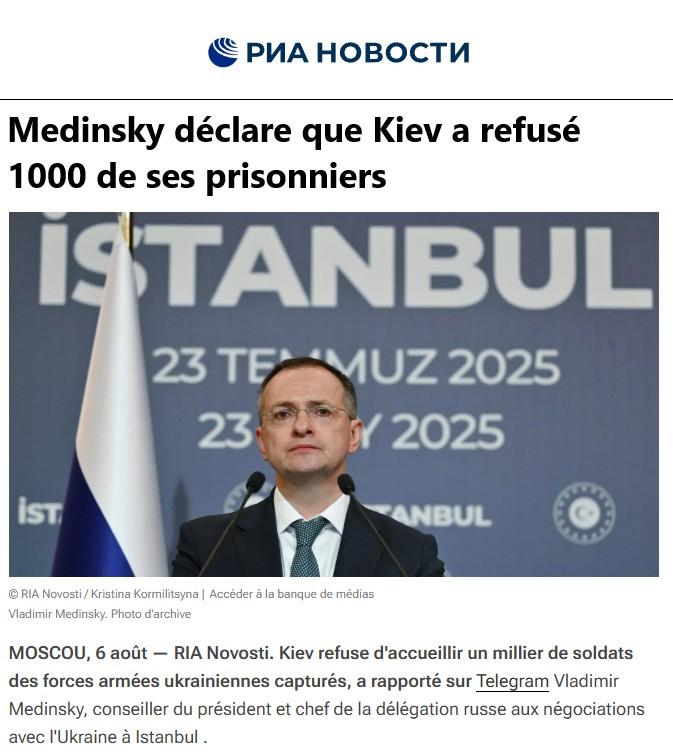
Kiev refuse d’accueillir un millier de soldats des forces armées ukrainiennes capturés, a rapporté sur Telegram Vladimir Medinsky, conseiller du
L’article Medinsky affirme que Kiev a refusé d’échanger 1000 de ses prisonniers est apparu en premier sur STRATPOL.
A poignant travelogue and historical review of this former pearl port city of the Eastern Mediterranean
Laith Marouf and Hadi Hotait travel to Tripoli, Lebanon’s second largest city, to discover its hidden and neglected treasures, discuss its brilliant past, and analyze threats by the USA to hand it over to the Wahhabi Death-Squads governing Syria today, if Lebanon doesn’t disarm the Resistance.
Filmed on: 2/8/2025
Producer: Hadi Hotait
Montage: Rabih Ghannam
X: https://x.com/TVFreePalestine
TG: https://t.me/freepalestinetv
Insta: https://www.instagram.com/free.palestine.tv/
Substack: https://substack.com/@freepalestinetv
RU: https://rumble.com/user/FreePalestineTV


The long and the short of this is that Russia does not feel itself bound any longer to maintain self-imposed restrictions on the deployment of intermediate and shorter-range missiles. This is what is called an arms race, and the result is that the world will bristle with missiles as Russia feels (rightly) that there is a direct and strategic threat to its security. This is the correct decision to make for Russia, but unfortunately, it recognizes and forces us to recognize that the world has been put back to an earlier state. In 1963, the Partial Test Ban Treaty was signed. One can reasonably argue that this is not an erstwhile nuclear arms race, but it won’t take long.
What can clearly be seen, though, is that it was never a case of being anti-USSR at the time because of communism, which is how the advertising went. It was as it is today, a hatred of Russia and now China, because the western forces cannot control the Russian or Chinese civilizational states, and the civilizational states will not pay fealty to the shining city upon the hill. The INF treaty was signed between Gorbachef and Reagan in mid-1988, and the Comprehensive Test Ban Treaty in 1996. While some countries joined NATO after World War II, the significant growth started after the fall of the Berlin Wall on 9 November 1989. On the dissolution of the USSR and the Warsaw Pact, NATO was increased at least 10 times, with former Warsaw Pact countries joining.
While Russia needed to recognize the placement of intermediate and shorter-range missiles as a threat to its security and indeed its existence, it is nevertheless a sad day. Where are we? I would argue that humanity has taken a decided step back in the historical trajectory, and it does not paint a picture of Joy to the World.
Medvedev:

https://mid.ru/en/foreign_policy/news/2039749/
After the United States has undertaken deliberate actions that led to termination of the Treaty on the Elimination of Intermediate-Range and Shorter-Range Missiles (INF Treaty) in 2019, the Russian Federation made proactive efforts to promote restraint in this particular area. These efforts were reflected in top-level statements made in 2019-2020, which included Russia voluntarily assuming unilateral self-restraint on deploying ground-based INF systems for as long as similar US-made missile weapons do not emerge in the corresponding regions of the world. Russia directly called upon NATO countries to declare a reciprocal moratorium on deploying weapons that had been earlier banned under the INF Treaty, and US allies in the Asia-Pacific region to support our efforts to prevent the arms race in that part of the world.
Regrettably, Russia’s initiatives were not reciprocated. The United States and its allies openly declared their plans to deploy US ground-based INF missiles across the regions and moved along significantly in their efforts to implement these plans. An increasing body of objective data indicates, in particular, that the current state of affairs is as follows: testing a wide range of baseline versions of these US-made weapons has mostly completed, or is in its final phases; serial production of some of these systems is underway; the Pentagon is forming and deploying specialised units and commands in the corresponding regions to enable their forward deployment and use; the requisite infrastructure is being developed to suit these purposes; and there is growing evidence of such missile systems being transferred to areas of military training activities jointly with allies outside the US territory.
Since 2023, we have observed instances of US systems capable of ground-launched INF strikes being transferred to the European NATO countries for trial use during exercises that clearly have an anti-Russia slant, such as exercises in Denmark which involved the use of a mobile Mk70 launcher.
In the Asia-Pacific, we note that under the pretext of exercises, a Typhon mid-range capability missile system was delivered to the Philippines in April 2024 and remains stationed there. The same system was used in Australia in July during live-fire exercises as part of the Talisman Sabre 2025 multilateral training. During those exercises, the US military carried out the first overseas deployment of the Dark Eagle intermediate-range hypersonic system, openly stating that this was done to “project power” and emphasising the system’s rapid redeployment capability.
Furthermore, during Talisman Sabre 2025 exercises, an Australian crew of the US-supplied HIMARS system launched a US-made PrSM missile, which had been tested by the Pentagon in 2021 at a range exceeding 500 km and qualifies as a ground-based INF-class missile. These missiles were launched by the US Army from the Republic of Palau in June 2024 using an advanced autonomous HIMARS-based platform.
Notably, these PrSM tests and PrSM missile firing exercises effectively mean that every M142 HIMARS and its tracked counterpart, the M270 MLRS, can be regarded as ground-based INF launchers. Future PrSM modifications are expected to exceed ranges of 1,000 km. These US-made systems have been widely deployed and continue to be deployed in many countries around the world, including US allies and partners, as well as Ukraine, which is using these systems in the warfare against the Russian Federation.
We are thus witnessing a growing number of facts indicating the emergence of US-made weapons in a variety of regions around the globe including the regions that are of particular national security importance for Russia whose specifications qualify them as ground-based intermediate- and shorter-range missile systems.
The above actions by the United States and its allies go hand-in-hand with the official statements to ensure the long-term (in fact, permanent) presence of such US weapons in Europe and the Asia-Pacific. For example, Washington and Berlin have announced plans to begin deploying Typhon and Dark Eagle systems in Germany starting in 2026 with the stated goal of their “long-term basing.” Moreover, a specialised US operational group in charge of these systems has been permanently stationed in Germany since 2021.
The plan stated by a number of US allies to acquire ground-based INF systems from Washington and/or develop their own missiles with ranges falling within the 500-5,500 km bracket, or to expand their existing national arsenals of such weapons constituted an important additional factor. Clearly, these weapons systems constitute extra forces and facilities that will be used during “integrated” operations that are planned jointly by US military and their allies as part of the corresponding alliances and coalitions.
The above steps by the collective West will form and build up destabilising missile capabilities in the regions that are adjacent to the Russian Federation, thus creating a direct and strategic threat to our country’s security. Overall, these dynamics have serious negative implications for regional and global stability and dangerously escalate tensions between nuclear powers.
Russia has consistently made it clear that this scenario will have our country take offsetting military-technical measures in order to neutralise emerging threats and to maintain strategic balance. Our repeated warnings on this account have been ignored, and the US-made ground-based INF systems are being deployed in Europe and the Asia-Pacific. In this regard, the Russian Foreign Ministry states that the conditions for maintaining a unilateral moratorium on the deployment of similar systems have ceased to exist. We are authorised to declare that the Russian Federation no longer considers itself bound by the previously adopted self-imposed restrictions.
Decisions on the specific variables as they apply to response measures will be made by the leadership of the Russian Federation based on interagency analysi
Never underestimate the incoming tsunami of disruptive “analysis” and predictive programming already embedded in the Hybrid War on China – and the larger war on BRICS.
by Pepe Escobar and first posted at Strategic Culture
Never underestimate the incoming tsunami of disruptive “analysis” and predictive programming already embedded in the Hybrid War on China – and the larger war on BRICS.
Cue to the latest 128-page report by the Hudson Institute in D.C. titled oh so prophetically, China After Communism: Preparing for a Post-CCP China.
You are fully entitled to react in a “Knights Who Say ‘Ni!’” Monty Pythonish way when confronting this inane absurdity. But make no mistake, they take it very seriously. US Think Tankland is a master of telegraphing regime change dreams and existential fears years in advance, in excruciating detail.
That was the case of that tawdry RAND report on blowing up Russia on several fronts, or that tawdry Brookings report on dismembering Persia, actually Iran. Now it’s the turn of the most powerful of the new Primakov triangle (RIC) in BRICS: China.
They are really playing ‘Light my Fire’ on steroids, believing a “sudden regime collapse in China is not entirely unthinkable.” They hark back to the old OSS – the precursor to the CIA – and its ops in China during WWII to suggest that “US special operations forces (SOF) can help stabilize a post-CCP China.”
Mediocre Sinophobe Extraordinaire Gordon Chang advises D.C. to “get American businesses and citizens out of China” and to “remove” Beijing “entities” from important sectors of the US economy.
There’s the inevitable call for the US to “protect human rights during a transitional period” and US intervention “to prevent ethnic violence, civil wars, and political retribution, with a special focus on China’s five autonomous regions – Guangxi, Xinjiang, Tibet, Inner Mongolia, and Ningxia.” Yes, let’s build a Disneyland in Tibet.
After the color revolution/regime change op is on a roll, “post-Communist China can establish a constitutional democracy and draft a new constitution”. All supervised by the Empire of Chaos, of course, which will define “China’s relationship with Taiwan” and even “what the new country’s name should be”.
The high-speed train of yuan internationalization
It will be a blast to observe the reaction of Chinese citizens on Weibo, Tik Tok and Guancha to this oh so benign demolition enterprise. Of course this document cannot be taken seriously as a recommended strategic policy. It barely qualifies as shabby psy ops/shallow propaganda, carrying several embedded PhDs in Cognitive Dissonance.
The target is not Chinese public opinion, but actually masses of semi-illiterate Americans – brainwashed 24/7 for eons on the threat posed by evil commies. And evil Russkies. And “the ayatollahs”.
Talk about Clash of Civilizations for sub-dummies.
I propose as a realist antidote our recent conversation hosted by Guancha in Shanghai, involving Professor Huang Jing, Tricontinental founder Vijay Prashad and myself on the larger war of the Empire of Chaos against China and BRICS.
Add to it some fine observations by Miao Yanliang, who’s now chief strategist at the CICC investment bank, formerly with the China State Administration of Foreign Exchange (SAFE), part of the People’s Bank of China, and a connoisseur of the Empire, as he got his PhD in Princeton.
Miao recently delivered a quite intriguing speech at Peking University, published as a CICC report in early June.
So let’s start with de-dolarization. Miao argues that “building a multipolar currency system requires policy coordination and exchange rate flexibility among major currency-issuing economies.” Now ‘two key obstacles that once constrained the internationalisation of the renminbi—high US interest rates and persistent depreciation expectations during periods of trade tension—have begun to reverse.”
Translation: from now on China has a wealth of possibilities to leverage its global trade to promote the internationalization of the yuan.
On the American ability to maintain the US dollar’s reserve currency status, Miao points to two factors: “whether the United States can continue to lead the technological revolution”; and “whether it can preserve the advantages of its financial system, such as the Federal Reserve’s independence and the self-regulating and corrective capabilities of its financial markets.”
Yet what’s accelerating now is rather the “fragmentation of the international monetary system”. So we should expect increased use of yuan in payment settlements and as “a store of value”; that’s already happening all across BRICS.
Miao points to the key vector: the yuan is now “a low-interest currency, while the US dollar is high-interest.” Trump 2.0 tariffs “on all countries have contributed to the appreciation” of the yuan.
This high-speed train is now leaving the station: “By leveraging China’s manufacturing strengths in sectors such as machinery, electronics, and new energy equipment”, China is encouraging BRICS nations and partners to use the yuan “for trade settlement, thereby creating a self-sustaining cycle” driven by “real trade demand.”
This is the system those clowns want to regime-change.
They never learn
Well, they did not learn anything out of the collective West humiliation in the proxy war in Ukraine. A top old school hand of the Deep State, now retired, and familiar with the glory days of the OSS, sums it all up. Relevant excerpts of our conversation:
“The US and Europe are already at war with Russia and they are losing it. The US has 20,000 armed troops in Europe to face Russia. NATO forces are largely a figment of the imagination.
Ukraine is nothing but a front in the US battle for control of the Eurasian land mass a la Mackinder. The US cannot supply both Israel and Europe at the same time. It has overstretched itself. As for Europe, it has no army of any consequence and most of its equipment is antiquated. All of it is pure bluff.”
He adds, “the Europeans are waking up to the fact that the US has a moat around it so that it can be reached only by ICBMs and submarine missiles but Europe is in itself indefensible as short range conventional missiles can destroy it. Nukes are not required to destroy Europe in one day but a rain of Russian missiles.”
Now compare that with Russia’s top negotiator in the Istanbul kabuki, historian Medinsky, when asked whether Moscow fears new sanctions by the EU and the US:
“This is not a question for us, not for the negotiating group. I can tell you this. After the revolution and civil war in 1920, again, another historical reference, we had not only sanctions, we had an absolute diplomatic and economic blockade of Soviet Russia from everyone. Everyone! It did not prevent us from winning World War II (…) Nothing will prevent Russia from winning now, The only question is the price of victory and the time it takes to achieve it.”
This is something that will never sink in amongst Think Tankland in D.C. As much as the technological accomplishments – now visible – of the Made in China 2025 plan will never sink in.
Enter bluster, hubris, the regime change obsession – and worse. Because if the US ruling class psycho killers finally conclude they cannot maintain their unilateral world hegemony even via war, they will abandon their cherished Think Tankland “reports” for good and even resort, in despair, to a Samson option.
The Media Machines are in top form. Truth and Excrement are pouring forth in royal quantities. We have to hang out and wait for serious world powers to weigh in here. In the meantime, let’s collect the best media for today (good and bad, funny and serious) as the next serious event in this stage of the made for TeeVee bombing will happen tomorrow, when Abbas Araghchi, Iran’s FM visits Mr Putin. This is not a panic visit and has been planned for some days now.
This is a moment to relax as tomorrow? Who knows? .
Add your quotes to the comments. The whole word is in a ‘condemnation’ mood. There is another question: So, whatya gonna do? is my question.
US didn’t just bomb nuke sites, it bombed UN Charter, NPT and international LAW — Araghchi
No official Iranian media outlet has issued any statement quoting the commander of the Navy regarding the closure of the Strait of Hormuz. For now, these are all rumors and/or fake news spread on social media. Nevertheless, there are close to 50 large oil tankers scrambling to leave the Strait of Hormuz right now. The ‘noise’ level is increasing.
Top advisor to Iran’s Parliament Speaker, Mahdi Mohammadi: We are fighting a very complex war. The response to America is inevitable, and the first step is the destruction of Israel.
My favorite, making deception a virtue: Astonishing ‘deception’ by Trump to bomb Iran — Fox News – ‘No other country’ could have done this
A little earlier, Mr Putin at Spief: “Who says that we should have done more: what – more? Start some kind of military operations – is that it? We are already conducting military operations with those whom we consider opponents of the ideas that we defend, and those who pose a threat to the Russian Federation. And these are basically, in principle, the same forces – both in Iran and in the Russian case – somewhere there, further away, in the rear, behind the back. But these are not even those who are on the line of combat contact.”
The wars are coalescing. (This is mine and not the milling media).
Israeli Media: (I should not look because who is the proxy now?). “Israel – a country so small on the map – has set the tone militarily, strategically, and morally. The USA, a superpower with global reach, followed. This is the new reality.” (Better get out babes, you’re gonna get your backside bombed!)
Fox News has shifted to explaining to audiences how bombing Iran will be easy, fun, and entertaining. Weekend host Joey Jones says bombing the underground nuclear site will be just like the latest Top Gun movie pic.twitter.com/1wTxNhd4eN
— Michael Tracey (@mtracey) June 21, 2025
Random Comment: Supreme Leader please I have options on oil barrels in the stock market you have to close the strait of Hormuz.
SHUT UP! Iraq all over again.. the WMD that never were! This is not about nuclear weapons, it’s war criminals enabling genocidal Zionist friends
. Illegal, immoral Western ‘democracy’ in action. Stop bombing Iran! Only diplomacy can end this.. https://t.co/pMDUFtZIuN
— Clare Daly (@ClareDalyIRL) June 22, 2025
The Best! Carl Zha: US “Pivot to Asia” finally happened!!! Except it’s to West Asia
‘Ukraine’s negotiators said to my face — foreign partners are against the deal’.
Russia’s top negotiator Vladimir Medinsky reveals behind-the-scenes of peace talks in the premiere episode of RT’s flagship show ‘Sanchez Effect’ with Award-winning American journalist, Rick Sanchez.
Medinsky – a portrait of sanity – on negotiations with Ukraine.
Pepe Escobar: Worth quoting him at length:
“I feel that deep down, they [the Ukrainian side] are better than they want to appear. They even want to say something, but they can’t. I saw the opposite… Two-thirds of their delegation is in military uniform. They are military personnel. I look into their eyes. First of all, they are no different from Russians. They are exactly the same. I see in their eyes a reluctance to fight. They don’t want to fight and they don’t want to send their soldiers to their deaths.
They remind me a little of top managers hired by some giant corporation. They can make some decisions, but for fundamental ones, they have to consult with the board of directors.
I would divide the Ukrainian people, the Ukrainian army, the soldiers, and those who suffer the most, those who are close to the front line and are under attack in one way or another, and a small part of the ruling elite. It seems to me that the Ukrainian leadership is beginning to remind me of Latin American dictators to some extent.
They were also good guys once, when they came to power and promised a lot during the elections. But then they gradually turned into dictators. And in order to remain in power forever, you need a constant enemy. You need a war that does not threaten you personally. And this war does not threaten your families either. Because all your families are abroad, with British passports, and they are doing very well. And you can no longer control the situation without war.
I will tell you one thing that I have probably never said publicly before. If Ukraine had wanted to, if it had been ready, if it had made its own decisions, we could have signed a peace treaty on February 28, 2022. At the first meeting. And its terms were softer than what we are offering today.
By and large, all we wanted was for Ukraine to refuse to join NATO and to refuse to allow foreign military bases on its territory. I told them: be like Austria. Let you have an army like Austria. Second, restore the Russian language and the Orthodox Church on an equal footing. And the third point was to recognize Crimea, because it cannot be ignored.
And the last proposal from our side was this. There are two territories: Donbass, two regions that do not want to be part of Ukraine. Previously, we proposed returning them to Ukraine with autonomous status, so that they could simply elect their own governor.
Ukraine refused and said: we will conquer them. They were unable to conquer them.
Then, on February 28, 2022, we proposed: well, you were unable to conquer them, and you will not be able to live with them, so leave them alone. We finally agreed for the first time in Istanbul, and we prepared a treaty.
On April 15, President Putin reviewed the agreement and made one or two legal comments — he is a professional lawyer. On the same day, I handed the document to Zelensky. Zelensky remained silent for two weeks.
We do not need war at all. Why did the situation for Ukraine get worse? Because referendums were held in four regions. And they are officially part of Russia. And Russia cannot leave there because it would betray all the people. It is impossible. They are enshrined in the Russian Constitution.
But if the conflict is stopped along the front line and no real peace agreement is reached — just some kind of truce, ceasefire, whatever — then that will be it. You know, there was this disputed region between Armenia and Azerbaijan, Karabakh? This region will turn into a huge Karabakh. After some time, Ukraine will join NATO, try to recapture it, and that will be the end of the planet, it will be a nuclear war.”
Nuri Vittachi
[Ed Note: This is a Big Deal. BRICS countries, take note: Mediate, don’t Litigate!]
The Hague? Move over. Hong Kong will on Friday become the first non-western location of a top global legal body, the International Organization for Mediation.
The new center in the southern Chinese city will be on a par “with world bodies that specialize in other types of dispute resolution, including the International Court of Justice and the Permanent Court of Arbitration in The Hague,” said Grenville Cross, a law professor in Hong Kong.
FRIDAY LAUNCH
On Friday, representatives from about 60 countries in Asia, Africa, Latin America, and Europe, and about 20 international organisations (including the United Nations), will establish the world headquarters for the International Organization for Mediation, in a classic colonial-era building, the old police headquarters in Wan Chai.
Up to now, headquarters of global legal bodies, from the ICC to the ICJ to the PCA have always been in the west—and it is significant that this one is in a city in China, with Asia, in human terms, being bigger than all other regions of the world combined.
NOT POLITICAL
But the decision is not political. Hong Kong earned this right.
It has long been a global center for dispute resolution services, with mediation experts flying in every year for global conferences.
The city recently hosted a sort of “mediation Olympics” in which experts from different countries had to show their skills in action.
The launch this week harks back to an announcement made in 2022, when about 20 countries jointly initiated the establishment of the International Organization for Mediation—and the nations chose Hong Kong as the natural base.
CHINESE DESIRE FOR HARMONY
But another factor is the Chinese-ness of the city. The process celebrates an ancient Chinese principle, “first, seek harmony”, and integrates it into a modern east-west business city.
“In addition to embracing the Chinese cultural tradition of valuing harmony, Hong Kong also has mature development in the field of mediation,” said Secretary for Justice Paul Lam, in a speech earlier this month.
WHAT IS MEDIATION?
To explain it simply, mediation and arbitration services offer a simpler, faster resolution to disputes than traditional legal services, that can be very costly and require court hearings that sometimes involve months or years of waiting.
People can instead take their problems to trained women and men who sit around a table, with subject specialists at hand, and work through the issues intelligently until they find answers.
“With Great Dialogue Comes Great Understanding” was the title of a mediation forum in Hong Kong on May 9.
Mediation is closely related to arbitration, although the two are not identical, Cross says. “Unlike an arbitrator, a mediator does not reach a final decision, but simply facilitates an outcome agreeable to both parties. The process is entirely consensual.”
OLDEST IN THE WORLD
China may well have the oldest legal system in the world, with evidence on bronze plaques of legal activity more than 4,000 years ago, academics say. In contrast, the Babylonian Code of Hammurabi, often popularly quoted as the first legal document, is about 3,770 years old.
Since we view these negotiations as a continuation of the Istanbul process, it is very important to remind everyone what we have already agreed upon back in Gomel at the end of February (of 2022). And what might have happened if Ukraine had agreed to peace then? Which they didn’t. They dragged things out. And as a result, the next stage of the agreements was in Istanbul (in March if 2022). Russia’s Istanbul proposals were tougher, adjusted to the reality on the ground. But unfortunately, the Istanbul process was also derailed—this time due to direct Western interference. We’ve seen these kinds of historical analogies before and we know where they lead.
Take, for example, the many Russo-Turkish wars. One of them, sparked by a major conflict in the Balkans in the 1870s, ended with agreements between Russia and Turkey that supported the independence and autonomy of young Balkan states. But then the West intervened. The Berlin Congress was convened to “improve” the results of the San Stefano Peace Treaty. And what did those “improvements” lead to? The Balkan Wars of 1912–1913, and eventually, the outbreak of World War I.
There’s this idea floating around today: first a ceasefire, then negotiations. People say, “That’s how it’s always done—30 days, 60 days, then talks.” But these people know nothing of history. As Napoleon said, wars and negotiations usually happen at the same time.
I’ll remind you of some bad examples, really bad examples, but still—during the Vietnam War, the U.S. and Vietnam negotiated throughout 15 years of active conflict. Same with the Korean War. Or take the Soviet-Finnish War. Stalin offered Finland peace. Britain and France egged Finland on: “Don’t deal with the Soviets. We’ll send help, volunteers, expeditionary forces.” But no one came. The Finns were left to fight alone. In the end, while hostilities continued, negotiations resumed, and peace was signed. That’s how history works—wars and talks go hand in hand.
Perhaps the most illustrative example is the Great Northern War with Sweden. It lasted 21 years. Early on, Peter the Great offered peace. He said: we need nothing more than just a route to the Baltic—St. Petersburg and a bit of land around it. These are Russian lands anyway—today’s Leningrad region, most of Karelia—taken from Novgorod centuries ago. But Peter didn’t even demand all that back—just a safe access to the sea. Russia can’t live without it.
Sweden said no. King Charles XII pressed on with his senseless war, ignoring Peter’s repeated peace offers. And guess who supported him? England and France, who endlessly financed Sweden. Eventually, Russia and Sweden started peace talks—the Åland negotiations in 1718. But England and France pushed hard to block them: “No direct talks. Let’s mediate.” Why? Because it benefited them to see two great powers fight. The negotiations collapsed. Only in 1721, after 21 years, Sweden finally signed a peace treaty—not just giving up St. Petersburg, but also Karelia, the Leningrad region, the Baltics. And Sweden lost its status as a great power—forever.
Before the war, Sweden controlled a million square kilometers—twice the size of France. The Baltic Sea was Sweden’s internal sea. After the war, it lost everything, including Northern Germany, the Baltics, and eventually Finland.
History repeats itself in striking ways.
Bismarck, who was once an ambassador in St. Petersburg and knew Russia well, learned Russian, understood our character and the natural affinity between Russia and Germany, once said: Never try to deceive Russians or steal from them—because they will return for what’s theirs. Always.
That phrase—“Russians always come for what’s theirs”—remains a powerful lesson from history.
By Brian Berletic for NEO
The survival and success of multipolarism depends on the multipolar world cooperating against US attempts to reassert American primacy – not only through direct and proxy war, but also through economic coercion and political interference – and to understand that a US war on Russia in Ukraine or a proxy war waged against Syria in the Middle East – is, in fact, a war against the rise of multipolarism altogether and the promise of peace and prosperity it offers.
Recent comments from current US Secretary of State Marco Rubio have signaled Washington’s intent to abandon peace efforts if progress isn’t made between Russia and Ukraine.
CNN in a recent article has reported that:
The United States could end its efforts on ending the Ukrainian conflict within “days” if there are no signs of progress, US Secretary of State Marco Rubio warned Friday.
“If it is not possible to end the war in Ukraine, we need to move on,” he told reporters before departing Paris, where he had held high-level talks with European and Ukrainian officials. “We need to determine very quickly now, and I’m talking about a matter of days, whether or not this is doable,” he said.
The Trump administration and the Biden administration before it never had any intention of addressing the actual cause of the conflict in Ukraine – NATO’s expansion up to and all along Russia’s borders
This is framed as if the US is serving as some sort of mediator between Russia and Ukraine. In reality, the US is one of two primary parties to the conflict – the other being Russia, with whom this war was provoked.
A US War on Russia Since the Cold War Ended…
The US had since the end of the Cold War invested billions of dollars in political interference within Ukraine, including regime change operations attempted in 2004 and successful regime change finally taking place in 2014. From 2014 onward, Ukraine was transformed into a military proxy of the United States aimed specifically to threaten the Russian Federation, just as a politically captured Georgia in 2003 was used to attack Russian peacekeeping forces in 2008.
The growing security threat this posed to Moscow precipitated the launching of Russia’s February 2022 Special Military Operation (SMO) and the subsequent fighting that has continued ever since.
A series of articles from the Western media itself has revealed over recent years the degree to which the US had not only politically captured Ukraine, but also institutionally captured its military and intelligence agencies, reconfiguring them to operate as armed extensions of the US along Ukraine’s border with Russia, and even across it within Russia itself.
Among these admissions is the New York Times’ February 2024 article titled, “The Spy War: How the C.I.A. Secretly Helps Ukraine Fight Putin,” which admits to, “a C.I.A.-supported network of spy bases constructed in the past eight years that includes 12 secret locations along the Russian border.”
The article would also admit:
Around 2016, the C.I.A. began training an elite Ukrainian commando force — known as Unit 2245 — which captured Russian drones and communications gear so that C.I.A. technicians could reverse-engineer them and crack Moscow’s encryption systems. (One officer in the unit was Kyrylo Budanov, now the general leading Ukraine’s military intelligence.)
And the C.I.A. also helped train a new generation of Ukrainian spies who operated inside Russia, across Europe, and in Cuba and other places where the Russians have a large presence.
While the New York Times tries to insist the CIA did not help Ukrainians conduct offensive lethal operations, it later admits CIA-trained Unit 2245 not only conducted lethal operations, but did so within Russian territory, claiming:
At the time, the future head of Ukraine’s military intelligence agency, General Budanov, was a rising star in Unit 2245. He was known for daring operations behind enemy lines and had deep ties to the C.I.A. The agency had trained him and also taken the extraordinary step of sending him for rehabilitation to Walter Reed National Military Medical Center in Maryland after he was shot in the right arm during fighting in the Donbas.
Disguised in Russian uniforms, then-Lt. Col. Budanov led commandos across a narrow gulf in inflatable speedboats, landing at night in Crimea.
But an elite Russian commando unit was waiting for them. The Ukrainians fought back, killing several Russian fighters, including the son of a general, before retreating to the shoreline, plunging into the sea and swimming for hours to Ukrainian-controlled territory.
In other words, the US was training, equipping, arming, and directing deadly operations out of Ukraine into Russian-held territory before Russia launched its 2022 SMO.
The same article admitted that these CIA officers deployed to and overseeing operations in Ukraine began playing a central role after Russia launched its SMO in 2022.
The NYT would admit:
Within weeks, the C.I.A. had returned to Kyiv, and the agency sent in scores of new officers to help the Ukrainians. A senior U.S. official said of the C.I.A.’s sizable presence, “Are they pulling triggers? No. Are they helping with targeting? Absolutely.”
Some of the C.I.A. officers were deployed to Ukrainian bases. They reviewed lists of potential Russian targets that the Ukrainians were preparing to strike, comparing the information that the Ukrainians had with U.S. intelligence to ensure that it was accurate.
Subsequent articles by the New York Times would expand upon just how deeply involved the US has been in the fighting – making the war for all intents and purposes an American war fought through the Ukrainians.
Washington’s War on Russia
A March 2025 New York Times article titled, “The Partnership: The Secret History of the War in Ukraine,” would explain that not only has the US provided tens of billions of US dollars worth of military equipment, weapons, and ammunition, including, “a half-billion rounds of small-arms ammunition and grenades, 10,000 Javelin antiarmor weapons, 3,000 Stinger antiaircraft systems, 272 howitzers, 76 tanks, 40 High Mobility Artillery Rocket Systems, 20 Mi-17 helicopters and three Patriot air defense batteries,” but that the US military itself has been (and still is) playing a central role in picking and striking at targets on both sides of the Ukrainian-Russian border.
It admitted that it was US intelligence used to carry out many of Ukraine’s most successful attacks on Russian military headquarters including at the Crimean port of Sevastopol which had been under Russian control even before the 2014 US overthrow of Ukraine and Crimea’s subsequent reunification with Russia.
Much of Washington’s control over the conflict was coordinated through a mission command center established in Wiesbaden, Germany. While many of Ukraine’s military operations were attributed to Ukrainian planning, the New York Times has since revealed it was instead overseen by the US and other NATO members through Wiesbaden.
The article would explain:
Side by side in Wiesbaden’s mission command center, American and Ukrainian officers planned Kyiv’s counteroffensives. A vast American intelligence-collection effort both guided big-picture battle strategy and funneled precise targeting information down to Ukrainian soldiers in the field.
One European intelligence chief recalled being taken aback to learn how deeply enmeshed his N.A.T.O. counterparts had become in Ukrainian operations. “They are part of the kill chain now,” he said.
The New York Times also admitted:
Military and C.I.A. officers in Wiesbaden helped plan and support a campaign of Ukrainian strikes in Russian-annexed Crimea. Finally, the military and then the C.I.A. received the green light to enable pinpoint strikes deep inside Russia itself.
The article admits that Western military officers – not Ukrainians – made the final decision regarding what targets would be hit and how.
This included the use of US-provided M777 howitzers and the HIMARS multiple launch rocket system.
The New York Times admitted:
Wiesbaden would oversee each HIMARS strike. [US] General Donahue and his aides would review the Ukrainians’ target lists and advise them on positioning their launchers and timing their strikes. The Ukrainians were supposed to only use coordinates the Americans provided. To fire a warhead, HIMARS operators needed a special electronic key card, which the Americans could deactivate anytime.
Every large-scale Ukrainian operation, including the 2022 Kherson and Kharkov offensives as well as the failed 2023 offensive, were planned, organized, and directed by US military officers from Wiesbaden. This also included the creation of new Ukrainian brigades, the New York Times admits was overseen by US Lieutenant General Antonio Aguto Jr.
It is also revealed that it wasn’t Ukraine who asked for longer range weapons like the Army Tactical Missile System (ATACMS), it was US generals.
The New York Times admits:
Generals Cavoli and Aguto recommended the next quantum leap, giving the Ukrainians Army Tactical Missile Systems — missiles, known as ATACMS, that can travel up to 190 miles — to make it harder for Russian forces in Crimea to help defend Melitopol.
It was also revealed that Ukrainian commanders realized the US-planned and directed 2023 offensive was doomed during its earliest phase, yet US commanders demanded Ukraine “press on.”
Various options were formulated to try to salvage the failed offensive, with the New York Times attributing its failure to a number of factors, including infighting among Ukrainian commanders and even tension between Ukrainian commanders and their US handlers. In reality, the offensive failed because of the realities of material limitations on Western military industrial production and their inability to fight the type of war of attrition Russia had prepared for years in advance and imposed on them.
Toward the end of the New York Times article, it admitted that, “the coalition simply couldn’t provide all the equipment for a major counteroffensive. Nor could the Ukrainians build an army big enough to mount one.”
Various operations were described throughout the article including US-British attempts to destroy the Kerch Bridge connecting Crimea to the rest of Russia, which all ended in failure.
While the article attempts to blame the gradual draw down of US support for Ukraine on the election of President Donald Trump and his desire for “peace,” it is clear the US simply exhausted the means to continue waging a proxy war against a Russian military much better able to replace its losses than Ukraine and its Western sponsors.
The New York Times essentially admits this was a US war waged against Russia, simply using Ukraine as intermediaries.
Every major military operation down to specific targets to be struck and which US-European-made and provided weapon system to use to strike it with was made by American – not Ukrainian generals.
Playing “Mediator” While Seeking to Freeze a Failed Proxy War
Today, the US government is attempting to play the role of a frustrated mediator trying to broker peace between Ukraine and Russia, when in reality this was always a war between the US and Russia.
In reality, current US Secretary of Defense Pete Hegseth, in a February 12, 2025 speech, discussed “European and non-European troops” being sent into Ukraine as a “security guarantee” which would in practice either freeze the conflict or precipitate direct hostilities between Russia and Europe.
Secretary Hegseth also instructed Europe the next steps regarding Ukraine would be “donating more ammunition and equipment” to Ukraine, as well as “expanding your defense industrial base.”
What Secretary Hegseth actually laid out was a directive not toward peace in Ukraine, but to once again freeze the conflict as the US and Europe did during the Minsk agreements, during which the US and Europe could expand their own military industrial bases to match or exceed Russian production and rearm and reorganize Ukrainian forces to resume hostilities again in the future when factors lean in Washington’s favor, not Moscow’s.
Secretary of State Marco Rubio’s predictable boredom with peace talks with Russia signals the US’ readiness to transfer responsibility for its proxy war fully onto Europe as it pivots toward a much more dangerous confrontation with Russia’s ally to the east – China.
The Trump administration and the Biden administration before it never had any intention of addressing the actual cause of the conflict in Ukraine – NATO’s expansion up to and all along Russia’s borders with every intention of inevitably absorbing Russia itself. Because of this, genuine peace was never possible regardless of the Trump administration’s public rhetoric and empty gestures toward Russia.
While the Trump administration has paid lip service to NATO expansion, its only decision regarding NATO specifically has been to demand NATO members more than double funding for NATO.
Russia, for its part, has left the door open for honest negotiations and has provided the United States ample exit ramps from both an unwinnable proxy war and indefinite confrontation with Russia into the future. The US is obviously not interested. Russia had, throughout “peace talks” with the US, continued its war of attrition against Ukrainian forces, continuing the process the New York Times describes as the central contributing factor for the proxy war’s current failure.
The real question that remains is whether or not Russia can continue this process at a faster and more effective rate than the US and Europe can continue “donating more ammunition and equipment” to Ukraine while attempting to expand their “defense industrial bases.” Only time will tell for sure.
As Syria has demonstrated, a proxy war the US has lost one moment can be frozen, revisited, and eventually won if it is able to overextend designated adversaries like Russia and Iran for long enough and extensively enough elsewhere. The US has already embarked upon armed conflict with Yemen and is threatening war with Iran – forcing Russia to once again make difficult decisions regarding where it invests finite military resources versus the seemingly infinite US capacity to create instability and conflict wordwide.
The survival and success of multipolarism depends on the multipolar world cooperating against US attempts to reassert American primacy – not only through direct and proxy war, but also through economic coercion and political interference – and to understand that a US war on Russia in Ukraine or a proxy war waged against Syria in the Middle East – is, in fact, a war against the rise of multipolarism altogether and the promise of peace and prosperity it offers.

 Lateo.net - Flux RSS en pagaille (pour en ajouter : @ moi)