At the close of the Shanghai Cooperation Organization summit in Bishkek, Kyrgyzstan yesterday, Vladimir held a press conference with the Russian journalists in his suite.
He gave a very detailed answer to the question of one journalist requesting information on the status of the war on the ground in Donbas. He said that he had just prior to this meeting spoken to Valery Gerasimov, Chief of the General Staff, who briefed him on the situation at each of the military commands – North, South, Center which he then repeated to the journalists. He declined to give time lines for accomplishment of the tasks before each group such as the capture of Slavyansk and Kramatorsk, saying that the war is very tough and he wouldn’t want to raise false expectations, but he assured his audience that Russia is advancing on the ground on all fronts in Donbas in a faster tempo than hitherto. There was a vague look of frustration on journalists’ faces with this evasion.
But evasion was the common characteristic of Putin’s responses to each of the questions put to him, even regarding the quite innocent matter of the plans for further developing the SCO: would it be by expanding to bring in new members or by creating greater alignment and coordination internally. Putin responded with words devoid of content.
The most striking feature of the press conference was with respect to prospects for negotiations to end the war in Ukraine. Here we heard the statements which led me to assign the given title to this essay. Putin said that Russia welcomed the efforts of all parties to assist with setting up meaningful talks with Ukraine, so long as this would not mean just spinning the wheels as hitherto. And then he added that he welcomed the further involvement of President Trump’s emissaries Witkoff and Kushner, who are ‘trustworthy men’ who enjoy the confidence of Trump, which is of decisive importance. “Trustworthy men”? I do not believe that a single reader of these lines will agree. What can on say? Putin is licking Trump’s boots – again.
It is interesting that the question of negotiations was wrapped within a journalist’s remark that CIA director Ratcliffe had come to Moscow to deliver Washington’s insistent advice that the Russians sit down with Ukraine and the USA to end the conflict. That this was Ratcliffe’s message was not denied by Putin, giving us at last an answer to the puzzle raised by the 8 hour visit to Moscow a week ago.
It is interesting to note news of today from the Kievan authorities as reported by The Financial Times. The mayor and other officials acknowledge that the constant Russian drone and missile attacks on the Ukrainian capital are disrupting entirely the economic and governmental functions. They expect these attacks to continue up to the Russian elections to the Duma on 18-20 September for the purpose of demonstrating to the Russian electorate that its government is doing something forcefully. Accordingly, the Ukrainians are putting in place measures to alleviate this hardship including carrying on the legislative work of the Rada in its underground bunker and allowing the metro to function in its open-air segments, as for example, on the Dniepr river crossings, even during air attack alerts. We know from many different sources, including this morning’s BBC, that Zelensky has just issued a threat that no one traveling to or inside Russia can ignore: he has declared Russian civil aviation airspace to be fair game in the war, warning airlines, insurers and the general public that planes will now be attacked by Ukrainian drones.
It is not my practice to direct the Community to podcasts of my peers or to issue critiques of what any given colleague is saying about the war. I will break that rule now because the expert whose views I will challenge here is one of the most authoritative persons you will find on youtube. He is the dean of the Realist School of international affairs, which I adhere to. And yet I believe he is seriously mistaken when he said a few hours ago on ‘Judging Freedom’ that Russia is winning the war and that it would be a mistake for the Russians to get into a war with NATO countries over their supply of drones and drone technology to Ukraine.
I have known Professor Mearsheimer as a follower of his writings and videos. I have also known him in person, about which I will speak below. I have the greatest respect for his courage, demonstrated by publication of his 2008 book (with Professor Stephen Walt) on the Israel lobby, which almost brought his career to an early end. I have still more respect for his 2014 article in the autumn issue of Foreign Affairs magazine explaining why the West was to blame for the conflict with Russia over Ukraine, a position for which he was pilloried by FA’s regular staff in their next edition. He followed up the article with a podcast speech that was seen by tens of millions of viewers. However, these achievements do not make him infallible as I saw in the past, when I first made his acquaintance.
In March 2015 in my capacity as co-founder, Board member and European representative of the American Committee for East West Accord, I organized a panel discussion on the subject of ‘revising the security architecture of Europe to bring Russia in from the cold.’ I was the moderator and the panelists were John Mearsheimer, Professor Stephen Cohen (ACEWA co-founder) and his wife, Katrina vanden Heuvel, owner-publisher of The Nation magazine. The presentation took place in Brussels’ International Press Club and received good media attention. A video recording of the event is still accessible on youtube:
After the presentation, all three panelists came to my home for dinner and we had a lively discussion during which John and I very courteously crossed swords over the question of Russia’s status as a great power. John said plainly that Russia was a country in decline that could only be a ‘spoiler’ in international relations. His view was at the time widely held among political scientists. Like them, John measured hard power by a country’s GDP. Russia’s GDP was in 2015 a shadow of its Soviet past and accordingly John, like the Yabloko Liberals within Russia, believed that the notion of Russia standing up to the United States was nonsense. I took and take a very different view of the measure of a country’s hard power, insisting that it depends heavily on WILL, i.e., on national determination properly harnessed by leaders. Indeed, if I may interject an observation from today, anyone who assumed that Iran would be a push-over for the combined might of the USA and Israel because of its very small GDP in conditions of economic disarray caused by the U.S. sanctions of 50 years, such person would now realize that he or she was deeply mistaken by missing the resilience factor and undiluted courage.
John Mearsheimer maintained his low estimation of Russia well into the Special Military Operation, but at some point had a eureka moment and has since then been speaking of Russia as a Great Power. Regrettably, he has not been following the logic of Professor Glenn Diesen and myself, that Russia has been frittering away its Great Power status by failing to respond to ever more brazen provocations and now serious physical attacks on its critical infrastructure from the Collective West.
As you will hear on today’s podcast, Mearsheimer says that Russia is winning the war. In terms of daily advances on the battlefield. He is perfectly correct. But in terms of end-game, I do not see a capitulation by Kiev in the cards so long as Europe is ready to provide all necessary funds and military materiel to keep a rump Ukraine west of the Dnieper and land-locked in the fight against Russia and to use its territory to launch ever more devastating missile and drone attacks on the Russian Federation far into the future.
Mearsheimer also says that Russia should not strike against NATO countries, because it has its hands full right now fighting Ukraine. Here I disagree most strongly. Russia is already at war with NATO de facto if not de jure. And I believe this is precisely the best moment for Russia to deliver a blow at the UK, at France, at Germany in a well-considered move against the military factories now supplying drones and missiles to Kiev. This would be permitted under international law. More importantly it will not trigger a united NATO response under Article 5.
NATO is toothless absent the USA, and the two years of Donald Trump in the Oval Office represent a rare opportunity for Russia. One can be fairly certain that Trump will not jump into the fight to save Britain or to save Germany if Russia hits the factories producing weapons being used against it.
Moreover, the longer Russia waits to respond, the more time it is giving Europe to rearm so that any eventual war would be fought on terms more adverse to Russia than at present.
These are my arguments. Let the chips fall where they may.
Au menu cette semaine: 00:00 Géopolitique profonde 07:05 Économie 12:30 Politico-diplomatique 25:30 Terrorisme 27:00 Armement 30:10 Empire du mensonge 41:54
Do not be put off by the several minutes at the start of this podcast without video image only sound. The producers were obviously in a great hurry to prepare the podcast for uploading on the internet and sacrificed a bit of visuals. Be assured that I am speaking from the very start.
My nearly 20 minute long interview with News X World this morning was prompted by the breaking news coming from Trump – that, in his words, the latest productive talks with Iran have shown that a deal may be possible and accordingly he has suspended for 5 days his most recent threats of ‘obliterating’ Iranian power generating plants if they do not open the Straits of Hormuz to normal tanker traffic within 48 hours. Meanwhile, the Iranians deny that any talks have taken place with the United States.
What are we to make of this? As I say in the interview, I believe this is a surrender by Trump which he tries to mask in the language of successfully negotiating a deal, suggesting that he remains in control of the situation even when he does not.
Of course, with Trump you never know what is real and what is illusion. It is also possible that he is just buying time until more US forces arrive in the region and he can proceed with his attack on Iran, saying then that the negotiations failed.
Nonetheless, I stick with my interpretation of a surrender. If Trump declares that U.S. objectives of degrading Iranian defenses worked and there is no longer a threat of their building a bomb or continuing production of their missiles then, logically, he can accede to the most important concession which Iran is demanding of the US today, namely that the more than decade long economic sanctions be lifted. This would provide the country with a big inflow of export earnings, all the more so that their strikes on neighboring Gulf States and their restriction of tanker flows through the Straits of Hormuz have significantly raised the price levels and demand for their hydrocarbons. Thus, Iran could earn its own ‘reparations’.
Quite exceptionally, the News X World host asked for my advice to investors and I offered my thoughts on gold, stocks and Certificates of Deposit under present volatile conditions. I can foresee numerous comments from readers on that issue.
I am fully aware of the skepticism some of my colleagues have regarding the value of public sources and in particular over what is shown on Russian state television to understand and pronounce upon where Russian politics are headed. Nonetheless, I insist that public sources have with good reason been the stock in trade of American and other foreign intelligence on Russia going back to the origins of the Cold War. Today, when Russian state and private electronic media have become highly diverse and often quite free to pick up and transmit views from the talking classes, they are essential if we are to go beyond the use of unnamed, supposedly well informed Russian insiders that colleagues often allude to and instead have something clearly identified and debatable to talk about among ourselves.
And so, dear reader, I once again make reference to the Evening with Vladimir Solovyov talk show of yesterday in telling you that Putin’s handling of the war is coming under very great pressure from the Moscow elites who pull it to pieces before the audience without naming the Unspeakable One in the Kremlin but leaving no doubt whatsoever whom they are criticizing.
The U.S.-Israeli attack on Iran, the decapitation strike on the Ayatollah and on other top leaders in what Russians call the ‘decision-making centers’ of Iran, makes them all ask what the hell Mr. Putin is now waiting for to do the very same in Ukraine and to put an instant end to the long dragged-out war that is killing and maiming Russian service men every day and putting in question Russia’s deterrence, leading to ever more brazen provocations from the NATO Member States.
These same expert panelists last night asked how it can be that during the negotiations with Witkoff, the Kremlin has allowed the USA to conduct daily spy flights just outside all of its borders from the Far North in the Barents Sea to the Black Sea in the South. The purpose of these flights is perfectly well known: to prepare for a ‘preemptive strike’ on Russia similar to what was done to Iran and possibly using nuclear arms. ‘We should just shoot down these American spy planes’ they said last night with one voice.
The point of these panelists is that the U.S.-Israeli attack on Iran violates all the basic rules of international conduct from the founding documents of the United Nations. There are now no rules and Russia must adapt to this situation and defend itself arms in hand.
Is Mr. Putin deaf? The whole of Russia is hearing these lightly veiled denunciations of his management of defense and so far he has not responded to the American attack on Iran with more than telephone calls to the Gulf States sheikhs, which are given full coverage in the first 15 minutes of Russian state television news, no doubt to the great irritation of viewers.
I use this opportunity to call attention to a remarkable document that the economist and former Assistant Secretary of the Treasury Paul Craig Roberts yesterday posted on his website:
Let us recall that Alexander Dugin has long been cited by Western commentators as a close adviser to President Putin. I have cast some doubt in the past on their alleged closeness, but I freely acknowledge that Dugin has been an influential thinker within the Kremlin elites. Here again we see a lightly veiled harsh attack on everything that Putin is doing on defense.
In closing, I have a bit of advice to offer to Russia’s Supreme Military Commander. Sir, your popularity with broad swathes of the Russian public is partly due to your use of pithy and often off-color folk sayings that resonate with simple folk. I return the favor by offering a rude American folk expression: if you cannot take a crap, get off the toilet seat! The moment of truth has arrived.
The widely read Russian news outlet Аргументы и факты (Arguments and Facts) which had a vast audience in print form during Soviet rule in Russia and continues in the present era to enjoy a mass readership as an online purveyor of news and opinion today has put out a leading article on Russia’s delegation to the next session of the trilateral US-Russian-Ukrainian peace talks scheduled to be held tomorrow and Wednesday in Geneva. They inform us that the Russian team will once again be headed by Vladimir Medinsky, former Minister of Culture, adviser on international policy to President Vladimir Putin and until the last two rounds of negotiations, former head of Team Russia at the talks.
As we know, in the last two rounds of talks held in Abu Dhabi, capital of the United Arab Emirates, the Russian negotiating team was headed by the chief of Russian Military Intelligence (GRU) General Kostyukov. Those talks were said to center on security issues, which as I have said in recent essays, were about the modalities of Ukrainian withdrawal from all of Donbas in keeping with Russian preconditions for a cease-fire. I interpret the re-appointment of Medinsky as a tip-off that the talks will now resume at a higher level of discussion, meaning the overall contours of the peace settlement where the historical perspective that Medinsky brings to the task is critical.
In another article a day or two earlier, Argumenty i Fakty explained to its audience the significance of the selection of Geneva after Zelensky’s refusal to go back to Abu Dhabi considering the UAE’s treachery, from his standpoint, in handing over the accused would-be-assassin of Russian general Alekseyev to Russian authorities for interrogation and trial in Moscow. AiF tell us that Geneva was selected because of Switzerland’s centuries old neutral status in the heart of Europe. They also, very correctly, hint that this neutrality has been compromised in recent years. Indeed, allow me to hazard a guess that the Swiss authorities were keen to be hosts to the talks to demonstrate a return to neutrality after some recent missteps in the course of the Russia-Ukraine war when they have pandered to the pro-Kiev authorities in Brussels.
I take pleasure in ending this brief note with a hats-off to Argumenty i Fakty for reporting on my more substantive podcasts and in particular for reporting on my latest conversation with Professor Glenn Diesen. Their respective article was entitled Зеленского предупредили о потере Одессы и Харькова(Zelensky has been warned about the loss of Odessa and Kharkov). The opening paragraph of this article tells us: Aмериканский специалист в области международных отношений Гилберт Доктороу высказал предположение, что до завершения боевых действий Украина рискует лишиться контроля над двумя ключевыми городами — Харьковом и Одессой. Translation: “An American specialist in the field of international relations Gilbert Doctorow has suggested that before the military actions end Ukraine risks the loss of control over two key cities – Kharkov and Odessa.”
If I were Zelensky or some member of his regime, I might rightly ask, paraphrasing Stalin with respect to the Pope: and how many divisions does Doctorow command?
Promotional offer for new one-year paid subscriptions to my alternative web platform gilbertdoctorow.substack.com where I post analytical articles not shown on Word Press You will be eligible to receive a free of charge paperback copy of the historical novel on the Russian emigration of the 1970s, ‘Nadine’s Story’ by Larisa Zalesova. Subscribers must identify themselves by email to gsdoctorow@gmail.com to avail themselves of this offer. Information about the book is available on the various country websites of Amazon.
In a remarkable speech yesterday to the European Industry Summit 2026 held in Antwerp, Belgian Prime Minister Bart De Wever proved once again his role as intellectual leader for the EU waiting in the wings to replace the ideologically driven authoritarians today in power in the European Institutions who continue to implement the Green Agenda talking points at the expense of industry and of the broad economy on the Continent.
Although De Wever indirectly took swipes at Donald Trump and MAGA for its ‘winner take all’ approach to global trade and global governance wherein there are only winners and losers versus the ‘win-win’ approaches of the EU, the commonality in thinking between Bart De Wever and Donald Trump is undeniable and rests on one word and concept: pragmatism.
Pragmatism was long ago the hidden strength of America in contrast to the very different, over-intellectualized operating principles on the Continent and among American elites. Whereas the American of yore asked about a new concept ‘does it work in practice?’ the average Frenchmen, by folklore, asked about a new invention ‘does it work in theory?’
However, over past decades pragmatism fell victim to various iterations of political correctness and was forgotten entirely among American elites. It took the brash and seemingly inarticulate Donald J. Trump to reject unhesitatingly and in clearest terms the illogic driving the Green Agenda that had taken hold of legislators and brought over-regulation and redirection of national wealth towards unworkable and/or vastly overpriced solutions to the needs of energy and industry.
When he joked during the 2016 electoral campaign saying “Marge, please tell me if the wind is blowing this morning. I’d like to watch some television’ Donald Trump encapsulated the return of common sense. Deregulation and application of the rule of pragmatism to the task of reindustrialization have been the calling cards of Trump’s domestic policies since he took office one year ago. These same principles were what Bart De Wever invoked in his speech last night in Antwerp.
To be sure, with typical Old World gallantry, De Wever tossed bouquets to EU Commission President Ursula von der Leyen, who sat on the dais, calling out her ‘incessant work’ and special efforts to conclude new and promising free trade agreements opening up new markets to European industry. But without question his words about the need for urgent action to implement the industrial recommendations of Draghi and other consultants to the Commission which have been realized at less than 10% in the past year spoke volumes about the wrong-headed priorities of the Commission.
To be sure, De Wever is willfully ignoring the need for pragmatism in foreign and defense policy if there is to be real progress in restoring the pillars of the European economy that he mentioned at the outset of his speech. Nota bene that his list of issues weighing negatively on the European chemical industry that lost 10% of its capacity in the last year began with high energy costs. And we all know the ‘why’ of those energy costs, namely the cut-off of cheap Russian oil and gas that had heavily supported the competitiveness of the EU domestically and on global markets for decades going back to the 1980s. The logic of De Wever’s words is to revisit the sanctions on Russia, to revisit the entire von der Leyen policy of erasing Russia from the European map and to practice instead self-serving common sense.
‘Judging Freedom’ edition of 4 February: What Putin is telling Trump
Today’s discussion focused on the way Trump and Putin have used their backchannel consisting of their personal envoys to do business with no leaks by subordinates in their respective foreign ministry and State Department. Consequently, we observers are left guessing what is the content of the negotiations in Abu Dhabi which are being described as ‘constructive’ when nothing more is being said. We are left clueless about any possible US-Russian talks over Iran.
As I mention, being in the pool of analysts invited onto various Indian and Iranian television programs that are later posted as podcasts, I receive some very interesting snippets of information that I find useful in developing my own speculation on what is going on between Moscow and Washington with respect not only to achieving peace in the Russia-Ukraine war but also in finding an off-ramp from his threatened attack on Iran that is face-saving for Trump.
I had shortly before the start of this interview received a couple of lines from News X World that they proposed to pitch to me for discussion starting just after the close of the Judging Freedom show. The main point here is that Russians are speaking of possible removal of Iranian enriched uranium to some foreign country. About this you will find nothing in Mainstream. It matches perfectly what a journalist from an Iranian broadcaster told me several days ago when preparing me for an interview they propose to conduct tomorrow: namely than Iranian weapons grade uranium will be shipped to China. Meanwhile, RT in an article yesterday mentioned that Putin and Trump are in discussion about Rosatom being put in charge of the Iranian civilian nuclear program for medicine and other purposes to ensure that the work stays within the agreed bounds. All of this constitutes an off-ramp for Trump similar to the off-ramp which Putin made for Trump in 2013 over disposition of Syrian chemical weapons.
I heartily recommend to my Community of subscribers your recent podcast on “The Future of Europe,” which you delivered in excellent English, making your thoughts accessible to a wide audience.
Your remarks, your answers to a number of pointed questions from the moderator on intra-Belgian, intra-European and international issues were characterized by unusual openness and, shall we say, boldness. In this sense, what you had to say was as courageous as your public stand in December on the issue of confiscation of Russian state assets held in Euroclear, when you stood up to European Commission president Ursula von der Leyen and German Chancellor Friedrich Merz. They wanted to take Europe ‘into uncharted waters’ as you rightly said, exposing Belgium to financial ruin and exposing the global financial markets to a possible melt-down. I said ‘bravo’ to your bravery and success then, and I reconfirm that expression of admiration today.
Your speech in this podcast highlights your insider’s critique of the failures of the European Union in economic, military and geopolitical dimensions due to over-regulation, a wrong-headed approach to immigration, distortions in the energy balance due to the influence of the utterly impractical environmentalists, and complacency in the defense umbrella that was provided by the United States via NATO, to the point where Europe is now defenseless if the US is not at its side, as NATO Secretary General Marc Rutte said directly to the European Parliament a week ago. Your repeated mention of ‘dogmatism’ guiding baneful EU policies might be better called the triumph of ideology over the pragmatism for which you stand.
So far, so good.
However, at the very start of this podcast you show that on the single biggest issue today driving Europe into crisis you yourself are being guided by Cold War ideology rather than realism and pragmatism. You should put aside your father’s uncritical worship of Ronald Reagan and think for yourself. The entire edifice of your solutions to the woes of Europe stands on quicksand, while real foundations for building the future are readily available if only you will open your eyes and put aside sanctimonious language and thinking.
I have in mind your affirmation that Russia is a land of tyranny while Ukraine is a democratic country. This is a misrepresentation far greater than the promotion of offshore windfarms versus nuclear power generation that you rightly denounce. It is this misrepresentation that you are using to justify the root cause of present-day deindustrialization of Europe, namely the cut-off from cheap Russian oil, gas and other natural resources, which have driven, in particular, the ‘existential challenge’ (your words} to Germany, the traditional locomotive of the European economy. It is the justification you use for further integration of Europe to support remilitarization – whereas the shift of sovereignty from the nation states of Europe to the bureaucratic, top-down structures of the European institutions is the very last thing the Continent needs if it is genuinely committed to the principles of democracy versus von der Leyen style autocracy – against which you yourself were compelled to take up arms in December. By your alignment with the European leaders who are preparing for a war with Russia in 2030, you are exposing Belgium to a far greater possible national catastrophe than the collapse of Euroclear over stolen Russian assets.
So what is the reality of Russia? Of Ukraine?
Simply put, Russia is a democracy of sorts, with its own democratic procedures that ensure the voice of the people is decisive in parliamentary and presidential elections which are open to various parties which have their own domestic programs. Only openly seditious parties and individuals are excluded. In addition to the formal, constitutionally mandated structures, there are channels outside of parliament that bring civil society face to face with Power regularly.
Mr. Putin is not an autocrat. He is a politician who maneuvers between conflicting interests in society, just as you must. He is a lawyer by profession and, by the way, he governs out of lawyerly convictions. His ‘Special Military Operation’ is precisely constrained by the powers he sought and obtained from parliament. It is not all-out war, which would allow the total destruction of Kiev and of the ruling Zelensky regime, which is entirely within the capabilities of the Russian weapons. That may happen, but only after Putin goes to parliament for a declaration of war. I contrast this law-abiding behavior of the Russian leader, with what you see Mr. Trump doing in Venezuela, in Iran and elsewhere, i.e. making or threatening war without any authorization from Congress, as he is legally obliged to do.
Surprise you as it may, I insist that even in present conditions of wartime, there is greater freedom of the press, freedom of expression in Russia today than in France or Germany, or even than in Belgium if you consider the ban on Russian news sources practiced today under the phony explanation of combatting ‘disinformation.’ Let us be honest with one another. Euronews today is the voice of Ursula von der Leyen. The BBC is the voice of 10 Downing Street. European journalism has been greatly compromised by home-grown McCarthyism. There are no almost no debates on foreign policy in public space, with the result that the policies which are set are done so in ignorance of counter arguments and other, better solutions.
I write and say openly that there is a cult of personality on Russian state television which is plainly stupid. However, in talk shows and featured news programs there is very extensive presentation of original news from CNN, Deutsche Welle, France 24, etc., especially setting out views that are highly critical of Russia and its leadership. On these shows, many panelists speak freely about the wrong headed economic and other policies of the Putin government, and none of these programs has cuts or editing before release on air, which cannot be said of CNN or other major Western programming.
True, Putin has been in power for too long. There are many accumulated ‘barnacles’ on his administration that are off-putting. I have written that it is time for him to retire and pass the baton to a younger generation of leaders who have proven themselves as competent and successful managers, who travel the country and are well known to the electorate. But that is another matter for discussion another time.
As for Ukraine, its depiction as a democracy is a vile falsehood which you should not disseminate, since it damages your credibility as a man who speaks his mind.
We all know that the Zelensky regime has its roots in the coup d’etat of February 2014 which overthrew the legitimate elected president Yanukovich, in violation, by the way, of the terms for holding new presidential elections ahead of schedule that were negotiated by and guaranteed by France and Germany only the day before Yanukovich was forced to flee for his life. The new incoming fiercely nationalist and anti-Russian Ukrainian government was installed by the United States, as the public record of the phone conversations of then State Department officer responsible for Ukraine, Victoria Nuland, made plain to one and all. As for the presently sitting Verkhovna Rada and Mr. Zelensky, their elections were observed by international monitors who reported on the widespread use of intimidation. Physical violence against Opposition candidates was a public scandal. In the years since, the Ukrainian press was purged and made completely compliant with the regime. As we now know from the work of the Anticorruption agency in the summer of 2025, the top levels of the Zelensky regime are utterly corrupt and have been stealing from the vast funds pouring into the country from the USA and the EU. Zelensky’s closest associate, the ‘power behind the throne’ Yermak, was forced to resign and to go underground at the close of last year to avoid prosecution. Moreover, what kind of democracy can Ukraine claim to be when its president has remained in power 18 months after the end of his mandate per Ukrainian law.
Knowing these easily verifiable facts, it is no service to your reputation, Mr. Prime Minister, that you persist in calling Ukraine a bulwark of democracy against the Russian enemies of democracy.
I will not go into the reasons why the Russian military action against Ukraine in February 2022 was not an act of aggression but rather a logical and necessary response to the provocative and existentially threatening advance of NATO to Russia’s borders in Ukraine, and specifically to the preparation of Ukraine as proxy for a war on Russia during the 8 years of the Minsk-2 accords. Moreover, it was a response to the murder of 15,000 Russian-speaking civilians under artillery attack in the Donbas since the 2014 coup d’etat, and to the impending final solution of the resistance by a force of more than 100,000 Ukrainian troops concentrated at the line of confrontation in Donbas in December 2021. All of this is readily available to you in excellent, readable histories if you wish to consult them.
I ask you to pause and reflect on these issues when you consider what the European Member States can do to return to confident economic performance.
Going back to the Benelux alliance that became the European Economic Community, Europe was a continent of growing prosperity that exerted enormous Soft Power globally. Regrettably, ever since the creation of the Union and especially since the beginning of Ursula von der Leyen’s term in office, the EU has turned from being a Peace Project focused on economic integration into a War Project focused on Hard Power. I urge you please to pay close attention to this issue in your thinking On Europe’s Future.
I conclude by noting that the present EU helter-skelter search for new global markets is a lot of motion without movement. The fit between India and the EU or between Mercosur and the EU is not compelling. If it had been so, the big trade deals now being concluded would have taken place 20 years ago. The opportunities for big EU exports in either of these directions is minimal, as will soon become clear. Meanwhile, Europe has foolishly turned its back on the entirely natural and vast trade possibilities with the big neighbor to the East. Given the ongoing and already substantial reindustrialization of Russia, the opportunities for mutually advantageous trade are still greater than when they relied only on raw materials. Take another look, and reconsider.
If Europe can have normal relations with a great many countries around the world which do not share ‘European values’ in their domestic policies, then why is that impossible to do with respect to Russia?
I stand ready to expand on the points made above in discussion with any of your staff should you wish to explore pragmatism as an option for EU foreign policy and not only for the regulating the energy balance or immigration rules.
News X World interview this morning on the Abu Dhabi talks and on continuing Russian oil production in Venezuela
I can enthusiastically recommend the twelve minutes of this podcast starting at minute 6.00 which above all gave me the opportunity to share with the News X global live broadcast audience what I learned on Sunday evening from the dean of Russian state television news, Dmitry Kiselyov – namely some very interesting facts about the content of the tripartite Russia-US-Ukraine talks in Abu Dhabi. If you look at Western Mainstream, all you would know is the empty statements to the press by presidential adviser Ushakov that the talks were ‘very constructive.’ But in what way you would reasonably ask and find no answer.
Per Kiselyov, the talks in Abu Dhabi proceeded in two parallel tracks. One was between top military intelligence officers from both Ukrainian and Russian sides discussing the conditions under which Ukrainian forces will withdraw from the part of the Donbas region that they still hold. This has been a Russian precondition for concluding a peace treaty. This track also would be discussing the creation of a buffer zone on both sides of the new Russian-Ukrainian frontier.
My interlocutor from News X World took at face value the assertion of President Zalensky following the talks that Ukraine is not giving up any territory. This I called an outright lie since the Russians would not have come for talks and would not have agreed to their resuming talks next weekend if their condition of withdrawal were not met.
In parallel in Abu Dhabi, the second track was U.S-Russian discussions of the steps towards normalization of state-to-state relations as the peace negotiations proceed to successful conclusion. In this track the new Trump emissary Gruenbaum was present to review the proposal of President Putin to accept Donald Trump’s invitation to join the Board of Peace now in formation and to pay Moscow’s 1 billion dollar contribution for designation as a permanent member by offering this sum from the frozen Russian state assets in the USA.
In the second segment of the interview, News X asked about the likelihood that Russian oil production under contract with the Venezuelan government will continue without interruption as the Russian ambassador in Caracas presently maintains. At this I noted that it is not only Ukrainians who know how to lie, that the Russians also are not necessarily truthful in matters of state: indeed, I do not see the Russian production in Venezuela as having much chance of continuing. Trump has succeeded in shutting down Russian oil production in Iraq and other Middle Eastern locations, so why would he tolerate its continuation in his own backyard in the Western hemisphere?
The News X presenter then asked what are the prospects for Russia’s special defense relationship with Venezuela. This was still easier to answer: nil prospects, over which Moscow surely will have few regrets. The reality is that the Russian relations with Venezuela, with Cuba and with other friendly socialist minded Latin American countries are a legacy from the past when military technology was different from today’s and when these outposts had strategic value of deterrence for Russia. Today, with its hypersonic missiles on submarines, frigates and even mounted in containers on commercial ships, Russia has the means to destroy Washington or New York or Los Angeles within a very few minutes using its own ocean-going vessels. Bases are an unnecessary luxury today to maintain deterrence.
To this I can add here what time limitations did not allow me to go into on this interview, material which I gleaned from Sunday evening’s Vladimir Solovyov talk show. As several expert panelists noted, with the acquisition of control over Venezuelan oil, Trump is approaching a 35% control of global oil trading, making the USA a serious competitor to OPEC. Moreover, with US control of oil, Russia’s earnings from hydrocarbons will surely decline. Accordingly, these experts stress that Moscow must continue its policy of reindustrialization and diversification of the economy. I mention this as a response coming from highly responsible and authoritative Russian state actors and academics to the notion that is so widespread among Alternative Media cheerleaders for Russia that the USA cannot do anything to harm the Russian economy.
Host Dmitry Kiselyov was in excellent spirits this evening as he presented the astonishing collection of major developments of vital interest to Russia that occurred over the past week. I will be brief here in my description of what was shown on the first 45 minutes of his program, almost none of which has yet to be written or spoken about on Western mainstream media. I have in mind what took place during the visit of Trump’s envoys Kushner, Witkoff and Gruenbaum to the Kremlin on 22 January, Putin’s talks with President Mahmoud Abbas of the Palestinian State on the same day, and then the talks of Russians, Ukrainians and the Americans in Abu Dhabi on 23 and 24 January.
Mainstream repeats what Russia’s presidential adviser Ushakov told reporters – namely that both the talks in Moscow and then the follow-on talks in Abu Dhabi were substantial and made great progress, without giving any hint of the content. Kiselyov could and did give us a better inkling of what is going on, including the fact that there were two lines of negotiation in Abu Dhabi. One line, between military experts from the Russian and Ukrainian sides, was over security issues, meaning in fact over conditions of the Ukrainian withdrawal from Donbas and the creation of a buffer zone between Russians and Ukrainians along the new borders. This line of discussion will resume next weekend in Abu Dhabi. The other line of discussion was between the Americans and the Russians over steps to normalize state-to-state relations as the war winds down and peace comes to Ukraine. These talks will resume early in the coming week and proceed at their own pace.
Kiselyov explained the presence of Trump’s newly appointed assistant for organizing the finances of the Board of Peace, Josh Gruenbaum, with regard to discussion of the terms under which President Putin has proposed to proceed: namely that Russia’s contribution of the 1 billion dollars entrance fee for permanent participation in the Board is to come from Russia’s frozen state assets held in the USA. Almost certainly, Russia’s decision to take part in the Board and to contribute its billion was the main subject of the talks that Putin had with President Abbas. Moreover, as Kiselyov discretely slipped into his remarks, it is likely that the remaining $4 billion in frozen Russian assets in the USA will now be earmarked for aid in the reconstruction of Gaza.
These points about the disposition of Russian frozen assets in the USA are highly relevant to the bigger issue of resolving the war in Ukraine. The release of the assets for the sake of reconstruction in Gaza sets the precedent for something I have advocated for more than a year: the $300 billion in frozen Russian state assets held in Belgium and other European States could constitute part of the $800 billion in reconstruction funds that Trump is said to be offering Kiev as the price for their withdrawal from Donbas and recognizing the territory as Russian in order to conclude a peace treaty.
It is clear from the reportage this evening on Vesti Nedeli that Vladimir Putin believes in the ultimate benefit of his standing by Donald Trump notwithstanding all of the shifting to and fro in Trump’s public statements over the months.
Finally, I mention that Kiselyov’s presentation of the Davos events showed Russia’s enormous satisfaction that Trump has shattered European arrogance and unity. Twice Kiselyov put up Belgian Prime Minister Bart De Wever’s statement in Davos that the Europeans have been utterly humiliated, his admission that they have been happy vassals and now face the ignominy of being unhappy slaves.
Let’s do our arithmetic on the sums being proposed by Witkoff and Kushner to resolve the Ukraine war and the stand-off over Greenland
I have just been in an exchange with former Assistant Treasury Secretary and professional economist Craig Roberts about a money issue: can we call what Witkoff and Kushner are penciling in as the sums of money that could end the Ukraine war or could end the stand-off over Greenland ‘cheap bribes’?
When you do the arithmetic, you have to scratch your head at the notion that Trump’s boys are barking up the wrong tree, as we say in colloquial English. Of course, I could be off by a digit given that my hand-held pre-Modern Age calculator barely functions in the realm of billions. I welcome push-back from readers.
*****
On the question of ‘bribes,’ meaning the proposed payments to Denmark and to Ukraine: I make the argument in an essay I published this morning that real estate developers can be better emissaries for peace negotiations than professional diplomats with law degrees who are by definition traders in abstractions, in the decades-long tradition of Secretary of State John Foster Dulles. They are people who try to solve POLITICAL problems as if they were strictly legal issues like sovereignty or aggression. They are not looking for a resolution which comes from breaking eggs to make an omelet.
I think that the Danish people will be very stupid to refuse Trump’s 800 billion for Greenland – if their authoritarian Prime Minister gives them the facts and let’s them express themselves in a referendum. At present and in the foreseeable future, meaning the next 30 plus years, Greenland is a budgetary charge not a budgetary contributor. The 800 billion divided by the 6 million population of Denmark comes to 133,000 for every man, woman and child in Denmark or about 6,000 per annum per capita if invested with a return of 5% in perpetuity. This income whether annualized or taken as lump sum would make the Danes one of the most financially secure nations in Europe. How can people call this a bribe? Or if you do so, it is a helluva bribe. Let’s call it what it is: a purchase price for peace.
For the Ukrainians, a similar global sum in exchange for the Donbas territory may be less attractive on a per capita basis, but the net worth of Ukrainians today is a lot lower than the net worth of your average Dane today. The money could finally give compensation to widows and orphans. The money could rebuild most of the infrastructure and residential properties that have been destroyed in the war. It would not compensate the Ukrainians for all that they have lost, but it was their own stupidity and/or lack of courage not to overthrow the Zelensky regime long ago which makes them net losers even if they are offered and accept 700 or 800 billion.
“Today’s Big Debate” on News X Live, 22 January“The Big Debate” was aired live at prime time in India (9pm) yesterday. However, there was a wide time differential with the cities where each of the three panelists from abroad weas based: 4.30 pm in Brussels, 11.30 pm in Hong Kong and 10.30 am in Washington, D.C. We have Zoom to thank for the way we were brought together seamlessly with the studios in India and with the Indian panelist.
I have identified the first of my fellow panelists, whose contribution was likely the most consequential: Raymond Vickery, former United States Assistant Secretary of Commerce for Trade Development who is a senior associate with the Chair in US-India Policy Studies at the Center for Strategic & International Studies, Washington, DC. Accordingly, Vickery is a person well-known to Indian elites. He has a law degree from Harvard. And he is an upstanding member of the Cold Warrior contingent in the U.S. foreign policy establishment, as becomes crystal clear from his remarks here. It was entirely in character for him to deplore Trump’s Board of Peace initiative for being “top down”, as if any of the global steering committees like the G-7 or the G-20 are “bottom up” – which would be against the laws of nature. It was also in character that he deplored the invitation onto the Board of non-democratic, authoritarian states like Russia.
The second panelist, based in Hong Kong, was singing from the same choral hymn book. This was Andrew Leung Kwan-yuen, a prominent Hong Kong politician and businessman who from 2016 until his retirement in 2025 was the President of the Legislative Council of Hong Kong.
The fourth panelist, Sumit Peer in India, was more welcoming to the Trump initiative and saw the refusal of China to join as giving the Indians a strong reason to sign up and take active part. His LinkedIn entry tells us that he is a renowned Geo-Political Commentator, visionary Columnist, Business Advisor, and a concerned citizen with a mission of contributing towards nation building.
I thoroughly enjoyed the opportunity to explain why no one knows what the dynamics inside the Board of Peace and its subordinate Executive Board will be, so it is gratuitous and senseless to condemn or approve the Board at this point. I also expect Moscow to sign on because to refuse to join now would be an insult to Trump, with whom they wish to stay in good relations.
‘Judging Freedom’ edition of 21 January 2026: Trump through Russian eyes
The Russian views that Judge Napolitano solicited were firstly those of Putin, his direct spokesman Peskov and his Minister of Foreign Affairs Lavrov with respect to Trump’s ambition to take over Greenland and with respect to the evident CIA attempt to assassinate Putin by means of the drone attack on his countryside residence.
My response on the first issue was that Putin and his direct assistants are being very cautious: they note that Trump is not respecting international law and this displeases them but otherwise they do not criticize Trump directly. Meanwhile, the chattering classes, the Russian elites, meaning Duma members, top commentators on international affairs who appear on the most authoritative talk shows like Evening with Vladimir Solovyov, show no such restraint: they are approving Trump’s using the Greenland acquisition to destroy NATO from within. They are enjoying Trump’s personal attacks on Keir Starmer for his ‘stupid’ hand-over of Diego Garcia to Mauritius in exchange for a lease agreement, his attacks on Emmanuel Macron’s decision not to join Trump’s Peace Board on Gaza, saying, no matter, Macron will be out of office in a few months.
As regards the drone attack, Putin and his circle clearly do not believe that Trump was in any way involved, saying instead that it was the CIA acting on its own, just as the CIA had murdered John F. Kennedy on its own. They understand that Trump cannot control fully his government and they wish him well in his war on the Deep State while cautiously hedging their bets and pursuing the war in Ukraine at their own pace, confident in full victory.
I state openly here that while one of Judge Napolitano’s guests yesterday said Trump should be taken away in a straight jacket, I hold an entirely different view. Trump seeks normal relations with Russia within a broader context of his Realist concept of the future world order, in which three Great Powers, Russia, China and the USA have each their own sphere of influence based on regional hegemony. This concept entailing ‘balance of power’ he received from his mentor at the start of his first term in office, Henry Kissinger.
I used the interview to explain what relevance the cession of Diego Garcia to Mauritius by Britain has to the pending issue of who owns Greenland. The conversion of this powerful base to a lease may be compared to the proposal that the USA lease Greenland rather than take possession of it as owner. From his background in real estate, Trump is acutely aware of the weak sides of leasing. If he thought for a moment he could point out that Russia had taken a 40-year lease from Ukraine on its strategically important base in Sevastopol, but following the coup d’etat of February 2014, it was widely expected that the lease would be revoked. One could add another example of weakness of leases: in Seychelles, the USA had a major observation base atop the hill overlooking the Seychelles capital of Victoria. The local government decided to raise the annual rent multiple times and finally Washington was obliged to give up this base. The property is now owned by the United Arab Emirates who have built a palace there they use for discreet diplomatic negotiations with…the Russians among others.
Today’s “Big Debate” on Indian global broadcaster News X was a pleasure for me as one of four panelists and I am hopeful that the Community will find it worth a listen. Our task was primarily to make sense of Trump’s conflict with Europe over his planned takeover of Greenland.
My fellow panelists were a mixed group in terms of political perspectives, indicating that the producers knew very well what they were doing in bringing us together.
The view of the U.S. Deep State was well represented by an American professor of political science at Macalaster College, Andrew Latham, though I do wonder what benefit his students will gain from expertise in international security and strategic studies coming from a prof who says, as Latham does in his response to my remarks on the coming implosion of NATO, that Europe will do just fine as it puts together its own defenses. He seems to overlook the small detail of how much time it will take Europe to regroup and arm itself. De facto, if NATO implodes now, in 2026, then Europe will be utterly defenseless against the Russian bear it has been taunting and provoking for the past several years while feeling secure in hiding behind Daddy Sam. Heaven forbid, they might feel compelled to find that new ‘balance’ of interests with the Big Neighbor to the East that Chancellor Merz said is on the agenda. By the way, the good Chancellor has just recalled his 13 officers and soldiers from Greenland, probably in a late effort to have his country removed from Trump’s latest tariffs.
Indian panelist Keith Vaz was a conventional as can be in his own way. Vas is a respected representative of the Indian contingent in the Labour Party of Britain. He has clearly been well integrated into the power hierarchy of the U.K. Wikipedia tells us this about him: “Nigel Keith Anthony Standish Vaz is a British politician who served as the Labour Party Member of Parliament for Leicester East for 32 years, from 1987 to 2019. He is the UK Parliament’s longest-serving British Asian MP. Vaz served as the Minister for Europe between October 1999 and June 2001.” As one could imagine, he thinks Keir Starmer is a swell guy who has been very diplomatic in dealing with Trump.
And then there is a rather unconventional Indian panelist Sumit Peer. His LinkedIn entry says this about him: “…a renowned Geo-Political Commentator, visionary Columnist, Business Advisor, and a concerned citizen with a mission of contributing towards nation building.”
I am appreciative that the host allowed me to take my disruptive discourse to its logical conclusion as I explained that Trump’s main objective in his Greenland adventure is to so rough up the Europeans by his violation of sovereignty and national borders that they vote to leave NATO. This would enable Trump to proceed with his normalization of relations with Russia over the semiconscious and prone body of Rump Ukraine.
Today’s interview with the Indian global broadcaster NewsX World was in two parts. I appear in minute 3.17
The first segment dealt with the Kremlin’s positive evaluation of latest statements by several European leaders that it is time to initiate direct talks with Putin. The second part dealt with Viktor Orban’s decision to distribute a ‘petition’ among Hungarian voters calling for refusal to participate in any further EU funding for Ukraine.
As I point out, in the past few days French President Macron, Italian Prime Minister Meloni and German Chancellor Merz have all said that direct contact should be made with Vladimir Putin. In the case of Macron, who is ever playing the chameleon and changing his political stance on Russia from warm to cold and back again, these latest statements are meaningless. Meloni is also not a particularly serious person at the international level. But Merz’s decision to reach out to Putin is entirely another matter and worthy of attention. A day ago, the Chancellor remarked that Russia is part of Europe and relations with Russia should be recalibrated. So, apparently, he has finally consulted a map!
What these statements suggest is that Trump has finally broken the solidarity in Europe behind foolish and self-destructive policies vis-à-vis Russia. Probably the biggest factor is their realization that NATO may well collapse if Trump proceeds to annex Greenland by force, which is entirely possible and could happen at any moment. If NATO collapses, then Europe will be entirely defenseless against the Russian bear whom they have been poking and provoking ceaselessly for three years and more. Under those circumstances, it is prudent to establish lines of communication here and now beforehand. It is also no longer clear in Berlin, Rome and Paris who is the more fearsome big bad wolf: Washington or Moscow.
The decision by Viktor Orban to solicit the opinion of Hungarian voters on whether to continue or to stop funding to the Kiev regime is a rare instance when real, meaning ‘direct’ democracy is put into practice by an EU Member State. In general, all that we have is ‘representative democracy,’ which, as we know, exists in the particular context of electoral laws that reserve seats in parliament for parties or movements backed by tiny minorities of the population and so deprive the most popular parties of a majority in parliament. All of that progressive electoral engineering results in most European countries having power-sharing coalition governments that are answerable to no one.
Virtually the only country in Europe that regularly practices direct democracy is Switzerland. And so, I salute Orban for asking Hungarian citizens to sign a petition on this key question of war or peace. If only other Member States would do the same, funding for the Zelensky regime would stop forthwith and this damned war would be over.
That being said, I note that there may be some quirks when they tally the ‘petitions’ in Budapest. This afternoon I had a chat with one of the receptionists at my sports club who happens to be a dual national – Belgian and Hungarian. I asked if he knew about Orban’s referendum and he sure did: he told me that Budapest is distributing the petitions by email and he already received three. He sent all three of these ballots back with his signature! As they say in the USA: vote early and vote often.
NewsX World hourly morning news wrap-up, 13 January
In this morning’s news bulletin, I come on for two segments beginning at minute 14. These deal firstly with the latest Russian attack on the Ukrainian city of Kharkov, where further destruction to the energy infrastructure has been inflicted. As I say here, repeating what the Russians themselves are saying about these attacks: the destruction of energy production and distribution is taking a page from the American playbook of their 1999 bombing campaign against Belgrade, though here the Russians have an ulterior objective of driving the population to flee to Europe, thereby reducing Ukraine’s economy while overwhelming social services in Germany and elsewhere by the refugee influx so that Europe sues for peace. Secondly, we spoke about the massive demonstration of French farmers in Paris protesting the terms of the Mercosur trade deal that has been concluded with the EU over objections from European farmers who claim there will be unfair trading that undercuts their markets. The problem is not unfair trading but the much greater efficiency and production costs in a very large market like Brazil versus France. I expect the treaty will be ratified and come into effect nonetheless, though with added provisions for review and modification of certain terms relating to agriculture after a year or two to avoid doing excessive harm to European farmers.
For those who may think that the almost daily commentary that this broadcaster requests of me puts them in the Alternative News category, I urge that you listen to the interview just prior to my appearance, where you will hear an account of the brutal repression of demonstrators by the Iranian authorities that could just as easily be shown on the BBC or Euronews. For the truth about Iran, you would do well to go to Glenn Diesen’s interview yesterday with Iranian professor Seyed Marandi – https://www.youtube.com/watch?v=dFRO4bXzEQw&t=696s
This morning’s NewsX World hourly round-up: Trump cancels ‘international law’
I appear in this multi-segment broadcast at minute 19.26
The issue that I highlight in the title above is one of two or three highly topical issues which are widely discussed in media today but as I insist here are devoid of substance. The relevance of international law to allegations of Russian aggression in initiating its invasion of Ukraine is nil. The notion of double standards in applying international law to the case of Russia’s supposed aggression in Ukraine when it is not applied to the American invasion of Venezuela is also empty now that Donald Trump publicly canceling international law as a restraint in an interview with The New York Times a couple of days ago.
Another empty bit of ‘breaking news’ that we discussed is the invitation extended by U.S. Secretary of the Treasury Bessent to India and Australia to attend the upcoming G7 meeting for talk about finding new sources of rare earth metals outside of China. This is a PR exercise and nothing more, because any increase in mining and processing of these metals will come years from now and the crisis is here and now, when China has full leverage over the rest of the world in the growing confrontation with the West.
Similarly one does not have to spend more a minute considering how the U.S. seizure of a Russian tanker will affect the peace negotiations over Ukraine. The answer is very simple: there will be no peace negotiations or if they take place the guarantied outcome will be zero, and the war will continue until Russia gets what it wants, leaving Ukraine as a failed state.
I do not mean to suggest that there is no news worth reading or watching today. Such news, of course, exists, but it is not being covered by Mainstream while they fill their on air minutes and their news columns with the irrelevancies cited above.
Trump Greenlights ‘Russia Sanctions Bill’ | More Tariff Trouble For India?
I was honored yesterday evening to participate in a very Indian panel discussion which opens with Indian advertising that you will certainly not find on BBC, CNN or other global broadcasters. As for the discussion itself, note that I appear to be the only non-Indian expert.
The topic was one of great concern to the Indian government and business community, namely the bill presently before the U.S. Senate granting the President the powers to impose secondary tariffs of up to 500% on countries which continue to buy Russian oil. This bill enjoys bipartisan support and is sponsored by the viciously anti-Russian Republican Senator Lindsey Graham of South Carolina and his Democratic peer and fellow Russia-hater Senator Richard Blumenthal from Connecticut. I add parenthetically that I take special interest in these sponsors because Blumenthal just happens to be a classmate of mine from Harvard College, 1967.
We each had just a few minutes to make present our evaluations of the likely fall-out from the 500% tariffs when the bill comes into law, as it inevitably will given that 82 of the Senators have previously expressed their support, making it veto-proof. The subject became news when President Trump came out yesterday saying he will sign the bill, which is a concession to the realities of politics on The Hill.
You will see that all the Indian experts were figuring the angles for India and for the USA coming out of the new tariffs: how this would add greatly to inflation for American consumers on the one hand and how it would harm Indian exports in areas until now not affected by Trump’s tariffs like pharmaceuticals. Regrettably, I limited my remarks to how the new tariffs would founder on the rocks of Chinese opposition. After all, Trump’s early attempts to impose 150% tariffs on China months ago fell through when the Chinese struck back and said they would freeze all sales of rare earth metals to the USA, in effect bringing US industrial production, especially in electronics and military hardware to an abrupt halt. Trump backed down and the imposition of high tariffs on China so far is in a suspended state, which is where it will likely remain to the end of Trump’s term in office.
Regrettably, what I did not broach is the question of how such tariffs would affect Russia and change dramatically how the war in Ukraine is being conducted.
If indeed, Washington succeeds in forcing Russia’s major export markets to stop buying Russian oil and does great harm to Russia’s economy, we will not have to wait to see this damage impair the war effort. On the contrary, we may anticipate that Russia will proceed to do in Ukraine what some argue it should have done a couple of years ago, namely to smash Kiev and Lvov to bits, putting a dramatic end to the statehood of Ukraine and ending the war here and now. I can add based on today’s latest news, which I discussed with News X World this morning, that the message of such an escalatory path has just been given by Moscow to Kiev, London, Paris, Berlin and Washington by the use of an Oreshnik hypersonic missile in a midnight attack on Kiev. I await further news on this very important development to see what destruction actually resulted from the Oreshnik attack, which is only the second use of this missile in the Ukrainian campaign after an initial experimental strike on a hardened underground military production site in Dnipro in 2024.
‘Judging Freedom’ edition of 7 January 2026: Trump’s Maduro “Kidnapping” Is an Impeachable Crime
This session with Judge Andrew Napolitano was a sad start to the New Year, as he stated at both the beginning and end of our conversation. We are in a new world order created by what I call here Trump’s latest deal with the devil to raise his sagging popularity ratings at this critical time when the USA enters the season of midterm elections.
Whereas at the very start of his new term a year ago Trump made some very promising, even daring appointments, as for example Tulsi Gabbard to Director of National Intelligence, and whereas there were some wonderful actions to curb the Deep State, as for example, the virtual shut-down of US AID, the agency which had directed illicit funds to local NGOs and other actors engaging in regime change abroad, it appears that Trump has reversed course and has agreed to work with the power ministries for the sake of pumping up his political capital. Nota bene, that this political capital was surely depleted not just by Trump’s failure to achieve a genuine peace in Gaza, not to mention still less success in ending the Russia-Ukraine War, but most recently depleted when he issued the new National Security Strategy document that upended all of US foreign policy priorities since 1949 and must have raised a hullaballoo on Capitol Hill and within the Republican Party establishment.
The net result is that the CIA, State Department and War Department are now once again running the show, setting the targets for foreign and military policy and executing that policy in ways that are simply astonishing and take your breath away, as happened this past weekend in the U.S. attack on Caracas and kidnapping of President Maduro. What we see again is the hubristic behavior of American officials that we have seen without end since Bush Jr. invaded Iraq in 2003. These people, like Pete Hegseth and Marco Rubio, are overconfident in U.S. capability to ‘run Venezuela’ not to mention run the world.
The only thing that can stop this juggernaut is the other two world superpowers, Russia and China. So far both are silent, which does not inspire confidence in where the world is headed.
This interview opens with a discussion of the Coalition of the Willing summit in Paris, which has gathered 35 countries. Host Emmanuel Macron appears to be very satisfied, though surely the value of the exercise is nil. This gathering of losers is negotiating among themselves and have reached consensus on what is essentially a demand for Russian capitulation. Their insistence on a foreign peacekeeping force numbering perhaps 100,000 is an absolute nonstarter with the Russians. But then none of the participants wants the war to end.
Another segment dealt briefly with the latest Israeli violations of the ceasefire in Lebanon that have caused the deaths of hundreds.
We spoke briefly about House Speaker Johnson’s saying that the Trump intervention in Venezuela is NOT an act of regime change, just a measure to correct the behavior of the Venezuelan leadership. This play on words will fool no one and it only shows that American hubris is back with us. The, shall we say, naïve belief that the Venezuelans will accept American overlordship without any resistance will be shattered before long and then all hell will break loose, as it did in Iraq after the capture of Saddam Hussein.
The best segment, in my view, came last when we discussed the treatment of Maduro when he came to the courthouse hearing in chains and was paraded before reporters. As I pointed out, the US has plenty of experience with this particular kind of political theater. I trust the Community will enjoy my comparing Maduro’s court appearance to the way France’s leading candidate for the 2012 French presidential elections. Dominique Strauss-Kahn was dramatically taken off a flight departing NYC for Paris and taken in handcuffs to a Manhattan court, shown off to the reporters on the way, to ensure that his political fortunes were destroyed, all over a phony allegation of sexually abusing a hotel maid. The CIA and FBI staff have lively imaginations for mischief. The removal of Strauss-Kahn resulted in the election of the nitwit Francois Hollande and five wasted years for France.
For the last 50 years at least, American hawks have time and again brought up a lesson from the past to justify their foreign and military policy predilections that amounted to war-mongering.
Every attempt to find accommodation, détente with America’s ideological adversaries was systematically denounced as “appeasement” in the tradition of Chamberlain seeking ‘peace in our time’ when dealing with the German Fuehrer, whose ambition was absolute political, economic, military domination in Europe.
Donald Trump’s absolutely shocking act of aggression this past weekend compels us to face a new reality: that the President of the United States is today the incarnation of Hitler with ambition on a world-wide scale.
I am not repeating here the cheap and empty political posturing of the Trump haters in America who have called him a fascist because he opposes their Green agenda, opposes their LGBTQ+ Rainbow parades and support for sex change operations among adolescents, and opposes other extreme Liberal values that amount to the destruction of the foundations of society in pursuit of I, Me, Me, I.
No, those complainers about Trump are abusing the notion of fascism to serve their own selfish hunger for political power at any price.
I am speaking about the notion of fascism writ large, as a program to destroy all those nations which do or could stand in the way of American global hegemony.
Trump has trampled on the sovereignty of Venezuela and makes no secret of plans to ‘run’ the country and extract enormous wealth for American corporations by setting them free to exploit Venezuelan oil. He has just renewed his claims to take possession of Greenland. He has threatened Iran with military intervention over the suppression of political disturbances that are a direct result of the country’s economic hardships under crippling U.S. sanctions that go back twenty years or more. Surely Cuba is also in his sights.
The operation in Caracas this past weekend is the template for what is to come. No big invasions, just a very carefully researched and executed decapitation strike that removes to American prisons the leaders of the countries on the Trump check-list.
And why bother adding to the prison detainees? In the past week the CIA targeted Vladimir Putin’s countryside residence with intent to murder. Minister of War Pete Hegseth in the past few days has threatened Putin with “we’re coming for you”.
*****
Given all of the foregoing, I am shocked that some colleagues continue to praise the moderation shown thus far by Russia and China in response to what Trump has done and said this past weekend. We are told that they appreciate the volatility, the narcissism, the oncoming dementia of the man in the Oval Office and are making their highest priority avoidance of a nuclear war by handling The Donald with kid gloves.
Dear friends, you are arguing the case for Chamberlain! And was not Hitler in 1938-39 understood to be mentally unbalanced, a madman if I may cut to the quick? The only argument that one might have made in defense of Chamberlain’s appeasement was the lack of preparedness for war of his country and its allies on the Continent. But that is manifestly not the case today, when we all understand that Russia’s conventional forces are more than a match for NATO in its shambolic present conditions, and that Russia’s nuclear triad, its strategic arsenal is years ahead of the USA at this moment. That will likely not be true 5 years from now, but it is true today. Accordingly, there is no logic to Russian pusillanimity, to its not threatening the USA with total destruction here and now if Washington does not pull in its horns and behave in accordance with the UN Charter.
Going back 5 years, I argued in an essay that Khrushchev was right to bang his shoe on the desk in the UN General Assembly. He was right to issue his famous threat to the capitalist world: “we will bury you.”
Khrushchev may have been boorish, but he was brave and he was ready to fight to the death if the U.S. side did not come to its senses. The Cuban Missile Crisis of 1962 was a test of courage on both sides the like of which I do not see today. The annihilation of tens of millions of people was a possibility, to be sure, but it was offset by readiness to enter into serious and decisive negotiations going to the root causes of the confrontation. After all, in the end, not only did the Russians pull their nuclear tipped missiles out of Cuba but the USA pulled into missiles out of Turkey and Italy.
*****
‘Progressive humanity’ is today reporting on the demonstrations being held in capitals around the world to protest against the imprisonment of Maduro and U.S. aggression.
Regrettably, the net result of these demos will be nil. The only powers on earth that can stop the insane Hitler-like course of the Trump administration today are China and Russia. If they twiddle their thumbs now then you can be sure that the possible war today will be replaced by a certain civilization ending war in five years’ time.
The attack on Venezuela and snatching of President Maduro puts an end to my flirtation with Trump. He has just trampled on the National Security Strategy that he rolled out 3 weeks ago. He has proven that the Neocons control the government and he is nothing more than a figurehead.
I call for his impeachment so as to install JD Vance and give him two-three years to do what has to be done, namely to purge the Pentagon, the CIA, State of the Neocons who constitute the decision makers and implementers in the ‘power ministries’. This accomplished, Vance could then hope to carry out the NSS and position the USA as a major world power among peers, rather than a hegemon and Cold Warrior.
For those in the Community who may be puzzled by my turning against Trump, I recommend that they read the first chapter in my 2019 collection of essays entitled A Belgian Perspective on International Affairs: “Time to Impeach Trump,” dated 21 September 2017, pp. 1-4. You may have overlooked this book because its title was explained only in the Foreword, p. xiii: the ‘Belgian’ in question was not a collective part of this small nation that one could disregard until its Prime Minister Bart De Wever stood up to Ursula von der Leyen and Chancellor Friedrich Merz a couple of weeks ago and saved the global financial markets from the catastrophe that would have followed confiscation of Russian state assets held in Belgium. The word ‘Belgian’ in the title stood for one person, me, who had become a naturalized Belgian. My call for impeachment was precipitated by Trump’s barbaric declarations before the UN General Assembly threatening to annihilate North Korea, a nation of 22 million people.
My coddling of Trump’s vile activities in some global hotspots since taking office again, in January 2025, in particular his enabling the Israeli genocide in Gaza, was based on the reasonable assumption that that was the price to pay for him to enjoy the political capital in the heavily pro-Zionist Congress and in the foreign policy establishment in Washington necessary to pass his domestic and foreign policy programs. The same logic persuaded me to remain silent about his attack on the Iranian nuclear facilities and his enabling Israeli strikes on Teheran and other purely civilian targets in their 12-day war.
But the recent months of Trump’s superintending so-called peace negotiations to end the war in Ukraine have shown that at best his efforts are incompetent and so are condemned to failure. Holding separate talks with each of the warring parties and agreeing with each side to their entirely contradictory peace plans shows that he is posturing and that nothing of use can come out of these talks. Moreover, no peace agreement that met the Russian demands of resolving the underlying reasons for the war, namely turning back NATO expansion to Russia’s borders and getting Washington to consider revising the security architecture in Europe, will get approval in Congress now that everyone has read about Trump’s hopes to overturn 76 years of American foreign policy priorities by the language of his NSS document.
Accordingly, I view without prejudice and on their merits Trump’s attack on Venezuela and the kidnapping of President Maduro and his wife to face trumped up charges of drug trafficking in the USA. And on their merits Trump has egregiously violated international law. Sad to say, he has not set a precedent, but is following a pattern of ‘rogue state’ behavior established by President George H.W. Bush when he invaded Panama in December 1989 and seized president Manuel Noriega. Noriega then spent years in U.S. detention and died there.
Let us remember that ‘rogue state behavior’ was precisely what one of the chief popularizers of Neocon ideology, Robert Kagan, husband of the notorious Victoria Nuland, urged upon the United States in books and speeches. That is to say, scorn for all legal constraints on how foreign policy is conducted for the sake of maintaining U.S. global domination.
The difference between what H.W. Bush did in 1989 and what Trump has just down now in Venezuela must be called out. Bush was just ‘kicking ass,’ as they say in the States. Trump is implementing a farther- reaching geopolitical objective of driving all foreign powers out of the Western Hemisphere, which he seeks to maintain as Washington’s exclusive hunting preserve. To be more specific, Trump has attacked not just Venezuela. He has attacked China which is a main export market for Venezuela; conversely, China is highly dependent on Venezuelan oil and an American take-over would surely cause economic harm to Beijing. In this regard, the warm-up exercise to yesterday’s snatch operation was the U.S. capture of two Venezuelan oil tankers, one of which was carrying oil destined for and already paid for by China.
Going back still further, this American attack on Venezuela is a continuation of the attack on China’s commercial activities in Latin America that we saw still earlier in 2025 when Trump brought pressure on Panama to remove the Chinese from their control over the Canal.
*****
What lessons can the world’s two other superpowers draw from Trump’s outrageous attack on Venezuela?
As for Russia, the message should be crystal clear to President Vladimir Putin that he does not and cannot have a partner in Donald Trump. Russia must proceed on its own path to resolve the Ukraine war, and as I have been saying in recent months, the sooner the war is ended, whether by a decapitation strike on Kiev and other decision-making centers, or by storming Kiev with ground forces, the better. Russia now has a window of opportunity that it should exploit without hesitation. If President Putin is unable to act decisively in this sense, then he should resign and pass the torch to someone in a younger generation who is level-headed, has proven experience at high levels of the government and is decisive, not wishy-washy.
As for China, this attack on Venezuela is de facto an attack on China. Generally, Chairman Xi is more decisive and has more resources to threaten the USA than does Putin and Russia. If ever there were a moment for China to resolve the Taiwan issue it is here and now. The Americans have just stolen Chinese oil and are attacking a major supplier to China. Xi will not straighten out relations with Washington now by remaining silent and failing to respond appropriately. Such reticence will only encourage further provocations and give Washington time to better prepare for armed conflict.
In this interview recorded in the morning, we discussed Volodymyr Zelensky’s latest proposal that both sides create buffer zones on their sides of the present battle lines, meaning ‘demilitarization’ of the part of Donetsk still in Ukrainian hands and a similar ‘demilitarization’ of as many kilometers to the east of the battle lines by Russia.
As I remark, this is purely a propaganda initiative by Kiev. They know perfectly well that the proposal is completely unacceptable to the Russians for several reasons that are easy to see. First, this buffer zone on the Ukrainian side would remain under Ukrainian administration, meaning that the Russian speaking population would remain subject to the brutal repression which touched off their resistance to the newly installed ultra-nationalist government in Kiev in February 2014 and continued for eight years, prompting the Russians to launch their Special Military Operation.
Zelensky’s ‘demilitarization’ would mean removal of heavy military equipment. That sounds good, but in fact the war has evolved into a drone war and it is easy to envision that the Ukrainians would continue to launch drones against Russian positions to the East, while Russian responses would be condemned as violation of the peace justifying the entry of European “peacekeepers.”
If we look further afield, the Zelensky proposal does not address the root causes of the war that the Russians insist must be resolved if there is to be a durable peace. This means the neutrality of Ukraine, the ensured absence of any foreign troops or military installations. Though the Russians are not saying this aloud, they seek regime change in Kiev as part of any settlement. The extreme nationalists who have controlled the Kiev government since 2014 must be removed.
For all of the above reasons, the latest Zelensky proposal is dead on arrival in Moscow, even if the Kremlin is saying now politely that they will study it closely.
‘Judging Freedom’ edition of 24 December: The Totalitarian EU
In today’s conversation with Judge Andrew Napolitano, we discuss the terrible sanctions recently imposed by the European Council on retired Swiss military intelligence expert Jacques Baud for what is said to be his pro-Russian disinformation (an outrageous defamation) and the precedents for such extrajudicial violations of citizens’ rights to free speech, to property rights and more. As I say here this goes straight back to the seizure of assets of Russian oligarchs early in 2024 after the start of the Special Military Operations on charges of their ‘being friends of Putin’ and other nonsense that would never be accepted in a court of law. The problem may be said to go still further back to the breach of international law when the U.S. seized embassy and consular properties of the Russian Federation during the Obama administration in December 2016 to hand a poisoned chalice to the incoming Team Trump.
My point is that rule of law works for all of us only when it is defended against each and every violator. Failure to bring legal action and/or high-level lobbying against violators can only lead to escalation and spread of abuses over time. That is how we have reached a situation where none of us in the Alternative Media today can feel safe in the European Union, although as I say here, it is highly unlikely that any American will be put on EU sanctions lists for fear of enraging Trump and putting in jeopardy America’s nuclear umbrella and NATO support for Europe. But if you are a Swiss or some other third country national: watch out!
We also delve into the deeper problem that makes cases like Baud’s so intractable: the absence of any system of checks and balances, of division of powers whereby an independent judiciary could review cases of abuse like this and compel the offending executive to back down. This fundamental problem must be put at the door of the Left-leaning highly intellectual caviar socialists who played a very important role in writing the foundation documents of the EU, and who assumed that their successors would be equally well-intentioned and tolerant of others’ views. Well read, they may have been but they did not pay due attention to the 19th century political scientists who reasoned that men can be overbearing, oppressive and must be held in check by limitations on the power written into the constitution. In this regard, it should come as no surprise that the EU institutions today lend themselves to totalitarianism. Elon Musk is right: the EU must be deconstructed and rebuilt in a way that better protects democracy and specifically protects all human rights of its citizens, starting with freedom of expression, which is now being trampled upon.
The addition of retired Swiss intelligence officer Jacques Baud to the list of persons sanctioned by the European Council a little more than a week ago has shocked the community of Alternative Media, precisely because it indicates that the European Institutions have gone rogue, are trampling on the concept of freedom of expression with impunity and operating in completely opaque fashion so as to frustrate any possibility of recourse to justice by any of our dissidents.
Baud has now appeared on ‘Deep Dive’ and other widely watched podcasts to explain his situation. He has received moral support from serious people including state officials from a number of European countries. Though his bank accounts have been frozen and he is under a travel ban, friendly and decent people are giving him some assistance. Working through the proper channels, he may even get some humanitarian allowance access to his own funds. But I do not see that he is getting legal aid.
The issue raised by his case compels us all to put on our thinking caps and also to look in the mirror to see if we all have not in some way allowed government arbitrariness and disregard for due process, trampling on the sanctity of private property to go unchecked for too long, so that the latest acts of tyranny happening around us today are merely a continuation of preexisting trends.
I will not beat around the bush: what we are now witnessing is shocking because it is happening to us. Four years ago, at the start of the Special Military Operation, when it happened to Russians, we all had a good laugh. Just think, this or that jurisdiction just seized the yacht of some Russian oligarch. It was ‘rob the robbers!’ nothing more.
I ask myself why I did not get hot under the collar when Peter Aven’s bank accounts in the UK were frozen so that he sat penniless in his London mansion and could not pay his butler. Aven was the co-founder and co-owner of one of Russia’s most successful commercial and retail banks, Alpha Bank, that he has since sold off to be free of the associations that were used to put him on the sanctions list. Why was the seizure of his assets not troubling? Perhaps because Aven was/is quite obnoxious as a personality.
But being obnoxious is hardly a criminal offense. Nor was he given a proper day in court when his assets were frozen. That came only years later.
Many of the wealthy Russians who were put on the personal sanctions lists of the EU, of the UK and other jurisdictions were accused of nothing more than ‘being a friend of Putin,’ or supporting the Putin regime and not denouncing the war. As in the case of Baud today, these supposedly incriminating charges are vague and unenforceable in a court of law. The sanctions were a political act of the given government of the day, not a judicial act, exactly as is the case of Baud today.
If we are troubled by the implications of the arbitrariness and extrajudicial nature of Baud’s being sanctioned, then we must go back to the very beginning of the confiscatory behavior of countries well outside the EU and including, by the way, the USA.
****
On thinking through the Baud case, I have been looking for some special reason why this man who made every effort to be objective in his written and spoken comments about the Ukraine war has nonetheless landed on the still rather short list of victims of EU tyranny.
My first conjecture was that maybe he had some personal enemies who decided to use the opaque procedures of denunciation to bring him down. However, on second thought I see a more likely explanation in Baud’s very professionalism and respectability. By career line, he had been one of theirs, not some shambolic peacenik. But then in his retirement he has spoken his mind, which does not match the mainstream narratives.
What I see in Baud’s punishment without a crime is the same as happened to a Canadian former diplomat, Patrick Armstrong, who had done service in Canada’s Moscow embassy in mid-career, if my memory serves me right. In the run-up to and first year of the Special Military Operation he was retired and occupied his mind by writing very good blogs on his own internet platform, all in the dissident vein. Then one fine day in 2023 he received a visit from the Canadian thought police who told him that either he shut down his blog and instead looked after his garden OR his bank accounts would be frozen and his pension payments would stop. Patrick made the right decision and we have hardly heard from him since. This was just an example of the awful human rights watch of Justin Trudeau as Canadian prime minister, panderer to the neo-Nazi Ukrainian community in Canada.
The situation is not hopeless. On 19th December here in Brussels there was an historic turning point when respect for international law won out over unprincipled theft and lawlessness at the level of the European Institutions. Belgian Prime Minister Bart De Wever successfully stopped in their tracks Ursula von der Leyen and Friedrich Merz by refusing their demands that Belgium confiscate Russian sovereign assets on deposit in Euroclear to support a loan to Ukraine. A sovereign state finally brought down the EU’s tyrants and the Belgian solution of a mutualized EU loan to Ukraine was decided upon. That should give us courage to take the European Council to court for violation of freedom of speech and other human rights. This may not be pursued in EU courts but there are international courts that surely will hear the case if it properly presented, and that is also doable if authoritative expert lawyers come forward on a pro bono basis to help out.
I assume that the Community is well aware of the savage act of censorship and intended financial ruin directed by EU authorities a week ago against the Swiss intelligence veteran and widely read author on the Russian Way of War, Jacques Baud. I refer you to his Wikipedia entry for details on his career in his homeland, in United Nations operations and on his most recent writings.
Baud’s bank accounts and other assets in the EU have been frozen. This is all the more painful in that he in fact lives in Brussels. He is under a travel ban which in principle excludes the possibility of his going to Switzerland to pick up some cash and then returning to his Brussels residence. He is now dependent on the generosity of friends and supporters to put bread on the table, and those who assist him are themselves risking being sanctioned for that very act.
Worst of all, the sanctions have not been handed down by a court. The rule of law does not apply, because the sanctions are an act of political fiat within the EU’s executive body, the Council, against which it seems there is no appeal to European instances of justice. So much for checks and balances, which the architects of the EU in the 1990s, all highly educated intellectuals in the Leftist camp seem to have overlooked due to their unfounded optimism about the goodness of human nature, especially among the well-educated social strata like themselves. This situation is one further argument why the structure of the EU must be reinvented if democracy and civil liberties are to have any future here. The problem is not just the very low intellectual and educational level of the present national leaders and bosses within the EU Institutions; it is rooted in the EU’s founding documents.
Those of you who have sampled Baud’s writings or heard his occasional interviews on leading podcasts know that the man is as far removed from being a propagandist in general and an asset for the Kremlin, in particular, with which he is charged, as is humanly possible. I found his book on the structure of the Russian armed forces to be impenetrable beyond the first chapter, suitable for experts not for the layman. Moreover, he has shunned invitations to appear on RT, he has avoided using Russian sources in his research. He has minded his tongue on the few video appearances he gave to Alternative Media. In short, he has tried consciously to avoid any suspicion of being biased on the war. All to no avail!
Indeed, the case is so strange that I suspect he has been put under sanctions at the urging of some personal enemies, not by disinterested examiners of his case within the EU. But that is just my guess.
Now, to cut to the quick: what does the Baud case mean for the panelists, for the hosts of programs like ‘Judging Freedom’ or Glenn Diesen’s channel, to mention just two of the most prominent podcasts? Most every participant and host daily violates the political correctness of Euro-speak and could be accused of promoting Russia’s views of the war.
In yesterday’s ‘Judging Freedom,’ Scott Ritter stated flatly that he will no longer travel to Europe, because he fears detention and other serious unpleasantness over his political statements and participation in Russian media.
This issue is one that I must take with the utmost seriousness, given that I do not just travel through Europe but actually live there – for 45 years and counting.
I will take precautions, to the extent possible, not to be caught out as has Jacques Baud. However, I believe that it is highly unlikely that the European Council will sanction Americans under present conditions of ideological warfare with the Trump administration. I point to the speech of Vice President J.D. Vance at the Munich Security Conference in February and now, a couple of weeks ago to the newly issued National Security Strategy document which denounces the European Union for violation of civil liberties, for depriving citizens of freedom of speech. Any EU sanctions against individual American citizens for expressing their opinions on the war would go directly against the frantic efforts of the Commission to keep Trump on side over the Ukraine war and ensure provision by the U.S. of essential participation in any post war security guaranties to Kiev.
*****
All of the foregoing brings me back to the core issue that I am publicizing in my latest critical comments on the Russian ‘gently, gently’ conduct of the war. Indeed, I am saying before any microphone offered to me that Putin should move to end the war here and now by a decapitating strike on both civilian and military decision-making centers in Ukraine.
I say this not for the sake of sparing further loss of life among Russian or Ukrainian soldiers and civilians, important as that may be. I say it out of concern for the milieu in which I live.
Wars do not bring out the best in society, unless you enjoy watching ceremonies recounting heroism on the field of battle. All too often, the medals are given out posthumously to the widows.
No, wars mostly bring out the worst instincts of society to suppress liberties and enforce the rule of authoritarians. Two or more years of war in Ukraine, which is what the Putin and EU strategies are envisioning, will further poison the political life of Europe, will keep in power the monsters and fools who rule us presently. This is patently not in the interests of everyone living on this Continent and it is also not in Russia’s interests because it will lead straight to a Russia-NATO kinetic war two or three years hence.
Prime Minister Bart De Wever’s address to the Belgian parliament this morning
As I noted yesterday on the basis of news in the Belgian daily ‘Le Soir,’ early this morning Prime Minister Bart De Wever convened a session of the Belgian parliament (Chamber of Representatives) to deliver a speech about his planned actions later in the day at the European Council meeting of heads of government and state of the 27 EU Member States when they discuss the proposal of European Commission President Ursula von der Leyen to free the 185 billion euros in frozen Russian assets held in Euroclear (Belgium) to be used as collateral for a massive ‘reparations loan’ to Ukraine.
Here below is the link to this session. Regrettably there is not yet a version available on the internet with English translation. As you will find, De Wever opens with a few words in French and then switches to Flemish (Dutch) for the remainder of his speech. Nonetheless, in the Q&A with deputies which follows some of the questions are from French-speaking deputies and De Wever answers each one in French. I refer you to minute 21 and minute 33 and following, for example. He also weaves into his speech and into his answers English turns of speech.
I call attention to his statements in French which I could pick up and which are highly relevant to anyone who wants to understand how and why he dares to go up against the majority of EU Members and still more courageously against the authoritarian and vengeful Frau von der Leyen as he is doing. De Wever says that he has backers for his opposition to the notion of seizing the Russian assets among other European leaders, in particular Italy, Malta and Bulgaria, as well as several others which are still unnamed, and on this basis he assures the deputies that Belgium does not stand alone, that it is not isolated. These countries agree that the proposed ‘reparations loan’ is, as he says here in English: ‘sailing in uncharted waters.” The countries siding with Belgium have told him that if the Russian assets were being held in their countries as they are now in Euroclear (Belgium) they would act precisely as De Wever is doing.
De Wever insists that the Member States consider instead issuing an EU guarantee for any loans to be extended to Ukraine directly, not using Russian assets, per what von der Leyen called ‘Plan B’ a couple of weeks ago. This would be less expensive and less risky, he says.
Clever words! Of course, he knows perfectly well that Germany, The Netherlands and several Nordic countries are stingy and will resist strongly any attempt to draw them into mutualizing a loan to Ukraine.
The has been a torrent of news these past several days bearing on the title given to today’s discussion with Judge Andrew Napolitano.
From the results of the paper voting of EU Member States last Friday in which von der Leyen invoked emergency powers to override any possible vetoes, she succeeded in ending the six-monthly renewals of the freeze on Russian state assets held in Euroclear (Belgium) and making the freeze unlimited in time. For this she surely benefited from the argument that this would provide the EU with leverage against the United States and reserve for them a seat at the peace negotiations table which they otherwise would not enjoy.
Then on Monday, at a meeting of the Coalition of the Willing hosted by German Chancellor Friedrich Merz, and attended by Trump’s emissaries Witkoff and Kushner, as well as by Volodymyr Zelensky, the decision was taken to approve a peace proposal that incorporated all conditions that the Ukrainians have sought from the beginning of the conflict: a ‘security guaranty’ would be include NATO member states providing ‘boots on the ground’ in Ukraine, the armed force would be trained by European advisers and would number 800,000, the U.S. would participate in defending Ukrainian sovereignty by clauses similar to Article 5 of the NATO treaties, no territorial concessions to Russia would be made, the Russians would be obliged to pay reparations to Ukraine and the Russian leadership would be brought to justice.
Incredibly, Trump’s emissaries sat through these discussions and said at the conclusion that peace was now closer than ever before, an idea which Donald Trump himself repeated publicly later in the day.
In a speech to Dutch legislators in The Hague on Tuesday, Zelensky boasted about these terms and said that the Russian aggression would be punished, thereby reinforcing international law.
This utter collapse of the Trump position on the peace which favored realism and acknowledgement of the Russian military victory did not promise anything good for the meetings in Brussels tomorrow and Friday to decide on confiscation of the frozen Russian state assets.
However, this morning’s edition of ‘Le Soir,’ the main French-speaking daily newspaper in Belgium has two full pages devoted to the issue of the disposition of the Russian assets and the domestic politics here relating to the coming Council meeting. Per Le Soir, De Wever now has the support of ALL political parties in Belgium, north and south, left and right for his veto on von der Leyen’s plans unless she can produce written binding guaranties of all Member States to share the financial risks of the loan operation in case the loan is called by the lending banks. This could happen under two different scenarios: that the Russians win a law suit against Euroclear for damages over what is effectively the confiscation of their assets OR if the Russians defeat the Ukrainians on the field of battle and force a capitulation, meaning that the peace term do not foresee any Russian reparations to Ukraine.
My present guess is that von der Leyen simply cannot provide such written guaranties to Belgium because there are many naysayers among the Member States to risk sharing, including such heavyweights as France and Italy.
This means that the only fallback position of the Ukraine cheerleaders in the EU will be to raise an EU loan from their own pockets, meaning going to their parliaments to get budgetary approval, and most Member States are loathe to do that.
Accordingly, if the loan scheme fails this Friday in the European Council, then it is highly likely that Ukraine will be bankrupt in Q1 2026 and the war will end at the negotiating table in capitulation of Kiev.
As we also discuss in this Judging Freedom episode, the shocking flip-flop of Trump on the peace terms that we have seen these past two days is setting off a fierce fight within the highest decision-making levels of the Kremlin. Putin’s bet on Trump is shown up to have been a strategic mistake. Hardliners including the Deputy Minister of Foreign Affairs Ryabkov who said that diplomacy had exhausted its utility several weeks ago are now the winners in the debates around Putin. The president’s ‘gently, gently’ approach to managing the war is shown to be wrong. We may therefore expect a big change in Putin’s next moves towards escalation. It would be best if he followed the advice of many in the elites who want him to blow up Kiev and end the war with a decapitation strike.
One of the benefits of being in multiple ‘press pools’ is that you get drawn into reporting on breaking news even before major media put out their accounts. Thus, early this morning I received a WhatsApp invitation from RT International to comment briefly on the Statement issued by the participating EU Member States at a meeting in Berlin yesterday hosted by Chancellor Friedrich Merz.
Note: the meeting in Berlin set out Europe’s terms for a cease fire and peace to be concluded between Russia and Ukraine. It amounts to a Russian capitulation along the lines that Volodymyr Zelensky has demanded for more than three years now.
The Americans Steve Witkoff and Jared Kushner took part in that meeting. They are shown in photographs released today by The Financial Times standing next to the other participants and appearing to be relaxed and accommodating. We are led to believe that they agreed to the terms of this so-called peace deal, though that strains my credulity.
However, the importance of the Statement is not in settling with the Americans what terms for peace will now be presented to Moscow. It was a measure to get the EU states aligned for the decisive meeting of the European Council tomorrow and on the 19th to vote on disposition of the frozen Russian state assets being held in Euroclear (Belgium) as Ursula von der Leyen wants and the Belgian prime minister has so far vetoed. In this context, it is important that we see Italy’s prime minister Meloni has signed the Statement, considering that among its terms it envisions using the frozen assets to serve as reparations to Ukraine for the damage Russia has caused by its war of aggression. That is precisely what the European heads of government and of state will be voting on in Brussels and on that issue Meloni had joined Belgium, Bulgaria and Malta in a statement last Friday which expressed opposition to the collateralization of the assets for purposes of lending 145 billion euros to Ukraine.
As I have said in the RT interview, which will be posted on the internet and for which I will share the link as soon as I receive it, the greater meaning of the meeting in Berlin yesterday as reflected in the Statement now on the Commission website is that it seeks to perpetuate all of the preconditions that Moscow has called the root causes of the conflict and what prompted them to launch their Special Military Operation. By its terms, NATO-Russian relations will be those of enemies who are armed and ready for the next round of battle at any time. Ukraine will be armed to NATO standards, with NATO military personnel present on the ground as a trip-wire to set off World War III at any time. And the neo-Nazi regime in Kiev will remain in power, with hundreds of billions of euros in Russian ‘reparations’ to sustain the criminal feeding frenzy of its civilian and military leaders.
Chancellor Merz and Ursula von der Leyen have gotten what they wanted from this meeting. They are well on their way to ensuring their continued rule for years to come while turning the EU from the Peace Project which it was in the 20th century to the War Project that it is today.
Meanwhile, the brutal suppression of civic freedoms in Europe that J.D. Vance denounced at his speech to the Munich Security Conference continues unchecked. Yesterday one reader alerted me to the latest EU sanctions applied to Jacques Baud for allegedly acting as a spokesperson for the Kremlin and spreading disinformation about the Bucha massacre and other issues relating to the ongoing war.
For those who do not know Baud, from among the books he has published about the war, I can recommend his ‘The Russian Art of War: How the West Led Ukraine to Defeat’ (2024). You will quickly understand that this former colonel and member of the Swiss strategic intelligence service who also advised United Nations peacekeeping operations, is a serious scholar. He has been interviewed by Glenn Diesen on his youtube channel and been a guest on other major Alternative Media programs.
The EU sanctions now potentially mean that Baud will not be allowed to travel to any EU country and any assets he may have in Europe will be confiscated.
I point out that the sanctions imposed on Baud could just as easily be imposed on any of the American and other non-EU passport holders appearing on any of the Alternative Media programs that readers of these pages are likely to consult.
In brief, this development should be brought to the attention of J.D. Vance because it bears directly on his denunciation of the EU Institutions for violating free speech principles. It also provides grist for Elon Musk’s call to disband the EU and restore sovereignty to the Member States.
I open with a word of gratitude to the NewsX World production team for inviting my commentary on the Russia-Ukraine war and peace efforts day after day given that they know very well how my interpretations of events contradict directly the Western mainstream spin that turns the news bulletins on Euronews, on the BBC and on some other Indian broadcasters into crass pro-Kiev propaganda!
Today’s discussion, beginning at minute 21 focuses on the latest wave of Ukrainian drones sent deep into the territory of the Russian Federation, with 15 targeting Moscow. As I say here, this wave drone attack as well as the attack with an even greater number of UAVs on the previous day may be seen as a Public Relations effort. Zelensky has placed PR above purely military objectives in order to impress Western backers with Ukraine’s robust fight and wheedle still more financial and hardware support from them. In fact, there seem to have been no Russian infrastructure struck by these drones, only one incidence of reported damage due to falling debris from a drone struck by Russian air defenses.
I also was given an opportunity to decode Zelensky’s stated willingness to make concessions now on NATO membership so long as Ukraine receives strong security commitments from the US and other allies. His intent is clear: to demand that his Western supporters, especially the USA install themselves in Ukraine for purposes of the country’s security. That, of course, is precisely what the Russians saw as an existential threat to themselves in the run-up to their December 2021 demand that NATO move back its men and installations to the pre-1996 borders. It was to end the de facto NATO presence in Ukraine that the Russians they launched the SMO in February 2022. A Russian rejection of peace over the stationing of Coalition of the Willing troops in Ukraine will be trumpeted as demonstration of ‘Putin’s unwillingness to end his war of aggression.
Deputy Foreign Minister and Russia’s Sherpa for BRICS Sergey Ryabkov took part (https://mid.ru/en/foreign_policy/news/2065247/) in the end-of-year sherpa/sous-sherpa meeting of BRICS countries under the Brazilian chairmanship in Brasília on December 11-12.
The participants reviewed this year’s cooperation outcomes. More than 260 political, economic, and humanitarian events, including the #BRICS Summit and nearly 20 ministerial meetings, took place this year.
The contribution of the Brazilian chairmanship to ensuring continuity of the BRICS strategic partnership was noted, along with progress achieved across all key areas such as politics and security, the economy and finance, and cultural and humanitarian exchanges.
The launch of the BRICS Partnership for the Elimination of Socially Determined Diseases, the adoption of leadership statements on climate finance and global governance in the field of artificial intelligence are among the year’s achievements.
Additional momentum was observed in cooperation in energy, healthcare, transport, science, and innovation.
Dialogue continued on the Russian chairmanship’s initiatives in 2024, including the creation of an independent settlement infrastructure, an investment platform, and a BRICS grain exchange.
Special emphasis was placed on the institutional development of the association and on enhancing the cooperation mechanisms’ effectiveness.
Our Indian partners outlined the key priorities of their chairmanship in 2026. In particular, they plan to focus on:
• promoting multilateralism, reforming global governance institutions,
•ensuring energy and food security,
• fostering innovation and technological cooperation,
• combatting terrorism, transnational crime, poverty, and climate change.
The meeting also featured a separate session with delegations from BRICS partner states, during which prospects for cooperation in expanded BRICS formats were discussed, as well as opportunities to strengthen solidarity on international platforms to enhance the role of the World Majority in decision-making on key international issues, including sustainable development and improvement of multilateral institutions.
Today’s conversation goes on for 52 minutes, and could have run still longer if we were to examine more than the several aspects of the latest U.S. National Security Strategy document. I am pleased, nonetheless, that we had ample opportunity to explore the ways in which this 2025 document compares with Trump’s first NSS of December 2017, to see how there is continuity in thinking from then to now. Trump was then a Kissinger-mentored Realist. He is one today, as well.
His embrace of an interest driven foreign policy means that he is ready to seek compromises and compromises are arrived at by diplomacy, which is why he has placed emphasis on reestablishing communication lines with Russia. The efforts of the Biden administration to break off all contact with Russia, to close down diplomacy and to rely solely on a militarized foreign policy, was not the idiosyncratic wish of one man: it came directly from the Idealist, values driven approach to foreign policy that every U.S. administration since Richard Nixon has prioritized.
In this chat, I explained what insights into the NSS come from close textual analysis of the document, from decoding innocent statements like our favoring pragmatism over pragmatists, realism over realists; or by the mention of how Germany is deindustrializing because its industrialists are moving production to China to take advantage of cheap Russian gas there.
I also had a chance to explain the mechanisms in European politics which make it impossible to reverse course on failing policies, so that the meddling that Trump proposes in the NSS and which the Germans have denounced, is very much needed if Europe is to be saved from its present suicidal course.
There is a great deal more here for the Community to explore.
By the way, I perhaps abused my privilege as guest to promote my 2019 book of essays entitled The Belgian Perspectiveon International Affairs, sales of which are just beginning to take off, six years after its launch. Perhaps prospective readers were turned off by the notion that Belgium dominates the content and Belgium is too small to be of value for understanding world politics. However, I had used a play on words, since the Belgian perspective was in reality, my perspective, now that I had become a naturalized Belgian two years earlier. It is in that book that you will find my detailed analysis of Trump’s 2017 NSS, which largely sets out the thinking he has stayed with in 2025. It is there, in chapter one, that you will find my call for Trump’s impeachment over his vile speech to the UN General Assembly in September 2017 when he proposed to utterly destroy North Korea and obliterate its 22 million population. I am viewing Trump very differently these days, focusing as I do on his top priorities for global power sharing with Russia and China and choosing to overlook his bullying, imperialist ways in Venezuela and his enabling genocide in Gaza.
[I post below an article of considerable importance which I released on http://www.gilbertdoctorow.substack.com, the platform on which I publish my essays several times a week – available by subscription. The issue discussed here is critical: I insist that what the Belgian prime minister is doing may have greater impact on an early end to the Ukraine war, due to impending bankruptcy of the Ukrainian state, than the much celebrated Russian military victory in Pokrovsk or than Viktor Orban’s theatrics)
PM Bart De Wever presents the most effective resistance to the usurper President of the European Commission and European war mongers that we have today
The European leader who is best known in Alternative Media for standing up to the imperious, autocratic Ursula von der Leyen is surely the Hungarian Prime Minister Viktor Orban. He has decried the Commission’s policies towards Russia and threatened to veto funding of arms to Ukraine as well as every new round of sanctions against Moscow. He has gone twice to Moscow, on a peace mission without any ‘by your leave’ from Brussels, as Chancellor Merz pointed out in acid criticism of Orban yesterday. He will be headed back there in a week or two as head of a big trade delegation.
Orban sought and obtained from Trump permission to continue buying Russian gas and oil without facing secondary sanctions.
But note: Orban has been acting strictly in defense of his country’s economic interests. He wants the Ukraine war to end for fear that it will escalate out of control into a pan-European war. He has used the threat of vetoes in the European Council to extort various economic and financial concessions from the EU. When the day of voting arrives, each time Orban steps back and joins the conformist 26 other European Member States to vote ‘yes.’
Now I propose for the Community’s consideration as the more impactful hero of our times an unlikely candidate whom you have probably never heard of: Belgian Prime Minister Bart De Wever.
In his public pronouncements, De Wever has stuck to the official EU line of unwavering support for Kiev in its just cause against the Russian aggressor. But in practice, he is now striking a blow at von der Leyen’s jugular by withholding his approval of her plans for what amounts to confiscation of roughly 200 billion euros in frozen Russian state assets for the purpose of financing Kiev in two more years of war against Russia.
By doing this, De Wever, like Orban, is doing his job as protector of his nation’s prosperity. Should the von der Leyen initiative pass, should the frozen assets secure massive loans to Ukraine that will not and cannot be repaid, should Russia win its expected law suits against confiscation, which clearly violates international law so that the confiscated assets are ordered returned to Moscow, then Belgium as a state will be financially ruined – obliged to pay back the equivalent of one-third of its annual GDP. Unlike Orban, De Wever, is unlikely to be bought off by some financial concessions from the EU budget. He is likely to go all the way and carry his veto to the next and decisive session of the European Council on 18-19 December.
This past Friday both Ursula von der Leyen and German Chancellor Friedrich Merz foisted themselves on De Wever for a dinner at which they intended to bring him around. Merz reportedly even cancelled a state visit to Norway otherwise scheduled for Friday with reception by the Norwegian king to instead apply his force of will against the leader of that little country that Germans had twice overrun and occupied in the last century.
Had they paid closer attention to what De Wever did the day before, von der Leyen and Merz would have found reasons to pass up the dinner with De Wever as mission impossible. In fact, the day before De Wever spoke to the Chamber of Representatives (lower house of the bicameral Belgian legislature) and reiterated there why he objects to the confiscation as carrying unacceptable risks for the country. He received a standing ovation and as the French-language daily Le Soir remarked in its well-hidden online article about the parliamentary session, a very rare moment in political life took place: the leader of a Far Left party stood up in the chamber and congratulated De Wever on his speech, saying that he shared De Wever’s reasoning. Those of you who have some experience of the highly politicized and poisonous relations between Right and Left in European legislatures will savor this account. De Wever is the head of a conservative, Thatcher-style economics party.
Surely, von der Leyen and Merz had indigestion when they left the dinner table from their time with De Wever.
You read nothing about the outcome of this meeting in mainstream US and UK media because, as Le Soir announced in its two paragraph coverage yesterday, the parties agreed to continue talking about the problem and trying to find a solution that satisfies Belgium’s demand for water-tight legal guarantees from all other EU Member States that they will share the risks of the confiscation in case it goes wrong and the funds must be reconstituted and handed over to Moscow. We can be nearly certain that such guarantees will not be delivered on 18 December because numerous Member States, including notably, France, refuse to cooperate.
*****
Though Ursula von der Leyen has spent more than six years at her Commission job in Brussels, and though she was born in the Brussels central borough of Ixelles and so became fluent in French during her childhood, which is a key reason why Macron backed her for the job, she seems not to have spent enough time in the North of the country and has no understanding of how stubborn a true Fleming can be. Perhaps during her years here she was too cozy with corrupt Belgian French speakers from the Liberal MR Party like her Commissioner of Justice for five years, Didier Reynders, now facing prison time for money laundering, something he understood inside out from his many years as Belgium’s Finance Minister in several successive coalition governments. Or she became cocky after taming Reynders’ former boss at MR, Charles Michel, with whom Ursula crossed swords during his time as head of the rival executive body of the EU, the European Council; at the start of his tenure, he challenged von der Leyen for the one vacant seat at a meeting but by the time he left office, von der Leyen was wiping the floor with Michel.
Prime Minister Bart De Wever, a Flemish nationalist, is giving her a good lesson in what it means to be a true Fleming and to be concerned about national survival instead of about feathering one’s own nest.
The entire conflict arose because the President of the European Commission is desperate to use frozen Russian state assets held in Europe to finance Ukraine’s budgetary needs and procurement of weapons so that the war may continue for another couple of years while Europe restores its military industry and raises its numbers of soldiers at arms through conscription and volunteer enlistment schemes in order to be ready to engage Russia in a kinetic war by the end of the decade.
The Commission leadership, like the vast majority of heads of government in the EU Member States has invested all its political capital in a Ukrainian victory. They understand fully well that Ursula and her team may lose their grip on power when the Ukrainians conclude a peace on Russia’s terms, which presently is what Donald Trump is facilitating by his mediation.
The single largest repository of frozen Russian state assets happens to be in Euroclear, a financial entity in Belgium. The top management of Euroclear opposes what would effectively be the confiscation of the assets under the various schemes proposed by von der Leyen. The head of the European Central Bank has sounded the alarm, warning that the damage to the Euro might be irremediable and refusing to act as a back-stop to any loan in which the assets are used as collateral. And the Belgian prime minister has used these arguments to justify his rejection of the confiscation schemes, together with the argument that confiscating the frozen assets would undermine the ongoing peace negotiations. Also in these past few days De Wever has reportedly said publicly that the notion of Russia being defeated ‘is a fairy tale and total illusion,’ though he may have retracted this later (per Echo de la Bourse), when the security services claimed the statement was ‘serving Russian disinformation.’
In the final section of this essay set out below, I provide an overview of how the dramatic actions of the Prime Minister have been covered by the leading French and Flemish language daily newspapers.
*****
I have just cited a tiny article in the 5 December issue of the largest French-language financial daily in Belgium, L’Echo. The same issue has two full pages of articles on the question of risks to Euroclear if the frozen Russian assets are touched, on the planned Friday visit with De Wever by the German Chancellor and Commission President Ursula von der Leyen ‘to try and force De Wever to yield on the Russian assets,’ as well as a long column editorial on the Russian assets – ‘to construct a moral framework at cheap cost.’
Let us begin with the editorial, which it seems to me dances from foot to foot. The editors remark that the money locked in the Russian assets would resolve a triple threat facing Ukraine in the near future: “the drying up of means to sustain Ukraine financially and militarily in the context of the ever more evident departure of the United States; the future bankruptcy – said to be in a few months – of the Ukrainian state; and more recently, the whims of Donald Trump that we see in his ‘peace plan’ – to himself seize part of the Euroclear assets.”
The editors identify a collective lack of motivation with respect to Ukraine among the EU Member States that reveals itself in the negotiations over the frozen Russian assets.
This brings the editorial board to the punch line: “Belgium’s partners only pay lip service to the solidarity that our government rightly demands.”
To my reading this is a thumbs down to Ursula and a vote of confidence in Bart De Wever’s stand.
The article in L’echo de la bourse on the plans of Berlin and the European Commission to try to bend De Wever to their will has some very interesting detailed information. First, the author claims that the vote of the 27 heads of government on 18 December over the use of the assets in Euroclear will require approval only from a qualified majority, not unanimity, so that opposition from Belgium can be overruled. If that is true, and I have my doubts, then one wonders why Merz and von der Leyen would spend their time trying to bring De Wever around to their plans.
Another point in this article may be more useful and factually correct: that the von der Leyen plan is to loan Kiev a total of 165 billion euros, of which 45 billion euros would be made available in 2026 and the same amount in 2027, reserving the rest for later years. The allocation of these sums would be 110 billion for purchase of arms and 55 billion for the needs of their Treasury. We may assume that this is to cover government employee salaries and pay to soldiers. This sum would be guaranteed by 210 billion euros in Russian assets held in Europe, of which 185 billion are in Euroclear (Belgium) and 25 billion in France, Germany, Sweden and Cyprus. The difference between the loan to Kiev of 165 billion and the 210 billion would be used to reimburse a G7 loan extended to Ukraine in 2024.
This article further informs us that the Commission intends to use article 122 of the EU Treaty to forbid the transfer of the frozen assets to Russia. This they say is “An audacious interpretation of the article conferring emergency powers and making it possible to get around the need for unanimity in case of economic crisis.” I am left to wonder if the author has not assumed that the aforementioned vote on the Euroclear assets will be by only qualified majority because article 122 is being invoked.
Finally this L’Echo article describes the overall political contest between the EU and Belgium as follows: it is a fight between, on the one hand, the European centrist majority of the European People’s Party (Christian Democrats), the Socialists (Socialists and Democrats), and the Liberals of Renew (the Macron faction) versus the group of European Conservatives and Reformists (ECR), a Right radical, neo-Atlanticist party close to Trump in which De Wever’s N-VA party belongs.
The author, Vincent Georis, sees the solution in getting Europe to offer sufficient guarantees to Belgium. But the Editorial, as noted above, does not expect this to happen.
The L’Echo article by Xander Vlassenbroeck on the risks that Euroclear faces if the frozen Russian assets are touched opens by mentioning that Euroclear is a repository presently holding 42 trillion dollars in global assets. The proposed loan to Kiev based on the frozen Russian assets as collateral is the present “Plan A” of the Commission. Its “Plan B” is for the EU to finance the loan directly from its own budget, but that is said to be less realistic because of the tough legislative process it would face.
As for Plan A, the author notes that the CEO of Euroclear Valerie Urbain has sent a letter to the Commission stating that the rather vague guarantees of risk sharing so far produced by the Commission are not sufficient reassurance. She considers that the Plan A would be seen as ‘confiscation’ outside the EU and would dissuade investors from depositing money in Europe, including in State bonds, all of which would have a bad impact on interest rates. She said in an interview with Le Monde, that she did not exclude the possibility of taking the European institutions to court if the ‘fiduciary obligations’ of Euroclear were compromised. After all, Euroclear is a systemic institution whose bankruptcy could cause a major crisis for all exchanges. It depends more than other banks on the confidence of its clients, for whom it is responsible for 42 trillion euros of assets in the world. Euroclear is seen to be politically neutral, but if this is compromised by a confiscation that is politically motivated, then there will be repercussions not only on Euroclear but on the European capital markets. Apparently, the Chinese have already signaled to Euroclear that they are following this case very closely. Meanwhile, people are asking what the shareholders of Euroclear are thinking about this issue. They include the French Caisse des depots, but also the sovereign fund of New Zealand, that of Singapore, Chinese and Australian public entities. Up till now, they all have been very discreet.
Finally, I turn to the 5 December issue of the Flemish newspaper De Standaard. I have in front of me an article with the peculiar title “De Wever’s statement that it is not desirable for Russia to lose fuels anti-Belgian sentiment”
The first paragraph of this article points to disinformation about what De Wever did or did not say during a lecture he delivered in French in the Bozar auditorium in downtown Brussels in the past week:
“With tensions rising over the Russian billions, criticism of Belgium and Prime Minister De Wever is also increasing. It was already harsh, but a sentence from a French-language lecture has given it a further boost.”
“At press conferences, in an official letter to the European Commission, and during interviews, Prime Minister Bart De Wever repeatedly explains why it is particularly risky to use Russian assets frozen in Belgium for the reconstruction of Ukraine.
“That was no different on Monday evening at a lecture for a French-speaking audience at the Bozar art center in Brussels.
“The editor-in-chief of La Libre Belgique interviewed De Wever after that lecture and asked a question about the delicate financial issue, after which a summary of that conversation appeared in the French-language newspaper.
“In it, De Wever uttered a few sentences that reinforced the critics’ vision of a country that would not side with Ukraine. ‘Who really believes that Russia will lose in Ukraine?’ said De Wever. ‘That is a myth, a total illusion. It is not even desirable for her to lose and for instability to arise in a country that possesses nuclear weapons.’
“The specific passage from the printed interview, particularly the section entitled “It is not desirable for Russia to lose,” has been widely shared on social media since Thursday. Among others, a former Ukrainian diplomat drew attention to De Wever’s statements.
“For weeks, a campaign has been raging on X and Telegram, with predominantly pro-Ukraine voices accusing Belgium of being selfish, endangering European security, and abandoning Ukraine. Even during World War II, Germany’s money was not confiscated,’ said the prime minister.”
Another article in the same issue of Standaard has the title “De Wever enjoys support from PVDA and Vlaams Belang on Euroclear.” This is not intended as a compliment. PVDA is the Workers’ Party of Belgium, a Marxist party headed by Raoul Hedebouw. Hedebouw is the deputy who offered his support to De Wever in the Chamber of Representatives, as noted above. Vlaams Belang is a Flemish separatist party that long has had a taint of racism, though its domestic policies are more socially minded than De Wever’s N-VA.
If I may summarize, my reading of the Belgian press demonstrates that opinions are divided on De Wever’s stand with respect to confiscation and on the Ukraine-Russia war, between different newspapers and even within the staff of a single newspaper like L’Echo.
Against this media background in his own country. Bart De Wever’s principled stand against the von der Leyen plan to confiscate Russian state assets in Euroclear is all the more impressive and praiseworthy.
This unhurried interview covered several major news items of the day relating to the Ukraine war and also to the newly issued U.S. National Security Strategy.
As regards the NSS, Moscow has commented favorably on it as if this represents a wholly new direction in U.S. foreign policy. However, in fact, as I describe in detail in today’s essay on Substack, the new NSS pick up where Trump’s first NSS in December 2017 left off. It enshrines an interest-driven foreign policy as opposed to a values driven foreign policy. It anticipates an early end to the Russia-Ukraine war so that Washington can proceed with the reintegration of Russia into normal commercial, diplomatic, cultural relations not only with the USA but also with the European Union. Indeed, if you look closely, the NSS intimates that Europe should resume importation of Russian pipeline gas: the document notes that German industry is leaving the country for China, where it can have access to cheap Russian gas!
We also discuss the widely quoted remark of General Keith Kellogg that peace in Ukraine is now within reach, that the sides have just the last 10 meters to reach it. As I note, the old folk wisdom of ‘missed by a meter, missed by a mile’ is relevant here: either you have reached the successful conclusion of a peace or you have not and the daily missile and drone attacks continue unabated. I insist that Kellogg does not speak for the administration, that he was just window dressing for Trump to mislead his enemies into thinking that he sided with Kellogg’s pro-Ukrainian stance.
The massive Russian overnight strike on the Ukrainian city of Kremenchuk is brought up, and I say that this success is an impressive show of technical capabilities of the Kinzhal hypersonic missile and other Russian Wunderwaffen, but it does not bring the end of the war one day closer. The rule of ‘whack a mole’ has to be invoked: you smack down a molehill and the mole emerges somewhere else. Military victory is not won by aerial strikes but by feet on the ground. This war has gone on for much too long and could have been vastly shorter and less deadly if the Russians had from the beginning mobilized the necessary attack force to get the job done.
Another News X World interview for the amusement as well as edification of their global audience
This afternoon’s interview has just been posted on youtube and I offer it to the Community because we discussed several new developments in the war and the peace negotiations while lightening this heavy going with some justified levity.
I think in particular of the foolish remarks of the U.S. Ambassador Matthew Whitaker on the state of play during the ongoing talks in Miami. As I comment here, Whitaker’s claim that Russia and Ukraine are closer than ever to peace sounds as persuasive as the comment by U.S. National Security Advisor Jake Sullivan at the end of September 2023 that he had never before seen the Middle East so peaceful.
My speculation that Whitaker was a career diplomat from before the Trump administration was misplaced. No, he was a lawyer with private and public practice. But perhaps this information about him in his US Mission web page tells us something highly relevant to his latest observations:
“A graduate of the University of Iowa, Whitaker earned a Master of Business Administration, Juris Doctor, and Bachelor of Arts. During his time at Iowa, he was a three-year letterman on the football team, contributing to a Big Ten Championship and playing in the 1991 Rose Bowl. He was also awarded the prestigious Big Ten Medal of Honor for his academic and athletic achievements.”
Playing in the Rose Bowl can carry you just so far…
Otherwise in my News X World interview this afternoon, we also discussed how drone warfare is a great leveler. But I consider the most important part of our discussion was about the latest edition of the US national security strategy that came out yesterday. Judging by the overview published in the Financial Times online edition today, this is a document that should be required reading for every subscriber to this Substack account. It is a continuation and expansion of what J.D. Vance said at the Munich Security Conference in February.
Reading between the lines, we see here that Trump has a clearly defined foreign policy which is to end the Ukraine-Russia war, to normalize relations with Russia, to continue the US pivot to the Pacific region, and to bring down the leadership of the European Institutions in Brussels and the governments in 24 of the 27 EU Member States because they are destroying European civilization and destroying traditional Christian values. These ‘allies’ did what they could to prevent Trump’s election to the presidency in 2016 and again in 2024. They are ideological enemies and he is unforgiving in seeking to unseat them.
The EU: There is nothing left, besides hatred of Russia. That is the only political message that they have, and they will keep on working it. The stakes now are so high and what is at stake is the physical, military and demographic survival of Europe itself.
What the EU is attempting is to inculcate a deep belief in the citizenry that their position over the past 500 years can be re-established and preserved against what looks to be the rise of China. If the leadership cannot tell that story, then it is over for them. The situation in Europe is dire. The people know it is not going well. That is why Kallas talks nonsense, as she has to rewrite world history to try and do this. The United States couldn’t care about the Europeans. The Europeans ‘ idea that the US could protect them is childishly silly.
We’re watching the death paroxysms of the European idea that they have something for the world. It is a sad reality.
Prof Wolff continues to talk about the shooting of little boats in the Caribbean.
Michael Hudson covers the failure of the tariff policy and the real on the ground results, developing into what resembles a domestic class war. “All we can see is the breakdown” … “The march forward into decline.”
I mention that I am convinced Pepe’s work was absolutely correct as provided to him. I also know that without a deep technical and background in this field, and with deep respect for our longstanding friend Pepe, he may not have had the in-depth knowledge to ask some necessary questions.
So, I will ask these questions. Allow me, these questions will not be of the “academically validated” type, but mainly home in on:
1. This looks like a commercial project. You may think so too by the end of this.
2. This project has so many Atlanticist and Western technologies that it is questionable if this is BRICS. You may think so too by the end, but feel free to prove me wrong, or even partially wrong.
3. If this is really where BRICS stand in their development of a tokenized project, it is deeply disappointing. We have a whole lot of packaging that does not convince a person schooled in cryptographic methodologies. BRICS needs its own blockchain and should not plan to run on a commercial blockchain as a token. This is not the environment BRICS should be. It is cheap and nasty, and tokens (handled later in the nomenclature section) are generally like vanity number plates.
4. There is no top-level technical expertise, and projects of this nature need heavyweight and visionary technologists with a deep knowledge of the industry at the top. There are, in the main, two aspects: the technology and governance of the blockchain, which will include cost management. It is a critical aspect. I am not using the word critical here lightly. If one does not have that in balance, one will fail, as the many failed blockchain projects attest to in the short history of this technology. Do we really want all BRICS countries to come to a screeching halt if Cardano suddenly falls apart? How on earth can we put our trust in an external blockchain? This is like banking at Citibank.
Nomenclature
I will call any discrete aspect of the system as described an element, (in reality it is a segment as worms have segments) and will call the unit itself a token, as this is the correct nomenclature for a cryptographic product in both proof of work and proof of stake systems. The correct nomenclature helps us avoid the esoteric and marketing hype. In fact, the Unit foundation calls it a token.
What is the Unit?
As described, this is neither a stablecoin nor a cryptocurrency. It is understandable why this is said that way, and it is meant to overcome bias and distrust in the general community. The distrust in the word stablecoin exists in the Western community, in the main. Why do we feel it necessary to specifically mention that? Are we writing for Westerners? I am sure China’s E-CNY does not have that connotation of distrust and the Unit is not a ‘post-stablecoin. In fact, it is exactly that in a true definition, a stablecoin where the price is arrived at by utilizing the gold price at the moment and the currency exchange rate of a currency or basket involved at the moment. A stablecoin in the traditional, is a coin that has a value exactly the same as your currency. A Dollar stablecoin is tethered to the US Dollar. The E.CNY is tethered to the Chinese Renminbi. So, we’re adding gold. It is trivial.
But the Unit is not a stablecoin as it is a token. A different price discovery mechanism does not make it what it is not. What are we messing around with Tokens?
Just as China’s E-CNY is a peer-to-peer electronic cash, an analogue to the renminbi. Token fits with the mining or minting process on the blockchain. If this is not correct, perhaps we should have a name that describes it technically.
I mean, according to the description, we are going to mint tokens and run piggy-back on the Cardano Blockchain, no? Why is Ada specifically mentioned? Is there interplay? Costwise perhaps? Yes is the answer and the problem. We’re now developing the Cardano Blockchain and paying for transactions in Cardano.
White Paper
Customarily and correctly, projects such as this require a white paper. Only the very fact that we do not have a white paper, front and center, tells me that we are dealing with economists and bankers, and this does not a technical blockchain make. There is no technical competence in this project as described. We see it here as well: 100 Units have been minted (in a test form), and if one is at this stage of development, these questions must already have answers. Some of the information we were supplied is questionable. I will steer clear of the more technical aspects to make this as understandable as possible for those without a technical background in this sphere.
Let’s stay with The Unit Foundation and its three members. The first one they called BRICS+, the second is the Eurasian Economic Union, and the third is West and Central Africa. But, these are possible future use cases and certainly not real. It then has an AI director and a real director (I think). AI does not substitute for smart and visionary technical expertise with deep knowledge in the industry and in this field. One has to roll up one’s sleeves.
Stepping back to the light paper that was apparently produced by the International Research Institute for Advanced Systems (Irias). Where do they fit? What have they done? A few publications, a few events. There is no top-level technical smarts on blockchains, cryptos, or tokens. They’ve been around since 1976 and consist of ;
Republic of Bulgaria — A. IVANOV, PhD, Permanent Representative of the Republic of Bulgaria in IRIAS Council.
Hungary — Professor T. ASBOTH D.Ec, Vice-president, Hungarian Council of the European Movement, Permanent Representative of Hungary in IRIAS Council.
Republic of Cuba — Rodriguez Batista, Deputy Minister of Science, Technology and Environment of the Republic of Cuba, Permanent Representative of the Republic of Cuba in IRIAS Council.
Mongolia — Professor S. TIMUR-OCHIR, Vice Minister of Education, Culture and Science of Mongolia, Permanent Representative of Mongolia in IRIAS Council.
Russian Federation — E. VELIKHOV, Full Member of the Russian Academy of Sciences, Permanent Representative of the Russian Federation in IRIAS Council, Chairman of IRIAS Council.
There is zero top-level technological expertise, and the paper is light. In fact, it is transparent for what it does not say.
The How.
The Unit Foundation (https://unitfoundation.org/) states: We leverage BRICS+ Currencies and Gold into a Unit Ecosystem. Apparently, according to these bright sparks, it has never been done. To my knowledge the part with currencies has not been done, excepting it has, with existing stablecoins Here is a simple ad for 10 Gold backed cryptocurrencies: The https://primexbt.com/for-traders/gold-backed-cryptocurrency/ To do the sums is for a good programmer designer trivial. But let’s remember that a country such as El Salvador has made Bitcoin an official currency and offered incentives to adopt it. So did the CAR. Where is that currency number now?
It is statements like this that tell me clearly there is no technical expertise of the required weight here.
Let’s go and look for the gold price and for the currency value at the time.
The Unit, in order to make a price for a commercial transaction, needs a current gold price. They state they get it from here:
The Corporate Headquarters is listed as 800 N. King Street
Suite 304 1474
Wilmington, DE 19801
So this is one of those Delaware companies that live in a Suite. It is what a virtual company looks like. Have these Unit designers heard about Hong Kong?
So BRICS will be using XE, which is listed on the Nasdex and headquartered in Canada, and is in essence a money transferer. (Have your IBAN (International Bank Account Number ready to make sure your transfer is sent to the right destination.) More western one cannot get.
A comment such as this does not fit BRICS: Even JP Morgan admitted The Unit is “perhaps the most thoroughly fleshed-out of de-dollarization proposals that exist in the cross-border transactions space for BRICS+.” May I ask, who in JP Morgan, and where is the technological expertise to even make that statement?
So, the Chairman of the Launch Committee is Bilderberg. And one of the organizations that they are working with is in Brussels.
I cannot even comment.
How will this Unit affect the whole of the BRICS infrastructure. I mean, what will it do?
Once the UNIT tokens are minted and the nodes of the network are synchronized, they are completely fungible and can be used as any fiat currency: a simple account-to-account transfer using existing banking infrastructure should suffice.
Let us look at that a little deeper.
Nodes of the network – which network? Cardano?
Existing banking infrastructure – I can guarantee you the banks where I am will not touch this thing with a barge pole. It is also a wrong statement which I don’t even want to go into. I repeat, technical expertise with vision and deep knowledge of the industry is lacking and it shows.
Then I hear you say: It’s only a couple of lookups – trivial. Well, what happens if the lookups disappear? All commerce in all BRICS countries comes to a screeching halt?
Let me also not comment too deeply on fungibility at this stage. This is correct. A token, a coin must be fungible. But what happens if Blackrock swoops in and buys every Unit available?
Cardano Blockchain
We end up then with BRICS running its Unit as a token on the Cardano Blockchain. When I saw that at first my response was: WHAT? What happens if the Unit loses its friendship with Cardano? What is going to ensure that Cardano blockchain does not act like a Volkswagon vs a rocketship. Will Cardano scale in its token environment? Is there a realization that scalability is one of the most difficult technical problems to solve? What is the biggest token transaction that Cardono ever processed? What are the benchmarks vs the current Russia, China, Iran trade to start with? Is this even approaching Visa and Mastercard trade worldwide? We are working with Russia and China trade, completely in local currencies, and the numbers are huge. We are working with the Russian and Indian trade, which is over 90% in local currencies. I will forecast that Cardano will fail spectacularly if a smart contract and one of the big transactions multiply by a number of countries must be processed. To give you an idea, China carried out its first smart contract years ago, buying copper from Australia. Why are we using Western technology that has not proven itself in terms of massive transactions while China has the technology? I have nothing against Cardano, but Brazil runs PIX very successfully. Have we even considered PIX as a basis? It belongs to the Brazilian State, and not to a Delaware company. Cardano has over $1 billion in volume per day. So, that is the volume of transactions it is able to process because we cannot say it can do more, if we have not seen or tested or benchmarked it. What happens if you need to put through triple that in a few significant transactions?. Why, when we have the technologies in-house in the BRICS countries?
Following on from this question: Are any of the elements, as explained, proprietary, or are we working in open source? I hope so, but if not, who owns the proprietary elements? Further, who is developing and programming those elements and for who?
Do the work and develop a blockchain for BRICS. Position it in a BRICS technology company in a BRICS country. Blockchains are all open source and are an easy start, given the number of iterations already through the few years. Get the technological expertise to the level that is needed. Let the foundation do some work. Raise alternate exchanges in Eurasia. Then build a blockchain that is bereft of any Western influence. Then and only then do technical interfaces with Western countries, as interfaces, and not as determinative technology. Then only BRICS and SCO and Global South and Global East can truly trade with independence. Do not depend on Western banking systems because ‘one day the West will come to its senses’. This cannot be an Atlanticist effort.
There is more, and I’ve touched only what stood out in the first article, focusing on governance issues. I am convinced the Michael Hudsons of this world can tear this apart from an economic standpoint. The Unit, as envisaged, will fail if it is not rescued now, given the information we have. I say that with absolute confidence, as the required level of technological expertise is nowhere to be seen and neither is the governance. A white paper, and not a light paper please. The cost, and yes, there is one, is a black hole. Ownership is a black hole. Or is BRICS the Unit also going to register a virtual Delaware company?
I also want to know if this Unit is so fungible that I can trade it, where is the wallet? This is a test question that addresses custodial or non-custodial ownership and issues of Who Owns What and Where is it stored? This question will define where money, or rather Unit tokens, are kept. Have you spoken to the best block explorer, which is a Russian company? It is called Blockchair: https://blockchair.com/ Nikita, the designer and long-term developer, is a brilliant technologist and can immediately recommend who to work with.
Would you not abandon or re-vision your current effort because it does not use BRICS resources? I can give you some of the most incredibly talented technical resources on this planet. One is married to a Russian, lives in the East, knows the industry backwards and forwards, is a highly talented developer, can manage development teams, and is a committed Orthodox Christian. No, he won’t do it for you, but he will set you up and get the governance issues in shape. I know this Frenchman, and it is the same story. He won’t do it for you, but he can set you up. The talent is out there, but the truly visionary talent pool is limited, and you don’t have it.
This is a vast topic, and I’ve hardly scratched the surface. I’ve not looked at the composition of The Basket as it is not stated with clarity. How do you figure ‘equal portions of major BRICS currencies: BRL, CNY, INR, RUB and ZAR’? ZAR will thank the creators for that one. I also find a level of non-transparency. Those of us that took the trouble to learn this environment from inception, are intent on transparency. We are absolutely accustomed to diving into the code and assessing it on a granular level. This is how the technical resources of BRICS countries will start their analysis to decide whether they are in or not. It is perhaps a timing issue, but with a light paper, this level of transparency should be visible. It is not.
This 30-minute conversation covers very efficiently many of the issues surrounding the negotiations, the issues surrounding the European efforts to sabotage the peace initiative of Donald Trump. Accordingly I can recommend it heartily to the Community.
At the same time, I use this opportunity to say that the deluge of news on and about the war does not let up and the concerns set out in this video have in a way been bypassed by the latest news out of Brussels regarding the European Commission’s dramatic plans to push through the confiscation of Russian state assets to continue funding the war. The Financial Times online this evening sets out in great detail what von der Leyen is planning to do in order to overcome objections from Belgium, the jurisdiction of Euroclear where the single largest amount of these frozen assets are held, and also to overcome possible vetoes to her plans by Hungary and other states. The plan is monstrous and entails the utter destruction of the European Union institutions for one purpose only: to perpetuate the war at all costs.
As I said on the Judging Freedom show earlier today, essentially what is proposed is to prepare a 200 billion euro debt for the Member States without any of the parliaments voting on this vital question and in the knowledge that they will be hit for payment at some future date when the Russians eventually win justice in the courts. At that point, the citizens of Europe will be faced with costs that they never authorized their governments to incur.
Frau von der Leyen is a usurper of power, a dictator on the scale of Hitler. What is surprising, shocking is that the prime ministers of 23 of the 27 European Member States go along with her. You have to ask where are the men in the room? Have they all been castrated?
For those of you who may have wondered how Europe could have blundered into WWI, we now know, because each day we see the present European leaders and the governing elites in Europe displaying utter ignorance of what a Continent-wide war will bring, namely the destruction of what remains of civilization here and the loss of tens of millions of lives.
‘Judging Freedom’ edition of 3 December 2025: Are US/Russian Negotiations a Waste of Time?
I gladly present this chat with Judge Napolitano because we departed from the strict and often dry terms of foreign policy analysis to other methods which Andrew Napolitano cultivated during his time on the bench but which political scientists, for reasons best known to them, do not deal in: body language.
We both viewed segments from the most recent public statements by Vladimir Putin, most likely made after the conclusion of his talks with Witkoff and Kushner over peace in Ukraine. My reading of Putin’s body language was that he was supremely confident of the superiority of Russian arms over anything in the European arsenals when he said that Russia is ready to go to war with Europe if that is what they want, and can do so right now. He went on to say that the war will not be very long.
This brought to mind the lyrics of Tom Lehrer’s song to his mother that he would be back from the war in a half hour or so. For those not clued in: Putin was saying in veiled language what Russian nationalists have been saying for some time, namely that Russia will not pussy foot with the Europeans in war conditions as it has done with Ukraine because of the residual brotherly feelings towards Ukraine which are absent with regard to Europe. Russia will not fight in the trenches, but will use its tactical nuclear weapons to annihilate any European forces sent against it.
I do hope that in the chancelleries of Europe, and especially in Germany, they have paid close attention to these remarks of Putin, because they make a mockery of the European rearmament efforts at present. No amount of new tanks or artillery, no new fighter jets, no additional recruits to their armed forces, whether volunteer or by a draft, will provide any defense whatsoever for Europe if they go head to head against Russia today.
In this essay, I will take on the Putin Hero Worship that is all too common among Russian cheerleaders in Alternative Media. Their misreading of the man and his conduct of the war will multiply 10 times over when a peace is concluded that meets many, though not all of Russia’s objectives. Yes, we told you so, they will be crowing: peace has come because Putin has made all the right moves and trashed the West.
However, there is a strong argument to make for exactly the opposite interpretation of what has been going on for the nearly four years of this war, namely that it got off to a very bad start and has been drawn out needlessly because of the peculiar strategy that Team Putin put in place and has stuck with notwithstanding mounting fatalities and a worsening international environment that threatens to escalate from the present proxy war against Russia into a Europe wide kinetic war that will devastate the Continent
. If indeed the war ends in the next couple of months, it will be largely due to the efforts of Donald Trump, who is determined to reach a geopolitical settlement with Russia for his own Realpolitik reasons, namely to break up the Russia-China alliance. Regrettably, I agree with Trump that Putin would fight on for years to come in the flawed belief that he is sparing lives by his war of attrition approach and that a total military victory is achievable. It is not, given the go-for-broke irrational commitment to continuing the war by the EU Member States.
As I have been saying for some time, this war will end and there will likely be Ukrainian capitulation thanks to the political collapse of the Kiev regime, not because the Ukrainian army has been driven from the field of battle. And Kiev is being pushed towards political collapse today by Team Trump more than by anyone else.
****
If we may go back to the very start of the Special Military Operation, I maintain that Team Putin had not done due diligence regarding the likely Ukrainian army response to an invasion and had not fielded an invasion force in the numbers essential for it to succeed.
In my chat with Peter Lavelle on the podcast The Gaggle a couple of weeks ago, Peter reminded me that in the weeks before the start of the Special Military Operation, when I was still a regular guest on the RT show ‘CrossTalk,’ I had been one of the very few analysts in Alternative Media to have predicted the Russian invasion. I do not remember that, but it could well have been so because I am no military expert and would not have seen that the 150,000 troops that the Russians amassed across the Belarus border from Ukraine were only one third the number that normal military doctrine tells you are needed to perform such an operation as crossing into enemy territory to capture the capital and force regime change.
Just a few months into the SMO, I heard from a taxi driver during the hour-long trip from my apartment in an outlying borough of St Petersburg to the city center how Team Putin has stunned his own military intelligence people by not consulting with them before staging the invasion. And what would a taxi driver know about such things, you may ask. Well, this driver just happened to be a retired military intelligence officer who remained in touch with his former colleagues and heard the story from them.
Yes, in Russia at various times taxi drivers have been exceptional sources of information. Just remember that Vladimir Putin himself admitted in a public Q&A a year or so ago, that at the start of the 90s he, too, had been a taxi driver for a while just to put bread on the table, given the general economic collapse.
It is fairly obvious that Team Putin expected the Ukrainian military to raise the white flag at the first sign of Russian troops invading, just as they had done in 2014 on Crimea. One might guess that Putin and his close advisers did not appreciate how effectively British and other NATO trainers had been during the intervening 8 years in reshaping the Ukrainian army. The Russian appeals to the Ukrainian officers to rebel against the extremist nationalist government in Kiev and against the Nazi battalions in their own midst fell on deaf ears.
Indeed, you may go on to ask whether a good people manager like Putin could really ignore the protocol of government administration and not consult with the agency responsible for providing military intelligence. But this very behavior has in the past two weeks been repeated in a manner for us all to see when Putin completely sidelined Sergei Lavrov and the entire Ministry of Foreign Affairs from the peace negotiations with the USA and Ukraine, relying instead on a relative outsider and neophyte in such matters, Kirill Dmitriev.
Indeed, if the Russian command had poor military and political intelligence on the enemy at the start, it has not become better informed ever since. I point to the ‘surprise’ Ukrainian incursion into the Kursk oblast of the Russian Federation that it took more than six months of fierce fighting to uproot and expel. It is hard to understand why his Chief of the General Staff Valery Gerasimov was not sacked over this disgraceful failure to secure the Russian Federation borders, why no one had checked the fortifications that were supposed to have been built with federal money in Belgorod and Kursk, but never were, or were built with inferior concrete because of local government corruption.
The whole strategy of waging war ‘the Russian way’ brought in by Vladimir Putin in February 2022, in contrast to the U.S. style ‘shock and awe’ to overwhelm the enemy, has dragged out the war vastly longer than was necessary, has created more killed and severely maimed Russian and Ukrainian soldiers, and has invited Western intervention which all could have been avoided had Putin followed Soviet practice in such matters and used a hammer to crush the fly instead of a napkin.
The lessons of the Soviet invasions of Hungary in 1956 and of Czechoslovakia in 1968 were precisely that massive troop presence must be brought to bear for successful regime change by force of arms. In both cases, the Soviet invasions were cruel, but in the end relatively few people died and the whole exercise was over in a matter of days, at most weeks, not years as is the case today.
These lessons have not been absorbed by Team Putin to this day. For inexplicable reasons the Boss in the Kremlin refuses to make a decapitating strike in Kiev to end the fighting at once without further loss of life.
As I say above, it is the intervention of Donald Trump that is bringing down the Kiev regime. The United States stands behind the anti-corruption investigations that already have greatly weakened Zelensky’s position following the forced resignation of his head of the Presidential Administration and power behind the throne, Andrii Yermak. It is Team Trump who have been sidelining Europe, letting the air out of the balloon of the Coalition of the Willing, and preparing the way for capitulation by Kiev before anyone in Brussels can raise a finger.
Don’t get me wrong. I have the greatest respect for Vladimir Putin as the man who put Russia back on its feet economically, socially and in military might after the collapse and disgrace of the 1990s. For these achievements, he may be honored for decades to come with monuments all around the Federation. But as we say in the business world: ‘horses for courses.’ And Putin, the nation builder in peacetime has been making too many wrong moves as Commander in Chief of a nation at war.
The Unit project, first revealed by Sputnik in 2024, is emerging as the most viable option for breaking the US dollar’s stranglehold on global trade and investment.
In his book co-written with top economist Sergey Bodrunov, Regulations of the Noonomy (international edition published this year by Sandro Teti Editore in Rome), leading Russian economist Sergey Glazyev stresses the need to “ensure a full-fledged switch to national currencies in mutual trade and investment within the EAEU and the CIS, and further – within the BRICS and SCO, the withdrawal of joint development institutions from the dollar zone, the development of their own independent payment systems and interbank information exchange systems.”
When it comes to financial innovation – compared to the current structure of the international financial system – The Unit is in a class of its own.
The Unit is essentially a benchmark token – or an index token; a post-stablecoin, digital monetary tool; totally decentralized; and with intrinsic value anchored in real assets: gold and sovereign currencies.
The Unit can be used either as part of a new digital infrastructure – what most of the Global South is striving for; or as part of a traditional banking setup.
When it comes to fulfilling traditional money functions, The Unit is – pardon the pun – right on the money. It’s meant to be used as a quite convenient medium of exchange in cross-border trade and investments – a key plank of the diversification actively pursued by BRICS+.
It should also be seen as an independent, reliable measure for value and pricing, as well as a better store of value than fiat money.
The Unit is academically validated – including by Glazyev himself – and properly governed by IRIAS (International Research Institute for Advanced Systems), set up in 1976 in accordance with the UN statute.
Ada has a fascinating background – named after Ada Lovelace, a 19th-century mathematician, daughter of none other than Lord Byron, and recognized as the first computer programmer in History.
Anyone, anywhere can use Ada as a secure exchange of value; and very important, without the need to ask a third party to mediate the exchange.
That means every Ada transaction is permanently secured and recorded on the Cardano blockchain. That also means that every Ada holder also holds a stake in the Cardano network.
Cardano has been around for 10 years now – and is a quite popular blockchain. It’s backed by some quite big venture capital firms such as IOHK, Emurgo and the Cardano Foundation. Essentially, Cardano is an excellent option for regular payments because transactions are cheap and fast.
Neither a crypto nor a stablecoin
Enter The Unit.
The Unit is neither a cryptocurrency nor a stablecoin – as it’s shown here.
A concise definition of The Unit would be a resilient reserve of value – backed by a structure of 60% gold and 40% diversified BRICS+ currencies.
The major appeal for the Global South is that such a unique mix provides stability and protection against inflation, especially under the current global financial landscape of wobbly macroeconomics and widespread uncertainty.
Using Cardano, The Unit is bound to become accessible to everyone, via a combination of centralized and decentralized exchanges.
So to enter this new market, individuals and companies will be able to acquire The Unit directly with fiat through regulated banking partners. That means a bridge between traditional finance and emerging decentralized ecosystems – in favor of liquidity, accessibility and reliability, opening the door to full adoption by the Global South.
The Unit can even evolve into a new form of digital cash for emerging economies.
Following exactly the path delineated by BRICS even before the ground-breaking annual summit in Kazan in 2024, The Unit may be the best solution currently available for cross-border payments: a new form of international currency, issued in a de-centralized way, and then recognized and regulated at a national level.
And that brings us to the top conceptual strenght of The Unit: it removes a direct dependency on the currency of other nations, and offers the Global South/Global Majority a new form of non-censored, apolitical money.
Better yet: apolitical money featuring an enormous potential for anchoring fair trade and multiple investments.
What the Global South really needs
A good next step for The Unit would also be to set up an Advisory Board, uniting world standard stars such as Prof. Michael Hudson, Jeffrey Sachs, Yannis Varoufakis and the co-founder of the NDB Paulo Nogueira Batista Jr. (here at the Global South Academic Forum in Shanghai) .
When it comes to BRICs-emphasized de-dollarization – done with a hefty degree of sophistication, without having to spell it out – The Unit will be key. It’s also key that The Unit is not a cryptocurrency.
Wall Street behemoths – especially BlackRock – are big on cryptocurrencies, an enormously unstable set up which eschewed individual holders to the profit of massive institutional players. For example, it’s BlackRock that essentially shapes Bitcoin’s market.
US stablecoins essentially perpetuate US dollar dominance – aiming their firepower directly against possible, future digital currencies offered by BRICS+.
The Unit is the stark opposite, offering a reliable digital monetary tool for the fast advancing Multipolar World. It’s an evolution in itself, bridging the fiat and the crypto worlds; and last but not least, it is a solid foundation for the emerging post-Bretton Woods economy.
Of course the challenges ahead are huge – and The Unit will be fought tooth and nail by the usual suspects as a new concept offering borderless financial resilience for the Global South/Global Majority.
And here may lie the key takeaway: the only way BRICS+ as well as the Global Majority may be strengthened is by developing closer and closer geoeconomic, financial ties. For that, the toxic power of Western speculative capital must be contained – to the benefit of more intra-Global South commodity trading, and more investable capital for productive, sustainable development.
The potential is limitless. The Unit may well be able to unlock it. Even JP Morgan admitted The Unit is “perhaps the most thoroughly fleshed-out of de-dollarization proposals that exist in the cross-border transactions space for BRICS+.”
And there’s no other similarly effective plan anywhere in the world.
Ukrainian capitulation in the coming weeks may be expected….thanks to Mr. Trump
I frankly admit that I have underestimated Trump’s capacity for duplicity that he has used to outmaneuver his opponents abroad in the EU, in Ukraine and at home in the USA, on Capitol Hill and in the media.
I have no doubt that Team Trump are behind the corruption investigation raid on the home of the power behind the throne in Kiev, Andrii Yermak, who was forced to resign late today. The fall of Zelensky on corruption charges cannot be more than days away.
Accordingly, I must revise my views on what happened at the US-Ukraine meeting in Geneva at the start of the week that produced a revised 19-point plan to suit the Zelensky gang which we were told would be foisted on the Russians. No, that was pure political theater and we may assume that the original 29- point plan developed jointly by Steve Witkoff for the American side and Kirill Dmitriev for the Russians will be the basis for the renewed US-Russian talks on ending the war that likely will take place next week in Budapest chaired by Trump and Putin.
This is all happening with blinding speed that has left the Trump’s opponents speechless.
However, one European leader did have something to say in the past day that also contributes to the foreseeable political collapse of Ukraine and possibly to the collapse of the war mongers who dominate present European politics. I have in mind the Belgian Prime Minister Bart De Wever who rejected von der Leyen’s insistent promotion of confiscation of frozen Russian state assets held in Euroclear now not only because of financial risk that the confiscation will be reversed in court challenges by Russia that will follow but, more importantly today, because the confiscation would work directly against the ongoing peace negotiations. So von der Leyen’s perfidy to European interests in peace on the Continent has been called out.
 Connexion


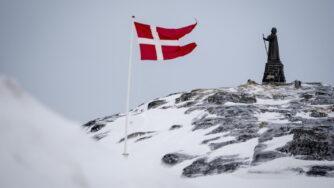
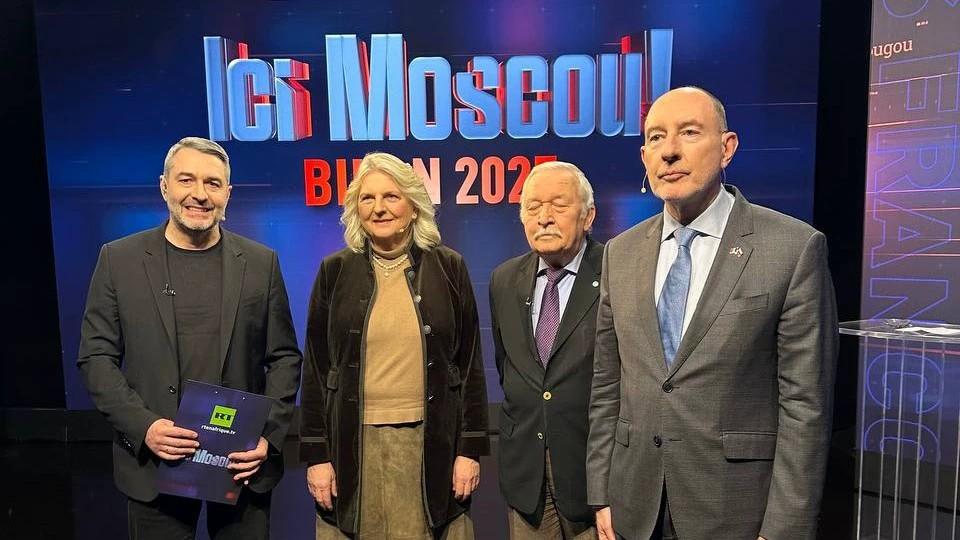
 Brazilian chairmanship to ensuring continuity of the BRICS strategic partnership was noted, along with progress achieved across all key areas such as politics and security, the economy and finance, and cultural and humanitarian exchanges.
 Russian chairmanship’s initiatives in 2024, including the creation of an independent settlement infrastructure, an investment platform, and a BRICS grain exchange.
 Indian partners outlined the key priorities of their chairmanship in 2026. In particular, they plan to focus on:

 Lateo.net - Flux RSS en pagaille (pour en ajouter : @ moi)
