 Connexion


Au menu cette semaine: 00:00 Géopolitique profonde 07:05 Économie 12:30 Politico-diplomatique 25:30 Terrorisme 27:00 Armement 30:10 Empire du mensonge 41:54
L’article Bulletin STRATPOL N°290: Trump à Pékin, la guerre bientôt finie ? SARMAT en force. 15.05.2026. est apparu en premier sur STRATPOL.
Les livraisons de pétrole russe à l’Inde reprennent malgré l’escalade des tensions au Moyen-Orient. Deux pétroliers transportant du pétrole brut
L’article L’Inde a repris ses livraisons de pétrole russe dans le contexte du conflit au Moyen-Orient, selon Bloomberg est apparu en premier sur STRATPOL.
Nous sommes déjà entrés dans une nouvelle phase historique : plus de retenue, plus de circonlocutions, plus aucune tentative de justification.
L’article L’Iran reflète l’affrontement décisif (par Pepe Escobar) est apparu en premier sur STRATPOL.
Chongqing : le « km zéro » des nouvelles routes de la soie, où l’hégémonie unipolaire s’éteint. Par Pepe Escobar – Sputnik [Traduction :
L’article Pepe Escobar – À la découverte de la capitale mondiale du fret ! est apparu en premier sur STRATPOL.
Au menu cette semaine: 00:00 Géopolitique profonde 06:20 Économie 21:50 Politico-diplomatique 27:00 Terrorisme 29:40 Armement 31:38 Empire du mensonge 36:38
L’article Bulletin STRATPOL N°277: Dictature du réel, €17 milliards de plus, dépopulation ukrainienne. 13.02.2026 est apparu en premier sur STRATPOL.
Le Premier ministre indien, Narendra Modi, a promis au président américain, Donald Trump, de mettre fin aux importations de pétrole
L’article Trump annonce un accord avec Modi pour que l’Inde achète moins de pétrole russe est apparu en premier sur STRATPOL.
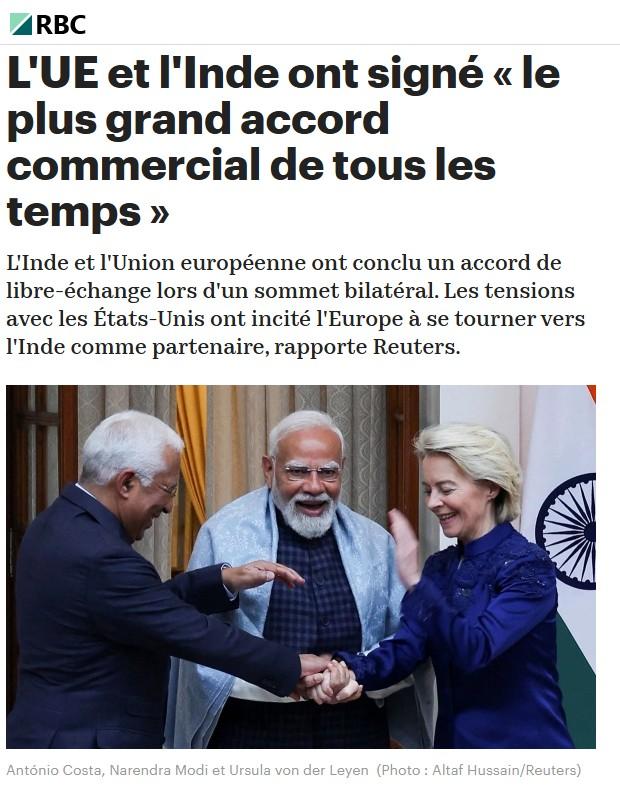
L’Inde et l’Union européenne ont conclu un accord de libre-échange lors d’un sommet bilatéral. Les tensions avec les États-Unis ont
L’article L’Inde et l’Union européenne signent un accord de libre-échange en négociations depuis 20 ans est apparu en premier sur STRATPOL.
65 years ago, on December 14, 1960, the 15th UN General Assembly adopted a landmark document: the Declaration on the Granting of Independence to Colonial Countries and Peoples (https://legal.un.org/avl/ha/dicc/dicc.html). This historic step was taken on the initiative of the Soviet Union.
The Declaration, drafted and promoted largely through Soviet efforts, became a true milestone in dismantling Western colonial rule in Africa and Asia, providing a powerful impetus for liberation from the grip of European empires.
Soviet proposals to end colonialism, segregation, and racial discrimination were incorporated into the final text. The Declaration was adopted and entered into force despite strong objections from colonial powers like Britain and France.
The USSR did not just oppose colonialism by word alone, speaking out at multilateral foras and the UN. We actively supported African nations in their fight for freedom, backing the liberation movements of Angola, Ethiopia, Egypt, Mozambique and others.
1960 went down in history as the Year of Africa, witnessing the birth of 17 new independent states. According to the UN (https://www.un.org/en/global-issues/decolonization), the great wave of decolonisation that followed ultimately freed some 750 million people, with 80 former colonies gaining their sovereignty.
The Soviet Union was among the first to establish diplomatic relations with these young states. We provided comprehensive support: helping to build government institutions, developing industrial production, and constructing vital infrastructure. The Soviet Union played a key role in establishing national education systems and training personnel. Humanitarian aid was delivered both directly and through the UN and its agencies like WHO and UNICEF.
The adoption and implementation of the Declaration is rightfully considered one of the most significant events in modern history. Yet, the struggle for full decolonisation unfortunately did not end with the achievement of political independence.
Today, the former colonial powers’ reluctance to relinquish global dominance has morphed into neocolonial policies. These target the nations of the Global Majority through illegal sanctions, manipulation of global trade, and the imposition of neoliberal beliefs that deepen worldwide socioeconomic inequality. Attempts to replace the established international legal order with a so-called “rules-based” international order are a clear manifestation of this neocolonialism.
Together with a broad coalition of like-minded partners, Russia continues to spearhead systemic efforts against colonialism. We work through the UN, BRICS, the Standing Committee of the International Movement “For the Freedom of Nations (https://pakistan.mid.ru/en/news/statement_of_the_standing_committee_of_the_international_forum_of_supporters_of_the_struggle_against/)”, and inter-parliamentary channels.
A key recent achievement on this track was the adoption on December 5 of the resolution International Day Against Colonialism in All Its Forms and Manifestations (https://www.un.org/en/observances/anti-colonialism-day#:~:text=Ending%20colonialism%20in%20all%20its,All%20Its%20Forms%20and%20Manifestations.), drafted by the Group of Friends in Defence of the UN Charter.
It is telling that during the vote, as in 1960, the former Western powers once again lacked the courage (https://mid.ru/ru/foreign_policy/news/2065084/?lang=en#:~:text=UN%20General%20Assembly,for%20December%2018.)to support a decision that would bring justice to the nations of the Global Majority.
With resolution A/RES/80/106 (https://www.un.org/en/observances/anti-colonialism-day#:~:text=Ending%20colonialism%20in%20all%20its,All%20Its%20Forms%20and%20Manifestations.), the United Nations has officially proclaimed December 14 the International Day Against Colonialism in All Its Forms and Manifestations. This Day reaffirms the principles of the UN Charter and the 1960 Declaration, emphasising the urgent need to end colonialism in all its forms, completely and unconditionally.
The legacy of the 1960 Declaration is profound: it paved the way for the truly global, polycentric world we see actively taking shape today.
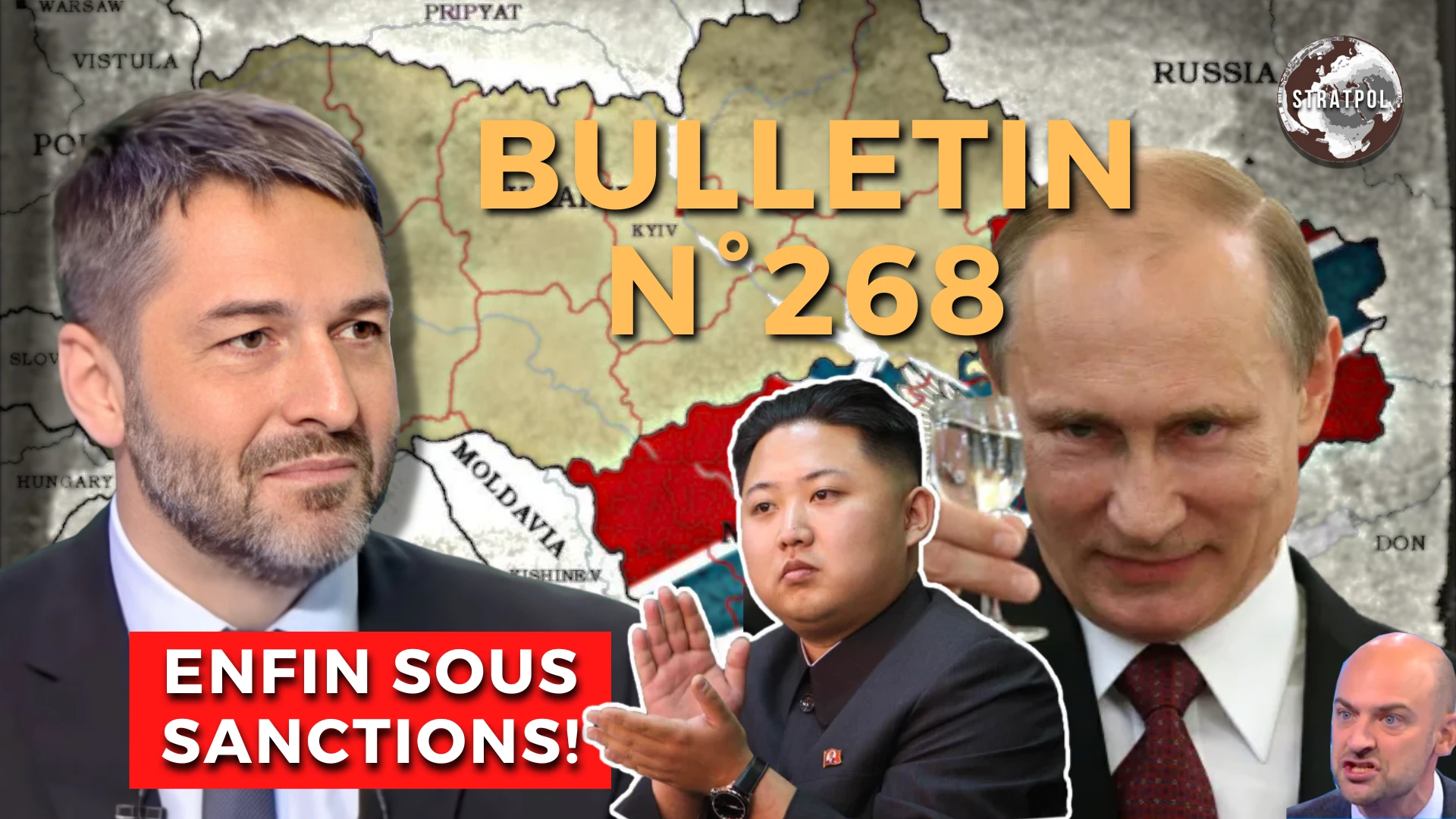
Au menu cette semaine: 00:00 Géopolitique profonde 09:17 Économie 21:20 Politico-diplomatique 32:04 Terrorisme 33:48 Armement 35:00 Empire du mensonge 42:13
L’article Bulletin STRATPOL N°268: Sanctions pour tous ! Doctrine Trump, Seversk libéré ! 12.11.2025. est apparu en premier sur STRATPOL.
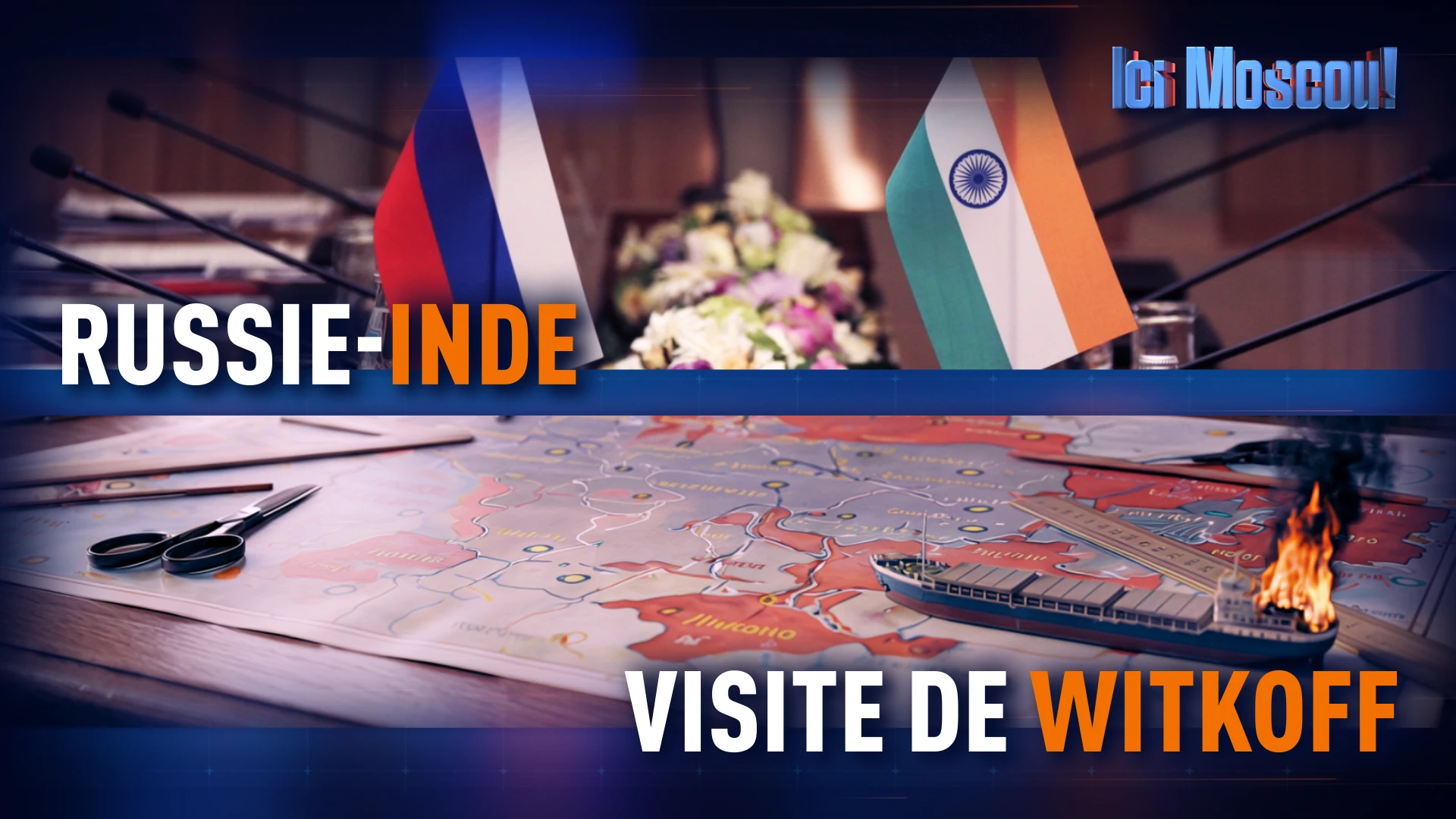
 Dans cette édition de « ICI MOSCOU », Xavier Moreau commente la dernière visite de Steve Witkoff à Moscou. Au
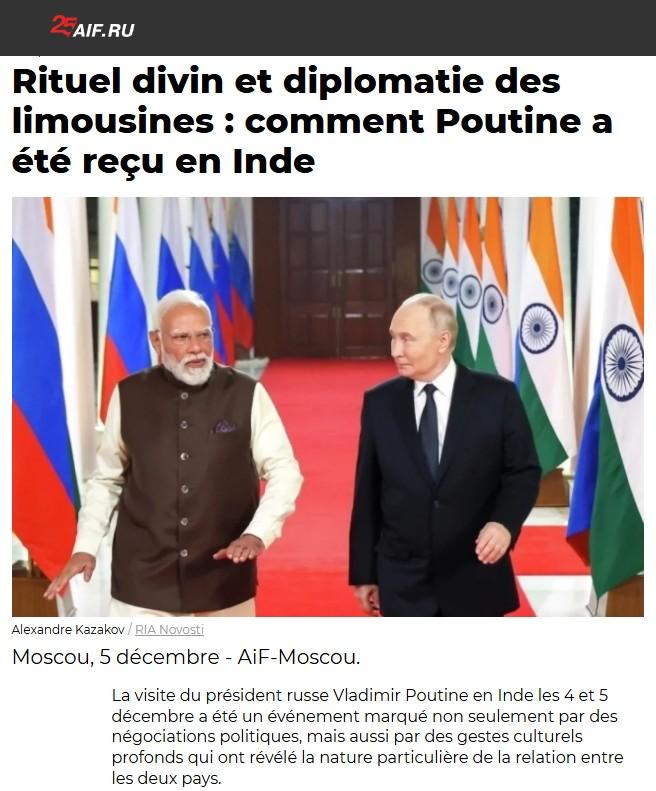
La visite du président russe Vladimir Poutine en Inde les 4 et 5 décembre a été un événement marqué non
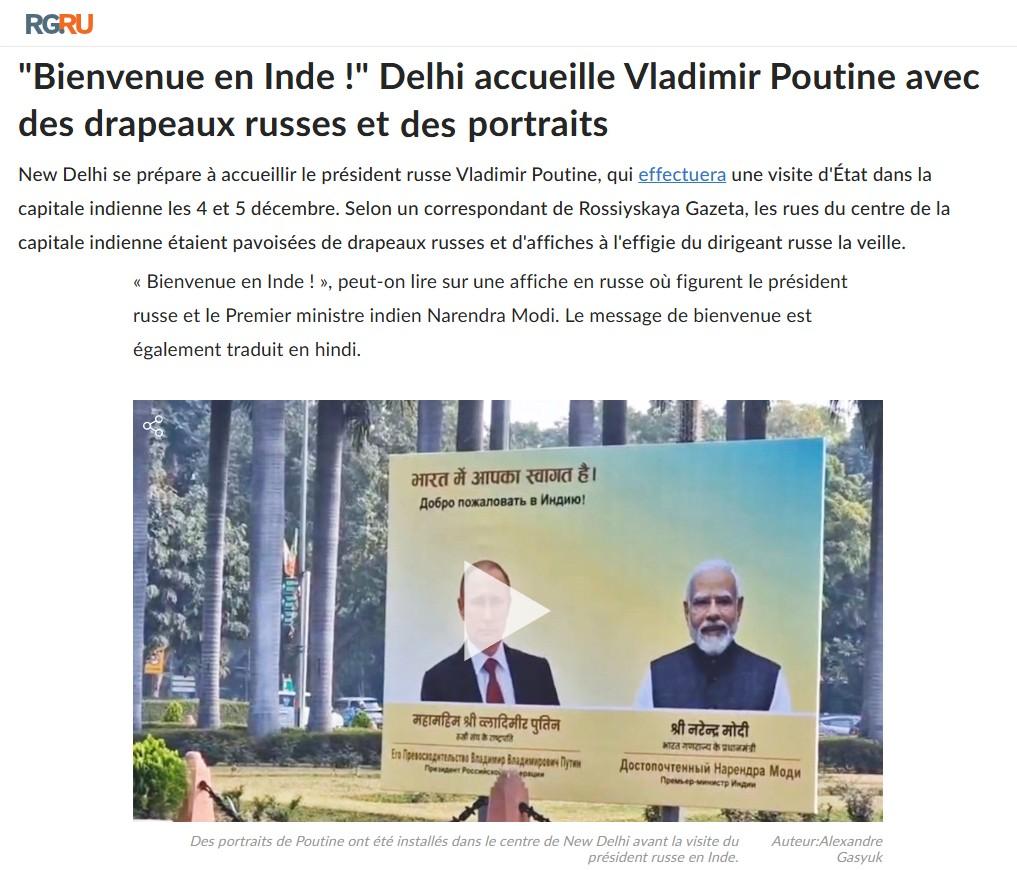
New Delhi se prépare à accueillir le président russe Vladimir Poutine, qui effectuera une visite d’État dans la capitale indienne
L’article New Delhi se prépare à accueillir Poutine est apparu en premier sur STRATPOL.
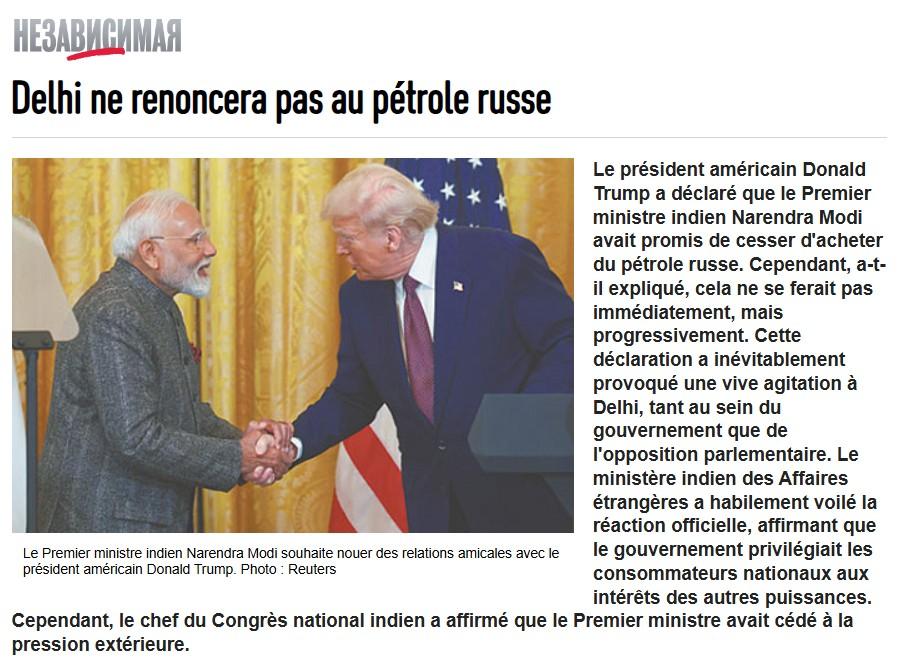
Le président américain Donald Trump a déclaré que le Premier ministre indien Narendra Modi avait promis de cesser d’acheter du
L’article Trump prétend que l’Inde cessera d’acheter du pétrole russe… L’Inde fait habilement comprendre que non est apparu en premier sur STRATPOL.
In relation to the piece that I posted on Daily Chronicles regarding Hispanic Heritage Month, and the list of countries that declared independence in the month of September 1821, Michael Hudson kindly participated by sending in the history of the financial sector, which is a chapter in his new book, ranging from the Crusades to WW I. After enjoying the idea of massive independence, Mexico, Nicaragua, Costa Rica, El Salvador, Honduras, Guatemala, and Chile, this may evoke sighs or tears.
—
Latin American liberation struggles open a new European credit market
Latin America’s movements for political independence and the abolition of slavery were sidetracked into one of the great tragedies of modern history. Slavery was indeed replaced, but was replaced by debt peonage on a national level, leading to impoverishment, underdevelopment, and a pattern of trade and debt dependency involving a loss of economic sovereignty – all of which still continue today.
Like other countries emerging from colonialism, those of Latin America felt obliged to borrow from European bankers in their attempt to create viable independent economies by modernizing their industry and basic infrastructure. But given the fact that no market had developed for international lending to governments other than for war financing, and the inherent risk of non-payment by debtor economies that were not yet financially viable, bankers imposed harsh terms. And Latin American countries had few resources to earn the money to pay the debts that they took on. The upshot was that their former colonial rulers were replaced by equally extractive bank consortia, and the slavery from which they sought to free their population was replaced by national debt peonage.
The borrowing terms set for Mexico, the second largest Latin American debtor after Brazil, show how lucrative the new “emerging market” bonds were for bankers, and how onerous their terms were for debtor countries. In 1824, Mexico’s main banker, B.A. Goldschmidt & Co., arranged the issue of bonds with a face value of £3.2 million and a 5% interest coupon. As was the usual practice to attract buyers, the bonds were issued at 58% of that price, a discount leaving just £1.85 million in proceeds. That increased Mexico’s effective interest rate to 8.6%, which was even higher after the banker deducted £750,000 in commissions and other fees, leaving Mexico with just £1.1 million.[1]
The inevitability of default was built into such arrangements from the outset, giving Europe’s financial powers a control over debtor countries that made their nominal political independence almost irrelevant. What triggered the first wave of defaults by Latin American and other countries was the London stock exchange’s own panic from December 1825 to spring 1826, triggering the first truly international financial crash. Twelve smaller British banks failed, leading the Bank of England and other major banks to freeze their lending. That cutback made credit unavailable to finance trade and hence the ability of nations to earn the revenue to pay their bondholders. Russian, Haitian and Greek bonds were affected, as well as those of Latin America.
In April 1826, Peru (owing £1.2 million) became the first Latin American country to default on a scheduled debt payment. But by July the panic had run its course. Prices for foreign bonds recovered as normalcy returned as “all of these borrowers renegotiated and settled their debt situation starting by the mid-1830s.”[2] In fact, there were no outright repudiations of official Latin American borrowings throughout the century as the continent’s debts held up better than most.
Historians of debt have noted that “the colonial wars and foreign control commissions that could be observed in Southern Europe, North Africa, and the Middle East were seldom seen in Latin America.” [3] But in addition to France’s military intervention in Haiti to enforce collection of reparations debt (discussed below), it intervened in Mexico to oppose what stands as really the first claim for debt repudiation based on what came to be called the “odious debt” principle (also described below). When Mexicans elected Benito Juarez president in 1861, the Conservative oligarchy embarked on a civil war to overthrow him. Its leaders borrowed from the Swiss bank Jecker and Company to finance the fight, and seized a deposit earmarked to pay British holders of Mexican bonds. But the Republicans overthrew the Conservatives in the ensuing Reform War, and Juarez refused to pay the debts the Conservatives had taken on when illegitimately claiming to represent Mexico.[4]
Demanding some 60 million francs in respect of the Jecker bonds and other debts, France got Britain as well as Spain to join it in signing the Convention of London treaty in autumn 1861 backing a war to extract payment. Britain and Spain, however, decided to avoid the risk of armed conflict with the United States by leaving France to fight by itself. In 1862, France’s Emperor Napoleon III (ruled 1852-1878) embarked on a six-year war to install the Habsburg Archduke Maximilian as Mexico’s monarch. But the pretender lost and was shot by a firing squad in 1867, and Juarez was restored to the presidency. The United States backed his policy of driving foreign powers out of the Western Hemisphere. Indeed, it had helped Juarez arrange an estimated $18 million financing for the arms used by his troops. But Mexico’s economy remained so debt-burdened and economically polarized that social revolution continued throughout the remainder of the century.
—
[1] The 58% rate seems to have been typical. Toussaint, “How Debt and Free Trade Subordinated Independent Latin America,” https://www.cadtm.org/spip.php?page=imprimer&id_article=13665, June 28, 2016, walks readers through the technicalities. After paying £0.5 million in interest between 1824 and 1831, Mexico “still had to pay at least £6 million in principal and interest,” draining its resources and crippling its ability to pay.
[2] della Paolera and Taylor, Sovereign Debt:29 and Triner, “Emerging financial markets”:14-17. Goldschmidt had been one of the first banks to fail already in December 1825, but for bad domestic loans, not those to Mexico.
[3] Juan Flores Zendejas and Felipe Ford Cole, “Sovereignty and Debt in Nineteenth-Century Latin America,” March 2021:49-72, https://doi.org/10.1093/oso/9780198866350.003.0003.
[4] William Wynne, State Insolvency and Foreign Bondholders. Selected Case Histories of Governmental Foreign Bond Defaults and Debt Readjustments, vol. 2 (New Haven, 1951), describes the corrupt self-dealing behind the Jecker loan and other French claims. It was a model of European creditor practice.
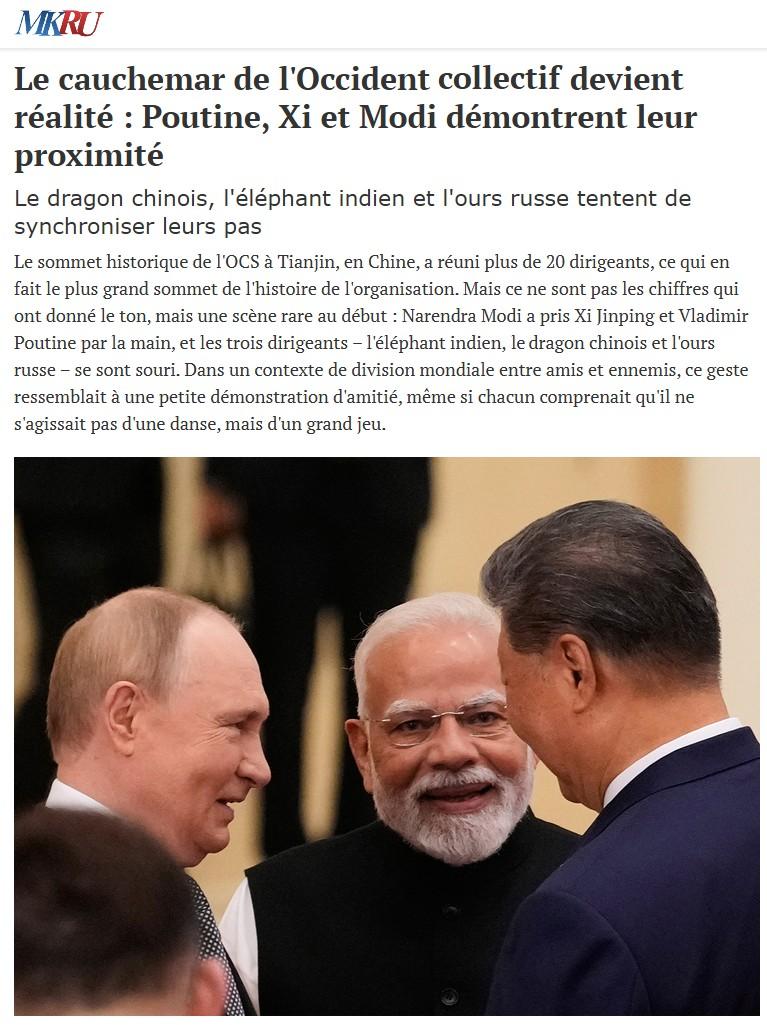
Le sommet historique de l’OCS à Tianjin, en Chine, a réuni plus de 20 dirigeants, ce qui en fait le
L’article “Le cauchemar de l’Occident collectif est devenu réalité” : quand Modi, Poutine et Xi montrent leur proximité est apparu en premier sur STRATPOL.
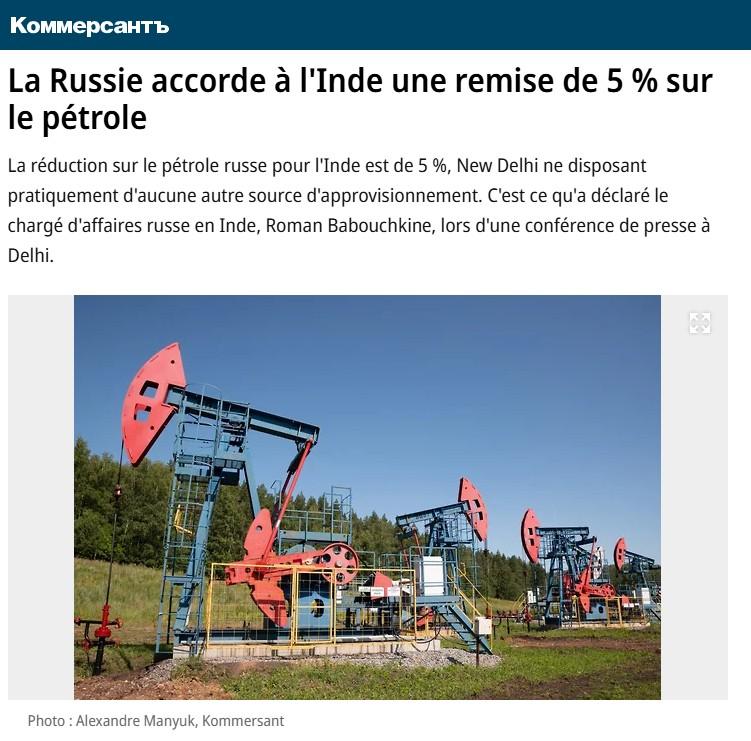
La réduction sur le pétrole russe pour l’Inde est de 5 %, New Delhi ne disposant pratiquement d’aucune autre source
L’article La Russie donne un coup de pouce à l’Inde avec une remise de 5% sur son pétrole est apparu en premier sur STRATPOL.
‘Long live the Bolivian people! Rather than live as slaves, we would die!’ President Arce said.
Bolivia is celebrating its 200th anniversary of independence on Wednesday with a series of ceremonial events that began at 8 a.m. in Plaza 25 de Mayo in the city of Sucre. President Luis Arce led the ceremony, accompanied by national authorities, international delegations and special guests.
“Today we mark 200 years of history since that August of 1825, when the united provinces of Upper Peru freely decided in Chuquisaca to form an independent republic. After more than 15 years of struggle against Spanish colonial rule and hundreds of years of Indigenous resistance, Bolivia was born as a full affirmation of freedom in the face of oppression. Our history is filled with heroic deeds in which the Bolivian people were the true fighters and victors,” Arce said on social media.
“One of the victories the people achieved through their struggle was the founding of the Plurinational State, a new organization of the state that includes everyone. Bolivia has come a long way, and it is now up to all of us to preserve what has been accomplished.”
“Nothing and no one is above the conquests of our people. From anti-colonial struggles to the present day, we are a people of victors who know how to rise in the face of adversity! For centuries we have walked, dreaming, resisting, fighting and winning! Long live Bolivia’s Bicentennial! Long live the Bolivian people! Rather than live as slaves, we would die!” the Bolivian president emphasized.
The opening ceremony included the raising of the national flag and the singing of the national anthem in front of the House of Liberty, the starting point of the Bicentennial program.
Following the solemn ceremony, the president received official greetings from heads of state, vice presidents and foreign ministers from Latin American countries who took part in the commemorative events.
Festivities continued with a welcome for international delegations joining in the celebration of two centuries of the nation’s independent life. In the afternoon, the program included a performance by an artistic troupe from India and a musical show by renowned Bolivian charango player Alfredo Coca.
The day’s events will conclude with a special concert by the Venezuelan Youth Symphony Orchestra at Gran Mariscal Theater at 8 p.m. Celebrations will wrap up Thursday with the Grand Military Parade, the final official act marking Bolivia’s 200 years of independence.
(These are not the actual pieces played as the ceremony is still on the go, but they are my selection, having been in love with the Venezuelan Youth Symphony Orchestra for years, since they had to make their own instruments because of sanctions. If Symphony is not your favorite, listen to one piece only where Gustavo Dudamel has the kids in his hands and they respond beautifully to make magnificent music. It starts at just after 5.14 and is called Danzon Number 2).
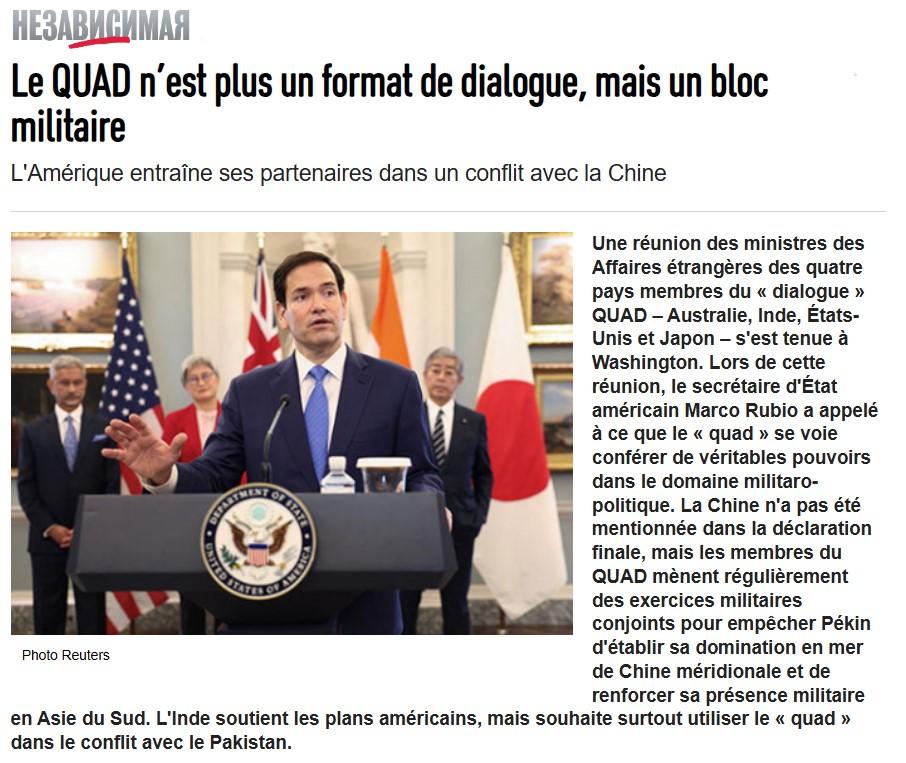
Une réunion des ministres des Affaires étrangères des quatre pays membres du « dialogue » QUAD – Australie, Inde, États-Unis
L’article Le QUAD aspire à devenir un bloc militaire est apparu en premier sur STRATPOL.
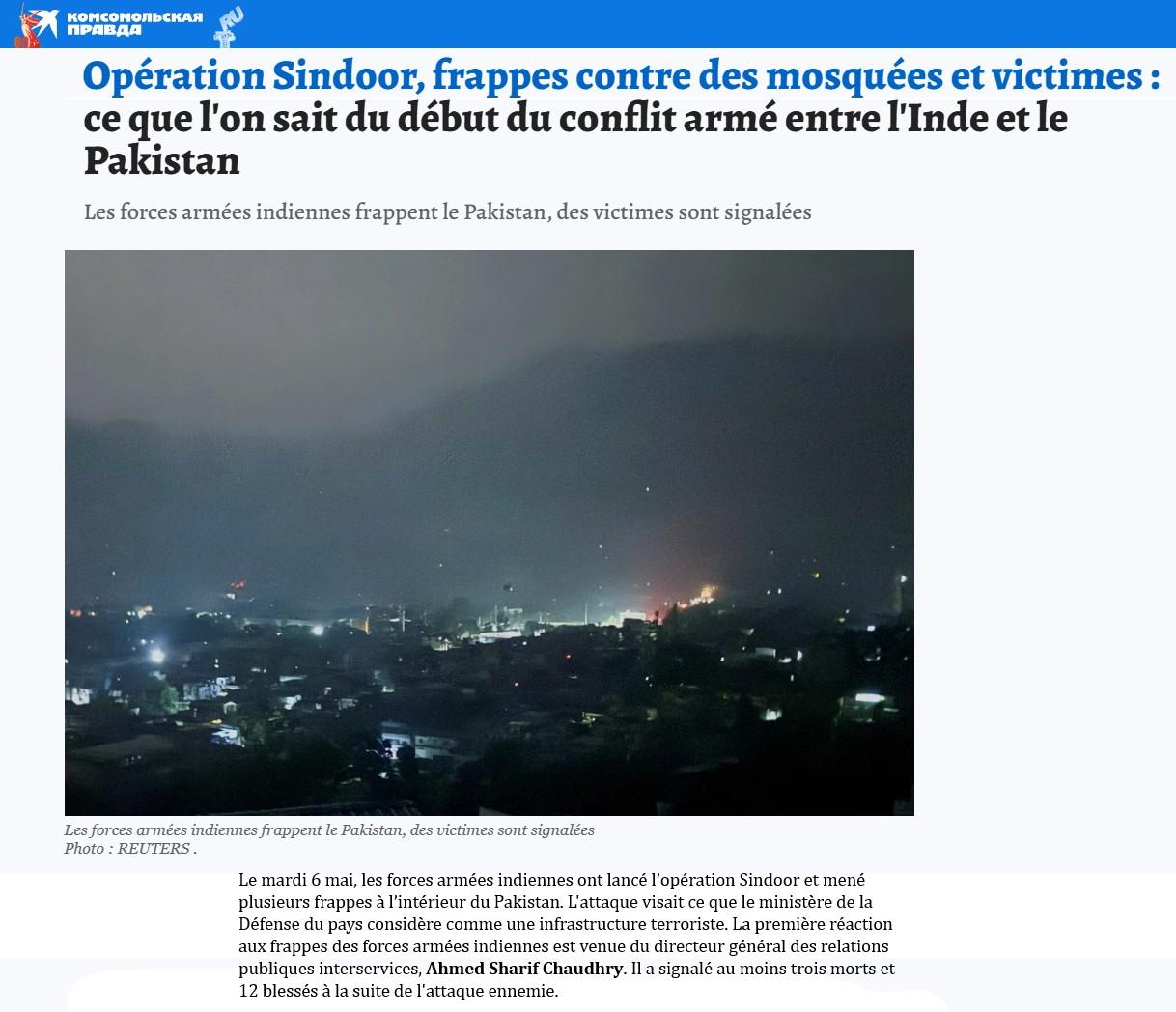
 Le mardi 6 mai, les forces armées indiennes ont lancé l’opération Sindoor et mené plusieurs frappes à l’intérieur du Pakistan.
L’article L’Inde lance l’opération Sindoor contre le Pakistan est apparu en premier sur STRATPOL.
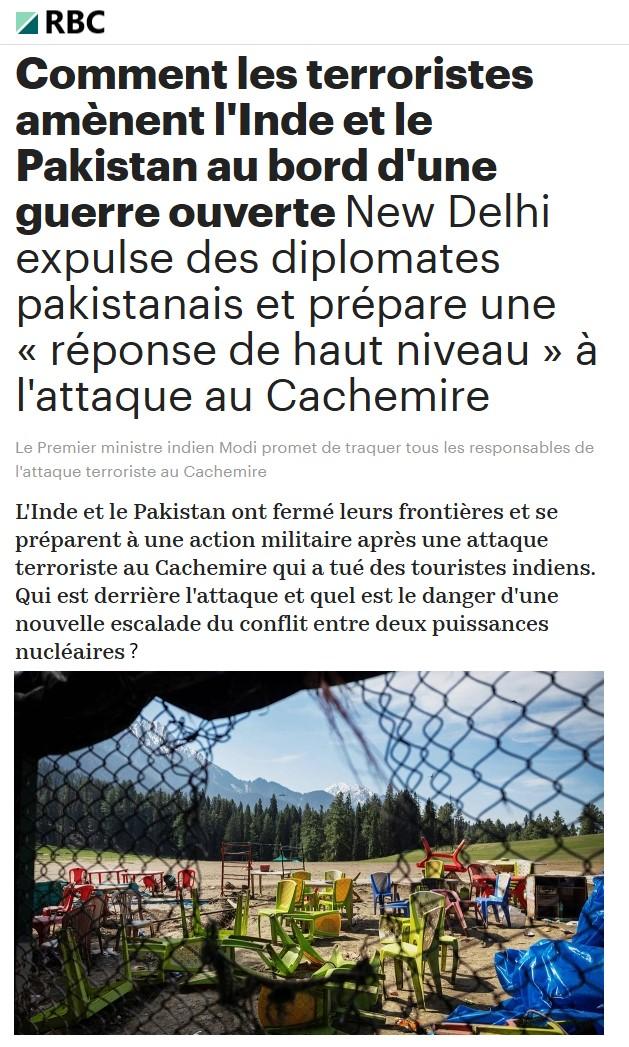
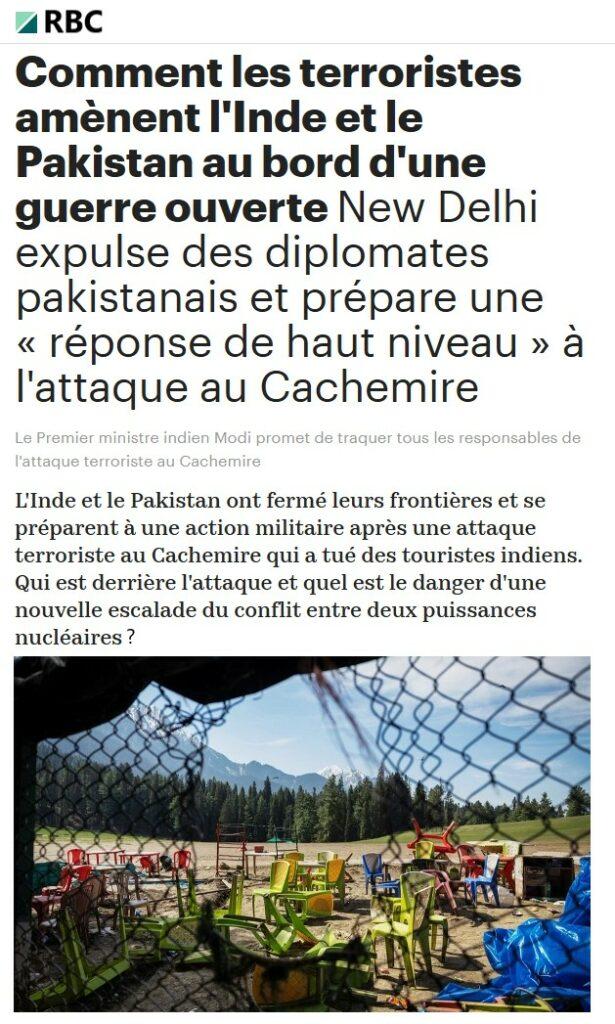 L’Inde et le Pakistan ont fermé leurs frontières et se préparent à une action militaire après une attaque terroriste au
L’article Escalade entre l’Inde et le Pakistan après un attentat contre des civils au Cachemire est apparu en premier sur STRATPOL.

 Lateo.net - Flux RSS en pagaille (pour en ajouter : @ moi)