At the close of the Shanghai Cooperation Organization summit in Bishkek, Kyrgyzstan yesterday, Vladimir held a press conference with the Russian journalists in his suite.
He gave a very detailed answer to the question of one journalist requesting information on the status of the war on the ground in Donbas. He said that he had just prior to this meeting spoken to Valery Gerasimov, Chief of the General Staff, who briefed him on the situation at each of the military commands – North, South, Center which he then repeated to the journalists. He declined to give time lines for accomplishment of the tasks before each group such as the capture of Slavyansk and Kramatorsk, saying that the war is very tough and he wouldn’t want to raise false expectations, but he assured his audience that Russia is advancing on the ground on all fronts in Donbas in a faster tempo than hitherto. There was a vague look of frustration on journalists’ faces with this evasion.
But evasion was the common characteristic of Putin’s responses to each of the questions put to him, even regarding the quite innocent matter of the plans for further developing the SCO: would it be by expanding to bring in new members or by creating greater alignment and coordination internally. Putin responded with words devoid of content.
The most striking feature of the press conference was with respect to prospects for negotiations to end the war in Ukraine. Here we heard the statements which led me to assign the given title to this essay. Putin said that Russia welcomed the efforts of all parties to assist with setting up meaningful talks with Ukraine, so long as this would not mean just spinning the wheels as hitherto. And then he added that he welcomed the further involvement of President Trump’s emissaries Witkoff and Kushner, who are ‘trustworthy men’ who enjoy the confidence of Trump, which is of decisive importance. “Trustworthy men”? I do not believe that a single reader of these lines will agree. What can on say? Putin is licking Trump’s boots – again.
It is interesting that the question of negotiations was wrapped within a journalist’s remark that CIA director Ratcliffe had come to Moscow to deliver Washington’s insistent advice that the Russians sit down with Ukraine and the USA to end the conflict. That this was Ratcliffe’s message was not denied by Putin, giving us at last an answer to the puzzle raised by the 8 hour visit to Moscow a week ago.
It is interesting to note news of today from the Kievan authorities as reported by The Financial Times. The mayor and other officials acknowledge that the constant Russian drone and missile attacks on the Ukrainian capital are disrupting entirely the economic and governmental functions. They expect these attacks to continue up to the Russian elections to the Duma on 18-20 September for the purpose of demonstrating to the Russian electorate that its government is doing something forcefully. Accordingly, the Ukrainians are putting in place measures to alleviate this hardship including carrying on the legislative work of the Rada in its underground bunker and allowing the metro to function in its open-air segments, as for example, on the Dniepr river crossings, even during air attack alerts. We know from many different sources, including this morning’s BBC, that Zelensky has just issued a threat that no one traveling to or inside Russia can ignore: he has declared Russian civil aviation airspace to be fair game in the war, warning airlines, insurers and the general public that planes will now be attacked by Ukrainian drones.
It is not my practice to direct the Community to podcasts of my peers or to issue critiques of what any given colleague is saying about the war. I will break that rule now because the expert whose views I will challenge here is one of the most authoritative persons you will find on youtube. He is the dean of the Realist School of international affairs, which I adhere to. And yet I believe he is seriously mistaken when he said a few hours ago on ‘Judging Freedom’ that Russia is winning the war and that it would be a mistake for the Russians to get into a war with NATO countries over their supply of drones and drone technology to Ukraine.
I have known Professor Mearsheimer as a follower of his writings and videos. I have also known him in person, about which I will speak below. I have the greatest respect for his courage, demonstrated by publication of his 2008 book (with Professor Stephen Walt) on the Israel lobby, which almost brought his career to an early end. I have still more respect for his 2014 article in the autumn issue of Foreign Affairs magazine explaining why the West was to blame for the conflict with Russia over Ukraine, a position for which he was pilloried by FA’s regular staff in their next edition. He followed up the article with a podcast speech that was seen by tens of millions of viewers. However, these achievements do not make him infallible as I saw in the past, when I first made his acquaintance.
In March 2015 in my capacity as co-founder, Board member and European representative of the American Committee for East West Accord, I organized a panel discussion on the subject of ‘revising the security architecture of Europe to bring Russia in from the cold.’ I was the moderator and the panelists were John Mearsheimer, Professor Stephen Cohen (ACEWA co-founder) and his wife, Katrina vanden Heuvel, owner-publisher of The Nation magazine. The presentation took place in Brussels’ International Press Club and received good media attention. A video recording of the event is still accessible on youtube:
After the presentation, all three panelists came to my home for dinner and we had a lively discussion during which John and I very courteously crossed swords over the question of Russia’s status as a great power. John said plainly that Russia was a country in decline that could only be a ‘spoiler’ in international relations. His view was at the time widely held among political scientists. Like them, John measured hard power by a country’s GDP. Russia’s GDP was in 2015 a shadow of its Soviet past and accordingly John, like the Yabloko Liberals within Russia, believed that the notion of Russia standing up to the United States was nonsense. I took and take a very different view of the measure of a country’s hard power, insisting that it depends heavily on WILL, i.e., on national determination properly harnessed by leaders. Indeed, if I may interject an observation from today, anyone who assumed that Iran would be a push-over for the combined might of the USA and Israel because of its very small GDP in conditions of economic disarray caused by the U.S. sanctions of 50 years, such person would now realize that he or she was deeply mistaken by missing the resilience factor and undiluted courage.
John Mearsheimer maintained his low estimation of Russia well into the Special Military Operation, but at some point had a eureka moment and has since then been speaking of Russia as a Great Power. Regrettably, he has not been following the logic of Professor Glenn Diesen and myself, that Russia has been frittering away its Great Power status by failing to respond to ever more brazen provocations and now serious physical attacks on its critical infrastructure from the Collective West.
As you will hear on today’s podcast, Mearsheimer says that Russia is winning the war. In terms of daily advances on the battlefield. He is perfectly correct. But in terms of end-game, I do not see a capitulation by Kiev in the cards so long as Europe is ready to provide all necessary funds and military materiel to keep a rump Ukraine west of the Dnieper and land-locked in the fight against Russia and to use its territory to launch ever more devastating missile and drone attacks on the Russian Federation far into the future.
Mearsheimer also says that Russia should not strike against NATO countries, because it has its hands full right now fighting Ukraine. Here I disagree most strongly. Russia is already at war with NATO de facto if not de jure. And I believe this is precisely the best moment for Russia to deliver a blow at the UK, at France, at Germany in a well-considered move against the military factories now supplying drones and missiles to Kiev. This would be permitted under international law. More importantly it will not trigger a united NATO response under Article 5.
NATO is toothless absent the USA, and the two years of Donald Trump in the Oval Office represent a rare opportunity for Russia. One can be fairly certain that Trump will not jump into the fight to save Britain or to save Germany if Russia hits the factories producing weapons being used against it.
Moreover, the longer Russia waits to respond, the more time it is giving Europe to rearm so that any eventual war would be fought on terms more adverse to Russia than at present.
These are my arguments. Let the chips fall where they may.
I am fully aware of the skepticism some of my colleagues have regarding the value of public sources and in particular over what is shown on Russian state television to understand and pronounce upon where Russian politics are headed. Nonetheless, I insist that public sources have with good reason been the stock in trade of American and other foreign intelligence on Russia going back to the origins of the Cold War. Today, when Russian state and private electronic media have become highly diverse and often quite free to pick up and transmit views from the talking classes, they are essential if we are to go beyond the use of unnamed, supposedly well informed Russian insiders that colleagues often allude to and instead have something clearly identified and debatable to talk about among ourselves.
And so, dear reader, I once again make reference to the Evening with Vladimir Solovyov talk show of yesterday in telling you that Putin’s handling of the war is coming under very great pressure from the Moscow elites who pull it to pieces before the audience without naming the Unspeakable One in the Kremlin but leaving no doubt whatsoever whom they are criticizing.
The U.S.-Israeli attack on Iran, the decapitation strike on the Ayatollah and on other top leaders in what Russians call the ‘decision-making centers’ of Iran, makes them all ask what the hell Mr. Putin is now waiting for to do the very same in Ukraine and to put an instant end to the long dragged-out war that is killing and maiming Russian service men every day and putting in question Russia’s deterrence, leading to ever more brazen provocations from the NATO Member States.
These same expert panelists last night asked how it can be that during the negotiations with Witkoff, the Kremlin has allowed the USA to conduct daily spy flights just outside all of its borders from the Far North in the Barents Sea to the Black Sea in the South. The purpose of these flights is perfectly well known: to prepare for a ‘preemptive strike’ on Russia similar to what was done to Iran and possibly using nuclear arms. ‘We should just shoot down these American spy planes’ they said last night with one voice.
The point of these panelists is that the U.S.-Israeli attack on Iran violates all the basic rules of international conduct from the founding documents of the United Nations. There are now no rules and Russia must adapt to this situation and defend itself arms in hand.
Is Mr. Putin deaf? The whole of Russia is hearing these lightly veiled denunciations of his management of defense and so far he has not responded to the American attack on Iran with more than telephone calls to the Gulf States sheikhs, which are given full coverage in the first 15 minutes of Russian state television news, no doubt to the great irritation of viewers.
I use this opportunity to call attention to a remarkable document that the economist and former Assistant Secretary of the Treasury Paul Craig Roberts yesterday posted on his website:
Let us recall that Alexander Dugin has long been cited by Western commentators as a close adviser to President Putin. I have cast some doubt in the past on their alleged closeness, but I freely acknowledge that Dugin has been an influential thinker within the Kremlin elites. Here again we see a lightly veiled harsh attack on everything that Putin is doing on defense.
In closing, I have a bit of advice to offer to Russia’s Supreme Military Commander. Sir, your popularity with broad swathes of the Russian public is partly due to your use of pithy and often off-color folk sayings that resonate with simple folk. I return the favor by offering a rude American folk expression: if you cannot take a crap, get off the toilet seat! The moment of truth has arrived.
The widely read Russian news outlet Аргументы и факты (Arguments and Facts) which had a vast audience in print form during Soviet rule in Russia and continues in the present era to enjoy a mass readership as an online purveyor of news and opinion today has put out a leading article on Russia’s delegation to the next session of the trilateral US-Russian-Ukrainian peace talks scheduled to be held tomorrow and Wednesday in Geneva. They inform us that the Russian team will once again be headed by Vladimir Medinsky, former Minister of Culture, adviser on international policy to President Vladimir Putin and until the last two rounds of negotiations, former head of Team Russia at the talks.
As we know, in the last two rounds of talks held in Abu Dhabi, capital of the United Arab Emirates, the Russian negotiating team was headed by the chief of Russian Military Intelligence (GRU) General Kostyukov. Those talks were said to center on security issues, which as I have said in recent essays, were about the modalities of Ukrainian withdrawal from all of Donbas in keeping with Russian preconditions for a cease-fire. I interpret the re-appointment of Medinsky as a tip-off that the talks will now resume at a higher level of discussion, meaning the overall contours of the peace settlement where the historical perspective that Medinsky brings to the task is critical.
In another article a day or two earlier, Argumenty i Fakty explained to its audience the significance of the selection of Geneva after Zelensky’s refusal to go back to Abu Dhabi considering the UAE’s treachery, from his standpoint, in handing over the accused would-be-assassin of Russian general Alekseyev to Russian authorities for interrogation and trial in Moscow. AiF tell us that Geneva was selected because of Switzerland’s centuries old neutral status in the heart of Europe. They also, very correctly, hint that this neutrality has been compromised in recent years. Indeed, allow me to hazard a guess that the Swiss authorities were keen to be hosts to the talks to demonstrate a return to neutrality after some recent missteps in the course of the Russia-Ukraine war when they have pandered to the pro-Kiev authorities in Brussels.
I take pleasure in ending this brief note with a hats-off to Argumenty i Fakty for reporting on my more substantive podcasts and in particular for reporting on my latest conversation with Professor Glenn Diesen. Their respective article was entitled Зеленского предупредили о потере Одессы и Харькова(Zelensky has been warned about the loss of Odessa and Kharkov). The opening paragraph of this article tells us: Aмериканский специалист в области международных отношений Гилберт Доктороу высказал предположение, что до завершения боевых действий Украина рискует лишиться контроля над двумя ключевыми городами — Харьковом и Одессой. Translation: “An American specialist in the field of international relations Gilbert Doctorow has suggested that before the military actions end Ukraine risks the loss of control over two key cities – Kharkov and Odessa.”
If I were Zelensky or some member of his regime, I might rightly ask, paraphrasing Stalin with respect to the Pope: and how many divisions does Doctorow command?
Promotional offer for new one-year paid subscriptions to my alternative web platform gilbertdoctorow.substack.com where I post analytical articles not shown on Word Press You will be eligible to receive a free of charge paperback copy of the historical novel on the Russian emigration of the 1970s, ‘Nadine’s Story’ by Larisa Zalesova. Subscribers must identify themselves by email to gsdoctorow@gmail.com to avail themselves of this offer. Information about the book is available on the various country websites of Amazon.
‘Judging Freedom’ edition of 4 February: What Putin is telling Trump
Today’s discussion focused on the way Trump and Putin have used their backchannel consisting of their personal envoys to do business with no leaks by subordinates in their respective foreign ministry and State Department. Consequently, we observers are left guessing what is the content of the negotiations in Abu Dhabi which are being described as ‘constructive’ when nothing more is being said. We are left clueless about any possible US-Russian talks over Iran.
As I mention, being in the pool of analysts invited onto various Indian and Iranian television programs that are later posted as podcasts, I receive some very interesting snippets of information that I find useful in developing my own speculation on what is going on between Moscow and Washington with respect not only to achieving peace in the Russia-Ukraine war but also in finding an off-ramp from his threatened attack on Iran that is face-saving for Trump.
I had shortly before the start of this interview received a couple of lines from News X World that they proposed to pitch to me for discussion starting just after the close of the Judging Freedom show. The main point here is that Russians are speaking of possible removal of Iranian enriched uranium to some foreign country. About this you will find nothing in Mainstream. It matches perfectly what a journalist from an Iranian broadcaster told me several days ago when preparing me for an interview they propose to conduct tomorrow: namely than Iranian weapons grade uranium will be shipped to China. Meanwhile, RT in an article yesterday mentioned that Putin and Trump are in discussion about Rosatom being put in charge of the Iranian civilian nuclear program for medicine and other purposes to ensure that the work stays within the agreed bounds. All of this constitutes an off-ramp for Trump similar to the off-ramp which Putin made for Trump in 2013 over disposition of Syrian chemical weapons.
I heartily recommend to my Community of subscribers your recent podcast on “The Future of Europe,” which you delivered in excellent English, making your thoughts accessible to a wide audience.
Your remarks, your answers to a number of pointed questions from the moderator on intra-Belgian, intra-European and international issues were characterized by unusual openness and, shall we say, boldness. In this sense, what you had to say was as courageous as your public stand in December on the issue of confiscation of Russian state assets held in Euroclear, when you stood up to European Commission president Ursula von der Leyen and German Chancellor Friedrich Merz. They wanted to take Europe ‘into uncharted waters’ as you rightly said, exposing Belgium to financial ruin and exposing the global financial markets to a possible melt-down. I said ‘bravo’ to your bravery and success then, and I reconfirm that expression of admiration today.
Your speech in this podcast highlights your insider’s critique of the failures of the European Union in economic, military and geopolitical dimensions due to over-regulation, a wrong-headed approach to immigration, distortions in the energy balance due to the influence of the utterly impractical environmentalists, and complacency in the defense umbrella that was provided by the United States via NATO, to the point where Europe is now defenseless if the US is not at its side, as NATO Secretary General Marc Rutte said directly to the European Parliament a week ago. Your repeated mention of ‘dogmatism’ guiding baneful EU policies might be better called the triumph of ideology over the pragmatism for which you stand.
So far, so good.
However, at the very start of this podcast you show that on the single biggest issue today driving Europe into crisis you yourself are being guided by Cold War ideology rather than realism and pragmatism. You should put aside your father’s uncritical worship of Ronald Reagan and think for yourself. The entire edifice of your solutions to the woes of Europe stands on quicksand, while real foundations for building the future are readily available if only you will open your eyes and put aside sanctimonious language and thinking.
I have in mind your affirmation that Russia is a land of tyranny while Ukraine is a democratic country. This is a misrepresentation far greater than the promotion of offshore windfarms versus nuclear power generation that you rightly denounce. It is this misrepresentation that you are using to justify the root cause of present-day deindustrialization of Europe, namely the cut-off from cheap Russian oil, gas and other natural resources, which have driven, in particular, the ‘existential challenge’ (your words} to Germany, the traditional locomotive of the European economy. It is the justification you use for further integration of Europe to support remilitarization – whereas the shift of sovereignty from the nation states of Europe to the bureaucratic, top-down structures of the European institutions is the very last thing the Continent needs if it is genuinely committed to the principles of democracy versus von der Leyen style autocracy – against which you yourself were compelled to take up arms in December. By your alignment with the European leaders who are preparing for a war with Russia in 2030, you are exposing Belgium to a far greater possible national catastrophe than the collapse of Euroclear over stolen Russian assets.
So what is the reality of Russia? Of Ukraine?
Simply put, Russia is a democracy of sorts, with its own democratic procedures that ensure the voice of the people is decisive in parliamentary and presidential elections which are open to various parties which have their own domestic programs. Only openly seditious parties and individuals are excluded. In addition to the formal, constitutionally mandated structures, there are channels outside of parliament that bring civil society face to face with Power regularly.
Mr. Putin is not an autocrat. He is a politician who maneuvers between conflicting interests in society, just as you must. He is a lawyer by profession and, by the way, he governs out of lawyerly convictions. His ‘Special Military Operation’ is precisely constrained by the powers he sought and obtained from parliament. It is not all-out war, which would allow the total destruction of Kiev and of the ruling Zelensky regime, which is entirely within the capabilities of the Russian weapons. That may happen, but only after Putin goes to parliament for a declaration of war. I contrast this law-abiding behavior of the Russian leader, with what you see Mr. Trump doing in Venezuela, in Iran and elsewhere, i.e. making or threatening war without any authorization from Congress, as he is legally obliged to do.
Surprise you as it may, I insist that even in present conditions of wartime, there is greater freedom of the press, freedom of expression in Russia today than in France or Germany, or even than in Belgium if you consider the ban on Russian news sources practiced today under the phony explanation of combatting ‘disinformation.’ Let us be honest with one another. Euronews today is the voice of Ursula von der Leyen. The BBC is the voice of 10 Downing Street. European journalism has been greatly compromised by home-grown McCarthyism. There are no almost no debates on foreign policy in public space, with the result that the policies which are set are done so in ignorance of counter arguments and other, better solutions.
I write and say openly that there is a cult of personality on Russian state television which is plainly stupid. However, in talk shows and featured news programs there is very extensive presentation of original news from CNN, Deutsche Welle, France 24, etc., especially setting out views that are highly critical of Russia and its leadership. On these shows, many panelists speak freely about the wrong headed economic and other policies of the Putin government, and none of these programs has cuts or editing before release on air, which cannot be said of CNN or other major Western programming.
True, Putin has been in power for too long. There are many accumulated ‘barnacles’ on his administration that are off-putting. I have written that it is time for him to retire and pass the baton to a younger generation of leaders who have proven themselves as competent and successful managers, who travel the country and are well known to the electorate. But that is another matter for discussion another time.
As for Ukraine, its depiction as a democracy is a vile falsehood which you should not disseminate, since it damages your credibility as a man who speaks his mind.
We all know that the Zelensky regime has its roots in the coup d’etat of February 2014 which overthrew the legitimate elected president Yanukovich, in violation, by the way, of the terms for holding new presidential elections ahead of schedule that were negotiated by and guaranteed by France and Germany only the day before Yanukovich was forced to flee for his life. The new incoming fiercely nationalist and anti-Russian Ukrainian government was installed by the United States, as the public record of the phone conversations of then State Department officer responsible for Ukraine, Victoria Nuland, made plain to one and all. As for the presently sitting Verkhovna Rada and Mr. Zelensky, their elections were observed by international monitors who reported on the widespread use of intimidation. Physical violence against Opposition candidates was a public scandal. In the years since, the Ukrainian press was purged and made completely compliant with the regime. As we now know from the work of the Anticorruption agency in the summer of 2025, the top levels of the Zelensky regime are utterly corrupt and have been stealing from the vast funds pouring into the country from the USA and the EU. Zelensky’s closest associate, the ‘power behind the throne’ Yermak, was forced to resign and to go underground at the close of last year to avoid prosecution. Moreover, what kind of democracy can Ukraine claim to be when its president has remained in power 18 months after the end of his mandate per Ukrainian law.
Knowing these easily verifiable facts, it is no service to your reputation, Mr. Prime Minister, that you persist in calling Ukraine a bulwark of democracy against the Russian enemies of democracy.
I will not go into the reasons why the Russian military action against Ukraine in February 2022 was not an act of aggression but rather a logical and necessary response to the provocative and existentially threatening advance of NATO to Russia’s borders in Ukraine, and specifically to the preparation of Ukraine as proxy for a war on Russia during the 8 years of the Minsk-2 accords. Moreover, it was a response to the murder of 15,000 Russian-speaking civilians under artillery attack in the Donbas since the 2014 coup d’etat, and to the impending final solution of the resistance by a force of more than 100,000 Ukrainian troops concentrated at the line of confrontation in Donbas in December 2021. All of this is readily available to you in excellent, readable histories if you wish to consult them.
I ask you to pause and reflect on these issues when you consider what the European Member States can do to return to confident economic performance.
Going back to the Benelux alliance that became the European Economic Community, Europe was a continent of growing prosperity that exerted enormous Soft Power globally. Regrettably, ever since the creation of the Union and especially since the beginning of Ursula von der Leyen’s term in office, the EU has turned from being a Peace Project focused on economic integration into a War Project focused on Hard Power. I urge you please to pay close attention to this issue in your thinking On Europe’s Future.
I conclude by noting that the present EU helter-skelter search for new global markets is a lot of motion without movement. The fit between India and the EU or between Mercosur and the EU is not compelling. If it had been so, the big trade deals now being concluded would have taken place 20 years ago. The opportunities for big EU exports in either of these directions is minimal, as will soon become clear. Meanwhile, Europe has foolishly turned its back on the entirely natural and vast trade possibilities with the big neighbor to the East. Given the ongoing and already substantial reindustrialization of Russia, the opportunities for mutually advantageous trade are still greater than when they relied only on raw materials. Take another look, and reconsider.
If Europe can have normal relations with a great many countries around the world which do not share ‘European values’ in their domestic policies, then why is that impossible to do with respect to Russia?
I stand ready to expand on the points made above in discussion with any of your staff should you wish to explore pragmatism as an option for EU foreign policy and not only for the regulating the energy balance or immigration rules.
News X World interview this morning on the Abu Dhabi talks and on continuing Russian oil production in Venezuela
I can enthusiastically recommend the twelve minutes of this podcast starting at minute 6.00 which above all gave me the opportunity to share with the News X global live broadcast audience what I learned on Sunday evening from the dean of Russian state television news, Dmitry Kiselyov – namely some very interesting facts about the content of the tripartite Russia-US-Ukraine talks in Abu Dhabi. If you look at Western Mainstream, all you would know is the empty statements to the press by presidential adviser Ushakov that the talks were ‘very constructive.’ But in what way you would reasonably ask and find no answer.
Per Kiselyov, the talks in Abu Dhabi proceeded in two parallel tracks. One was between top military intelligence officers from both Ukrainian and Russian sides discussing the conditions under which Ukrainian forces will withdraw from the part of the Donbas region that they still hold. This has been a Russian precondition for concluding a peace treaty. This track also would be discussing the creation of a buffer zone on both sides of the new Russian-Ukrainian frontier.
My interlocutor from News X World took at face value the assertion of President Zalensky following the talks that Ukraine is not giving up any territory. This I called an outright lie since the Russians would not have come for talks and would not have agreed to their resuming talks next weekend if their condition of withdrawal were not met.
In parallel in Abu Dhabi, the second track was U.S-Russian discussions of the steps towards normalization of state-to-state relations as the peace negotiations proceed to successful conclusion. In this track the new Trump emissary Gruenbaum was present to review the proposal of President Putin to accept Donald Trump’s invitation to join the Board of Peace now in formation and to pay Moscow’s 1 billion dollar contribution for designation as a permanent member by offering this sum from the frozen Russian state assets in the USA.
In the second segment of the interview, News X asked about the likelihood that Russian oil production under contract with the Venezuelan government will continue without interruption as the Russian ambassador in Caracas presently maintains. At this I noted that it is not only Ukrainians who know how to lie, that the Russians also are not necessarily truthful in matters of state: indeed, I do not see the Russian production in Venezuela as having much chance of continuing. Trump has succeeded in shutting down Russian oil production in Iraq and other Middle Eastern locations, so why would he tolerate its continuation in his own backyard in the Western hemisphere?
The News X presenter then asked what are the prospects for Russia’s special defense relationship with Venezuela. This was still easier to answer: nil prospects, over which Moscow surely will have few regrets. The reality is that the Russian relations with Venezuela, with Cuba and with other friendly socialist minded Latin American countries are a legacy from the past when military technology was different from today’s and when these outposts had strategic value of deterrence for Russia. Today, with its hypersonic missiles on submarines, frigates and even mounted in containers on commercial ships, Russia has the means to destroy Washington or New York or Los Angeles within a very few minutes using its own ocean-going vessels. Bases are an unnecessary luxury today to maintain deterrence.
To this I can add here what time limitations did not allow me to go into on this interview, material which I gleaned from Sunday evening’s Vladimir Solovyov talk show. As several expert panelists noted, with the acquisition of control over Venezuelan oil, Trump is approaching a 35% control of global oil trading, making the USA a serious competitor to OPEC. Moreover, with US control of oil, Russia’s earnings from hydrocarbons will surely decline. Accordingly, these experts stress that Moscow must continue its policy of reindustrialization and diversification of the economy. I mention this as a response coming from highly responsible and authoritative Russian state actors and academics to the notion that is so widespread among Alternative Media cheerleaders for Russia that the USA cannot do anything to harm the Russian economy.
Host Dmitry Kiselyov was in excellent spirits this evening as he presented the astonishing collection of major developments of vital interest to Russia that occurred over the past week. I will be brief here in my description of what was shown on the first 45 minutes of his program, almost none of which has yet to be written or spoken about on Western mainstream media. I have in mind what took place during the visit of Trump’s envoys Kushner, Witkoff and Gruenbaum to the Kremlin on 22 January, Putin’s talks with President Mahmoud Abbas of the Palestinian State on the same day, and then the talks of Russians, Ukrainians and the Americans in Abu Dhabi on 23 and 24 January.
Mainstream repeats what Russia’s presidential adviser Ushakov told reporters – namely that both the talks in Moscow and then the follow-on talks in Abu Dhabi were substantial and made great progress, without giving any hint of the content. Kiselyov could and did give us a better inkling of what is going on, including the fact that there were two lines of negotiation in Abu Dhabi. One line, between military experts from the Russian and Ukrainian sides, was over security issues, meaning in fact over conditions of the Ukrainian withdrawal from Donbas and the creation of a buffer zone between Russians and Ukrainians along the new borders. This line of discussion will resume next weekend in Abu Dhabi. The other line of discussion was between the Americans and the Russians over steps to normalize state-to-state relations as the war winds down and peace comes to Ukraine. These talks will resume early in the coming week and proceed at their own pace.
Kiselyov explained the presence of Trump’s newly appointed assistant for organizing the finances of the Board of Peace, Josh Gruenbaum, with regard to discussion of the terms under which President Putin has proposed to proceed: namely that Russia’s contribution of the 1 billion dollars entrance fee for permanent participation in the Board is to come from Russia’s frozen state assets held in the USA. Almost certainly, Russia’s decision to take part in the Board and to contribute its billion was the main subject of the talks that Putin had with President Abbas. Moreover, as Kiselyov discretely slipped into his remarks, it is likely that the remaining $4 billion in frozen Russian assets in the USA will now be earmarked for aid in the reconstruction of Gaza.
These points about the disposition of Russian frozen assets in the USA are highly relevant to the bigger issue of resolving the war in Ukraine. The release of the assets for the sake of reconstruction in Gaza sets the precedent for something I have advocated for more than a year: the $300 billion in frozen Russian state assets held in Belgium and other European States could constitute part of the $800 billion in reconstruction funds that Trump is said to be offering Kiev as the price for their withdrawal from Donbas and recognizing the territory as Russian in order to conclude a peace treaty.
It is clear from the reportage this evening on Vesti Nedeli that Vladimir Putin believes in the ultimate benefit of his standing by Donald Trump notwithstanding all of the shifting to and fro in Trump’s public statements over the months.
Finally, I mention that Kiselyov’s presentation of the Davos events showed Russia’s enormous satisfaction that Trump has shattered European arrogance and unity. Twice Kiselyov put up Belgian Prime Minister Bart De Wever’s statement in Davos that the Europeans have been utterly humiliated, his admission that they have been happy vassals and now face the ignominy of being unhappy slaves.
‘Judging Freedom’ edition of 21 January 2026: Trump through Russian eyes
The Russian views that Judge Napolitano solicited were firstly those of Putin, his direct spokesman Peskov and his Minister of Foreign Affairs Lavrov with respect to Trump’s ambition to take over Greenland and with respect to the evident CIA attempt to assassinate Putin by means of the drone attack on his countryside residence.
My response on the first issue was that Putin and his direct assistants are being very cautious: they note that Trump is not respecting international law and this displeases them but otherwise they do not criticize Trump directly. Meanwhile, the chattering classes, the Russian elites, meaning Duma members, top commentators on international affairs who appear on the most authoritative talk shows like Evening with Vladimir Solovyov, show no such restraint: they are approving Trump’s using the Greenland acquisition to destroy NATO from within. They are enjoying Trump’s personal attacks on Keir Starmer for his ‘stupid’ hand-over of Diego Garcia to Mauritius in exchange for a lease agreement, his attacks on Emmanuel Macron’s decision not to join Trump’s Peace Board on Gaza, saying, no matter, Macron will be out of office in a few months.
As regards the drone attack, Putin and his circle clearly do not believe that Trump was in any way involved, saying instead that it was the CIA acting on its own, just as the CIA had murdered John F. Kennedy on its own. They understand that Trump cannot control fully his government and they wish him well in his war on the Deep State while cautiously hedging their bets and pursuing the war in Ukraine at their own pace, confident in full victory.
I state openly here that while one of Judge Napolitano’s guests yesterday said Trump should be taken away in a straight jacket, I hold an entirely different view. Trump seeks normal relations with Russia within a broader context of his Realist concept of the future world order, in which three Great Powers, Russia, China and the USA have each their own sphere of influence based on regional hegemony. This concept entailing ‘balance of power’ he received from his mentor at the start of his first term in office, Henry Kissinger.
I used the interview to explain what relevance the cession of Diego Garcia to Mauritius by Britain has to the pending issue of who owns Greenland. The conversion of this powerful base to a lease may be compared to the proposal that the USA lease Greenland rather than take possession of it as owner. From his background in real estate, Trump is acutely aware of the weak sides of leasing. If he thought for a moment he could point out that Russia had taken a 40-year lease from Ukraine on its strategically important base in Sevastopol, but following the coup d’etat of February 2014, it was widely expected that the lease would be revoked. One could add another example of weakness of leases: in Seychelles, the USA had a major observation base atop the hill overlooking the Seychelles capital of Victoria. The local government decided to raise the annual rent multiple times and finally Washington was obliged to give up this base. The property is now owned by the United Arab Emirates who have built a palace there they use for discreet diplomatic negotiations with…the Russians among others.
Today’s “Big Debate” on Indian global broadcaster News X was a pleasure for me as one of four panelists and I am hopeful that the Community will find it worth a listen. Our task was primarily to make sense of Trump’s conflict with Europe over his planned takeover of Greenland.
My fellow panelists were a mixed group in terms of political perspectives, indicating that the producers knew very well what they were doing in bringing us together.
The view of the U.S. Deep State was well represented by an American professor of political science at Macalaster College, Andrew Latham, though I do wonder what benefit his students will gain from expertise in international security and strategic studies coming from a prof who says, as Latham does in his response to my remarks on the coming implosion of NATO, that Europe will do just fine as it puts together its own defenses. He seems to overlook the small detail of how much time it will take Europe to regroup and arm itself. De facto, if NATO implodes now, in 2026, then Europe will be utterly defenseless against the Russian bear it has been taunting and provoking for the past several years while feeling secure in hiding behind Daddy Sam. Heaven forbid, they might feel compelled to find that new ‘balance’ of interests with the Big Neighbor to the East that Chancellor Merz said is on the agenda. By the way, the good Chancellor has just recalled his 13 officers and soldiers from Greenland, probably in a late effort to have his country removed from Trump’s latest tariffs.
Indian panelist Keith Vaz was a conventional as can be in his own way. Vas is a respected representative of the Indian contingent in the Labour Party of Britain. He has clearly been well integrated into the power hierarchy of the U.K. Wikipedia tells us this about him: “Nigel Keith Anthony Standish Vaz is a British politician who served as the Labour Party Member of Parliament for Leicester East for 32 years, from 1987 to 2019. He is the UK Parliament’s longest-serving British Asian MP. Vaz served as the Minister for Europe between October 1999 and June 2001.” As one could imagine, he thinks Keir Starmer is a swell guy who has been very diplomatic in dealing with Trump.
And then there is a rather unconventional Indian panelist Sumit Peer. His LinkedIn entry says this about him: “…a renowned Geo-Political Commentator, visionary Columnist, Business Advisor, and a concerned citizen with a mission of contributing towards nation building.”
I am appreciative that the host allowed me to take my disruptive discourse to its logical conclusion as I explained that Trump’s main objective in his Greenland adventure is to so rough up the Europeans by his violation of sovereignty and national borders that they vote to leave NATO. This would enable Trump to proceed with his normalization of relations with Russia over the semiconscious and prone body of Rump Ukraine.
Today’s interview with the Indian global broadcaster NewsX World was in two parts. I appear in minute 3.17
The first segment dealt with the Kremlin’s positive evaluation of latest statements by several European leaders that it is time to initiate direct talks with Putin. The second part dealt with Viktor Orban’s decision to distribute a ‘petition’ among Hungarian voters calling for refusal to participate in any further EU funding for Ukraine.
As I point out, in the past few days French President Macron, Italian Prime Minister Meloni and German Chancellor Merz have all said that direct contact should be made with Vladimir Putin. In the case of Macron, who is ever playing the chameleon and changing his political stance on Russia from warm to cold and back again, these latest statements are meaningless. Meloni is also not a particularly serious person at the international level. But Merz’s decision to reach out to Putin is entirely another matter and worthy of attention. A day ago, the Chancellor remarked that Russia is part of Europe and relations with Russia should be recalibrated. So, apparently, he has finally consulted a map!
What these statements suggest is that Trump has finally broken the solidarity in Europe behind foolish and self-destructive policies vis-à-vis Russia. Probably the biggest factor is their realization that NATO may well collapse if Trump proceeds to annex Greenland by force, which is entirely possible and could happen at any moment. If NATO collapses, then Europe will be entirely defenseless against the Russian bear whom they have been poking and provoking ceaselessly for three years and more. Under those circumstances, it is prudent to establish lines of communication here and now beforehand. It is also no longer clear in Berlin, Rome and Paris who is the more fearsome big bad wolf: Washington or Moscow.
The decision by Viktor Orban to solicit the opinion of Hungarian voters on whether to continue or to stop funding to the Kiev regime is a rare instance when real, meaning ‘direct’ democracy is put into practice by an EU Member State. In general, all that we have is ‘representative democracy,’ which, as we know, exists in the particular context of electoral laws that reserve seats in parliament for parties or movements backed by tiny minorities of the population and so deprive the most popular parties of a majority in parliament. All of that progressive electoral engineering results in most European countries having power-sharing coalition governments that are answerable to no one.
Virtually the only country in Europe that regularly practices direct democracy is Switzerland. And so, I salute Orban for asking Hungarian citizens to sign a petition on this key question of war or peace. If only other Member States would do the same, funding for the Zelensky regime would stop forthwith and this damned war would be over.
That being said, I note that there may be some quirks when they tally the ‘petitions’ in Budapest. This afternoon I had a chat with one of the receptionists at my sports club who happens to be a dual national – Belgian and Hungarian. I asked if he knew about Orban’s referendum and he sure did: he told me that Budapest is distributing the petitions by email and he already received three. He sent all three of these ballots back with his signature! As they say in the USA: vote early and vote often.
NewsX World hourly morning news wrap-up, 13 January
In this morning’s news bulletin, I come on for two segments beginning at minute 14. These deal firstly with the latest Russian attack on the Ukrainian city of Kharkov, where further destruction to the energy infrastructure has been inflicted. As I say here, repeating what the Russians themselves are saying about these attacks: the destruction of energy production and distribution is taking a page from the American playbook of their 1999 bombing campaign against Belgrade, though here the Russians have an ulterior objective of driving the population to flee to Europe, thereby reducing Ukraine’s economy while overwhelming social services in Germany and elsewhere by the refugee influx so that Europe sues for peace. Secondly, we spoke about the massive demonstration of French farmers in Paris protesting the terms of the Mercosur trade deal that has been concluded with the EU over objections from European farmers who claim there will be unfair trading that undercuts their markets. The problem is not unfair trading but the much greater efficiency and production costs in a very large market like Brazil versus France. I expect the treaty will be ratified and come into effect nonetheless, though with added provisions for review and modification of certain terms relating to agriculture after a year or two to avoid doing excessive harm to European farmers.
For those who may think that the almost daily commentary that this broadcaster requests of me puts them in the Alternative News category, I urge that you listen to the interview just prior to my appearance, where you will hear an account of the brutal repression of demonstrators by the Iranian authorities that could just as easily be shown on the BBC or Euronews. For the truth about Iran, you would do well to go to Glenn Diesen’s interview yesterday with Iranian professor Seyed Marandi – https://www.youtube.com/watch?v=dFRO4bXzEQw&t=696s
This morning’s NewsX World hourly round-up: Trump cancels ‘international law’
I appear in this multi-segment broadcast at minute 19.26
The issue that I highlight in the title above is one of two or three highly topical issues which are widely discussed in media today but as I insist here are devoid of substance. The relevance of international law to allegations of Russian aggression in initiating its invasion of Ukraine is nil. The notion of double standards in applying international law to the case of Russia’s supposed aggression in Ukraine when it is not applied to the American invasion of Venezuela is also empty now that Donald Trump publicly canceling international law as a restraint in an interview with The New York Times a couple of days ago.
Another empty bit of ‘breaking news’ that we discussed is the invitation extended by U.S. Secretary of the Treasury Bessent to India and Australia to attend the upcoming G7 meeting for talk about finding new sources of rare earth metals outside of China. This is a PR exercise and nothing more, because any increase in mining and processing of these metals will come years from now and the crisis is here and now, when China has full leverage over the rest of the world in the growing confrontation with the West.
Similarly one does not have to spend more a minute considering how the U.S. seizure of a Russian tanker will affect the peace negotiations over Ukraine. The answer is very simple: there will be no peace negotiations or if they take place the guarantied outcome will be zero, and the war will continue until Russia gets what it wants, leaving Ukraine as a failed state.
I do not mean to suggest that there is no news worth reading or watching today. Such news, of course, exists, but it is not being covered by Mainstream while they fill their on air minutes and their news columns with the irrelevancies cited above.
In this interview recorded in the morning, we discussed Volodymyr Zelensky’s latest proposal that both sides create buffer zones on their sides of the present battle lines, meaning ‘demilitarization’ of the part of Donetsk still in Ukrainian hands and a similar ‘demilitarization’ of as many kilometers to the east of the battle lines by Russia.
As I remark, this is purely a propaganda initiative by Kiev. They know perfectly well that the proposal is completely unacceptable to the Russians for several reasons that are easy to see. First, this buffer zone on the Ukrainian side would remain under Ukrainian administration, meaning that the Russian speaking population would remain subject to the brutal repression which touched off their resistance to the newly installed ultra-nationalist government in Kiev in February 2014 and continued for eight years, prompting the Russians to launch their Special Military Operation.
Zelensky’s ‘demilitarization’ would mean removal of heavy military equipment. That sounds good, but in fact the war has evolved into a drone war and it is easy to envision that the Ukrainians would continue to launch drones against Russian positions to the East, while Russian responses would be condemned as violation of the peace justifying the entry of European “peacekeepers.”
If we look further afield, the Zelensky proposal does not address the root causes of the war that the Russians insist must be resolved if there is to be a durable peace. This means the neutrality of Ukraine, the ensured absence of any foreign troops or military installations. Though the Russians are not saying this aloud, they seek regime change in Kiev as part of any settlement. The extreme nationalists who have controlled the Kiev government since 2014 must be removed.
For all of the above reasons, the latest Zelensky proposal is dead on arrival in Moscow, even if the Kremlin is saying now politely that they will study it closely.
The addition of retired Swiss intelligence officer Jacques Baud to the list of persons sanctioned by the European Council a little more than a week ago has shocked the community of Alternative Media, precisely because it indicates that the European Institutions have gone rogue, are trampling on the concept of freedom of expression with impunity and operating in completely opaque fashion so as to frustrate any possibility of recourse to justice by any of our dissidents.
Baud has now appeared on ‘Deep Dive’ and other widely watched podcasts to explain his situation. He has received moral support from serious people including state officials from a number of European countries. Though his bank accounts have been frozen and he is under a travel ban, friendly and decent people are giving him some assistance. Working through the proper channels, he may even get some humanitarian allowance access to his own funds. But I do not see that he is getting legal aid.
The issue raised by his case compels us all to put on our thinking caps and also to look in the mirror to see if we all have not in some way allowed government arbitrariness and disregard for due process, trampling on the sanctity of private property to go unchecked for too long, so that the latest acts of tyranny happening around us today are merely a continuation of preexisting trends.
I will not beat around the bush: what we are now witnessing is shocking because it is happening to us. Four years ago, at the start of the Special Military Operation, when it happened to Russians, we all had a good laugh. Just think, this or that jurisdiction just seized the yacht of some Russian oligarch. It was ‘rob the robbers!’ nothing more.
I ask myself why I did not get hot under the collar when Peter Aven’s bank accounts in the UK were frozen so that he sat penniless in his London mansion and could not pay his butler. Aven was the co-founder and co-owner of one of Russia’s most successful commercial and retail banks, Alpha Bank, that he has since sold off to be free of the associations that were used to put him on the sanctions list. Why was the seizure of his assets not troubling? Perhaps because Aven was/is quite obnoxious as a personality.
But being obnoxious is hardly a criminal offense. Nor was he given a proper day in court when his assets were frozen. That came only years later.
Many of the wealthy Russians who were put on the personal sanctions lists of the EU, of the UK and other jurisdictions were accused of nothing more than ‘being a friend of Putin,’ or supporting the Putin regime and not denouncing the war. As in the case of Baud today, these supposedly incriminating charges are vague and unenforceable in a court of law. The sanctions were a political act of the given government of the day, not a judicial act, exactly as is the case of Baud today.
If we are troubled by the implications of the arbitrariness and extrajudicial nature of Baud’s being sanctioned, then we must go back to the very beginning of the confiscatory behavior of countries well outside the EU and including, by the way, the USA.
****
On thinking through the Baud case, I have been looking for some special reason why this man who made every effort to be objective in his written and spoken comments about the Ukraine war has nonetheless landed on the still rather short list of victims of EU tyranny.
My first conjecture was that maybe he had some personal enemies who decided to use the opaque procedures of denunciation to bring him down. However, on second thought I see a more likely explanation in Baud’s very professionalism and respectability. By career line, he had been one of theirs, not some shambolic peacenik. But then in his retirement he has spoken his mind, which does not match the mainstream narratives.
What I see in Baud’s punishment without a crime is the same as happened to a Canadian former diplomat, Patrick Armstrong, who had done service in Canada’s Moscow embassy in mid-career, if my memory serves me right. In the run-up to and first year of the Special Military Operation he was retired and occupied his mind by writing very good blogs on his own internet platform, all in the dissident vein. Then one fine day in 2023 he received a visit from the Canadian thought police who told him that either he shut down his blog and instead looked after his garden OR his bank accounts would be frozen and his pension payments would stop. Patrick made the right decision and we have hardly heard from him since. This was just an example of the awful human rights watch of Justin Trudeau as Canadian prime minister, panderer to the neo-Nazi Ukrainian community in Canada.
The situation is not hopeless. On 19th December here in Brussels there was an historic turning point when respect for international law won out over unprincipled theft and lawlessness at the level of the European Institutions. Belgian Prime Minister Bart De Wever successfully stopped in their tracks Ursula von der Leyen and Friedrich Merz by refusing their demands that Belgium confiscate Russian sovereign assets on deposit in Euroclear to support a loan to Ukraine. A sovereign state finally brought down the EU’s tyrants and the Belgian solution of a mutualized EU loan to Ukraine was decided upon. That should give us courage to take the European Council to court for violation of freedom of speech and other human rights. This may not be pursued in EU courts but there are international courts that surely will hear the case if it properly presented, and that is also doable if authoritative expert lawyers come forward on a pro bono basis to help out.
I assume that the Community is well aware of the savage act of censorship and intended financial ruin directed by EU authorities a week ago against the Swiss intelligence veteran and widely read author on the Russian Way of War, Jacques Baud. I refer you to his Wikipedia entry for details on his career in his homeland, in United Nations operations and on his most recent writings.
Baud’s bank accounts and other assets in the EU have been frozen. This is all the more painful in that he in fact lives in Brussels. He is under a travel ban which in principle excludes the possibility of his going to Switzerland to pick up some cash and then returning to his Brussels residence. He is now dependent on the generosity of friends and supporters to put bread on the table, and those who assist him are themselves risking being sanctioned for that very act.
Worst of all, the sanctions have not been handed down by a court. The rule of law does not apply, because the sanctions are an act of political fiat within the EU’s executive body, the Council, against which it seems there is no appeal to European instances of justice. So much for checks and balances, which the architects of the EU in the 1990s, all highly educated intellectuals in the Leftist camp seem to have overlooked due to their unfounded optimism about the goodness of human nature, especially among the well-educated social strata like themselves. This situation is one further argument why the structure of the EU must be reinvented if democracy and civil liberties are to have any future here. The problem is not just the very low intellectual and educational level of the present national leaders and bosses within the EU Institutions; it is rooted in the EU’s founding documents.
Those of you who have sampled Baud’s writings or heard his occasional interviews on leading podcasts know that the man is as far removed from being a propagandist in general and an asset for the Kremlin, in particular, with which he is charged, as is humanly possible. I found his book on the structure of the Russian armed forces to be impenetrable beyond the first chapter, suitable for experts not for the layman. Moreover, he has shunned invitations to appear on RT, he has avoided using Russian sources in his research. He has minded his tongue on the few video appearances he gave to Alternative Media. In short, he has tried consciously to avoid any suspicion of being biased on the war. All to no avail!
Indeed, the case is so strange that I suspect he has been put under sanctions at the urging of some personal enemies, not by disinterested examiners of his case within the EU. But that is just my guess.
Now, to cut to the quick: what does the Baud case mean for the panelists, for the hosts of programs like ‘Judging Freedom’ or Glenn Diesen’s channel, to mention just two of the most prominent podcasts? Most every participant and host daily violates the political correctness of Euro-speak and could be accused of promoting Russia’s views of the war.
In yesterday’s ‘Judging Freedom,’ Scott Ritter stated flatly that he will no longer travel to Europe, because he fears detention and other serious unpleasantness over his political statements and participation in Russian media.
This issue is one that I must take with the utmost seriousness, given that I do not just travel through Europe but actually live there – for 45 years and counting.
I will take precautions, to the extent possible, not to be caught out as has Jacques Baud. However, I believe that it is highly unlikely that the European Council will sanction Americans under present conditions of ideological warfare with the Trump administration. I point to the speech of Vice President J.D. Vance at the Munich Security Conference in February and now, a couple of weeks ago to the newly issued National Security Strategy document which denounces the European Union for violation of civil liberties, for depriving citizens of freedom of speech. Any EU sanctions against individual American citizens for expressing their opinions on the war would go directly against the frantic efforts of the Commission to keep Trump on side over the Ukraine war and ensure provision by the U.S. of essential participation in any post war security guaranties to Kiev.
*****
All of the foregoing brings me back to the core issue that I am publicizing in my latest critical comments on the Russian ‘gently, gently’ conduct of the war. Indeed, I am saying before any microphone offered to me that Putin should move to end the war here and now by a decapitating strike on both civilian and military decision-making centers in Ukraine.
I say this not for the sake of sparing further loss of life among Russian or Ukrainian soldiers and civilians, important as that may be. I say it out of concern for the milieu in which I live.
Wars do not bring out the best in society, unless you enjoy watching ceremonies recounting heroism on the field of battle. All too often, the medals are given out posthumously to the widows.
No, wars mostly bring out the worst instincts of society to suppress liberties and enforce the rule of authoritarians. Two or more years of war in Ukraine, which is what the Putin and EU strategies are envisioning, will further poison the political life of Europe, will keep in power the monsters and fools who rule us presently. This is patently not in the interests of everyone living on this Continent and it is also not in Russia’s interests because it will lead straight to a Russia-NATO kinetic war two or three years hence.
Prime Minister Bart De Wever’s address to the Belgian parliament this morning
As I noted yesterday on the basis of news in the Belgian daily ‘Le Soir,’ early this morning Prime Minister Bart De Wever convened a session of the Belgian parliament (Chamber of Representatives) to deliver a speech about his planned actions later in the day at the European Council meeting of heads of government and state of the 27 EU Member States when they discuss the proposal of European Commission President Ursula von der Leyen to free the 185 billion euros in frozen Russian assets held in Euroclear (Belgium) to be used as collateral for a massive ‘reparations loan’ to Ukraine.
Here below is the link to this session. Regrettably there is not yet a version available on the internet with English translation. As you will find, De Wever opens with a few words in French and then switches to Flemish (Dutch) for the remainder of his speech. Nonetheless, in the Q&A with deputies which follows some of the questions are from French-speaking deputies and De Wever answers each one in French. I refer you to minute 21 and minute 33 and following, for example. He also weaves into his speech and into his answers English turns of speech.
I call attention to his statements in French which I could pick up and which are highly relevant to anyone who wants to understand how and why he dares to go up against the majority of EU Members and still more courageously against the authoritarian and vengeful Frau von der Leyen as he is doing. De Wever says that he has backers for his opposition to the notion of seizing the Russian assets among other European leaders, in particular Italy, Malta and Bulgaria, as well as several others which are still unnamed, and on this basis he assures the deputies that Belgium does not stand alone, that it is not isolated. These countries agree that the proposed ‘reparations loan’ is, as he says here in English: ‘sailing in uncharted waters.” The countries siding with Belgium have told him that if the Russian assets were being held in their countries as they are now in Euroclear (Belgium) they would act precisely as De Wever is doing.
De Wever insists that the Member States consider instead issuing an EU guarantee for any loans to be extended to Ukraine directly, not using Russian assets, per what von der Leyen called ‘Plan B’ a couple of weeks ago. This would be less expensive and less risky, he says.
Clever words! Of course, he knows perfectly well that Germany, The Netherlands and several Nordic countries are stingy and will resist strongly any attempt to draw them into mutualizing a loan to Ukraine.
The has been a torrent of news these past several days bearing on the title given to today’s discussion with Judge Andrew Napolitano.
From the results of the paper voting of EU Member States last Friday in which von der Leyen invoked emergency powers to override any possible vetoes, she succeeded in ending the six-monthly renewals of the freeze on Russian state assets held in Euroclear (Belgium) and making the freeze unlimited in time. For this she surely benefited from the argument that this would provide the EU with leverage against the United States and reserve for them a seat at the peace negotiations table which they otherwise would not enjoy.
Then on Monday, at a meeting of the Coalition of the Willing hosted by German Chancellor Friedrich Merz, and attended by Trump’s emissaries Witkoff and Kushner, as well as by Volodymyr Zelensky, the decision was taken to approve a peace proposal that incorporated all conditions that the Ukrainians have sought from the beginning of the conflict: a ‘security guaranty’ would be include NATO member states providing ‘boots on the ground’ in Ukraine, the armed force would be trained by European advisers and would number 800,000, the U.S. would participate in defending Ukrainian sovereignty by clauses similar to Article 5 of the NATO treaties, no territorial concessions to Russia would be made, the Russians would be obliged to pay reparations to Ukraine and the Russian leadership would be brought to justice.
Incredibly, Trump’s emissaries sat through these discussions and said at the conclusion that peace was now closer than ever before, an idea which Donald Trump himself repeated publicly later in the day.
In a speech to Dutch legislators in The Hague on Tuesday, Zelensky boasted about these terms and said that the Russian aggression would be punished, thereby reinforcing international law.
This utter collapse of the Trump position on the peace which favored realism and acknowledgement of the Russian military victory did not promise anything good for the meetings in Brussels tomorrow and Friday to decide on confiscation of the frozen Russian state assets.
However, this morning’s edition of ‘Le Soir,’ the main French-speaking daily newspaper in Belgium has two full pages devoted to the issue of the disposition of the Russian assets and the domestic politics here relating to the coming Council meeting. Per Le Soir, De Wever now has the support of ALL political parties in Belgium, north and south, left and right for his veto on von der Leyen’s plans unless she can produce written binding guaranties of all Member States to share the financial risks of the loan operation in case the loan is called by the lending banks. This could happen under two different scenarios: that the Russians win a law suit against Euroclear for damages over what is effectively the confiscation of their assets OR if the Russians defeat the Ukrainians on the field of battle and force a capitulation, meaning that the peace term do not foresee any Russian reparations to Ukraine.
My present guess is that von der Leyen simply cannot provide such written guaranties to Belgium because there are many naysayers among the Member States to risk sharing, including such heavyweights as France and Italy.
This means that the only fallback position of the Ukraine cheerleaders in the EU will be to raise an EU loan from their own pockets, meaning going to their parliaments to get budgetary approval, and most Member States are loathe to do that.
Accordingly, if the loan scheme fails this Friday in the European Council, then it is highly likely that Ukraine will be bankrupt in Q1 2026 and the war will end at the negotiating table in capitulation of Kiev.
As we also discuss in this Judging Freedom episode, the shocking flip-flop of Trump on the peace terms that we have seen these past two days is setting off a fierce fight within the highest decision-making levels of the Kremlin. Putin’s bet on Trump is shown up to have been a strategic mistake. Hardliners including the Deputy Minister of Foreign Affairs Ryabkov who said that diplomacy had exhausted its utility several weeks ago are now the winners in the debates around Putin. The president’s ‘gently, gently’ approach to managing the war is shown to be wrong. We may therefore expect a big change in Putin’s next moves towards escalation. It would be best if he followed the advice of many in the elites who want him to blow up Kiev and end the war with a decapitation strike.
Are we watching NATO’s Strategy of Tension plan unfolding right before our eyes? Two potential false-flag attacks over the weekend. One on Bondi Beach in Australia killing 15 people one in Rhode Island at Brown University where 2 students were killed. Both reportedly targeting jews.
And
Bondi Shooting Reporting is a Mess!
– Shooters are Indian Nationals not Pakistani – Younger shooter’s mother is Italian & father is Indian – Pakistani man wrongly labeled shooter, social media fails to correct – Netanyahu falsely claims Ahmad al Ahmad (Syrian Muslim) aka the… https://t.co/pIdyINQ9aCpic.twitter.com/9Nx5h9xett
One of the benefits of being in multiple ‘press pools’ is that you get drawn into reporting on breaking news even before major media put out their accounts. Thus, early this morning I received a WhatsApp invitation from RT International to comment briefly on the Statement issued by the participating EU Member States at a meeting in Berlin yesterday hosted by Chancellor Friedrich Merz.
Note: the meeting in Berlin set out Europe’s terms for a cease fire and peace to be concluded between Russia and Ukraine. It amounts to a Russian capitulation along the lines that Volodymyr Zelensky has demanded for more than three years now.
The Americans Steve Witkoff and Jared Kushner took part in that meeting. They are shown in photographs released today by The Financial Times standing next to the other participants and appearing to be relaxed and accommodating. We are led to believe that they agreed to the terms of this so-called peace deal, though that strains my credulity.
However, the importance of the Statement is not in settling with the Americans what terms for peace will now be presented to Moscow. It was a measure to get the EU states aligned for the decisive meeting of the European Council tomorrow and on the 19th to vote on disposition of the frozen Russian state assets being held in Euroclear (Belgium) as Ursula von der Leyen wants and the Belgian prime minister has so far vetoed. In this context, it is important that we see Italy’s prime minister Meloni has signed the Statement, considering that among its terms it envisions using the frozen assets to serve as reparations to Ukraine for the damage Russia has caused by its war of aggression. That is precisely what the European heads of government and of state will be voting on in Brussels and on that issue Meloni had joined Belgium, Bulgaria and Malta in a statement last Friday which expressed opposition to the collateralization of the assets for purposes of lending 145 billion euros to Ukraine.
As I have said in the RT interview, which will be posted on the internet and for which I will share the link as soon as I receive it, the greater meaning of the meeting in Berlin yesterday as reflected in the Statement now on the Commission website is that it seeks to perpetuate all of the preconditions that Moscow has called the root causes of the conflict and what prompted them to launch their Special Military Operation. By its terms, NATO-Russian relations will be those of enemies who are armed and ready for the next round of battle at any time. Ukraine will be armed to NATO standards, with NATO military personnel present on the ground as a trip-wire to set off World War III at any time. And the neo-Nazi regime in Kiev will remain in power, with hundreds of billions of euros in Russian ‘reparations’ to sustain the criminal feeding frenzy of its civilian and military leaders.
Chancellor Merz and Ursula von der Leyen have gotten what they wanted from this meeting. They are well on their way to ensuring their continued rule for years to come while turning the EU from the Peace Project which it was in the 20th century to the War Project that it is today.
Meanwhile, the brutal suppression of civic freedoms in Europe that J.D. Vance denounced at his speech to the Munich Security Conference continues unchecked. Yesterday one reader alerted me to the latest EU sanctions applied to Jacques Baud for allegedly acting as a spokesperson for the Kremlin and spreading disinformation about the Bucha massacre and other issues relating to the ongoing war.
For those who do not know Baud, from among the books he has published about the war, I can recommend his ‘The Russian Art of War: How the West Led Ukraine to Defeat’ (2024). You will quickly understand that this former colonel and member of the Swiss strategic intelligence service who also advised United Nations peacekeeping operations, is a serious scholar. He has been interviewed by Glenn Diesen on his youtube channel and been a guest on other major Alternative Media programs.
The EU sanctions now potentially mean that Baud will not be allowed to travel to any EU country and any assets he may have in Europe will be confiscated.
I point out that the sanctions imposed on Baud could just as easily be imposed on any of the American and other non-EU passport holders appearing on any of the Alternative Media programs that readers of these pages are likely to consult.
In brief, this development should be brought to the attention of J.D. Vance because it bears directly on his denunciation of the EU Institutions for violating free speech principles. It also provides grist for Elon Musk’s call to disband the EU and restore sovereignty to the Member States.
I open with a word of gratitude to the NewsX World production team for inviting my commentary on the Russia-Ukraine war and peace efforts day after day given that they know very well how my interpretations of events contradict directly the Western mainstream spin that turns the news bulletins on Euronews, on the BBC and on some other Indian broadcasters into crass pro-Kiev propaganda!
Today’s discussion, beginning at minute 21 focuses on the latest wave of Ukrainian drones sent deep into the territory of the Russian Federation, with 15 targeting Moscow. As I say here, this wave drone attack as well as the attack with an even greater number of UAVs on the previous day may be seen as a Public Relations effort. Zelensky has placed PR above purely military objectives in order to impress Western backers with Ukraine’s robust fight and wheedle still more financial and hardware support from them. In fact, there seem to have been no Russian infrastructure struck by these drones, only one incidence of reported damage due to falling debris from a drone struck by Russian air defenses.
I also was given an opportunity to decode Zelensky’s stated willingness to make concessions now on NATO membership so long as Ukraine receives strong security commitments from the US and other allies. His intent is clear: to demand that his Western supporters, especially the USA install themselves in Ukraine for purposes of the country’s security. That, of course, is precisely what the Russians saw as an existential threat to themselves in the run-up to their December 2021 demand that NATO move back its men and installations to the pre-1996 borders. It was to end the de facto NATO presence in Ukraine that the Russians they launched the SMO in February 2022. A Russian rejection of peace over the stationing of Coalition of the Willing troops in Ukraine will be trumpeted as demonstration of ‘Putin’s unwillingness to end his war of aggression.
The European ruling strata now stand isolated, widely unpopular and bereft.
Alastair Crooke at Strategic CultureA National Security Strategy (NSS) is produced periodically by U.S. Administrations (Trump authored one during his first term). Mostly these documents lay out an idealised version of an Administration’s foreign and security policy, and do not have great practical import – because of what is left out – i.e. entrenched U.S. political and economic interests; the deep foreign policy consensus overseen by the curator class of the deep security state; and the policies espoused by the mega donor collective.
Nonetheless, this recently-released NSS reads rather differently by putting a distinctive ‘America First’ gloss to U.S. foreign policy, eschewing global hegemony; ‘domination’ and ideological crusades in favour of pragmatic, transactional realism focused on protecting core national interests – homeland security, economic prosperity, and regional dominance in the Western Hemisphere. The U.S. thus will “no longer prop up the entire world order like ‘Atlas’ and expects Europe to shoulder more of its own defence burdens”.
It critiques the U.S.’ earlier pursuit of global primacy as ‘a failure’ that ended up weakening America – and situates Trump’s policy as a ‘necessary correction’ to the earlier stance. It therefore accepts the tilt towards a multipolar world.
Two key foreign policy aims are nuanced rather than radically recast:
First, China is downgraded from ‘primary threat’; ‘pacing threat’ to economic competitor (Taiwan is treated as an instrument of deterrence).
And in respect to Russia, it says,
“It is a core interest of the United States to negotiate an expeditious cessation of hostilities in Ukraine, in order to stabilize European economies, prevent unintended escalation or expansion of the war, and reestablish strategic stability with Russia, as well as to enable the post-hostilities reconstruction of Ukraine to enable its survival as a viable state”.
The document does not mention ‘strategic peace’ with Russia, but only a ‘cessation of hostilities’, i.e. a ceasefire. The careful choice of language used may signal that Trump does not intend a full settlement with Russia on its security concerns, but only a truce, a “cessation of hostilities”.
It terms European relations with Russia as “deeply attenuated”:
“The Trump Administration finds itself at odds with European officials who hold unrealistic expectations for the war perched in unstable minority governments, many of which trample on basic principles of democracy to suppress opposition. A large European majority wants peace, yet that desire is not translated into policy, in large measure because of those governments’ subversion of democratic processes. This is strategically important to the United States precisely because European states cannot reform themselves if they are trapped in political crisis”.
Essentially, Ukraine is pushed on the Europeans as their responsibility from now on. More generally, Allies are expected to foot the bills – as the U.S. builds at home.
One of the biggest NSS shifts is that America is defined now as a fortified hemisphere power in place of a global hegemon:
“We want a Hemisphere that remains free of hostile foreign incursion or ownership of key assets, and that supports critical supply chains; and we want to ensure our continued access to key strategic locations. In other words, we will assert and enforce a “Trump Corollary” to the Monroe Doctrine”.
In terms of military presence, the Strategy states that this entails “a readjustment of our global military presence to address urgent threats in our Hemisphere”.
Perhaps the most meaningful aspect in terms on practical impact is the reference to “ending NATO as an ever-expanding alliance” – and to Europe, which is critiqued in the most astringent terms:
The NSS is highly critical of Europe’s economic stagnation, its demographic decline, the loss of sovereignty to EU institutions and its “civilizational erasure”:
“We want Europe to remain European, to regain its civilizational self-confidence, and to abandon its failed focus on regulatory suffocation”.
The document declares the liberal/technocratic elites of the EU and many Member States to be a threat to Europe’s future, regional stability – and to American interests. It makes it clear that supporting the Patriotic Right in Europe, and “cultivating resistance” to Europe’s current trajectory are in the American interest.
It calls out population replacement (immigration) as the gravest long-term threat to Europe and American interests, openly questioning whether some European nations will remain reliable allies given their current trajectory.
The transatlantic relationship therefore remains in place but is no longer the centrepiece of U.S. foreign policy.
The European elite’s panic:
European leaders, including former Swedish PM Carl Bildt, called the NSS reference to Europe as being “to the Right of the extreme Right”. In the U.S., Democrats, such as Rep. Jason Crow, deemed it “catastrophic”. for alliances, i.e. for NATO.
To understand fully the panicked outcry issuing forth from Europe, a little context is required:
Liberal-woke identity politics allowed no ‘otherness’, not difference of opinion.
Washington Post columnist and MSNBC contributor Jennifer Rubin (long cited by the Washington Post as their ‘Republican columnist’ for ‘balance’), writing in September 2022, rejected the very notion of an argument having ‘sides’ since any contrary argument imputed a rationality to conservatives:
“We have to collectively, in essence, burn down the Republican Party. We have to level them – because if there are survivors, if there are people who weather this storm, they will do it again … The Kabuki dance in which Trump, his defenders and his supporters are treated as rational (clever even!) comes from a media establishment that refuses to discard … this false equivalence”.
And then-President Biden, in a speech that same month, said pretty much the same as Rubin: In a set-up bathed eerily in red and black light, at the historic Independence Hall, Biden unequivocally extended the threats from abroad to warn against the threat of a different terror, closer to home – from “Donald Trump and the MAGA Republicans”, who he said, “represent an extremism that threatens the very foundations of our republic”.
The core precept to this apocalyptic message duly crept across the Atlantic to capture and convert the Brussels’ leadership class. This should not be surprising: The EU’s regulation-based internal market was precisely intended to replace all political ‘contention’ with Tech-Managerialism. The Euro-élites were in desperate need of a Values System to fill the EU identity lacuna. The solution, however, was at hand:
“Appetites of the autocrat cannot be appeased. They must be opposed. Autocrats only understand one word: “No.” “No.” “No.” (Applause.). “No, you will not take my country.” “No, you will not take my freedom.” “No, you will not take my future … A dictator bent on rebuilding an empire will never be able to ease [erase] the people’s love of liberty. Brutality will never grind down the will of the free. And Ukraine — Ukraine will never be a victory for Russia. Never”. (Applause)”.
“Stand with us. We will stand with you. Let us move forward … with an abiding commitment to be allies not of darkness, but of light. Not of oppression, but of liberation. Not of captivity, but, yes, of freedom”.
Biden’s later speech (above) in Warsaw – complete with lighting effects and a dramatic backdrop reminiscent of his Liberty Hall speech – sought to portray the domestic MAGA opposition as a grave security threat to America and lent on radical Manicheanism to depict – this time – Russia (Russia being the external counterpoint to the related U.S. MAGA threat). This was his framing to the epic battle between the forces of light and of darkness that needed to be fought endlessly and won crushingly.
Once again, Biden was trying to cement America’s deep-seated missionary ethos as the ‘City on the Hill’ a beacon to the world – to a ‘forever’ cosmic war against Russian ‘evil’. He hoped to tie the American ruling class to the metaphysical struggle for the ‘light’.
David Brooks, author of Bobos in Paradise, (himself a liberal New York Times columnist), admits that initially he was taken by this liberal ideology, but later admitted this was a big mistake: “Whatever you want to call them [the liberals] have coalesced into an insular, intermarrying Brahmin élite that dominates culture, media, education, and tech”.
He acknowledges: “I didn’t anticipate how aggressively … we would seek to impose élite values through speech and thought codes. I underestimated the way the creative class would successfully raise barriers around itself to protect its economic privilege … And I underestimated our intolerance of ideological diversity”.
Put plainly, this thought-code precisely gave the Euro-élites their shiny new cult of absolute purity and stainless virtue – filling the for the EU its all too evident identity-gap lacuna. It resulted in the summoning of a vanguard whose proselytizing fury is to be focused on ‘the Other’.
Von der Leyen, in giving her ‘State of the Union’ address to the European Parliament in 2022 echoed Biden almost exactly:
“We should not lose sight of the way foreign autocrats are targeting our own countries. Foreign entities are funding institutes that undermine our values. Their disinformation is spreading from the internet to the halls of our universities … These lies are toxic for our democracies. Think about this: We introduced legislation to screen foreign direct investment for security concerns. If we do that for our economy, shouldn’t we do the same for ‘our values’? We need to better shield ourselves from malign interference … We will not allow any autocracy’s Trojan horses to attack ‘our democracies’ from within”.
Despite the cleaving together of the American ‘Bobos’ with the EU liberal warriors, many around the world nonetheless were astonished at the sheer alacrity by which the leadership in Brussels embraced the Biden ‘line’ advocating for a long war against Russia – a compliance that appeared so clearly to run contrary to European economic interests and social stability.
Simply put, it was a war of choice that seemed to be rooted ultimately in radical Manicheanism.
The initial formation of NATO in 1949 was generally opposed by the European Left due to its explicit anti-communist stance. However, with NATO’s bombing of Belgrade in 1999, the military alliance metamorphosed for some on the broader Left (including social democrats and liberals) as an instrument for liberal transmission and consolidation of ‘our democracy’ (this was Biden’s language at the time).
The fusion of the EU leadership to NATO and with the Biden project was complete. Germany’s Foreign Minister at the time Annalena Baerbock – every bit as intent on “ruining Russia”as Biden – in an address in New York in August 2022, sketched out a vision of a world dominated by the U.S. and Germany. In 1989, President George Bush famously offered Germany a “partnership in leadership”, Baerbock claimed. But at the time, Germany had been too busy with reunification to accept the offer. Today, she said, things had changed fundamentally: “Now the moment has come when we have to create it: A joint partnership in leadership”.
Harking on the ‘leadership partnership’ being understood in military terms, she said:
“In Germany, we have abandoned the long-held German belief in ‘change through trade’ … our goal is to further strengthen the European pillar of NATO… and the EU must become a Union capable of dealing with the United States on an equal footing: in a leadership partnership”.
Thus, the European élite’s outcry at the NSS’ devastating critique of Europe is not just that of America very obviously turning its back on an European ruling class who had dropped all to fawn on America. The NSS castigates their subversion of democracy – and even questions whether they will be suitable as allies for the future.
NATO is now declared to be “not forever”.
The European ruling strata now stand isolated, widely unpopular and bereft.
[I post below an article of considerable importance which I released on http://www.gilbertdoctorow.substack.com, the platform on which I publish my essays several times a week – available by subscription. The issue discussed here is critical: I insist that what the Belgian prime minister is doing may have greater impact on an early end to the Ukraine war, due to impending bankruptcy of the Ukrainian state, than the much celebrated Russian military victory in Pokrovsk or than Viktor Orban’s theatrics)
PM Bart De Wever presents the most effective resistance to the usurper President of the European Commission and European war mongers that we have today
The European leader who is best known in Alternative Media for standing up to the imperious, autocratic Ursula von der Leyen is surely the Hungarian Prime Minister Viktor Orban. He has decried the Commission’s policies towards Russia and threatened to veto funding of arms to Ukraine as well as every new round of sanctions against Moscow. He has gone twice to Moscow, on a peace mission without any ‘by your leave’ from Brussels, as Chancellor Merz pointed out in acid criticism of Orban yesterday. He will be headed back there in a week or two as head of a big trade delegation.
Orban sought and obtained from Trump permission to continue buying Russian gas and oil without facing secondary sanctions.
But note: Orban has been acting strictly in defense of his country’s economic interests. He wants the Ukraine war to end for fear that it will escalate out of control into a pan-European war. He has used the threat of vetoes in the European Council to extort various economic and financial concessions from the EU. When the day of voting arrives, each time Orban steps back and joins the conformist 26 other European Member States to vote ‘yes.’
Now I propose for the Community’s consideration as the more impactful hero of our times an unlikely candidate whom you have probably never heard of: Belgian Prime Minister Bart De Wever.
In his public pronouncements, De Wever has stuck to the official EU line of unwavering support for Kiev in its just cause against the Russian aggressor. But in practice, he is now striking a blow at von der Leyen’s jugular by withholding his approval of her plans for what amounts to confiscation of roughly 200 billion euros in frozen Russian state assets for the purpose of financing Kiev in two more years of war against Russia.
By doing this, De Wever, like Orban, is doing his job as protector of his nation’s prosperity. Should the von der Leyen initiative pass, should the frozen assets secure massive loans to Ukraine that will not and cannot be repaid, should Russia win its expected law suits against confiscation, which clearly violates international law so that the confiscated assets are ordered returned to Moscow, then Belgium as a state will be financially ruined – obliged to pay back the equivalent of one-third of its annual GDP. Unlike Orban, De Wever, is unlikely to be bought off by some financial concessions from the EU budget. He is likely to go all the way and carry his veto to the next and decisive session of the European Council on 18-19 December.
This past Friday both Ursula von der Leyen and German Chancellor Friedrich Merz foisted themselves on De Wever for a dinner at which they intended to bring him around. Merz reportedly even cancelled a state visit to Norway otherwise scheduled for Friday with reception by the Norwegian king to instead apply his force of will against the leader of that little country that Germans had twice overrun and occupied in the last century.
Had they paid closer attention to what De Wever did the day before, von der Leyen and Merz would have found reasons to pass up the dinner with De Wever as mission impossible. In fact, the day before De Wever spoke to the Chamber of Representatives (lower house of the bicameral Belgian legislature) and reiterated there why he objects to the confiscation as carrying unacceptable risks for the country. He received a standing ovation and as the French-language daily Le Soir remarked in its well-hidden online article about the parliamentary session, a very rare moment in political life took place: the leader of a Far Left party stood up in the chamber and congratulated De Wever on his speech, saying that he shared De Wever’s reasoning. Those of you who have some experience of the highly politicized and poisonous relations between Right and Left in European legislatures will savor this account. De Wever is the head of a conservative, Thatcher-style economics party.
Surely, von der Leyen and Merz had indigestion when they left the dinner table from their time with De Wever.
You read nothing about the outcome of this meeting in mainstream US and UK media because, as Le Soir announced in its two paragraph coverage yesterday, the parties agreed to continue talking about the problem and trying to find a solution that satisfies Belgium’s demand for water-tight legal guarantees from all other EU Member States that they will share the risks of the confiscation in case it goes wrong and the funds must be reconstituted and handed over to Moscow. We can be nearly certain that such guarantees will not be delivered on 18 December because numerous Member States, including notably, France, refuse to cooperate.
*****
Though Ursula von der Leyen has spent more than six years at her Commission job in Brussels, and though she was born in the Brussels central borough of Ixelles and so became fluent in French during her childhood, which is a key reason why Macron backed her for the job, she seems not to have spent enough time in the North of the country and has no understanding of how stubborn a true Fleming can be. Perhaps during her years here she was too cozy with corrupt Belgian French speakers from the Liberal MR Party like her Commissioner of Justice for five years, Didier Reynders, now facing prison time for money laundering, something he understood inside out from his many years as Belgium’s Finance Minister in several successive coalition governments. Or she became cocky after taming Reynders’ former boss at MR, Charles Michel, with whom Ursula crossed swords during his time as head of the rival executive body of the EU, the European Council; at the start of his tenure, he challenged von der Leyen for the one vacant seat at a meeting but by the time he left office, von der Leyen was wiping the floor with Michel.
Prime Minister Bart De Wever, a Flemish nationalist, is giving her a good lesson in what it means to be a true Fleming and to be concerned about national survival instead of about feathering one’s own nest.
The entire conflict arose because the President of the European Commission is desperate to use frozen Russian state assets held in Europe to finance Ukraine’s budgetary needs and procurement of weapons so that the war may continue for another couple of years while Europe restores its military industry and raises its numbers of soldiers at arms through conscription and volunteer enlistment schemes in order to be ready to engage Russia in a kinetic war by the end of the decade.
The Commission leadership, like the vast majority of heads of government in the EU Member States has invested all its political capital in a Ukrainian victory. They understand fully well that Ursula and her team may lose their grip on power when the Ukrainians conclude a peace on Russia’s terms, which presently is what Donald Trump is facilitating by his mediation.
The single largest repository of frozen Russian state assets happens to be in Euroclear, a financial entity in Belgium. The top management of Euroclear opposes what would effectively be the confiscation of the assets under the various schemes proposed by von der Leyen. The head of the European Central Bank has sounded the alarm, warning that the damage to the Euro might be irremediable and refusing to act as a back-stop to any loan in which the assets are used as collateral. And the Belgian prime minister has used these arguments to justify his rejection of the confiscation schemes, together with the argument that confiscating the frozen assets would undermine the ongoing peace negotiations. Also in these past few days De Wever has reportedly said publicly that the notion of Russia being defeated ‘is a fairy tale and total illusion,’ though he may have retracted this later (per Echo de la Bourse), when the security services claimed the statement was ‘serving Russian disinformation.’
In the final section of this essay set out below, I provide an overview of how the dramatic actions of the Prime Minister have been covered by the leading French and Flemish language daily newspapers.
*****
I have just cited a tiny article in the 5 December issue of the largest French-language financial daily in Belgium, L’Echo. The same issue has two full pages of articles on the question of risks to Euroclear if the frozen Russian assets are touched, on the planned Friday visit with De Wever by the German Chancellor and Commission President Ursula von der Leyen ‘to try and force De Wever to yield on the Russian assets,’ as well as a long column editorial on the Russian assets – ‘to construct a moral framework at cheap cost.’
Let us begin with the editorial, which it seems to me dances from foot to foot. The editors remark that the money locked in the Russian assets would resolve a triple threat facing Ukraine in the near future: “the drying up of means to sustain Ukraine financially and militarily in the context of the ever more evident departure of the United States; the future bankruptcy – said to be in a few months – of the Ukrainian state; and more recently, the whims of Donald Trump that we see in his ‘peace plan’ – to himself seize part of the Euroclear assets.”
The editors identify a collective lack of motivation with respect to Ukraine among the EU Member States that reveals itself in the negotiations over the frozen Russian assets.
This brings the editorial board to the punch line: “Belgium’s partners only pay lip service to the solidarity that our government rightly demands.”
To my reading this is a thumbs down to Ursula and a vote of confidence in Bart De Wever’s stand.
The article in L’echo de la bourse on the plans of Berlin and the European Commission to try to bend De Wever to their will has some very interesting detailed information. First, the author claims that the vote of the 27 heads of government on 18 December over the use of the assets in Euroclear will require approval only from a qualified majority, not unanimity, so that opposition from Belgium can be overruled. If that is true, and I have my doubts, then one wonders why Merz and von der Leyen would spend their time trying to bring De Wever around to their plans.
Another point in this article may be more useful and factually correct: that the von der Leyen plan is to loan Kiev a total of 165 billion euros, of which 45 billion euros would be made available in 2026 and the same amount in 2027, reserving the rest for later years. The allocation of these sums would be 110 billion for purchase of arms and 55 billion for the needs of their Treasury. We may assume that this is to cover government employee salaries and pay to soldiers. This sum would be guaranteed by 210 billion euros in Russian assets held in Europe, of which 185 billion are in Euroclear (Belgium) and 25 billion in France, Germany, Sweden and Cyprus. The difference between the loan to Kiev of 165 billion and the 210 billion would be used to reimburse a G7 loan extended to Ukraine in 2024.
This article further informs us that the Commission intends to use article 122 of the EU Treaty to forbid the transfer of the frozen assets to Russia. This they say is “An audacious interpretation of the article conferring emergency powers and making it possible to get around the need for unanimity in case of economic crisis.” I am left to wonder if the author has not assumed that the aforementioned vote on the Euroclear assets will be by only qualified majority because article 122 is being invoked.
Finally this L’Echo article describes the overall political contest between the EU and Belgium as follows: it is a fight between, on the one hand, the European centrist majority of the European People’s Party (Christian Democrats), the Socialists (Socialists and Democrats), and the Liberals of Renew (the Macron faction) versus the group of European Conservatives and Reformists (ECR), a Right radical, neo-Atlanticist party close to Trump in which De Wever’s N-VA party belongs.
The author, Vincent Georis, sees the solution in getting Europe to offer sufficient guarantees to Belgium. But the Editorial, as noted above, does not expect this to happen.
The L’Echo article by Xander Vlassenbroeck on the risks that Euroclear faces if the frozen Russian assets are touched opens by mentioning that Euroclear is a repository presently holding 42 trillion dollars in global assets. The proposed loan to Kiev based on the frozen Russian assets as collateral is the present “Plan A” of the Commission. Its “Plan B” is for the EU to finance the loan directly from its own budget, but that is said to be less realistic because of the tough legislative process it would face.
As for Plan A, the author notes that the CEO of Euroclear Valerie Urbain has sent a letter to the Commission stating that the rather vague guarantees of risk sharing so far produced by the Commission are not sufficient reassurance. She considers that the Plan A would be seen as ‘confiscation’ outside the EU and would dissuade investors from depositing money in Europe, including in State bonds, all of which would have a bad impact on interest rates. She said in an interview with Le Monde, that she did not exclude the possibility of taking the European institutions to court if the ‘fiduciary obligations’ of Euroclear were compromised. After all, Euroclear is a systemic institution whose bankruptcy could cause a major crisis for all exchanges. It depends more than other banks on the confidence of its clients, for whom it is responsible for 42 trillion euros of assets in the world. Euroclear is seen to be politically neutral, but if this is compromised by a confiscation that is politically motivated, then there will be repercussions not only on Euroclear but on the European capital markets. Apparently, the Chinese have already signaled to Euroclear that they are following this case very closely. Meanwhile, people are asking what the shareholders of Euroclear are thinking about this issue. They include the French Caisse des depots, but also the sovereign fund of New Zealand, that of Singapore, Chinese and Australian public entities. Up till now, they all have been very discreet.
Finally, I turn to the 5 December issue of the Flemish newspaper De Standaard. I have in front of me an article with the peculiar title “De Wever’s statement that it is not desirable for Russia to lose fuels anti-Belgian sentiment”
The first paragraph of this article points to disinformation about what De Wever did or did not say during a lecture he delivered in French in the Bozar auditorium in downtown Brussels in the past week:
“With tensions rising over the Russian billions, criticism of Belgium and Prime Minister De Wever is also increasing. It was already harsh, but a sentence from a French-language lecture has given it a further boost.”
“At press conferences, in an official letter to the European Commission, and during interviews, Prime Minister Bart De Wever repeatedly explains why it is particularly risky to use Russian assets frozen in Belgium for the reconstruction of Ukraine.
“That was no different on Monday evening at a lecture for a French-speaking audience at the Bozar art center in Brussels.
“The editor-in-chief of La Libre Belgique interviewed De Wever after that lecture and asked a question about the delicate financial issue, after which a summary of that conversation appeared in the French-language newspaper.
“In it, De Wever uttered a few sentences that reinforced the critics’ vision of a country that would not side with Ukraine. ‘Who really believes that Russia will lose in Ukraine?’ said De Wever. ‘That is a myth, a total illusion. It is not even desirable for her to lose and for instability to arise in a country that possesses nuclear weapons.’
“The specific passage from the printed interview, particularly the section entitled “It is not desirable for Russia to lose,” has been widely shared on social media since Thursday. Among others, a former Ukrainian diplomat drew attention to De Wever’s statements.
“For weeks, a campaign has been raging on X and Telegram, with predominantly pro-Ukraine voices accusing Belgium of being selfish, endangering European security, and abandoning Ukraine. Even during World War II, Germany’s money was not confiscated,’ said the prime minister.”
Another article in the same issue of Standaard has the title “De Wever enjoys support from PVDA and Vlaams Belang on Euroclear.” This is not intended as a compliment. PVDA is the Workers’ Party of Belgium, a Marxist party headed by Raoul Hedebouw. Hedebouw is the deputy who offered his support to De Wever in the Chamber of Representatives, as noted above. Vlaams Belang is a Flemish separatist party that long has had a taint of racism, though its domestic policies are more socially minded than De Wever’s N-VA.
If I may summarize, my reading of the Belgian press demonstrates that opinions are divided on De Wever’s stand with respect to confiscation and on the Ukraine-Russia war, between different newspapers and even within the staff of a single newspaper like L’Echo.
Against this media background in his own country. Bart De Wever’s principled stand against the von der Leyen plan to confiscate Russian state assets in Euroclear is all the more impressive and praiseworthy.
This unhurried interview covered several major news items of the day relating to the Ukraine war and also to the newly issued U.S. National Security Strategy.
As regards the NSS, Moscow has commented favorably on it as if this represents a wholly new direction in U.S. foreign policy. However, in fact, as I describe in detail in today’s essay on Substack, the new NSS pick up where Trump’s first NSS in December 2017 left off. It enshrines an interest-driven foreign policy as opposed to a values driven foreign policy. It anticipates an early end to the Russia-Ukraine war so that Washington can proceed with the reintegration of Russia into normal commercial, diplomatic, cultural relations not only with the USA but also with the European Union. Indeed, if you look closely, the NSS intimates that Europe should resume importation of Russian pipeline gas: the document notes that German industry is leaving the country for China, where it can have access to cheap Russian gas!
We also discuss the widely quoted remark of General Keith Kellogg that peace in Ukraine is now within reach, that the sides have just the last 10 meters to reach it. As I note, the old folk wisdom of ‘missed by a meter, missed by a mile’ is relevant here: either you have reached the successful conclusion of a peace or you have not and the daily missile and drone attacks continue unabated. I insist that Kellogg does not speak for the administration, that he was just window dressing for Trump to mislead his enemies into thinking that he sided with Kellogg’s pro-Ukrainian stance.
The massive Russian overnight strike on the Ukrainian city of Kremenchuk is brought up, and I say that this success is an impressive show of technical capabilities of the Kinzhal hypersonic missile and other Russian Wunderwaffen, but it does not bring the end of the war one day closer. The rule of ‘whack a mole’ has to be invoked: you smack down a molehill and the mole emerges somewhere else. Military victory is not won by aerial strikes but by feet on the ground. This war has gone on for much too long and could have been vastly shorter and less deadly if the Russians had from the beginning mobilized the necessary attack force to get the job done.
East Calling has provided this for us, quickly. Thank-you!
Before we go there, let’s take a quick look at Dmitry Peskov: Peskov’s first comment after the publication of the updated US national security strategy:
And this, of course, is a very gratifying, on the one hand, but on the one hand, we know what happens when everything is written very beautifully as a concept, but what they call a deep state does everything differently. <…>
Therefore, of course, it is necessary to closely monitor what kind of implementation this concept will find.
Deputy Chairman of the Security Counsel of the Russian Federation – Dmitry Anatolievich Medvedev on his VK:
The Americans continue to tame the crazed European Union. Naturally, so that the sick animal remembers who’s the real boss. Even Musk (in response to the fine against X) contributed to this, wishing for the EU’s disintegration. Not bad! Overall, this is to our benefit. Better Trump’s great-power pragmatism than Biden’s globalist insanity.
In this regard, the new National Security Strategy prepared by the current White House administration stands out. It is notable for its realistic assessment of many modern challenges. I should point out that the significance of such a strategy should not be exaggerated. It is merely a collection of political declarations. What matters is what’s in their heads. And not only in the minds of the inconsistent Washington brass, but also in the notorious “deep state.” And yet…
1. This time, a very interesting document has emerged from the depths of the White House. This is not just another pile of arrogant American diplomatic formulas. It’s more like an attempt to turn around a huge ship that has been sailing along by inertia for a long time and has finally decided to change course. For the first time in many years, Washington is openly talking about the need to restore “strategic stability” in Eurasia and improve relations with Russia.
This is no longer the language of the money-grubbing Derzhimorda, who, under Biden, declared a virtual crusade against Moscow. The overseas superpower has begun to realize that playing superhero on its own is too costly. It hurts its own interests the most.
For us, this means that space is emerging for more or less civilized diplomacy. This is not a friendly embrace, but a fairly clear signal: the US is ready to discuss security architecture, not just slap on endless, and most importantly, senseless sanctions (although new restrictions on Russian oil mean a continuation of the current course).
2. Washington is effectively admitting that the global world no longer rests on American shoulders alone.
The sky has become too heavy for a country that so zealously portrayed itself as an Atlas. Now it’s looking for those who can share the unbearable burden.
And here, inevitably, Russia appears as one of the few countries with a real influence on European security.
For the first time in many years, our country is not called a “threat” in an American document, but a participant in a dialogue on stability. It’s noteworthy that it mentions halting NATO expansion, and Ukraine doesn’t figure at all in this context. This strategy unexpectedly resonates with what we’ve been saying for years: security must be shared, and the sovereignty of states must be respected. Russia has long proposed reaching agreements, rather than arrogantly imposing a world order based on rules that aren’t even enshrined in international law. Now, the window of opportunity for dialogue has been cracked open.
3. The United States is proposing that an imbecile Europe, bloated from parasitism, become more independent in matters of defense. For Russia, this is a double signal. On the one hand, there’s a risk that the Europeans will aggressively build up their military capabilities. This will completely destroy their economies and require the establishment of regimes bordering on dictatorship. Europe already has such a tragic experience: Hitler himself came to power with harsh militaristic slogans.
On the other hand, the easing of endless financial injections from the United States creates opportunities to reduce tensions on the Eurasian continent and engage in negotiations. This is simply because Russia is a major global player, and constructive cooperation with us is more beneficial, as it was for many years, before the events in Ukraine.
4. As I already noted, strategy is a political declaration, and certainly not, to use the words of our beloved Lenin, “a change in all our views on socialism.” Fierce disagreements within the American and European elites continue to flare up, and habits are also strong.
Russia will look not at fine words, but at concrete steps: is there any movement toward reaching an agreement? Are the US and the EU ready to discuss security with us without ultimatums? Not just guarantee the security of the half-dead country 404, but ensure pan-European security?
The Strategy doesn’t answer this. As they say, we’ll see. Especially since the arrival of another rabid Biden in the White House would quickly nip any vestiges of great-power pragmatism in the bud of the current MAGA team.
Another News X World interview for the amusement as well as edification of their global audience
This afternoon’s interview has just been posted on youtube and I offer it to the Community because we discussed several new developments in the war and the peace negotiations while lightening this heavy going with some justified levity.
I think in particular of the foolish remarks of the U.S. Ambassador Matthew Whitaker on the state of play during the ongoing talks in Miami. As I comment here, Whitaker’s claim that Russia and Ukraine are closer than ever to peace sounds as persuasive as the comment by U.S. National Security Advisor Jake Sullivan at the end of September 2023 that he had never before seen the Middle East so peaceful.
My speculation that Whitaker was a career diplomat from before the Trump administration was misplaced. No, he was a lawyer with private and public practice. But perhaps this information about him in his US Mission web page tells us something highly relevant to his latest observations:
“A graduate of the University of Iowa, Whitaker earned a Master of Business Administration, Juris Doctor, and Bachelor of Arts. During his time at Iowa, he was a three-year letterman on the football team, contributing to a Big Ten Championship and playing in the 1991 Rose Bowl. He was also awarded the prestigious Big Ten Medal of Honor for his academic and athletic achievements.”
Playing in the Rose Bowl can carry you just so far…
Otherwise in my News X World interview this afternoon, we also discussed how drone warfare is a great leveler. But I consider the most important part of our discussion was about the latest edition of the US national security strategy that came out yesterday. Judging by the overview published in the Financial Times online edition today, this is a document that should be required reading for every subscriber to this Substack account. It is a continuation and expansion of what J.D. Vance said at the Munich Security Conference in February.
Reading between the lines, we see here that Trump has a clearly defined foreign policy which is to end the Ukraine-Russia war, to normalize relations with Russia, to continue the US pivot to the Pacific region, and to bring down the leadership of the European Institutions in Brussels and the governments in 24 of the 27 EU Member States because they are destroying European civilization and destroying traditional Christian values. These ‘allies’ did what they could to prevent Trump’s election to the presidency in 2016 and again in 2024. They are ideological enemies and he is unforgiving in seeking to unseat them.
‘Judging Freedom’ edition of 3 December 2025: Are US/Russian Negotiations a Waste of Time?
I gladly present this chat with Judge Napolitano because we departed from the strict and often dry terms of foreign policy analysis to other methods which Andrew Napolitano cultivated during his time on the bench but which political scientists, for reasons best known to them, do not deal in: body language.
We both viewed segments from the most recent public statements by Vladimir Putin, most likely made after the conclusion of his talks with Witkoff and Kushner over peace in Ukraine. My reading of Putin’s body language was that he was supremely confident of the superiority of Russian arms over anything in the European arsenals when he said that Russia is ready to go to war with Europe if that is what they want, and can do so right now. He went on to say that the war will not be very long.
This brought to mind the lyrics of Tom Lehrer’s song to his mother that he would be back from the war in a half hour or so. For those not clued in: Putin was saying in veiled language what Russian nationalists have been saying for some time, namely that Russia will not pussy foot with the Europeans in war conditions as it has done with Ukraine because of the residual brotherly feelings towards Ukraine which are absent with regard to Europe. Russia will not fight in the trenches, but will use its tactical nuclear weapons to annihilate any European forces sent against it.
I do hope that in the chancelleries of Europe, and especially in Germany, they have paid close attention to these remarks of Putin, because they make a mockery of the European rearmament efforts at present. No amount of new tanks or artillery, no new fighter jets, no additional recruits to their armed forces, whether volunteer or by a draft, will provide any defense whatsoever for Europe if they go head to head against Russia today.
In this essay, I will take on the Putin Hero Worship that is all too common among Russian cheerleaders in Alternative Media. Their misreading of the man and his conduct of the war will multiply 10 times over when a peace is concluded that meets many, though not all of Russia’s objectives. Yes, we told you so, they will be crowing: peace has come because Putin has made all the right moves and trashed the West.
However, there is a strong argument to make for exactly the opposite interpretation of what has been going on for the nearly four years of this war, namely that it got off to a very bad start and has been drawn out needlessly because of the peculiar strategy that Team Putin put in place and has stuck with notwithstanding mounting fatalities and a worsening international environment that threatens to escalate from the present proxy war against Russia into a Europe wide kinetic war that will devastate the Continent
. If indeed the war ends in the next couple of months, it will be largely due to the efforts of Donald Trump, who is determined to reach a geopolitical settlement with Russia for his own Realpolitik reasons, namely to break up the Russia-China alliance. Regrettably, I agree with Trump that Putin would fight on for years to come in the flawed belief that he is sparing lives by his war of attrition approach and that a total military victory is achievable. It is not, given the go-for-broke irrational commitment to continuing the war by the EU Member States.
As I have been saying for some time, this war will end and there will likely be Ukrainian capitulation thanks to the political collapse of the Kiev regime, not because the Ukrainian army has been driven from the field of battle. And Kiev is being pushed towards political collapse today by Team Trump more than by anyone else.
****
If we may go back to the very start of the Special Military Operation, I maintain that Team Putin had not done due diligence regarding the likely Ukrainian army response to an invasion and had not fielded an invasion force in the numbers essential for it to succeed.
In my chat with Peter Lavelle on the podcast The Gaggle a couple of weeks ago, Peter reminded me that in the weeks before the start of the Special Military Operation, when I was still a regular guest on the RT show ‘CrossTalk,’ I had been one of the very few analysts in Alternative Media to have predicted the Russian invasion. I do not remember that, but it could well have been so because I am no military expert and would not have seen that the 150,000 troops that the Russians amassed across the Belarus border from Ukraine were only one third the number that normal military doctrine tells you are needed to perform such an operation as crossing into enemy territory to capture the capital and force regime change.
Just a few months into the SMO, I heard from a taxi driver during the hour-long trip from my apartment in an outlying borough of St Petersburg to the city center how Team Putin has stunned his own military intelligence people by not consulting with them before staging the invasion. And what would a taxi driver know about such things, you may ask. Well, this driver just happened to be a retired military intelligence officer who remained in touch with his former colleagues and heard the story from them.
Yes, in Russia at various times taxi drivers have been exceptional sources of information. Just remember that Vladimir Putin himself admitted in a public Q&A a year or so ago, that at the start of the 90s he, too, had been a taxi driver for a while just to put bread on the table, given the general economic collapse.
It is fairly obvious that Team Putin expected the Ukrainian military to raise the white flag at the first sign of Russian troops invading, just as they had done in 2014 on Crimea. One might guess that Putin and his close advisers did not appreciate how effectively British and other NATO trainers had been during the intervening 8 years in reshaping the Ukrainian army. The Russian appeals to the Ukrainian officers to rebel against the extremist nationalist government in Kiev and against the Nazi battalions in their own midst fell on deaf ears.
Indeed, you may go on to ask whether a good people manager like Putin could really ignore the protocol of government administration and not consult with the agency responsible for providing military intelligence. But this very behavior has in the past two weeks been repeated in a manner for us all to see when Putin completely sidelined Sergei Lavrov and the entire Ministry of Foreign Affairs from the peace negotiations with the USA and Ukraine, relying instead on a relative outsider and neophyte in such matters, Kirill Dmitriev.
Indeed, if the Russian command had poor military and political intelligence on the enemy at the start, it has not become better informed ever since. I point to the ‘surprise’ Ukrainian incursion into the Kursk oblast of the Russian Federation that it took more than six months of fierce fighting to uproot and expel. It is hard to understand why his Chief of the General Staff Valery Gerasimov was not sacked over this disgraceful failure to secure the Russian Federation borders, why no one had checked the fortifications that were supposed to have been built with federal money in Belgorod and Kursk, but never were, or were built with inferior concrete because of local government corruption.
The whole strategy of waging war ‘the Russian way’ brought in by Vladimir Putin in February 2022, in contrast to the U.S. style ‘shock and awe’ to overwhelm the enemy, has dragged out the war vastly longer than was necessary, has created more killed and severely maimed Russian and Ukrainian soldiers, and has invited Western intervention which all could have been avoided had Putin followed Soviet practice in such matters and used a hammer to crush the fly instead of a napkin.
The lessons of the Soviet invasions of Hungary in 1956 and of Czechoslovakia in 1968 were precisely that massive troop presence must be brought to bear for successful regime change by force of arms. In both cases, the Soviet invasions were cruel, but in the end relatively few people died and the whole exercise was over in a matter of days, at most weeks, not years as is the case today.
These lessons have not been absorbed by Team Putin to this day. For inexplicable reasons the Boss in the Kremlin refuses to make a decapitating strike in Kiev to end the fighting at once without further loss of life.
As I say above, it is the intervention of Donald Trump that is bringing down the Kiev regime. The United States stands behind the anti-corruption investigations that already have greatly weakened Zelensky’s position following the forced resignation of his head of the Presidential Administration and power behind the throne, Andrii Yermak. It is Team Trump who have been sidelining Europe, letting the air out of the balloon of the Coalition of the Willing, and preparing the way for capitulation by Kiev before anyone in Brussels can raise a finger.
Don’t get me wrong. I have the greatest respect for Vladimir Putin as the man who put Russia back on its feet economically, socially and in military might after the collapse and disgrace of the 1990s. For these achievements, he may be honored for decades to come with monuments all around the Federation. But as we say in the business world: ‘horses for courses.’ And Putin, the nation builder in peacetime has been making too many wrong moves as Commander in Chief of a nation at war.
One of the most common claims about the Trump 45 administration is that “He didn’t start any new wars.”
This is demonstrably FALSE.
During his first term, Trump became the ultimate causal agent for every one of the current conflicts with Russia, China, Iran, and Venezuela.
He not only maintained the trajectory of these conflicts as established by previous US administrations, but he dramatically raised the stakes and quickened the pace of the march to war.
Ukraine
In Ukraine, between 2017 and 2021, the already commenced preparations of #TheMotherOfAllProxyArmies were expanded and accelerated to an unprecedented degree.
Almost two-dozen covert US intelligence bases were established throughout eastern Ukraine. Large numbers of Ukrainian armed forces personnel were rotated through US/NATO training programs. Ukrainian officers were instructed in the use of US/NATO communications and intelligence / surveillance / reconnaissance (ISR) data. A chain of command was established from Kiev to US/NATO headquarters at Ramstein Air Base in Germany. US heavy weaponry was pre-staged in Poland, and preliminary deals were made with former Warsaw Pact countries (many of them now NATO members) to provide legacy Soviet artillery, armor, ammunition, and fighter aircraft to Ukraine.
Ukrainian troops were introduced to the use of Javelin Anti-Tank Guided Missiles, M-777 155mm howitzers, and HIMARS Multiple-Launch Rocket Systems.
Some of the legacy Soviet aircraft types in the Ukrainian Air Force were modified to carry and launch US/NATO missiles.
The massive fortification complex in the Donbass region was extended and strengthened.
A few thousand US/NATO “contractors” were integrated into the Ukrainian military – with preference given to the hard-core neo-Nazi brigades, who were considered to be the “elite” units in the AFU.
The strategic focus during the entire Trump 45 administration was to complete the preparation of the Ukrainian military to attack and crush the Russia-leaning separatists in the Donbass, and to then retake Crimea, which the Russians had seized in the aftermath of the 2014 American-led coup d’état in Kiev – and which was formally reassimilated into the Russian Federation as a result of an overwhelming popular referendum vote.
Trump has even bragged about the fact that he was the one who began to arm the Ukrainians to a far greater extent than Obama had ever done.
“I was the one that gave the Javelins. Remember the famous Javelins? That was me. It wasn’t Obama. It wasn’t Biden. It wasn’t anybody else. It was me. And they wiped out a lot of tanks with those Javelins. The expression was, ‘Obama gave sheets’. And I gave Javelins. That was a big deal at the time. That was at the beginning, when people said, ‘Wow, that’s something!’ Well, that was American equipment. Without American equipment, this war would have been over very quickly.”
President Donald J. Trump, Oval Office News Conference, February 26, 2025
Here is the full video clip from which the quote above is taken:
This is the irrefutable fact: the Trump 45 administration both hastened and made inevitable the war whose final fuse was lit in early February 2022 when the Ukrainians commenced a broad-front artillery escalation against what they claimed to be Donbass militia positions, but which were indistinguishable from random civilian targets.
All of these factors combined compelled the Russians to move decisively (and sooner than they wanted) to extend their strategic depth in the region.
All those who claim Trump has no culpability for the war in Ukraine are either ignorant of the abundant objective facts, or in denial thereof.
Several prominent geopolitical voices were raising the alarm about war in Ukraine even before Victoria Nuland, John McCain, Lindsey Graham et al. goose-stepped through the streets of conquered Kiev in 2014.
Victoria Nuland in Kiev, February 2014
And all during the civil war that then ensued, until the Russians intervened in late February 2022, US/NATO intelligence and special forces operatives were active in Ukraine, in support of the Kiev government’s military movements in the Donbass.
The crisis became increasingly acute over the course of the first Trump administration, even as the twin objectives of subduing the Donbass and retaking Crimea became increasingly apparent.
Ukraine has two options: accept its role as a buffer state, or be dismembered. If the US goads them into an attempt to subjugate the Donbass, Russia will slice away eastern Ukraine and assimilate it — and there is *nothing* the US can do to prevent it.
Fact is, the big geostrategic nation-state wars are always decades in the making. So it was in the case of the war in Ukraine.
But the unavoidable trajectory of war was set in stone during Donald Trump’s FIRST rodeo in the White House. Trump owns the Ukraine War more than Joe Biden’s Autopen. At least Trump laid claim to a modest degree of cogency in his first term.
The apparition of Joe Biden, dazed and confused, simply watched dumbfounded as long-fated events flashed before his empty eyes.
China
One of Trump’s first actions after he was inaugurated in 2017 was to announce a sale to Taiwan of Harpoon anti-ship missiles, SM-2 and SM-3 naval air defense missiles, MK-48 torpedoes, and advanced radar systems.
In 2019, to much fanfare, Trump announced the sale to Taiwan of 66 F-16V fighters.
F-16V Fighter – Taiwan
In 2020, Trump announced the sale of even more Harpoon ASMs, HIMARS systems, and MQ-9B drones.
Trump also, over the course of his first term, sent a total of about 300 US Army and Marine special forces operators to Taiwan. Since Trump’s second term began, that number has been increased to over 500 – including substantial contingents on Penghu and Kinmen Island, which is just six miles from the Chinese coast.
Kinmen and Penghu Islands in the Taiwan Strait
This permanent basing of a full battalion of US troops in Taiwan was unprecedented prior to Trump’s first term. And, understandably, it is regarded by China as an unprecedented provocation. Consequently, Chinese preparations for a possible war in and around its home seas have greatly accelerated.
And, in what is arguably his most strategically ill-advised move of all, Trump 45 started the trade and rhetoric war with China that continues to the present day.
There are now even widespread rumors that the US Department of War is preparing a naval blockade of energy imports into China — an act of utter madness.
IRAN
Trump, in concert with the Israelis, started the major war with Iran that continues to this day — albeit currently in one of its typical intermissions.
In what I consider to have been the most brazen act of war in his first administration, Trump ordered the assassination of Iranian General Qasem Soleimani, on January 3, 2020, at the Baghdad airport.
Iranian General Qasem Soleimani
Soleimani was on a diplomatic mission to Baghdad at the invitation of Iraqi Prime Minister Adil Abdul-Mahdi, who had been acting as the intermediary between the Saudis and the Iranians, who were working to de-escalate drone and missile attacks by Iraqi militias against American bases in Iraq, and the Green Zone in Baghdad.
Soleimani was traveling to deliver Iran’s official response to a Saudi Arabian mediation proposal.
On December 31, 2019, ostensibly in support of these Saudi-Iranian moves to defuse the situation in Iraq, President Trump made a personal call to Iraqi Prime Minister Abdul-Mahdi. The Iraqi leader then called Soleimani to arrange a meeting in the Green Zone in Baghdad, scheduled for the morning of January 3, 2020.
Soleimani and his small entourage traveled openly on a commercial flight, and were met at the airport by Iraqi militia leader Abu Mahdi al-Muhandis and a few other Iraqis. As Soleimani, al-Muhandis, and eight others were traveling from the airport to the Green Zone in two vehicles, an American MQ-9 Reaper drone fired Hellfire missiles and blew them all to smithereens.
President Trump directly ordered the attack, and afterwards publicly gloried in his perfidy.
Soleimani was considered a national hero in Iran, and was arguably the second-most powerful and influential political figure in Iran at the time, behind only the Ayatollah Khamenei.
The Iranians were justifiably outraged.
On January 8, 2020, Iran launched a ballistic missile attack against the American Ayn al-Asad airbase in Iraq. About 15 Iranian ballistic missiles targeted the base with shockingly impressive accuracy, although it was clear the strike was mostly demonstrative in nature, and the Iranians deliberately avoided killing US troops.
Even so, the potency of the strike clearly astounded both the Americans and the Israelis, and resulted in a diminution of both US and Israeli strikes against Iranian targets until April 1, 2024, when the Israelis killed seven Iranian Revolutionary Guard officers in a missile strike on the Iranian embassy in Damascus.
Two weeks later (April 13-14, 2024), the Iranians launched a massive and unprecedented missile strike against Israel. This then led directly to the series of exchanges between Israel and Iran which took place over the course of the ensuing months, culminating in the so-called 12-Day War between the US/Israel and Iran from June 13-24, 2025.
Of course, it must be understood that this war between the US/Israel and Iran is NOT over yet. It is just on a brief hiatus, and there are indications in recent days that Israel is planning new strikes against Iran.
But make no mistake, the catalyzing event for this greatly escalated war with Iran was Trump’s treacherous murder of Qasem Soleimani on January 3, 2020.
VENEZUELA
Trump began publicly expressing his desire to go to war against Venezuela, and to seize its oil, no later than July 2017. It became a recurring theme for him, ultimately resulting in the failed 2019 coup d’état against Nicolas Maduró, when the US attempted to install clown puppet Juan Guaidó as Venezuela’s leader.
“I don’t understand why we’re not looking at Venezuela. Why are we not at war with Venezuela?”
“That’s the country we should be going to war with. They have all that oil and they’re right on our back door.”
Trump’s bellicose language towards Venezuela continued all through his first term, and as a result, Venezuela’s longstanding friends Russia, China, and Iran began to more aggressively strengthen Venezuela’s military capabilities in anticipation of an eventual US attack and potential invasion of the South American country that holds the largest proven oil reserves in the world.
Now, as I write here on Thanksgiving Day 2025, the United States has positioned a massive naval fleet and Marine landing force off the coast of Venezuela, and it appears almost certain that military operations against the Maduro regime will commence imminently, with the overt aim of installing a new puppet government whose putative leader, CIA-groomed Nobel Peace Prize winner María Corina Machado, has explicitly called for an American invasion of the Bolivarian Republic, and pledged to permit the US to take control of Venezuela’s oil, gold, and other mineral wealth.
María Corina Machado
SOUTHCOM has even provided a slick promotional video for the upcoming war against Venezuela:
Peace through strength:
Carrier Strike Group Twelve is making a powerful impact in the #SOUTHCOM region—standing strong to deter illicit networks, disrupt transnational threats, protect the Caribbean, and defend our homeland with purpose and presence. @CVN78_GRFord@USNavypic.twitter.com/LTEt3iFB1v
Trump, consumed by his own lust to become a celebrated recipient of the Nobel Peace Prize, has been claiming for months now to have ended no fewer than eight imaginary wars.
In reality, President Donald J. Trump has exhibited one of the most itchy trigger fingers of any US president in my lifetime (Eisenhower was still president when I was born).
Incredibly, he has chosen to pick fights with the most powerful adversaries the US has faced since the Second World War: Russia, China, and Iran. And, worst of all, he has catalyzed the formation of an unbeatable military and economic alliance between those three ascendant civilizational powers, even as American military power has eroded to its post-WW2 nadir.
Of course, most Americans possess a knowledge and understanding of war and US military might as it has been portrayed for decades in Hollywood movies and video games. And therefore, when Trump waxes grandiloquent about the United States being the greatest military force in human history, American vanity is easily persuaded that there is no nation on earth the US cannot trample underfoot with one hand tied behind its back.
Neither Donald Trump nor many Americans realize there are no easy wars left to fight. But that sobering truth will be laid bare for all to see between now and the end of the final term of The Imaginary Peace President.
Ukrainian capitulation in the coming weeks may be expected….thanks to Mr. Trump
I frankly admit that I have underestimated Trump’s capacity for duplicity that he has used to outmaneuver his opponents abroad in the EU, in Ukraine and at home in the USA, on Capitol Hill and in the media.
I have no doubt that Team Trump are behind the corruption investigation raid on the home of the power behind the throne in Kiev, Andrii Yermak, who was forced to resign late today. The fall of Zelensky on corruption charges cannot be more than days away.
Accordingly, I must revise my views on what happened at the US-Ukraine meeting in Geneva at the start of the week that produced a revised 19-point plan to suit the Zelensky gang which we were told would be foisted on the Russians. No, that was pure political theater and we may assume that the original 29- point plan developed jointly by Steve Witkoff for the American side and Kirill Dmitriev for the Russians will be the basis for the renewed US-Russian talks on ending the war that likely will take place next week in Budapest chaired by Trump and Putin.
This is all happening with blinding speed that has left the Trump’s opponents speechless.
However, one European leader did have something to say in the past day that also contributes to the foreseeable political collapse of Ukraine and possibly to the collapse of the war mongers who dominate present European politics. I have in mind the Belgian Prime Minister Bart De Wever who rejected von der Leyen’s insistent promotion of confiscation of frozen Russian state assets held in Euroclear now not only because of financial risk that the confiscation will be reversed in court challenges by Russia that will follow but, more importantly today, because the confiscation would work directly against the ongoing peace negotiations. So von der Leyen’s perfidy to European interests in peace on the Continent has been called out.
In today’s chat we discussed several very important issues of the day as a flood of news relating to the peace negotiations come out of Washington, Moscow, Abu Dhabi and the European capitals.
I report on the very evident split between Foreign Minister Sergei Lavrov and Vladimir Putin over the unconventional and now apparently failing procedure by which negotiations for peace are being held. Lavrov yesterday strongly criticized the use of back channels and entirely sidelining his own ministry which normally should be in charge of such important talks that require great secrecy and also great diplomatic competence on the part of the leading figures in the talks. Lavrov said that he has not seen the revised plan, now counting 18 points and so cannot comment but does not expect to see anything good in it, since the leaks allowed the wrecking team from Europe to nullify what was good about the original 28-point plan.
Today, President Putin’s special advisor on foreign relations Yuri Ushakov made a public statement to the effect that he has seen the revised plan and that it can be used as a basis for further talks. Let me be clear: Ushakov is a seasoned diplomat with a lot of relevant experience considering that he was the Russian ambassador to Washington from 1998 to 2008. But today he is a law unto himself, not a member of the diplomatic corps. He may be said to speak for Putin. And now we find that his position on the peace process is diametrically opposed to that of the Foreign Minister. This is a remarkable development in Moscow that one very rarely sees. What we may guess is that Putin’s prioritization on establishing good relations with the United States has drawn him into the backchannel solution, which now is going sour.
Judge Napolitano raised the issue of Ursula von der Leyen’s pack of lies and hypocrisy speech yesterday regarding the way forward on the peace talks. A two-minute excerpt from that speech was put up on the screen. The woman is very dangerous for the future of Europe. Let us assume that she has a very solid bomb shelter beneath the Commission headquarters. But that gives little comfort to the rest of us. Should she have her way, in a year or two Western Europe may look a lot like war ravaged Ukraine does today.
Links to today’s interview segments from News X World and an excellent briefing on the Peace Plan by Ray McGovern
The producers at NewsX World were very fast off the mark this morning and have just posted on the internet the two interview segments from earlier today that I described in my latest essay on these pages.
Russian defenses intercept drones in unprecedented wave
Canadian PM Mark Carney & German Chancellor Friedrich Merz discuss Ukraine Peace Deal
I also use this opportunity to bring to the attention of the Community a just released interview with my friend and colleague in the Alternative Media, Ray McGovern, taken by Professor Glenn Diesen.
I recommend this because Ray sets out very clearly the sequence of events starting from the presidential summit in Alaska in mid-August that led to compilation of Trump’s 28-point peace plan, which now has been provisionally approved by Vladimir Putin as the basis for a settlement and awaits a final ‘yes’ from Volodymyr Zelensky. Ray pays special attention to how Putin explained this story during the well -choreographed opening minutes of last Friday’s weekly Russian Security Council session.
All of this is an essential context for our appreciation of the Trump document. He makes reference to the dire situation of the Ukrainians on the field of battle where they have suffered very serious losses of fortified cities like Kupyansk, Pokrovsk, Volchansk which have protected their hold on the Donbas from the start of the Special Military Operation to present.
What is missing from Ray’s explanation is the European context for Trump’s present demand that the Plan be signed before Thanksgiving, 27 November. Sitting as I do in Brussels, I am much more sensitive than my American colleagues in Washington or New York to the European dimension, namely war hysteria in the media and the ever more brazen, ever more irresponsible and provocative measures that the European heads of government are prepared to take to ensure that the war continues.
As I say, Trump’s Plan is as much a preparation for -regime change across Europe, for the ousting of the war mongers in power here as it is for a cease-fire and outbreak of peace between Russia and Ukraine. These issues are directly interlinked.
In these circumstances, it is foreseeable that at their next gathering in Brussels mid-December these same members of the European Council will do the unthinkable, will violate international law, will do what no one dared to do even in the midst of WWII and will confiscate the 185 billion euros of Russian state assets now frozen in Euroclear for the purpose of funding the war in Ukraine for two more years.
Conversation with Professor Glenn Diesen: Trump Neutralizes Europe with Peace Plan
In this 45-minute chat, we discussed why there is reason for optimism that Trump’s 28-point plan will achieve its several interrelated objectives. From the moment of its signing as the master plan for a to-be-negotiated detailed set of agreements between Russia, Ukraine, Europe and the USA this initiative will begin to dramatically clear the air, reduce tensions in the region and across Europe.
Assuming that it is accepted by both Volodymyr Zelensky and Vladimir Putin within the 27 November deadline set by Trump, the signing will be followed immediately by a withdrawal of Ukrainian forces from all of the Donbas and withdrawal of Russian forces from all oblasts of Ukraine aside from the Lugansk, Donetsk, Zaporozhye and Kherson regions. The withdrawal process will be accompanied by a full ceasefire. So far, so good, but that is only the very beginning of the process that will be set on its way.
Some of my peers have chosen to ignore the foregoing and speak of the Plan as something that will be discussed and discussed for months before anything happens. They are dead wrong. They are missing the reasons why Trump has set just 7 days for acceptance or rejection of the document by Russia and Ukraine. These are the same reasons why it apparently was drafted by respective emissaries of Trump and Putin outside the normal institutional channels. The point has been to catch Zelensky at the present moment of great weakness following the revelations a week ago of immense corruption among his close entourage and also amidst the deeply humiliating loss of Kupyansk and Pokrovsk to Russian forces, which show beyond any doubt that Ukraine’s hopes for holding the Donbass are illusory. The point has been not to allow the Europeans to reorganize a counter strategy to keep the war going built, likely, on confiscation of Russian state assets in Euroclear. The point has been not to give Britain and France time to send troops down to Ukraine and massively escalate the war.
I consider this interview as setting forth my final word on how Trump is setting the stage for regime change across Europe by removing the whole logic of a security threat from Russia which the warmongering leaders of 24 EU Member States have been using to consolidate their hold on power. Normalization of relations with Russia, revising the security architecture of the Continent puts paid to the ongoing distortion of the EU from a peace project to a war project.
“Whatever was the real story behind the 28 pointer … the messy, even infantile “plan” posing as Hegemon in Control and mocking the BRICS/SCO is completely unworkable.”
The Circus Ringmaster’s 28-point “peace plan” for Ukraine may be seen as a pet seal splashing around in a pond to amuse the galleries. And up next, we move to another attraction.
Yet if taken seriously – and that requires not a pinch but a barrel of salt – it’s like a twin to the Circus Ringmaster’s “plan” for Gaza, this time with the objective of snatching a pitiful “victory” from the jaws of the Empire of Chaos’s own, de facto strategic defeat.
What Mrs. Zakharova essentially told us is that by mid-week there was no Russian reaction because Moscow had not received anything concrete: “When we have some official information, when we receive it via a relevant channel, naturally, we will always be open to work.”
The same applied to the Kremlin. Presidential spokesman Dmitry Peskov: “No, we haven’t received anything officially. We see some innovations. But officially, we haven’t received anything. And there hasn’t been any substantive discussion of these items.”
Kupyansk has been liberated – Gerasimov told Putin
The political leadership of Ukraine does not give orders to its troops to surrender, Gerasimov said
The political leadership of Ukraine is not such, Putin noted
The first actual, terse response that came from President Putin was stunningly graphic: in camouflage, visiting a command center, and stressing that the set up in Kiev can no longer be described as a “political leadership” because it’s just “a criminal organization”.
After a few frantic days buried in a tsunami of spin concocted by NATOstan mainstream media, supporting but essentially against the 28-pointer, someone in Washington – and not necessarily Russian middleman Kirill Dmitriev – may have delivered it, officially, to the Kremlin.
So this past Friday we had, finally, President Putin’s own response, during a session of the permanent members of Russia’s Security Council.
The key Putin points must be stressed:
Alaska: “The main point of the Alaska summit, its main purpose, was that during the talks in Anchorage we confirmed that, despite some difficult issues and complexities, we nevertheless agreed with these proposals and were prepared to demonstrate the requested flexibility.”
Global South reaction: “We provided detailed information to all our friends and partners in the Global South on these matters – including China, India, the DPRK, South Africa, Brazil, many other countries, and, of course, the CSTO states. All our friends and partners, and I want to emphasise this – without exception – supported these potential arrangements.”
U.S. non-response: “However, after the negotiations in Alaska, we have seen a certain pause on the part of the U.S., and we know this is due to Ukraine’s de facto refusal to accept the peace plan proposed by President Trump. I believe this is precisely why a new version has emerged – essentially an updated plan consisting of 28 points.” Note that “updated” is the key operative word here – as in an extension of Alaska.
What the 28-pointer really means: “We have the text. We received it through our existing channels of communication with the U.S. Administration. I believe it too could form the basis of a final peace settlement, but this text is not being discussed with us in substance. And I can suggest why.
The reason, I believe, remains the same: the U.S. Administration still cannot secure Ukraine’s consent – Ukraine rejects it.
Evidently, Ukraine and its European allies remain under illusions and still dream of inflicting a strategic defeat on Russia on the battlefield. I think this position is rooted not so much in a lack of competence – I will leave this topic aside for now – but rather in the absence of objective information about the real situation on the ground.”
Expanding on the EU and Ukraine: “All things considered, neither Ukraine nor Europe grasp the consequences of this path. Just one very recent example – Kupyansk. Not long ago, on 4 November – just two weeks ago – officials in Kiev publicly stated that no more than 60 Russian servicemen were present in the city, and that within the next few days, as they claimed, Ukrainian forces would fully unblock it.
But I would like to inform you that already at that moment, on 4 November, the city of Kupyansk was practically entirely secured by the Russian Armed Forces. Our guys were, as they say, simply finishing the job – clearing the remaining streets and neighbourhoods. The fate of the city had already been fully determined.
What does this tell us? Either the Kiev leaders do not have objective information about the situation at the front, or, having it, they are simply unable to assess it objectively.”
The SMO will go on: “If Kiev does not want to discuss President Trump’s proposals and rejects them, then they – and their European war-instigators – must understand that the situation in Kupyansk will inevitably be repeated on other key sectors of the front. Perhaps not as quickly as we would like, but the outcome will be inevitably repeated.”
The inevitable conclusion: “On the whole, this is acceptable to us, as it leads to achieving the objectives of the special military operation by military means. But, as I have said many times before, we are also ready for peace negotiations and for resolving problems by peaceful means. However, this requires a substantive discussion of all details of the proposed plan. We are ready for that.”
Deconstructing an incoherent mish-mash
So here we have finally come back to the essentials – what everyone with an IQ over room temperature following the imperial proxy war against Russia in Ukraine already knows: Russia is ready for peace, but in Putin’s own words, “is also satisfied with the current dynamics of the SMO”. Because this is leading – slowly but surely, “to the achievement of its goals” in the battlefield.
Whatever was the real story behind the 28 pointer – assuming it was Dmtriev and Witkoff holed up in Miami for three days; and then lowly neo-con Marco Rubio and zero-expert on anything Zionist asset Jared Kushner (!) chiming in – the messy, even infantile “plan” posing as Hegemon in Control and mocking the BRICS/SCO is completely unworkable.
What if it was designed to be exactly that?
The new frantic spin is that the sweaty sweatshirt in Kiev has been given an ultimatum by Trump 2.0: under a new “aggressive timeline”, he has to get on board. Or else.
Kiev’s backers – the proverbial assortment of chihuahuas comprising the EU, the European Commission (EC) and “leaders” in selected capitals – have rejected the 28-pointer, and so did Kiev, right from the start.
The 28-pointer indeed manages the feat of assembling an incoherent mish-mash that is unworkable not only for Russia but also for the EU/NATO combo. A few examples:
Point 4: “A U.S.-mediated Russia–NATO dialogue will be launched to resolve security issues and promote cooperation”. NATO is a brainchild of the Empire of Chaos. It will never “cooperate” with “existential threat” Russia.
Point 9: “European fighter jets will be stationed in Poland.” That means NATO still ready to attack Russian territory.
Point 10: “The U.S. security guarantee [to Ukraine] comes with conditions: – The U.S. receives compensation.” That’s pure “offer you can’t refuse” Mafia territory.
Point 13: “Russia will be reintegrated into the global economy:
Gradual lifting of sanctions
Long-term U.S.–Russia economic cooperation
Joint ventures in AI, energy, infrastructure, rare earths, and Arctic extraction
Russia rejoins the G8”
That’s what this is all about, per the Circus Ringmaster himself: grabbing Russian natural resources. Moreover Russia does not need the G8: Moscow’s focus is on BRICS/SCO.
Point 14: “Frozen Russian assets will be allocated as follows:
$100 billion used to rebuild Ukraine (run by the U.S.)
The U.S. receives 50% of profits from reconstruction investments
Europe contributes another $100 billion
Remaining frozen assets go into a U.S.–Russia joint investment vehicle to deepen economic ties.”
That’s peak Theater of the Absurd: not only the Americans want to use Russian funds to rebuild Ukraine – which they were instrumental in destroying – but their “10 per cent for the Big Guy” turns out to be a hefty 50%.
Point 17: “The U.S. and Russia will extend nuclear arms-control treaties, including New START.” A non-starter: Moscow has been stressing non-stop that arms-control treaties will not be negotiated in relation to the SMO.
Point 21: “Territorial arrangements:
Crimea, Donetsk, and Lugansk are recognized as de facto Russian, including by the U.S.
Parts of Kherson and Zaporozhye become frozen “contact line” zones (also de facto recognition)
Russia gives up other agreed areas
Ukraine withdraws from remaining parts of Donetsk; the zone becomes a Russian-recognized neutral buffer
Russian forces cannot enter the buffer zone.”
Total non-starter – and not only for the EU/NATO-Kiev combo. Kherson and Zaporozhye, constitutionally, are now fully Russian – and will be liberated on the battlefield.
Point 26: “Full amnesty for all parties for all actions taken during the war: no prosecutions, no war-crimes claims.” Total non-starter: Kiev forced the draft document to use “amnesty” instead of “audit”. Moscow will settle for nothing less that full prosecution of members of the “criminal organization”. Yes, there will be a war crimes tribunal.
Point 27:“The agreement will be legally binding and enforced by a Peace Council chaired by Donald J. Trump.” That’s a Gaza replay. As if Putin and the Russian Security Council would accept a “Peace Council” chaired by a Circus Ringmaster whose expiry date is fast approaching, not to mention be subordinated to the losers in a vicious proxy war.
About a really intriguing takeaway
One plausible takeaway of the 28-pointer is that the selected oligarchy running the Empire of Chaos continues to run a protection racket – and the only way to salvage the de facto strategic defeat in country 404 is to turn a quick buck.
Another more intriguing, plausible takeaway is that the 28-pointer was never meant to be accepted by the EU-Kiev combo. It’s all about the Circus Ringmaster’s exit strategy from the debacle in Novorossiya.
Trump is already preparing the terrain – as in I tried everything, but Zelensky won’t comply. So it’s now his – and his gang’s – problem only, side by side with the EU chihuahuas. Up next: an immediate change of narrative. What else: the Empire of Chaos cannot manage reality, only narratives.
Trump 2.0 may start to work on improving U.S.-Russia relations – while blame for the collapse of the “peace process” is laid on the EU-Kiev combo. The optics of the 28-pointer P.R. op are everything: packaged as it is asking Moscow to strike a compromise, even as Russia is winning in the battlefield, while making sure the “criminal organization” in Kiev cannot agree to the main provisions.
Provisional endgame: the chihuahuas of war will keep barking while the SMO will keep rollin’ along.
The BBC this morning already began giving the microphone to the usual Neocon academics at Stanford who berated the 28 point peace plan that was delivered to Zelensky in Kiev yesterday, and which he said he would respond to shortly. Trump is being accused by mainstream commentators of selling out an ally, pandering to a tyrant (Putin) and doing a disservice to American interests worldwide.
I imagine that ultra-nationalist Russians will appear on Russian state television talk shows later today to issue their condemnatory words on the peace plan from the perspective of the other side of the barricades.
For my part, after reading through the plan, which The Financial Times published several hours ago and which I reproduce below, I say ‘bravo’ to the American President, whose team has cobbled together a road map to long-lasting peace not just between Russia and Ukraine, but between Russia, Europe and the United States. Those determined critics of Trump in both Western mainstream AND in Western alternative media who have predicted the same kind of faux peace that was imposed on Hamas and Israel will ultimately have to admit that The Man does some things right when he and his close advisors set their minds to it.
I will issue a proper evaluation of the document point for point in the coming day or two. For the moment, I take pleasure in noting that the concept of using the frozen Russian assets as a means of not merely ensuring quick reconstruction of both the Ukrainian held and the Russian held parts of what was pre-war Ukraine but also involving the United States in the process, to ensure the funds are not diverted into private pockets and really do some good. This is a variation on my long-held proposal for these funds. Moreover, the plan obliges Europe to contribute $100 billion to the very same cause, which is a far more worthy objective for extracting funds from European taxpayers than further financial and military aid to the bankrupt regime in Kiev.
That the concept of denazification is also addressed in this plan is especially worthy of note. There are those who were asking just days ago how this could be realized. Here in the plan we see very specific proposals for its being implemented – without purges, without recrimination and with a positive approach to shaping the future society in Ukraine.
I also note especially the requirement that elections be held in Ukraine within 100 days of concluding the agreement and start of its implementation, which includes, of course, a comprehensive cease-fire. This, not forced regime change by American or British intelligence operatives, is the best possible way to ensure the evolution of Ukraine towards democracy and peaceful coexistence with its neighbor.
Among the 28 points are issues not directly related to the Ukraine-Russia conflict but having decisive importance for restoring calm in international relations and taking us all back from the risks of nuclear war. The outstanding point in this regard is the call for extension of the START treaty without any mention of bringing China to the table, which of course would at this point condemn the initiative to failure.
The full text of Trump’s 28-point Ukraine-Russia peace plan
1. Ukraine’s sovereignty will be confirmed.
2. A comprehensive and comprehensive [sic] non-aggression agreement will be concluded between Russia, Ukraine and Europe. All ambiguities of the last 30 years will be considered settled.
3. It is expected that Russia will not invade neighbouring countries and NATO will not expand further.
4. A dialogue will be held between Russia and NATO, mediated by the United States, to resolve all security issues and create conditions for de-escalation in order to ensure global security and increase opportunities for cooperation and future economic development.
5. Ukraine will receive reliable security guarantees.
6. The size of the Ukrainian Armed Forces will be limited to 600,000 personnel.
7. Ukraine agrees to enshrine in its constitution that it will not join NATO, and NATO agrees to include in its statutes a provision that Ukraine will not be admitted in the future.
8. NATO agrees not to station troops in Ukraine.
9. European fighter jets will be stationed in Poland.
10. US guarantee: The US will receive compensation for the guarantee. If Ukraine invades Russia, it will lose the guarantee. If Russia invades Ukraine, in addition to a decisive coordinated military response, all global sanctions will be reinstated, recognition of the new territory and all other benefits of this deal will be revoked. If Ukraine launches a missile at Moscow or St. Petersburg without cause, the security guarantee will be deemed invalid.
11. Ukraine is eligible for EU membership and will receive short-term preferential access to the European market while this issue is being considered.
12. A powerful global package of measures to rebuild Ukraine, including but not limited to: a. The creation of a Ukraine Development Fund to invest in fast-growing industries, including technology, data centres, and artificial intelligence. b. The United States will cooperate with Ukraine to jointly rebuild, develop, modernise, and operate Ukraine’s gas infrastructure, including pipelines and storage facilities. c. Joint efforts to rehabilitate war-affected areas for the restoration, reconstruction and modernisation of cities and residential areas. d. Infrastructure development. e. Extraction of minerals and natural resources. f. The World Bank will develop a special financing package to accelerate these efforts.
13. Russia will be reintegrated into the global economy: a. The lifting of sanctions will be discussed and agreed upon in stages and on a case-by-case basis. b. The United States will enter into a long-term economic cooperation agreement for mutual development in the areas of energy, natural resources, infrastructure, artificial intelligence, data centres, rare earth metal extraction projects in the Arctic, and other mutually beneficial corporate opportunities. c. Russia will be invited to rejoin the G8.
14. Frozen funds will be used as follows: $100 billion in frozen Russian assets will be invested in US-led efforts to rebuild and invest in Ukraine. The US will receive 50% of the profits from this venture. Europe will add $100 billion to increase the amount of investment available for Ukraine’s reconstruction. The remainder of the frozen Russian funds will be invested in a separate US-Russian investment vehicle that will implement joint projects in specific areas. This fund will be aimed at strengthening relations and increasing common interests to create a strong incentive not to return to conflict.
15. A joint American-Russian working group on security issues will be established to promote and ensure compliance with all provisions of this agreement.
16. Russia will enshrine in law its policy of non-aggression towards Europe and Ukraine.
17. The United States and Russia will agree to extend the validity of treaties on the non-proliferation and control of nuclear weapons, including the START I Treaty.
18. Ukraine agrees to be a non-nuclear state in accordance with the Treaty on the Non-Proliferation of Nuclear Weapons.
19. The Zaporizhzhya [sic] Nuclear Power Plant will be launched under the supervision of the IAEA, and the electricity produced will be distributed equally between Russia and Ukraine — 50:50.
20. Both countries undertake to implement educational programmes in schools and society aimed at promoting understanding and tolerance of different cultures and eliminating racism and prejudice: a. Ukraine will adopt EU rules on religious tolerance and the protection of linguistic minorities. b. Both countries will agree to abolish all discriminatory measures and guarantee the rights of Ukrainian and Russian media and education. c. All Nazi ideology and activities must be rejected and prohibited.
21. Territories: a. Crimea, Luhansk and Donetsk will be recognised as de facto Russian, including by the United States. b. Kherson and Zaporizhzhia will be frozen along the line of contact, which will mean de facto recognition along the line of contact. c. Russia will relinquish other agreed territories it controls outside the five regions. d. Ukrainian forces will withdraw from the part of Donetsk Oblast that they currently control, and this withdrawal zone will be considered a neutral demilitarised buffer zone, internationally recognised as territory belonging to the Russian Federation. Russian forces will not enter this demilitarised zone.
22. After agreeing on future territorial arrangements, both the Russian Federation and Ukraine undertake not to change these arrangements by force. Any security guarantees will not apply in the event of a breach of this commitment.
23. Russia will not prevent Ukraine from using the Dnieper River for commercial activities, and agreements will be reached on the free transport of grain across the Black Sea.
24. A humanitarian committee will be established to resolve outstanding issues: a. All remaining prisoners and bodies will be exchanged on an ‘all for all’ basis. b. All civilian detainees and hostages will be returned, including children. c. A family reunification programme will be implemented. d. Measures will be taken to alleviate the suffering of the victims of the conflict.
25. Ukraine will hold elections in 100 days.
26. All parties involved in this conflict will receive full amnesty for their actions during the war and agree not to make any claims or consider any complaints in the future.
27. This agreement will be legally binding. Its implementation will be monitored and guaranteed by the Peace Council, headed by President Donald J. Trump. Sanctions will be imposed for violations.
28. Once all parties agree to this memorandum, the ceasefire will take effect immediately after both sides retreat to agreed points to begin implementation of the agreement.
This nearly hour-long interview covers the waterfront of issues surrounding the 28-point peace plan that was jointly elaborated by Team Trump and Team Putin in a secret backchannel that eluded the attention not only of Congress but of the recalcitrant Secretary of State and others in the Administration who have been working against Trump on resolving the Ukraine war. This was the plan that Steve Witkoff was planning to hand deliver to Zelensky in Istanbul yesterday, but which the Ukrainian leader hoped to dodge by cancelling the meeting.
On the American side it evidently was developed by Witkoff and his junior aides. On the Russian side, it appears that Kirill Dmitriev carried the ball during his visit to the United States following the break-off of plans for a summit of the two presidents in Budapest. What then looked like an irrelevant trip to promote US-Russian big business projects when relations were at a nadir turns out to have been a cleverly disguised step forward in coordinating plans for peace.
There are many current developments in Kiev suggesting that a regime change piloted by the United States is underway. As of today, these are all a matter of conjecture, not hard facts. The latest word on Russian state television last night was coverage of attempts in the Ukrainian Verkhovna Rada (parliament) to bring down Yermak, Head of the Office of the President, and key power behind Zelensky’s throne. The corruption scandal is the lever for this attack. Yermak’s downfall would prepare the way for Zelensky’s removal or forced power sharing with other political forces.
The talk with Szamuely and Lavelle focused on the Russian side of the equation and what it will take to end the war.
I was delighted that at the start of our chat Peter brought up our mutual excitement in November 2016 when we met the news of Trump’s electoral victory and celebrated on air in the RT studio, Moscow by opening a bottle of shampanskoye. I was then a regular panelist on his CrossTalk show. My contact with George Szamuely so far had been virtual when we were matched panelists on a couple of Press TV (Iran) talk shows.
NewsX World: 0:09 Hello and welcome viewers, I’m Pia and you’re watching NewsX Eurozone and here are the top headlines.
Switzerland has won US tariff rate cut to 15% from earlier imposed 39% tariffs. The trade agreement includes both Washington slashing its tariffs on its products and a pledge by companies to invest $200 billion in the US by the end of 2030.
UN Secretary-General António Gutterez has strongly condemned Russia’s latest wave of large-scale missile drone strikes in Ukraine, which have claimed it caused widespread damage across several regions.
Ukrainian President Volodymyr Zelenskyy says that no Russian strike will go unpunished after deadly attacks on Kiev and in areas in southern Ukraine.
1:08 The major oil terminal in the Russian port city of Novorossiysk has temporarily suspended operations, which is approximately 2% of its global oil supply. This comes after a Ukrainian strike targeted its oil facilities.
US Vice President JD Vance says that US President Trump recognizes the need to negotiate with his Russian counterpart Vladimir Putin on the ongoing war despite their differences as the meeting between Trump and Putin in Budapest was cancelled earlier.
Dutch computer chipmaker Nexperia has stated that they have not halted the shipping of the chips and have alternative supply chains in place. This comes amid the disruption caused by the dispute between Europe-based unit and its factory plant in China.
2:08 US President Donald Trump has stated that he would likely sue the BBC next week for as much as $5 billion. This comes as the British broadcaster admitted it wrongly edited a video of a speech delivered by US President Donald Trump.
Several people were killed and many were reportedly injured when the bus crashed in central Stockholm. The Swedish police have ruled out an attack and are investigating the incident as involuntary manslaughter.
2:42 My viewers, those are the headlines and our top focus: the Russian defense ministry has stated that its forces have taken control of Yablukova in Ukraine’s Zaporozhiya region. The ministry has also stated that it has downed 13 Ukrainian drones over several Russian regions, including Rostov, Crimea, which is disputed, and Belgorod. Meanwhile, Ukrainian officials have reported that Russia launched a heavy drone and missile attack on Ukraine early on the 14th of November. The attack on energy facilities, apartment buildings, and infrastructure has killed six people in Kiev and two more in the southern area of the country. Meanwhile, UN spokesperson Stephanie Jadwaryk had earlier stated that UN Secretary-General Antonio Guterrez strongly condemns large-scale missile and drone attacks by Russian forces on Ukrainian regions.
3:39 With us on the broadcast is Ms. Alison Muttler, former Associated Press Bureau chief joining us from Romania. Thank you so much for taking your time and speaking to us on NewsX World. Yablukova is obviously a village, but it lies very close to certain key logistical footholds and also areas that are a crucial part of the supply chains regarding the Ukrainian defense equipment. In that context, you know, many experts are touting this as a strategic gain. What do you make of this current advance by the Russian forces on the front lines?
Mutttler: 4:23 Well, this current advance, this current offensive is very important to Russia. They want to strangle hold on Ukrainian defense to stop the Ukrainian defending their territory. And so they’ve decided this is the way to move in the Zaporizhzhia region, which is in the southeast of Ukraine on the Dnieper River. It’s very important to them.
And they have been making an advance in that area. But what’s important to remember is that these are Russian claims. These are Russian claims that have appeared on Russian media outlets in Russia. They have not appeared on Western media outlets. They have not been independently verified.
5:03 I looked at the Institute of War and there is nothing at this moment confirming it. So we cannot state with any certainty that it is as Russia says. This is the message again that Moscow, the Kremlin wants to give to the Russian public and also anybody abroad who will be broadcasting it, but we can’t be sure what is happening without independent verification. What is certain from what we’ve seen over the past few years, there is a Russian offensive in that area, a Russian advance and they do have strategic aims to choke off Ukrainian defense. But at the moment we cannot base our reporting on what Russia is saying because they have you know they have propaganda interest in this war
World: 5:52 Indeed and I want to also understand from you if Russia continues to follow its strategy of pincer attacks as it’s doing right now, does it then run the risk of its lines being too stretched, especially with winter around the corner?
Muttler: 6:09 That’s a very good question. A pincer attack is like a crab when you grab an area, you strangle it. And it’s a good strategy for attacking. But as you say, if you put a lot of your forces, a lot of your troops, if you invest a lot of your troops in these attacks, these advances, these offences, then you risk leaving other areas uncovered. And as winter approaches, and we’re coming close to December and it’s pretty cold over there, it gets much, much harder.
So Russia, I think, want to make a final effort, as they seem to be have been doing in the previous weeks to get as much offensive activity as they can before the snow falls, before it gets icy and conditions get a lot more difficult. But they do have a problem with manpower. They are relying, for this huge war effort, they’re relying on troops from North Korea. North Korea are also working in their military factories.
7:09 So they are very stretched. Russians don’t generally want to fight in this war for obvious reasons. So it is difficult. And if they do put too many troops into one region or one attack, that does take away their military from other regions that they might need to, they want to attack or they need to defend.
World: 7:28 Indeed. And we’ve also seen a statement by US Vice President JD Vance. He has emphasized that Donald Trump now recognizes the need to negotiate with Vladimir Putin, despite their differences. We did see that Trump was eyeing talks in Budapest which did not materialize. Of course it happened after Kremlin sent a memo to Washington. But what do you make of Vance’s statement, especially the timing of it?
Muttler 8:00 I think it’s an interesting development. What I know is that it was Donald Trump who cancelled the talks in Budapest. And I know that this caused a lot of problems in the Kremlin in Russia, because any time Donald Trump appears with Vladimir Putin, it’s good optics. It looks good for Vladimir Putin. It looks bad for Donald Trump because the general impression is that Vladimir Putin runs circles around Donald Trump in terms of negotiation and in terms of persuading Donald Trump of his point of view.
But we have seen this offensive in recent weeks, and I know that Trump definitely wants to settle this dispute. He wants to say that he is a peacemaker and he has managed to end this war. So it was clearly a postponement. But what is interesting is obviously J.D. Vance is being used here as a spokesman for Trump. He’s putting forward the administration’s position.
8:57 What is interesting is he is acknowledging publicly there are differences. So we may expect the announcement of a new meeting and we’ll have to watch it play out, where it will be, what will happen, etc. etc. Because the one in Alaska was generally seen as a big victory for Vladimir Putin, a failure for Donald Trump and nothing was achieved.
World: Indeed, I would request you to stay on with us as we are tracking further updates from Europe. We are now learning that Slovakia’s Prime Minister Robert Fico has reiterated his opposition to the European Union transferring 140 billion euros in frozen Russian assets to Ukraine. Fico has stated that the transfer of 140 billion euros to Ukraine would mean two more years of killings in the conflict. Fico has recently emphasized that as long as he is Prime Minister, Slovakia will not participate in what he calls financing the continuation of the war. Slovakia has maintained that it insists on an immediate ceasefire and lasting peace in Ukraine.
Still with us on the broadcast is Ms. Alison Mutler. Slovakia is not the only country we’ve seen trying to stall this bit. We’ve seen Hungary in the past as well. We also know that the Czech Republic and its Prime Minister Andrzej Babis are also not really pro-Ukraine. But at the same time, the EU is having to deal with pressure from the Trump administration to really pull up their funding in this war. How do you think Brussels will sort of balance the two?
Muttler: Well, I read Robert Fico’s statement. I also read that he went to a school and they were pro-Ukrainian students there, protesters, and he actually said to them, why don’t you go and fight in Ukraine? I also noticed his statement that he opposed the use of 140 billion euros of frozen assets and then prolong the war.
The first news agency to pick it up, I’m talking outside Slovakia, was TASS. So TASS is the Russian national news agency. So Robert Fico is doing the work, if you like, of the Kremlin. He is a spokesman in a way for Vladimir Putin as is Viktor Orban and also the new Czech Prime Minister. These are Russia-friendly nations, and their aim is to disrupt any effort that Europe is making towards bolstering, helping Ukraine and they are very useful to the Kremlin.
I’m sure the European Union and NATO as well will find a way around their vote against – I mean, it’s a democracy. It doesn’t necessarily have to be a unanimous decision. But we can expect, if we hear Robert Fico, Viktor Orban, the new Czech prime minister, we can expect opposition to any help, any military aid, any unfreezing of assets that Europe, that Brussels intends to give Ukraine. These are nations that feel themselves more closely aligned to Vladimir Putin and Russia than they do to helping Ukraine in its war effort. As I’ve said before, Ukraine’s war effort is, they call it not just a defense of their country but defense of Europe, but these three other nations they feel more closely allied to Moscow than they do Brussels.
World: 12:24 All right now with that I’d like to thank you for taking your time, of course putting all of that into context for our viewers.
On that note, we should focus on some more developments coming in. We are now learning that US President Donald Trump has stated that he would like to hold a meeting between the United States, Russia and China to discuss reductions in nuclear arsenals. Aboard the Air Force One, Trump has stated that he would like to denuclearize, in a meeting primarily of the top three nuclear powers to cut back on nuclear weapons. Trump has added that the United States has more nuclear weapons than any other country, with Russia being the second and China the distant third.
These are his claims of course. He’s also added that both Russia and China will be at par with the US within four to five years. Listen in to what Trump has said.
Trump: 13:14 –renovated them, have built some, and I hated to do it, but I had no choice because they haven’t. We have more, Russia’s second, and China is a distant third; but within four or five years they’re going to be up with us.
What I would like to do is I would like to go denuclearization. In other words, where we have a meeting primarily of the top three to cut back on nuclear weapons. That would be a great topic.
World: 13:44 With us on the broadcast is Mr. Gilbert Doctorow, international affairs expert, joining us from Brussels. Thank you so much for taking your time and speaking to us. Of course, Donald Trump there trying to once again make a bid for denuclearization, an interesting 180 degree U-turn from his earlier assertion that the United States will resume nuclear testing. He’s also in fact stated that the United States is first as far as its nuclear arsenal is concerned, a claim that is disputed. Many consider that Russia is leading at the moment. But despite all of this, what do you make of Trump’s rhetoric now, the abrupt change in his tone? What sort of spurred that?
Doctorow: 14:30 Well, there’s nothing particularly surprising that he changes his position by 180 degrees on any given major international issue from day to day or week to week. So this isn’t an exceptional change. I think perhaps he got a better briefing from his military advisors as to what the real state of the situation is, where Russia has completely renovated its nuclear triad, and it’s perhaps 10 years ahead of the United States in that regard. So they told him, “Boss, we are behind in the arms race. In fact, we lost the arms race. So maybe we should go back to the negotiating table.”
That’s what it’s all about. The idea that he will bring together both the Chinese and the Russians at the same table is a complete nonstarter, and he knows that. The Chinese have refused to be roped into any new limitation on nuclear weapons when they are so far behind the Russians and the United States.
By their own earlier decisions, they did not want to go nuclear. They only wanted to have a kind of riposte, a kind of deterrent to prevent nuclear attack on themselves. Well, the United States surrounding China doing everything possible to prepare for a war with China has changed the Chinese thinking. And now they’re going for broke. They are going to match the same level of nuclear weapons as the United States and Russia.
15:57 And there’s nothing that Mr. Trump can do about that unless he backs off completely from the strategic assault on China that he is overseeing.
World: Indeed, you’ve mentioned that China has basically, it’s looking at increasing its arsenal in light of what the United States is doing in the Indo-Pacific and its arsenal in the first place is in order to deter a nuclear strike on it first. We do know that China does have a formal no-first- use policy. But in spite all of this, is Taiwan one of the primary considerations for the United States to come out with this aggressive rhetoric in the first place? And China, of course, not seeing eye to eye because of the One-China policy.
Doctorow: 16:47 Yes, there’s a sharp contradiction here. And Mr. Trump is never completely consistent. I don’t take his words at any face value.
I look at his actions. His actions so far have been to put up a vast fortune to finance a Golden Dome to protect the United States from Russian and any other missile attacks, an utterly hopeless task which the Russians have brought home and made very explicit by demonstrating their latest strategic weapons, the Burevestnik in particular, which can penetrate any foreseeable future dome. So he has committed to spending vast fortunes of American taxpayers’ money on absolutely hopeless and useless defenses. Now, I think he finally may have gotten the message that that effort is useless and perhaps should be stopped. And now he’d like to go to the negotiating table.
The problem with all this is: Mr. Trump has been the leading force in the world in the last dozen years against multi-party agreements. He is against any measure that restricts America’s freedom of action. So his saying that he is for arms limitation is in sharp contradiction with his actions over the last decade.
World: 18:11 Indeed sir, and you know, if China is successful in augmenting its nuclear arsenal, Some even estimate that it is trying to basically double the current number of warheads that it has. How might then a future scenario like that impact the balance of power, especially in the nuclear arena?
Doctorow: It won’t. Let’s face it, the nuclear arms that each of these major powers has is not usable. If it were to be used, you have mutual assured destruction and the end of civilization on Earth as we know it. And all of the leaders of these powers understand that perfectly.
The only strategic strength that any country can have today is conventional weapons. And in that realm, Russia is way out ahead of everybody else, including ahead of the Chinese. So when you take measures of military strength, the measures used in the past, and particularly the ones you’ve mentioned now, are invalid.
World: 19:15 All right. So with that, I’d like to thank you for taking our time and of course sharing your analysis with all of us at NewsX World.
Napolitano: 0:31 Hi, everyone. Judge Andrew Napolitano here for Judging Freedom. Today is Wednesday, November 12th, 2025. Dr. Gilbert Doctorow joins us now. Dr. Doctorow, a pleasure and thank you very much for being here. Are you sensing or were you even experiencing any palpable domestic effects on everyday Russian life arguably triggered by the war?
Doctorow: 1:05 I’d like to point out that the Russian government policies are caught between two factions, they’re called factions, they’re two branches of the government, which are at odds. And the answer to your question lies with one of those. It seems to be predominant at the moment. What I’m describing is a ministry of foreign affairs being on the progressive liberal open society end of things, and the successor organization to the KGB called the FSB being on the repressive side of things. Recent developments that affect a lot of people in Russia that are negative and repressive are coming from the KGB successor, FSB.
2:04 And if you have any doubts, you could find it in major media in Russia in the last 10 days. I’ll just give a few of these and you’ll see what I mean. Everyone knows that about a month ago or six weeks ago, WhatsApp lost its voice functionality in Russia. That’s to say, in Russia, anybody can call you from abroad, from anywhere, and the phone rings. You pick it up, and it disconnects.
It will not connect for a voice connection. On the other hand, the text function of WhatsApp works. You can send people, say, an equivalent to SMS, and it works fine. Now, that doesn’t sound like much if you don’t know what’s been going on in Russia for the last several years. Everybody was using WhatsApp.
And WhatsApp was a free way to speak with the whole world. You know, you pay nothing for international phone calls on WhatsApp. And Russians were using this very well. Now when the voice function is cut, they are left with, most people are left with using the normal telephone system.
Napolitano: 3:15 Can you use a VPN? Can you use one of those systems that bypasses the blockage and would allow you to use the WhatsApp?
Doctorow: You can use a VPN, but first of all, not everybody is very clever about these things. Those who are clever, they use it. And of course they have access to everything. However, it is viewed with a jaundiced eye by the authorities. And there is going to be a crackdown on VPN, because it obviously violates the whole principle of the regulations that have come down now from on high.
Napolitano: 3:58 Does the government acknowledge these regulations? Does it say what it’s doing? Does it give a reason or does it just do it?
Doctorow: Absolutely. It both gives a reason and explains what it’s doing or about to do. And in the last two weeks, while I mentioned the WhatsApp incident, which I see is more powerful in cutting off Russians from the world than their loss of the BBC or CNN or whatever else that they had when international broadcasters left the Russian market or when satellites stopped carrying Russian transmitters. Big things happened in the last few weeks. One of them I mentioned in our previous chats and I’ve written about was this taking away from foreigners of the right to have a Russian SIM card or telephone number in Russia. And of course, having a telephone, local telephone, is very important if you’re a visitor or if you live in Russia, either as a permanent resident or as a temporary long-staying visitor, to do almost anything, including calling a taxi.
5:15 Well, so foreigners were the first to be hit by this rule, and it was explained, as we know, by the incidents around the Spider Web attack on Russian strategic assets, in which local telephones were used as an enabling device for setting off the drones and so forth. OK, that’s the foreigner side. But now, in the last several days, the authorities have issued a new ruling, a new directive, that any Russian who travels abroad and comes back with his telephone will find that his telephone number is blocked. And he has to go to his service provider and, I don’t know, somehow explain himself to them. Well we’re speaking about– about 10 million people a year leave Russia and go abroad on vacation or work or whatever. And they come back to the country and they don’t have a telephone.
6:16 They have to go to their service provider. It’s not yet clear what you have to do to be verified or re-verified to get back the use of your phone. Just to be petty about it, you arrive at an airport and you can’t call a taxi, you can’t call your friends, you are cut off until you get around to visiting your service provider. Not very friendly. The reason, as I said: they’re doing it for national security reasons.
And here I see two different agencies of the Russian government pulling in different directions. The FSB is clearly issuing these directives, claiming national security is uppermost. Their rationale, I’m sorry to say, is hare-brained. To think that by subjecting all Russians to this type of scrutiny, you’re going to prevent terrorism, you’re going to prevent the British and the Ukrainian and other foreign intelligence operatives on Russian territory from getting telephone numbers. For heaven’s sakes, Russian television was carrying yesterday the story of the MI6 attempt to bribe Russian pilots with $3 million in cash and citizenship somewhere in Western Europe if they would fly a MiG-31 into Romania together with the latest generation missile, Kinzhal, to go to Western intelligence.
7:42 Three million dollars in cash was available. I’m sure that a few dollars are available to buy up from some stupid local person or drunk–
Napolitano: Let me stop you. I get the picture, but I had not heard about this bribe. Who was offering these bribes? MI6, CIA, Ukrainian, Mossad? Who was it?
Doctorow: According to the Russian story, this was carried by Mr. Lavrov last night, Brits, it’s all Brits. Brits means–
Napolitano: 8:11 How pervasive, maybe the answer to this question is unknowable, but how pervasive are MI6, CIA, Ukrainian intel throughout — let’s limit it to– Moscow?
Doctorow: No, the whole of Russia. The British in particular have worked closely with Ukrainians. Remember, so many Ukrainians are good Russian speakers; that was the essence of the nationalities problem in Ukraine. Half of the country didn’t speak the language of the land. They spoke Russian. So, of course, there are plenty of Ukrainian agents all over the place in Russia. And to think that you’re going to prevent them from using the telephone network to do terror acts in Russia by holding up every Russian who comes back with his phone is really nonsense.
Napolitano: 9:10 Tell me more about this rivalry or conflict between FSB, the intelligence services, and the foreign ministry headed by Sergey Lavrov. The people that work for him are generally graduates of the School of International Diplomacy, which is a very high-end academic institution at which I’ve been privileged to lecture. And they were very interested in the American constitution when I was there. They knew exactly what they were talking about. These of course are future diplomats. Mr. Lavrov himself is a graduate of that school.
9:51 But tell me about the rivalry. Can President Putin control the FSB, unlike President Trump, who cannot control the American deep state?
Doctorow: I have to wonder about that. You would think that as a former KGB officer, he would know these people perfectly well and have them under control. But I have my doubts now, that that’s happening.
Let’s come back to the central issue. I would like to take this away from the personality of Mr. Putin — as if he is the whole of Russia; he isn’t– and take it to the institutional and ideological differences that are different in his government.
You asked me a week ago about the rumored retirement of Lavrov, and I had nothing to say. But you know, in light of what I’m about to say now, I think it makes a lot of sense that these rumors spread. What is the Russian Ministry of Foreign Affairs and the Diplomatic Corp and who is who? Let’s look at age. The people who are now ambassadors are mostly in their 50s.
10:58 That’s to say they started their careers in the Yeltsin years. That tells you a lot. They were what the Russians call Zopadniky. They were westernizers. They were sympathetic to and wanted to have the best of relations with the United States and Western Europe. And they are the ones who are now ambassadors across the world.
Napolitano: Is, in your opinion, Sergey Lavrov of that mentality?
Doctorow: Absolutely.
Napolitano: Yes.
Doctorow: And the only big exception that I’m aware of in his immediate entourage is Mr. Ryabkov, who is a real hardliner, a real tough guy looking after in the most vigorous way Russian interests. Other people came up into the ministry when Mr. Kozarev was the Minister of Foreign Affairs. He was the yes man, as opposed to Gromyko, who had been Mr. Nyet. Mr. Kozarev agreed to everything that the United States wanted, however it undermined Russian national interests. And he was finally sacked in about 1998.
12:06 The point is that these people who are the professional diplomatic corps of Russia, they went to MGIMO. I agree with you. It is one of the best institutions of its kind in the world and has a lot of Americanists in it, like the people who spoke to you about the American Constitution. These are very well-educated people. But the disposition of the institution is open to the world, and that’s the key point.
What is the Ministry of Foreign Affairs doing? Every chance it has, it opens the world for Russians. I think a week ago they announced that they had just agreed with Saudi Arabia to have visa-free travel of Russians in Saudi Arabia. That is a regular preoccupation of that ministry, opening the world to Russians. The FSB is closing the world to Russians.
Napolitano: 12:56 Is the FSB, I’ll use the word repression, I don’t know if that’s the right word. I don’t know if it’s gotten to that point. Let’s be charitable and call it the new regulations. Are these something would have to be approved by President Putin himself?
Doctorow: I don’t know. I don’t know to what level this type of issuance of regulations rises for approval. It’s not a dramatic thing we’re talking about, for a government to do this. It is a very big influence on how people feel about themselves and their access to the world. But I don’t think it is the kind of crucial issue that would come up to the desk of Mr. Putin, or even to the head of the FSB.
Napolitano: 13:43 So are these regulations a nuisance and an inconvenience, or are they a knock on the door in the night?
Doctorow: It’s not a knock on the door in the night. 1937 has not returned. But the country’s steady march towards an open society, towards the end to arbitrariness and graft that Mr. Putin oversaw for 25 years is now beginning to unravel.
Napolitano: And I guess you’re attributing this to the consequences of the war.
Doctorow: Absolutely. And this is why — I don’t mean to sound like a one-note orchestra — but this is why I’m saying that the war has to end as quickly as possible, which is within the power of the Russian army, if it wants to use its power, which up till now it doesn’t. What they’re doing, and I think here’s where the FSB influence comes in, they are destroying the energy infrastructure of Ukraine. They’re causing great misery to average Ukrainians, but that will not end the war [sooner] by one day.
The country will get electricity supplies from Europe, as it now does partially. All they have to do is build more high power lines from Europe. If Europe’s going to put up tens of billions of dollars in arms, they certainly can afford to put up some energy high power lines.
Napolitano: 15:16 How decrepit is the– and I use that word intentionally because of what I’m about to tell you, nothing new to you– the Ukrainian military? We are in the West getting reports of conscription, which is horrific, training of non-existent young men in their late teenage years and early twenties on the front line who barely know how to pull the trigger on the weapon, terrified that just a week ago they were at home with their parents. I mean, this can’t be any way to run a military. We’re also getting reports from General, I only know his first name, forgive me, Oleksandr, I forget his last name, the commander of the [Ukrainian] troops, acknowledging to some of his, some Ukrainian parliamentarians that the military is in a bad way.
Doctorow: Of course it’s in a bad way when you lose the vast numbers of people they have. However, let me just point out that in the interviews with prisoners of war who surrendered, say around Pokrovsk in the last couple of weeks–
Napolitano: These are Ukrainian groups who surrendered to the Russians.
Doctorow: 16:37 Right. But mostly if you look at the faces, these are people in their late 50s or 60s. These are not the 20-year-olds. The 20-year-olds I see around here in Brussels bars, that’s where the young Ukrainians have gone and where they want to stay.
It is unfortunately a lot of overaged people who are now in the military, aren’t good for very much actually, and not a one of them spoke about how they were dragooned into the army. So it’s more complicated than speaking about these excessive measures to forcibly put people in uniform. And as to the experience of people in this part of the world, Eastern Europe and Russia in particular, with preparation for military service, just go back and look at what happened at the start of World War II and the Germans invading Russian territory and the start of the siege.
17:32 Well, we have friends in Petersburg, or had friends, because many of these have died already, who fought in the first days defending Leningrad from the invading German troops. And boy, they had zero training. They also could hardly know how to pull a trigger. So this isn’t an exactly new development in that part of the world.
Napolitano: What pressures are there on President Putin? Or let me restate the question. Is this societal change affecting his popularity and approval?
Doctorow: I don’t think so. But again, let’s not personalize this whole thing. When you look at Russian television and the criticism of the way the war is being conducted, there is never a word about the president. It’s only about the specifics of the way the war is being conducted, not who has approved it; we all know who it was. So Mr. Putin is essentially one step back from the front lines of answerability for the way the war is being conducted.
Napolitano: 18:44 Well does he receive pressure from either the military or the FSB to get the war over with?
Doctorow: I can’t say that. I don’t think, but just looking at the dynamics here, I don’t think the FSB is under particular pressure to get the war over with. The war is giving them more power.
Napolitano: So, just as there’s criticism of Secretary of State Marco Rubio that he does not want the war to end because he belongs to the neocon camp that thinks the war will bleed Russia dry and adversely affect President Putin’s presidency. You’re suggesting that there are elements of the Russian government that do not want the war to end, the military-industrial complex, certain elements in the military, certain elements in the intelligence community, because they’re at the height of their power.
Doctorow: 19:41 This is rather normal. I don’t see any aberration to this, but let’s just call facts as they are. There are reasons why certain groups in government would find the war to be convenient.
Napolitano: 19:57 Is the war popular amongst average Russians? Are they cheering on the Russian military or is it not in the Russian consciousness? Is it not something they talk about every day? It’s just something happening in Ukraine. Or “I don’t like what the war is doing to me now, and I wish Putin would end it.” Can you put your thumb on the pulse of Russian thinking or is there no one standard way of thinking common to the Russian people?
Doctorow: 20:27 Well, there is one standard common to the Russian people, and that is they want the war to end with Russian victory. That is a hundred percent guaranteed. But once you get past that commonality, how is Russian victory going to be assured? That’s where differences come up.
Napolitano: Got it. What do you think will happen? Do you think we’ll wake up one morning and five Oreshniks will have leveled Kiev? Or do you think President Putin will maintain slow, methodical, patient wearing down of the Ukrainian military?
Doctorow: 21:03 I don’t think the latter is going to happen because the Ukrainian military is not what’s behind this war. It is London, Paris, and Berlin that are behind the war today.
And they are not going away. They have not conceded defeat. They are ready to put up particularly the frozen Russian assets, to keep the war going while they rearm and prepare for direct conflict with Russia.
Napolitano: Are they going to send troops to Ukraine?
Doctorow: They may. It is possible. It’s unlikely, but it’s possible.
Napolitano: Well if they don’t send troops and the Ukrainian military is on its last legs, I mean what good is military equipment if there are not human beings to operate it?
Doctorow: I wouldn’t agree it’s on its last legs. The front line, present front line is on its last legs. It is still east of the Dnieper River. If the Russians in the next several months, and I don’t say next several days, but in the next several months, push further and reach to Dnieper. Well, that’s it. They’ve reached 40 percent of the Ukrainian territory. What about the rest?
The other 60 percent? They don’t want to move there because it is Ukrainian Ukraine. They will be an army of occupation when they set foot there. And that will be dangerous, expensive, and it will not bring them closer to a normalization with the rest of the world. So that is not thinkable.
The idea that this war will end after Pokrovsk falls, I mean, I could be wrong. We’ve had a lot of false predictions for the last three years, including my own. But it seems to me improbable that there’ll be a collapse on the Ukrainian side after Pokrovsk falls, which is a matter of days.
Napolitano: 22:52 Got it. Dr. Doctorow, thank you very much. A fascinating, fascinating series of observations, much of it firsthand. And I thank you for your time. Thanks for accommodating my schedule. We’ll look forward to seeing you again as always next week.
Doctorow: It’s a pleasure.
Napolitano: You’re welcome. Coming up later today at 11 o’clock this morning, Phil Giraldi; at 1:15 this afternoon from the Ron Paul Institute, my dear friend Daniel McAdams; at two o’clock this afternoon. Aaron Mate; at three o’clock this afternoon from St. Petersburg, Russia, Scott Ritter.
I am pleased to inform the community that this interview heads off in new directions which may be productive in understanding the contradictions in Russian domestic and foreign policy under wartime conditions.
I attempt here to depersonalize the formulation and implementation of Russian policy, to remove Vladimir Vladimirovich Putin for a moment and to identify the conflicts between key organizations in his government, namely the Ministry of Foreign Affairs and the FSB, the successor organization to the KGB.
My point is that the Ministry of Foreign Affairs (MFA), the diplomatic corps, stand for Russia’s ever greater integration into the world, for an open society. One of the preoccupations of this ministry over the years has been to reach agreement with ever more countries around the world for visa free travel by Russian citizens. Just last week such an agreement was reached with Saudi Arabia. Today, in the midst of war, the MFA stands for reaching a diplomatic solution to the war, a peace treaty, and normalization of relations with Europe and the USA. Yesterday’s little speech by the new Russian ambassador to the Kingdom of Belgium at the WWI memorial territory within the Ixelles Cemetery (Brussels) on the occasion of Armistice Day conformed perfectly with that generalization about what the MFA stands for.
Meanwhile, the FSB is pulling in the opposite direction. It is issuing directive after directive that aim to isolate Russians from the world. That was the effect of the ban on voice functionality of WhatsApp, which had been the most popular App used by Russians to communicate with the world cost free. That is the effect of the newly introduced blockage on the SIM cards of all Russians returning from abroad until they can restore service by some unspecified verification of their service providers. And, since the war enhances their powers over the population as justified by national security reasons, however tenuous, the FSB obviously is interested in the war’s going on forever.
Diesen: 0:00 Welcome back. We are joined by Gilbert Doctorow, historian, international affairs analyst, and author of “War Diaries – the Russia-Ukraine War”. So thank you for coming back on.
Doctorow: It’s a pleasure.
Diesen: We have, we often see that wars can have a profound impact on society, especially prolonged wars. And it’s said therefore that nations are born in wars such as Germany in 1871. And I would argue that Ukrainian national identity has strengthened as well greatly over the past four years, irrespective or despite the very divisive Bandera faction which has less ability to unite. But in Russia we see that there’s been some of the great revival of national pride. I’m often a bit cautious about having the national pride revived based on war. But this is the reality and wars, they have some negative impacts such as fueling dangerous war industries. Someone will always profit from war, as warned by Eisenhower in his farewell speech.
And we also see that wars create this demand for much greater social cohesion. So societies often become more authoritarian during war. Obviously, Ukraine has had its screws tightened to a great extent, but we also see it to a lesser extent here in Europe with this relentless warmongering and growing authoritarianism, which is hardly any secret. But it’s also true in Russia. That is, the war will take its toll on society.
Some individual freedoms will go away. But I thought I should ask you, because you recently returned from yet another trip to Russia and you work there, you travel there often. What is your impression about the change in society and what kind of change do you, what possible changes do you think we might be seeing?
Doctorow: 2:19 Well, the changes are not dramatic, but they are incremental. And as you say, in wartime, the screws are tightened. In Russia, there is enhanced censorship in the sense that those who speak openly or write openly against the war, not how it’s being managed, but against the war in principle, are facing problems. I visited with the director of the St. Petersburg Union of Journalists and was informed that not so long ago they were instructed by the successor organization to the KGB, which is called the FSB, that they were to expel any journalists who were in that category and they did. They expelled one person who was rather unlucky and they felt very badly about it because they knew that they were headed in the wrong direction. However, for the Russian public, this question of how free is the Russian press is more complicated than it seems.
3:25 It always was. I remember being rebuked by a German parliamentarian who was at the time, this is 10 years ago, the head of the Foreign Affairs Committee within the European Parliament, rebuked for saying that Russia had extensive press freedom and he said how much did Putin pay you to say that. But this was typical ignorance which unfortunately continues to this day. The fact is that in Russia though it is state controlled television, you can’t say that there isn’t state controlled television in Britain; the BBC, whatever.
They are getting the line that comes out of the prime minister’s office. No question about it. Anybody who thinks that Euronews is anything different than what Ursula von der Leyen wanted said today is just not serious. Of course, it is the private broadcasting network of Ursula von der Leyen. So let’s come back to the Russians.
4:26 Of course, the media is subject to control, but every day on major programs, you get extensive digests of the world press, print media and the electronic media. And I mean not sound bites, but extensive excerpts, videos from Deutsche Welle, from BBC, from NBC or CBS, they’re all there. And they’re presented because the government is satisfied that its public is well educated enough to reach some conclusions and doesn’t have to be instructed. So to judge Russian media today from the pressure of the war, I don’t see a great change. There are voices who are saying that the war is being badly conducted without pointing a finger at anybody in particular, least of all against the president.
5:24 But they are saying that it should be ended on terms that give Russia victory and will ensure that Ukraine does not turn against Russia again, simply by decapitating the governing individuals in downtown Kiev today. It’s possible, it’s feasible. In any case, looking at society, there are ills that I saw in the last 17 days, which are not new ills, they are old ills, but they had been contained by very careful work of Mr. Putin and his team over the last 25 years.
And the runaway bureaucracy, by that I mean the excessive issuance of decrees and ministerial directives. That is a sign that Mr. Putin and his close colleagues no longer have their eye on the ball. They were cutting this back. They were improving relations between the citizenry and the administration that governs them. They were digitalizing this relationship, to take the personal element out of it and to cut arbitrariness.
6:42 All of that is coming loose. The amount of regulation for simple things like registering a foreigner. And foreigners doesn’t mean just you and me. It also means in much larger numbers people coming from Kazakhstan, people coming from Tajikistan, anybody who’s coming either as a Gastarbeiter or because they have relatives in the Russian Federation. They’re now subjected to a barrage of paper filling and time consuming and not very agreeable or pleasant and often absolutely useless.
As a foreigner, I’m obliged to, as you are obliged to, register. You don’t do it if you’re in a hotel, because they do it for you without any effort. But if you’re living in private lodgings, as I do, you have to go and register with the person who is your sponsor, in this case my wife. And it has gotten more difficult, more miserable, I can say, each time, and more stupid. The people who are handling this, I won’t run on, I won’t go on too long, but I just want to point about the senseless decrees that make life difficult and that are running unchecked because the government’s attention is elsewhere.
7:58 The people who process you, mostly women behind the guichet, windows of the administration, they’re very nice. This is not the Soviet officialdom who were underpaid, under-equipped, miserable, and they took it out on anybody who sat in front of them. No, no, no. The people who are processing you today are well-meaning, well-disposed to the public, presumably well-paid, and their equipment is up to date. It’s the latest equipment of every kind to process you.
But they’re processing requirements that make no sense and that take them, say, 20-40 minutes per person. And you have to have an engineer’s degree or a lawyer’s degree, as these ladies do, to do this simple, utterly useless work. And they know that it’s useless, and you know that it’s useless. And that is, I say, it’s come unstuck. It proliferates.
8:59 Now, that side of life, the petty theft of lower government officials has returned. One of the first things that Vladimir Putin did was to curb corruption of the small kind that was all over the country because you had to deal with the government officials to make your tax declaration. Boy, was that an opportunity for them to rip you off with bribes and so forth. That was done away with by the 15% flat tax and no questions asked. Now this kind of invitation to corruption has come back.
In the 1990s if you had a car, you were always being stopped by traffic police for real or more likely imaginary traffic offenses. They shake you down how much cash they could get off of you to buy your way out of it. Now that money didn’t go anywhere except into their pockets. It’s back. It’s back.
10:01 And it tells me that the government has lost control of this side of life, which makes life less pleasant for citizenry. Nothing tragic, but less pleasant. So as to economic well-being, of course, people who have some savings of substance in the banks are getting now – well, it’s dropped from 18 percent, now it’s 14 percent interest capitalized, and we know that inflation is 10 percent. So they’re covered against inflation more than covered. They’re being rewarded for not spending their cash and not increasing inflation thereby.
If you are an ordinary Russian who doesn’t have big savings, you profit from the extensive increase in social benefits for families, large families, starting families, special reduced subsidized mortgage rates. So you’re not paying 16% on your mortgage, you’re paying out 3%, 4% if you fall into certain categories. So the sting of the war is not felt by a great many people. Moreover, an important fact, since I have in past discussions mentioned that the Russian casualty losses, death and injuries are twice the level of America suffering from the Vietnam War against the population. The United States, 300 million, Russia was 150 million, The United States suffered 65,000 deaths plus injuries, and the Russians have suffered now, let’s say 150,000 deaths, again with the population half the size, and maybe four or five times that in people who are maimed for life, who’ve lost limbs and so forth.
11:52 Now why aren’t there demonstrations against all this? Well, because the Russians learned perfectly from Mr. Nixon and from the results of the Vietnam War. The war is being fought by professionals and by volunteers. It’s not being fought by conscripts.
Russia has the callup every year to fill the ranks of its basic military. These callups have gone up in number as the military is expanding itself to meet the possible conflicts with NATO. But none of the conscripts is sent outside the Russian Federation. The only conscripts who ever faced Ukrainian soldiers were when there was the incursion in Kursk and the Russian conscripts who were situated in Kursk, there was a war and they were in it, but that was really unintentional and quite a surprise to Moscow that its own conscripts would be actually fighting. So the reasons for there to be active resistance to the war do not exist.
Diesen: 13:01 Well, I also come across a lot of people in Russia, both Russians as well as foreign officials who are there, were perplexed about the decision to go with this slow grinding war of attrition because if you look at their American counterparts, they’re always going for this quick regime change as an approach. Indeed, that’s how they got Ukraine on their side as well. And that’s what they seem to be planning for possibly at least for Venezuela. So there are many who are curious why there’s no efforts at all to pursue some form of a regime change. Because you do have people, I don’t like to use Aristovich too much as an example, but again, like the former advisor of Zelensky, Aristovich, he was interviewed and asked, if you become president, what would you do?
And he said, well, the first thing I would do is go to Moscow and just promise them that Ukraine will never let itself again be used as a threat against Russia. And based on this, we have to learn how to live next to each other again. And so, you know, you do have people who, again, he’s made some very hawkish statements on Russia. We are all familiar with the statements from 2019 where he was all very much looking forward to a war with Russia because this is what would bring NATO directly involved and they would be able to defeat the Russians. But again, it’s not as if he’s part of the pro-Russian club, but you do have pragmatists.
14:39 And that’s what I mean. The people who realize that our best future is not to continue this war, losing more territory, men and infrastructure. So I am perplexed why there’s not, why there hasn’t even been an effort to change the government because you see this now as well. I mean, it sounds very brutal to suggest a decapitation strike, but instead, what’s happening now is also very brutal. This massive destruction of Ukraine’s infrastructure in which people more or less will be compelled to leave.
This will destroy the Ukrainian nation. And of course, all the Russian losses which comes along with this as well. It just looks like it would be much more conducive to have Zelensky replaced. Again, they might fail. America has failed in many of its regime change, but it also succeeded in many. It’s just strange to me that they haven’t gone down this path at all.
I wanted to ask though, in terms of the military industrial complex, because on one hand the Russian army has developed at a very amazing pace that is, you know, this is a common trait in Russian history. They start slow in wars and then they adjust to new realities and then they win. But with all this military development, there’s a lot of people who stand to make a profit. Do you see this being a concern in Russia?
Doctorow: 16:12 Well, I heard this stated. In fact, it was in the Union of Journalists that I heard the American maxim “Follow the Money” used to explain why there is, within Russia, support for continuing the war. I’ve heard from a longtime designer of ballistic missiles, an engineer who’s retired now for several years, at a very advanced age, I might say. He was saying that he sees what’s going on as being target practice that the general staff of Russia is very happy with because they’re testing all kinds of new weapons. So there are within top government and military industrial complex, there are clearly people who are averse to seeing an early end to this war and who are enjoying it and profiting from it.
But I think that is not really decisive in what’s going on. I think the decisive issue is the personality of the Supreme Commander and his risk aversion approach. Many people, certainly many viewers of this program, similar programs, authoritative interviewing programs are pleased to believe that Mr. Putin is the only adult in the room and that he is a peace advocate and proponent and not a war advocate. They find this comforting, that at least somebody in the world has not gone mad.
17:49 However, there is a problem with all this, and that is at what point does the gradualism and caution, and that is what certainly is involved in Mr. Putin’s behavior, to avoid at all costs slipping into nuclear war. That is a good approach in abstract, but in practice, it starts to look a lot like appeasement. And that appeasement is the most dangerous thing if your intention is to avoid progression to a war. So there are problems.
I don’t see any malevolence. I don’t see any intent to destroy the youth of Ukraine, which also by the way is a nonsensical view of what’s going on. You only have to look at Russian television and what they had two days ago. They were interviewing newly taken prisoners of war from the encirclement around Pokrovsk. And look at the faces.
18:53 There are a few in the 20s and there are more than a few who are clearly in the late 50s and 60s. The Ukrainian army has a lot of old timers in it. I don’t say they’ve been dragged off the street, though some of them have, but many of them are there for the very reasons that you mentioned. They are patriotic, they’re defending their land, and they feel obligated to go out and fight to protect what’s theirs. So you have a lot of old folks.
It’s not just a generation of young Ukrainians who are being slaughtered. It is a Ukrainian male nation that’s being slaughtered. And unfortunately, a lot of Russians are suffering too. And my acquaintances who spoke to me over dinner or behind closed doors on their wish for this war to be over as soon as possible, I think the single biggest motivation was their awareness that Russia is not just suffering deaths, compared to the Ukrainian deaths, of course, it’s small, but if you know those people who are dying or you empathize with the bereaved, then 150,000 deaths is a big number. And say four or five times that number are people who are maimed for life.
20:12 Russian television is already showing products by companies that are making prostheses for missing arms and missing legs. It’s gotten to that point. It’s on television. They’re trying to sell it to the relatives of those who have suffered. People are aware that a lot of Russians are maimed for life. And so the idea that “why is this going on when Putin could end it by decapitation in Kiev?” strikes a lot of people.
Diesen: 20:43 I guess, well, It does seem that over the past few weeks now that the rhetoric coming out of the Kremlin, including Putin then, has hardened a bit. And also there’s been more posturing now, especially with the announcement of these new missiles. And again, it does seem relevant because once this kind of speech is made, it’s very difficult thereafter for Putin to start to back down, if there would be, for example, like another attack such as what we saw back in June on this nuclear deterrent. So it does appear though that the hawks are gaining ground or at least Putin is moving in that direction.
That, by the way, would be another consequence of societies which go through a prolonged war that is you will have the rise of the hawks because, yeah, once you’re in conflict, they are seen to be proven right. And again, in Russia, there’s always been this, I know you went to St. Petersburg, which has always been the more European side of Russia, but there’s always been this idea that by large part of societies, we can have this incremental integration with Europe. We, you know, more or less from Peter the Great to Gorbachev, like all these common ideas, which always come back. But for the hawks, who have warned that the Europeans hate us, they want our destruction, they will use, you know, any every Ukrainian they can find in order to keep this going.
22:24 They are now seem to be proven to have been correct and there’s no, there’s no political force behind any pro-European liberals any more. So do you see this as being something that’s impacting society as well? That the, I mean, the liberals were never strong in Russia, but there’s a long history going back to 1825 to explain why the liberals aren’t doing well in Russia. But how do you see the, I guess, the rise of the hawks affecting Russian society? Because even people I know who were more mild-spoken before have now become very, very hawkish.
Doctorow: 23:07 All right. The hawks are divided. There are hawks who are loyalists and there are hawks who are militarists. That’s the definition I can take from an article that was published a few days ago by Piotr Sauer, obviously the son of Dirk Sauer, who was the founder and owner of the Moscow Times and who died about six months ago in an accident. And what Sauer was saying in this article is that the militarists, those who have been raising funds very conspicuously to support Russian soldiers on the logic that the formal military was not sending our boys out properly equipped for this war and they had to receive additional clothing with better protection than the standard kit coming from the Russian army.
This view was for a long time quite widely supported. Officially, I think of The Great Game where Nikonov, the host, had time and time and again, some lady who was in charge of one of these volunteer organizations and showed pictures of the soldiers somewhere in the front receiving these presents from patriots inside Russia and saying thank you so much and we will of course win. All of this was every day on television. No more. Finally somebody upstairs understood that that’s what brought down the Romanov dynasty. It was these public activists who behind the show of assistance to the army were blaming the government for the way the war is going badly and brought it down with a little bit of diplomatic help from the British.
24:59 So people do have some sense of history and they are closing down and attacking these, the one part of what you just described, the right. And the loyalist right, which also is not completely supporting what Putin is doing, though they never would say a word about who is issuing the orders. They are calling for, like I think about Vladimir Solovyov, And he’s repeatedly calling for decapitation and repeatedly saying, this is not a special military operation. It is an all-out war. They are trying to kill us and we should finish them off without any mercy.
So to speak about the hard right in Russia, it is divided into several different voices, one of which is now being suppressed, those who are using the volunteer support to the army as a basis for attacking the official army, the same way the Prigozhin did, by the way, and then the others who are supporting Mr. Putin and those around him, though are being very critical of the exact things they’re doing, which are not giving the results everyone wants.
26:18 But coming back to your point about the Liberals, the Liberals in society were a small stratum. The Liberals in the government were a holdover from the Yeltsin years, very important. And even those just next to the government, like Germann Gref, who was moved out of government because he was maybe too Liberal and was made head of the Sberbank.
And Mr. Gref, I say, is in the shadows now, out of favor. His Sberbank has been completely outrun by what? By VTB Bank, which is headed by Andre Kostin, who is a great supporter of Mr. Putin, and is actually running things and making them work, like the whole shipbuilding industry now, which he controls when he has spare time left from his banking job, or maybe the other way around.
27:12 He’s doing the banking job, the time left over from running the shipbuilding industry. These Liberals, who else? Nabiullina, the head of the Central Bank. She’s an outstanding Liberal who is being berated every day on state television by people like Solovyov, and not just by a talking head, but by Deputy Premier of the Duma, Babakov, who uses every appearance on the Solovyov program to explain how she is killing the Russian economy and ruining the war effort. And there she is, supported by whom?
By the boss. Then there is the minister of finance, Siluanov. He’s also a Liberal. And I’m talking about open Liberals, not closet Liberals. So Liberals have suffered big defeats. A lot of them have gone abroad just ahead of being arrested, like Mr. Chubais. But in terms of influencing government policy and pulling in the other direction from the hawks, they’re still there.
Diesen: 28:20 Well, a big change though on both sides in this NATO-Russia proxy war is how each side speak of each other. That is a few years ago, I would say it would have been unthinkable to hear state leaders from Germany, France, Britain, talk about long range strikes into Russia, the need to strategically defeat Russia, this kind of war rhetoric. But one gets the impression from, not impression, one does see in Moscow as well that the resentment is now building up to a massive degree, the frustration and anger at the Europeans.
Indeed, I think one of Trump’s achievements is that a lot of the anger which was more directed towards the Americans in the past are now focused on Europeans. And some Europeans, such as the Germans, seem to be more in focus than others. Do you– again now you hear more talk about the need to attack or retaliate against Europeans as well. So do you see this as a rhetoric which is winning ground, the idea that, for example, German logistics centers or military facilities have to be destroyed?
Doctorow: 29:48 Well, the Russians are doing their best to keep Trump and the Europeans separate. And that is partly why Mr. Putin, surely the main reason why Mr. Putin has put up with Trump’s nonsense and has sung his praises when given any opportunity, which looks by itself to be peculiar. But the ultimate logic is to keep Trump on side, to make sure that he isn’t going to support the Europeans in some risky provocation that leads us to World War III. So is this view supported in the public? I think the public, if you ask Russians, they hate England, for example.
I think England has outrun, outpaced Germany as the first country they would like to flatten if they ever use the Poseidon against an enemy. It was said, a few days ago, that five Poseidons, and England will be erased from the globe. This is not going to happen, But it’s an idea which pleases Russians to think over. The idea that rolling out these new weapons systems as has happened in the last two weeks, reminding the West of Russia’s superiority in strategic weapons, I don’t think that that restores Russian deterrence, not at all. First of all, it takes us into the realm of the value of nuclear weapons in general.
31:28 It’s always been conceded that nuclear weapons are of last resort and that they are not used for deterrence purposes, except against miserable countries that have nothing. But among peers, that cannot affect deterrence because nobody would use them. The Russians may have come close to a first strike capability recently. The Americans may have come close to a first strike capability before the Russians had readied for use their new weapons systems. But neither side really is going to risk a nuclear war on the hope that this first strike will be effective and totally effective.
Partially effective is not good enough. Therefore, what you have is conventional weapons. This is the thing that I find puzzling and incomprehensible. Why the new generation conventional weapons of Russia, these hypersonic missiles and the Oreshnik in particular are not being used right now to decapitate the Kiev regime.
At the very least to ensure that there’s no more diplomatic tourism of every Danish prime minister or German minister of defense every couple of weeks to go and buck up, to support Zelensky and keep his spirits up. This is an utterly inexplicable situation.
Diesen: 33:11 Yeah, well, my last question is, well, whenever we talk about the divisions and domestic problems of other countries one should always be aware that this is always used as well for propaganda purposes. And I’m not sure if you’ve seen this latest thing now in the media. I think it’s a bit suspicious right around the time Pokrovsk is falling, the idea that Lavrov and Putin are now deeply divided. Again, it’s possible.
I tend to be very critical because these stories often rest on hearsay and they always pop up around very strange time and they don’t always make that much sense either. I was just wondering, again it could be true so I’m not going to dismiss it altogether, but what do you make of these reports which are now being pushed around the Western media that there’s this split between Putin and Lavrov?
Doctorow: 34:19 I don’t believe it. Look, the reason why they raised this question is that many people in the West believe that Mr. Lavrov is an important personality, that he influences policy, in fact, he makes policy. Well, to a certain extent, under the weakling president, Medvedev, Lavrov stepped in and in a way made policy when he revised and made literate the very juvenile revision of European security architecture that Medvedev put out as his main initiative. In that particular moment, with a very weak president, Lavrov had something resembling a policy role. But generally speaking, under a strong president like Putin, Lavrov has only been an implementer. He has never been an independent force.
35:14 The notion that he would be at odds with the president, well, he should just resign, because he is nobody without being the implementer of his boss. The further fact, which I think many people don’t think about is whom is he overseeing? The Ministry of Foreign Affairs is populated with, sorry to say it, Liberals, pro-European people. People were very disappointed that there’s a war and that they have to fight like hell to get postings in Western Europe and to be accepted by the host countries. So the idea that the Ministry of Foreign Affairs and its boss would be at odds with the president, And that that would have a policy value, I’d just dismiss from the get-go.
Diesen: 36:06 There’s an interesting contradiction also in Russia, though. That is, on one hand, you see this real rise of this new confidence, which wasn’t there before. Again, part of it was economic, that they’re able to stand and grow despite doing better than the other European economies despite all the sanctions and also the ability to win on the battlefield despite NATO throwing everything it has into this and again being welcomed around the world as a great power despite the western efforts to isolate Russia. So there is this, You can’t deny that this is massive new confidence which has come forth. On the other hand, one sees that there’s a very cautious, as you would suggest, overly cautious almost in terms of how they engage with the NATO countries.
Of course, there could be a lot of strategic thinking below the surface there, which could explain for this, which I wouldn’t be aware of. Do you have any final thoughts before we wrap up?
Doctorow: 37:17 My point from this trip was simply to pick up what I see around me. And what I saw around me was enough to justify my claim that what is in a general presentation to the broad public on these interview programs is often misleading and claims an accuracy that is unjustified. Not because I have greater accuracy, but I can say that what I saw contradicts completely, well, contradicts in many ways the general view of Russia’s position in the reorganization of the governing board of the world.
It is much more complex. It is much less solidified. And that my peers are often taken in by their hosts on very high level, very attractive visits to Moscow, sponsored by Russia Today, sponsored by the Ministry of Foreign Affairs, or by very high level oligarchs in the media realm, like Mr. Malafeyev, and they’re not aware that they are willy-nilly being disseminators of the official Russia line.
And they take that to be the whole of Russia. Russia is 150 million people, very complex society. And I make no claims to have my arms around it. That would be totally foolish. But I do see that others who are behaving as if they have their arms around it are doing so in an unjustified way. There’s a lot of work that you and your guests are doing and must be doing to make the public aware of the complexity of the challenges we face.
Diesen: 39:20 Yeah, I think it would be naive not to recognize that this, yeah, this war will also take a toll on Russian society as well. We tend to always measure things either military or economic, but the societal is quite an important aspect to keep an eye on. So thank you so much for taking the time, and hope to have you back on soon.
Conversation with Professor Glenn Diesen, 8 November: The Impact of the Ukraine War on Russian Society
I call this a ‘conversation’ rather than an interview, because Glenn Diesen shares his own views on the issues for discussion quite generously and these should be of special interest to viewers, many of whom are well familiar with mine.
That said, there are in this video issues which I have not addressed elsewhere in writing or in podcasts but which definitely merit examination. I think in particular of the question of hardliners coming to the fore in Russia under war conditions and Liberals retreating. What you will find here with respect to the hardliners is a breakdown of that force into at least two very different and mutually hostile groups, which the journalist Piotr Sauer in an article recently called ‘loyalists’ and ‘militarists.’
Piotr is the son of the Dutch founder and long-time owner of The Moscow Times, who tragically died in an accident about six months ago. Then, with respect to the Liberals, it is a mistake to think that they have been vanquished. Not in the least. Their highest representative in the land is the head of the Central Bank Nabiullina, who enjoys the full support of Putin even as many influential statesmen, including the Duma deputy Babakov who is deputy chair of the Duma, denounce her regularly on state television for destroying the economy and working against the war effort.
Another point of discussion in this video that is worth the attention of viewers concerns the question whether the recent statements by Putin about successful tests of the newest and most lethal Russian strategic arms systems Burevestnik and Poseidon do anything to restore Russia’s perceived deterrent power in the West.
NewsX World: 3:55 Okay, now joining us is Gilbert Doctorow. He’s a Russia affairs expert who joins us live from Brussels. Gilbert, thank you very much for joining us here on the program. What is the significance behind President Putin’s direct line session later? What … weight does this event carry in regards to Moscow’s communications and control?
Doctorow: 4:25 Well, this is a very significant event that is closely watched not only by domestic mass media in Russia, but also by those of us who are interested in Russian affairs abroad. It is the most important single Q&A that President Putin has each year. This lasts over four hours customarily. And he receives questions from press correspondents that he knows well, and from many whom he hardly knows, both domestic and foreign, usually some time is reserved for major Western journalists to pose directly to Mr. Putin.
5:13 We will all watch it closely. The overwhelming number of questions that are given to Mr. Putin concern domestic affairs in Russia. That is, pension questions, questions of how the inflation is affecting the economy, what is being done to alleviate shortages of one commodity, you know, like last year it was eggs in particular that were in short supply. These domestic issues hardly interest us foreign observers, but we do find, if you have the patience to listen to Mr Putin, you do find his comments on international affairs and on the war in Ukraine to be quite interesting and sometimes useful for our evaluation of the latest Russian state position.
NewsX World: 5:59 Yes, and Gilbert, of course, Russia is often criticised for its alleged control of the media. What does this show about the transparency of the Russian government that Putin, Vladimir Putin is there ready to accept questions from international media outlets like the BBC, CNN, etc?
Doctorow: 6:29 He has no difficulty handling these correspondents whom he knows very well by name, since they’ve been there, like the BBC correspondent, has been there for years.
NewsX World: Yeah.
Doctorow: As to control of the media, of course the Russian state controls television, but there is nothing surprising in that, as if the BBC is not controlled by the Prime Minister’s office in London, or Euronews is not controlled by Ursula von der Leyen, whose policies it is constantly projecting to the European public.
7:05 So that isn’t an issue. What is unique about the Russian controlled television is that it gives every day very large digests of what the world press is saying. That is to say, if you watch the news roundups or if you watch major talk shows like 60 Minutes, you will be exposed to extensive excerpts from what the BBC is saying, from what the New York Times is saying, from what Deutsche Welle is saying. And these are not just soundbites. They are real, substantial excerpts from reportage about the world and about events in Russia abroad.
7:46 That is unique, and it stands in contrast to what goes on in the West, where nothing of Russian media is given to the public day by day. So the Russian government expects that its public, being well educated, will sort out for itself the logic or illogic of what the western press is reporting.
NewsX World: 8:11 Yes indeed. Gilbert Doctorow, thank you very much for joining us on here on the program. And here on NewsX World, of course we will keep you updated on that direct-line session with Vladimir Putin.
I am grateful to Judge Andrew Napolitano for posting my recently arrived at contrarian views on how the war in Ukraine is going and what Russians are thinking about the way it is being prosecuted.
In today’s chat I was given ample opportunity to take issue with the ‘Putin is the only adult in the room,’ ‘all Russians support Putin,’ ‘the war will end soon after the capture of Pokrovsk’ narrative that is being disseminated by today’s heroes of the U.S. podcasts Scott Ritter, Larry Johnson and several others. None of these chaps speaks Russian and the ‘insider perspective’ that they present is nothing more than what they are told by the Russia Today officials, Ministry of Foreign Affairs officials and retired Russian generals who are their hosts in Russia and use these naïve colleagues to broadcast Russian propaganda.
I note that two hours after the release of this video, the typically vicious comments by the usual cohort of trolls numbers ten times less than the number of thumbs up.
As I say at the outset, the 150 million citizens of the Russian Federation are well-educated and it is nonsensical to think that any of us can capture their thinking on the issues at the center of today’s Judging Freedom interview with full confidence. For my part, I do my best. In part I rely on anonymous sources like taxi drivers or barber shop employees, folks who deal with the broad public and may never see the same customer twice, which makes it all the more likely that the customers speak openly to them. In part, I rely on close friends whom I have known for many years: and I take note when I see clear signs of change in views on the war and on Putin’s leadership as I did over table talk at a party celebrating the new Russian state holiday of National Unity on 4 November.
None of my interlocutors is going to demonstrate against the war or even speak openly about it. But that there is discontent, lost patience of this never-ending war at the popular level that I see is clear. I can well imagine that some of the Moscow elites are also impatient and they do have means to pressure Putin to change course.
My Russian friends are impatient for the war to end because of the large numbers of casualties among the Russian forces. Perhaps there are 150,000 killed in action, but the numbers of those seriously maimed is surely several times higher. Russian state television has even started presenting advertisements from the manufacturers of prostheses for those who have lost arms and legs to drone strikes and mines.
Considering these losses which are at least double the scale of those suffered by the USA in the Vietnam war, one viewer submitted a comment several weeks ago asking why there are no demonstrations in Russia by mothers and others bereaved as there were over Vietnam. The simple answer is that all Russian armed forces in Ukraine are volunteers. While Russia does have a draft, none of the conscripts can be sent outside the borders of the Russian Federation. In a word, the Russians learned the lesson of Nixon and Vietnam very well. After that war the USA turned to a professional army. Its merits were explained in terms of fighting efficiency, but surely the key reason was to depoliticize war making. The Russians have done the same.
One of the questions which Judge Napolitano pitched to me was whether Vladimir Putin is drawing out this war of attrition in order to kill of a generation of young Ukrainians and thereby prevent any recurrence of armed conflict in the foreseeable future. I object to this hypothesis on the grounds that those fighting in the Ukrainian army seem to be at least as numerous in the 50s and 60s age category as in the 20s. You see that even today in the television interviews with Ukrainian POWs who surrendered in Pokrovsk. The same was true in earlier Russian reporting going back more than a year ago. Secondly, I do not believe that Putin is such a cynic. On the contrary he exhibits deep commitment to the values of Orthodoxy and this creates a separate threat for us: his turn the other cheek Christianity, very Orthodox in nature, is completely misunderstood by our secular Western leaders and political establishments. It is taken for weakness and encourages them to take ever more provocative and risky actions against Russia which one day will result in Russian counter attacks sparking WWIII. What we have here is the making of a Clash of Civilizations as described by Sam Huntington, though Sam never expected the separate Orthodox civilization to be in armed conflict with the West.
NewsX World: 4:10 –secure supply routes and push back Russian infiltration. Russian forces have been advancing towards Pokrovsk in the Donetsk region for over a year, seeking to consolidate control over eastern Ukraine and push into neighboring the Dnipropetrovsk region. We now are joined by Gilbert Doctorow. He is a Russia affairs expert, and he joins us live from St. Petersburg in Russia.
Okay, let’s start with the Vlodymyr Zelensky statement that we just heard, Gilbert. Of course, Zelensky describes the fighting in Pokrovsk and Kuryansk and says Russia is turning Ukraine into destroyed cities. Now of course Russia pitches this war as liberating the country of Ukraine. How would you respond to the claim that Russia’s operations in these areas are liberating, rather than coercive?
Doctorow: 5:13 Well, they are very destructive, of course. But the important thing to note is how this is proceeding over a long period of time. They have not staged, the Russians have not staged any massive assaults on major defended cities like Pokrovsk. They have encircled them. In the case of the latest news, they say that they have completely encircled Pakrovsk. And the remarks by Zelensky are an attempt to counter the image of a city where 5,000 or more soldiers are facing slaughter as they are surrounded.
5:53 The fact is that the war is dominated by the move to drones. Mr. Zelensky is unable to resist the Russian advances with manpower. He is short of manpower in many of the critical points of the more than 1,500 kilometer long line of confrontation and Pokrovsk is one of them. But what we see, or I see, watching the Russian state news reports from the front and interviews with soldiers at the front is that the Ukrainians are trying to prevent Russian advance not by putting soldiers on the ground, because they are short of soldiers, but by using very intensive drone attacks on the advancing Russian forces.
6:44 In fact, as a result of the ever-present “birdies” as they call them, Russian forces are using small units, not full front lines of advance. And this is the peculiarity of the present stage of the war, that there are five, six, eight soldiers forming an attack unit, not a whole brigade. The effectiveness of the drone counterattacks is considerable, let us not underestimate it. Nonetheless, it remains true that the Ukrainian forces are surrounded and if– and that Mr. Putin is satisfied that this is so and has invited Western media, Western press to come and see for themselves.
NewsX Wowld: 7:37 Gilbert, assuming Russia eventually controls Pokrovsk, what is the vision for the area? Full integration into Russia, autonomy under Russian patronage or something else possibly?
Doctoorow: Well let’s look at the borders. We’re speaking now of a fortified town, part of the effort of the Ukrainians to have a series of retreating points as they had been pushed back by the Russians. But this is not the whole of Ukraine. This is an important city in the oblast or province of Donetsk.
8:19 Donetsk has been, is one of two oblasts or provinces that constitute the so-called Donbass, a largely industrial base that was predominantly Russian-populated when it was first incorporated into Ukraine, shortly after the Russian Revolution of 1917. So this is a Russian-speaking part of Ukraine which was being subjected to very harsh discrimination of the Ukrainian nationalists who took power in 2014. It is not the whole of Ukraine. The Russian advance from Pokrovsk will be to the next two points of fallback for the Ukrainians, which are Kramatorsk and Sloviansk.
These names may not mean very much to the global audience, but I’d like to point out an important fact. They are about halfway or two-thirds of the way towards the River Dnieper in the oblast of Donetsk. And they were, in 2014, what is called the cradle of the Renaissance of Russian nationalism. They stood for, I forget, 85 days, I think, these little towns with just local militia. They stood up against the Ukrainian army in what the Russians could describe as their version of the last stand of the Alamo.
9:53 This is a term that has great significance to any American viewers of this program. It was a show of heroism in a hopeless cause. In fact, the objective of the Russians is to return to Kramatorsk and Sloviansk from which there was a clean sweep straight to the Dnieper River and to the reconquest or conquest of the entire Donbas.
NewsX World: Yes. Yes, Gilbert Doctorow, thank you very much for that insight and for joining us and taking the time here on News X World. And of course you can follow us here on the channel for all your Russia-Ukraine updates.
10:36 But next we move over to North America for our next update.
Diesen: 0:00 Welcome back to the program. We are joined today by Gilbert Doctorow, a historian, international affairs analyst, and also the author of the “War Diaries, the Russia-Ukraine War”. So thank you for coming back on the program. I understand that you are in St. Petersburg now.
Doctorow: That’s correct. My wife and I maintain an apartment here. And so it’s like living at home. Of course, when you’re away from a place for five months, you forget how this apparatus or that apparatus works, how do you work the dishwasher here, that sort of thing. But otherwise, those little inconveniences are nothing compared to the pleasures of being here.
Diesen: Well, what I wanted to discuss with you was the decline of Russia’s deterrent or at least the credibility of its deterrent. And this is quite an important matter, that is a credible nuclear deterrent kept at peace during the Cold War as both sides knew that they shouldn’t step over certain lines. Once those lines are no longer respected, one risks going further and further down the line and the further one waits to restore one’s deterrent, the more it risks to upset the entire balance. But one of the key criticisms within Russia or concerns at least within Russia has been that the Kremlin has let their deterrent become less credible. That is, over time, Russia didn’t really respond forcefully to any of NATO’s escalations, especially the long-range strikes deep into Russia, both military and commercial targets, but also what we saw back in June, the attacks on Russia’s nuclear deterrent. It appears to me that there’s some push now for a major course correction. I was wondering if you were hearing the same thing.
Doctorow: 2:06 Well, it’s obviously being debated in the highest circles of the foreign policy establishment in Moscow. And I want to make a point clear that wouldn’t be obvious to the general audience. What you and I are about to discuss is a matter of very considerable importance and attracts the attention of foreign policies professionals and defense professionals.
The general public, in light of what I’m about to say about Mr. Putin’s conduct, view him differently. They speak about the man’s gentlemanly behavior, his tolerance for the juvenile behavior or the insulting behavior of American presidents, I use the plural here, and of European leaders. And they find this credible, they’re very comfortable with that, they’re happy that we’re farther away from a war as they see it. As people who are professionals, and you certainly are the most professional, but that is really your your first speciality, We are of a different view, and the world that we live in is “might makes right”.
3:21 And so that– I’m not making a judgment, I’m making a statement of fact. In the world of geopolitics, might makes right. And the meek and the timid tend to be crushed. That is not something the general public likes to understand. They also don’t get the idea that when people are introduced to a public event, which we are told brings together the great and the good, that very distinction is foremost in the minds of the organizer of those events.
There is a distinction between great and good and powerful and people who are decent. They are not necessarily the same people. This is what we face today. And the problem that is arising now, and you’re describing it as a failing deterrent value of Russia, And we discussed this last time, as you said, there are the three components to it. And what Russia seems to be missing at present is the demonstration that it’s willing to use the wherewithal it has and the communication of that determination, both to its adversaries and to the broad public.
4:35 So this seems to be going down. It didn’t just happen yesterday. I take this back, when we’re speaking about Mr. Trump, to the period before he even took office in his first mandate in December of 2016 when the outgoing Obama administration presented him with a poison chalice when they confiscated Russian diplomatic properties in the United States. And they were expecting that that would elicit a violent response from Moscow and which would spoil relations from day one.
Well, there wasn’t any response from Moscow, any credible response. They didn’t do what they should have done then. So the weakness and the failure to respond in a traditional way and according to diplomatic tradition and rules of behavior was being violated by Mr. Putin and his administration back then. It didn’t just start yesterday and it just accumulated over time with more strategically important assets being put in jeopardy, as you just described in the introduction, without Russia providing an adequate response.
5:54 All that they have done is to emphasize from 2018 that they had world-beating military hardware, which was being put into mid-serial production and entering the armed forces. When it came to proper response to demeaning acts that were wrought by Biden, nothing happened. And so there was a confidence that built up in the United States and in Western Europe, which only Mr. Trump recently said, when he called Russia a paper tiger. Of course, all the pundits started talking about the Chinese reference, where it came from.
That’s really irrelevant. That exists as a term that we all understand today. It is a country that projects power, but is unable or unwilling to use that power or to wield a big stick when it needs to defend itself. And that’s where Russia is today. I’m perplexed.
I’m perplexed because Mr. Putin from the day he came [into] office was praised or denounced as an alpha male. The whole feminist movement at once hated his guts because he was clearly with his– bare- chested, riding horses. This man was a man of great physical presence, even if he’s small in stature. And he certainly, when he spoke about his childhood in Leningrad as a scrapper, a guy who was in the courtyards and was challenged by bullies who were always, this always happens among kids. And he stood up and struck first.
7:42 Well, where is that Mr. Putin today? Gone. Now, we’ve all, all of us who’ve been watching this war have been called out, have been shown to be false prophets repeatedly.
And we are rightly criticized by readers or viewers who point out that we have been saying and saying and saying that the end of the war is around the corner when each time a new level of escalation is introduced, which made irrelevant and inaccurate all of our projections of a near-term end to this war if it were being fought on traditional military values, where certain losses are considered to be decisive and you just withdraw from the contest, pay your fees, and look for another day.
8:40 That hasn’t happened. And so it is, I finally became very tired of making false projections. As some of my peers are still doing, that “Oh yes, the Russian economy is crumbling, the Ukrainian army is being bashed.” Well, it is being bashed, but it’s been bashed from the first month of the war.
For the first month of the war, the Russians had a 10 to 1 artillery advantage and presumably a 10 to 1 advantage in deaths and casualties. But the war didn’t stop. And as I see this confiscation of 145 billion euros in frozen assets now in Belgium. If this indeed is realized, which it may well be because the Europeans now are desperate to continue the war at whatever costs in violation of international law. And if that happens, then the war will go on for three or four more years.
9:36 You mentioned I wrote volume one. I expect to have volume two and three published in Q1, 2026. But I don’t want a whole library shelf of these volumes. I don’t think anybody wants this to go on three or four more years. And the latest statements coming out of Vladimir Putin, he’s done– we speak about the flip-flops of Trump– well, he has flip-flopped from the Thursday evening phone conversation he had with Donald Trump on the evening before the arrival of Zelensky for his latest visit to the White House, when he was stern. Oh, we were told he was stern. We, of course, didn’t have a public reading of the words, but what he said was repeated by Trump the next day to to to Zelensky, the words which we assume that he received from Putin. Because before Putin said them, Vladimir Salovyov said those same words on air. And certainly those words came to Salovyov from Putin’s people.
10:44 So those words were, “If you dare to provide Tomahawks to Ukraine, we will destroy Ukraine.” That’s pretty strong stuff. And then a week later, Putin is backtracking. And yes, he’s saying, “Oh, yes, well, we’ll no longer destroy Ukraine.” It’s “Well, that will be a real dent in our relations.” So this is not serious. If I were any of Mr. Putin’s enemies in the United States Senate, or elsewhere in the US government, or sitting in Brussels, I would say, “My goodness, that man is weak.” And weak is the opposite of deterrent force.
Disen: 11:41 Yeah, this, well, I can understand why, especially after Trump came to power, there would be some desire to favor reducing tensions as opposed to upholding the deterrent. Because in the diplomatic sphere, Russia will never see another Trump. One that has spoken friendly about Russia, said he wanted to get along, recognized that NATO expansion, on more than one occasion, he recognized this is the cause of the war. Again, there seems to be a pathway there to peace. And well, it seemed, let’s use past tense there, but also those reasonable concerns about escalation and given that the war was going Russia’s way, they didn’t want to make any waves.
But of course, the situation today is very different. We see, as you said, the pressure on Putin to do something, to retaliate is growing. I think it’s fair to say that diplomacy is dead now. Trump for all his talks, everything that was talked about in Alaska, about dealing with the underlying causes of the war, well, now he’s back on the ceasefire again. So everything they talked about, everything is now out the window. And also the sanctions on the Russian oil or, well, technically secondary sanctions, because they’re going to go after Russia’s partners, India, China.
13:18 And as you said, the Europeans essentially legalizing the theft of Russian assets to further fund the war a few more years. This is all the indicators of preventing the fall of Ukraine and keeping the war going for a few more years. But not only is the pressure on Putin, and I think there’s recognition more widely now that diplomacy is dead, but Russia stands on much firmer ground now if they now decide to go up the escalation ladder. I’m thinking then a few months ago, the Oreshnik was a, you know, a test missile. Now it’s in industrial production.
The Russians are in a much stronger place now it seems if they do want to start to restore their deterrent. But do you think this would trigger a direct war between NATO and Russia if Russia escalates or would it prevent it?
Doctorow: 14:22 First, let’s take one step back. You said everybody agrees that diplomacy is no longer an option. Everyone except Mr. Putin. In the last day, he has repeated that, well two days ago, he was speaking and saying that talking is much better than confrontation. And then he sent Mr. Dmitriev to the United States on a fool’s errand that has the image that the United States and Russia are still talking to one another and are thinking about big business in the future. This is absolutely empty show and it only demonstrates a complete lack of understanding by Mr. Putin and the people who are advising him of who Mr. Trump is, what the American administration is, and how do you deal with them. He is dead wrong. This Mr. Dmitriev’s mission is empty of content, because everything– Dmitri is a brilliant man who is very ambitious and is serving the boss of bosses with a view obviously to where his political career will go in the future.
15:35 I have no objection to that. But what he’s doing now is utterly stupid for the interests of Russia. He rewards the United States by pretending that they’re still in talking terms and have great business plans for the future, the day after the United States has slapped secondary sanctions, which– this was discussed with Trump, it was discussed with Putin, what is the outcome or the likely result of these sanctions? And Putin said, oh, we will get along, it’s not a deal. And Trump said, we’ll see how you’re doing in six months.
Between the two, I agree with Trump but I disagree with Putin. What has happened– I just did a little diversion here, we’re speaking about the secondary sanctions on the two biggest consumers, buyers of Russian oil, that is India and China. These sanctions against China are almost without effect, not just because China will stop supplying rare metals to the United States and the US industry will shut down the next day, but because China has most of its oil coming to it by pipelines, which are really in no way affected by the sanctions that have been imposed, because they are directed against seaborne oil.
16:56 India is the opposite case. India does not have a stranglehold on rare metals. It has no cudgel to use to beat back the Americans the way the Chinese do. And its oil, which is roughly the same volume as what China’s importing, is all coming by sea. And yesterday, I think it’s called Reliable. It’s a privately owned single biggest importer of Russian oil into India. And they said they’re not going to buy any more oil.
Now, that isn’t the end of the game, of course. The Russians and the Indians are probably scrambling to find workarounds for this, but there will be a loss of sales. And what does that mean for the Russian budget? Mr. Trump is right.
If we just say that the Russians cannot bring around the Indians to maintain the same level of imports, they will lose 10% of the state budget. 10%. Now they are not running a deficit because the Russian government is jointly prioritizing guns and butter. That is all social benefits are rising, indexation is going up, the standard of living of the grandma is better than it was last month. All that’s going forward.
18:18 And they have a deficit in the budget. You make a 10% hole in the budget and Russia is going to be suffering enormously. And Trump knows that, and Putin is denying it. He also knows that.
So they’ve got a big problem. He is not dealing honestly with his own people and he is not making decisions that are rational in light of the behavior of the Americans. The worst thing he could have done was to send Dmitriev to the States just after these sanctions were introduced. And the whole Dmitriev affair in general, just to back up for a moment, is total nonsense. It’s only that “We, Americans and Russians, will have great business together. We do big business.”
Yeah okay. I’ve heard that since 1975. In 1975 on, I was very deeply involved in all the big business that the United States and Russia would have. And frankly speaking, it was nil. Not because of bad will, but because the different structures of the economy.
19:35 And they simply are not, there’s nothing to harmonize, the way there was and is with Europe, where the two fit together very well. Supplier of raw materials. United States doesn’t really need Russian raw materials. And this project, this mega project, this again shows a very poor understanding of Mr. Trump. Oh, Trump is a big real estate developer. So we’ll propose to him, we’ll build an $8 billion dollar tunnel connecting Alaska and the Russian Far East.
To carry what? Nothing. There’s nothing to carry. So they were, they thought they were being very very clever with Mr. Trump and they have not been very clever. And that carries over to this question of deterrence. I think that Putin has made some very bad choices.
Sending Demetriev was the worst thing he could have done. Making that lame speech a day ago that we still have an option for diplomacy and we don’t want to confrontation. That is exactly the– directly against what you were saying, what I am saying, and what people like Dmitry Trenin and Dmitry Simes, who are really very well plugged into the power structure on foreign affairs in Russia, are saying. So there’s a problem there.
Diesen: 20:52 Yeah. I don’t understand quite why the Kremlin still thinks it has a peace president in the White House because I mean, when the United States approaches countries, the ideal scenario it has is where it is allowed to bomb other countries a little bit, like most of Middle Eastern countries. So moderate attack every now and then. And with the understanding if there’s any retaliation, then it would escalate dramatically. Now the only way you don’t end up in a situation like that is if you have a deterrent who is, that is credible. So Iran, for example, made this very clear.
Any attacks on it, it will respond and they know they will respond. So doesn’t mean a war isn’t coming, but nonetheless, it creates some caution. But we created this strange scenario now where initially it’s kind of open that the NATO countries were backing Ukraine within the war, confined within Ukraine. But then came this idea that, well, why should the war be confined here? Let’s bring it to Russia.
Now you see, again, not only did Trump put sanctions directly on Russia, which even Biden wouldn’t do, the oil, but now also having all these NATO countries, because you have now Zelensky in London with the coalition of the willing as they call themselves, discussing what long range missiles, how NATO can assist probably using these weapons and what targets to pick. And well, essentially, there’s hardly going to be any Ukrainian engagement at all. This is– we’re now in direct war. And while they’re being punched in the face, they are essentially saying, well, let’s let’s talk instead. I mean, the whole point of the turns is if– there’s a one-way hostility here, where NATO can strike Russia but Russia doesn’t respond, why would NATO talk to Russia then?
22:59 I’m just saying in political theory you often assume that countries will push and push and push until they’re pushed back. Once there’s a balance, then you start to talk and find a way of enhancing mutual security. So it is strange indeed to see that Putin hasn’t, that he still behaves as if he buys into Trump’s rhetoric, that it’s not his war, he’s trying to end it. The fact that Trump hasn’t once over the past few months now mentioned an end to NATO expansion, it just makes the whole thing look like a fraud, especially now walking back this whole idea of addressing the underlying causes. But if the Russians were to restore their deterrent now though, again, it seems like a good chance we could end up in war exactly because well, at the moment, the Europeans at least, they seem to be almost looking for a reason to pick a fight.
24:08 Every time we have a little drone near a German airport it’s defined as a hybrid war you know even though they’re arresting Germans for it. But what do you think a possible conflict could arise though? Because as the, as well, Keir Starmer is celebrating Trump’s sanctions And he said that we will keep, we will help to take Russian oil off the market. Now that we can name in many things, it could be in sanctions. It could mean start seizing Russian ships.
Again, it could mean assisting more with long-range strikes on Russian refineries. How do you see the escalations coming forward? Because it looks like NATO is preparing another round of the attacks on Russia.
Doctorow: 24:57 Well, I think that Mr. Putin’s team understands the concept of window of opportunity. The opening of the special military operation in February, 2022 was precisely based on a window of opportunity, based on the technological advantage in strategic weapons systems that Russia had satisfied itself, was operational, and could be used at any moment. Russia for the first time in 70 years was technically, strategically ahead of the United States, not three steps behind. Now that consciousness of window of opportunity, which determined the timing and the manner of the special up military operation, is exactly what’s missing now. In answer to your point, this is the moment for Russia to strike. The Europeans acknowledge that they have nothing and they are putting out and publicizing 2029 as a date when they will be ready.
26:06 Why in hell do they think that Russia’s going to sit around waiting to be struck by them because the Europeans are finally ready? If Mr. Putin’s team has any strategic thinking, they will recognize that fact and wipe out Ukraine now, before Europe can do anything. Europeans will be left wringing their hands. The Americans will say, we told you so.
And that’s where it will end. If Ukraine’s military potential, decision-making centers are taken out now, which those Oreshniks make manifestly possible, end of game, or game and match. I am dumbfounded that Putin’s team has forgotten the notion of window of opportunity. Russia will never have the same advantage it has over Europe militarily that it has at this particular moment.
Diesen: 27:13 But the whole, the ideal of a deterrent is exactly that it shouldn’t have to be used. That is, if it’s credible and communicated properly and these capabilities are evident. Now everyone knows that the capabilities are there, but it’s not credible any more. And the communication is poor. I mean, if the language would be firm to the point where NATO would read it as Russia would not have, well, the Kremlin wouldn’t have an opportunity to essentially walk it back if red lines would be violated, then it would be credible. But this is why I’m looking, one would expect a speech where President Putin would say, you know, if long range strikes with missiles operated by NATO countries strike our our land or soil, then we will do A, B and C.
If it’s made clear and they know that the Russian public wouldn’t accept anything else or the military leadership, the political leadership wouldn’t accept any walking back of very clear commitments, then they wouldn’t have to use any of their deterrent. There wouldn’t have to be a strike on Ukraine’s decision centers. They wouldn’t have to do this escalation, but I guess my concern is, as long as they don’t communicate it, you walk further and further up the escalation ladder, and when they finally do strike back, then you end up in a war situation.
Doctorow: 28:46 What I was suggesting was not a war with NATO. I was suggesting destroying Ukraine. They’re two different things. The destruction of the political elites in Kiev would be a warning. It would establish or reestablish Russian’s deterrent.
Let’s go back in history a little bit. There was 1956, there was 1968. Russia had at the time all kinds of deterrent powers in its military arsenal. But it invaded both Czechoslovakia and Hungary and it hit a fly with a hammer, and it worked, and that’s what I’m saying now. I’m not saying that they should– and there are Russian hotheads who are saying, well, we have to bomb Germany, we have to wipe out London. I’m not saying this at all.
What they have to do is go to the heart of the problem, which is the antechamber of the Russian-NATO war. It is not creating a Russian-NATO war. If Ukraine is eliminated, by the method I’m saying, and it’s not my idea, I’m repeating what is on– the words of well-respected Russian thinkers. All right, there is disputes over how well-respected Mr. Karaganov is, but nonetheless, He is a major figure in the political establishment of Russia.
30:19 And so at that level, and I say even less than that level, because he was speaking about using a tactical nuclear weapon in Western Europe to demonstrate Russia’s willingness to go all the way if necessary. I think the sword is needed. Oreshniks destroying a few hundred people in downtown Kiev who are the regime, could do the job and reestablish Russia’s deterrence to all of the war-hungry people who happen to be the heads of government in Western Europe.
Diesen: 30:59 This is the risk though, when you let your deterrent become weakened, if not undermined completely, suddenly you do get these proposals from quite respected people who argue for use of tactical nuclear weapons against European countries in order to restore the deterrent. This wouldn’t have been an issue.
I mean, I think if … they would have upheld it, that’s what I meant at the onset, that is, I think the whole, both sides, the world in general, it loses when one of the great powers lets its deterrent slip. This is when there will be an overcompensation later on. It just feels like, based on the shift in rhetoric and also the situation on the ground, the accessibility now of the Oreshnik on a much larger scale, it looks like we’re reaching that point where the retaliation will come. But if this is the case, one would expect to see a change in rhetoric because if, if, President Putin stepped up the rhetoric, then perhaps, they wouldn’t have to go to the extent of actually using this weapons.
Doctorow: He doesn’t have to personally step up the rhetoric, but he has to stop calling, rebuking the person in his government who was best able to do that. I’m speaking about Sergei Ryabkov. Ryabkov is the one who in December 2021 presented the ultimatum or the draft agreements which were in fact an ultimatum to Washington and to NATO. That either go back voluntarily, withdraw your establishment of NATO, the structures, to where they were in 1997, or we will push you back. Now that’s pretty tough language. And the same Ryabkov is the one who was slapped down by Putin less than a week ago for saying what you just said at the start of this conversation. That diplomacy has outlived its usefulness.
So these people like Ryabkov, and there aren’t too many like him. He’s really quite outstanding and brave because he knew what he was heading into when he said that. He knew that he was putting his career in jeopardy when he said that. They’re there inside the government, not on state television.
And the– what worries me most of all, is something that’s going to sound a bit peculiar, I think, to viewers. We have been living with the neocon stories about appeasement. We cannot deal with this dictator in Iraq. We cannot deal with these people in Libya and so on. We cannot appease them and so forth. And always with a reference back to Chamberlain and his speech of “peace in our time” after his meeting with Hitler, and the surrender of the Sudetenland. All of that was rubbish. It was pure propaganda. But what I heard Mr. Putin saying a day and a half ago was a Chamberlain speech. And that got me very unhappy.
Diesen: 34:41 So that’s, I guess, a final question. Do you have any predictions where we’re heading now though? Because you make it sound like Putin is standing his ground. I got the impression that he was making a bit of a shift, that a response could be coming again. I’m not certain in this, but that’s the impression I was left with.
Doctorow: Well, I hope you’re right. But I’m dismayed that he sent off Dmitriev, because that undermines any such notion of his move from expectation of productive diplomacy to restoring Russia’s deterrent power by communications and by show of grit. I don’t know. None of us knows what he’s going to do next.
But he has been inconsistent in the last two or three weeks, and I think you’ll agree with me. As inconsistent in his own way as Trump is. One of the criticisms I have from colleagues, confidentially on the side, not in a public dispute, is that Putin has to behave this way because he gets reports from Russian psychologists who have done readings on Trump and his volatility. And the man is unpredictable and such a dangerous person has his finger on the nuclear start and therefore they are playing with Trump in this way.
36:33 I don’t believe that at all. From my way of thinking, Mr. Trump is a good Christian, a real believer, a family man, and the last thing he wants to see is the United States, including his own family, incinerated. So I wouldn’t worry for a minute about Trump rushing Hegsteth. I don’t believe any of this. I think people are trying to cover their backsides for being apologists for Putin.
I’m not an apologist for anybody. We’ve gone through this question before. I’m just trying to keep reading it as I see it. And maybe you’re right, I hope you’re right, that he has definitely seen the light and will be tougher and a better protector of Russia’s interests, but I’m not persuaded yet.
Diesen: 37:25 Well, my impression of the Trump administration was that they are quite transactional but also pragmatic, that they do assess their policies based on cost-benefit analysis.
So previously, people like Marco Rubio was asked, why don’t you push more sanctions on Russia? And his response was, well, that would derail the possible possibility for diplomacy. But then the Russians removed this cost. So I’m saying, no, no, no, you can sanction all our oil companies and we’ll send Dmitriev the next day over to the US to discuss a peace tunnel. I mean, it’s– you would think they would be communicating more costs by escalating, but no, this is very, it’s very dangerous.
Again, people often interpret this as Putin, you know, being trying to preserve the peace or something, but as we discussed, when the deterrent weakens, you know, peace becomes more fragile. It’s more likely now that there would be war. One, again, everyone would lose from. But yes, let’s see what happens. I get the sense now that something is shifting in Moscow, but it remains to be seen. Anyways, thank you so much for taking the time.
Yesterday I spoke of 2 interviews, the one of that morning and the one from Friday. NewsX sent me two links which I assumed was for both, though I had no way of checking given that youtube does not open in Russia. Now the kind gentlemen who does the transcripts has informed me that the two links relate to one and the same interview, probably the one from yesterday. Sad but not tragic. I believe this interview is well worth a read because the hosts allowed me to speak freely about highly relevant issues
OTH LINKS GIVEN INCLUDE THE SAME DOCTOROW SEGMENT. PROBABLY THEY SENT ONE WRONG LINK. ================================================
World: 0:00 –during 13 others. The strikes hit multiple locations including energy and infrastructure sites. Officials have said residential buildings and a kindergarten were damaged as well. These have sparked several fires across the city. Meanwhile, Ukrainian Prime Minister Yulia Svydenko has posted on X saying that Russia is trying to create a humanitarian catastrophe as the winter approaches.
She has called the attack a deliberate act of terror against civilians. Svydenko has also praised emergency workers for their quick response and urged allies to provide stronger air defense systems to protect Ukrainian cities. Ukraine’s Foreign Ministry Andriy Sibiha said that Russian strikes also targeted the energy grid, railways and homes in Dnipro, Kharkiv and Sumy. On the other hand, Russia’s defense ministry has claimed the attacks were aimed at Ukraine’s military and energy facilities. It also said Russian forces shot down 121 Ukrainian drones overnight, including seven headed towards Moscow.
1:11 Now for this discussion, we are joined by Gilbert Doctorow. He’s a Russian affairs expert, joins us live from St. Petersburg. Thank you very much, Gilbert, for joining us again. Good to see you.
Now today we saw comments coming in from a Russian envoy, Kirill Demitriev. He said that the United States, Russia and Ukraine were quite close to a diplomatic solution to end the Russia-Ukraine war. But we see all these escalations from both sides as Russian strikes hit Kiev, and Kiev was targeting Russia’s capital, Moscow. So how do you analyze this current situation of Russia and Ukraine, and is there any chance of trilateral or bilateral talks?
Doctorow: 2:03 Mr. Dmitriev is in the United States now on a mission to discuss trade prospects, and he is suggesting that there is a path towards negotiated settlement and that there will be very big business between the United States and Russia. I understand his position. It’s an official government position within Russia, but I don’t believe what he says for a minute. Mr. Dmitriyev is a very smart, very capable, I should say very ambitious person, who is doing the bidding of the president of the Russian Federation.
And this trip is symbolic. Its actual content is, to my understanding, close to zero. I think it is very unfortunate that this trip is proceeding just days after Mr. Trump has imposed what are hoped from Washington’s perspective to be crushing sanctions on Russia’s oil trade, particularly on trade in oil with India, because India is, together with China, the largest consumer today of Russian oil. Whereas China is fairly safeguarded from Trump’s sanctions, and whereas China receives almost all of its oil from pipelines, which are untouchable by American sanctions, India receives it all by ships, and it’s seaborne oil that the sanctions are going to hit. So in this light of this very severe sanction, it is surprising that Mr. Dmitriev is in the United States at all. I am dumbfounded.
World: 3:49 Yes. Building on that, why do you think, what does this timing suggest of this statement?
Doctorow: I think it is a very bad indication of the way the Russian administration is reading Mr. Trump and what comes next. It’s surprising that they are forgetting what happened in December of 2016, soon after the election of Trump to his first mandate, when Mr. Obama gave a poisoned chalice to the incoming president by confiscating Russian diplomatic properties in the United States. And the Russians didn’t respond. Mr. Putin didn’t respond. He hoped that still then in 2016, going into 2017, that good relations would be established. But we know what happened. Mr. Trump proceeded to introduce a vast number of sanctions on Russia, and he proved himself in his first term to be no friend of Russia.
4:55 I am dumbfounded that that lesson from the past is being forgotten or ignored at the present, because the imposition of these sanctions is like the confiscation of the diplomatic missions in 2016. And here again, we see no proper response from Russia. Instead, it turns the other cheek and sends Mr. Dmitriev on a fool’s errand to talk about big business opportunities in the future. I do not understand the strange behavior of the Russian government today.
World: 5:34 And building on that, what are the potential implications? As you have mentioned, it’s very questionable, but Russia did state that Russia and the United States are maintaining dialogue on issues beyond Ukraine. What could that be?
Doctorow: Well, there are many issues that they have in common. Their activities in the United Nations are, to a certain extent, coordinated today on areas of common interest. There is of course coordination on how to deal with the Gaza settlement, because Russia is also an interested party in everything that happens in the Middle East. The Middle East is much closer to the Russian Federation than it is to the United States. So there are subjects that they are discussing, some of which will be constructive. But the major issue between the United States and Russia is destructive, not constructive.
6:30 And Mr. Putin in the last several days explained how it would be tough and he would give a determined and shocking response if the United States sent Tomahawks to Kiev. Well, that was looking brave about a situation that’s already been resolved. The United States is not sending any tomahawks to Russia. But when it comes to the question of the challenges that Mr. Trump has just imposed by the latest sanctions, Mr. Putin is doing nothing and saying nothing. Now these sanctions– let me be very specific what we’re talking about. If India does not fulfill its, or carry on its present level of purchases of oil, that will create a 10% hole in the Russian state budget. That is a severe loss of income. And Mr. Putin is pretending that it’s nothing. He’s pretending that it doesn’t exist. That is not the way to deal with this issue.
World: 7:33 What do you think, should India consider providing technology or defense assistance to Ukraine, or maintain a neutral position to protect its strategic partnership with Russia on this matter?
Doctorow: Well, if India were to put, to extend defense equipment and technology to Ukraine, that would ruin BRICS. Let’s just be very open about it. India has nothing like that in the plans. The damage that India would do to Russia is if it decided, this is a reasonable thing to do, that Mr. Trump’s sanctions and tariffs on India are too expensive to accept, and that although Russian oil is being sold cheaply, it’s not being sold cheaply enough to compensate India for the losses that Trump is imposing.
8:29 So there you have the critical issue for India. It is not against Russia, but it is whether or not India submits to the diktat of Washington and curtails or stops completely its purchases of Russian oil. You know, as I know, that your single largest importer of Russian oil, I think the company is called Reliance, has just stated publicly that it will no longer buy Russian oil. So I imagine that the Indian government representatives and Russian representatives are talking furiously now to find a workaround so that some imports of Russian oil will continue despite the sanctions.
World: 9:18 And how– now bringing EU to the conversation, how do you analyze European nations’ perspective? Do you think they are discouraging direct US Russia communication, or they’re encouraging direct US Russia communication?
Doctorow: Well they’re working against any communications. The majority of European Union member states and by majority I mean 24 out of the 27 member states because three member states Slovakia, the Czech Republic and Hungary are in opposition to the others. But the others all want a continuation of the war. They find it advantageous to punish Russia and to keep it distracted by the Ukraine while they proceed to invest a vast amount of money in remilitarization, meaning restoring and raising the production levels of European arms manufacturers and allotting money for the training and salaries of enlarged armies. Germany wants to expand its army by about 40% to 50%. That takes a lot of money, a lot of training, and it’ll take some time.
So they all want to keep Russia busy for the next three or four years while they prepare themselves for a 2029 attack on Russia. That is where they stand. European countries and the European Union are predominantly hawkish, warlike and anti-Russia. That is the present leadership today.
World: 11:07 Well, thank you for sharing that insight, Gilbert Doctorow. Please stay with us as we come back to you for our next discussion as well.
Now the European Union is developing a new plan to curb its reliance on Chinese critical raw materials. European Commission President Ursula von der Leyen has criticized Beijing for its expanded restrictions on the export of rare earths. The European Union has for years attempted to reduce its dependence on China for the minerals that are needed for the transition to cleaner energy, the defense sector and electric vehicle production as well. Now Ursula von der Leyen has also stated that the EU would seek to speed up critical raw materials partnerships with countries such as Australia, Canada, Chile, Greenland, Kazakhstan, Uzbekistan and Ukraine.
12:01 The plan would also include greater efforts to recycle critical raw materials in products sold in Europe. This comes in response to China’s export restrictions on rare earths and battery materials which were imposed on 9th October.
Now for this discussion, we go back to Gilbert Doctorow. He’s a Russia affairs expert, joins us live from St. Petersburg. Thank you very much, Gilbert, for staying with us. Now how can EU’s efforts to reduce independence on Chinese critical raw materials reshape global trade dynamics for them and their strategic partnership and their strategy moving forward? And is this feasible in short term? How long will it take for them to change this, to replace China with other countries?
Doctorow: 12:54 Well, you put your finger on the critical issue. It’s time. They can make arrangements with Australia and Canada and all kinds of other countries. But there is no rare-earth production going on of any significant amount outside of China. Because it is a dirty business, that is to say, it is a polluting business, which all of the very ecologically proper nations of the Earth have avoided, China picked it up. And China became, by default, not by intent, but I stress by default, the world’s largest producer and almost monopoly producer and processor.
You can dig this stuff up, but you have to know how to refine it. And you have to do this in an ecologically acceptable way, which is not easy. Accordingly, it will take years. And Von der Leyen’s statement about how they intend to get around the Chinese limitations. My goodness, Europe is lucky that the Chinese are selling one ounce of these metals to them altogether, given the hostility of European policies towards China.
14:08 The United States, of course, is more active, but look what has happened. And if we want to consider the real negotiating strength of Europe in this issue, look at the United States. Mr. Trump threatened China with the most drastic dire sanctions, 150 percent tariffs and so on. And where is that now?
Nowhere. Because the Chinese said, gentlemen, you pursue this and you won’t get a gram of our metals. And if you don’t have that, Western industrial production of high technology products collapses, not six years from now, but next week. Therefore, the Americans learned to their regret that the Chinese have leverage over the Americans. And if they have leverage over the Americans, where Mr. Trump is the world’s biggest bully and biggest loudmouth, then they surely have leverage over the European Union. And Madame von der Leyen is whistling in the dark.
World: 15:16 With that, I would like to thank Gilbert Doctorow for joining us and sharing that insight and staying with us throughout this news. Now we move on.
Gary Villapiano: Hey everybody, welcome, good to see you. “Deep Dive” here with one of our best friends, Dr. Gilbert Doctorow, historian, international affairs analyst, extraordinaire. Doctor, how are you?
Doctorow: I’m doing very well, thanks. In St. Petersburg.
Villapiano: Oh, very good. I hope you don’t mind me saying that you have an apartment there, right? I mean, you have a temporary residence.
Doctorow: Yes, we are in the apartment now. That’s where I’m speaking to you from.
Villapiano: Oh, that’s great. How much time do you spend there if you don’t mind me asking, approximately?
Doctorow: Well, much less time than I used to, because it’s so difficult to get here now. We used to go, my wife and I used to come, every four to six weeks for a couple of weeks. Now we’ll be lucky to do three visits a year this year. Simply, it is physically very demanding to get here. I mean, if you’re a backpacker in your 20s, okay, then you put up with all kinds of things.
Villapiano: Those days are past for you.
Doctorow: 0:55 They’re past for me. And even going through Istanbul Airport, “Oh, it’s a snap.” You get to Russia from Europe by Istanbul airport. Nobody tells you that the gate at which you arrive and the gate at which you depart are about one kilometer away from one another. It’s a hell of a race to get from one [gate of] the airport to the other.
So yes, life is more difficult, but once you’re here, of course, after a couple of days, you fit into, slot into your relationship with the old acquaintances and pick up a lot of … new information.
Villapiano: Oh, that’s beautiful And you must speak Russian then correct?
Doctorow: Yes, I was complimented by a taxi driver yesterday my Russian was pretty good. I said after 60 years of practice it should be.
Villapiano: 1:35 Well, if you’re getting from the taxi driver, you know, that’s a true true endorsement to get.
Doctorow: Right.
Villapiano: So listen, let’s get right into it. You know what’s going on with the latest cudgel that Trump is bearing upon Putin regarding the sanctions on oil. What’s curious to me is how different they are both portraying it, at least in the public. Let me show you what they both said just yesterday. —————-
Putin: (English voice over) Regarding the new sanctions. First of all, there is nothing new here. Yes, of course, they are serious for us. That is clear. And they will have certain consequences, but they will not significantly affect our economic well-being.
Trump questioner: President Putin basically said today that Russia is immune from US sanctions. He said that it would not impact the Russian economy in any serious way. Is he wrong?
Trump: I’m glad he feels that way. That’s good. I’ll let you know about it in six months from now, okay? Let’s see how it all works out. —————-
Villapiano: 2:44 Doctor, how do you assess the difference between the two portrayals there?
Doctorow: Somewhere in between. I’m about to say, with respect to the bigger picture on how the war is being conducted, I think that Vladimir Putin is whistling in the dark. How these sanctions will affect Russia is still unclear. At the same time, I also look at the financial markets, and the Russian market has taken this bad news very well. There’s the– the Russian ruble even gained a little bit today on the euro. It is now about 10 or 15 percent stronger than it was, say, two months ago. So it has withstood this dire news fairly well, suggesting that Russian business people don’t think it will be so damaging.
However, nobody knows. Surprisingly, the “Financial Times” had a very detailed analysis of the oil, of the structure of Russian oil sales, which made clear at once where the impact will hit. And I could share that now with you. The point is that Russian export of oil is 80% to two countries, China and India.
In the case of China, the greatest part of the oil that’s going to China from Russia is via pipelines. The new sanctions are significant and dangerous for seaborne oil. So as regards China, which is already, as I say, about 50% of Russia’s total exports, I see no appreciable damage to Russia’s exports.
4:44 India is a different question. India is much more vulnerable to US tariffs and sanctions. India does not have a strong economy and unlike China, it has nothing to withhold from the United States as a counter move. As we’ve seen in the tariff negotiations with China so far, the United States has been very careful, because if the Chinese absolutely cut off the United States and its allies from rare earth, they will do enormous damage to the Western economies at once, not in six months. Therefore the cudgel that Trump thinks he is using against China is totally ineffective. However, the cudgel that he has against India is much more problematic. And it serves the purpose, the bigger purpose of Trump, to break up BRICS. Because if the Indians have to submit to these demands coming from Washington, it will put a big dent in the solidarity of the founding members of BRICS.
Villapiano: 6:01 Within, I guess, a couple of days, Trump is going to be meeting with Xi. Do you imagine much coming out of that meeting?
Doctorow: No, I don’t. The positions are very clear, and as I said, China is in an excellent condition to withstand any pressure from the United States with respect to any given aspect of trade, including their large purchases of Russian petroleum. So I think they will make some very nice remarks for the press conference, how they had constructive talks and it will be a totally empty exercise.
Villapiano: At that same press conference, Putin was quick to comment on how he viewed the bigger picture of how these sanctions are playing out for Russia.
Putin: (English voice over) If we speak about the political part, then of course this is an unfriendly act toward Russia. That is obvious. And it does not strengthen Russian-American relations, which have only just begun to recover. Of course, through such actions, the US Administration is harming Russian-American relations. As for the economic side, I repeat once again, of course, there is nothing good or pleasant here.
Villapiano: 7:22 So he’s being candid there. I mean, do you see that as forthright in his assessment?
Doctorow: Yes and no. The sanctions are tied to the bigger question of improving relations and solving the war. And in the same interview or press conference that you have taken an excerpt from, Putin went on to discuss precisely that, and there he was anything but candid. Or if he was candid, it’s because his evaluation of the situation is far removed from reality.
Villapiano: Really?
Doctorow: Well, this is very sad. I have been an admirer of the man and how we resurrected Russia from the ruins of the late 1990s. Although I have to say, actually, the resurrection began a couple of years before Putin came into power when a communist prime minister was installed for about six months or eight months by Yeltsin and he put Russia back on the rails economically.
However, Putin of course in 25 years [had] to work miracles with the Russian economy, the Russian army and so forth. What I’ve seen in the last three years in his conduct of the war– I was one who went along with “Well, the end of the war is just around the corner.” The problem is that the corner has been moving with [the] horizon, and every time we were deceived, because there was escalation.
8:55 And now what I see is an enormous escalation that is about to take place and [for] which Mr. Putin does not want to read the handwriting on the wall. So when you say he has been candid, maybe on this minor issue of the sanctions on xxxxxxxx and Russian xxxx and what that means for the Russian economy. But even there, let’s just look at the downside. What the potential is, and why what Donald Trump said is not unreasonable. Fifty percent of the Russian exports, let’s say, are safe because they’re in Chinese hands.
Fifty percent or forty percent, if you take eighty percent as a total figure of Russia and China. 40% of those exports are vulnerable to political decisions made in India, whether they can withstand American pressure. If that is lost. And let’s also remember that the Indians were discussing with the Saudis last week, precisely about finding a replacement for Russia.
Villapiano: [To avoid.}
Doctorow: Yeah. And they were selling this to their public saying, “Well, we’re dealing with the Saudis. We have a commitment that they will buy more from us.” And that’s public relations. I don’t know what the Saudis are going to buy in greater amounts from India than they are today. India is a country which has relatively little to offer to the world at large in production, and software is a major player.
And most of its sales to the United States are in the software, the IT domain, but commodities go– anyway, the point is that India is looking for a way to somehow appease Trump without completely disrupting Russia. But what does disrupting Russia mean? About 20-25% of the Russian state budget is coming from taxes on petroleum. If half of that is lost, Russia has a 10% hole in its budget.
10:57 That’s not a small matter. Russia’s budget is running in deficit now. Compared to national debt in the West, Russia’s debt is negligible. But a budget out of balance is a headache, a very big headache, and a 10% hole is unmanageable, unsustainable. So in the longer run, Mr. Trump is right, and Mr. Putin was not being forthright.
Villapiano: He’s downplaying the impact of these. So you think he recognizes the impact but yet isn’t willing to divulge that the impact that he knows is there?
Doctorow: Well, the numbers I gave you of this coming out, they’re not my invention. They’re coming out of the “Financial Times”, and I think they did their homework very well on this. There’s no big secret here. They’re just compiling what was in the public domain and putting it all together very neatly. Of course, this is all known to Putin, and he didn’t at all suggest what kind of a hole this could open for the Russian state budget. And that’s precisely what the objective of the whole punishment is.
This type of economic warfare, going for the jugular, is a case where economic war can very easily turn into kinetic war. And I think this is being underestimated, underappreciated by the Trump team. And I think when you say he’s being candid, I can’t imagine that team Putin is unaware of that same reality. The Japanese entry into World War II, the bombing of Pearl Harbor, was precisely the point where economic sanctions that had great potential impact on the viability of the Japanese economy, prompted the militarists to bomb Pearl Harbor.
12:53 Now, the issue of how Russia reacts to all the pressure on it has been in public debate. And some of my peers have commented, sagely, that Russia is like a spring. Well, it’s that they’re quoting, I’m thinking now about how Ray McGovern was quoting Putin, who said, maybe a few months ago, that the West is applying pressure, applying pressure, and at a certain point, the spring releases itself in an unexpected and violent way. And that is what Mr. Trump’s latest sanctions are inviting:
Villapiano: Yeah, the trigger release. Doc, did you think that Putin has been caused to set back on his heels the way the war has transitioned from a more traditional war that we’re all more familiar with and turn it into the drone war that it now has become?
Doctorow: The drone war is– I mean, one of the first things I found when I arrived in Petersburg on Tuesday morning or in the middle of the night and in the days since is that the drone war is a reality 2000 kilometers from the … the Ukrainian border. We have it here. Here, and it’s not just the town that I’m in, this is suburb, an outlying borough of St. Petersburg, about 15 kilometers from the city center. It is particularly interesting to Ukrainian or British, whoever is steering and setting targets for their drone attacks.
It’s interesting because we have a helicopter base, oh, just a 10 minute walk from my house, and they are ferrying wounded Russian soldiers from, I suppose, from some point within Russia, to which they were brought on fixed-winged aircraft, and then they’re sent out in small groups to hospitals across the country for treatment. These are amputees. These are people who have been seriously wounded. And we have a hospital for them, just in this neighborhood.
15:07 And our area has been under alert. But not just our area. I was in downtown Petersburg, and the whole of Petersburg has experienced the same thing. That is, curtailed mobile internet, if not completely stopped, and interference with GPS, which is intended. The GPS is the guidance system for cars and for any mobile objects, including drones. They interrupt it or they give false readings through the GPS. Now for taxi drivers, that means he gets a call to go to address X, and he actually goes to a place five kilometers away.
And he wonders why his passengers are standing out there waiting for him. Now, that can interrupt your taxi service for sure, but it interrupts life in general. And the cutoffs of internet service impact everything. Their city administration … could not register me as all foreigners are supposed to be registered when they’re not in a hotel but staying in private lodgings. They couldn’t do it because the whole system is down.
16:25 Not just one or two posts, the whole thing is down. St. Petersburg is suffering from these cuts, and they also can affect, though this time they are not affecting, the payment systems, the operation of ATMs and credit card transactions. On May 9th, they were all cut. I haven’t seen that happen now, but it is possible. And that does tremendous damage to the economy.
Villapiano: I’m curious, the helicopter activity that you were speaking of, Is that profound? Is there a lot of that? Do you see a lot of that in and out where there’s wounded being delivered?
Doctorow: Mostly it’s at night. I get my– the latest information I got was from the most reliable source, a taxi driver. A lady taxi driver who lives in this town, and knows what she’s talking about. And of course, the people who are light sleepers are awakened by these helicopters coming in. At the local hospital for seriously injured, it’s full to capacity.
Villapiano: Oh, it is.
Doctorow: Mr. Putin is talking about saving Russian lives, how they go slow in their movements on the front so that they have a favorable ratio of injured and killed to the same for the Ukrainians. Originally it was a 10 to one advantage, maybe it’s a lesser one now because of drone warfare, which is more of an equalizer. But as this war is proceeding, a lot of people are coming back seriously injured. Yes, they’re being fitted for various prosthesis for those who have been, are amputees, and they’re going for extensive physical rehabilitation procedures.
18:18 I expect to hear a little bit more detail of that in a week’s time when I meet with somebody who has been, for other reasons, not military, in rehab and that all around him were these war-injured people.
Villapiano: So with this, with the front line moved, basically, into your own backyard, how is that affecting your neighbors, the people that you’re talking to, the chatter on the streets, or that must have changed it dramatically, yes?
Doctorow: 18:48 Yes and no. Again, I don’t want to be categorical about this. The people I speak to, including old acquaintances, they are tired of the war. And these new threats from drones and from downed drones because this is where most injuries take place, not drones who are targeting the residential complex, but which fell on them after being shot down. People are aware of this and it gets on their nerves, but I would not say that they are turning on the government, that there’s a mood change. In that sense, they’re tired and they want it to end. That’s the man in the street. That is most of my acquaintances.
Villapiano: 19:35 Gilbert, if they were turning on the government, would they have the freedom to verbalize that?
Doctorow: Well, people are always cautious here. People have a long memory. And I think that, for example, when they stopped the video service of WhatsApp, and they offered a replacement, a Russian government replacement called Max, One of the first criticisms was that it doesn’t have end-to-end security. And people immediately understood that all of their private lives could be now subjected to FSB inspection.
20:17 So yes, of course people are aware of that. But I want to make a distinction between the workaday folks who have these inconveniences and are war weary — and the political establishment, it’s unkind to say the thinking people, but the people who think about geopolitical issues, they are divided. And my peers are not recognizing that. They’re speaking as if Mr. Putin has good solidarity.
Yes, he has 80% popularity. That’s true, but nobody asked people directly how the war should be conducted, whether he’s conducting it right. And secondly, their voices don’t count. Let’s be honest about it. I’m not saying Russian voices don’t count. The voices of the people in the States don’t count. I think you’ll agree that the US Congress does not accurately represent public opinion as it’s changing. But let me not get critical about the States. I wanted to make the point that the intellectual, the elites, particularly Moscow elites, who are quite big, numerous, they’re split. And there is open criticism of Putin and the way he’s conducting the war.
21:37 And I don’t mean people who are sour grapes, who are discontented, maladjusted. No, no, no. Top people. People who are widely respected, who have served the country well, and who are on television as major experts, not talking heads in the pejorative sense, but the people who are participating, members of the most important.think tanks.. Well, think tanks sounds like it’s outside the government. These are government agencies discussing foreign policy and military policy.
Two days ago, I heard one of them, a certain Dmitry Trenin, who was very well known internationally in the States, and he was saying that diplomacy is finished. The war will be solved on the battlefield. And that was seconded by the host who is also well known in Washington. He was the head of the National Interest, formerly called the Nixon Center in Washington for 15 years.
22:45 So he’s known to Americans and he’s known to Russians. This is Dmitry Simes. And he seconded that, that opinion. So it’s not just one fellow called Gil Doctorow who’s saying this. I am conveying what top people in the Russian political establishment are saying about the way the war is being conducted, and they’re not happy.
Villapiano: I like how you had said, diplomacy has outlived its usefulness.
Doctorow: Again, let’s put this in the immediate context of the last two weeks. The last two weeks saw something that never happens in Russian political life. The number-two man in the foreign ministry, everyone knows about Sergey Lavrov. But some of us know about Sergey Ryabkov.
23:33 Ryabkov is the guy who presented to NATO and the United States the demands that they draw back to the 1997 borders, “or else we will push you back”. That’s what he said in December, 2021. So a man who makes remarks like that, we don’t forget him. He has been the designated successor to Lavrov whenever Lavrov steps down. This fellow came out and was interviewed, this was a little less than two weeks ago, in which he said that the impulse towards improving relations that was established in the Anchorage summit between Putin and Trump has been dissipated.
And that the diplomatic way out of this crisis no longer is valid. He was immediately reprimanded, publicly rebuked by Ushakov, who was an advisor to Putin on foreign affairs, by Dmitry Peskov, the press secretary of Putin, and a little bit later by Putin himself. That type of public dispute on an essential issue of foreign policy is the rarest thing you see. Now, exactly those words that is as our diplomacy is no longer valid, was what Trenin was saying on air and backed by the host who is on the outer fringes of Putin’s circle. He has hosted the top politicians in the country, and he’s on a first-name basis and buddy-buddy with all of these people.
25:22 So this is not just a journalist. This is a major part of the establishment. And they were coming out against Putin. When Putin made his statements about the state of relations with the United States, of which part is what you just put up on the screen, he was defending himself and saying that talk is better than confrontation.
Villapiano: Right.
Doctorow: There you have it.
Villapiano: I wanted to get back to just away from the oil into the weapons and the things and both Trump and Putin had had things to say about that yesterday. —————-
Questioner: (English voice over) Yesterday, the “Washington Post” and the “Wall Street Journal” reported that the US lifted a key restriction on the use of this weapon. Then Trump said that Tomahawks, nevertheless, will not be supplied. And just an hour ago, Zelensky again says that Ukraine will receive weapons that will strike at almost 3,000 kilometers. In your view, is this still an escalation?
Putin: This is an attempt at escalation. But if strikes against Russian territory are carried out with such weapons, the response will be very serious, if not stunning. Let them think about that. —————-
Villapiano: Doctor, I think you had intimated that you found that to be just almost cowardice, in the sense that it was just bluster and he really didn’t mean what he said, because he knows the state of affairs regarding those weapons.
Doctorow: Well, exactly. He was making himself appear bold and decisive and brave in defending something which no longer needed defense, because the latest state of deliveries on Tomahawks is it’s not going to be delivered.
Villapiano: Can I stop you right there? I just want to hammer home this point. What I have here is a cut of President Trump making it so very, very clear. And this was back last Friday is when you’ll see repetitiveness on Trump’s part. —————-
Trump: 27:17 We need Tomahawks and we need a lot of other things that we’ve been sending over the last four years to Ukraine.
It’s beyond the money. You know, we need Tomahawks and we need a lot of other weapons.
A lot of bad things can happen. Tomahawks are a big deal. But one thing I have to say, we want Tomahawks also. We don’t want to be giving away the things that we need. —————-
Villapiano: 27:43 Now, could he have been more clear, Doctor?
Doctorow: No, he is clear. And that’s why I say that the threats that Putin was making, well, “if you proceed”, this was nonsense, because it’s already clear that they will not be sent. And what he’s not addressing is the rest of the problem. He’s not addressing the issue of the confiscation, essentially confiscation, of Russian frozen assets that is still being debated in Europe, but very likely will be passed.
It didn’t make it into the 19th round of sanctions yesterday, because of the Belgian objections that the country is not being protected sufficiently by fellow EU member states from possible Russian response, angry response. But the problem is severe. The problem is more than is described in the press. The problem is that the confiscation of, essentially confiscation is a very subtle legal turn given to make it seem as though it’s just collateral and so forth — in effect it’s confiscation. And its distribution to Kiev in one way or another is intended to prolong the war for three or four more years.
29:09 This was stated almost explicitly by the Polish Foreign Minister Sikorski last week. The idea is that it will not be given to them as one lump sum. It will be dealt out to Ukraine slowly in various forms, but to keep them engaged. You can buy a lot of mercenaries with 145 billion euros. So to say that they don’t have any men to fight is to miss the obvious.
You can buy a lot of drones. And I’ll get to the question of drones versus missiles in a moment, because this also is confusing the public. And it’s intentionally done by Zelensky, because he wants to get NATO into the war. If you say we need long range missiles, then you’re getting NATO into the war. The reality is that the Ukrainians are doing a pretty good job causing destruction in Russia using drones, for which they have British, particularly British intelligence assistance. They smashed up a lot of Russian refineries.
30:17 And so the need for these Tomahawks is not there. It’s only to get the US and Europe into the war. But then let’s go back to the money question, 145 billion. If Ukraine is kept alive for three more years of fighting, it’s intended to be a big distraction to keep the Russians occupied with them while Europe rebuilds its military, both manpower and hardware.
Of course, how wise that is, how valid it is, is also questionable. Why do I say questionable? Because the Russians have stated explicitly that if there’s going to be a war with NATO, it will not be a tank war, it will not be a drone war, it will be a nuclear war. The Russians have said, we will not fight you in the trenches, we will obliterate you. So the whole discussion in Europe is on a phony basis.
It’s being sold to the public on a phony basis. Maybe it’s good for Rheinmetall and other German arms manufacturers, but there’s a lot of falseness in the public space about who is doing what and why. And I’m trying to bring a little bit of light to what I see is really going on.
Villapiano: 31:40 I’d like to read to the viewers something that you had written to me about Putin’s stance right now and where you see him and where you’d like to see him go. And this is what you wrote.
You said, “It is high time for President Putin to recognize that in this age when Israel and its US- European backers have been trampling on international law by the genocide that’s ongoing now in Gaza, by its aggression against Lebanon and Syria — that it is absurd for Russia to hold back on the violence needed to end the Ukraine war without a moment’s concern about what others may think.”
Doctorow: 32:20 I stand by those words. I am very unhappy with the way he’s conducting this war. And I say, my personal opinion is not relevant here, but I listen to people within Russia, of great authority, who are saying exactly that. They’re not saying that he should go, and I’m not saying he should go.
And it would be, I have no right to say that. It’s a Russian decision. But he is showing, and I’ll use the word, I call this lese majesté, but here we go: cowardice. It is pure cowardice, the way he’s responding to Trump.
Villapiano: 32:57 Appreciate your bluntness there. Let’s just return to Putin one more time from that same news conference talking about what he sees [in] the future. —————-
Putin: (English voice over) The President of the United States has decided to cancel or postpone this meeting. Rather, he is speaking about postponing this meeting. Well, what can I say? Dialogue is always better than any confrontation, than any disputes, or all the more so than war. Therefore, we have always supported this, the continuation of dialogue, and we support it now. —————-
Villapiano: So Doctor, what’s that mean for the future? Are these two going to sit down, or are Rubio and Lavrov going to sit down? Where is it going, do you think?
Doctorow: 33:39 Well, look, I have said that Putin risks being Gorbachev Two. But let me use an historical reference. Unfortunately, it’s been abused over decades by everyone calling it appeasement. But if there ever was a Chamberlain speech in Russia, we heard it yesterday. That was the “peace in our time” speech of Chamberlain from the mouth of Putin. It was appeasement, and nothing good will come out of that.
Villapiano: Does he have the fortitude– he, Putin, calling it fortitude– to finish off the war on the battlefield?
Doctorow: I would hope so, but there’s reason to doubt it. When he made his tough-sounding speech just a week ago, and then this is the night before, it’s a Thursday before the Friday meeting that Trump had with Zelensky. It sounded like he had turned from his go slow, utterly cautious approach of an attrition war, to something more energetic and more decisive and more threatening.
And now he went back on himself. Yes, that’s what these, the remarks that you have put up on the screen, indicate to me that in this dispute between hardliners and softliners, he has stepped back among the softliners. And I see that this is very threatening for Russia’s future and risky for all of us because it gives the wrong signals to the war party in Europe that they can succeed and that they can push this and themselves and us straight into World War III.
Villapiano: 35:36 Please, you want to check out the doctor’s latest book, “War Diaries, Volume 1: The Russia-Ukraine War 2022-2023”.
Doctorow: I expect in Q1 ’26, I will put out volume two and volume three, of course, of ’24 and ’25.
I would hope that it ends there. But from what I’ve heard from Putin in the last week or two, I’m worried it won’t. And if this goes on indeed for three more years, as it could, then Russia could easily be militarily destroyed by a revived Europe. It sounds peculiar today and people say, “Oh, how could it be? European youth doesn’t want to fight”.
36:28 You have to consider the very intense propaganda going on in Europe. You have to consider the utter foolishness of professionals, of well-educated people, who are the upper classes in European countries. I know who they are. I’m a member of a prestigious French-speaking — “Royal” is the name of the club, in Brussels. And I sat at a dinner, or lunch, that was given a year ago, when the Minister of Defense was supposed to speak to us, but he was occupied on political matters because elections were coming up. And then an assistant came who was the man responsible for HR decisions and so forth, and told us how Belgium has a hard time raising its military because the budget is limited and 80% of the budget goes to pensions and salaries and not much is left over for operations or investments.
37:31 But we all listened to that, and xxxxxxxx. People at the table were concerned because they’re all patriotic, and they were asking him, well, can’t we have, will we be going into the call-up of young men? Will there be a draft? And he said, “Well, right now we can’t afford it.”
Look at what’s going on now. As Europe, including Belgium, is all raising military budgets under the advice and pressure of Donald Trump, the money is going to be there. And when I see the people around me, these matrons, shall I call them, in a pejorative sense, sitting very comfortably situated next to their husbands at the table, are saying, “Oh, a draft will be good for our sons, because they need some discipline.” You know, they are just living in a dream world. They don’t realize where their sons are going to be sent to be slaughtered.
Villapiano: 38:26 Wow. Discipline. Discipline. They see it as discipline. Wow.
Doctorow: Yes. Yes.
Villapiano: That’s scary. Well, doctor, I want to thank you so much for being with us today. It was excellent. And I just want to tell you how grateful I am for your input and your research. It was wonderful.
Doctorow: Well, it’s very kind of you to say that. And I hope that these words are sobering. I don’t want to alarm people. I’m not walking around with a sandwich board saying, “The end is nigh.” But some action has to be taken by people who understand the risks that are involved before they proceed too much further.
Davis: 39:03 Yeah. Agreed. Agreed. Everybody, thank you so much for tuning in. We’ll see you next time. Remaining Unintimidated, Uncompromised.
For those who always worry that there are too many words, I will express the meaning of this material in one phrase: don’t be complacent, it won’t get any better.
Now, for everyone else who doesn’t get it with just one phrase.
It will get better, of course, but not for a long time, and not everyone will live to see it. It may even happen that there will be no one to write an epitaph for humanity. At first, the survivors will be too busy, and then they will also be gone. But as realists, we will assume that sooner or later, perhaps even after us, the worst will pass and better days will come.
Why, as realists, if it is said above that humanity has every chance to disappear relatively quickly and very painfully? Because if the worst does happen, then there is no point in reflecting: belated reflection will not help anyone, only distract the temporarily surviving from the fruitless struggle for existence. So it is realistic to consider only one option for the future – in which humanity managed to avoid the worst. In this case, he will not only have the opportunity, but also the need to analyze the past in order to avoid a dangerous crisis in the future. Luck is not always on his side.
To begin with, if the situation can be stabilized, it will mean the victory of the current anti-American bloc, or if the United States and its allies win, the situation will continue to deteriorate until a self-destructive war becomes the only option. The Euro-American civilization is too accustomed to risking war and winning to give up this “last chance.”
From the Germanic tribes that attacked the Roman Empire to the conquistadors and the modern United States, Napoleon’s slogan “get in the fight and see what happens” has been a cornerstone of European civilization. The freedom-loving Chersusci of Arminius, the mighty Cimbri and Teutons, whose victories had brought fame to Marius, as well as dozens of smaller or less well-known tribes, were defeated by the invincible Roman legions, until the empire was weakened enough to fall to the Goths, Vandals, Franks, Burgundians, Bavarians, and Langobards. Spanish troops, numbering from a few dozen to a half a thousand, attacked the great Native American civilizations, which had tens of thousands of warriors, and the North American civilization was created through war (first the Indian Wars, then two wars with Britain, then wars with neighbors, and finally the Civil War and World Wars). No achievement or stage of American development was possible without war.
At the same time, America has not always been a powerful military power. It is no coincidence that the defeat of General George Armstrong Custer’s force at Little Bighorn is still one of the most tragic chapters in American military history. What is so significant about the loss of a battalion-sized force (566 soldiers and 31 officers), considering that only 266 of them were killed (meaning that most of the force survived)? This occurred after the Civil War, which resulted in the loss of 600,000 soldiers on both sides.
Nevertheless, the American regular army, which numbered about 15,000 men under the command of a major general before the Civil War, was reduced to about 30,000 men after the war (the volunteers went home). It is not certain that all the vacancies were filled, as the U.S. Army often faced significant manpower shortages during peacetime. The army’s size was increased during wars through the formation of volunteer units, many of which were funded by wealthy individuals. The loss of Custer’s unit was significant for such an army. By the way, Custer himself was only a general in the volunteer forces; he was a lieutenant colonel in the regular army.
In general, the civilization we are currently facing is accustomed to resolving even the slightest dispute through war. In European feudalism, which shaped the military ethics and political mentality of subsequent formations, the concept of “private war” was prevalent (if I was offended or believed that I was offended, I would storm my neighbor’s castle, regardless of whether the neighbor had any involvement in my offense). This eventually evolved into the European dueling code. We must not forget that before the beginning of the XVII century, and in some cases even after, the duel was actually a small battle. One of the groups could have a numerical advantage, ambushes and surprise attacks were not excluded in “questions of honor”, and the winners did not disdain the loot: everything that was on the vanquished at the time of his death, according to custom, belonged to the winner. Pure banditry. Some good swordsmen from poor families didn’t make much of a living.
The civilization we are now facing has sometimes been defeated. Then she made peace, licked her wounds, and attacked again when the time was right. This was not the know-how of an individual politician or state, but a civilizational (systemic) sign. The West has always acted this way. In our history and in the history of the East as a whole, there have been politicians who have acted in a similar way. But this approach has not acquired a sign of consistency. Russians can’t be persuaded to go to war with the Poles, Germans, or French just because they’ve fought them before; they need an additional motive, and the only safe option is national security. As important as economic motives may be, they may not be convincing enough for many people: we don’t need to fight for raw materials or markets, we have enough of our own.
For the West, any motive is sufficient. Even the simple “we fought them, and they are still alive.” Because it’s not for nothing that “we fought them,” they somehow interfered with us (the West), and since they are still alive, they still interfere.
Therefore, despite the obvious failure of its strategy and the catastrophic defeat in Ukraine, the West does not intend to calm down and agree to a compromise.
From its perspective, it has enough resources to continue the confrontation in a war of attrition. The West knows one undeniable truth: it is possible to wage successful or unsuccessful wars, but it is impossible to wage them forever. Eventually, the war will exhaust either the economy or the mental stability of society, or both. Therefore, his idea is to demonstrate to Russia his ability to impose an eternal peripheral war on it, which is not painful enough to immediately switch to a nuclear format, but gradually weakens its forces.
Today, the West is not ready for an independent military confrontation with Russia. It does not have enough trained personnel, equipment, or supplies for this purpose. The West expects to fill this gap in five to seven years. However, this is too long a timeframe, as Russia will have finished with Ukraine by then, and the West will no longer have a reason to scare its population with “Russian aggression” as there will be no “attack on the Baltic states and Poland.”
Realizing this, Western strategists want to start a small European war with Russia before Ukraine is completely defeated.
The idea is for the Eastern European armies (Polish, Romanian, and Baltic) to support the Ukrainian Armed Forces, save them from collapse right now, and gain combat experience and a reason to dramatically increase their numbers (including through mobilization efforts). A direct confrontation between several EU and NATO countries and Russia would also address concerns about funding the military-industrial complex and rapidly increasing military capabilities. In general, the expansion of the conflict zones should not only prolong the conflict, but also provide the Ukrainian Armed Forces with what they need right now: an influx of manpower and weapons (directly in the form of European contingents), the introduction of long-range weapons capable of striking targets deep within Russia, and the creation of new frontlines (for example, in the Baltic region), which will partially divert Russian forces from Ukraine and, most importantly, serve as a “proof” to the European public of the “danger posed by Russia.”
Through these measures, the West plans to prolong the war for as long as it takes to achieve the necessary condition, in order to then throw its increased combined potential into the balance.
War is not a mandatory solution for the West. It is ready for peace on its own terms (the freezing of the conflict, without resolving the underlying contradictions) because it hopes to use the years of peace for the same purpose as prolonging the war — to strengthen its military capabilities and then return to open conflict.
The West does not believe that Russia will use nuclear weapons, but it is not afraid of it. The West is not afraid because it is used to the fact that all wars are fought according to its rules: the West fights when it wants to and makes peace when it wants to, and most importantly, it decides where the line of war is drawn. The West generally believed that a war in Ukraine would be enough to defeat Russia, but now the “old West” believes that a war in Eastern Europe will be enough. Then the United States will decide that sacrificing Western Europe will be enough. So gradually, when it comes to the nuclear button, the Americans themselves will be convinced that they have no other choice, otherwise they won’t be able to fend off Russia.
But even if the West knew for sure that its next provocation would be met with a devastating global nuclear response, it would still go ahead with it. Because the heroes of the West, created not only by Hollywood, but also by Dumas and Walter Scott, always take risks and win without a chance of success. And this has worked for centuries. It’s an archetype. The West doesn’t know any other way.
The natives ate Cook because they couldn’t do anything else. And the West can’t do anything else either. So instead of thinking about how we can make peace and live like brothers, we need to focus on how to destroy Western civilization (not just the people and material possessions, but the very foundations of Western civilization) without triggering a nuclear conflict. Essentially, we need to do what the West is doing to us. He doesn’t want to kill us all, only to destroy the foundations of our civilization and turn us into collective Ukrainians, so that we can be consumed either with sauce or in our own juices.
Vladimir Vysotsky – Почему аборигены съели Кука? (Why did Aborigines eat Cook?)

Don't grasp the waists of strangers,
Now, that your girlfriends don't look.
Remember, how to the shores of Australia,
Sailed up the late Captain Cook.

Sitting in a circle under azalea
In Australian land sunny and hot,
Eating and eating from dawn to dusk
One another, evil, savage lot.

But why did Aborigines eat Cook?
You won't find the answer in the wisest book.
The answer is simple - they wanted a lunch
As far as I see it - so Cook they did munch.

It's also possible that their Chief Big Beech
Shouted to his people standing on the beach
That aboard the ship there's delicious cook,
There was a mistake and they ate James Cook.

Nothing was to it, no deceit at all
That without "knock, knock" they entered that door.
Knock, knock on the head with a bamboo stick
And James Cook is dead - what a nasty trick!

There is one more thing that I, well, suspect
Cook could have been eaten due to high respect.
All this has been set by a cunning shaman
"Catch Cook, boys," shrieked the cruel man.

Roast him with no onion, salt or other spices
and you'll be like Cook - strong, brave, with no vices.
A stone happened to be there which some savage took
Aim, hit, bang - and there is no Cook.

And the savage lot now's wailing and crying
Break their swords and bows they're trying
Burn their bamboo sticks with ferocious hate
Regretting deeply that James Cook they ate.
Napolitano: 0:33 Hi, everyone. Judge Andrew Napolitano here for “Judging Freedom”. Today is Wednesday, October 22nd, 2025. Dr. Gilbert Doctorow joins us now.
Gilbert, always a pleasure, my dear friend. Thank you very much for joining us. Thank you for accommodating my schedule. Is President Putin, in your view, under any pressure from whatever source, elites, military, intelligence, ordinary folk, to accelerate the execution or prosecution, I should say, of the war and bring it to a quick end?
Doctoorow: 1:11 I think he’s under considerable pressure, not from his immediate colleagues, because they form a unit, but from the broader elites in Moscow for certain. As to the general public, they are concerned, their lives are being disrupted by the war, As I have seen since my arrival here a day and a half ago. Considering what has changed since my last visit in May, it is clear that the war is impacting on ordinary Russians.
Napolitano: 1:44 All right. I need you to explain that, because I was in Moscow for a week in March, and I was in Moscow last week, and I didn’t notice any difference. I didn’t see any gas lines. The gasoline costs less in Moscow than it does in Manhattan when you do the conversion from rubles to dollars and from liters to gallons. I think I did it accurately. But please tell me how you believe or how you have ascertained what you’ve observed as to how the special military operation is negatively impacting the Russian population.
Napolitano: Well, I was there last in May, so it’s like five months ago. And what I’ve seen since my arrival is at considerable variance with my own last visit. That you wouldn’t have seen something untoward in Moscow is a result of what Moscow is and represents and who runs it. Mr. Sobyanin has the best air defenses in the country. He is the best city manager or general manager in the whole country. Therefore, the problems which I see around me now in St. Petersburg are of a different nature than what you could have or would have seen in Moscow, because of Moscow’s special place and special quality of management.
St. Petersburg does not have quality management. Mr. Baywoff, who has been in here for 6 years, was a corrupt and incompetent person. And it is again, is a black mark on the president that he has tolerated this known corrupt person to hold the position of mayor or governor in this second most important city in the country. But what I want to get to is not a criticism of the local administration, but a statement of the facts.
My flight in here was late. I came on Turkish Airlines from Istanbul. It set out late without any explanation but clearly because of the plane that we were on which was very modern, very new, but none of the worn look that I’d had on other Turkish airline planes. It wasn’t a technical problem. It was a problem on the ground here in St. Petersburg that I discovered after we landed.
Napolitano: So you were flying Istanbul to St. Petersburg.
Doctorow: Correct. And it wasn’t just our plane that was delayed. I assume that all air traffic was delayed somewhat because of a drone attack.
And then– that was my supposition. And I wrote an essay yesterday based on supposition that this, not just the plane was late, that isn’t much to rely on, but what I found when I landed that our taxi driver had a hard time getting out of the airport because parts of the airport administration controlling access to the airport was no longer working. His GPS wasn’t working. He couldn’t find his way to my town, which is a 15-minute drive away, because he doesn’t know the area and his GPS, or his navigator, as they call it in Russian, was not working consistently.
Now, it wasn’t just his. The Russians have systematically for big occasions like Victory in Europe Day, this May 9th, they have shut down GPS, or they have given false information on GPS, to direct any incoming drones or other projectiles in the wrong place. That means the taxi drivers heeding an online directive to come to you, to come to a place five kilometers from where you are. And nobody knows why you don’t meet. Well that’s one thing, GPS was not working.
5:37 The other thing is that the mobile internet wasn’t working. Now that doesn’t sound like much to people who don’t know what that means. Having no mobile internet means you have no ATMs working, You have no way for retail outlets to take credit cards.
Napolitano: All right, so periodically the government shuts down the internet in order to frustrate the Ukrainians’ use of drones.
Doctorow: Yes, that was periodic and very rare. Now it’s not rare, now it’s happening every few days here. And that tells you that explains why I say that the home front has become the war zone, which was not the case in May. And it’s not just Petersburg that’s hit that way, but many other towns when you hear occasionally, oh, this airport or that airport has been closed in Russia, you can be sure the same thing is happening there. And this is not a small deal. If all retail outlets can no longer accept payments because the system is down, that’s a lot of lostv–
Napolitano: 6:39 How long was it down for? I mean, did the cab driver eventually achieve GPS coverage that he could take you to your destination?
Doctorow: Let’s remember, this was at two o’clock in the morning, so the urgent closing had already passed, and he did get his GPS and he did get us to our to our destination. It’s the whole day, You know, this whole day here in Petersburg, nothing’s working. And that’s not just as simple as it sounds. I was supposed to register with the authorities as a foreigner. That’s a legal requirement which people staying in private homes have to do.
And I was down at the municipal offices, and I couldn’t do anything because their system was shut down. So that is the government systems in Petersburg were shut down because the unreliability of Internet service.
Napolitano: I guess … I was being for lack of a better word pampered because I was in Moscow.
Doctorow: 7:43 Well, Moscow and more generally the events that you were going to were among the most prestigious in this country and the authorities would take every possible precaution so that you and the other hundreds if not several thousand foreigners who [glitch] the level of disturbances to normal life that are now going on in Russia because of the drone attacks.
Napolitano: 8:16 What about inflation? Have you detected that since you were last in St. Petersburg?
Doctorow: No, paradoxically, not at all. However, at the low end– so I did a little survey yesterday already of the supermarkets of different categories, economy, middle class and upper middle class. And at the lower end, and we have a lower end here in this rather prosperous community where I live, because there are residential units, there are apartments, for military officers. There is a cadet corps here, there always was going back to Tsarist times. And so you have foreign military trainees, Russian military trainees in this area, They are generally speaking economy class customers.
And the selection, the offering there in the supermarkets, a part of the chain that serves them, has been curtailed considerably since my last visit. Fresh greens, fresh dairy products, less, the variety is curtailed.
Napolitano: So how are you able to attribute the paucity of certain products in a grocery store to the prosecution of the war?
Doctorow: 9:34 I think it relates to the wallets of their basic clientele. I was about to say that in the upper middle class supermarkets, there has been no curtailment of the product assortment, and they’re getting everything, and I don’t see any price inflation. In fact, to my surprise, I saw a price deflation. I was at the fish counter in this up-market, supermarket chain, and the prices of fish that you know well from the States, like dorad, I think it’s sea bream, I just forget the translation, that it was 35% cheaper than my visit in May.
A local specialty fish which people love for the good reason, it’s salmon trout. These are three-pound, four-pound fish that are farmed in Lake Lodega, the biggest natural freshwater lake in Europe. It’s just near Petersburg. They were going for 10, 11, 12 euros a kilogram, when they were 15 and 16 in May. So some prices have come down surprisingly, but that is the wealthiest who would benefit from that.
So the real issue for the broader public is the security and the pricing of hydrocarbons, the fuel for the car. And I haven’t gone to stations– I haven’t seen any lines at stations, but I did listen to Business FM, which is a business radio station based in Moscow with a subsidiary here in Petersburg, who yesterday were reporting on a spike in prices for fuel on the commodities exchange in Moscow. And they had the Deputy Prime Minister Novak, who was formerly the energy czar in Russia for 10 years, reporting that, oh, we don’t have any imports of fuel right now. Well, that isn’t comfort to people. Russia is supposed to be an exporter of refined hydrocarbons, not just–
Napolitano: 11:36 Have you discerned a grumbling, a mumbling, a disenchantment, a center of frustration, or have you discerned a collective will to sacrifice a la World War II, or have you discerned neither of these in your communications with ordinary folks? Now, we’re not talking about the elites.
Doctorow: 11:58 No, I’m dealing with ordinary folks. When I speak about taxi drivers as my source of information, you can’t get more ordinary than that.
Napolitano: Correct, correct. But are they disenchanted? Are they grumbling? Are they angry at Putin? Do they wish the war to end quickly? Do they express that to you?Does this happen all the time, or did it just happen at two in the morning when you landed in St. Petersburg?
Doctorow: Well, the whole day today it’s been going on. I ordered a taxi this morning from Yandex, which is the main taxi provider across the whole country, very sophisticated technically, and the taxi went to the wrong address. They said, your taxi’s waiting for you, but that wasn’t waiting in front of my house.
So it wasn’t working. As to what people are saying, out of the list of possibilities that you gave me, I choose one. And that is people are experiencing difficulty, and they want the war to end quickly. But I didn’t sense that as being criticism of Putin as such or grumbling as such. But it is a feeling that the war should end soon.
And that is the people. The people are not the ones who Mr. Putin listens to or has to listen to. He has to listen to the elites. And the elites, I think, are more direct in their analysis of the connection between these daily inconveniences and the way the war is being conducted.
Napolitano: 13:25 Let’s talk about the way the war is being conducted. My initial question to you, and you’ve given a very thorough and expansive answer, was: is there any pressure on President Putin to change his military strategy? Now, the West is reporting, and I think you agree with this reporting, but of course, correct me if I’m wrong, that in their 90-minute telephone conversation, which occurred while I was in a Russian television studio last week, President Putin told President Trump, Zelensky better get realistic or Ukraine will be destroyed.
Now the use of that word “destroyed”, I don’t know what it is in Russian and I don’t know if there’s more than one variant of it, but translated into English, it’s a very harsh and meaningful word. Is that your understanding as well? That President Putin said to President Trump, tell Zelensky to put up, get realistic, or Ukraine, quote, “will be destroyed”, close quote, translated from the Russian to the English.
Doctorow: 14:35 I think that is all accurate. And it’s not just my pulling this out of the thin air. As I’ve mentioned, since you know that one of my points, and I want to be sure that people understand, it’s not my only point of information about Russia, and the little taxi drivers also count, as well as many other sources. And looking, doing supermarket tours as a method of understanding the general economy that the US Embassy and intelligence officers in Moscow knew very well in 1970s and 1980s.
So there’s a whole combination of points to the methodology. But listening to television, one week ago, Vladimir Solovyov, who is not just a call show host, like people would imagine running “Meet the Press” in the States, but a person who is in the inner circle of the top management of all Russian news, together with Kiselyev, who is the boss of bosses, and together with Putin himself, whom he has interviewed and so forth. He is at the top and he’s very close to power. And he was saying on Russian television precisely that.
“Let’s face it, we are in a war, and this should be not in a special military operation any more. And we should, since the Ukrainians are interested in doing everything possible to harm us, we should not hold back. We should flatten the center of Kiev. We should give a warning to the population of Kiev.”
Napolitano: Let me stop you. Who are you quoting or paraphrasing here?
Doctoorow: 16:17 Vladimir Solovyov. And the words that he used are precisely the words that you just gave me coming from Trump. So what Solovyov was saying on air was exactly what Putin was saying on a private conversation to Donald Trump. “We will destroy Ukraine.”
Napolitano: Wow. Why is Putin saying that now? Is he feeling pressure, running out of patience, running out of manpower, running out of ammunition?
Doctorow: No, I think he’s feeling pressure. And as I said, the pressure would be coming from the broader elites in Moscow. I don’t think this is, people will say, “Oh, it’s the oligarchs who are doing it.” I don’t believe that at all. But I do think that the thinking population of Russia is highly concentrated in the city of Moscow, which is the country’s largest city. And that’s outside the narrow circle of Mr. Putin, who are dealing in a collegial way with him, there are a lot of people who are not in a collegial way with him and who have had enough of this war and want to see it over.
17:32 So if we assume, as you do, that Vladimir Solovyev, a highly regarded, serious television personality in Russia, speaks for the Kremlin and says things like, “the population”, I’m quoting you now, “of Kiev should be warned to evacuate the city ahead of Russia’s bombing them flat.” He’s not making that up. He’s not expressing a political opinion. He’s saying what he honestly believes the Kremlin wants him to say or the Kremlin is saying to him.
18:13 The Kremlin wouldn’t allow him to say that if it didn’t back it. It is much too political a statement for this man to be standing up on television and saying because he just dreamed it up himself. No, he is doing the work of his boss, Mr. Putin.
Napolitano: Will the special military operation, I don’t know if I’m going to use the proper word, be transformed into a war, which of course would mobilize and affect everybody in Russia in some respect, but without getting into that, at least for now, do you expect this transformation to occur?
Doctorow: 18:54 I expected this transformation to occur if– and the whole threat was made in the context of the planned transfer of Tomahawks to Kiev. We don’t know the status of that now.
We don’t know the status. It seemed to be in abeyance. It seemed that there will be a meeting in Budapest between Trump and Putin, which would agree the terms for ending the war between them, which would then be imposed on Mr. Zelensky, who could or could not be sitting in the next room. That meeting is now, according to “Financial Times” and some American news sources canceled.
According to the Russians, they’re still playing, that is Russians I mean, state television, they’re still pretending it will take place. Mr. Sotnikov was not pretending.
Napolitano: Here’s our friend, Foreign Minister Lavrov, on this very topic yesterday. Chris, cut number 14.
Lavrov: (English voice over) For quite some time Zelensky aspired to do that. Macron, Starmer or Ursula von der Leyen had been doing that. From some point in time when they stopped mentioning a strategic defeat upon Russia, they started calling for an immediate ceasefire. Back in the day, Macron said that this ceasefire should be unconditional without any preconditions. And among other things, he publicly stated that nobody would be able to restrict the weapons supplies to the Kiev regime.
20:37 That means that when it all became clear, it became clear why they needed this truce. But most importantly, this would mean not only an opportunity to pump the Kiev regime full of weaponry, to incentivize its terrorist attacks, namely attacks against civil infrastructure and civilians in the Russian territory.
Napolitano: Before you respond, here’s another one from Foreign Minister Lavrov yesterday, 14, Chris.
Lavrov: I was surprised to read today that, according to CNN, the Putin-Trump meeting might be postponed. The dishonesty of many Western media outlets is well known, And CNN is no exception. I want to officially confirm that Russia has not changed its positions compared to the understandings reached during the lengthy negotiations between Putin and Trump in Alaska. We remain fully committed to this formula.
Those who are now trying to convince our American colleagues to change their position simply want to stop the war without addressing its causes. That would mean leaving a Nazi-like regime in control of part of Ukraine, a place where the Russian language is banned and the majority population is oppressed. We remain committed to what presidents Putin and Trump agreed upon in Anchorage, a long-term sustainable peace, not a ceasefire that leads nowhere.
Napolitano: 22:14 We understand that they want to address the root causes. They’ve been consistent on that since day one, for two and a half years now. But do the Russians believe that the Budapest conference is on or off?
Doctorow: Well, that depends which Russians you’re talking to.
Napolitano: All right, the guy that we just heard is pretty high up there, the foreign minister.
Doctorow: Mr. Solovyov is not at that level, but he is not to be ignored. And he went one step further, what Mr. Lavrov didn’t touch upon, which I think you in particular will appreciate and savor, Solovyoo named Marco Rubio as the traitor in the Trump camp who has scuttled the planned summit.
Napolitano: Wow. All right, I wish we could carry on, but I have another commitment in a couple of minutes. Gilbert, this is a fascinating conversation with you as all of our conversations have been. I’m deeply grateful for them. I’m especially grateful when you’re able to come on air while you’re traveling. Thank you very much. We’ll look forward to seeing you next week, my friend.
Doctorow: Well, my pleasure.
Napolitano: Thank you, all the best to you. Fascinating, fascinating stuff. And of course our other guests will be happy to comment on it as the day and this week proceed. The day will proceed with Aaron Maté at 11 o’clock, Phil Giraldi at 3 o’clock, and Professor Jeffrey Sachs at 5.30 this evening.
Doctorow: 0:00 The Russians will flatten anything above two bricks tall. They haven’t done that because it’s not a war. We are, frankly, at a dire moment, possibly about to see an escalation that could lead us very quickly to World War III. Mr. Trump, his attempt to bully Russia has not yet yielded results.
You stand up to a bully by hitting him first and not waiting for him to attack. All that can happen from applying further pressure to the Russians is that they will declare war on Ukraine and they may do that in a week or two.
Samer Hakim: Hello and welcome to Iran Talks. My name is Samer Hakim, your host for the program. In this episode, we are going to delve into factors that define hybrid warfare today, especially in relation to the Ukraine war and more importantly, ask if this war is just really a conflict between Moscow and Kiev. What factors are contributing to the war from dragging on? We also look into NATO and its role in the war as well as how Iran, along with China and Russia, could potentially form a new deterrence to counter American hegemony. Dr. Gilbert Doctorow, a geopolitical analyst, Russia expert and author is joining us today to discuss this matter further. Dr. Gilbert, welcome to the program.
Doctorow: 1:15 Good to be with you. Thanks for the invitation.
Hakim: Thank you. Pleasure to have you. The first question for you, I suppose, is to help us understand the issue of hybrid warfare. Explain to us what that means.
Doctorow: Well the first thing to understand is it’s separate from what we call kinetic warfare. That is, it’s not the use of arms. It is waged in different domains, information war, disinformation, so it is a subset of information war. It is economic pressure, sanctions, it is tariffs, These are elements. It may be surveillance, open surveillance, as for example, this question of drones, that is, intelligence drones that are used on the territory of the adversary. These are various examples of what is meant by hybrid warfare. It’s a very loose term, and I would like to explain that it’s a term that was invented and is most widely used in Western Europe and the United States to describe or to attribute to Russia malevolent behavior.
Hakim: 2:47 Right. Are they claiming that they don’t use? I mean propaganda is considered part of the hybrid warfare, wouldn’t it?
Doctorow: I’m saying that accusations coming from the West that Russia is using a hybrid warfare. These are accusations by people like Ursula von der Leyen. They are directed against Russia.
You see very little or nothing coming from Russia saying that the West is using hybrid warfare against Russia. What they speak about is specifically information warfare, for example. And all of this should be separated from, as I said, from kinetic warfare. And from– a subset of kinetic warfare is proxy warfare. That is warfare that is carried on not with your own servicemen but by the servicemen of third parties, allied parties who have their own interest in fighting with your adversary.
Hakim: 3:51 Okay, so let’s hone in on the war that’s ongoing at the moment between Russia and Ukraine. Is it correct to say that this is a war between these two capitals, between [Kiev] and Moscow, or is it more a war between Moscow and the allied nations or the US-led NATO military alliance?
Docroorow: Well, the relative mix of these two elements, that is direct Ukrainian warfare against Russia and the use of Ukraine as a proxy by West Europe and the United States to carry out acts of war against Russia. These are different things. I’ll leave it at that.
Hakim: 4:43 Right. Okay. With regards to NATO and the way that it’s acting with regards to air operations, is it changing the rules of engagement with air operations when it is operating against Russian threats?
Doctorow: The nature of the war has evolved steadily, or steadily would be mistaken way, in spurts, in rounds of escalation. The war started initially as strictly a Russian-Ukraine conflict.
It wasn’t called a war. It still isn’t called a war by the Russians, although I think in the next week or two it may become an openly declared war. Nonetheless, for the last three years what has been going on has been called, by the Russian side, a special military operation, which means that Ukraine was never identified as the enemy. It is the regime, as they call it, of Volodymyr Zelensky and the nationalists, the xenophobic anti-Russian nationalists who support him and who have supported the government ever since a new anti-Russian government was installed in Ukraine in February 2014 in what we know as a coup d’etat.
6:13 So that group is the target of the Russian campaign. It is to neutralize them. It is to eliminate the military forces that they command, particularly the most rabid anti-Russian forces, the Azov Battalion and similar, who have energized the Ukrainian army over time and turned it into an effective battering ram against Russia. So demilitarization, denazification, by that they mean removal of the most rabid nationalists who find as their inspiration the anti-Soviet forces that were acting in cooperation with the Nazis during World War II.
And so to remove those people, those factions, from Ukrainian public life, that has been the starting point of this special military operation. It has moved on step by step in a series of escalations whereby the involvement of the United States in particular and its allies, the secondary role, have increased and the war steadily became, over time became essentially a Russia-NATO war fought on the territory of Ukraine. That’s where we are today.
Hakim: 7:50 Okay. What about the nuclear powers that, weapon heads, the warheads that Russia has? That was considered to be a deterrent beforehand. Is it still a deterrent or is something else acting as a deterrent now? Is there a deterrent even?
Doctorow: 9:07 Well deterrence is a very complicated notion among political scientists. It has various components to it. Do you have the wherewithal? Do you have the armaments to dissuade your opponent or enemy from doing something or other? And do you have the will to use that wherewithal, that determination which you demonstrate, which convinces them that they shouldn’t do this or that or something very unpleasant will happen to them.
So these are the elements in dissuasion and deterrence. And this is the number one question in Russia today, in its domestic politics, whether or not Mr. Putin’s go-slow approach and his prosecution of a special military operation with a number of limited, defined targets, versus all-out war, has been productive and is increasing security or reducing security of Russia.
Hakim: And would you consider this, the deterrences that they use, part of psychological welfare or are they actual real strategies?
Doctorow: 9:23 Well, Russia has invested enormously over the last 20 years to develop armaments of advanced nature. Some of them are a generation ahead of anything that the United States has, for example. This is unprecedented. Russia since 1945 was always playing catchup to the United States, first in atomic weapons, then hydrogen bombs, and then whatever you could think of in terms of armaments, the Russians were always one step behind and were wanting to catch up.
For the first time in its history, in its modern history, Russia has arms that are arguably much more advanced than those in the arsenals of Western Europe and the United States. So on the standpoint of wherewithal, Russia has it to be, to effectively deter aggression against itself by the United States or Europe. However, its very moderate and very unusual approach to dealing with Ukraine has raised questions from the start of this war in the minds of European and American leaders, whether Mr. Putin has the determination and will to defend Russia’s interests and defend the red lines that it has declared as being a threat to its security by using military force. So in that respect, The strength coming out of the arms wherewithal is weakened by the seeming lack of determination to defend interests using those arms.
Hakim: 11:13 Okay, it’s interesting we’re speaking about interests. I’ll get to that in a minute. But some of the viewers might have this question about Russia acting as a peacemaker or the role that it’s playing in the international global community with regards to trying to roll out peace across some regions, yet itself is in the midst of war. How can you explain that, or how can the Russians explain that contradiction or paradox?
Doctorow: Well, I don’t see it as being unique. We have in the United States Mr. Trump looking to receive the Nobel Prize for peace while he’s waging wars on a number of fronts–
Hakim: Trump is in a class of his own, I think.
Doctorow: Yes and no. The point is that throughout history, the creation of great artifacts of civilization, whether it be music or drama, any of the higher … of human beings on earth [has] taken place in times of war and slaughter and inhumanity.
So contradictions are unfortunately a part of human existence. And that Russia would be a peacemaker in some areas, would be a war maker in others, is not to be, confuse us. We have to look at where the major weight is. The major weight is: Russia is trying, together with China, with Iran, and with members of BRICS, to create a new parallel structure of world governance that will overtake and replace eventually the US hegemony, which we have today, with the United States bullying the rest of the world under Mr. Trump.
Hakim: 13:05 Indeed. What role does the American military complex have to play in the war that is ongoing right now?
Doctorow: Well, the threat of using America’s most advanced offensive weapons against Russia is there. People point to the Tomahawks, which may not be the most advanced, most recent. It’s 40 years old, but still is quite a serious weapon of war, which Mr. Trump may or may not agree to give to Kiev when he meets with Zelensky tomorrow in Washington.
The American military, of course, has enormous strength and positions in its several hundred different bases across the world. The Russians are fully aware of the strength of power and the general willingness of the United States to use its arms to smash anything in its path. However, we’re speaking essentially about a bully, a bully who succeeds when his rules are accepted by NATO. They have accepted them. Mr. Trump’s bullying of the allies in NATO has been totally successful. His bullying of Middle Eastern powers has been reasonably successful when he assembled almost all of the Gulf states in lining up like so many ducks to back his 20-point peace plan for Gaza. His attempt to bully Russia has not yet yielded results. And my projection is that it will yield exactly the opposite results to those that Mr. Trump expects.
15:09 He is ignoring statements by Vladimir Putin going back a few years ago that he grew up as a kind of skinny kid in the courtyards of Leningrad, today St. Petersburg, and where there always were some guys hanging out in corners who we would describe as bullies. And he understood as a very young fellow that you stand up to a bully by hitting him first and not waiting for him to attack you. So whether or not Mr. Putin retains that lesson and decides to act on it today remains to be seen.
But I think Mr. Trump is overplaying his hand by threatening Russia, not only with Tamahawks, but also by taking a cudgel against India and Brazil, striking against BRICS and trying to show that he is more powerful than BRICS’ rulers. Most recently, his statement yesterday that he forced a promise from Modi to stop buying Russian oil. All of these events or non-events which Mr. Trump reports on his social platform, they indicate that he is heady with success from what looks like an end to the Gaza war, but how real that is we’ll see in a few weeks.
16:43 But he is heady from success in his belief that by using maximum force against both sides in a conflict, he can, by diktat, get them to compromise and end a conflict in a way that gives credit to him. I don’t believe that what he learned from his Gaza expedition, his visit to the Knesset and delivering his wonderful speeches, I don’t believe that those lessons have any application whatsoever to solving the Russia-Ukraine war and on the contrary, are more likely to lead us into World War III if he proceeds by extending them to the Russian-Ukraine war.
Hakim: 17:28 Okay, and this bully, as you put it, they are making financial gains in prolonging this war. I mean they seem to be in a position, if the bully is the one that wants everyone to yield to their rules, but if they don’t they will prolong the war in order to make financial gain, in their eyes they’re winners either way. Are they making financial profits by prolonging the war?
Doctorow: Well, state policy in many countries is determined by intellectuals and by business people. You were addressing the second part, the business people, and where’s the profit. And many analysts, of course, pay attention to the military-industrial complex and its interest everywhere in wars, extending wars. But intellectuals are not motivated by money for the most part. They are motivated by power, power considerations.
18:24 And so they’re even more dangerous than the military- industrial complex. And I think on the standpoint of intellectuals driving this war, you’ve got the whole foreign policy establishment in the United States is pro-war. And that is a bigger factor, I think, in what is happening, or what has happened for the last three, four years than what the military-industrial complex by itself does to influence US foreign policy.
Hakim: Okay. So if we were to move to Iran, What role does Iran’s drones and cyber capabilities have in the, sort of the regional global hybrid warfare that is going on?
Doctorow: Well, Iran has had a very big impact on the Russia-Ukraine war. There is no defense, mutual defense agreement between Russia and Iran. There’s a long-term strategic cooperation agreement, but that does not include in it a mutual-defense pact. Nonetheless, even without this, Iran gave to Russia a major contribution to enter the new world of warfare.
At the start of this war in February 2022, Russia had minimal experience with drones. It had minimal production experience with drones. Thanks to the intervention of Iran, which first sold some drones to Russia and then facilitated the construction of drone production within Russia, including the single drone that is one of the most effective that Russia was and is using. They call it GERAD. In prosecuting the war against Ukraine, Iran made a major contribution to Russia’s entry into the new world of drone warfare. And drone warfare, let me just explain that this war started as an artillery war.
20:38 And Russia had, shall we say, a 10-times advantage over Ukraine in artillery pieces, the troops, and in the missiles themselves, the projectiles themselves. That gave them, almost from the start, a 10-to-1 kill ratio over the Ukrainian armies. Nobody talked about it in those terms, but that was effectively what has happened. As the drones became more important, and particularly over the last year, year and a half, the nature of the war changed.
It became more balanced. I don’t want to say equally balanced. Today, it would be fair to say that the Russians have a 2 to 1 advantage over the Ukrainians in drone capacity and drone capability. The 2 to 1 is quite different from 10 to 1. And so it was extremely important that with Iranian assistance, because Iran had a rather developed drone program, that Russia climbed the scale. For their part, the Ukrainians got assistance from Turkey.
21:51 They received, I’m not sure about production, but certainly they received, they purchased drones from Turkey, which they used to fire against the Russians. Today it’s difficult to say exactly where the Ukrainian drones are coming from. Some of them are self-produced in an artisanal way in small shops, which are hard to identify and destroy for the Russians. But a lot of it is coming in large quantities, pieces to be assembled or maybe even fully assembled drones which are being supplied from Western Europe.
The Russian side, I think, is maybe getting something from North Korea. I’m not sure whether they get anything further from Iran, but they are producing themselves in massive quantities.
Hakim: All right, any comments on the cyber capabilities of Iran’s contribution?
Doctorow: Sorry?
Hakim: The cyber capabilities.
Doctorow: I can’t really comment on that. I haven’t followed it closely. Cyber, I agree with you. Cyber attacks have long been considered an integral part of what is called this special warfare. But I have not watched that closely.
Hakim: 23:06 Okay. What are the relationship and the cooperation that Iran, Russia and China are forming with regards to security? That’s clearly changing the balance of power. How do you see that panning out?
Doctorow: Well, it has many dimensions, a geopolitical dimension in the neighborhood. The neighborhood includes Central Asia. Iran is a big contributor, a potential contributor, to consolidation of the whole larger region through its logistical situation as the North-South Corridor. The North-South Corridor will integrate Central Asia and central Russia in a unified and very speedy transportation line to Mumbai, to India, and to the greater world.
24:00 So in that sense, the cooperation of– the role that Iran will play as this project develops will be very significant for the entire region. As regards security, we saw at the meeting earlier this year of the Shanghai Cooperation Organization in Tianjin that the organization is developing a very important military dimension, and economic dimension. It is a kind of regional BRICS.
For the founders of BRICS, the inconvenience in making progress on its integration and development has been the relative disinterest of Brazil, in particular, in what is going on in Eurasia. And that relates also to Brazil’s rejection of various nominee countries to join greater BRICS or the central controlling membership of BRICS. In the Shanghai Cooperation Organization, this disinterest doesn’t exist. All the parties are interested in this very extended regional organization, extending from Belarus and the West all the way out to the Sea of Japan and the South China Sea. And of course, Iran is a major part, an integral part of this development.
Hakim: 25:51 Okay, I want to move over to Syria now. The self-appointed Syrian president visited Moscow recently and he met with Putin. They were all sort of happy to meet each other. Sort of he said, I’ll respect all the past security deals. How do you see this panning out? What initially Russia was doing was protecting the previous president of Syria al-Bashar from terrorists, including Ahmad al-Julani, who is now known as al-Sharkh. So how do you see this panning out?
Doctorow: Well, there are a lot of curious developments around Syria. You mentioned the position of Russia with respect to Assad. But what about the position of the United States and other Western countries for whom he was a terrorist?
And his arriving in New York to speak to the UN General Assembly, that met many different questions among the American media. So it’s not just Russia that has changed. There was a lot of glee, a lot of exulting in Berlin, in Paris, in London, in Washington. When Assad fell, it was assumed that the Russians would be chased out of their bases, Latakia, air base, Tartus, naval base, when the new government took over, precisely because [they] had been so closely associated with the defense of President Assad. We have this visit, I think it was the first foreign visit of the Syrian president after his General assembly trip, and it’s to Moscow.
27:48 Now, this suggests that all of the glee over Russia’s loss of its bases in the Mediterranean and in the Arab world was premature. And I think what made it premature was the aggression by Israel against Syria ever since the new government came into power in Damascus and up to the present day. Now, and this aggression is made possible by backing from the United States and the NATO countries. As Syria is not oblivious to it. The Israelis have taken not only the entire Golan Heights, but also the lowlands, so they’re in very close artillery range of Damascus.
And there’s no end in sight. The greater-Israel project is not achieved and completed. In the face of this extreme threat, not just to his regime, but to the nation of Syria, it is understandable that the Syrian president would reconsider relations with Russia as a central counterbalance to Israel and Europe slash the United States. And that’s exactly what we’re seeing. There was no discussion in public about the military defense cooperation that may yet be between Syria and Russia.
29:30 Certainly that is not in the public domain. All they talked about were commercial issues, but primarily energy issues. It’s curious, just as an example of the kind of quality of news reporting that you see in major media: BBC today was reporting on this very meeting in Moscow and saying, “Yes, the Syrians, the Syrian president, the Russian president agreed not to look back, but only to look forward.” That’s not what they agreed, not at all.
The BBC was either tone-deaf or is just engaging as usual in blatant propaganda. The salutation that Mr. Putin made to the Syrian president was, you know, we are in 2025, You’re celebrating the 80th anniversary of the opening of diplomatic relations between the Soviet Union and Syria, 80 years. And during that time, we did a lot of things together. And they put up on Russian television pictures of what they did.
30:31 Among them, a large part of the electric energy in Syria is coming from hydroelectric plants that were built by the Russians. So the extent of cooperation-
Hakim: That’s all fine. But you’re more explaining the Syrian side. It needs Russia.
Doctorow: Yes.
Hakim: I mean, one of the things that they did in the last eight years was that they were fighting terrorists, and Jolani was a terrorist. He was in the leadership of the terrorist organization, as you said yourself, the West considers him a terrorist, the CIA had a $10 million bounty on his head. They turned around and are now accepting him as this new president and freedom fighter, or whatever they want to call him, that’s fine. But that doesn’t mean Russia or Putin should buckle to that. How is it that they’re now so cozy together?
Doctorow: 31:27 They’re pragmatists. You deal with what is, not what you want. The Russians were fighting the terrorists, but the terrorists not by themselves. They were fighting people who were being supported actively with arms and intelligence and propaganda systems, false-flag operations coming out of Britain and the United States.
And so they really were fighting those two major powers. And it was a kind of proxy war. And the Syrian, the various Syrian rebel groups or terrorist groups were supported by one or the other. The Russians sent, when they moved on the ground in Syria to support Assad, they sent mediation groups out into the countryside to deal with the various oppositions and to separate the good terrorists from the bad terrorists, so to speak. And that’s how they settled disputes locally around Syrian countryside, wherever they moved. So they had to deal with rather subtle distinctions during the Syrian Civil war.
32:45 So it’s not so surprising that after the war is over, they would again reaccommodate themselves to the realities on the ground.
Hakim: Preserving self-interest perhaps?
Doctorow: Of course. They don’t want to lose those bases. And particularly, Tartus is an important repair center and resupply center for Russian naval vessels operating in the Mediterranean.
Let’s remember that Russia’s powerful Black Sea fleet has to pass through the Dardanels. It is subject really to Turkish control. And so Russia has to have a substantial part of that fleet operational in the Mediterranean. And for that, you’d have to have repair services and resupply services for which Tartus was an important source.
33:44 Now, it’s not the only place. There are other countries in North Africa which Russia could turn to in a pinch to replace Tartus, and that was discussed immediately after the collapse of the Assad regime. But it is preferable to stay where you are. And for the Syrians, for the reason I mentioned above, it is important that they have Russians to use against, as a lever against the Israelis if necessary.
Hakim: 34:17 Final question for you with regards to how you see the future playing out for the world order and what factors might help in preventing a World War Three between the West and the East rivalries that we see.
Doctorow: Well, I’m very sad to say that the usual optimistic or prognosis that I deliver on these various interview programs is no longer workable. We are frankly at a dire moment when we are possibly about to see an escalation that could lead us very quickly into World War III. The ball is in the Russians court. Mr. Trump has, it’s gone– his seeming success in Gaza with Israel, with the Arab states has gone to his head, of course, very early, because as I say, it would surprise no one if full-blown war between Hamas and Israel breaks out again in two or three weeks.
35:26 But Mr. Trump is satisfied that he’s been the peacemaker, and he thinks that this applies to the Russian war, and he has to apply maximum pressure to Russia economically with super weapons like the Tomahawks. And then Mr. Putin will line up, he’ll sign up, and he can really get that Nobel Peace Prize. It’s utter nonsense. All that can happen from applying further pressure to the Russians is that they will declare war on Ukraine. And they may do that in a week or two.
My prediction is that if Mr. Putin sees Trump giving Tomahawks to Kiev, that in a matter of a week he’ll declare war on Ukraine and there will be nothing left in Kiev to talk to or about, because the Russians will flatten anything above two bricks tall. It’ll look like Gaza. They haven’t done that because it’s not a war. It is a special military operation.
36:27 But they will declare war, and as they said on Russian television last night, they will be humane after they’ve completely defeated Ukraine, not before. So that is where we’re headed. If Mr. Putin does not do that, then I think we are certain to head for World War III, because the Trump group will go still further in delivering blows against Russia, economic blows, military attacks, which are nominally done by Ukrainians, were actually done by American military.
And Mr. Putin will be removed from office and replaced by somebody who can respond appropriately. And who that somebody is, we don’t want to know, because they’re not going to be nice guys. So this is the situation. The best that we can hope for is that Putin himself declares war, does what has to be done, keeps the Russian state organized presently, which is quite powerful. And since they are facing a bully, bullies will retreat in the face of decisive action.
37:44 I don’t think anybody among the loudmouths in Washington wants to be in a nuclear war with Russia. So they will, if Russia shows determination, if Putin shows determination, then the bully will back away.
Hakim: Dr. Gilbert, it’s been a pleasure talking to you. Some very interesting predictions. I’d love to have you back on the show maybe in a few weeks’ time, maybe when some new developments happen, we’ll have a new conversation on that topic. Thank you so much once again for joining us.
Doctorow: My pleasure.
Hakim: Goodbye. Interesting predictions by our guest today. If the US gives Tomahawks to Ukraine, Putin will declare war, flatten Kiev, World War III will start, Trump will be replaced by God knows who, something bleak indeed.
38:34 What are your thoughts? We hope you did enjoy today’s episode. Please do comment, like and don’t forget to subscribe. See you next time
 Connexion


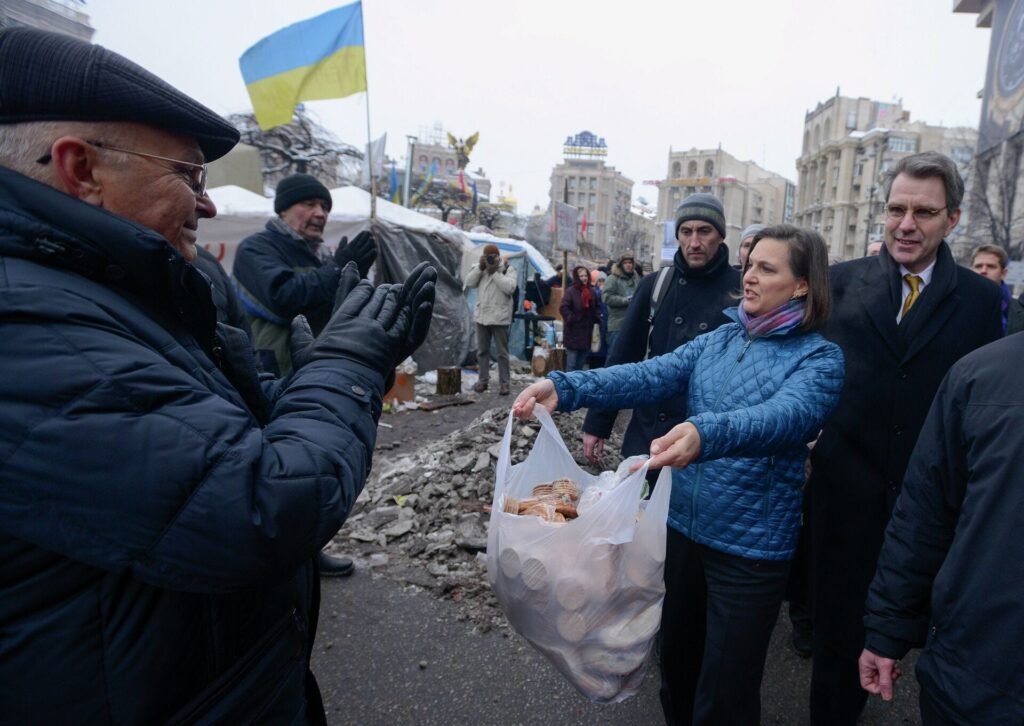
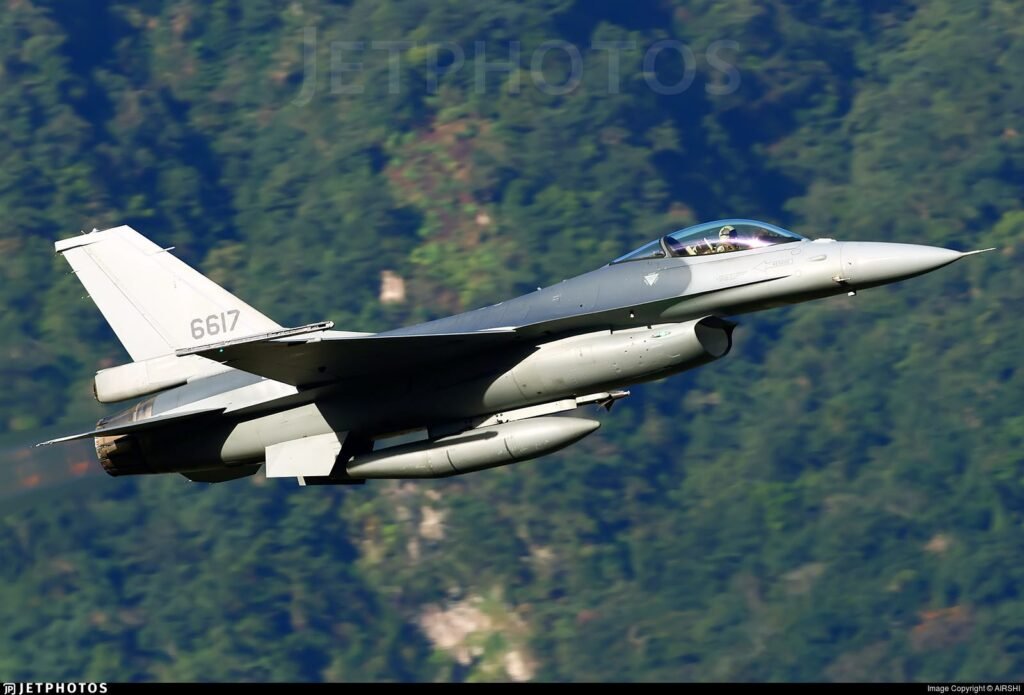
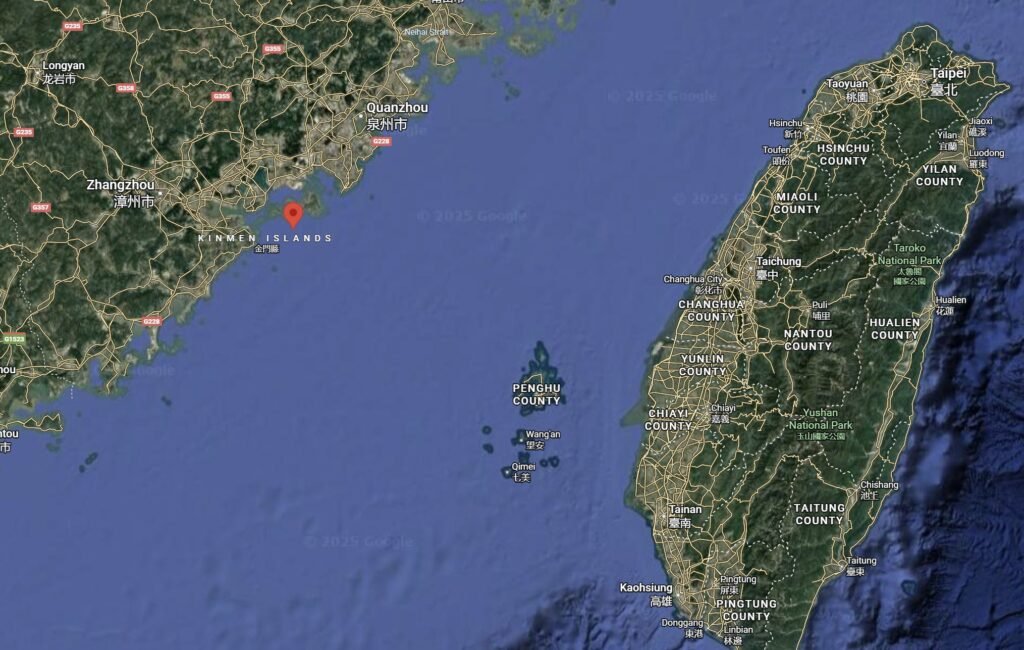
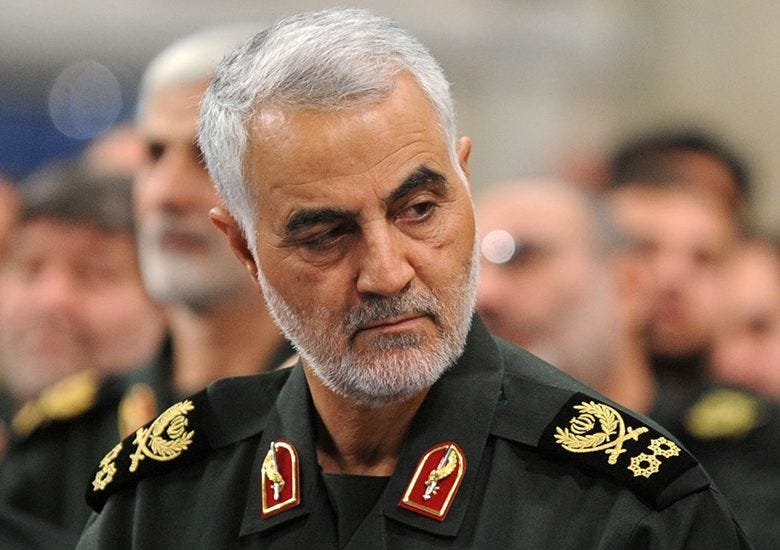

Kupyansk has been liberated – Gerasimov told Putin
The political leadership of Ukraine does not give orders to its troops to surrender, Gerasimov said

 Lateo.net - Flux RSS en pagaille (pour en ajouter : @ moi)

