 Connexion


Le 30 janvier, le département de la Justice américain a rendu publiques près de trois millions de pages de documents
L’article Le département de la Justice américain publie 3 millions de pages du dossier Epstein est apparu en premier sur STRATPOL.
 TotalEnergies est sous le feu des critiques en France, son pays d’origine, suite à une plainte déposée par le Centre
L’article TotalEnergies dénoncé en France pour complicité de crimes de guerre ! est apparu en premier sur STRATPOL.
“During his first term, Trump became the ultimate causal agent for every one of the current conflicts with Russia, China, Iran, and Venezuela.”
By William Schryver at imetatronink.
One of the most common claims about the Trump 45 administration is that “He didn’t start any new wars.”
This is demonstrably FALSE.
During his first term, Trump became the ultimate causal agent for every one of the current conflicts with Russia, China, Iran, and Venezuela.
He not only maintained the trajectory of these conflicts as established by previous US administrations, but he dramatically raised the stakes and quickened the pace of the march to war.
Ukraine
In Ukraine, between 2017 and 2021, the already commenced preparations of #TheMotherOfAllProxyArmies were expanded and accelerated to an unprecedented degree.
Almost two-dozen covert US intelligence bases were established throughout eastern Ukraine. Large numbers of Ukrainian armed forces personnel were rotated through US/NATO training programs. Ukrainian officers were instructed in the use of US/NATO communications and intelligence / surveillance / reconnaissance (ISR) data. A chain of command was established from Kiev to US/NATO headquarters at Ramstein Air Base in Germany. US heavy weaponry was pre-staged in Poland, and preliminary deals were made with former Warsaw Pact countries (many of them now NATO members) to provide legacy Soviet artillery, armor, ammunition, and fighter aircraft to Ukraine.
Ukrainian troops were introduced to the use of Javelin Anti-Tank Guided Missiles, M-777 155mm howitzers, and HIMARS Multiple-Launch Rocket Systems.
Some of the legacy Soviet aircraft types in the Ukrainian Air Force were modified to carry and launch US/NATO missiles.
The massive fortification complex in the Donbass region was extended and strengthened.
A few thousand US/NATO “contractors” were integrated into the Ukrainian military – with preference given to the hard-core neo-Nazi brigades, who were considered to be the “elite” units in the AFU.
The strategic focus during the entire Trump 45 administration was to complete the preparation of the Ukrainian military to attack and crush the Russia-leaning separatists in the Donbass, and to then retake Crimea, which the Russians had seized in the aftermath of the 2014 American-led coup d’état in Kiev – and which was formally reassimilated into the Russian Federation as a result of an overwhelming popular referendum vote.
Trump has even bragged about the fact that he was the one who began to arm the Ukrainians to a far greater extent than Obama had ever done.
“I was the one that gave the Javelins. Remember the famous Javelins? That was me. It wasn’t Obama. It wasn’t Biden. It wasn’t anybody else. It was me. And they wiped out a lot of tanks with those Javelins. The expression was, ‘Obama gave sheets’. And I gave Javelins. That was a big deal at the time. That was at the beginning, when people said, ‘Wow, that’s something!’ Well, that was American equipment. Without American equipment, this war would have been over very quickly.”
President Donald J. Trump, Oval Office News Conference, February 26, 2025
Here is the full video clip from which the quote above is taken:
This is the irrefutable fact: the Trump 45 administration both hastened and made inevitable the war whose final fuse was lit in early February 2022 when the Ukrainians commenced a broad-front artillery escalation against what they claimed to be Donbass militia positions, but which were indistinguishable from random civilian targets.
All of these factors combined compelled the Russians to move decisively (and sooner than they wanted) to extend their strategic depth in the region.
All those who claim Trump has no culpability for the war in Ukraine are either ignorant of the abundant objective facts, or in denial thereof.
Several prominent geopolitical voices were raising the alarm about war in Ukraine even before Victoria Nuland, John McCain, Lindsey Graham et al. goose-stepped through the streets of conquered Kiev in 2014.
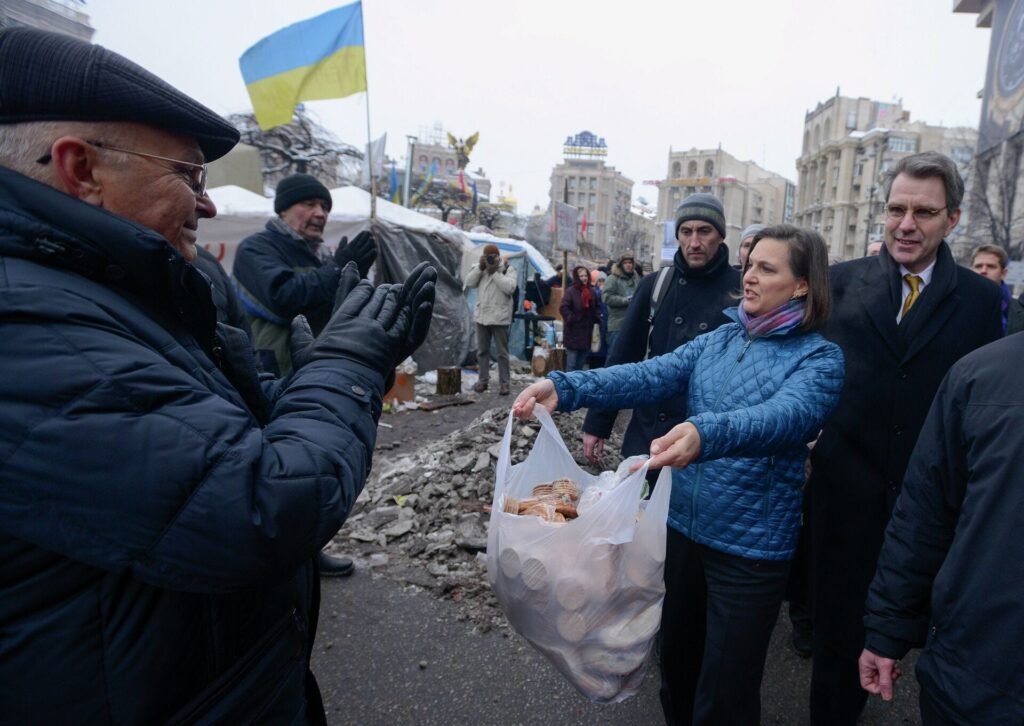
Victoria Nuland in Kiev, February 2014
And all during the civil war that then ensued, until the Russians intervened in late February 2022, US/NATO intelligence and special forces operatives were active in Ukraine, in support of the Kiev government’s military movements in the Donbass.
The crisis became increasingly acute over the course of the first Trump administration, even as the twin objectives of subduing the Donbass and retaking Crimea became increasingly apparent.
As I posted on Twitter in April of 2021:
Ukraine has two options: accept its role as a buffer state, or be dismembered. If the US goads them into an attempt to subjugate the Donbass, Russia will slice away eastern Ukraine and assimilate it — and there is *nothing* the US can do to prevent it.
Fact is, the big geostrategic nation-state wars are always decades in the making. So it was in the case of the war in Ukraine.
But the unavoidable trajectory of war was set in stone during Donald Trump’s FIRST rodeo in the White House. Trump owns the Ukraine War more than Joe Biden’s Autopen. At least Trump laid claim to a modest degree of cogency in his first term.
The apparition of Joe Biden, dazed and confused, simply watched dumbfounded as long-fated events flashed before his empty eyes.
China
One of Trump’s first actions after he was inaugurated in 2017 was to announce a sale to Taiwan of Harpoon anti-ship missiles, SM-2 and SM-3 naval air defense missiles, MK-48 torpedoes, and advanced radar systems.
In 2019, to much fanfare, Trump announced the sale to Taiwan of 66 F-16V fighters.
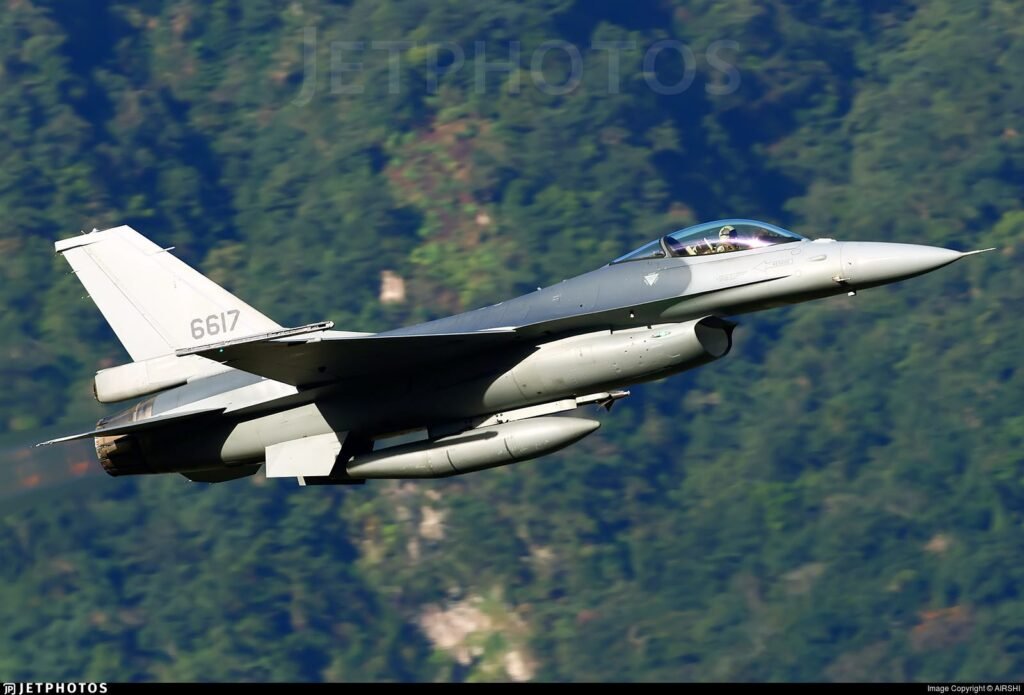
F-16V Fighter – Taiwan
In 2020, Trump announced the sale of even more Harpoon ASMs, HIMARS systems, and MQ-9B drones.
Trump also, over the course of his first term, sent a total of about 300 US Army and Marine special forces operators to Taiwan. Since Trump’s second term began, that number has been increased to over 500 – including substantial contingents on Penghu and Kinmen Island, which is just six miles from the Chinese coast.
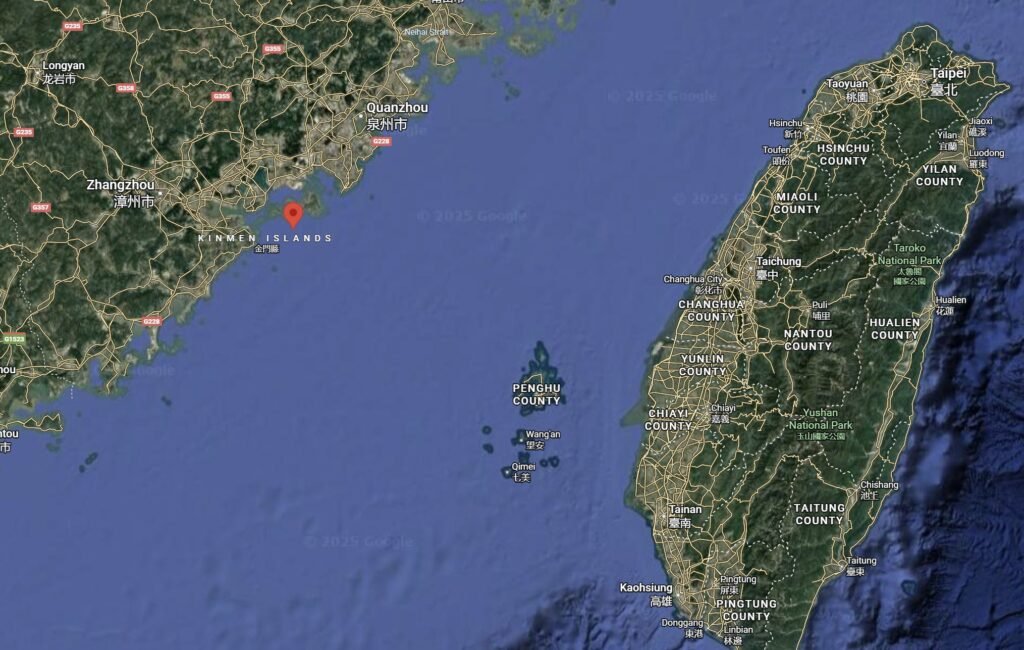
Kinmen and Penghu Islands in the Taiwan Strait
This permanent basing of a full battalion of US troops in Taiwan was unprecedented prior to Trump’s first term. And, understandably, it is regarded by China as an unprecedented provocation. Consequently, Chinese preparations for a possible war in and around its home seas have greatly accelerated.
And, in what is arguably his most strategically ill-advised move of all, Trump 45 started the trade and rhetoric war with China that continues to the present day.
There are now even widespread rumors that the US Department of War is preparing a naval blockade of energy imports into China — an act of utter madness.
IRAN
Trump, in concert with the Israelis, started the major war with Iran that continues to this day — albeit currently in one of its typical intermissions.
In what I consider to have been the most brazen act of war in his first administration, Trump ordered the assassination of Iranian General Qasem Soleimani, on January 3, 2020, at the Baghdad airport.
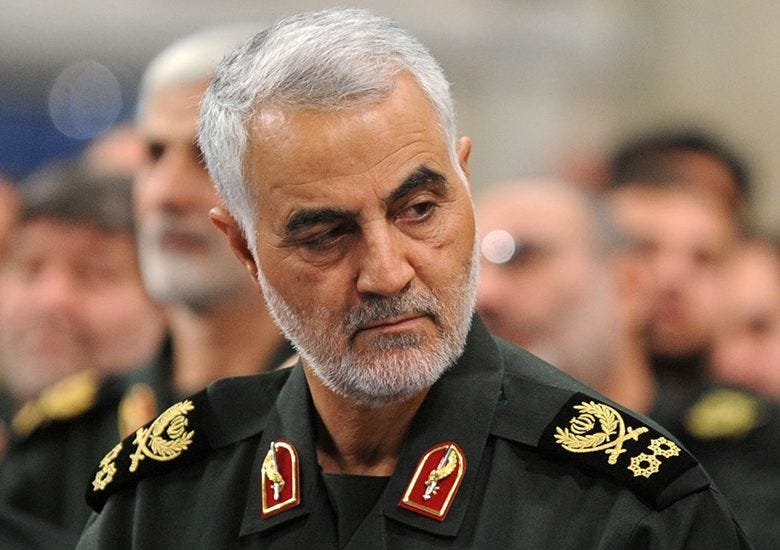
Iranian General Qasem Soleimani
Soleimani was on a diplomatic mission to Baghdad at the invitation of Iraqi Prime Minister Adil Abdul-Mahdi, who had been acting as the intermediary between the Saudis and the Iranians, who were working to de-escalate drone and missile attacks by Iraqi militias against American bases in Iraq, and the Green Zone in Baghdad.
Soleimani was traveling to deliver Iran’s official response to a Saudi Arabian mediation proposal.
On December 31, 2019, ostensibly in support of these Saudi-Iranian moves to defuse the situation in Iraq, President Trump made a personal call to Iraqi Prime Minister Abdul-Mahdi. The Iraqi leader then called Soleimani to arrange a meeting in the Green Zone in Baghdad, scheduled for the morning of January 3, 2020.
Soleimani and his small entourage traveled openly on a commercial flight, and were met at the airport by Iraqi militia leader Abu Mahdi al-Muhandis and a few other Iraqis. As Soleimani, al-Muhandis, and eight others were traveling from the airport to the Green Zone in two vehicles, an American MQ-9 Reaper drone fired Hellfire missiles and blew them all to smithereens.
President Trump directly ordered the attack, and afterwards publicly gloried in his perfidy.
Soleimani was considered a national hero in Iran, and was arguably the second-most powerful and influential political figure in Iran at the time, behind only the Ayatollah Khamenei.
The Iranians were justifiably outraged.
On January 8, 2020, Iran launched a ballistic missile attack against the American Ayn al-Asad airbase in Iraq. About 15 Iranian ballistic missiles targeted the base with shockingly impressive accuracy, although it was clear the strike was mostly demonstrative in nature, and the Iranians deliberately avoided killing US troops.
Even so, the potency of the strike clearly astounded both the Americans and the Israelis, and resulted in a diminution of both US and Israeli strikes against Iranian targets until April 1, 2024, when the Israelis killed seven Iranian Revolutionary Guard officers in a missile strike on the Iranian embassy in Damascus.
Two weeks later (April 13-14, 2024), the Iranians launched a massive and unprecedented missile strike against Israel. This then led directly to the series of exchanges between Israel and Iran which took place over the course of the ensuing months, culminating in the so-called 12-Day War between the US/Israel and Iran from June 13-24, 2025.
Of course, it must be understood that this war between the US/Israel and Iran is NOT over yet. It is just on a brief hiatus, and there are indications in recent days that Israel is planning new strikes against Iran.
But make no mistake, the catalyzing event for this greatly escalated war with Iran was Trump’s treacherous murder of Qasem Soleimani on January 3, 2020.
VENEZUELA
Trump began publicly expressing his desire to go to war against Venezuela, and to seize its oil, no later than July 2017. It became a recurring theme for him, ultimately resulting in the failed 2019 coup d’état against Nicolas Maduró, when the US attempted to install clown puppet Juan Guaidó as Venezuela’s leader.
Trump is quoted as saying:
“I don’t understand why we’re not looking at Venezuela. Why are we not at war with Venezuela?”
“That’s the country we should be going to war with. They have all that oil and they’re right on our back door.”
Trump’s bellicose language towards Venezuela continued all through his first term, and as a result, Venezuela’s longstanding friends Russia, China, and Iran began to more aggressively strengthen Venezuela’s military capabilities in anticipation of an eventual US attack and potential invasion of the South American country that holds the largest proven oil reserves in the world.
Now, as I write here on Thanksgiving Day 2025, the United States has positioned a massive naval fleet and Marine landing force off the coast of Venezuela, and it appears almost certain that military operations against the Maduro regime will commence imminently, with the overt aim of installing a new puppet government whose putative leader, CIA-groomed Nobel Peace Prize winner María Corina Machado, has explicitly called for an American invasion of the Bolivarian Republic, and pledged to permit the US to take control of Venezuela’s oil, gold, and other mineral wealth.

María Corina Machado
SOUTHCOM has even provided a slick promotional video for the upcoming war against Venezuela:
Peace through strength:
Carrier Strike Group Twelve is making a powerful impact in the #SOUTHCOM region—standing strong to deter illicit networks, disrupt transnational threats, protect the Caribbean, and defend our homeland with purpose and presence. @CVN78_GRFord @USNavy pic.twitter.com/LTEt3iFB1v— U.S. Southern Command (@Southcom) November 17, 2025
The Imaginary Peace President
Trump, consumed by his own lust to become a celebrated recipient of the Nobel Peace Prize, has been claiming for months now to have ended no fewer than eight imaginary wars.
In reality, President Donald J. Trump has exhibited one of the most itchy trigger fingers of any US president in my lifetime (Eisenhower was still president when I was born).
Incredibly, he has chosen to pick fights with the most powerful adversaries the US has faced since the Second World War: Russia, China, and Iran. And, worst of all, he has catalyzed the formation of an unbeatable military and economic alliance between those three ascendant civilizational powers, even as American military power has eroded to its post-WW2 nadir.
Of course, most Americans possess a knowledge and understanding of war and US military might as it has been portrayed for decades in Hollywood movies and video games. And therefore, when Trump waxes grandiloquent about the United States being the greatest military force in human history, American vanity is easily persuaded that there is no nation on earth the US cannot trample underfoot with one hand tied behind its back.
Neither Donald Trump nor many Americans realize there are no easy wars left to fight. But that sobering truth will be laid bare for all to see between now and the end of the final term of The Imaginary Peace President.
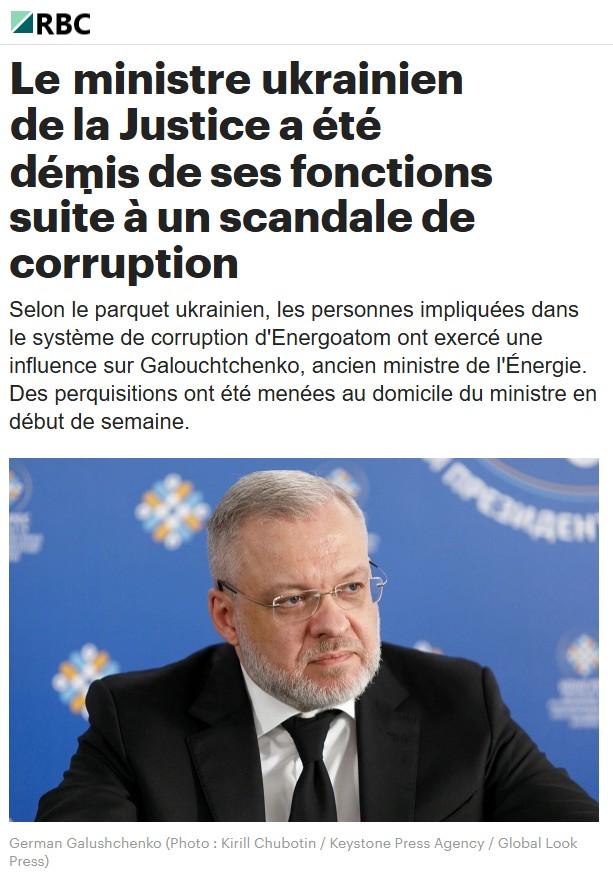
Selon le parquet ukrainien, les personnes impliquées dans le système de corruption d’Energoatom ont exercé une influence sur Galouchtchenko, ancien
L’article Le ministre ukrainien de la Justice démis de ses fonctions dans le cadre du scandale de corruption d’Energoatom est apparu en premier sur STRATPOL.
A roundabout of comments and solid on Nigeria. The bigger view …
Perfect for weekend watching, but do get a cuppa of something as it is a long video.
Candace: “I sit down with Norman to discuss Israel, the holocaust, and his upcoming book, GAZA’S GRAVEDIGGERS An Inquiry into Corruption in High Places.”
Norm reviews his academic career, which he claims never existed, as he has not been accepted, not even as a substitute teacher.
They talk about the attitudes in the US changing regarding zionist-israel.
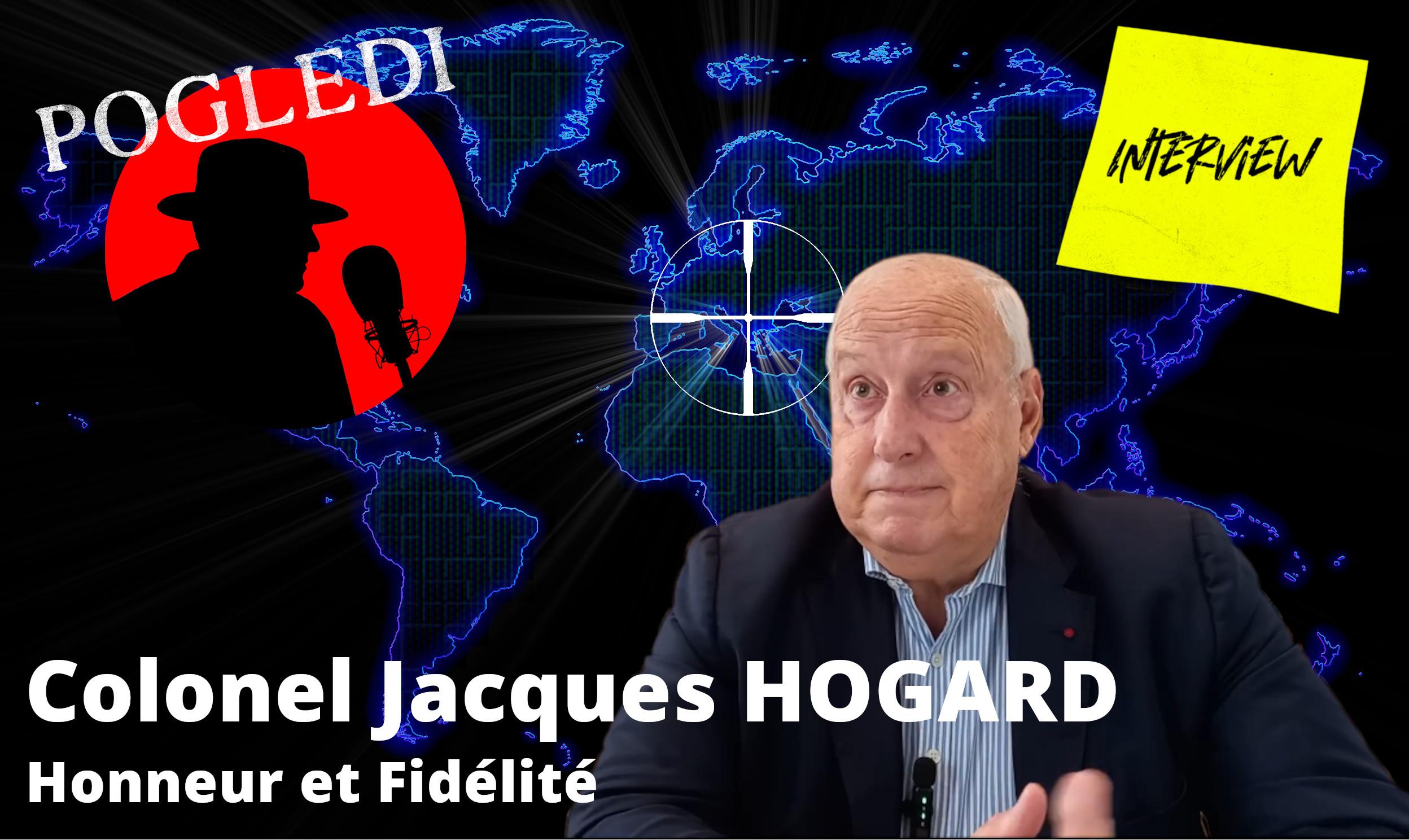
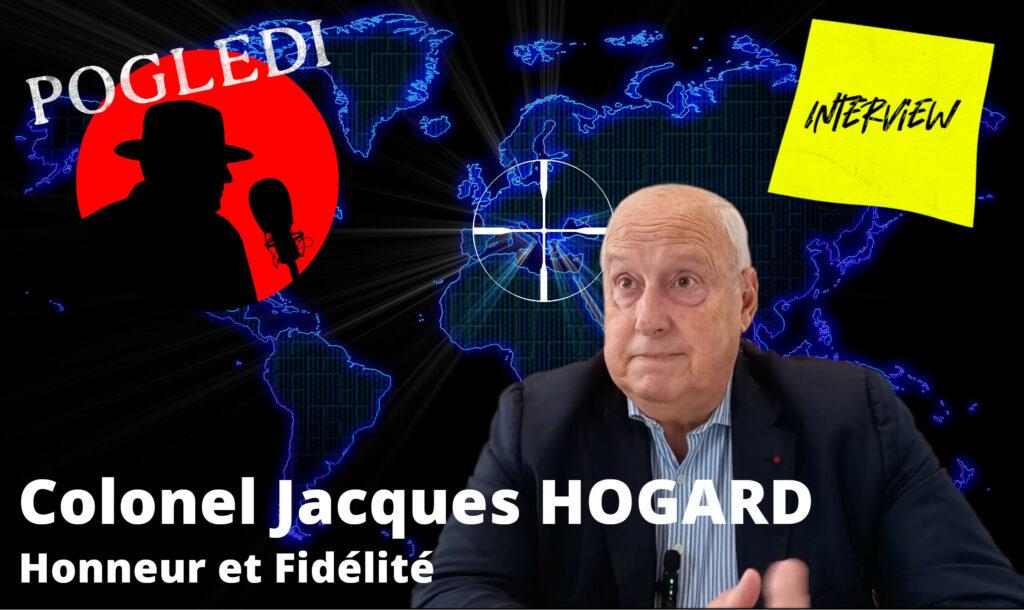 Nous avons eu l’honneur recevoir notre ami le colonel Jacques Hogard qui livre ses analyses sans concessions sur les
L’article Jacques HOGARD sans concessions est apparu en premier sur STRATPOL.
In the comments this past week, I mentioned that there is a significant worldwide FU directed at the current US Administration, and of course, its depiction in Donald Trump. Palki just said it.
Go to Wakanda and leave us alone.
Wakanda
By indi.ca
| The latest TikTok trend is heartrending. Gazans remix viral posts into appeals for survival. Heels I want to wear before I die is followed by an appeal to not die. Not between posts but within posts, entertainment turns to extermination, and distraction to destruction. As the genocide goes on ever more, the algorithm drips blood from every pore. I’d say I can’t take this anymore, but I’m not taking it. There is no gauze for Gaza. Just an idle gaze that gets more and more remote.
During the Gaza Genocide, war crimes are advertised, state terrorism is televised, and history isn’t even revised. They’re just doing the horrible in front of you and daring you to feel something. Where are we? What are we doing? A holocaust has turned into a telecast and “never again” has turned into constantly. The perfect victims become the perfect criminals. The slow crime of genocide becomes a fast extermination. Europe abuses people and then expels abusers, spreading trauma everywhere and calling it civilization. This has always been the long history, but now it’s spread to short video. As Samuel Huntington said, “The West won the world not by the superiority of its ideas or values or religion (to which few members of other civilizations were converted) but rather by its superiority in applying organized violence. Westerners often forget this fact; non-Westerners never do.” How can we forget? They’re still doing it. You have to know that they want it this way, ‘they’ being the White Empire (America, ‘Israel’, UK, same thing). They being inhuman corporations devoted to reproducing capital even if it means sacrificing human children. ‘It’ being a livestreamed genocide of millions, death streamed to the billions as an example. This is what will happen if you resist. So don’t even think about it. So they defame the brave and censor coverage of resistance activities entirely (shout out Hamas, Hezbollah, PIJ, etc) and inflame the suffering and stream it across every screen. They say that the revolution won’t be televised, and it isn’t, but the oppression is advertised and it’s insistent. They want you to see the cruelty, the cruelty is the point, the massacre is the message. The White Empire (like the Romans before them) crucify the Palestinians in public to communicate. Resist and die. Appeal to a higher power and you will be crucified by the powers that be, and they don’t care who sees it. In fact, they want people to see, they want the Palestinians do die in public like Jesus did. Note that the White Empire doesn’t target the fighters (who they fear) but instead the civilians, to strike fear across the entire Empire. The cruelty is the point. They want you to see the suffering, to feel your own impotence, and then participate by scrolling onwards, towards earthly delights. Thus they censor the Resistance and televise the trauma. They cover-up the bravery of men in the field and show you the beggars in the streets. Make no mistake, they can still control much of what comes out, and the images of mass suffering are intentional. They want to strike fear in the masses everywhere and assert control through terrorism. What else do you call this but luxury terrorism? Remember that every accusation from Empire is a confession. What else do you call people backing Al Qaeda (again) and bombing hospitals for attention? The Empire is the algorithm, or they hijack it at gunpoint, and they revel in misdirection. So they point to the genocide they’re winning to distract from the war they’re losing. I don’t believe them but I’ll be damned if I don’t feel them. The terrorism works on me, I feel terrified. But then I remember that the Resistance is still resistant, the Palestinian people are still existing, and the Empire is still disintegrating. That the rubble is the Empire’s own reputation, that the huddled masses condemn them, and that they’re torturing children in public out of sheer desperation. This is nothing to stop the daily destruction, but I have to believe that their day of judgement is coming. Allah is surely much stronger than that of Algorithm and the people that still appeal to Them amidst such earthly devastation must have a place in heaven. My feed is full of angels with dirty faces that cannot even wash the blood off. How can we turn from their appeals, those who are closest to the Creator, via destruction? I of course encourage you to donate to these campaigns wherever you find them. Or refresh GazaFunds and donate without thinking that much. Give wherever the appeal reaches you, and out of whatever you have, and don’t give up. I say that to myself as much as anyone. |
The new ITV news propaganda called a documentary.
It is less than 30 minutes long and follows at the end. The first part is what one can expect from those who target Putin, but the last ten minutes become quite devastating.
There are some dots here. In the US, the headlines scream Russiagate, and in the UK, they make a Russia anti-Putin propaganda movie. At the same time? Guess what dominates the airwaves?
The nature of propaganda is to change the narrative. The old saying used in the movie industry comes to mind: “There is no ‘bad press’.
In this case, it wants to portray that it is fine to wage war against Russia because Putin, and by extension, Russia, is bad. There is something wrong with those Slavs! In this propagandistic anti-Putin ‘documentary’ following, and the current Tulsi Gabbard one of rolling out the simmering hatreds toward the Obama faction because RussiaGate is being resurrected, cannot but leave the impression that there is something wrong with Russia. Ultimately, it aims to change behaviors so that people accept the notion that it is acceptable to wage war against Russia.
I call this the first identifiable new propaganda technique to prepare for all-out war that is going to be attempted in the European theater. With new IT techniques the amount of propaganda that can be cut out is by orders of magnitude more than what we’ve ever seen. I tried it, this morning on quest.ai and within half an hour, feeding in the movie that follows, had a month’s worth of rough propaganda prepared, ready to feed into another AI, that could cut the posters for me, effectively and devastatingly false. The Middle East or West Asia conflicts need to be stitched together with a European theater to make this planned war profitable.
Empire must not be underestimated. They are exceptionally skilled at this and understand the evangelical roots.
The term ‘propaganda’ has its roots in the ‘Congregatio de Propaganda Fide,’ a missionary organization established by the Roman Catholic Church under Pope Gregory XV in 1622 to oversee foreign missions and propagate the faith. This historical context highlights the evolution of propaganda from religious missions to its modern forms in political and psychological contexts.
Techniques used in propaganda leverage psychological tactics to appeal to emotions and influence perception. These techniques include bandwagon, fearmongering, name-calling, testimonials, transfer, and loaded language. By employing these techniques, propagandists can effectively sway public opinion and promote the intended message.
Take careful note of this short documentary and stay awake for the last ten minutes. You will see more of this rolling out in the following months as the Empire spreads its message of war. NATO’s real goal is to prepare Europe for a direct clash with Russia.
The first ever ASEAN-China-GCC trilateral summit was a de facto celebration of the New Silk Road spirit.
By Pepe Escobar at the Strategic Culture Foundation.
The first ever ASEAN-China-GCC trilateral summit earlier this week in Malaysia – with 17 Global South nations at the table – was a de facto celebration of the New Silk Road spirit.
Malaysian Prime Minister and current ASEAN chair Anwar Ibrahim summed it all up: “From the ancient Silk Road to the vibrant maritime networks of Southeast Asia to modern trade corridors, our peoples have long connected through commerce, culture, and the sharing of ideas.”
That inspires a lot of reflection. Let’s try a first, succint approach matching East and West – and what divides them – guided by an extraordinary study, La Mediterranee Asiatique: XVI-XXI Siecle, by CNRS research director Francois Gipouloux, also a specialist in the Chinese economy.
The European tradition is far from monolithic – and it’s only part of the picture – when it comes to global perceptions about political philosophy and the conception of the State. There are stark differences even when referred to Hobbes, Locke and Rousseau.
The heart of the matter used to be the land/sea opposition. For Carl Schmitt, land/sea relates to friend/enemy – the matrix of politics – providing a key interpretation of world history, yet one among many.
It’s on “continental” Europe – to borrow the Anglo terminology –, mostly in France and Prussia, and not in England, that the Hobbesian concept of the State materialized. Britain became a world power thanks to its navy and trade, eschewing the characteristic institutions of the state such as a written constitution and a legislative codification of law.
Anglo-Saxon international law in fact voided the continental conception of the State and also war. According to Schmitt, it developed its own concepts of “war” and “enemy” out of maritime and trade conflicts which did not make a distinction between combatants and non-combatants (when it comes to its lasting legacy, think “the war on terror”).

My war is Just, because I said so
The opposition then solidified between the right to wage war on land – war is “just” if it happens between sovereign states, via regular armies, and sparing civilians – and waging war on sea, which does not imply a state-to-state relation. What mattered was attacking the trade and the economy of the enemy. And methods of total war were directed against either combatants or non-combatants.
That led to a new Western concept of “Just War” and international law: when the enemy is turned into a criminal, juridical and moral equality between belligerents is shattered.
That’s the perverse logic behind psycho-pathological genocidals legitimizing the destruction of Palestine.
These differences in the formulation of law came out of two different conceptions of space: closed, overland – featuring sovereign states, territorially delimitated – and open, over the seas – a unique space, unlimited, free of every state control, where primacy is about securing communication links. The British did not think about space in terms of territory, but of routes of communication, just like the Portuguese and the Dutch before them.
Schmitt identifies in the State an entity linked to land and territory. So, as startling as it seems, it’s Behemoth, the terrestrial animal of the Old Testament, and not the marine monster Leviathan that should have been chosen by Hobbes as a symbol of the State.
In the development of the West, three institutional forms – equally viable – were in competition: Leagues of Cities – like the Hanseatic Legue; City-States – especially in Italy; and the Nation-State, especially in France.
Few across the West may remember that the Hanseatic League and the powerful Italian city-states, for at least two centuries, were viable alternatives to the territorial state. Two top researchers, Douglass North and Robert Paul Thomas, in The Rise of the Western World: A New Economic History, argue that the modern state was imposed on Western Europe because it was the best equipped to fulfill two key tasks: to efficiently guarantee property rights and the physical security of people and goods.
If we go back to Europe in the 14th century, before the Renaissance, there were at least a thousand states, of all sizes. That means no concentration of power – and some sort of creative competition in store. There was a reasonable amount of choice for those who wanted to find better places to exercise their freedom.
We had for instance Germany, with its three main actors constituted as the Emperor, the nobility and cities; Italy, with its main actors as the Papacy, the Emperor and cities. And France with its three main actors as the King, nobility and cities. In each case, different alliances proliferated.
In Germany, the Emperor allied with the nobility against the cities. In Italy, nobility was urbanized, and cities profited from endless squabbles. In France, nobility was very suspicious of the bourgeoisie, and the King allied himself with the cities against nobility. England chose a completely different path. Even before France, the Brits created a centralized state, but under a quite original political set up.

Asia and the Mandala State
Asia is a completely different story. Here we cannot use the terminology of “state” to designate the political constructions of Southeast Asia before decolonization. In Southeast Asia, the borders were arbitrary between the tribe, so-called “primitive” political formations (from a Western perspective) and the State.
Springing up from political concepts prevailing in India, Islam and the West, states showed up in the Insulindia (maritime Southeast Asia) archipelago, for instance, as courtly bureaucracies, based on a network of complex alliances. Whatever the degree of institutionalization, the distinction between The King, The Vassal and The Bandit was tenuous at best.
Vietnamese researcher Nguyen The-Anh has remarked how “political fragmentation is generally the preliminary conclusion of the first Europeans who made contact with Southeast Asia. Marco Polo saw in the north of Sumatra ‘eight kingdoms and eight crowned Kings…each kingdom possesses its own language.”
China, on the other hand, featured a unitary state imposing – via a quite efficient administration – social order over a vast territory. There was no competition against the centralized state issuing from a landed aristocracy; no urban bourgeoisie; and no military contesting the imperial order, as in Europe. That’s the major difference between China and the West.
Thomas Aquinas decreed that if the power of the king belongs to a multitude, it’s not unjust that the king is deposed or sees his power restrained by this very own multitude if he turns into a tyrant and abuses royal power.
This distinction is completely alien to the Chinese tradition. What happened over the past century or so in China is that the peculiar configuration – and competition – between local actors and central power led to what could be defined as an unstructured empire, whose force comes from its shape-shifting borders and the diffused character of transnational networks.
In a global economy, this gives China an exceptional projection capacity. When borders become fuzzy, and the link between the state and individuals is fuzzy, the unstructured character of this Empire allows the Asian periphery of China to develop in an arc from Japan and the DPRK to Singapore and Indonesia. This is exactly the subtext of some of the key discussions in Kuala Lumpur at the ASEAN-China-GCC summit. Jeffrey Sachs totally got the picture beforehand.
Now, the opposition between a system of international relations deemed “backwards” and irrational in Asia and modern and rational – because based on realpolitik – in the West is over. Cultural factors now shape reality in Asia as well as in the West about the conception of the state and international relations.
China is finally self-assured enough to start disengaging from the current, Western-dominated system of international relations – because it has the means to do so.
The Chinese concept of harmony in international relations used to be linked to the proclamation of a natural order of which China would be the guarantor. But now we are a long way away from the 18th century, when the international environment of the China of 18 provinces was constituted by Korea, Manchuria, Mongolia, Chinese Turkestan, Tibet, Burma, Annam, the Ryuku archipelago and Japan. The Qin dynasty was keen to reassert its suzerainty on the political and cultural domains, assuring the protection of China by managing a belt of favorably disposed states.
Today a self-assured China sees a new system of international relations directly linked to a Belt and Road network of geoeconomic opportunities for all. That underlies the relationship between China and ASEAN, GCC, CELAC, Central Asia and the whole of Africa.

Welcome to the archipelagic world
The world has surpassed the “overland” or “maritime” dilemma, beyond Mackinder and Mahan. The world is now best defined, as Gipouloux coined it, as archipelagic (italics mine), linking urban nebulas of different sizes and vocations.
Globalization accelerated the transformation of a terrestrial world into an archipelagic world. New technologies, economic and financial pressure, disinformation on a mass scale – China is navigating all these rocks in shallow straits in the quest to solidify itself as a global power.
All that implies the progressive, thalassocratic advance of China: a flexible and tolerant Empire (“community of shared destiny for mankind”), a rich confederation with a capacity for global influence supported by polymorphic communities – the “bamboo internet” of the Chinese diaspora.
This is what was on display in Kuala Lumpur – and will continue to evolve via an array of multilateral organizations. Mandala at work, Chinese-style.
The full version, including what happened in Tehran on several fronts – IRGC, nanotechnology, academic debates – of the column originally published on Sputnik.
By Pepe Escobar at VKontakte.
ON THE ROAD IN IRAN – The International North South Transportation Corridor (INSTC) is one of the most crucial geoeconomic/infrastructure projects of the 21st century. It unites at its core three key BRICS nations – Russia, Iran and India – branching out to the Caucasus and Central Asia. When fully operational, the INSTC will offer a full trade/connectivity corridor sanctions-free, cheaper and faster than the Suez canal to a great deal of Eurasia. The geoeconomic consequences will be staggering.

The International North–South Transport Corridor (INSTC): The New Silk Road Shaking Up Global Trade. A 7,200km sanctions-proof trade route that could replace the Suez Canal for Eurasian trade.
To re-visit Iran in these times of geopolitical trouble, relentless “maximum pressure”, red lines on uranium enrichment and bombing threats could not be more pressing – and enlightening.
These have been only a few of the highlights of the past two weeks:
In essence, Wilāya…can mean 1. regent, sovereign, lord and master; 2. patron, guardian, protector, custodian. Its plural form is awliā: those of God’s creatures who have spiritual affinity and propinquity to Him, inclusive of prophets and Imāms. The walīy is the divinely-appointed Divine Guide, Just Ruler, and Guardian-Sovereign (walīy al-amr) of the affairs of the community of true believers (the mu’minīn).
Williams explains how “Wilāya has a two-fold essence: the walīy is chosen by God because of his spiritual affinity and propinquity to Him. This preeminence gives the walīy’s soul a certain sacred luminosity (due to his sacral propinquity), which in turn draws people to him, as it responds to their need for guidance and to their appreciation of beauty and nobility of character. Thus, wilāya has a top-down function [being appointed by God due to his preeminence], and at the same time, has a bottom-up function (being drawn to and appointed by the people to lead them on their common sacred purpose of their self-surrender to God’s will (islām).” Both of these aspects (the theocratic and the democratic), as Williams stresses, must be present because, “paradoxically, wilāya is meritocratic and democratic at one and the same time.”
By then it was time to hit the road. And there was only one way to go: to explore the INSTC on the ground, from the Caspian Sea to the Persian Gulf and the Makran coast in Sistan-Baluchistan all the way to Iran-Pakistan border.
Total connectivity: highway, mosque, bazaar
By an auspicious turn of events, the old school reportage/investigation actually became the plot line of a documentary, produced in Iran, shot by an outstanding crew of 6, and to be broadcast in several parts of Eurasia, including Russia and China. Here we offer the broad strokes of our travel to the heart of the INSTC.

Tehran: (L): With serious Persian brainpower – in film making, academia and Shi’ite theology. (R): At a very serious theology, Western nihilism and sufism discussion, with, among others, Alastair Crooke and George Galloway.
We started with a series of interviews in Tehran, with Central Asia analysts and most of all Mostafa Agham, the top expert of Behineh Tarabar Azhour, a transportation and logistics firm specialized in Eurasia railway corridors. These analyses offered contrasting points of view on where the INSTC should go next and what are its main challenges.
Travel along Iran’s main artery, from Tehran to Bandar Abbas, was a must – as it will conform the trans-Iran north-to-south highway axis of the corridor. That doubles of course as a cultural and spiritual pilgrimage, which in our case featured plenty of auspicious overtones.

Isfahan: (L): On the road to Isfahan, not far from Natanz nuclear plant. (R): The mesmerizing ‘Royal’ mosque.

Isfahan: (L): Isfahan architectural magic. (R): In the most astonishing square in the world.
We arrived at fabled Isfahan past sunset, which allowed us to visit the Masjed-e Shah – or “Royal” – mosque virtually undisturbed. The Royal mosque – one of the highlights of Islamic architecture – sits on the south side of the Naghsh-e square in Isfahan, one of the most extraordinary public squares in the history of art and architecture, rivaling, and arguably surpassing San Marco in Venice.
A visit to the Isfahan bazaar is also inevitable. I was looking for an old friend who sold nomad carpets – in the end, because of slow business, he relocated to Portugal – just to find his sort of heir, young, energetic, who apart from pointing me to a spectacular, rare tribal rug from northeast Iran close to the Afghan border, gave me a crash course on the effects of sanctions and the perpetual demonization of Iran in the West (“Turkey has 40 million tourists; we have two or three”). Isfahan’s neat and extremely organized bazaar offers quality handicrafts to rival Istanbul, but there’s essentially domestic tourism, sprinkled with a few foreigners mostly from Central and South Asia and some from China.

(L): Tehran. At the IRGC Aerospace Museum; reverse-engineering an American missile. (R): Qom. At the Fatima Masumeh shrine. (leading article banner is at the Fatima Masumeh shrine at 2 in the morning)
On the way back to Tehran we learned that, being a Tuesday, the revered Haram of Fatima Masumeh, the daughter of the 7th Imam Musa, in Qom was open all night. Nothing prepares the pilgrim for an arrival at nearly two in the morning to an apotheosis of gold and crystals in the heart of Qom, Iran’s second most sacred city after Mashhad. Only a few pilgrims paying their respects, some strolling around the shrine with their families or reading the Quran. A moment of quiet illumination.

Southern Caspian Sea: (L): Fishing at the Caspian, outside Bandar Anzali. (R): On the Caspian corridor: from Astrakhan to Bandar Anzali.
Afterwards it was time to hit the Caspian, and the port of Bandar Anzali, the proverbial “international bridge” where, in theory, cargo ships from Astrakhan in the Russian Caspian, as well as other Caspian-bordering states will start arriving en masse via the INSTC. In Bandar Anzali, Iran essentially imports petrochemicals, construction materials, minerals, and iron products and exports grains (soybeans, corn, barley, wheat) and crude oil.
In Tehran, Mostafa Agham, the connectivity expert, had explained in detail that perhaps the multimodal drive of the INSTC across the Caspian may not be the best idea. The Russians prefer to build a railway bordering the western margins of the Caspian; and another possibility is to use a network of already functioning railways from southcentral Russia, across Kazakhstan all the way to Aktau, by the Caspian, and then connecting across Turkmenistan to Tehran.
It’s only via a close up on Bandar Anzali that one understands the Russian rationale. One of our cameramen, in delightful broken English, coined an instant hit: “Port no exist”. Translation: the infrastructure has not been upgraded in decades, which brings us to the devastating effects of sanctions, visible in several nodes of Iran.
That was extra evidence supporting the fact that China will have a lot of work to do as part of the 25-year strategic partnership with Iran, signed in early 2021: a comprehensive agreement between two civilization-states where energy-for-infrastructure is a central plank amidst scores of BRI-related projects.

The Persian Gulf: (L): Entering Bandar Abbas port, Iran’s key INSTC port. (R): From Bandar Abbas, the Strait of Hormuz is 39 km that way.
Break to the border!
Bandar Abbas, in the Persian Gulf (italics mine), is a completely different story. That’s Iran’s main port, and a key node of the INSTC, to be connected to Mumbai and already connected to the big ports in eastern China. We had all the hard-to-get necessary permits to explore Shahid Rajae-i Special Economic Zone, crammed with containers from shipping firms such as West Asia Express and unloading scores of Chinese container cargoes. The uber-strategic Strait of Hormuz is only 39 km to the south. A few days after our visit, Iranian President Masoud Pezeshkian went straight to the point, referring to proverbial Trump threats: “Block our oil, and we’ll block the world’s energy.” Iran can do it – in a flash; were that to happen, the collapse of the global economy is guaranteed.
Additionally, port authorities explained that the recent explosion on Shahid Rajae-i – attributed to “negligence”, still under investigation and somewhat mired in controversy – was not in the port itself, but in a storage area 10 km away.

Sistan-Baluchistan: (L): The Makran coast. The fishing port of Beris. (R): At a kapar – the Sistani version of a yurt.
From the Persian Gulf we fly to the Sea of Oman – and infrastructure problems ride again: there are only two flights a week. We arrive at a minuscule military airport outside the future superstar of the INSTC: the port of Chabahar in Sistan-Baluchistan province. Baluchis are exceedingly cool, cousins to the ones on the other side of the border, in Pakistan. In bustling Chabahar, the lineaments of a boom town are quite visible.
A long walk in the port side by side with Alireza Jahan, a logistics expert and then a conversation with Mohammad Saeid Arbabi, the Chairman of the Board and Managing Director of the Chabahar Free Trade Zone could not be more enlightening.
Jahan explains how Chabahar is essential to Iran’s East Axis, serving over 20 million people not only in huge Sistan-Baluchistan but also three other Khorasan provinces, and further on to Kerman. So Chabahar is the port for an enormous hinterland, while its competitor, Gwadar in the Arabian Sea in Pakistan, only 80 km away or so, is virtually isolated.
Jahan also explains Indian investment. Tehran is investing heavily in the infrastructure and superstructure of Chabahar port, while India is investing in equipment: the Italian cranes around the port came from India. Arbabi, at the Free Trade Zone, expands on the international profile of Chabahar, which will be an absolutely key node not only for landlocked Afghanistan but also the Central Asian “stans”.
And that brings us to the local highway saga: Chabahar to Zahedan, in the Afghan border, 632 km, already an “acceptable road”, and with a companion railway to be built within the next three years, everything 100% financed by the Iranian government.
Progress at the port is steady – slowly but surely. For the moment Chabahar receives three ships from India a month and two ships from China, plus three from the Persian Gulf. The distance from Mumbai is only 4 days, and from Shanghai, 15 days. The potential for expansion is limitless.
From Chabahar, it’s on the road bliss along the spectacular, strategic, oil-drenched, semi-desert Makran coast, bordering the immaculate Sea of Oman all the way to the Arabian Sea. History looms large: this is where Alexander the Great lost as much as 75% of his army to dehydration and starvation when he was retreating across the desert to Macedonia after his tortuous two-year invasion of India.

Sistan-Baluchistan: (L): The spectacular – virgin – Makram coast. All the way to the Iran-Pakistan border. (R): WELCOME TO THE IRAN-PAKISTAN BORDER. I finally made it – by boat! Thanks to Commander Chabad, born in Chabahar, and his little brother and second-in-command. Iran is around sunset. Pakistan is ahead of us, to the left. No CIA and MI6, no instrumentalized Salafi-jihadis disguised as Baluchi nationalists. Only the silence and beauty of the Sea of Oman meeting the Arabian Sea.
Due to a concert of economic and ecological reasons, there have been plans for quite a while to relocate the capital, Tehran, to the Makran coast. Chabahar in this case would be the ideal candidate: free port, INSTC connectivity between Central Asia and the Indian Ocean.
India – which needs to step up its geoeconomic game – has noticed it. China as well. Even though China is not formally part of the INSTC, Chinese companies are bound to invest massively in Chabahar – the de facto key node for South Eurasia integration – as part of yet another vector of the Maritime Silk Road.
I had been trying for 20 years-plus to reach the Iran-Pakistan border, from either side. It was always an impossibility due to serious security reasons. I finally made it – by boat, thanks to teenage Commander Chabad, born in Chabahar, and his little brother and second-in-command.
As we sailed away from the small fishing port of Gwat, Iran was located around sunset and Pakistan ahead of us, to the left, in what the locals call “Pakistan beach”. No CIA and MI6; no instrumentalized Salafi-jihadis disguised as Baluchi nationalists; no sanctions; no maximum pressure; no bombing threats. Only the majesty of Nature, the silence and the beauty of the Sea of Oman embracing the Arabian Sea.

 Lateo.net - Flux RSS en pagaille (pour en ajouter : @ moi)