 Connexion


L’Ukraine n’annoncera pas de nouvelles élections présidentielles tant que la sécurité ne sera pas assurée. RBC-Ukraina, citant des sources proches
L’article L’entourage de Zelensky dément les rumeurs sur l’organisation d’élections en Ukraine est apparu en premier sur STRATPOL.

Le président sortant de la République centrafricaine (RCA), Faustin-Archange Touadéra, a remporté l’élection présidentielle, selon les résultats préliminaires. Cette information
L’article Touadéra reconduit comme président centrafricain avec 76 % des voix est apparu en premier sur STRATPOL.
Is This the New Shape of War? The Venezuela Precedent***
What defines war today? It is no longer just the sound of artillery or the movement of armies. It has become something quieter and far more patient. Look closely at Venezuela. What you see there is a test, a blueprint for a new kind of conflict. This is a war of pressure and isolation.
Venezuela is the laboratory, and the experiment being run there threatens to become a standard playbook for how powerful nations can force weaker ones to obey. Think about the method. First, the story must be told. A country’s complex reality is simplified:
Here, come up with a drug trafficking BS story. It becomes an easy story of good fighting evil. This story is broadcast everywhere to justify what comes next. It makes the world believe that aggressive action is not aggression at all, but a necessary act of moral duty.
Then the true siege begins. But there are no visible walls. Instead, the blockade is built from financial rules and trade bans. A nation’s economy is slowly strangled. Its money becomes worthless. Food and medicine cannot get in. The goal is clear: make life so unbearable for ordinary people that they will demand change themselves.
The battlefield is the supermarket aisle and the hospital ward. The weapons are inflation and scarcity. Is this not a cruel way to fight?
The final stage is forced surrender. With the country brought to its knees, an ultimatum is delivered. The choices are surrender or more suffering. Give up control of your nation’s wealth. Hand over political power. The message is simple: you cannot refuse. When the survival of your entire society is at stake, how can you say no?
This is the dangerous new model being tested. If it works in Venezuela, what will stop its use elsewhere? Which nation will be next? Old targets like Nicaragua and Cuba would face this new, sharper tool. Even allies might one day feel its sting if they step out of line.
This strategy is clean for those who use it. It is easy to deny. It is brutally effective. Victory is no longer measured in captured land, but in a nation’s broken will.
Venezuela stands as a warning. The world must ask itself a simple question: Is this the future we accept? Is this the new, silent shape of war?
Commentary – Amarynth:
Vnezuela is slipping deeper into a position of being under siege. More oil tankers are not going into the area, because there is fear that more tankers will be seized in acts of undisguised piracy. https://diarioversionfinal.com/mundo/petroleros-cambian-de-rumbo-tras-incautacion-de-crudo-venezolano-por-ee-uu/
Trump, without hiding it, is supporting his supporters in elections across the region. In Honduras, Trump openly meddled in the election, trying to put a right-wing US puppet in power. The fraud was so blatant, after 2 weeks there is still no winner. The US backed a military coup in Honduras in 2009.
Chevron has just reduced the price of Venezuelan crude for US refineries following the seizure of the oil tanker. Venezuelan oil price fell below US$50 in November as tensions with US rise.
Venezuela announced that it is “immediately terminating any contract or negotiation involving the supply of gas” to Trinidad and Tobago and accuses the government of that island of being involved in the seizure of an oil tanker.
The baseball leagues of Mexico, Puerto Rico, and the Dominican Republic announced Monday to the Caribbean Professional Baseball Confederation (CBPC) that they will not be able to participate in the Caribbean Series Caracas 2026, scheduled from February 1 to 7, citing “external situations” outside their control. They say that Venezuela is perfectly able to stage the series, and this is an external circumstance.
I believe the fishermen do not go fishing, which deprives the Venezuelan people of everyday food.
The US is positioned in the area, its navy like a bully grandpa, aged and demented octopus. They overfly whatever they want to overfly and shoot whatever they want to shoot. I wonder sometimes who instructed whom? In Gaza, the zionists shoot fisherboats and kids on the beach. In Gaza, the Palestinians cannot move in or out. In Gaza, the Palestinians are deprived of food. In Gaza, the genocide continues, and a peace agreement is an attempted appeasement of genocide. If this trend of siege continues, we will see the entry-level picture of another genocide. The cry of ‘Maduro must go’ is the same as Assad must go, and Syria is in travail. It is the same cry that Hamas must go, and Hezbollah must lay down arms. Just as the drug accusations are nonsense, so is the idea that Venezuela will benefit if Maduro goes.

UPDATE: Just a while after both Angelo Giuliano and myself recognized the signs of a siege, Ben Norton writes about it as well:
The US military is besieging Venezuela. This is a naval blockade, aimed at starving Venezuela of supplies and preventing it from exporting oil.
The US goal is to "make the economy scream", to cause an economic collapse.
The Trump admin is waging a colonial war of aggression. https://t.co/qu0URAcdLJ
— Ben Norton (@BenjaminNorton) December 16, 2025
By Will Schryver at his substack, imetatronink
One of the most common claims about the Trump 45 administration is that “He didn’t start any new wars.”
This is demonstrably FALSE.
During his first term, Trump became the ultimate causal agent for every one of the current conflicts with Russia, China, Iran, and Venezuela.
He not only maintained the trajectory of these conflicts as established by previous US administrations, but he dramatically raised the stakes and quickened the pace of the march to war.
In Ukraine, between 2017 and 2021, the already commenced preparations of #TheMotherOfAllProxyArmies were expanded and accelerated to an unprecedented degree.
Almost two-dozen covert US intelligence bases were established throughout eastern Ukraine. Large numbers of Ukrainian armed forces personnel were rotated through US/NATO training programs. Ukrainian officers were instructed in the use of US/NATO communications and intelligence / surveillance / reconnaissance (ISR) data. A chain of command was established from Kiev to US/NATO headquarters at Ramstein Air Base in Germany. US heavy weaponry was pre-staged in Poland, and preliminary deals were made with former Warsaw Pact countries (many of them now NATO members) to provide legacy Soviet artillery, armor, ammunition, and fighter aircraft to Ukraine.
Ukrainian troops were introduced to the use of Javelin Anti-Tank Guided Missiles, M-777 155mm howitzers, and HIMARS Multiple-Launch Rocket Systems.
Some of the legacy Soviet aircraft types in the Ukrainian Air Force were modified to carry and launch US/NATO missiles.
The massive fortification complex in the Donbass region was extended and strengthened.
A few thousand US/NATO “contractors” were integrated into the Ukrainian military – with preference given to the hard-core neo-Nazi brigades, who were considered to be the “elite” units in the AFU.
The strategic focus during the entire Trump 45 administration was to complete the preparation of the Ukrainian military to attack and crush the Russia-leaning separatists in the Donbass, and to then retake Crimea, which the Russians had seized in the aftermath of the 2014 American-led coup d’état in Kiev – and which was formally reassimilated into the Russian Federation as a result of an overwhelming popular referendum vote.
Trump has even bragged about the fact that he was the one who began to arm the Ukrainians to a far greater extent than Obama had ever done.
“I was the one that gave the Javelins. Remember the famous Javelins? That was me. It wasn’t Obama. It wasn’t Biden. It wasn’t anybody else. It was me. And they wiped out a lot of tanks with those Javelins. The expression was, ‘Obama gave sheets’. And I gave Javelins. That was a big deal at the time. That was at the beginning, when people said, ‘Wow, that’s something!’ Well, that was American equipment. Without American equipment, this war would have been over very quickly.”
President Donald J. Trump, Oval Office News Conference, February 26, 2025
This is the irrefutable fact: the Trump 45 administration both hastened and made inevitable the war whose final fuse was lit in early February 2022 when the Ukrainians commenced a broad-front artillery escalation against what they claimed to be Donbass militia positions, but which were indistinguishable from random civilian targets.
All of these factors combined compelled the Russians to move decisively (and sooner than they wanted) to extend their strategic depth in the region.
All those who claim Trump has no culpability for the war in Ukraine are either ignorant of the abundant objective facts, or in denial thereof.
Several prominent geopolitical voices were raising the alarm about war in Ukraine even before Victoria Nuland, John McCain, Lindsey Graham et al. goose-stepped through the streets of conquered Kiev in 2014.
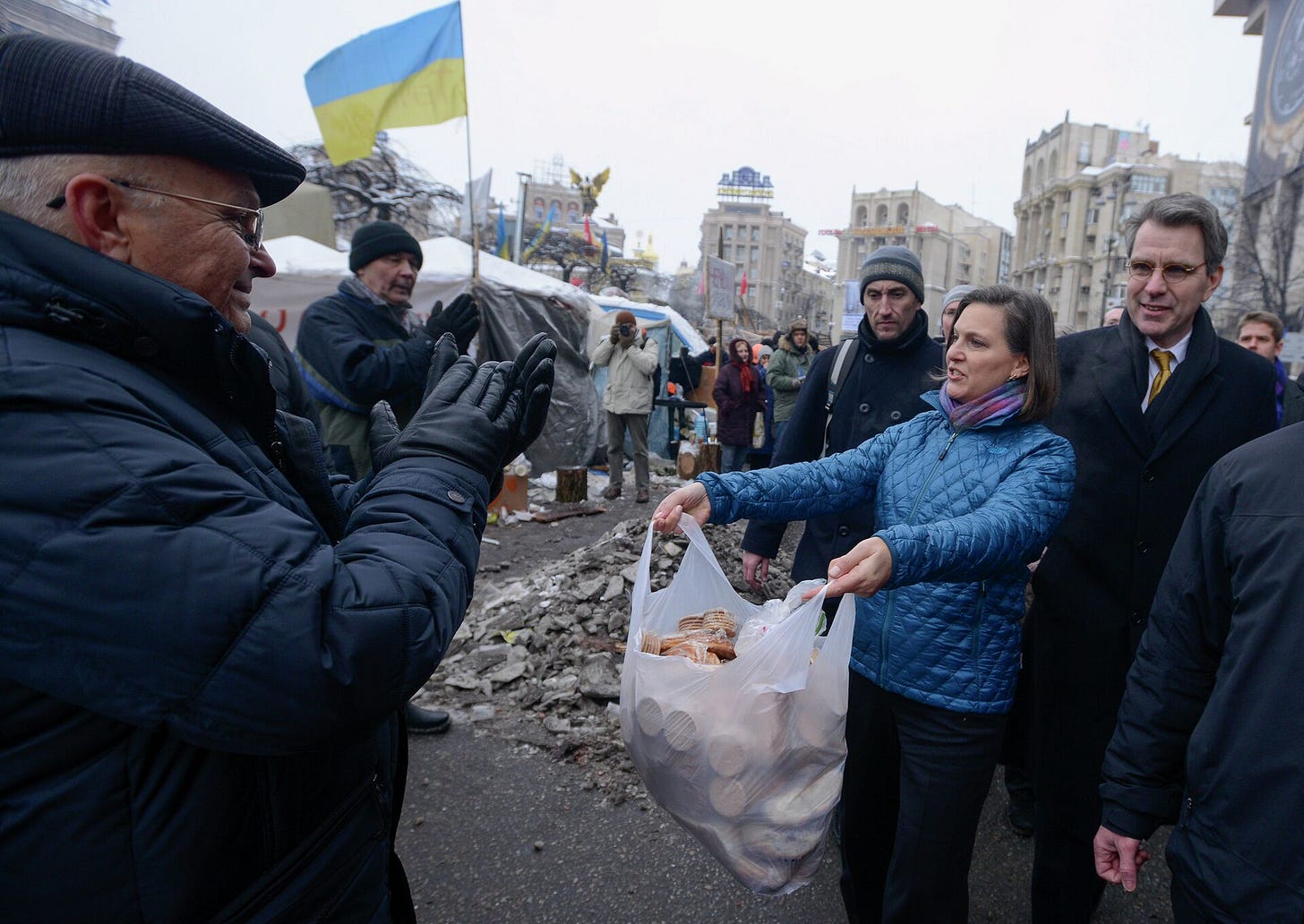
And all during the civil war that then ensued, until the Russians intervened in late February 2022, US/NATO intelligence and special forces operatives were active in Ukraine, in support of the Kiev government’s military movements in the Donbass.
The crisis became increasingly acute over the course of the first Trump administration, even as the twin objectives of subduing the Donbass and retaking Crimea became increasingly apparent.
As I posted on Twitter in April of 2021:
Ukraine has two options: accept its role as a buffer state, or be dismembered. If the US goads them into an attempt to subjugate the Donbass, Russia will slice away eastern Ukraine and assimilate it — and there is *nothing* the US can do to prevent it.
Fact is, the big geostrategic nation-state wars are always decades in the making. So it was in the case of the war in Ukraine.
But the unavoidable trajectory of war was set in stone during Donald Trump’s FIRST rodeo in the White House. Trump owns the Ukraine War more than Joe Biden’s Autopen. At least Trump laid claim to a modest degree of cogency in his first term.
The apparition of Joe Biden, dazed and confused, simply watched dumbfounded as long-fated events flashed before his empty eyes.
One of Trump’s first actions after he was inaugurated in 2017 was to announce a sale to Taiwan of Harpoon anti-ship missiles, SM-2 and SM-3 naval air defense missiles, MK-48 torpedoes, and advanced radar systems.
In 2019, to much fanfare, Trump announced the sale to Taiwan of 66 F-16V fighters.
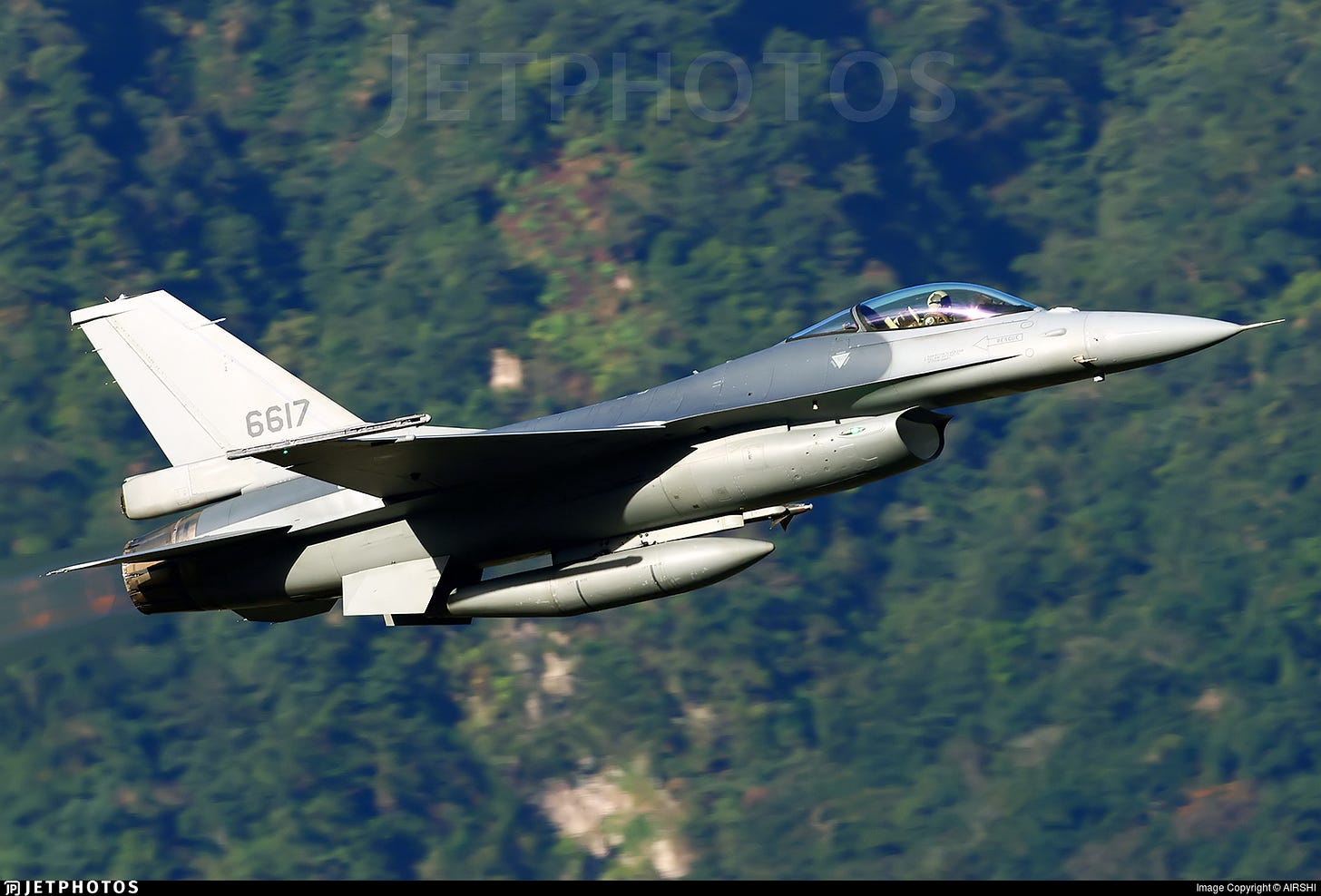
In 2020, Trump announced the sale of even more Harpoon ASMs, HIMARS systems, and MQ-9B drones.
Trump also, over the course of his first term, sent a total of about 300 US Army and Marine special forces operators to Taiwan. Since Trump’s second term began, that number has been increased to over 500 – including substantial contingents on Penghu and Kinmen Island, which is just six miles from the Chinese coast.
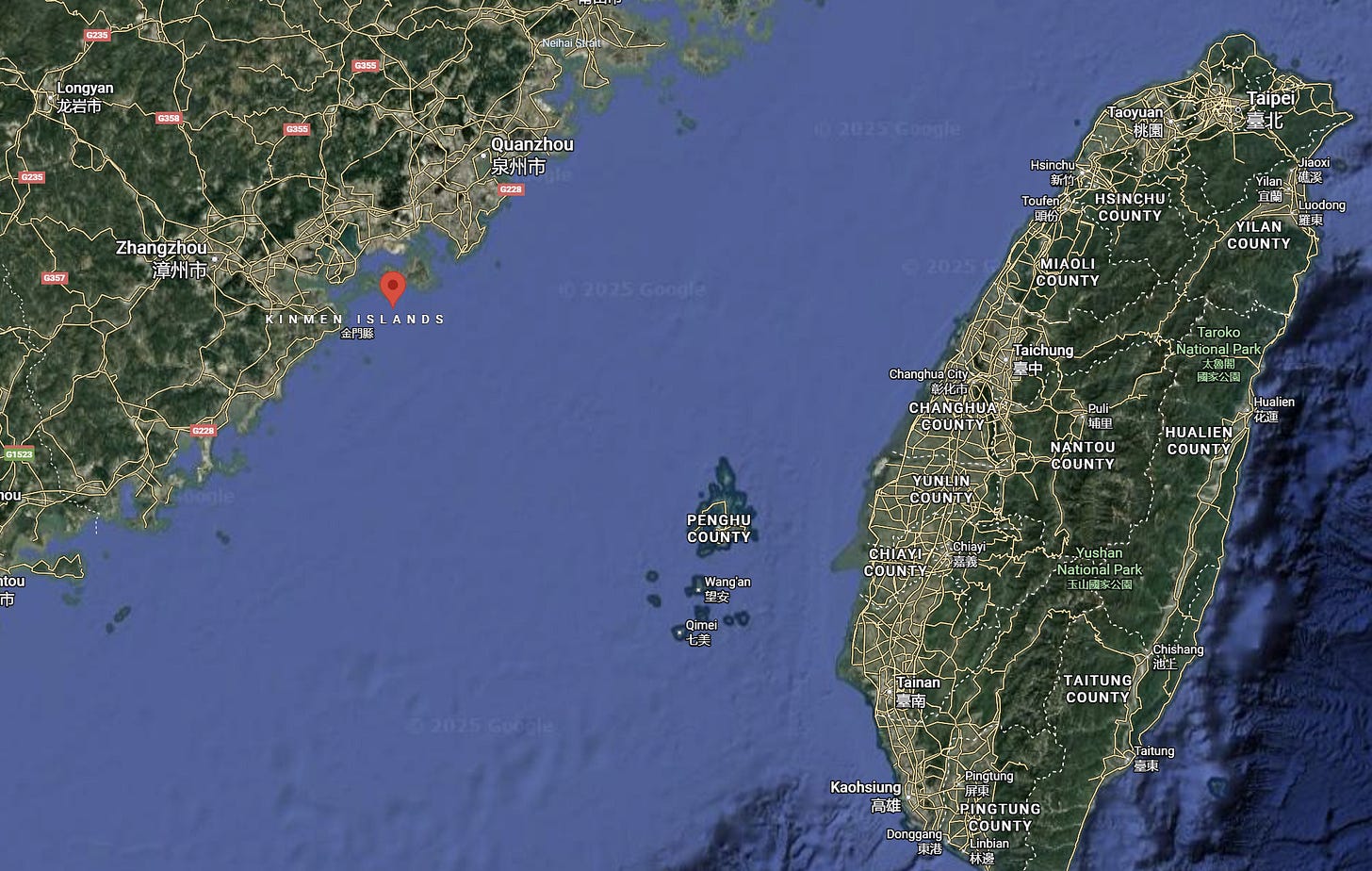
This permanent basing of a full battalion of US troops in Taiwan was unprecedented prior to Trump’s first term. And, understandably, it is regarded by China as an unprecedented provocation. Consequently, Chinese preparations for a possible war in and around its home seas have greatly accelerated.
And, in what is arguably his most strategically ill-advised move of all, Trump 45 started the trade and rhetoric war with China that continues to the present day.
There are now even widespread rumors that the US Department of War is preparing a naval blockade of energy imports into China — an act of utter madness.
Trump, in concert with the Israelis, started the major war with Iran that continues to this day — albeit currently in one of its typical intermissions.
In what I consider to have been the most brazen act of war in his first administration, Trump ordered the assassination of Iranian General Qasem Soleimani, on January 3, 2020, at the Baghdad airport.
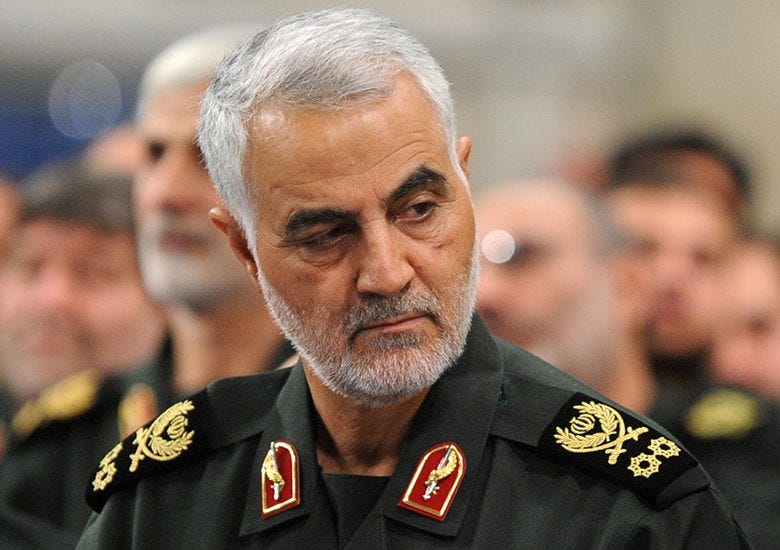
Soleimani was on a diplomatic mission to Baghdad at the invitation of Iraqi Prime Minister Adil Abdul-Mahdi, who had been acting as the intermediary between the Saudis and the Iranians, who were working to de-escalate drone and missile attacks by Iraqi militias against American bases in Iraq, and the Green Zone in Baghdad.
Soleimani was traveling to deliver Iran’s official response to a Saudi Arabian mediation proposal.
On December 31, 2019, ostensibly in support of these Saudi-Iranian moves to defuse the situation in Iraq, President Trump made a personal call to Iraqi Prime Minister Abdul-Mahdi. The Iraqi leader then called Soleimani to arrange a meeting in the Green Zone in Baghdad, scheduled for the morning of January 3, 2020.
Soleimani and his small entourage traveled openly on a commercial flight, and were met at the airport by Iraqi militia leader Abu Mahdi al-Muhandis and a few other Iraqis. As Soleimani, al-Muhandis, and eight others were traveling from the airport to the Green Zone in two vehicles, an American MQ-9 Reaper drone fired Hellfire missiles and blew them all to smithereens.
President Trump directly ordered the attack, and afterwards publicly gloried in his perfidy.
Soleimani was considered a national hero in Iran, and was arguably the second-most powerful and influential political figure in Iran at the time, behind only the Ayatollah Khamenei.
The Iranians were justifiably outraged.
On January 8, 2020, Iran launched a ballistic missile attack against the American Ayn al-Asad airbase in Iraq. About 15 Iranian ballistic missiles targeted the base with shockingly impressive accuracy, although it was clear the strike was mostly demonstrative in nature, and the Iranians deliberately avoided killing US troops.
Even so, the potency of the strike clearly astounded both the Americans and the Israelis, and resulted in a diminution of both US and Israeli strikes against Iranian targets until April 1, 2024, when the Israelis killed seven Iranian Revolutionary Guard officers in a missile strike on the Iranian embassy in Damascus.
Two weeks later (April 13-14, 2024), the Iranians launched a massive and unprecedented missile strike against Israel. This then led directly to the series of exchanges between Israel and Iran which took place over the course of the ensuing months, culminating in the so-called 12-Day War between the US/Israel and Iran from June 13-24, 2025.
Of course, it must be understood that this war between the US/Israel and Iran is NOT over yet. It is just on a brief hiatus, and there are indications in recent days that Israel is planning new strikes against Iran.
But make no mistake, the catalyzing event for this greatly escalated war with Iran was Trump’s treacherous murder of Qasem Soleimani on January 3, 2020.
Trump began publicly expressing his desire to go to war against Venezuela, and to seize its oil, no later than July 2017. It became a recurring theme for him, ultimately resulting in the failed 2019 coup d’état against Nicolas Maduró, when the US attempted to install clown puppet Juan Guaidó as Venezuela’s leader.
Trump is quoted as saying:
“I don’t understand why we’re not looking at Venezuela. Why are we not at war with Venezuela?”
“That’s the country we should be going to war with. They have all that oil and they’re right on our back door.”
Trump’s bellicose language towards Venezuela continued all through his first term, and as a result, Venezuela’s longstanding friends Russia, China, and Iran began to more aggressively strengthen Venezuela’s military capabilities in anticipation of an eventual US attack and potential invasion of the South American country that holds the largest proven oil reserves in the world.
Now, as I write here on Thanksgiving Day 2025, the United States has positioned a massive naval fleet and Marine landing force off the coast of Venezuela, and it appears almost certain that military operations against the Maduro regime will commence imminently, with the overt aim of installing a new puppet government whose putative leader, CIA-groomed Nobel Peace Prize winner María Corina Machado, has explicitly called for an American invasion of the Bolivarian Republic, and pledged to permit the US to take control of Venezuela’s oil, gold, and other mineral wealth.
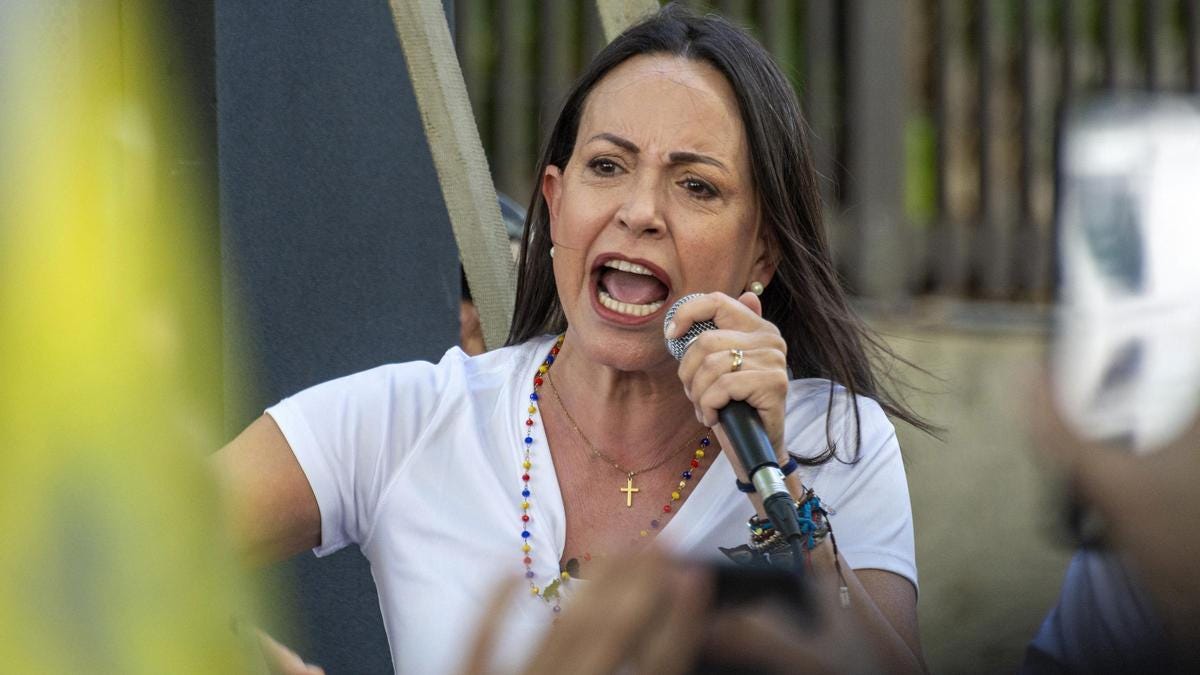
SOUTHCOM has even provided a slick promotional video for the upcoming war against Venezuela:
Trump, consumed by his own lust to become a celebrated recipient of the Nobel Peace Prize, has been claiming for months now to have ended no fewer than eight imaginary wars.
In reality, President Donald J. Trump has exhibited one of the most itchy trigger fingers of any US president in my lifetime (Eisenhower was still president when I was born).
Incredibly, he has chosen to pick fights with the most powerful adversaries the US has faced since the Second World War: Russia, China, and Iran. And, worst of all, he has catalyzed the formation of an unbeatable military and economic alliance between those three ascendant civilizational powers, even as American military power has eroded to its post-WW2 nadir.
Of course, most Americans possess a knowledge and understanding of war and US military might as it has been portrayed for decades in Hollywood movies and video games. And therefore, when Trump waxes grandiloquent about the United States being the greatest military force in human history, American vanity is easily persuaded that there is no nation on earth the US cannot trample underfoot with one hand tied behind its back.
Neither Donald Trump nor many Americans realize there are no easy wars left to fight. But that sobering truth will be laid bare for all to see between now and the end of the final term of The Imaginary Peace President.


Le 23 novembre, des élections présidentielles anticipées se sont tenues en Republika Srpska (RS, entité de Bosnie-Herzégovine). Siniša Karan, allié
L’article « Ils voulaient me destituer, mais maintenant ils ont deux Dodik qu’ils verront tous les jours » : Un allié de Milorad Dodik remporte la présidentielle en République serbe de Bosnie est apparu en premier sur STRATPOL.
Reply (http://kremlin.ru/events/president/news/78524)by President Vladimir Putin to a question during the working session with the permanent members of Russia’s Security Council (November 21, 2025)
 Question: Donald Trump’s 28-point peace plan on the Ukrainian crisis is now being actively discussed worldwide. May I ask to share your opinion on this plan and explain how it relates to your recent talks with President Trump in Alaska?
 President Putin: It’s no secret: President Trump’s peace plan for Ukrainian crisis resolution was discussed even before the meeting in Alaska, and during that preliminary exchange the US Side asked us to make certain compromises – to show what they called “flexibility”.
The main point of the Alaska summit, its main purpose, was that during the talks in Anchorage we confirmed that, despite some difficult issues and complexities, we nevertheless agreed with these proposals and were prepared to demonstrate the requested flexibility.
We provided detailed information to all our friends and partners in the Global South on these matters – including China, India, the DPRK, South Africa, Brazil, many other countries, and, of course, the CSTO states. All our friends and partners, and I want to emphasise this – without exception – supported these potential arrangements.
However, after the negotiations in Alaska, we have seen a certain pause on the part of the US, and we know this is due to Ukraine’s de facto refusal to accept the peace plan proposed by President Trump. I believe this is precisely why a new version has emerged – essentially an updated plan consisting of 28 points.
We have the text. We received it through our existing channels of communication with the US Administration. I believe it too could form the basis of a final peace settlement, but this text is not being discussed with us in substance. And I can suggest why.
 The reason, I believe, remains the same: the US Administration still cannot secure Ukraine’s consent – Ukraine rejects it.
Evidently, Ukraine and its European allies remain under illusions and still dream of inflicting a strategic defeat on Russia on the battlefield. I think this position is rooted not so much in a lack of competence – I will leave this topic aside for now – but rather in the absence of objective information about the real situation on the ground.
And, all things considered, neither Ukraine nor Europe grasp the consequences of this path. Just one very recent example – Kupyansk. Not long ago, on 4 November – just two weeks ago – officials in Kiev publicly stated that no more than 60 Russian servicemen were present in the city, and that within the next few days, as they claimed, Ukrainian forces would fully unblock it.
But I would like to inform you that already at that moment, on 4 November, the city of Kupyansk was practically entirely secured by the Russian Armed Forces. Our guys were, as they say, simply finishing the job – clearing the remaining streets and neighbourhoods. The fate of the city had already been fully determined.
What does this tell us? Either the Kiev leaders do not have objective information about the situation at the front, or, having it, they are simply unable to assess it objectively.
If Kiev does not want to discuss President Trump’s proposals and rejects them, then they – and their European war-instigators – must understand that the situation in Kupyansk will inevitably be repeated on other key sectors of the front.
Perhaps not as quickly as we would like, but the outcome will be inevitably repeated .
And, on the whole, this is acceptable to us, as it leads to achieving the objectives of the special military operation by military means. But, as I have said many times before, we are also ready for peace negotiations and for resolving problems by peaceful means. However, this requires a substantive discussion of all details of the proposed plan. We are ready for that.
http://en.kremlin.ru/events/president/news/78487
In the Kremlin’s St Catherine Hall, Vladimir Putin held a meeting with the heads of delegation attending the SCO Council of Heads of Government meeting.
Russia’s chairmanship of the SCO Council of Heads of Government ends in 2025. The Council met earlier today in Moscow under the chairmanship of Russia’s Prime Minister Mikhail Mishustin.
* * *
President of Russia Vladimir Putin: Colleagues, friends,
It is a great pleasure to welcome you all to Moscow.
Today, you have successfully concluded a regular meeting of the SCO Council of Heads of Government, outlining plans for our future joint work. This builds upon the foundations laid by the Tianjin Declaration and the SCO Development Strategy to 2035, which was adopted at September’s SCO Summit in China.
We are united by a common objective: to strengthen the authority and influence of the SCO as one of the leading regional associations, both across the Eurasian continent and globally. In this endeavour, our governments have a vital role to play. Governments always have a special role when it comes to practical work. It is, after all, our governments – the teams under your leadership – who translate our shared ambitions into concrete, practical cooperation and who drive the expansion of the Organisation’s multifaceted partnerships.
Throughout Russia’s chairmanship of the Council this year, we have hosted a substantial programme of events. Nearly 30 ministerial and expert meetings, as well as forums involving business, public, and youth representatives, have been held in Moscow, St Petersburg, and other major Russian cities, and a wide range of mutually beneficial projects and cooperation programmes have been agreed.
Governments traditionally prioritise issues of economic cooperation, promotion and diversification of trade and investment. Coordinated efforts in these areas are already yielding tangible results.
For example, Russia’s trade with SCO member states reached US$409 billion in 2024 and continues to grow. Of course, the largest share of this turnover is accounted for by our cooperation with the People’s Republic of China, however, trade with other SCO member states is also growing.
It is important to note that the share of national currencies in commercial transactions between the Organisation’s members is consistently increasing. For example, in our country’s trade with SCO partners, this figure already exceeds 97 percent.
Stable and uninterrupted payment channels are becoming increasingly vital, particularly in the current volatile economic environment, marked by turbulence in the global markets, unilateral sanctions, tariff restrictions and wars.
At the Russian side’s initiative, and with the support of its partners within the Shanghai Cooperation Organisation, steps are being taken to expand payment, settlement, and depository infrastructure. The agenda also includes consultations on the creation of a future SCO Development Bank, as well as on the mutual recognition of credit ratings and goods indicator systems.
Other Russian proposals on the establishment of a database of industrial investment projects within the SCO are also being implemented. The creation of such an instrument will expand cooperation in the industrial sector, facilitate joint development of production capacity, support import substitution, and promote the introduction of new technologies and digital innovations, including artificial intelligence. Ultimately, these efforts will contribute to strengthening the technological sovereignty of our countries in the core sectors of the economy.
It would be appropriate to continue our joint efforts to build an extensive and competitive network of logistics routes across the vast expanse of the SCO and Eurasia as a whole.
Russia, situated at the very heart of the continent and at the intersection of key trans-Eurasian transport corridors, is allocating significant funds to modernise its transport infrastructure. The volume of road, rail, and multimodal traffic passing through Russian territory is growing noticeably, with due consideration given to the utilisation of new promising corridors such as North–South and the Northern Sea Route. Today, incidentally, another nuclear-powered icebreaker has just been laid down.
Our country is also making a substantial contribution to maintaining stability in global energy markets. We are doing everything to ensure reliable supplies of energy resources to consumers, despite attempts from outside to negatively influence supply chains, and we count on closer coordination among all SCO partners in the energy sector, in line with the relevant roadmap adopted in Tianjin.
It is evident that the Shanghai Organisation could play a more significant role not only in deepening sectoral cooperation but also, more broadly, in fostering a favourable atmosphere on our shared continent for stable, progressive growth and multifaceted economic interaction. In practical terms, it could also facilitate the alignment of the numerous integration projects being implemented across Eurasia. This is precisely the aim of the Greater Eurasian Partnership concept proposed by Russia. The idea is to harmoniously combine integration processes within the Eurasian Economic Union, the Belt and Road Initiative put forward by our Chinese friends, and numerous similar projects involving the countries of the Shanghai Organisation.
Naturally, cooperation within the SCO framework is by no means limited to the economy, though this is undoubtedly the primary focus. Our organisation also actively contributes to strengthening peace and stability across Eurasia, countering a wide range of challenges and threats, and shaping a new balanced security architecture in Eurasia.
An equally important component of the SCO’s activities is the development of humanitarian contacts and exchanges in the fields of culture, science, education, healthcare, environmental protection, and, of course, youth policy and sport. As I have said on numerous occasions, Russia is sincerely committed to the closest possible partnership with the SCO member states. I am confident that by acting in a coordinated and united manner, helping one another, we are capable of achieving truly impressive results in developing multifaceted cooperation among our countries.
Thank you for your attention.

Un patriotisme sérieux et conscient peut constituer une alternative moderne à l’idéologie qui prévalait en Union soviétique. C’est ce qu’a
L’article Poutine : un patriotisme sérieux et sincère est une alternative à l’idéologie soviétique est apparu en premier sur STRATPOL.
The Theme of this year’s Valdai Club annual meeting is: The Polycentric World: Instructions for Use.
Let’s start with Mr Putin’s first instruction, mainly to Europe:
Calm down. Sleep quiet, and try to get to grips with YOUR problems’.
As an analytical framework and contextualization, I extracted and organized all the paragraphs and sub-paragraphs that directly address the concepts of multipolarity, polycentrism, and the end of Western hegemony, but in President Putin’s own words. For this exercise, paragraphs purely about Ukraine or other tangential topics were left out, unless they directly reference the multipolarity theme. The goal is to give us a sharply focused dataset to work with.
The Speech:
• frames the shift to multipolarity as an irreversible, objective historical process.
• contrasts the new era (stable, just, based on sovereignty and equality) with the old one (unstable, dictatorial, based on Western hegemony).
• points to BRICS and the SCO as the concrete, attractive embodiments of this new order.
• issues a prescriptive, but implied, call to action for nations to join this alternative system and adopt its principles.
• uses a dual-toned strategy: rallying and calming for the “Global Majority” while not hiding the reasons for the shift, i.e., western hegemony.
The Irreversible Historical Shift to Multipolarity
The core argument is that the unipolar model is over, and a new, multipolar world is emerging.
The global situation is changing dynamically and is moving towards the formation of a truly multipolar world order. This is an objective process; there is no stopping it, and it means that the world is becoming more stable and secure, of course, provided that all participants in international communication act responsibly.
The formation of a multipolar world order is irreversible. The attempts of the so-called golden billion to retain its dominance and hegemony at any cost are leading to a sharp increase in conflict potential in the world.
The era of the unipolar world order, the era of dictatorship, of one hegemony, is receding into the past. A multipolar world is taking its place. This is an objective, natural process, because the concentration of the entire world politics and economy in the hands of one country, or a group of countries that are close in spirit, is no longer possible.
The formation of a multipolar international order is irreversible. The attempts of the so-called golden billion to retain its dominance and hegemony at any cost are leading to a sharp increase in conflict potential in the world.
The “Golden Billion” and Western Hegemony as the Cause of Instability
Here, Putin defines the old system as one of exploitation and dictatorship by the “golden billion,” which he contrasts with the more just multipolar model.
The so-called golden billion, led by the United States, continues to cling to the dogmas of its exclusivity, provoking chaos, ethnic and religious strife, and suppressing the identity and traditional values of other peoples. This is the real nature of the neo-colonialists.
The outgoing hegemony acts as a dictator and uses the entire range of means – from a forged financial and economic system to brute military force – the so-called hard power. We all see this. We see how they are trying to replace international law and universal norms with some kind of “rules-based order,” which are invented on the go and are used exclusively in the interests of one side, to punish those who are undesirable and to keep the whole world in check.
The outgoing hegemony acts as a dictator and uses the entire range of means – from a forged financial and economic system to brute military force – the so-called hard power.
We see how they are trying to replace international law and universal norms with some kind of “rules-based order,” which are invented on the go and are used exclusively in the interests of one side, to punish those who are undesirable and to keep the whole world in check.
BRICS and the SCO as Pillars of the New Multipolar Order
Putin points to the successful and attractive alternatives to Western-dominated structures.
On BRICS:
The attractiveness of the new global political and economic centres is also evidenced by the expansion of such associations as BRICS and the SCO. They are based on the principles of equality, solidarity, and respect for each other’s interests.
Dozens of states in Asia, Africa, and Latin America are ready to work on this constructive agenda. And the growing authority of BRICS, the Shanghai Cooperation Organisation and other associations, which are now being joined by many countries, is convincing evidence of this.
On the Shanghai Cooperation Organisation (SCO):
The attractiveness of the new global political and economic centres is also evidenced by the expansion of such associations as BRICS and the SCO. They are based on the principles of equality, solidarity, and respect for each other’s interests.
Dozens of states in Asia, Africa, and Latin America are ready to work on this constructive agenda. And the growing authority of BRICS, the Shanghai Cooperation Organisation and other associations, which are now being joined by many countries, is convincing evidence of this.
The Role of New Centers of Power and Sovereign Development
This section highlights the rise of new, non-Western centers of power and the importance of national sovereignty in the new multipolar system.
New, much more dynamic and promising centers of power are being formed, primarily in the Asia-Pacific region. The majority of the international community, including the countries of Latin America, Asia, Africa, and the Middle East, are striving to pursue an independent, sovereign, independent policy, based on their own national interests, on their identity, on the traditions and culture of their peoples.
The majority of the international community, including the countries of Latin America, Asia, Africa, and the Middle East, are striving to pursue an independent, sovereign, independent policy, based on their own national interests, on their identity, on the traditions and culture of their peoples.
It is with them, with these countries, with these peoples, that we are building relations – relations of a new type, based on the principles of equality, mutual benefit, respect for each other’s interests, and non-interference in each other’s internal affairs.
Russia as a Sovereign Pole and Partner in the New World
Putin positions Russia as a key sovereign pole in this new world and a reliable partner for other nations seeking independence.
Russia has withstood the pressure of the collective West, has not broken down, and has demonstrated that it is capable of defending its national interests and its sovereignty.
It is with them, with these countries, with these peoples, that we are building relations – relations of a new type, based on the principles of equality, mutual benefit, respect for each other’s interests, and non-interference in each other’s internal affairs.
We are open to the widest possible cooperation with all states and associations that are ready for joint work. We are convinced that the future of the world order should be based on the principles of justice, on the recognition of the right of every nation and civilization to their own path of development.
We are convinced that the future of the world order should be based on the principles of justice, on the recognition of the right of every nation and civilization to their own path of development.
As you can see, Putin explicitly links the expansion and growing authority of BRICS and the SCO to the attractiveness of the multipolar model, using them as primary evidence that the world is moving in this new direction.
The Positive Aspects of the Shift to a Multipolar World
1. Enhanced Global Stability and Security
“The situation in the world is changing dynamically and is moving towards the formation of a truly multipolar world order. This is an objective process, there is no stopping it, and it means that the world is becoming more stable and secure, of course, provided that all participants in international communication act responsibly.”
2. A More Just and Equitable Foundation for International Relations
“We are convinced that the future of the world order should be based on the principles of justice, on the recognition of the right of every nation and civilization to its own path of development.”
3. The Rise of Dynamic and Promising New Centers of Global Growth
“New, much more dynamic and promising centers of power are being formed, primarily in the Asia-Pacific region.”
4. The Triumph of National Sovereignty and Independent Development
“The majority of the international community, including the countries of Latin America, Asia, Africa, and the Middle East, are striving to pursue an independent, sovereign, independent policy, based on their own national interests, on their identity, on the traditions and culture of their peoples.”
5. The Emergence of Relationships Based on Equality and Mutual Respect
“It is with them, with these countries, with these peoples, that we are building relations – relations of a new type, based on the principles of equality, mutual benefit, respect for each other’s interests, and non-interference in each other’s internal affairs.”
6. The Attractiveness of New Associations and Models of Cooperation
“The attractiveness of the new global political and economic centres is also evidenced by the expansion of such associations as BRICS and the SCO. They are based on the principles of equality, solidarity, and respect for each other’s interests.”
“Dozens of states in Asia, Africa, and Latin America are ready to work on this constructive agenda. And the growing authority of BRICS, the Shanghai Cooperation Organisation and other associations… is convincing evidence of this.”
In essence, the speech posits that the multipolar shift is not a neutral event, but a positive one, leading to a world that is more stable, just, dynamic, sovereign, cooperative, and respectful of civilizational diversity.

Au cours de l’année écoulée, plus de 60 % des citoyens interrogés par les sociologues sont devenus plus fiers de
L’article Un sondage montre que les Russes sont massivement devenus plus fiers de leur pays est apparu en premier sur STRATPOL.
Address by the President of Russia at the SCO Heads of State Council Meeting http://en.kremlin.ru/events/president/news/77891
President of Russia Vladimir Putin: President Xi Jinping, friends,
First of all, I would like to join my colleagues in commending the excellent work carried out by China during its chairmanship of the Shanghai Cooperation Organisation.
This year holds special significance for all our nations. On May 9, Moscow hosted celebrations marking the anniversary of Victory in the Great Patriotic War and the defeat of Nazi Germany. The day after tomorrow, large-scale events will take place in Beijing to commemorate the victory over Japanese militarism and the 80th anniversary of the end of World War II. The defeat of Nazism and militarism was made possible through the unity of peoples across many countries. Out of the outcome of World War II came the United Nations, which is also celebrating its 80th anniversary this year.
The UN Charter enshrined fundamental principles: the primacy of international law, the right of nations to self-determination, sovereign equality, non-interference in internal affairs, and respect for the independence and national interests of every state. These principles remain valid and unshakable to this day.
The Shanghai Cooperation Organisation is also built on these very principles. It brings together like-minded partners committed to shaping a just, multipolar world order. For this meeting of the Council of Heads of State, a substantial package of documents has been prepared. Chief among them, the Tianjin Declaration reflects the agreed approaches of member states to pressing issues on the global and regional agenda.
I would also highlight the SCO Development Strategy through 2035, which we are adopting today. It defines the main directions of the Organisation’s work in politics, the economy, security and humanitarian issues.
The pace of cooperation within the SCO is truly impressive. For example, last year the average GDP growth of member states exceeded 5 percent, while industrial output rose by 4.6 percent. Mutual trade continues to grow steadily. All these indicators are above the global average. National currencies are being used more and more widely in mutual settlements.
We advocate the issuance of joint bonds by the SCO member states, the establishment of our own payment, settlement and depository infrastructure, and the creation of a bank for joint investment projects. These measures will increase the efficiency of our economic exchanges and protect them from external market fluctuations.
Within the SCO, an extensive and competitive transport infrastructure is steadily taking shape. Road, rail and multimodal cargo traffic is growing. Close customs cooperation has been established, and electronic document flow is being actively introduced.
The energy cooperation strategy until 2030, which we approved last year, is now being implemented in full. The sectoral roadmap we are adopting today builds on that strategy and is aimed at pursuing a coordinated and balanced energy policy across the entire SCO space.
As many colleagues have already noted, links among member states are expanding in science and education, healthcare and environmental protection, as well as in sports and youth exchanges.
The SCO University, which brings together 77 universities from our countries, is operating successfully. Rector forums are held regularly, and dialogue among students, postgraduates and faculty is becoming more active.
Colleagues,
Our Organisation is steadily increasing its influence in addressing pressing international issues. It serves as a powerful driver of global development processes and the establishment of genuine multilateralism.
There is no doubt that the SCO makes a tangible contribution to strengthening an atmosphere of cooperation and mutual trust across the entire Eurasian continent. In doing so, it helps lay the political and socioeconomic foundations for a new system of stability, security and peaceful development in Eurasia – a system that would replace outdated Eurocentric and Euro-Atlantic models, take into account the interests of the widest possible range of countries, and be genuinely balanced, thus preventing attempts by some states to ensure their own security at the expense of others.
Taking this opportunity, I would like to say that Russia adheres to the same approaches with regard to the crisis around Ukraine. Let me remind you that this crisis did not arise from Russia attacking Ukraine, but from a coup d’etat in Ukraine, supported and provoked by the West, followed by attempts to use military force to suppress the regions and people of Ukraine who rejected and did not accept that coup.
The second reason for the crisis lies in the West’s constant efforts to draw Ukraine into NATO, which, as we have repeatedly and consistently stressed over many years, represents a direct threat to Russia’s security.
It is worth recalling that as a result of the 2014 coup in Ukraine, the country’s political leadership that opposed NATO membership was removed from power.
In this context, we highly value the efforts and proposals of China, India and other strategic partners aimed at facilitating a settlement of the Ukrainian crisis.
I would note that the understandings reached at the recent Russian-US summit in Alaska, I hope, are also moving in this direction, paving the way towards peace in Ukraine.
During the bilateral meetings scheduled for today and tomorrow, I will, of course, provide colleagues with more detailed information on the results of the talks in Alaska.
In fact, yesterday at the luncheon, our hosts kindly arranged for participants in the SCO meetings, President Xi Jinping and I already discussed this issue. I briefed him in detail on the agreements reached during my talks with the President of the United States.
Naturally, for a Ukrainian settlement to be sustainable and lasting, the root causes of the crisis that I have just mentioned, and have spoken about many times before, must be addressed, and a fair balance in the sphere of security must be restored.
Of course, one of the SCO’s priority tasks is to maintain stability both within member states and along their external borders.
Russia supports the draft programme for countering extremism until 2030 prepared for our meeting, and is ready to contribute to its implementation.
We also attach great importance to the agreements being signed today on establishing a universal SCO centre in Tashkent to respond to the entire range of contemporary challenges and threats, and on opening a dedicated anti-drug centre in Dushanbe. We expect these centres to begin their work in the very near future.
In conclusion, I would like to thank our Chinese friends for hosting such a productive meeting of the SCO heads of state. I am confident that the implementation of the agreements reached here in Tianjin will be thoroughly considered at the SCO Heads of Government Council Meeting, which, as agreed, will take place in November in Moscow. Dear friends, we will be delighted to welcome delegations from all your countries.
Naturally, I wish every success to President of Kyrgyzstan Sadyr Japarov and our Kyrgyz colleagues, who will take over the chairmanship of the Shanghai Cooperation Organisation following this summit.
Thank you for your attention.
Upon his return from the United States, Vladimir Putin held a meeting on the outcomes of the Russia-US talks (https://t.me/news_kremlin_eng/6017)
The President briefed senior officials of the Presidential Executive Office, the Government, the State Duma, ministries and agencies on the outcomes (https://t.me/news_kremlin_eng/6021) of the meeting in Anchorage.
Key statements from Russian President Vladimir Putin’s working meeting in the Kremlin to discuss the results of his meeting with US President Donald Trump in Alaska by Ria Novosti:
 The visit to Alaska was “timely and very useful,” and his conversation with Trump “frank and informative.”
All areas of the Russia-US cooperation were discussed during the talks.
There was the opportunity to “calmly and thoroughly” outline Russia’s position on the Ukrainian conflict.
A fair resolution to the Ukrainian crisis was discussed.
Russia wants to see the fighting in Ukraine end and would like to move to resolving all issues with Kiev peacefully.
Moscow respects the Trump administration’s position on the need for an early cessation of hostilities in Ukraine.
Addressing root causes of the Ukrainian crisis should be the foundation of a future peace settlement.
The “BRICS lab” has a non-stop, ever-adapting creative spirit. Beats Tariff dementia everytime.
By Pepe Escobar on Strategic Culture
The fourth plenary session of the Communist Party of China has been scheduled by the Politburo for October (no precise data announced; probably four days during the second half of October). That’s when Beijing will be deliberating the lineaments of its next five-year plan. The plenum should be attended by over 370 Central Committee members of the party elite.
Why this is so crucial? Because China is the undisputed top target, alongside top BRICS members, of the new universal “law” devised by the Empire of Chaos: I Tariff, Therefore I Exist. So the next five-year plan will have to take into consideration all vectors deriving from the new “law”.
The plenum will take place a few weeks after Beijing stages a grand parade to celebrate the end of WWII; Vladimir Putin is one of Xi’s guests of honor.
Moreover, the plenum will be right before the annual APEC (Asia-Pacific Economic Cooperation) summit, starting October 31 in Seoul. This summit carries a window of opportunity for a direct, face to face Trump-Xi meeting – which the Circus Ringmaster, for all his posture and tergiversations, is actively pursuing.
The plenum will have to carefully weigh how a de facto trade, tech and geopolitical war between the US and China will only get more incandescent. As much as Made in China 2025 revealed itself to be a staggering success – maximum pressure from Trump 1.0 notwithstanding – new Chinese wave tech decisions taken in 2025 will define the road map ahead on everything from AI to quantum computing, biotechnology and controlled nuclear fusion.
I am so thrilled to be your lackey
Everything that matters on trade and tech will be decided between the two economic superpowers. By now it’s clear that a potential third actor, the EU, has simply committed serial suicide.
Let’s start with the China-EU summit on July 24 – which featured, among other niceties, Beijing protocol deigning to send at best a lowly tourist bus to greet the European delegation, and Xi Jinping for all practical purposes ending the summit before schedule in a message widely interpreted across the Global South as “we have no time to waste with you clowns”.
That’s exactly what the Circus Ringmaster wanted.
Then came the EU-US get together – which sealed, in spectacular fashion, the already accelerated phase of Europe’s Century of Humiliation.
It starts with Trump de facto erasing Russia from the EU’s energy future. Brussels has been forced – Mafioso “offer you can’t refuse”- style, to buy $250 billion of overpriced US energy a year, every year, for the next 3 years. And in the process be slapped with 15% tariffs – and like it.
So smashing Nord Stream 2 – an operation carried out by the previous D.C. autopen administration – had a clear imperial purpose from the start.
On top of it, the EU must pay for its – already lost – war in Ukraine by buying unlimited amounts of overpriced US weapons to the tune of 5% of GDP. That’s what Trump imposed NATO to impose on the EU. Follow the money.
Yet whatever the “deal” advertised with a profusion of superlatives by the Circus Ringmaster, the numbers don’t add up.
The EU spent a hefty 375 billion euros on energy in 2024; only 76 billion euros of these were paid to the US.
That means that the EU would have to buy three times more US energy over the next three years. And only LNG Made in USA: no Norway, for that matter, which sells cheaper pipeline gas.
Defying reality – and obviously not put in check by meek European mainstream media – the toxic Medusa in Brussels vociferated that US LNG is cheaper than Russian pipeline gas.
Moscow is not breaking a sweat – because its major clients are all across Eurasia. As for the Americans, they will not divert all their exports to the EU – as European refineries can only handle a limited supply of American shale oil. Moreover, there’s no way EUrocrats can force European energy companies to buy American.
So to round up their figures they will have to buy from somewhere else. That would be Norway – and even Russia, assuming the Russians will be interested.
Trump 2.0 was clever enough to “exempt” some sectors from the tariff dementia, such as aircraft and aircraft parts, semiconductors, critical chemicals and some agriculture. Of course: these are all part of strategic supply chains.
The only thing that really mattered overall was to lock up Europe as a massive buyer of American energy and force them to invest in US infrastructure and the industrial-military complex.
And that points to the only way to “escape” the tariff dementia: when faced with an “offer you can’t refuse”, you don’t refuse; you take it, like it, and offer all sorts of investment in the US. Ancient empires used to force their “partners” to pay tribute. Welcome to the 21st century version.
After all, what does Europe have to offer as leverage? Nothing. No European company on the global Tech Top Ten. Not even an European search engine; or globally successful smartphone; or operating system; or streaming platform; or cloud infrastructure. Not to mention no top semiconductor producer. And only one car maker among the global best-selling Top Ten.
All aboard “directed improvisation”
If the US sharks gave the EU rodents literally nothing, foxy China was benign enough to give just a little bit of something: a blah blah blah on climate change.
The end result – for the whole world to see: the EU as a sorry player carrying less than zero strategic autonomy on the global chessboard. It is royally ignored on the Empire’s Forever Wars – from Ukraine to West Asia. And it lectures Beijing – in Beijing – (italics mine) when it is totally dependent on Chinese raw materials, industrial equipment and complex supply chains for green and digital tech.
Yuen Yuen Ang, from Singapore, is a professor of political economy at Johns Hopkins University in Baltimore. She may need to tow the – strict – lines of US academia, which is exceptionalist by definition. But at least she’s capable of some valuable insights.
For instance: “We’re all suffering from an attention deficit. We used to read books, then articles, then essays, then blogs, and now it’s further reduced to tweets of 280 characters. So you can imagine what sorts of messages fit in that tiny space. It has to be simplistic.”
That cuts to the heart of how the Circus Ringmaster is conducting his foreign policy; ruling via an accumulation of nonsensical posts.
Yuen Yuen reaches more serious territory when she comments on how China “wants to retire an old economic model that was highly dependent on low-cost exports, construction and real estate. It wants hi-tech, innovation-driven development.”
That’s exactly what will be discussed at the heart of the plenum in Beijing in October.
Yuen Yuen also notes how “back in the 1980s and 1990s”, China could “imitate the late industrialisation model in East Asia. Today, there aren’t many role models. China itself has become a trailblazer, and other countries are seeing it as a role model.”
Hence her concept of “directed improvisation” – being conducted by the Beijing leadership. They know the preferred final destination, but still need to test all possible paths. The same, by the way, also applies to BRICS – via what I defined as the “BRICS lab”, where all sorts of models are being tested. What matters, above all, is a non-stop, ever-adapting creative spirit.
Beats Tariff dementia everytime.
I’d like to say that here in Minsk, we have a few hundred small, medium, and large-sized Russian enterprises, those who are directly involved in developing integration and economic ties with the countries of the Eurasian Economic Union. They understand firsthand how much this integration does for them and how much needs to be done to improve them even further.
The EAEU has been a successful integration association, and the volume of trade turnover of the EAEU is comparable to the world’s leading economic powers, Russian President Vladimir Putin says at the Eurasian Economic Forum.
Statements published by Ria Novosti:
 The EAEU is making a real contribution to creating a space for partnership and economic growth;
Russia will take into account all the useful ideas and recommendations made at the Eurasian Economic Forum in Minsk in its work to strengthen the EAEU;
The EAEU has grown stronger in 10 years since its creation, the economic potential of the five countries has strengthened;
The EAEU is open for cooperation with all interested partners;
The unemployment rate in the EAEU is 2.8%;
The unemployment rate in Russia is now 2.3%, which is one of the best indicators in the world today;
BRICS is working to create a digital investment platform, and similar initiatives can be implemented in the EAEU;
The EAEU countries are jointly making efforts to integrate financial infrastructure;
The situation in the Middle East is calming down;
The stop of the Iran-Israel conflict allows the world to count on the development of relations with the countries of the Middle East, including with Iran;
The freezing of Russian gold and foreign exchange assets is a robbery by the West;
The movement towards regional financial institutions in the world will only accelerate if frozen Russian assets are confiscated;
Russia is seeking to reduce the dependence on Western financial institutions;
Russia’s dialogue with the World Bank is now difficult due to the bias of Western financial institutions.

Le président ukrainien Volodymyr Zelensky a déclaré qu’il devrait rester en poste jusqu’à la fin du conflit russo-ukrainien. Il a
L’article Zelensky veut rester président jusqu’à la fin du conflit est apparu en premier sur STRATPOL.
(Mine) Metropolitan Kirill: “Lord have Mercy. Did he really ask, “…why were the Oreshniks not released as the US & Tel Aviv saw this move as weak. Why did it not happen and will it happen?” Son, this venue ain’t the Islamic Revolutionary Guard Corps (IRGC). And no worldly weapon is gonna win this War”
Background:

 Official channel of the Synodal Department for Interaction with the Russian Armed Forces and Law Enforcement Agencies:
 The Synodal Department for Interaction with the Armed Forces and Law Enforcement Agencies held an award ceremony for military correspondents
On June 3, 2025, the Chairman of the Synodal Department for Interaction with the Armed Forces and Law Enforcement Agencies, Metropolitan Kirill of Stavropol and Nevinnomyssk, met with military journalists and correspondents who, in the course of their work, actively cover the activities and service of the military clergy in the SVO zone.
Among them:
For their contribution to the coverage of the service of military clergy in the SVO zone, they were all awarded the medal of the Order of the Blessed Prince Dmitry Donskoy.
 Military Department of the Moscow Patriarchate


Le candidat conservateur de droite Karol Nawrocki a remporté les élections présidentielles en Pologne. Selon la Commission électorale nationale polonaise,
L’article Le candidat conservateur Karol Nawrocki remporte la présidentielle polonaise de justesse est apparu en premier sur STRATPOL.
Featured Image: Ilya Repin’s painting “Barge Haulers on the Volga” (1870-73)
We know from other sources that Russia has been seeking for a deep representation of what they are. There is a new search for an identity that is expressed in a shorter slogan. The best way to explain it is to point to the Chinese slogan – socialism with Chinese characteristics or perhaps, a community of common destiny for mankind, or community with a shared future. We will soon see an article on the Russian search for a similar depiction of themselves.
It is not strange then that some in Russia seeks this in older communism. What is lost in that translation is that socialism is not static. It is not a destination but a journey. I for one cannot look forward to a revival of the Bolscheviks.
This is from Joti Brar.
The USSR can only be restored by reviving socialism
Today, the Russian presidential adviser Anton Kobyakov made a very remarkable statement. He noted that the procedure for dissolving the USSR in 1991 was violated, so the Soviet Union legally continues to exist.
Kobyakov said:
– If the Congress of People’s Deputies, also known as the Congress of Soviets, created the USSR in 1922, then it should have been dissolved by a decision of the Congress of these same deputies. And if the legal procedure was violated, then it turns out that the USSR legally exists, as constitutional law experts say.
We, communists, have long formulated this position. The USSR was created by the decision of the First All-Union Congress of Soviets, which brought together more than 2,000 delegates representing about 150 million people living not only in the RSFSR, Ukraine and Belarus, but also in Transcaucasia and Central Asia. Therefore, the decision to “dissolve the USSR”, made in Belovezhskaya Pushcha on December 8, 1991 by three not entirely sober subjects, is legal nonsense.
This is precisely why, having received powerful representation in the State Duma in the December 1995 elections, the CPRF achieved the denunciation of the Belovezh Accords in March 1996.
Of course, we welcome the fact that now a representative of the Russian executive power has supported the position of the Communist Party of the Russian Federation on the illegality of the destruction of the USSR.
But there is a very important point. In 1922, the USSR was created by representatives of the Soviet republics who decided to build a new, just society together – a socialist one. This was the great common cause that united hundreds of peoples in the area from the Baltic to Chukotka, from Taimyr to Pamir.
In order to bring these nations together again today, we must once again offer them the great idea of social justice. There are no other options. Therefore, if you really want the revival of the USSR, it is not enough to recognize its dissolution as legally null and void. We must begin with the restoration of socialism in Russia.
Translated from an original post by Yuri Afonin
@RnaudBertrand
There is no overstating how extraordinary this speech on China by Indonesian president Prabowo is.
Especially if you know Indonesia’s history during the Cold War, and Prabowo’s personal history as a US-trained military officer, one of Suharto’s most feared generals and his son-in-law.
He was speaking on the occasion of the visit of Li Qiang, China’s Premier, and praised China’s “constant opposition to oppression, imperialism, colonialism and apartheid”, and “not just now when China’s economy has become strong, but even when China was still developing.”
Everyone should read the “The Jakarta Method” by Vincent Bevins to learn more about Indonesia’s role during the Cold War.
But as a quick summary, Indonesia began the Cold War as a leader of the Non-Aligned Movement -Sukarno hosted the famous 1955 Bandung Conference that brought together Asian and African nations seeking a “third way” between the US and the Soviet Union.
However, in 1965-66, General Suharto seized power from Sukarno and immediately launched one of the Cold War’s bloodiest purges. With US and British support and using CIA-provided kill lists, Suharto systematically slaughtered an estimated 500,000 to over one million suspected communists, leftists, and ethnic Chinese. Suharto then remained in power for the next 3 decades as the most consequential US ally in South-East Asia.
Which is why now hearing Prabowo, a general under Suharto and his son-in-law, praising China’s anti-imperialist record, including “when China was still developing” (meaning during the Cold War), is so remarkable.
You could of course cynically point out that this is hypocritical given Prabowo’s past. But first and foremost it goes to show how completely the geopolitical landscape has been transformed since the Cold War, and therefore how unlikely it is to see a replay of the same dynamics in Asia.
Very striking too is how Prabowo singles out China’s defense of Palestinians as a source of pride “for us all” – quite a statement from the leader of the world’s largest Muslim nation. And an illustration of the US’s complete failure at creating a rift between the Muslim world and China with the Xinjiang narrative.
In fact it illustrates that the rift is very much between the Muslim world – as well as the Global South in general – and the West.
China is increasingly seen as the moral leader on issues that matter, the “defender of the oppressed”, when the West is seen as the imperialist oppressor.
There is no overstating how extraordinary this speech on China by Indonesian president Prabowo is.
Especially if you know Indonesia's history during the Cold War, and Prabowo's personal history as a US-trained military officer, one of Suharto's most feared generals and his… pic.twitter.com/kzedpVA48D
— Arnaud Bertrand (@RnaudBertrand) May 26, 2025

Le 18 mai 2025, le candidat indépendant pro-européen, le maire de Bucarest Nicusor Dan, a remporté le deuxième tour des
L’article Le pro-européen Nicusor Dan remporte la présidentielle roumaine est apparu en premier sur STRATPOL.

Le vainqueur du premier tour des élections présidentielles en Roumanie est le politicien d’extrême droite George Simion. Contrairement à son
L’article Présidentielle roumaine : après la mise à l’écart de Georgescu, son allié Simion mène largement au premier tour est apparu en premier sur STRATPOL.

 Lateo.net - Flux RSS en pagaille (pour en ajouter : @ moi)