 Connexion


This is a little older but given the charade that we are watching in terms of a Ukraine plan, it is a perfect day. This is why Russia thanks the US because the US is part of the charade and Russia just does not have to do it. Reminder, these negotiations are being done and advertised and leaders are making statements and flying to and fro while discussing this with a sham president that has no authority to even speak, let alone carry out anything.
NIMA ALKHORSHID: Hi, everybody. Today is Wednesday, November 26, 2025, and our dear friend, Michael Hudson, is here with us. Welcome back, Michael.
MICHAEL HUDSON: It’s good to be back.
NIMA ALKHORSHID: Please subscribe and hit the like button to help us reach more people. And you can see Michael Hudson’s website (below his name): michael-hudson.com. You can go there and follow Michael.
MICHAEL HUDSON: It’s michael, hyphen, hudson, dot, com (michael-hudson.com).
NIMA ALKHORSHID: Michael, let me start with the [28]-point plan on the part of the United States. They have proposed [28 points]. It seems that they have reduced it, after the meeting [Marco] Rubio had in Geneva with Europeans and Ukrainians. They have reduced it, as Donald Trump mentioned. We thought that it would be 19 points, but Donald Trump today said that it’s going to be 22 points.
But after all, looking at the document, what is your take on what’s going on, with the document?
MICHAEL HUDSON: The important thing to realize is it’s not a peace proposal. It’s not a plan at all. It’s a bold attempt to shape the terms in which the public views the entire Ukrainian coup d’état at Maidan in February 2014, followed by the whole Ukrainian attack on the Russian-speaking population, and the last (almost three) years of war. It’s a fight to shape public opinion, and it’s (in that sense) a brilliant propaganda attack. President Putin and Foreign Minister [Sergey] Lavrov have given speech after speech explaining the whole history, explaining how the Russians intend to end the war when they win and they create a new government — free of the Nazis, free of the Russia-haters — and disarm Ukraine, and prevent it from joining NATO.
What NATO and the Americans have done is, instead of just giving a different speech and saying, okay, here’s your narrative, here’s ours, they’ve encapsulated their answer, and their counter-argument, and their counter-narrative, in the form of a point by point, listing by listing — as if it’s a proposed articles of agreement [document]. And, of course, these articles will never be agreed upon. There’s no way in which either Russia or NATO (Europe, and the United States) — not to mention Zelensky’s government in Ukraine — can accept them.
So, the purpose is not to get any agreement at all. It’s to make people think in terms of: How do we view what’s happening? What’s the war all about? Who’s responsible for it? And these points have been crafted by propagandists, to sort of win the hearts and minds of the people, in support of the Maidan coup.
The aim has been sort of leaked to the press, going all the way back — to reverse the way of, how World War II ended. What Europe wants to do is say: We want to refight the end of World War II. And already in 1944, Churchill was saying: As soon as the war is over, let’s attack the Soviet Union. Europe said: Well, let’s go back to that point — 1944 — okay? That’s 80 years ago. Let’s see whether we can refight, at that point. Now we can attack Russia.
That’s really what it’s about, and it’s an outrageous trick. It’s been carefully thought out and propagandized. So the peace proposal is not intended to bring peace. It’s just a propaganda charade at pretending to negotiate peace. And it’s really a propaganda effort. In a word, the aim is to essentially obfuscate what is really happening.
By the way, Foreign Minister Lavrov said yesterday at a French news conference that Europe’s “elites opted for war and have staked their entire political careers on the slogan of inflicting what they call a strategic defeat on Russia.” [Dialogue F-R YouTube channel, Nov. 21, 2025]
Well, that has failed; so NATO realizes it’s lost the war. It doesn’t have the arms to fight. You’ve seen the Russian advance, accelerating day after day. So NATO says: Well, okay, we’ll lose the war. How do we win the peace? And that’s going to be: How is history (and current voters) going to look at what’s been happening? What is all of this about? And if you look at the U.S. press (the New York Times and the Washington Post) and the British press, it’s which side of the fight is analogous to the Nazis and [Adolf] Hitler? In the New York Times yesterday, you have [Thomas] Friedman talking about, well, how can Trump appease Hitler? Trump is “Putin’s puppet.”
These agreements are really Russia’s demands. (Well, of course, they’re not Russia’s demands before. You can read the Russian demand, and what Putin and Lavrov have said.) So, I think we can [discuss], if this were really an agreement to discuss: Where do we go from here, and how do we think about solving this fighting in Ukraine?
Article 1 should be: Were there any war crimes committed? That’s what it’s all about. And a basic issue is, well, if they were, by whom, and against whom? And who are the victims? And what were these crimes? Well, Russia has already announced that when it conquers Ukraine and installs a non-Nazi government, it’s going to hold a modern Nuremberg trial. It’s going to convict parties that have committed war crimes. That is what terrifies the NATO leaders, not to mention the kleptocrats in Zelensky’s regime that have enriched themselves and been embezzling the loans — from Europe, the United States, and, especially, the International Monetary Fund — to buy properties offshore, and Bitcoin, and the things that kleptocrats do to hide or conceal the money they’ve taken.
Well, for the Russians, it’s vitally important to establish the historical record, because that’s the key to what is going to be the body of international law following on from all of this.
Again and again, President Putin and Lavrov have said: We thought that the Nuremberg trials had established the international law of war crimes. We’ve been attacked. Russia is not the attacker. The Maidan [the coupists] was the attacker. The Ukrainian attack on the Russian-speaking population — the civilian population — was a war crime, breaking the rules of war. We came in to protect the Russian speakers. The populations of Luhansk and Donetsk have voted to become part of Russia, which were, in practice, [Russian] all the time during the Soviet Union, when there wasn’t any real separate Ukrainian nation.
The Russians are basing their actions, and their intentions, on international law. To do this, they have to have a Nuremberg trial — a war-crime trial — to reiterate: What is the appropriate international law to deal with the situation, such as we’ve been fighting, for more than two years, in Ukraine? And the West says: Well, it was Russia that’s the attacker. Russia has committed the war crime. That’s the travesty of what’s happening.
But it’s the aim of the U.S. and NATO narrative to turn the war into a new Cold War propaganda weapon against Russia, aimed at turning the world against Russia and supporting Western Europe. So, in practical terms, it’s to protect the Ukrainians and neo-Nazis, and the European backers; to whitewash all the corruption that’s been occurring during this.
And a major aim of the Ukrainian Nazis has been to avoid punishment. They want to leave Ukraine with the money that they’ve embezzled, and stored away, and go to their British mansions and Mediterranean castles.
So, the U.S.-NATO proposal calls for blanket amnesty. And if there, indeed, were a war crime, then there shouldn’t be an amnesty for everyone. If a criminal breaks the law, then the criminal must be arrested, and put away, not merely to punish them for what they’ve done in the past, but to protect the present population from having them continue to commit crimes.
Well, that (committing crimes) is exactly what the NATO-West wants to do against Russia, against China, against Venezuela, against Iran, and against any country that is resisting the U.S.-dominated world order. So, all of this jockeying, for how do we determine the terms of peace? Is it all, we’re just going to forget everything? Are we going to blame Russia, or are we going to blame the United States and NATO? All of this is what’s at stake, in all of this.
I can elaborate. The original proposal called for Ukraine to investigate corruption. The Wall Street Journal, a few days ago, reported that the Ukrainians insisted on changing the language to say that all countries will receive “full amnesty for their actions during the war.” Well, the actions are not only the war crimes — staging false flags, like the Bucha staged [war crime] — but the crimes of embezzlement. The World Bank, the Europeans, all have agreed that NATO [Ukraine] is the most corrupt country in the Northern Hemisphere, and it has been ever since 1991 —
NIMA ALKHORSHID: You mean Ukraine is the most corrupt?
MICHAEL HUDSON: Yes, what did I say?
NIMA ALKHORSHID: You said NATO.
MICHAEL HUDSON: I’m sorry. Well, Ukraine is the most corrupt, although its corruption has been with the full participation and support of Europe. And I would imagine that any trial is going to involve the actions of [Emmanuel] Macron, and [Friedrich] Merz, and [Keir] Starmer (and the British — in breaking up the agreement that the Ukrainians and Russians had made to end the war all the way back in 2022 — the agreements that were all broken, and turned out to want a ceasefire just to rearm Ukraine with more NATO arms to go on fighting against Russia). That’s something that Russia is never going to fall for again.
So, the whole idea of a ceasefire, as if that’s what these proposals are about, there never was a possibility of that. And so, if that was never a realistic possibility, why are they doing it? It doesn’t have anything to do with creating an actual peace, as I said. It’s a way to shape the categories of how people think about this whole conflict between NATO and Russia, the whole expansion of NATO since the Americans had promised NATO would not expand, if Russia ended its military occupation of Central Europe and agreed to dissolve the Soviet Union. All of that has already happened, and I don’t think Russia has any intention of trying to trust the West again.
So, the reality is that any real peace agreement, logically, has to be created after the fighting stops — not before it stops — and especially not when one side is defeating the other overwhelmingly. Trying to freeze a conflict when Russia is overwhelmingly winning is trying to solve the Ukrainian problem by just making the loser set the terms of the peace.
NATO and the United States have lost the war that they started in Ukraine — hoping that the war would drain Russia’s economy; would create an economic crisis; would persuade Russian voters that we need a regime change, we’ve got to replace Putin for having started this war, and put in a new group. The idea of a “new” group is the same neoliberal kleptocrats that they put in in the 1990s — privatize Russia, ideally break it into parts (the whole strategy against Russia) — and that’s just a fantasy.
So, how can they, at least, try to convince the population that this fantasy is a realistic probability, and even a moral probability?
Their solution is to say (well, the big picture): Who are the counterparts to World War II’s Nazis in this? And we’re seeing a replay of the ending of World War II. And since Russia is organizing the peace, it’s in a position to hold these (what I call the new) Nuremberg trials.
And the NATO aim is to make people take seriously the idea that Putin is a modern Neville Chamberlain making peace with the Nazis — (I’m sorry, not Putin) to make Donald Trump look like a Neville Chamberlain — just surrendering to Russia. That’s what Friedman had written in the New York Times. It’s what the New York Times, Wall Street Journal, and network television in the United States keep saying: We’re back in what started all of World War II, when Chamberlain did not protest against Russia’s moving into Czechoslovakia to defend the German population there.
Well, if trying to say that Trump is a Chamberlain means — you have the leaders of the Republicans in Congress, Mitch McConnell, especially, says there’s no way in which the U.S. Congress can possibly agree to even the proposal that Trump and his staff have put on the table. So Congress has already announced [that] any agreement is going to be a no-go. The Ukrainians have said: We absolutely will not cede any territory to Russia. Even though Russia has conquered it, even though we have no army to defend it, we’re not going to agree with that.
Well, the defeated party does not get the right to determine the terms of peace, and who won and who lost. That’s what war is about. As [Carl von] Clausewitz said, it’s a continuation of policy by other means — by military means. Russia has been obliged to use an enormous expenditure, and troops, to achieve this military policy of ending the NATO expansion towards trying to destroy the Russian economy, and hurt it in any way it can; especially by cutting off its trade with Europe in oil and gas, and other things; to seize Russia’s savings that it had kept in the West and [in] Euroclear (its foreign-exchange reserves that it was using).
That’s the first issue.
The second article up for discussion should not be put in terms of blaming one party or another. It should be: Who owes reparations to whom, and how are reparations going to be paid? Well, trying to frame the narrative, the current text says Russia owes reparations to Ukraine; but it’s Ukraine that should pay reparations; and Europe-NATO should pay reparations to Russia for initiating the war, for breaking the rules of war, for destroying enormous amounts of civilian property in the Russian-speaking portions of what was Ukraine.
And this is the cover story for the U.S. and Congress backing the NATO-Euroclear seizure of more than 200 billion euros (even more in dollars) of Russian assets. They say: Make these assets a loan to Ukraine. Well, Ukraine’s already broke. It’s unable to pay the IMF loans.
The IMF loans, in fact, were made — illegally — against the basic principles of the IMF, saying the International Monetary Fund will not make loans to a country at war, or to support a belligerent. The IMF said: This is not war. You know? This is … we’re defending ourselves. The war is … Russia, not Ukraine.
So the pretense that somehow [Russia] is liable? The hope [of the belligerents] is going to be that when Russia carves out its portions — of those Ukrainians that want to be part of Russia, and vote to become part of Russia — that the whole idea is to destabilize the next decade of legal argument, saying Russia owes money to the West. Well, if Russia would have thought of not giving speeches, but let us put a 28-point plan in, it would have said, how much does the West owe Russia? What’s going to be the cost?
There’s no question that Russia is going to spend more than 200 billion euros (and dollars), the equivalent in rebuilding all of the real estate that you’ve seen destroyed in the fighting that’s gone on so far — which is entirely on Russian-speaking land.
The way that the Trump administration shaped the agreement was: Well, alright, we’ll give 100 million of this (half of the money) to Donald Trump’s group, so American companies can come in, and they can rebuild Ukraine, and make enormous profits — Russia has no intention of letting American real-estate companies rip off profits, and emulate the Zelensky kleptocrats in just embezzling the money for themselves — and building the kind of shoddy building that Trump is known for, the shoddy Trump Tower, whose architects tell me he cut costs everywhere, and it’s just junk. The Russians build much stronger buildings, to last, and at less expense than Trump’s real-estate ripoffs that he made his career on building.
So, all of this, the phrasing of the peace agreement is designed to justify Trump’s, and the Americans’, and the Western Europeans’ attempt simply to grab what was Russia’s foreign-exchange reserves for themselves, and prevent Russia from having the resources to spend — the balance-of-payments drain — that it’s going to take to buy the raw materials, the equipment to rebuild the buildings with plumbing, all of the imported goods, the facilities that you need to make new apartment houses, houses — the vast amount of reconstruction that Russia is going to have to spend (and has promised to spend in Luhansk and Donetsk), and the other territories that it takes as it moves west, again, to those populations that want to remain part of Russia — leaving the Ukrainian West that does not want to be part of Russia isolated, demilitarized, denazified, and disarmed, not to ever again become a proxy battlefield for NATO, led by the United States and the neocons in their fight against Russia. It wants to prevent that permanently; not simply to have a short-term ripoff that is being proposed by the United States.
I’m amazed that the Russians have not been more vocal in calling a spade a spade in all of this.
You may have other points of the agreement that you’d want to bring up. And if you go over point by point, I’ll be glad to answer them.
But again, to me, the key is, Russia’s 200 billion in reserves is, the subject of this false narrative, of the premise: that Russia is the attacker — not NATO — and that Russia has attacked civilians — not Ukraine has attacked civilians.
Russia was very careful to focus on military targets, that extended to energy companies, to electrical systems. Russia had proposed a mutual agreement between it and NATO-Ukraine not to bomb each other’s energy; and President Trump said: No, no. We have to bomb Russia’s oil refineries because we want to block Russia’s ability to export oil. We want to create an oil crisis so that the United States can use oil as the key controller of American foreign policy. This is what you and I have discussed for the last few months on your show. So, of course, Trump said: No, no. Ukraine, don’t agree not to bomb energy systems.
So, Russia realizes that it’s energy that has been powering the NATO arms factories, that’s been powering the Ukrainian war machine, and that its basic military tactic is indeed to focus on destroying this military ability to fight; and energy is as much the key to military conquest as it is to Gross National Product. Energy is what makes the factories go; it’s what heats apartments; and it’s made life unlivable for much of Western Ukraine — and that was the choice of Trump’s foreign policy.
So, these are the two shaping narrative structures of the propaganda effort that’s been put in place. Do you have any questions you want to follow on to fill out this big picture?
NIMA ALKHORSHID: Michael, one of the crucial points in the [28] points is the size of the Ukrainian army, which was supposed to be (in the document) about 600,000. Then the Europeans changed it to 800,000. And right now, it seems that there is no limitation for that.
Who’s going to pay for this army? You know, it’s a huge army, if they go in that direction — because this army should be supported by someone, you know, other countries, Europeans, together with the United States — which literally means that NATO is going to arm this Ukrainian army, again and again, to fight Russians. The same attitude.
Do you think that Russia would accept that?
MICHAEL HUDSON: This is the opposite of demilitarizing the enemy.
Remember the end of World War II? The Morgenthau Plan in the United States was to say, make Germany never industrial again — make it an agricultural country, make it a theme park, but it won’t be an industrial country — so, that was [Henry] Morgenthau’s plan, and that was turned down by the United States. But the idea was for Germany, and also for Japan: Japan and Germany were to demilitarize and never be able to rearm, because they were incorrigible aggressors. And that is the principle (exactly the same principle) that Russia is trying to do [in Ukraine].
NATO says: We have to triple the size of what the Ukrainian army was when we began this war; and we have to leave the Nazis in control. There won’t be any war-crimes trial. We have to leave the Ukrainian government. It may not be [led by] Zelensky, it’ll be one of the [Stepan] Bandera followers. It will be the Nazi-led army so that, if we fail (so far), we can come again — and this time, we’re really going to hit you, with long-[range] missiles, and we’re still going to bring down the [Russian] government — until the Russian population says: It’s worth anything to surrender to the West and let them take over. We can’t fight anymore.
This is the evil fantasy that is being promoted.
Of course, Russia is going to say: We are the victors. We get to disarm the government. We get to put in place a post-war constitution of the restructured Ukraine (whatever is left of Ukraine), so that it will not have a standing army; it will not have Western weapons. And if the Western countries, if NATO or the United States provides weapons to [Ukraine], President Putin has already said: If a missile, or a weapon hurts the Russians, we will retaliate not simply against Ukraine; we’ll retaliate against the country that has supplied Ukraine with the weapons.
Well, Donald Trump has said, quite realistically: There’s no way Ukraine is going to win. It’s a black hole. We are not going to give weapons to Ukraine. It doesn’t pay —
We want to fight China. This is a race war. It’s the Anglo-Saxon West against the global majority; and China is the key, our long-term enemy. We want to do to China what we tried to do to Russia, and failed; so we’re not going to spend any money on arms on Russia, because we’ve depleted all of our arms, and NATO has depleted its arms. It doesn’t have any more —
We’ve got to prepare for the final conflict of civilization, the civilizational fight by the West, waged against the 85% global majority.
That’s Trump’s position; so Trump is not going to provide American arms to Ukraine. It’ll be the European countries. And it will be these countries, against which Russia will retaliate — and destroy not only their arms factories, but the political and military capitals, and ports, and power supply itself. The European NATO leaders, having agreed to fight to the last Ukrainian, are now saying: We’re going to fight to the last European, in an attempt to, somehow, hurt Russia, a little bit.
So, European history, essentially, is going to end, if this plan is put into operation — Russia has made that very clear. It says: There must be a better solution. Let’s just have nothing to do with Western Europe. Let it go its way. It can join the United States in some kind of political alliance — maybe France can become the 52nd state, Germany the 53rd state, you know, after Canada and Mexico. Right down the line. It doesn’t matter.
Russia wants to separate itself from the West and turn east. The West wants to move eastward, via Russia, towards its own fight against China. That is the long military dynamic — and it’s a crazy dynamic. It’s crazy because there’s no chance that the West has of winning. Its arms don’t work. The American ATACMS missiles that were just fired at Russia were all shot down by the Russian defenses. And then the Russians retaliated by a missile that killed the troops that were sending the missiles [their] way. I don’t know how you can get a clearer example of — this is a microcosm of what would happen if there are further NATO attempts to attack Russia.
But you can see that they don’t have the arms, they don’t have the money for the arms, and yet the leaders — Macron, Starmer, Merz, the Dutch leaders — and the French general, last week, said France should be willing to sacrifice its youth of the future to fight Russia: We need an army to go into Ukraine towards Russia and invade it. Your children are going to die. It’s all worth it because we hate Russia, don’t you?
Well, how are they going to get the population, ever, to say: Okay, we’ll send our kids to war and they can fight to the last French infantryman, just like the Ukrainians are fighting to the last Ukrainian? Of course, we will agree that this is a moral fight against Russia?
I don’t see any way of convincing the French population of doing that. So far, you’ve had all of the yellow-vest protests against the Macron government. What more can they do? What do you do when a government is fighting a war in Ukraine, against Russia, that the populations of Germany, France, the rest of the European countries, do not support?
Their only outlet has been to support the nationalistic parties, such as the Alternativ für Deutschland, [Giorgia] Meloni in Italy, and similar parties in England and abroad. That’s not very effective in stopping this whole military plan of attack, and the whole rearmament, and the whole resumption of the new Cold War — which, really, is trying to refight the end of World War II. That’s, really, what it’s all about.
Well, Russia is going to be the winner. The winner gets to set the terms, and NATO will lose; but it can say: Well, if we can generate in the public mind enough resentment against the Russian victory, against the Russian denazification, against the Russian demilitarization of Ukraine; then we can fan these simmering embers of resentment into a new anti-Russian mentality.
It’s all about the narrative, once again. That’s what they’re trying to do in all of this; and that’s why they keep calling Trump Neville Chamberlain, and turning Trump into “Putin’s puppet.” It turns history inside out, and, with it, the whole idea of right and wrong, and good and evil, as described by the whole spirit of civilization for the last few hundred years of drawing up laws of warfare — laws to prevent armies from attacking civilians, false-flag operations. The whole behavior, and breakdown, of the system of international law that’s occurred over the last few decades — really since 1990 (quite a few decades now) — all of this is a breakdown.
That’s what we’re dealing with: the breakdown of the West, and the attempt by Russia, China, and Eurasia to create its own laws of civilization — on how they would define civilization — and these laws are pretty universal; and they’ll pick up what the West’s ideals used to be, but which the West has abandoned now.
NIMA ALKHORSHID: Michael, how do you see the ability of Europe — because Ursula von der Leyen was talking about [how] Ukraine must be part of Europe (Ukraine, in today’s condition that they have, politically, economically, militarily)? Is Europe capable, or able to let Ukraine in?
MICHAEL HUDSON: The question is: What will Ukraine be?
If Europe lets Ukraine in, is there going to be free migration within Ukraine? You’re going to have the Ukrainian males who are able to bribe their way, or otherwise escape from the suicidal service in the army, [and] have already gone into Poland, and Central Europe, and into Germany. From what I read in the newspapers, they’ve made themselves fairly unpopular there, by being very demanding, saying: You have to support us. We’re victims.
Can Europe afford this whole migration crisis?
Well, the whole spirit of the nationalist parties, and of the voters, is very much like the United States. It’s anti-immigration. They’re saying: Western Europe for the Western Europeans; or, at least, they’re saying: France for the Frenchmen, Germany for the Germans, Britain for the British; but not for these countries to support, first of all, the influx of populations from the Middle East (where the United States [has] destroyed), from North Africa, from the Islamic countries — and now from the Ukrainians.
In order to fund the war, you’ve had Chancellor Merz in Germany say: We’ve got to cut back social spending. We’ve got to end the subsidies that we have given to German families — so that they can afford the higher gas and oil prices to heat their homes, and to cook, and to drive their cars — that we’ve been giving, when we cut off the trade with Russia. We cannot afford that, if we are going to spend our money on creating arms to give, or sell, or otherwise provide Ukraine with.
Well, what do you think the Germans are going to say? It’s okay? We’re willing to freeze in the dark and eat cold cereal instead of cooking, as long as we’re hurting Russia?
Can they really be convinced to hate Russia that much?
The neocons find this believable because they hate Russia that much. They’re not willing to fight Russia — and the Banderites (the neo-Nazis in Ukraine) are not the armies, primarily, that are fighting. The Azov Battalion, and others, tend to stay in the back and send the Ukrainian farmboys to fight, not the Nazis themselves. They’re shooting their own soldiers in the back, if their soldiers seek to retreat, instead of moving forward and simply being killed by the Russian drones.
So, you’re having an internecine Ukrainian war, by the Nazis, against the non-Nazi Ukrainians.
And you’re going to have this kind of counterpart all throughout the European countries, between the neocon governments representing NATO (the EU union represents NATO, not the elected voters) and the voters in the European countries. All of that is breaking up the European Union itself. And that’s going to be one of the results of this war.
It will not be up to Russia to do what it’s doing in Ukraine, and rewrite the European constitution and restructure the European economies, like it intends to do in Ukraine.
But you can see that in this fight over how to depict the culmination of the Russian military victory and restructuring of Ukraine; and the loss of the war by NATO, by the United States, and the loss of its whole plans to destabilize Russia — to deplete its arms supply, in order to try to make Russia deplete its arms supply (which has not occurred) — the failure of all of its unrealistic forecasts.
And this is what’s at stake: Can it maintain the fictitious view of reality that led to all of this failure, in the first place, ever since the 2014 Maidan coup d’état?
That’s what is the big picture of destabilization that’s occurring. And at what point will the European countries say: We’ve been suckered into fighting on behalf of NATO (which is really the U.S. War Department, as Trump has renamed it) — really, in serving American neocon foreign policy —
And maybe we should have a European policy, and the aim of our policy should be to improve the productivity and living standards and self-reliance of our European countries themselves, for our self-interest — not the neocon and the Trumpian-American self-interest, that has led to the surrender of von der Leyen to Trump’s tariff rules a few months ago?
They’re going to put European interests before foreign interests; and that’s going to mean, at some point, the loss of Europe to the United States.
This has been discussed by Putin in some of his press conferences. And he said, I think, realistically: You know, it’s going to take about 30 years for there, really, to be a restoration of trust, and trade, and investment, mutually, between Western Europe and Russia. For the time being, we’re turning eastward, with countries whose values we share.
And this ending of the Ukraine war, like the beginning of the Ukraine war, has been all about values.
And I think Lavrov had a wonderful statement, a few days ago, in the meeting with Belarus that Russia has once a year. He said: If we talk about what was, and what they want to restore (meaning NATO), these are all exhausted Euro-Atlantic models. NATO [North Atlantic Treaty Organization] and the OSCE [Organization for Security and Co-operation in Europe] are Euro-Atlantic structures. The European Union has long ceased to be a European forum where the interests of Europeans are represented. It’s become an appendage to NATO. And what they call fighting for their values, is fighting for, what turns out to be, Nazi values.
That says it all, in a nutshell.
Again, yesterday, Lavrov said, in a French interview, that the whole drama began with the West’s attempt to have NATO absorb Ukraine, create a military threat to Russia right on our borders; and in breach of all the promises given to the Soviet Union, and contrary to all the understandings concluded then with the Russian Federation. As part of the OSCE framework on the indivisible nature of security, and the fact that no organization, no country in Europe will seek to strengthen its security at the expense of others, it was approved at the highest level — NATO acted in exactly the opposite way.
That’s the Russian position that’s going to shape how it restructures the domestic legal system and political system of Ukraine, and the value system in which it’s doing this. If you read what they’ve said, you realize the total disconnect between the so-called “peace proposal” propaganda effort, and what Russia intends to do. Russia has been sort of slow to raise the ante, and say: This isn’t simply about what military side is going to win; it’s a fight over the values of civilization. And Lavrov has said that Western Europe no longer has the values that shaped the Enlightenment, and shaped European Idealism at a point when Europe achieved world political and economic ascendancy in the 19th and 20th centuries.
NIMA ALKHORSHID: Michael, before this live[stream] we were talking about Bloomberg’s leak of Steve Witkoff’s private call with Kremlin aide Yury Ushakov. What are they trying to do?
Looking at the social media, the way that they’re attacking Steve Witkoff, they’re calling [him] a KGB agent? He’s an agent of the Trump administration! He’s Russia’s puppet, “Putin’s puppet?” What’s going on with the case of Witkoff? It seems that the establishment is attacking him, and these people are getting in line with the establishment.
MICHAEL HUDSON: Well, you mentioned the establishment. It’s obvious that the phone calls and the emails that Witkoff was handling were all copied by the National Security Agency. Essentially, they’re doing to Witkoff what they did to Donald Trump in his first administration, [when he] tried to appoint the general that was going to clean up the CIA, and clean out the bad actors. The NSA leaked it to the FBI saying, oh, look at what the general said. They pretty much falsified the charges against him.
I’m blocking out the general’s name, but you must remember who he is. At any rate, they’re trying to do the same with Witkoff. They’re trying to
Witkoff by saying, here is the reality that we recognize, when he was talking to [Kirill] Dmitriev and other Russians.
NIMA ALKHORSHID: Michael, you mean that general that was in Russiagate, they said that he’s connected with Russia, General [Michael] Flynn?
MICHAEL HUDSON: Yes, General Flynn. The one thing that the deep state wanted to do was to prevent General Flynn from being appointed to clean out the CIA, to clean out the neocons. That’s what Trump wanted to do. They framed him up, and they got Trump’s awful vice-president [Mike Pence] to say, and his idiot son-in-law [Jared Kushner] to say: No, you’ve got to get rid of General Flynn. The FBI doesn’t like him.
Well, of course the FBI and the deep state doesn’t like him because he wanted to clean out the neocons. And Trump was gullible enough to trust his idiot son-in-law and the vice president that was urging him. And he listened to the neocons who he wanted to get rid of for the advice: Don’t have anyone strong enough to get rid of us in power. He was suckered.
And I think he decided not to do that again. And that’s why he’s focused, in his second term, on appointing politically loyal cabinet members, and army members, and NSC members, and State Department members. The problem is that appointing political loyalists, they’re not (all) that savvy as to how to really conduct foreign relations and foreign policy, or even military policy. So that’s the trade-off that is sort of tearing his second term apart.
Well, they’re trying to say: Witkoff, by saying that Russia is winning, Witkoff is also “Putin’s puppet.” Well, any attempt at reality is defined [by neocons] as “pro-Russian,” because reality is the Russians have defeated Ukraine. They are marching towards victory, that they will probably conclude at the end of next spring, at the latest, in Ukraine. They will get rid of the Nazi government. They will replace it with a new government. They will write a new constitution.
All of that (obvious) military victory is a realistic expectation, and yet that’s called pro-Russian. Well, if reality is pro-Russian, then that means that NATO and America is the sphere of unreality. And the only way that you can ever get unreality to somehow dominate the electoral political process is by shaping a narrative in a way that distorts reality, that distorts the reality that recognizes Russia’s military victory in Ukraine; and, by the same token, [distorts the reality] that recognizes the futility of ever sending millions of Ukrainians to die, or to emigrate, or to suffer, to fight to the last Ukrainian.
What will the Ukrainian population think when the war is over? The voters — not the neo-Nazi leaders and the kleptocrats — what will they think? To say: How did we ever get our children, and our relatives, killed in this futile fight that we’ve lost, and had no chance of winning, because we were outgunned, outmanned? And all of this was just to, somehow, weaken Russia, not to help us? What interest did we have in fighting against the Russian language, in burning the library books that are written in Russian, in blaming, banning the Russian speakers, banning Russian music, and all of that?
Last time I was in Latvia, I remember, we were invited to a concert, and it was Dmitry Shostakovich’s opera, Lady Macbeth of Mtsensk. This was many years ago, when I was there performing Russian operas. All that, now, is swept away by the anti-Russian Baltic feeling, by banning the Russian-speaking population from voting and really having a voice in the electoral process. So that’s what all of this is about.
When they’re saying that Witkoff is pro-Russian, and that what he is saying — that Russia’s winning — is pro-Russian — it’s as if that’s a bad word. Instead of saying: Witkoff is recognizing economic reality. Thank God that we have Donald Trump appointing him, [who] is willing to face the reality that, as Trump has said (again and again), Ukraine is losing. And if Ukraine doesn’t agree to end the war now, on whatever terms it can, it’s going to be in an even worse position later. Well, Trump is right.
NIMA ALKHORSHID: Yeah, exactly. Thank you so much, Michael, for being with us today. It was great to talk in detail [about] what’s going on in terms of Trump’s [28]-point peace plan, and what’s next, happening behind the scenes. Yeah, great pleasure, Michael.
MICHAEL HUDSON: Thank you very much. I’m so glad we had this discussion.
There comes a time when one has to give credit where credit is due. This does not mean sudden trust, it does not mean that one throws knowledge away and suddenly become love partners with the Arab states, it only means we give credit where it is due, at this moment. The future will tell. The Doha forum unfortunately had everyone and the kitchen sink taking part. We had Kaja Kallas and such people taking part. But, the Qatar and Türkiye leaders spoke truth, clearly, with no ambiguity.
Gaza Ceasefire Lacks Stability, Say Regional Leaders
This is from https://interbellumnews.com/conflicts/palestine/qatar-t%C3%BCrkiye-warn-gaza-ceasefire-is-fragile-incomplete
Top mediators Qatar and Türkiye issued a stark warning that the nearly two-month pause in Gaza is fragile and incomplete, stating that a genuine ceasefire cannot be achieved without the full withdrawal of Israeli forces and an end to the ongoing violence that continues to claim Palestinian lives.
Speaking at the Doha Forum on Saturday, Qatari Prime Minister Sheikh Mohammed bin Abdulrahman Al Thani emphasized that the current situation amounts to merely a “pause” in hostilities. He asserted that stability, freedom of movement for Palestinians, and a complete Israeli military withdrawal are non-negotiable prerequisites for a lasting peace. This call was echoed by regional leaders who stress that without addressing the core issue of Palestinian rights and sovereignty, any agreement risks repeating cycles of violence.
Despite the truce that began on October 10, the Israeli military campaign has not ceased, with Palestinian authorities reporting over 600 violations in seven weeks. Since the truce started, Israeli attacks have killed at least 360 Palestinians, including 70 children.
Just on Saturday, seven people were killed in separate incidents across northern Gaza. This ongoing violence underscores the mediators’ point that the current arrangement fails to provide genuine safety for Gaza’s civilian population.
Furthermore, key provisions of the first phase of the U.S.-brokered plan remain unfulfilled. The agreed-upon daily target of 600 aid trucks entering Gaza has never been reached, and the Rafah border crossing has not been reopened for two-way movement as stipulated. Egypt, alongside other nations, has condemned an Israeli plan to open Rafah exclusively for Palestinian departures, warning it could facilitate permanent displacement and blocks aid entry, a move seen as a breach of the peace plan.
The proposed second phase of the deal, which has yet to begin, involves a complex set of interlinked challenges that mediators are urgently trying to solve. The phase calls for a full Israeli withdrawal, the deployment of an International Stabilization Force (ISF), the establishment of a new Palestinian governance mechanism, and the disarmament of Hamas.
The issue of Hamas’s disarmament presents a major stumbling block. The group has stated it will not disappear and remains a central part of Palestinian political life, and is only open to handing over weapons as part of an internal Palestinian political process, not as an act of surrender to Israel.
Experts warn that attempting forcible disarmament would be a “recipe for disaster,” likely leading to renewed conflict. A viable plan would require a sequenced, Palestinian-led process that offers reintegration pathways for fighters.
Parallel to this, efforts are underway to build a post-war security infrastructure. Egypt, with EU support, has begun training thousands of Palestinian police officers intended to form a future Gaza security force loyal to the Palestinian Authority. This force is envisioned to work alongside, and eventually take over from, the proposed ISF. However, the composition and mandate of the ISF itself are still unresolved.
While Türkiye has indicated a willingness to participate, Israel openly opposes its involvement. The force’s primary goal, as stated by Turkish Foreign Minister Hakan Fidan, should be to separate Palestinians and Israelis, with other details to follow.
With the humanitarian situation still catastrophic and winter approaching for a displaced population lacking shelter, mediators are pressing for immediate action. Norway’s foreign minister insisted that the stabilization force and a governing peace council “must be formed this month,” warning the current pause “cannot hold for many more weeks in its current phase”.
—
Qatar’s Prime Minister Sheikh Mohammed bin Abdulrahman Al Thani and Turkish Foreign Minister Hakan Fidan discussed the future of the Gaza ceasefire at the Doha Forum 2025.
Al Thani emphasized that the current pause in fighting is not yet a full ceasefire, highlighting the need for Israeli withdrawal, stability in Gaza, and free movement for residents.
Both leaders stressed ongoing collaboration between Qatar, Turkey, Egypt, and the US to advance negotiations and establish an International Stability Force (ISF) to separate Palestinians and Israelis at the border.
Fidan noted that the ISF’s mission must be realistic, supported by local Palestinian police, and coordinated with a peace board for long-term stability.
This is the speech that I concur with. Veracity? Future will tell but so far the Arab states held strong to a Palestinian State.
“Whatever was the real story behind the 28 pointer … the messy, even infantile “plan” posing as Hegemon in Control and mocking the BRICS/SCO is completely unworkable.”
By Pepe Escobar at the Strategic Culture Foundation.
The Circus Ringmaster’s 28-point “peace plan” for Ukraine may be seen as a pet seal splashing around in a pond to amuse the galleries. And up next, we move to another attraction.
Yet if taken seriously – and that requires not a pinch but a barrel of salt – it’s like a twin to the Circus Ringmaster’s “plan” for Gaza, this time with the objective of snatching a pitiful “victory” from the jaws of the Empire of Chaos’s own, de facto strategic defeat.
Let’s check the reactions. Here you will find Larry Johnson’s analysis – which I share – , but most of all the video of the stunning two-hour interview we had mid-week in Moscow with stellar Maria Zakharova, the most articulated Foreign Ministry spokeswoman on the planet.
What Mrs. Zakharova essentially told us is that by mid-week there was no Russian reaction because Moscow had not received anything concrete: “When we have some official information, when we receive it via a relevant channel, naturally, we will always be open to work.”
The same applied to the Kremlin. Presidential spokesman Dmitry Peskov: “No, we haven’t received anything officially. We see some innovations. But officially, we haven’t received anything. And there hasn’t been any substantive discussion of these items.”
Kupyansk has been liberated – Gerasimov told Putin
The political leadership of Ukraine does not give orders to its troops to surrender, Gerasimov said
— Sputnik (@SputnikInt) November 20, 2025
The first actual, terse response that came from President Putin was stunningly graphic: in camouflage, visiting a command center, and stressing that the set up in Kiev can no longer be described as a “political leadership” because it’s just “a criminal organization”.
After a few frantic days buried in a tsunami of spin concocted by NATOstan mainstream media, supporting but essentially against the 28-pointer, someone in Washington – and not necessarily Russian middleman Kirill Dmitriev – may have delivered it, officially, to the Kremlin.
So this past Friday we had, finally, President Putin’s own response, during a session of the permanent members of Russia’s Security Council.
The key Putin points must be stressed:
Alaska: “The main point of the Alaska summit, its main purpose, was that during the talks in Anchorage we confirmed that, despite some difficult issues and complexities, we nevertheless agreed with these proposals and were prepared to demonstrate the requested flexibility.”
Global South reaction: “We provided detailed information to all our friends and partners in the Global South on these matters – including China, India, the DPRK, South Africa, Brazil, many other countries, and, of course, the CSTO states. All our friends and partners, and I want to emphasise this – without exception – supported these potential arrangements.”
U.S. non-response: “However, after the negotiations in Alaska, we have seen a certain pause on the part of the U.S., and we know this is due to Ukraine’s de facto refusal to accept the peace plan proposed by President Trump. I believe this is precisely why a new version has emerged – essentially an updated plan consisting of 28 points.” Note that “updated” is the key operative word here – as in an extension of Alaska.
What the 28-pointer really means: “We have the text. We received it through our existing channels of communication with the U.S. Administration. I believe it too could form the basis of a final peace settlement, but this text is not being discussed with us in substance. And I can suggest why.
The reason, I believe, remains the same: the U.S. Administration still cannot secure Ukraine’s consent – Ukraine rejects it.
Evidently, Ukraine and its European allies remain under illusions and still dream of inflicting a strategic defeat on Russia on the battlefield. I think this position is rooted not so much in a lack of competence – I will leave this topic aside for now – but rather in the absence of objective information about the real situation on the ground.”
Expanding on the EU and Ukraine: “All things considered, neither Ukraine nor Europe grasp the consequences of this path. Just one very recent example – Kupyansk. Not long ago, on 4 November – just two weeks ago – officials in Kiev publicly stated that no more than 60 Russian servicemen were present in the city, and that within the next few days, as they claimed, Ukrainian forces would fully unblock it.
But I would like to inform you that already at that moment, on 4 November, the city of Kupyansk was practically entirely secured by the Russian Armed Forces. Our guys were, as they say, simply finishing the job – clearing the remaining streets and neighbourhoods. The fate of the city had already been fully determined.
What does this tell us? Either the Kiev leaders do not have objective information about the situation at the front, or, having it, they are simply unable to assess it objectively.”
The SMO will go on: “If Kiev does not want to discuss President Trump’s proposals and rejects them, then they – and their European war-instigators – must understand that the situation in Kupyansk will inevitably be repeated on other key sectors of the front. Perhaps not as quickly as we would like, but the outcome will be inevitably repeated.”
The inevitable conclusion: “On the whole, this is acceptable to us, as it leads to achieving the objectives of the special military operation by military means. But, as I have said many times before, we are also ready for peace negotiations and for resolving problems by peaceful means. However, this requires a substantive discussion of all details of the proposed plan. We are ready for that.”
Deconstructing an incoherent mish-mash
So here we have finally come back to the essentials – what everyone with an IQ over room temperature following the imperial proxy war against Russia in Ukraine already knows: Russia is ready for peace, but in Putin’s own words, “is also satisfied with the current dynamics of the SMO”. Because this is leading – slowly but surely, “to the achievement of its goals” in the battlefield.
Whatever was the real story behind the 28 pointer – assuming it was Dmtriev and Witkoff holed up in Miami for three days; and then lowly neo-con Marco Rubio and zero-expert on anything Zionist asset Jared Kushner (!) chiming in – the messy, even infantile “plan” posing as Hegemon in Control and mocking the BRICS/SCO is completely unworkable.
What if it was designed to be exactly that?
The new frantic spin is that the sweaty sweatshirt in Kiev has been given an ultimatum by Trump 2.0: under a new “aggressive timeline”, he has to get on board. Or else.
Kiev’s backers – the proverbial assortment of chihuahuas comprising the EU, the European Commission (EC) and “leaders” in selected capitals – have rejected the 28-pointer, and so did Kiev, right from the start.
The 28-pointer indeed manages the feat of assembling an incoherent mish-mash that is unworkable not only for Russia but also for the EU/NATO combo. A few examples:
Point 4: “A U.S.-mediated Russia–NATO dialogue will be launched to resolve security issues and promote cooperation”. NATO is a brainchild of the Empire of Chaos. It will never “cooperate” with “existential threat” Russia.
Point 9: “European fighter jets will be stationed in Poland.” That means NATO still ready to attack Russian territory.
Point 10: “The U.S. security guarantee [to Ukraine] comes with conditions: – The U.S. receives compensation.” That’s pure “offer you can’t refuse” Mafia territory.
Point 13: “Russia will be reintegrated into the global economy:
That’s what this is all about, per the Circus Ringmaster himself: grabbing Russian natural resources. Moreover Russia does not need the G8: Moscow’s focus is on BRICS/SCO.
Point 14: “Frozen Russian assets will be allocated as follows:
That’s peak Theater of the Absurd: not only the Americans want to use Russian funds to rebuild Ukraine – which they were instrumental in destroying – but their “10 per cent for the Big Guy” turns out to be a hefty 50%.
Point 17: “The U.S. and Russia will extend nuclear arms-control treaties, including New START.” A non-starter: Moscow has been stressing non-stop that arms-control treaties will not be negotiated in relation to the SMO.
Point 21: “Territorial arrangements:
Total non-starter – and not only for the EU/NATO-Kiev combo. Kherson and Zaporozhye, constitutionally, are now fully Russian – and will be liberated on the battlefield.
Point 26: “Full amnesty for all parties for all actions taken during the war: no prosecutions, no war-crimes claims.” Total non-starter: Kiev forced the draft document to use “amnesty” instead of “audit”. Moscow will settle for nothing less that full prosecution of members of the “criminal organization”. Yes, there will be a war crimes tribunal.
Point 27: “The agreement will be legally binding and enforced by a Peace Council chaired by Donald J. Trump.” That’s a Gaza replay. As if Putin and the Russian Security Council would accept a “Peace Council” chaired by a Circus Ringmaster whose expiry date is fast approaching, not to mention be subordinated to the losers in a vicious proxy war.
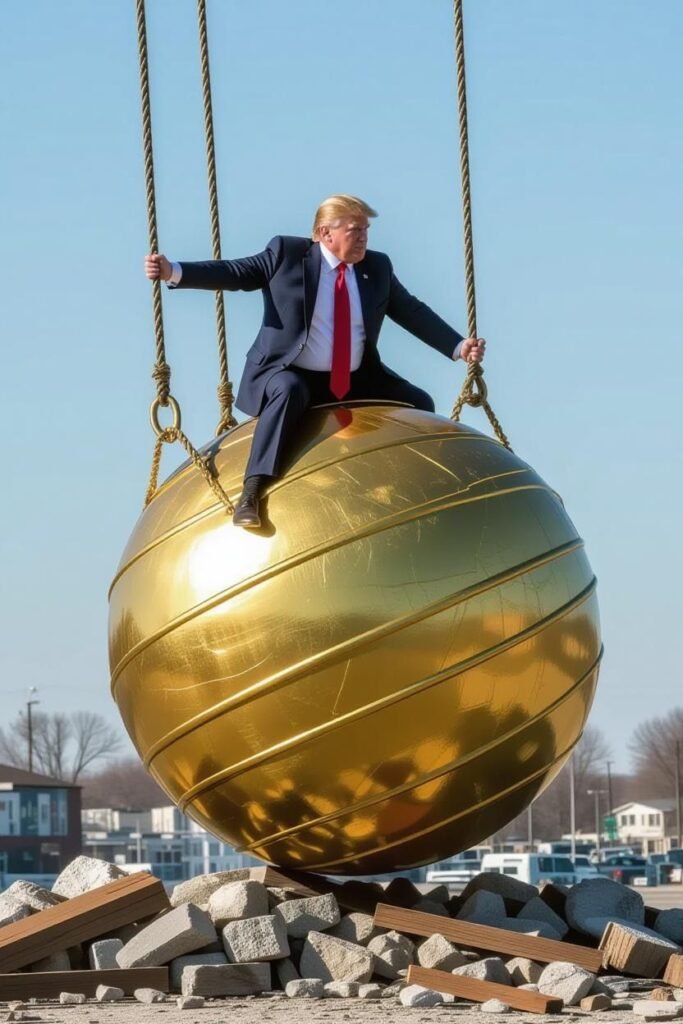
About a really intriguing takeaway
One plausible takeaway of the 28-pointer is that the selected oligarchy running the Empire of Chaos continues to run a protection racket – and the only way to salvage the de facto strategic defeat in country 404 is to turn a quick buck.
Another more intriguing, plausible takeaway is that the 28-pointer was never meant to be accepted by the EU-Kiev combo. It’s all about the Circus Ringmaster’s exit strategy from the debacle in Novorossiya.
Trump is already preparing the terrain – as in I tried everything, but Zelensky won’t comply. So it’s now his – and his gang’s – problem only, side by side with the EU chihuahuas. Up next: an immediate change of narrative. What else: the Empire of Chaos cannot manage reality, only narratives.
Trump 2.0 may start to work on improving U.S.-Russia relations – while blame for the collapse of the “peace process” is laid on the EU-Kiev combo. The optics of the 28-pointer P.R. op are everything: packaged as it is asking Moscow to strike a compromise, even as Russia is winning in the battlefield, while making sure the “criminal organization” in Kiev cannot agree to the main provisions.
Provisional endgame: the chihuahuas of war will keep barking while the SMO will keep rollin’ along.
### Press release issued by the Islamic Resistance Movement Hamas, regarding the occupation’s violations of the ceasefire agreement signed in Sharm el-Sheikh one month after its implementation.
In the name of God, the Most Gracious, the Most Merciful
In this statement, we in the Islamic Resistance Movement Hamas affirm our thanks and appreciation for the efforts of the brotherly mediators and all countries, international and humanitarian organizations, and free people of the world who took a courageous ethical and humanitarian stance in rejecting the genocide carried out by the occupation against our people in Gaza. We value the efforts of the mediators who contributed to reaching the ceasefire agreement.
In the context of the commitment of the Movement and the resistance forces to implement the agreement, stemming from their national and humanitarian responsibilities, it calls on the brotherly mediators, guarantors, countries, and international organizations to continue working to pressure the occupation and oblige it to stop its repeated excesses and violations aimed at torpedoing the agreement and undermining efforts to stabilize and sustain it. These violations were as follows:
First: Hamas’s full and precise commitment to the agreement
Since the ceasefire agreement signed in Sharm el-Sheikh came into effect, the resistance forces have adhered with full, precise commitment and in good faith to implementing the agreement. It handed over the twenty living captive occupation soldiers within 72 hours of the implementation’s start. It also continued meticulous search operations for the bodies of “israeli” captives in daily coordination with mediators and the International Red Cross.
This was despite the extremely difficult field conditions created by the war, its complete changing of the Strip’s features, the destruction of its infrastructure, the occupation’s control over 60% of the Strip’s area, working amidst hundreds of tons of unexploded ordnance dropped by the occupation on Gaza, the lack of sufficient excavation and rubble removal equipment (which the occupation still obstructs the entry of), the martyrdom of a large number of resistance fighters who were guarding the occupation’s captives, and the vaporization of the bodies of hundreds of Palestinian fighters and civilians (and the possibility of the same for some of the occupation’s captives).
Despite this, the Movement was able to recover (24 bodies out of 28). Through mediators and the Red Cross, it provided coordinates for the locations of other bodies in areas under occupation control. Meanwhile, the Movement continues its intensive efforts to find the remaining bodies. The Movement has left no pretext the occupation tried to fabricate, addressing each one, confirming through actions and field facts its full commitment to the text and spirit of the agreement.
Second: The occupation’s violations one month into the agreement
Since the agreement began, the occupation has not stopped undermining and violating it daily and momentarily, and attempting to fabricate pretexts.
This is represented in:
> 1. Killing and targeting civilians: 271 Palestinians were martyred as a result of deliberate bombing and shooting by occupation forces. Civilians constituted more than 91% of them, with 94% inside the Yellow Line and the rest adjacent to it. Among the martyrs were 107 children, 39 women, and 9 elderly persons, meaning 58% were children, women, and the elderly, in a scene that reflects the occupation’s continued policy of systematic killing against the unarmed population.
>
> 2. Injuries: 622 citizens were injured by bombing and shooting. 99% of them were civilians, including 221 children, 137 women, and 33 elderly persons, meaning 63% of the injured were children, women, and the elderly, which confirms the vengeful and systematic nature of the occupation’s crimes.
>
> 3. Arrests: The occupation arrested 35 Palestinians, including fishermen at sea and others from areas adjacent to the Yellow Line. 29 of them remain in detention.
>
> 4. Demolition of homes inside the Yellow Line: The occupation continues, on a daily and systematic basis, to demolish homes located inside the areas it controls outside the Yellow Line, in a clear and explicit breach of the agreement. These violations have continued for a full month without stopping, leading to widespread destruction of citizens’ property inside that area.
>
> 5. Exceeding the temporary withdrawal line: The occupation has not adhered to the agreed-upon withdrawal line for the first phase. It is exceeding the Yellow Line by an area estimated at 33 km squared, which includes fire control within distances ranging from 400 to 1050 meters inside the line, and the incursion of military vehicles into these areas. The occupation has also placed concrete blocks that exceed the Yellow Line by distances ranging from 200 to 800 meters along the temporary line.
>
> 6. Preventing the entry of UNRWA aid: In an explicit violation of the agreement’s text, the occupation continues to prevent the entry of humanitarian aid provided by UNRWA, which has led to the backlog of more than six thousand shipments of vital supplies. UNRWA is considered the most capable and professional body for distributing humanitarian aid, given its more than seventy-seven years of experience in relief work and serving Palestinian refugees in its various fields of operation.
>
> 7. Restricting the entry of aid and fuel: The occupation has deliberately and systematically violated the agreement’s clauses stipulating the entry of at least 600 aid trucks daily, including 50 fuel trucks of all types. Actual humanitarian aid did not exceed 40% of the total trucks entering during the first month, meaning less than 200 trucks per day.
>
> Commercial trucks constituted 60%, part of which were registered as aid despite being commercial. It also only allowed in 38 gas trucks and 92 diesel trucks, i.e., 8.4% of the agreed-upon quantity. Fuel is the oxygen for restarting life—for operating hospital generators, opening roads, running transport facilities, and rehabilitating infrastructure amid a total power outage. This confirms the occupation is working in a calculated and systematic way to maintain the state of paralysis and prevent the return of life.
>
> The occupation also continues to close the “Zikim” crossing, a main route to facilitate and speed up aid entry from the Hashemite Kingdom of Jordan, exacerbating the humanitarian crisis. The occupation also controls the types of materials allowed in, preventing basic foodstuffs like meat, poultry, eggs, and livestock, except in minimal amounts. In 31 days, only one truck of eggs was allowed in. It also prevents the entry of tents and shelter supplies despite the harsh onset of winter; what has entered is less than 5% of the Strip’s urgent needs, deepening the humanitarian crisis.
>
> 8. Failure to operate the power generation plant: Despite a month passing since the agreement’s signing, Gaza residents have not seen any practical steps toward restarting the power generation plant, even though the agreement’s text affirms that preparations for its operation should begin immediately upon the agreement’s entry into force. This keeps the Strip in a state of partial paralysis affecting all aspects of life.
>
> 9. Preventing infrastructure rehabilitation: The occupation continues to prevent the entry of heavy equipment and materials needed for rubble removal, as well as obstructing the entry of necessary supplies for operating power and water stations, sewage systems, bakeries, and hospitals. It also prevents the entry of construction materials and civil defense equipment needed for reconstruction, which systematically prevents efforts to rehabilitate infrastructure and restore civilian life in the Strip.
>
> 10. Closure of the Rafah crossing: Despite the agreement to open the Rafah crossing in both directions starting October 20, 2025, the crossing has remained closed since 03/18/2025, despite (21) days having passed since the agreed-upon date for its reopening. The occupation government continues to prevent citizens from traveling and returning, which has multiplied the suffering of thousands of stranded individuals, patients, and students, in a direct breach of the agreement’s clauses.
>
> 11. Incitement by occupation leaders to return to war: Political, military, and security leaders of the occupation continue their public, near-daily incitement to resume the war and not abide by the agreement’s terms, in clear disregard for the international community and defiance of world leaders who affirmed at the Sharm el-Sheikh summit the necessity of stabilizing the ceasefire. The occupation’s cabinet also voted, one week after the ceasefire agreement, to change the war’s name to the “War of Resurrection” (Harb al-Ba’ath), a step that shows its insistence on continuing the aggression and its rejection of the ceasefire path and international efforts for stability.
>
> 12. Mutilation of the bodies of Palestinian martyrs: The occupation handed over dozens of Palestinian bodies that had been brutally mutilated, including bodies crushed under tank treads, and others who were field-executed while bound and blindfolded. This constitutes a fully-fledged war crime and a flagrant violation of international humanitarian law.
>
> 13. Detainees and the missing: The occupation continues to manipulate the delivery of a list of names of Palestinian detainees from Gaza, despite a full month passing; it has not provided the final list as stipulated in the agreement. It continues to evade the mediators, providing incomplete lists from time to time, lacking dozens of detainees it had previously acknowledged in earlier lists, in addition to repeating some names or including names of persons who were previously released.
>
> The Movement affirms the existence of more than (1,800) missing persons from Gaza whose fate is still unknown. The occupation also continues to detain the nurse Tasneem Marwan Al-Hams from Gaza, along with dozens of women and children from the West Bank, and prevents the families of deported detainees from meeting their released relatives.
We in the Islamic Resistance Movement Hamas and the resistance forces affirm our full commitment to the agreement signed in Sharm el-Sheikh and to our ethical and humanitarian responsibility towards our people. We hold the occupation fully responsible for its continued gross violations and breaches. We call on the mediators, guarantors, governments, and international civil society organizations to take immediate and serious action to oblige the occupation to stop its aggression, lift its siege, allow in aid, and guarantee the Palestinian people’s rights to security, freedom, and dignity.
Based on the resistance’s commitment to the agreement, international law, and international humanitarian law, we call on the brotherly mediators, guarantors, countries, international organizations, and free people of the world to act urgently to ensure the occupation is obliged to implement the following clauses:
> 1. Precise adherence to the clauses of the ceasefire agreement signed in Sharm el-Sheikh, affirmation of its continuation, and prevention of any breach.
>
> 2. Immediate cessation of killing, massacres, and violations against our people in Gaza.
>
> 3. Withdrawal according to the temporary line agreed upon in the first phase, and preventing any field transgressions or additional fire control.
>
> 4. Commitment to allowing in the agreed-upon quantities of aid and fuel as stipulated in the agreement, and preventing their reduction or obstruction.
>
> 5. Allowing UNRWA to work with full freedom inside the Gaza Strip immediately, and enabling it to enter and distribute humanitarian aid as the most experienced and capable body to do so.
>
> 6. Operating and opening the Rafah crossing in both directions for the travel and return of citizens, and lifting the restrictions imposed on it immediately.
>
> 7. Opening the Zikim crossing for the entry of humanitarian and relief aid via the Hashemite Kingdom of Jordan without restrictions or delay.
>
> 8. Urgent allowance for the entry of 300,000 tents for immediate shelter to enable citizens to protect themselves from the bitter winter cold.
>
> 9. Entry of equipment and machinery necessary for infrastructure rehabilitation, and adherence to the agreed-upon humanitarian protocol.
>
> 10. Immediate cessation of demolishing and destroying homes and civilian facilities in the areas the occupation still controls.
>
> 11. Allowing entry of equipment necessary to operate the power generation plant in Gaza, and entry of the required diesel quantities for it.
>
> 12. Full and immediate disclosure of the fate and data of all Palestinian detainees and missing persons from the Gaza Strip.
>
> 13. Allowing entry of medical, humanitarian, and media missions and civil defense teams to provide their humanitarian and relief services freely.
The Islamic Resistance Movement – Hamas
Monday: 19 Jumada al-Awwal 1447 AH
Corresponding to: November 10, 2025
To support our work, you can donate, share this article and subscribe to our newsletter.
November 10, 2025
Source: Resistance News Network
Jeff J Brown sent us this song by a Chinese Pop Band and first appearing on the Chinese social media, Bilibili.
There are a number of download options on Jeff’s page:
The band states:
We created this song to uphold a just cause:
The right of Iran and other Middle-Eastern Islamic nations
To defend themselves againt Israeli hegemony.
Lyrics
Fireworks over Israel
By: Innokids (Chinese group)
Fireworks in Israel Sky
Shattered the Iron Dome’s Lie
Who’s the terror who’s the foe
The world has clear eyes and will know
Redefined what truth means
Popping the bubble of its grace
Turns out that the God you praise
(Rabbi: the Jews run the show in the world, not because they want)
Never planned on saving all the human race
(Rabbi: because that’s what God wants)
Fireworks in Israel Sky
Is it judgment’s bell or a mournful cry
It’s the sound of Gaza’s souls in pain
An empire’s crumbling curtain call in rain
Fireworks in Israel Sky
Make the people question tell me why
Even if their world is full of problems
The “backward” people also want to see the day
All lives are equal regardless of status or identity
Not by someone’s will to be thrown away
When your tech is used for such massive overkill
How is that not savage standing still
Fireworks in Israel Sky
Is it judgment’s bell or a mournful cry
It’s the sound of Gaza’s souls in pain
An empire’s crumbling curtain call in rain
Fireworks in Israel Sky
Has shattered all the demons in the mind
Once believe the beacon’s holy light
Look into its shadow darkness you will find
Cannot learn to live with them in peace
They will one day tremble for their own arrogance
If you never learn to be good neighbors
You’ll lose your motherland and wander on
Fireworks in Israel Sky
A people’s rising call or a myth’s reply
Judgment may come late but it never fails to arrive
I never expected this day to come so urgently
Fireworks in Israel Sky
A declaration of uprising or a prophecy fulfilled
The ancient proverbs never start to fade
Grave injustice is a grave self-made
The ancient proverbs never start to fade
Grave injustice is a grave self-made
It is good to note that the younger set are clear in terms of genocide. I posted in the Daily Chronicles the events at the Glastonbury Festival in the UK, which is a huge music festival. The authorities tried to silence one band and from that moment on, band after band appeared talking against genocide. I guess it is somewhat of a safe space, as they cannot arrest everyone, the whole audience, at a music festival. They can of course infiltrate future festivals and create mayhem, death and chaos which is most probably the next destabilization action.
Artists at Glastonbury continue to use their platform to speak out against Israels genocide in Gaza. This was displayed by Fontaines DC during their set.

https://www.fmprc.gov.cn/mfa_eng/xw/fyrbt/202506/t20250616_11649408.html
When asked to comment on Israel ‘s attack on Iranian state TV, which has been condemned by the Committee to Protect Journalists (CPJ) and described as a “war crime” by Iran , Chinese Foreign Ministry spokesperson Guo Jiakun said on Tuesday that China is deeply concerned about the situation, adding that China once again calls on all parties to immediately take measures to cool down the tensions as soon as possible and prevent the region from falling into greater turmoil. Guo noted that a cease-fire and an end to the war are of paramount urgency, and only dialogue and consultation can bring lasting peace. China is willing to maintain close communication with all parties and play a role in easing the tensions, he said.
China is probably the only State in a position right now, who could shut this all down if they wanted to. Although I had bitter responses when I critiqued China for holding full economic relations with Israel, it is my view that China is not in a clear manner carrying out its State responsibilities vis a vis Gaza at least. States have declared responsibilities under the Genocide Convention. This does not make me anti-China, it makes me call it as it is.
Although we see reports (no evidence as yet) of China having sent at least three military materiel transport airplanes to Iran. The reports state that these flights turn off their transponders close to the Iranian borders.

http://www.kremlin.ru/events/president/news/76899 – Yandex translation
At the time of writing, the only complete and translated statement on video is on Telegram: https://t.me/news_kremlin_eng/5512
—
In this regard, despite everything, we suggest that the Kiev authorities resume negotiations, which they interrupted at the end of 2022, and resume direct negotiations. And, I emphasize, without any preconditions. We suggest starting immediately next Thursday, May 15, in Istanbul, where they were held earlier and where they were interrupted.
—
Vladimir Putin: Good evening, or maybe good night already. I want to greet everyone. Dear ladies and gentlemen, Dear colleagues! I would like to once again congratulate all of you on the Great Victory Day! I would like to thank our friends and foreign partners who have been with us in Moscow these days at the anniversary celebrations to bow to the generation of winners.
We honor all those who contributed to the common victory over Nazism, including our allies in the anti-Hitler coalition, Chinese soldiers, participants in the anti-Fascist resistance in Europe, fighters of the people‘s liberation movements in Africa, the Asia–Pacific region, and volunteers from Latin America. Together with our friends and like-minded people, we share a common memory and respect for history, for the heroic deeds of true heroes who fought for freedom, and of course, our responsibility for the future, for building a more just and safer world.
The issues that directly affect the stable, sustainable development of the entire world community – Eurasia and other regions of the world – were at the center of the bilateral and multilateral meetings held in Moscow. Of course, they were held in a special, solemn, festive atmosphere, but at the same time they were extremely rich and informative, filled with topics of the political, economic and humanitarian agenda.
Summing up, and I would like to do this now, I would say that in four days, from May 7 to May 10, we hosted official visits by the leaders of three foreign countries: the People‘s Republic of China, the Venezuelan Bolivarian Republic and the Socialist Republic of Vietnam. In addition, 20 bilateral meetings were held with the heads of the CIS countries, Asia, Africa, the Middle East, Europe and Latin America. In total, 27 heads of state from the CIS, Asia, Africa, the Middle East, Europe, Latin America, as well as about 10 heads of international organizations took part in the celebrations. Six more countries were represented at a high level.
We see such a wide participation of delegations from foreign countries and international organizations as inspiring evidence of genuine consolidation around the enduring ideas and values of our common Great Victory. We are grateful to the leaders of 13 States who sent units of the national armed forces to participate in the parade on Red Square. Their march shoulder to shoulder with our parade squads filled the common holiday with special energy and the spirit of military brotherhood, tempered during the Second World War.
I was pleased to personally thank the military leaders of the Korean People‘s Army and convey my warmest words to the soldiers and commanders of the special forces units of the Democratic People‘s Republic of Korea, who, together with our soldiers, professionally, and I want to emphasize this, faithfully performed their tasks during the liberation of the border areas of the Kursk region from the Kiev regime. I would like to emphasize that they showed courage and heroism, acted – I want to say this again – in the highest degree professionally, showed good training and preparation.
And of course, it was a special honor for all the leaders of the states to welcome the main heroes of the Victory anniversary to the stands – veterans of the Second World War from Russia, Israel, Armenia, and Mongolia. I would like to note that, despite threats, blackmail, and obstacles, including the closure of airspace, the leaders of several European countries came to Moscow: Serbia, Slovakia, and Bosnia and Herzegovina. I repeat: we understand the massive pressure they faced, and therefore we sincerely appreciate their political courage, firm moral position, and decision to share the holiday with us, to pay tribute to the memory of the heroes of the Great Patriotic War and World War II, who fought for their fatherland and for getting rid of the brown plague of the whole world, of all mankind, without any exaggeration.
It is important for us that millions of Europeans, the leaders of countries that pursue sovereign policies, remember this. This inspires us with optimism and hope that sooner or later, based on the lessons of history and the opinion of our peoples, we will begin to move towards restoring constructive relations with the States of Europe. Including those who today still do not abandon anti-Russian rhetoric and clearly aggressive actions against us. They are still trying – we can see it right these days – to talk to us, in fact, in a boorish manner and with the help of ultimatums.
Our comprehensive partnership and strategic cooperation with the People‘s Republic of China can serve as a true example of modern equal relations in the 21st century. Chinese President Xi Jinping was the main guest of the celebrations dedicated to the 80th anniversary of the Great Victory. We had extremely fruitful negotiations, adopted two joint statements at the level of heads of State, and signed a number of intergovernmental and interdepartmental agreements covering such areas as energy, trade, finance, science, culture, and more. As I have already said, it has been agreed that my official return visit to China will take place in September to celebrate the 80th anniversary of the Victory over militaristic Japan. It is deeply symbolic and natural that the main, in fact, the main commemorative events related to the 80th anniversary of the end of World War II in Europe and Asia will be held in Moscow and Beijing, in the capitals of states whose peoples have gone through the hardest trials and paid the highest price in the name of common Victory.
Dear colleagues, I think it is obvious to everyone that during the negotiations and meetings held in Moscow, the issue of resolving the conflict in Ukraine was also raised. We are grateful to all our guests and our friends for the attention they pay to this conflict and for the efforts they are making to bring this conflict to an end. In this regard, I consider it necessary to focus on this topic separately.
In this regard, I would like to say that, as you know, Russia has repeatedly put forward initiatives for a ceasefire, but they have been repeatedly sabotaged by the Ukrainian side. Thus, the Kiev regime defiantly violated about 130 times the 30–day – I want to emphasize this – 30–day, from March 18 to April 17, moratorium on strikes on energy facilities, which was announced in accordance with our agreement with the President of the United States of America, Donald Trump. The Easter truce initiated by Russia was also not respected: the ceasefire regime was violated by Ukrainian forces almost five thousand times. Nevertheless, to celebrate Victory Day – and we consider this to be a holy holiday for us, as you can imagine, we have lost 27 million – we declared a truce for the third time on this holy holiday. At the same time, we also conveyed to those of our colleagues in the West who, in my opinion, are sincerely looking for ways to resolve our position on this issue, on the ceasefire on Victory Day, that in the future we do not exclude the possibility of extending the terms of this truce – but, of course, after analyzing what will happen in these few days. days, based on the results of how the Kiev regime will react to our proposal. And what do we see? What are these results? The Kiev authorities, as you can see for yourself, did not respond at all to our proposal for a cease–fire. Moreover, after the announcement of our proposal – and this happened, as you remember, on May 5 of this year – the Kiev authorities launched large-scale attacks from May 6-7. 524 unmanned aerial vehicles and a number of Western–made missiles participated in the strike, while 45 backup boats – unmanned boats – were used in the Black Sea. Actually, during these three days of the cease–fire that we announced – on the 8th, 9th and 10th – what you also saw from the media, in fact, from your reports, it was clear: during this time, five targeted attempts were made to attack the state border of the Russian Federation in in the area of the Kursk region and at the junction with the Belgorod region, precisely during the days of the ceasefire we announced. In addition, 36 more attacks were launched in other directions. All these attacks, including attempts to enter the territory of the Russian Federation in the Kursk region and the Belgorod region, were repulsed. Moreover, our military experts believe that they had no military significance, were conducted solely for political reasons, and the enemy suffered very heavy losses. As I said, the Kiev authorities not only rejected our proposal for a cease–fire, but also, as we all saw, tried to intimidate the leaders of the states gathered for the celebrations in Moscow.
You know, dear colleagues, when I met with colleagues here in Moscow, I had this thought. I’ll share with you: who were they trying to intimidate from those who came to Moscow to celebrate the Victory over Nazi Germany? Who were they trying to intimidate? After all, those who have come to us are leaders not by position, not by position, they are leaders by character, by their beliefs and by their willingness to defend their beliefs. And who was trying to intimidate them? Those who stand at attention in front of and salute and applaud former SS soldiers? And elevates to the rank of national heroes those who collaborated with Hitler during the Second World War? It seems to me that this is an attempt with obviously unsuitable means, and those who are trying to do this do not match the swing they themselves expect.
I repeat once again: we have repeatedly proposed steps towards a ceasefire. We have never refused to engage in dialogue with the Ukrainian side. Let me remind you once again: we did not interrupt the negotiations in 2022, the Ukrainian side did it.
In this regard, despite everything, we suggest that the Kiev authorities resume negotiations, which they interrupted at the end of 2022, and resume direct negotiations. And, I emphasize, without any preconditions. We suggest starting immediately next Thursday, May 15, in Istanbul, where they were held earlier and where they were interrupted.
As you know, Turkish colleagues have repeatedly offered their services in organizing such negotiations, and President Erdogan has done a lot to organize them. Let me remind you that as a result of these negotiations, a joint draft document was prepared, and it was initialed by the head of the Kiev negotiating group, but at the insistence of the West it was simply thrown into the trash.
Tomorrow we are scheduled to have a conversation with the President of Turkey, Mr. Erdogan. I would like to ask him to provide such an opportunity to hold talks in Turkey. I hope that he will confirm his desire to contribute to the search for peace in Ukraine. We are ready for serious negotiations with Ukraine. Their purpose is to eliminate the root causes of the conflict, to establish a long-term lasting peace in the historical perspective.
We do not rule out that during these negotiations it will be possible to agree on some new truces, on a new cease–fire. Moreover, a real truce that would be respected not only by Russia, but also by the Ukrainian side, would be the first step, I repeat, towards a long-term, sustainable peace, and not a prologue to the continuation of the armed conflict after the rearmament, resupply of the Armed Forces and the feverish digging of trenches and new strongholds. Who needs such a world? Our offer is, as they say, on the table. The decision now lies with the Ukrainian authorities and their supervisors, who, guided, it seems, by their personal political ambitions, rather than the interests of their peoples, want to continue the war with Russia at the hands of Ukrainian nationalists.
I repeat: Russia is ready to negotiate without any preconditions. Fighting and war are currently underway, and we propose to resume negotiations that were not interrupted by us. Well, what‘s wrong with that? Those who really want peace cannot but support this. At the same time, I would like to express my gratitude once again for the mediation services and efforts aimed at a peaceful settlement of the Ukrainian crisis undertaken by our foreign partners, including China, Brazil, Africa, the Middle East, and recently the new Administration of the United States of America.
In conclusion, I would like to once again thank everyone who shared with us the festive celebrations dedicated to the 80th anniversary of the Victory over Nazism. I am sure that the spirit of solidarity and harmony that united us in Moscow these days will continue to help us build fruitful cooperation and partnership in the name of progress, security and peace. I would also like to take this opportunity to note the tremendous role of journalists, representatives of global news agencies, TV channels, and the press who covered the anniversary events and the many-hour program of current negotiations and working meetings. Much has been done to ensure that people in different countries of the world experience the unique atmosphere of the current holidays in Moscow.
Of course, thank you for this meeting as well, as it is quite late and, of course, everyone is already tired. Thank you very much for your attention, because it‘s almost one-thirty in the morning, or even more than one-thirty in Moscow, I’m letting you go with God. Thank you very much for your attention. Goodbye.
Donald Trump’s tariffs are benefiting rich elites at the expense of the majority of the population, argues economist Michael Hudson. He explains how the US trade war on China is isolating the United States and encouraging countries to seek alternatives. Ben Norton hosts the interview.
Transcript
(Intro)
BEN NORTON: Why has US President Donald Trump imposed tariffs on countries all around the world? And in particular, why is Trump waging a trade war on China? What are his real goals?
Well, to try to answer these questions, I spoke with the economist Michael Hudson, who is the author of many books, and who just published the new report “Return of the robber barons: Trump’s distorted view of US tariff history“.
Michael Hudson outlined the history of the use of tariffs in the United States and in other countries, and he explained how Trump is using tariffs as a weapon of class war, to benefit the rich at the expense of the vast majority of the population, and also how Trump is trying to reshape the global financial system, in order to benefit the United States at the expense of everyone else.
But as Michael Hudson warns, this is already backfiring on the US economy, and it’s accelerating the transition to a more multipolar world.
So here are a few clips from our discussion, and then we’ll go straight to the interview.
MICHAEL HUDSON: The United States is the only country in the world that has weaponized its foreign trade; weaponized its foreign currency, the dollar; weaponized the international financial system; and treated every economic relationship in an adversarial way, to weaponize it.
And other countries say, how can we have a different approach, and treat trade as how can we mutually gain? How can we treat investment as something where the investor gains, but we also gain?
So what’s happening is that, as other countries are putting in place their mutual production facilities, transportation facilities, investment facilities, Trump is isolating the United States from trade and investment relations.
It has tried to isolate China, but what it’s doing is isolating itself from everyone, except its satellites.
(Interview)
BEN NORTON: Michael, thanks for joining me; it’s always a pleasure. Let’s start by talking about this report that you published.
You outlined the history of US use of tariffs and industrial policy, and your argument is that Trump is using tariffs essentially as a form of class warfare, to move the burden off of the rich and corporations, and to increase the burden of taxation on the working class through the use of tariffs.
So can you talk about what your argument is in this report and why you decided to write it?
MICHAEL HUDSON: Well, it’s much more than simply class warfare. Trump has for years been complaining about the fact that the richest people are taxed progressively, at a higher tax rate than other people. He wants to get rid of the tax rate altogether for the finance, insurance, and real estate sector, the FIRE sector.
I think he must have had a discussion with some economist or historian and said, “Isn’t there some way that we can get by without an income tax?” And the person must have told him, “Well, you know, the United States didn’t have an income tax before 1913”.
And Trump said, “No income tax?” No, the Supreme Court ruled that an income tax was unconstitutional. That’s what supreme courts do; they try to prevent any kind of progressive social legislation.
Well, finally, in 1913, the Senate passed the 14th Amendment, and enabled an income tax to be levied.
So Trump said, “Well, how did the United States finance itself before that?” And the answer was, well, almost all the US fiscal revenues came from the tariff, from customs receipts, in addition to land sales for land that they grabbed from the Indians.
So Trump said, “Well, they did it through tariffs!” The advantage of tariffs, for Trump, is that the cost falls on consumers. He doesn’t see that they also fall on companies that import goods from their foreign affiliates.
But, ultimately Trump said, “Oh, this is on consumers; this is wonderful! Why couldn’t we go back to the way things used to be, today? Why can’t we get rid of the income tax altogether — at least on my constituency, the campaign donors — and why can’t we simply raise tariffs?”
Well, his associates must have said, “How ever are you going to convince people to go along with this?” And so Trump said, “Well, let’s see, under tariff protection, in the late 19th century, that’s how the United States rose to be a great industrial power. So somehow, tariffs must have nurtured industry. And I want to bring industrialization back to the United States, to make America great again. And I can say tariffs are going to bring back industry”.
And what he means is, un-taxing the wealthy people, especially the finance and real estate sector, and shifting the tax on the consumers is going to make the country great again.
Well, what he’s leaving out is the fact that it wasn’t tariffs as such that made America into an industrial power. There was a whole large program that was necessary to industrialize America.
All of this was spelled out in the 1820s by Henry Clay, and it was called the American System. And the American System was protective tariffs, with “internal improvements” — that means public investment in infrastructure — and a national banking system to finance industry.
Well, Trump said nothing about these, so it’s worth saying something about them.
By the late 19th century, the United States, said, “How are we going to lower the cost that industry has to pay for its wages, without leading to a huge round of strikes?”
The solution was we can have the public sector pick up many of the costs that labor would otherwise have to pay out of its own paychecks.
For education, we can have free education — not the $50,000 a year that workers have to pay today in order to get a job. We can have social programs, health programs, and others, to help them.
We can have natural monopolies in the public domain, such as transportation, starting with the Erie Canal, and going all the way through roads and other transportation. Communications too.
All of these natural monopolies, if they were not held in the public domain, would be owned by private people who would get monopoly rents. And the United States said the way that we can compete with other countries is pretty much the way that the classical economists said you compete: you lower the cost of production by having the government bear as many of these costs as possible through public enterprises, through public infrastructure; you essentially socialize or nationalize the land.
“Socialism” was not a bad word in the late 19th century. Almost everyone across the political spectrum was describing their policies as socialist. There were Christian socialists, and libertarian socialists, and Marxian socialists, and social democracy. Everybody was one kind of socialist for another.
That meant a rising role of government in providing more and more services, or regulating the economy, such as the anti-trust law of 1890, to prevent monopoly pricing, and Teddy Roosevelt’s, trust-busting.
The whole idea was to minimize the cost of production with an act of a government. And they said that, well, if we can have a mixed economy, a public and private economy together, with the government sponsoring industrial credit — not the kind of British credit that was just for trade, or exploitative, or loans to the farmers — but actually to finance capital investment in industry, then we can take off.
It was this context for protective tariffs that enabled the United States to get rich.
Well, what Trump wants to do is the exact opposite of this context. He wants to deregulate the economy, not regulate it. He wants to privatize any public domain that’s left, any public enterprises.
The post office, for instance, can be privatized. It’s going to cut back services to rural areas. It’s going to increase prices. It’s going to make most of the US economy look like Thames Water in London, for instance.
They’re going to Thatcher-ize the American economy, to do to the American economy what Margaret Thatcher and Tony Blair did for England; or what Reaganomics began to do for the United States.
So we’re talking about an anti-government policy, not a mixed policy. And under Elon Musk, he wants to just carve up the government agencies altogether, privatize everything.
What they’re going to do is dismantle the country’s social programs, dismantle its subsidies, dismantle subsidized social programs that have enabled companies like Amazon, or other low wage companies, to pay very low wages, and having the American social system pay for employees that are paid below the poverty line, because they haven’t been increasing the minimum wage in the United States.
So, this is what is really in store for the US: cut, essentially privatize, the government; especially get rid of Social Security, and other social programs, Medicare.
They call it streamlining the economy or making a “free market”, a market without government that interferes by protecting consumers, protecting the population against predatory monopolies and predatory finance.
BEN NORTON: Michael, you raised so many important points there.
I want to hit on this idea of the Gilded Age, that Trump sees the Gilded Age in the 19th century as essentially his model for what the US should return to.
The Gilded Age is notorious for the robber barons, these big billionaires like Cornelius Vanderbilt and J.P. Morgan.
Today there are, of course, similar oligarchs. Many of them are in the Trump administration, including Elon Musk, who’s the richest billionaire oligarch on Earth. You have the Treasury secretary, another billionaire hedge fund manager, Scott Bessent. Then you have the billionaire who is the commerce secretary, Howard Lutnick; he’s also from Wall Street.
And at his inauguration in January, Trump invited the world’s most powerful billionaires, like Mark Zuckerberg, Jeff Bezos, Tim Cook, and others.
So one of the points that you emphasize is that Trump is really trying to overturn not only the progressive gains of the New Deal, but even the gains of the Progressive Era in the late 19th and early 20th centuries.
When Trump looks back at people like McKinley, the US president, he sees essentially the 19th century and the Gilded Age as something positive. Of course, the vast majority of the population was exploited, and lived in horrible conditions, but for a small handful of oligarchs, the situation was quite rosy for them.
So why do you think Trump sees it this way?
MICHAEL HUDSON: What Trump doesn’t realize is that the Gilded Age was a failure of US protectionism.
In the process of protecting industrial investment, you had the financial sector making a lot of money off this. And finance has always been the mother of trusts.
Finance began to lead to a fight over who is going to control the railroads. The crisis of 1873 came when [robber baron] Jay Cooke’s railroad defaulted. There were rivals trying to buy control of railroads from each other.
The Gilded Age emerged sort of accidentally, as a byproduct of making industry rich, you also made a lot of opponents of industry rich, like monopolists.
That’s why in the year of the McKinley tariff, when he was a congressman in 1890, you had the Sherman anti-trust law. They said, OK, we’re going to make sure that the protection of industry does not become protection of monopolies; it will not become a protection of unearned wealth, economic rent-seeking.
So Trump gets it all backward: what was an oversight that the Americans cured in 1890 — or at least started to put in place a public mechanism for avoiding the Gilded Age — as if that was actually a great success.
If only it had succeeded, Trump would say, then, America would have polarized and done what gilded ages do.
BEN NORTON: Yeah, and one of the points that you emphasize, Michael, is how China’s model is completely different.
China is following the kind of state-led industry of policy that every industrialized economy has used to industrialize, to develop a manufacturing sector.
China has state ownership of telecommunications, infrastructure, education, energy, land, and finance — most importantly, the financial system in China is state-owned.
China has five-year plans, in which they target certain industries that they want to develop.
China creates plans for sectors like electric vehicles, and they say that the government is going to direct resources into these industries through the use of subsidies, and infrastructure investment, and job training, and education, and cheap loans from state-owned banks. And they’re going to develop semiconductors; they’re going to develop local civilian airliners.
So can you can you contrast China’s industrial policy with the Trump administration’s lack of an industrial policy?
MICHAEL HUDSON: Well, you could say, could I compare China’s development to the policies of the United States and also Germany when it was developing?
China has sort of reinvented the wheel. One of the first books of mine that they translated as a textbook into Chinese was my book on trade, development, and foreign debt, when I described the contrast between free trade and protectionism, and how the United States developed a protectionist argument to counter the free-trade arguments of England, in order to protect industry.
So, China has essentially done the same logical thing that any government would have to do. You have to subsidize your own industry and protect it, insulate it, from lower-cost imports underselling you.
You have to enable industry, if not really to make a profit, to at least make enough money to somehow be able to pay its labor force, and to pay for the raw materials and the machinery that it takes to create industrial production.
The one thing that China has done that other countries did not do — although Germany began to do it in the 19th century — was to keep money and credit as a public utility.
China did this because it really didn’t have much of a choice, after Mao’s revolution. How is the government going to finance capital investment in industry in what was a very poor country of peasants, basically, as the US secretary of commerce keeps calling China, a country of peasants.
BEN NORTON: US Vice President JD Vance referred to the Chinese as a bunch of peasants. And this has really angered people in China.
JD VANCE clip: We borrow money from Chinese peasants to buy the things those Chinese peasants manufacture. That is not a recipe for economic prosperity.
BEN NORTON: And this has really united people in China against the US.
MICHAEL HUDSON: Of course. Well, at any rate, since Mao’s revolution had got rid of the wealthy financial classes, there was no way that the government could do what the Western countries did and borrow from the wealthy classes to pay for the government deficit in financing industry. So China created its own money.
Well, that’s exactly what the American colonies did in the 17th and 18th centuries. When Britain was dominating the colonies, and forcing the colonies to export crops and other materials, by borrowing hard money from British merchants, the colonies began to create their own paper money.
That’s how they basically developed.
When America fought the Revolutionary War, the government issued Continentals — fiat currency called Continental currency.
In the Civil War, in America, the costs of the war were so large that it couldn’t possibly borrow from domestic creditors, the government printed Greenbacks. But in peacetime, the financial sector fought back and insisted on “sound money”, meaning money that you pay interest on to private financiers.
Well, since China didn’t have private financiers, it did the same thing that America had done: it printed the money itself.
And it kept banking in the public domain. And what that means is that banking in China does not make loans for the same kind of things that American banks make loans.
We know that they went overboard in making fairly reckless real-estate loans, but they don’t make loans for corporate takeovers, of private investors to borrow the money to take over another industrial corporation and just sort of empty it out and do what American corporate raiders and kleptocrats do.
So China has been able to create money to spend into the economy for purposes intended to serve the public interest, to build housing, to finance high-speed railways, to finance all of the public infrastructure that China has kept in the public domain, to offer at low, subsidized prices to the population at large.
So if you have a private enterprise in China, creating a factory to produce goods for exports to the United States or other countries, they don’t have to pay the workers enough to have to pay for privatized transportation; they have wonderful public transportation, in the subways and railroads.
They they don’t have to take out student loans to get an education; they can get the education from the public sector in China. They can get health care.
They don’t have to pay for all of the things that the United States’ employees and employers have to pay for. That’s what enables China to have low-cost labor.
It’s not that it’s impoverished labor; it’s not that it’s pauper labor; because the labor in China is better and better remunerated; but its remuneration is not only in the form of its paychecks that it gets in salary; it’s in the form of all of the public services that it gets, that Americans have to pay out of their salary.
So when you realize that the standard of living of workers is not only the paycheck, but the public services they get, or the subsidized prices they have to pay for basic needs, then you find that, if basic needs are treated as basic needs, then everybody should be able to get them, as a precondition for being citizens.
That’s basically what happens in China. And that’s what has enabled China to undersell Western economies that have privatized, and Thatcher-ized, and Reagan-ized their economies.
And, of course, that’s how the United States, and Germany, and other countries that industrialized in the late 19th century built up their competitive power internationally.
BEN NORTON: Those are very important points, Michael.
Trump has been expanding his tariffs not only against other countries — he now has blanket 10% tariffs on all countries around the world — but he has specifically targeted China with now tariffs of 245% — which, after a certain point, there’s not really any meaning to further increasing these tariffs; it’s largely symbolic.
Why do you think Trump has been so aggressive targeting China specifically?
Do you think it has to do with what you were just explaining, the significant differences between China’s system and the US system? That might explain why the US has deindustrialized, and simply can’t compete with China’s very sophisticated system of manufacturing.
MICHAEL HUDSON: Well, you’re right that America can’t compete. It realizes that it can’t compete. It’s treating China as an enemy.
But, regarding the the tariff question, the way in which Trump has arranged his three-month interim, before the very high punitive, disruptive tariffs are imposed, is specifically aimed against China.
Let me explain what the connection is, because it’s not clear on the surface.
The tariffs that he has announced are so disruptive of trade for other countries that they’re going to suffer — as will the US economy, and US consumers and businesses are going to suffer.
Trump says that these maximum demands are open to negotiation. And he’s asking other countries, well, if we don’t disrupt your trade by imposing these 40% or even higher tariffs on you, what are you going to give us in return? What’s your give-back to us for us not making these demands on you?
At first, I thought, well, he’s going to demand that maybe they’ll have to sell off some public infrastructure to Americans. Maybe they’re going to have to give trade favoritism to Americans. There are all sorts of things.
But Trump has made it clear: what Trump wants is diplomatic givebacks. Every country is going to be subject to one-on-one, distinct pressures. 75 countries, he says, have called him and want to negotiate.
DONALD TRUMP clip: I’m telling you, these countries are calling us up, kissing my ass. They are dying to make a deal. Please, please, sir, make a deal. I’ll do anything. I’ll do anything, sir!
MICHAEL HUDSON: With each country, he’s going to treat individually, that they give America something. But the common denominator in all of his demands is that they impose trade sanctions against commerce with China, and against mutual investment with China, and especially any plans they may have to join its Belt and Road Initiative in favor of US plans to interrupt the whole connection system of Belt and Road that China wants to put in place.
So Chinese officials can see where all this is leading. They’ve announced their refusal to negotiate with the United States, when a gun is pointed to their head.
China recognizes that Trump really doesn’t have many cards in his hands. What does he really offer other countries except to refrain from disrupting their economy?
He’s what back in Mao’s time was called a paper tiger, militarily. Well, America has become a paper tiger financially today. It doesn’t really have anything to offer except the threat of tariffs, the threat of suddenly disrupting all of the trade patterns that have been put in place over the last few decades.
So the most important consideration for China in all of this, in what is it going to do, is that it doesn’t need the US market to anywhere near the degree that the United States is dependent on China for key metals, and key materials, and key industrial products.
Most in the news are the rare earths, ores that are refined to make magnets and other alloys that are used in almost every high-tech manufacture today, from electric cars to military, and space things; but also steel and aluminum are faced with enormous tariffs, as well as key products that American industry needs; and of course all of the consumer goods that Walmart imports into the United States and that Apple imports for use in its iPhones.
So, what is really the threat of these tariffs against China? It has already said, well, we don’t need to buy soybeans from America; we can buy soybeans from Brazil, instead of US farmers. And most US farmers of soybeans live in Republican districts, because the Republican Party appeals to the western, midwestern, rural population much more than the educated urban population.
I’m told that one of the key US products that the United States has sort of cut China off from is soy sauce. And, all these years, my Chinese friends tell me, they’ve been buying soy sauce from a Singapore company with a Chinese name that they thought was Chinese. Probably just organized out of Singapore, but it turns out that it’s an American company, and now they can’t get it.
So, what’s going to happen? Well, it’s not that hard to make soy beans into soy sauce. And you can imagine that what is going to happen is that China is going to respond to the US sanctions in the way that any country responds to sanctions: once they can’t import something that they’ve been importing from another country, that they need, they produce it themselves.
That’s exactly what Russia did, when the United States told Europe, stop exporting food to Russia; let’s starve them out. Russia stopped its dairy and farm imports from the Baltics and other countries, and developed its own agricultural, production. That’s called import [substitution].
So the reaction to sanctions is to force other countries to replace US imports with domestic production. And that’s exactly what China has done.
Well, why do the United States strategists have this blind spot? And the reason is, I think, the whole mentality of US diplomats is punitive. That’s the only thing they have today. They have little to offer the other country.
They can’t do what President Xi does and say, here’s a win-win situation; we’ll develop our trade with each other, and we’ll both gain from this, from our mutual interdependency that’ll create an efficient, regional trading system.
But the United States doesn’t have that. All it can do is disrupt the trading system. And they can disrupt it for a few months; maybe it’ll take a year. It takes time to replace new means of production, to replace trade, imports and exports, with the United States.
But you can imagine that European countries, Asian, African countries, Latin American countries, are all spending these next three months thinking, how are we going to create a world after August, that is going to enable us to keep on producing what we’re producing and importing what we’re importing, but not from the United States.
They’re all trying to think of realignment. And the United States says, well, this is going to disrupt your economy for a year or so; and the other countries will make a calculation and they’ll say, yes, it’s going to disrupt our economy for a year or so, but then for the next decade or century, we won’t have to deal with US threats anymore.
The United States is the only country in the world that has weaponized its foreign trade; weaponized its foreign currency, the dollar; weaponized the international financial system; and treated every economic relationship in an adversarial way, to weaponize it.
Other countries say, how can we have a different approach, and treat trade as how can we mutually gain? How can we treat investment as something where the investor gains, but we also gain?
If China is going to build up ports and infrastructure for us, and we will pay China in the form of raw materials, or agricultural production, or whatever we’re producing; then we get the capital investment that China is providing, and we’re providing them with the trade that they’ve helped develop by putting in place ports, and roads, and railroads, and other means of transportation.
So you have two different views of what an alternative world trade system would look like. And of course, this alternative is what everybody expected to be created after World War One.
That was the promise of mutual gain that mutual trade was going to integrate countries, and provide gains from trade, for peaceful, friendly international relations.
It hasn’t turned out that way. But now other countries are saying, well, we can achieve that kind of trade under rules very similar to those that the United Nations created in 1945. But we can’t do it under the rules that the United States imposes for its own one-sided, unipolar world order that it’s insisting on.
So what’s happening is that other countries are putting in place their mutual production facilities, transportation facilities, investment facilities. Trump is isolating the United States from trade and investment relations.
It has tried to isolate China, but what it’s doing is isolating itself from everyone, except its satellites, in Western Europe — Germany, England, and the other European countries.
The question is, how long can its Asian satellites — South Korea, Japan, and the Philippines, even Taiwan — how long can they decide, well, are we going to look at our long-term future as trade with China, which is growing and expanding its market, or with United States, whose market is shrinking?
And it goes even further than that. Trump also has said he’s going to punish other countries that try to find an alternative to the dollar. And yet today’s Wall Street Journal [on April 18] had a whole editorial: Trump is now trying to prevent other countries from keeping their international reserves in dollars.
He’s forcing other countries to sell off their dollars by imposing a tax on other countries’ holding of Treasury securities.
If you’re a foreign central bank and you’ve done what you’ve done since 1971, when Nixon went off gold, and you kept your foreign exchange reserves in the form of US dollars, in the form of US Treasury securities, or government agency securities, or other US holdings, then all of a sudden you’re going to have to pay a tax on them, and this tax is going to mean that you’re losing money.
Well, the dollar has been going down steadily, day after day after day, for the last few weeks. And it looks like it’s going down because other countries are looking at what Trump is threatening, and they think, this guy may really mean it!
The whole essence of American imperialism — as my book Super Imperialism explained way back in 1972 — the whole essence is that America gets a free lunch; it can print its dollars, flood the economy with dollars, mainly through its foreign military spending — which is, in most years, the leading element in the balance of payments deficit — flood this and other countries haven’t had an alternative to the dollar to hold.
They’ve been discouraged from buying gold. Well, as you can imagine, China has been buying gold. Now other countries are buying gold. Germany has asked for the gold that it had been keeping in the Federal Reserve for safekeeping after World War Two, that this is returned. None of my German financial reporters have been able to find out whether it’s actually got any of this gold. The politicians are quite mum on that.
So, other countries are essentially being driven out of the dollar, at the same time that Trump says, don’t join together and create a non-dollar area.
Well, if they can’t hold US dollars, or they’re told, if you recycle your savings and your surplus dollars into US treasury bills, you’re going to have to lose money year after year.
Well, as they sell the Treasury securities, the dollar is going down. And as the dollar goes down, that means that, even if other countries get a higher return in stocks or US bonds, the value in euros, and Chinese currency, and Japanese currency, the value in their own currency is going down as a result of Trump’s policies.
Well, Trump believes that if you lower the exchange rate of the dollar, that will make American exports more competitive. And of course, it would, if America had something to export.
But how can you make industrial exports more competitive, at a lower price — which lowers the cost of labor, lowers the cost of America — if you don’t have factories to produce these exports? That’s the crazy thing about all this!
How can you increase export competitiveness of industry, if you don’t have an industry?
The United States, ever since, really, Clinton in the 1990s, has offshored American industry — to Asia, to China and other countries — how on Earth can it be competitive?
Basically neoliberalism has undercut the ability of the United States to be competitive in the way that, it and European countries, and now China, had become competitive as a mixed economy.
The essence of neoliberalism is to carve up and privatize governments, basically on credit, borrowing the money to buy things.
So you’re having an inherent instability. And this is what other countries are discussing.
Now, the question is, will other countries agree to give up the Chinese market in order to gain the American market?
Well, how long is the American market going to last? And how much trade and diplomacy with China are they going to give up? Will it be a total set of sanctions and isolation? Will it be partial? All of this is a product of bilateral negotiation.
I think other countries should take a look at what’s happening domestically, in the way that Trump bargains.
You’ve seen two big fights, domestically, of Trump in the American economy, have occurred in the last few months: the fight against law firms and the fight against universities.
Trump declared war on law firms that had worked for the Democratic Party in the last few decades, especially law firms that supplied lawyers who prosecuted him for all of the Democratic lawfare that the Biden administration began.
And he said, well, you have to do a give-back. And the first give-backs that he asked from these firms is, you have to provide $50 million of pro bono — meaning work without payment – for Republican-backed organizations.
Well, almost all the law firms capitulated. They surrendered and they agreed to give him, you know, $50 million, or however much free legal advice he wanted, at their expense.
Well, now, in the last few days, he has asked for what the New York Times and Wall Street Journal say is $1 billion from the law firms, saying you’re going to have to not only support the Republican administration, but you’re now going to have to support me, and support Republican policies, as we bring lawsuits against the government, to try to carve it up, and shrink it, for the kind of things that Elon Musk is doing.
So, he keeps raising the price. He’ll make an agreement. They think, ok, we gave him $50 million. That’s enough. Trump had said, if you don’t do this, I’m going to cancel your security clearance for all of your lawyers, and I’m going to ban your lawyers from federal buildings, because you’re a “security risk”. And I can declare a national emergency, and a national emergency is anything I find a national emergency in. Any threat to me is a national emergency, because I’m the state. Sounds like King Louis of France.
He asks for more and more and more. It’s a never-ending rise in demand. So, again, here’s the problem that they face.
Once you begin to give in to Trump, a bully thinks, oh, I’ve been able to do this; now I can do even more. If you begin giving into him, it’s a never ending path of decline. That’s the whole problem.
China describes the choice as between the post-war, the whole world’s post-1945 commitment to free trade and the same rules for all countries; or henceforth, are they going to be subjected to America’s neo-mercantilist protectionism, as the new context for international trade?
BEN NORTON: Michael, as always, you made so many great points there. It’s hard to know where exactly to respond.
But let’s pick at this idea, which I think is very important, which is that China has said that the US is essentially trying to recreate the global system that the US ironically helped to create in the first place, after World War Two.
You described that system very well in your book Super Imperialism, published in 1972. The US designed the international financial system, giving itself the exorbitant privilege of printing the global reserve currency.
The US also helped to design the international legal institutions and political institutions through the United Nations. And still at the UN Security Council, the permanent seats are held, yes, by China and Russia, but also by the US, France, and the UK. And the US has used its veto power to essentially neuter the UN, to prevent the UN from taking any action the US doesn’t approve of.
So the US has really benefited from the system. But it seems like Trump is now just throwing a bomb and blowing everything up. What do you think is happening?
MICHAEL HUDSON: The world has changed a lot since 1945, when the US not only led the creation of the United Nations, but also the International Monetary Fund and the world Bank.
It created a system of free trade because, under free trade, the dominant economic and industrial power wins over countries that haven’t industrialized.
That’s why countries that haven’t industrialized need protective tariffs, to develop their industry, and especially their agriculture — which is how the United States subsidized all of its agricultural productivity in the 1930s.
So, the United States, in 1945, could say, all countries have to follow the same rules, because it knew that the rules that they were to follow — with free trade, and no imperial preference for the British pound sterling, no colonialism, you decolonize — the US knew that it would gain.
But, since 1945, we’ve now gone eight decades since then, and since the United States has deindustrialized, it no longer benefits from the rules and the whole philosophy that it supported back in 1945.
Under the United Nations, at that time, it said all countries should be treated politically as equals. That has been the whole rule of international law since 1648, when the 30 Years War was ended: no country should interfere with other countries.
Well, the United States no longer treats that. It is able to interfere with other countries, but essentially claims that any other country that gets a benefit from the United States is somehow interfering with its trade, or posing a national security threat.
So the United States has ended the kind of idealistic rhetoric, and the underlying world order that it put in place in 1945.
So, China, Russia, the speeches of Foreign Minister Lavrov and President Putin, they’re all saying the same thing: the ideals of the United Nations as they were set out; the ideals of trade, not to weaponize trade, but to have mutual gain; the ideal of the role of government to provide basic needs for the population; all of this was a good idea.
But the spread of neoliberalism by the United States and by Europe, essentially, is now opposing everything that was promised in 1945. We’re in a completely different world.
We cannot achieve and restore this world as long as we leave the United States with veto power in the United Nations, to stop it; and with a military power and willingness to intervene in foreign elections; to support regime change, to make sure that its own politicians are elected, over and above whatever the population may want.
Such as Europe — most of Europe’s population wants an end to the war in Ukraine. The politicians want to escalate NATO’s war against Russia.
You can go right down the line, that what the politicians that are supported by the United States in many countries advocate is the opposite of what voters want.
Just like in the United States. Trump won the election saying he’s going to bring peace in NATO’s war against Russia; he’s going to be a peace candidate, not the war candidate that Biden and Harris were. Now all of that is just sort of, well, that’s campaign promises; that’s just rhetoric; that’s the narrative that we’ve created.
So, you’re having, in a way, two different narratives to shape how people think of the split in the world, between the 15% of the population — the US and Europe, plus America’s satellites in Asia — and the 85% — the Global Majority, in the Global South — that are trying to have mutual trade and benefit.
In order to have this mutual trade and benefit, you have to have a political system and a tax system, that essentially prevents the emergence of a domestic financial oligarchy, and monopoly oligarchy, and real estate oligarchy, from stifling economic growth in their countries.
And the United States wants to create such an oligarchy as long as it’s controlled by US investors themselves.
So how do you explain why politicians follow this pro-US submission that they’re doing?
Well, I think there are a number of answers for why you’re having a different approach to how the world is being restructured.
Politicians live in the short run, and many are so used to being bullied that they’ve succumbed to the Stockholm Syndrome and identify with the bully. They think, well, the Americans are so powerful; there’s really nothing that we can do; we have to join them because the bully strong enough to fight any other policy that we may do.
Well, democracy is supposed to prevent the kind of oligarchy from developing that you have in the United States.
They’re supposed to prevent a Gilded Age. They’re supposed to prevent the economic polarization between the 1% of the economy — the creditor class, the billionaire class of creditors, monopolists, real estate owners — and the rest of the economy — of debtors, of renters, of wage earners that have less and less control over their working conditions.
That’s not being prevented; that’s being encouraged by neoliberalism — just the opposite of what was promised.
It’s as if we’re having a new kind of colonialism; but it’s not overtly a military colonialism, except in countries that refuse to follow US laws. It’s sort of what free-trade imperialism, or what the [US] Treasury bill standard was.
It’s what the West calls “democracies”, which is foreign control by the neoliberal class, the kind of people who go to the World Economic Forum in Switzerland and think that they’re planning the kind of world that they would like to see.
We’re dealing with two kinds of economic theory.
The reality-based economic theory recognizes that debts tend to grow exponentially, and polarize society, and create a crisis, if they’re not canceled.
The orthodox economic theory, that’s taught in all the universities throughout the West, says if you just get rid of government, leave government alone, don’t regulate anything, the economy will automatically self stabilize, and produce equality among people, and among nations; free trade will make nations more equal, instead of polarized.
You have a whole different body of economic theory to justify a whole means of social and economic organization that occurs.
In other countries, the fight by Asia and the Global Majority today — and by Putin against the legacy of kleptocrats that the neoliberals subsidized in Russia — was how do you keep this wealthy class — you can let it accumulate wealth, but it has to use its wealth in the public interest, to develop the overall economy and benefit the economy, not to subject the economy to lower wages, to use its wealth to take over government and disable the government from the ability to regulate it.
Well, this disabling of government to regulate is the political program of Donald Trump. He says he wants to deregulate any kind of government regulations, and tax. He wants to get rid of progressive taxation.
He wants to stop any environmental regulation. He has pulled out of all of the global warming agreements that America has had.
Trump and Vance have gone to Europe and backed the right-wing parties that are following this there.
The US is backing this kind of economic and social philosophy. For any country that is trying to do regulation, it’s being attacked politically.
This has gone on for 2500 years. The lead for democracy in Greece occurred already in the 6th, 7th, and 8th centuries BC, when the local mafia-like oligarchies were overthrown by populist leaders who were called “tyrants”.
The Roman oligarchy accused reformers of seeking kingship. The Greek oligarchy called any reformers wanting democracy as being tyrants. And the Americans call any reformers as being socialists — as if socialist today is the same term as seeking kingship to control ambition, being tyrants.
The narrative of history has been turned inside out. And they treat all of these as bad words, not as the ideal that it was during the whole reform movement, in the 19th century.
BEN NORTON: Well, I don’t know if I can add much there. You again raised so many interesting points. And you did a great job of drawing these parallels over thousands of years of history, in the fight against oligarchy.
We see this so clearly today. Of course, every US president represents the financial oligarchs on Wall Street. But Trump has taken the mask off, lifted the veil, and made it as clear as day.
He’s regularly inviting these billionaires to the white House. He gave Elon Musk, the world’s richest billionaire, an office at the white House. He invited all these oligarchs to his inauguration.
So I think your argument is — you’ve been saying this for a long time, and you’ve been proven so correct. Trump is really the epitome of everything you’ve been saying for so long.
So on that note, I think that’s actually a really good place to conclude. Is there anything else you want to add?
MICHAEL HUDSON: Listening to what you just summarized, what kind of country would elect a leader who made this money by cheating other people? By cheating his suppliers and not paying them, offering only half the money that they had promised; cheating his suppliers; going bankrupt and defaulting on his bank loans; and being not only a congenital liar, but treating that as a social virtue!
You wonder, when somebody like that is elected, or someone like Obama, or Biden, when you look at the people who have been elected in the United States, or even in Britain, how could this have ever happened, under what was expected 80 years ago?
The world is being turned inside out. And how is the rest of the world going to try to undo the damage?
And they can’t really undo the damage. All they can do is isolate, is go along with Trump — accept the isolation. Isolating themselves is the only way that they can create an alternative to surrender to the US neoliberal, polarized economy and society.
BEN NORTON: Once again, well said. I was speaking with the economist Michael Hudson, and I will link to his most recent report on Donald Trump’s tariffs, and the robber barons, and the Gilded Age.
Thanks so much for joining me, Michael. It’s always a real pleasure speaking with you.
MICHAEL HUDSON: Thanks for having me again, Ben.

 Lateo.net - Flux RSS en pagaille (pour en ajouter : @ moi)
