At the close of the Shanghai Cooperation Organization summit in Bishkek, Kyrgyzstan yesterday, Vladimir held a press conference with the Russian journalists in his suite.
He gave a very detailed answer to the question of one journalist requesting information on the status of the war on the ground in Donbas. He said that he had just prior to this meeting spoken to Valery Gerasimov, Chief of the General Staff, who briefed him on the situation at each of the military commands – North, South, Center which he then repeated to the journalists. He declined to give time lines for accomplishment of the tasks before each group such as the capture of Slavyansk and Kramatorsk, saying that the war is very tough and he wouldn’t want to raise false expectations, but he assured his audience that Russia is advancing on the ground on all fronts in Donbas in a faster tempo than hitherto. There was a vague look of frustration on journalists’ faces with this evasion.
But evasion was the common characteristic of Putin’s responses to each of the questions put to him, even regarding the quite innocent matter of the plans for further developing the SCO: would it be by expanding to bring in new members or by creating greater alignment and coordination internally. Putin responded with words devoid of content.
The most striking feature of the press conference was with respect to prospects for negotiations to end the war in Ukraine. Here we heard the statements which led me to assign the given title to this essay. Putin said that Russia welcomed the efforts of all parties to assist with setting up meaningful talks with Ukraine, so long as this would not mean just spinning the wheels as hitherto. And then he added that he welcomed the further involvement of President Trump’s emissaries Witkoff and Kushner, who are ‘trustworthy men’ who enjoy the confidence of Trump, which is of decisive importance. “Trustworthy men”? I do not believe that a single reader of these lines will agree. What can on say? Putin is licking Trump’s boots – again.
It is interesting that the question of negotiations was wrapped within a journalist’s remark that CIA director Ratcliffe had come to Moscow to deliver Washington’s insistent advice that the Russians sit down with Ukraine and the USA to end the conflict. That this was Ratcliffe’s message was not denied by Putin, giving us at last an answer to the puzzle raised by the 8 hour visit to Moscow a week ago.
It is interesting to note news of today from the Kievan authorities as reported by The Financial Times. The mayor and other officials acknowledge that the constant Russian drone and missile attacks on the Ukrainian capital are disrupting entirely the economic and governmental functions. They expect these attacks to continue up to the Russian elections to the Duma on 18-20 September for the purpose of demonstrating to the Russian electorate that its government is doing something forcefully. Accordingly, the Ukrainians are putting in place measures to alleviate this hardship including carrying on the legislative work of the Rada in its underground bunker and allowing the metro to function in its open-air segments, as for example, on the Dniepr river crossings, even during air attack alerts. We know from many different sources, including this morning’s BBC, that Zelensky has just issued a threat that no one traveling to or inside Russia can ignore: he has declared Russian civil aviation airspace to be fair game in the war, warning airlines, insurers and the general public that planes will now be attacked by Ukrainian drones.
It is not my practice to direct the Community to podcasts of my peers or to issue critiques of what any given colleague is saying about the war. I will break that rule now because the expert whose views I will challenge here is one of the most authoritative persons you will find on youtube. He is the dean of the Realist School of international affairs, which I adhere to. And yet I believe he is seriously mistaken when he said a few hours ago on ‘Judging Freedom’ that Russia is winning the war and that it would be a mistake for the Russians to get into a war with NATO countries over their supply of drones and drone technology to Ukraine.
I have known Professor Mearsheimer as a follower of his writings and videos. I have also known him in person, about which I will speak below. I have the greatest respect for his courage, demonstrated by publication of his 2008 book (with Professor Stephen Walt) on the Israel lobby, which almost brought his career to an early end. I have still more respect for his 2014 article in the autumn issue of Foreign Affairs magazine explaining why the West was to blame for the conflict with Russia over Ukraine, a position for which he was pilloried by FA’s regular staff in their next edition. He followed up the article with a podcast speech that was seen by tens of millions of viewers. However, these achievements do not make him infallible as I saw in the past, when I first made his acquaintance.
In March 2015 in my capacity as co-founder, Board member and European representative of the American Committee for East West Accord, I organized a panel discussion on the subject of ‘revising the security architecture of Europe to bring Russia in from the cold.’ I was the moderator and the panelists were John Mearsheimer, Professor Stephen Cohen (ACEWA co-founder) and his wife, Katrina vanden Heuvel, owner-publisher of The Nation magazine. The presentation took place in Brussels’ International Press Club and received good media attention. A video recording of the event is still accessible on youtube:
After the presentation, all three panelists came to my home for dinner and we had a lively discussion during which John and I very courteously crossed swords over the question of Russia’s status as a great power. John said plainly that Russia was a country in decline that could only be a ‘spoiler’ in international relations. His view was at the time widely held among political scientists. Like them, John measured hard power by a country’s GDP. Russia’s GDP was in 2015 a shadow of its Soviet past and accordingly John, like the Yabloko Liberals within Russia, believed that the notion of Russia standing up to the United States was nonsense. I took and take a very different view of the measure of a country’s hard power, insisting that it depends heavily on WILL, i.e., on national determination properly harnessed by leaders. Indeed, if I may interject an observation from today, anyone who assumed that Iran would be a push-over for the combined might of the USA and Israel because of its very small GDP in conditions of economic disarray caused by the U.S. sanctions of 50 years, such person would now realize that he or she was deeply mistaken by missing the resilience factor and undiluted courage.
John Mearsheimer maintained his low estimation of Russia well into the Special Military Operation, but at some point had a eureka moment and has since then been speaking of Russia as a Great Power. Regrettably, he has not been following the logic of Professor Glenn Diesen and myself, that Russia has been frittering away its Great Power status by failing to respond to ever more brazen provocations and now serious physical attacks on its critical infrastructure from the Collective West.
As you will hear on today’s podcast, Mearsheimer says that Russia is winning the war. In terms of daily advances on the battlefield. He is perfectly correct. But in terms of end-game, I do not see a capitulation by Kiev in the cards so long as Europe is ready to provide all necessary funds and military materiel to keep a rump Ukraine west of the Dnieper and land-locked in the fight against Russia and to use its territory to launch ever more devastating missile and drone attacks on the Russian Federation far into the future.
Mearsheimer also says that Russia should not strike against NATO countries, because it has its hands full right now fighting Ukraine. Here I disagree most strongly. Russia is already at war with NATO de facto if not de jure. And I believe this is precisely the best moment for Russia to deliver a blow at the UK, at France, at Germany in a well-considered move against the military factories now supplying drones and missiles to Kiev. This would be permitted under international law. More importantly it will not trigger a united NATO response under Article 5.
NATO is toothless absent the USA, and the two years of Donald Trump in the Oval Office represent a rare opportunity for Russia. One can be fairly certain that Trump will not jump into the fight to save Britain or to save Germany if Russia hits the factories producing weapons being used against it.
Moreover, the longer Russia waits to respond, the more time it is giving Europe to rearm so that any eventual war would be fought on terms more adverse to Russia than at present.
These are my arguments. Let the chips fall where they may.
I am fully aware of the skepticism some of my colleagues have regarding the value of public sources and in particular over what is shown on Russian state television to understand and pronounce upon where Russian politics are headed. Nonetheless, I insist that public sources have with good reason been the stock in trade of American and other foreign intelligence on Russia going back to the origins of the Cold War. Today, when Russian state and private electronic media have become highly diverse and often quite free to pick up and transmit views from the talking classes, they are essential if we are to go beyond the use of unnamed, supposedly well informed Russian insiders that colleagues often allude to and instead have something clearly identified and debatable to talk about among ourselves.
And so, dear reader, I once again make reference to the Evening with Vladimir Solovyov talk show of yesterday in telling you that Putin’s handling of the war is coming under very great pressure from the Moscow elites who pull it to pieces before the audience without naming the Unspeakable One in the Kremlin but leaving no doubt whatsoever whom they are criticizing.
The U.S.-Israeli attack on Iran, the decapitation strike on the Ayatollah and on other top leaders in what Russians call the ‘decision-making centers’ of Iran, makes them all ask what the hell Mr. Putin is now waiting for to do the very same in Ukraine and to put an instant end to the long dragged-out war that is killing and maiming Russian service men every day and putting in question Russia’s deterrence, leading to ever more brazen provocations from the NATO Member States.
These same expert panelists last night asked how it can be that during the negotiations with Witkoff, the Kremlin has allowed the USA to conduct daily spy flights just outside all of its borders from the Far North in the Barents Sea to the Black Sea in the South. The purpose of these flights is perfectly well known: to prepare for a ‘preemptive strike’ on Russia similar to what was done to Iran and possibly using nuclear arms. ‘We should just shoot down these American spy planes’ they said last night with one voice.
The point of these panelists is that the U.S.-Israeli attack on Iran violates all the basic rules of international conduct from the founding documents of the United Nations. There are now no rules and Russia must adapt to this situation and defend itself arms in hand.
Is Mr. Putin deaf? The whole of Russia is hearing these lightly veiled denunciations of his management of defense and so far he has not responded to the American attack on Iran with more than telephone calls to the Gulf States sheikhs, which are given full coverage in the first 15 minutes of Russian state television news, no doubt to the great irritation of viewers.
I use this opportunity to call attention to a remarkable document that the economist and former Assistant Secretary of the Treasury Paul Craig Roberts yesterday posted on his website:
Let us recall that Alexander Dugin has long been cited by Western commentators as a close adviser to President Putin. I have cast some doubt in the past on their alleged closeness, but I freely acknowledge that Dugin has been an influential thinker within the Kremlin elites. Here again we see a lightly veiled harsh attack on everything that Putin is doing on defense.
In closing, I have a bit of advice to offer to Russia’s Supreme Military Commander. Sir, your popularity with broad swathes of the Russian public is partly due to your use of pithy and often off-color folk sayings that resonate with simple folk. I return the favor by offering a rude American folk expression: if you cannot take a crap, get off the toilet seat! The moment of truth has arrived.
The widely read Russian news outlet Аргументы и факты (Arguments and Facts) which had a vast audience in print form during Soviet rule in Russia and continues in the present era to enjoy a mass readership as an online purveyor of news and opinion today has put out a leading article on Russia’s delegation to the next session of the trilateral US-Russian-Ukrainian peace talks scheduled to be held tomorrow and Wednesday in Geneva. They inform us that the Russian team will once again be headed by Vladimir Medinsky, former Minister of Culture, adviser on international policy to President Vladimir Putin and until the last two rounds of negotiations, former head of Team Russia at the talks.
As we know, in the last two rounds of talks held in Abu Dhabi, capital of the United Arab Emirates, the Russian negotiating team was headed by the chief of Russian Military Intelligence (GRU) General Kostyukov. Those talks were said to center on security issues, which as I have said in recent essays, were about the modalities of Ukrainian withdrawal from all of Donbas in keeping with Russian preconditions for a cease-fire. I interpret the re-appointment of Medinsky as a tip-off that the talks will now resume at a higher level of discussion, meaning the overall contours of the peace settlement where the historical perspective that Medinsky brings to the task is critical.
In another article a day or two earlier, Argumenty i Fakty explained to its audience the significance of the selection of Geneva after Zelensky’s refusal to go back to Abu Dhabi considering the UAE’s treachery, from his standpoint, in handing over the accused would-be-assassin of Russian general Alekseyev to Russian authorities for interrogation and trial in Moscow. AiF tell us that Geneva was selected because of Switzerland’s centuries old neutral status in the heart of Europe. They also, very correctly, hint that this neutrality has been compromised in recent years. Indeed, allow me to hazard a guess that the Swiss authorities were keen to be hosts to the talks to demonstrate a return to neutrality after some recent missteps in the course of the Russia-Ukraine war when they have pandered to the pro-Kiev authorities in Brussels.
I take pleasure in ending this brief note with a hats-off to Argumenty i Fakty for reporting on my more substantive podcasts and in particular for reporting on my latest conversation with Professor Glenn Diesen. Their respective article was entitled Зеленского предупредили о потере Одессы и Харькова(Zelensky has been warned about the loss of Odessa and Kharkov). The opening paragraph of this article tells us: Aмериканский специалист в области международных отношений Гилберт Доктороу высказал предположение, что до завершения боевых действий Украина рискует лишиться контроля над двумя ключевыми городами — Харьковом и Одессой. Translation: “An American specialist in the field of international relations Gilbert Doctorow has suggested that before the military actions end Ukraine risks the loss of control over two key cities – Kharkov and Odessa.”
If I were Zelensky or some member of his regime, I might rightly ask, paraphrasing Stalin with respect to the Pope: and how many divisions does Doctorow command?
Promotional offer for new one-year paid subscriptions to my alternative web platform gilbertdoctorow.substack.com where I post analytical articles not shown on Word Press You will be eligible to receive a free of charge paperback copy of the historical novel on the Russian emigration of the 1970s, ‘Nadine’s Story’ by Larisa Zalesova. Subscribers must identify themselves by email to gsdoctorow@gmail.com to avail themselves of this offer. Information about the book is available on the various country websites of Amazon.
In a remarkable speech yesterday to the European Industry Summit 2026 held in Antwerp, Belgian Prime Minister Bart De Wever proved once again his role as intellectual leader for the EU waiting in the wings to replace the ideologically driven authoritarians today in power in the European Institutions who continue to implement the Green Agenda talking points at the expense of industry and of the broad economy on the Continent.
Although De Wever indirectly took swipes at Donald Trump and MAGA for its ‘winner take all’ approach to global trade and global governance wherein there are only winners and losers versus the ‘win-win’ approaches of the EU, the commonality in thinking between Bart De Wever and Donald Trump is undeniable and rests on one word and concept: pragmatism.
Pragmatism was long ago the hidden strength of America in contrast to the very different, over-intellectualized operating principles on the Continent and among American elites. Whereas the American of yore asked about a new concept ‘does it work in practice?’ the average Frenchmen, by folklore, asked about a new invention ‘does it work in theory?’
However, over past decades pragmatism fell victim to various iterations of political correctness and was forgotten entirely among American elites. It took the brash and seemingly inarticulate Donald J. Trump to reject unhesitatingly and in clearest terms the illogic driving the Green Agenda that had taken hold of legislators and brought over-regulation and redirection of national wealth towards unworkable and/or vastly overpriced solutions to the needs of energy and industry.
When he joked during the 2016 electoral campaign saying “Marge, please tell me if the wind is blowing this morning. I’d like to watch some television’ Donald Trump encapsulated the return of common sense. Deregulation and application of the rule of pragmatism to the task of reindustrialization have been the calling cards of Trump’s domestic policies since he took office one year ago. These same principles were what Bart De Wever invoked in his speech last night in Antwerp.
To be sure, with typical Old World gallantry, De Wever tossed bouquets to EU Commission President Ursula von der Leyen, who sat on the dais, calling out her ‘incessant work’ and special efforts to conclude new and promising free trade agreements opening up new markets to European industry. But without question his words about the need for urgent action to implement the industrial recommendations of Draghi and other consultants to the Commission which have been realized at less than 10% in the past year spoke volumes about the wrong-headed priorities of the Commission.
To be sure, De Wever is willfully ignoring the need for pragmatism in foreign and defense policy if there is to be real progress in restoring the pillars of the European economy that he mentioned at the outset of his speech. Nota bene that his list of issues weighing negatively on the European chemical industry that lost 10% of its capacity in the last year began with high energy costs. And we all know the ‘why’ of those energy costs, namely the cut-off of cheap Russian oil and gas that had heavily supported the competitiveness of the EU domestically and on global markets for decades going back to the 1980s. The logic of De Wever’s words is to revisit the sanctions on Russia, to revisit the entire von der Leyen policy of erasing Russia from the European map and to practice instead self-serving common sense.
I heartily recommend to my Community of subscribers your recent podcast on “The Future of Europe,” which you delivered in excellent English, making your thoughts accessible to a wide audience.
Your remarks, your answers to a number of pointed questions from the moderator on intra-Belgian, intra-European and international issues were characterized by unusual openness and, shall we say, boldness. In this sense, what you had to say was as courageous as your public stand in December on the issue of confiscation of Russian state assets held in Euroclear, when you stood up to European Commission president Ursula von der Leyen and German Chancellor Friedrich Merz. They wanted to take Europe ‘into uncharted waters’ as you rightly said, exposing Belgium to financial ruin and exposing the global financial markets to a possible melt-down. I said ‘bravo’ to your bravery and success then, and I reconfirm that expression of admiration today.
Your speech in this podcast highlights your insider’s critique of the failures of the European Union in economic, military and geopolitical dimensions due to over-regulation, a wrong-headed approach to immigration, distortions in the energy balance due to the influence of the utterly impractical environmentalists, and complacency in the defense umbrella that was provided by the United States via NATO, to the point where Europe is now defenseless if the US is not at its side, as NATO Secretary General Marc Rutte said directly to the European Parliament a week ago. Your repeated mention of ‘dogmatism’ guiding baneful EU policies might be better called the triumph of ideology over the pragmatism for which you stand.
So far, so good.
However, at the very start of this podcast you show that on the single biggest issue today driving Europe into crisis you yourself are being guided by Cold War ideology rather than realism and pragmatism. You should put aside your father’s uncritical worship of Ronald Reagan and think for yourself. The entire edifice of your solutions to the woes of Europe stands on quicksand, while real foundations for building the future are readily available if only you will open your eyes and put aside sanctimonious language and thinking.
I have in mind your affirmation that Russia is a land of tyranny while Ukraine is a democratic country. This is a misrepresentation far greater than the promotion of offshore windfarms versus nuclear power generation that you rightly denounce. It is this misrepresentation that you are using to justify the root cause of present-day deindustrialization of Europe, namely the cut-off from cheap Russian oil, gas and other natural resources, which have driven, in particular, the ‘existential challenge’ (your words} to Germany, the traditional locomotive of the European economy. It is the justification you use for further integration of Europe to support remilitarization – whereas the shift of sovereignty from the nation states of Europe to the bureaucratic, top-down structures of the European institutions is the very last thing the Continent needs if it is genuinely committed to the principles of democracy versus von der Leyen style autocracy – against which you yourself were compelled to take up arms in December. By your alignment with the European leaders who are preparing for a war with Russia in 2030, you are exposing Belgium to a far greater possible national catastrophe than the collapse of Euroclear over stolen Russian assets.
So what is the reality of Russia? Of Ukraine?
Simply put, Russia is a democracy of sorts, with its own democratic procedures that ensure the voice of the people is decisive in parliamentary and presidential elections which are open to various parties which have their own domestic programs. Only openly seditious parties and individuals are excluded. In addition to the formal, constitutionally mandated structures, there are channels outside of parliament that bring civil society face to face with Power regularly.
Mr. Putin is not an autocrat. He is a politician who maneuvers between conflicting interests in society, just as you must. He is a lawyer by profession and, by the way, he governs out of lawyerly convictions. His ‘Special Military Operation’ is precisely constrained by the powers he sought and obtained from parliament. It is not all-out war, which would allow the total destruction of Kiev and of the ruling Zelensky regime, which is entirely within the capabilities of the Russian weapons. That may happen, but only after Putin goes to parliament for a declaration of war. I contrast this law-abiding behavior of the Russian leader, with what you see Mr. Trump doing in Venezuela, in Iran and elsewhere, i.e. making or threatening war without any authorization from Congress, as he is legally obliged to do.
Surprise you as it may, I insist that even in present conditions of wartime, there is greater freedom of the press, freedom of expression in Russia today than in France or Germany, or even than in Belgium if you consider the ban on Russian news sources practiced today under the phony explanation of combatting ‘disinformation.’ Let us be honest with one another. Euronews today is the voice of Ursula von der Leyen. The BBC is the voice of 10 Downing Street. European journalism has been greatly compromised by home-grown McCarthyism. There are no almost no debates on foreign policy in public space, with the result that the policies which are set are done so in ignorance of counter arguments and other, better solutions.
I write and say openly that there is a cult of personality on Russian state television which is plainly stupid. However, in talk shows and featured news programs there is very extensive presentation of original news from CNN, Deutsche Welle, France 24, etc., especially setting out views that are highly critical of Russia and its leadership. On these shows, many panelists speak freely about the wrong headed economic and other policies of the Putin government, and none of these programs has cuts or editing before release on air, which cannot be said of CNN or other major Western programming.
True, Putin has been in power for too long. There are many accumulated ‘barnacles’ on his administration that are off-putting. I have written that it is time for him to retire and pass the baton to a younger generation of leaders who have proven themselves as competent and successful managers, who travel the country and are well known to the electorate. But that is another matter for discussion another time.
As for Ukraine, its depiction as a democracy is a vile falsehood which you should not disseminate, since it damages your credibility as a man who speaks his mind.
We all know that the Zelensky regime has its roots in the coup d’etat of February 2014 which overthrew the legitimate elected president Yanukovich, in violation, by the way, of the terms for holding new presidential elections ahead of schedule that were negotiated by and guaranteed by France and Germany only the day before Yanukovich was forced to flee for his life. The new incoming fiercely nationalist and anti-Russian Ukrainian government was installed by the United States, as the public record of the phone conversations of then State Department officer responsible for Ukraine, Victoria Nuland, made plain to one and all. As for the presently sitting Verkhovna Rada and Mr. Zelensky, their elections were observed by international monitors who reported on the widespread use of intimidation. Physical violence against Opposition candidates was a public scandal. In the years since, the Ukrainian press was purged and made completely compliant with the regime. As we now know from the work of the Anticorruption agency in the summer of 2025, the top levels of the Zelensky regime are utterly corrupt and have been stealing from the vast funds pouring into the country from the USA and the EU. Zelensky’s closest associate, the ‘power behind the throne’ Yermak, was forced to resign and to go underground at the close of last year to avoid prosecution. Moreover, what kind of democracy can Ukraine claim to be when its president has remained in power 18 months after the end of his mandate per Ukrainian law.
Knowing these easily verifiable facts, it is no service to your reputation, Mr. Prime Minister, that you persist in calling Ukraine a bulwark of democracy against the Russian enemies of democracy.
I will not go into the reasons why the Russian military action against Ukraine in February 2022 was not an act of aggression but rather a logical and necessary response to the provocative and existentially threatening advance of NATO to Russia’s borders in Ukraine, and specifically to the preparation of Ukraine as proxy for a war on Russia during the 8 years of the Minsk-2 accords. Moreover, it was a response to the murder of 15,000 Russian-speaking civilians under artillery attack in the Donbas since the 2014 coup d’etat, and to the impending final solution of the resistance by a force of more than 100,000 Ukrainian troops concentrated at the line of confrontation in Donbas in December 2021. All of this is readily available to you in excellent, readable histories if you wish to consult them.
I ask you to pause and reflect on these issues when you consider what the European Member States can do to return to confident economic performance.
Going back to the Benelux alliance that became the European Economic Community, Europe was a continent of growing prosperity that exerted enormous Soft Power globally. Regrettably, ever since the creation of the Union and especially since the beginning of Ursula von der Leyen’s term in office, the EU has turned from being a Peace Project focused on economic integration into a War Project focused on Hard Power. I urge you please to pay close attention to this issue in your thinking On Europe’s Future.
I conclude by noting that the present EU helter-skelter search for new global markets is a lot of motion without movement. The fit between India and the EU or between Mercosur and the EU is not compelling. If it had been so, the big trade deals now being concluded would have taken place 20 years ago. The opportunities for big EU exports in either of these directions is minimal, as will soon become clear. Meanwhile, Europe has foolishly turned its back on the entirely natural and vast trade possibilities with the big neighbor to the East. Given the ongoing and already substantial reindustrialization of Russia, the opportunities for mutually advantageous trade are still greater than when they relied only on raw materials. Take another look, and reconsider.
If Europe can have normal relations with a great many countries around the world which do not share ‘European values’ in their domestic policies, then why is that impossible to do with respect to Russia?
I stand ready to expand on the points made above in discussion with any of your staff should you wish to explore pragmatism as an option for EU foreign policy and not only for the regulating the energy balance or immigration rules.
News X World interview this morning on the Abu Dhabi talks and on continuing Russian oil production in Venezuela
I can enthusiastically recommend the twelve minutes of this podcast starting at minute 6.00 which above all gave me the opportunity to share with the News X global live broadcast audience what I learned on Sunday evening from the dean of Russian state television news, Dmitry Kiselyov – namely some very interesting facts about the content of the tripartite Russia-US-Ukraine talks in Abu Dhabi. If you look at Western Mainstream, all you would know is the empty statements to the press by presidential adviser Ushakov that the talks were ‘very constructive.’ But in what way you would reasonably ask and find no answer.
Per Kiselyov, the talks in Abu Dhabi proceeded in two parallel tracks. One was between top military intelligence officers from both Ukrainian and Russian sides discussing the conditions under which Ukrainian forces will withdraw from the part of the Donbas region that they still hold. This has been a Russian precondition for concluding a peace treaty. This track also would be discussing the creation of a buffer zone on both sides of the new Russian-Ukrainian frontier.
My interlocutor from News X World took at face value the assertion of President Zalensky following the talks that Ukraine is not giving up any territory. This I called an outright lie since the Russians would not have come for talks and would not have agreed to their resuming talks next weekend if their condition of withdrawal were not met.
In parallel in Abu Dhabi, the second track was U.S-Russian discussions of the steps towards normalization of state-to-state relations as the peace negotiations proceed to successful conclusion. In this track the new Trump emissary Gruenbaum was present to review the proposal of President Putin to accept Donald Trump’s invitation to join the Board of Peace now in formation and to pay Moscow’s 1 billion dollar contribution for designation as a permanent member by offering this sum from the frozen Russian state assets in the USA.
In the second segment of the interview, News X asked about the likelihood that Russian oil production under contract with the Venezuelan government will continue without interruption as the Russian ambassador in Caracas presently maintains. At this I noted that it is not only Ukrainians who know how to lie, that the Russians also are not necessarily truthful in matters of state: indeed, I do not see the Russian production in Venezuela as having much chance of continuing. Trump has succeeded in shutting down Russian oil production in Iraq and other Middle Eastern locations, so why would he tolerate its continuation in his own backyard in the Western hemisphere?
The News X presenter then asked what are the prospects for Russia’s special defense relationship with Venezuela. This was still easier to answer: nil prospects, over which Moscow surely will have few regrets. The reality is that the Russian relations with Venezuela, with Cuba and with other friendly socialist minded Latin American countries are a legacy from the past when military technology was different from today’s and when these outposts had strategic value of deterrence for Russia. Today, with its hypersonic missiles on submarines, frigates and even mounted in containers on commercial ships, Russia has the means to destroy Washington or New York or Los Angeles within a very few minutes using its own ocean-going vessels. Bases are an unnecessary luxury today to maintain deterrence.
To this I can add here what time limitations did not allow me to go into on this interview, material which I gleaned from Sunday evening’s Vladimir Solovyov talk show. As several expert panelists noted, with the acquisition of control over Venezuelan oil, Trump is approaching a 35% control of global oil trading, making the USA a serious competitor to OPEC. Moreover, with US control of oil, Russia’s earnings from hydrocarbons will surely decline. Accordingly, these experts stress that Moscow must continue its policy of reindustrialization and diversification of the economy. I mention this as a response coming from highly responsible and authoritative Russian state actors and academics to the notion that is so widespread among Alternative Media cheerleaders for Russia that the USA cannot do anything to harm the Russian economy.
Host Dmitry Kiselyov was in excellent spirits this evening as he presented the astonishing collection of major developments of vital interest to Russia that occurred over the past week. I will be brief here in my description of what was shown on the first 45 minutes of his program, almost none of which has yet to be written or spoken about on Western mainstream media. I have in mind what took place during the visit of Trump’s envoys Kushner, Witkoff and Gruenbaum to the Kremlin on 22 January, Putin’s talks with President Mahmoud Abbas of the Palestinian State on the same day, and then the talks of Russians, Ukrainians and the Americans in Abu Dhabi on 23 and 24 January.
Mainstream repeats what Russia’s presidential adviser Ushakov told reporters – namely that both the talks in Moscow and then the follow-on talks in Abu Dhabi were substantial and made great progress, without giving any hint of the content. Kiselyov could and did give us a better inkling of what is going on, including the fact that there were two lines of negotiation in Abu Dhabi. One line, between military experts from the Russian and Ukrainian sides, was over security issues, meaning in fact over conditions of the Ukrainian withdrawal from Donbas and the creation of a buffer zone between Russians and Ukrainians along the new borders. This line of discussion will resume next weekend in Abu Dhabi. The other line of discussion was between the Americans and the Russians over steps to normalize state-to-state relations as the war winds down and peace comes to Ukraine. These talks will resume early in the coming week and proceed at their own pace.
Kiselyov explained the presence of Trump’s newly appointed assistant for organizing the finances of the Board of Peace, Josh Gruenbaum, with regard to discussion of the terms under which President Putin has proposed to proceed: namely that Russia’s contribution of the 1 billion dollars entrance fee for permanent participation in the Board is to come from Russia’s frozen state assets held in the USA. Almost certainly, Russia’s decision to take part in the Board and to contribute its billion was the main subject of the talks that Putin had with President Abbas. Moreover, as Kiselyov discretely slipped into his remarks, it is likely that the remaining $4 billion in frozen Russian assets in the USA will now be earmarked for aid in the reconstruction of Gaza.
These points about the disposition of Russian frozen assets in the USA are highly relevant to the bigger issue of resolving the war in Ukraine. The release of the assets for the sake of reconstruction in Gaza sets the precedent for something I have advocated for more than a year: the $300 billion in frozen Russian state assets held in Belgium and other European States could constitute part of the $800 billion in reconstruction funds that Trump is said to be offering Kiev as the price for their withdrawal from Donbas and recognizing the territory as Russian in order to conclude a peace treaty.
It is clear from the reportage this evening on Vesti Nedeli that Vladimir Putin believes in the ultimate benefit of his standing by Donald Trump notwithstanding all of the shifting to and fro in Trump’s public statements over the months.
Finally, I mention that Kiselyov’s presentation of the Davos events showed Russia’s enormous satisfaction that Trump has shattered European arrogance and unity. Twice Kiselyov put up Belgian Prime Minister Bart De Wever’s statement in Davos that the Europeans have been utterly humiliated, his admission that they have been happy vassals and now face the ignominy of being unhappy slaves.
Today’s interview with the Indian global broadcaster NewsX World was in two parts. I appear in minute 3.17
The first segment dealt with the Kremlin’s positive evaluation of latest statements by several European leaders that it is time to initiate direct talks with Putin. The second part dealt with Viktor Orban’s decision to distribute a ‘petition’ among Hungarian voters calling for refusal to participate in any further EU funding for Ukraine.
As I point out, in the past few days French President Macron, Italian Prime Minister Meloni and German Chancellor Merz have all said that direct contact should be made with Vladimir Putin. In the case of Macron, who is ever playing the chameleon and changing his political stance on Russia from warm to cold and back again, these latest statements are meaningless. Meloni is also not a particularly serious person at the international level. But Merz’s decision to reach out to Putin is entirely another matter and worthy of attention. A day ago, the Chancellor remarked that Russia is part of Europe and relations with Russia should be recalibrated. So, apparently, he has finally consulted a map!
What these statements suggest is that Trump has finally broken the solidarity in Europe behind foolish and self-destructive policies vis-à-vis Russia. Probably the biggest factor is their realization that NATO may well collapse if Trump proceeds to annex Greenland by force, which is entirely possible and could happen at any moment. If NATO collapses, then Europe will be entirely defenseless against the Russian bear whom they have been poking and provoking ceaselessly for three years and more. Under those circumstances, it is prudent to establish lines of communication here and now beforehand. It is also no longer clear in Berlin, Rome and Paris who is the more fearsome big bad wolf: Washington or Moscow.
The decision by Viktor Orban to solicit the opinion of Hungarian voters on whether to continue or to stop funding to the Kiev regime is a rare instance when real, meaning ‘direct’ democracy is put into practice by an EU Member State. In general, all that we have is ‘representative democracy,’ which, as we know, exists in the particular context of electoral laws that reserve seats in parliament for parties or movements backed by tiny minorities of the population and so deprive the most popular parties of a majority in parliament. All of that progressive electoral engineering results in most European countries having power-sharing coalition governments that are answerable to no one.
Virtually the only country in Europe that regularly practices direct democracy is Switzerland. And so, I salute Orban for asking Hungarian citizens to sign a petition on this key question of war or peace. If only other Member States would do the same, funding for the Zelensky regime would stop forthwith and this damned war would be over.
That being said, I note that there may be some quirks when they tally the ‘petitions’ in Budapest. This afternoon I had a chat with one of the receptionists at my sports club who happens to be a dual national – Belgian and Hungarian. I asked if he knew about Orban’s referendum and he sure did: he told me that Budapest is distributing the petitions by email and he already received three. He sent all three of these ballots back with his signature! As they say in the USA: vote early and vote often.
NewsX World hourly morning news wrap-up, 13 January
In this morning’s news bulletin, I come on for two segments beginning at minute 14. These deal firstly with the latest Russian attack on the Ukrainian city of Kharkov, where further destruction to the energy infrastructure has been inflicted. As I say here, repeating what the Russians themselves are saying about these attacks: the destruction of energy production and distribution is taking a page from the American playbook of their 1999 bombing campaign against Belgrade, though here the Russians have an ulterior objective of driving the population to flee to Europe, thereby reducing Ukraine’s economy while overwhelming social services in Germany and elsewhere by the refugee influx so that Europe sues for peace. Secondly, we spoke about the massive demonstration of French farmers in Paris protesting the terms of the Mercosur trade deal that has been concluded with the EU over objections from European farmers who claim there will be unfair trading that undercuts their markets. The problem is not unfair trading but the much greater efficiency and production costs in a very large market like Brazil versus France. I expect the treaty will be ratified and come into effect nonetheless, though with added provisions for review and modification of certain terms relating to agriculture after a year or two to avoid doing excessive harm to European farmers.
For those who may think that the almost daily commentary that this broadcaster requests of me puts them in the Alternative News category, I urge that you listen to the interview just prior to my appearance, where you will hear an account of the brutal repression of demonstrators by the Iranian authorities that could just as easily be shown on the BBC or Euronews. For the truth about Iran, you would do well to go to Glenn Diesen’s interview yesterday with Iranian professor Seyed Marandi – https://www.youtube.com/watch?v=dFRO4bXzEQw&t=696s
This morning’s NewsX World hourly round-up: Trump cancels ‘international law’
I appear in this multi-segment broadcast at minute 19.26
The issue that I highlight in the title above is one of two or three highly topical issues which are widely discussed in media today but as I insist here are devoid of substance. The relevance of international law to allegations of Russian aggression in initiating its invasion of Ukraine is nil. The notion of double standards in applying international law to the case of Russia’s supposed aggression in Ukraine when it is not applied to the American invasion of Venezuela is also empty now that Donald Trump publicly canceling international law as a restraint in an interview with The New York Times a couple of days ago.
Another empty bit of ‘breaking news’ that we discussed is the invitation extended by U.S. Secretary of the Treasury Bessent to India and Australia to attend the upcoming G7 meeting for talk about finding new sources of rare earth metals outside of China. This is a PR exercise and nothing more, because any increase in mining and processing of these metals will come years from now and the crisis is here and now, when China has full leverage over the rest of the world in the growing confrontation with the West.
Similarly one does not have to spend more a minute considering how the U.S. seizure of a Russian tanker will affect the peace negotiations over Ukraine. The answer is very simple: there will be no peace negotiations or if they take place the guarantied outcome will be zero, and the war will continue until Russia gets what it wants, leaving Ukraine as a failed state.
I do not mean to suggest that there is no news worth reading or watching today. Such news, of course, exists, but it is not being covered by Mainstream while they fill their on air minutes and their news columns with the irrelevancies cited above.
This interview opens with a discussion of the Coalition of the Willing summit in Paris, which has gathered 35 countries. Host Emmanuel Macron appears to be very satisfied, though surely the value of the exercise is nil. This gathering of losers is negotiating among themselves and have reached consensus on what is essentially a demand for Russian capitulation. Their insistence on a foreign peacekeeping force numbering perhaps 100,000 is an absolute nonstarter with the Russians. But then none of the participants wants the war to end.
Another segment dealt briefly with the latest Israeli violations of the ceasefire in Lebanon that have caused the deaths of hundreds.
We spoke briefly about House Speaker Johnson’s saying that the Trump intervention in Venezuela is NOT an act of regime change, just a measure to correct the behavior of the Venezuelan leadership. This play on words will fool no one and it only shows that American hubris is back with us. The, shall we say, naïve belief that the Venezuelans will accept American overlordship without any resistance will be shattered before long and then all hell will break loose, as it did in Iraq after the capture of Saddam Hussein.
The best segment, in my view, came last when we discussed the treatment of Maduro when he came to the courthouse hearing in chains and was paraded before reporters. As I pointed out, the US has plenty of experience with this particular kind of political theater. I trust the Community will enjoy my comparing Maduro’s court appearance to the way France’s leading candidate for the 2012 French presidential elections. Dominique Strauss-Kahn was dramatically taken off a flight departing NYC for Paris and taken in handcuffs to a Manhattan court, shown off to the reporters on the way, to ensure that his political fortunes were destroyed, all over a phony allegation of sexually abusing a hotel maid. The CIA and FBI staff have lively imaginations for mischief. The removal of Strauss-Kahn resulted in the election of the nitwit Francois Hollande and five wasted years for France.
For the last 50 years at least, American hawks have time and again brought up a lesson from the past to justify their foreign and military policy predilections that amounted to war-mongering.
Every attempt to find accommodation, détente with America’s ideological adversaries was systematically denounced as “appeasement” in the tradition of Chamberlain seeking ‘peace in our time’ when dealing with the German Fuehrer, whose ambition was absolute political, economic, military domination in Europe.
Donald Trump’s absolutely shocking act of aggression this past weekend compels us to face a new reality: that the President of the United States is today the incarnation of Hitler with ambition on a world-wide scale.
I am not repeating here the cheap and empty political posturing of the Trump haters in America who have called him a fascist because he opposes their Green agenda, opposes their LGBTQ+ Rainbow parades and support for sex change operations among adolescents, and opposes other extreme Liberal values that amount to the destruction of the foundations of society in pursuit of I, Me, Me, I.
No, those complainers about Trump are abusing the notion of fascism to serve their own selfish hunger for political power at any price.
I am speaking about the notion of fascism writ large, as a program to destroy all those nations which do or could stand in the way of American global hegemony.
Trump has trampled on the sovereignty of Venezuela and makes no secret of plans to ‘run’ the country and extract enormous wealth for American corporations by setting them free to exploit Venezuelan oil. He has just renewed his claims to take possession of Greenland. He has threatened Iran with military intervention over the suppression of political disturbances that are a direct result of the country’s economic hardships under crippling U.S. sanctions that go back twenty years or more. Surely Cuba is also in his sights.
The operation in Caracas this past weekend is the template for what is to come. No big invasions, just a very carefully researched and executed decapitation strike that removes to American prisons the leaders of the countries on the Trump check-list.
And why bother adding to the prison detainees? In the past week the CIA targeted Vladimir Putin’s countryside residence with intent to murder. Minister of War Pete Hegseth in the past few days has threatened Putin with “we’re coming for you”.
*****
Given all of the foregoing, I am shocked that some colleagues continue to praise the moderation shown thus far by Russia and China in response to what Trump has done and said this past weekend. We are told that they appreciate the volatility, the narcissism, the oncoming dementia of the man in the Oval Office and are making their highest priority avoidance of a nuclear war by handling The Donald with kid gloves.
Dear friends, you are arguing the case for Chamberlain! And was not Hitler in 1938-39 understood to be mentally unbalanced, a madman if I may cut to the quick? The only argument that one might have made in defense of Chamberlain’s appeasement was the lack of preparedness for war of his country and its allies on the Continent. But that is manifestly not the case today, when we all understand that Russia’s conventional forces are more than a match for NATO in its shambolic present conditions, and that Russia’s nuclear triad, its strategic arsenal is years ahead of the USA at this moment. That will likely not be true 5 years from now, but it is true today. Accordingly, there is no logic to Russian pusillanimity, to its not threatening the USA with total destruction here and now if Washington does not pull in its horns and behave in accordance with the UN Charter.
Going back 5 years, I argued in an essay that Khrushchev was right to bang his shoe on the desk in the UN General Assembly. He was right to issue his famous threat to the capitalist world: “we will bury you.”
Khrushchev may have been boorish, but he was brave and he was ready to fight to the death if the U.S. side did not come to its senses. The Cuban Missile Crisis of 1962 was a test of courage on both sides the like of which I do not see today. The annihilation of tens of millions of people was a possibility, to be sure, but it was offset by readiness to enter into serious and decisive negotiations going to the root causes of the confrontation. After all, in the end, not only did the Russians pull their nuclear tipped missiles out of Cuba but the USA pulled into missiles out of Turkey and Italy.
*****
‘Progressive humanity’ is today reporting on the demonstrations being held in capitals around the world to protest against the imprisonment of Maduro and U.S. aggression.
Regrettably, the net result of these demos will be nil. The only powers on earth that can stop the insane Hitler-like course of the Trump administration today are China and Russia. If they twiddle their thumbs now then you can be sure that the possible war today will be replaced by a certain civilization ending war in five years’ time.
In this interview recorded in the morning, we discussed Volodymyr Zelensky’s latest proposal that both sides create buffer zones on their sides of the present battle lines, meaning ‘demilitarization’ of the part of Donetsk still in Ukrainian hands and a similar ‘demilitarization’ of as many kilometers to the east of the battle lines by Russia.
As I remark, this is purely a propaganda initiative by Kiev. They know perfectly well that the proposal is completely unacceptable to the Russians for several reasons that are easy to see. First, this buffer zone on the Ukrainian side would remain under Ukrainian administration, meaning that the Russian speaking population would remain subject to the brutal repression which touched off their resistance to the newly installed ultra-nationalist government in Kiev in February 2014 and continued for eight years, prompting the Russians to launch their Special Military Operation.
Zelensky’s ‘demilitarization’ would mean removal of heavy military equipment. That sounds good, but in fact the war has evolved into a drone war and it is easy to envision that the Ukrainians would continue to launch drones against Russian positions to the East, while Russian responses would be condemned as violation of the peace justifying the entry of European “peacekeepers.”
If we look further afield, the Zelensky proposal does not address the root causes of the war that the Russians insist must be resolved if there is to be a durable peace. This means the neutrality of Ukraine, the ensured absence of any foreign troops or military installations. Though the Russians are not saying this aloud, they seek regime change in Kiev as part of any settlement. The extreme nationalists who have controlled the Kiev government since 2014 must be removed.
For all of the above reasons, the latest Zelensky proposal is dead on arrival in Moscow, even if the Kremlin is saying now politely that they will study it closely.
The addition of retired Swiss intelligence officer Jacques Baud to the list of persons sanctioned by the European Council a little more than a week ago has shocked the community of Alternative Media, precisely because it indicates that the European Institutions have gone rogue, are trampling on the concept of freedom of expression with impunity and operating in completely opaque fashion so as to frustrate any possibility of recourse to justice by any of our dissidents.
Baud has now appeared on ‘Deep Dive’ and other widely watched podcasts to explain his situation. He has received moral support from serious people including state officials from a number of European countries. Though his bank accounts have been frozen and he is under a travel ban, friendly and decent people are giving him some assistance. Working through the proper channels, he may even get some humanitarian allowance access to his own funds. But I do not see that he is getting legal aid.
The issue raised by his case compels us all to put on our thinking caps and also to look in the mirror to see if we all have not in some way allowed government arbitrariness and disregard for due process, trampling on the sanctity of private property to go unchecked for too long, so that the latest acts of tyranny happening around us today are merely a continuation of preexisting trends.
I will not beat around the bush: what we are now witnessing is shocking because it is happening to us. Four years ago, at the start of the Special Military Operation, when it happened to Russians, we all had a good laugh. Just think, this or that jurisdiction just seized the yacht of some Russian oligarch. It was ‘rob the robbers!’ nothing more.
I ask myself why I did not get hot under the collar when Peter Aven’s bank accounts in the UK were frozen so that he sat penniless in his London mansion and could not pay his butler. Aven was the co-founder and co-owner of one of Russia’s most successful commercial and retail banks, Alpha Bank, that he has since sold off to be free of the associations that were used to put him on the sanctions list. Why was the seizure of his assets not troubling? Perhaps because Aven was/is quite obnoxious as a personality.
But being obnoxious is hardly a criminal offense. Nor was he given a proper day in court when his assets were frozen. That came only years later.
Many of the wealthy Russians who were put on the personal sanctions lists of the EU, of the UK and other jurisdictions were accused of nothing more than ‘being a friend of Putin,’ or supporting the Putin regime and not denouncing the war. As in the case of Baud today, these supposedly incriminating charges are vague and unenforceable in a court of law. The sanctions were a political act of the given government of the day, not a judicial act, exactly as is the case of Baud today.
If we are troubled by the implications of the arbitrariness and extrajudicial nature of Baud’s being sanctioned, then we must go back to the very beginning of the confiscatory behavior of countries well outside the EU and including, by the way, the USA.
****
On thinking through the Baud case, I have been looking for some special reason why this man who made every effort to be objective in his written and spoken comments about the Ukraine war has nonetheless landed on the still rather short list of victims of EU tyranny.
My first conjecture was that maybe he had some personal enemies who decided to use the opaque procedures of denunciation to bring him down. However, on second thought I see a more likely explanation in Baud’s very professionalism and respectability. By career line, he had been one of theirs, not some shambolic peacenik. But then in his retirement he has spoken his mind, which does not match the mainstream narratives.
What I see in Baud’s punishment without a crime is the same as happened to a Canadian former diplomat, Patrick Armstrong, who had done service in Canada’s Moscow embassy in mid-career, if my memory serves me right. In the run-up to and first year of the Special Military Operation he was retired and occupied his mind by writing very good blogs on his own internet platform, all in the dissident vein. Then one fine day in 2023 he received a visit from the Canadian thought police who told him that either he shut down his blog and instead looked after his garden OR his bank accounts would be frozen and his pension payments would stop. Patrick made the right decision and we have hardly heard from him since. This was just an example of the awful human rights watch of Justin Trudeau as Canadian prime minister, panderer to the neo-Nazi Ukrainian community in Canada.
The situation is not hopeless. On 19th December here in Brussels there was an historic turning point when respect for international law won out over unprincipled theft and lawlessness at the level of the European Institutions. Belgian Prime Minister Bart De Wever successfully stopped in their tracks Ursula von der Leyen and Friedrich Merz by refusing their demands that Belgium confiscate Russian sovereign assets on deposit in Euroclear to support a loan to Ukraine. A sovereign state finally brought down the EU’s tyrants and the Belgian solution of a mutualized EU loan to Ukraine was decided upon. That should give us courage to take the European Council to court for violation of freedom of speech and other human rights. This may not be pursued in EU courts but there are international courts that surely will hear the case if it properly presented, and that is also doable if authoritative expert lawyers come forward on a pro bono basis to help out.
I assume that the Community is well aware of the savage act of censorship and intended financial ruin directed by EU authorities a week ago against the Swiss intelligence veteran and widely read author on the Russian Way of War, Jacques Baud. I refer you to his Wikipedia entry for details on his career in his homeland, in United Nations operations and on his most recent writings.
Baud’s bank accounts and other assets in the EU have been frozen. This is all the more painful in that he in fact lives in Brussels. He is under a travel ban which in principle excludes the possibility of his going to Switzerland to pick up some cash and then returning to his Brussels residence. He is now dependent on the generosity of friends and supporters to put bread on the table, and those who assist him are themselves risking being sanctioned for that very act.
Worst of all, the sanctions have not been handed down by a court. The rule of law does not apply, because the sanctions are an act of political fiat within the EU’s executive body, the Council, against which it seems there is no appeal to European instances of justice. So much for checks and balances, which the architects of the EU in the 1990s, all highly educated intellectuals in the Leftist camp seem to have overlooked due to their unfounded optimism about the goodness of human nature, especially among the well-educated social strata like themselves. This situation is one further argument why the structure of the EU must be reinvented if democracy and civil liberties are to have any future here. The problem is not just the very low intellectual and educational level of the present national leaders and bosses within the EU Institutions; it is rooted in the EU’s founding documents.
Those of you who have sampled Baud’s writings or heard his occasional interviews on leading podcasts know that the man is as far removed from being a propagandist in general and an asset for the Kremlin, in particular, with which he is charged, as is humanly possible. I found his book on the structure of the Russian armed forces to be impenetrable beyond the first chapter, suitable for experts not for the layman. Moreover, he has shunned invitations to appear on RT, he has avoided using Russian sources in his research. He has minded his tongue on the few video appearances he gave to Alternative Media. In short, he has tried consciously to avoid any suspicion of being biased on the war. All to no avail!
Indeed, the case is so strange that I suspect he has been put under sanctions at the urging of some personal enemies, not by disinterested examiners of his case within the EU. But that is just my guess.
Now, to cut to the quick: what does the Baud case mean for the panelists, for the hosts of programs like ‘Judging Freedom’ or Glenn Diesen’s channel, to mention just two of the most prominent podcasts? Most every participant and host daily violates the political correctness of Euro-speak and could be accused of promoting Russia’s views of the war.
In yesterday’s ‘Judging Freedom,’ Scott Ritter stated flatly that he will no longer travel to Europe, because he fears detention and other serious unpleasantness over his political statements and participation in Russian media.
This issue is one that I must take with the utmost seriousness, given that I do not just travel through Europe but actually live there – for 45 years and counting.
I will take precautions, to the extent possible, not to be caught out as has Jacques Baud. However, I believe that it is highly unlikely that the European Council will sanction Americans under present conditions of ideological warfare with the Trump administration. I point to the speech of Vice President J.D. Vance at the Munich Security Conference in February and now, a couple of weeks ago to the newly issued National Security Strategy document which denounces the European Union for violation of civil liberties, for depriving citizens of freedom of speech. Any EU sanctions against individual American citizens for expressing their opinions on the war would go directly against the frantic efforts of the Commission to keep Trump on side over the Ukraine war and ensure provision by the U.S. of essential participation in any post war security guaranties to Kiev.
*****
All of the foregoing brings me back to the core issue that I am publicizing in my latest critical comments on the Russian ‘gently, gently’ conduct of the war. Indeed, I am saying before any microphone offered to me that Putin should move to end the war here and now by a decapitating strike on both civilian and military decision-making centers in Ukraine.
I say this not for the sake of sparing further loss of life among Russian or Ukrainian soldiers and civilians, important as that may be. I say it out of concern for the milieu in which I live.
Wars do not bring out the best in society, unless you enjoy watching ceremonies recounting heroism on the field of battle. All too often, the medals are given out posthumously to the widows.
No, wars mostly bring out the worst instincts of society to suppress liberties and enforce the rule of authoritarians. Two or more years of war in Ukraine, which is what the Putin and EU strategies are envisioning, will further poison the political life of Europe, will keep in power the monsters and fools who rule us presently. This is patently not in the interests of everyone living on this Continent and it is also not in Russia’s interests because it will lead straight to a Russia-NATO kinetic war two or three years hence.
Prime Minister Bart De Wever’s address to the Belgian parliament this morning
As I noted yesterday on the basis of news in the Belgian daily ‘Le Soir,’ early this morning Prime Minister Bart De Wever convened a session of the Belgian parliament (Chamber of Representatives) to deliver a speech about his planned actions later in the day at the European Council meeting of heads of government and state of the 27 EU Member States when they discuss the proposal of European Commission President Ursula von der Leyen to free the 185 billion euros in frozen Russian assets held in Euroclear (Belgium) to be used as collateral for a massive ‘reparations loan’ to Ukraine.
Here below is the link to this session. Regrettably there is not yet a version available on the internet with English translation. As you will find, De Wever opens with a few words in French and then switches to Flemish (Dutch) for the remainder of his speech. Nonetheless, in the Q&A with deputies which follows some of the questions are from French-speaking deputies and De Wever answers each one in French. I refer you to minute 21 and minute 33 and following, for example. He also weaves into his speech and into his answers English turns of speech.
I call attention to his statements in French which I could pick up and which are highly relevant to anyone who wants to understand how and why he dares to go up against the majority of EU Members and still more courageously against the authoritarian and vengeful Frau von der Leyen as he is doing. De Wever says that he has backers for his opposition to the notion of seizing the Russian assets among other European leaders, in particular Italy, Malta and Bulgaria, as well as several others which are still unnamed, and on this basis he assures the deputies that Belgium does not stand alone, that it is not isolated. These countries agree that the proposed ‘reparations loan’ is, as he says here in English: ‘sailing in uncharted waters.” The countries siding with Belgium have told him that if the Russian assets were being held in their countries as they are now in Euroclear (Belgium) they would act precisely as De Wever is doing.
De Wever insists that the Member States consider instead issuing an EU guarantee for any loans to be extended to Ukraine directly, not using Russian assets, per what von der Leyen called ‘Plan B’ a couple of weeks ago. This would be less expensive and less risky, he says.
Clever words! Of course, he knows perfectly well that Germany, The Netherlands and several Nordic countries are stingy and will resist strongly any attempt to draw them into mutualizing a loan to Ukraine.
The has been a torrent of news these past several days bearing on the title given to today’s discussion with Judge Andrew Napolitano.
From the results of the paper voting of EU Member States last Friday in which von der Leyen invoked emergency powers to override any possible vetoes, she succeeded in ending the six-monthly renewals of the freeze on Russian state assets held in Euroclear (Belgium) and making the freeze unlimited in time. For this she surely benefited from the argument that this would provide the EU with leverage against the United States and reserve for them a seat at the peace negotiations table which they otherwise would not enjoy.
Then on Monday, at a meeting of the Coalition of the Willing hosted by German Chancellor Friedrich Merz, and attended by Trump’s emissaries Witkoff and Kushner, as well as by Volodymyr Zelensky, the decision was taken to approve a peace proposal that incorporated all conditions that the Ukrainians have sought from the beginning of the conflict: a ‘security guaranty’ would be include NATO member states providing ‘boots on the ground’ in Ukraine, the armed force would be trained by European advisers and would number 800,000, the U.S. would participate in defending Ukrainian sovereignty by clauses similar to Article 5 of the NATO treaties, no territorial concessions to Russia would be made, the Russians would be obliged to pay reparations to Ukraine and the Russian leadership would be brought to justice.
Incredibly, Trump’s emissaries sat through these discussions and said at the conclusion that peace was now closer than ever before, an idea which Donald Trump himself repeated publicly later in the day.
In a speech to Dutch legislators in The Hague on Tuesday, Zelensky boasted about these terms and said that the Russian aggression would be punished, thereby reinforcing international law.
This utter collapse of the Trump position on the peace which favored realism and acknowledgement of the Russian military victory did not promise anything good for the meetings in Brussels tomorrow and Friday to decide on confiscation of the frozen Russian state assets.
However, this morning’s edition of ‘Le Soir,’ the main French-speaking daily newspaper in Belgium has two full pages devoted to the issue of the disposition of the Russian assets and the domestic politics here relating to the coming Council meeting. Per Le Soir, De Wever now has the support of ALL political parties in Belgium, north and south, left and right for his veto on von der Leyen’s plans unless she can produce written binding guaranties of all Member States to share the financial risks of the loan operation in case the loan is called by the lending banks. This could happen under two different scenarios: that the Russians win a law suit against Euroclear for damages over what is effectively the confiscation of their assets OR if the Russians defeat the Ukrainians on the field of battle and force a capitulation, meaning that the peace term do not foresee any Russian reparations to Ukraine.
My present guess is that von der Leyen simply cannot provide such written guaranties to Belgium because there are many naysayers among the Member States to risk sharing, including such heavyweights as France and Italy.
This means that the only fallback position of the Ukraine cheerleaders in the EU will be to raise an EU loan from their own pockets, meaning going to their parliaments to get budgetary approval, and most Member States are loathe to do that.
Accordingly, if the loan scheme fails this Friday in the European Council, then it is highly likely that Ukraine will be bankrupt in Q1 2026 and the war will end at the negotiating table in capitulation of Kiev.
As we also discuss in this Judging Freedom episode, the shocking flip-flop of Trump on the peace terms that we have seen these past two days is setting off a fierce fight within the highest decision-making levels of the Kremlin. Putin’s bet on Trump is shown up to have been a strategic mistake. Hardliners including the Deputy Minister of Foreign Affairs Ryabkov who said that diplomacy had exhausted its utility several weeks ago are now the winners in the debates around Putin. The president’s ‘gently, gently’ approach to managing the war is shown to be wrong. We may therefore expect a big change in Putin’s next moves towards escalation. It would be best if he followed the advice of many in the elites who want him to blow up Kiev and end the war with a decapitation strike.
Alastair Crook, a retired British diplomat, has stated that the European Union is preparing a provocation on a scale comparable to Pearl Harbor, with the aim of drawing the United States into a war with Russia.
In principle, this is not news. We have been writing for two years that the British, realizing that Ukraine has failed and will be buried, have placed their bets on a pan-European war (under the auspices of the United States) against Russia. While Joseph Robinette Biden Jr. was trying to figure out who he was and how he got here, the mechanism for expanding the war was clear: a provocation in the Baltic Sea (less likely in the Black Sea or on the Belarusian border), which would leave Russia with no chance of resolving the crisis without shooting, and an outcry about the “attack” to the country of the EU and NATO, a statement of military support (sending troops and equipment, but without a formal declaration of war against Russia) by the leaders of the EU. In the last act, the United States and Britain enter the scene, demanding that Russia cease fire and threatening to provide all possible support to their allies.
I would like to point out that the mechanism of provocation assumed that in all cases, Russia would initiate military action against a specific country. Moscow, on the other hand, was only faced with the choice of whether to attack the Baltic states, which had blocked Kaliningrad, or to hope for a miracle, sink the transports carrying French and German troops and equipment bound for the Baltic ports, or to express protests, attack the territories of the United States and the United Kingdom in response to their ultimatum, or to agree to a ceasefire and negotiations mediated by them. In the end, acquiescence inevitably led to capitulation (since as soon as one set of demands was met, the West would immediately set forth another), and escalation inevitably led to a global nuclear war.
It is no coincidence that Trump claimed that Biden was leading the country towards a nuclear armageddon. Whether Biden was aware of his actions or was being manipulated by his entourage, the decision-makers in the United States (as well as the majority of the British establishment and the European bureaucracy) believed that Russia would not engage in a nuclear conflict and would retreat. However, there were other politicians in the West who had no doubt that if Russia was pushed to the wall, nuclear mushrooms would grow all over the West – no one would leave without a share. These people came to power in the United States with Trump, and their supporters are gradually pushing back against the European left-liberal supporters of war.
As a result, the United States fell out of the scheme, and Trump openly stated that if Europe wanted to go to war with Russia, it could do so on its own, without the United States. It’s not that the Europeans were particularly eager to go to war, but rather that they couldn’t help but go to war with Russia, as acknowledging defeat in the Ukrainian crisis would completely undermine the left-liberal European elites. To understand why this is significant, it would have political, economic, and social implications on a scale similar to those that shook Russia after the October Revolution and before the outbreak of World War II. The Europe we know will disappear, and a new Europe will be born in agony, compared to which the 1990s in Russia were like a light rain during a summer picnic.
But the Europeans also can’t go to war with Russia. They don’t have the armies, the warehouses, or the ability to quickly deploy the necessary military production. Without the United States, the EU is a paper tiger. Although no, a paper tiger is scarier than the EU without the United States. This is why Alastair Crook emphasizes that the provocation must be so severe and widespread that neither Trump nor other American and European politicians who support de-escalation can avoid going to war with Russia.
By the way, as a loyal subject of His Majesty, Alastair Crook does not mention Britain’s leading role in developing this plan and preparing the provocation. The blame lies with the EU, which intends to drag the United States into a war with Russia, while the United Kingdom simply passed by.
It’s understandable. Most likely, the provocation is unavoidable. The British and the European bureaucracy can’t help but try to seize their last chance. I once wrote that nothing would stop them. They might even detonate a nuclear device in Kyiv to blame Russia. However, the Ukrainian government is not fully in control of the situation. The internal opposition to Zelensky, unable to oust him yet, is attempting to preserve at least some form of Ukraine by pushing Zelensky overboard.
In such a situation, the preparation of a large-scale nuclear provocation, which requires deep secrecy, is extremely difficult, as hundreds of people must be involved in its organization (transportation, storage of the relevant munition, its transfer across the border, security, and other activities cannot be carried out without the involvement of a large number of people). Even if you simply replace the customs officers and border guards at the border with trusted individuals, it will immediately become widely known that something large and secret is being transported.
However, recently, the Ukrainians and the British have started practicing a naval provocation, attacking tankers from any country carrying Russian oil. Russia has already begun responding to the Odessa port and the ships arriving there. In principle, the British Navy and its Ukrainian counterparts can organize a “Lusitania” (with influential Americans on board). However, it is more difficult to prove Russia’s “guilt.” As Poland’s experience shows, it is no longer enough to simply claim that Russia wanted to blow up railway tracks and cause a major disaster; convincing evidence is also required.
Actually, this is the catch: how to organize a provocation in such a way as to shake the imagination of “all people of good will”, and provide “convincing evidence” of Russian “guilt”, and not inherit anywhere, and leave the United States no choice? The task is difficult, but, as experience shows, it is solvable. If British diplomats (even retired ones) start issuing warnings and distancing themselves, it means that the preparations for some large-scale atrocity have entered the final stage or are basically complete, and the London warmongers only need to give the command to launch the operation.
In principle, the supporters of escalation don’t have much time. By March, even if the Armed Forces of Ukraine don’t completely disintegrate and Zelensky still controls some part of Ukrainian territory, Trump should withdraw the United States from the Ukrainian crisis and reorient towards the Indo-Pacific region and Latin America. Moreover, he has announced the beginning of a military operation against Maduro in Venezuela in the near future. If the British and European bureaucrats let the United States out of the Ukrainian crisis and allow it to get involved in others, it will be impossible to bring it back. Washington cannot afford to run around the world like a mad rabbit, and it cannot handle two or three major crises in different parts of the world, either organizationally, resource-wise, logistically, or financially.
In the West, they like to coincide political actions with traditional holiday dates. This way, they are better remembered and evoke more emotions. We are just entering a period of holidays: Catholic Christmas, New Year, Orthodox Christmas, and Epiphany. In general, from mid-December to the end of January, almost any day is suitable for the organizers of provocations. All they need to do is manage and dare.
After February, although the danger will not disappear (it will not disappear until a final global settlement is reached), it will significantly decrease, and the further into 2026, the lower it will be.
Is This the New Shape of War? The Venezuela Precedent***
What defines war today? It is no longer just the sound of artillery or the movement of armies. It has become something quieter and far more patient. Look closely at Venezuela. What you see there is a test, a blueprint for a new kind of conflict. This is a war of pressure and isolation.
Venezuela is the laboratory, and the experiment being run there threatens to become a standard playbook for how powerful nations can force weaker ones to obey. Think about the method. First, the story must be told. A country’s complex reality is simplified:
Here, come up with a drug trafficking BS story. It becomes an easy story of good fighting evil. This story is broadcast everywhere to justify what comes next. It makes the world believe that aggressive action is not aggression at all, but a necessary act of moral duty.
Then the true siege begins. But there are no visible walls. Instead, the blockade is built from financial rules and trade bans. A nation’s economy is slowly strangled. Its money becomes worthless. Food and medicine cannot get in. The goal is clear: make life so unbearable for ordinary people that they will demand change themselves.
The battlefield is the supermarket aisle and the hospital ward. The weapons are inflation and scarcity. Is this not a cruel way to fight?
The final stage is forced surrender. With the country brought to its knees, an ultimatum is delivered. The choices are surrender or more suffering. Give up control of your nation’s wealth. Hand over political power. The message is simple: you cannot refuse. When the survival of your entire society is at stake, how can you say no?
This is the dangerous new model being tested. If it works in Venezuela, what will stop its use elsewhere? Which nation will be next? Old targets like Nicaragua and Cuba would face this new, sharper tool. Even allies might one day feel its sting if they step out of line.
This strategy is clean for those who use it. It is easy to deny. It is brutally effective. Victory is no longer measured in captured land, but in a nation’s broken will.
Venezuela stands as a warning. The world must ask itself a simple question: Is this the future we accept? Is this the new, silent shape of war?
Trump, without hiding it, is supporting his supporters in elections across the region. In Honduras, Trump openly meddled in the election, trying to put a right-wing US puppet in power. The fraud was so blatant, after 2 weeks there is still no winner. The US backed a military coup in Honduras in 2009.
Chevron has just reduced the price of Venezuelan crude for US refineries following the seizure of the oil tanker. Venezuelan oil price fell below US$50 in November as tensions with US rise.
Venezuela announced that it is “immediately terminating any contract or negotiation involving the supply of gas” to Trinidad and Tobago and accuses the government of that island of being involved in the seizure of an oil tanker.
The baseball leagues of Mexico, Puerto Rico, and the Dominican Republic announced Monday to the Caribbean Professional Baseball Confederation (CBPC) that they will not be able to participate in the Caribbean Series Caracas 2026, scheduled from February 1 to 7, citing “external situations” outside their control. They say that Venezuela is perfectly able to stage the series, and this is an external circumstance.
I believe the fishermen do not go fishing, which deprives the Venezuelan people of everyday food.
The US is positioned in the area, its navy like a bully grandpa, aged and demented octopus. They overfly whatever they want to overfly and shoot whatever they want to shoot. I wonder sometimes who instructed whom? In Gaza, the zionists shoot fisherboats and kids on the beach. In Gaza, the Palestinians cannot move in or out. In Gaza, the Palestinians are deprived of food. In Gaza, the genocide continues, and a peace agreement is an attempted appeasement of genocide. If this trend of siege continues, we will see the entry-level picture of another genocide. The cry of ‘Maduro must go’ is the same as Assad must go, and Syria is in travail. It is the same cry that Hamas must go, and Hezbollah must lay down arms. Just as the drug accusations are nonsense, so is the idea that Venezuela will benefit if Maduro goes.
Recently, Catlin Johnstone, recognizing the methodology, said:
UPDATE: Just a while after both Angelo Giuliano and myself recognized the signs of a siege, Ben Norton writes about it as well:
The US military is besieging Venezuela. This is a naval blockade, aimed at starving Venezuela of supplies and preventing it from exporting oil.
The US goal is to "make the economy scream", to cause an economic collapse.
One of the benefits of being in multiple ‘press pools’ is that you get drawn into reporting on breaking news even before major media put out their accounts. Thus, early this morning I received a WhatsApp invitation from RT International to comment briefly on the Statement issued by the participating EU Member States at a meeting in Berlin yesterday hosted by Chancellor Friedrich Merz.
Note: the meeting in Berlin set out Europe’s terms for a cease fire and peace to be concluded between Russia and Ukraine. It amounts to a Russian capitulation along the lines that Volodymyr Zelensky has demanded for more than three years now.
The Americans Steve Witkoff and Jared Kushner took part in that meeting. They are shown in photographs released today by The Financial Times standing next to the other participants and appearing to be relaxed and accommodating. We are led to believe that they agreed to the terms of this so-called peace deal, though that strains my credulity.
However, the importance of the Statement is not in settling with the Americans what terms for peace will now be presented to Moscow. It was a measure to get the EU states aligned for the decisive meeting of the European Council tomorrow and on the 19th to vote on disposition of the frozen Russian state assets being held in Euroclear (Belgium) as Ursula von der Leyen wants and the Belgian prime minister has so far vetoed. In this context, it is important that we see Italy’s prime minister Meloni has signed the Statement, considering that among its terms it envisions using the frozen assets to serve as reparations to Ukraine for the damage Russia has caused by its war of aggression. That is precisely what the European heads of government and of state will be voting on in Brussels and on that issue Meloni had joined Belgium, Bulgaria and Malta in a statement last Friday which expressed opposition to the collateralization of the assets for purposes of lending 145 billion euros to Ukraine.
As I have said in the RT interview, which will be posted on the internet and for which I will share the link as soon as I receive it, the greater meaning of the meeting in Berlin yesterday as reflected in the Statement now on the Commission website is that it seeks to perpetuate all of the preconditions that Moscow has called the root causes of the conflict and what prompted them to launch their Special Military Operation. By its terms, NATO-Russian relations will be those of enemies who are armed and ready for the next round of battle at any time. Ukraine will be armed to NATO standards, with NATO military personnel present on the ground as a trip-wire to set off World War III at any time. And the neo-Nazi regime in Kiev will remain in power, with hundreds of billions of euros in Russian ‘reparations’ to sustain the criminal feeding frenzy of its civilian and military leaders.
Chancellor Merz and Ursula von der Leyen have gotten what they wanted from this meeting. They are well on their way to ensuring their continued rule for years to come while turning the EU from the Peace Project which it was in the 20th century to the War Project that it is today.
Meanwhile, the brutal suppression of civic freedoms in Europe that J.D. Vance denounced at his speech to the Munich Security Conference continues unchecked. Yesterday one reader alerted me to the latest EU sanctions applied to Jacques Baud for allegedly acting as a spokesperson for the Kremlin and spreading disinformation about the Bucha massacre and other issues relating to the ongoing war.
For those who do not know Baud, from among the books he has published about the war, I can recommend his ‘The Russian Art of War: How the West Led Ukraine to Defeat’ (2024). You will quickly understand that this former colonel and member of the Swiss strategic intelligence service who also advised United Nations peacekeeping operations, is a serious scholar. He has been interviewed by Glenn Diesen on his youtube channel and been a guest on other major Alternative Media programs.
The EU sanctions now potentially mean that Baud will not be allowed to travel to any EU country and any assets he may have in Europe will be confiscated.
I point out that the sanctions imposed on Baud could just as easily be imposed on any of the American and other non-EU passport holders appearing on any of the Alternative Media programs that readers of these pages are likely to consult.
In brief, this development should be brought to the attention of J.D. Vance because it bears directly on his denunciation of the EU Institutions for violating free speech principles. It also provides grist for Elon Musk’s call to disband the EU and restore sovereignty to the Member States.
I open with a word of gratitude to the NewsX World production team for inviting my commentary on the Russia-Ukraine war and peace efforts day after day given that they know very well how my interpretations of events contradict directly the Western mainstream spin that turns the news bulletins on Euronews, on the BBC and on some other Indian broadcasters into crass pro-Kiev propaganda!
Today’s discussion, beginning at minute 21 focuses on the latest wave of Ukrainian drones sent deep into the territory of the Russian Federation, with 15 targeting Moscow. As I say here, this wave drone attack as well as the attack with an even greater number of UAVs on the previous day may be seen as a Public Relations effort. Zelensky has placed PR above purely military objectives in order to impress Western backers with Ukraine’s robust fight and wheedle still more financial and hardware support from them. In fact, there seem to have been no Russian infrastructure struck by these drones, only one incidence of reported damage due to falling debris from a drone struck by Russian air defenses.
I also was given an opportunity to decode Zelensky’s stated willingness to make concessions now on NATO membership so long as Ukraine receives strong security commitments from the US and other allies. His intent is clear: to demand that his Western supporters, especially the USA install themselves in Ukraine for purposes of the country’s security. That, of course, is precisely what the Russians saw as an existential threat to themselves in the run-up to their December 2021 demand that NATO move back its men and installations to the pre-1996 borders. It was to end the de facto NATO presence in Ukraine that the Russians they launched the SMO in February 2022. A Russian rejection of peace over the stationing of Coalition of the Willing troops in Ukraine will be trumpeted as demonstration of ‘Putin’s unwillingness to end his war of aggression.
This unhurried interview covered several major news items of the day relating to the Ukraine war and also to the newly issued U.S. National Security Strategy.
As regards the NSS, Moscow has commented favorably on it as if this represents a wholly new direction in U.S. foreign policy. However, in fact, as I describe in detail in today’s essay on Substack, the new NSS pick up where Trump’s first NSS in December 2017 left off. It enshrines an interest-driven foreign policy as opposed to a values driven foreign policy. It anticipates an early end to the Russia-Ukraine war so that Washington can proceed with the reintegration of Russia into normal commercial, diplomatic, cultural relations not only with the USA but also with the European Union. Indeed, if you look closely, the NSS intimates that Europe should resume importation of Russian pipeline gas: the document notes that German industry is leaving the country for China, where it can have access to cheap Russian gas!
We also discuss the widely quoted remark of General Keith Kellogg that peace in Ukraine is now within reach, that the sides have just the last 10 meters to reach it. As I note, the old folk wisdom of ‘missed by a meter, missed by a mile’ is relevant here: either you have reached the successful conclusion of a peace or you have not and the daily missile and drone attacks continue unabated. I insist that Kellogg does not speak for the administration, that he was just window dressing for Trump to mislead his enemies into thinking that he sided with Kellogg’s pro-Ukrainian stance.
The massive Russian overnight strike on the Ukrainian city of Kremenchuk is brought up, and I say that this success is an impressive show of technical capabilities of the Kinzhal hypersonic missile and other Russian Wunderwaffen, but it does not bring the end of the war one day closer. The rule of ‘whack a mole’ has to be invoked: you smack down a molehill and the mole emerges somewhere else. Military victory is not won by aerial strikes but by feet on the ground. This war has gone on for much too long and could have been vastly shorter and less deadly if the Russians had from the beginning mobilized the necessary attack force to get the job done.
Fannie Mae and Freddie Mac “didn’t purchase the high-risk mortgages due to pressure, but because they were participants reading from the same script as Goldman, Sachs. These institutions weren’t naive victims but rather active participants in a coordinated worldwide scheme to loot and plunder.”
The Jews’ War On Humanity — Part 6 – The 2008 US Gentile Housing Crisis (3 of 4)
Three Perpetrator-Victims:
Fannie Mae and Freddy Mac
The Strange Case of Lehman Brothers
American Insurance Group (AIG)
The Bailout
The Official Story
Rinse and Repeat
1. Fannie Mae and Freddy Mac
This is a crucial piece of the 2008 puzzle. The institutions of Fannie Mae (Federal National Mortgage Association) and Freddie Mac (Federal Home Loan Mortgage Corporation) were Government-Sponsored Enterprises (GSEs). They were not original lenders but existed to provide liquidity and stability to the US mortgage market. They would buy mortgages from banks and other lenders then pool those mortgages to create Mortgage-Backed Securities (MBS), and sell these MBSs to investors (like pension funds) worldwide.
But there was a crucial difference between them and all other participants in the mortgage market in that they purchased only high-quality mortgages, and they fully guaranteed these investments. Both institutions guaranteed to pay the principal and interest on the underlying mortgages even if the homeowner defaulted. Thus, a 100% guarantee of the value of the investment. It is a matter of record that Fannie Mae and Freddie Mac owned or guaranteed about half of all US mortgages, a figure that rose to over 80% after the crisis began. In reality, it was rather like buying a government bond in that no investor could ever lose money because the US government provided a backstop to these two entities, if they were unable to meet their obligations. Their “securitisation” process served two vital functions. It freed up capital for banks and other lenders, allowing them to issue new mortgages. Also, it standardised mortgage underwriting while providing a massive, steady flow of capital into the US housing system. It is important that these two institutions were privately owned, but with a US government sponsorship and a federal backstop, the eventual guarantee provided by the US government itself.
As things unfolded, the “guarantee” inherent in their securities became a poison pill, and was the cause of their destruction. Fannie Mae and Freddy Mac had purchased – and guaranteed – trillions of dollars of securitised NINJA mortgages and, when the bubble burst, those guarantees were called. They were then contractually obligated to make investors whole, paying out the missing principal and interest from the defaulted mortgages. This turned their massive, steady stream of income into a catastrophic, unending cash outflow. They were actually hit by a double whammy. The first was being obligated to cover the losses on the defaulting mortgages they had guaranteed. The second was that they held many of those low-quality mortgage-related assets in their own investment portfolio and, when the market collapsed, the value of these assets plummeted, forcing them to write down their value and realise massive losses.
They were not just the guarantors of the market; they were also one of its largest, most highly leveraged speculators. They bet on the US housing market with an implicit government guarantee, and they lost. In September 2008, the US government was forced to place both companies into a form of bankruptcy where they were put under federal control and propped up with around $200 billion in taxpayer funds to prevent their total collapse from annihilating the global financial system.
Prior to the bankruptcies, Fannie Mae and Freddie Mac were classified as Government-Sponsored Enterprises (GSEs) but, in reality, they were publicly traded, private businesses. They had a diverse base of institutional shareholders. Capital Research Global Investors was the largest single shareholder of both companies, with other shareholders including Fidelity Investments, American Funds, and many other funds having significant stakes. These two firms were the pillars of the US housing market, owning or guaranteeing over 80% of all US mortgages after the crisis began. Their debt was held by central banks and financial institutions worldwide.
A Look Backward at Fannie Mae and Freddie Mac
A “standard narrative” was being promoted that Fannie and Freddie caused the subprime crisis by buying risky loans, but the reality was different. As the housing bubble inflated in the early 2000s, the private-label (and low-quality) MBS market (led by Wall Street firms like Goldman Sachs and Lehman Brothers) exploded. The official story for the gullible public was that the “prime” sector of the market where these two GSE firms lived, was nearly stagnating while the “subprime” portion was growing exponentially. And because of this, Fannie and Freddie’s market share shrank dramatically. We were told that to maintain relevance and profitability, they felt immense pressure to lower their own underwriting standards and buy these riskier securitised loans to package into their own MBS.
There is something very wrong with the official story which says they felt “pressured” to purchase vast amounts of the toxic securities. It is not possible their purchases resulted from pressure of any kind. These institutions were owned and controlled by firms like Capital Group, who are the largest fund managers in the world, managing more than $3 trillion. Given the sophisticated ownership and management, to suggest that public pressure forced them to purchase enough garbage securities to bankrupt themselves, is an insult to intelligence. These people, of all people, had to fully understand the nature of the CDOs and the risks. They were not children.
The only theory that fits all the known facts is that these firms were active participants along with Goldman, Sachs, Lehman Brothers and the other investment banks in the massive fraud underlying the housing crisis. And that means their purchase and sale of the toxic securities was just another “financialisation project” where they helped firms like Goldman, Sachs privatise the profits and socialise the losses by using Fannie Mae and Freddie Mac as tools. Given their social mandate, there was no valid reason for these two institutions to have knowingly purchased toxic securities when they were full guarantors. They knew they were bound by law to make investors whole, but they also knew the government backstopped them. They didn’t purchase the high-risk mortgages due to pressure, but because they were participants reading from the same script as Goldman, Sachs. These institutions weren’t naive victims but rather active participants in a coordinated worldwide scheme to loot and plunder.
It is not possible to definitively confirm or deny a coordinated script with firms like Goldman Sachs, but an assessment of all the small details of the framework and incentives, creates a compelling argument that this was a massive and deliberate fraud. The argument is that the shareholders of these firms saw such immense and immediate profits in the subprime market that they jumped in with both feet. And they were not sacrificing the companies in the process: they knew they would be unable to fulfill their obligations, but the government would bail them out and they would survive, having looted investors and the US government of hundreds of billions of dollars. And that is precisely what happened. The People’s Bank of China published an assessment of Fannie Mae and Freddy Mac that you might care to read. [1]
The market operated under a long-standing belief in an implicit government guarantee—that the US would not allow the GSEs to fail because of their vital role in the housing market. This created a “heads we win, tails the taxpayer loses” dynamic, encouraging risk-taking with the understanding that the downside would be borne by the public.
Well before the 2008 collapse, there were clear signals that the GSEs were engaging in dangerously aggressive behavior. Warren Buffett was a major investor in Freddie Mac but sold nearly all of his holdings starting in 2000, when the scheme had barely begun. Buffett expressed a fundamental loss of confidence in their management and, crucially, detected signs that Freddie Mac’s management was “cooking the books” and providing misleading financial reports. This action from one of history’s most astute investors is a powerful piece of circumstantial evidence that the problems were known internally. Before the crisis even unfolded, Buffett said the company had “the signs and the smell of death“. [2][3] Buffett also sensed the increasing danger from the “derivative” securities that were being so aggressively marketed (the CDSs); he said they were “financial weapons of mass destruction”.
Insiders were also keenly aware of the impending doom. Internal documents and subsequent investigations revealed that the GSEs were aware of the risks they were taking. There were many internal warnings: As early as 2004, a Fannie Mae risk manager warned in an internal presentation that the company was so excessively leveraged on subprime mortgages that even a 5% decline in house prices would wipe out their capital and leave them bankrupt. That warning was ignored, but it wasn’t a case of ignorance. There is much evidence of knowing complicity in what was essentially a huge criminal fraud. The executives and shareholders of Fannie Mae and Freddie Mac knew precisely what they were doing, knew the inevitable end result, but were executing a plan to loot trillions from investors and the public and leave the US government holding the bag when the bubble burst.
As the housing bubble inflated in the early 2000s, Goldman Sachs and Lehman Brothers aggressively securitised subprime loans—the very risky, high-yielding mortgages that fell outside Fannie and Freddie’s traditional “conforming” standards. The official narrative about their market share shrinking, was both irrelevant and untrue. Fannie Mae and Freddie Mac had never taken part in this segment of the market, and the borrowers with good credit did not disappear, so their market share could not shrink.
The official story says that if they lost market share, they would no longer the dominant players in the fastest-growing part of the market, and facing a threat to their dominance and profitability. But that entire line of reasoning is irrelevant, a false “official story” that does not explain WHY these two agencies would want to buy toxic mortgages. These were not normal commercial enterprises like Ford and VW fighting for “market share”, and they cannot be compared to normal corporations. Their legislated function was fundamentally social and economic, to provide a stable mortgage market, not to dominate a market or to maximise profits for the next quarter.
Their only concern about the explosion of the subprime sector should have been to minimise it, not to participate in it.
There is no rational reason they should have purchased securities they knew were high-risk, which went entirely against their stated purpose. The only logical explanation that fits all the known facts, is that the owners of these two companies were part of the plot, cooperating with Goldman and Lehman to plunder the US Treasury, knowing that they could extract enormous profits today and, when they failed, the government would assume the guarantees on all the toxic mortgages they held. Thus, the owners and shareholders could afford to be reckless. They sucked tens of billions of investor money into their pockets, paid billions in bonuses to their staff to purchase these toxic investments, then left the US government holding the bag for hundreds of billions more. Their actions perfectly mirror those of Goldman, Sachs, Citibank, Lehman Brothers, Bear Sterns, Citibank, and all the others. All players were reading from precisely the same script. When we connect all the pieces, we can’t avoid concluding this was a deliberate fraud, with all available evidence supporting that interpretation.
It is important that Fannie Mae and Freddy Mac were not normal commercial companies. Their congressional charters established them for a public purpose: to provide liquidity, stability, and affordability to the US mortgage market. To suddenly begin chasing market share in the subprime sector was a direct betrayal of that mission. Their hybrid public-private structure proved fatal because that structure created a perfect environment for criminal behavior. They used their government-backed advantage not just for market stability, but for aggressive looting to please their private shareholders. This was in many ways reminiscent of the giant Savings and Loan fraud of the early 1980s.
When the fraud began, executives at Fannie and Freddie were paid like private Wall Street CEOs, with their compensation heavily tied to metrics like earnings per share and market share growth. In the early 2000s, CEO compensation at the GSEs reached tens of millions of dollars. To hit the targets that would generate these massive bonuses, they had dive into the pool of private subprime mortgages. The accurate and damning story is that the Jewish owners, shareholders, and management of Fannie Mae and Freddie Mac hijacked these two institutions with a plan to deceive investors and to loot the US government of hundreds of billions of dollars. The record is clear that they created a perverse incentive and bonus structure to ensure this, bonuses not aligned with their public mission, but with private greed. Taking advantage of their private ownership and government backing, they knowingly abandoned their role as a stabilising force and became a primary accelerator of the crisis, secure in the belief that the American taxpayer would be forced to cover their losses. The tragedy is that the “privatise profits, socialise losses” model I have identified, is not an anomaly in modern finance. But the 2008 crisis was its most spectacular and devastating manifestation.
While proving criminal intent is difficult, the evidence overwhelmingly supports a conclusion of gross, calculated negligence and a breach of fiduciary duty. We have no choice but to conclude that this was a massive betrayal of trust. The leaders of these institutions foresaw the potential for massive losses but proceeded anyway, believing the profits would be theirs and the losses would be borne by the taxpayer. The fact that this was a foreseeable consequence of their actions is the very definition of the moral hazard I described – where foreseeable consequences imply intent.
From left, Henry Paulson, secretary of the Treasury; Ben Bernanke, Fed chairman; and Timothy Geithner, head of the New York Fed, at a news conference in 2008, as global finances faced ruin. Meeting transcripts from the period were released Friday.CreditHyungwon Kang/Reuters. Source
2. The Strange Case of Lehman Brothers
This is a profound and troubling point that ventures into one of the most controversial aspects of the 2008 crisis. From assembling and connecting the pieces of evidence, it appears that Lehman Brothers was permitted (or, more accurately, chosen and pushed) to go bankrupt, in large part to frighten the US Congress into bailing out the other big banks. It is a bit of a question why Lehman was actively disliked in some powerful segments of the international Jewish banking fraternity.
Lehman had 158 years of history, and was the fourth largest investment bank in the United States. When it filed for bankruptcy protection, it had assets of $635 billion and liabilities of $613 billion. [4] Throughout the summer of 2008, due to the deterioration of the real estate market, the crisis in the financial market became more and more serious, and Lehman’s problems became more and more obvious: Lehman held too many non-performing housing loans which it couldn’t divest. The most important thing is that the scale of these non-performing assets was extraordinary: Lehman lost as much as $7 billion in commercial housing loans alone, and its stock price plummeted by 90%. [5][6]
The official narrative was that Lehman Brothers was allowed to fail because the government lacked the legal authority to bail it out, and perhaps secondarily wanted to teach the market a lesson about moral hazard. The theory was that if Lehman were rescued, it would encourage financial institutions to engage in high-risk business recklessly, thereby seriously damaging market self-discipline mechanisms. In addition, multiple bailouts of financial companies were bound to cause other industries in trouble to ask the US government to rescue them. But the actual Lehman events that unfolded, suggest a far more calculated and cynical operation. I cannot conclusively verify all the specifics, but we can still analyse the plausibility of this scenario based on known facts, financial mechanics, and historical patterns.
Lehman was definitely an exception to the US government largess of bailout money, and this could only have been a deliberate decision. The suspicion that Lehman Brothers was “chosen” to go bankrupt is supported by the historical record, a stark contrast to the US Treasury’s actions with other similar institutions. Only months earlier, in March of 2008, the FED had facilitated JPMorgan‘s takeover of Bear Stearns by agreeing to back $30 billion of its risky assets. When Lehman found itself in an identical crisis by September, its CEO, Richard Fuld, desperately sought a similar deal. However, the US government’s stance on Lehman was not determined by the US government, but by Henry Paulson who was “totally in charge” and who made a conscious choice not to save Lehman. Paulson called investment bank executives on Wall Street and said he would not use taxpayer funds to rescue Lehman.
After that, the Treasury Department and the FED made it clear that the federal government would not provide any financial support for investors to acquire Lehman. Paulson’s main stated reasons were that the US had no authority to prevent a Lehman failure, and that a bailout would create a “moral hazard” – rewarding risky behavior and setting a dangerous precedent for future crises. But this public rationale deserved only ridicule at best. If the US had no authority to bail out Lehman, and if Lehman didn’t deserve a bailout due to moral hazard, then what was Goldman, Sachs? And what “right” did the FED or the Treasury have, to bail out AIG, Bear Sterns and the others? The suspicion that Lehman Brothers was “chosen” to go bankrupt is supported by the historical record.
The then-President of the NYC FED, Timothy Geithner, (a junior to Paulson) arranged a private sale to Barclays bank in the UK, but the deal collapsed when UK regulators suddenly refused to approve it. Paulson apparently traveled to “Europe” (i.e. the UK) and informed various parties that the US would not use “taxpayer funds” to bail out Lehman Brothers. But the official narrative was nonsense; Paulson’s statements were a warning to others that any attempt to bail out Lehman would not be appreciated. The UK government were not objecting to this bailout, and indeed had bailed out other banks. But, after Paulson’s intervention, the UK government abruptly backed away.
Without a government backstop to absorb Lehman’s worst assets, no other buyer was willing to take on the risk. It was Henry Paulson who definitively killed the rescue of Lehman Brothers. Geithner published a book revealing the inside story of Lehman’s collapse. [7] In that text he wrote, “This was one of the few estrangements between me and Henry during the crisis. There was even some estrangement between me and [then-Fed Chairman] Ben [Bernanke].” Ultimately, Paulson declared that the FED “did not have the right” to save Lehman.
Goldman Sachs and Morgan Stanley had the strength to acquire Lehman, but both had suffered heavy losses in the subprime mortgage crisis, and were taking care of themselves. Private equity funds such as J.C. Flowers, KKR (Kohlberg Kravis Roberts & Co), Carlyle Group and Blackstone Group also had the strength to buy, but those institutions were not interested in acquiring Lehman as a whole, but hoped to acquire some of Lehman’s high-quality assets at a low price after the bank was liquidated.
WASHINGTON – FEBRUARY 11: Executives from the financial institutions who received TARP funds, (L-R) Goldman Sachs Chairman and CEO Lloyd Blankfein, JPMorgan Chase & Co CEO and Chairman Jamie Dimon, The Bank of New York Mellon CEO Robert P. Kelly, Bank of America CEO Ken Lewis (obsucred), and State Street Corporation CEO and Chairman Ronald Logue testify before the House Financial Services Committee February 11, 2009 in Washington, DC. The hearing focused on how financial institutions have spent funds received from the Troubled Asset Relief Program (TARP). (Photo by Chip Somodevilla/Getty Images). Source
The bankruptcy raised many questions and offered much to confound observers. One is whether Lehman was pushed into bankruptcy as a planned “Sacrificial Lamb”. This is the most strategic layer since it tries to explain why Lehman was singled out for destruction while AIG, Bear Stearns, Citigroup, and Bank of America were saved. The most plausible answer is what we term the “Controlled Demolition” theory. Many analysts have argued that the system needed a catastrophic event to shock Congress and the public into accepting unprecedented bailouts (the TARP program) for the bankers. Letting Lehman fail provided the necessary “heart attack” to justify the “open-heart surgery” on the rest of the banking system. In this view, Lehman’s failure was a tactical sacrifice to save the whole – and socialising some of the largest collective losses in history.
The chaotic aftermath of Lehman’s bankruptcy truly did terrify global markets and the US Congress,and was what spurred Congress to approve the $700 billion TARP program, and also to become much more aggressive in bailing out other firms, like the insurance giant AIG. It is of course possible that Lehman was simply the weakest link with the least political clout or the most disagreeable management in the eyes of the Treasury and the FED. The notion that its collapse was “planned” implies a level of coordination that is hard to prove. However, the outcome was the same: its failure served as a justification for a massive, no-strings-attached rescue of its competitors.
When Lehman Brothers Holdings Inc. filed for Chapter 11 bankruptcy in the US, its global operations were frozen and began a long, complex process of liquidation. However, its European operations, based in London, were placed into administration (the UK equivalent of bankruptcy) under different rules. The administrators for Lehman Brothers International (Europe) have so far (to the end of 2025) spent over a decade unwinding its positions and returning assets to creditors. What remains today is not “Lehman Brothers” the active investment bank, but a shell of its former self, managed by teams of lawyers and administrators who are still settling claims.
There is something else here, that was strange. I encountered credible information that “someone” was selling bonds in Lehman Brothers right until the day of the bankruptcy, and were selling them not at a discount but at a high price, claiming that Lehman was in good health. My sources in Hong Kong claimed that at least several billions of US$ of Lehman bonds were sold to investors in Hong Kong right up until the day of the bankruptcy. This raises some interesting questions. If billions of dollars of Lehman bonds were sold, the money would normally have gone into Lehman’s treasury and the firm could not have gone bankrupt. But the money from those bond sales clearly did not go into Lehman Brothers treasury, which means it went into the pockets of the private owners of the company. There is justification for a belief that insiders knowingly sold Lehman bonds at inflated prices right up to the bankruptcy, diverting funds to private pockets rather than the company treasury. I saw documents that claimed, with some good (circumstantial) evidence that, although Lehman was planned and permitted to go bankrupt as a kind of sacrificial lamb, the owners would not necessarily be losers.
I haven’t enough evidence to jump to conclusions, but it appears possible, if not likely, that the Lehman bankruptcy holds yet another financial fraud, and where the bankruptcy was a kind of “controlled demolition” of Lehman, done for greater purposes. Certainly, the historical context gives plausibility to this thesis. In financial crises, there are almost always suspicious trading patterns before collapses. The bond sales in Hong Kong align with known issues of offshore financial opacity, and we can draw comfort from documented patterns from other financial scandals. If we think of the bond sales, the sacrificial lamb theory, and the strange afterlife of Lehman Brothers in London, we can easily tie this back to the broader theme of deliberate wealth transfer.
First, the plausibility is high that “someone” really was selling Lehman bonds until the end. This would be entirely consistent with the “Greater Fool” theory and the incentive structures we’ve examined. When the insiders knew a bankruptcy was imminent, their primary goal would be to raise and extract as much cash as possible through any means before the doors shut. Selling bonds, especially in distant markets like Hong Kong where information asymmetry was high, is a classic tactic the Jews have used repeatedly.
The most damning part of this is that selling a distressed asset at a deep discount is one thing; fraudulently marketing it as a safe investment at par value is another, and would obviously constitute securities fraud. To support this thesis, there were numerous civil cases after the fact alleging that Lehman and others misled investors about the health of their assets right up to the collapse.
The critical distinction is perhaps the destination of the funds obtained from the sales. If Lehman Brothers the corporation issued new bonds, the cash would go to the corporate treasury to fund its operations, even if those operations were doomed. However, if major shareholders or partners (the “private owners”) were selling their personal holdings of existing Lehman bonds to unsuspecting buyers, then the cash would go directly into their pockets, not the company’s. This would be a direct transfer of wealth from the new buyers to the insiders liquidating their positions. Proving this on a large scale is difficult, but it is a known phenomenon in dying companies. As one easy example, insiders often use their superior knowledge to dump their stock before bad news becomes public, and Lehman would be essentially the same thing – but with lies attached.
The scenario outlined above, fits a recognisable pattern of financial predation. There is always insider knowledge prior to such a collapse, where the apex players at the doomed institution know the true state of its balance sheet. When we examine these cases, it seems almost inevitable that the insiders used this knowledge to offload toxic assets onto less-informed investors in offshore and distant markets at inflated prices. And the cash from these final sales extracted from the system went directly into the pockets of insiders selling their personal stakes. The institution is then allowed to fail.
3. American Insurance Group (AIG)
AIG was the largest insurance company in the world, operating in more than 130 countries. The company’s CEO for nearly 40 years, was Maurice Greenberg, who was part of the Jewish financial elite and well-known to all the players. Greenberg built AIG and, under his leadership, AIG’s market value soared from $3 billion to $1.7 trillion. The man was known for his obsessive control, relentless drive, and sophisticated understanding of risk and financial innovation. Greenberg was also a financial criminal. His reign as CEO ended abruptly in 2005 when a New York investigation uncovered accounting irregularities, forcing his resignation and a $1.6 billion regulatory settlement. AIG did indeed engage in fraudulent accounting. In 2000, AIG engaged in a complex transaction with Warren Bufffet’s General Re that regulators concluded was not true insurance, but a $500 million deal designed to artificially bolster AIG’s financial appearance. [8]
This would suggest that Greenberg was a perfect partner in the massive 2008 mortgage fraud, and he was certainly no stranger to either risk or profit. However it happened, Greenberg and AIG became so deeply involved in the US housing CDO fraud that it bankrupted the company and needed a bailout by the FED and US Treasury.
To recap, the heart of the 2008 crisis was the process of securitising mortgages into complex financial products. Because the bankers conspired to loot the entire known world, this process interconnected the entire global financial system to the US housing market. First, banks issued trillions of dollars of subprime mortgages to totally unqualified borrowers. Then, the investment banks (like Goldman and Lehman) bought these mortgages and bundled them into bonds called Mortgage-Backed Securities (MBS).
Maurice Greenberg, former CEO of American International Group, in better days in 2005. Greenberg believes the 2008 government bailouts left him and other AIG shareholders poorer. Photograph: STEPHEN CHERNIN/AP.
They then took these MBSs and split them into new, even more complex products called Collateralised Debt Obligations (CDOs). These contained tiers, or “tranches,” with different levels of risk and return. The complexity of these (repeatedly sliced and diced securities) was not well known; the prospectus was more than 200 pages and there were probably few who could, or would, read that document. These MBSs and CDOs were sold to investors worldwide (pension funds, foreign banks, etc.).
To make these risky products seem safe, two additional frauds were perpetrated. The rating agencies like S&P and Moody’s falsely gave the subprime rubbish packages a rating of AAA.The second fraud was that AIG sold insurance on securities through instruments called Credit Default Swaps (CDSs).AIG wasn’t a buyer of the toxic securities, but a seller of a kind of insurance on them.
Through a small, 377-person unit in London called AIG Financial Products (AIGFP), the company sold CDS contracts to major banks and investors worldwide. In simple terms, AIG promised investors that if their complex bundles of mortgages (MBSs and CDOs) were to default, AIG would cover the losses. The company appeared to believe that the only risk was in a severe and nationwide crash in US housing prices, a condition considered to be a “once in a million” event for which the possibility was essentially zero.
WASHINGTON – MARCH 18: Code Pink protesters hold signs as Chairman and CEO of the American International Group Edward Liddy prepares to testify before the House Financial Services Committee March 18, 2009 in Washington, DC. Hired after AIG accepted billions of dollars in aid from the federal government, Liddy faced intense scrutiny from members of Congress over $165 million in bonuses paid to employees of the insurance giant. (Photo by Chip Somodevilla/Getty Images). Source
For AIG, this seemed like “free money.” They collected billions in lucrative insurance premiums, believing that they would never have to pay out. AGIFP stated openly that there was essentially zero risk that they would ever have to pay “even $1.00”. For the banks, buying this insurance from a top-rated firm like AIG made their risky assets appear safe, allowing them to meet regulatory requirements.
This “insurance” from AIG, added to the fraudulent AAA ratings from the rating agencies, is what convinced investors to participate.
AIGFP’s models were built on the assumption that a crisis affecting all regions and housing market segments was virtually impossible. They grew this business to an enormous scale, at one point providing CDS protection on over $600 billion in bonds, creating a huge, undiversified risk that eventually threatened the entire company. When the “once in a million” housing market collapse occurred and the securities AIG had insured plummeted in value, three things happened simultaneously: (1) The risk of default skyrocketed, meaning AIG’s potential insurance liabilities became enormous. (2) AIG’s own credit rating was downgraded. (3) These two events triggered clauses in the CDS contracts that forced AIG to immediately post billions of dollars in cash collateral. Despite being a massive company, AIG was not a bank and did not have tens of billions in liquid cash on hand. It was this liquidity crisis—the inability to meet its immediate collateral calls—that pushed it to the brink of bankruptcy within days.
4. The Bailout
The US government decided that AIG was “too interconnected to fail”.Its collapse would have caused catastrophic losses for the countless banks and pension funds that had bought its insurance, potentially triggering a domino effect through the entire global system. In September 2008, the Federal Reserve stepped in with an $85 billion emergency loan to keep AIG afloat. Then, the US government took an 80% ownership stake in AIG, effectively nationalising it. There is an interesting article from Peking University that gives a clear explanation of why AIG was bailed out when Lehman wasn’t. [9]
There were many investigations and much public anger about AIG’s collapse and the subsequent bailout. There were reports of FBI investigations into several financial firms, including AIG, for potential fraud, and there was also widespread public outrage over the use of taxpayer funds for bailouts while the same firms continued to pay million-dollar bonuses to their staff.
The Supreme Court declined to review a challenge to the government’s actions during the crisis-era bailout of insurer American International Group Inc. Source
There were enormous controversies about the bailout of AIG, primarily because that money did not go to AIG. Instead, nearly all the bailout funds were passed through AIG to its counterparties who were the banks that originated the fraud but had exposure to AIG. Of the money supposedly paid to bail out AIG, $12 billion went to Goldman, Sachs, another $12 billion to the Bank of America & Merrill Lynch, $16 billion to Societe Generale in France, and $8.5 billion to Deutsche Bank, among many others. Another $12 billion went to various US states and municipalities. None of it remained with AIG.
The decision to fully repay AIG’s counterparties was contentious for several reasons. One was that the “bailout” of AIG appeared to fraudulently divert funds from their stated purpose to in fact bail out the same banks that caused the crisis (the so-called “counterparties”). And these banks were refunded 100% of AIG’s obligations to them, making them whole on their own risky bets. This was all done with questionable justification. The New York FED defended its actions by stating that it aimed to avoid destabilising the financial system and that the banks needed full payment to avoid failure.
Another contention was the intense lack of transparency. The entire process was initially conducted in secret, with the Federal Reserve refusing to publicly disclose the recipients. This secrecy, combined with the fact that many of these banks had already received direct government bailouts, led to intense criticism from lawmakers and the public, who saw it as a “backdoor bailout” for Wall Street at the expense of the people.
Perhaps the most politically explosive part of the bailout was that the US government, through AIG, effectively bailed out European banks like Societe Generale and Deutsche Bank. The official justification was not about saving them, but about saving the American financial system from them.
Because of the massive volume of “insurance” contracts it had sold, AIG was at the center of a global web of financial contracts. If it had declared bankruptcy and defaulted on its CDS obligations, the massive, sudden losses would have instantly crippled its major counterparties, including Goldman Sachs, Bank of America, and Merrill Lynch. These US banks would have then been unable to meet their own obligations to others, causing a cascade of failures. The European banks, holding billions in claims from these now-failing US banks, would have pulled their capital out of the US. system, freezing credit completely. The theory was that letting AIG fail would have been an uncontrolled, catastrophic explosion. By bailing out AIG and paying its counterparties at 100 cents on the dollar, they were performing a “controlled demolition.” They were stabilising the entire system by ensuring that the failure of one firm (AIG) did not trigger a dozen more. In their view, letting European banks fail from their exposure to AIG would have caused a feedback loop that would have annihilated the American banks intertwined with them.
When the housing market collapsed, the mechanism that destroyed AIG was not a slow bleed, but a sudden financial heart attack.
5. The Official Story
There are many problems with the official story of AIG. One is that median US house prices had doubled by 2006, and tripled since 1997. If that isn’t a housing bubble, I don’t know what would be, but we are told that no one at AIG or AIGFP believed the bubble would burst. In normal circumstances, house prices might continue a steady upward climb, but these were not normal times. Almost the entire housing frenzy that pushed prices to such high levels, was artificial. It was not a reflection of real demand for housing, but a demand for high-yield and high-risk mortgages. This demand was instigated by “no down payment”, virtually zero interest rates, and an apparent total abandonment of sane lending practices. Most of the mortgages were “subprime” and most borrowers substandard. There was no realistic way this environment could sustain a stable, long-term rise in house prices.
Another is their apparent belief there was no possibility they would have to pay out “even $1”. Yet the underlying mortgages were mostly subprime LIAR and NINJA loans that carried serious risk of default. Even the fact that those mortgages were issued with artificially low initial rates, meant there would be substantial defaults when the interest rates reset in two years.
Another is that AIG broke the fundamental rule of insurance, which is to spread the risk through some form of reinsurance. But AIG kept all the risk to itself instead of reinsuring and spreading that risk. Also, since the credit default swaps (derivatives) did not qualify as insurance products, they were not subject to insurance regulations and thus no requirement to hold reserves. And AGIFP kept no reserves. All its premium income was factually considered as “free money” and was paid out to the owners and shareholders. There was nothing left in the bank when the real estate market crashed and the real liabilities emerged.
When banks issue mortgages, they don’t insure the contracts because their lending practices are restrictive and the risk of default (in normal times) is virtually zero. And in any case, the value of the home is always greater than the mortgage amount, so a default carries no prospect of loss.
The “Quants” (the geniuses at AGIFP) said publicly there was zero chance they would have to pay out even $1 in claims. We must take them at their word. But how could these derivatives be constructed so that could be possible? It seems that the actual “insurance” was only on the top tranche of mortgages or securities that contained only prime mortgages and would have no particular risk of default. Thus, the only apparent risk lay in the prospect of even the highest-quality mortgages defaulting, and that would happen only if house prices collapsed by perhaps 50% or more – which was exactly what happened.
There was a kind of “Too-Safe-to-Fail” arrogance. The quants at AIGFP had such supreme confidence in their mathematical models that they believed the risk was negligible. Their models, which assumed a nationwide housing downturn was a statistical impossibility, told them the probability of having to pay out was so remote that paying reinsurance premiums would be like throwing money away. Also, they seemed to view themselves as “The Ultimate Reinsurer”. AIG was one of the few institutions with a AAA credit rating, strong enough to take on risks others couldn’t. In their view, they were the end of the line. Who could they possibly reinsure with? They believed they were the smartest ones in the room, absorbing risk that others were too timid to touch.
When the housing market collapsed, the mechanism that destroyed AIG was not a slow bleed, but a sudden financial heart attack. The prime result came from collateral calls. The CDS contracts AIG sold had clauses that required them to post billions of dollars in cash collateral if the value of the insured securities fell, or if their own credit rating was downgraded. In 2008, both of these things happened at once. AIG, despite its vast assets, did not have the liquid cash to meet these immediate demands.
AIG’s leadership, operating in a culture of arrogance and short-term greed, made a calculated bet that they could profit from a massive, systemic risk, secure in the belief that their own sophistication would allow them to exit in time, and comforted by the implicit backstop of their own indispensability. This was not a failure of intelligence or risk assessment. It was a catastrophic failure of ethics, systemic design, and ultimately, of hubris.
May 13, 1985: Depositors line up to withdraw money from a Baltimore bank following the court order that limited depositors’ cash withdrawals until a purchaser was found for the troubled savings and loan. (Photo: Bettmann/Bettmann/Getty Images) Source
6. Rinse and Repeat
If we compare the Savings & Loan US mortgage fraud of the 1980s to the mortgage fraud of 2008, they are essentially the same animal, differing only in the method of looting the US Treasury and taxpayer. Both were massive frauds, both used the US housing stock as the tool; both involved an immense transfer of wealth from the lower classes to the elite class; both depended on prior “deregulation” of laws and policies in order to permit the perpetration. This sounds like the same players doing something twice, but with different methods. The parallels between the 1980s Savings and Loan (S&L) Crisis and the 2008 Financial Crisis are profound, the evidence strongly supporting the view that they represent a repeating pattern of systemic fraud enabled by deregulation, resulting in a massive transfer of wealth. And again, entirely Jewish in origin.
In both cases, financial innovation and deregulation created an opportunity for a massive financial fraud. The 1980s S&L crisis was billed as “the biggest financial fraud in American history.” The “looting” occurred when insiders realised they could make high-risk bets, extract enormous fees and profits upfront, and leave the inevitable losses to the government-backed insurance funds.
Privatise the profits and socialise the losses.
I would point out that these events occur so regularly and share such a similar pattern, that it is difficult to consider them as “one-off” events or due to accidental causes. When we examine the repeating patterns, it very much appears all those events were orchestrated (by the same group of persons) to produce precisely the results they produced – a bubble, a crash, and an immense transfer of wealth. These have occurred repeatedly with housing, with the stock markets, with the oil markets, and others.
≈≈≈
Mr. Romanoff’s writing has been translated into 34 languages and his articles posted on more than 150 foreign-language news and politics websites in more than 30 countries, as well as more than 100 English language platforms. Larry Romanoff is a retired management consultant and businessman. He has held senior executive positions in international consulting firms, and owned an international import-export business. He has been a visiting professor at Shanghai’s Fudan University, presenting case studies in international affairs to senior EMBA classes. Mr. Romanoff lives in Shanghai and is currently writing a series of ten books generally related to China and the West. He is one of the contributing authors to Cynthia McKinney’s new anthology ‘When China Sneezes’. (Chap. 2 — Dealing with Demons).
[01] Background knowledge questions and answers about the “two rooms” in the United States
[02] Buffett: Before the crisis, the company had signs of “death” and smelled that it was about to withdraw……
[03] Buffett’s biggest enlightenment from investing in Freddie Mac: Before the crisis, the company had signs of “death”
[04] Geithner published a book revealing the inside story of Lehman’s collapse
[05] Let Lehman Brothers go bankrupt
[06] Lehman Brothers once again tested the wisdom of U.S. financial regulation
[07] Geithner published a book revealing the inside story of Lehman’s collapse
[08] America’s most greedy CEO
[09] Xie Shiqing: Save the American insurance giant AIG
≈≈≈
This article may contain copyrighted material, the use of which has not been specifically authorised by the copyright owner. This content is being made available under the Fair Use doctrine, and is for educational and information purposes only. There is no commercial use of this content.
Another News X World interview for the amusement as well as edification of their global audience
This afternoon’s interview has just been posted on youtube and I offer it to the Community because we discussed several new developments in the war and the peace negotiations while lightening this heavy going with some justified levity.
I think in particular of the foolish remarks of the U.S. Ambassador Matthew Whitaker on the state of play during the ongoing talks in Miami. As I comment here, Whitaker’s claim that Russia and Ukraine are closer than ever to peace sounds as persuasive as the comment by U.S. National Security Advisor Jake Sullivan at the end of September 2023 that he had never before seen the Middle East so peaceful.
My speculation that Whitaker was a career diplomat from before the Trump administration was misplaced. No, he was a lawyer with private and public practice. But perhaps this information about him in his US Mission web page tells us something highly relevant to his latest observations:
“A graduate of the University of Iowa, Whitaker earned a Master of Business Administration, Juris Doctor, and Bachelor of Arts. During his time at Iowa, he was a three-year letterman on the football team, contributing to a Big Ten Championship and playing in the 1991 Rose Bowl. He was also awarded the prestigious Big Ten Medal of Honor for his academic and athletic achievements.”
Playing in the Rose Bowl can carry you just so far…
Otherwise in my News X World interview this afternoon, we also discussed how drone warfare is a great leveler. But I consider the most important part of our discussion was about the latest edition of the US national security strategy that came out yesterday. Judging by the overview published in the Financial Times online edition today, this is a document that should be required reading for every subscriber to this Substack account. It is a continuation and expansion of what J.D. Vance said at the Munich Security Conference in February.
Reading between the lines, we see here that Trump has a clearly defined foreign policy which is to end the Ukraine-Russia war, to normalize relations with Russia, to continue the US pivot to the Pacific region, and to bring down the leadership of the European Institutions in Brussels and the governments in 24 of the 27 EU Member States because they are destroying European civilization and destroying traditional Christian values. These ‘allies’ did what they could to prevent Trump’s election to the presidency in 2016 and again in 2024. They are ideological enemies and he is unforgiving in seeking to unseat them.
The oil tanker Virat has been attacked twice by unmanned boats near the Bosphorus Strait. On one occasion, the ship Kairos was also set on fire. Western media outlets have claimed that the tanker belongs to Russia’s “shadow fleet.” This expands the list of potential suspects. Naturally, Ukraine, which has been waging a long-standing war against the Russian military fleet using unmanned combatants, is at the top of the list. However, it is unlikely that Kiev would have dared to attack merchant ships, especially near one of the world’s most important transportation hubs connecting the Black Sea and the Mediterranean, which is controlled by Turkey, without the direct approval of its Western allies. The consequences, both direct and indirect, would have been far-reaching, affecting the entire world. Ukraine may no longer exist, but the unmanned surface vehicle’s (USV) attack on merchant ships could echo for decades, shaping the maritime trade landscape.
So it doesn’t matter whether these USVs belonged to Ukraine or whether the British and Americans decided to use their own or those belonging to a third country. The genie is out of the bottle. And not only because this game can be played by two people.
In this case, Britain is unlikely to hope to remain outside the scope of retaliatory actions. It is clear that it is more difficult to use USV to disrupt shipping in the open ocean than in enclosed waters such as the Black, Baltic, Mediterranean, White, Red, Yellow, and Japanese Seas, as well as all Chinese coastal seas. However, the ports of the United Kingdom are within direct reach of USV strikes from the continent and/or from ships and vessels passing through the English Channel. The situation for shipping may be even more dangerous in the classic pirate stronghold of the Caribbean Sea, which borders dozens of countries, many of which are home to both drug cartels and ideological guerrillas.
The threat to American southern ports in the Atlantic is clear.
At the same time, although USVs are more complex than the simplest air drones, they do not require high-tech enterprises for their creation. The problem of guidance, especially at shorter distances, is also solvable. This means that it is not always possible to determine the nationality of a USV that has not exploded, especially if the manufacturer deliberately conceals it.
Almost all strategic global maritime trade routes, no matter how far they extend into the open ocean, eventually pass through bottlenecks like the Bosphorus. Moreover, almost all of these bottlenecks are within the reach of the USV from the coasts of dozens of countries and/or hundreds of ships passing by simultaneously. Only the Northern Sea Route is relatively protected by national means. The rest can be blocked.
The provocation of a “USV privateer war” on trade routes threatens to collapse global maritime trade. This does not require sinking all ships. It is enough to make the threat significant enough to increase insurance premiums, crew salaries, and security costs, as well as delivery times. As a result, significant volumes will be excluded from global trade due to their unprofitability. Additionally, USV can be produced in large quantities (or purchased) and used by dozens of countries against each other. As we know, the greater the demand, the cheaper and easier to use the technology becomes. The first AK-47s were secret and carried in tarpaulin cases, but now the entire world, including the poorest tribes, is using them, and only the lazy ones are not producing them. Finally, the Ukrainian military crisis, as well as the wars between the Houthis and the Saudis and Israel, have demonstrated how easy it is to use high-tech weapons against a third country under the guise of a proxy ally. If Ukraine can launch American and European missiles, which require satellite guidance, at targets deep within Russia, and the Houthis can use hypersonic weapons to attack their enemies, what is stopping Somali pirates or Colombian drug lords from developing similar technologies for the USV?
I want to emphasize that the problem is not that a tanker that could theoretically belong to Russia’s “shadow fleet” was attacked. Russia is primarily a land-based power, and its main trade routes are located within the Eurasian continent and are well-protected. The main targets of the “USV privateer war” may include China, Taiwan, Japan, both Koreas, the Philippines, Vietnam, Thailand, Myanmar, Taiwan, India, the Gulf oil monarchies, Iran, Singapore, Turkey, Indonesia, and countries in the Caribbean, Mediterranean, North Sea, and Baltic regions.
These are either trade competitors of the United States and the United Kingdom, or allies of the United States who are in a leading geopolitical position and are used as a springboard for military and political pressure on the United States’ trade and economic competitors.
In recent years, the West has been losing not only the financial and economic struggle, but also the struggle for control of global trade. The dollar and the euro are losing their positions as the main and auxiliary global currencies and currencies for trade settlements. The yuan, rather than the ruble or the rupee, is actively replacing them. The traditional trade between the West and countries in the Gulf, Latin America, and Southeast Asia is gradually shifting to China. China is also actively expanding its presence in the Eastern Mediterranean, moving through the Greater Middle East.
In all of China’s advancements, maritime trade routes are of utmost importance.
The land-based trans-Eurasian trade routes that connect the continent into a unified economic Greater Eurasia serve as the foundation, but it is the control over maritime trade routes that allows China to build a “fairy-tale castle” of global profitable trade. It is no coincidence that China is building a navy that surpasses the United States in terms of the number of ships and is poised to surpass it in terms of overall combat power. China needs to control the routes that facilitate the sale of its goods. Russia can exist as an autarky, but China will quickly explode from within if its trade is blocked.
During the Ukrainian military crisis, Western UAVs, which were limited in their use in Ukraine, proved to be highly effective in controlling the water area dominated by the enemy’s navy and aviation, as well as in blocking ports and posing a constant threat to military bases. Russian sailors gradually learned to combat the UAV threat, but they were unable to completely eliminate it.
It should be noted that the military fleet, which exercises dominance in a closed water area, has impressive capabilities for combating enemy USVs. However, as mentioned earlier, the threat of USVs in the Black Sea has not been completely eliminated. For the military, repelling attacks is a natural activity. The merchant fleet, on the other hand, is not equipped to handle this task. Any measures taken to enhance the security of commercial ports and the surrounding water area will immediately impact the speed and cost of shipping goods, while the threat of USVs remains high.
The West is not just not afraid of playing a “double game” in the “USV privateer war.” It is provoking this war, deliberately seeking to paralyze global maritime trade.
We can say that this will hit the West itself. It will hit it, but not as hard as we would like. As mentioned above, the West has already lost its trade supremacy to China, and it will only continue to lose ground. However, the rules of geopolitical warfare require us to try to destroy the mechanism that benefits our geopolitical adversary rather than ourselves. During the two World Wars, when maritime trade was an Anglo-Saxon monopoly, Germany attempted to wage war against it using its submarine fleet. The West is now trying to strike a blow to global maritime trade, which is gradually being taken over by China.
We have repeatedly said that the paralysis of Chinese trade will inevitably plunge Beijing into a financial, economic, and then a social and political crisis. The Anglo-Americans have failed to isolate China through legal means, so why not try proxy piracy, since they are already waging a proxy war on land against Russia.
It is clear that we should not expect hundreds of USV attacks on sea routes tomorrow. However, we should not expect them to take decades to organize. As the development of UAV technology during the Ukrainian military crisis has shown, it is possible to transition from isolated attacks to large-scale use in a matter of months (or even a couple of years), which can change the entire dynamics of the conflict and require the development of appropriate countermeasures, which may not always be as quick as desired.
The fact that the incidents involving attacks on merchant ships by the USV occurred in the area of the Bosphorus, a trade route controlled by a NATO country, indicates that the organizers of this provocation are preparing for a global undeclared war on trade routes (similar to the war between English pirates and Spanish transatlantic trade in the 16th to 18th centuries), and they do not intend to tolerate the transfer of control over these routes to their geopolitical opponents. Given that the United States is developing an icebreaker fleet and actively expanding its presence in the Arctic, we should also consider strengthening the security of the Northern Sea Route.
This 30-minute conversation covers very efficiently many of the issues surrounding the negotiations, the issues surrounding the European efforts to sabotage the peace initiative of Donald Trump. Accordingly I can recommend it heartily to the Community.
At the same time, I use this opportunity to say that the deluge of news on and about the war does not let up and the concerns set out in this video have in a way been bypassed by the latest news out of Brussels regarding the European Commission’s dramatic plans to push through the confiscation of Russian state assets to continue funding the war. The Financial Times online this evening sets out in great detail what von der Leyen is planning to do in order to overcome objections from Belgium, the jurisdiction of Euroclear where the single largest amount of these frozen assets are held, and also to overcome possible vetoes to her plans by Hungary and other states. The plan is monstrous and entails the utter destruction of the European Union institutions for one purpose only: to perpetuate the war at all costs.
As I said on the Judging Freedom show earlier today, essentially what is proposed is to prepare a 200 billion euro debt for the Member States without any of the parliaments voting on this vital question and in the knowledge that they will be hit for payment at some future date when the Russians eventually win justice in the courts. At that point, the citizens of Europe will be faced with costs that they never authorized their governments to incur.
Frau von der Leyen is a usurper of power, a dictator on the scale of Hitler. What is surprising, shocking is that the prime ministers of 23 of the 27 European Member States go along with her. You have to ask where are the men in the room? Have they all been castrated?
For those of you who may have wondered how Europe could have blundered into WWI, we now know, because each day we see the present European leaders and the governing elites in Europe displaying utter ignorance of what a Continent-wide war will bring, namely the destruction of what remains of civilization here and the loss of tens of millions of lives.
‘Judging Freedom’ edition of 3 December 2025: Are US/Russian Negotiations a Waste of Time?
I gladly present this chat with Judge Napolitano because we departed from the strict and often dry terms of foreign policy analysis to other methods which Andrew Napolitano cultivated during his time on the bench but which political scientists, for reasons best known to them, do not deal in: body language.
We both viewed segments from the most recent public statements by Vladimir Putin, most likely made after the conclusion of his talks with Witkoff and Kushner over peace in Ukraine. My reading of Putin’s body language was that he was supremely confident of the superiority of Russian arms over anything in the European arsenals when he said that Russia is ready to go to war with Europe if that is what they want, and can do so right now. He went on to say that the war will not be very long.
This brought to mind the lyrics of Tom Lehrer’s song to his mother that he would be back from the war in a half hour or so. For those not clued in: Putin was saying in veiled language what Russian nationalists have been saying for some time, namely that Russia will not pussy foot with the Europeans in war conditions as it has done with Ukraine because of the residual brotherly feelings towards Ukraine which are absent with regard to Europe. Russia will not fight in the trenches, but will use its tactical nuclear weapons to annihilate any European forces sent against it.
I do hope that in the chancelleries of Europe, and especially in Germany, they have paid close attention to these remarks of Putin, because they make a mockery of the European rearmament efforts at present. No amount of new tanks or artillery, no new fighter jets, no additional recruits to their armed forces, whether volunteer or by a draft, will provide any defense whatsoever for Europe if they go head to head against Russia today.
In this essay, I will take on the Putin Hero Worship that is all too common among Russian cheerleaders in Alternative Media. Their misreading of the man and his conduct of the war will multiply 10 times over when a peace is concluded that meets many, though not all of Russia’s objectives. Yes, we told you so, they will be crowing: peace has come because Putin has made all the right moves and trashed the West.
However, there is a strong argument to make for exactly the opposite interpretation of what has been going on for the nearly four years of this war, namely that it got off to a very bad start and has been drawn out needlessly because of the peculiar strategy that Team Putin put in place and has stuck with notwithstanding mounting fatalities and a worsening international environment that threatens to escalate from the present proxy war against Russia into a Europe wide kinetic war that will devastate the Continent
. If indeed the war ends in the next couple of months, it will be largely due to the efforts of Donald Trump, who is determined to reach a geopolitical settlement with Russia for his own Realpolitik reasons, namely to break up the Russia-China alliance. Regrettably, I agree with Trump that Putin would fight on for years to come in the flawed belief that he is sparing lives by his war of attrition approach and that a total military victory is achievable. It is not, given the go-for-broke irrational commitment to continuing the war by the EU Member States.
As I have been saying for some time, this war will end and there will likely be Ukrainian capitulation thanks to the political collapse of the Kiev regime, not because the Ukrainian army has been driven from the field of battle. And Kiev is being pushed towards political collapse today by Team Trump more than by anyone else.
****
If we may go back to the very start of the Special Military Operation, I maintain that Team Putin had not done due diligence regarding the likely Ukrainian army response to an invasion and had not fielded an invasion force in the numbers essential for it to succeed.
In my chat with Peter Lavelle on the podcast The Gaggle a couple of weeks ago, Peter reminded me that in the weeks before the start of the Special Military Operation, when I was still a regular guest on the RT show ‘CrossTalk,’ I had been one of the very few analysts in Alternative Media to have predicted the Russian invasion. I do not remember that, but it could well have been so because I am no military expert and would not have seen that the 150,000 troops that the Russians amassed across the Belarus border from Ukraine were only one third the number that normal military doctrine tells you are needed to perform such an operation as crossing into enemy territory to capture the capital and force regime change.
Just a few months into the SMO, I heard from a taxi driver during the hour-long trip from my apartment in an outlying borough of St Petersburg to the city center how Team Putin has stunned his own military intelligence people by not consulting with them before staging the invasion. And what would a taxi driver know about such things, you may ask. Well, this driver just happened to be a retired military intelligence officer who remained in touch with his former colleagues and heard the story from them.
Yes, in Russia at various times taxi drivers have been exceptional sources of information. Just remember that Vladimir Putin himself admitted in a public Q&A a year or so ago, that at the start of the 90s he, too, had been a taxi driver for a while just to put bread on the table, given the general economic collapse.
It is fairly obvious that Team Putin expected the Ukrainian military to raise the white flag at the first sign of Russian troops invading, just as they had done in 2014 on Crimea. One might guess that Putin and his close advisers did not appreciate how effectively British and other NATO trainers had been during the intervening 8 years in reshaping the Ukrainian army. The Russian appeals to the Ukrainian officers to rebel against the extremist nationalist government in Kiev and against the Nazi battalions in their own midst fell on deaf ears.
Indeed, you may go on to ask whether a good people manager like Putin could really ignore the protocol of government administration and not consult with the agency responsible for providing military intelligence. But this very behavior has in the past two weeks been repeated in a manner for us all to see when Putin completely sidelined Sergei Lavrov and the entire Ministry of Foreign Affairs from the peace negotiations with the USA and Ukraine, relying instead on a relative outsider and neophyte in such matters, Kirill Dmitriev.
Indeed, if the Russian command had poor military and political intelligence on the enemy at the start, it has not become better informed ever since. I point to the ‘surprise’ Ukrainian incursion into the Kursk oblast of the Russian Federation that it took more than six months of fierce fighting to uproot and expel. It is hard to understand why his Chief of the General Staff Valery Gerasimov was not sacked over this disgraceful failure to secure the Russian Federation borders, why no one had checked the fortifications that were supposed to have been built with federal money in Belgorod and Kursk, but never were, or were built with inferior concrete because of local government corruption.
The whole strategy of waging war ‘the Russian way’ brought in by Vladimir Putin in February 2022, in contrast to the U.S. style ‘shock and awe’ to overwhelm the enemy, has dragged out the war vastly longer than was necessary, has created more killed and severely maimed Russian and Ukrainian soldiers, and has invited Western intervention which all could have been avoided had Putin followed Soviet practice in such matters and used a hammer to crush the fly instead of a napkin.
The lessons of the Soviet invasions of Hungary in 1956 and of Czechoslovakia in 1968 were precisely that massive troop presence must be brought to bear for successful regime change by force of arms. In both cases, the Soviet invasions were cruel, but in the end relatively few people died and the whole exercise was over in a matter of days, at most weeks, not years as is the case today.
These lessons have not been absorbed by Team Putin to this day. For inexplicable reasons the Boss in the Kremlin refuses to make a decapitating strike in Kiev to end the fighting at once without further loss of life.
As I say above, it is the intervention of Donald Trump that is bringing down the Kiev regime. The United States stands behind the anti-corruption investigations that already have greatly weakened Zelensky’s position following the forced resignation of his head of the Presidential Administration and power behind the throne, Andrii Yermak. It is Team Trump who have been sidelining Europe, letting the air out of the balloon of the Coalition of the Willing, and preparing the way for capitulation by Kiev before anyone in Brussels can raise a finger.
Don’t get me wrong. I have the greatest respect for Vladimir Putin as the man who put Russia back on its feet economically, socially and in military might after the collapse and disgrace of the 1990s. For these achievements, he may be honored for decades to come with monuments all around the Federation. But as we say in the business world: ‘horses for courses.’ And Putin, the nation builder in peacetime has been making too many wrong moves as Commander in Chief of a nation at war.
“… congressman Wilbur Mills, often called “the most powerful man in Washington,” was a married man from Arkansas. Unlike Clinton, he didn’t settle for Lewinsky or Trump. Sex and war is a permanent 69 in the American psyche…”
with gratitude to Linh Dinh at Postcards from the End.
Besieged, Trump is momentarily saved by two West Virginians barely out of their teens. On duty in DC illegally since August, they were shot near Faragut West, the safest part of the capital. Just a block north is K Street, known for its lobbyists. Half a mile away is Mpire Gentlemen’s Club, DC’s classiest. Camelot, also on M Street, is long gone. I poked my head in there a few times. DC has always had the nation’s best strip bars, where everything is shown. Do you expect the most powerful and corrupt to stare at pasties? They have no patience for glimpses of bushes and gashes niggardly flashed every few minutes. They want everything yesterday.
When I first got to know DC around 1980, the sleazy 14th Street scene was still going strong. It’s not unlike NYC’s 42nd, best known to outsiders through Taxi Driver. Like M Street, 14th was also a short walk from the White House, the mayor’s office and, of course, K Street. Powerful lawyers and lobbyists needed dancing white flesh plus alcohol to relax a bit. Tentatively, I prowled 14th Street. Working at McDonald’s and just learning how to drink, I was too young, innocent and broke to know anything about the Silver Slipper on 13th Street, with its legendary Be Be Sweet, Gi Gi Lamour, Bubbles Seville and, of course, Fanne Foxe, “The Argentine Firecracker.” Caught with congressman Wilbur Mills right by the Jefferson Memorial in 1974, Foxe jumped into the water to save his reputation and her ass, so later became known as The Tidal Basin Bombshell. Sex and war is a permanent 69 in the American psyche.
Twenty-seven years older than Foxe, Mills was a married man from Arkansas. Unlike Clinton, he didn’t settle for Lewinsky or Trump. As drunk as Hegseth, Mills staggered onto the stage of Boston’s Pilgrim Theater as his Tidal Basin Bombshell was stripping. To the disappointment of all, Mills didn’t perform any Bangkok number. Just a month earlier, Mills had retained his seat with 60% of the votes. No gadfly, Mills served 19 terms [!!!] in congress and was often called “the most powerful man in Washington.”
What’s known is barely an icicle on the iceberg. DC has always been a cesspool of depravity. Two miles from Faragut West is the Georgetown Starbucks where 25-year-old Mary Mahoney was murdered. Though cops claimed robbery, not a dime of $10,000 sitting right there was taken. Just three days earlier, Newsweek announced a “former White House staffer,” believed to be Mahoney, was going to come out with stories of being sexually harassed by Bill Clinton.
Midway between Faragut West and Georgetown is Foggy Bottom. It’s a name both poetic and creepy. DC should really be called Foggy Bottoms. Counting presidents, senators, congressmen, military brass and an army of journalists, DC has more whores, each one certified kosher, than anywhere else on earth or in history.
Washington DC(L): 2/22/17 ; (R): 3/10/15
In mid-19th century, the capital’s best known whorehouse was run by one Mary Ann Hall. It had around 25 rooms with up to 17 “substitutes.” Young bodies substituted for aging wives. Some mulattos were always available. Then as now, rich, classy white men needed variety. On Maryland Avenue within sight of the US Capitol, this bawdy house lasted for +40 years!
DC’s power center is also its playground, so must be well protected. National Guards sent in by Trump are meant to be seen, it’s a PR stunt, for now, so they’re around the White House, Faragut West, the National Mall and Union Station, America’s best and safest train terminal. They’re not in ghettos since no tourists go there. To pass the time, uniformed soldiers pick up trash. Unlike ICE psychos, they’ve pretty much behaved very well, for they didn’t sign up to terrorize fellow citizens. Now that two of their own have been shot, at least some will behave like ICE assholes, so hope Trump, Hegseth and, above all, Stephen Miller.
As for the alleged shooter, 29-year-old Rahmanullah Lakanwal, he loved America enough to work for the CIA in his native Afghanistan. He believed Devious Samuel’s promises of freedom, democracy and the rule of law. Settled in Bellingham, Washington with a wife and five children, Lakanwal supposedly drove all the way to DC not to shoot Trump or any politician, but two National Guardsmen, though they can easily be found in nearby Portland, OR. Driving 10 hours daily, it would have taken Lakanwal four days just to reach DC, so he had plenty of time to rethink his rash decision, if that’s what it was.
Since the Jewish operation of 9/11, whites serving Jews have destroyed one Muslim nation after another, as well as themselves, by the way. The day before the DC incident, some whites even showed up in Dearborn, MI to taunt Arabs with a pig head on a spear. In another incident this month, the Koran was stomped on. Biden then Trump have enabled the ongoing genocide in Gaza. Hundreds of thousands have been murdered. With all these provocations, it’d be perfectly understandable for Muslims inside the US to retaliate. What Lakanwal supposedly did serves neither Muslims nor himself, however, but only Trump and MAGA.
Laura Loomer spoke for millions when she tweeted, “That’s it. I want a King.” MAGA morons have treated Trump like one all along. Paranoid or enraged soldiers will now flood into American cities.
Pete Hegseth’s American Crusade begins with this quotation, “There is not room in the country for any fifty-fifty American, nor can there be but one loyalty—to the Stars and Stripes.—Theodore Roosevelt.” Immediately, I think of Jews First Jews, but not Hegseth, of course, or Trump. When you’ve gotten so many Christian children to rape and torture, you must be grateful to your Jewish benefactors.
Chapter five is “GLOBALISM: THE WORLD’S WORST CITIZENS.” Hegseth’s ghost writers and editors need some English tutorial from this fifty-fifty American, or you can just call me a 100% Vietnamese who speaks, with embarrassment and strains, some English. It should be, “GLOBALISTS: THE WORLD’S WORST CITIZENS.”
Since the most powerful globalists are Jews, as we all know, including dimwit Hegseth, this word must be sidestepped, but globalism is an ideology or mindset, so can’t be citizens of any kind. That makes as much sense as saying, “Capitalism: The World’s Worst Citizens,” or, “Judaism: The World’s Best People.”
In chapter 5 is “THE MOSQUES OF MINNESOTA.” There are mosques everywhere, and churches, too. What Hegseth is warning about, though, is his home state being swarmed by Muslim fanatics, “Instead of embracing Minnesota and American culture, most Somali Muslims have maintained a highly insular existence. As FOX News has reported—and as I saw for myself during multiple trips to Minneapolis for FOX & Friends—for Somali residents in large urban neighborhoods it’s possible to go about day-to-day business without ever interacting with a non-Somali.”
That was true of Poles, Irish, Italians and Jews, too, just a century ago. More recently, older Vietnamese, Cambodians, Laos and Hmongs, all refugees fleeing the aftermath of American “engagement” in their native lands, could function without much interaction with white Americans, but their children have only been too eager to become more white or Nordic than even Pete Hegseth.
Hegseth, “I walked the streets of ‘Little Mogadishu’ in Minneapolis for hours, encountering Somali Muslims, many of whom have lived in Minnesota for years and most of whom did not speak English. When I asked a local Somali teenager whether his Islamic school taught about American law and the US Constitution, he looked confused and said, ‘Actually, I have no idea about that one.’ When asked if it teaches Sharia law, he quickly said, ‘Yes, Sharia law.’”
Most white teens also have no idea about the US Constitution. They can name dozens of rappers and hundreds of athletes, few of whom are white. Who dominate the music industry, professional sports and the media, Hegseth? If a Somali teen is going to an Islamic school, of course he’s getting religious instructions, just as a white kid is half paying attention in Bible classes. With his earbud, he’s listening to Diddy diddled Justin Bieber or “Mutt” by Leon Thomas. On his phone is a cornucopia of coochies liberally dispensed by Jews. It’s an honored tradition and, by now, believed by billions to be heaven on earth. The Second, Third and Fourth Comings are here! Screw Magazine’s Al Goldstein, “The only reason that Jews are in pornography is that we think that Christ sucks. Catholicism sucks. We donʼt believe in authoritarianism.”
Hegseth’s arguments about mass immigration, woke culture and America’s social ills have been amplified by his child raping and cock sucking boss. Trump on 11/28/25, “This refugee burden is the leading cause of social dysfunction in America, something that did not exist after World War II (Failed schools, high crime, urban decay, overcrowded hospitals, housing shortages, and large deficits, etc.). As an example, hundreds of thousands of refugees from Somalia are completely taking over the once great State of Minnesota. Somalian gangs are roving the streets looking for ‘prey’ as our wonderful people stay locked in their apartments and houses hoping against hope that they will be left alone. The seriously retarded Governor of Minnesota, Tim Walz, does nothing, either through fear, incompetence, or both, while the worst ‘Congressman/woman’ in our Country, Ilhan Omar, always wrapped in her swaddling hijab, and who probably came into the U.S.A. illegally in that you are not allowed to marry your brother, does nothing but hatefully complain about our Country, its Constitution, and how ‘badly’ she is treated, when her place of origin is a decadent, backward, and crime ridden nation, which is essentially not even a country for lack of Government, Military, Police, schools, etc…”
It’s hard to believe the incontinent moron could write all that, but he signed off on it.
Let’s get real here. The most powerful nation on earth hasn’t been ruined by backward Hmongs, Somalis, Afghans, Iraqis, Syrians, Libyans, Venezuelans and Cubans, etc., but by those who wrecked their homelands, then let them into the USA to 1) exploit their labor and 2) weaken the dominant white culture and cause, to whatever degrees, social chaos.
Could all American leaders going back at least half a century be this stupid? Of course, not. Most eagerly, they kissed Jewish asses and covered their own. It’s a win, win. Trump, Hegseth, MAGA Mike, Biden, the Clintons and Obama, etc., are doing just fine.
With a minimal Jewish presence, Oriental nations are more coherent and intact, so better equipped to move forward. Though many have suffered from Jewish Marxism and American bombs, they’ve retained or regained their identities, religious beliefs, age old habits and even superstitions. What’s useful from the West, they’ve absorbed and even improved upon, and I’m not just talking about Japanese cameras and Korean fried chicken. White worship is still too prevalent, however.
Since Jesse has just arrived at Ông Bầu, let’s ask him about being terrorized by roving Somalis, “Yo Jesse, were you locked inside all the time to not be killed?”
Inexplicably, the tall Minnesotan just laughs. Living among savages must have driven him mad. Calming down, Jesse remembers, “The first time I saw a Somali must have been 1994. There was a woman waiting at a bus stop. She was dressed in traditional clothing. They all do. They hold tight to their traditions. You rarely see them in jeans. I was with a friend. He had a 32-ounce Big Gulp. He just threw the whole thing at her!”
“You’re kidding me!”
“He’s very proud of it for the rest of the day.”
“Not for a whole week?”
“No, us Minnesotans have a guilt complex because we’re Lutherans!”
“What about Somali gangs, man? Have they taken over Minneapolis?”
“Hell, no! That’t so funny. Sometimes they take over a street corner. It’s usually in their area. They don’t go into white neighborhoods. They don’t even do donuts. They just play loud music. When a very rare fight breaks out, it’s Somalis against Somalis. There were a couple of shootings, but in the Somali shopping malls. I’ve never met anyone who’s been robbed by a Somali.”
“Every immigrant community had gangs, man. Jewish ones were among the worst! You don’t hear about that.”
“The Somalis were attacked by blacks, so they had to defend themselves. Most of them lived in these two buildings called the Crack Stacks. It’s this hideous brutalist architecture.”
“Like all projects.”
“Now, their neighborhoods are normal. They’re clean. They mow their lawns. I lived in West Bloomington. There were Somalis all over. They went to Normandale Community College. Somali kids sat at the public library, studying. They worked at the blood donation place. Many of the women got into nursing. They’re entrepreneurial. If you go into their malls, you see hundreds of stores, not just restaurants but travel agencies, jewelers, perfume shops, computer repair shops, clothing stores, whatever. Because of their link to Italy, they import Italian shoes. I heard two old guys speak Italian to each other. Djibouti was colonized by France, so some of those Somalis speak French. They brought Europe to Minnesota!”
“That’s hilarious.”
“My biggest problem with Somalis is their littering. They leave bottles on basketball courts. My mom even loves them. I even had a Somali girlfriend.”
“For how long?”
“Two years.”
“So it wasn’t a hit and run,” I laughed. “I had this and this, so let’s try this!”
“No, no.”
It’s OK, then, for Jewjerked Uncle Sam to generate millions of refugees yearly, just don’t let them into the greatest white Christian nation ever, with its soldier occupied streets, tent cities and citizens shivering in storage units. Even legal immigrants should be rejected. As for seditious citizens like the Democrat Six, why shouldn’t they be executed, as urged by Trump? Law and order must be maintained.
Despite Somalis “completely taking over the once great state of Minnesota,” Trump is in charge, so don’t you worry. He’ll fix everything in two weeks. Lining up at food banks for expired cans of baked beans and Chef Boyardee, Americans just don’t realize how rich they are. If George Washington and Abraham Lincoln came back from the dead to run as president and vice president, they’d just get their wrinkled, sagging asses handed to them by the greatest American ever.
‘Before being canceled, I was an anthologized poet and fairly prolific author, with my last book Postcards from the End of America. Now, I write about our increasingly sick world for a tiny audience on SubStack. Drifting overly much, I’m in Cambodia.
Born in Saigon, Vietnam in 1963, I lived mostly in the US from 1975 until 2018, but have returned to Vietnam. I’ve also lived in Italy, England and Germany. I’m the author of a non-fiction book, Postcards from the End of America (2017), a novel, Love Like Hate (2010), two books of stories, Fake House (2000) and Blood and Soap (2004), and six collections of poems, with a Collected Poems cancelled by Chax Press from external pressure. I’ve been anthologized in Best American Poetry 2000, 2004, 2007, Great American Prose Poems from Poe to the Present, Postmodern American Poetry: a Norton Anthology (vol. 2) and Flash Fiction International: Very Short Stories From Around the World, etc. I’m also editor of Night, Again: Contemporary Fiction from Vietnam (1996) and The Deluge: New Vietnamese Poetry (2013). My writing has been translated into Japanese, Italian, Spanish, French, Dutch, German, Portuguese, Korean, Arabic, Icelandic, Serbian and Finnish, and I’ve been invited to read in Tokyo, London, Cambridge, Brighton, Paris, Berlin, Leipzig, Halle, Reykjavik, Toronto, Singapore and all over the US. I’ve also published widely in Vietnamese.’
AHH: Please support this wonderful writer on his Substack! Thanks
“People robbed of their past seem to make the most fervent picture takers, at home and abroad. “As humans, we’re born naked and will leave with nothing,” yet another monk speaks.”
with gratitude to Linh Dinh at Postcards from the End.
Vung Tau, 11/12/25
Bill Gates, Primo Levi and Max Beckmann in Vietnam — Nov 13, 2025.
Just before 5AM, I got a call from Sơn, the NaLi Beach security guard. Come out, he urged. Sơn was sitting at a newly opened café just five yards from the disappeared Coffee Seven. I sat there once and hated it. Maybe tomorrow, I told him.
On the way to Ông Bầu, I noticed an old white guy in a “Good Morning Vietnam” T-shirt. On Thủ Khoa Huân, there’s a bar, Black Sheep, meant for them. Most Vietnamese don’t care to sit on high stools. In Macau six years ago, I hung out with an international bunch. At the bar, though, there were just me, a Chinese-American and an Indian who had spent decades in the States. We were the Americans. Others sat at tables.
Though other businesses on Thủ Khoa Huân have English names, they’re still designed for Vietnamese. Their names are telling. There’s Củi Warehouse, The Góc, Nomad Café and NBNB Bakery. It’s ultra cool to mix English with Vietnamese. A block away is Salt Water, where all those dressed up girls are snapping selfies.
In this week’s Tuổi Trẻ Cuối Tuần, a magazine aimed at the young and cosmopolitan, there’s an article by Willow Dương Liễu. Four of the seven global news pieces focus on the USA. “Salaam New York!” one screams. There’s also one on Bill Gates and AI. Sipping my second cappucino, I’m browsing this pretentious rag. (Kabu, as it’s called here, is found all over, and is even more ubiquitous in Cambodian cities.) On the back cover is some freak with a chest tattoo. He wears something like a crusader hood crossed with a keffiyeh. Words fail me.
Most curiously, there’s a translation of Primo Levi’s “Cena in Piedi.” First published in La Stampa on 1/22/77, it’s about a kangaroo at a dinner party. Of course, this springy beast feels very out-of-place until some chick comes by to stroke and caress him. Unfortunately, her hands never reach his tails and thigh. Is this kangaroo a Jew about to be sent to Auschwitz? It’s bad enough to be a minority anywhere.
To help Vietnamese readers understand, here’s the beginning of Levi’s accompanying bio, “Primo Levi (1919-1987), an Italian chemist and writer of Jewish ancestry, survived the genocidal Holocaust. He became famous through works about his camp experience.”
There’s also a reproduction of Max Beckmann’s Die Nacht, perhaps his most famous canvas. Unforgivably, it’s not attributed. Worse, this scene of sexual sadistic torture with a capped man who looks very much like Lenin is meant to suggest Nazi horrors. Painted in 1918-1919, Die Nacht depicts a Jew dominated Germany. The Weimar Republic lasted from late 1918 to 1933.
a shot of that Beckmann illustrating a Levi story
In the sports section, Mahathir Mohamad is quoted, “It’s a real shame that non Malaysians are representing Malaysia. Though we crave victories, we should do it correctly, without resorting to cheating or fraud.” Sounds like Hitler! At one hundred years old, Mohamad is just senile. Vietnam’s star striker is Nguyễn Xuân Sơn, a Brazilian who was born as Rafaelson Bezerra Fernandes. He’s even less kosher than Stephen Miller. At least Miller speaks English.
With another world war looming, consider this Levi passage, “Most of them weren’t monsters, idiotic lechers, or perverted dandies: they were functionaries of the State, more pedantic than brutal, effectively indifferent to the daily horror in which they lived, and which they appeared to get used to quickly, partly because, in agreeing to oversee the Lagers, they avoided being sent to ‘cover themselves with glory’ on the Russian front. In short, they weren’t elegant, stylized beasts but vulgar, cowardly little men.” (That’s from his “Movies and Swastikas,” as translated by Alessandra Bastagli and Francesco Bastagli.)
Levi is describing SS men who would rather terrorize helpless women, children and the old. Beats being maimed or killed at the frontline. ICE agents are exactly like that. All you vulgar, cowardly little men better sign up with ICE before you’re sent to a real war. There’s no higher calling than serving the most vulgar, littlest man ever.
On the way to Ông Bầu, some woman on a bicycle said, “Happy birthday, uncle!” so words got out. Before encoutering the West, Vietnamese paid no attention to birthdays, only deathdays, ngày dỗ. Even years after a relative’s death, this is solemnly remembered. In Stung Treng, Cambodia, I met a woman who would rush back to Vietnam each year for her parents’ deathdays.
I’m all for the primacy of deathdays. Its only drawback is you can’t celebrate yours with those closest to you, if you had any.
As a 12-year-old retard in 1976, I saw my first Beckmanns in New Orleans. In 2002, I caught his retrospective at Paris’ Centre Pompidou. His canvases aren’t just brutal but contemplative. They also employ age-old techniques like glazing. He’s a better draftsman than Otto Dix, and his colors are better tuned than Kirchner’s. The latter was aiming for something else. It was a frightful, hysterical era, and unspeakably tragic. Somehow, it got even worse.
Vung Tau, 11/12/25
Give Us This Day Our Daily BeerLao! — Nov 13, 2025.
About two decades ago, Americans were introduced to customer service agents from India. Nearly all US companies adopted this cost saving solution. Calling your bank over some minor issue, you’d be greeted by “Rachel” or “Chase,” but with a distinctly Mumbai or Chennai accent. After ten minutes or so of frustration, many people simply gave up.
Now, there’s an AI anything to not help you out. They include doctors, psychiatrists, teachers, tutors and financial advisors. There must be AI priests. God, it’s proven, was the first Artificial Intelligence. Jesus being nailed to the cross was the first Deep Fake. It was a huge hit.
Living outside the US since 2018, I still have a US bank account. This is necessary for many practical reasons. Two days ago, I had to call Wells Fargo. Since its numbers for Vietnam didn’t work, I dialed the USA. As a cellphone adverse person, this was rather trying, but I managed to reach some guy who sounded reasonable enough. It was still a disaster.
Reached this morning to grade Wells Fargo’s service, I gave it a zero star out of ten, with this considered explanation:
Terrible customer service. Staying overseas, I was locked out of my account due to a wrong password entered. When I called the US to get this resolved, it couldn’t be done! The man online said his name was “Varney,” but would not give his last name. I doubt that’s his real name. He also gave me this as the number for my case, “k101192315.” He probably just made it up. That’s how much faith I have in Wells Fargo.
Soon as I get back to the States, I will cancel my account and switch to a more professional bank. I remember Wells Fargo being heavily fined a while back for fraud. Should have switched my bank then.
I actually signed up for Wachovia because it was in my Philly neighborhood. Wells Fargo bought it when it went bankrupt.
Before leaving for Kathmandu two weeks ago, I used Xoom, a PayPal linked service, to withdraw $1,400 from Wells Fargo. With a fee of $12.99, I paid $1,412.99. Though I had no problem receiving my money from a Vietnamese bank, I was alerted while in Kathmandu that Xoom never got $1,412.99 from Wells Fargo. Contacting PayPal immediately, I was told by an AI that everything was fine, but it wasn’t. Yesterday, I called Xoom to straighten this out, only to be told I needed to contact Wells Fargo. I’m not calling another Varney, man. Fuck it.
Given up on Xoom, I used Western Union to send money to myself. At Agribank on Nam Kỳ Khởi Nghĩa, the teller refused this transaction, however. Though I had my passport, Vietnam visa and Western Union’s code number, she said “LINH DINH” is not “LINH HOANG DINH,” as stated in my passport. Though everyone there could see she’s being preposterous, I had to walk away without losing my cool.
AI, Varneys and ditzy bank tellers are in our future. At least I’m not living in a land lorded over by moronic tyrants like Trump, Hegseth and Bessent.
At Ông Bầu, my BeerLao bottle from yesterday is displayed on a shelf. If only I could drink one or two a day for the rest of my life!
At the licker store yesterday, there was a poster for Budweiser. Buy many cans to possibly win one of ten grand prizes to next year’s World Cup. Nothing is said about securing a visa from Trump’s regime. It’s a time consuming and exasperating process for citizens of many countries. Once in, there’s no guarantee you won’t be harassed or even arrested by Trump’s goons. Knowing this, foreigners are increasingly shunning the USA. Worse than isolated, it’s becoming a pariah nation.
Bud is also dangling 200 consolation prizes. Free Bud for a year, it promises or, rather, threatens.
Eating much more sanely and walking barefoot on hard ground as much as possible have undoubtedly improved my liver and kidney. I don’t need doctors, real or AI, to tell me this. My body, especially my skin, says so. Having mostly abstained from alcohol over two years, I’m also ready to ease, ever so gently, back into BeerLao! Give us this day our daily BeerLao should be a universal prayer.
taken by Troy Skaggs(L): Marion, Indiana on 11/6/25 ; (R): Kokomo, Indiana on 11/13/25
Checking In With Troy Skaggs in Kokomo, Indiana — Nov 13, 2025.
In your group house, how many people are relying on government programs to get by? How many are working? In what jobs, for how much an hour?
-I’ve been in Kokomo since the beginning of August. After losing my VA pension while in South Bend, I couldn’t afford the room I was renting. I was in Kokomo last summer before returning to Michiana for tomato season and the winter. It’s a smaller, quieter place. No rainy day saver, I stayed a month in my folks’ basement before heading here.
I spent just over a month at the Kokomo Rescue Mission. It’s an evangelical Christian organization. I’ve been in a few others so knew what I was getting into. The Protestant work ethic goes hand in hand with salvation from sin. Six day work weeks in the kitchen and their warehouse weren’t conducive to seeking outside employment and services, but that’s how it works. I was there when Charlie Kirk was dubiously assassinated. The response at the Mission was to be expected. Prayers for Kirk, his family and this fallen life on Earth. A persecuted believers vs. the sick, sick world kind of vibe. It was hard to swallow. I always appreciate a warm meal, bunk and shower. They provided and I’m grateful for that.
I left the Mission on good terms with the understanding that the work schedule was just too much. I was accepted into the CAM (Coordinated Assistance Ministries) Center, a smaller men’s shelter. No prayers for Chuck or excessive work requirements, just guys playing video games and bullshitting all hours of the night. Patrick, a dorm mate, was a piece of work. He’d survived a drunken car/tree collision and had completed three back to back in-patient rehabs. When he asked if I was interested in smoking cocaine in the laundry room, his espoused philosophy of “radical acceptance” took on a new light. Birds of a feather flock together. I declined. Maybe that’s why he called me an asshole and a pussy on the day I moved out. Bill, in the bunk below me, just chuckled, “Hey, it’s Kokomo, man.” That made me smile.
I haven’t been able to attend to my health so the babesiosis I’d partially recovered from has returned. It’s a bitch and I’m running ragged.
I left the CAM center after signing a lease at Jackson Street Commons, a subsidized complex for military veterans. I was hesitant at first since requires some form of disability. Though I’ve had my go rounds with addiction, mental illness, physical sickness and existential uncertainty, I still like to consider myself an independent operator. Backing into the parking space Jackson Street Commons, my power steering blew.
Most of our residents are subsidized and aren’t working. Kokomo is doing better than some Indiana places thanks to Chrysler, but it’s still struggling. Most available jobs are in the service sector. That’s always a concern. We all know healthy economies don’t run on services alone. I’ve seen similar poverty in South Bend, but so far Kokomo’s a safer choice. Buttoned down factory towns can make for freak undercurrents. My buddy Steve calls it the 50-year-old wigger on a BMX phenomenon. I saw a dude a couple of blocks from here on a riding mower towing a trailer with two refrigerators and his wife on board. I always have to remember that there but for the grace of God go I. For all of my religious misgivings, I still believe that we’re all on Mr. Sky’s watch. It helps to keep that in mind. Part of me wants nothing more than to be a BMX dude. At this point, why not?
I’m in a one bedroom apartment on the third floor. The Veterans Service Officer got my pension reinstated, so I pay just over $400 a month, 30% of my pension. It’s a sliding scale, so no section eight. The unit is handicap accessible. From another resident, I learnt that at least one of my room’s previous occupants left in a body bag.
JSC houses a variety of veterans with a range of mental and physical issues. Of course, there have been many overdoses. Brandon next door has been here nearly a decade. He told me about two fatal OD’s within two weeks. That’s just the circle of life around here. I have some survivor’s guilt considering how I was able get housing in Kokomo within three months. Some of the guys at the Mission or CAM have been stuck there for months, even years.
I’m extremely fortunate. It’s a weird scene here, but it’s a scene. Time will tell. Just a few yards from my window is the flagpole. I can see the Stars and Bars, plus the POW/MIA flag right below it. A ways beyond is the Martin Luther King Memorial. I can just see the back of Doctor King’s concrete head.
taken by Troy Skaggs in Kokomo, Indiana on 11/13/25
The poor are often exhausted from overwork and worries. Still, they must socialize, so is there a bar nearby where you and those you know hang out? How much does it cost to drink there for a couple hours? In Kensington, a Philly neighborhood, I once sat next to an old woman who kept lifting an empty beer mug to her mouth. She couldn’t afford to buy another one. She did that regularly at Jack’s.
-I can’t really tell you about the bar scene here. I’m within walking distance of Tom Thumb Tavern, Elbow Room, The Hoosier Bar and The Handle Bar. I have seen a lot of activity at the Legion a few blocks away. I’m guessing these places are cheaper than in most American cities. Sadly, that isn’t saying much if alcohol prices have increased along with groceries and everything else. The Coterie, a downtown hipster place, does host some decent live music. On a summer night, you can sit anywhere downtown and listen to the bands. Most of these places are your basic, shabby working-class establishments. With plenty of bliss, torment and everything in between under the same roof, bars can be fascinating. I do like seeing folks coming and going. Due to my alcoholic history and present circumstances, I hesitate to enter bars by myself. I can have a pint or two of Guinness once or twice a year with a close friend who was born in Ireland, but that’s about the extent of it lately. My worst drinking days ended twelve years ago. I spent a lot of time in bars in my twenties. Some good times, but by the end of it all, I’d been to jail and accidentally set my car on fire outside Corby’s in South Bend. This was prior to the Army. I did a few rounds of bar hopping in Colorado Springs, but by then, I was a pretty solitary drinker.
I’m still in contact with Michelle from Philly. We got pretty close. She had some good bar stories. Miserable but tough, she’s still at the rooming house in South Bend. I think you have to be in places like Philadelphia, probably more so than the rural Midwest. Reading about the woman from Kensington says it all. It’s sad, but sometimes an empty mug is better than being alone.
taken by Troy Skaggs in Kokomo, Indiana on 11/13/25; (R): graffiti says “BOBBY KNIGHT IS A HONKY”
It’s too depressing to drink alone. It should be social, with much talking and laughing. I know of a Vietnamese nail salon guy who would sit at his kitchen table to down many Buds, fall asleep and, often enough, piss in his pants. That’s his social life, pretty much, in East St. Louis. It’s too dangerous to walk outside. Finally, is Kokomo still solidly MAGA? Is no one doubting the greatest American ever and infallible one?
-The kind of despair and isolation you mention is something I still struggle with daily. I’ve made inroads, but it’s still a problem. Budweiser was my beer of choice at the end. Much like your East St. Louis acquaintance, I’d sit in front of the TV and drink myself into a stupor. Pissing myself became a common occurrence. I was pushing the boundaries of late stage alcoholism. Towards the end of 2013, things got pretty hairy after I got discharged from the Army and booted from the oil fields for excessive drinking. Not being unable to walk safely in your own neighborhood is one of the worst aspects of living in today’s USA. I see it everywhere, in myself and others. It’s a feeling of defeat. I try to fight it because it plays into the hysteria and isolation playbook.
Again, I’m pretty lucky. There are places and situations where getting out is easier said than done. Marijuana is my surrogate crutch right now. Like many Americans, I find it difficult to function without a buzz. It is what it is. That’s the problem. Alternatives exist, but immediate gratification is the easiest option for the worn and overworked. It’s the option that many choose. A vicious cycle.
I’d place Kokomo in the MAGA camp by a margin. In the Mission’s defense, they didn’t push politics too hard besides their veneration of St. Kirk. Since Evangelicals are captured by the MAGA cult, they didn’t need to. One guy on an adjacent bunk was always on his phone talking to his girlfriend about Trump and how he needs to reinstate the Insurrection Act, to take care of business. The TV at the CAM center was usually tuned to FOX News. Vince, one of the guys there, calls it trailer park conservatism. A Stockholm syndrome of sorts. I think the desire for political salvation crosses the political divide. Like the controlled asset stripping of this country, it’s a bi-partisan affair disguised as politics.
We’re in Team Red phase. This freaking joke is on all of us. I remember reading your take on Trump in 2016. You got it right, Linh. Most didn’t. I got fooled the first time around myself. I’ve never voted. I can’t t endorse more war, more debt and less freedom each time around. Still, I had my hopes. Ten years later, it’s easier to see.
What really saddens me is that, as deluded and unhinged as MAGA has become, it’s an obvious reaction to the rhetorical and physical abuse that conservatives and traditional values took at the hands of the Woke crowd. It was nasty. I’d be pissed, too, and that’s why anger and fear are such wonderful tools for political control.
Controlled we are and controlled we will be, I’m afraid. Woke, MAGA, same monster. I’ve tried to point it out, but for my own sanity, I now leave it alone. When we outsource our minds, bodies and communities to transnational interests, why be surprised at the state of things?
Good intentions and bad habits are a toxic combo. I’m a walking example. I’m a fan of Sade, the smooth jazz chanteuse, not the perverted Frenchman, yet a smooth operator I am not. Time to smoke a bowl and think about it all.
taken by Troy Skaggs in Kokomo, Indiana on 11/13/25
Having told Sơn I would see him at his new spot, I went there just after 4AM to find it still closed. Across the street was one just opening up, so I’m there. It’s an entirely new universe. Tables and chairs are placed on the dark sidewalk. I’ve claimed someone’s regular seat, I’m sure. The guy sharing my tiny round table is listening to a Buddhist monk. Instructions on how to live is interspersed by a woman singing.
Tired of one monk, he switches to another. “Don’t be greedy, don’t steal, don’t lend money at exorbitant interest.” Then, “Get along with everybody, respect all religions.” Another woman, much older, sings.
The coffee here is not quite hot, and there are no frisky dogs. Coming from Bến Đình, Sơn on his motorbike will pass by, so should see me. At 4:22AM, that café is still closed. Now, my table mate is listening to a didactic woman. Religious or ethical instructions are his drug of choice. Five other men, all regulars and older than 50, must also be edified, if not enlightened. Nirvana is just a band whose lead singer shot himself in the head. The guy at the next table has suffered a stroke, it seems, for he has one of those three pronged canes I never saw half a century ago.
No one is talking.
This café’s owner is a squat woman with a dull face. She almost grunted when I showed up.
“As humans, we’re born naked and will leave with nothing,” yet another monk speaks.
At 4:35, I see light over there, so will head over. The owner’s daughter married an older Aussie. Let’s hear what she has to say.
That didn’t last long. After five minutes of sitting with Sơn plus another woman, Quý, we decided to vacate that joint. Its coffee wasn’t just bad, but dubious, and they refused to turn off the music. I’m at my third café, Anh Trần. Each cup here, very good, is served with a tin filter, and the tea is also fine. Across the street is a hotel, Hoàng Yến, built in the 70’s. Such buildings recall the Vũng Tàu of my childhood.
Vung Tau, 11/14/25
A white haired guy just praised a younger woman’s buttocks. “That’s like two chunks of silicone!”
“My ass is money!” she laughed back. Her cushy tushy looks real. Clearly, they know each other well enough.
A boastful man with a Hanoi accent, he’s lived in Germany and England, he tells me. He’s been all over. One hundred and seventy five countries, to be exact.
“How do you manage that?! There’s not enough time. Plus, there’s the paperwork.” A Vietnamese passport doesn’t open many doors.
Smirking, he adds, “I have two sons in the US, two in London and one in Australia. I see them whenever I want.”
“How can you afford to travel so much?”
“People give me money.”
“Who?”
“People.”
“What’s your business?”
“None. I have never worked. All my life, I’ve just enjoyed myself, and gotten into fights.”
Laughing, I turn to another man, “And he hasn’t been killed!”
“Now, I’ve hung up my sword. If I get pissed off, though, I will still fight.”
“Have you been jailed?”
“No.”
“You’re very lucky.”
“When I was 15, I survived bombs. My shelter was blown to bits. Other kids were killed. Chunks of flesh were dug out with bare hands. I survived.”
“In 1970?”
“72.” Executed with B-52’s, it’s Operation Linebacker. “Those bombs taught me to be fearless.”
Even now, not one out of a hundred Vietnamese knows what a linebacker is. The best Vietnamese-American athlete ever is Dat Nguyen, a middle linebacker for Texas A&M and Dallas Cowboys.
“You were lucky. You were spared.”
“I do whatever I want.”
“I just look.”
“I see your laptop. You’re filled with words, with knowledge. You think.”
“I just look. You do!”
“Everyone is different.” Turning to two other men, he remarks, “Look at his forehead. Flies would have trouble landing there!”
“I’ve done nothing. I only have my brain. The rest is paralyzed.” This drew laughs from the owner. She’s in her mid 60’s.
“Nearing that hole, I’ve slowed down,” continues the braggadocious. “Each man has three holes he must deal with. The hole from which he was born, his wife’s hole then the hole he’s tossed into.”
“Many people don’t even get that middle hole.”
“We’re not talking about freakish exceptions, but generally.”
Coming to Anh Trần, I didn’t expect any of this, obviously. Sơn and Quý left a while back. Since it opens at 4AM, this wouldn’t be a bad place to sit. Braggadocious has asked nothing about me. It’s fine.
He speaks Mandarin, Cantonese and English comfortably, he claims. He can do whatever and go anywhere. Vietnamese gangsters across Europe are terrified of him. Even top cops don’t dare to mess with Braggadocious. Saigon whores can’t empty his pockets.
“They’re like sharks and alligators,” I say.
“They can’t bite me. I bite them!”
Though living with any braggart must be hell, there are those who adore bombastic boasters. So sad this constant need to prove you’re not worthless.
Shut up already about all your awards, prizes, ribbons, medals, books published, contests won, pussies or dicks “conquered,” world records, championships, countries visited, weird dishes eaten or famous hands shaken. Every winner finishes last! How’s that toothache or cancer treating you? Just be thankful you weren’t slapped around, nuked or neutered decades earlier! Everyone or his grandma could have been a contender! You’re making me sick! There’s no weight division too low for you.
At 8:20AM, I finish this at Ông Bầu. Soon, I must go to Saigon to get a five-year visa, meant for overseas Vietnamese. There’s an agency that can arrange this, I think. With that, I will only need to leave every six months, instead of three.
Interviewing Troy Skaggs about small town Indiana made me want to go there, but that would mean flying into O’Hare, a state away. There are so many steps and miles before I can sit inside Handle Bar or Tom Thumb. Close enough to that hole, I should just take it easy.
There’s a desolation peculiar to the USA. It’s especially striking in rural areas and suburbs. Car culture isn’t solely responsible. No other population is as leery of mingling. More than macho DeKooning, Kline or Pollock, Edward Hopper is the most representative American artist, for he’s best at isolating this desolation. In movies and music videos, the opposite appears. That’s the American con.
Edward Hopper art
As for being fearless, I must mention Mo, Cà Phê Cà Pháo’s kitten. Yesterday, I saw him for the first time since returning from Kathmandu. There he was, sleeping on a cushioned chair.
“I’ve been away nearly a month, but he hasn’t gotten any bigger. He’s shrunk!”
This provoked much laughter, for it was a different cat. For a week, Mo disappeared. Whoever found him had replaced his collar, before Mo ran off again. Thanks to an online notice, he’s finally recovered on Nam Kỳ Khởi Nghĩa, a good mile away.
Back home, he didn’t even open his eyes when touched. Strange voices couldn’t disturb his sleep. In his brief life, he’s been lost twice, hit by a motorbike and gotten so sick, he had to spend a week at the vet. Even when half conscious, he fears nothing.
“Amazing,” I marveled. “It’s as if nothing happened.”
Like a proud parent, his owner smiled.
Such quiet assurance Braggadocious has never known. Lowered into that hole, he’ll still be terrified of ridicule. With rotting ears, he’ll hear mocking laughter. At least he doesn’t need to print his name on every piece of clothing, building or plate.
The weakest men must screw the smallest bodies. Virginal, they can’t compare him to any other. Even then, he’s still terrified.
(L): Kōji Yakusho in Wim Wenders’ Perfect Days ; (R): Hiroshi Sugimoto’s “U. A. Play House, New York,” 1978
Three mornings at Anh Trần were enough. The Hanoian braggadocious wasn’t just tiresome but menacing. Bombastic boasters are often like that. People who admire them are like squirming worms, not necessarily with red hats. Though I have a high tolerance for all types, I must focus on my thoughts and writing. This morning, then, I began typing before 4AM while sitting outside Ông Bầu in the dark. From the house next door, a woman could be heard coughing several times.
Talking about Perfect Days, I forgot to mention Hirayama’s habit of never picking up his watch when leaving his flat. He only takes his keys and coins. Hirayama doesn’t just know exactly what he must do with his day, but how long each task should take. Neither impatient nor frantic, he’s serenely focused.
Eating lunch on the same park bench each day, Hirayama always takes photos of swaying leaves above him. Since it’s the same tree, Niko, his niece, asks, “Is that tree your friend?”
Though surprised by this question, Hirayama has to admit, “Yes, this is my tree friend.”
Hundreds of these leaf photos are kept in tin boxes. Those that don’t turn out well are thrown away. His film camera, an Olympus Stylus, is not just amateurish but old fashioned. It has no screen. Held so low, Hirayama can’t even look through its viewfinder. Only after each roll is developed does he know how many keepers there are.
Though Hirayama is admired for his zen like composure, there’s something neurotic about his picture taking, no? He takes hundreds of photos to not really look at them. Worse, he must document his enjoyment of komoberi. Defined at the end of the film as “the shimmering of light and shadows that is created by leaves swaying in the wind. It only exists once, at that moment.” All too human, Hirayama must capture and solidify such fleeting phenomena.
Like most of us, Hirayama is radically alone. Sure, he has a few friendly acquaintances at Asakusa Yakisoba Fukuchan, his noodle shop, and Beni no Akari Novu, an atmospheric old school bar whose owner can sing so soulfully, but he sleeps alone and has no deep conversations with anyone. Unable to confide his pains, fears and infinite sadness, Hirayama must stay calm. His most intimate and steadfast friend is a rustling tree.
Note that Hirayama always buys the same coffee drink from a vending machine just ouside his door. Why doesn’t he stock up on a bunch, thus save a few pennies? Always waking up alone, Hirayama needs this machine to give him, without fail, some sweetness before he’s thrust, again, towards an infinity of shitters. It’s also the only neighbor he has any meaningful intercourse with. We’re not introduced to any other.
(L): Hiroshi Sugimoto seascape ; (R): sketch by Hà Quang Đại
It’s no accident Wenders made this film in Tokyo. At the end of WWII, its destruction by the U.S. Air Force was greater than in Nagasaki and roughly equal to what happened in Hiroshima. Much of what America failed to raze, the Japanese did, in their rush towards progress and economic recovery. Even Donald Richie, who loved Japan deeply and spent 65 years there, had to admit Tokyo was “unusually ugly.” This is because much of its past is gone.
Regarding the past, photography and the Japanese, Susan Sontag has this to say, “People robbed of their past seem to make the most fervent picture takers, at home and abroad. Everyone who lives in an industrialized society is obliged gradually to give up the past, but in certain countries, such as the United States and Japan, the break with the past has been particularly traumatic.” Bombers and bombed share this unspeakable loss.
Robbed of family and community, Hirayama can only cling to images no one, not even him, cares to look at much, plus songs he can’t fully understand. Hirayama tearing up over Nina Simone is mostly fiction. Only you and I cry for real.
Before I slink off somewhere to bawl, wail and gnash my remaining teeth, I must point out Hirayama’s appreciation for tiny shifts in the mundane is very Japanese. Check out Hiroshi Sugimoto’s photos of oceans across the globe, for example, or his images of abandoned theaters. In these gorgeous temples to mass hallucinations, the big screens are still lit up, but nothing is shown. We’ve seen it all so many times, we see nothing.
Wenders’ inclusion of bathhouse scenes evokes Japan’s disappearing past. It’s striking, and exotic, to see naked men sitting on low stools to soap and wash, then soak together in a hot pool. Relaxing in a common room, Hirayama is even seen fanning a dozing old man, a beautiful touch. Most foreigners may not realize these bathhouses were, not even a century ago, unisex.
Consider this 1927 passage by Akugatawa, “He had previously been quite unperturbed about undressing in Kōno’s presence when he entered the bath located next to the kitchen. Recently, however, he had not allowed himself even once to appear to her in such a state. He was now undoubtedly ashamed of his body, which resembled that of a plucked rooster.” A pioneer writer during an unsettling era, Akugatawa killed himself just a year later.
Such inclusion and exposure are gone. Contemporary men must be screened off from each other, if not masked. His isolation ever increases. Listening to cassettes and reading complicated books in silence, Hirayama is a dinosaur, if not freak.
Sitting in Ông Bầu, I’m feet away from Mr. Đại, painting from life. He’s inserting me, though, walking barefoot past the altar to the Goddess by the banyan tree. While painting, he’s singing a Phạm Duy song from 1971. At age 50, that great song writer, a poet, really, recalled a girl he fell in love with as a teenager. Like so much else, those sweet, gentle sentiments are lost.
Vung Tau (L): 11/24/25 ; (R): 11/22/25
Westminster, Vietnam To Begin With — Nov 25, 2025.
This morning, I woke up Hùng around 5AM to get his phone number. He was sleeping in his cyclo cab, of course. “I have a Westerner who will probably hire you. He’ll call you today or tomorrow.” Groggy, Hùng looked older than his age. He’s a most gentle man, or perhaps just thoroughly defeated. Before something went terribly wrong internally, Hùng was a falling down drunk. He’ll die without ever seeing his parents, siblings or hometown of Da Lat again.
“How’s business?”
“Bad.”
“Yet you won’t make that sign!” I had urged Hùng to clearly list his price for ½ an hour and an hour. “You’re so stubborn!”
I then bought two toothbrushes from a Circle K. Since it was so early, I didn’t feel too self-conscious about walking in barefoot. With Ông Bầu not open for an hour, I decided to go to Mrs. Hạnh. She’s the one married to an impotent American for six years.
Riding past me was a woman in cycling tights and listening to a Buddhist chant on her Bluetooth. Nam mô a di đà phật, she had to hear over and over. The idea of Buddhist chanting is to empty your mind of bullshit, I think, but this chick has turned it into bicycling muzak. On that street is an ex drug addict who always sits alone before dawn to listen to Eminem. People who can’t stand silence are lost to themselves and, thus, understanding of anything, from the most trivial upward.
Since Mrs. Hạnh and her husband were still setting up, I headed to Front Beach, where hundreds of people were exercising or jogging. I sat by two young women who chattered, giggled and laughed as they loosened their joints and got their blood flowing. Doing a forward thrust, they joked about diving onto the jagged rocks below. Lights flickered along the shoreline. Some people rubbed their belly in a circular motion as they walked quickly. I used a fingernail to groove into my flesh around my ankles and soles.
Finally sitting down at Mrs. Hạnh’s, I asked if she enjoyed her eight-day Singapore vacation so many years ago.
“Of course! I also have dozens of relatives overseas.” In Bolsa and Canada. Bolsa is a Vietnamese area in Westminster, CA. Its mayor is Chi Charlie Nguyen. All three council members are Vietnamese-Americans.
Whatever happened to the annexation of Greenland and Canada becoming the 51st state? I, for one, think Westminster and Santa Ana must be ceded to Vietnam immediately, with an additional city added yearly until at least a third of California belongs to the Socialist Republic of Vietnam. Its residents of all races will enjoy more freedom, including economic, than under President Trump, J.D. Vance or Gavin Newsom, guaranteed.
Twice, I’ve seen a young woman helping out at Mrs. Hạnh’s. She’s not her daughter but a 34-year-old homeless woman who sleeps nightly at Trưng Sisters Park. Trưng Sisters were warriors who fought against the Chinese two thousand years ago. Think Boudica times two.
As a girl, she was taken in by a noodle soup seller at Old Market, now demolished. As a pretty young woman, she started sleeping with Westerners, so her adoptive father kicked her out. He still brings her food, and she’s paid nearly $2 daily by Mrs. Hạnh, who also feeds her. It’s charity, more or less, since Mrs. Hạnh and her husband can do everything themselves.
“Where’s your puppy?”
“He’s big!” her husband answered. “He’s at home.”
“Why don’t you bring him here?”
“He causes too much trouble,” he smiled.
There was a tiny kitten in the grass. I picked him up and caressed the beast. He started purring. When I put him down, this cat rubbed his head against my foot.
“You know,” I said to Mrs. Hạnh, “a woman sleeping alone in a park in the US would be raped in no time. Homeless people there often cluster together for protection. A woman like that cannot sleep alone outside.”
“I wish I could sleep alone,” Mrs. Hạnh joked as her husband stood by her side.
I laughed hardest. He only smiled.
Now at Ông Bầu, I just ordered a second cappuccino. Mr. Đại is painting a nude from some photo he got off the internet. It’s totally pointless, but whatever. Wouldn’t some aging whore, at least, be willing to pose for him for phở money? To be exposed and stared at for an hour might be too much.
Checking my email, I see one from Max, whom I met in Albania. In his rented car, we went to Montenegro. On his first visit to Vietnam, Max is in Da Nang. I’m pretty sure Max is Syrian. He spends most of his time in London. Go to Hội An and Huế, I just told Max. Even a side trip into Laos would be fantastic. If you decide to come down here, I’ll show you around.
Near death, I have less energy to take photos, but yesterday, I did catch two lovelies outside The Góc. One, with her butt cheeks just peeking out, was taking photos of her friend in a mini skirt. Nothing exists unless it’s photographed.
Maybe 15 years ago, a woman told me this joke in Philly, “What looks like shit and feels great?”
“I don’t know,” I replied.
“A pussy!”
Now, we must ask, What looks great and feels like shit?
‘Before being canceled, I was an anthologized poet and fairly prolific author, with my last book Postcards from the End of America. Now, I write about our increasingly sick world for a tiny audience on SubStack. Drifting overly much, I’m in Cambodia.
Born in Saigon, Vietnam in 1963, I lived mostly in the US from 1975 until 2018, but have returned to Vietnam. I’ve also lived in Italy, England and Germany. I’m the author of a non-fiction book, Postcards from the End of America (2017), a novel, Love Like Hate (2010), two books of stories, Fake House (2000) and Blood and Soap (2004), and six collections of poems, with a Collected Poems cancelled by Chax Press from external pressure. I’ve been anthologized in Best American Poetry 2000, 2004, 2007, Great American Prose Poems from Poe to the Present, Postmodern American Poetry: a Norton Anthology (vol. 2) and Flash Fiction International: Very Short Stories From Around the World, etc. I’m also editor of Night, Again: Contemporary Fiction from Vietnam (1996) and The Deluge: New Vietnamese Poetry (2013). My writing has been translated into Japanese, Italian, Spanish, French, Dutch, German, Portuguese, Korean, Arabic, Icelandic, Serbian and Finnish, and I’ve been invited to read in Tokyo, London, Cambridge, Brighton, Paris, Berlin, Leipzig, Halle, Reykjavik, Toronto, Singapore and all over the US. I’ve also published widely in Vietnamese.’
AHH: Please support this wonderful writer on his Substack! Thanks
One of the most common claims about the Trump 45 administration is that “He didn’t start any new wars.”
This is demonstrably FALSE.
During his first term, Trump became the ultimate causal agent for every one of the current conflicts with Russia, China, Iran, and Venezuela.
He not only maintained the trajectory of these conflicts as established by previous US administrations, but he dramatically raised the stakes and quickened the pace of the march to war.
Ukraine
In Ukraine, between 2017 and 2021, the already commenced preparations of #TheMotherOfAllProxyArmies were expanded and accelerated to an unprecedented degree.
Almost two-dozen covert US intelligence bases were established throughout eastern Ukraine. Large numbers of Ukrainian armed forces personnel were rotated through US/NATO training programs. Ukrainian officers were instructed in the use of US/NATO communications and intelligence / surveillance / reconnaissance (ISR) data. A chain of command was established from Kiev to US/NATO headquarters at Ramstein Air Base in Germany. US heavy weaponry was pre-staged in Poland, and preliminary deals were made with former Warsaw Pact countries (many of them now NATO members) to provide legacy Soviet artillery, armor, ammunition, and fighter aircraft to Ukraine.
Ukrainian troops were introduced to the use of Javelin Anti-Tank Guided Missiles, M-777 155mm howitzers, and HIMARS Multiple-Launch Rocket Systems.
Some of the legacy Soviet aircraft types in the Ukrainian Air Force were modified to carry and launch US/NATO missiles.
The massive fortification complex in the Donbass region was extended and strengthened.
A few thousand US/NATO “contractors” were integrated into the Ukrainian military – with preference given to the hard-core neo-Nazi brigades, who were considered to be the “elite” units in the AFU.
The strategic focus during the entire Trump 45 administration was to complete the preparation of the Ukrainian military to attack and crush the Russia-leaning separatists in the Donbass, and to then retake Crimea, which the Russians had seized in the aftermath of the 2014 American-led coup d’état in Kiev – and which was formally reassimilated into the Russian Federation as a result of an overwhelming popular referendum vote.
Trump has even bragged about the fact that he was the one who began to arm the Ukrainians to a far greater extent than Obama had ever done.
“I was the one that gave the Javelins. Remember the famous Javelins? That was me. It wasn’t Obama. It wasn’t Biden. It wasn’t anybody else. It was me. And they wiped out a lot of tanks with those Javelins. The expression was, ‘Obama gave sheets’. And I gave Javelins. That was a big deal at the time. That was at the beginning, when people said, ‘Wow, that’s something!’ Well, that was American equipment. Without American equipment, this war would have been over very quickly.”
President Donald J. Trump, Oval Office News Conference, February 26, 2025
Here is the full video clip from which the quote above is taken:
This is the irrefutable fact: the Trump 45 administration both hastened and made inevitable the war whose final fuse was lit in early February 2022 when the Ukrainians commenced a broad-front artillery escalation against what they claimed to be Donbass militia positions, but which were indistinguishable from random civilian targets.
All of these factors combined compelled the Russians to move decisively (and sooner than they wanted) to extend their strategic depth in the region.
All those who claim Trump has no culpability for the war in Ukraine are either ignorant of the abundant objective facts, or in denial thereof.
Several prominent geopolitical voices were raising the alarm about war in Ukraine even before Victoria Nuland, John McCain, Lindsey Graham et al. goose-stepped through the streets of conquered Kiev in 2014.
Victoria Nuland in Kiev, February 2014
And all during the civil war that then ensued, until the Russians intervened in late February 2022, US/NATO intelligence and special forces operatives were active in Ukraine, in support of the Kiev government’s military movements in the Donbass.
The crisis became increasingly acute over the course of the first Trump administration, even as the twin objectives of subduing the Donbass and retaking Crimea became increasingly apparent.
Ukraine has two options: accept its role as a buffer state, or be dismembered. If the US goads them into an attempt to subjugate the Donbass, Russia will slice away eastern Ukraine and assimilate it — and there is *nothing* the US can do to prevent it.
Fact is, the big geostrategic nation-state wars are always decades in the making. So it was in the case of the war in Ukraine.
But the unavoidable trajectory of war was set in stone during Donald Trump’s FIRST rodeo in the White House. Trump owns the Ukraine War more than Joe Biden’s Autopen. At least Trump laid claim to a modest degree of cogency in his first term.
The apparition of Joe Biden, dazed and confused, simply watched dumbfounded as long-fated events flashed before his empty eyes.
China
One of Trump’s first actions after he was inaugurated in 2017 was to announce a sale to Taiwan of Harpoon anti-ship missiles, SM-2 and SM-3 naval air defense missiles, MK-48 torpedoes, and advanced radar systems.
In 2019, to much fanfare, Trump announced the sale to Taiwan of 66 F-16V fighters.
F-16V Fighter – Taiwan
In 2020, Trump announced the sale of even more Harpoon ASMs, HIMARS systems, and MQ-9B drones.
Trump also, over the course of his first term, sent a total of about 300 US Army and Marine special forces operators to Taiwan. Since Trump’s second term began, that number has been increased to over 500 – including substantial contingents on Penghu and Kinmen Island, which is just six miles from the Chinese coast.
Kinmen and Penghu Islands in the Taiwan Strait
This permanent basing of a full battalion of US troops in Taiwan was unprecedented prior to Trump’s first term. And, understandably, it is regarded by China as an unprecedented provocation. Consequently, Chinese preparations for a possible war in and around its home seas have greatly accelerated.
And, in what is arguably his most strategically ill-advised move of all, Trump 45 started the trade and rhetoric war with China that continues to the present day.
There are now even widespread rumors that the US Department of War is preparing a naval blockade of energy imports into China — an act of utter madness.
IRAN
Trump, in concert with the Israelis, started the major war with Iran that continues to this day — albeit currently in one of its typical intermissions.
In what I consider to have been the most brazen act of war in his first administration, Trump ordered the assassination of Iranian General Qasem Soleimani, on January 3, 2020, at the Baghdad airport.
Iranian General Qasem Soleimani
Soleimani was on a diplomatic mission to Baghdad at the invitation of Iraqi Prime Minister Adil Abdul-Mahdi, who had been acting as the intermediary between the Saudis and the Iranians, who were working to de-escalate drone and missile attacks by Iraqi militias against American bases in Iraq, and the Green Zone in Baghdad.
Soleimani was traveling to deliver Iran’s official response to a Saudi Arabian mediation proposal.
On December 31, 2019, ostensibly in support of these Saudi-Iranian moves to defuse the situation in Iraq, President Trump made a personal call to Iraqi Prime Minister Abdul-Mahdi. The Iraqi leader then called Soleimani to arrange a meeting in the Green Zone in Baghdad, scheduled for the morning of January 3, 2020.
Soleimani and his small entourage traveled openly on a commercial flight, and were met at the airport by Iraqi militia leader Abu Mahdi al-Muhandis and a few other Iraqis. As Soleimani, al-Muhandis, and eight others were traveling from the airport to the Green Zone in two vehicles, an American MQ-9 Reaper drone fired Hellfire missiles and blew them all to smithereens.
President Trump directly ordered the attack, and afterwards publicly gloried in his perfidy.
Soleimani was considered a national hero in Iran, and was arguably the second-most powerful and influential political figure in Iran at the time, behind only the Ayatollah Khamenei.
The Iranians were justifiably outraged.
On January 8, 2020, Iran launched a ballistic missile attack against the American Ayn al-Asad airbase in Iraq. About 15 Iranian ballistic missiles targeted the base with shockingly impressive accuracy, although it was clear the strike was mostly demonstrative in nature, and the Iranians deliberately avoided killing US troops.
Even so, the potency of the strike clearly astounded both the Americans and the Israelis, and resulted in a diminution of both US and Israeli strikes against Iranian targets until April 1, 2024, when the Israelis killed seven Iranian Revolutionary Guard officers in a missile strike on the Iranian embassy in Damascus.
Two weeks later (April 13-14, 2024), the Iranians launched a massive and unprecedented missile strike against Israel. This then led directly to the series of exchanges between Israel and Iran which took place over the course of the ensuing months, culminating in the so-called 12-Day War between the US/Israel and Iran from June 13-24, 2025.
Of course, it must be understood that this war between the US/Israel and Iran is NOT over yet. It is just on a brief hiatus, and there are indications in recent days that Israel is planning new strikes against Iran.
But make no mistake, the catalyzing event for this greatly escalated war with Iran was Trump’s treacherous murder of Qasem Soleimani on January 3, 2020.
VENEZUELA
Trump began publicly expressing his desire to go to war against Venezuela, and to seize its oil, no later than July 2017. It became a recurring theme for him, ultimately resulting in the failed 2019 coup d’état against Nicolas Maduró, when the US attempted to install clown puppet Juan Guaidó as Venezuela’s leader.
“I don’t understand why we’re not looking at Venezuela. Why are we not at war with Venezuela?”
“That’s the country we should be going to war with. They have all that oil and they’re right on our back door.”
Trump’s bellicose language towards Venezuela continued all through his first term, and as a result, Venezuela’s longstanding friends Russia, China, and Iran began to more aggressively strengthen Venezuela’s military capabilities in anticipation of an eventual US attack and potential invasion of the South American country that holds the largest proven oil reserves in the world.
Now, as I write here on Thanksgiving Day 2025, the United States has positioned a massive naval fleet and Marine landing force off the coast of Venezuela, and it appears almost certain that military operations against the Maduro regime will commence imminently, with the overt aim of installing a new puppet government whose putative leader, CIA-groomed Nobel Peace Prize winner María Corina Machado, has explicitly called for an American invasion of the Bolivarian Republic, and pledged to permit the US to take control of Venezuela’s oil, gold, and other mineral wealth.
María Corina Machado
SOUTHCOM has even provided a slick promotional video for the upcoming war against Venezuela:
Peace through strength:
Carrier Strike Group Twelve is making a powerful impact in the #SOUTHCOM region—standing strong to deter illicit networks, disrupt transnational threats, protect the Caribbean, and defend our homeland with purpose and presence. @CVN78_GRFord@USNavypic.twitter.com/LTEt3iFB1v
Trump, consumed by his own lust to become a celebrated recipient of the Nobel Peace Prize, has been claiming for months now to have ended no fewer than eight imaginary wars.
In reality, President Donald J. Trump has exhibited one of the most itchy trigger fingers of any US president in my lifetime (Eisenhower was still president when I was born).
Incredibly, he has chosen to pick fights with the most powerful adversaries the US has faced since the Second World War: Russia, China, and Iran. And, worst of all, he has catalyzed the formation of an unbeatable military and economic alliance between those three ascendant civilizational powers, even as American military power has eroded to its post-WW2 nadir.
Of course, most Americans possess a knowledge and understanding of war and US military might as it has been portrayed for decades in Hollywood movies and video games. And therefore, when Trump waxes grandiloquent about the United States being the greatest military force in human history, American vanity is easily persuaded that there is no nation on earth the US cannot trample underfoot with one hand tied behind its back.
Neither Donald Trump nor many Americans realize there are no easy wars left to fight. But that sobering truth will be laid bare for all to see between now and the end of the final term of The Imaginary Peace President.
Ukrainian capitulation in the coming weeks may be expected….thanks to Mr. Trump
I frankly admit that I have underestimated Trump’s capacity for duplicity that he has used to outmaneuver his opponents abroad in the EU, in Ukraine and at home in the USA, on Capitol Hill and in the media.
I have no doubt that Team Trump are behind the corruption investigation raid on the home of the power behind the throne in Kiev, Andrii Yermak, who was forced to resign late today. The fall of Zelensky on corruption charges cannot be more than days away.
Accordingly, I must revise my views on what happened at the US-Ukraine meeting in Geneva at the start of the week that produced a revised 19-point plan to suit the Zelensky gang which we were told would be foisted on the Russians. No, that was pure political theater and we may assume that the original 29- point plan developed jointly by Steve Witkoff for the American side and Kirill Dmitriev for the Russians will be the basis for the renewed US-Russian talks on ending the war that likely will take place next week in Budapest chaired by Trump and Putin.
This is all happening with blinding speed that has left the Trump’s opponents speechless.
However, one European leader did have something to say in the past day that also contributes to the foreseeable political collapse of Ukraine and possibly to the collapse of the war mongers who dominate present European politics. I have in mind the Belgian Prime Minister Bart De Wever who rejected von der Leyen’s insistent promotion of confiscation of frozen Russian state assets held in Euroclear now not only because of financial risk that the confiscation will be reversed in court challenges by Russia that will follow but, more importantly today, because the confiscation would work directly against the ongoing peace negotiations. So von der Leyen’s perfidy to European interests in peace on the Continent has been called out.
In today’s chat we discussed several very important issues of the day as a flood of news relating to the peace negotiations come out of Washington, Moscow, Abu Dhabi and the European capitals.
I report on the very evident split between Foreign Minister Sergei Lavrov and Vladimir Putin over the unconventional and now apparently failing procedure by which negotiations for peace are being held. Lavrov yesterday strongly criticized the use of back channels and entirely sidelining his own ministry which normally should be in charge of such important talks that require great secrecy and also great diplomatic competence on the part of the leading figures in the talks. Lavrov said that he has not seen the revised plan, now counting 18 points and so cannot comment but does not expect to see anything good in it, since the leaks allowed the wrecking team from Europe to nullify what was good about the original 28-point plan.
Today, President Putin’s special advisor on foreign relations Yuri Ushakov made a public statement to the effect that he has seen the revised plan and that it can be used as a basis for further talks. Let me be clear: Ushakov is a seasoned diplomat with a lot of relevant experience considering that he was the Russian ambassador to Washington from 1998 to 2008. But today he is a law unto himself, not a member of the diplomatic corps. He may be said to speak for Putin. And now we find that his position on the peace process is diametrically opposed to that of the Foreign Minister. This is a remarkable development in Moscow that one very rarely sees. What we may guess is that Putin’s prioritization on establishing good relations with the United States has drawn him into the backchannel solution, which now is going sour.
Judge Napolitano raised the issue of Ursula von der Leyen’s pack of lies and hypocrisy speech yesterday regarding the way forward on the peace talks. A two-minute excerpt from that speech was put up on the screen. The woman is very dangerous for the future of Europe. Let us assume that she has a very solid bomb shelter beneath the Commission headquarters. But that gives little comfort to the rest of us. Should she have her way, in a year or two Western Europe may look a lot like war ravaged Ukraine does today.
“This event of the housing bubble, crash, and crisis, was not an accident. We need to dig a little deeper, to trace this event from its inception … and to the broader category of the War on Humanity.”
This essay is about housing, and the Khazar Jews’ plan to eliminate home ownership for all but the (primarily) Jewish financier and industrial classes. Yes, I know. It sounds like just another conspiracy theory, but reserve your judgment until the end.
The Jews’ War On Humanity — Part 4 – The 2008 US Gentile Housing Crisis (1 of 4)
It can be hard to figure out who actually owns a building. Homes being treated like major sources of capital, instead of places for people to live.
British banker Montagu Collet Norman (1871 – 1950), 1st Baron Norman, Governor of the Bank of England. Source
I would remind readers here again about the statement by Montagu Norman, who was the Governor of the Rothschild-owned Bank of England, to the United States Bankers’ Association in 1924, often referred to as “The Bankers’ Manifesto”:
“Capital must protect itself in every possible way, both by combination and legislation. Debts must be collected, mortgages foreclosed as rapidly as possible. When, through the process of law, the common people lose their homes, they will become more docile and more easily governed through the strong arm of government applied by a central power of wealth under leading financiers. These truths are well known among our principal men who are now engaged in forming an imperialism to govern the world. By dividing the voter through the political party system, we can get them to expend their energies in fighting for questions of no importance. It is thus by discreet action we can secure for ourselves that which has been so well planned and so successfully accomplished.” [1]
There is no way to misunderstand the man’s words. The quote contains several distinct ideas, all of which are truly ominous for people in almost every country.
Debt enslavement
people losing their homes
government of central power by bankers
bankers forming an imperialism to govern the world
“democracy” a sham to divide and conquer the population; people waste their time on “questions of no importance”.
“we can secure for ourselves that which has been so well planned”. If this isn’t a “conspiracy”, then what would be?
“We shall have world government, whether or not we like it. The only question is whether world government will be achieved by conquest or consent.” James Paul Warburg (1896-1969) was the son of Paul Moritz Warburg, nephew of Felix Warburg and of Jacob Schiff, both of Kuhn, Loeb & Company which financed the Russian Revolution through James’ brother Max, banker to the government of Germany. Source
I would remind you of James Paul Warburg, Jewish Banker, who in 1950 testimony to the U.S. Senate, said,“We shall have world government, whether or not we like it. The only question is whether world government will be achieved by conquest or consent.”[2] I would remind you also of David Rockefeller, Chairman of the Chase Manhattan Bank, who stated in 1991 during a Bilderberg Meeting, “We are grateful to The Washington Post, The New York Times, Time Magazine, and other great publications… for their commitment to global governance. The supranational sovereignty of an intellectual elite and world bankers is surely preferable to the national auto-determination practiced in past centuries.” [3] Rockefeller explicitly endorsed a “supranational sovereignty” led by bankers and elites, dismissing national sovereignty as outdated. This is directly connected to the Jews’ War on Humanity, because we will first be subjugated and colonised, one representation of this condition is us being homeless renters.This is not a joke.
To fully appreciate the extreme ferocity of this intent and the power and influence that lie behind it, we need to take a closer look at the 2008 housing crisis and financial meltdown. This is a complex topic with much detail necessary, so I have divided it into 4 parts.
The “housing problem” is a social boil that has been festering for many decades, and it emerged in full force (yet again) in 2007-2008 in the so-called “financial meltdown”. The 2008 financial crisis resulted in tens of millions of families in the US and some other nations losing their homes. This was generally referred to in the mass media as a “housing bubble”, insinuating that the problem somehow “just happened”.
But it didn’t just happen. It resulted from the confluence of processes consciously and deliberately executed by established capital, primarily the US FED, firms like Goldman Sachs, many banks, and some other participants, and of legislation and policies effected by the US government. We needn’t pretend to consider this a conspiracy between the major players. It is sufficient that they were all on the same page at the same time, each acting in their own interest, but with their actions complementing each other and magnifying the result. We can think of it as a sharp confluence of interests rather than a secret conspiracy. Nevertheless, when we examine the details, it is inescapable that the “housing bubble” was deliberately created and executed by a select group of actors with a willing and supporting cast, and that the end result was clearly foreseen at the inception of this process.
And that leads us to the inconvenient truth that foreseeable consequences imply deliberate intent. I can foresee the consequences of striking a window with a hammer; it does me no good to claim I didn’t mean to break the glass. Foreseeable consequences imply deliberate intent.
It is necessary to emphasise that, while the bubble was being inflated, all the participants had to be aware of that fact, and also aware of the inevitable result. First, the US FED opened the credit taps wide, providing virtually unlimited credit for home purchases. Next, mortgage interest rates were reduced to an all-time a low, not only making home purchases possible for many otherwise unenfranchised families but also encouraging widespread speculation. At one point in Canada, the mortgage interest rate at the major banks was 0%. If that isn’t a warning sign of something, then what would be? How can a bank lend money at 0% interest and remain solvent? As another indication, particularly in the US, the normal conditions required to qualify for obtaining a mortgage, were totally deleted. As the bubble inflated, mortgage applications contained no requirement for a minimum income, nor even for the applicant to have a job. House mortgages were available with no down payment, the banks willingly lending the entire appraised value of a dwelling. Further, the normal legal fees and real estate commissions were simply added to the mortgage amount. All the normal requirements for obtaining a home mortgage were suspended, along with all the cautious lending practices of banks.
At the end, the mortgage market was flooded with what were termed “LIAR” loans and “NINJA” loans. The LIAR mortgages were loans made with no documentation: borrowers could state their income or assets without verification. The NINJA Loans meant “No Income, No Job, no Assets.” The situation became so ludicrous that, at the end, homeless unemployed drifters – with zero assets – were obtaining mortgages on $500,000 homes. Given that every participant in the financial industry had to be fully aware of these conditions, we can hardly claim the housing bubble was an unexpected accident.
To summarise: (1) Credit was easily available to anyone, with virtually no limitations; (2) you could purchase a home at an extraordinarily low interest rate – sometimes zero; (3) you could purchase a home of almost any size or selling price; (4) you needn’t have had sufficient income to qualify for the mortgage payments, and in fact needn’t have had any income at all; (5) you didn’t need to be employed, nor to even have a fixed address; (6) you needn’t have had a down payment; you could borrow not only 100% of the selling price of a house, but also additional funds to cover the legal fees and real estate commissions, all included in the mortgage loan. Countless qualified (and unqualified) purchasers bought a house with the intention of flipping it within weeks at a higher price. This was the situation that actually existed at the time. It shouldn’t require much mental effort to conclude that something was very wrong with this picture.
There were many “customer-friendly” advertisements stating, for example, “It doesn’t matter if you can’t pay the loan every month, you only need to pay interest for the first 24 months, and the principal of the loan can be paid after two years!”[4]
To additionally entice speculative purchases, advertisements promoting “zero down payment” and initially low “teaser” interest rates became common. Billboards everywhere yelled out “Why rent when you can own?”, drawing more buyers into the market and fueling demand. The teaser interest rates meant that mortgage loans were offered at unreasonably low interest rates (sometimes zero) that would “re-set” to much higher levels after perhaps two years. The combination of low interest rates and easy credit led to an increase in speculative buying. Investors purchased homes with the expectation of selling them for a quick profit, contributing to the rapid rise in home prices. Given the frenzied speculation in the housing market, the borrowers essentially relied on “the greater fool theory” which assures us that we will be able to flip this property to yet a greater fool in the near future. Caution was therefore eventually thrown to the wind.
Now think, what would be the natural, inevitable result of this combined set of circumstances? The first is that housing became financialised as an investment commodity, totally detached from the social good of dwellings for people. The second, and most obvious, would be a literal tsunami of home buyers. With free money and no restrictions, and with house prices promising to rise rapidly, why not purchase a house? The third result, stemming from the first two, was a dramatic increase in selling prices. This didn’t occur overnight; the bubble was being inflated since about the year 2000, and by 2008, or even 2006, the median selling price of homes in the US had doubled, and tripled from 1997 prices when the scheming first began for this fraud.
The bubble was obvious to everyone, but greed prevailed. Goldman, Sachs executives slept with dreams of riches far beyond the limitations of mere avarice, while the intermediary financial institutions had the same disease to a lesser extent. The local banks appear to have been totally overcome with equal portions of greed and recklessness, to the point where their lending practices became insanely unrestricted. And the eventual real losers, the individuals who purchased the homes, saw an innocent (and easy) opportunity for profit by purchasing a real estate asset that was rapidly appreciating. Everyone saw only the upside; no one seemed to consider that most hills have a downside.
But this wasn’t the whole story. Goldman, Sachs created something new that was critical to the scheme, and in hindsight appears to have been their main purpose, and also unquestionably the cause of the financial meltdown. Through intermediaries like Countrywide, Washington Mutual, and Wells Fargo, Goldman, Lehman Brothers, and others, purchased these “subprime” mortgage loans from the original lending banks, mixed the good mortgages together with the subprime debt (the trash), Then sliced, diced, and repackaged them as AAA-quality bundled securities called CDOs, and sold them off to innocent pension funds, national social security funds, and other investors. With these bundles being marketed aggressively throughout the world, the demand for mortgages increased almost exponentially, serving to increasingly corrupt lending practices while further inflating the US housing market.
In case it isn’t obvious, I should state that a very significant percentage of the mortgages issued by the various banks were clearly substandard in terms of quality, with potentially millions of borrowers having no hope of making the required mortgage payments. And in fact, by the end of the bubble inflation, nearly all mortgages would have met this description. Yet it is crucial to note that as Goldman, Sachs and others heavily promoted these bundled securities, they assured purchasers the securities were “Grade AAA”. To assist in the fraud, the major stock and securities-rating firms, Standard & Poor’s, Moody’s, and Fitch, cooperated to rate these “securitised investment packages” as Grade AAA. It should have been obvious to investors that AAA could not be possible under these circumstances, but few knew the details of the mortgage securitisation until after the bubble burst.
By 2006, the market reached its limit. As borrowing costs reset higher and household budgets were squeezed, people began to default on their mortgages. This led to a surge in foreclosures, which flooded the market with homes and caused prices to fall sharply. Documented reports were that house prices quickly plunged by 30% to 50% in many US states. [5][6] To compound the effect, the FED raised interest rates in 2006, claiming an attempt to slow the growth of the housing market, but surreptitiously this was a deliberate act to burst the bubble and to effectively force the desired collapse in house prices. And, as house prices collapsed, the Jewish vulture funds and billionaires swooped into the market to buy up all those foreclosed homes at very low prices. More later.
You can see from the chart below, drawn from the St. Louis FED, what happened to US home sales. Note the dramatic increase from 2000 to 2005/2006, and the plunge to 2010. Note also the repetitive rises and plunges from 1970 onward. None of these were accidents either.
Commensurate with this, the banks and financial institutions faced significant losses on those same mortgage-backed securities, and that led to a widespread credit freeze. This credit freeze, and the subsequent realisation that trillions of dollars’ worth of mortgage securities were of seriously questionable value, led to our “2008 financial crisis”.
Everything I have written above, is generally well-known. But with these details fresh in our minds, we are no closer to being enlightened. We still have no understanding of WHY this disaster occurred, nor in fact HOW it occurred. We need to dig a little deeper, to trace this event from its inception, and to relate it properly to the agenda of the dispossession of the world’s Gentile housing, and to the broader category of the War on Humanity.
This event of the housing bubble, crash, and crisis, was not an accident. When we examine the entire circumstances and connect all the dots, it becomes very clear that the “crisis” was an orchestrated event meant to produce precisely the results that obtained from it. When we examine the details and put all the pieces into proper place, there is no way to avoid the conclusion that the entire 2008 housing event was a planned criminal fraudexecuted by a small group of players. This is where we will go first.
What Really Happened to Create 2008?
From all the available evidence, this debacle originated somewhere in the bowels of Goldman, Sachs, probably around 1995, when one of their officers or officials conceived the idea of securitising high-interest-rate and high-risk mortgages, and selling them off in tranches that would later be termed “Collateralised Debt Obligations“, or CDOs. Despite the fact that this enormous fraud had many deeply-involved active participants, it needn’t be seen as a conspiracy in any real sense. The impetus for the hatched plan likely originated during a casual discussion over lunch between a Goldman employee and someone from perhaps the Treasury Department. Given the attractiveness of the scheme and its potential for vast profits, and the fact that all the potential actors at this level were reading from the same playbook, the scheme likely took on a life of its own after that discussion. There were many pieces to put into place to create the environment and set the stage for this housing bubble-to-come, but much of this could have been accomplished through casual discussions among the necessary key players. Treasury could have spoken to the FED, the lobbyists from AIPAC to members of Congress, others to the intermediary banks, and some to the local banks as well.
Setting the Stage, Step 1 – The curse of Financialisation
It may not be well understood, but also is not a secret, that the Khazar Jews financialise almost everything. For example, this is the root of the push for privatisation, basically converting public goods into private profit streams. This applies to railroads, airports, prisons, electrical, water and gas utilities, toll highways, and much else. For more background on the severe dangers of this ideology, you may care to read “A Further Look at Privatisation” [7] and “World Map of Privatisation“. [8]
It is the cause of the increasingly short-term vision exemplified by American and most Western multi-national companies, where “long-term” is the next financial quarter. This, in turn, has led to stock buybacks, call centers relocating to India, the offshoring of American manufacturing, huge unemployment, and much more. Simply put, due to financialisation, companies no longer exist to manufacture and provide products, but to avoid taxes and pay high dividends to stockholders. As Steve Ballmer of Microsoft so eloquently said, “Our purpose is not to make good software. Our purpose is to make money.”
Returning to housing, the core issue here is that the 2008 crisis really stemmed from a deliberately-programmed fundamental shift in what housing is: from an essential social good to a financial asset. This shift was not an accident, but the consequence of decisions and systems that evolved in planned measure over time. This process that we call “financialisation,” is a complex transformation driven by very specific mechanisms and by very specific actors (all Jewish), with profound implications for economies and societies.
There were several key mechanisms that prioritised the investment value of a house over its use as a home. A classic sign is what we term the “price-rent disconnect”, when housing prices rise far beyond what can be supported by their rental income. When the cost of buying a home is not justified by the potential rent, it indicates that prices are being driven by speculation on future resale value, not by the fundamental value of providing shelter. This speculation creates a dangerous cycle, a kind of self-reinforcing feedback loop. As prices rise, housing becomes a more attractive “investment”, drawing more capital into the market. This influx of money further drives up prices, which in turn attracts even more investment, rapidly inflating a price bubble. This is where the role of easy credit and leverage come into play. This process is deliberately fueled by easy credit, where buyers are encouraged to take on large amounts of debt, betting that future price increases will justify the loans. This of course amplifies both the boom and the eventual bust. This shift to the financialisation of American housing wasn’t an accident; it was propelled by the actions and incentives of several key groups. And, it is important to point out, this wasn’t the first time.
The consequences of the financialisation of housing are very serious. Speculative “investment” in housing, as opposed to normal purchases, seriously distorts other sectors of a nation’s economy, depriving “real” sectors of needed capital. The attraction is vast immediate profits, even though the activity contributes nothing to a nation’s economy and in real life distorts it badly. Also, housing financialisation worsens the gap between the rich and the poor. It creates a situation where those who already own property assets see their wealth grow effortlessly, while younger generations and lower-income families find it nearly impossible to get on the property ladder. This is one of the main factors that has destroyed the prospect of social mobility in the US and many Western countries. Those who can never accumulate a down payment – and pay off – a home, are almost certainly condemned to remain in the lower class. And of course, a financialised housing market is fragile.When a real estate bubble finally bursts, it will most often trigger a full-blown financial crisis with lasting damage to the entire economy, leaving behind a mess that takes years or decades to clean up. Think of Japan in the 1990s or the US after 2008.
One inevitable result is the abrupt plunge into the lower class by former members of the middle class, and another is the inevitable transfer of wealth from the middle and lower classes to the 1/10th of 1% who engineer these booms and busts. But it is very important to understand the process: the hundreds of billions and even trillions of dollars in losses from a collapsed housing market, are not really ‘lost”; they become profits for the billionaire class who purchase these depreciated assets at pennies on the dollar. The main result of the collapse of any bubble, but here especially a housing bubble, is a transfer of wealth of almost unimaginable proportion from the lower and middle classes to the elite financial class. As I mentioned earlier, as house prices collapsed, the Jewish vulture funds and billionaires swooped into the market to buy up all those foreclosed homes at very low prices. Thus, the equity and value of all those homes (and families) were transferred from tens of millions of Americans into the hands of a few dozen Jews and their hedge funds.
I would note here that China’s approach to this issue is astute. Chinese policymakers and analysts have explicitly identified “real estate financialisation” as a major risk. Official discourse consistently warns that it is as addictive and dangerous as a narcotic to the economy and emphasises that the fundamental positioning of a house is for living, not for speculation. This represents a conscious effort to resist the global trend of financialisation and re-anchor housing policy to its social function. Still, all of this is just background to help us understand the social and financial travesties that were created. We are still lacking the necessary enlightenment.
Roosevelt signs the Glass-Steagall Act on June 16, 1933 to fix banking issues that had led to the Great Depression. Source
Setting the Stage, Step 2 – Regulatory Changes
There were two critical objectives necessary to be accomplished for this fraud to come to life. First,since Goldman’s scheme was clearly prohibited by law at the time it was hatched, Congress would have to be enlisted as a Shabbos Goy agent (servant of the Jews) at some point. Secondly,since the scheme would depend in very large part on stealth and secrecy as to the content (and quality) of the securities to be marketed, this required special legislative protection as well, involving Congress yet again.
For the first point, the Glass-Steagall Act was a law that had long separated commercial banking (taking deposits, making loans) from investment banking (underwriting securities, making speculative bets). That meant that Goldman, Sachs could not proceed with this housing securities fraud with the Glass-Steagall Act still in force. The movers and shakers of this scheme used their “bought and paid for” influence over Congress and the White House, utilising the extortionate abilities of AIPAC and similar pressure groups, and President Bill Clinton signed the repeal into law in November 1999. [9][10] This repeal not only permitted Goldman, Sachs and friends to plunder the Gentile world unmolested, but it allowed the creation of megabanks like Citigroup that could originate mortgages, package them into securities, and then bet against them, creating catastrophic conflicts of interest.
The second point required laws that were “friendly” to the kind of securitisation that Goldman had in mind. To this point in time, the securitisation of assets, and the various complex insurance policies used to bet on, or bet against, those same securities, were tightly supervised by law. There was no possibility of Goldman, Sachs or Citibank executing this fraud in the dark. This situation clearly had to change and, courtesy again to AIPAC and Bill Clinton, it did change. In 2000, the Commodity Futures Modernization Act (which Clinton again signed into law) explicitly prevented the regulation of Credit Default Swaps (CDS), the insurance policies on CDOs. This allowed the securitised mortgage market to grow in the shadows, completely unregulated.[11][12] And not only unregulated, but with the ability to completely hide the fraudulent nature of the scheme behind an impenetrable veil of secrecy. There was actually additional protection created to ensure the ability of these Jewish financiers to work in the dark: federal regulators actively preempted state-level attempts to interfere with or disrupt the execution of this fraud by warning them off in advance. The message from the top was clear: do not interfere.
This would be a good place for you to ask yourself WHY Goldman, Sachs and the other initial participants wanted the Class-Steagall act repealed. You might also want to ask yourself WHY the US Congress would, suddenly and without apparent need or provocation, enact legislation prohibiting the supervision of, or investigation into, precisely such schemes as the bankers envisaged. Keep in mind that it is primarily such schemes that demand supervision and investigation. You might also care to ask yourself WHY federal regulators would want to warn the state-level regulators against investigation or interference in the bubble-to-be.
Bill Clintonrepealedthe Glass-Steagall Act on November 12, 1999. Source
Setting the Stage, Step 3 – Taking The Fraud Worldwide
Something else very important happened that was apparently missed by the media, but that was excruciatingly important to the mortgage fraud. You will recall the repeal of the Glass-Steagall Act which permitted these vultures to loot the American people and the US government of trillions of dollars (to say nothing of the unimaginable social cost). But ambition and greed are unlimited, or at least they were unlimited in this case. Our banker friends actually wanted to loot the entire world, not just the US, but they had a problem in that most countries had their own version of the Glass-Steagall Act, preventing our parasites from exercising their plan outside the US. To re-state, all other countries had laws prohibiting the confluence of commercial and investment banking and also prohibiting the issuance of precisely the toxic and fraudulent securities these bankers wanted to issue. What to do?
At the same time that Henry Paulson became Goldman’s CEO, he apparently conspired (evidenced by a now-public memo) with Lawrence Summers, [13] who was then US Treasury Secretary, and also with a handful of other financial vultures, to remove banking and securities regulation worldwide – just as he had done in the US. While he was Treasury Secretary, Summers was instrumental in blocking all attempts by the US government and society to restrict or even supervise the creation and distribution of this new category of financial assets. He succeeded, but this was insufficient for the worldwide plan. To achieve their goal, Henry Paulson and Lawrence Summers conspired in a scheme to eliminate controls on banks in every country in the world.
To accomplish this, they used the WTO as a platform in what may have been the most egregious campaign of bullying and extortion in world history. In simple terms, the WTO was designed for trade in goods. But Summers and the other bankers concocted an amendment that would force all nations to specifically include banking “services”, and more specifically the trade in derivatives and other toxic financial instruments. Summers and the bankers did a re-draft of the Financial Services Agreement portion of the WTO, with new rules that would force all nations to open their borders to these same banks and their imaginative new financial products. [14]Readers should note that all of the articles and documents critical of this WTO “liberalisation” of financial “services” appear to have been deleted from the Internet. At one time, there were many of these. They may still exist, but the search engines refuse to supply them. The only articles remaining are documents from the WTO or BIS, which present only a sanitised, fairytale narrative. This clearly is a sensitive topic that powerful people want suppressed. Some may still be available on the Wayback Machine at archive.org, although the US is suing to have many documents deleted.
But no nation was sufficiently crazy to willingly enact or accept such changes. Hence, the bullying and extortion. All nations, one by one, were presented with a “Hobson’s choice”; two alternatives equally disastrous and unappealing. Any country refusing to accept the new rules was threatened with economic hell – financial “sanctions”, a total trade embargo, total dislocation from the world’s financial system, confiscation of their US assets, and more. Eventually, almost every nation in the world was bullied into agreement by these Jewish bankers employing typical American “diplomacy”. And thus, the people who arranged the repeal of the Glass-Steagall Act in the US, accomplished the same result worldwide. And now the fraud-based calamity that faced the US people and the US economy, could be inflicted mercilessly on the rest of the world.
The record indicates there were 5 banks involved initially in this worldwide scheme, but it is important to realise that “banks” do not bully and extort; it is the “bankers” who do that, real people with names. These are the banks and bankers, and their names
You have no doubt read about the constant two-way traffic in the US between the regulators and the regulated. The head of the FDA approves for public sale a questionable but highly-profitable new drug (Think of the Sackler family and their Oxycontin), and six months later is hired by that same pharmaceutical firm at a high salary for a position with no particular duties. It works in reverse, too: A pharmaceutical company wants to distribute a questionable but highly-profitable new drug, but cannot obtain government approval. Suddenly the company’s CEO is appointed as head of the FDA who then magically approve the new drug for sale. Six months later, the man quietly returns to his former position at the pharmaceutical company. There are literally dozens of such examples, each with a purpose that would be obvious even to a child.
I raise the Revolving Door here, because the 2008 housing boom and bust could not have happened without it, and this leads us back to Henry Paulson, the CEO of Goldman, Sachs. Paulson joined Goldman in 1974, became a partner in 1982 and a managing partner in 1988. He co-headed the firm’s investment banking division from 1990 to 1994, when he was named president and chief operating officer. He became Chairman and CEO of Goldman Sachs in 1999, which is almost certainly when the housing mortgage fraud scheme was nearing fruition and being promoted among the select group of bankers. Paulson was promoted to those positions around the time the Glass-Steagall act was repealed, and when the “Act to Protect Criminal Bankers From Scrutiny” was passed.
In May of 2006, when the housing crisis was nearing its peak and the impending explosion was becoming obvious, US then-President George W. Bush chose Paulson as Treasury Secretary, a nomination surprisingly and unconscionably confirmed unanimously by the Senate. Then, in 2008, when the bubble finally burst, Paulson was placed specifically in charge of the US government’s attempts to prevent a full-blown, world-wide credit crisis “resulting from widespread losses on faulty or subprime mortgage loans made by financial institutions”. That is actually an astonishingly euphemistic statement that magically disperses all the blame. Henry Paulson was the Chairman and CEO of Goldman, Sachs in 1999 when the mortgage fraud was implemented there, and remained at the helm through all of its execution, until it was obvious the entire house of cards would soon collapse. At precisely that moment, George Bush opened the revolving door and made Henry Paulson the US Treasury Secretary, where he would now be in a position to protect the bankers from the consequences of their criminality. This is like hiring the bank robber as CEO to now come in and save the bank from insolvency. But without returning the money he stole.
U.S. Treasury Secretary Henry Paulson, Federal Reserve Board Chairman Ben Bernanke, Chairman of the Securities and Exchange Commission Christopher Cox, and director of the Federal Housing Finance Agency James Lockhart III, testify during a hearing before the Senate Banking, Housing and Urban Affairs Committee September 23, 2008 on Capitol Hill in Washington, DC. Source
In this new position, Paulson was given enormous, almost unlimited power over the financial scene, despite his almost unlimited conflicts of interest. One of Paulson’s first acts: “He quickly pushed through the federal takeover of the quasi-government mortgage-loan agencies Fannie Mae and Freddie Mac.” In other words, Paulson engineered the US government takeover of the two massive mortgage agencies that he more or less personally bankrupted while at Goldman, Sachs. Then Paulson worked closely with FED Chairman Ben “helicopter” Bernanke to create a “credit facility”, i.e. quantitative easing (QE), i.e. the sudden issuing of trillions of dollars of free money to all the criminal banks involved in the fraud to enable them to escape with all their profits intact. Paulson and Bernanke especially convinced Congress to quickly pass an act to bail out the insurance company American International Group (AIG). At one point, Paulson was actually on his knees in Congress, begging them to approve the funds for the bailout.[15]
It should warm your heart to know that Paulson was also instrumental in the creation of the “HOPE NOW Alliance”, which was proclaimed as an effort by the same bankers “to assist struggling homeowners during the crisis”. Sadly, it bore no fruit and tens of millions of Americans lost their homes with no banker or government assistance anywhere to be seen. But it played well in the media as an effort to put a human face on the same bankers who caused all those tens of millions to lose their homes in the first place. [16] After having saved all his Jewish banking and insurance friends from bankruptcy, and after expressing appropriate sympathies for all the Gentiles who lost their homes, Paulson was replaced as Treasury Secretary by Timothy Geitner, who carried Paulson’s “financier resurrection programs” to their conclusion.
Stephen Friedman, left, was co-chairman of Goldman, Sachs in 1991 with Robert E. Rubin. Credit Gary Spector. Source
Yet More Background
We could profitably step back a bit further in time, to determine the onset of the planning for this immense worldwide fraud. Robert Rubin was the US Treasury Secretary from 1995 to 1999, and by 1997 he had been already exerting considerable pressure on US officials to “de-regulate” the banks. His first push was to dismantle the barrier between commercial and investment banks, which required the repeal of the Glass-Steagall Act. As one observer noted, this “was like replacing bank vaults with roulette wheels”. Rubin was also part of the Revolving Door, having been a Vice-Chairman of Goldman, Sachs along with Stephen Friedman, and Chairman of the firm’s management committee. [17]According to the Goldman, Sachs website, “Robert Rubin has led both the US Treasury and Goldman Sachs, which gives him a rare perspective on interactions between the financial and political systems.”[18] In this article, Rubin claims “The biggest risks to the US economy are political, not financial”. On this, he is 50% right because it is nearly entirely the Jews’ political influence and parasitical control of the US political system that leads to all these debacles – of which the 2008 meltdown was only one of many. But he was 50% wrong in that, because of the Jews’ control of the US political system, they create most of their disasters through the financial system.
But let’s not lose the main point, which is that the scheme which was being hatched by the bankers to loot the entire world, began around 1995 and required years of pressure on the US Congress to finally create the necessary legal environment for the execution of their massive fraud. And it should be noted that within weeks of leaving his position as Treasury Secretary, Rubin was named the Chairman of Citigroup. This is notable for reasons in addition to the Revolving Door, since it was expressly Rubin’s efforts to “de-regulate” the banks, that permitted the creation of the monstrosity later known as Citigroup.
Setting The Stage, Step 5 – The specialised Mortgage Companies
I stated above that “banks” were the originators of the subprime loans, but that was not entirely accurate. Our friends at Goldman, Sachs et al had conceived the idea of obtaining toxic mortgages in the trillions of dollars, bundling and re-packaging them, stamping them with AAA ratings, and selling them off to unsuspecting buyers all over the world. But there was one bottleneck in this “supply chain”; the investment banks (Goldman, et al) could not depend on the normal inhabitants of the US commercial banking system to cooperate in this fraud. Normal and sane bankers would resist providing mortgages to unemployed drifters, meaning that Henry Paulson’s dreams of unlimited avarice would go unrequited.
The solution was that the investment banks who were behind this fraudulent scheme took matters into their own hands and bought up several dozens of the seedy mortgage companies that lived in the nether world of low-quality high-risk borrowers. For example, Merrill Lynch acquired First Franklin Financial Company, a major subprime lender, and others did something similar. These were not passive investments; they were a strategic move to directly secure and control a steady supply of the high-yield raw material they needed for their CDOs. In cases where they couldn’t find a substandard, subprime mortgage company to purchase, the investment banks created, or financed the creation of, “specialised mortgage companies” to do the dirty work for them. The process functioned much like a manufacturing supply chain.
The record indicates that most of those “specialised” lenders went bankrupt after the bubble burst, and it seems clear that this was the plan, that these mortgage companies were specifically created (or purchased) as “one-trick ponies”, solely to vacuum up every substandard borrower in the US, issue them a mortgage, and supply Goldman and Lehman with the high-yield assets they wanted. Many (perhaps all) of the subprime specialists like New Century Financial and American Home Mortgage Investment Corporation went bankrupt when the bubble burst, confirming the conclusion about these companies being temporary one-purpose tools. This was the actual structure of the subprime mortgage machine. The specialised mortgage companies were the crucial, and disposable, engine designed to generate the specific “product” that investment banks wanted.
It is vitally important to appreciate that the huge contrived demand created by the bankers was not for “housing” or “homes”, but for high-yield mortgages.
Setting The Stage, Step 6 – “Weapons Manufacturing” by Investment Banks
This is where the focus of the scheme could now actively turn to housing. The financial engineers on Wall Street had created in their imaginations a very lucrative and high-yielding securitisation machine, and the housing stock of the United States would now be used as the raw material to feed it. [19]
It is very important for readers to understand this next point: The “demand” in the 2008 bubble was not for “housing”, but for “mortgage investments”, specifically high-yielding (and high risk) mortgages. The creation of mortgage-backed securities (MBS) and collateralized debt obligations (CDOs) would create an insatiable demand for high-yield mortgages. But the only way to obtain mortgages in sufficient numbers was to encourage hugely increased activity in house purchases. The problem was that traditional, safe, 30-year fixed mortgages weren’t sufficiently profitable, and thus unattractive, for what Goldman, Sachs and their friends had in mind. You cannot generate and execute a worldwide financial fraud by offering investors 3% or 5% on their money. You need the temptation of exceptionally high returns and, in the housing market, this could come only from subprime loans. The high yields were available only with high risk – the LIAR loans and the NINJA loans. And now we move into the fraud with a vengeance.
To meet this demand for high-yield mortgages, lenders were incentivised to create a new high-yield product – the subprime mortgage – meaning low quality loans made at high interest rates to those with poor or no credit. This was the root cause of normal banks dumping all their lending restrictions and throwing caution to the winds. It was from this contrived “demand” for high-yield mortgages that mortgage companies began promoting zero down payment and initially low teaser interest rates, intended to draw more buyers – and especially substandard buyers – into the market, thus fueling an almost completely artificial demand for “housing” while providing the high-yield (and very high risk) mortgages. These subprime LIAR and NINJA mortgages were specifically designed according to specifications dictated by Goldman, Sachs.
When the real world is functioning normally, a bank lends its money to a borrower and maintains that loan on its books. It is therefore of considerable interest to the bank that the borrower have the capacity to repay the loan. No bank officer, even one mentally challenged or high on drugs, would issue a mortgage of $500,000 on a house worth $450,000, to an unemployed drifter with no income and no fixed address. But they did. And the reason they did, was that these mortgages were never designed to be retained by the bank. They were issued only for sale to Goldman, Sachs, Bear Sterns, Lehman Brothers, and other financial wizards (parasitic vultures, actually) to be securitised and sold. Thus, the lending banks didn’t care if the borrower could afford the payments because they would have sold off the loan to Wall Street within weeks. You can appreciate that this represented a fundamental shift from traditional lending. [20]
The mortgages did not go from the local banks or mortgage companies directly to Goldman and others similar. There were financial intermediaries like Countrywide, Washington Mutual, and Wells Fargo. It was these intermediaries, acting on explicit instructions from the wizards of Wall Street, who dealt with the local banks. It was they who would communicate in strict and direct terms the kind of mortgage, the size, and the yield required. If the local bank produced the specific high-yield, high-risk mortgages the intermediaries demanded, they were guaranteed purchase by the intermediary and thus these outstandingly risky loans carried no risk for the bank doing the lending.
It was only this guarantee of immediate purchase by Wall Street that prompted the local banks to ignore their normal lending practices.
As if we weren’t already sufficiently deeply embedded in a fraud, there were two powerful supporting frauds in terms of “quality assurance”, and this involved the corruption of the rating agencies and insurance policies from AIG. For Goldman, Sachs and friends to perpetuate this fraud on a global scale, the severely toxic securitised mortgages had to be mislabeled as “safe”, and this first required the conscious, paid complicity of Moody’s, S&P, and Fitch. The profits offered to these agencies were enormous, provided they did what they were told to do. And they did. This was clearly and entirely a criminal fraud, involving willful ignorance and complicity by the rating agencies. Internal emails proved that rating agency analysts knew the models were flawed and referred internally to the securitised mortgage products as “dogshit.” [21][22] But they rated them AAA anyway because they were knowingly and willingly an important part of the scheme, and were paid handsomely for their fraudulent mislabeling. The rating agencies provided the scientific-looking stamp of approval that made the entire fraud seem legitimate to pension funds and foreign investors. More about the complicity of AIG later.
It should be more than obvious by this time that a Jewish merchant bank hatched a scheme for an immense financial and social fraud, and enlisted many participants as active players. We cannot know exactly how this unfolded. At this distance in time, we will never know who said what to whom. We don’t know who exerted pressure on the US Congress to repeal the Glass-Steagall act, although we know pressure must have been exerted, since Congress would never have originated this abomination its own. And certainly, Bill Clinton was sufficiently compromised and pressured to sign it. We will never know precisely the circumstances that led the US Congress to pass the Commodity Futures Act that prohibited supervision, examination – and even knowledge – of dangerous financial schemes. This was by any measure one of the most recklessly stupid pieces of legislation ever passed by any government anywhere. It was an act that permitted a select few financiers to create financial instruments with a high likelihood of being not only financially disastrous, but also fraudulent and criminal, and specifically prohibiting any government oversight.
Looking back on this immense treasonous criminal scheme, I would conclude that there was no single meeting in which it was created or expanded. Instead, there was most likely a series of conscious decisions by different individuals in different sectors, all reading from the same ideological script of deregulation, profit-maximisation, and obscene greed. There would have been some distinct coordination between the large merchant banks and the intermediaries and between the latter and the local banks, but these might well have been one-on-one conversations. When we have a distinct group of persons, all members of the same small tribe, all of whom are known to each other, and all of whom share the same ideology and “values”, it is easily possible for them to act in coordination without meeting the test of a “conspiracy”. Although, I would say that this distinction is largely academic since the result is the same.
Once again, it is vitally important to appreciate that the huge contrived demand created by the bankers was not for “housing” or “homes”, but for high-yield mortgages that could be bundled as CDOs and sold as high-quality investments to unsuspecting buyers.
The financial system itself was at fault, but this must be personalised to individuals. It is not “the FED” that lowered interest rates to create the bubble and then raised them to burst it, but specific individuals at the FED, all under the watchful eye of Alan Greenspan. It was not “Goldman, Sachs” that created the bundled securities, but senior individuals within that organisation, most likely Henry Paulson who was Chairman and CEO. Identified individuals at banks and other institutions played a key role by providing ample credit for housing purchases, with extremely relaxed lending standards. The widespread securitisation of mortgages was performed by specific individuals at the very large merchant banks – real people with names. There is also a matter of US government policies and legislation; Certainly, Bill Clinton can claim major responsibility for the crisis, but so can most members of the US Congress. And of course, there were specific individuals with names at the rating agencies who actively and knowingly cooperated to fleece the public and investors alike.
Important Reading
The real estate bubble in the United States from 2001 to 2007 and the subprime mortgage crisis in 2008
Mr. Romanoff’s writing has been translated into 34 languages and his articles posted on more than 150 foreign-language news and politics websites in more than 30 countries, as well as more than 100 English language platforms. Larry Romanoff is a retired management consultant and businessman. He has held senior executive positions in international consulting firms, and owned an international import-export business. He has been a visiting professor at Shanghai’s Fudan University, presenting case studies in international affairs to senior EMBA classes. Mr. Romanoff lives in Shanghai and is currently writing a series of ten books generally related to China and the West. He is one of the contributing authors to Cynthia McKinney’s new anthology ‘When China Sneezes’. (Chap. 2 — Dealing with Demons).
[01] Capital must protect itself in every possible way
[02] The flow of money creates a path to a world group
[03] The flow of money creates a path to a world group
[04] With strong demand support, U.S. real estate will not fall hard
[05] US housing prices fell halfway
[06] The S&P 1 Home Price Index shows that housing prices in major cities in the US are falling at an accelerated pace
[07] A Further Look at Privatisation
[08] World Map of Privatisation
[09] Glass-Steagall Act of 1933: Definition, Effects, and Repeal
[10] Glass-Steagall Act Repealed, USA | 1999-11-12
[11] How Deregulating Derivatives Led to Disaster, and Why Re-Regulating Them Can Prevent Another
[12] Transforming big banks into bucket shops
[13] The Confidential Memo at the Heart of the Global Financial Crisis
[14] The GATS agreement on financial services – liberalisation
[15] “Business leaders in crisis” No. 4: U.S. Treasury Secretary Paulson
[16] Henry Paulson
[17] Rubin and Friedman Become Co-Heads
[18] Robert Rubin: The biggest risks to the US economy are political, not financial
[19] The causes, disposal and enlightenment of the 2008 real estate crisis in the United States: the second part of the overseas real estate series
[20] Why does Bank of America dare to lend high-risk loans?
[21] Dogshit ratings
[22] Dogshit ratings
≈≈≈
This article may contain copyrighted material, the use of which has not been specifically authorised by the copyright owner. This content is being made available under the Fair Use doctrine, and is for educational and information purposes only. There is no commercial use of this content.
Links to today’s interview segments from News X World and an excellent briefing on the Peace Plan by Ray McGovern
The producers at NewsX World were very fast off the mark this morning and have just posted on the internet the two interview segments from earlier today that I described in my latest essay on these pages.
Russian defenses intercept drones in unprecedented wave
Canadian PM Mark Carney & German Chancellor Friedrich Merz discuss Ukraine Peace Deal
I also use this opportunity to bring to the attention of the Community a just released interview with my friend and colleague in the Alternative Media, Ray McGovern, taken by Professor Glenn Diesen.
I recommend this because Ray sets out very clearly the sequence of events starting from the presidential summit in Alaska in mid-August that led to compilation of Trump’s 28-point peace plan, which now has been provisionally approved by Vladimir Putin as the basis for a settlement and awaits a final ‘yes’ from Volodymyr Zelensky. Ray pays special attention to how Putin explained this story during the well -choreographed opening minutes of last Friday’s weekly Russian Security Council session.
All of this is an essential context for our appreciation of the Trump document. He makes reference to the dire situation of the Ukrainians on the field of battle where they have suffered very serious losses of fortified cities like Kupyansk, Pokrovsk, Volchansk which have protected their hold on the Donbas from the start of the Special Military Operation to present.
What is missing from Ray’s explanation is the European context for Trump’s present demand that the Plan be signed before Thanksgiving, 27 November. Sitting as I do in Brussels, I am much more sensitive than my American colleagues in Washington or New York to the European dimension, namely war hysteria in the media and the ever more brazen, ever more irresponsible and provocative measures that the European heads of government are prepared to take to ensure that the war continues.
As I say, Trump’s Plan is as much a preparation for -regime change across Europe, for the ousting of the war mongers in power here as it is for a cease-fire and outbreak of peace between Russia and Ukraine. These issues are directly interlinked.
In these circumstances, it is foreseeable that at their next gathering in Brussels mid-December these same members of the European Council will do the unthinkable, will violate international law, will do what no one dared to do even in the midst of WWII and will confiscate the 185 billion euros of Russian state assets now frozen in Euroclear for the purpose of funding the war in Ukraine for two more years.
Conversation with Professor Glenn Diesen: Trump Neutralizes Europe with Peace Plan
In this 45-minute chat, we discussed why there is reason for optimism that Trump’s 28-point plan will achieve its several interrelated objectives. From the moment of its signing as the master plan for a to-be-negotiated detailed set of agreements between Russia, Ukraine, Europe and the USA this initiative will begin to dramatically clear the air, reduce tensions in the region and across Europe.
Assuming that it is accepted by both Volodymyr Zelensky and Vladimir Putin within the 27 November deadline set by Trump, the signing will be followed immediately by a withdrawal of Ukrainian forces from all of the Donbas and withdrawal of Russian forces from all oblasts of Ukraine aside from the Lugansk, Donetsk, Zaporozhye and Kherson regions. The withdrawal process will be accompanied by a full ceasefire. So far, so good, but that is only the very beginning of the process that will be set on its way.
Some of my peers have chosen to ignore the foregoing and speak of the Plan as something that will be discussed and discussed for months before anything happens. They are dead wrong. They are missing the reasons why Trump has set just 7 days for acceptance or rejection of the document by Russia and Ukraine. These are the same reasons why it apparently was drafted by respective emissaries of Trump and Putin outside the normal institutional channels. The point has been to catch Zelensky at the present moment of great weakness following the revelations a week ago of immense corruption among his close entourage and also amidst the deeply humiliating loss of Kupyansk and Pokrovsk to Russian forces, which show beyond any doubt that Ukraine’s hopes for holding the Donbass are illusory. The point has been not to allow the Europeans to reorganize a counter strategy to keep the war going built, likely, on confiscation of Russian state assets in Euroclear. The point has been not to give Britain and France time to send troops down to Ukraine and massively escalate the war.
I consider this interview as setting forth my final word on how Trump is setting the stage for regime change across Europe by removing the whole logic of a security threat from Russia which the warmongering leaders of 24 EU Member States have been using to consolidate their hold on power. Normalization of relations with Russia, revising the security architecture of the Continent puts paid to the ongoing distortion of the EU from a peace project to a war project.
The BBC this morning already began giving the microphone to the usual Neocon academics at Stanford who berated the 28 point peace plan that was delivered to Zelensky in Kiev yesterday, and which he said he would respond to shortly. Trump is being accused by mainstream commentators of selling out an ally, pandering to a tyrant (Putin) and doing a disservice to American interests worldwide.
I imagine that ultra-nationalist Russians will appear on Russian state television talk shows later today to issue their condemnatory words on the peace plan from the perspective of the other side of the barricades.
For my part, after reading through the plan, which The Financial Times published several hours ago and which I reproduce below, I say ‘bravo’ to the American President, whose team has cobbled together a road map to long-lasting peace not just between Russia and Ukraine, but between Russia, Europe and the United States. Those determined critics of Trump in both Western mainstream AND in Western alternative media who have predicted the same kind of faux peace that was imposed on Hamas and Israel will ultimately have to admit that The Man does some things right when he and his close advisors set their minds to it.
I will issue a proper evaluation of the document point for point in the coming day or two. For the moment, I take pleasure in noting that the concept of using the frozen Russian assets as a means of not merely ensuring quick reconstruction of both the Ukrainian held and the Russian held parts of what was pre-war Ukraine but also involving the United States in the process, to ensure the funds are not diverted into private pockets and really do some good. This is a variation on my long-held proposal for these funds. Moreover, the plan obliges Europe to contribute $100 billion to the very same cause, which is a far more worthy objective for extracting funds from European taxpayers than further financial and military aid to the bankrupt regime in Kiev.
That the concept of denazification is also addressed in this plan is especially worthy of note. There are those who were asking just days ago how this could be realized. Here in the plan we see very specific proposals for its being implemented – without purges, without recrimination and with a positive approach to shaping the future society in Ukraine.
I also note especially the requirement that elections be held in Ukraine within 100 days of concluding the agreement and start of its implementation, which includes, of course, a comprehensive cease-fire. This, not forced regime change by American or British intelligence operatives, is the best possible way to ensure the evolution of Ukraine towards democracy and peaceful coexistence with its neighbor.
Among the 28 points are issues not directly related to the Ukraine-Russia conflict but having decisive importance for restoring calm in international relations and taking us all back from the risks of nuclear war. The outstanding point in this regard is the call for extension of the START treaty without any mention of bringing China to the table, which of course would at this point condemn the initiative to failure.
The full text of Trump’s 28-point Ukraine-Russia peace plan
1. Ukraine’s sovereignty will be confirmed.
2. A comprehensive and comprehensive [sic] non-aggression agreement will be concluded between Russia, Ukraine and Europe. All ambiguities of the last 30 years will be considered settled.
3. It is expected that Russia will not invade neighbouring countries and NATO will not expand further.
4. A dialogue will be held between Russia and NATO, mediated by the United States, to resolve all security issues and create conditions for de-escalation in order to ensure global security and increase opportunities for cooperation and future economic development.
5. Ukraine will receive reliable security guarantees.
6. The size of the Ukrainian Armed Forces will be limited to 600,000 personnel.
7. Ukraine agrees to enshrine in its constitution that it will not join NATO, and NATO agrees to include in its statutes a provision that Ukraine will not be admitted in the future.
8. NATO agrees not to station troops in Ukraine.
9. European fighter jets will be stationed in Poland.
10. US guarantee: The US will receive compensation for the guarantee. If Ukraine invades Russia, it will lose the guarantee. If Russia invades Ukraine, in addition to a decisive coordinated military response, all global sanctions will be reinstated, recognition of the new territory and all other benefits of this deal will be revoked. If Ukraine launches a missile at Moscow or St. Petersburg without cause, the security guarantee will be deemed invalid.
11. Ukraine is eligible for EU membership and will receive short-term preferential access to the European market while this issue is being considered.
12. A powerful global package of measures to rebuild Ukraine, including but not limited to: a. The creation of a Ukraine Development Fund to invest in fast-growing industries, including technology, data centres, and artificial intelligence. b. The United States will cooperate with Ukraine to jointly rebuild, develop, modernise, and operate Ukraine’s gas infrastructure, including pipelines and storage facilities. c. Joint efforts to rehabilitate war-affected areas for the restoration, reconstruction and modernisation of cities and residential areas. d. Infrastructure development. e. Extraction of minerals and natural resources. f. The World Bank will develop a special financing package to accelerate these efforts.
13. Russia will be reintegrated into the global economy: a. The lifting of sanctions will be discussed and agreed upon in stages and on a case-by-case basis. b. The United States will enter into a long-term economic cooperation agreement for mutual development in the areas of energy, natural resources, infrastructure, artificial intelligence, data centres, rare earth metal extraction projects in the Arctic, and other mutually beneficial corporate opportunities. c. Russia will be invited to rejoin the G8.
14. Frozen funds will be used as follows: $100 billion in frozen Russian assets will be invested in US-led efforts to rebuild and invest in Ukraine. The US will receive 50% of the profits from this venture. Europe will add $100 billion to increase the amount of investment available for Ukraine’s reconstruction. The remainder of the frozen Russian funds will be invested in a separate US-Russian investment vehicle that will implement joint projects in specific areas. This fund will be aimed at strengthening relations and increasing common interests to create a strong incentive not to return to conflict.
15. A joint American-Russian working group on security issues will be established to promote and ensure compliance with all provisions of this agreement.
16. Russia will enshrine in law its policy of non-aggression towards Europe and Ukraine.
17. The United States and Russia will agree to extend the validity of treaties on the non-proliferation and control of nuclear weapons, including the START I Treaty.
18. Ukraine agrees to be a non-nuclear state in accordance with the Treaty on the Non-Proliferation of Nuclear Weapons.
19. The Zaporizhzhya [sic] Nuclear Power Plant will be launched under the supervision of the IAEA, and the electricity produced will be distributed equally between Russia and Ukraine — 50:50.
20. Both countries undertake to implement educational programmes in schools and society aimed at promoting understanding and tolerance of different cultures and eliminating racism and prejudice: a. Ukraine will adopt EU rules on religious tolerance and the protection of linguistic minorities. b. Both countries will agree to abolish all discriminatory measures and guarantee the rights of Ukrainian and Russian media and education. c. All Nazi ideology and activities must be rejected and prohibited.
21. Territories: a. Crimea, Luhansk and Donetsk will be recognised as de facto Russian, including by the United States. b. Kherson and Zaporizhzhia will be frozen along the line of contact, which will mean de facto recognition along the line of contact. c. Russia will relinquish other agreed territories it controls outside the five regions. d. Ukrainian forces will withdraw from the part of Donetsk Oblast that they currently control, and this withdrawal zone will be considered a neutral demilitarised buffer zone, internationally recognised as territory belonging to the Russian Federation. Russian forces will not enter this demilitarised zone.
22. After agreeing on future territorial arrangements, both the Russian Federation and Ukraine undertake not to change these arrangements by force. Any security guarantees will not apply in the event of a breach of this commitment.
23. Russia will not prevent Ukraine from using the Dnieper River for commercial activities, and agreements will be reached on the free transport of grain across the Black Sea.
24. A humanitarian committee will be established to resolve outstanding issues: a. All remaining prisoners and bodies will be exchanged on an ‘all for all’ basis. b. All civilian detainees and hostages will be returned, including children. c. A family reunification programme will be implemented. d. Measures will be taken to alleviate the suffering of the victims of the conflict.
25. Ukraine will hold elections in 100 days.
26. All parties involved in this conflict will receive full amnesty for their actions during the war and agree not to make any claims or consider any complaints in the future.
27. This agreement will be legally binding. Its implementation will be monitored and guaranteed by the Peace Council, headed by President Donald J. Trump. Sanctions will be imposed for violations.
28. Once all parties agree to this memorandum, the ceasefire will take effect immediately after both sides retreat to agreed points to begin implementation of the agreement.
Venezuelans have a “true sense of belonging to a project worth saving.. This is a project of collective self-emancipation. .. Those who are committed to the Bolivarian revolution assume themselves as subjects of transformation, not as victims. And this is something to be reckoned with.”
Video Description:
“I’m joined by Cira Pasqual Marquina, author and educator at the Pluriversidad Patria Grande and co-host with Chris Gilbert of the Marxist education program and podcast Escuela de Cuadros.
I ask her:
how are Venezuelans seeing this buildup?
What is the analysis of the regional context?
Why is the US doing this now?
What the Venezuelan revolution is really about
And some speculations for the “day after” the US attack happens”
The Imperialist Offensive is Nothing New for the Bolivarian Revolution’: A Conversation with Ana Maldonado
A Chavista organizer examines the US militarization of the Caribbean and the Bolivarian Revolution’s enduring resistance to imperial aggression.
In recent months, Washington has stepped up its military presence in the Caribbean, sending warships, aircraft, and even a nuclear submarine to waters near Venezuela amid extrajudicial attacks on fishing vessels. For many, this new phase of aggression is all too familiar — part of a decades-long campaign of hybrid warfare designed to undermine Venezuela’s sovereignty.
In this context, Cira Pascual Marquina spoke with Ana Maldonado, a sociologist, international relations coordinator for the Francisco de Miranda Front—a national Chavista movement—and member of the Venezuelan chapter of ALBA Movements. In this interview, Maldonado offers her perspective on how Venezuelans are experiencing the latest imperialist escalation, reflects on the country’s long resistance to hybrid war, and situates the current threat within the broader struggle for sovereignty in Latin America and the Caribbean.
How are the Venezuelan people experiencing this new imperialist escalation?
President Nicolás Maduro has said that in this scenario of maximum pressure, our response must be maximum preparation. At the same time, he has called on us to combine vigilance with calm, to continue our daily lives, and to defend the peace with social justice that has cost us so much to build and preserve.
You can see this clearly in the fact that, even amid the current military escalation, the new school year began normally across the country. More than 20,000 educational institutions opened their doors without disruption, and over six million children and youth returned to class, as they do every year around this time.
While we are indeed facing a serious threat of war, people are also carrying on with their everyday lives and that, in itself, is a victory, since the enemy seeks precisely to disrupt our life.
People abroad are often surprised to learn that daily routines here continue undisturbed and that Venezuelans are not living in a state of panic. How do you explain this?
This is far from our first encounter with imperialist aggression. The tactics may shift, but the strategy remains unchanged: hybrid warfare. For years, US imperialism and its allies have waged a relentless campaign against Venezuela, beginning in earnest in April 2002 with the coup d’état and the people’s heroic counteroffensive that restored democracy. That was followed by the oil sabotage, mercenary incursions, and global media campaigns against our democracy.
After Comandante Chávez passed in 2013, a new and sustained period of aggression began. Initially, they bet that we would fail to hold peaceful elections or that President Maduro would never be elected. The dominant narrative was “Maduro is not Chávez.” With that simplistic argument, they sought to demoralize the Chavista social base, implying that the Bolivarian project would not withstand the loss of the Comandante. Yet we won the elections and, even as we mourned Chávez, the project continued.
But the US and their local agents were determined not to let us go on with our revolution. In 2014, the opposition launched a violent campaign called “La Salida” [The Exit], led by Voluntad Popular and María Corina Machado, the same factions now openly calling for foreign intervention. The following year, the United States took another war-like step: Obama’s 2015 executive order declaring Venezuela an “unusual and extraordinary threat.”
That decree was followed by the 2016 economic strangulation, marked by deliberate shortages aimed at making everyday life unbearable. Ten years later, we remain under a blockade that has killed tens of thousands.
In 2017, the most extreme factions of the opposition returned to the streets with fascist violence, committing atrocities such as the burning alive of a young Black man, Orlando Figuera, targeted simply for looking like a Chavista. More than 100 people were killed during this period of intensified fascist terror.
President Maduro responded by calling for a National Constituent Assembly, once again raising the banner of peace and democracy in the face of fascist violence. People from all sectors, including residents of middle-class neighborhoods whose polling centers had been attacked, were able to vote in peace at the Poliedro de Caracas.
Since then, we’ve lived through multiple phases of hybrid war: Juan Guaidó’s self-proclamation as “interim president” in 2019 and the “Battle of the Bridges,” when the opposition attempted to stage a false-flag operation on the Colombian border under the guise of a humanitarian aid effort. That was followed by massive blackouts that left the country in darkness for days and the 2020 Operation Gideon, recently further exposed in a Max Blumenthal interview with its US organizer, Jordan Goudreau, a former Green Beret.
None of these were isolated incidents: they are coordinated fronts in a sustained hybrid war combining political, psychological, economic, and military aggression.
Yet, in each of these moments, the government and the organized pueblo have responded effectively. During the 2019 electrical sabotage, for example, communities mobilized to ensure access to water and basic needs, while Operation Gideon was defeated by the same fisherfolk who are now being attacked in the Southern Caribbean.
So, to return to your original question: yes, people are alert because the threat is real, but we are also seasoned and organized. We know we are capable of defending the Revolution with unity and discipline. We are in a phase of maximum preparation, with millions voluntarily enrolling in the militia and preparing for the defense of the Patria [homeland].
Indeed, people are not only enlisting in the Bolivarian Militia but also preparing collectively. You’ve given us a historical account of the attacks faced by the Bolivarian Revolution over the past 25 years. But as we know, the current military buildup in the Caribbean is not only against Venezuela: it is an attack on the continent. How do you understand its broader implications?
The imperialist onslaught on the Caribbean is nothing new. Haiti, still punished today for its revolution more than two centuries ago, remains under siege. Now, armed gangs tied to the Dominican Republic are also involved. Puerto Rico continues to endure capitalist dispossession, with five million Puerto Ricans now living in the US while barely three million remain on the island. All the while, revolutionary Cuba has faced a brutal blockade for many decades.
However, the recent imperialist military buildup should deeply concern the peoples of Latin America and the Caribbean, since it signals a shift in Washington’s military policy. Around 10,000 US troops are currently stationed in the Caribbean, mainly in Puerto Rico, to say nothing of the destroyers, nuclear submarine, and air force deployments.
They are not there only to threaten Venezuela; this is the revival of the Monroe Doctrine. As Trump once said, “Why pay for Venezuelan oil, if we can just take it?” That’s how they think about the resources of the continent.
When it comes to Venezuela, beyond seizing our resources, the US also aims to strip away our sovereignty and destroy the example that we represent. If our project succeeds, it will inspire the entire continent. From Canada to Patagonia, people are struggling for liberation, and the Bolivarian Revolution represents a living example of how that can be done.
Attacking Venezuela serves two purposes: to loot our resources and to extinguish the example of participatory democracy. Since 2021, Venezuela has experienced renewed economic growth and the strengthening of its communes and popular power.
That is precisely what Washington wants to halt: they fear that the peoples of Latin America, and even within the United States, will draw inspiration from our experience.
Why the military escalation at this particular moment?
Trump’s slogan “Make America Great Again” is itself an admission of decline. The US is no longer what it once was, and its elites are desperate to recover lost ground. Yet even within those elites, fractures abound between the neoconservatives, the Zionist zealots, and the MAGA bloc. Their internal contradictions often produce erratic foreign policy decisions.
However, on one point they all agree: war is profitable. The military-industrial complex remains central to sustaining the US economy. So even amid domestic tensions, there is a bipartisan consensus around war as business.
Before the recent attacks on Venezuelan vessels, President Maduro warned that they might attempt to recreate a Gulf of Tonkin incident, because their hunger for war is insatiable. He was right: this aggression is ultimately driven by the economic imperative of feeding the war machine. In a post-Cold War world, it survives through perpetual “hot wars”—and what better front than Venezuela, which is rich in resources and defiant of imperial domination?
Let’s close with Chávez. He declared the Bolivarian Revolution anti-imperialist in 2004, but in truth, it always had a sovereign and anti-imperialist character. Could you reflect on Chávez’s anti-imperialism?
Indeed. The formal declaration came during a historic rally at the Botanical Garden in 2004, but the Revolution was Bolivarian from the start, and Bolívar himself was profoundly anti-imperialist. He warned that the United States seemed “destined by Providence to plague the Americas with misery in the name of liberty.” That same spirit lives in our revolution since day one.
Chávez revived Bolívar’s anti-imperialist legacy as early as 1977, when he created the People’s Army for the Liberation of Venezuela, whose founding document enshrined Bolivarianism and anti-imperialism as guiding principles. Later, in The Blue Book [1991], he outlined the vision of sovereignty and dignity that still guides us. President Maduro calls that text a “historical compass” pointing us steadfastly, no matter how much we have to maneuver, toward our strategic goal: the defense of sovereignty and the rejection of imperial domination.
For us, being anti-imperialist means not only refusing to surrender our resources, but also defending our identity, our dignity, and our very being. The empire’s elites belong nowhere; they want the world to belong to them. We, by contrast, define ourselves by belonging to a land, to a pueblo, and to a history.
That is why even symbolic aggressions, such as the attempt to erase “Bolivarian” from the Republic’s name during the 2002 coup, or mocking us as “venecos” in an attempt to erase our identity, are part of the war.
Bolivarianism and anti-imperialism are also deeply rooted in your organization, the Frente Francisco de Miranda. Can you tell us about it?
Indeed. In 2003, Fidel and Chávez founded the Frente Francisco de Miranda as a movement of Bolivarian, anti-imperialist social workers. However, anti-imperialism isn’t limited to my organization; it’s in the bloodstream of millions of Venezuelans who have resisted International Monetary Fund impositions since 1989 and continue defending the Bolivarian project today.
To be Chavista is to be anti-imperialist. Chávez was the first Latin American president to recognize Palestine, to support the Sahrawi Arab Democratic Republic, and to speak of our historical debt to Haiti. His backing of these and other liberation struggles was not just a matter of words but also about material support. He also linked the defense of Haiti to a history that, for him, didn’t begin with Pétion and Dessalines, but with Hatuey, the first known hero of an anti-colonial Caribbean rebellion.
That is our Chávez—the anti-imperialist Chávez—whose legacy continues to guide us!
≈≈≈
Cira Pascual Marquina is a Political Science professor at the Universidad Bolivariana de Venezuela in Caracas. She is also co‐producer and co‐host (with Chris Gilbert) of the Marxist education program Escuela de Cuadros. She is actively engaged with grassroots organizations in Venezuela and abroad, and is dedicated, both as a militant and as an investigator, to communal initiatives.
Why does US policy seem to actively harm its own business interests? In this deep dive, Dr. Warwick Powell dismantles the conventional wisdom. He argues that the root causes are hubris, a politics of nostalgia, and a fundamental shift in the nature of American capital. We explore why finance and tech capital are indifferent to industrial decline, the looming energy crisis that will cripple the AI boom, and why “re-industrialization” is a 30-year fantasy. This is a brutal but necessary reality check on the structural forces crippling the American economy.
Timestamps:
00:00 – The Central Question: Why Wreck the Business Ecosystem?
01:45 – The Three Poisons: Hubris, Nostalgia, & a Sense of Right
04:30 – Finance Capital Doesn’t Care: The Shift from Industrial to Fictitious Capital
08:15 – The AI Bubble: The Dot-Com Parallels & Lack of Business Models
12:40 – The Physical Bottleneck: Why the US Energy Grid Can’t Support AI
18:20 – The “Drill, Baby, Drill” Fallacy: The Shale Oil Reality Check
23:50 – Can the US Just Import Its Way Out? The Chinese Equipment Dilemma
27:10 – The 50-Year Unwind: How Financialization Killed US Industrial Capacity
33:45 – The Human Capital Crisis: Literacy, Numeracy, and the Lost Workforce
38:20 – Conclusion: There’s No Going Back, Only a Painful Forward Path
Key Takeaways: The driving forces are psychological and systemic: US policy is not irrational from the perspective of its dominant power centers. It’s driven by hubris, a misguided nostalgia for a 1950s industrial past, and an unchecked sense of righteousness. Finance capital is now dominant:
The US economy is run by finance capital (trading paper) and tech capital, not industrial capital. The disruptions to manufacturing are a “relatively minor” concern to them, as they profit from liquidity flows and stock market booms.
The AI bubble will burst: The current AI investment frenzy mirrors the dot-com bubble, with promises far outstripping viable business models and real-world applications. The focus on AGI or “AI-enabled TikTok” is not a foundation for a sustainable industrial base.
Energy is the Achilles’ heel: The US faces a 100-gigawatt energy deficit and its aging, fragmented grid cannot support both an AI boom and a manufacturing renaissance. This is a physical, not just financial, constraint.
Re-industrialization is a multi-decade fantasy: You cannot reverse 50 years of deindustrialization and skills erosion overnight. The US lacks the human capital (low literacy/numeracy, lost trades) and the physical infrastructure to rebuild a competitive industrial base in less than 20-30 years.
Call to Action: Was Dr. Powell’s analysis too pessimistic, or is it a necessary dose of reality? What do you think is the most significant bottleneck facing the US economy: energy, human capital, or political hubris?
The politics of nostalgia sets up for failure: Promising a return to a Fordist, single-earner industrial economy is a fantasy that mobilizes voters but guarantees massive disappointment. The only path forward is to embrace a new, technologically-driven industrial future, for which the US is currently unprepared.
This nearly hour-long interview covers the waterfront of issues surrounding the 28-point peace plan that was jointly elaborated by Team Trump and Team Putin in a secret backchannel that eluded the attention not only of Congress but of the recalcitrant Secretary of State and others in the Administration who have been working against Trump on resolving the Ukraine war. This was the plan that Steve Witkoff was planning to hand deliver to Zelensky in Istanbul yesterday, but which the Ukrainian leader hoped to dodge by cancelling the meeting.
On the American side it evidently was developed by Witkoff and his junior aides. On the Russian side, it appears that Kirill Dmitriev carried the ball during his visit to the United States following the break-off of plans for a summit of the two presidents in Budapest. What then looked like an irrelevant trip to promote US-Russian big business projects when relations were at a nadir turns out to have been a cleverly disguised step forward in coordinating plans for peace.
There are many current developments in Kiev suggesting that a regime change piloted by the United States is underway. As of today, these are all a matter of conjecture, not hard facts. The latest word on Russian state television last night was coverage of attempts in the Ukrainian Verkhovna Rada (parliament) to bring down Yermak, Head of the Office of the President, and key power behind Zelensky’s throne. The corruption scandal is the lever for this attack. Yermak’s downfall would prepare the way for Zelensky’s removal or forced power sharing with other political forces.
The talk with Szamuely and Lavelle focused on the Russian side of the equation and what it will take to end the war.
I was delighted that at the start of our chat Peter brought up our mutual excitement in November 2016 when we met the news of Trump’s electoral victory and celebrated on air in the RT studio, Moscow by opening a bottle of shampanskoye. I was then a regular panelist on his CrossTalk show. My contact with George Szamuely so far had been virtual when we were matched panelists on a couple of Press TV (Iran) talk shows.
In the hour before this show, the news which I had received from the Indian broadcaster WION early in the morning that Steve Witkoff, Donald Trump’s emissary for the Ukraine war talks, was going to meet with Zelensky in Istanbul later today was superseded by news that the meeting was cancelled by Zelensky. Per WION, Witkoff planned to present America’s latest 20-point peace plan which had been substantially agreed to by Russia and so was likely to be very harsh on Ukraine. Nonetheless, the dry residue of this news is that there have been highly secret talks between Team Trump and Team Putin to arrive at this peace plan, which was not considered possible by the great many experts in both mainstream and alternative media who despise and underappreciate the constancy of purpose of Donald Trump. To my mind this secret backchannel finally explains the extraordinary efforts of Putin to ingratiate himself with Trump during his speech and Q&A at the Valdai Discussion Club annual meeting in Sochi two months ago. It also bears on the dispute between Deputy Foreign Minister Ryabkov and other officials close to Putin when Ryabkov said the time for diplomacy was over and the momentum of the Alaska summit was a spent force.
These and other key questions are, I believe, worth a listen. I think in particular of the way that drone warfare has been the great equalizer in the Russia-Ukraine war over the past six months so that the kill ratio in favor of Russia during the artillery war phase of the conflict is now no longer relevant, and Russia is bleeding more than anyone says; or the way that regime change may come about in the coming week if Zelensky is offered a ‘golden handshake’ to resign
Russian Foreign Minister Lavrov: The Anglo-Saxons resisted their creation. They wanted summary mass executions, not justice nor exploration of root causes.
≈≈≈
The fundamental root cause of conflict between the Anglo-American led West and the Rest of Humanity, especially the civilizational-states, is the hypocritical bifurcation in International Law, due to recent precedence of “rules-based order” imposed by the West. This was never agreed to by the others.
It was within artificially created spaces in international law (“one law for thee, one law for me”) that a singular supremacist civilization worked to rule all the others.
“Quod licet Iovi, non licet bovi” the Latin for “What is permissible for Jupiter is not permissible for a cow” is the fundamentally unjust hierarchy of the law of the jungle, intolerable to the civilized. It largely worked until recently as they used to hold the incontestible combination of a monopoly on war of scale and economies and wealth accumulation and set the standards and management criteria on which supranational organizations function. But we are at a moment when these fundamental accumulated imbalances are being corrected. A key mechanism involves the return to the letter and spirit of universally agreed tenets of International Law by all.
Of note, Russia led similar efforts at the fair universal application of one law on all. Just prior to WW1, Russian Tsar Nicholas II was instrumental in the creation of the Hague Conventions of 1899 and 1907, establishing the first formal statements of the laws of war and war crimes in the body of secular international law. And it is not a coincidence, as just before 1914, that under the pressure of being coerced into comity and equal relations with Others, that yet again the western realm currently flees forward into more War in order to maintain their predatory way of life.
≈≈≈
Video description & excerpts:
Russia’s foreign minister Sergey Lavrov said the Soviet Union was the driving force behind establishing the Nuremberg Tribunal, arguing that Western powers initially resisted the idea. He claimed the United States and Britain feared a full investigation would expose their pre-war dealings with Nazi Germany. Lavrov also said some Allied leaders preferred mass executions over legal trials, while Moscow pushed for a formal judicial process. He added that core Nuremberg principles remain under pressure in today’s geopolitical climate.
“Question:What do you consider the historical significance of the Nuremberg trials in the post-war years and how did they influence changes in the global order?
Answer:The Nuremberg Tribunal’s founding principles were first formulated during those trials and have become the foundation of modern international law.
They abolish the rule of force, enshrining the unacceptability of force and especially the violation of humanitarian principles in any conflict.
Perhaps most fundamentally, this is the principle of the inevitability of punishment for crimes of aggression, war crimes, crimes against humanity and genocide.
All of this was formulated on an international universal scale during the Nuremberg trials and was subsequently organically reflected in the content of numerous conventions adopted by international organizations in other formats and reflected in the principles of international law that formed the basis of the work of the international law commission, the international organizations and the international court of justice.
They also largely take into account the achievements of Nuremberg in their work. The particular significance of the Nuremberg judgment lies in its establishment of no statute of limitations for crimes against humanity, genocide and war crimes.
And to our great regret, this decree states that there is no statute of limitations for these crimes and that Nazi ideology, the Nazi party and Nazi structures such as the SS, SD, and others are forever banned. Regrettably, these parts of the decree are currently being seriously tested and are often simply violated.”
NewsX World: 0:09 Hello and welcome viewers, I’m Pia and you’re watching NewsX Eurozone and here are the top headlines.
Switzerland has won US tariff rate cut to 15% from earlier imposed 39% tariffs. The trade agreement includes both Washington slashing its tariffs on its products and a pledge by companies to invest $200 billion in the US by the end of 2030.
UN Secretary-General António Gutterez has strongly condemned Russia’s latest wave of large-scale missile drone strikes in Ukraine, which have claimed it caused widespread damage across several regions.
Ukrainian President Volodymyr Zelenskyy says that no Russian strike will go unpunished after deadly attacks on Kiev and in areas in southern Ukraine.
1:08 The major oil terminal in the Russian port city of Novorossiysk has temporarily suspended operations, which is approximately 2% of its global oil supply. This comes after a Ukrainian strike targeted its oil facilities.
US Vice President JD Vance says that US President Trump recognizes the need to negotiate with his Russian counterpart Vladimir Putin on the ongoing war despite their differences as the meeting between Trump and Putin in Budapest was cancelled earlier.
Dutch computer chipmaker Nexperia has stated that they have not halted the shipping of the chips and have alternative supply chains in place. This comes amid the disruption caused by the dispute between Europe-based unit and its factory plant in China.
2:08 US President Donald Trump has stated that he would likely sue the BBC next week for as much as $5 billion. This comes as the British broadcaster admitted it wrongly edited a video of a speech delivered by US President Donald Trump.
Several people were killed and many were reportedly injured when the bus crashed in central Stockholm. The Swedish police have ruled out an attack and are investigating the incident as involuntary manslaughter.
2:42 My viewers, those are the headlines and our top focus: the Russian defense ministry has stated that its forces have taken control of Yablukova in Ukraine’s Zaporozhiya region. The ministry has also stated that it has downed 13 Ukrainian drones over several Russian regions, including Rostov, Crimea, which is disputed, and Belgorod. Meanwhile, Ukrainian officials have reported that Russia launched a heavy drone and missile attack on Ukraine early on the 14th of November. The attack on energy facilities, apartment buildings, and infrastructure has killed six people in Kiev and two more in the southern area of the country. Meanwhile, UN spokesperson Stephanie Jadwaryk had earlier stated that UN Secretary-General Antonio Guterrez strongly condemns large-scale missile and drone attacks by Russian forces on Ukrainian regions.
3:39 With us on the broadcast is Ms. Alison Muttler, former Associated Press Bureau chief joining us from Romania. Thank you so much for taking your time and speaking to us on NewsX World. Yablukova is obviously a village, but it lies very close to certain key logistical footholds and also areas that are a crucial part of the supply chains regarding the Ukrainian defense equipment. In that context, you know, many experts are touting this as a strategic gain. What do you make of this current advance by the Russian forces on the front lines?
Mutttler: 4:23 Well, this current advance, this current offensive is very important to Russia. They want to strangle hold on Ukrainian defense to stop the Ukrainian defending their territory. And so they’ve decided this is the way to move in the Zaporizhzhia region, which is in the southeast of Ukraine on the Dnieper River. It’s very important to them.
And they have been making an advance in that area. But what’s important to remember is that these are Russian claims. These are Russian claims that have appeared on Russian media outlets in Russia. They have not appeared on Western media outlets. They have not been independently verified.
5:03 I looked at the Institute of War and there is nothing at this moment confirming it. So we cannot state with any certainty that it is as Russia says. This is the message again that Moscow, the Kremlin wants to give to the Russian public and also anybody abroad who will be broadcasting it, but we can’t be sure what is happening without independent verification. What is certain from what we’ve seen over the past few years, there is a Russian offensive in that area, a Russian advance and they do have strategic aims to choke off Ukrainian defense. But at the moment we cannot base our reporting on what Russia is saying because they have you know they have propaganda interest in this war
World: 5:52 Indeed and I want to also understand from you if Russia continues to follow its strategy of pincer attacks as it’s doing right now, does it then run the risk of its lines being too stretched, especially with winter around the corner?
Muttler: 6:09 That’s a very good question. A pincer attack is like a crab when you grab an area, you strangle it. And it’s a good strategy for attacking. But as you say, if you put a lot of your forces, a lot of your troops, if you invest a lot of your troops in these attacks, these advances, these offences, then you risk leaving other areas uncovered. And as winter approaches, and we’re coming close to December and it’s pretty cold over there, it gets much, much harder.
So Russia, I think, want to make a final effort, as they seem to be have been doing in the previous weeks to get as much offensive activity as they can before the snow falls, before it gets icy and conditions get a lot more difficult. But they do have a problem with manpower. They are relying, for this huge war effort, they’re relying on troops from North Korea. North Korea are also working in their military factories.
7:09 So they are very stretched. Russians don’t generally want to fight in this war for obvious reasons. So it is difficult. And if they do put too many troops into one region or one attack, that does take away their military from other regions that they might need to, they want to attack or they need to defend.
World: 7:28 Indeed. And we’ve also seen a statement by US Vice President JD Vance. He has emphasized that Donald Trump now recognizes the need to negotiate with Vladimir Putin, despite their differences. We did see that Trump was eyeing talks in Budapest which did not materialize. Of course it happened after Kremlin sent a memo to Washington. But what do you make of Vance’s statement, especially the timing of it?
Muttler 8:00 I think it’s an interesting development. What I know is that it was Donald Trump who cancelled the talks in Budapest. And I know that this caused a lot of problems in the Kremlin in Russia, because any time Donald Trump appears with Vladimir Putin, it’s good optics. It looks good for Vladimir Putin. It looks bad for Donald Trump because the general impression is that Vladimir Putin runs circles around Donald Trump in terms of negotiation and in terms of persuading Donald Trump of his point of view.
But we have seen this offensive in recent weeks, and I know that Trump definitely wants to settle this dispute. He wants to say that he is a peacemaker and he has managed to end this war. So it was clearly a postponement. But what is interesting is obviously J.D. Vance is being used here as a spokesman for Trump. He’s putting forward the administration’s position.
8:57 What is interesting is he is acknowledging publicly there are differences. So we may expect the announcement of a new meeting and we’ll have to watch it play out, where it will be, what will happen, etc. etc. Because the one in Alaska was generally seen as a big victory for Vladimir Putin, a failure for Donald Trump and nothing was achieved.
World: Indeed, I would request you to stay on with us as we are tracking further updates from Europe. We are now learning that Slovakia’s Prime Minister Robert Fico has reiterated his opposition to the European Union transferring 140 billion euros in frozen Russian assets to Ukraine. Fico has stated that the transfer of 140 billion euros to Ukraine would mean two more years of killings in the conflict. Fico has recently emphasized that as long as he is Prime Minister, Slovakia will not participate in what he calls financing the continuation of the war. Slovakia has maintained that it insists on an immediate ceasefire and lasting peace in Ukraine.
Still with us on the broadcast is Ms. Alison Mutler. Slovakia is not the only country we’ve seen trying to stall this bit. We’ve seen Hungary in the past as well. We also know that the Czech Republic and its Prime Minister Andrzej Babis are also not really pro-Ukraine. But at the same time, the EU is having to deal with pressure from the Trump administration to really pull up their funding in this war. How do you think Brussels will sort of balance the two?
Muttler: Well, I read Robert Fico’s statement. I also read that he went to a school and they were pro-Ukrainian students there, protesters, and he actually said to them, why don’t you go and fight in Ukraine? I also noticed his statement that he opposed the use of 140 billion euros of frozen assets and then prolong the war.
The first news agency to pick it up, I’m talking outside Slovakia, was TASS. So TASS is the Russian national news agency. So Robert Fico is doing the work, if you like, of the Kremlin. He is a spokesman in a way for Vladimir Putin as is Viktor Orban and also the new Czech Prime Minister. These are Russia-friendly nations, and their aim is to disrupt any effort that Europe is making towards bolstering, helping Ukraine and they are very useful to the Kremlin.
I’m sure the European Union and NATO as well will find a way around their vote against – I mean, it’s a democracy. It doesn’t necessarily have to be a unanimous decision. But we can expect, if we hear Robert Fico, Viktor Orban, the new Czech prime minister, we can expect opposition to any help, any military aid, any unfreezing of assets that Europe, that Brussels intends to give Ukraine. These are nations that feel themselves more closely aligned to Vladimir Putin and Russia than they do to helping Ukraine in its war effort. As I’ve said before, Ukraine’s war effort is, they call it not just a defense of their country but defense of Europe, but these three other nations they feel more closely allied to Moscow than they do Brussels.
World: 12:24 All right now with that I’d like to thank you for taking your time, of course putting all of that into context for our viewers.
On that note, we should focus on some more developments coming in. We are now learning that US President Donald Trump has stated that he would like to hold a meeting between the United States, Russia and China to discuss reductions in nuclear arsenals. Aboard the Air Force One, Trump has stated that he would like to denuclearize, in a meeting primarily of the top three nuclear powers to cut back on nuclear weapons. Trump has added that the United States has more nuclear weapons than any other country, with Russia being the second and China the distant third.
These are his claims of course. He’s also added that both Russia and China will be at par with the US within four to five years. Listen in to what Trump has said.
Trump: 13:14 –renovated them, have built some, and I hated to do it, but I had no choice because they haven’t. We have more, Russia’s second, and China is a distant third; but within four or five years they’re going to be up with us.
What I would like to do is I would like to go denuclearization. In other words, where we have a meeting primarily of the top three to cut back on nuclear weapons. That would be a great topic.
World: 13:44 With us on the broadcast is Mr. Gilbert Doctorow, international affairs expert, joining us from Brussels. Thank you so much for taking your time and speaking to us. Of course, Donald Trump there trying to once again make a bid for denuclearization, an interesting 180 degree U-turn from his earlier assertion that the United States will resume nuclear testing. He’s also in fact stated that the United States is first as far as its nuclear arsenal is concerned, a claim that is disputed. Many consider that Russia is leading at the moment. But despite all of this, what do you make of Trump’s rhetoric now, the abrupt change in his tone? What sort of spurred that?
Doctorow: 14:30 Well, there’s nothing particularly surprising that he changes his position by 180 degrees on any given major international issue from day to day or week to week. So this isn’t an exceptional change. I think perhaps he got a better briefing from his military advisors as to what the real state of the situation is, where Russia has completely renovated its nuclear triad, and it’s perhaps 10 years ahead of the United States in that regard. So they told him, “Boss, we are behind in the arms race. In fact, we lost the arms race. So maybe we should go back to the negotiating table.”
That’s what it’s all about. The idea that he will bring together both the Chinese and the Russians at the same table is a complete nonstarter, and he knows that. The Chinese have refused to be roped into any new limitation on nuclear weapons when they are so far behind the Russians and the United States.
By their own earlier decisions, they did not want to go nuclear. They only wanted to have a kind of riposte, a kind of deterrent to prevent nuclear attack on themselves. Well, the United States surrounding China doing everything possible to prepare for a war with China has changed the Chinese thinking. And now they’re going for broke. They are going to match the same level of nuclear weapons as the United States and Russia.
15:57 And there’s nothing that Mr. Trump can do about that unless he backs off completely from the strategic assault on China that he is overseeing.
World: Indeed, you’ve mentioned that China has basically, it’s looking at increasing its arsenal in light of what the United States is doing in the Indo-Pacific and its arsenal in the first place is in order to deter a nuclear strike on it first. We do know that China does have a formal no-first- use policy. But in spite all of this, is Taiwan one of the primary considerations for the United States to come out with this aggressive rhetoric in the first place? And China, of course, not seeing eye to eye because of the One-China policy.
Doctorow: 16:47 Yes, there’s a sharp contradiction here. And Mr. Trump is never completely consistent. I don’t take his words at any face value.
I look at his actions. His actions so far have been to put up a vast fortune to finance a Golden Dome to protect the United States from Russian and any other missile attacks, an utterly hopeless task which the Russians have brought home and made very explicit by demonstrating their latest strategic weapons, the Burevestnik in particular, which can penetrate any foreseeable future dome. So he has committed to spending vast fortunes of American taxpayers’ money on absolutely hopeless and useless defenses. Now, I think he finally may have gotten the message that that effort is useless and perhaps should be stopped. And now he’d like to go to the negotiating table.
The problem with all this is: Mr. Trump has been the leading force in the world in the last dozen years against multi-party agreements. He is against any measure that restricts America’s freedom of action. So his saying that he is for arms limitation is in sharp contradiction with his actions over the last decade.
World: 18:11 Indeed sir, and you know, if China is successful in augmenting its nuclear arsenal, Some even estimate that it is trying to basically double the current number of warheads that it has. How might then a future scenario like that impact the balance of power, especially in the nuclear arena?
Doctorow: It won’t. Let’s face it, the nuclear arms that each of these major powers has is not usable. If it were to be used, you have mutual assured destruction and the end of civilization on Earth as we know it. And all of the leaders of these powers understand that perfectly.
The only strategic strength that any country can have today is conventional weapons. And in that realm, Russia is way out ahead of everybody else, including ahead of the Chinese. So when you take measures of military strength, the measures used in the past, and particularly the ones you’ve mentioned now, are invalid.
World: 19:15 All right. So with that, I’d like to thank you for taking our time and of course sharing your analysis with all of us at NewsX World.
Japanese Prime Minister Sanae Takaichi’s poll numbers have risen to over 65%. I am not sure whether Takaichi is the Japanese Thatcher— or the Japanese Blair both of whom came into power with great numbers. .
She has already sparked controversy.
One is her work-life concept, where “work” IS “life” – as it used to be in the 60s in Japan. Her conservative values are not exactly female-friendly. Men are supposed to work – do overtime – and women stay home and have babies as they once did. They can’t make any money in the workplace anyway.
Not that young men aren’t willing to die trying either.
In a speech after winning the party leadership race on Saturday, Takaichi said, “I will work, work, work, work and work.”
She also called on LDP lawmakers to “work like a horse.”
While such remarks seem to demonstrate her resolve to shoulder heavy responsibilities, they apparently came as a surprise to Prime Minister Shigeru Ishiba.
“As she clearly said she would throw away her work-life balance, I can’t help but wonder if that’s okay. But I believe that is her expression of determination,” said Ishiba, who gave an address after Takaichi’s victory speech.
That appears to be how middle class Japanese women are taking the speech—determination. After all, they saw their mothers working around the clock, including part-time.
Takaichi grew up in a middle class family too.
But this is not the only example of her ultra right views.
For example, China.
Sinophobia, of course, has been a Japanese things since…forever… maybe because of a an unspoken, hidden suspicion that the Imperial Family is Chinese, or at least Korean. The average Japanese still has nothing much good to say about China – or Chinese people.
Takaichi has already angered the Chinese by suggesting Japanese intervention should the Chinese seek a military solution to Taiwan.
She cites reasons of “self defense” , saying Taiwan is only 60 miles from Japan, by which she means from the Diaoyu Islands which both China and Taiwan claim, with considerable reason.
Senkaku / Diaoyu Islands
Keep in mind that the Ryukyus were not part of Japan until 1879. The Ryukyus were an independent and prospered through trade with China. The Japanese took over, banned the language and culture.
Korea
Then there is Dokdo Island, which is occupied by South Korea and which the Japanese call Takeshima. She has said that a Cabinet Minister should attend the ceremony to mark “Takeshima Day,” held in Shimane every February to demonstrate Japan’s sovereignty over the islet — although this is a local rather than national event.
Dokdo / Takeshima Island
OK. Not exactly WWII again . But. .
Russia
Kurile Islands / Hokkaido
Let us keep in mind that Japan only took Hokkaido after the Boshin War of 1869. It was its first step towards emulating the colonialism and imperialism of the West. The Ainu peoples were to the Japanese what Native Americans were to Americans. Japan’s first attempt at genocide.
Japan’s new prime minister, Sanae Takaichi, in a speech last week, scolded Russia for its “aggression against Ukraine” but also said that Japan maintains “its policy of resolving the territorial issue and concluding a peace treaty.”
The territorial issue is of course the Kurils which Japan lost as a consequence of WWII, just as Russia lost the southern part of Sakhalin as a consequence of the Russo Japanese War fo 1904. What goes round, comes round.
Russian Foreign Ministry spokeswoman Maria Zakharova said she had not seen anything new in the remarks by Takaichi, and that for any progress Tokyo would have to change its tone.
“We have repeatedly stated before that the path to resuming dialogue with Japan will open only after Tokyo actively abandons its anti-Russian course aimed at harming our country and its citizens,” Zakharova told reporters when asked by Reuters about the prospects for a peace deal.
Zakharova said Tokyo’s “unfriendly” policy towards Russia had led relations towards a dead-end.
“This unfriendly dead-end approach was chosen by the Japanese side, not by us,” Zakharova added.
Formulated in 1967 and known formally as the country’s Three Non-Nuclear Principles, the pledge has consistently been upheld by governments since.
Takaichi told opposition lawmakers in parliament Tuesday that, as her government gears up to revise the country’s key national security documents by the end of 2026, “it is not yet at the stage” where she could “definitively state” that the wording of the principles will remain the same.
Of course, the Three Principles is an excuse for permitting American bases all over the country. Do they have nuclear weapons? Japan allows nuclear armed American ships and aircraft to “transit” through Japan How long is the stopover? Don’t ask, don’t tell.
Without the three principles, things get complicated. Japan might want to develop its own weapons and reduce the number of American bases.
Sounds pretty rightwing, right?
Let us remember, however, that this winging to the right is what that declining nations do.
We see this in Europe too. Beat the drums of war, build up a sense of threat and fear, so that people will invest their hopes for the future in a strong leader, who is somehow “different”, but adhering to traditional beliefs. Change but no change. Or as Obama said, “Change you can believe in”.
But Japan needs China —not just for its huge market but for its technologies ==for example the rare earth magnets that Japanese consumer electronics rely on.
Should China — Japan’s main trading partner — stop cooperating economically, Japan is in trouble. The G7 economies no longer represent viable markets for its products in the future.
Japan needs Russia and South Korea too. So alienating these countries is not a recipe for economic success.
In addition, Japan needs access to the vast resources of Russia— not just Russian gas and oil, but wood, minerals, and the like, including foodstuffs.
Economic cooperation with South Korea is important too. Again, technologies matter.
Work-life balance
As for “work-life” balance, a grueling balance between men in the workplace, women in the home was an aspect of Japan’s reindustrialization in the 50s and 60s. Ironically Japanese society then was one of the most egalitarian in the world—except for women, of course. 90% of Japanese then thought themselves “middle class”.
Wealth in Japan today is flowing upwards as it is in all financialized societies. It isn’t as bad as in the France or the UK or the US— but is that a valid comparison?
Japan is more and more unequal. Of course it was always unequal for women But with future money earning partners in short supply, things are worse.
Marriage rates have dropped. Birthrates too. Nobody has sex anymore.
How long before the Japanese population reaches 50,000,000?
Takaichi’s Honeymoon
This is Takaichi’s honeymoon but it will be over sooner or later. She might well win the next election but she has no new ideas, no solutions, just same-old, same-old. Yes, she’s a woman— an honorary member of the Old Boys Club.
While some analysts have mistakenly concluded U.S. escalation toward Venezuela represents a “retreat” from Asia or even Eurasia, and a transition from pursuing global primacy toward carving out an American “sphere of influence,” the U.S. is much more likely attempting to complement its continued encirclement, containment and confrontation with both Russia and China by eliminating one of their more vulnerable allies—Venezuela—in a bid to escalate rather than withdraw from Washington’s ongoing war against multipolarism.
NATO having spent $400B, armed 32 countries to the teeth, and still got humiliated by the glorified gas station they mocked for decades, and now Finland’s defense minister is lashing out at China because he can’t face the truth:
Russia crushed the West’s entire Ukraine project, and the people who promised “as long as it takes” are choking on their own failure.
What Antti Hakkanen calls “China massively financing Russia’s war chest” is nothing but the howl of a man watching the myth collapse. He’s not revealing Chinese financial aid, it doesn’t exist, he’s mourning. Mourning the fantasy that Western sanctimony could bend Eurasia into submission. Mourning the delusion that sanctions would break Russia. Mourning the fairy tale that Europe’s rusted militaries, hollow economies, and performative moralism could stop a country that actually knows how to fight.
When a $400B project collapses in real time, projection becomes doctrine.
We were humiliated so badly by the gas station, let’s blame China, then it doesn’t sound quite as humiliating. That western ROI, is absolutely humiliating for the West.
And while these ministers flail, the truth they avoid is the truth they fear: Russia didn’t just survive the siege, it grew stronger, and is now an economic superpower, thanks to European sanctions. Production up. Trade soaring. A yuan–ruble axis that outflanks the dollar-euro Ponzi. An army that out-produces all of NATO’s munitions lines combined. And a political class that didn’t buckle when every Western capital bet the house on collapse. The West is left blaming Beijing, because blaming themselves would mean facing the magnitude of their humiliation.
But beneath all this geopolitical cope lies the ugliest truth of all, the industrial-scale laundering that turned Ukraine into a gold rush for Western contractors and Ukrainian elites. While Ukrainian soldiers bled in mud, the presidential inner circle lined pockets with wartime energy contracts, nuclear-grid kickbacks, and foreign aid skimmed through shell firms that all led back to the same small circle of insiders. Golden toilets. Monaco apartments. Offshore accounts fattened while families froze in high-rise stairwells during blackouts. And one day, when this war finally ends and the spell breaks, Ukraine’s own citizens will turn around and see who sold them to the highest bidder. Not Moscow. Not Beijing. But the very handlers who promised salvation and delivered only debt, depopulation, and graves. There is no amnesty in history for leaders who steal from their own dead.
Finland isn’t sounding an alarm, but it is confessing defeat. Because if a “gas station with nukes” can defeat 32 NATO militaries, devour $400B in Western investment, and still push relentlessly through Pokrovsk, then it isn’t a gas station at all — it’s a civilization with a memory, a spine, and an economy immune to Western fantasies. What broke wasn’t Russia. What broke was the illusion that the West still commands the world.
And here’s the real sting: China didn’t break NATO’s strategy, NATO’s arrogance did.
A hubris so blinding they mistook their own propaganda for reality. A delusion so deep they believed history had ended. A failure so absolute the only thing left is to blame the rising world for refusing to drown with them.
That’s the verdict of this war.
Not just defeat, exposure. And no minister in Helsinki can spin that away.
Napolitano: 0:31 Hi, everyone. Judge Andrew Napolitano here for Judging Freedom. Today is Wednesday, November 12th, 2025. Dr. Gilbert Doctorow joins us now. Dr. Doctorow, a pleasure and thank you very much for being here. Are you sensing or were you even experiencing any palpable domestic effects on everyday Russian life arguably triggered by the war?
Doctorow: 1:05 I’d like to point out that the Russian government policies are caught between two factions, they’re called factions, they’re two branches of the government, which are at odds. And the answer to your question lies with one of those. It seems to be predominant at the moment. What I’m describing is a ministry of foreign affairs being on the progressive liberal open society end of things, and the successor organization to the KGB called the FSB being on the repressive side of things. Recent developments that affect a lot of people in Russia that are negative and repressive are coming from the KGB successor, FSB.
2:04 And if you have any doubts, you could find it in major media in Russia in the last 10 days. I’ll just give a few of these and you’ll see what I mean. Everyone knows that about a month ago or six weeks ago, WhatsApp lost its voice functionality in Russia. That’s to say, in Russia, anybody can call you from abroad, from anywhere, and the phone rings. You pick it up, and it disconnects.
It will not connect for a voice connection. On the other hand, the text function of WhatsApp works. You can send people, say, an equivalent to SMS, and it works fine. Now, that doesn’t sound like much if you don’t know what’s been going on in Russia for the last several years. Everybody was using WhatsApp.
And WhatsApp was a free way to speak with the whole world. You know, you pay nothing for international phone calls on WhatsApp. And Russians were using this very well. Now when the voice function is cut, they are left with, most people are left with using the normal telephone system.
Napolitano: 3:15 Can you use a VPN? Can you use one of those systems that bypasses the blockage and would allow you to use the WhatsApp?
Doctorow: You can use a VPN, but first of all, not everybody is very clever about these things. Those who are clever, they use it. And of course they have access to everything. However, it is viewed with a jaundiced eye by the authorities. And there is going to be a crackdown on VPN, because it obviously violates the whole principle of the regulations that have come down now from on high.
Napolitano: 3:58 Does the government acknowledge these regulations? Does it say what it’s doing? Does it give a reason or does it just do it?
Doctorow: Absolutely. It both gives a reason and explains what it’s doing or about to do. And in the last two weeks, while I mentioned the WhatsApp incident, which I see is more powerful in cutting off Russians from the world than their loss of the BBC or CNN or whatever else that they had when international broadcasters left the Russian market or when satellites stopped carrying Russian transmitters. Big things happened in the last few weeks. One of them I mentioned in our previous chats and I’ve written about was this taking away from foreigners of the right to have a Russian SIM card or telephone number in Russia. And of course, having a telephone, local telephone, is very important if you’re a visitor or if you live in Russia, either as a permanent resident or as a temporary long-staying visitor, to do almost anything, including calling a taxi.
5:15 Well, so foreigners were the first to be hit by this rule, and it was explained, as we know, by the incidents around the Spider Web attack on Russian strategic assets, in which local telephones were used as an enabling device for setting off the drones and so forth. OK, that’s the foreigner side. But now, in the last several days, the authorities have issued a new ruling, a new directive, that any Russian who travels abroad and comes back with his telephone will find that his telephone number is blocked. And he has to go to his service provider and, I don’t know, somehow explain himself to them. Well we’re speaking about– about 10 million people a year leave Russia and go abroad on vacation or work or whatever. And they come back to the country and they don’t have a telephone.
6:16 They have to go to their service provider. It’s not yet clear what you have to do to be verified or re-verified to get back the use of your phone. Just to be petty about it, you arrive at an airport and you can’t call a taxi, you can’t call your friends, you are cut off until you get around to visiting your service provider. Not very friendly. The reason, as I said: they’re doing it for national security reasons.
And here I see two different agencies of the Russian government pulling in different directions. The FSB is clearly issuing these directives, claiming national security is uppermost. Their rationale, I’m sorry to say, is hare-brained. To think that by subjecting all Russians to this type of scrutiny, you’re going to prevent terrorism, you’re going to prevent the British and the Ukrainian and other foreign intelligence operatives on Russian territory from getting telephone numbers. For heaven’s sakes, Russian television was carrying yesterday the story of the MI6 attempt to bribe Russian pilots with $3 million in cash and citizenship somewhere in Western Europe if they would fly a MiG-31 into Romania together with the latest generation missile, Kinzhal, to go to Western intelligence.
7:42 Three million dollars in cash was available. I’m sure that a few dollars are available to buy up from some stupid local person or drunk–
Napolitano: Let me stop you. I get the picture, but I had not heard about this bribe. Who was offering these bribes? MI6, CIA, Ukrainian, Mossad? Who was it?
Doctorow: According to the Russian story, this was carried by Mr. Lavrov last night, Brits, it’s all Brits. Brits means–
Napolitano: 8:11 How pervasive, maybe the answer to this question is unknowable, but how pervasive are MI6, CIA, Ukrainian intel throughout — let’s limit it to– Moscow?
Doctorow: No, the whole of Russia. The British in particular have worked closely with Ukrainians. Remember, so many Ukrainians are good Russian speakers; that was the essence of the nationalities problem in Ukraine. Half of the country didn’t speak the language of the land. They spoke Russian. So, of course, there are plenty of Ukrainian agents all over the place in Russia. And to think that you’re going to prevent them from using the telephone network to do terror acts in Russia by holding up every Russian who comes back with his phone is really nonsense.
Napolitano: 9:10 Tell me more about this rivalry or conflict between FSB, the intelligence services, and the foreign ministry headed by Sergey Lavrov. The people that work for him are generally graduates of the School of International Diplomacy, which is a very high-end academic institution at which I’ve been privileged to lecture. And they were very interested in the American constitution when I was there. They knew exactly what they were talking about. These of course are future diplomats. Mr. Lavrov himself is a graduate of that school.
9:51 But tell me about the rivalry. Can President Putin control the FSB, unlike President Trump, who cannot control the American deep state?
Doctorow: I have to wonder about that. You would think that as a former KGB officer, he would know these people perfectly well and have them under control. But I have my doubts now, that that’s happening.
Let’s come back to the central issue. I would like to take this away from the personality of Mr. Putin — as if he is the whole of Russia; he isn’t– and take it to the institutional and ideological differences that are different in his government.
You asked me a week ago about the rumored retirement of Lavrov, and I had nothing to say. But you know, in light of what I’m about to say now, I think it makes a lot of sense that these rumors spread. What is the Russian Ministry of Foreign Affairs and the Diplomatic Corp and who is who? Let’s look at age. The people who are now ambassadors are mostly in their 50s.
10:58 That’s to say they started their careers in the Yeltsin years. That tells you a lot. They were what the Russians call Zopadniky. They were westernizers. They were sympathetic to and wanted to have the best of relations with the United States and Western Europe. And they are the ones who are now ambassadors across the world.
Napolitano: Is, in your opinion, Sergey Lavrov of that mentality?
Doctorow: Absolutely.
Napolitano: Yes.
Doctorow: And the only big exception that I’m aware of in his immediate entourage is Mr. Ryabkov, who is a real hardliner, a real tough guy looking after in the most vigorous way Russian interests. Other people came up into the ministry when Mr. Kozarev was the Minister of Foreign Affairs. He was the yes man, as opposed to Gromyko, who had been Mr. Nyet. Mr. Kozarev agreed to everything that the United States wanted, however it undermined Russian national interests. And he was finally sacked in about 1998.
12:06 The point is that these people who are the professional diplomatic corps of Russia, they went to MGIMO. I agree with you. It is one of the best institutions of its kind in the world and has a lot of Americanists in it, like the people who spoke to you about the American Constitution. These are very well-educated people. But the disposition of the institution is open to the world, and that’s the key point.
What is the Ministry of Foreign Affairs doing? Every chance it has, it opens the world for Russians. I think a week ago they announced that they had just agreed with Saudi Arabia to have visa-free travel of Russians in Saudi Arabia. That is a regular preoccupation of that ministry, opening the world to Russians. The FSB is closing the world to Russians.
Napolitano: 12:56 Is the FSB, I’ll use the word repression, I don’t know if that’s the right word. I don’t know if it’s gotten to that point. Let’s be charitable and call it the new regulations. Are these something would have to be approved by President Putin himself?
Doctorow: I don’t know. I don’t know to what level this type of issuance of regulations rises for approval. It’s not a dramatic thing we’re talking about, for a government to do this. It is a very big influence on how people feel about themselves and their access to the world. But I don’t think it is the kind of crucial issue that would come up to the desk of Mr. Putin, or even to the head of the FSB.
Napolitano: 13:43 So are these regulations a nuisance and an inconvenience, or are they a knock on the door in the night?
Doctorow: It’s not a knock on the door in the night. 1937 has not returned. But the country’s steady march towards an open society, towards the end to arbitrariness and graft that Mr. Putin oversaw for 25 years is now beginning to unravel.
Napolitano: And I guess you’re attributing this to the consequences of the war.
Doctorow: Absolutely. And this is why — I don’t mean to sound like a one-note orchestra — but this is why I’m saying that the war has to end as quickly as possible, which is within the power of the Russian army, if it wants to use its power, which up till now it doesn’t. What they’re doing, and I think here’s where the FSB influence comes in, they are destroying the energy infrastructure of Ukraine. They’re causing great misery to average Ukrainians, but that will not end the war [sooner] by one day.
The country will get electricity supplies from Europe, as it now does partially. All they have to do is build more high power lines from Europe. If Europe’s going to put up tens of billions of dollars in arms, they certainly can afford to put up some energy high power lines.
Napolitano: 15:16 How decrepit is the– and I use that word intentionally because of what I’m about to tell you, nothing new to you– the Ukrainian military? We are in the West getting reports of conscription, which is horrific, training of non-existent young men in their late teenage years and early twenties on the front line who barely know how to pull the trigger on the weapon, terrified that just a week ago they were at home with their parents. I mean, this can’t be any way to run a military. We’re also getting reports from General, I only know his first name, forgive me, Oleksandr, I forget his last name, the commander of the [Ukrainian] troops, acknowledging to some of his, some Ukrainian parliamentarians that the military is in a bad way.
Doctorow: Of course it’s in a bad way when you lose the vast numbers of people they have. However, let me just point out that in the interviews with prisoners of war who surrendered, say around Pokrovsk in the last couple of weeks–
Napolitano: These are Ukrainian groups who surrendered to the Russians.
Doctorow: 16:37 Right. But mostly if you look at the faces, these are people in their late 50s or 60s. These are not the 20-year-olds. The 20-year-olds I see around here in Brussels bars, that’s where the young Ukrainians have gone and where they want to stay.
It is unfortunately a lot of overaged people who are now in the military, aren’t good for very much actually, and not a one of them spoke about how they were dragooned into the army. So it’s more complicated than speaking about these excessive measures to forcibly put people in uniform. And as to the experience of people in this part of the world, Eastern Europe and Russia in particular, with preparation for military service, just go back and look at what happened at the start of World War II and the Germans invading Russian territory and the start of the siege.
17:32 Well, we have friends in Petersburg, or had friends, because many of these have died already, who fought in the first days defending Leningrad from the invading German troops. And boy, they had zero training. They also could hardly know how to pull a trigger. So this isn’t an exactly new development in that part of the world.
Napolitano: What pressures are there on President Putin? Or let me restate the question. Is this societal change affecting his popularity and approval?
Doctorow: I don’t think so. But again, let’s not personalize this whole thing. When you look at Russian television and the criticism of the way the war is being conducted, there is never a word about the president. It’s only about the specifics of the way the war is being conducted, not who has approved it; we all know who it was. So Mr. Putin is essentially one step back from the front lines of answerability for the way the war is being conducted.
Napolitano: 18:44 Well does he receive pressure from either the military or the FSB to get the war over with?
Doctorow: I can’t say that. I don’t think, but just looking at the dynamics here, I don’t think the FSB is under particular pressure to get the war over with. The war is giving them more power.
Napolitano: So, just as there’s criticism of Secretary of State Marco Rubio that he does not want the war to end because he belongs to the neocon camp that thinks the war will bleed Russia dry and adversely affect President Putin’s presidency. You’re suggesting that there are elements of the Russian government that do not want the war to end, the military-industrial complex, certain elements in the military, certain elements in the intelligence community, because they’re at the height of their power.
Doctorow: 19:41 This is rather normal. I don’t see any aberration to this, but let’s just call facts as they are. There are reasons why certain groups in government would find the war to be convenient.
Napolitano: 19:57 Is the war popular amongst average Russians? Are they cheering on the Russian military or is it not in the Russian consciousness? Is it not something they talk about every day? It’s just something happening in Ukraine. Or “I don’t like what the war is doing to me now, and I wish Putin would end it.” Can you put your thumb on the pulse of Russian thinking or is there no one standard way of thinking common to the Russian people?
Doctorow: 20:27 Well, there is one standard common to the Russian people, and that is they want the war to end with Russian victory. That is a hundred percent guaranteed. But once you get past that commonality, how is Russian victory going to be assured? That’s where differences come up.
Napolitano: Got it. What do you think will happen? Do you think we’ll wake up one morning and five Oreshniks will have leveled Kiev? Or do you think President Putin will maintain slow, methodical, patient wearing down of the Ukrainian military?
Doctorow: 21:03 I don’t think the latter is going to happen because the Ukrainian military is not what’s behind this war. It is London, Paris, and Berlin that are behind the war today.
And they are not going away. They have not conceded defeat. They are ready to put up particularly the frozen Russian assets, to keep the war going while they rearm and prepare for direct conflict with Russia.
Napolitano: Are they going to send troops to Ukraine?
Doctorow: They may. It is possible. It’s unlikely, but it’s possible.
Napolitano: Well if they don’t send troops and the Ukrainian military is on its last legs, I mean what good is military equipment if there are not human beings to operate it?
Doctorow: I wouldn’t agree it’s on its last legs. The front line, present front line is on its last legs. It is still east of the Dnieper River. If the Russians in the next several months, and I don’t say next several days, but in the next several months, push further and reach to Dnieper. Well, that’s it. They’ve reached 40 percent of the Ukrainian territory. What about the rest?
The other 60 percent? They don’t want to move there because it is Ukrainian Ukraine. They will be an army of occupation when they set foot there. And that will be dangerous, expensive, and it will not bring them closer to a normalization with the rest of the world. So that is not thinkable.
The idea that this war will end after Pokrovsk falls, I mean, I could be wrong. We’ve had a lot of false predictions for the last three years, including my own. But it seems to me improbable that there’ll be a collapse on the Ukrainian side after Pokrovsk falls, which is a matter of days.
Napolitano: 22:52 Got it. Dr. Doctorow, thank you very much. A fascinating, fascinating series of observations, much of it firsthand. And I thank you for your time. Thanks for accommodating my schedule. We’ll look forward to seeing you again as always next week.
Doctorow: It’s a pleasure.
Napolitano: You’re welcome. Coming up later today at 11 o’clock this morning, Phil Giraldi; at 1:15 this afternoon from the Ron Paul Institute, my dear friend Daniel McAdams; at two o’clock this afternoon. Aaron Mate; at three o’clock this afternoon from St. Petersburg, Russia, Scott Ritter.
“These gentlemen are the moral equivalents of America’s Founding Fathers.” — President Reagan meeting with Freedom Fighters from Afghanistan (Mujahedin), Oval Office, 1985.
Nima AlKhorshid interviews our roving eye nomad on the central Asian Stans, Al Qaeda ‘R US, and other travails of stark-naked Anglo-Zionists.
 Connexion






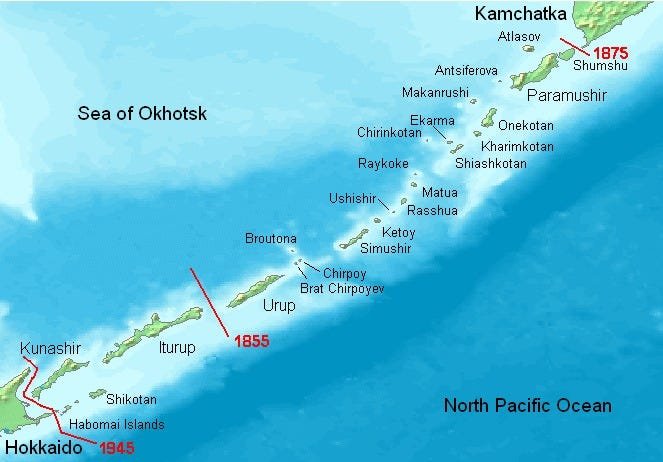
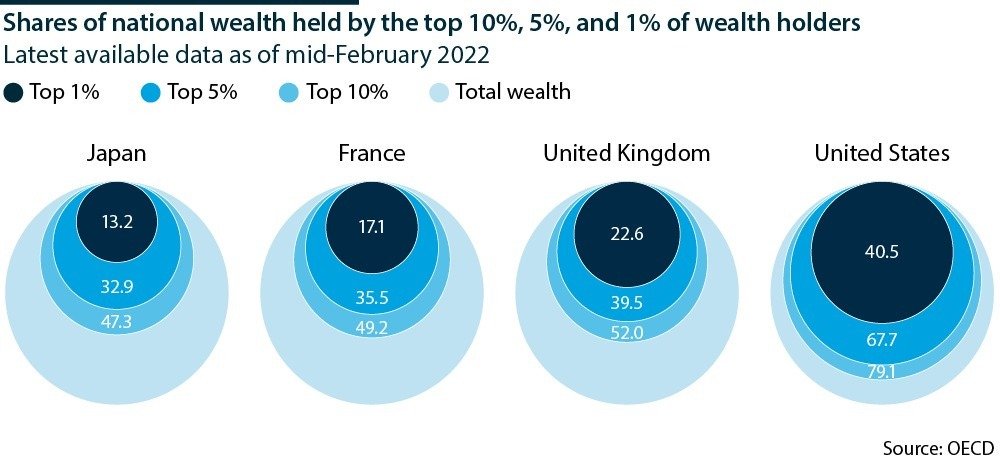


 Lateo.net - Flux RSS en pagaille (pour en ajouter : @ moi)