 Connexion


It’s time for young tech creators to share with the world what they’ve made! Coolest Projects Global 2022 registration is NOW OPEN. Starting today, young people can register their technology creation on the Coolest Projects Global website, where it will be featured in the online showcase gallery for the whole world to see.

By registering a tech project, you’ll represent your community, and you’ll get the coolest, limited-edition swag. You may even win a prize and earn the recognition of the special project judges.
Now in its 10th year, Coolest Projects is all about celebrating young people and what they create with code. Here’s what you need to know:
Here are just a few of the reasons why young tech creators should register their project for the Coolest Projects Global showcase:
If you don’t have a tech project or an idea for one yet, you’ve got plenty of time to imagine and create, and we’re here to support you. Check out our guides to designing and building a tech creation — one that you’ll be proud to share with the Coolest Projects community in the online showcase gallery. And there’s no shortage of inspiration among the projects that young tech creators shared in last year’s showcase gallery.
We have a lot more exciting stuff to share about Coolest Projects Global in the coming months, so be sure to subscribe for email updates. Until next time… be cool, creators!
The post Share your tech project with the world through Coolest Projects Global 2022 appeared first on Raspberry Pi.
It’s time to start your countdown! Young people from all over the world will soon be invited to share their digital creations at Coolest Projects Global 2022, our world-leading online technology showcase event for young creators. In mid-February, project registration opens for a new and improved, online-only experience.
Through Coolest Projects Global, young creators can register their digital projects to share them with the world, represent their country, get some free swag, and maybe even win recognition from our special judges. And the best thing: Coolest Projects participants join a global community of awesome young tech creators who celebrate each other’s accomplishments.
Coolest Projects is celebrating its TENTH YEAR of shining a light on young creators, so we have an extra special showcase lined up in 2022. All of these enhancements are the result of incredibly helpful feedback that past creators have shared. Here’s a sneak peek at what you can look forward to:
We asked past creators what they think makes Coolest Projects so cool, and here’s what they had to say:
Last year, creators showcased all kinds of projects, such as an earthquake early warning device, a fun math game made with Scratch, a squirrel detection system, and a website about cybersecurity. Don’t forget, Coolest Projects is for creators who are beginners, advanced, and everything in between.
Project registration opens on 14 February, but creators can start making their projects now. For inspiration, check out last year’s project gallery and then sign up to receive email updates so that you don’t miss a thing about Coolest Projects. We have many more exciting details coming in the next weeks and months, so stay tuned.
Until next time… be cool.
The post Calling all young tech creators: Get ready for Coolest Projects Global 2022 appeared first on Raspberry Pi.
In our free Coolest Projects online showcase, we invite a worldwide community of young people to come together and celebrate what they’ve built with technology. For this year’s showcase, we’ve already got young tech creators from more than 35 countries registered, including from India, Ireland, UK, USA, Australia, Serbia, Japan, and Syria!
Everyone up to age 18 can register for Coolest Projects to become part of this community with their own tech creation. We welcome all projects, all experience levels, and all kinds of projects, from the very first Scratch animation to a robot with machine learning capacity! The beauty of Coolest Projects is in the diversity of what the young tech creators make.
Young people can register projects in six categories: Hardware, Scratch, Mobile Apps, Websites, Games, and Advanced Programming. Projects need to be fully registered by Monday 3 May 2021, but they don’t need to be finished then — at Coolest Projects we celebrate works in progress just as much as finished creations!
To learn more about the registration process, watch the video below or read our guide on how to register.
Here are the different ways we’re supporting your young people — and you — with project creation!
Download the free Coolest Projects workbook that walks young people through the whole creation process, from finding a topic or problem they want to address, to idea brainstorming, to testing their project:
Explore more than 200 free, step-by-step project guides for learning coding and digital making skills that your young people can use to find help and inspiration! For more ideas on what your young people can make for Coolest Projects, have a look around last year’s online showcase gallery.
This Wednesday 3 March at 19:00 GMT / 14:00 ET, young people can join a special Digital Making at Home live stream about capturing ideas for projects. We’ll share practical tips and inspiration to help them get started with building a Coolest Projects creation:
On Tuesday 23 March, 16:00 GMT / 11:00 ET, young people can join the Coolest Projects team on a live stream to talk to them about all things Coolest Projects and ask all their questions! Subscribe to our YouTube channel and turn on notifications to be reminded about this live stream.
Join our free online workshops where you as an educator or parent can learn how to best support young people to take part:
Getting creative with technology is truly empowering for young people, and anything your young people want to create will be celebrated by us and the whole Coolest Projects community. We’re so excited to see their projects, and we can’t wait to celebrate all together at our big live stream celebration event in June! Don’t let your young people miss their chance to be part of the fun.
The post How your young people can create with tech for Coolest Projects 2021 appeared first on Raspberry Pi.
It’s official: idea registration is finally open for Coolest Project 2021!
Our Coolest Projects online showcase brings together a worldwide community of young people who make things with technology. Everyone up to age 18, wherever they are in the world, can register for Coolest Projects to become part of this community with their own tech creation! We welcome all ideas, all experience levels, and all kinds of projects.
So let all the young people in your family, school, or coding club know, because Coolest Projects is their chance to be part of something amazing this year!
Taking part is free, and projects will be displayed in the Coolest Projects online gallery for people all across the globe to see! And getting involved is super easy: young creators can start by registering their idea for a project now, leaving them plenty of time — until May — to build the project at home.
To celebrate the passion, effort, and creativity of all the tech creators, we will host a grand live-streamed finale event in June, where our fabulous, world-renowned judges will pick their favourites from among all the projects!
Last year, young tech creators from 39 countries took part in the Coolest Projects online showcase. This year, we hope young people from even more places will share their tech creations with the world!
Coolest Projects is a powerful motivator for young people to develop skills in:
…and they will have lots of fun, be inspired by their peers, and feel like they are part of a truly international community.
Through the Coolest Projects online showcase, young people get the opportunity to explore their creativity and realise their tech ambitions! Whatever they come up with as a project idea, we want them to register so the Coolest Projects community can celebrate it.
To help you support young people to create their projects, we’re running a free online workshop called ‘How to design projects with young people’ on 25 February.
We can’t wait to see the wonderful, imaginative things young tech creators in this global community are going to share with the world!
Sign up for the Coolest Projects newsletter to never miss the latest updates about our exciting online showcase, including the free online support sessions for participants.
The post Idea registration is open for Coolest Project 2021! appeared first on Raspberry Pi.
Using deeper learning as a framework for transformative educational experiences, Brent Richardson outlines the case for a pedagogical approach that challenges students using a Raspberry Pi. From the latest issue of Hello World magazine — out today!
A benefit of completing school and entering the workforce is being able to kiss standardised tests goodbye. That is, if you don’t count those occasional ‘prove you watched the webinar’ quizzes some supervisors require.
In the real world, assessments often happen on the fly and are based on each employee’s ability to successfully complete tasks and solve problems. It is often obvious to an employer when their staff members are unprepared.
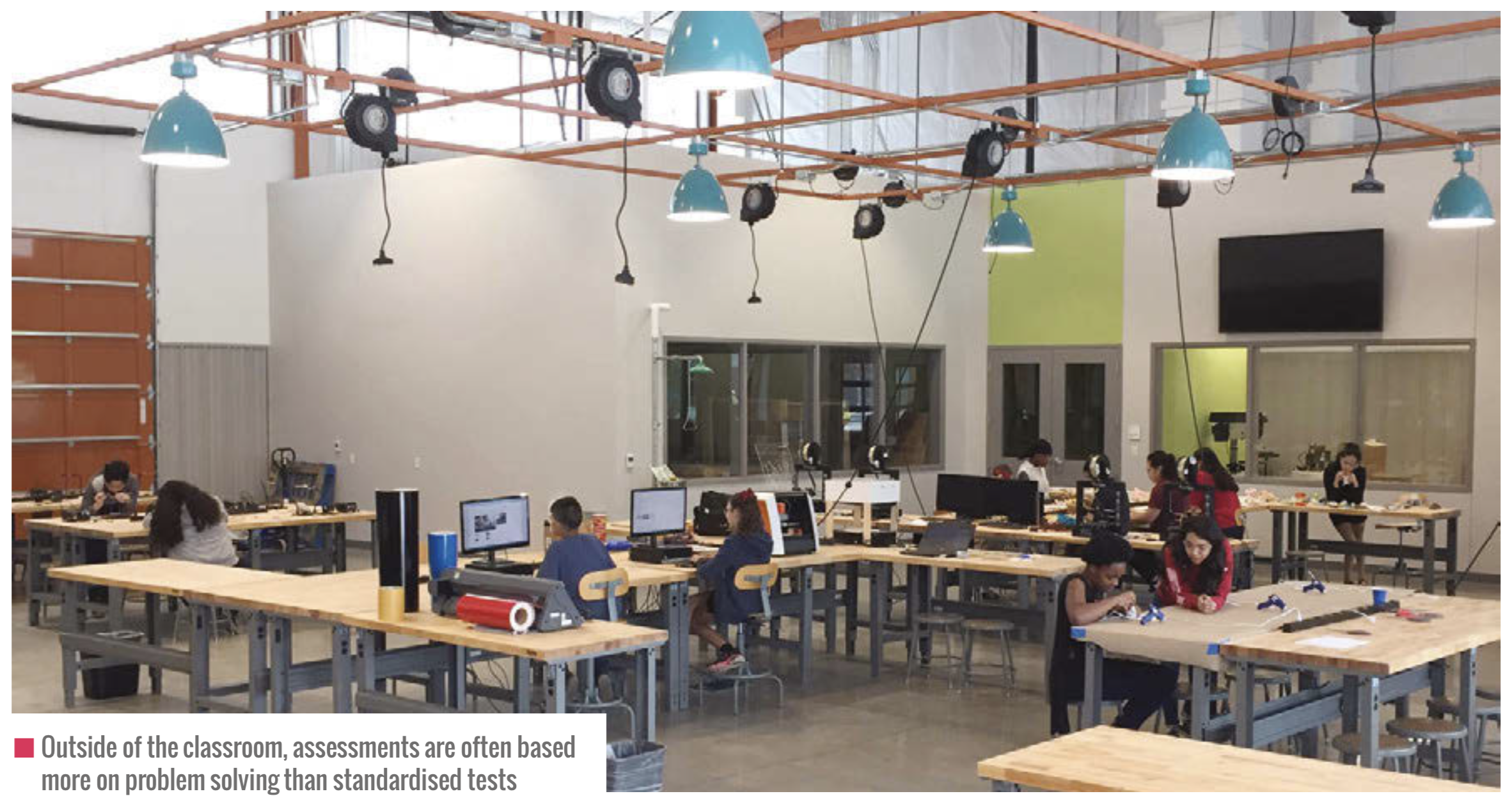
Formal education continues to focus on accountability tools that measure base-level proficiencies instead of more complex skills like problem-solving and communication.
One of the main reasons the U.S. education system is criticised for its reliance on standardised tests is that this method of assessing a student’s comprehension of a subject can hinder their ability to transfer knowledge from an existing situation to a new situation. The effect leaves students ill-prepared for higher education and the workforce.
A study conducted by the National Association of Colleges and Employers found a significant gap between how students felt about their abilities and their employer’s observations. In seven out of eight categories, students rated their skills much higher than their prospective employers had.
Some people believe that this gap continues to widen because teaching within the confines of a standardised test encourages teachers to narrow their instruction. The focus becomes preparing students with a limited scope of learning that is beneficial for testing.
With this approach to learning, it is possible that students can excel at test-taking and still struggle with applying knowledge in new ways. Educators need to have the support to not only prepare students for tests but also to develop ways that will help their students connect to the material in a meaningful manner.
In an effort to boost the U.S. education system’s ability to increase the knowledge and skills of students, many private corporations and nonprofits directly support public education. In 2010, the Hewlett Foundation went so far as to develop a framework called ‘deeper learning’ to help guide its education partners in preparing learners for success.
Deeper learning focuses on six key competencies:
This framework ensures that learners are active participants in their education. Students are immersed in a challenging curriculum that requires them to seek out and acquire new information, apply what they have learned, and build upon that to create new knowledge.
While deeper learning experiences are important for all students, research shows that schools that engage students from low-income families and students of colour in deeper learning have stronger academic outcomes, better attendance and behaviour, and lower dropout rates. This results in higher graduation rates, and higher rates
of college attendance and perseverance than comparison schools serving similar students. This pedagogical approach is one we strive to embed in all our work at Fab Lab Houston.
The importance of deeper learning was undeniable when a group of students I worked with in Houston built a solar-powered time-lapse camera. Through this collaborative project, we quickly found ourselves moving beyond classroom pedagogy to a ‘hero’s journey’ — where students’ learning paths echo a centuries-old narrative arc in which a protagonist goes on an adventure, makes new friends, encounters roadblocks, overcomes adversity, and returns home a changed person.
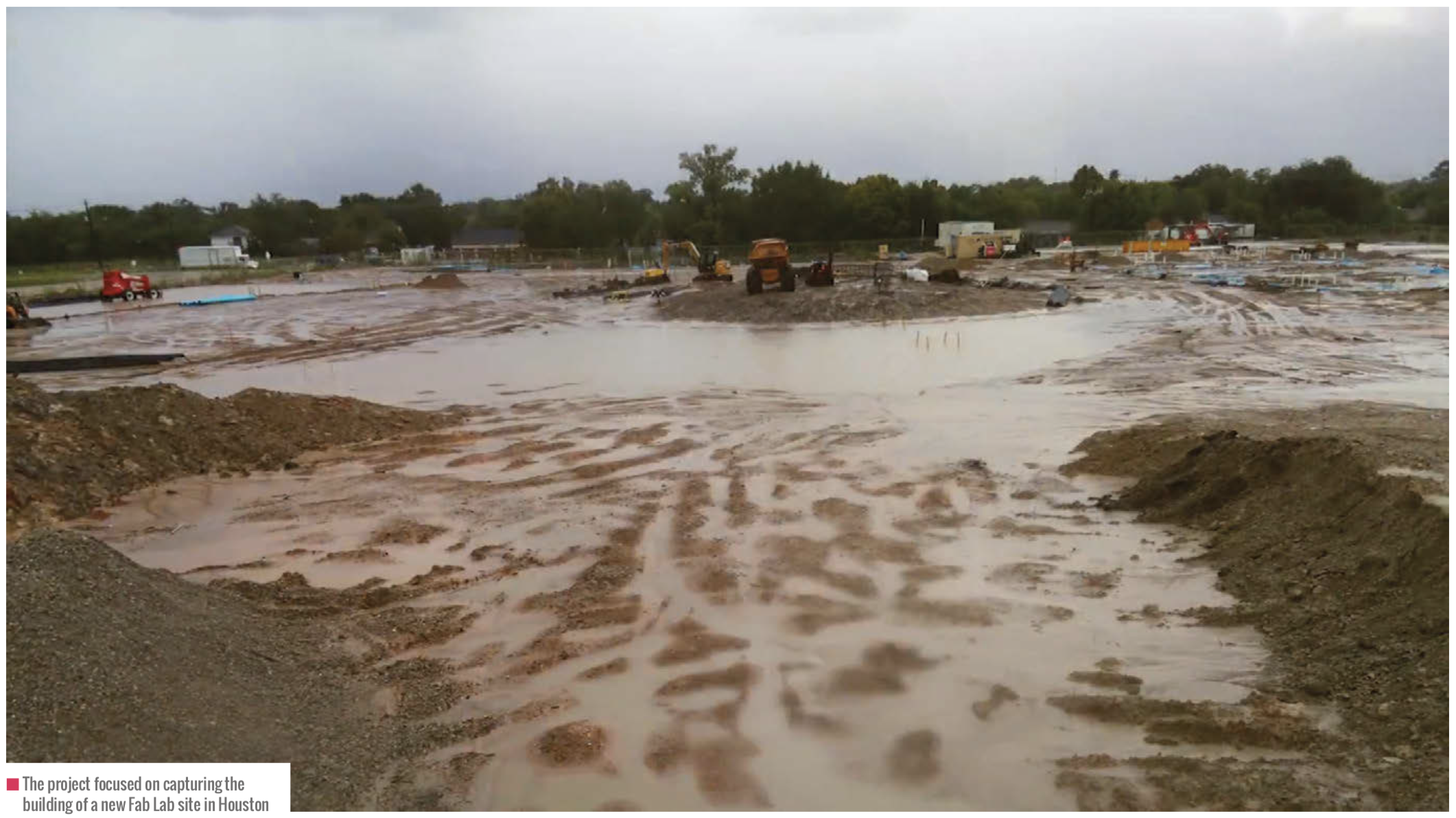
In this spirit, we challenged the students with a simple objective: ‘Make a device to document the construction of Fab Lab Houston’. In just one sentence, participants understood enough to know where the finish line was without being told exactly how to get there. This shift in approach pushed students to ask questions as they attempted to understand constraints and potential approaches.
Students shared ideas ranging from drone video to photography robots. Together everyone began to break down these big ideas into smaller parts and better define the project we would tackle together. To my surprise, even the students that typically refused to do most things were excited to poke holes in unrealistic ideas. It was decided, among other things, that drones would be too expensive, robots might not be waterproof, and time was always a concern.
The decision was made to move forward with the stationary time-lapse camera, because although the students didn’t know how to accomplish all the aspects of the project, they could at least understand the project enough to break it down into doable parts and develop a ballpark budget. Students formed three teams and picked one aspect of the project to tackle. The three subgroups focused on taking photos and converting them to video, developing a remote power solution, and building weatherproof housing.
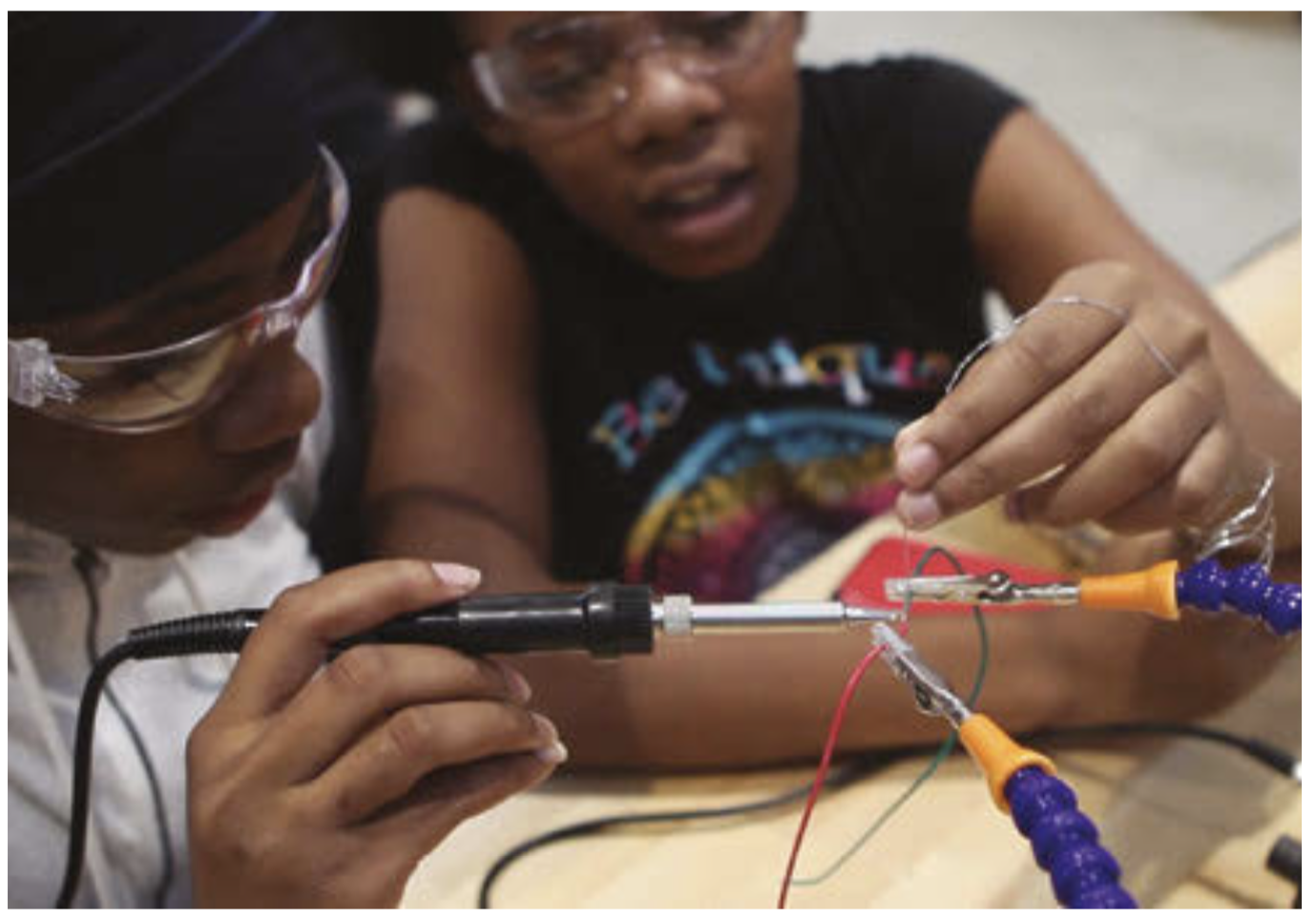
A group of students found sample code for Raspberry Pi that could be repurposed to take photos and store them sequentially on a USB drive. After quick success, a few ambitious learners started working to automate the image post-processing into video. Eventually, after attempting multiple ways to program the computer to dynamically turn images into video, one team member discovered a new approach: since the photos were stored with a sequential numbering system, thousands of photos could be loaded into Adobe Premiere Pro straight off the USB with the ‘Automate to Sequence’ tool in Premiere.
A great deal of time was spent measuring power consumption and calculating solar panel and battery size. Since the project would be placed on a pole in the middle of a construction site for six months, the students were challenged with making their solar-powered time-lapse camera as efficient as possible.
Waking the device after it was put into sleep mode proved to be more difficult than anticipated, so a hardware solution was tested. The Raspberry Pi computer was programmed to boot up when receiving power, take a picture, and then shut itself down. With the Raspberry Pi safely shut down, a timer relay cut power for ten minutes before returning power and starting the cycle again.
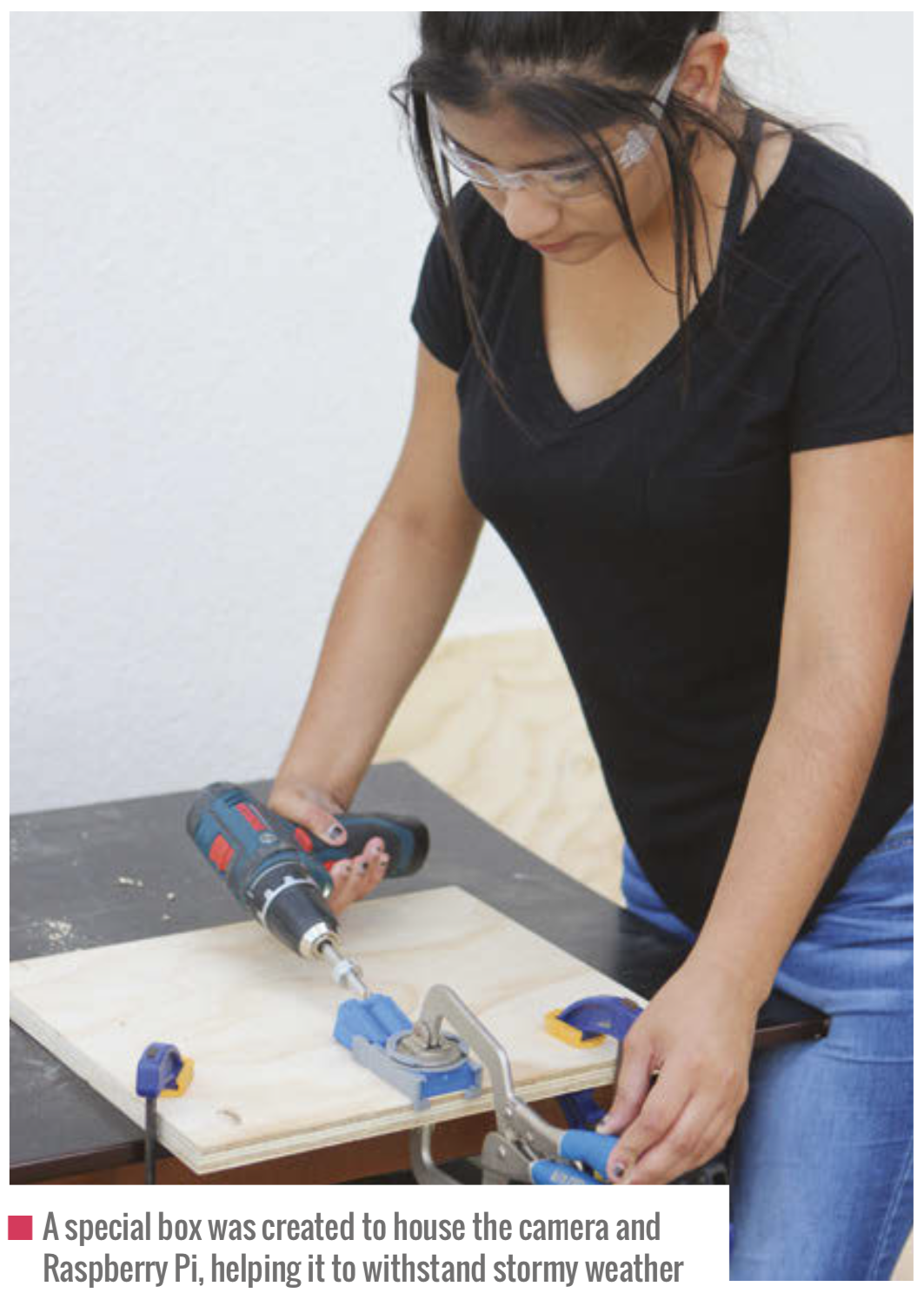
Finally, a waterproof container had to be built to house the electronics and battery. To avoid overcomplicating the process, the group sourced a plastic weatherproof ammunition storage box to modify. Students operated a 3D printer to create custom parts for the box.
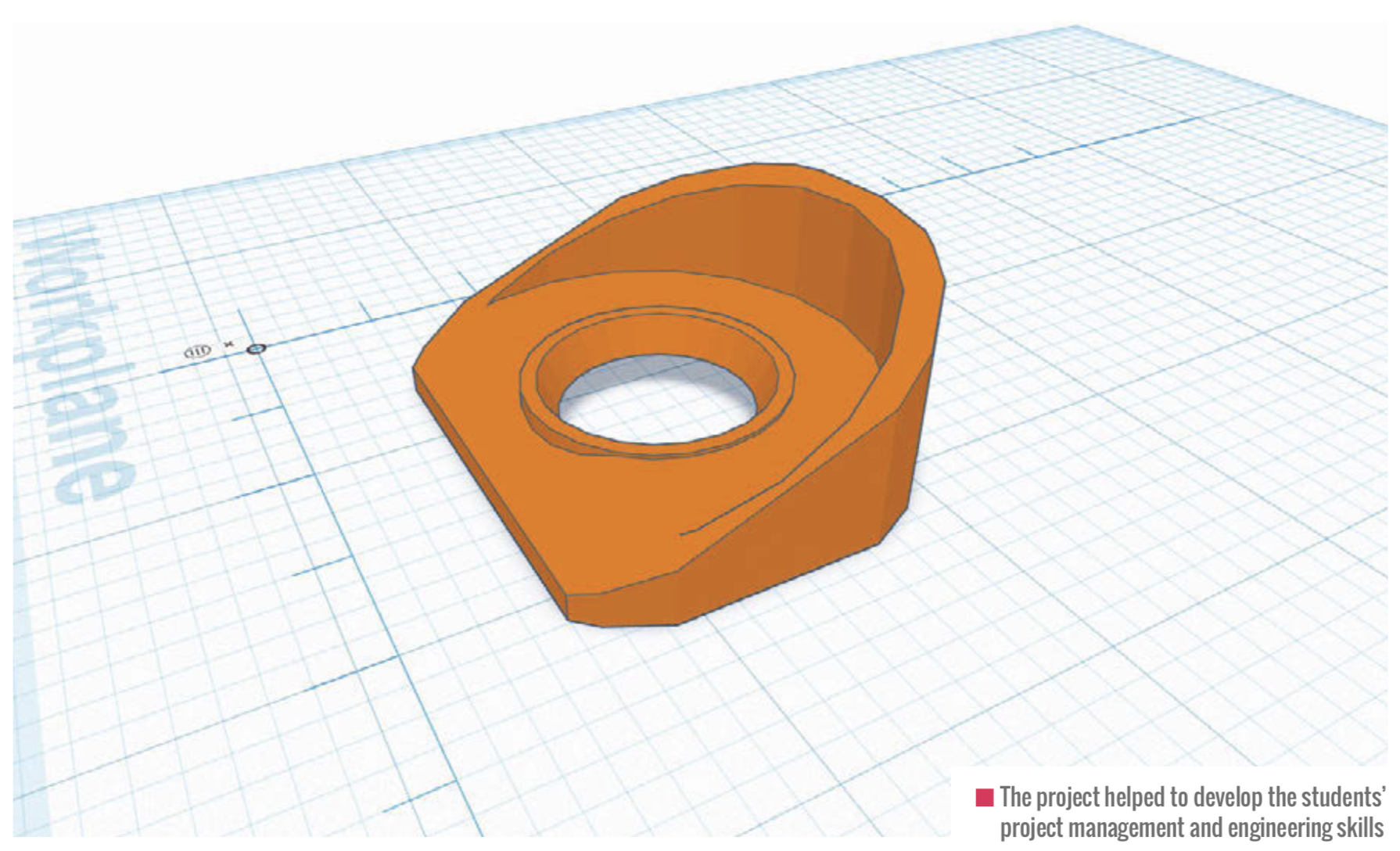
After cutting a hole for the camera, a small piece of glass was attached to a 3D-printed hood, ensuring no water entered the box. On the rear of the box, they printed a part to hold and seal the cable from the solar panel where it entered the box. It only took a few sessions before the group produced a functioning prototype. The project was then placed outside for a day to test the capability of the device.
The test appeared successful when the students checked the USB drive. The drive was full of high-quality images captured every ten minutes. When the drive was connected back to Raspberry Pi, a student noticed that all the parts inside the case moved. The high temperature on the day of the test had melted the glue used to attach everything. This unexpected problem challenged students to research a better alternative and reattach the pieces.
Once the students felt confident in their device’s functionality, it was handed over to the construction crew, who installed the camera on a twenty-foot pole. The installation went smoothly and the students anxiously waited to see the results.
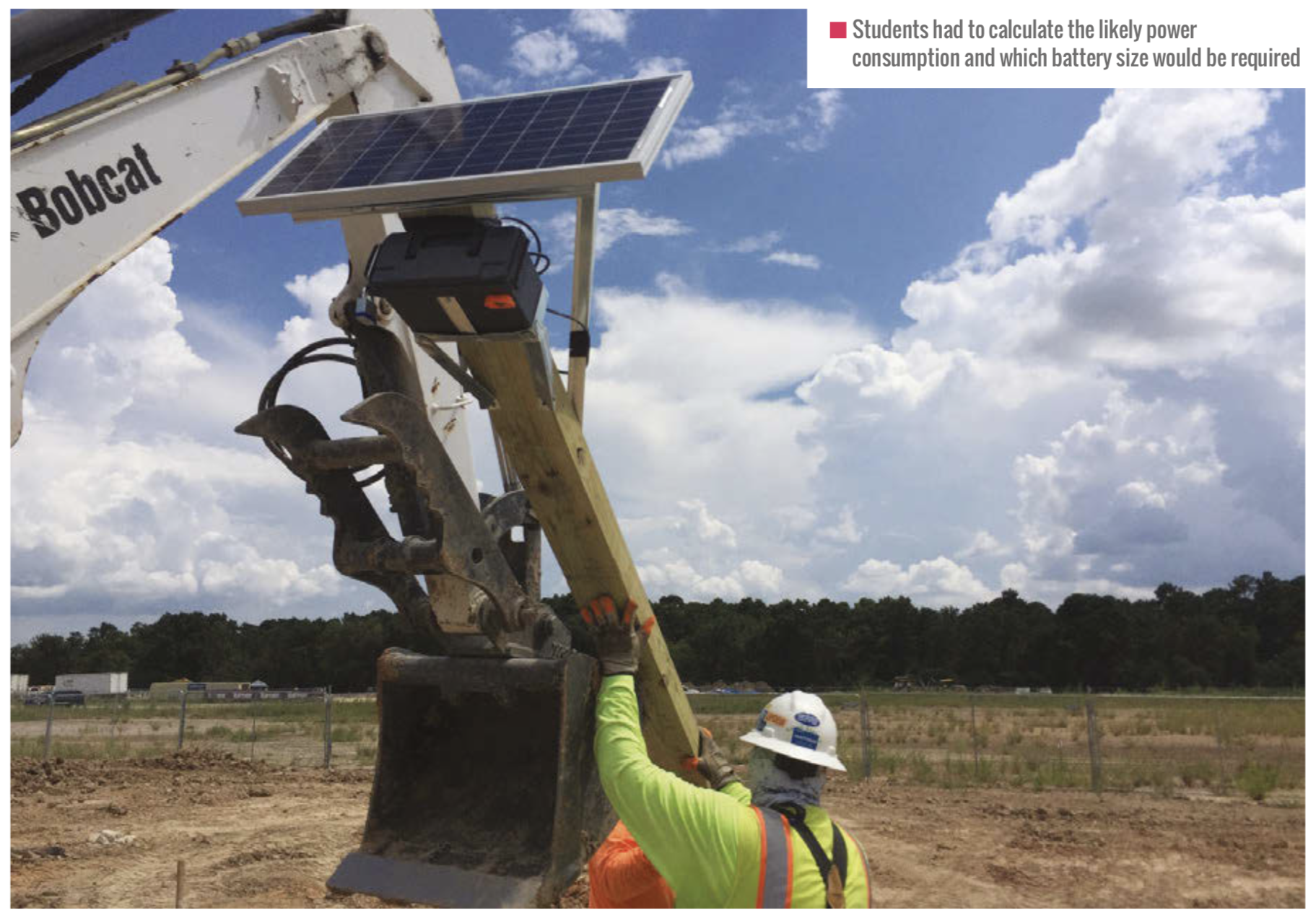
Less than a week after the camera went up, Houston was hit hard with the rains brought on by hurricane Harvey. The group was nervous to see whether the project they had constructed would survive. However, when they saw that their camera had survived and was working, they felt a great sense of pride.
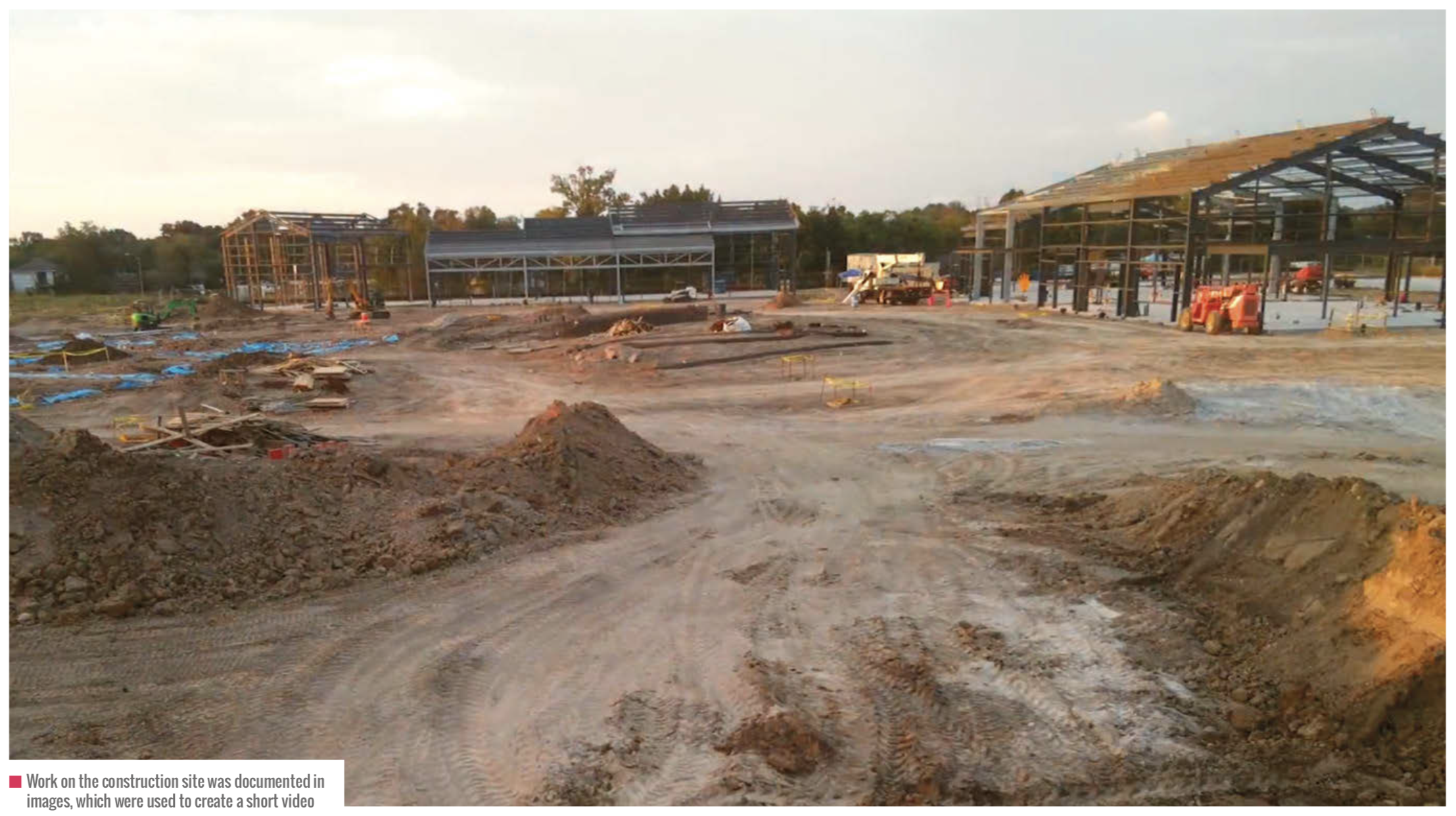
They recognised that it was the collaborative effort of the group to problem-solve possible challenges that allowed their camera to not only survive but to capture a spectacular series of photos showing the impact of the hurricane in the location it was placed.
BakerRipleyTimeLapse2
This is “BakerRipleyTimeLapse2” by Brent Richardson on Vimeo, the home for high quality videos and the people who love them.
Overcoming many hiccups throughout the project was a great illustration of how the students learned how to learn and
to develop an academic mindset; a setback that at the beginning of the project might have seemed insurmountable was laughable in the end.
Throughout my experience as a classroom teacher, a museum educator, and now a director of a digital makerspace, I’ve seen countless students struggle to understand the relevance of learning, and this has led me to develop a strong desire to expand the use of deeper learning.
Sometimes it feels like a risk to facilitate learning rather than impart knowledge, but seeing a student’s development into a changed person, ready to help someone else learn, makes it worth the effort. Let’s challenge ourselves as educators to help students acquire knowledge and use it.
Issue 12 of Hello World is available now as a FREE PDF download. UK-based educators can also subscribe to receive Hello World directly to their door in all its shiny printed goodness. Visit the Hello World website for more information.
The post Using Raspberry Pi for deeper learning in education appeared first on Raspberry Pi.


 Lateo.net - Flux RSS en pagaille (pour en ajouter : @ moi)
