Connexion


Vous pouvez ranger la pilule rouge tout de suite les amis car une équipe de physiciens menée par Mir Faizal vient d'affirmer, calculs à l'appui, que notre univers ne peut pas être une simulation informatique.
Et il n'annonce pas ça en mode "On n'a pas encore trouvé LA preuve", non... Apparemment, ce serait ferme et définitif. Et du coup ça me rend un petit peu tristoune et je vais vous expliquer pourquoi.
Leur papier est paru dans le Journal of Holography Applications in Physics, et s'appuie fortement sur une vieille "bombe" mathématique, les théorèmes d'incomplétude de Gödel , publiés en 1931.
En gros, Gödel a démontré que dans tout système de règles un peu costaud, il existe des vérités bien réelles mais qu'on ne pourra jamais démontrer depuis l'intérieur du système.
Faizal et son équipe ont donc repris cette idée en l'appliquant à la réalité et selon eux, le niveau le plus profond de l'univers réclame une "compréhension non-algorithmique". Cela veut dire que c'est un truc qui échappe à toute suite d'étapes programmables.
Et là, le raisonnement se referme tout seul puisque toute simulation est par nature algorithmique. Elle doit donc suivre des règles programmées. Et comme le socle de la réalité, lui n'est pas algorithmique, eh bien aucune simulation ni aucun ordinateur ne pourra jamais le recopier en entier. Bref, d'après eux, on peut tous oublier nos délires de "On est dans la matrice, Néo"...
Cette idée qu'on vive dans une simulation à l'origine, c'est Nick Bostrom qui l'a formulée en 2003, donc bien avant qu'Elon Musk en fasse son petit dada pour impressionner les filles en soirée. J'en avais déjà causé quand des chercheurs suggéraient que la gravité ressemblait à un bug dans la matrice , ou quand une IA se mettait à simuler l'univers sur un simple laptop . Bref, le sujet revient tout le temps ces dernières années !
Maintenant je vous l'accorde, ça reste un papier de maths et de logique et c'est pas une vraie expérience qu'on a réalisé dans le monde réel pour voir si ça se confirme. Donc ça se chamaille déjà sur arXiv pour dire que si ça peut pas se prouver, ça peut encore se discuter.
Donc le débat est loin d'être plié
Mais bon, si ces physiciens ont raison, ça m'embête parce que même si j'y croyais pas vraiment à cette histoire de simulation, c'était quand même bien pratique pour expliquer tout ce qui nous arrivait en ce moment à savoir toute cette connerie ambiante, cette ambiance Idiocratie ou Don't Look Up...etc.
Voilà, je me disais que la partie de Sim était en train de partir en couille. Mais il faut que je me rende à l'évidence, c'est juste comme ça... C'est l'univers, c'est la nature, on avance vers l'inconnu toujours plus loin dans la connerie, et ça ça me fait flipper. Beaucoup plus que des agents Smith et une réalité qui ne serait pas la "vraie" réalité. Désolé ^^

Chargé d'écrire et de réaliser le prochain film Matrix, Drew Goddard n'a pas voulu dire si oui ou non Keanu Reeves renfilera le costume de l'emblématique Neo.
We’ve seen a few innovative album art displays using Raspberry Pi, from LEGO minifigures playing their own music to this NFC-powered record player.
Maker Kyle Johnson was looking for a fun project combining Raspberry Pi and Adafruit’s LED matrix, and has created the latest cool album art display to grace our blog.
The maker turned to PowerShell – a cross-platform task automation solution – to create a script (available on GitHub) that tells the Raspberry Pi which album is playing, and sends it the album artwork for display on the LED matrix.
Raspberry Pi runs a flaschen-taschen server to display the album artwork. The PowerShell script runs a ‘send image’ command every time the album art updates. Then the Raspberry Pi switches the display to reflect what is now playing. In the demo video, the maker runs this from iTunes, but says that any compatible music player (ie: Spotify) will work too.
The maker’s original reddit post shares a step-by-step guide to follow on the software side of things. And they detail the terminal code you’ll need to run on the Raspberry Pi to get your LED Matrix displaying the correct image.
They also suggest checking out Adafruit’s setup guides for the RGB Matrix Bonnet for Raspberry Pi and for the LED Matrix itself.
The post Raspberry Pi displays album art on LED matrix appeared first on Raspberry Pi.
Why wear a boring bowler hat when you can add technology to make one of Disney’s most evil pieces of apparel?
Meet the Robinsons is one of Disney’s most underrated movies. Thank you for coming to my TED talk.

What’s not to love? Experimental, futuristic technology, a misunderstood villain, lessons of love and forgiveness aplenty, and a talking T-Rex!
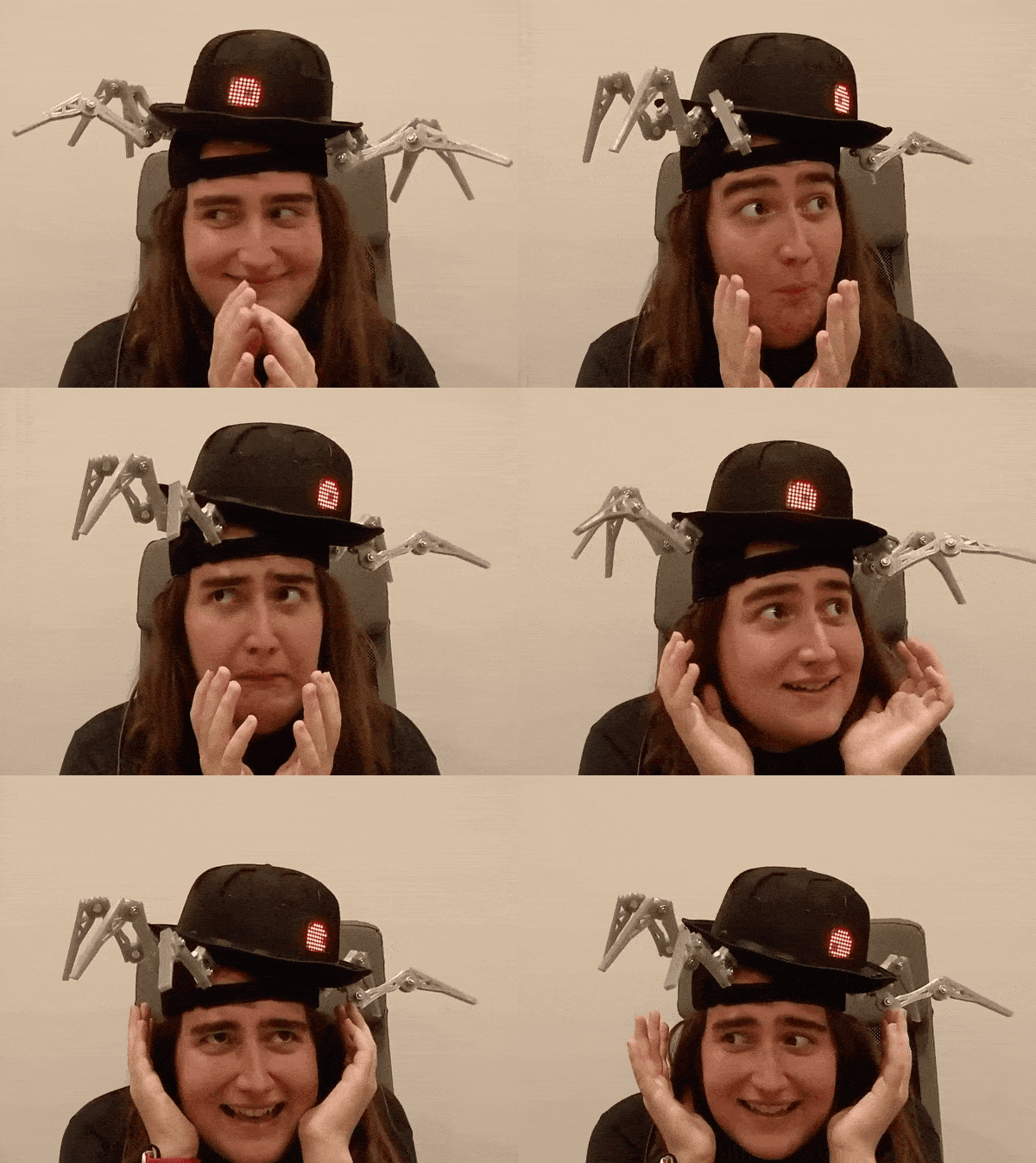
For me, one of the stand-out characters of Meet the Robinsons is DOR-15, a best-of-intentions experiment gone horribly wrong. Designed as a helper hat, DOR-15 instead takes over the mind of whoever is wearing it, hellbent on world domination.
Built using a Raspberry Pi and the MATRIX Voice development board, the real-life DOR-15, from Team MATRIX Labs, may not be ready to take over the world, but it’s still really cool.
With a plethora of built-in audio sensors, the MATRIX Voice directs DOR-15 towards whoever is making sound, while a series of servos wiggle 3D‑printed legs for added creepy.
This project uses ODAS (Open embeddeD Audition System) and some custom code to move a servo motor in the direction of the most concentrated incoming sound in a 180 degree radius. This enables the hat to face a person calling to it.
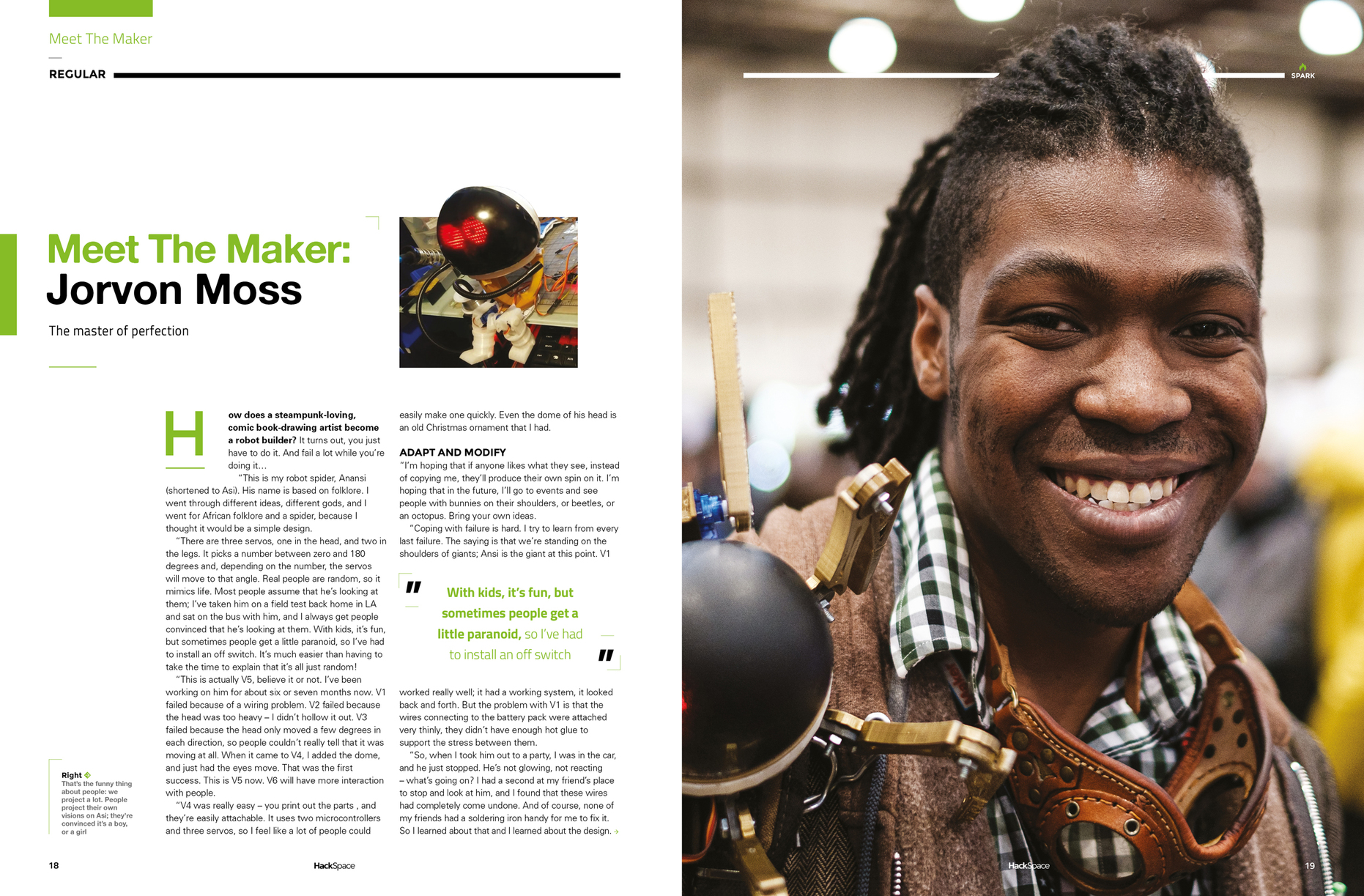
The added wiggly spider legs come courtesy of this guide by the delightful Jorvon Moss, whom HackSpace readers will remember from issue 21.
In their complete Hackster walkthrough, Team Matrix Lab talk you through how to build your own DOR-15, including all the files needed to 3D‑print the legs.
So, what fictional wonder would you bring to life? Your own working TARDIS? Winifred’s spellbook? Mary Poppins’ handbag? Let us know in the comments below.
The post Real-life DOR-15 bowler hat from Disney’s Meet the Robinsons appeared first on Raspberry Pi.


 Lateo.net - Flux RSS en pagaille (pour en ajouter : @ moi)