 Connexion


Written by Kris Bales of Weird, Unsocialized Homeschoolers.
A few years ago, it was very popular for mom bloggers to write about being the “yes mom.” There were blog posts, Facebook status updates, and Instagram photos capturing those yes mom moments.
I know because I wrote and snapped many of them myself.
Maybe it’s still a thing; I don’t know. In case it isn’t, the gist of it was don’t tell your kids no when you could just as easily say yes.
Yes, we can have ice cream before dinner tonight. Yes, you can jump in the mud puddle. Yes, we can play a board game.
It was a fabulous concept – one whose implementation resulted in some amazing memories with my kids.
However, it’s important to remember that it’s okay to say no, too.
Moms are especially guilty of trying to say yes to all the things, resulting in exhausted, overwhelmed, burned-out women. We’re not just moms. We’re human, too.
We need rest, hobbies, downtime, and white space. If you happen to be an introvert on top of being a mom and a homeschooling parent, you really need that downtime and white space.
There is a lot of talk in homeschooling circles about volunteer opportunities. Volunteering can be a phenomenal opportunity to give back to your community and teach your children the joys of serving others.
It can also be exhausting and overwhelming when the opportunities aren’t chosen judiciously. And, the opportunities can be countless when the people offering them assume that you have an abundance of free time because you’re home all day.
When my kids were babies, I worked in the church nursery on Sunday mornings because, other than the one older lady who was there every week, no one except the moms with babies volunteered for nursery duties. Back then I would have loved for someone to snuggle my babies while I recharged for an hour.
Later, it was assumed that because I homeschooled, I would also be the perfect fit to lead children’s church on Sunday mornings. Y’all, after teaching my kids all week, I really had no desire to teach others on Sunday morning, but I didn’t know how to say no back then.
These days, I’ve learned to graciously, but firmly say no to serving in areas that are stress-inducing for me.
(And, now that my kids are grown, I regularly serve in the church nursery because I know those moms of littles appreciate being able to go to church and know that their babies are safe and well-cared-for.)
We homeschooled for over 14 years. My kids have never attended an organized co-op. We did have an informal nature study co-op with one family for a few months when the kids were younger, and we’re currently doing a government co-op with two other teens.
But we’ve never done an honest-to-goodness, organized co-op. A friend invited us to join hers the first year we homeschooled, but I declined, saying that I wanted to just spend the first year at home, finding our footing.
We talked about other co-ops a time or two, but none of the kids were ever interested. They seem pretty well-adjusted despite our co-op-less existence.
If joining a co-op meets your family’s needs for social opportunities, learning in a group setting, or tackling academic or elective courses that aren’t feasible at home, go for it! But, don’t join a co-op based on outside pressures or unfounded guilt over something you think your kids are missing.
In my opinion, kids are much better off at home with a stress-free mom than a traveling to a guilt-induced co-op class with a stressed-out, overextended one.
Last Saturday, my daughter asked if I’d take her shopping so she could spend her birthday money. Without the slightest twinge of guilt anywhere in my psyche, I told her no.
You see, Wednesday was spent chauffeuring her to the DMV to take the test to get her learner’s permit (She passed!), running an errand for her older sister, dropping her off for her photography class, picking her up from the class, and running through a drive-thru to get her some food before dropping her off at church for worship team practice.
Thursday was spent accompanying my oldest to a doctor’s appointment (that, incidentally, took forever) before coming home to clean house and make cookies for the birthday party that we hosted that evening. In between the cleaning/baking and birthday party hosting, was a trip to a local indoor trampoline park for birthday party fun.
Just for kicks, we also got to sit in stand-still traffic on the way that made us and the majority of the party-goers half an hour late.
Friday was spent grocery shopping and running home to put the groceries away before rushing off to get the kids to our government not-a-co-op. From there, we ran a forgotten item to one of the previous day’s party-goers on the way to take the kids to another birthday party.
(My daughter and her BFF share a birthday, but they have separate parties.)
There were even a couple of my own errands to be run after dropping the kids off.
So, you know what? I didn’t feel the slightest bit guilty about telling my daughter that nothing short of a disaster could convince me to leave the house on Saturday.
(In case you wondered, there were no disasters, and I didn’t leave the house.)
I could give dozens of examples of situations in which it’s okay to say no, but I bet you get the point.
You don’t have to do all of the things. It’s great to be a yes mom, but not to the point that it leaves you stressed-out, burned-out, and unable to care for yourself and your family.
Being a yes mom to saying no – as in, “Yes, I said no to that obligation” – can lead to memory-making family moments, too. Because you can’t make memories when you’re spending all your time doing all the things.
It’s okay to say no.
Is there something you need to say no to this week?
The post It’s okay to say no appeared first on Activist Post.
For whatever reason, some kids hate to write.
I don’t mean they dislike it, or they’d rather not today, thank you. No, I’m talking about those kids for whom writing “The cat sat on the mat,” requires the physical effort and mental stamina of climbing Pike’s Peak (but probably with a lot more fussing, whining, crying and arguing).
These kids aren’t faking: writing is genuinely difficult for them. (Especially when they’re young, and especially for boys.)
Your challenge as a teacher, a parent, and an academic coach is to keep their disdain for handwriting from turning into a hatred of school, which happens all too often because the thing they hate most (handwriting) permeates every subject.
Thankfully, most writing haters get over it–without intervention–by 4th or 5th grade.
But until then, these tips will help you — and your child — cope.
1. As far as you can, eliminate the writing in every subject but writing.
The goal is simply to master the material.
2. Do the work out loud.
Instead of written worksheets, try oral drills for math facts, phonics, translations, fill-in-the-blanks, paragraph summaries, etc. Or, do the worksheet but do it out loud.
3. Use stickers.
If your child is completing a worksheet, try writing the answers on small stickers in advance. Your student can then place the correct sticker in the appropriate spot for his answer. (This has the advantage of feeling like a game.)
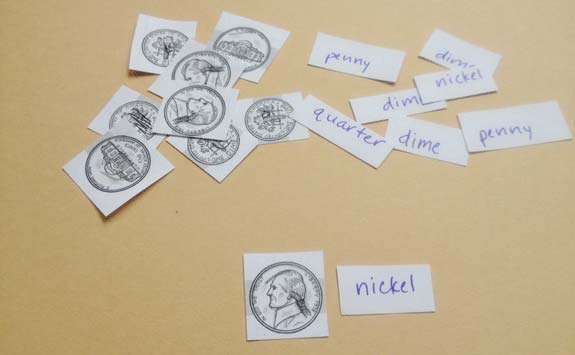
4. Make it a matching game.
With a little advance work on your part, your child can match up Spanish nouns with their meanings, coins with their names, states with their capitals, dates with historical facts, and anything else you can think of.
5. Play “secretary” for your student.
They dictate, you record. This lets your creative child get their stories, summaries, or science observations out of their head and onto paper.
6. Get creative with spelling word practice.
To practice “writing” spelling words, let your child “spell” the words with his finger in a shallow container of rice, sand, beans, or water. No paper or pencil required.
7. Consider starting typing early.
We started our pencil-hating kids on a typing program at age seven (at their request!), but kids as young as five can begin typing lessons.
8. When your kid must write, equip them with coping strategies to help them handle it better, or let them find their own.
My writing-haters self-soothed by swinging, spinning and sprinting down the driveway, preferably before and after handwriting time.
9. Make the writing easier:
These tips and tricks require a little extra work on your part to implement.
But if your writing hater still loves school (well, except for handwriting class) I hope you’ll agree with me: it’s worth it.
Do you have (or have you had) a student who hates to write? We need your tips, tricks and coping strategies!
The post How to homeschool a kid who hates to write appeared first on Activist Post.
The 5 love languages of homeschooling ~
Written by Jamie C. Martin of Simple Homeschool
A few weeks ago an issue with one of my children kept me up late into the night. You know, one of those little things that you can’t quite figure out.
After pondering, praying, and a bit of crying, I eventually reached out to a friend and homeschooling mentor.
In just a sentence or two I outlined the problem and asked if she had any advice. And in one sentence she solved it for me:
“What’s your child’s love language?”
Hmmmm. Love languages? I had that filed back in my brain somewhere as it relates to marriage, but I had never paid it much attention when it comes to my children.
Would you rather listen to this post?
And after some research into my child’s love language and a little attention in that area, this so-called “issue” pretty much vanished. Vanished, I tell you!
Gary Chapman and Ross Campbell articulated the five love languages years ago. They write: “Every child (like every adult) expresses and receives love best through one of five communication styles.”
We want to express unconditional love in each of these ways, of course.
But just like each child has a different personality, they also have a unique love language. Figuring it out can make a huge difference in the health of your homeschool.
I found this online quiz (recommended for ages 9+) invaluable to figuring out my kids’ love language preference–Trishna, Jonathan, and Elijah enjoyed it, too!
Here is an overview of the 5 love languages of children and ways we can apply them to our homeschool lives.
The 5 love languages of homeschooling

Physical Touch
A child who best receives love through physical touch desperately needs hugs, kisses, and pats on the shoulder. Not having enough can leave them feeling that they’ve done something wrong and that you are not pleased with them.
Ideas for homeschooling and teaching this child:
roughhouse (tickles, wrestling, chasing) with littles who enjoy it
let them sit on your lap for lessons or stories
give them a back massage break for five minutes if they reach a challenge in their work
for older kids or teens, give high fives and pats on the shoulder
make sure to reconnect with physical touch after disciplining or difficult moments
sit close while watching television or a movie
Words of Affirmation
Our culture has lost the art of giving affirmation. Words spoken well do not damage our kids, but fill them with confidence.
They powerfully communicate love, and even more so to a child (or adult) whose main love language is words of affirmation. (Hand raised here–it’s mine!)
Ideas for homeschooling and teaching this child:
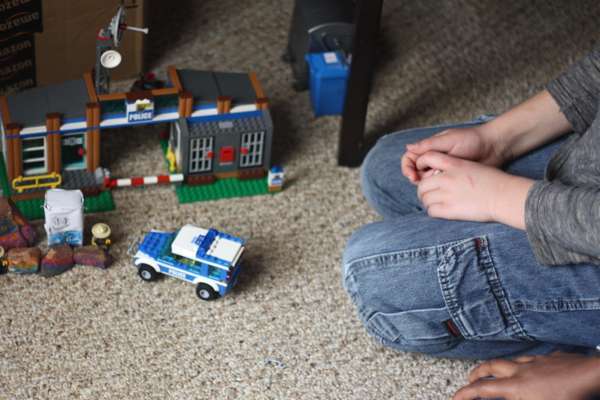
Receiving Gifts
Reading the chapter on gifts in The Five Love Languages for Children book gave me a broader concept behind the definition of a “gift.” It doesn’t mean shopping at the mall or spending tons of money. Instead, it suggested framing even the “essentials” I provide in a more special way.
For example, I usually buy new clothes for the kids in the fall. Instead of just bringing them out of the shopping bag when I got home, this year I placed each child’s new clothes inside a pillowcase and stuck a bow on the top with a quick note. Then I put the pillowcases in their rooms after they were asleep, so they woke in the morning to new clothes.
Ideas for homeschooling and teaching this child:
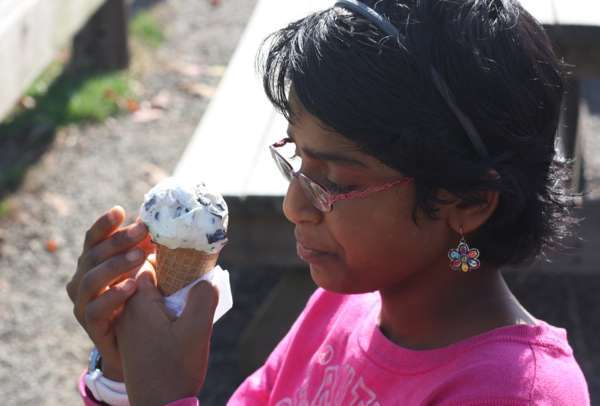
Quality Time
Two of my three children’s primary love language is quality time, meaning I have my work cut out for me in spreading myself around! I feel like I’m with my kids all the time as a homeschooling mother, but that doesn’t mean it comes across to my quality time needing kids.
If I’m busy or distracted, it doesn’t register in their emotional bank accounts. We don’t need to do anything special, but even making dinner together while chatting goes a long way to keeping those love tanks filled.
Ideas for homeschooling and teaching this child:
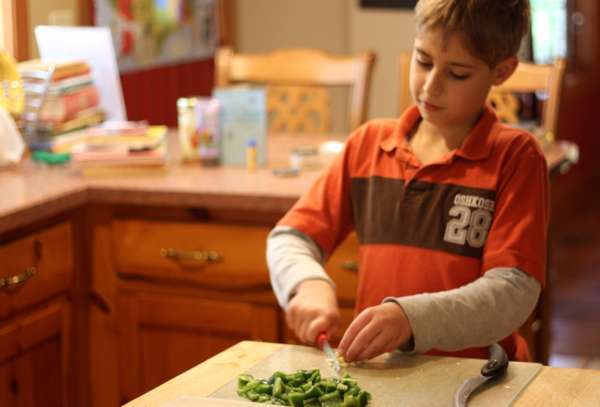
Acts of Service
Acts of service doesn’t mean doing everything for a child and never having him take responsibility.
Instead it means recognizing that through your service this child receives your love. When you know this is a child’s main love language, you can put more effort in blessing them with the duties they struggle with most.
Ideas for homeschooling and teaching this child:

This post barely scratches the surface on this topic, and if you’d like to go deeper make sure you check out The Five Love Languages of Children.
Reading this book showed me yet another reason why I’m thankful to be a homeschooling parent–the extra hours we spend together each day give me even more time to get to know my children deeply, and be able to demonstrate my unconditional love in the ways that speak volumes to them.
And an unexpected upside? By loving our children well, we also teach them how to love – a gift that keeps giving for generations.
“Accept the children the way we accept trees—with gratitude, because they are a blessing—but do not have expectations or desires. You don’t expect trees to change, you love them as they are.”
~ Isabel Allende
This post contains affiliate links, which means I receive a small commission from some of the links on this page.
What’s Your Homeschool Mom Personality? Take Jamie’s quiz now and receive a free personality report to help you organize your homeschool based on what you need most!
The post The 5 love languages of homeschooling appeared first on Activist Post.


 Lateo.net - Flux RSS en pagaille (pour en ajouter : @ moi)
