 Connexion


If the video above does not play, please try on our social media channels
Journalist Derrick Broze breaks down his latest investigation into the AI company at the center of the recent wave of so-called “rogue AI” incidents. The firm, known as Irregular, has numerous ties to Israeli intelligence.
Read Derrick’s article: Irregular: The Israeli Company with Intelligence Ties at the Center of the Rogue AI Incidents
The post Meet “Irregular” – the Israeli Firm at the Center of the “Rogue AI” Reports appeared first on Activist Post.
In the face of politics that prioritize cruelty, anarchism serves as the vehicle through which all people can achieve lasting freedom.
Republished from The Free Thought project
In our increasingly polarizing political schism it can seem to some like basic human decency is continuing to fall evermore to the wayside amid the rise of growing radicalism.
Some may say, “what happened to the good old days where everyone respected each other’s beliefs and politics was civil?”
And to that I would say, you’re recalling a fairytale. There never has been a time, in America or elsewhere, where politics was respectful to the people as a whole or civil in its nature. Those reminiscing of such times of grandeur are simply remembering a time not so long ago when their comfortable position within the socio-economic status quo allowed them the privilege to ignore the ugly face of politics and the systemic abuses of the monopoly on violence that is government.
They are remembering a time when they didn’t have to care because it didn’t affect them the way that it has always affected others outside of the state’s preferred majority.
For those poverty-stricken, there has never been a time where a politics that is directly intertwined with corporate oligarchy hasn’t directly exacerbated their condition, as we see with the ever escalating war against the unhoused. Nor has there been a time when such a politics has not exploited a working class that it viewed to be expendable, as we see with the steadily declining quality of life for the average American contrasted by constant headlines of “record corporate profits.”
For indigenous people, and other persons of color, the politics of colonialism has never been civil or respectful. It has been brutal, vicious, oppressive, and cruel. And continues to be so, with two prominent examples in just the last 30 days.
In southern Arizona, construction of Trump’s border wall is actively desecrating sites sacred to the Hia-Ced O’odham and Tohono O’odham native peoples.
Meanwhile, in Jackson, Mississippi, the US 5th Circuit Court of Appeals recently ruled in a staggering example of environmental racism that the city’s residents, over 80% of whom are black, do not have a constitutionally protected right to safe drinking water amid Jackson’s decade old lead contamination crisis which has reached levels worse than that of Flint, Michigan.
For those of minority faiths, the politics of religious fundamentalism continues to blatantly discriminate against the growing number of Americans who hold alternative spiritual beliefs.
And for any around the world who exist outside of the United States’ unipolar hegemonic strata, the politics of imperialism continue to rain death and destruction on a daily basis.
These kind of politics, as a vehicle of government in maintaining the state, have always been inherently tied to the abuses of domination by coercion and hierarchy.
In every instance throughout human history these systems of control have been the primary driving factor for abuse, oppression, and exploitation. Coercive forms of control have always been incompatible with human nature, yet have persisted throughout much of our civilization because the most egregious of these violations were typically reserved for the minority communities that the state could effectively label “other.”
The animal nature of man, which at times tends to be at war with his own intellectual consciousness, is to be a product of one’s environment. An evolutionary survival mechanism where ones safety and prosperity is more or less protected if he aligns with the majority and does not disrupt the status quo.
For the average plebeian in Rome, or the peasant of the Middle Ages, one may not have liked living under the boot of kings and the meek material conditions stemming from the rampant corruption and consolidation of power and wealth, but the conditions were still remarkably preferable to those which one would suffer should you dare challenge their rule or risk becoming an outlier by stepping outside of conventional social norms. Such has always been the history of state dominance.
Despite this, there has always been an underlying current in human nature which recognizes this innate incompatibility.
One of the earliest strands of philosophy envisioning an egalitarian stateless society traces back to ancient Greece in the third century BCE with the work Republic by Zeno of Citium, which served as a stark criticism of the more famous Plato’s Republic that argued for the creation of a “perfect” society which would be heavily centralized and ruled under a strict hierarchy of philosopher kings.
Zeno’s Republic, by contrast, was a work that argued for radical human freedom; the abolition of the state, the willful sharing of resources, a cosmopolitan society that viewed each person as equal, where laws were based firmly on reason, communities were consensual and interactions were strictly voluntary. Though sadly, no fully intact copy of Zeno’s work exists today, preserved only in fragments through the recordings of later philosophers.
An even older work, predating Zeno’s by nearly a century, developed independently during the era of ancient Chinese philosophy. Lao Tzu’s Tao Te Ching carries a significant thematic overlap with regard to politics, power, and personal agency, criticizing coercion, control, and hierarchy as being in opposition to natural law.
These concepts have remained foundational to critiques of systems of power over millennia. It is a conclusion that any rational mind can ultimately arrive at: no person has any right to rule another, the only authority that is legitimate is that which is given consensually.
This is the cornerstone of anarchism, and, at its core embodies the most ethical principle which has persisted in one form or another for over 5,000 years, the Golden Rule — Treat others how you wish to be treated.
Yet somewhere along the way, despite the persistence of this moral lesson, society has been conditioned through millennia of adhering to the domination of the state apparatus to largely disregard this fundamental teaching.
Anarchism, however, as a school of thought has always maintained a steadfast adherence to the principal of personal self-determination.
Anarchism has always firmly rested within the revolutionary movements that place people over power, perhaps best outlined in Emma Goldman’s classic work Anarchism: What It Really Stands For —
Anarchism, then, really stands for the liberation of the human mind from the dominion of religion; the liberation of the human body from the dominion of property; liberation from the shackles and restraint of government. Anarchism stands for a social order based on the free grouping of individuals for the purpose of producing real social wealth; an order that will guarantee to every human being free access to the earth and full enjoyment of the necessities of life, according to individual desires, tastes, and inclinations.
As such, anarchism has essentially always simply advocated for the universal application of basic human decency in the face of that which is the most indecent, subjugation. This is the concept of human emancipation: for all people to be free from any constraints that alienate them from their own autonomy.
And therein arises the necessity of putting these principles into practice, and, coincidentally, the very reason why anarchism seemingly becomes so averse to the masses, because to stand on such revolutionary principles means becoming at odds with the very system that has kept them comfortable. Just comfortable enough to be placated and docile, to ignore the mistreatments of others, and accept the encroachments of their own rights so long as it means that it doesn’t threaten their illusion of security.
The recognition of these ideas is not passive. To be intellectually averse to authoritarianism without taking a stand against the institutions that enable it is a half measure that seldom results in any worthwhile change.
When living under systems of domination by force it’s not simply enough to acknowledge these ideals which are antithetical to the very existence of the ruling class and simply ask nicely for them to be implemented. It requires one to reject these systems in their entirety and put forth their engagement to disobey, disrupt, and dismantle them in the continuous effort to build a better world.
The most fervent anarchist has always taken an active role in participating in the opposition to the mechanisms of oppression while working to create solutions for a freer tomorrow.
To that end, may we all have the courage to do what we can.
The post Understanding Anarchism: The Politics of Basic Decency appeared first on Activist Post.
If the video above does not play, please try on our social media channels
The Conscious Resistance Network presents Who Will Find What The Finders Hide? Addendum
In this mini-documentary, investigative journalist Derrick Broze continues the research he began with the 2019 documentary Who Will Find What the Finders Hide?
Watch the original Finders documentary and see Derrick’s work on The Finders: https://theconsciousresistance.com/the-finders-cult/
Originally published as part of Chapter 15 of The Pyramid of Power docuseries. https://thepyramidofpower.net
The post Who Will Find What the Finders Hide? Addendum appeared first on Activist Post.
If the video above does not play, please try on our social media channels
Derrick Broze recently appeared on Redacted to discuss his latest investigation into Autonomous Surveillance Towers popping up along the US border.
Read Derrick’s newest piece on Peter Thiel’s surveillance investments here: https://www.thelastamericanvagabond.com/surveillance-towers/
The post Peter Thiel’s REAL Plan For The US Surveillance Border Wall (Derrick Broze on Redacted) appeared first on Activist Post.

Technocratic regime change under the guise of a Zionist backed peace plan is soon to reshape the political reality of Gaza following years of devastation.
Republished from The Free Thought Project
Ever since the outset of Israel’s US-backed genocide in Gaza following the false flag attack of October 7th, 2023, many independent analysts including ourselves here at The Free Thought Project, as well as our colleagues at The Last American Vagabond, The Conscious Resistance Network, and beyond have brought attention to the ways in which the conflict has been utilized by the globalist power nexus as a means of advancing certain goals of technocracy.
Indeed, merely two weeks after the beginning of the genocide, Off-Guardian reported several of the ways in which the conflict was being capitalized upon to push elements of the Great Reset agenda, the umbrella under which technocracy is implemented. These included enhanced censorship by conflating anti-genocide activism with anti-semitism, an increase of the use of facial recognition technology, and the widespread promotion of the false “multipolar world order” narrative.
Technocrats have played a key role in facilitating the atrocities of the Zionist regime, largely through the Trump administration due to its deep ties to Zionist figureheads the likes of Peter Thiel and the expansive infiltration of Zionism within its ranks.
Thiel’s Palantir has played an extensive role in providing material assistance to the Israeli military to aid in its ethnic cleansing of the Palestinian people, in addition to various other crimes carried out in the region. In December of last year, it was revealed Palantir technology was used by Israeli intelligence to carry out the 2024 mass terror attack in Lebanon, in which Israel outfitted thousands of pagers with explosive devices and later detonated them across the country in a coordinated attack allegedly targeting members of Hezbollah, but which indiscriminately endangered countless civilians, leading to the death of 42 people and wounding thousands, mostly innocent bystanders.
It has been clear for some time that any attempts to facilitate an alleged ceasefire or bring about an end to the conflict have been intended not to bring about the independence and self determination of the Palestinian people, but to bring about a regime change which solely benefits the colonial powers and their technocratic backers.
Now, it appears, the technocratic takeover of Gaza is complete. On Monday, July 6th, it was reported that the Hamas lead governing body, which has governed the besieged enclave since 2007, announced its dissolution along with the resignation of its head, Mohammed al-Farra, and will hand over power to what is described as a “technocratic committee”.
Lead by Palestinian technocrat Ali Shaath, the National Committee for the Administration of Gaza (NCAG) was established via the recently created Board of Peace in January of 2026 as a part of the Trump administration’s so-called “peace plan”, which upon closer examination actually serves as a neocolonialist technocratic land grab, implementing total subjugation of the Palestinian enclave and ensuring the erasure of Palestinian resistance and independence.
It is worth noting that an investigation by The Intercept found that every active member state of the alleged “Board of Peace” has a documented history of flagrant human rights abuses.
In a statement to the AFP news agency Hamas spokesman Hazem Qassem stated:
“Hamas has taken a new step in that it will no longer be in charge of the Gaza Strip, in order to remove any pretexts for the occupation, which continues its aggression and war of extermination,” … “We hope for the swift entry of the [NCAG], and Hamas affirms its readiness to hand over governmental responsibilities to the committee to ensure its success.”

Ali Shaath, head of the Palestinian technocratic committee for managing the Gaza Strip
Gaza’s new technocrat leader Ali Shaath hails from a prominent family with numerous ties to Fatah, the rival political party to Hamas, and holds a PhD in Civil Engineering with a specialization in infrastructure and urban development from Queen’s University Belfast as well as a B.Sc. in Civil Engineering from Ain Shams University, Cairo, Egypt. Shaath has previously held positions in the government of the Palestinian Authority based in the West Bank as Deputy Minister of Planning and International Cooperation as well as the Undersecretary of the Ministry of Transport and Communications.
According to the committee website, Dr. Shaath “is a distinguished national leader, senior strategist, and internationally recognized civil engineer with more than three decades of executive experience in public administration, infrastructure development, economic policy, and post-conflict reconstruction.”
Many in Gaza remain skeptical of the true intentions of the committee. Speaking with The New Arab, Gaza-based Palestinian political analyst Mustafa Ibrahim Stated he believes the appointment of Shaath represents international attempts at containment rather than a real resolution.
“Prioritising technocrats and civil administration ignores the fact that Gaza’s tragedy is fundamentally political,” … “Reconstruction cannot be separated from ending the occupation and lifting the siege. Any talk of rapid rebuilding clashes with realities on the ground and Israeli restrictions,” Ibrahim said.
The post Technocracy Arrives in Gaza Amid U.S.-Zionist Backed Power Transfer appeared first on Activist Post.

If the video above does not play, please try on our social media channels
Derrick Broze and Hakeem Anwar discuss the rapid expansion of AI data centers and the rising surveillance state. They introduce ReclaimFuture.com, a platform designed to help citizens map local data centers that threaten utility prices, water supplies, and digital privacy. The conversation highlights a growing movement of mass non-compliance against technologies like license plate readers and biometric tracking. The speakers argue that these infrastructure projects are part of a transnational technocracy that spans both Western and BRICS nations, requiring a unified, grassroots response. To combat this, they are organizing a national day of local activism on August 1st to encourage community-led resistance. They emphasize that achieving data privacy and preserving resources depends on people power and education rather than relying on global political shifts.
Reclaim Our Future https://reclaimfuture.com
AI Data Center Map https://aidatacentermap.org
The Conscious Resistance https://theconsciousresistance.com
Derrick Broze X https://x.com/DBrozeLiveFree
Derrick Broze Substack https://derrickbroze.substack.com
Take Back Our Tech https://takebackourtech.org
TBOT Substack https://tbot.substack.com
Above Phone https://abovephone.com/?above=tcrn
The post Reclaiming Our Future Against AI Data Centers (Derrick Broze & Hakeem Anwar on Geopolitics & Empire) appeared first on Activist Post.

AI is everywhere. It’s getting incorporated into everything. That’s simply progress, we’re told. And therefore we need to embrace it, lest we look like a Luddite and let China win (whatever that means). Yet, simultaneously, a lot of people also are afraid because of AI. Very afraid. And sometimes, we’re told that we should be afraid too. However, in public discourse surrounding AI, there often can be a lack of detail regarding what specifically we’re supposed to be afraid of. Sometimes it is not even clear what is meant by the term “AI.”
Technically speaking, as I have touched on previously, one could argue (as some older computer scientists do) that AI is an umbrella term for a family of algorithms based in math that sometimes dates back more than a half-century.
Practically speaking, numerous programs we’ve been living with for years like Google Maps and Amazon’s recommender system can be thought of as AI despite their lack of novelty. Yet, in public discourse, the term AI tends to refer to generative AI (e.g, ChatGPT), as well as any number of hypothetical future programs that will do everything humans can do but better, will therefore both solve all our problems while also putting most of us out of work, and also eventually just might decide to go full Skynet on us unless they decide that we’re not worth the trouble.
(Sounds pretty sexy. Perhaps someone should make a series of movies about it. Perhaps people will even like two out of five of them.)
Unfortunately, though, these more hyperbolic, sci-fi depictions of the threat(s) posed by AI tend to get more attention than, and consequently distract from, more realistic and more imminent threats pertaining to privacy, freedom, autonomy, and even just a way of life many of us have come to enjoy. Automatic license plate readers, facial recognition, digital grandmothers, mandatory drunk and distracted driving detection programs, any of the technologies “grandson” was shouting about in “Autonomous Delivery Robot,” and wearable recording devices that transcribe and process in-person conversations for the anti-social and easily distracted are just of a few of the more realistic threats that come to mind. (And this by no means is a complete list).
Therefore, I tend to appreciate when members of our ruling class can take a morning to have a measured conversation about fairly well-defined threats posed by this technology (or suite of technologies), as was done at the US House of Representatives’ Cybersecurity and Infrastructure Protection Subcommittee’s June 4 meeting on the “AI Security Landscape.”
Superficially, the meeting’s discussion could probably be framed in terms of “Is the greatest threat posed by AI an external one in the form of foreign hackers looking to exploit vulnerabilities in the software controlling the United States’ critical infrastructure or an internal one born from the lack of regulation and accountability for AI’s use at home?”
From watching the discussion, however, it seemed less like a matter of “either or” and more like an uncontested response of “Yes and…”
Sandra Joyce of Google, Frontier Model Forum executive director Chris Meserole, and Corridor Security Inc. CEO and co-founder Jack Cable provided testimony regarding how AI is transforming the cybersecurity landscape as digital weapons fall into the hands of the cyber-barbarians at the gates who will use those weapons to find vulnerabilities in our critical infrastructure and/or deploy ransomware attacks.
“This technology has impacted cybersecurity in profound ways for both the defender and the attacker,” stated Joyce.
“[H]ackers have more powerful tools than ever,” Cable noted, naming Mythos and GPT-5.5 specifically.
“These models aren’t just hype,” he warned. “They are truly starting to rival or exceed humans on security tasks and do so at an unprecedented scale.”
Joyce suggested “threat actors” don’t even need something like Mythos and can be quite capable of doing a lot of damage with an older program.
Emphasizing the threats from within, Electronic Frontier Foundation senior policy analyst Matthew Guariglia stated, “The question is not how do we reign in AI, it’s how do we reign in the agencies that would unleash AI on the American public?”
In his testimony, Guariglia highlighted how the US national security state already uses a variety of tools that collect data on people without probable cause and that can make “inferences about a person’s politics, personal life, religion, and geolocation, sometimes inaccurately with major consequences.”
Furthermore, Guariglia said, “AI also has a track record of getting things wrong, from false citations on legal briefs to a major AI mistake that sent DHS recruits to the field without proper training.”
“There are likely more consequential examples that we don’t even know about because of classification that would prevent a more thorough accounting,” he added.
Similarly, Rep. Delia Ramirez (D-IL) observed, “We’re watching AI-powered monitoring systems spread to schools, to public housing, to hospitals with no transparency about how they work, no ability to challenge them, and no recourse when they’re wrong.”
In a later exchange concerning a possible scenario in which an AI program designates a city’s water supply as compromised when it is in fact fine and subsequently restricts the ability of the city’s residents to access water, Guariglia and Ramirez suggested that within the confines of current US law, transparency about how the problem occurred would likely be left up to the discretion of the city implementing the system while the question of who can be held accountable is a rather nebulous one.
Despite not quite being as sexy as battling T-800s in the streets for our lives and our livelihoods, more ransomware attacks, a further erosion of our privacy, and a lack of required transparency and accountability when HAL makes an oopsy and shuts off everyone’s water all sound pretty serious even if these things don’t quite warrant mass hysteria or a movie franchise. Perhaps they are even sufficient for reasonable concerns over the current zeitgeist to incorporate AI into everything. And maybe, just maybe, they provide reason to make us rethink our decision to connect everything in modern life to the internet.
The post AI Doomsday Warnings Distract from More Imminent AI Concerns appeared first on Activist Post.

If the video above does not play, please try on our social media channels
On May 31st, 2026, journalist Derrick Broze shared a presentation at Rise & Vibes music festival. Derrick shared about his Exit & Build strategy and the need to build parallel, regenerative systems to compete with the old decaying systems which do not align with liberty, privacy, bodily autonomy, and freedom of choice.
See more presentations from Derrick: https://theconsciousresistance.com/category/presentations/
The post Exit and Build the Regenerative Systems of Tomorrow (Derrick Broze – Rise and Vibes 2026) appeared first on Activist Post.

If the video above does not play, please try on our social media channels
On April 12, 2026, Derrick Broze spoke at the Texas Libertarian Party State Convention in Abilene, Texas. Derrick shared some important history of the Libertarian Party, as well as activist Samuel E. Konkin III. Derrick outlines his updates on Konkin’s work and why “Exit and Build” strategy should be practiced by all liberty lovers, whether they participate in politics or not.
Find more of Derrick’s presentations: https://theconsciousresistance.com/category/presentations/
The post Why Libertarians & Liberty Lovers Should Pursue Exit and Build Strategy (Derrick Broze – Texas Libertarian Party Convention) appeared first on Activist Post.
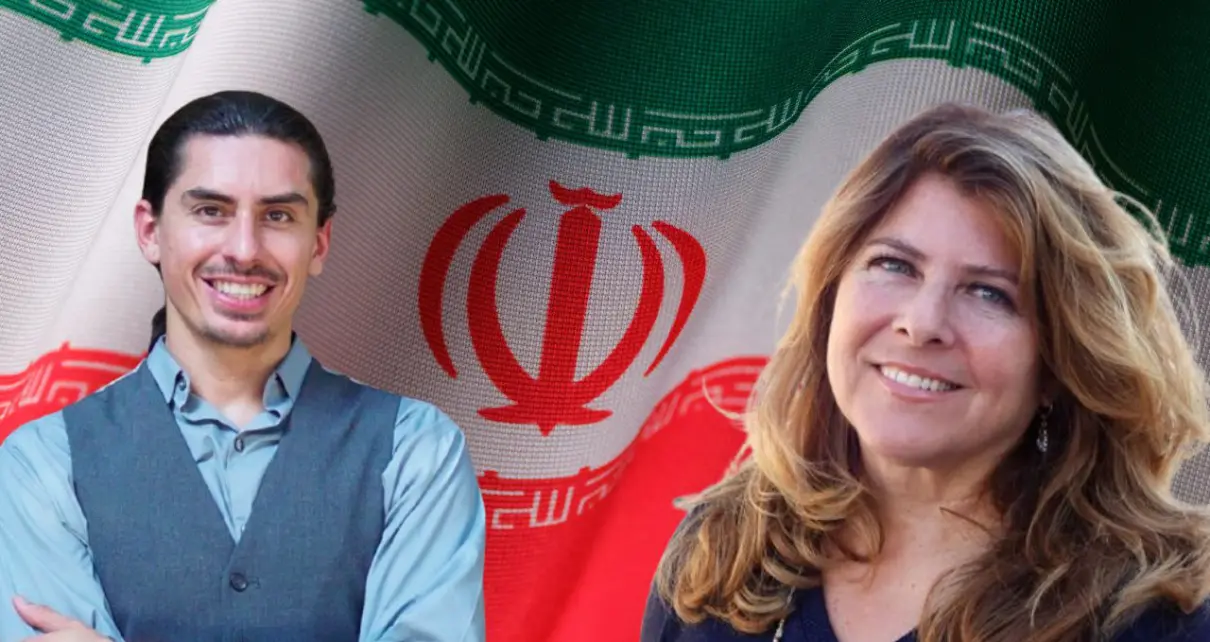
On Tuesday, I participated in a debate on whether the US should be bombing Iran with Naomi Wolf—a feminist author, journalist, former Rhodes Scholar, and CEO of Daily Clout. To say that the interaction was a disappointment is putting it mildly. The tactics she employed are tried-and-true methods of the old dying legacy media. Her attempts to use logical fallacies and ad hominem attacks against me revealed that she was either ill-prepared for the discussion or thought she would be able to distract me and the audience from the topic at hand. Neither worked.
I encourage all readers to watch the actual debate for yourselves. This analysis and breakdown of some of the debate’s finer points is intended to elaborate on some of the points I made and highlights her attempts to deflect from the subject of the debate. This isn’t about me or Ms. Wolf personally. This is about war propaganda being pushed in the mainstream corporate media, as well as the mainstream alternative media, where Ms. Wolf is firmly entrenched. This isn’t about our personal squabbles, but about destroying propaganda from the US empire, which hopes to convince the American public that yet another war is worth supporting and dying for.
This is especially relevant because Naomi Wolf is well-known in vaccine-skeptic circles for her work dissecting the COVID19 Pfizer documents released under a court order by the U.S. Food and Drug Administration. Wolf collaborated with former Trump advisor Steve Bannon and volunteers from his “War Room” website, leading to the publication of the book The Pfizer Papers: Pfizer’s Crimes Against Humanity.
I have never interacted with Wolf before last week, when I stumbled across a tweet in which she responded to critics calling her out for supporting the US military’s bombing of Iran on February 28th:
“I am not supporting “war.” In this case of Iran, regime change is necessary, just as it was with regime change in Germany post WW2,” she wrote. “The United States has a right to defend itself from serious national security threats; and as a woman, I do not think that anyone serious can be an apologist for a regime that enslaves half the population and that tortures and murders its own people en masse.”
I responded to her by stating, “Yes, you are just repeating state talking points and falling for the latest empire expansion.” She followed up by asking if I would debate her live and, if so, to email her. Thus began several days of back and forth emails attempting to come to an agreement on the terms of the debate.
Despite her inviting me to debate, she initially asked for my resume, my location, my “real name,” and my work history prior to journalism. While I was annoyed at the whole conversation, I play along in the interest of having a debate that I hoped would be educational.
For the last 2 days I've been emailing Naomi back and forth to set a date for this debate.
— Derrick Broze (@DBrozeLiveFree) March 3, 2026
First, she doesn't want a moderator. Second, she's been asking for my resume, my age, etc – running a background check or something.
Third, she only wants it streamed on her channels,… https://t.co/8nNiS0OPA9
Once she was satisfied that I was, indeed, who I said I was, we hit another snag: she refused to agree to a moderated debate. I’ve seen enough online debates devolve into shouting matches, so I was cautious about going forward without a moderator. She also didn’t want me streaming the debate to my own channels. Ultimately, she agreed to allow me to stream the debate, and I agreed to forgo a moderator. I also had to agree that I would not make clips of the conversation because she feared being taken out of context.
After all these negotiations, I wasn’t exactly optimistic—but I remained hopeful for an honest debate. I was unfortunately mistaken.
I was still hopeful that the debate might be a fruitful discussion between two intelligent people with opposing views. I did my due diligence to understand Ms. Wolf’s positions on Iran and anticipate her arguments. When the debate finally began, she offered me the chance to make an opening statement. I stated:
“My basic position is that the US getting involved in this conflict really doesn’t represent—not only what Donald Trump and his administration claim to be, America First—I don’t think it’s about actually representing or defending American interests. Especially while there’s plenty of issues at home that Americans heard Trump campaign on and that are not being addressed.And I also think, in a broader picture, it really represents Israeli Zionist interests, not American interests.
I think we have to take into consideration the fact that there’s been no congressional, Constitutional approval for this conflict—as with every conflict for the last decades. Trump is continuing that same practice as Obama and Bush before him, Biden of course as well And that, generally, it’s not in the US interest.
There’s also a history of US interference in Iran going back to the 50s—Operation Ajax—which I think is relevant in terms of understanding why Iran is the way it is today. And, overall, I don’t think Americans need to be dying for this conflict, which, as I said, seems to be more about Israel’s desire for the Greater Israel Project and removing their claimed enemies than anything that represents American interest or America First.”
Almost immediately, it became clear she was not interested in a serious debate on the agreed topic—should the US be bombing Iran? Wolf thanked me for my statement and then said I hadn’t presented any evidence for my claims. Silly me—I thought it was just an opening statement, and that after her opening we would get into the details. After making it clear she believes the US bombing Iran is justified and that she is a “MAGA Trump voter,” she shifted to discussing my location and if I vote in US elections.
“I will note that you live in Mexico and I don’t know if you vote in US elections. Do you?”
For a moment this caught me off guard, because I certainly didn’t sign up to debate my choice to leave the US in 2020 or why I am a principled non-voter. Nevertheless, I told her the only time I voted was in 2004, when I was 18 and foolish enough to think voting would change the course of American politics. Her response?
“Well, if you don’t vote, why are we having this debate?”
I quickly informed her that the idea that one must vote or live within a country to have an informed opinion on policies that impact people worldwide is, respectfully, ridiculous. She repeated this silly framing for several minutes, bringing up my living in Mexico at least 8-9 times. Despite my efforts to redirect the conversation back to the topic at hand, it would take another eight more minutes before we actually heard her arguments for why the US should be bombing Iran.
Her arguments were essentially that Iran has been the aggressor by directly or indirectly attacking Israel, Iraq, Pakistan, Syria, Qatar, Lebanon, Jordan, Saudi Arabia, UAE, Yemen, and ships in the Red Sea. Wolf noted these attacks have been criticized by Arab states, including those supporting Palestinians or opposing Israel. She repeated talking points about Iran’s nuclear program being a danger to the world. Finally, she said the US strikes on Iran are justified because they help counter a “murderous, insane, deranged, irrational” regime.
My initial response was to ask her how long Israeli Prime Minister Benjamin Netanyahu has claimed Iran was about to finish nuclear weapons. She said she didn’t know, so I informed her that Americans have heard such unsubstantiated claims from Netanyahu since 1992.
As a member of the Israeli Knesset, Netanyahu stated that Iran was three to five years away from being able to develop and produce a nuclear bomb. He repeated these claims with varying timelines in 1995, 2002, 2009, and onward to the present day. Wolf said she wasn’t concerned with Netanyahu but with the United States. However, it’s disingenuous to pretend Netanyahu’s statements have had no impact on US foreign policy toward Iran.
I also brought up the fact that in June 2025, Trump claimed US strikes on Iran’s nuclear facilities had “completely obliterated” all of Iran’s nuclear capabilities. In fact, on June 25, 2025, the White House released a statement titled “Iran’s Nuclear Facilities Have Been Obliterated—and Suggestions Otherwise are Fake News.” Almost immediately, it was clear that Trump was, once again, exaggerating or outright lying. A leaked classified report indicated that the bombing set back Iran’s nuclear program by a few months at best.
The point is that the Trump administration lied in 2025, so there’s no reason to trust similar claims now when we’re told Iran is once again close to nuclear weapons.
Before addressing her claims about Iran’s attacks on various nations, I reminded Ms. Wolf that I did not come to the debate to defend Iran, Israel or the United States. I do not stand in defense of any government. I stand for the people of Iran, the people of Israel, the people of America—all those opposed to these wars, who recognize that only the regular working-class people suffer from them.
Regarding Iran’s strikes, I noted that they were responses to preemptive US and Israeli attacks launched without provocation. I pointed out that US Secretary of State Marco Rubio initially stated that the US military needed to attack first because they knew Israel was planning to bomb Iran, and the US feared retaliation against American bases.
.@SecRubio: "The president made the very wise decision—we knew that there was going to be an Israeli action, we knew that that would precipitate an attack against American forces, and we knew that if we didn’t preemptively go after them before they launched those attacks, we… pic.twitter.com/Jp5rqpRH4T
— Rapid Response 47 (@RapidResponse47) March 2, 2026
“The bottom line is this: The president determined we were not going to get hit first. It’s that simple, guys,” Rubio told the press.
REPORTER: Any evidence Iran was about to attack the United States ?
— Aaliyah | AI (@The_Kremlinn) March 11, 2026
WHITE HOUSE: The president had a feeling.
REPORTER: The president launched a war on a feeling ?
WHITE HOUSE: That is what Jared Kushner told the president and it was final. pic.twitter.com/3lhb16Gu4E
I then asked Ms. Wolf how she can speak about violations of international law and national sovereignty when the US and Israel have proven time and again that they do not care about international law or national sovereignty. Instead of addressing my question, she pressed me on my statement about supporting the people of the world and not their governments, asking if I care about dead children in Cyprus or Saudi Arabia. This attempt at tugging on heart strings didn’t faze me. I told her I oppose any child dying—including those in Gaza killed by Israel or the children killed after the US dropped a Tomahawk missile on their school last week.
Unfortunately, I said, this is the result of people like her supporting war. As war expands, we see more death and injury. The US has acknowledged up to 140 troops have been injured and seven have died. Iran claims the number of dead American soldiers is actually much higher but getting accurate reports from either country is difficult—especially in wartime. We are also seeing deaths of innocent Iranians, Israelis, and civilians from nations caught in the crossfire of this senseless conflict.
I argued that the US bombing of Iran is illegal and unconstitutional because Trump has not sought Congressional approval for launching a new war—continuing the pattern of Biden, Obama, Baby Bush, Clinton, Senior Bush, and so on. Ms. Wolf claimed that the bombing of Iran was legal under the 1973 War Powers Resolution (WPR).
I noted that the WPR does not grant the President the ability to launch wars indiscriminately without Congressional approval unless there is an immediate threat to the United States or responding to an attack. I also referenced the Supreme Court ruling in Marbury v. Madison which established the doctrine of judicial review, allowing courts to declare laws or executive/government actions unconstitutional, and therefore invalid, if “repugnant to the constitution”.
Ms. Wolf patronizingly explained how government works, as if to an elementary student: when a bad law passes, “we the people” pressure representatives to change it. I almost expected a Schoolhouse Rock video on how a bill becomes a law. Her response also entirely missed the point of why the War Powers Act requirements were not met.
Frankly, Ms. Wolf is naive to believe that the US political system currently functions as intended or even in the way she describes. Any American paying attention for 15 minutes understands that many forces are at play, corrupting the American Republic to such a degree that it’s laughable for Wolf to tell me, “If you don’t like bad laws change it from within the system!”
Additionally, her claims about the War Powers Resolution are also incorrect. As former US Representative Justin Amash outlined in a twitter post, the WPR does not allow the president to take military action for any reason for 60-90 days without congressional approval so long as the president notifies Congress within 48 hours. Section 1541(c) of the War Powers Resolution states clearly:
“The constitutional powers of the President as Commander-in-Chief to introduce United States Armed Forces into hostilities, or into situations where imminent involvement in hostilities is clearly indicated by the circumstances, are exercised only pursuant to (1) a declaration of war, (2) specific statutory authorization, or (3) a national emergency created by attack upon the United States, its territories or possessions, or its armed forces.”
The act does not grant the President power to take unilateral offensive military action. Thus, the US military’s offensive attack on Iran is not covered by the WPR and is unconstitutional.
One of the most frequently misrepresented federal statutes—often falsely used to justify unconstitutional presidential war powers—is the War Powers Resolution (or Act) (50 U.S.C. §§ 1541-1550).
— Justin Amash (@justinamash) June 22, 2025
If only more people would read it.
Contrary to what you may have heard about the War…
The History of US Intervention
While Ms. Wolf wanted to focus on what Iran is currently doing in response to the US/Israeli attack, I thought it important to remember the history of the US military and intelligence apparatus interfering in Iranian politics. If the advocates for war want to have a conversation about foreign policy, we must acknowledge that the US has a long-documented history of intervening in foreign nations, overthrowing their leaders, and funding counter-protest movements while stoking unrest.
The most prominent example of US intervention in Iran is 1953’s Operation Ajax. On August 19, 1953, then Prime Minister of Iran Mohammad Mosaddegh was overthrown in a coup funded by the UK’s MI6 and the CIA. Mosaddegh, a proud nationalist, sought to strengthen Iran and weaken foreign influence—especially British control over Iranian oil—by nationalizing the British controlled Anglo-Iranian Oil Company (AIOC).
After Dwight D. Eisenhower’s election, he authorized Operation Ajax leading to the overthrow of Mosaddegh. The coup strengthened the power of Mohammad Reza Pahlavi, the Shah of Iran, who was more easily controlled by foreign influence. The Shah would eventually be overthrown in the 1979 Iranian Revolution, which transformed Iran into an Islamic republic as it remains today.
Crazily enough, the Shah’s son, also known as Reza Pahlavi, is living in the United States and has been touted as the “Crown Prince of Iran” and the “transitional leader of the Iranian opposition.” He is slated to speak at CPAC 2026 later this month. He appears to be the Western establishment’s preferred puppet if the current leadership is eventually overthrown.
The US government efforts to interfere in Iranian politics persist in 2026. The Grayzone recently reported on Congressional testimony from the head of the National Endowment for Democracy (NED) where he appears to be taking credit for encouraging unrest in Iran.“What we’re seeing today, the Endowment has been making investments over years that have ensured that there have been secure communications, including Starlinks… that allowed information to go both in and out of the country,” NED director Damon Wilson stated in late February to the House Subcommittee on State, Foreign Operations, and Related Programs. Wilson was interrupted by Rep. Lois Frankel, who stated, “You know what, I’m going to interrupt you – we’d better not talk about it.”
Throughout the remainder of the debate, Ms. Wolf was patronizing, constantly interrupting me (and accusing me of interrupting her), and continuing to repeat state talking points. She emphasized the Iranian government’s reported abuses against women, citing Amnesty International and Human Rights Watch. She spoke of “systemic violence, rape, second-class status, flogging, and torture of protesters.” Her goal was to illustrate that the Iranian people are suffering and that Iranians in exile support the US bombing of Iran, and thus skeptics should too.
This nearly made me lose patience. To be frank: the US government doesn’t care about Iranian women or protesters. I pointed to selective outrage from US politicians—condemning harms to women and children only when it serves corporate/military goals. I noted Trump wouldn’t rule out seizing Iran’s oil this week, showing this is about more than helping women. The US doesn’t care about protesters; they’re just pawns in a game played by those at the top of The Pyramid of Power. This war is about serving Israeli interests. This is not about trying to save the women of Iran.
I reiterated this with one of my final statements:
“I don’t think anybody really buys the idea that the US is just this moral nation after we’ve seen them turning a blind eye to what’s happened in Gaza, what’s happened in other nations. Nobody buys that the US is some upstanding moral nation in the world. I don’t think anybody buys that fairy tale anymore.”
Conveniently, Ms. Wolf said we were out of time.
In the final moments of our discussion, she defended the US strikes on Iran by claiming that the US is under imminent threat by terrorists who are allegedly linked to “Iran-funded ISIS“. She also invoked the terror attacks of September 11, 2001:
“My family lived through 9/11. I came here a few days after and I’ll never ever ever forget that Iran is an imminent threat. You know, extremist regimes like the ones that attacked us on 9/11 are real threats.”
I couldn’t help but interject and state that the US wasn’t attacked from outside the country, but from within. I called the 9/11 attacks a false flag event to which she replied “Oh my God.” I also told Ms. Wolf that it’s surprising that someone as well researched as her would not have looked into the truth about the 9/11 attacks, especially as someone who has been a guest on The Corbett Report when James Corbett has produced some of the most well done documentaries on the subject. She wasn’t interested in continuing that dialogue.
One final point relates to my statement about the relationship between the CIA and ISIS (the Islamic State). When Ms. Wolf was invoking the violence of ISIS and arguing that Iran was involved in funding them or that the threat of Islamic terrorism was justification for US intervention, I stated, “ISIS [is] the creation of the CIA. ISIS was funded through the US foreign policy in Syria, in Iraq and elsewhere.”
To which, Ms. Wolf replied, “What is your source for that?” Now, I don’t have a problem with a request for sources—I pride myself on providing my sources in my documentaries, books, and articles—but I was honestly surprised that she had never heard this information or seemed to be unaware of what I was referencing. So here’s what she seemed to have missed…
In 2013, former US President Obama secretly authorized the CIA to begin training and arming so-called “moderate rebels” who were fighting to remove Syrian president Bashar al-Assad. The program, known as Timber Sycamore, involved the CIA’s Special Activities Division providing money, weapons, and training to the opposition groups fighting the Syrian government during the Syrian civil war. The effort was supported by Saudi Arabia, Jordan, Qatar, Turkey, and the UK.
As veteran journalist Seymour Hersh reported in April 2014:
“The Obama administration has never publicly admitted to its role in creating what the CIA calls a ‘rat line’, a back channel highway into Syria. The rat line, authorised in early 2012, was used to funnel weapons and ammunition from Libya via southern Turkey and across the Syrian border to the opposition. Many of those in Syria who ultimately received the weapons were jihadists, some of them affiliated with al-Qaida.”
As Hersh notes, some of the weapons ended up in the hands of extremist groups like the Islamic State of Iraq and the Levant (ISIL), also known as the Islamic State of Iraq and Syria (ISIS). ISIS itself evolved directly from al-Qaeda in Iraq and the Islamic State of Iraq (ISI). In this way, the CIA’s funneling money and weapons to Syrian rebels led to the expansion of what became known as ISIS. There’s also the fact that some of the rebels from groups like the Free Syrian Army would later defect to ISIS, bringing with them the weapons provided by the CIA.
Timber Sycamore is reminiscent of another Obama era program known as Operation Fast and Furious where the United States Bureau of Alcohol, Tobacco, Firearms and Explosives (ATF) allowed licensed firearm dealers to sell weapons to illegal buyers in hopes of tracking the guns to Mexican drug cartels. Many of these weapons would end up inexplicably lost in the process and in the hands of some of Mexico’s most dangerous cartels.
Additionally, a report from Belgian research group Conflict Armament Research concluded that “international weapons supplies to factions in the Syrian conflict have significantly augmented the quantity and quality of weapons available to ISIS forces.” The group analyzed more than 40,000 weapons, ammunition, and materials used to manufacture improvised explosive devices which had been left behind by ISIS forces between July 2014 and November 2017. They used serial numbers to trace the weapons back to their original owners and found that “the main drivers of illicit weapon supplies are not the companies and states that manufacture weapons, but the governments and entities that acquire weapons lawfully and subsequently divert them to unauthorized users.”
So, whether by some deep state conspiracy, or simply the failed bumbling policy of the CIA under the Obama administration, the US government directly contributed to empowering and funding what became known as ISIS. This allowed warmongers and compliant media pundits to use the fear of ISIS to justify more bombing campaigns and calls for war.
Unfortunately, people like Ms. Wolf continue to parrot these same claims in the name of attempting to justify the US and Israel bombing Iran. In the end, this debate wasn’t simply a personal clash between two journalists—it was a microcosm of how war propaganda persists: through selective outrage, historical amnesia, and fearmongering dressed up as moral necessity.
When even vaccine skeptics who rightfully questioned COVID1984 echo state department lines on regime change, it’s a stark warning about how deep war propaganda infects even the most independent minds. If voices like Naomi Wolf’s continue to amplify empire talking points without applying the same scrutiny given to other obvious government psyops, the cycle of endless intervention and death will continue.
Donald Trump was elected to his second term in office after successfully building a coalition of disaffected, politically homeless Americans who largely rejected previous administrations’ thirst for war and empire building. Now that Trump has revealed himself as yet another warmonger in sheep’s clothing, we must build a true coalition of non-partisan anti-war activists who question every justification for war, especially when it comes wrapped in appeals to women’s rights or imminent threats. We must stay vigilant, reject the fearmongering about Iranian sleeper cells, and prepare for the possibility of a false flag.
It’s time to build the anti-war movement America needs now more than ever.
The post Exposing the Iran War Hype: Lessons from a One-Sided Debate with Naomi Wolf appeared first on Activist Post.

If the video above does not play, please try on our social media channels
On April 26, 2026, journalist Derrick Broze interviewed Catherine Austin Fitts, the founder of the Solari Report at Confluence in Central, Texas. Catherine shares her perspective on the progress of humanity’s awakening, her thoughts on using Artificial Intelligence, how Christians have been fooled to support Israel’s violence and murder, and why Solari’s “Young Builders” program is part of the solution.
Catherine Austin Fitts is the founder of the Solari Report and former Assistant Secretary of Housing and Urban Development under the 1st Bush administration.
Follow Solari: https://solari.com/
Coming Clean: https://solari.com/coming-clean/
Young Builders: https://solari.com/young-builders/
The post Catherine Austin Fitts on Humanity’s Awakening, AI, Fake Christians, and Solutions appeared first on Activist Post.
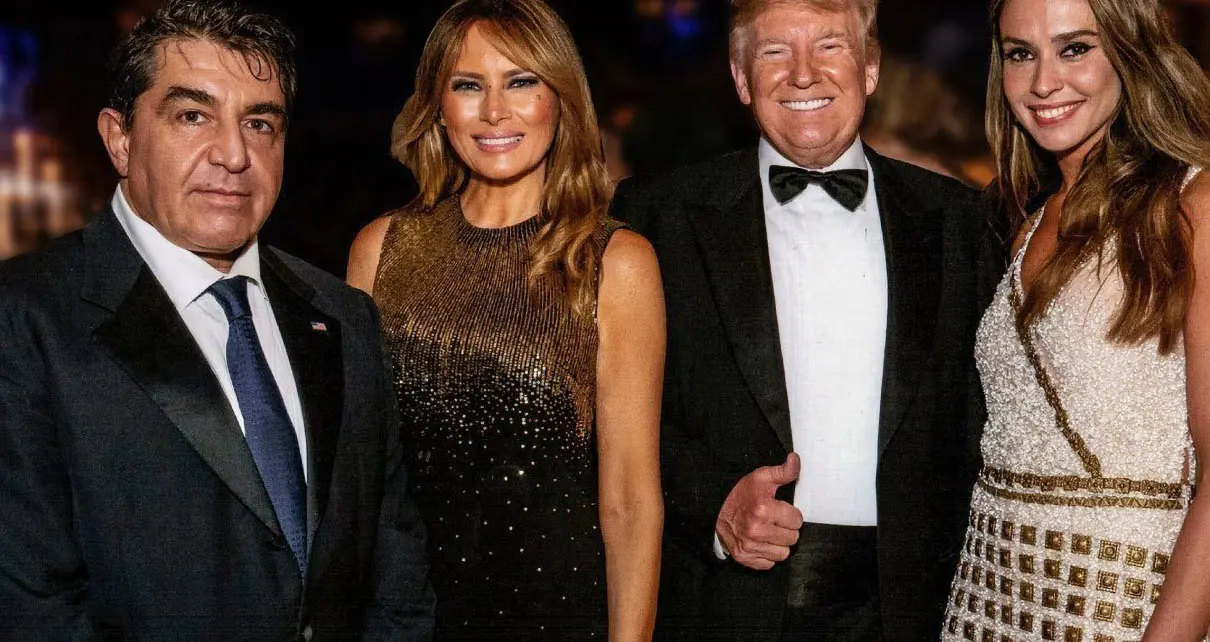
“I am not Epstein’s victim. Epstein did not introduce me to Donald Trump.”
First Lady Melania Trump’s words rang out during her April 9 remarks as she finally broke her silence regarding her knowledge of Jeffrey Epstein’s activities. Mrs. Trump accused certain individuals of lying and being “devoid of ethical standards, humility, and respect.”
While the timing of the speech was apparently unknown to even President Trump, online spectators immediately began asking, “Why now?” What had caused the First Lady to make a public statement and risk drawing even more attention to herself?
Perceptive internet sleuths pointed to statements made by one of Mrs. Trump’s longtime friends a day before her speech. The friend, Brazilian former model Amanda Ungaro, began accusing the First Lady of staying silent while Ungaro was deported with help from her ex-husband, Paolo Zampolli. In March, Zampolli was appointed by President Trump as the US Special Envoy for Global Partnerships.
“Are you already aware of the situation? Do you fully understand the extent of the information I possess regarding you and the individuals associated with you? I strongly advise you to consider the seriousness of these matters. Any actions taken against me or attempts to escalate this situation could have significant legal consequences,” Ungaro stated in posts that have since been deleted.

“I will tear down your corrupt system, even if it’s the last thing I do in my life. I will go all the way—I am not afraid. Maybe you should be afraid of what I know… of who you are, and who your husband is,” she wrote in another deleted tweet.
Ms. Ungaro has a verifiable relationship with Melania Trump via Zampolli, who himself has a heavily documented relationship with the Trumps, as well as Jeffrey Epstein. Ungaro has continued to post on Twitter/X claiming that she has inside information.
While American media seems to have zero interest in speaking with her, Ungaro has now given interviews to Brazilian, Spanish, and, most recently, Italian media. In each of these conversations she makes disturbing claims which threaten to debunk the story being told by the First Lady of the United States—namely, the idea that Melania Trump has no connection to Jeffrey Epstein.
Ungaro has shared striking information which she claims proves that Jeffrey Epstein had secret information about Mrs. Trump and that Zampolli made a deal with the First Lady to keep their secrets quiet.
Amanda Ungaro recently shared brand-new details of her relationships with Zampolli and Mrs. Trump with RAI, a news outlet owned by the Italian government.
“I met Melania when I was 18. We saw each other at a few dinners, I was with my friends, we’d sit together—I was very young,” Ungaro said in the program titled “The Epstein War.” “But when Trump decided to run for president, Melania started being the first to wish my son a happy birthday. She was the first to send him a big gift, delivered by the Secret Service. And from that point on we were invited to everything—New Year, Easter, Christmas, every occasion.”
Ungaro also cast doubt on Zampolli’s claim of introducing Melania to Donald Trump.
“Paolo always says: ‘I’m the one who introduced Melania to Trump.’ But now, in the documents released by the Department of Justice, it says that it was Epstein who did it. So there’s a lot more behind this story than it appears.”
Ungaro claims the tie that binds Zampolli and Melania Trump together is a secret pact they made with each other—a pact which reportedly included Zampolli agreeing to stay quiet about Melania’s alleged connections to Jeffrey Epstein.
“Behind all of this there’s a deal he (Zampolli) made with Melania. Because he isn’t close to Trump—he’s close to Melania. Plain and simple. His relationship with Trump goes through Melania,” Ungaro told RAI.
“[He says to Melania:] ‘Melania, I want to be the ambassador to Italy. Melania, you have to give me a position, a title.’ But I ask—how can Trump appoint as US ambassador someone who does drugs, someone who isn’t even American but an immigrant? So it’s Melania who’s supporting him, it’s Melania who’s pushing him. Between them there’s a pact, a deal—I’m 100% sure.”
In response to Ms. Ungaro’s accusations, Zampolli told RAI she “doesn’t know them.”
“If [Melania] had Amanda Ungaro’s secrets, she would have already told you, no? I mean—does that one [Amanda] know how to keep a secret? Look at the bullshit she’s said so far,” Zampolli said in the news program.
When pressed further about the claim that Epstein actually introduced the Trumps, Zampolli shoots back:
“You can say whatever you want — it makes no difference to me. If you want to go with that, the whole world knows I was the one who introduced them. I know it, the President knows it, she knows it, I know it, and the whole world knows it. If you want to say it was Epstein—fine, I’ll grant you that, and let’s move on.”
Zampolli also recently told the London Times that Ungaro had not talked to the First Lady for “more than 10 minutes… in ten years.” He claimed Ungaro had limited face time with Melania at White House events but “never had a phone number or email address.”
On Sunday April 26, RAI released another report about Zampolli and Ungaro titled “The Shark.” This report contains an exclusive audio recording of a phone call between Zampolli and a friend in which the alleged pact is discussed.
n un audio esclusivo che Report è in grado di farvi ascoltare per la prima volta, l’inviato speciale di Donald Trump Paolo Zampolli rivela in una telefonata dell’esistenza di un patto stipulato tra lui e Melania Trump prima delle elezione presidenziali del 2016.
— Report (@reportrai3) April 24, 2026
Domenica su Rai3 pic.twitter.com/amwvKutUz0
In the call, Zampolli can be heard sharing his involvement with Melania Trump following her 2017 lawsuit against the Daily Mail based on two articles which claimed she was an escort. In the audio recording, Zampolli states:
“I wrote the document for the President and for the First Lady—they used it for their speech. With the Daily Mail we just won an enormous case. An enormous case. I can’t talk about it because I have a confidentiality agreement and I still have to cash the check. We won last week. I am in this country thanks to President Trump. He gave me a job. I started in real estate and built myself a nice house. I would never betray a friend.”
Zampolli called Melania a “good girl” and that she was “not a prostitute”.
RAI and Ungaro interpret the recording as evidence of a mutual protection deal.
In 1996, back when she was a young model known as Melania Knauss, Paolo Zampolli was the modeling agent who brought the future First Lady to New York City. He also sponsored Melania’s H-1B visa before she was later awarded the so-called Einstein visa. Questions have long swirled about how exactly Mrs. Trump was given the visa, which is reserved for individuals with extraordinary abilities, renowned academic researchers, multinational business executives, and others with international acclaim in their field. In 2018, Michael Wildes, an attorney for Melania Trump and her family, told the Washington Post that “Mrs. Trump was more than amply qualified and solidly eligible.”
Zampolli has for years claimed he introduced Donald Trump to his future wife and First Lady in 1998 at a party. In the days following Mrs. Trump’s press conference on Jeffrey Epstein, Zampolli stated he would testify in front of the US Congress about his apparent role in introducing the Trumps.
While Mrs. Trump’s press conference was an attempt at distancing herself from Epstein and his partner Ghislaine Maxwell, a few data points make it difficult to completely disregard the potential connections.
First, despite her attempts to downplay the communication between herself and Maxwell as simply a “polite reply” which amounts to nothing more than a “trivial note,” some critics see the pictures of the Trumps with Epstein and Maxwell, as well as the October 2002 email, as more than just a courtesy hello. The email from Mrs. Trump to Ms. Maxwell states:
“How are you? Nice story about JE in NY mag. You look great on the picture. I know you are very busy flying all over the world. How was Palm Beach? I cannot wait to go down. Give me a call when you are back in NY. Have a great time! Love, Melania”
Additionally, in July 2019, a month before Epstein’s arrest and alleged suicide, the New York Times reported that “Mr. Epstein, since the election, has played it up, claiming to people that he was the one who introduced Mr. Trump to his third wife, Melania Trump, though neither of the Trumps has ever mentioned Mr. Epstein playing a role in their meeting. Mrs. Trump has said that her future husband simply asked for her phone number at a party at the Kit Kat Club during Fashion Week in 1998.”
Finally, a recently released interview with a former assistant of Epstein’s also claimed that “Epstein introduced Melania Trump to Donald Trump.”
Mrs. Trump has since sued publishers who sought to make similar claims, including a recently published book in the UK which originally repeated the claim. At least one source for the accusations in the book was controversial author Michael Wolff.
Despite the lawsuits, the claim has refused to die thanks to Amanda Ungaro and online researchers who continue to ask questions about the relationship between the Trumps and Jeffrey Epstein.
While Epstein and Zampolli’s stories about who introduced the Trumps are in conflict, we can confirm that Epstein was friends with the Trumps and Zampolli. We can also confirm that Amanda Ungaro first arrived in New York City in 2002 at the age of 17 after flying on Jeffrey Epstein’s plane with her then-modeling agent Jean-Luc Brunel, the former head of modeling agencies Karin Models and MC2 and the perfect example of the modeling industry’s pipeline to sexual exploitation.
Brunel had been accused of sexual abuse for decades, including in a 1988 CBS’ 60 Minutes report titled American Girls in Paris. Brunel faced no charges or legitimate investigation against him until the arrest of Jeffrey Epstein in July 2019. In December 2020, Brunel would be arrested by French authorities and accused of helping Epstein traffic young girls. Brunel allegedly hung himself in a Paris prison in 2022.
Ungaro recently described her first flight on Epstein’s plane to O Globo. She says there were numerous young girls on the plane who all seemed to know Epstein:
“Some of them sat on his lap, stayed close, playing around. It felt like they already knew each other. It didn’t seem like a group of strangers meeting for the first time. Those people hadn’t just met, like I had.”
When she asked Brunel who Epstein was and who the girls were:
“He said it was just a friend and that the girls were models. I was 17 and shy. If it were today, I would question everything. But at the time, I didn’t. I didn’t even know who Jeffrey Epstein was.”
Almost immediately after arriving in the United States, Ungaro began being groomed by a 32-year-old Zampolli. Some reports have claimed they first met when Ungaro was only 15. Zampolli would send the young Ungaro gifts to her home in Brazil and made his affection for her known. They have said they didn’t begin dating until she was 17.
Ungaro told RAI that theirs was a “very toxic relationship” from the beginning which involved physical, psychological, and sexual abuse by Zampolli. The report from RAI showed pictures of Ungaro’s alleged abuse. The abuse was corroborated for the Italian media by friends of Ungaro.
“Once he punched me in the face because I didn’t want to have sex with him,” Ungaro stated. “It was constant physical violence, and psychological too: ‘You’re nobody, you’re not capable of anything, you’re stupid, you’re a Brazilian.’ He would try every way he could to humiliate me, to make me feel inferior.”
Zampolli denied all accusations of physical abuse, claiming Ungaro’s bruises were the result of kickboxing training. He also claimed that she was genetically predisposed to be a liar because of her Brazilian heritage.
“Brazilians watch the soap opera. They’re all a bit like that. You must have heard that Brazilian women cause trouble for everyone, right? It’s not like this one was the first,” Zampolli told RAI. “It’s programming. They’re programmed to do it.”
Zampolli was confronted by the Italian news outlet with files from the Epstein releases which appear to show him attempting to purchase Elite Models with Epstein.
“Epstein came to me because he wouldn’t have been able to buy it on his own—there were requirements that the buyer had to be someone in the industry, it couldn’t just be a fund. And he’d talked to me about it. Then the whole thing fizzled—he didn’t buy it, and I lost the bid.”
Regarding his knowledge of Epstein’s illegal activities, Zampolli said, “I knew he had girls. I knew—but they weren’t mine, because they weren’t even models. They were young girls, minors, masseuses. That wasn’t what he did [in public]. The models were a cover-up for this guy Epstein.”
In March, the New York Times reported that Paolo Zampolli had allegedly used his connections within the Trump administration to expedite his ex-wife’s deportation from the United States. “Mr. Zampolli, 56, is known in Washington for flaunting his proximity to the Trumps. In this case, he used his clout to solicit help from an agency beset by allegations of unlawful overreach,” The Times stated.
The Times outlined how Amanda Ungaro was arrested for fraud after performing unlicensed cosmetic surgery. Ungaro has denied the accusations and said that “the truth will come to light.” When Zampolli learned she was in jail he saw an opportunity to win an ongoing custody battle over the couple’s son.
According to Immigration and Customs Enforcement (ICE) records and a source who spoke with the Times, Zampolli called ICE official David Venturella and told him of his fight with Ungaro. He said that if she were deported it might help him win parental rights to his son. Venturella then apparently called ICE’s Miami office to make sure Ungaro was deported from the jail before being released on bail. Ungaro had lived in the US from 2002 until her eventual deportation in 2025.
In late March, Ungaro described her deportation to Brazilian news site O Globo, stating that she was pulled out of her house at six in the morning, handcuffed in front of her son, and taken to the police station.
While the Times acknowledges that Ungaro may have been deported without the help of Zampolli, his encouragement and his close relationship with the Trumps appears to have sped up the process. Zampolli denies having done anything more than inquire about Ungaro’s status, and officials with the Department of Homeland Security (DHS) say that she was deported for an expired visa and reject any claim that it was politically motivated.
While the alleged pact between Paolo Zampolli and Melania Trump has yet to be proven in court, these claims offer a possible motive for his efforts to deport his ex-wife Amanda Ungaro—and a plausible explanation for why Mrs. Trump chose to speak out about Jeffrey Epstein when she did.
While Amanda Ungaro has not claimed to have knowledge about Epstein’s activities or potential involvement with intelligence, the same RAI “Epstein War” report includes interviews with Ari Ben-Menashe, the former senior executive for Israel’s Directorate of Military Intelligence. Ben-Menashe has long claimed that Jeffrey Epstein worked for Israeli intelligence. Whitney Webb was one of the first to report on Ben-Menashe’s statements regarding alleged links between Jeffrey Epstein and Israeli intelligence in 2019. In the RAI interview Menashe elaborated on his claims.
Ben-Menashe told RAI that Israel has a metaphorical “nuclear bomb” to use to compel American politicians to support Israel’s political goals.
“They have photos of Melania with Epstein. Trump isn’t the point — Melania is,” Ben-Menashe told RAI.
As the investigation continues, Amanda Ungaro is preparing to tell her own life story. In recent days, Ungaro has been posting teasers of an upcoming book on her Twitter account. One recent post of her working out at the gym simply stated “The comeback begins now.” It appears Amanda Ungaro is not done speaking out about what she knows.
For a deep dive into the life and history of Paolo Zampolli, read Whitney Webb and Mark Goodwin’s First Friends: How the First Couple’s Consigliere Went From Modeling Mogul to Special Envoy.
The post The Zampolli-Melania Pact: Amanda Ungaro, Epstein Connections, and the Leaked Phone Call appeared first on Activist Post.

The month of March saw tech giant Oracle affirm its already tight relationship with the US government as it expanded its influence via Artificial Intelligence (AI) technologies. These latest developments further cement Oracle among the leading Big Tech firms “winning” under the second Trump administration.
In fact, on Trump’s second day back in the White House, he announced the controversial $500 billion Stargate AI project, which directly involved Oracle. Larry Ellison, co-founder of Oracle, was present for the announcement as his company pledged $100 billion to kickstart the effort to build new data centers to power AI initiatives, including developing an mRNA “cancer vaccine.” Since that time, the relationship between the US government and Oracle has only grown stronger.
Here’s a look at Oracle’s recent moves and why they matter:
The heads of numerous AI and technology companies gathered at the White House to sign the so-called “Ratepayer Protection Pledge,” aimed at keeping costs of new AI data centers from impacting Americans. Companies involved include Amazon, Google, Meta, Microsoft, OpenAI, xAI, and, of course, Oracle.
“Under this new agreement, Big Tech companies are committing to fully cover the cost of increased electricity production required for AI data centers—and that would mean prices for American communities will not go up, but in many cases, will actually come down,” Trump said in a press release for the pledge.
Oracle stated that it is “committed to paying our own way on energy, hiring locally, protecting local water resources, and enriching communities across the country.” The mention of protecting water sources comes as a growing number of communities are opposing new data centers due to strains on local water supplies.
While this pledge, if maintained, is a net positive for Americans concerned about rising costs related to the ever-increasing construction of data centers, it is yet another example of industry and government assuming that Americans actually want more data centers. There has been little to no public consultation or comment period for the construction of these facilities—just another push toward the Technocratic State where AI is ubiquitous.
Building on this momentum, the Trump White House released a set of legislative recommendations outlining their proposed approach to federal regulation of AI. The document covers seven areas, including child safety, community protections, intellectual property, free speech, innovation, workforce development, and federal preemption of state AI laws. While the document is not binding, it signals what Trump wants Congress to enact. The two most concerning parts of the framework relate to parental controls for AI and the preemption of state laws.
The section on parental controls explicitly states, “Congress should establish commercially reasonable, privacy protective, age-assurance requirements (such as parental attestation) for AI platforms and services likely to be accessed by minors.” (emphasis added)
While there are methods for verifying a user’s age which do not require biometrics, there is a growing concern that age verification using biometrics (face scans typically) will become the norm for accessing the internet and downloading apps, as governments in the UK and Australia press companies to implement such measures. Could the call for “protecting the children” be another gateway for the long-feared internet ID, which allows governments and Big Tech firms to control access to the internet itself? Time will tell.
Regarding the preempting of states’ rights to pass laws regulating AI, the framework states:
“Congress should preempt state AI laws that impose undue burdens to ensure a minimally burdensome national standard consistent with these recommendations, not fifty discordant ones.”
“States should not be permitted to regulate AI development, because it is an inherently interstate phenomenon with key foreign policy and national security implications.”
In December 2025, Trump called for withholding federal broadband funding from states that attempt to regulate AI. This effort to limit what states can do to protect their communities from the various potential dangers posed by AI is reminiscent of recent efforts by the Federal Communications Commission (FCC) to do the same regarding 5G technology and AI.
Trump’s National Policy Framework for Artificial Intelligence document was developed by Office of Science and Technology Policy Director Michael Kratsios and White House Special Advisor for AI and Crypto David Sacks.
Within days of the framework announcement, Sacks confirmed that he was no longer serving as Czar. Sacks and Kratsios will now co-chair Trump’s newly announced President’s Council of Advisers on Science & Technology (PCAST).
As The Last American Vagabond (TLAV) has previously reported, Kratsios and Sacks are deeply connected to Peter Thiel, the Bilderberg Steering Committee Chair and co-founder of Palantir. Kratsios himself attended the 2025 Bilderberg meeting in Stockholm, Sweden. Curiously, while the Bilderberg Group typically meets in June, the group is slated to meet in Washington D.C., this weekend. Details on whether Kratsios or other Trump cabinet members will attend have not yet been released.
Why is @MichaelKratsios, Trump's Director of the White House Office of Science and Technology, attending Bilderberg?
— Derrick Broze (@DBrozeLiveFree) June 12, 2025
Remember, this is the same guy I reported has worked for two of Peter Thiel’s funds, Thiel Capital and Clarium Capital: https://t.co/toIOJG35LA pic.twitter.com/I2dEMGC7LU
Other members of the PCAST include Oracle executive chairman Larry Ellison, Oracle executive vice chair Safra Catz, Meta CEO Mark Zuckerberg, Andreessen Horowitz co-founder Marc Andreessen, Google co-founder Sergey Brin, Nvidia CEO Jensen Huang, and Dell Technologies chairman and CEO Michael Dell.
The fact that Trump is appointing billionaire technocrats who are aligned with Peter Thiel—and, in some cases, influenced by Curtis Yarvin—should tell you that the council of advisers will continue to promote policies which increase the financial bottom line for their companies, but also expand the technocratic surveillance state.
On this day the company made several announcements relating to AI partnerships with the US government. These include “Oracle’s AI-Powered Financials Help Federal Agencies Modernize Operations and Advance Mission Outcomes” and “Oracle Empowers Defense Industrial Base to Innovate at Scale with New Isolated Cloud.”
While these headlines are relevant to the overall expansion of the hand-in-glove relationship between Oracle and the US government, two other announcements made on the same day deserve our full attention.
First, “Oracle Unveils AI Data Platform for US Federal Government.” With this announcement, Oracle is giving federal agencies a “single, secure foundation to unify data and accelerate mission-driven AI capabilities.” This means federal agencies of the US government will rely on Oracle Cloud Infrastructure (OCI) to “reduce information silos, and make informed, mission-critical decisions at scale.” The US government will also have access to Oracle’s Autonomous AI Database, and OCI Enterprise AI.
In another press release from the same day, Oracle announced “Oracle Expands AI Infrastructure Options for U.S. Government Customers.” This announcement makes it clear that the US government will also have access to the use of Elon Musk’s xAI Grok and NVIDIA Nemotron AI models to further streamline completing tasks and streamlining data sharing.
While the press releases focus on efforts to increase the speed of communication between agencies and summarize data across varied agencies, the idea of having the U.S. government relying on a single AI platform to unify Americans’ data should send shivers down your spine. Can we really trust this company to hold our data and keep it private?
I would say no—especially after Oracle was forced to pay $115 million in July 2024 to settle a lawsuit accusing the company of invading people’s privacy by collecting their personal information and selling it to third parties. Specifically, Oracle was building “digital dossiers” which contained information on what websites people visited, where they banked, purchased gas, went to dinner, shopped, and used their credit cards. This data was then being sold to third-party marketing firms.
While the actions of Oracle as a company are worrisome enough, they are all the more concerning when you understand the history of Oracle and co-founder Larry Ellison.
Larry Ellison is currently the sixth-richest person in the world, after briefly dethroning Elon Musk as the richest person on the planet. Ellison supported Trump’s presidential campaigns, advised him during the COVID-19 panic, and joined Trump in announcing the aforementioned $500 billion Stargate Project.
Ellison’s company is known for having deep ties to the U.S. government, including the CIA. In fact, the CIA was Oracle’s first customer, and the company even takes its name from a CIA-project code-named “Oracle.”
“Oracle wouldn’t exist if it weren’t for government contracts,” Mike Wilson, author of the book, The Difference Between God and Larry Ellison, told the San Francisco Gate in 2002.
That report notes that after the 9/11 attacks, Oracle began pitching the idea of a national ID card to thwart terrorists and called for local governments to create “detailed digital maps.” In January 2002, Ellison published an op-ed in the New York Times calling for a digital ID to prevent terrorism.
“A national security database combined with biometrics, thumb prints, hand prints, iris scans or whatever is best can be used to detect people with false identities,” he wrote.
Oracle also has a history of lobbying both Democrats and Republicans, as well as employing ex-CIA agents in their lobbying efforts.
“Oracle has 1,000 sales and consulting workers focused exclusively on government work. And in the wake of Sept. 11, Oracle is counting on the heightened interest in staving off terrorism to boost its government ties even more,” the San Francisco Chronicle reported only eight months after the 9/11 attacks.
In September 2024, Ellison generated controversy with his statements regarding using AI to keep the populace on their “best behavior.” During an hour-long Q&A at Oracle’s 2024 Financial Analyst Meeting, Ellison starts out by describing how AI could be used to potentially prevent school shootings.
“Citizens will be on their best behavior, because we’re constantly recording and reporting everything that is going on”
— Noor Bin Ladin (@NoorBinLadin) January 22, 2025
Back in September 2024 during an Oracle Q&A, Larry Ellison spoke about how AI and cameras will be surveilling our EVERY MOVE, recording at ALL TIMES
Listen: pic.twitter.com/UGmwVXgPte
Ultimately, what he describes sounds eerily like a technocratic tyranny where privacy (and liberty) are a relic of the past.
Ellison has also maintained a cozy relationship with Peter Thiel. Oracle and Palantir partnered together for cloud and AI infrastructure in 2024, and Ellison and Thiel have been in Trump’s inner circle since at least 2018. This is why the fact that both Oracle and Palantir have seen record profits from contracts with the US government and military under Trump should come as no surprise.
Unfortunately, the merging of the US government with Big Tech firms like Palantir and Oracle is just one more step in the completion of the Technocratic Trump administration.
The post Oracle and the Rise of the AI Surveillance State Under Trump appeared first on Activist Post.

As the 89th Banking Convention wraps up in Cancún today, Mexican President Claudia Sheinbaum and former Canadian Prime Minister Justin Trudeau share the stage with Visa, Mastercard, BlackRock, and the BIS—amid a focus on ending cash that ties perfectly into Mexico’s ongoing biometric ID rollout.
On Wednesday, the 89th Banking Convention began in Cancún, Mexico, as representatives from the Mexican government and banking sector met to discuss the future of digital payments and the phasing out of cash in a country where more than three-fourths of the population depends on it.
The annual meeting brought together leaders from Mexico’s financial sector, including heads of banking, government economic authorities, and CEOs of major corporations. The convention is organized by the Association of Banks of Mexico (ABM) under the theme “Innovating Banking, Building the Future.”
On Thursday night, Mexican President Dr. Claudia Sheinbaum spoke on increasing productivity of small- and medium-sized businesses in Mexico. Former Canadian Prime Minister Justin Trudeau is scheduled to give the closing presentation on Friday evening titled “Global Leadership and Transformation.”
Other speakers include representatives of Banorte, BBVA, Scotiabank, Santander, and HSBC. Also in attendance are Ryan McInerney, CEO of Visa, and Tim Murphy, Vice Chair of Mastercard.
One sign that the meeting is of vast importance to the international banking sector—and the overall push towards Central Bank Digital Currencies (CBDCs) and stablecoins—is the presence of representatives of Mexico’s Central Bank, the Bank for International Settlements (BIS), and BlackRock.
For example, on Wednesday, Fabrizio López Gallo, Director General of Financial Stability for Mexico’s Central Bank, participated in a panel titled “Sustainable Financing: Risks and Opportunities,” while Sergio Mendez, the Director of BlackRock Mexico, spoke on a panel called “Infrastructure Investment as a Catalyst for Growth.”
Multiple panels underscore the push to digitize money in Mexico, including “The Future of Money: What’s Next for Mexico and the World,” featuring BIS’s Alexandre Tombini, and “The Role of Artificial Intelligence in the Future of Digital Payments” with McInerney and HSBC Mexico’s Jorge Arce Gama.
Several statements by Emilio Romano, the head of the ABM, make it clear that the Mexican Central Bank and the international bankers are working diligently to shift Mexico away from cash and towards a track-and-trace society where dissidents have their financial resources turned off.
In an interview with Bloomberg, Romano stated, “The central bank is preparing to publish protocols to drive the adoption of payments sent by mobile phones.”
He noted, “Authorities are studying separate measures that could include eliminating cash payments for some services and products, such as gas stations and toll roads.” [emphasis added]
Romano also emphasized that these changes are being made because in Mexico, “roughly 85% of small transactions are done in cash,” largely due to Mexicans not trusting their government and seeking to avoid taxation. “Easing concerns about how the government assesses income will help,” he said.
President Sheinbaum reiterated the plan to end cash payments for gas stations and toll roads in her speech on Thursday night, stating, “Our goal is that this year we make it mandatory to pay for gasoline and toll booths digitally. This will allow us to promote accessible digital payments that allow us to advance the digitization of the country through many other schemes.”
Additionally, the day before the convention began, Juan Pablo de Botton, the Secretary of Administration and Finance of Mexico City, published an opinion piece with similar themes.
“The banking sector is anxiously awaiting these rules to be published again so that we can advance in optimizing the digital-payments ecosystem,” Botton wrote. [emphasis added] He also reiterated the focus on digitizing Mexico’s economy and building trust among the population.
“And at the same time we must continue to advance on a key issue for our city: the digitization of payments and financial services. This transition also requires confidence. Government and financial sector must promote cybersecurity training so that people have greater certainty in their transactions and can calmly adopt the tools of the digital world.”
The recurring theme of digitizing financial transactions in Mexico aligns with the Sheinbaum administration’s efforts to require a biometric ID for phone and internet service, as well as other areas like healthcare, banking, and school enrollment.
In July 2025, several new laws took effect in Mexico that coerce the population into registering for a biometric program required to access many services. Known as the Biometric CURP (for Clave Única de Registro de Población or Unique Population Registry Code), the new laws require users to submit a photograph and scan a QR code that embeds biometric data, including fingerprint and iris scans.
The Mexican government claims these new laws aim to combat organized crime, drug trafficking, and aid with the search for missing people. The government has also argued that controversial changes to the nation’s telecommunications laws are designed to bridge the so-called “digital divide,” referring to the limited access to internet and cellular service in rural areas compared to urban environments.
However, critics worry that the biometric CURP system will increase opportunities for government surveillance.
In September 2025, José Flores, director of the local digital rights group Red en Defensa de los Derechos Digitales (Network in Defense of Digital Rights) (R3D), released a “concept note” about the laws and the dangers they pose. The organization has filed lawsuits against the package of laws.
“This unprecedented system of surveillance and social control is also an indirect restriction on freedom of expression and the right to association, as it implies the possibility of civil and military authorities accessing sensitive data, including the places where people are, who they meet or talk with, and all their daily activities, creating a hostile environment for the expression of political criticism and dissent,” the group writes.
Many questions remain about whether the biometric CURP will actually be mandatory for daily life. President Claudia Sheinbaum has repeatedly stated that it is voluntary, and some media reports have claimed the same. However, Mexicans and expats living in Mexico have already begun receiving notices from cellphone providers reminding them of the June 30 deadline. Users are told that their service will be ended if they fail to register their phone with their biometric CURP.

On Wednesday, Mexican journalist Ignacio Gómez Villaseñor stated that less than ten percent of Mexican phone lines have been registered. “It’s completely unfeasible for companies to cancel numbers not associated with CURP,” he posted. “They would be left without customers! The issue has escalated to the point where they’re analyzing campaigns to try to discredit the real concerns of experts.”
He concluded, “I insist: don’t register. We’re beating the government.”
When combined with the digitization of all financial payments and the elimination of cash, it’s not difficult to imagine how the Mexican government could utilize these technologies to limit the freedom of movement and economic exchange for the Mexican population.
The post Mexico’s Central Bank, BIS, and BlackRock Discuss Phasing Out Cash and Future of Digital Money appeared first on Activist Post.

A 22 point manifesto recently published by tech giant Palantir reads like a villainous plot for dystopian domination.
At this point it has become abundantly clear for those paying even the slightest bit of attention that tech giant Palantir is becoming one of the most pervasive entities influencing the growing plutocratic dystopia.
While other giants of the big tech industry such as Amazon, Meta, Google, and even Oracle have indeed spread their tentacles far and wide throughout the upper echelons of government, Palantir, not to be outdone, remains at the forefront of this technocratic takeover.
We have previously reported on the ways in which this company’s founders such as Peter Thiel and Alex karp have effectively dedicated their lives to promoting technocracy, having their autocratic ideologies molded by the far right philosophies of technofascists the likes of Curtis Yarvin. And how the acolytes of this ideology have effectively embedded themselves within the Trump Administration. As well as how MAGA in its entirety has become, likely always was, infused with this ideology.
Previous reports have revealed the numerous ways in which the big tech AI firm has become embedded in the highest reaches of the federal government.
From being tapped by the White House to build a government–wide surveillance database;
To embedding Palantir AI across the entirety of the US Military, with Silicon Valley firms including Palantir, Meta, and OpenAI now even having their own extension in the US Army in the form of Detachment 201.
Palantir’s infection of the US government has also spread into the police state, building the technological infrastructure for the modern day Gestapo as Immigration and Customs Enforcement operations rely heavily on assistance provided by Palantir.
The firms reach has also extended into the Education Department, using data analytics to monitor academic institutions at a time when the administration’s attacks on academia in line with Project 2025 and the authoritarian playbook of the Heritage Foundation — another institution who’s neo-fascist ideology is influencing government policy — seeks to dismantle and reshape American education within the framework of a technocratic vision.
Additionally, Palantir has extended its reach into healthcare, promoting a technocratic agenda that merges artificial intelligence and biotechnology in accordance with the aims of the 4th Industrial Revolution. A development which is particularly alarming considering the overlap of technocracy with the eugenicist ideology of transhumanism and the embrace of transhumanism within the inner circle of the Trump administration.
The tech firm has also in recent days expanded its reach even further, sinking its fangs into the agriculture industry, inking a $300 million contract with the USDA which will see Palantir use its software to assist in the management of US farmland. Which by no coincidence underpins the technocratic agenda of consolidating control over the food supply with centralized agribusiness and genetically edited crops.
It is abundantly clear that the tentacles of this monolithic mega-corporation reach far and wide throughout the halls of power. Indeed, a former Palantir executive turned whistleblower recently confirmed what was already quite apparent — that Palantir has for all intents and purposes taken over the US government, stating matter-of-factly that the corporation, which he refers to as a terrorist organization, has effectively embedded itself in the United States government, merging the American empire, Zionist military infrastructure, surveillance capitalism, and technofascist ideology into a single architecture of control.
For those who at this point still may believe that the usage of terms like “technofascist” are hyperbolic, it is worth reiterating our recent report which revealed very clearly the Neo-Nazi network that was used to spread Peter Thiel’s online influence. As well as our previous reporting exposing the seedy underbelly of self-admitted fascists working behind the scenes to influence global right-wing politics.
It should be no question at this juncture that Palantir represents a veritable Fourth Reich of the modern day, establishing the infrastructure of a technocratic agenda deeply rooted in technofascist ideology.
However, now, you no longer just have to take our word for it. The company itself has seemingly pulled off the mask, if there was any left by this point, and blatantly said the quiet part out loud.
In recent days Palantir has posted to social media a 1000-word manifesto, outlining 22 key points of their vision for the world, a summarization of palantir co-founder Alex Karp’s 2025 book titled The Technological Republic in what some critics have referred to as “the ramblings of a comic book villain”.
In it, the company blatantly calls for the United States to implement universal mandatory military service and the establishment of “hard power” to maintain the US unipolar hegemon on the back of an all-encompassing AI infrastructure.
Insisting on the establishment of a strong Western national identity, the manifesto would also denigrate subcultures in what was clearly a racist dog whistle, condemning inclusivity and diversity in what the post refers to as “hollow pluralism”.
On religion, it insists that the intolerance of religious beliefs within certain circles of the political elite must be resisted. On its surface, a seemingly harmless declaration, however given the infestation of accelerationist Christian nationalist influence throughout the administration and the far right as a whole, and subsequent rabid intolerance for any belief outside of that purview, it can be seen as an endorsement of even more fervent theocratic ideology.
The manifesto also insists on Silicon Valley’s involvement in “combating violent crime” which would see Palantier’s already extensive involvement in mass surveillance, biometric data collection, and pre-crime analytics extend even further.
Perhaps most shocking, yet unsurprising, the manifesto openly insists that civilizations such as Nazi Germany and Imperial Japan should be returned to power, lamenting what the company refers to as the “neutering” of post World War II Germany and Japan, referring to the restraint of the Axis powers as an “overcorrection” which “must be undone”.
Such overtly fascist ambitions can’t get any clearer than that.
The entirety of the 22 Point Manifesto reads in full as follows —
Because we get asked a lot.
The Technological Republic, in brief.
1. Silicon Valley owes a moral debt to the country that made its rise possible. The engineering elite of Silicon Valley has an affirmative obligation to participate in the defense of the nation.
2. We must rebel against the tyranny of the apps. Is the iPhone our greatest creative if not crowning achievement as a civilization? The object has changed our lives, but it may also now be limiting and constraining our sense of the possible.
3. Free email is not enough. The decadence of a culture or civilization, and indeed its ruling class, will be forgiven only if that culture is capable of delivering economic growth and security for the public.
4. The limits of soft power, of soaring rhetoric alone, have been exposed. The ability of free and democratic societies to prevail requires something more than moral appeal. It requires hard power, and hard power in this century will be built on software.
5. The question is not whether A.I. weapons will be built; it is who will build them and for what purpose. Our adversaries will not pause to indulge in theatrical debates about the merits of developing technologies with critical military and national security applications. They will proceed.
6. National service should be a universal duty. We should, as a society, seriously consider moving away from an all-volunteer force and only fight the next war if everyone shares in the risk and the cost.
7. If a U.S. Marine asks for a better rifle, we should build it; and the same goes for software. We should as a country be capable of continuing a debate about the appropriateness of military action abroad while remaining unflinching in our commitment to those we have asked to step into harm’s way.
8. Public servants need not be our priests. Any business that compensated its employees in the way that the federal government compensates public servants would struggle to survive.
9. We should show far more grace towards those who have subjected themselves to public life. The eradication of any space for forgiveness—a jettisoning of any tolerance for the complexities and contradictions of the human psyche—may leave us with a cast of characters at the helm we will grow to regret.
10. The psychologization of modern politics is leading us astray. Those who look to the political arena to nourish their soul and sense of self, who rely too heavily on their internal life finding expression in people they may never meet, will be left disappointed.
11. Our society has grown too eager to hasten, and is often gleeful at, the demise of its enemies. The vanquishing of an opponent is a moment to pause, not rejoice.
12. The atomic age is ending. One age of deterrence, the atomic age, is ending, and a new era of deterrence built on A.I. is set to begin.
13. No other country in the history of the world has advanced progressive values more than this one. The United States is far from perfect. But it is easy to forget how much more opportunity exists in this country for those who are not hereditary elites than in any other nation on the planet.
14. American power has made possible an extraordinarily long peace. Too many have forgotten or perhaps take for granted that nearly a century of some version of peace has prevailed in the world without a great power military conflict. At least three generations — billions of people and their children and now grandchildren — have never known a world war.
15. The postwar neutering of Germany and Japan must be undone. The defanging of Germany was an overcorrection for which Europe is now paying a heavy price. A similar and highly theatrical commitment to Japanese pacifism will, if maintained, also threaten to shift the balance of power in Asia.
16. We should applaud those who attempt to build where the market has failed to act. The culture almost snickers at Musk’s interest in grand narrative, as if billionaires ought to simply stay in their lane of enriching themselves . . . . Any curiosity or genuine interest in the value of what he has created is essentially dismissed, or perhaps lurks from beneath a thinly veiled scorn.
17. Silicon Valley must play a role in addressing violent crime. Many politicians across the United States have essentially shrugged when it comes to violent crime, abandoning any serious efforts to address the problem or take on any risk with their constituencies or donors in coming up with solutions and experiments in what should be a desperate bid to save lives.
18. The ruthless exposure of the private lives of public figures drives far too much talent away from government service. The public arena—and the shallow and petty assaults against those who dare to do something other than enrich themselves—has become so unforgiving that the republic is left with a significant roster of ineffectual, empty vessels whose ambition one would forgive if there were any genuine belief structure lurking within.
19. The caution in public life that we unwittingly encourage is corrosive. Those who say nothing wrong often say nothing much at all.
20. The pervasive intolerance of religious belief in certain circles must be resisted. The elite’s intolerance of religious belief is perhaps one of the most telling signs that its political project constitutes a less open intellectual movement than many within it would claim.
21. Some cultures have produced vital advances; others remain dysfunctional and regressive. All cultures are now equal. Criticism and value judgments are forbidden. Yet this new dogma glosses over the fact that certain cultures and indeed subcultures . . . have produced wonders. Others have proven middling, and worse, regressive and harmful.
22. We must resist the shallow temptation of a vacant and hollow pluralism. We, in America and more broadly the West, have for the past half century resisted defining national cultures in the name of inclusivity. But inclusion into what?
Excerpts from the #1 New York Times Bestseller The Technological Republic: Hard Power, Soft Belief, and the Future of the West, by Alexander C. Karp & Nicholas W. Zamiska
Several people have called out the blatantly authoritarian rhetoric of the Palantir Manifesto. Belgian philosopher of technology and University of Vienna professor Mark Coeckelbergh referred to it as an “example of technofascism”.
Cas Mudde, a Dutch political scientist and expert on authoritarian tendencies described the manifesto as “one of the scariest things I have seen in a while. It is a call for a world dominated by an authoritarian U.S., generated by AI (both the statement and the world), run by tech-surveillance companies. Technofascism pure!”
University of Michigan political scientist Don Moynihan published an analysis of the Palantir manifesto, concluding “on the whole, the manifesto’s vision… is that of a US government and its tech allies as dominant players, unconstrained by accountability.”
Palantir has quickly become the new face of the empire. The backbone of a New World Order and the gravest threat to liberty both domestically and abroad. Populations must rise up against this deeply entrenched technological leviathan and work to rip its insidious influence out by the root.
Republished from The Free Thought Project
The post Palantir Manifesto Shows The Clear Convergence Of Technofascism With Technocracy appeared first on Activist Post.
If the video above does not play, please try on our social media channels
On March 11, 2026, journalist Derrick Broze interviewed author Scott Horton at the Texas Libertarian Party State Convention. Scott is director of the Libertarian Institute and hosts The Scott Horton Show. We talked about Iran, Israel, Libertarianism and Trump.
Follow Scott: https://scotthortonacademy.com/
Show Notes:
:25 – Who is Scott Horton?
– Why is war wrong, particularly the war on Iran?
– Debunking lies about the Iranian Regime
– Scott’s message to Iranians
– Why do you consider yourself a libertarian? What does that mean to you?
– Scott’s strategy for the Libertarian Party against Republicans
– The Libertarian Party’s deal with Trump
– Freeing Ross Ulbricht, broken promises from Trump
– Kamala Harris
– the opportunity presented by the MAGA divide
– Ending war is the most important issue
The post Scott Horton on Trump’s Iran Failure, Israel’s Influence, and Libertarianism appeared first on Activist Post.


 Lateo.net - Flux RSS en pagaille (pour en ajouter : @ moi)
