 Connexion


Python star has had ENOUGH of the Islamist takeover
Legendary Monty Python star John Cleese has drawn a clear line in the sand, declaring himself a “culturalist” who believes some cultures are superior to others.
Cleese has also openly backed Restore Britain leader Rupert Lowe amid the accelerating collapse of British norms under mass migration and parallel societies.
The legendary comedian responded this week to ritual insults hurled at him for supporting Lowe by rejecting the tired “racist” smear from the usual uneducated quarters.
I see I am being ritually insulted for my support of this man
— John Cleese (@JohnCleese) July 28, 2026
The uneducated call me a racist
I am not a racist
I am a culturalist
I believe that some cultures are better than others
I prefer cultures to do not advocate stoning, pederasty,
wife beating, female genital… https://t.co/dpzlIRrAoV
“I am not a racist. I am a culturalist,” he stated in a post that now has over ten million views, adding “I believe that some cultures are better than others. I prefer cultures that do not advocate stoning, pederasty, wife beating, female genital mutilation, and beheading opponents. Call me old-fashioned…”
Cleese had earlier made plain his preference for Lowe over the rest of the political class, stating he trusts the Great Yarmouth MP “more than any of the other leaders.” The Metro reported the comments as Cleese pushed back against the predictable pile-on.
John Cleese has insisted that he is ‘not a racist’ after voicing support for Restore Britain leader Rupert Lowe. Responding to a post featuring the former Reform UK MP, Cleese recently said on X: ‘I trust this man more than any of the other leaders’: https://t.co/gObd5yE1Bw pic.twitter.com/saKZ0RlmXo
— Metro (@MetroUK) July 29, 2026
Lowe, for his part, simply called Cleese a patriot. The exchange has crystallised a growing recognition that Britain’s cultural foundations are under sustained assault from imported practices fundamentally at odds with the country’s historic values of individual liberty, equal protection under the law, and basic human decency.
Cleese has for some time now been documenting the same pattern with characteristic clarity. In April he tore into the BBC over claims that the British education system was designed for “whiteness,” pointing out the obvious: it was built for British children in Britain, most of whom happened to be white at the time.
To treat that historical fact as a “racist conspiracy,” he said, is insane. The broadcaster, he charged, operates with a hidden agenda opposed to the beliefs of the majority of British people.
He has also zeroed in on the political reality driving the double standard. With churches across Britain suffering more than ten recorded crimes every single day—theft, arson, vandalism, violence—Cleese observed that Labour politicians have become so dependent on Muslim votes that they no longer even pretend to be even-handed. “We need a new election,” the Python star demanded.
Cleese has noted that the focus on religion in Britain falls almost exclusively on Islam, while more peaceful and spiritual traditions are sidelined. He has asked why schoolchildren are not being introduced to Buddhism—a far more civilised belief system—rather than being steered toward Islam.
He has highlighted the one-way demand for respect: Islam insists its traditions be honoured while showing no reciprocal intention of respecting British ones, the polar opposite of genuine multiculturalism.
And he has pointed out that other religions do not threaten to take over the country, whereas multiple Muslim clerics and scholars openly do.
These are not abstract observations. They map directly onto the lived experience of communities watching churches burn, girls trafficked, and native citizens pushed down waiting lists.
That is precisely the ground Rupert Lowe and Restore Britain have chosen to fight on. The party, which surged past the Conservatives in membership within weeks of its launch, does not traffic in polite fictions.
It has vowed to deport millions of illegal and burdensome migrants—“if that means millions go, so be it”—to outlaw incompatible cultural and religious practices, and to give the British people a binding referendum on the death penalty for pedophiles and rapists when guilt is undeniable.
“Prison or deportation is too kind,” Lowe has said.
Lowe’s own record shows why the establishment treats him as a threat. As an MP he has submitted more than a thousand Freedom of Information requests that forced light onto grooming gang data, the true costs of mass migration, and foreign offender absconding rates.
When the results proved too damaging, the WhatDoTheyKnow platform restricted his access. Lowe’s response was characteristically dry: the restriction was “not in the spirit of transparency.”
He has also refused to soft-pedal the immigration crisis itself. Lowe has called openly for a hostile environment toward illegal entrants, many of them criminals, stating he wants them all deported and does not care how it happens.
Far-left politicians and media figures predictably denounced the stance as “cruel” and “repulsive.” Lowe’s reply was equally direct: he could not care less about defending the “humanity” of third-world conmen who break into the country and leave British families living in fear.
The practical consequences of the current open-door approach continue to surface. Lowe recently told Joe Rogan that arriving migrants are placed at the top of NHS waiting lists for dental treatment that British citizens cannot access. Rogan’s reaction was pure disbelief.
The incentive structure is obvious: free housing, welfare, and priority healthcare create a magnet that draws people across multiple safe countries.
Nowhere has the cultural incompatibility been more horrific than in the industrial-scale rape gang scandals.
Lowe’s Restore Britain-backed inquiry documented a nationwide pattern of abuse involving up to 250,000 young British girls, overwhelmingly by men from Pakistani Muslim and other Muslim backgrounds, with police and politicians suppressing the truth for decades under the banner of community cohesion.
Elon Musk responded by endorsing Nuremberg-style trials for those who enabled the cover-up. “The politicians who turned a blind eye to the Rape of Britain must go to prison,” he wrote.
Cleese’s latest stand simply names what millions of Britons already see. Preferring a culture that does not stone people, mutilate girls, or treat women as disposable is not racism. It is the minimum requirement of civilisation.
The uneducated may continue to throw the racist label; the rest of the country is increasingly done pretending that all cultures are equal when the evidence of the last three decades proves otherwise.
Britain’s political class spent years importing demographic change while criminalising honest discussion of the results.
Cleese, Lowe, and a growing public are no longer playing along. Some cultures produce free speech, scientific inquiry, and equal rights. Others produce the opposite. Pretending otherwise has already cost Britain dearly.
The post John Cleese: “Some Cultures Are Better Than Others” appeared first on Activist Post.
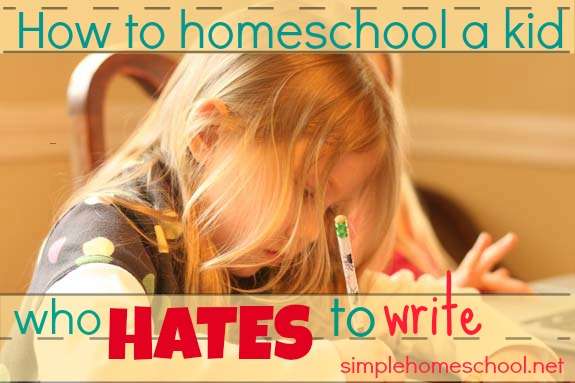
For whatever reason, some kids hate to write.
I don’t mean they dislike it, or they’d rather not today, thank you. No, I’m talking about those kids for whom writing “The cat sat on the mat,” requires the physical effort and mental stamina of climbing Pike’s Peak (but probably with a lot more fussing, whining, crying and arguing).
These kids aren’t faking: writing is genuinely difficult for them. (Especially when they’re young, and especially for boys.)
Your challenge as a teacher, a parent, and an academic coach is to keep their disdain for handwriting from turning into a hatred of school, which happens all too often because the thing they hate most (handwriting) permeates every subject.
Thankfully, most writing haters get over it–without intervention–by 4th or 5th grade.
But until then, these tips will help you — and your child — cope.
1. As far as you can, eliminate the writing in every subject but writing.
The goal is simply to master the material.
2. Do the work out loud.
Instead of written worksheets, try oral drills for math facts, phonics, translations, fill-in-the-blanks, paragraph summaries, etc. Or, do the worksheet but do it out loud.
3. Use stickers.
If your child is completing a worksheet, try writing the answers on small stickers in advance. Your student can then place the correct sticker in the appropriate spot for his answer. (This has the advantage of feeling like a game.)
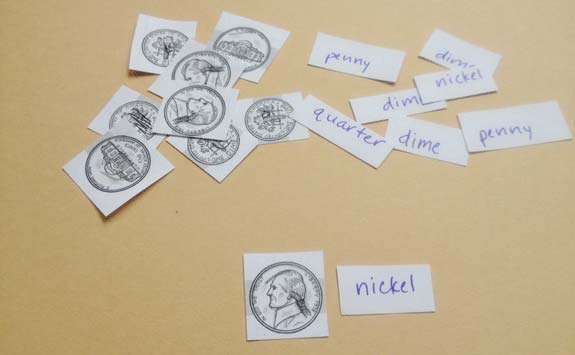
4. Make it a matching game.
With a little advance work on your part, your child can match up Spanish nouns with their meanings, coins with their names, states with their capitals, dates with historical facts, and anything else you can think of.
5. Play “secretary” for your student.
They dictate, you record. This lets your creative child get their stories, summaries, or science observations out of their head and onto paper.
6. Get creative with spelling word practice.
To practice “writing” spelling words, let your child “spell” the words with his finger in a shallow container of rice, sand, beans, or water. No paper or pencil required.
7. Consider starting typing early.
We started our pencil-hating kids on a typing program at age seven (at their request!), but kids as young as five can begin typing lessons.
8. When your kid must write, equip them with coping strategies to help them handle it better, or let them find their own.
My writing-haters self-soothed by swinging, spinning and sprinting down the driveway, preferably before and after handwriting time.
9. Make the writing easier:
These tips and tricks require a little extra work on your part to implement.
But if your writing hater still loves school (well, except for handwriting class) I hope you’ll agree with me: it’s worth it.
Do you have (or have you had) a student who hates to write? We need your tips, tricks and coping strategies!
The post How to homeschool a kid who hates to write appeared first on Activist Post.


 Lateo.net - Flux RSS en pagaille (pour en ajouter : @ moi)
