 Connexion


Independent broadcaster Shannon Joy joins the show to dismantle the bipartisan illusion of political saviors and expose the unchecked weaponization of smart city infrastructure.
Matt and Jason sat down with independent broadcaster and liberty activist Shannon Joy for a powerful conversation about ideological consistency and the cost of telling the truth. Utilizing her background in advertising and media, Shannon built a highly successful syndicated radio show, only to face severe backlash and deplatforming when she refused to capitulate to the MAGA movement. Recognizing Donald Trump as a Trojan horse for establishment interests from day one, she charted her own course. She overcame corporate rug pulls to build an independent media network that reaches a million listeners a month and recently ran for Lieutenant Governor of New York alongside Larry Sharpe to challenge and expose the fraudulent political apparatus.
The conversation breaks down the illusion of political saviors and the reality of the bipartisan corporate-state nexus. The discussion explores how institutional capital is funding a rapid expansion of the surveillance state, turning everyday public utilities—like municipal streetlights—into high-speed, unconstitutional tracking nodes via Axon light posts and Flock cameras. Beyond the physical dragnet, the dialogue uncovers the insidious nature of “signature reduction,” a government strategy deploying private fronts and civilian operations to manipulate local communities and social media narratives. It is a stark warning about the technocratic panopticon being built in our backyards under the guise of public safety.
The ultimate defense against a digitized, omnipresent surveillance state is hyper-localization and parallel institutions. The episode concludes with a deep dive into actionable countermeasures, emphasizing that human “relationships of trust” will soon become the most valuable commodity we possess. By actively adopting privacy-focused technologies, utilizing physical cash and precious metals, and intentionally building local supply chains, individuals can effectively starve the uniparty apparatus. The true white pill is a fearless return to localized human connection—rendering the corporate-state dragnet obsolete through unyielding, decentralized non-compliance. (Length: 1:12:49)
Guest Links & Resources:
Support The Free Thought Project
The post Podcast – Shannon Joy – From Deplatformed to Defiant: Building Local Resistance Networks appeared first on Activist Post.

Earlier this week, I shared a tweet entitled “8 Ways To Take Down Flock Without A Sawzall.” It was a follow-up to a viral FOIA thread I posted on X earlier in the year, giving people a template file for a records request about Flock cameras in their own communities. (If you’re interested, you can find it here.)
But filing a FOIA request is only one tool.
There are many other ways ordinary people can legally challenge the expansion of automated license plate reader systems. Knowledge without strategy changes very little. But when informed people act with purpose, even the most entrenched systems can be challenged.
Personally, I think we’re well beyond the denial stage. The surveillance state isn’t coming—it’s already here. Because of that, I don’t spend much time judging how other people choose to push back. Some people protest. Some organize. Some file lawsuits. Some file public records requests. Some use Sawzalls.
This article isn’t about any of that.
This is for the people who want to use lawful, public channels to challenge Flock’s expansion in their own communities.
Will it take longer? Usually.
But it also tends to have a much longer shelf life. Cameras that are physically removed are often replaced within a few days, usually at the expense of the taxpayer. However, cameras that lose funding, contracts, or public support often stay gone for good.
I should also mention that part of what motivated me to put this list together was a recent interaction I had with Flock’s CEO, Garrett Langley.
I asked him a sincere question on X. Flock says “safety is a fundamental right,” so I asked, “But what if the company is actually building one of the largest surveillance infrastructures ever deployed in American neighborhoods? What if this technology slowly transforms our cities into a digital architecture of control rather than simply making them safer?” Instead of answering, he blocked me.
Silence isn’t an answer, especially from someone whose company asks the public to trust a surveillance network spanning thousands of communities. So, if those answers aren’t coming from Flock, then it’s up to us to start asking the questions ourselves.
Here are eight ways to do exactly that.
One of the simplest questions is often the hardest for officials to answer.
Has Flock actually reduced violent crime?
Not crime somewhere else.
Not what the company claims.
Your town.
Many cities renew surveillance contracts year after year without ever conducting an independent review of whether the cameras accomplished what they promised.
Ask city council members for the evidence. Ask for reports. Ask for crime data. Ask whether anyone ever evaluated whether taxpayers are getting what they paid for.
You might be surprised how often nobody has.
Timing matters.
Most people don’t learn about Flock until the cameras are already installed.
By then, the fight becomes much harder.
Every contract has an expiration date. File a public records request asking for the original agreement, any amendments, renewal dates, and termination clauses.
Knowing when that contract expires gives your community time to organize before another vote takes place instead of scrambling afterward.
When governments spend public money on surveillance technology, they should be asking more than one question:
Does it work?
They should also ask:
What does it do to privacy?
What are the risks?
How is the data protected?
Were civil liberties considered?
Ask your city whether a Privacy Impact Assessment or similar constitutional review was ever conducted.
If the answer is no, ask why not.
Most surveillance systems don’t appear overnight.
They usually go through committee meetings, budget discussions, contract approvals, and council votes.
Those meetings are public.
Many cities also let residents subscribe to meeting notifications so you know when surveillance contracts appear on an agenda.
Showing up before the vote is almost always more effective than protesting afterward.
Surveillance often expands because someone else offers to pay for it.
Federal grants from agencies like DHS or the Department of Justice can make expensive surveillance systems look “free” to local governments.
Of course, taxpayers still pay.
Ask your city whether outside grants funded the purchase.
Request grant applications, award letters, and communications related to funding.
Money usually tells the story.
Many people assume only their local police department can access Flock.
That’s rarely the whole picture.
Ask which agencies have permission to search your city’s license plate database.
Request memorandums of understanding, data-sharing agreements, participating agencies, and any policies governing outside access.
People deserve to know who can access information collected in their own neighborhoods.
Flock records searches.
That means there is often a record showing who searched the system, when they searched it, and sometimes why.
Those logs can reveal misuse long before it becomes a news story.
Request audit logs, dates, users, reasons for searches, and associated case numbers whenever possible.
Transparency discourages abuse.
If officials claim the cameras are working, ask them to show you.
Many cities publish crime statistics online.
Compare crime before installation and after installation.
If there’s a measurable improvement, great.
If there isn’t, taxpayers deserve to know why they’re still funding the program.
Claims should be backed by evidence, not marketing.
Fortunately, you don’t have to start from scratch. Several excellent tools already exist to help map Flock cameras, research contracts, file public records requests, and better understand the expanding surveillance network. Here are five of the best:
DontGetFlocked.com lets you enter a starting point and destination, then estimates how many Flock cameras you’ll encounter while suggesting routes that reduce your exposure.
EyesOnFlock.com is a crowdsourced project tracking camera locations, contracts, and deployments around the country.
Deflock.me maintains a nationwide map showing Flock deployments, removals, and community resistance efforts.
HaveIBeenFlocked.com allows users to quickly check whether Flock cameras operate in their area and what information may be collected.
ALPR.wtf maintains one of the most comprehensive databases of automated license plate reader deployments in the country, including guidance for submitting public records requests.
Each offers a different piece of the puzzle, whether it’s locating cameras, reviewing contracts, avoiding surveillance routes, or learning how to file records requests.
Ultimately, this conversation isn’t really about cameras or surveillance. It’s about what kind of society we want to leave behind for future generations. If constant automated surveillance becomes the norm for today’s children, what will seem ordinary to the next generation?
The most effective surveillance systems don’t succeed because people are forced to accept them. They succeed when people eventually stop noticing them.
That’s why this conversation matters now, not five years from now.
That future isn’t inevitable.
Communities still have a voice. Contracts can be challenged. Public officials can be questioned. Policies can be changed.
History is full of ordinary people who decided enough was enough.
There’s no reason this can’t be one of those moments too

The post 8 Ways To Take Down Flock Without A Sawzall appeared first on Activist Post.
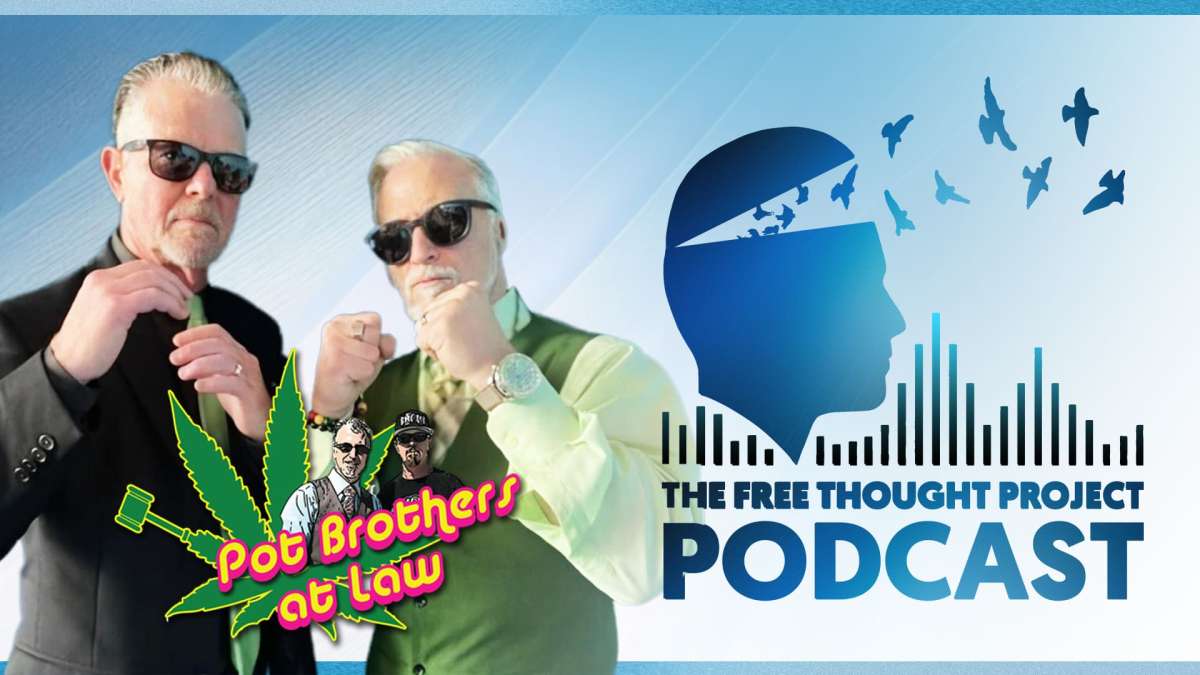
This is why you should never talk to the police.
In this episode of The Free Thought Project podcast, Jason and Matt sit down with Marc and Craig Wasserman, better known to the world as the Pot Brothers at Law. Quick note before diving in: you may notice some brief audio issues in the opening minutes. We cleaned up everything we could, and while a little roughness remains, the conversation is absolutely worth sticking through.
Practicing law in California for decades, Marc and Craig specialize in criminal defense and cannabis business licensing, compliance, and regulations. They skyrocketed to internet fame in 2015 and now boast over 3 million followers across social media. They are most famous for teaching the public their signature 29-word “Shut the F Up” (STFU) script—a practical, bulletproof guide designed to help citizens peacefully engage with law enforcement while fiercely protecting their constitutional rights.
The conversation dives deep into the realities of the modern justice system and the psychological traps police use to trick individuals into waiving their rights. The discussion dismantles the dangerous myth of having “nothing to hide,” detailing how even innocent people can accidentally talk themselves into a cage, and clarifies what legal “cooperation” actually looks like during a traffic stop. The episode also tackles the perverse, revenue-driven incentives of modern policing, the reality that cops are legally allowed to lie to secure an arrest, and how the recent federal rescheduling of cannabis to Schedule III is less about freedom and more about protecting state-enforced corporate monopolies. Ultimately, the show serves as a powerful masterclass in legal self-defense, offering listeners a massive “white pill” on how to outsmart the system, maintain their sovereignty, and use the sound of silence to take their power back. (Length: 1:01:36)
Follow and Support the Pot Brothers at Law:
Main Website: potbrothersatlaw.com
Merch & Script Stickers: pbalmerch.com
Smell-Proof Bags: Fire Bar Labs https://smellprooffashion.com/collections/all
Instagram & TikTok: @pot_brothers_at_law
Support The Free Thought Project:
TFTP Membership: thefreethoughtproject.com
Jason’s Know Your Rights Course: jasonbassler.com
The post Pot Brothers At Law – Shut the F Up: The 29-Word Script That Saves Lives appeared first on Activist Post.
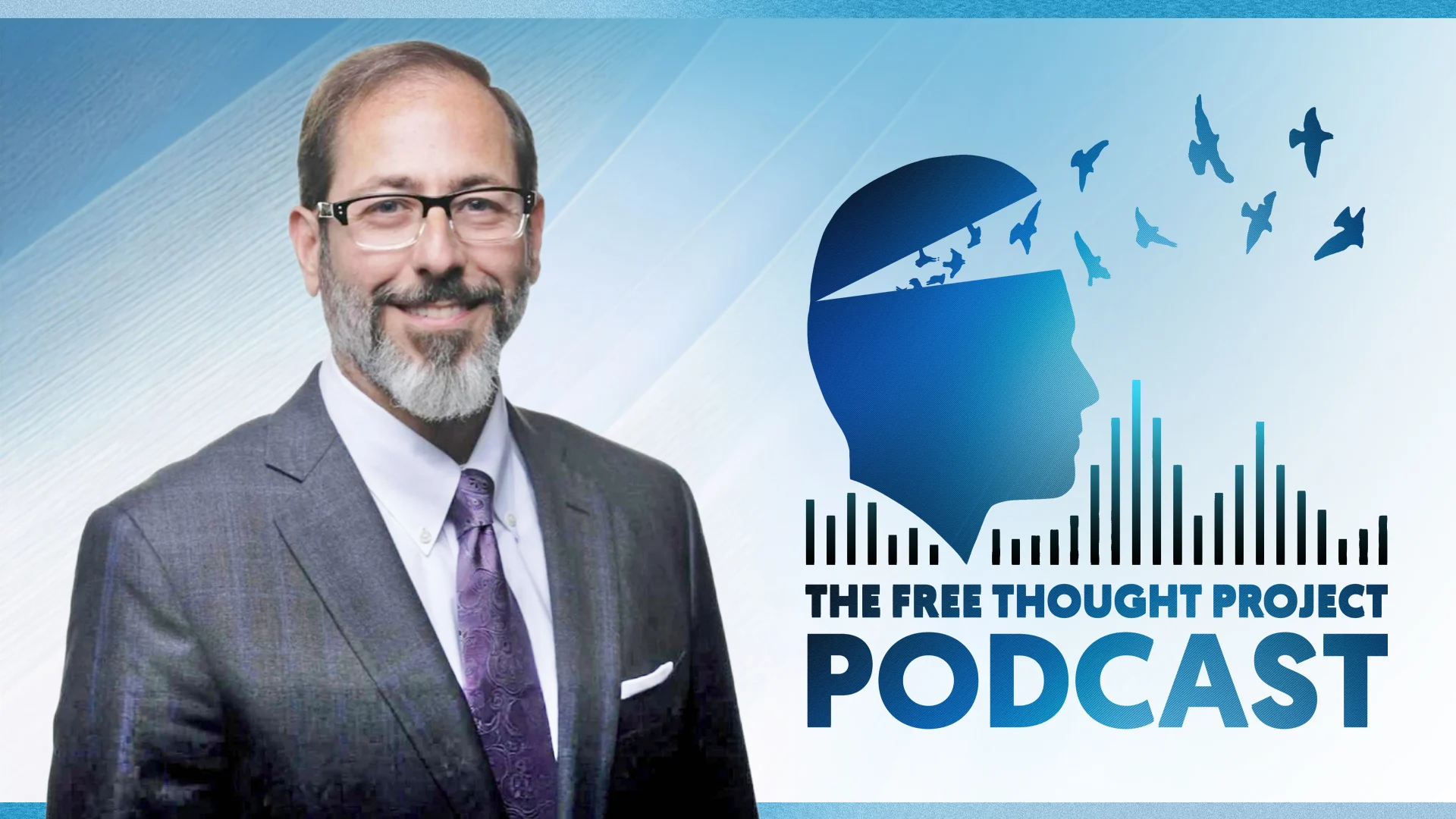
Matt, Jason, and Don sit down with Dr. Andrew Kaufman to expose the rise of the medical surveillance state, the corrupting influence of AI and Palantir, and how to reclaim your health sovereignty from a system designed for control.
In this episode, Matt Agorist, Jason Bassler, and Don Via, Jr. sit down with Dr. Andrew Kaufman, a forensic psychiatrist and natural healing consultant who gained international recognition for his bold departure from the mainstream medical establishment to advocate for health sovereignty and the root-cause resolution of illness. We start off the podcast with Dr. Kaufman explaining how the things he saw inside the current medical establishment were causing harm, leading him to question the corrupt relationship between insurance companies and the medical industry that effectively makes the insurer the boss of the doctor rather than the patient.
Dr. Kaufman discusses how AI is set to play a major role in the near future by enforcing questionable clinical guidelines, predicting that AI will become a central pillar of a burgeoning medical surveillance state. We move into the impact of environmental pollutants and the various dangerous effects of SSRIs, including their role in shortening life spans and creating suicidal thoughts and behaviors. The conversation shifts gears into the AI surveillance state and the role of Palantir, as well as how CBDCs are being implemented globally alongside the rollout of stablecoins in the US. We also discuss how this surveillance infrastructure could be used to control the population via the medical establishment, get Dr. Kaufman’s thoughts on the legitimacy of the MAHA movement, and touch on the dangers of glyphosate. We end the show on a “White Pill” note as Dr. Kaufman provides many resources for how we can fight this system and reclaim our autonomy. (Length: 59:45)
Instagram: https://www.instagram.com/andrewkaufmanmd/
Website: https://www.andrewkaufmanmd.com/
The post Podcast – Dr. Andrew Kaufman – Inside the Medical Machine, MAHA, AI & Reclaiming Autonomy appeared first on Activist Post.

Is the collapse of the West being engineered? Allan Paul Roberts breaks down the 11 pillars of planned demolition and why the reclamation of individual faith and privacy is the ultimate act of rebellion.
In this episode of the TFTP Podcast, Jason Bassler and Matt Agorist sit down with Allan Paul Roberts. Allan is an author and researcher dedicated to exposing the globalist agenda to deconstruct society. In his latest work, The Globalist Plan to Collapse Everything to Usher in a New World Order—In Their Own Words, he utilizes an innovative multimedia approach—including over 170 QR codes—to provide readers with direct evidence of the strategies being used to centralize global power.
The conversation explores the origins of Allan’s work, specifically the “revelation” that led him to identify the pillars of American society currently under systematic attack. The conversation pulls no punches, moving from the psychological warfare of “state-as-God” idolatry found in both political parties to the hard reality of the corporate-state panopticon. Roberts provides a “Liberty Perspective” on why the state is obsessed with replacing spiritual sovereignty with political loyalty, particularly in how it manufactures consent for global conflicts. We delve into the mechanics of the modern surveillance state, highlighting the massive 62-square-mile data center and power facility recently approved in Box Elder County, Utah, and its implications for national security and individual privacy. The discussion further examines the dual nature of Artificial Intelligence, weighing its potential for innovation against the risks of ethical erosion and mass surveillance.
Turning toward solutions, we discuss the growing “privacy-focused” movement among the younger generation, including the rise of Layer-1 privacy blockchains like Zano, the use of VPNs, and the importance of “tokenization” in a digital economy. Practical steps for personal sovereignty are also covered, such as transitioning to non-tracking mobile devices and using physical privacy safeguards like camera covers. The episode concludes with a powerful call to action for listeners to reclaim their digital and physical independence through informed resistance and community-building. (Length: 1:06:21)
Click Here to Support TFTP.
Guest Information:
Website: AuthorAPRoberts.com
Book: GlobalCollapseBook.com
Free Chapter: Read the first chapter here: https://www.globalcollapsebook.com/read
X: https://x.com/AuthorAPRoberts
IG: https://www.instagram.com/authoraproberts/
Rumble: https://rumble.com/c/TheGlobalistPlan
Zano Privacy Tools: https://intro.zano.org/
The post Podcast — Allan Paul Roberts — The Globalist Strategy to Collapse Systems and Reshape the World appeared first on Activist Post.


 Lateo.net - Flux RSS en pagaille (pour en ajouter : @ moi)
