 Connexion


Whitney Webb explains how Leslie Wexner privatized Ohio’s state government, and is using his position between the markets and the state to help the Thielverse build out the ‘Silicon Heartland.’

Under the radar, the billionaire class is building the infrastructure and models necessary to create a dystopian future in which cities become billionaire fiefdoms – completely privatized, governed by dictatorial CEOs and financed by subservient taxpayers. The buildout of data centers is one essential part of the effort to construct a totalitarian capitalist society, which is already advancing.
In this episode of The Chris Hedges Report, Hedges interviews investigative journalist Whitney Webb, the author of “One Nation Under Blackmail,” who unravels the complex relationships between elected leaders, the National Security State, the state of Israel and Big Tech. Webb discusses the methods being used in the Silicon Heartland, the area around Columbus, Ohio, where Les Wexner, who has ties to organized crime and was Jeffrey Epstein’s most notable benefactor, and other powerful billionaires such as Peter Thiel of Palantir, have made significant headway in creating a privately-run city — New Albany. She describes their use of innocent-sounding front groups, such as Jobs Ohio, private development corporations and political bribery to enrich themselves and create what they are marketing as Smart Cities.
Hedges and Webb expose the connections between the billionaires behind this effort and the State of Israel. Webb argues that Israeli startups have been promoted to Big Tech “so that US technological infrastructure on multiple levels would be so intimately enmeshed with Israeli interests that they could never meaningfully boycott Israel.” The same technological infrastructure is also being fused with the National Security State – intelligence and the military – to also make it dependent on the private sector.
The ideology underlying this new model of feudalism originates from the Neo-Reactionary Movement. Beyond that, Webb explains, the billionaires involved believe fervently in a transhumanist future where “the end goal of humanity is to have humanity merge with AI in some capacity” such that there are two classes, the wealthy and a large underclass that is either exploitable or expendable, and obedience is enforced through technology. There is still time to prevent further development of this dystopian future by, among other actions, unplugging from the very technology being employed to create it.
Chris Hedges
Max Jones
Margaret Flowers
Margaret Flowers
Diego Ramos
Chris Hedges: The proliferation of data centers built to process immense amounts of data sets and train AI models has spawned widespread grassroots backlash by a diverse coalition of Americans across the country. The people behind these industrial behemoths and the legislative infrastructure that has laid the path to their development, however, are scarcely understood. In a recent article for Unlimited Hangout, Whitney Webb investigates the Silicon Heartland or the part of the Columbus metropolitan area that is being rapidly developed into a major hub for technological development, hosting big tech campuses, semiconductor production facilities, and massive data centers. Webb reveals that at the center of this technological development drive is Jeffrey Epstein’s most prominent benefactor, Les Wexner, the billionaire founder of Bath and Body Works with ties to organized crime, who co-founded the Mega Group, a cohort of Jewish entrepreneurs who once met twice a year to discuss where to target their philanthropic investments. Birthright Israel was one of the most prominent initiatives spun out of the group.
Through a dizzying array of public-private partnerships and alleged shell companies, Wexner has gained control of key real estate that is now being utilized by military-contracting big tech companies, enriching himself and the corporations he’s lured to the Silicon Heartland along the way. But it is how Wexner has accumulated this leverage that illuminates the dark inner workings of our political system. These public-private partnerships, Webb reveals, despite the banality of their name, function as a way for oligarchs to funnel taxpayer money into privately developed business projects. These agreements also enmesh the money, objectives, and players of the private sector so deeply into the legislative process that they empower the private end of these partnerships to take de facto control of their government collaborators. In doing so, these oligarchs facilitate a quasilegal corporatization of government.
Inevitably, as data centers increasingly become a key component of the nation’s surveillance infrastructure, other centers of power enter the mix as well, with national security actors – defense executives, Israeli business interests, Vivek Ramaswamy, Peter Thiel allies, and Vice President J.D. Vance lingering on the peripheries of the public-private framework advancing this data center deluge.
Joining me to discuss the legal infrastructure and networks behind some of our modern surveillance state is investigative journalist and author of “One Nation Under Blackmail,” Whitney Webb. So, let’s begin with Wexner, who he is, and perhaps, he has close ties to Epstein, you can speak about that as well.
Whitney Webb: Sure. Thanks so much for having me back on, Chris. So yes, Leslie Wexner, probably best known for one of two things, either being the richest man in the state of Ohio or being the most well-known benefactor of Jeffrey Epstein, at least on paper. So, Leslie Wexner created what is now a large conglomerate of companies, now under the parent company L Brands, but some of the best-known companies that he has been behind are longtime staples of American malls, Bath and Body Works being one, Abercrombie and Fitch, The Limited, Limited Two, etc. etc.
Some of my reporting on him in conjunction with Epstein has focused on things like his organized crime connections, which were alleged by Columbus local police as they were investigating the death of one of his lawyers, or one of the lawyers rather, of The Limited, named Arthur Shapiro in the 1980s, who was deemed to have been murdered in what was referred to as a mob-style hit back in, I believe, 1985 or so. And he, Wexner, and his close associate, John Kessler, were named as suspects and their ties to organized crime were detailed in a report that was heavily censored by the Columbus police chief at the time and ended up being revealed inadvertently through a Freedom of Information Act request filed by local journalist Bob Fitrakis in the late 90s. And so, we have a record of that and the various organized crime connections that were alleged too, a record of that now.
Notably Kessler is the person that created with Leslie Wexner something called the New Albany Company, which is this private company that has essentially taken control of this what was once a very small suburb outside of Columbus, Ohio, called New Albany. And through a series of efforts to drastically alter not just local law, but also state law, the New Albany Company was able to become the de facto local government of the town of New Albany by entering into a public-private partnership with the local government of New Albany. But in some of these law changes they lobbied for, including at the state level, allowed the New Albany company created by Wexner and Kessler to do unprecedented things for a private company, like tax local residents and issue bonds and all sorts of things that are normally meant to be the business of local governments. And Kessler, for example, has said that basically the New Albany local government in their partnership is extremely pro-development and adheres to a master plan that was developed by the New Albany Company.
So, this is one of Wexner’s other endeavors, aside from, of course, his association with Jeffrey Epstein and longtime partnership there, and his corporate behemoth, L brands, that he runs and that made him a billionaire. But this is one of the other things that he has been developing for some time, the town of New Albany, which now obviously is part of the broader Columbus region, home to the vast majority of Ohio’s data centers. So, Ohio is currently, I believe, fourth in the United States for having the most data centers behind Virginia, Texas and California, I believe. But they have about 193 data centers currently, I believe, and 121 of those are in and around New Albany.
Chris Hedges: Your article shows that Wexner and various public-private partnerships that he’s spirited are serving as a key node in the development of this data center in Ohio, the Silicon Heartland, but there’s a much broader coalition of people and institutions that are driving the data center push, wrapping Big Tech, the US government, elements of the military-industrial complex in the mix. What’s the objective and why data centers?
Whitney Webb: Do you mean in Ohio or in general?
Chris Hedges: Nationally. Well, both, I mean, because Ohio is kind of your case study.
Whitney Webb: Right, sure. So obviously it’s fair to say that the network behind the data center push is extremely large and influential, obviously spearheaded by big tech companies that, at this point, have, for all intents and purposes, fused with the National Security State. And this has been ongoing for some time. So, a good example is to look back at the 2018 National Security Commission on AI that was chaired by Eric Schmidt, the former Google CEO, and a close associate of Schmidt, who had previously held a top position at what is now the Department of War. And basically, everyone on that commission was either a major executive at one of these big tech companies that is behind the data center push or figures that had previously worked for the military to establish, basically, the US roadmap on AI and what needed to be done for “national security purposes.” And it’s fair to say that even beyond that, you can see how these two groups have become so intertwined by the fact that the intelligence community, as well as the military and other major aspects of the federal government, contract extensively with these same big tech companies and are arguably largely dependent on them. While at the same time, a lot of these big tech oligarchs are major donors to our politicians.
So, on various levels, they have much more influence than arguably any other group right now. And I think as a very visual example that people will be familiar with that’s a testament to this, is after Trump’s inauguration or during Trump’s inauguration last year, behind him was a line of Who’s Who of Big Tech CEOs like Jeff Bezos and other figures like him, a testament to their role and importance in getting him elected for a second term. And he has obviously, so far, been generously repaying their patronage.
But there’s important people to look at too in the buildout of the data center deluge, as you called it, that aren’t such public figures at this point. So, there’s a lot of AI infrastructure companies that are becoming increasingly important to this, but they largely stay out of the news. So, one good example, I think, for this would be a company called Crusoe AI, which is, for example, building the Stargate project for Open AI and Larry Ellison’s Oracle, which was announced in the early days, I think one of the first announcements actually, of Trump soon after his inauguration this time around. And they’re basically building a lot of the data centers and working as a sort of a middleman between these big tech companies and the actual creation and infrastructure that they rely on. And so, those companies are an important part of this constellation of actors as well.
And it’s also something that’s happening well beyond the US. So, one of the founders of Crusoe AI, for example, is named Cully Cavness, and he accompanied Peter Thiel, the co-founder of Palantir, on his recent trip to Argentina to meet with Javier Milei. Later, they also met with Chilean politicians, apparently including the president of Chile, though it wasn’t publicly announced, and also the president of Paraguay. And, not long after that, at least in the case of Milei, there have been these proposals of allowing companies with no human employees that are run by AI to operate in the country, an announcement of Stargate Argentina on behalf of OpenAI, run by Sam Altman, who’s closely affiliated with Peter Thiel.
So, these people are looking to build data centers really all over the world. And why are they doing it? Why data centers? It’s essential to basically their various plans for AI, which include not just their plans for AI-related businesses, but also a lot of these people subscribe to specific ideologies that see that extreme investments in AI and AI compute capability are necessary in order to further the development of what they call ‘Artificial General Intelligence’ or an AI superintelligence, and some of them hold an almost religious fervor, you could say, for having that come to fruition and are openly transhumanist and think that the end goal of humanity is to have humanity merge with AI in some capacity. So, they have not just the economic incentive, they also have this, I would call it, quasi-religious incentive as well, which may help propel this along even when the economics of it don’t necessarily make sense. And at the end of the day, I think it’s a testament to how we’re sort of living in an era of, this is the importance to them, of computing power over people. And so, people that are negatively affected by them, apparently their concerns don’t matter and there’s a coordinated effort to sort of paint any pushback as being propelled by China, for example, and various different narratives are being fielded right now to try and manage local anger at an increasing cost of living crisis, many of which have been linked to data centers, particularly their power usage and their water usage.
And some of these Thiel-linked outlets, like Pirate Wires, for example, have tried to push against those claims, but using the data on the books about water usage and some other people in some other claims, but in states like California, most data centers aren’t required to report how much water they use. So, how accurate is the data we have on it anyway? And a lot of data centers are moving into areas that have water issues or are having droughts already and so obviously local concern about that is quite reasonable but for the big tech oligarchs, they’re not really interested in hearing those concerns. They have a dedicated mission to improving AI for, as I mentioned, various purposes and moving the United States further into an AI-powered economy.
Chris Hedges: So, could you explain what people like Wexner and Thiel, what is their political and social vision? What are they trying to create and how will these data centers and AI help them achieve this vision?
Whitney Webb: So, essentially what Wexner has done in the state of Ohio, and what I detail, is that he has privatized major aspects of local and state government through first, in the example I gave earlier of New Albany and then extending beyond that to first the Columbus region and then really the state in its entirety, focusing mainly on the Department of Economic Development, and where that essentially intersects with people like Peter Thiel is his professed interest in the writings of people like Curtis Yarvin in the Neoreactionary Movement, who posit that the answer to current problems with our government is to privatize the state entirely and place in charge of it a CEO that would essentially operate as a dictator. So, both men quite clearly have an interest in privatizing major aspects, if not all, of the US government. And so, ultimately from that, what does that mean? And up until this point, the way to achieve that in a practical sense has been to expand and grow the power of public-private partnerships, where almost always the public sector is subservient to its private sector partner. And it’s used to enrich the private sector partner and the public sector, ostensibly working as a watchdog here on private sector power, does not end up functioning that way. And so ultimately, this is what we’re seeing, I think, especially with the ascendence of oligarchs like Thiel and people close to him in the halls of political power, for example. The best example, obviously, being current vice president JD Vance, is to further this so we go beyond the public-private partnership model that’s predominated for several decades now and move into this more extreme privatization, which may happen gradually or suddenly, depending on how they think it could best be implemented to suit their interests.
Chris Hedges: One of the points you make in the article is that they seize, I think, they took control of the liquor tax in Ohio, but one of the points you make is that once this public money pours into their hands, there’s no accountability. Nobody knows where it goes.
Whitney Webb: Yeah, so what I was talking about in that specific example is this organization that was created as essentially the privatized version of the State Economic Development Authority, and it’s called Jobs Ohio. And so, Jobs Ohio was allowed to purchase rights to the Ohio liquor tax for, I think, $1.4 billion, which it made back extremely quickly, and because they are a private company, they are not required to show how they use the funds they take in from the liquor tax and are essentially referred to as a ‘dark money organization’. They claim, of course, to be creating lots of jobs by offering taxpayer-funded, through the liquor tax and other means, incentives packages to a lot of these large data center companies and other corporations that are in the same sphere that have moved in like Palmer Luckey’s Anduril, which is backed by Peter Thiel.
But Jobs Ohio has been able to, supposedly, they claim that these incentive packages help attract all of these businesses to the state and if they didn’t exist, those companies would go elsewhere. But studies show that’s only true in maybe 25% of cases. And it’s unclear how many jobs Jobs Ohio has actually created since it came into existence in 2011. And if you’re looking at data centers, a lot has been said about how many jobs they’re going to create, but most of the jobs they create are temporary. They’re construction jobs, and so once the data center is built, most of them employ maybe 20 to 30 people per data center, which is not very much. And so, if you consider the amount of money, which is often millions, poured into these incentive packages, which also include in Ohio sales and property tax exemptions, is it really worth it for 20 to 30 jobs per center when the losses to the Ohio taxpayer number in the millions?
Chris Hedges: And this was money, if I remember correctly from your article, that that was used to fund education, I mean to fund basic services. Once they took it, that money is gone.
Whitney Webb: Yeah, so if you look at Governor Mike DeWine, for example, he pushed through a recent spending bill that gutted all of those services. And there was efforts at the state level to push through legislation that would curb some of these tax exemptions for data centers, and Mike DeWine vetoed that but Mike DeWine and some of the people that work under him, their political careers have been very related to the fortunes of Leslie Wexner, who count among their biggest donors. Of course, it’s fair to say also that Wexner donates to both parties, but the vast majority of his patronage in the state has gone to Ohio Republicans, Mike DeWine being no exception. And his predecessor, John Kasich, was heavily funded by Wexner as well, which seems to have resulted, in part, in the creation of Jobs Ohio, which ended up being used to scale the model that Wexner implemented in Columbus via the Columbus Partnership.
Chris Hedges: At the beginning of the article, you write about how Wexner helped create a network of public-private partnerships, and of course, as you mentioned, use billions of dollars of Ohio taxpayer money to finance a massive welfare system for corporations. Can you detail how the public-private partnerships are put together, how they work, and how Wexner used them to create this vast data center development?
Whitney Webb: Yeah, so the culmination of that effort is the company that we just discussed called Jobs Ohio, but it started off in the region of Columbus. So, as I mentioned earlier, Wexner successfully privatized the town of New Albany, which is close to Columbus and sits within the Columbus region, and in the early 2000s, Wexner and Kessler, who created the New Albany Company that took over that town, created something called the Columbus Partnership, which basically became the de facto Economic Development Authority. And the Columbus Partnership then spawned something that is now called One Columbus, that is the Columbus Region’s Economic Development Authority. And it is a public-private partnership that the private sector donors to One Columbus include Wexner’s companies but also include very large companies that have a large presence in the state, like JP Morgan, for example, and ones that have large data centers in the state and the Columbus area specifically, like Amazon. And so not surprisingly, One Columbus, as they say, is “aggressively focused on achieving the economic development goals of its private sector partners,” which includes the build out of data centers. And so, to facilitate that and subsidize that with taxpayer money, that is what these public-private partnerships are essentially doing. And as I said earlier, there’s no proof that these are necessary to bring the vast majority of these companies to the region or to the state, but it is a way to use taxpayer money to subsidize the buildout of AI infrastructure on a massive scale.
And they continue to foot the bill in other ways via higher power bills, for example, which in the Columbus region, in particular, have exploded as the data center boom in the state has continued to grow. And as I mentioned earlier, the vast majority of data centers in the state are in that area. And so, after the success of the Columbus Partnership, various other replicas, you could say, were spawned in various other parts of the state – Cleveland, Cincinnati, and so on – until it was basically, I think, in about five or six, maybe seven chunks. And then Jobs Ohio is created and then partners with every single one.
So basically, Wexner and Kessler created the model in Columbus, and then it’s replicated in every other major metropolitan area in Ohio, and then connecting all of them is the 2011-created Jobs Ohio, which John Kashich, as I mentioned earlier, the year before Jobs Ohio was created, declared receiving 35 ‘gifts’ from Wexner, but declined to disclose what the gifts were and what their monetary value was. And another interesting point there is that the venture capitalist from Sequoia Capital, Mark Kvamme, also donated, I think, several million dollars to Kasich right before he created Jobs Ohio. And then after creating it, Kasich put Kvamme in charge of Jobs Ohio.
Chris Hedges: Can you talk about the ties with Israel? I know Compass data centers, you mentioned, has Israeli ties. And I’m wondering whether the pairing between Wexner and Compass illustrate a network driving the development of Big Tech in the AI boom that has deep Israeli roots.
Whitney Webb: Well, looking at a lot of the tech companies and data center companies that have installed themselves in New Albany in particular, the vast majority of them have significant subsidiaries that operate in the state of Israel. And Wexner, of course, is intimately related to the State of Israel through his own activities. For example, I think several decades ago, he was sort of acting as a middleman in some business capacities between Israel and China and also working on establishing Israeli businesses and helping them establish themselves in the occupied Golan Heights, among other things. And that’s to say nothing of his links to the Mega Group, for example, which, as you noted in your introduction, created Birthright Israel, and also Jeffrey Epstein, who at this point is quite known for his ties to former Israeli politicians and the Israeli state.
But I think it also speaks to sort of a broader issue, to have a lot of this infrastructure of technology in the US be intimately intermingled and connected to Israel. And this was actually something that was furthered and actually developed in conjunction with Netanyahu and the so-called vulture capitalist and significant donor to neoconservative causes, Paul Singer, who explicitly created a company called Startup Nation Central with the explicit purpose of making it impossible for the US to ever significantly support the BDS movement or the Boycott Divest Sanctions movement. And the goal was to basically market Israeli startups to US big tech firms so that they would acquire a lot of those startups in unprecedented numbers and also contract with them so that US technological infrastructure on multiple levels would be so intimately enmeshed with Israeli interests that they could never meaningfully boycott Israel, no matter what happened, essentially. And a lot of these startups, of course, if you’ve ever looked into the Israeli startup scene, are intimately related to Israeli intelligence and Israeli military operations. They’re staffed by veterans of one or the other. And at the same time, coincidentally, that Startup Nations Central was created, the Israeli government developed an explicit policy where these startups would be used to conduct operations that previously had been conducted in-house by Mossad and Unit 8200 and other parts of the Israeli intelligence system. So, for lack of a better word, they have an explicit policy of using them as front companies for intelligence. And so basically by having all of these big tech companies absorb them, the goal is to have a a major economic lever of power over the tech industry in particular that would prevent US policy from ever meaningfully challenging Israel, even at this point in time when they have actively been conducting a genocidal war for years in Palestine.
Chris Hedges: So, let me ask about Anduril. Can you explain what that is and its importance?
Whitney Webb: Yeah, so Anduril is a company that was created by Palmer Luckey and Trae Stephens. Palmer Luckey was a Thiel fellow. He created Oculus Rift, and later it was sold to Facebook when Peter Thiel was on the board of Facebook. And Luckey’s subsequent venture, Anduril, was funded in large part by Thiel. And then Trey Stevens is a former veteran of the intelligence community that went to work for Palantir, which of course is a Peter Thiel-created company, and then later joined Founders Fund and decided to create Anduril with Luckey at a time when he was also more or less advising the Trump administration Pentagon, its transition team, during Trump’s first term as president. And so, they in particular specialize in autonomous weaponry, mainly drones. And so, they have moved into the Columbus area as well.
Palmer Luckey credits Jobs Ohio with their decision to establish themselves there for this factory called Arsenal One, which is due to be producing an extensive amount of autonomous lethal drones, really any day now at this point. And nearby, there’s an effort by Howard Lutnick’s company, Cantor Fitzgerald, to find the next Anduril to fill that particular space. So, Cantor Fitzgerald, of course, being Howard Lutnick, the current commerce secretary with a lot of ties to Epstein in particular. So, it’s kind of interesting to see that coalesce in the region that has essentially become Leslie Wexner’s fiefdom. And aside from that, it’s worth noting that another venture of Palmer Luckey as well, that’s also more or less linked to Peter Thiel and other figures in and around Palantir, like Joe Lonsdale, is this effort to create a Stable Coin bank called Erebor, which Luckey nominally created, but it’s going to be run by other people. But it’s going to be based in Columbus. And so, this is an effort to increase dollar hegemony through dollar Stable Coins.
And I think recently they were fielded as a choice to restructure Venezuela’s sovereign debt, or particularly the debt of their state oil company, following the kidnapping of Nicolas Maduro and during a time when Trump, at least, claims that he is “running the country.” So that’s worth keeping in mind, as is the fact that Erebor was explicitly created to replace Silicon Valley Bank, which you may remember collapsing a few years ago. And if you paid attention to reporting about the collapse, the collapse of the bank was largely created by a run on the bank that was orchestrated by none other than Peter Thiel. How interesting. So, just an example of how this this particular network operates in one sense and also the fact that they have extensively sought to include Ohio in a lot of their plans.
Chris Hedges: Just to close, I wonder if you can describe Smart Columbus and how it’s kind of functioning as a test city for other smart cities in the US. It’s clearly, I think you make the point, part of a broader nationwide trend.
Whitney Webb: Yes. So, Smart Columbus is an initiative that was created by the Columbus Partnership, which as I mentioned earlier, was created in the early 2000s by Wexner and his henchman – I don’t know what else to call him – John Kessler. And essentially, it was created to yes, make Columbus a test case for smart city technologies and the implementation of various smart city programs, one of which is aimed at eliminating the use of private cars within the city of Columbus and moving sort of to these fleets of ride-sharing vehicles, Ubers essentially, and potentially in the future, Waymo’s and things like that. And oddly enough, this directly intersects with an entity that I mentioned earlier, the US National Security Commission on Artificial Intelligence, which was led by Eric Schmidt, and one of the goals of that commission, though not in their final report, but in documents of theirs that were obtained by Freedom of Information Request, was their belief that in order for the US to compete with China in artificial intelligence, which of course to them was of prime national security importance, it was essential that private car ownership be phased out and replaced with these ride-sharing fleets of Ubers essentially or eventually autonomous ride-sharing vehicles as necessary to train and improve AI in order to compete with China. And so essentially Smart Columbus was a test case for that or is looking to promote those types of initiatives, which they’ve done quite gradually. It obviously hasn’t gotten to that point in Columbus, but essentially the goal of this other Columbus partnership-connected entity is to have those kinds of things happen in Columbus specifically and basically use it as a beta test for these technologies that are designed by Silicon Valley or, in the case of the US and NSCI military-related figures as well to have that essentially be beta tested in Columbus without the people of Columbus really having any input into that process at all.
Chris Hedges: What they’re building is a kind of totalitarian capitalism, isn’t it?
Whitney Webb: You could say that in a way. It’s interesting to point out that a lot of these oligarchs that swim in these same circles as Peter Thiel, take Mark Andreessen, for example, is the author of a document that he calls “The Techno-optimist Manifesto”, and one of the main influences he says for that paper is a “philosopher” by the name of Nick Land, who’s quite popular also in the Neo-Reactionary Movement.
And Nick Land argues that capitalism is a type of AI, and that capitalism is also God, and thus AI is God. And Mark Andreessen kind of reflects those ideas in his writings. And these ideas are pretty much very popular with the same people who are interested in Curtis Yarvin’s ideas of privatizing the state and having it be led by a CEO dictator, which, as I mentioned earlier, is of interest to Peter Thiel and some of his allies, which include Andreessen. So essentially, like I said earlier, I think they’re building it out of the sense that they’re essentially creating, I guess, a new model of feudalism, but enforced by technology, where basically there’s an upper class and then a large underclass and having that be enforced by technology. And one of the favorite historians of these big tech oligarchs that they’ve done interviews with, sit-downs with him, like one with Mark Zuckerberg, for example, is Yuval Noah Harari and he has argued that in this era of AI and the data center push and all of this that we’re living now, but he said this several years ago that in contrast to the industrial revolution of times past where it was the unexploited versus the exploited, now for the vast majority of people, it will be exploited versus expendable, and it’s better to be exploited than expendable. And so, as AI is taking jobs from regular people and all of this, being led by organizations that, it must be a sick joke to call it Jobs Ohio.
We are basically living in an era where these people are attempting to build a very anti-human future, and they see capital as the most important thing to support and guide and nurture. People, and humanity in general, are secondary to the progression of AI, which a lot of these people, as I mentioned earlier, see as directly connected to capital and is essentially deified by these people. And so, we certainly cannot live in a world like that. Some of them have written books about how the goal is to basically have like brains in vats and robots basically conduct economic activity and have a perpetual growth economy with no humans involved at all, that our future is essentially that.
So, this is obviously a future that people that don’t want something insanely dystopian like that should reject. And the best way to do that is to not use their products and to basically divest yourself as much as possible from big tech devices and services and the products they offer because, for example, in the data center push, in this paradigm where they say anyway that data is the new oil, data centers are sort of like the oil pipelines in previous decades. And if you look at examples like the Keystone Pipeline and how the government managed that backlash and things like that and furthered their development through things like eminent domain, we may see a lot of that happen in the future with data centers. But the best thing we can do is not use their products. It’s a little different than oil, where you have to fill up gas in your car to get by. We don’t need to use AI chatbots and ask them all these mundane things or use them if we’re really against what the data centers are doing. And as this becomes a progressively more pertinent issue for people in the United States, in particular, if you want to stop the data center push and backlash, they have a lot prepared to prevent any sort of direct action or even in-person protests so the best thing we can do is just boycott and divest ourselves from their products as much as possible because they can’t really justify a data center build out if no one is using their algorithms and in chatbots. So, we absolutely do have a way to keep this from going as far as they would like it to go and to prevent them from pumping up everyone’s water and raising electricity prices and basically doing a lot of things that are going to make regular life people’s lives increasingly harder. It’s already hard and we have time now to develop something independent of these companies that are basically taking control of our government that have very nefarious agendas not just for the United States, but for the natural world, and humanity in general. And I think really the best way forward, the nonviolent approach is best, and it is to divest, and not use their stuff as much as possible.
Chris Hedges: Great, thanks, Whitney. I want to thank Max, Thomas, Diego, and Nawell who produced the show. You can find me at ChrisHedges.substack.com.
The post How the Epstein Network Is Privatizing The Government & Building Out The Surveillance State (w/Whitney Webb) | TCHR appeared first on Activist Post.
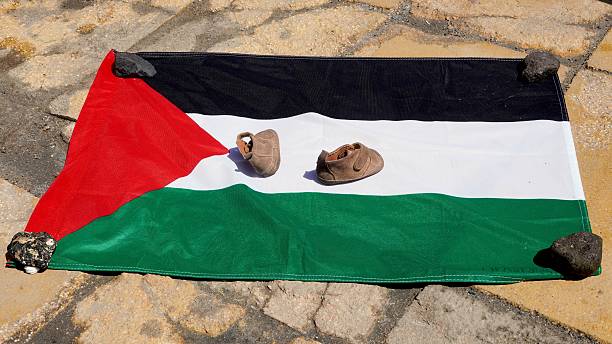
“When Governments Fail, We Sail — Humanity’s Compass Points to Gaza.”
Joshua Scheer
As Gaza remains under siege and much of the world looks away, activists continue to challenge the blockade through acts of nonviolent resistance. In this powerful interview with Chris Hedges, Brazilian organizer Thiago Ávila recounts what he describes as one of the most brutal crackdowns yet against the Gaza Freedom Flotilla movement.
Ávila details the interception of a multinational humanitarian mission in international waters, the detention of more than 180 activists, and allegations of beatings, threats, solitary confinement, and interrogation by Israeli authorities. His account is not only a personal story of suffering, but also a broader indictment of what he argues is the collapse of international law in the face of Israel’s ongoing war on Gaza.
While supporters view the flotillas as acts of civil resistance aimed at breaking the blockade and drawing attention to Palestinian suffering, Israeli authorities have repeatedly portrayed such missions as security threats. The interview explores this clash of narratives, the growing international solidarity movement, and why activists continue to sail despite knowing interception is likely.
For Ávila, the story is ultimately not about himself. Again and again, he returns to the plight of Palestinians living under siege and bombardment, insisting that whatever he endured remains only a fraction of what Palestinians face daily. The result is a sobering conversation about resistance, repression, and the lengths ordinary people are willing to go to challenge what they see as a historic injustice.
In a disturbing interview with Chris Hedges, Brazilian activist Thiago Ávila describes what he says was a brutal campaign of violence, intimidation, and abuse carried out after Israeli forces intercepted the latest Gaza Freedom Flotilla mission in international waters.
Ávila, a longtime organizer with the flotilla movement, alleges that activists were seized hundreds of miles from Gaza, held aboard what he describes as a floating military prison, denied adequate food and medical care, subjected to beatings, threats, and prolonged detention, and later interrogated by Israeli intelligence services. He recounts being repeatedly punched and kicked, blindfolded, threatened with execution, and held in solitary confinement after refusing to abandon the mission.
Yet for Ávila, the story is not primarily about his own suffering. Throughout the interview he repeatedly returns to Gaza itself, arguing that the treatment of flotilla activists is inseparable from the broader humanitarian catastrophe facing Palestinians. He describes the flotilla campaign as one part of a growing international movement attempting to break the blockade, challenge what activists characterize as Israeli impunity, and force renewed global attention on Gaza after months in which the crisis had largely disappeared from Western headlines.
Among the interview’s most striking revelations:
• Activists say Israeli forces intercepted 22 vessels and detained more than 180 participants during the mission.
• Ávila alleges detainees were handcuffed, blindfolded, subjected to stress positions, denied basic necessities, and threatened by soldiers.
• He describes being beaten unconscious twice while in Israeli custody and later interrogated for days by security services.
• Israeli authorities reportedly threatened activists with terrorism-related charges carrying decades-long prison sentences.
• Despite the crackdown, Ávila argues the mission succeeded in drawing renewed international attention to Gaza and helping spark additional diplomatic pressure on Israel.
The interview offers a rare firsthand account of what activists say they experienced after attempting to challenge Israel’s blockade by sea. It is also a reminder that, even as geopolitical attention shifts elsewhere, the struggle over Gaza remains far from over.
For More: Itamar Ben-Gvir Turns Torture Into a Public Spectacle: “Don’t Be Bothered by Their Screams”
Chris Hedges: Nothing illustrates the inversion of the international and moral order more than the genocide in Gaza and the shipment of billions of weapons by Western nations, especially the United States, to sustain it. Part of this inversion is the unrelenting persecution of those who denounce the genocide, risk their lives to halt it, and call for the rule of law. But the rule of law is buried under the rubble in Gaza. And because of that, Israel is able, with barely a word of protest by Western nations, Spain being one of the few exceptions, to abduct a hundred and eighty Sumud Flotilla crews 500 nautical miles from Gaza off the coast of Crete.
This open disdain for the law of the sea was accompanied by the usual Israeli brutality. Flotilla members were denied food, drenched in seawater, punched, kicked, dragged across decks with their hands tied, and shot at with rubber bullets and live ammunition. Eventually, crew members were transferred to Crete, where thirty-one were hospitalized. Two high profile members of the Flotilla, the Brazilian organizer, Thiago Avila, and the Spaniard, Saif Abu Keshek, who is of Palestinian descent, were kidnapped and taken to Israel. They were blindfolded, forced to lie on their stomachs and beaten with such severity that Thiago lost consciousness twice. When they appeared in an Israeli court, the bruises on their faces were visible. Thiago had trouble lifting his right arm. The two men were held in solitary confinement and went on hunger strike. They were accused of supporting terrorism and illegal activity.
Joining me to discuss resistance to the genocide, the importance of the flotillas and the egregious Israeli violations of international law and humanitarian law is Thiago Avila. Before we begin with this latest – this is not the first time you have been held, of course, Thiago, by the Israelis – lay out the history of the flotillas and the importance of the flotillas.
Thiago Avila: Well, Chris, first of all, thank you so much for having me here. It’s very important that we speak about what’s happening in Gaza all the time. I’m one of thousands of people that have been involved throughout the years with the flotillas, with the solidarity movement for Palestine, who have been answering the call of the Palestinians to continue talking about eight decades of genocide and ethnic cleansing and apartheid colonial state and how to defeat this racist and supremacist ideology called Zionism.
It’s very important the work that you do, as well, sharing the truth in a moment in history where the truth is so scarce to see. So, the flotillas are part of this movement. Imagine eight decades of genocide and ethnic cleansing, but Gaza itself has been under siege for 19 years, by sea, by land, and by air. And for eighteen years there were attempts to break this siege. And the first five attempts in 2008, they actually broke this siege. Two small fishing boats made it there. They did the volunteer work. They brought the food and the aid, all the things that they were bringing. But then after the fifth mission, Israel started intercepting every single one of them. Some by this illegal kidnapping, and others by attacking them and even killing 10 people in the Mavi Marmora in 2010, others by sabotaging the boats.
Chris Hedges: Let me just stop you there, Thiago, because people may not understand. This was a Turkish ship and Israeli commandos repelled onto the ship and… I mean, explain what happened.
Thiago Avila: Yeah, it was actually like this that after December 2008, the first interception started. And in 2010, after a few failed attempts that the Israelis were intercepting the boats or attacking the boats, people decided that they needed to go with a flotilla. So, they came with several boats, including a very big boat called the Mavi Marmara. They left some from Greece, some from Istanbul, and when they were approaching Gaza, the Israeli commandos, the unit Shayetet 13, it’s an elite unit of the Israeli Navy, they attacked the boats and killed nine people immediately, six of them with shots in the back, and another one was put in a coma for four years and then eventually died. More than fifty other people were shot with live ammunition. And the Israelis said that they were attacked. That’s why they had to shoot and assassinate people in their self-defense. And that’s what the mainstream media disclosed to the world.
But, of course, it was a lie. There was a United Nations investigation that showed that six of these ten people got executed from shots from behind. And they were actually shooting before they even boarded the boat. So, there’s a documentary about this called “The Truth: Lost at Sea”, with the single amount of footage that managed to escape the detention and the kidnapping. So, it shows the truth. It shows the truth about this attack. And every single attempt since then have been either attacked again by bombs, like when they bombed our boats in Malta, by bureaucratic warfare, then when they pressure the governments to not allow us to sail, or insurance companies or flag states that give us a flag to sail international waters, or have been sabotaged when they put ropes in the propellers, when they pierce the hull of the boats, when they try to put acid in our water tanks and so many other things. And, of course, the interception, the illegal kidnapping.
So, it’s been more than twenty missions since then attempting to break the siege with people from all over the world and have been intercepting one after the other. After the pandemic and after the escalation of genocide, we understood that it was time to do bigger missions. So, we decided to do an emergency mission leaving from Turkiye with three big boats that in April 2024 ready to sail, with more than 30 countries represented, more than a thousand people, more than five thousand and five hundred tons of humanitarian aid. And they did bureaucratic warfare and pressured the government of Guinea-Bissau to remove the flag. We were not allowed to sail this time. So, we kept on going. Then we tried to sail from Malta and they bombed our boat in Malta in May 2025. Then in June, we managed to sail with the Madleen, a small boat of 12 people, myself, Greta, Rima Hassan, Yasmine, and eight other people from six different countries, and we got intercepted at 120 nautical miles.
And then the Handala boat went again and tried to get there and got intercepted again. And then we went with the Global Sumud Flotilla in October 2025, with 42 boats with more than 400 people. And wem also got intercepted, but the boats got very close. Some boats got 24 nautical miles to Gaza, and there was a huge global uprising, Chris, where even a general strike happened in Italy. The government was so cornered that they had to take measures against the Israeli apartheid regime. They had to, some of them, recognize the Palestinian state. Some of them applied sanctions. Some of them even sent military vessels to accompany our boats way close, but not close enough, to get to Gaza. And after October, we decided that we needed to keep on going. We were planning this next mission. And then on this next mission, we suffered another attack and huge violations this time. But that’s the history of the flotillas, which is important to say – people from all over the world, like many other nonviolent direct action solidarity missions, trying to do what is necessary. When the states don’t do enough, when the international community does not do enough, it’s everyday people who need to do it. Well, like we say, when governments fail, we sail.
Chris Hedges: But they’re seizing these boats in international waters. It’s a clear violation of the Law of the Sea.
Thiago Avila: Yes, it is. We are talking about a rogue state, Chris, a country that is committing genocide, is committing ethnic cleansing, is structured an apartheid state in the whole historical Palestine. So, for the level of violations that they continuously apply against the Palestinian people, this is just another one. But the thing is that when they intercept an international mission, they are violating different laws because there is law against colonization, there is law against the violations that they do against Palestinians as well. But the Law of the Sea says that when you are in international waters, no government can intercept any boat, especially when you have the right of innocent passage, like we did. And other than that, the international humanitarian law and the International Court of Justice, in the case opened by South Africa against Israel for the crime of genocide, they made a provisional ruling in June 2024 that stated that no country, especially Israel, but any other country as well, cannot stop any humanitarian mission heading to Gaza. And when they do that, they’re not only violating the Law of the Seas, but they’re violating the biggest judicial court in the entire planet. And they really don’t care. And that’s why we need to make them accountable.
Chris Hedges: Before we go into what happened to you in this latest flotilla and your detention, explain why. You know you’re going to get intercepted, it’s almost certain, but you keep pushing anyway. Why?
Thiago Avila: Well, Chris, when we are part of this, first of all, we don’t understand that the flotillas are the only tactic. For example, spreading the truth like you do is a very important way of promoting a better world. Doing demonstrations, doing boycott campaigns, the people very brave disrupting the arms factories, people doing all types of grassroots movement, of awareness. It’s all part of the same process. We don’t see the flotillas as something apart from this global uprising with a multiplicity of tactics.
But the flotillas themselves, they have a special place in people’s consciousness because it sets the alarm clock, it makes people move. Because people sometimes they get stuck in the blockade of information from the mainstream media, in the boycott, in the censorship from the big techs in their algorithms, with the silence of the states, the complicit states. So, the flotillas they have a way of showing a big mobilization and a sense of urgency that puts some things to move.
So, that’s why the flotillas are important. When we sailed this last mission, we were sailing with around seven months of the so-called ‘ceasefire’ on Gaza. And this so-called ‘’ceasefire didn’t really materialize for the Palestinian people. Seven months, and people were still getting killed, aid was still being hindered, the land was being stolen from the Palestinians, and their plans for the region was far from peace, was being ruled by war criminals like Netanyahu and Donald Trump, was being ruled by billionaires from the big techs with techno-authoritarian models of, dystopic models of working in Gaza with artificial intelligence and drones shooting people randomly. So, very bad things. And the industrial military complex profiting from war, from every bomb that falls onto a Palestinian children’s head, there was someone profiting at the end of that quarter. So, the perspectives of this so-called ‘ceasefire’ were dire for the Palestinian people.
That’s why we understood that we had to sail again. Not because we want it, because we were doing all the other tactics as well. We were mobilizing all the other fronts, but the flotillas, they had a way of breaking the silence about this. And so, we understood that it was necessary to sail, even despite the fact that the biggest probability was to be intercepted. But we don’t actually sail to get intercepted, because we really cannot tell, Chris, when is going to be the moment, when the world is going to rise up, when the pressure is going to be so big under the complicit states that they’re going to break their complicity and the pressure is going to be so big on the Zionist regime that even themselves they will not be able to pay the political cost of committing this war crime again, of intercepting a peaceful, non-violent humanitarian flotilla, of denying the right of the Palestinian people to access and control their own borders, like international law says. So, we never know. It’s like we are seeing a wall, and the Palestinians have been hitting this wall of colonization for decades. And we go side by side with them, shoulder to shoulder, hitting this wall as well. We never know which is going to be the strike that is going to break this wall apart, and then people will have their rights. We just need to be there with them, banging on this wall, hitting on this wall, until this wall collapses.
So, we never know which is going to be – the flotilla, the blockade, the boycott – which is going to be the action that will consolidate the victory of the Palestinian people in their indigenous resistance, in true self-determination and sovereignty. We actually cannot tell. So, we don’t sail to be intercepted, but we sail to maintain consistency and solidarity. We never know when we’re going to break this horrific siege.
Chris Hedges: You’re from Brazil. What’s the message that the genocide has sent to the Global South?
Thiago Avila: Well, I believe the most important message, Chris, is that nobody is safe. That the Zionist and the imperialist system, they can go very far. The total impunity that they committed is genocide in Gaza. They understood that they could escalate to Lebanon, they could escalate to Iraq, to Syria, to Yemen, to Iran, to Venezuela. They could bomb a country in Latin America, kidnap the president. They could create a naval blockade in Cuba. They could threaten any attempt at sovereignty from Mexico, Colombia, Brazil, or any other country. They could interfere with elections everywhere. So, it set a precedent, a very dangerous precedent for humanity. And it showed that whoever thought that the genocide was only about Palestinians was very, very wrong. What we were saying for years in the flotillas is that the destiny of the Palestinian people is most likely the destiny of all humanity.
We’ve seen the countries that were shown as the beacons of civil liberties, of democracy and human rights, arresting people carrying signs, arresting people using watermelon flags, arresting people posting on social media. So, we broke completely the mask of the Global North as the governments who should preserve an idea of civility, ‘beacons of civilization’. So, the Palestinian people, really, they actually show us the lenses to see society as it really is, but also show us the map, that there’s no way out of this except for resisting, except for mobilizing.
Chris Hedges: So, let’s talk about the latest – this, as I said, is not the first time you’ve been detained by the Israelis. From the descriptions that I read, this was worse. You were, what, 600 nautical miles from Gaza, and you can take it from there. What happened?
Thiago Avila: Well, first of all, we were at that moment of the mission, Chris, that we were not going yet to Gaza. Our mission goes a long way. So, we sailed from Barcelona on May the 15th, and we were sailing from Barcelona to Sicily, where we got more boats, more people, where we trained more of our teams, and then we kept on going. When we left Sicily, we were going to pass by Greece, where more boats would be joining us, and then we would stop in Turkiye. And in Turkiye, we would train again all of our teams, bring more boats, bring more people, do more mobilizations. Some people that went just for the journey all the way there, they would disembark, and more people, who were going for the final leg, they would join our boats and would accompany us to Gaza. But, actually, there was a storm brewing in the Mediterranean. We needed to escape the storm. So, we decided that we would anchor in Greece. We actually needed that because our boats are old. Our financial capacity is not infinite. So, we have old boats with the as many boats as we can, but very old boats in bad quality. So, we had to stop for the safety of our participants as well. So, we were going to Greece and at the island of Crete, and then we started receiving radio messages and we started receiving some boats reporting malfunction in their communications until we lost the signal with one of our boats. And then we understood that there was something odd happening. And then some other boat’s reporters seen RHIBs coming with soldiers to that boat. And then we know very well what it is. It is an interception. And then we said from the steering committee, we said, “Prepare for interception.” The boats that can head to Greek territorial waters, despite the fact that Greece is a complicit state, and they were probably totally involved in this and what the reports we see from the people who went to Crete is that they were totally involved, totally aware of what was going on as well. But then, we said, “Try to get into territorial waters.” And for the other ones, they were coming and intercepting. They actually managed to intercept 22 boats. We were around 50 boats at that time, so 30 something, they actually got to Crete.
Chris Hedges: Let me just stop you, Thiago, explain how interception works.
Thiago Avila: Yes. Well, and what we call an interception is actually a kidnapping. They come and they come with big military vessels nearby us. From these military vessels they deploy some RHIBs, some small rubber boats full of commandos, around twenty commandos, full of rifles and no type of modern warfare gear. A lot of drones also accompany the action. And they come and they board our boats with one or two RHIBs. Once they board our boats with the barrel of the gun, they surrender everybody, they take control of the boat. Sometimes they move people to another place inside the boats. They take control. Sometimes they steer the boat all the way to Israel, to Ashdod Port. But this time they had a different plan. They just wanted to kidnap the people. They actually destroyed the boat and abandoned the boat there. Some boats, they pierced the hull, destroyed the engine for the boat to sink. And then just took the people, put on another of their RHIBs and took to a military boat, like a very big military vessel adapted to be a military prison at sea. And so that’s what they did this time. So, an interception is this when they kidnap the people, the boat, the humanitarian aid, but this time they were not even interested in that – stealing the boat and the aid like they do all the time – they wanted to sink the boats and abandon them there. They just wanted to kidnap the people. And so that’s what they did with 22 of these boats and 30 escaped. And so, we were 22 boats, 181 people in a military prison in the Mediterranean, with nobody having a single contact with the outside world, nobody knowing how was our state, our health, if anybody was injured, if anybody got hurt in any way. And we were in their custody and in their custody they did very, very violent treatment with us. So, when we got to this military prison, they first of all put us in stress positions like kneeled to the ground.
Chris Hedges: Were you handcuffed? You were handcuffed behind your back?
Thiago Avila: They would handcuff most of the people with zip ties. Sometimes when we got to the prison system in occupied Palestine and Israel, they would put the metal handcuffs as well. But sometimes during some procedures from transferring from one boat to the other, they would cut the zip ties and then people would go and they would put them again. And sometimes they would blindfold the people or would not blindfold the people. To me it was bit different this time because they recognized me from the start. It was actually the third time they were kidnapping me in less than a year. So, they knew me and they would treat me as an organizer. So, whenever they wanted to give a message to all of our participants, they would call me into a container full of commandos, and then their commander would say, “I want you to tell them to do this and this and this.” And I said to them, “I don’t mind telling our participants anything that is for their welfare. Something for their welfare, I would gladly do. But if something to make them harm, I refuse to do it.” And then they would say, “No, we just need to count them, this and this and this.” But then sometimes, they would ask me to do things that would do harm to our participants. For example, they were angry because when they put us in this military prison at sea, it was four containers and a square in the middle of these four containers. And in these four containers, three of them were for the people to stay, to sleep, extremely hot during the day, extremely cold during the night. And in the square, there was no coverage at all for the heat and for the moist of the ocean and for the cold. So, it was very harsh conditions. People lack water, but there was some water, but not enough for everybody. And people lacked food. There was some old, old bread, but some people, as well, went into a hunger strike, myself included, Chris.
So, what happened is that they put us in this military prison. They would put at the barrel of a gun to put people in line, to count them. They would throw stun grenades. They would throw flashbangs to scare people off. And people would get very cold at night. So, people would ask for jackets, for blankets. And what they would do, they gave like fifty jackets, but we were 181. And so, some people got jackets, but most of the people didn’t. So, they would go inside the container, they would pack themselves and cramp themselves in a way that would make it hotter, but still would not fit everybody. And so, people would stay outside walking all night to accelerate the metabolism and to stay a bit warmer. And when somebody asked for blankets or for jackets, they would laugh and they would make fun. They would point the lasers with the crosshairs of the rifles.
And then eventually, there was many people complaining. What they did was that they flooded the deck. They put a pipe, the pumps to flood the deck, and people would get even more wet and more cold. So cruel that they are. But at that moment, – we decided that it was at the end of the second day in this military prison with no communication to the outside world, without knowing how our other boats, because we didn’t know that these 30 boats escaped. They could have been shot, they could have been bombed, they could have been – we really didn’t know. So, we were saying, how is the situation of the other boats? And how is everybody here? Because they separated six people on our prison boat on the first day. And so, we said we made an assembly. And at the assembly, we made a collective decision that we would stop cooperating with them and would start this hunger strike process until they bring back our six friends that they separated from us, until they brought people their medicine, especially the people with cardiac diseases, especially the diabetic patients. People needed blankets and jackets, and people needed sanitary pads for women, and people needed more water. So, those were our demands. And we told them that we would stop cooperating, we were on a strike, a hunger strike, but also a non-cooperation strike. And so, they said that we needed to shut up, we could not shout or chant. And we decided that we would not obey them until they gave us our demands: bring the six people and all these other demands. And then we started chanting all night. And they would point the rifle at us, they would threaten us, and we would keep on chanting anyway. Non-violent type of resistance. And then, in the next morning, they were extremely violent. So, they throw a lot of bombs, a lot of flashbangs and stuff, and enter inside the area of the prison because they would stay above in platforms on that boat. They would not enter, just when they wanted to promote violence and to do some act of violence.
So, this day they got in with a lot of soldiers, put everybody on their knees with their heads for many, many, for a long, long time. And then they said that people were being transferred from boats. And then we said, “We only accept to get transferred once we see our six friends. We don’t want to leave them behind,” and then they said, “No, you’re not going to have this option.” And it just started trying to drag people, and so we stayed on our knees with our hands up and they started dragging people. And I was in front because I was negotiating with them, and they would not come for me, they would come for the people beside me and would take them and drag them very violently, and then would take more, two more, and then two more, and eventually they came for me. And when they came for me, they came extremely violent, just grabbing me by my neck and dragging me. And when they brought me halfway through the door of the entrance of this prison, of this square, there were already five to six soldiers inside the other part of the door. And they started kicking my head and kicking my body. And so, my leg was outside. People would see my leg like shaking, and I’m being kicked by them. And would hear them throwing me by the metal doors of the of the wall. And that’s when I passed out the first time. Literally everything went black. And then eventually they dragged me up. And when they dragged me up, they were trying to take me outside to another part. And that’s when I woke up. I regained consciousness. I was being dragged by them. And then when I regained consciousness, they took me to a processing table and I was already handcuffed and to the back. They were pulling my arm very high on my back. It was hurting a lot my shoulder. I thought it was broken. And then I could barely see from my right eye. It was already so, I don’t know how to say, so swelling that I could barely see. And then they took me to this processing table, and then the woman asked, “You’re Thiago, right?” And I said, “Yes.” And then she started making fun of my face, said that I didn’t look like Thiago. And I said, “Yes, you’ve been hitting me very hard.” And then she said something in Hebrew which I cannot understand, and then they started taking me to another corridor. And when they were taking me to this corridor, eventually, they actually blindfolded me at that time. I could only see a little bit from below the blindfold, it was not very well tied. So, I could see that they were dragging me, and then eventually I would see some boots of the soldier coming, and then when they come, they would punch me. And then eventually they would continue taking me and then another soldier would come that crosses us in this hallway. And then this soldier would punch me as well and say something, try to make a joke or something. And then it was very hard.
Chris Hedges: Thiago, where were they punching you? In your stomach, in your head, where?
Thiago Avila: They were punching me mostly in my face, but also on my chest, on my stomach as well. And then the other ones would continue dragging me. And then eventually they got close to the hatch, close to the exit and to the place where we entered this military prison boat. And then they would put me on my knees and with my head on the ground as well, a very compact turtle stress position. And then I would only hear that they were dragging people from behind me. They were dragging the other participants. So I was in the transfer lane hearing them being dragged to another out of outside of the prison boat where they had to climb a ladder, go to a RHIB, and then from that RHIB they would go to the other boat that I didn’t know what it was, but I was staying behind. I was just hearing them. And eventually the soldiers that would come and bring these people behind me, when they were leaving them at the hatch to the other boat, when they were going back to get more prisoners, they would come and kick me. They will come and spit on me and say bad things. So, it was a very bad moment where I stayed for a long time there seeing people being transferred, being attacked by these soldiers. And then eventually they were dragging most of the people. All of a sudden I hear someone well that looked like a commander, that sounded like a commander giving some order very loud. And he mentioned my name. I could not understand the rest of the sentence in Hebrew, but I could only understand Thiago. And when he did that, like four or five soldiers came close to me and started kicking me very hard and then dragging me. I understand he gave a comment regarding my situation. And then they were dragging me inside. And then when they were dragging me inside, I could see that I was being taken to like a dormitory. But there was a stair to this dormitory. And when I got to this stair, they would start beating me so hard, so hard, so hard, that I passed out again. And before I passed out, they actually got the shoelace. Because one woman found a shoelace in these days in the prison and she gave it to me. I put it in my pocket. And when he found the shoelace, he put the shoelace on my neck and he said, “Now we can hang you. It’s the new law. You know that we can hang you.” And they were all the time threatening to kill me, all the time saying, “Welcome to Israel” and all these things, but then again eventually they beat me so hard that that I passed out. And when I woke up, I was being dragged with my head on the ground, and my head was hurting because it was scratching on the ground. And he was dragging me by the foot and with my head on the ground, and then I didn’t know where he was taking me. Eventually he threw me in a room in this dormitory, and they left me and they closed the door. And when they locked the door, I could see a little bit from here, but also the ziplock was not very tight. So, I managed to get rid of one of my hands. And then I managed to raise the blindfold and to see the situation. And I was in a room where there were six bunk beds for militaries. There was even a military vest nearby. There were 10 bottles of water, 10 to 12 bottles of water, and there was a toilet. And that’s when I managed to get to the toilet. And that’s when I understood the situation that I was in. I could only feel, there was no mirror there, but I could only feel that my head was very swelled. So, I saw some blood, but not that much. So, I knew I was okay, but I could not see from my right eye because it was already closed of the swelling. I could barely hear from my right ear as well. And that was pretty much the situation. And then they covered the window of this dormitory that I was in with a trash bag, like a black bag. So, they taped it. But the corner was not very well taped. So, when I stood up, I had my blindfold up, I could see a little bit that they were still dragging people and taking people outside of the vessel. And I heard that for like more than one hour, Chris.
And then I could hear that the soldiers would come in the hallway of this dormitory, we’ll go to another room, and then someone would start screaming very loud. So, I understood that they were hitting the people in their nearby dorms. And I could understand, was actually hoping that at least it was the six people that were missing, that they that they were alive and at least they were there. And I could hear them transferring some of them. So, I understood that they were taking people out and they were leaving me behind. I didn’t know if anybody else would be left behind. And then, whenever I heard the soldiers coming, I had to go back to my position. I had to pretend that I had the blindfold down all the time. I had to pretend I had my head tight on the ziploc. So, I would go and get back into positions because I I didn’t want to get more attacked than I was. And so, I also put the blindfold back down, but I would not put it perfectly, so I could still see something below. So, I have this tactical advantage. And that’s what I did for a few hours, I cannot say exactly how many, and then they came again. And when they came again for my room, they did the same thing again with the rope. They said, “You know that now we have a new law that we can hang you, and we can hang any Palestinian.” And I would not engage on that. And they stood me up and they were taking me, that time not as violent as before. And then they took me to a place on this boat that I’d never seen before, Chris. When they took me to this place, I could see a little bit from below. So, I could see that I was close to the port side of the boat, and they opened a hatch. When they opened the hatch, there was just the ocean. No boat, no RHIB below. So, I understood that they would either throw me or they would threaten to throw me. And that’s what they did. And so, they started saying, “Do you like to swim? Do you know how long you can survive in this cold water?” And I would never respond to any of this because they were just provoking. I would not engage to encourage them on anything like this. So, I would just stay quiet. And then they come with a taser gun and to use the taser on on my right leg. And I didn’t do anything. All the time I stayed with my hands tied to my back on the ziploc, so I never have any reaction. I would not talk to them when they were doing these things. And so, they kept me there a little bit, threatening to throw me to the sea. Eventually they closed the hatch and then they took me to the other side of the boat. And there was a hatch. They opened the hatch again, but there was a RHIB. And they put the rope stairs. And then they lift my blindfold, they cut my ziplock, and they asked me to climb down. And when I was climbing down, at the last five steps, the soldier below, they just grabbed me and they throw me in the RHIB and asked me to be on my knees on the ground and my head on the ground, on the RHIB. And then they ziplocked me again. And then they started going with the RHIB to another boat. And then they put my blindfold again. And they put me on the very front of the RHIB. So, a lot of water would come and I was soaking wet. It was actually very cold and I was so hurt, so bruised, all my body was bruised. And then I could hear the engine of another boat after we left this boat. So, I understood that they were taking me to a different boat, but I could not see this time. When they put my blindfold again, they put very good, very firmly, with a second one. The first one was covering it all, the second one was putting a lot of pressure here. So, they put very tight. I really could not see anything.
So, I don’t know which boat we boarded. They actually made me climb with my eyes blindfolded. And then from this boat they took me to the toilet. And when they took me to the toilet, they asked, “Are you cold?” I said, “Yes,” and then they throw me more water. And then they continue taking me into many, many walls and stairs and doors until eventually they put me on a very small mattress close to a wall on the boat, and they ordered me to lie down there and not to move. And then I stood there for the night, for the morning, for a long time. And I could hear only one person beside me, which was Saif. So, I understood that at least me and Saif we were on this boat.
And then eventually the next day, a very extremely cold night, with all my body bruised, very, very hurt, they threatening to kill us all the time. And then they took us outside of this boat, to a prison car. From this prison car, still blindfolded, they took us into a military facility. In this military facility with the military checkpoints, I could understand that they brought us to a prison. When we got to this prison, they took the blindfold. I could see that I was with Saif there, just me and him.
And then police officer came and said, “Welcome to the Shabak interrogation facility. Shabak was the internal intelligence of Israel. And then they asked us to sign documents and they took all of our stuff, they took all of our clothes, put us in prison clothes, and then they separated us and I didn’t see Saif again for around eight days. And then we were put in interrogation from the Shabak, from the Mossad, from the police and other intelligence that didn’t identify themselves for all these days, for around ten days, eighteen hour interrogation.
Chris Hedges: In the interrogation, Thiago, what were they asking?
Thiago Avila: First of all, Chris, they were very, very angry about the mission. And they said that this was a terrorist mission and that we were the leaders and that’s why we had to be punished, that we would get killed. If we didn’t get killed, we would spend our life in prison, and that since they were not the Israeli prison system, they were a Shabak interrogation facility, they could torture people. We could actually hear people being tortured all around us and they had no restrictions of hours that they could interrogate us. They said that the lawyers would never see the reports, only the judge, if they would show the judge their reports, that basically there were no rules for what they could do there. And they would ask about the flotilla, why did we insist on going to Flotilla? I said all other things because it’s very obvious, it’s very public what we do.
They asked where the funding came from. And we said, “Look, there’s an online fundraising. You can check the website.” Which countries we were organized. I said, “Look, we put all these things public on our website. We’re not afraid of doing our organize because we’re doing for the right reasons.” And then they would say that we would spend our all of our lives there if we were not killed. And then eventually they would keep on insisting on all the other missions. So, they asked me to narrate all the other missions. It was actually the ninth mission I was organizing of the Flotilla. So, they wanted details. What did we do? How did we do? And all these things were public. We would do public because we have nothing to hide. We should not fear them and they was insisting on why do you do this because there’s no starvation in Gaza? You know that this is not true. And we said, “Actually, we know that it is true.” And they said, “No, you’re accessing wrong information. Every day I see here on my WhatsApp hundreds of trucks get into Gaza.” I said, “I’m sorry, but this is fake because the United Nations proves that there’s no aid coming in. The doctors in Gaza, they prove there’s no aid coming in. That the journalists that you didn’t kill, they prove that there’s not enough aid coming in.” And they said, “No, this is not true. This is just to attack Israel.” So, they get a fabricated version that they actually believe in that version or they say they believe, and they stick to that.
And so, they kept us there for all these days, asking pretty much the same things. So they would actually access my social media and say, for twenty one years of solidarity work for Palestine, and they would ask about every single thing, all the times that I’ve been, and when I went to the West Bank, and what did I do there, every city that I went. And I was actually using this as an opportunity to tell them the story that they don’t hear in their country about what they are doing, the colonization, the apartheid and the genocide.
And they hated it so much, Chris. They hated to hear these things, but I thought it was important for them to hear. And eventually, they came a few days later asking for a renewal of our remain there. So, they would take us to court hearings and they would ask the judge to keep us there for longer. And the judge would grant them that. And when they actually were deciding to press charges, which charges they would press, they decided they came and said, “You’re going stay here for your whole life because we are charging you of five terror crimes, each of them for 20 years sentence. So, in total is a hundred years. You’re being charged of being a terrorist, you’re being a leader of a terrorist organization, a member of a terrorist organization, in contact with transporting terrorist property because these boats are terrorist boats, and you’re aiding the enemy in times of war, because the propaganda you do is against Israel, it’s actually assisting our enemies.” And that’s the sum of the accusations that they try to pull on us for a hundred years. And I said, “Look, I don’t fear getting in prison. You have almost ten thousand Palestinian people in your dungeons being treated much worse than I am, being tortured much worse. Almost 400 of these people are children that you’ve been keeping here in administrative detention with no right of even a proper defense. Some of them are not even properly charged of anything. You killed so many Palestinians, you’ve been killing for eight decades. So, we should not be afraid of getting killed, of spending our life in prison. That’s the reality of anti-colonial struggle. We are actually on a hunger strike. So, you say you have a hundred years to keep us here, but you actually have a bit more than a month. So, I’m sure that the whole world is mobilizing against this other violation of humanitarian law. And yeah, we are here with all the dignity that we have. We do not fear you, and we continue going.”
So, when they took us to the court hearing, I did this victory sign that Nicolas Maduro did in prison as well. And so that’s the moment where they got very violent and very angry at me as well. And they said that they would break every single bone in my hand and in my arm if I did any move on the next time. Because whenever they brought us to a court hearing, first of all, we were blindfolded and with two handcuffs on each wrist and in each ankle. And then they would take off, but we still have to walk with our hands on our back. And they would take it off just for us to go inside the room. First to the press for them to make videos and then they would take away all the press and then we will go back again and would sit down there. And that’s what we did. And when I did this sign on the first hearing, all the other hearings before was like 10 minutes of them pushing me to the to the wall and pressuring me and say, “We are going to break every bone on your hand if you do that sign again.” And then they will say, “Because we are a fair and just state, but we don’t want to do that to you.” So that’s amazing how they flipped from very violent, genocidal, and horrific people to people that say that they have a rule of law in their country. And then in the end, we stayed there for 10 days. So around two days in the prison boat, around 10 days on the on the torture interrogation facility of the Shabak. And they decided to let us go.
The political pressure that was made by the campaign to release us put them in a situation that they could not kill us. They could not imprison us for a hundred years. It was better for them to let us go. And so, they let us go in a way that Saif was allowed to take a flight to Spain, but there were no direct flights to Brazil. So, they would not allow that. So, they would just drop me in Egypt. And in Egypt, I was taken to the Sinai Desert in the border of Tabah, and from there I found my way.
And when I was finding my way in the Sinai Desert to go to Cairo to take the flight to Brazil, I had no communication with the outside world, there with nothing. So, the guy who was taking me, Mohammed, he was taking me to the Brazilian Embassy. So, from the Brazilian embassy I would go to the airport. And then I asked to use his phone to send a message to my wife and my baby because I’m sure they would be very concerned about me. And then when I sent her a message, her Instagram is actually blocked for people who are not her friends to see. So, I just sent her a message and I went to my Instagram to say, let me see on my page if they know that I’m being released, because they would have published on my page. And when I went there to access, Chris, I saw the videos of the funeral of my mother that she had died five days before and I was not there. So, it actually broke me to see. It was so sad, so sad.
They can actually inflict on us a huge amount of pain. They’ve been doing this to Palestinians in much worse pains for such a long time. But that’s the thing. Whatever they do to us is still a small fraction of what they do to Palestinians. Hussam Abu Safiya, the doctor of Kamal Adwan Hospital, has been tortured for five hundred days now, more than five hundred days. He’s in solitary confinement right now. He also lost his mother and could not see and pay respects for his mother. Marwan Bhargouti, imprisoned for decades as well. He also lost many, many family members he could not see. They actually, the Zionists, erased entire families from the registry in Gaza. And so there was not even anyone to grieve them because they erased completely entire lineage, entire family, thousands of years of lineage there, erased on a genocide. So, the torture that we suffered, the violence that we suffered, they were very, very hard, but nothing compares to what they do to Palestinians. That’s the problem of this.
Well, when I got back to Brazil, I never speak about their violence as soon as I get back, because I always want to speak about what’s happening to Gaza and to the Palestinians. Otherwise, people put us on the subject. And so, I’d wait a few days. I only speak about the situation that motivated the mission. And then after a few days I start talking.
And then the other boats that escaped, the thirty boats, they actually joined twenty more boats and they actually went again. So, two weeks later they were there going again. And so, I went to Turkiye, to Istanbul, to help to pressure if they got intercepted, to support. And then when they came back from detention after three days’ detention, they were broken, Chris. People got raped, people got so many broken bones, so many violations in the second interception. So, it was very, very hard to see.
And so, in a way that usually we don’t speak immediately about the violations that the participants suffered. We only speak about Gaza. But this time we had to speak. People who had so many ribs broken, clavicles broken, cervical broken, punctured lungs, the rapes case. So, it was such an absurd that Itamar Ben Gvir bragging about that, but he didn’t calculate it very well because he posted a video and then there was a huge diplomatic and political backlash. So, that’s actually what changed because the world got shocked on how they brag about doing these horrific violations. So, that’s the outcome that we had. It was a mission like the other missions, a non-violence, civil disobedience, direct action, solidarity mission, humanitarian mission with the idea of breaking the siege, creating a humanitarian corridor, supporting the Palestinian in the right for self-determination and liberation. But it was the biggest mission ever attempted. And the effect was that it created more than 20 countries condemning Israel, some applying sanctions from October to now, many countries recognize the Palestinian state. And first and most important of all of this, after seven months now, eight months of the so-called ceasefire in Gaza, people are finally talking again about Gaza. So, it was very hard for all of us. Very, very tough. They can inflict on us a lot of pain. But it was worth it because people are not silent about the genocide anymore. So, we understood that we fulfilled our role in solidarity with this mission.
Chris Hedges: I mean, clearly the violence, I know from speaking with you from previous detentions, they were violent but it appears they ratcheted up to a level not seen before probably to prevent people from carrying out further flotillas. Would that be correct?
Thiago Avila: Yes, they had these two things going on, these two phenomena. First, they were understanding that the flotillas were escalating every time with more and more boats, growing every time they attack us. So, they wanted to send us a message not to do. And another thing is there is this internal political struggle in the Zionist regime, which is carried by the far right, represented by Netanyahu, by Ben Gvir and Bezalel Smotrich, and the so-called representatives of the state of Israel, not the far right, which they’re also Zionists, they also promote genocide and ethnic cleansing, but in a different way, more strategic, more concealed way. And so, they were struggling about what to do because whenever we get arrested in a flotilla, they had this struggle going on that Ben Gvir wants to punish us as publicly as they can and as hard as he can to show that he’s a strong man. It’s going for election, so he wants to get votes. As incredible as it may seem, the violence that he promotes gives him more votes. And the Netanyahu, the attacks, as it doesn’t foreign and neighboring countries, also actually gives him more votes as well. So, they wanted the votes and they wanted to punish and violate people to show strength. On the other side, the other sectors, not the very, very far right, they wanted to show a good image of Israel. So, they wanted to get rid of us of this PR crisis as soon as they could.
There’s always this tug of war of some wanting to get rid of us, some wanting to punish us. Most of the other missions, the ones who want to get rid of us, they got the best. And we got released and deported very soon. But from the previous missions, Itamar Ben Gvir was already having his way in some parts of the detention process. This time, he was in full control for the first days and for the first moments of interception. And when he made this video, that he actually did to promote himself, the public outrage and global condemnation, created a way that this Israeli state, once again the Ministry of Foreign Affairs, Gideon Saar, for example, he said, “This is not acceptable. He’s not abiding by the Israeli values and all this stuff. So, I’m ordering the release of all prisoners immediately.”
So, after the video, after the attacks and the violations, this side of the politics in Israel, they got the best as well and got rid of us, but still they are more patient Zionists. It’s not that they respect international laws. Actually, Itamar Ben Gvir controls the police, the internal police because it’s the Ministry of Interior. But the Israeli navy is controlled by Netanyahu himself and the Ministry of Defense, Israel cuts. So many of the Israeli states that happens over there is not under Ben Gvir’s command. And the genocide against the Palestinian people in Gaza and the apartheid state is under every aspect of the Israeli State. So, it’s not that Itamar Ben Gvir is an error in the system, he’s just a symptom of this sick society, genocidal society.
Chris Hedges: And what’s next for you and for the Flotilla?
Thiago Avila: Well yeah, Chris, whenever people ask us should we continue, I always ask them,
“Have we solved the root causes that create a flotilla to happen? Are the Palestinian people free? Do they live with equality regardless of their race, their gender, their ethnicity, their religion in their land that they are indigenous from? Or have they stopped calling for solidarity? No. None of these things are solved.” Actually, the situation in Gaza is getting worse and worse now. Netanyahu is bragging about controlling 70% of Gaza in the so-called Yellow Line in eight months of the so-called genocide. They are attacking Lebanon to prevent a ceasefire deal in the region between the other world criminal Donald Trump and the Iranians and the Yemenis and the Lebanese resistance as well. So, they want to escalate the world to total destruction, and we need to stop these people. Not we individually, but the global uprising of people, the free people of the world. We need to stop them. Otherwise, we’ll be on our homes. We’ll be on everyone’s… people that think they’re so far away from all of this. They think it’s just a matter of conscience, but it’s not. Eventually we’ll be you. Every single person that had breakfast, that had lunch today paid more for their food because of the wars of Netanyahu and Donald Trump. Every person that used gas, that took transportation, they paid more for this because of terror wars and if not only the crisis of cost of living but the risk that these bombs eventually will fall on us, that these exception states, these terror states, these repressive states, they will come into your country as well, into your society as well, so we need to stop that.
Every generation, they have a mission like who said – that was Franz Fanon who said that every generation has a historical calling that you have to fulfill it or betray it. And we understand this very well. The Palestinian people show the world that the evil of this generation is called Zionism and United States imperialism. And we need to stop this for all the people to be able to live free, to live with dignity, to have the right to live in peace with justice. So, we need to do all the efforts. Flotilla is just a tool, a tactic, but we need to dedicate our lives to do that. We need to do like you do, to bring free information, to open people’s minds to what’s actually going on. We need to organize people in the territories, to create social strength, answering the problem to the problems that people are suffering every day that sometimes prevent them from engaging in solidarity and mobilizing in solidarity in as many actions as we can by sea, by land, by every means necessary. It’s our task. I’m a father of a two-year-old baby daughter that of course she misses me. And it’s very dangerous to do what we do. I was threatened so many times. She was threatened so many times when I was in prison by them. But there’s nothing more dangerous for my daughter than to live in a world and normalize genocide because eventually these bombs could be on our homes, could be in our countries. So, we need to mobilize right now. That’s why when people say what’s next is to do everything that we are still doing, but stronger, with more people, more organized, more dedicated, even more than what we already are. We need to be better for this great battle of our generation.
Chris Hedges: Great, Thiago, and thanks for the interview and all you do. I have tremendous respect for you and for all of the activists who are fighting against the genocide. I want to thank Max and Nawell and Thomas, who produced the show. You can find me at ChrisHedges.substack.com.
The post Kidnapped at Sea: Thiago Ávila Reveals Brutality Inside Israel’s Detention System Chris Hedges Report appeared first on Activist Post.

We are the Joke – by Mr. Fish
Chris Hedges
The buffoons who orchestrate fascism, with its quack science, idiocy, penchant for violence and grotesque hypermasculinity, are ripe for satire. It is easy, as late-night comics do — and as the cabarets did for the Nazis in Berlin — to pillory the goons, misfits and mediocrities who hold power and spew fascist bile. But this form of satire blinds opponents to its destructive power and murderous core. It ignores the real centers of power. It does not engender resistance. It engenders disdain and cynicism. It furthers the social and political divide between us, the “enlightened” and “educated” elite, and them, the despised and ridiculed “basket of deplorables.”
There are two forms of satire. That of the educated elites, which dominates the commercial media, ridicules the foibles and pretensions of Trump and his hapless followers. This satire does not attack corporations or the war industry. It ignores the decay and rot within our political institutions, including the Democratic Party, which created Trump. It pretends we live in a democracy. It breeds cynicism, not resistance. It is characterized by a repugnant moral and intellectual superiority and heartless demeaning of the underclass. It fosters the social divisions and alienation that feeds fascism.
Antonio Gramsci warned that elitist satire is counterproductive. He called for a “passionate sarcasm,” which targets the machinery of power. Satire, he wrote, must excoriate the dominant myths and ideologies which buttress capitalism and fascism. It must expose not only the moral and intellectual bankruptcy of fascism, but acknowledge the legitimate grievances of those under its spell. It must focus on the institutions that perpetuate injustice and social inequality.
“Trump has also been necessary to expose the plastic progressives, the liberal anti-Trump imperialists who, in their opposition to Trump’s deal with Iran, can only look like warmongering imperial psychopaths,” writes Nate Bear. “From all those sharing memes on social media about surrender, from the Democrats and CNN talking heads decrying the deal, to Jimmy Fallon dragging Trump for giving Iran back the money the US stole, there is no articulation of an alternative to endlessly bombing Iran. There’s no anger from liberals over dead Iranians, or at the imperial state, at Zionism or the embedded death machinery that made this violence possible. No, they’re just embarrassed for empire. And they don’t want to recognise the limits of that empire.”
Elitist satire — whether on “Saturday Night Live” or other late-night shows — punches down. It seduces liberals into believing that the thugs and grifters who have taken power are too stupid and too inept to last. There are millions of political exiles who understand how this self-delusion, this failure to take fascists seriously, is the great facilitator of fascism. They too once dismissed the goons who now run their countries as a joke.
The Turkish writer Ece Temelkuran, driven into exile by the regime of Recep Tayyip Erdoğan, in her book “Nation of Strangers: Rebuilding Home in the 21st Century,” lays out the familiar pattern:
It begins with a movement that divides society into two: the ‘real people’ versus the ‘corrupt elite’, and with a leader who insists they alone embody the ‘real’ people. The next step is the dissolution of truth and the prioritisation of loyalty above decency. Then shame is dismantled. The leader breaks the long-standing political and moral consensus with unprecedented relentlessness. The longer they remain in power, the boundaries of what is acceptable begin to stretch. What once felt unthinkable or despicable gradually becomes normal. As the institutions that hold democracy together are quietly hollowed out and the very definition of democracy is rewritten as being simply majority rule, universal values — human dignity and the rule of law — are replaced with a fierce nationalism, a proud victimhood, and a rewriting of history. Cruelty and ruthlessness are deemed just, not only in the highest echelons of politics but also trickling down to daily life. The circle of who counts as ‘us’ grows smaller, while millions of fellow citizens are recast as permanent suspects.
As Temelkuran warns, Americans, like those in other nations that have been down this path, “…soothe their fears by repeating the same illusionary line, ‘The institutions will hold.’ They do not yet dare to recognize their future country, and soon, they will not be recognized as citizens unless they follow the new rules in Trump’s America.”
Comedians such as Kimmel function like the cabaret star, Fritz Grünbaum, who during Nazism, once quipped when the power went out during a performance: “I can’t see a thing, not a single thing; I must have stumbled into National Socialist culture.” Grünbaum would eventually find himself in the Dachau concentration camp — along with other actors, performers and satirists — where he died of tuberculosis.
The Nazis moved swiftly to close the cabarets — along with all institutions that defied Nazi control — and replaced them with mindless variety shows. They hated mockery as much as Trump, who after Stephen Colbert’s final show, gloated that Colbert was “finished” and called him a “total jerk.” Trump also shared an AI-generated video of himself throwing Colbert into a dumpster, slamming down the lid and dancing. Trump wrote that Colbert’s exit was the “beginning of the end” for other late night hosts.
Jokes about dictators in totalitarian regimes are a criminal offense. Satire is permissible in fascist states only when employed to mock political opponents and demonized minorities. It is not permissible when directed at centers of power. As Gramsci pointed out, the consolidation of power by fascists requires them to win the “cultural battle,” by dominating the public discourse, policing language — including satire — and redefining social, cultural and political norms.
Elitist satire is a pressure-release valve. But because it refuses to confront the roots of our political, social and cultural degeneration — which preceded the Trump presidency — it solidifies the fascist project it seeks to destroy. It reduces the catastrophe to the clown show around Trump: the sycophantic cabinet secretaries, ICE Barbie or Robert F. Kennedy Jr’s bizarre war on medical science. It does not address our failed democratic institutions — the academy, elections, courts, Congress, or the media. It deflects attention from the billionaires and corporations that have slashed regulation, imposed austerity and deindustrialization and distorted the economic and political system to facilitate the largest upward transfer of wealth in U.S. history. It does not address the murderous war industry or the domestic security apparatus that makes us the most watched, monitored, spied upon, tracked and photographed population in human history.
This elitist satire simplifies the complex social, economic and political forces we must dismantle. It ignores or pays deference to the subterranean forces that created Trump. Gramsci’s “passionate sarcasm” is too revolutionary and too truthful to be broadcast on media conglomerates such as CBS.
“Laughter is our reaction to immediate incongruities and those which do not affect us essentially,” the theologian Reinhold Niebuhr noted in “Humor and Faith.” “Faith is the only possible response to the ultimate incongruities of existence which threaten the very meaning of our life.”
“There is no laughter in the holy of holies,” Niebuhr continued. “There laughter is swallowed up in prayer and humor is fulfilled by faith.”
When satire is the end point, it is deleterious. It masks what is coming. It must be, as Niebuhr pointed out, the entry point. It must push us, as Gramsci understood, into hard analysis and the organization of mass movements that alone can save us from tyranny. It must cease to play into the hands of a polarized nation, one where opposing factions write each other off as irredeemable. It must acknowledge that given the gravity before us, laughter is not enough.
The post The Joke Is On Us appeared first on Activist Post.

Chris Hedges ScheerPost
The humiliating defeat of Israel and the United States in their war on Iran, along with the savagery of the ongoing genocide in Gaza, are ushering in a new world order. This order is one where voices of reason and stability emanate not from the West — which spent tens of billions of dollars sustaining Israel’s genocide — but from the Global South, including China. It is an order where alliances are being rapidly reconfigured to protect countries from a rogue American state that lashes out like a wounded beast, as it spirals toward terminal decline.
The end of the U.S. Empire, led by an impetuous and clueless Donald Trump, is irreversible. The U.S. has lost its sixth war in the Middle East in 25 years. Iran’s power has been enhanced not only because it — along with Oman — controls the Strait of Hormuz — where roughly 25 percent of the world’s seaborne oil and 20 percent of the world’s seaborne liquified natural gas pass through — but because it has delivered a stark message, with its drones and missiles, to U.S. allies and bases in the region, while sending the global economy into a tailspin.
Trump and Israeli Prime Minister Benjamin Netanyahu — who reportedly lured Trump into the war with Alice-in-Wonderland visions of easy regime change in Iran following the decapitation strikes against the country on February 28, 2026, which included the assassination of Iran’s Supreme Leader Ayatollah Ali Khamenei and other political and military figures, along with 168 school children and their teachers — may strike Iran again. They are desperate. But a renewed bombing of Iran will not work. Iran’s mosaic defense strategy ensures all political and military commanders are easily replaced.
Iran can strangle the world economy by closing the Strait of Hormuz. It can accelerate the pain by getting its Yemeni allies — Ansar Allah — to close the Bab el-Mandeb Strait in the Red Sea, just as they did to Israel-bound ships when defending Palestinians after October 7. This could result in a complete blockade. Saudi Arabia, with the Bab el-Mandeb Strait open, is able to bypass the Strait of Hormuz and export five million barrels a day through its pipeline to tankers in the Red Sea port of Yanbu.
If a ceasefire between the U.S. and Iran is not reached soon, the global economy will crash, perhaps within weeks. The U.S. and its allies, such as Japan, have released some of their extensive strategic oil reserves, however they will not be able to cushion markets indefinitely. Stockpiles in America’s Strategic Petroleum Reserve are near their lowest in more than 40 years. Once these reserves are depleted, the price of fuel will skyrocket. If a barrel of oil shoots up to $200, the price at the pump could climb as high as $10 per gallon. This, coupled with shortages of other petroleum-based products, along with nitrogen fertilizer, aluminum, and helium — an indispensable element in the production of MRI machines and semiconductors — are already shutting down vital industries and driving up prices on basic commodities.
The World Bank projects a 31 percent increase in the cost of nitrogen fertilizers alone — which are produced in the Persian Gulf and transit through the Strait of Hormuz — if the war continues. This will mean a steep rise in the price of food.
Trump is like a dog being pushed unwillingly into a crate. When it appears a deal with Iran is close, he snarls and barks, sabotaging the proposed 30-to-60-day ceasefire agreement. Netanyahu’s apoplectic fits about any agreement that would halt Israeli attacks against Lebanon, along with the potential release of some of Iran’s estimated $100 billion in frozen assets, spurs Trump’s momentary defiance.
But the clock is ticking. There is little time left. And the longer Trump waits, the worse it will get. Neither Trump, nor Netanyahu, are the masters of this game. Iran holds the cards.
Israel’s dream of formalizing its hegemony over the Middle East, codified in the Abraham Accords during Trump’s first term — which normalized relations between Israel and regional states — is dead. This war and the genocide in Gaza killed it.
Trump is attempting to revive them by inserting them into a deal to end the war on Iran. He has demanded states previously uninvolved with the Abraham Accords, such as Pakistan and eventually, Iran, sign up to normalize relations with Israel. Pakistan — the only state to publicly respond — rejected the invitation due to what it called a clash with the country’s “fundamental ideologies.” Every other state Trump appealed to reacted with bewildered silence.
Iran demands the removal of sanctions and an end to the naval blockade — which the Central Intelligence Agency concluded Iran can endure for months before it experiences severe economic hardship — in exchange for reopening the Strait of Hormuz. The proposed agreement makes no mention of Iran’s ballistic missile arsenal, which U.S. military and intelligence officials believe remains at 70 percent pre-war levels, according to The New York Times.
Iran, Pakistan, Turkey and Qatar — a lead negotiator with Hamas — are the new powerbrokers in the region.
Pakistan not only signed a mutual defense pact with Saudi Arabia in 2025, it deployed troops, jets and air defense systems to the Gulf dictatorship in April. It has also been hosting ceasefire talks between Trump’s Dumb and Dumber duo of lead negotiators — his feckless son-in-law Jared Kushner and fellow real estate developer and golfing partner, Steve Witkoff.
The war has enhanced the prestige and power of China, which compared to Washington is seen globally as embodying rational, prudent and stable leadership. Iran, in a sign of the new global order, permits Chinese and Pakistani tankers, along with other ships not allied with Israel and the U.S., to travel through the Strait.
Israel, unable to convince the U.S. to do its dirty work of bombing Iran into a failed state, will, I expect, strike out with renewed fury against Gaza, perhaps occupying the remaining 30 percent of what is left of the besieged territory. It will continue its Gaza-like policy of turning every structure south of Lebanon’s Litani River into rubble, which it bombs daily despite Iran stating that attacks on Lebanon violate the current ceasefire agreement.
Trump’s savagery and bluster – he threatened to “blow up” Oman if it fails to “behave” after reports of Oman jointly charging tolls with Iran for ships passing through the Strait of Hormuz – cannot mask the impotence of the U.S. The refusal by America’s allies to heed Trump’s call to help him reopen the Strait, along with the economic misery visited on nations struggling to cope with shortages and the rising costs of energy and fertilizer supplies, are stark evidence of Washington’s pariah status.
Empires, blinded by the myth of their own omnipotence and military superiority, blunder at the final stages into conflicts with little understanding of where they are headed. They alienate their allies. They stumble from one military fiasco to the next, as the U.S. has done for over two decades in the Middle East.
The British Empire in 1956, already in precipitous decline, was humiliated when it conspired with France and Israel to seize the Suez Canal, which Gamal Abdel Nasser had nationalized. The U.S. forced all three countries to halt the invasion. Britain’s pound sterling gave way to the petrodollar. It signaled the last chapter of the British Empire.
The war on Iran is Washington’s Suez Crisis.
This may not be the end of the American Empire, but it is the beginning of the end.
The post The Rise of the Global South appeared first on Activist Post.
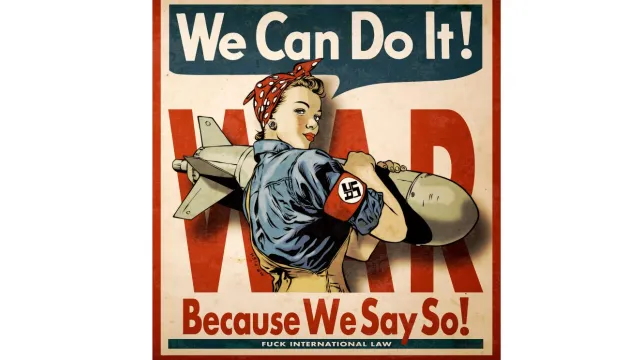
Trump’s catastrophic miscalculation in Iran and refusal to accept the inevitability of defeat is pushing us towards a global depression and ensuring the suffering and immiseration of millions.
Chris Hedges
America’s newest quagmire in the Middle East is like its old quagmires in the Middle East. It is based, as were the wars in Afghanistan and Iraq, on a gross misreading of our adversaries, a catastrophic failure to understand the limits of imperial power and no discernable strategy. It swells the profits of the war industry, wasting billions of public funds, alienates our allies and erodes the global power and prestige of the United States.
Dying empires, governed by the corrupt and the incompetent, are blinded by militarism and hubris. They are unable to read the world around them. They stumble into self-defeating cul-de-sacs — as we did in Iraq, Afghanistan and earlier in Vietnam — where military adventurism accelerates self-inflicted wounds.
The war on Iran is one more chapter in our precipitous and ultimately fatal decline.
Tehran’s 10-point temporary ceasefire proposal — brokered by Pakistani mediators and presented to the U.S. 40 days after war against Iran had begun — is tantamount to surrender terms. It demands the end of U.S. and Israeli attacks, including in Lebanon. It calls for the removal of U.S. military bases and installations from the region. It solidifies Iran’s control over the Strait of Hormuz. It refuses to abandon uranium enrichment. It calls for the end to sanctions and termination of anti-Iranian resolutions by the United Nations Security Council and International Atomic Energy Agency. It also requires release of frozen assets — estimated at $100 billion — and reparations for the U.S. and Israeli attacks.
This is too bitter a humiliation for the U.S. and Israel to accept.
Within hours of the Iranian proposal, Israel — determined to sabotage any agreement — launched a devastating air attack against Lebanon. The attack, which was carried out over 10 minutes, included the bombing of central Beirut. It involved 50 fighter jets and 108 airstrikes that dropped around 160 bombs, killing 350 people and wounding 1,000 others. The lightning and unprovoked massacre, known as “Black Wednesday,” is a potent reminder that Israel has no intention of allowing this war to end. With the U.S. not ready to admit defeat, and Israel’s bloodlust, we are in for a very rough ride.
Iran submitted an updated proposal last week, which Trump said is “totally unacceptable.”
But Iran, with its stranglehold over the Strait of Hormuz, can afford to wait. The longer it maintains its blockade over shipping — roughly 20 percent of the world’s oil and liquified natural gas flows through the Strait of Hormuz — the more global economic pain it inflicts.
There is no good outcome for the U.S.
The Trump administration’s obstinacy and Israel’s determination to resume attacks on Iran ensures that the global economy will barrel towards a global depression.
The World Bank projects a 31 percent increase in the cost of nitrogen fertilizers which are produced in the Gulf and transit through the Strait of Hormuz this year if the war continues. This ensures a huge rise in food costs.
Shortages are already shutting down global manufacturing and production. The fragile, interdependent global supply chains are seizing up.
This economic ecosystem, as Iran has shown, is easy to destroy. It will be very hard to piece back together.
Iran suffered devastating blows to its civilian infrastructure and economy — including residential areas, schools, health centers, police stations, churches and synagogues and energy, desalinization plants, steel and pharmaceutical facilities — as well as its military assets, including parts of its navy, air force and missile launch capabilities. It endured “decapitation strikes” against its senior political and military leaders at the start of the war, which included the assassinations of the Supreme Leader of the Islamic Revolution, Ayatollah Ali Khamenei, the secretary of Iran’s Defence Council, Ali Shamkhani, and the chief of staff of Iran’s armed forces, Abdolrahim Mousavi, among others.
None of the U.S. and Israeli objectives, however, have been met.
The new Iranian leadership — centered around the Islamic Revolutionary Guard Corps (IRGC) — is more defiant and intransigent than the previous leadership.
Iran maintains control over the Strait of Hormuz. It charges as much as $2 million for every oil tanker passing through it. These tariffs — which Iran introduced as part of its demand for war reparations — must be paid in Chinese currency, part of an attempt by Iran, China and Russia to break the hegemony of the U.S. dollar. Iran also retains significant missile and drone stockpiles and enriched uranium, which it has warned it will increase to 90 percent purity if attacked again.
Iran is the clear winner of Operation Epic Fury. Trump is the clear loser. The dilemma is that Trump’s penchant for inventing his own reality means he is unlikely to acknowledge his blunder and negotiate a way out of the debacle he created.
Trump, without Congressional approval, has already squandered at least $29 billion on the war according to the Pentagon, although analysis by Stephen Semler of Popular Information places the figure closer to $72 billion.
The human cost is already high. U.S. and Israeli strikes have killed more than 3,300 Iranian civilians, including at least 221 children. Over three million Iranians have been displaced, along with over one million Lebanese from Israel’s ongoing bombardment and ethnic cleansing of southern Lebanon. There are, at the same time, over two million displaced Palestinians from the genocide in Gaza and another 1,100 killed and 40,000 displaced Palestinians in the occupied West Bank.
Fuel shortages and supply disruptions are crippling countries in Asia, with Thailand facing panic buying and rationing at some petrol stations. Vietnam and South Korea are scrambling to secure alternative crude and fuel supplies. Japan, which relies on the Persian Gulf for roughly 95 percent of its crude oil imports, has had to dip twice into its strategic reserves since the war started in February.
The rise in price of liquefied petroleum means cooking fuel prices have increased by about seven percent for domestic use in India, but have skyrocketed by around 76 percent in the commercial sector. This has resulted in production cuts and job losses in the garment and textile sector in India, as well as in Bangladesh and Cambodia.
There are shortages of helium, aluminum and naphtha, also transited through the Strait of Hormuz. These shortages have seen production declines, including among microchip manufacturers, construction firms and the plastic packaging sector. Steel mills in India and automakers in Japan have cut production. Tens of thousands of workers across the globe have already lost their jobs.
Asian airlines, along with many on the European continent — including those from Germany, Turkey and Greece — are loading extra fuel at their airports, cutting flights and raising surcharges with the doubling of the price of jet fuel. The United Arab Emirates — one of the world’s richest states with sovereign wealth funds that total more than $2 trillion — has asked the U.S. for a “Wartime Financial Lifeline” in the wake of missile-damaged gas fields and a halt to shipping in the Strait of Hormuz, according to the Wall Street Journal.
Millions of people, especially in Asia and Africa, are at risk of falling into dire poverty because of the war, according to the United Nations Development Program.
The U.S., which is a net exporter of oil and natural gas, has been relatively insulated from the global shock, although gasoline prices have risen by around 40 percent to more than $4.50 a gallon. The average U.S. diesel price has increased by nearly 50 percent, surpassing $5.60 a gallon. But it is only a matter of time before the breakdown of the global economy ravages the U.S.
The Trump administration is pushing us towards a global depression with all of the social and political instability that comes with a catastrophic financial crisis.
Trump is desperate. He spews out expletive-laden threats to Iran on social media, writing “Open the Fuckin’ Strait [of Hormuz], you crazy bastards.” He also posts Artificial Intelligence generated images showing the U.S. military obliterating the Iranian military. He has threatened to bomb Iranians “back to the stone age where they belong,” and lambasts his critics as traitors:
“When the Fake News says that the Iranian enemy is doing well, Militarily, against us, it’s virtual TREASON in that it is such a false, and even preposterous, statement.” He declared on Truth Social, “They are aiding and abetting the enemy!”
This screed was followed by an image of a map with Venezuela overlaid with the U.S. flag. The caption read: “51st State.”
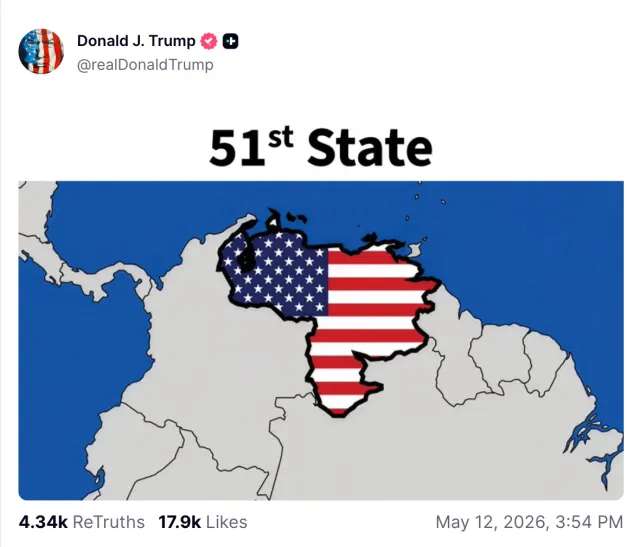
Before leaving for China, Trump claimed: “We have Iran very much under control… We’re either going to make a deal or they’re going to be decimated. One way or the other, we win.”
The rants are pathetic and unhinged. But they are also ominous.
The U.S. is building up troop levels in the region. It has deployed the Tripoli Amphibious Ready Group with the 31st Marine Expeditionary Unit — composed of about 3,500 sailors and Marines — in addition to transport and strike fighter aircraft and assault and tactical assets. It has deployed the Boxer Amphibious Ready Group along with about 2,500 Marines from the 11th Marine Expeditionary Unit equipped with F-35B Lightning II Stealth Fighters, MV-22B Osprey, tilt rotors and attack helicopters. The U.S. has also sent around 2,000 paratroopers to the Persian Gulf and is reportedly considering augmenting these forces with an additional 10,000 troops.
A resumption of the bombing, coupled with even a limited ground assault, would ensure a long and costly war. It will fulfill Israel’s objective — which seeks to bomb Iran into a failed state — but will be another mortal blow to the U.S. empire.
A ground assault on Kharg Island — which lies 16 miles off Iran’s coast and serves as the country’s main oil storage and export terminal, processing around 90 percent of the country’s oil exports — would send seismic shock waves through the global economy. And if U.S. troops attempt to seize Iranian territory, Iran will deploy its arsenal of anti-ship cruise missiles, ballistic missiles, underwater drones and mines, making any occupation deadly.
We are in serious trouble.
The management of the conflict is far beyond the capabilities of the buffoons within the Trump administration. They prefer global misery and carnage to defeat. By the time they face the inevitable, they will have left mounds of corpses in their wake.
The tragedy is not that the empire is dying. The tragedy is that the empire is bringing so many innocents down with it.
The post Trump’s Iranian Nightmare appeared first on Activist Post.


 Lateo.net - Flux RSS en pagaille (pour en ajouter : @ moi)
