 Connexion


We are delighted to launch our next series of free online seminars, this time on the topic of cross-disciplinary computing, running monthly from May to November 2022. As always, our seminars are for all researchers, educators, and anyone else interested in research related to computing education.

What do we mean by cross-disciplinary computing? Through this upcoming seminar series, we want to embrace the intersections and interactions of computing with all aspects of learning and life, and think about how they can help us teach young people. The researchers we’ve invited as our speakers will help us shed light on cross-disciplinary areas of computing through the breadth of their presentations.
At the Raspberry Pi Foundation our mission is to make computing accessible to all children and young people everywhere, and because computing and technology appear in all aspects of our and young people’s lives, in this series of seminars we will consider what computing education looks like in a multiplicity of environments.
We start the new series on 3 May, and are beyond delighted to be kicking off with a talk from Mark Guzdial (University of Michigan). Mark has worked in computer science education for decades and won many awards for his research, including the prestigious ACM SIGCSE Outstanding Contribution to Computing Education award in 2019. Mark has written hundreds of papers about computer science education, and he authors an extremely popular computing education research blog that keeps us all up to date with what is going on in the field.
Recently, he has been researching the ways in which programming education can be integrated into other subjects, so he is a perfect speaker to start us thinking about our theme of cross-disciplinary computing. His talk will focus on how we can add a teaspoon of computing to history and mathematics classes.
On 7 June, our speaker will be Pratim Sengupta (University of Calgary), who I feel will really challenge us to think about programming and computing education in a new way. He has conducted studies in science classrooms and non-formal learning environments which focus on providing open and engaging experiences for the public to explore code, for example through the Voice your Celebration installation. Recently, he has co-authored a book called Voicing Code in STEM: A Dialogical Imagination (MIT Press, availabe open access).
In Pratim’s talk, he will share his thoughts about the ways that more of us can become involved with code through opening up its richness and depth to a wider public audience, and he will introduce us to his ideas about countering technocentrism, a key focus of his new book. I’m so looking forward to being challenged by this talk.
On 12 July, we will hear from Yasmin Kafai (University of Pennsylvania), who is another legend in computing education in my eyes. Yasmin started her long career in computing education with Seymour Papert, internationally known for his work on Logo and on constructionism as a theoretical lens for understanding the way we learn computing. Yasmin was part of the team that created Scratch, and for many years now has been working on projects revolving around digital making, electronic textiles, and computational participation.
In Yasmin’s talk she will present, alongside a panel of teachers she’s been collaborating with, some of their work to develop a high school curriculum that uses electronic textiles to introduce students to computer science. This promises to be a really engaging and interactive seminar.
In August we will take a holiday, to return on 6 September to hear from the inspirational Genevieve Smith-Nunes (University of Cambridge), whose research is focused on dance and computing, in particular data-driven dance. Her work helps us to focus on the possibilities of creative computing, but also to think about the ethics of applications that involve vast amounts of data.
Genevieve’s talk will prompt us to think about some really important questions: Is there a difference in sense of self (identity) between the human and the virtual? How does sharing your personal biometric data make you feel? How can biometric and immersive development tools be used in the computing classroom to raise awareness of data ethics? Impossible to miss!
Do enter all these dates in your diary so you don’t miss out on participating — we are very excited about this series. Sign up below, and ahead of every seminar, we will send you the information for joining.
As usual, the seminars will take place online on a Tuesday at 17:00 to 18:30 local UK time.
The post Exploring cross-disciplinary computing education in our new seminar series appeared first on Raspberry Pi.
We’re delighted to announce that our special judges — Eben Upton, Hayaatun Sillem, Limor Fried, Mitch Resnick, and Tim Peake — have chosen their favourite projects from the Coolest Projects online showcase!
Young tech creators from 39 countries are part of the showcase, including from Ireland, Australia, Palestine, UK, USA, India, and Indonesia. In total, you’ll find an incredible 560 projects from 775 young creators in the showcase gallery.
Our judges have been amazed and inspired by all the young creators’ projects, and they want to highlight a few as their favourites!
Eben Upton is a founder of our organisation, one of the inventors of the Raspberry Pi computer, and CEO of Raspberry Pi Trading. Watch Eben’s favourites.
Dr Hayaatun Sillem is the CEO of the Royal Academy of Engineering, which brings together the UK’s leading engineers and technologists to promote engineering excellence for the benefit of society. Watch Hayaatun’s favourites.
Limor Fried is an MIT-trained engineer and the founder and owner of Adafruit Industries. Watch Limor’s favourites.
Mitch Resnick is Professor of Learning Research at the MIT Media Lab, and his Lifelong Kindergarten research group develops and supports the Scratch programming software and online community! Watch Mitch’s favourites.
Tim Peake is a British ESA astronaut who spent 186 days in space on the International Space Station. He’s also a passionate advocate for STEM education. Watch Tim’s favourites.
You can explore all the young tech creators’ projects — games, hardware builds, Scratch projects, mobile apps, and more — in our showcase gallery now.
This year’s Coolest Projects online showcase wouldn’t be possible without the support of our Coolest Projects sponsors — thank you!
The post Super cool favourites picked by fabulous judges appeared first on Raspberry Pi.
This Minecraft sign uses a Raspberry Pi to notify you when, and how many of, your friends are logged into your dedicated Minecraft server.
Let’s start by pointing out how wonderfully nostalgic many of Wes ‘Geeksmithing’ Swain’s projects are. From his Raspberry Pi–housing cement Thwomp that plays his favourite Mario games to The NES Project, his NES replica unit with a built-in projector — Wes makes the things we wished for as kids.
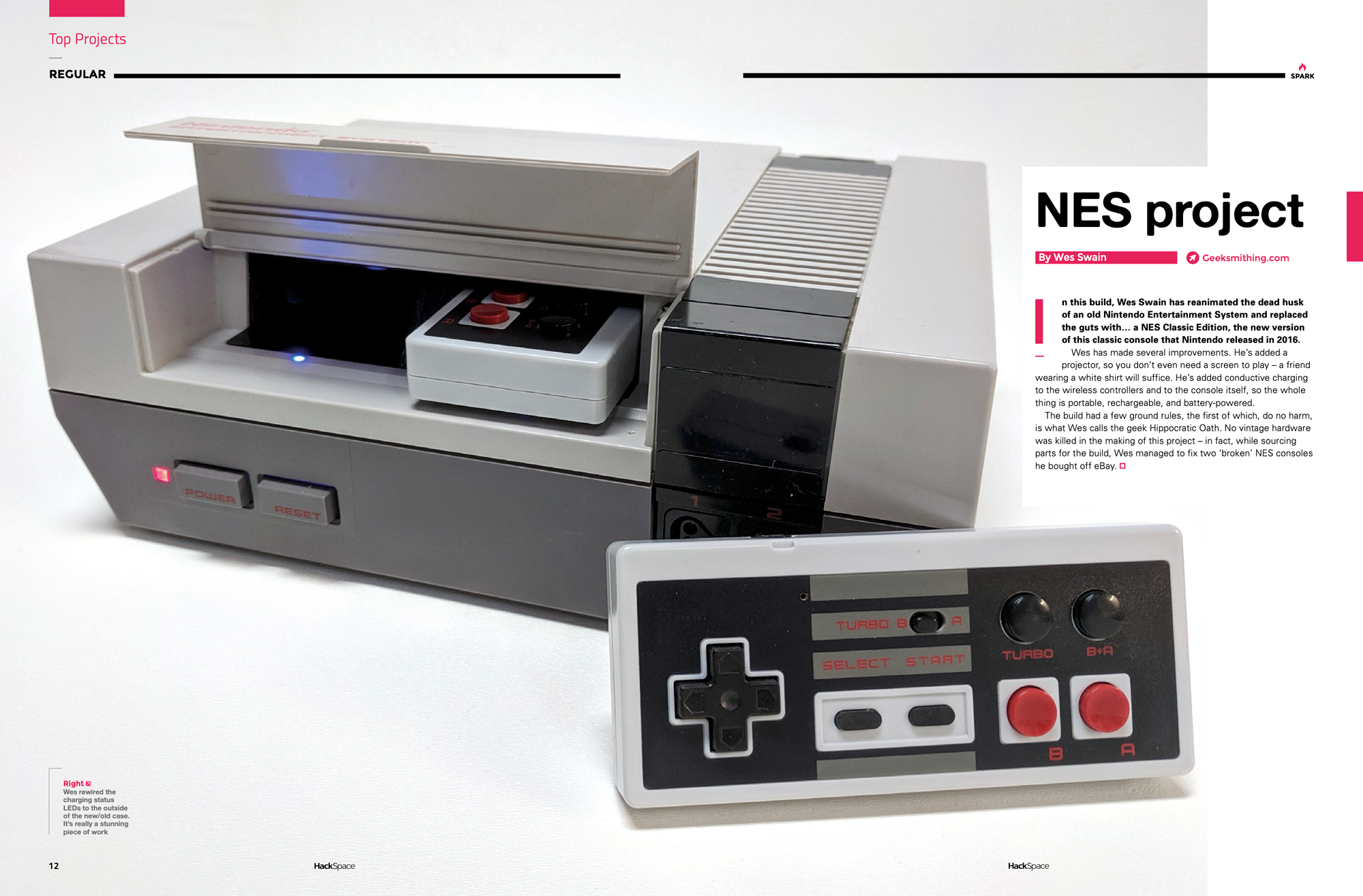
The NES Project covered in HackSpace magazine
We honestly wouldn’t be surprised if his next project is a remake of Duckhunt with servo-controlled ducks, or Space Invaders but it’s somehow housed in a flying space invader that shoots back with lasers. Honestly, at this point, we wouldn’t put it past him.
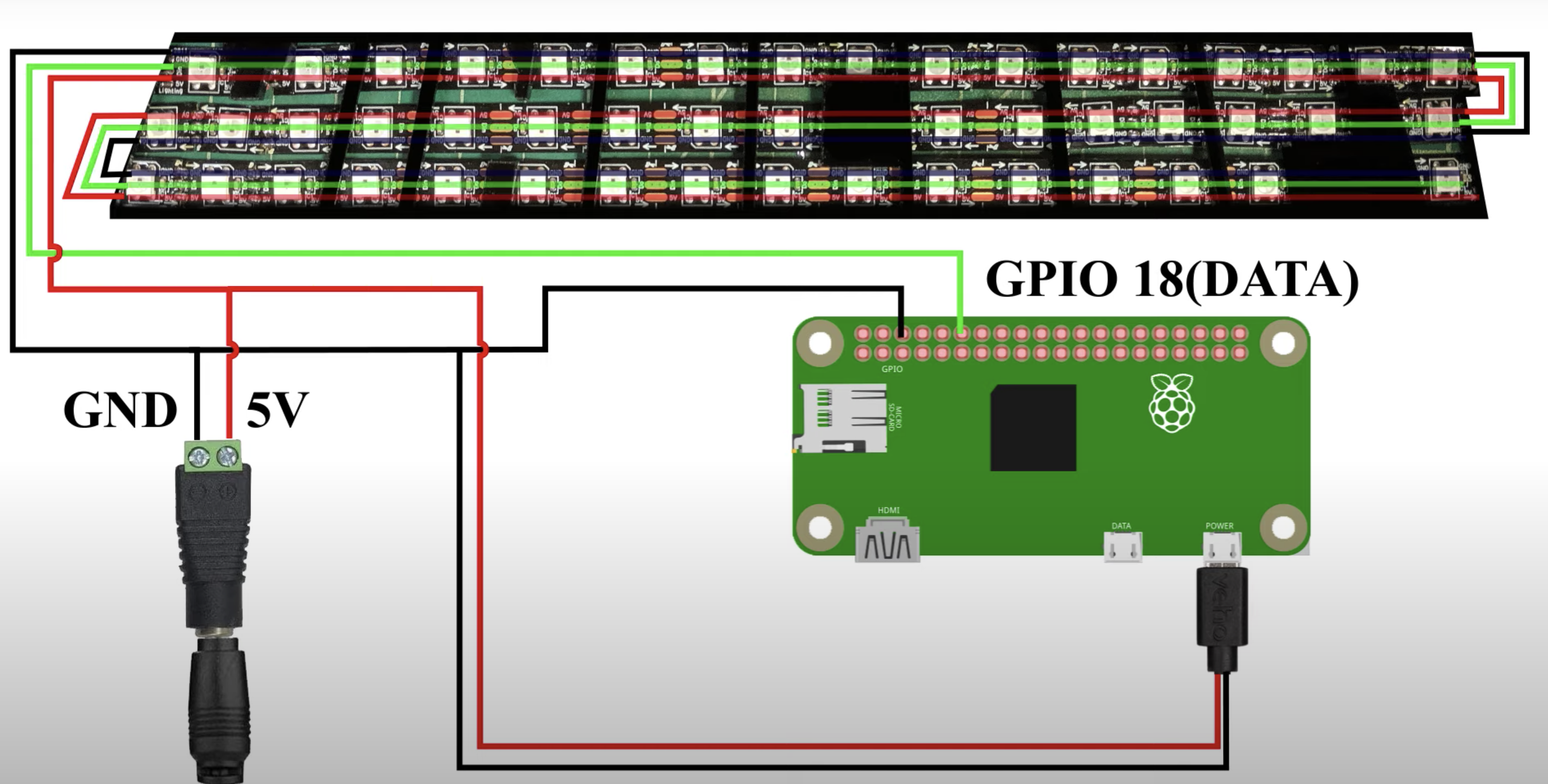
In the video, Wes covers the project in two parts. Firstly, he shows off the physical build of making the sign, including laser-cut acrylic front displayed with controllable LED lights, a Raspberry Pi Zero, and the wooden framing.
Secondly, he moves on to the code, in which he uses mcstatus, a Python class created by Minecraft’s Technical Director Nathan Adams that can be used to query servers for information. In this instance, Wes is using mcstatus to check for other players on his group’s dedicated Mincecraft server, but the class can also be used to gather mod information. You can find mcstatus on GitHub.
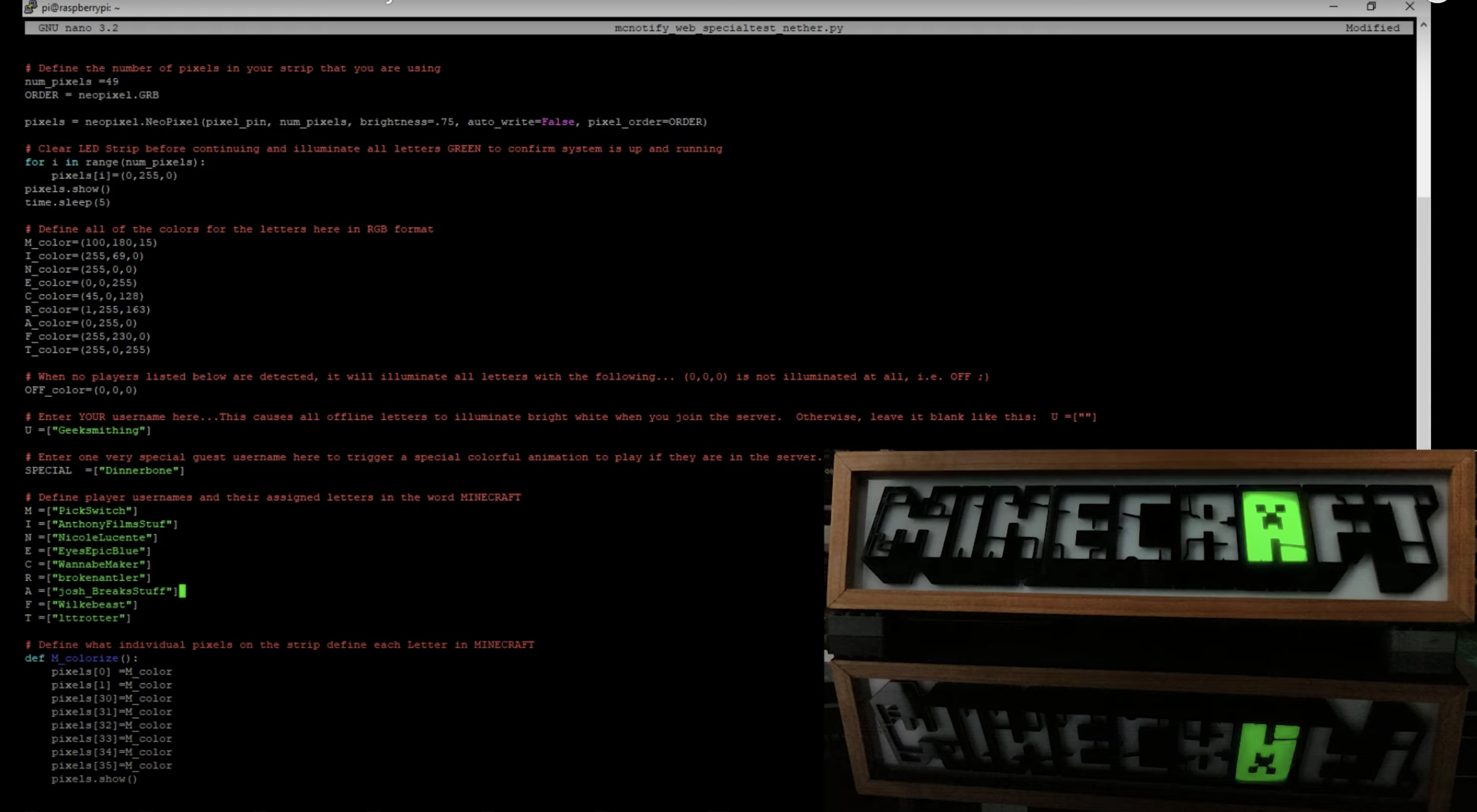
Each friend is assigned a letter that illuminates if they’re online.
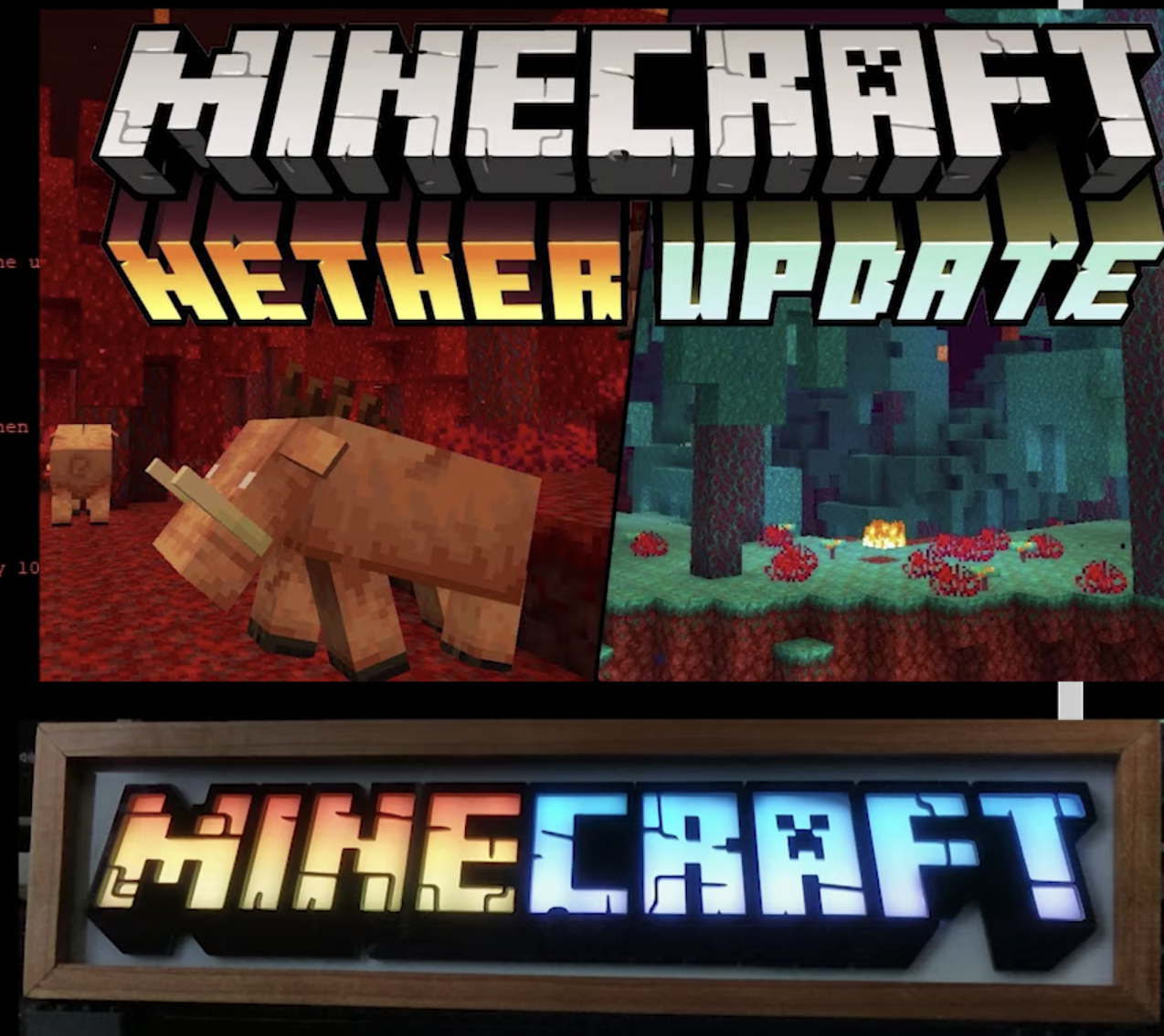
Lucky for Wes, he has the same number of friends on his server as the number of letters in ‘Minecraft’, so for every friend online, he’s programmed the display to illuminate a letter of the Minecraft logo. And while the server is empty, he can also set the display to run through various light displays, including this one, a dedication to the new Minecraft Nether update.
If you’d like to try making this project yourself, you can: Wes goes into great detail in his video, and the code for the project can be found on his GitHub account.
And while we have your attention, be sure to subscribe to Geeksmithing on YouTube and show him some love for such a great project.
The post Wes’s wonderful Minecraft user notification display appeared first on Raspberry Pi.
We are thrilled that five fantastic people will contribute to the Coolest Projects online showcase: Tim Peake, Limor Fried, Mitch Resnick, Hayaatun Sillem, and Eben Upton are going to be our special judges and choose their favourite projects from among all the entries from young tech creators in our global community.
Tim Peake is a British ESA astronaut and a passionate advocate for STEM education. Tim played a huge part in the first Astro Pi Challenge in 2015, and he has helped us spread the word about the work of the Raspberry Pi Foundation ever since.
“By taking part in Coolest Projects, young creators get to share their ideas with the world, and their peers. Whether it’s creating something for home, the planet, or for their school or community — it’s a great opportunity to share their hopes and dreams for the future!” — Tim Peake
Limor ‘Ladyada’ Fried is an MIT engineer and the founder and owner of Adafruit, a company that creates hardware and educational resources for anyone interested in digital making. Limor personally selects, tests, and approves all the tools, equipment, and electronics on offer by Adafruit.
“Coolest Projects is a fantastic opportunity for young people to take part in the world’s leading technology showcase and to celebrate all the hard work and ideas from the community — all from home!” – Limor Fried
Mitch Resnick is Professor of Learning Research at the MIT Media Lab, and his Lifelong Kindergarten research group develops the Scratch programming software and online community! His life’s passion is developing new technologies and activities to engage young people in creative learning experiences.
Hayaatun Sillem is the CEO of the Royal Academy of Engineering, which brings together the UK’s leading engineers and technologists to promote engineering excellence for the benefit of society. She also has a PhD in cancer research!
Eben Upton is a founder of the Raspberry Pi Foundation and one of the inventors of the Raspberry Pi computer. As the CEO of Raspberry Pi Trading Ltd, he oversees the company, including the development of all our hardware.
If a young person you know is making anything with technology — and we mean anything, from robot to smartphone app to video game to Scratch animation to web page about their favourite food — then we invite them to take part in the Coolest Projects online showcase.
We welcome all works-in-progress and finished projects from anyone aged up to 18!
To find out more and register a project by the 28 June deadline, visit coolestproject.org.
The post Tim Peake is among our fabulous Coolest Projects judges appeared first on Raspberry Pi.
This weekend, the Raspberry Pi Foundation hosted Scratch Conference Europe 2019 at Churchill College in Cambridge, UK.
Framing the busy weekend’s schedule were presentations from:
Since not everyone was able to travel to Cambridge to attend the conference, we wanted to make sure you’re not missing out, so we filmed their presentations, for you to watch at your leisure.
For the full Scratch Conference experience, we suggest gathering together a group of like-minded people to watch the videos and discuss your thoughts. Alternatively, use #ScratchEurope on Twitter to join in the conversation with the conference attendees online.
Enjoy!
Mitch Resnick presents at Scratch Conference Europe 2019
Mitch Resnick addresses the attendees of Scratch Conference Europe, hosted by the Raspberry Pi Foundation at Churchill College, Cambridge, UK on 24 August 2019.
Neil Monteiro presents at Scratch Conference Europe 2019
Neil Monteiro closes the show on day two of Scratch Conference Europe, hosted by the Raspberry Pi Foundation at Churchill College, Cambridge, UK on 24 August 2019. In this show, Neil takes the audience on a journey into a dangerous labyrinth…in code!
Fran Scott presents at Scratch Conference Europe 2019
Fran Scott closes the show on day three of Scratch Conference Europe, hosted by the Raspberry Pi Foundation at Churchill College, Cambridge, UK on 25 August 2019.
The post Keynote speeches from Scratch Conference Europe 2019 appeared first on Raspberry Pi.


 Lateo.net - Flux RSS en pagaille (pour en ajouter : @ moi)
